Category: Flooring

  • The Floor Is Completely Filled and Reassembled Permanently

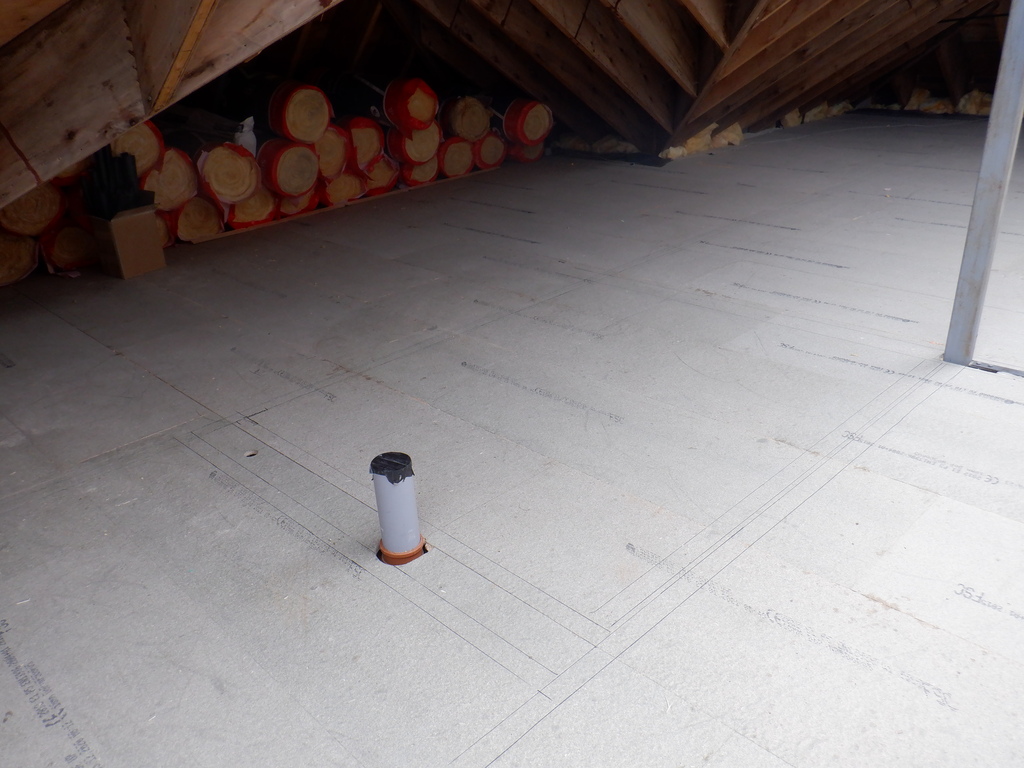
    We spent the last two weeks in getting the flooring in our Great Room permanently fixed down at long last. We had originally laid the floorboards down a couple of years ago, but we weren’t ready to glue and fixed them down, because we needed to get the insulation put into the roof rafters and any rubbish pieces left-over, needed to be shredded and ready to put under the floorboards in the Great Room. The shredded pieces was used to insulate the room against the cold concrete foundation, but also to insulate against the heat that will be rising off the buried Energy Module we had under the concrete slab. It could reach 90°C and we didn’t want that kind of heat to flow into our Great Room, so we knew that we could put all the final rubbish and trimmings, under the floorboards and also protect ourselves from the very hot Energy Module.
    The first thing to do was to empty the entire room of all the items we had stored in various corners and move everything into our Kitchen, so we could lift the floorboards up.

    We started at the right hand end of the room, standing at the hallway door but it was locked into place by the tongue and groove system. Therefore, we had to move all the floorboard pieces towards the left end, by about twelve inches and keep each row of boards unconnected so we could move each row more easily. Another thing we did during this process, was to label all the individual piece with a row “letter” and “number” for each piece as the whole floor have been measured and laid down to fit the two doorways etc. We didn’t want to mix any up and run into trouble later on. So we pulled up three complete rows at the beginning, under the “O” window, looking out to our swimming lane at the back, and started filling in the huge pile of insulation boards pieces we had prepared from our time of doing the roof rafters last year. They are stored upstairs so we started chucking them off our Gallery, bit by bit!
    We also had six “ton” bags of random odd sizes and pieces of PU foam rubbish as well and we dragged each one down the stairs and along the hallways to the Great Room.
    And not forgetting a room full of “fluffy” stuff we had previously generated, being stored in our Entertainment Room downstairs!
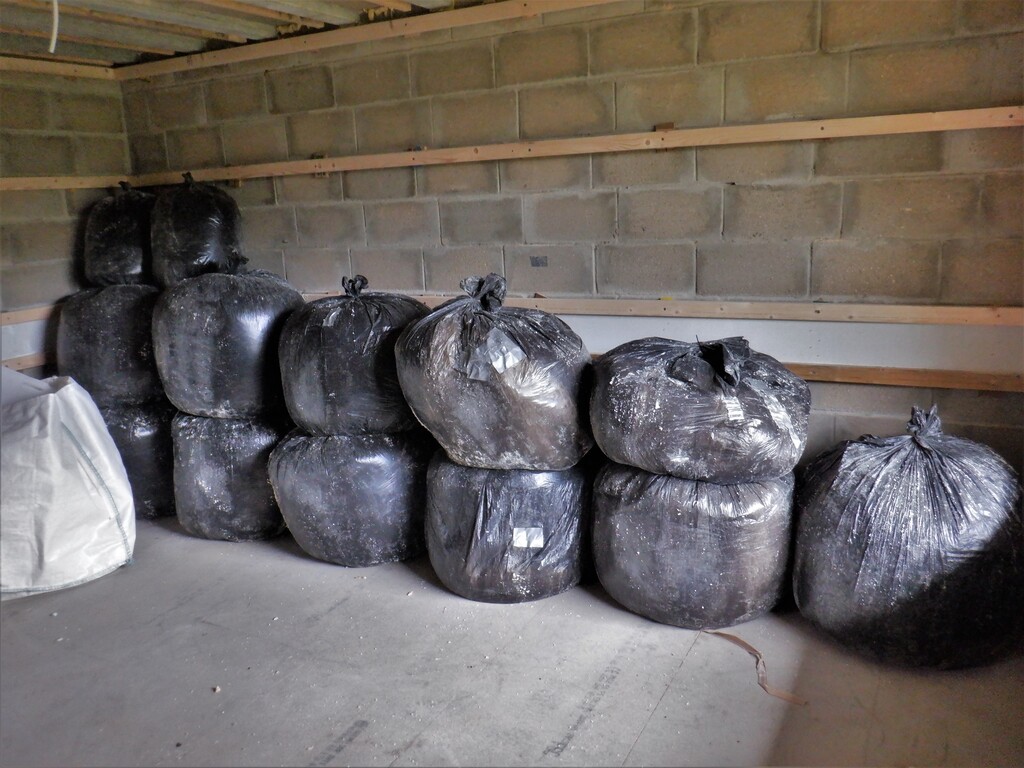

    It is a slow job of laying down sheets of the insulation boards, skipping around air ducting, conduits, water pipes and so on. Building up the layers until we reach underneath the cross rails that is 63mm from the top. That is about 320mm to 330mm of cavity to fill up, depending on how thick the original concrete slab was. We first tried to fill the remaining space with fluffy fragments but we discovered that it is so light and “fluffy” (Of Course!!), that it would not keep still. We wanted to glue the floorboards down tight on the wooden framework and this fluffy stuff kept going everywhere!!
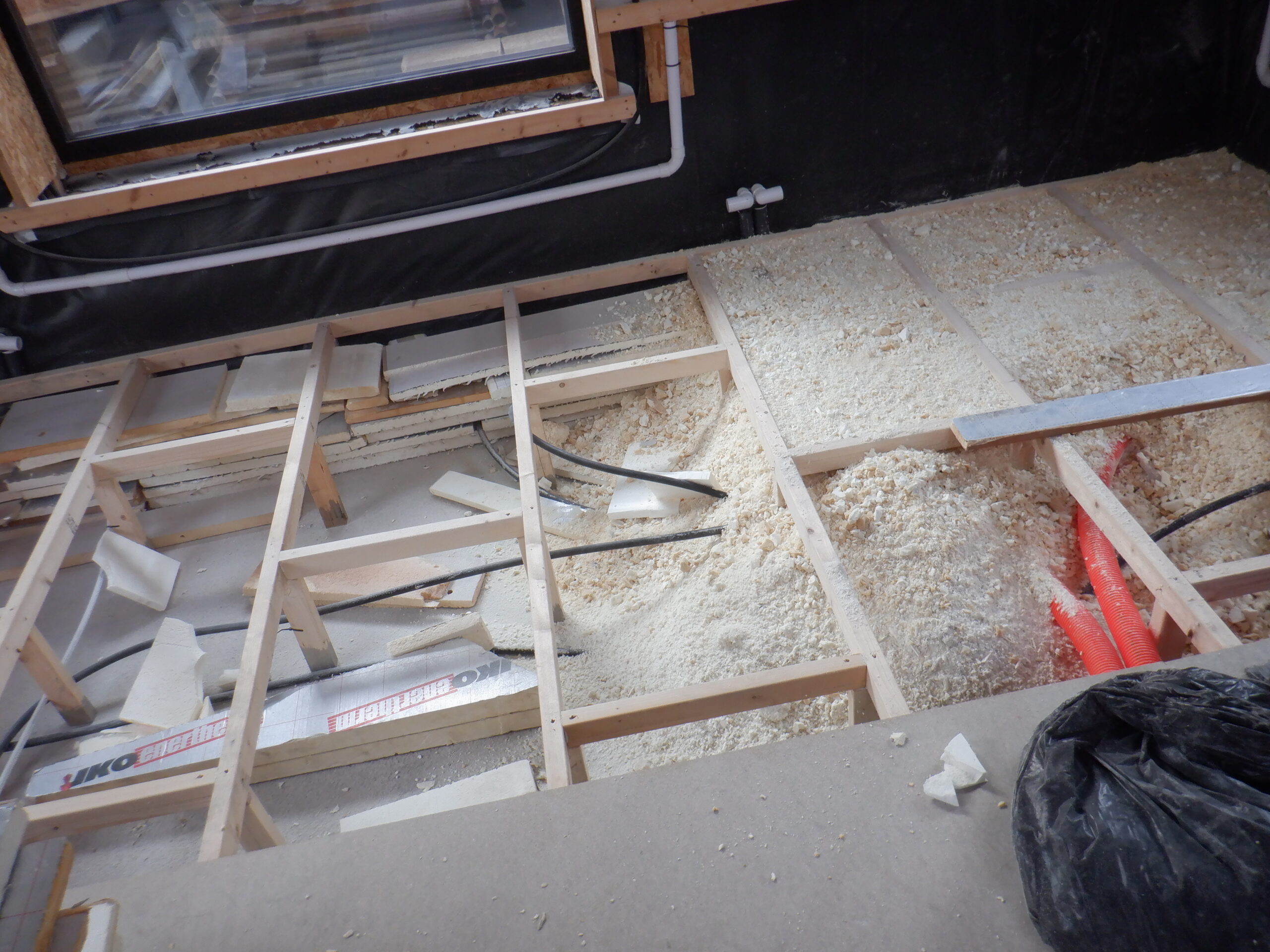
    Starting to fill Greatroom floor

    Starting to fill Greatroom floor

    So, we switched over to Plan B, and laid down 100mm layer of glass wool over the fluffy stuff. This helped greatly to contain the fluffy stuff and made it much easier to vacuum the rails clean and get the glue down without any problems.

    We used our spray gun foam to squirt a line of PU Glue Grade foam and then lay a floorboard on top. Next, we put in a collection of 50mm screws in each cross rail, to make sure that the 22mm thick chipboard boards will squash tight down onto the glue etc. For our first row, it started off at the left hand end, with a small piece, to bridge over the smaller spacing off the framework enough and the next board goes into the tongue and groove joint, getting knocked sideways to make sure the joint is nice and tight. This joint is also glued with more of our PU foam and this board is screwed down too. The final piece, is another larger piece, to finish the row. Each row always has three pieces but the first and last piece changes in size by approximately 600mm, to make sure that all rows do not have any joints aligning up consecutively, to improve the structure and strength of our floorboard generally.
    We then carry on doing each row in turn, making sure that we knock each row tight into the previous row, by using a small piece of the same chipboard material that has a groove on it, plus a piece of CLS timber glued on to the back edge so we can thump it hard using a club hammer, to provide a reinforced tool, that slots into the tongue on the board and that will not damage it, while we are knocking each piece into place.
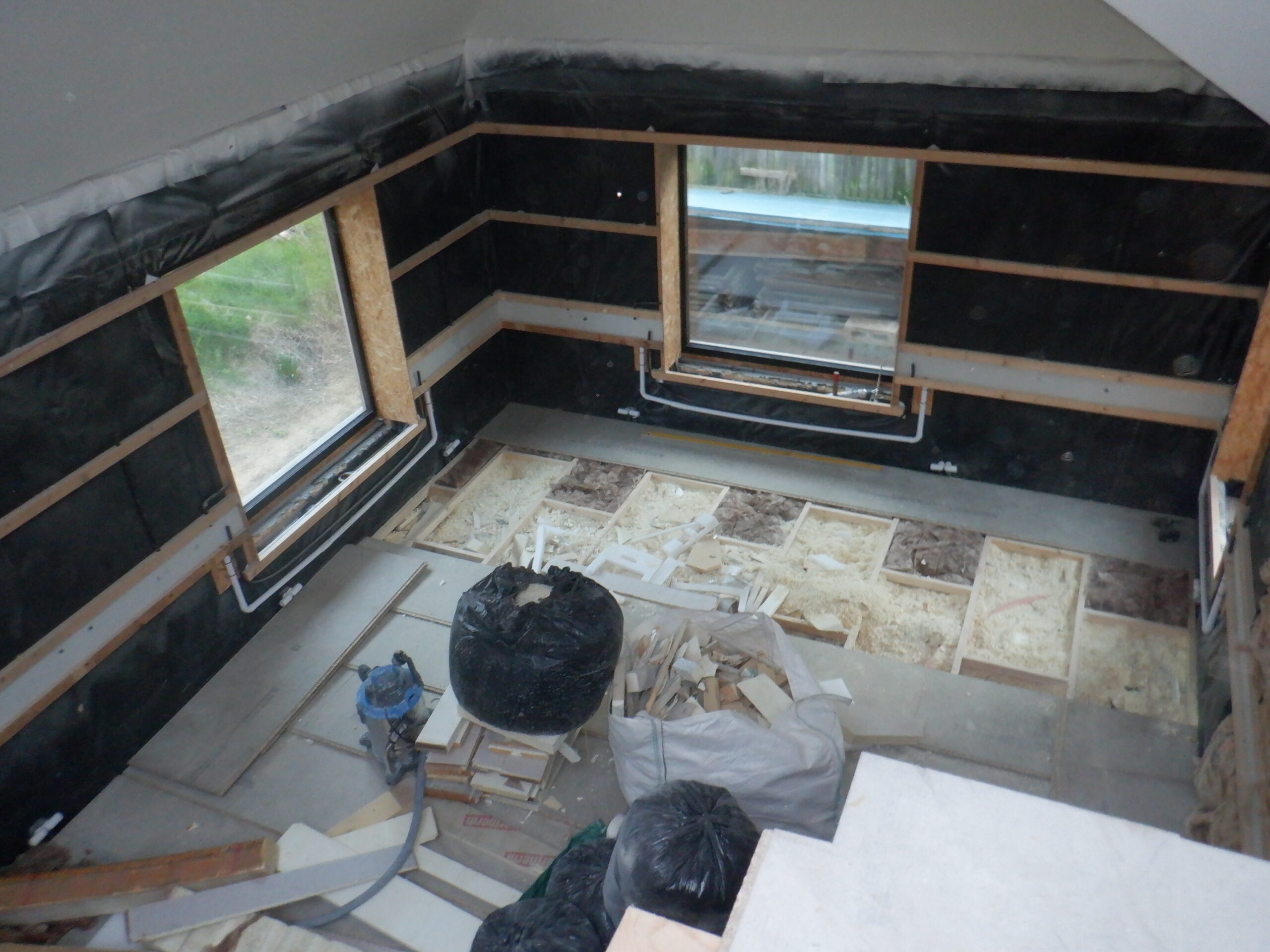
    First row down

    First row down


    One of the jobs we had to do while the floorboards were up, was to seal the ventilation ducting to our wall distributor modules. The orange flexible 50mm conduit comes from a four way splitter and each duct goes off to various locations around the wall. Each end needed sealing up with aluminium sticky tape.
    We got to the spiral staircase position, row number “G” and “H” and one of the thing to do was to reinforce the flooring, to make sure that this zone is strong enough to support the entire stair case, in one single small spot. We are going to have a pillar going up the middle of the spiral stairs and it measures 200mm across, which will be the main load bearing element. So, we built up the framework structure, putting in a zone of 400mm by 600mm of solid layer of CLS timber pieces, all glued together into a single block. This is then supported underneath by a couple of sturdy cross pieces using a wider 89mm CLS pieces and then finally, underneath those two pieces, we put in four legs down to the concrete floor slab, two legs under each cross piece. Everything glued and clamped together.
    The final top surface was planed smooth, to remove excess glue and excess timber and made it level across neighbouring floor joists.
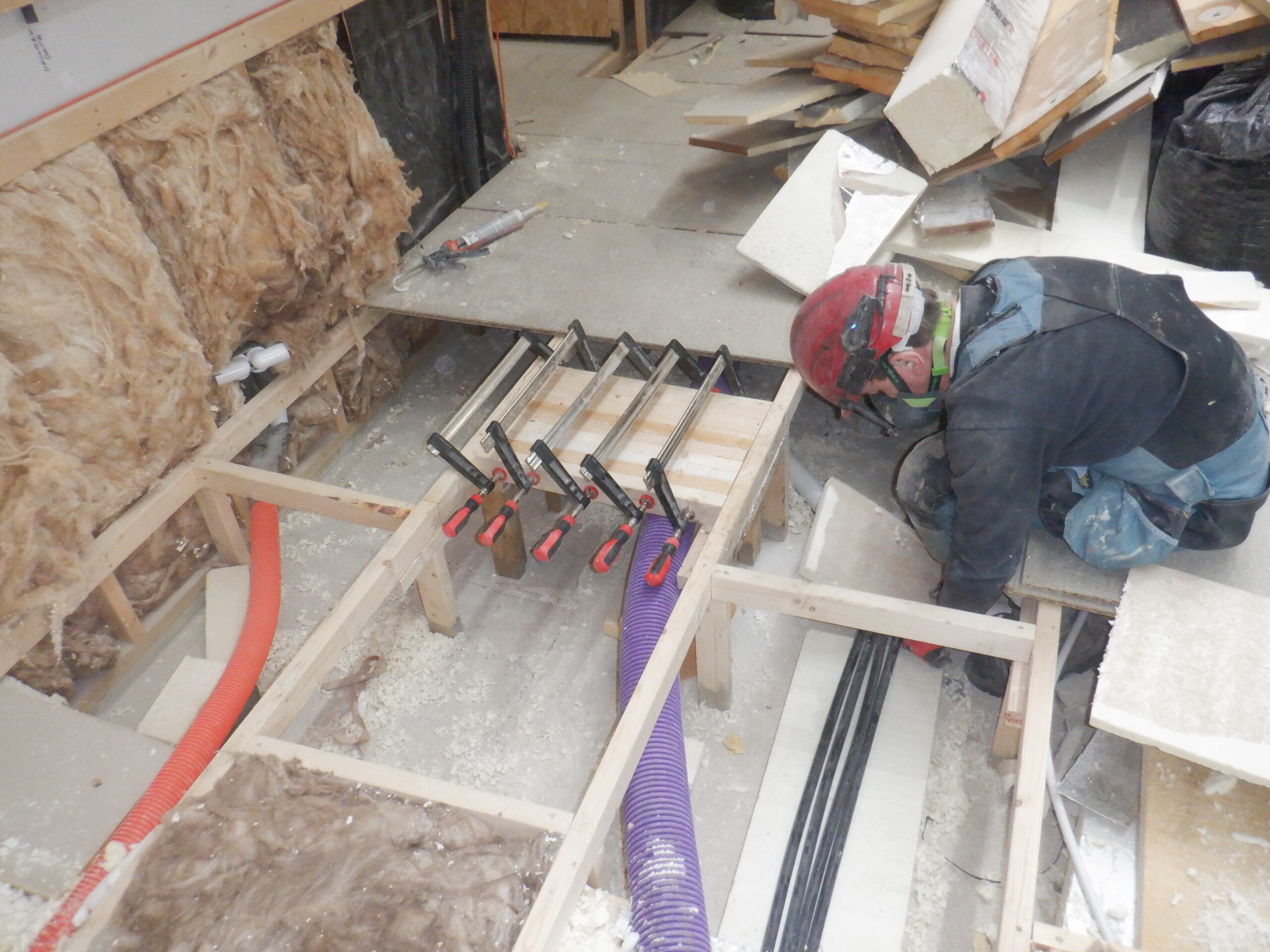
    Reinforcing floor for spiral staircase
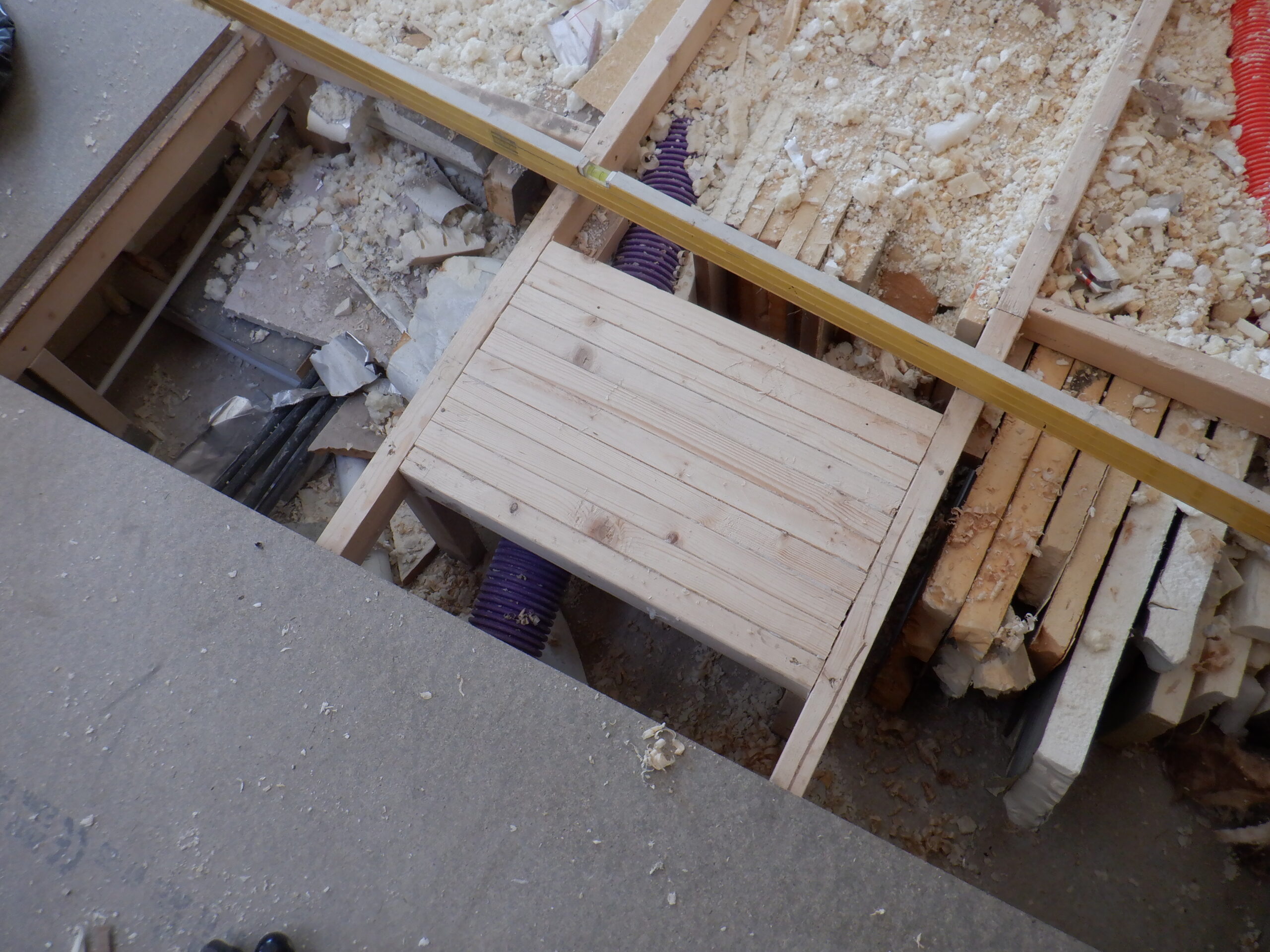
    Reinforcing floor for spiral staircase

    Staircase Reinforcement smoothed

    Staircase Reinforcement smoothed


    We built this reinforced spot near a couple of existing legs so we have six legs in total in the immediate zone but there are a further two legs only 300mm away and also the floorboard itself will help spread the load right across all the framework and in turn, down to the concrete slab.One of the things we tried to do, is to run our shredding machine and get the output to go straight down into the cavity space under the floorboards but it proved rather awkward to generate a constant flow of shredded bits coming out of the machine. The machine itself couldn’t shred the foam and let the pieces fall naturally downwards underneath the machine, it was “fluffing” up all over the place! So, we tried to combined the large vacuum machine we had used before, but instead of filling up domestic bin liners of foam bits, we tried to connect a plastic conduit to the bottom of the plastic bin liner so that the shredded bits would fly down the tube and into the floor cavity. But, as soon as the bits started building up in the bottom of the black liner, it would block the output tube and no more fluffy bits would fly along the tube!! We abandoned that method and just took each lump of foam and fitted them in a collection of random positioning, mixed with fluffy shredded bits we already had done months ago. We also took many of these lumps and arranged them into larger blocks before putting more fluffy stuff in on top.
    It was a bit fiddly but we got there!

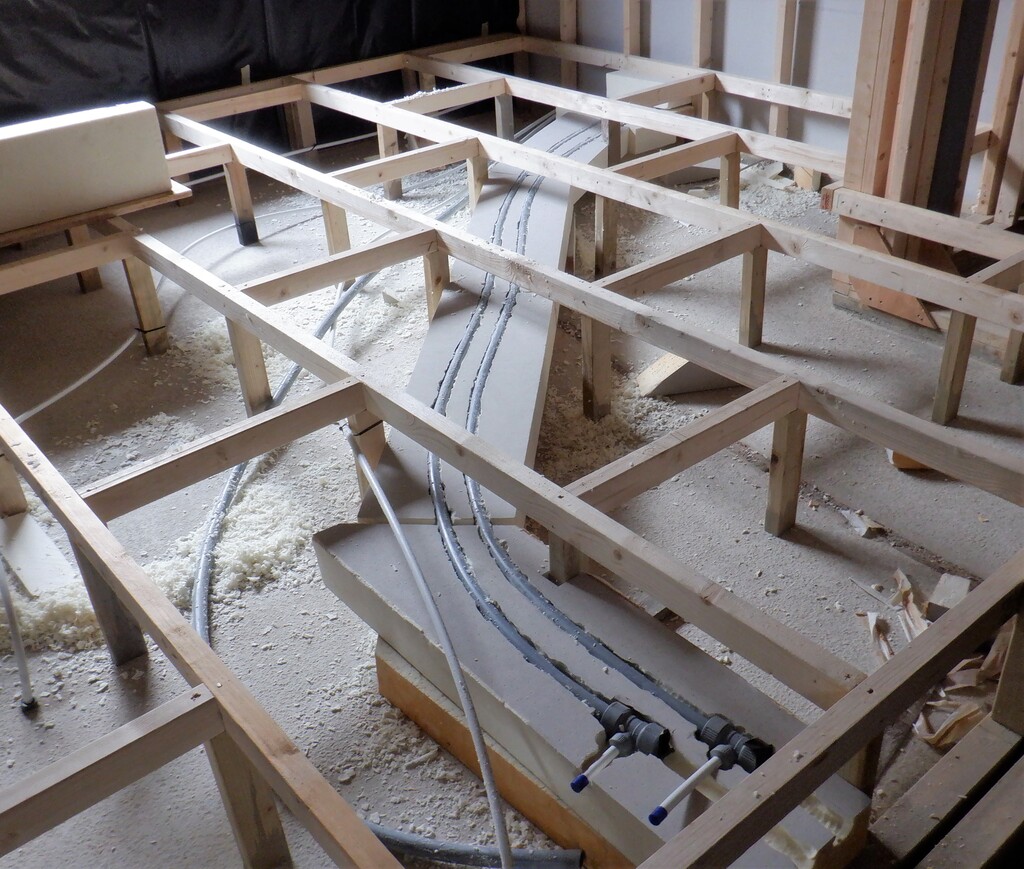
    We got the middle section where our Utility services runs across the room, heading at a diagonal for half the distance and then straight to the Conservatory doorway point. We will have air, electricity, compressed air, and hot and cold water coming in and out of this zone, so we needed to seal off the rest of the floor on either side, to stop an avalanche of fluffy bits falling into this section. So, we cut pieces of 25mm thick foam sheets and glued them vertically into place. The 100mm “purple” air pipes, four of them in total, were supported with lumps of foams and then held into place through these vertical barriers. All the other utility like water pipes was already fixed in a neat line coming through a sheet 12mm board of plywood.

    Now, we tackled the last furlong of the race of filling the floor and gluing and screwing down the floorboards, to the left of the Utility service channel, by removing all the floorboards and heaping them up over on the finished side, stacked in the correct order.
    We went around the edge of the room, nearer to the outside world, and put in a solid arrangement of narrow strips of foam boards so that we maximise the heat retention for the house against any temperature differences in the outside world.
    This left the middle area of the space to be filled up so we spread out all our remaining chunks of foam rubbish, and poured in all the last of our fluffy bits. And finally, topped the whole lot with two or three layers of 100mm glass wool, depending on how much there was to finish off.
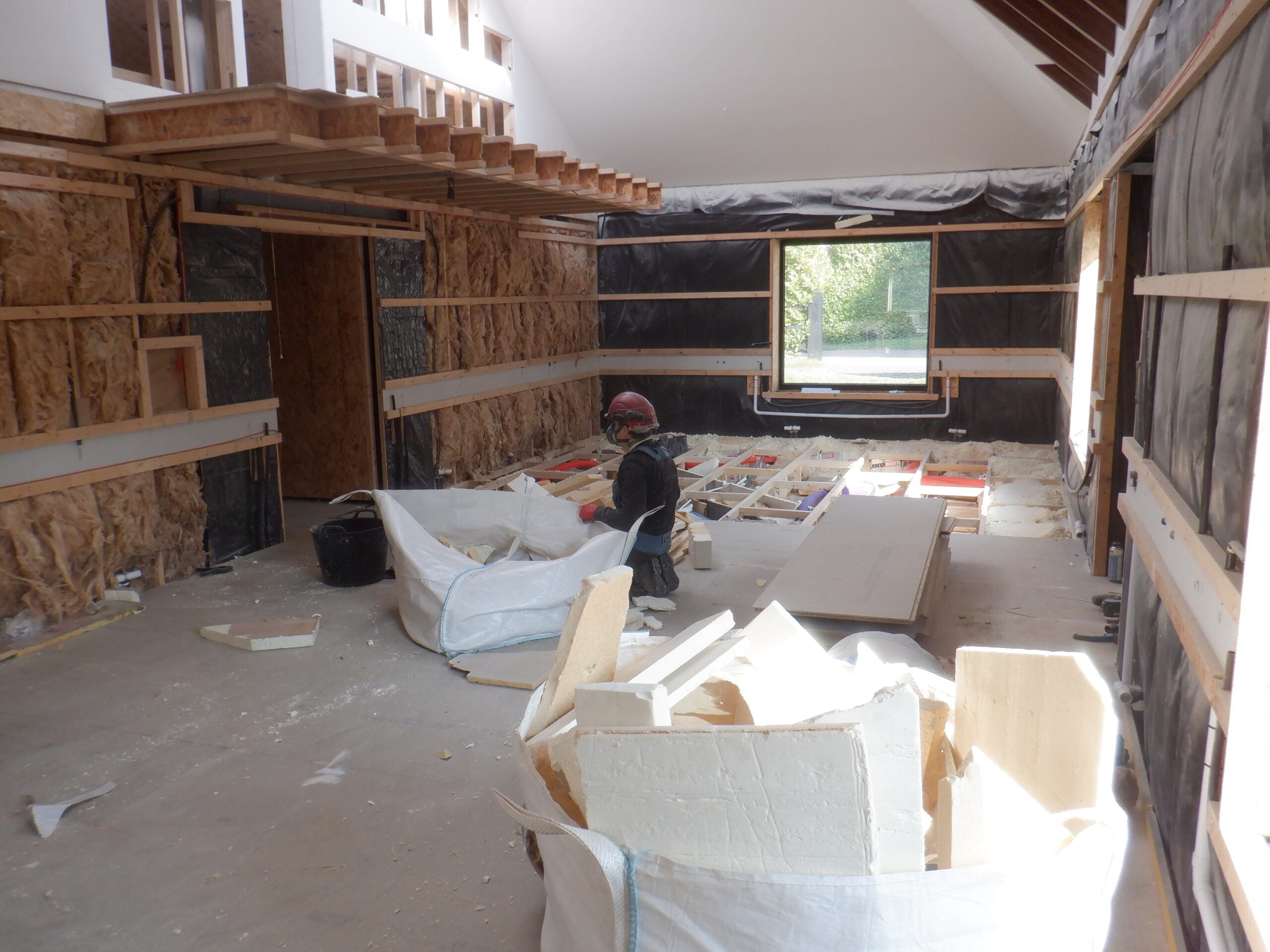
    Starting on second half 1
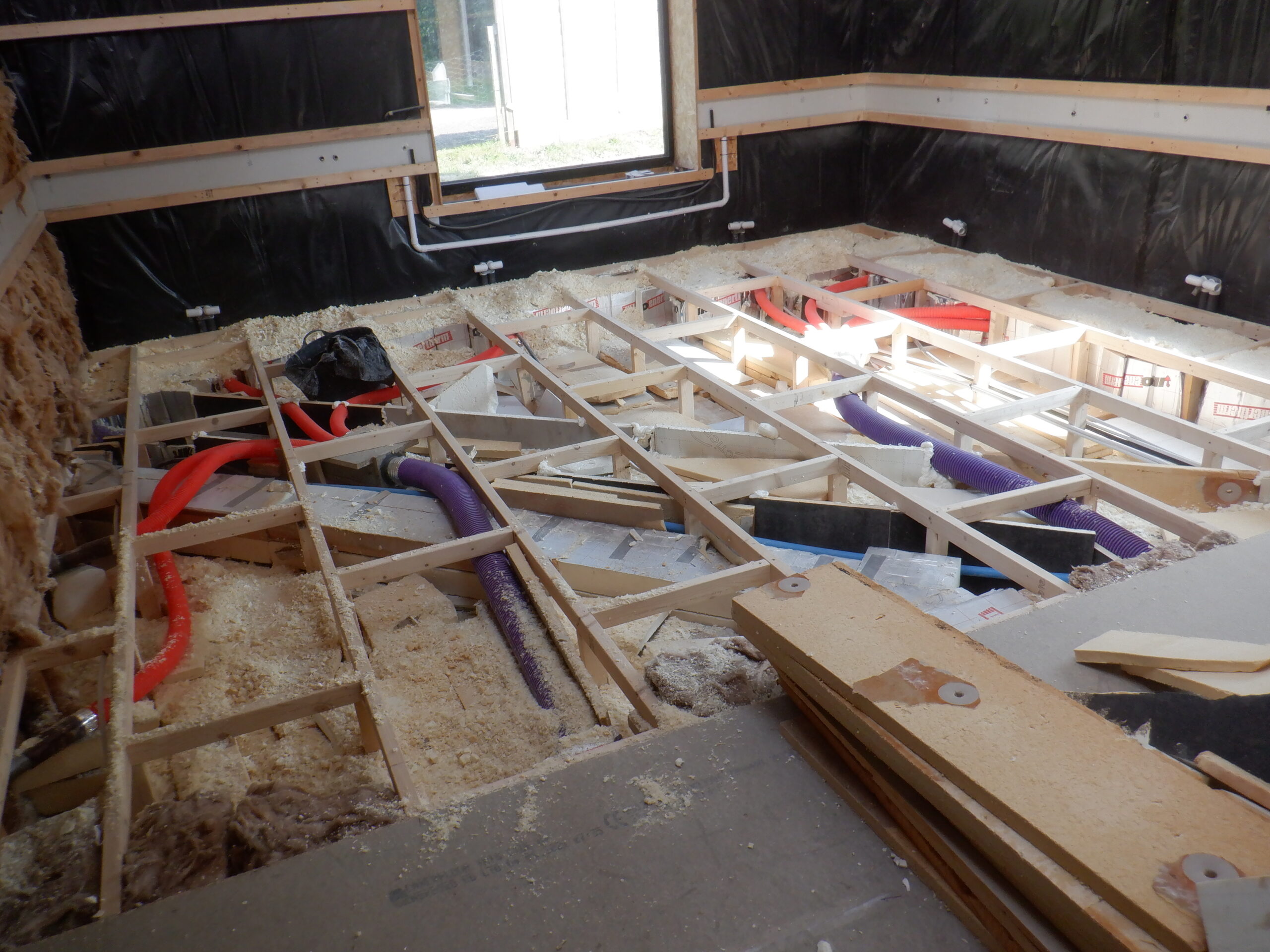
    Starting on second half 1

    Starting on second half 2
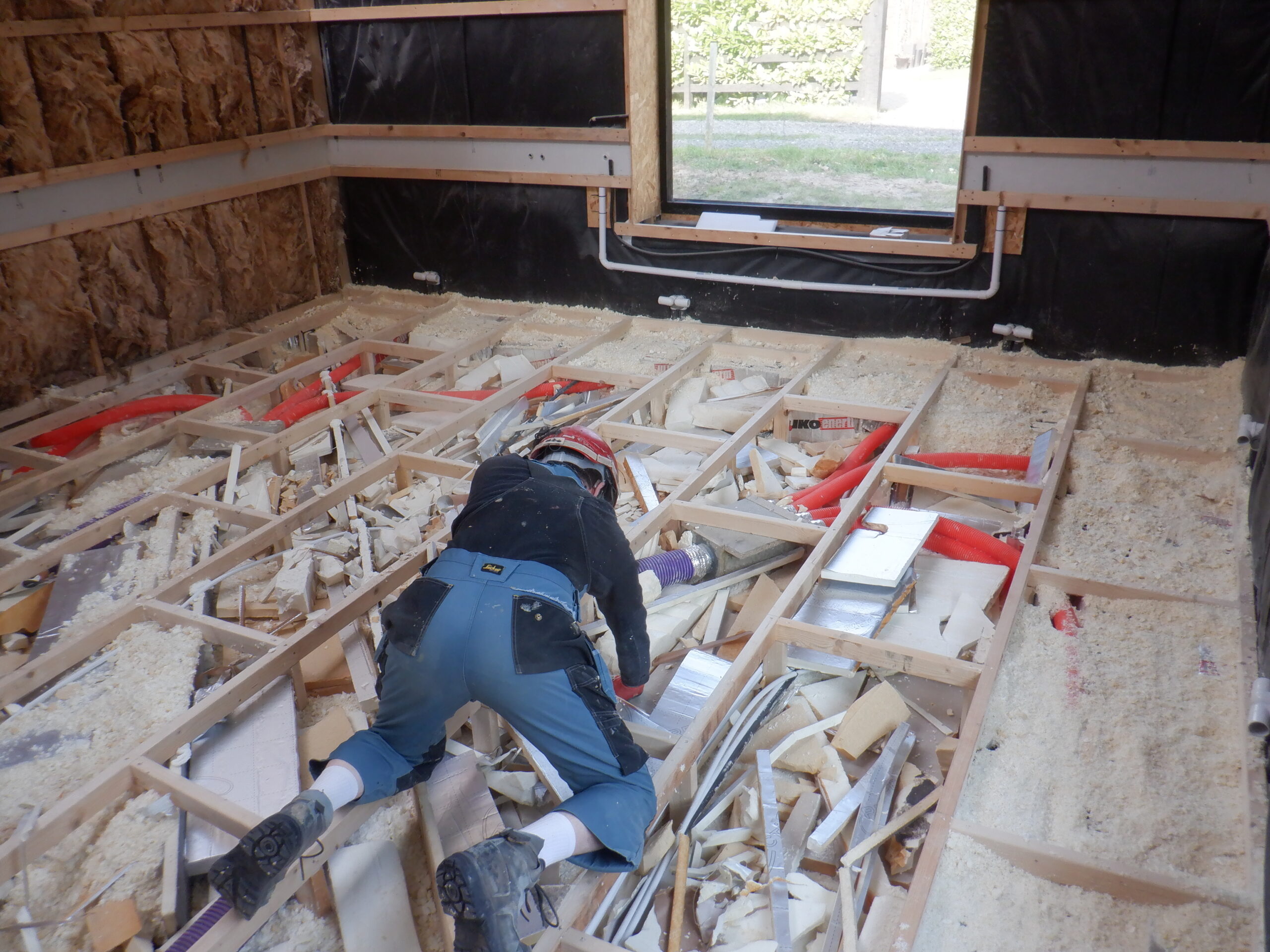
    Starting on second half 2

    Second half nearly filled
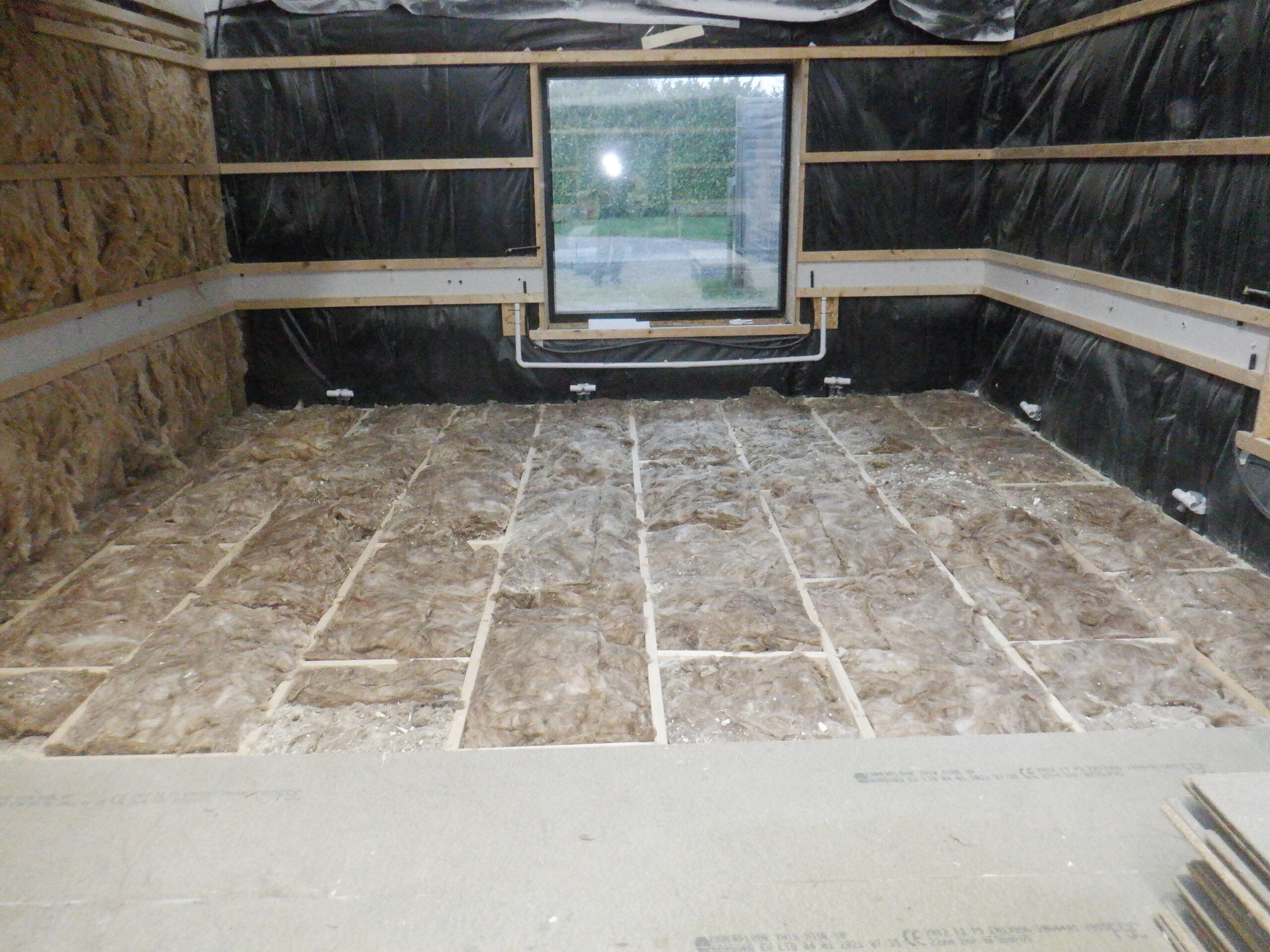
    Second half nearly filled

    Second half ready for floor boards

    Second half ready for floor boards


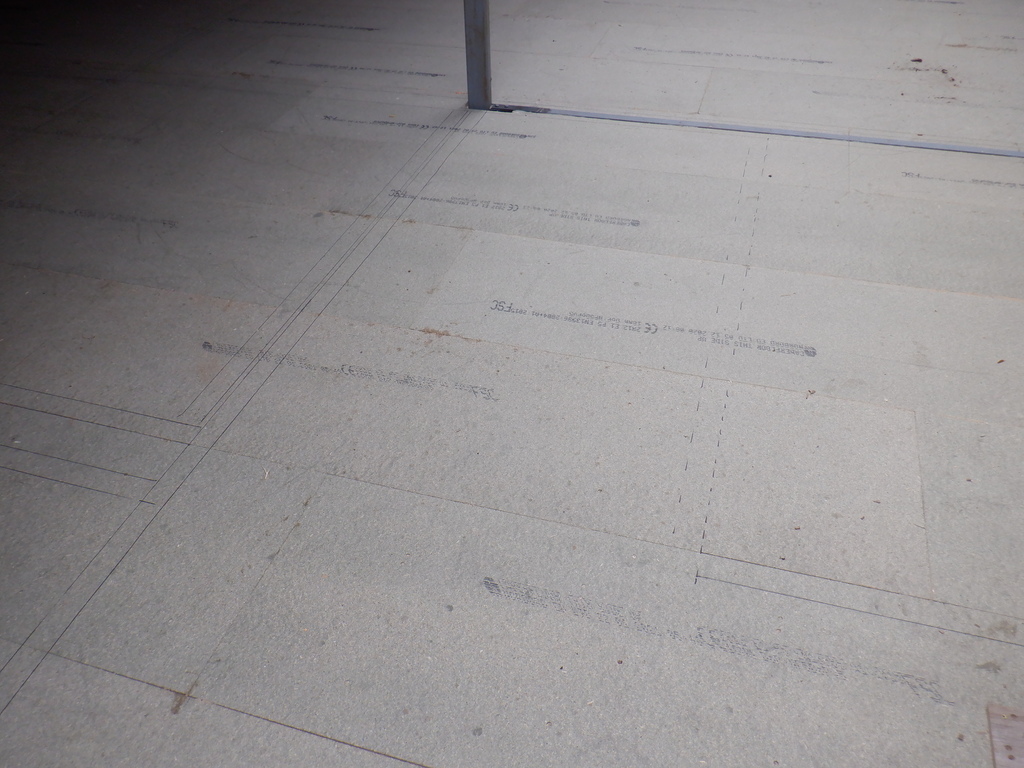
    We then could get on with laying down the final rows of the floorboards, getting them glued and screwed down, all the way to under the window looking out to the Loke. The rows that went over the Utility Services, we had to mark very carefully to exactly where the floor support framework is located because we needed to know precisely the positions of the “hatches” that we will cut out after the floorboards have been glued together using our construction PU glue instead of the PU spray glue. We also put a layer of parcel sticking tape on the surface of the framework so any excess glue that may leak through the joints, won’t permanently stick the floorboards down to our wooden framework!!
    The final job was to get our track circular saw and slice down 22mm (and a bit), to cut our floorboards to those hatch markings. It was a nervous moment because we couldn’t undo any of these cuts!! But, It Turned Out OK!!
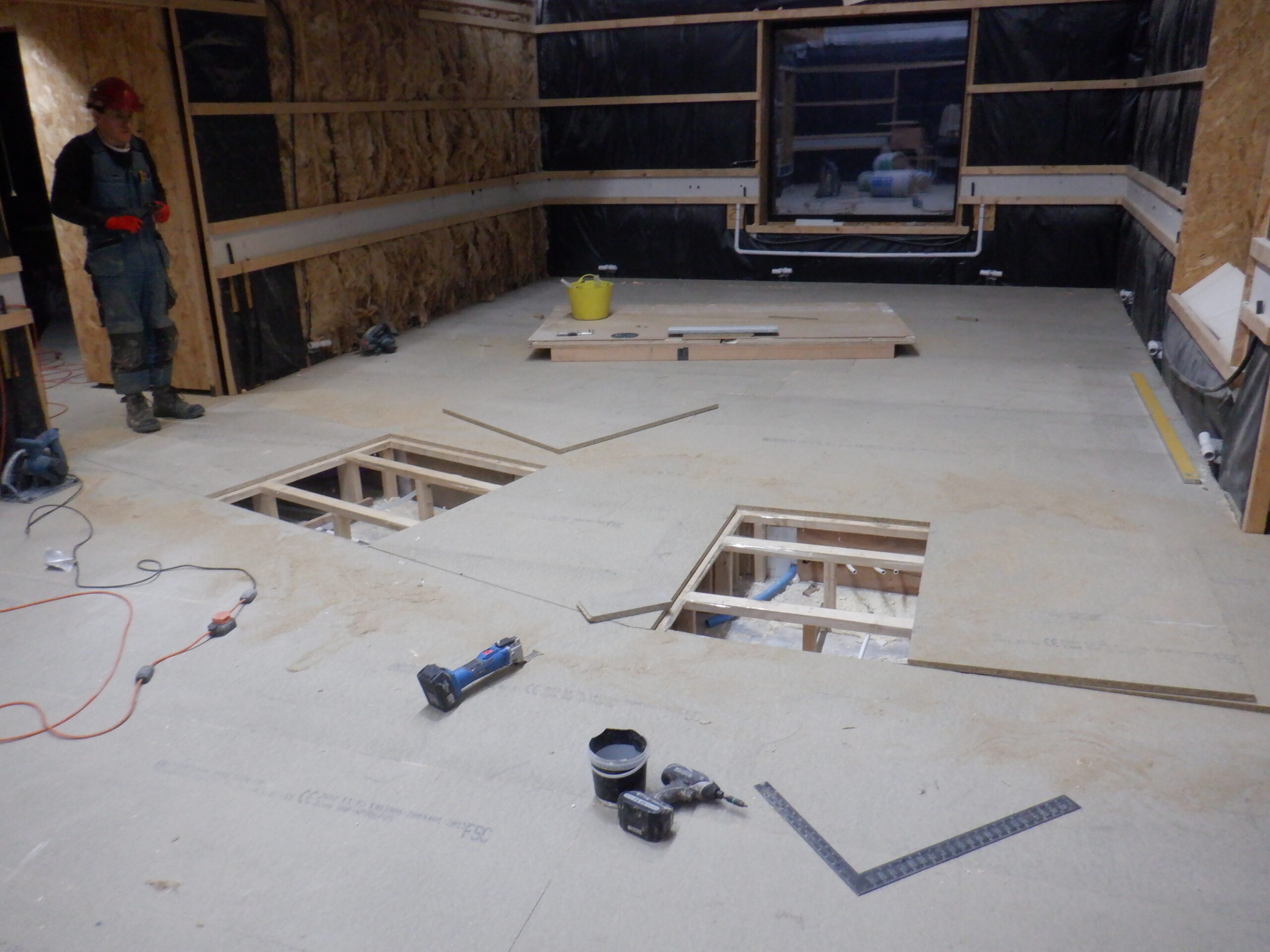
    Central Service area Hatches made

    Central Service area Hatches made

    That concludes permanently building the Great Room flooring, at long last! We can get on in building the walls next!
  • Started Work on Building Flooring Structure for Ground Floor Rooms

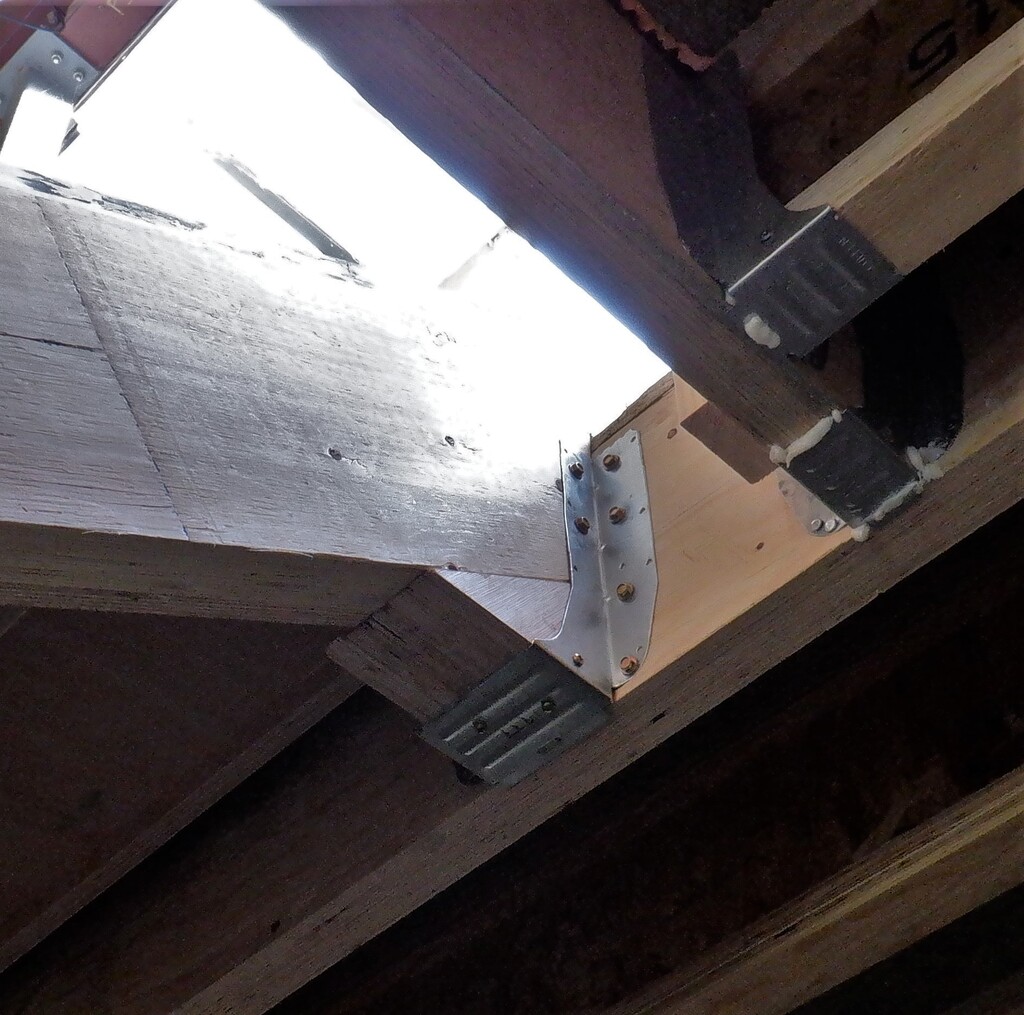
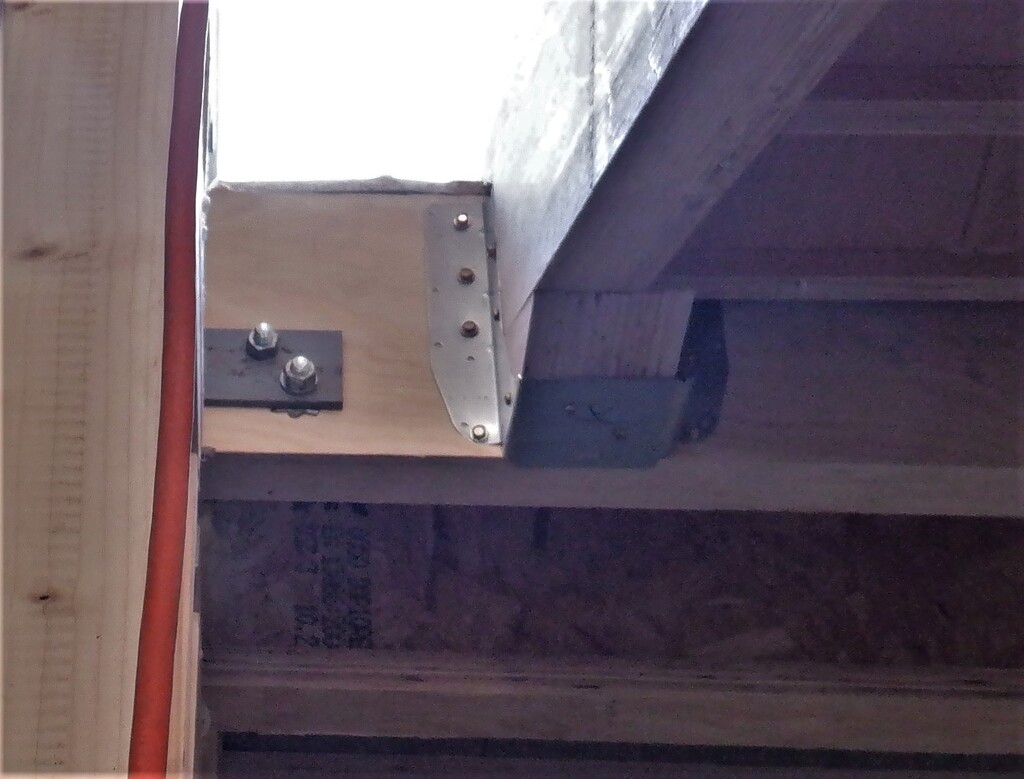
    We started the new week, after completing our staircase in just four days, by fixing up the metal joist bracket to the stringers at the top of the stairs. We had already made two triangle wedges and they were glued in on Saturday. The metal bracket was only screwed up this time because we want to have the possibility of moving the whole staircase when we come to install our stair lift module later. We are not sure yet whether we will have enough space either side of the stringers to mount cog wheels and other materials to build the parts of the stair lift. So the joist bracket are just screwed on and not glued ..yet!

    Bracket-holding-up-stairs-1

    Bracket-holding-up-stairs-1

    Bracket-holding-up-stairs-2

    Bracket-holding-up-stairs-2


    So onto the flooring job, we got out our green laser line generator and sat the device in the middle of the crossroads of our hallways and adjusted the height until we got the green line shining right on the 10metre mark, this being our Ground Zero line. We already had an 11metre mark on the metal leg “number 5” that is our reference point for the whole house so we measured down one metre for our ground zero, this will be our flooring level for our ground floor. We now have marked all the doorways (Kitchen, Great Room, Bedroom 1 & 2 & 3, Entertainment and Utility rooms) plus every other wall posts everywhere in range from the hallways, also doing the smaller rooms (toilet, tech and knick-knack cupboards etc) plus the front door and stairs too. We want to be able to place our laser line generator in each room separately and get the floor height exactly the same all over the house when we get to do that room.

    One of the first things we needed to do, after doing the laser calibrations, was to empty the content out of each room we want to work on, so in Bedroom 3 we had to move our solar water tubes and a heap of ladders etc. so we decided to move them, the solar tubes to our new storage area, mainly the first floor and its great expanse, to get them out of the way for the time being. But first, we felt the need to be a bit careful and clever, to position these items upstairs so they don’t impact too greatly on us working upstairs like building walls etc. To this aim, we marked out an outline of each room and their walls, these being the Creative room, the Study, the Workshop and the toilet plus all the “triangular voids” spaces and the large storage space behind the toilet over the top of the back rooms of the house.

    First-floor-rooms-marked-out-1

    First-floor-rooms-marked-out-1

    First-floor-rooms-marked-out-2

    First-floor-rooms-marked-out-2


    Then, we moved the six crates that holds our one hundred solar glass collector tubes from Bedroom 3 to upstairs and placed in the Study over the Entertainment room and front door. The heap of ladders etc. were moved to sit underneath the new staircase.
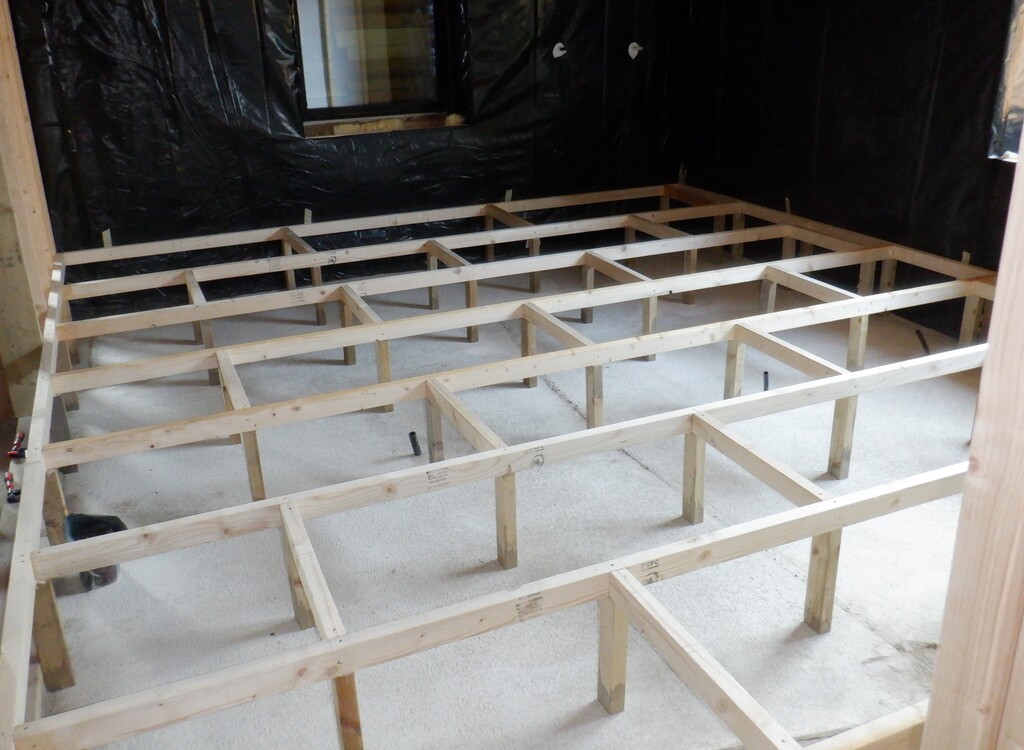
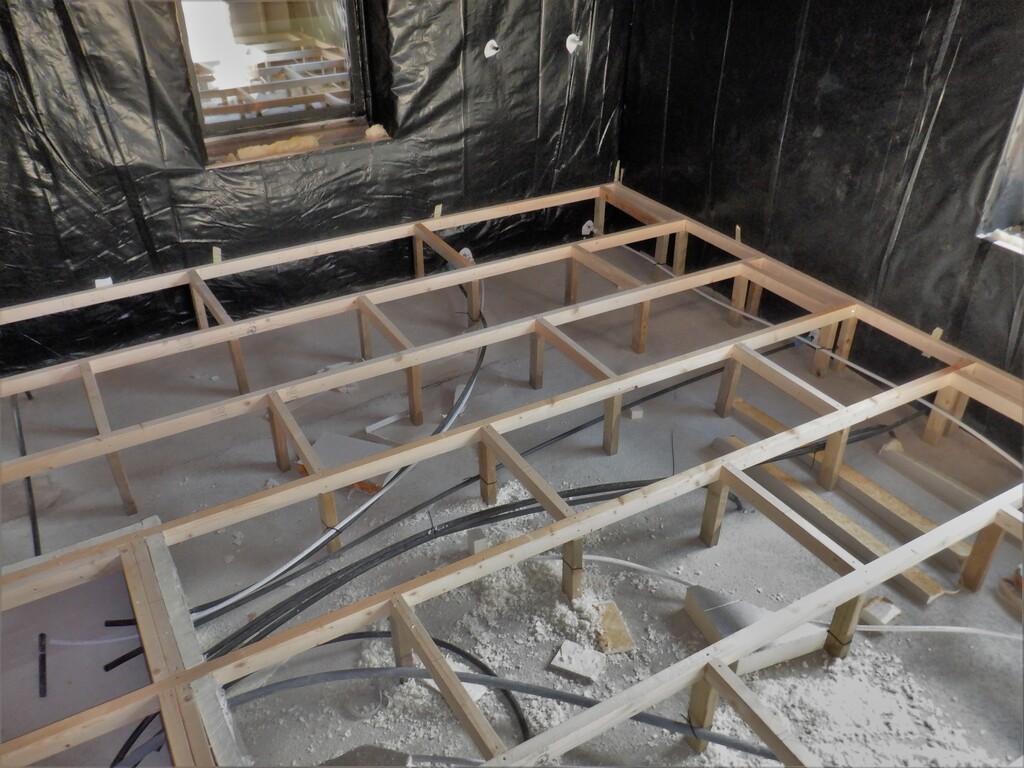
    This meant that we could and did get on in constructing the flooring for Bedroom 3 (the one next to the Utility Room) and got the laser to shine a green line right around the room, aligned to the reference marks at the doorway and carefully marked all the vertical posts and stuck masking tape on the black plastic to see the mark there too. Then slicing five lengths of our usual 63mm CLS timber, we nailed up a perimeter of a support framework that will hold the 22mm thick floorboards when we are ready for them to go down. The room is arranged in a grid pattern with 600mm spacing between the contiguous joists and an alternating noggings in every 1200mm in the opposite direction.

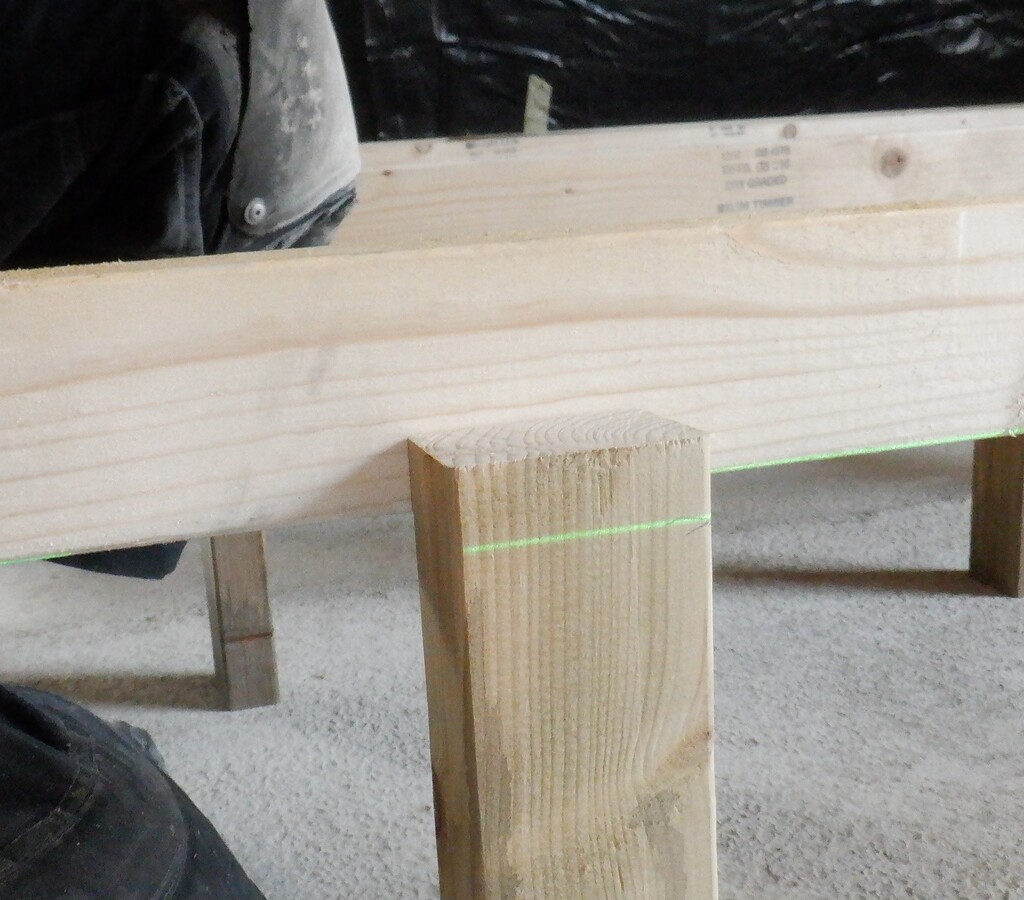
    We built a little laser hanger gadget that hooks on to the perimeter rail so the green light will be exactly the height of all the legs supporting all the joists and noggings. We cannot just simply measure the distance from the concrete floor surface, up to the underside of the CLS joist because both the concrete floor and the wood slowly rises and dips in random directions, hence this little clever hanging gadget to position the laser line generator to shine its green line against each set of legs to be trimmed.

    Laser-marking-leg-heights-1

    Laser-marking-leg-heights-1


    We are using our left-over treated timber for our legs, plus dipping the cut ends into more preservative treatment, all to protect the wood from rot if we ever got a flood under our floor, we don’t want to find that our flooring supports started rotting after a decade or two and find our floor sagging. So we are dipping the cut ends into a trug that has black died preservative and therefore we would know which end to put downwards.
    But these little legs are only 63mm wide (by 38mm in the other dimension) so aligning the leg underneath the horizontal joist (which is also 38mm thick) would poke out only by 25mm. This is plenty enough to support noggings but only on one side at a time. This means that we staggered the noggings in each row so the whole room is evenly supported across the floor.
    Bedroom3-Floor-supports-in-place

    Bedroom3-Floor-supports-in-place


    The next job was to sort out the bundle of water pipes and cable conduits that runs across the room, from the external walls, from underground and passing through from the Utility room. We did the hot water pipes first which comes along from the Utility in 28mm pipes and curves towards the en-suite. We had always planned to have 28mm diameter pipes, to hold a high volume of water flowing throughout the house and also we wanted to constantly keep this hot water supply hot and active, ready for any demands. This means that we have two hot water pipes running alongside each other, a “flow” and a “return”, just like in a traditional central heating systems. But we recognised that there could be a good deal of heat loss, and money, in a constantly circulating system, losing energy around the loop all the time. So to this issue, we put down two layers of 100mm thick PU foam boards, sitting on the concrete and cut a slot in the top of the second layer for the 28mm pipe to sit snugly in.
    Bedroom-3-Hot-water-pipes-layed-in-insulation

    Bedroom-3-Hot-water-pipes-layed-in-insulation


    Then a 90mm thick “lid” went over the top that brings it up to the underside of the wooden floor supporting framework. The rest of the space on either side will also be filled in with more insulation so this hot water system will be as protected as possible against heat loss and provide our whole house with quick supply of hot water when we want it.

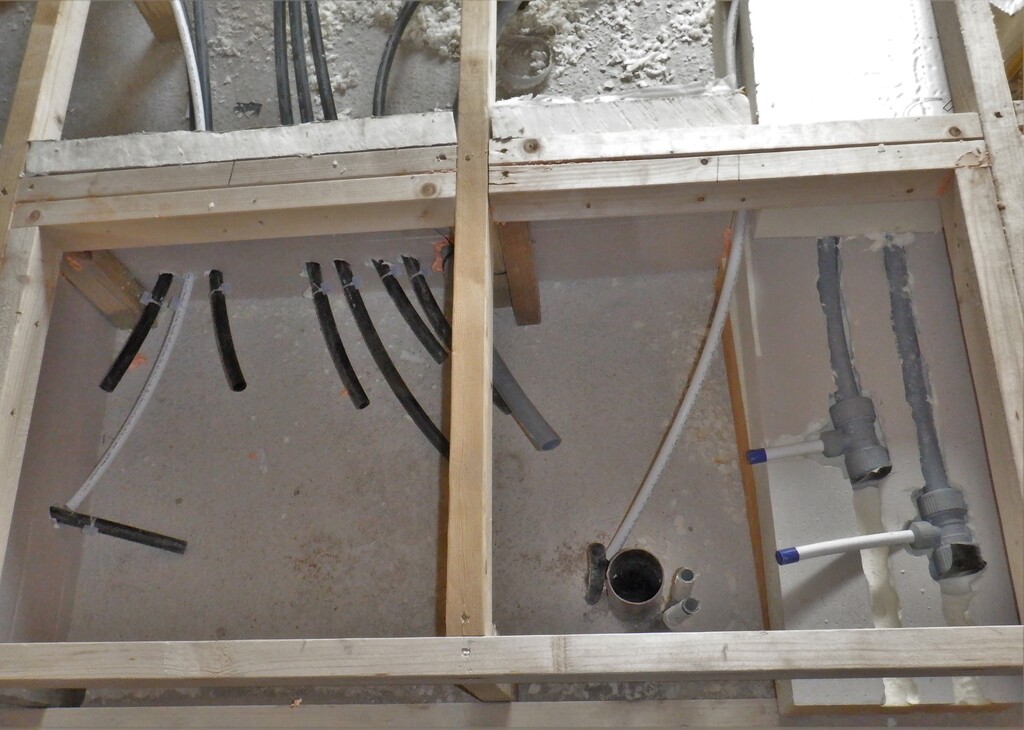
    The cold water is also supplied in a 28mm diameter pipe but that is running “loose” nearby the hot insulated pipes and all three are routed to arrive just outside the en-suite doorway where we will have a liftable panel cover to gain access to the various controls and devices to condition and supply the water needs for the basin and shower in the en-suite. We built an extra framework around this area to support the “lid” and also inserted vertical PU foam boards to act as a barrier to keep the loose insulation in the rest of the room from “leaking” into our inspection and servicing chamber.

    Then we connected up more water pipes, this time in 15mm diameter pipes that connects to our Energy Module (a buried tank of water), a pair of them so we can exchange the energy (hot water) from the tank to the Utility room and back again. the pair goes into conduits that were fitted to provide a “high” and “low” extracting points so we can draw off the floating hot water and put in new hot water down in the bottom of the tank. These 15mm pipes are only intermittently used so they don’t need a great deal of insulation, just the normal floor insulation to keep it warm while it is being transferred to and from the Utility room. The other 15mm pipe going into the Utility room is a connection to our Swimming lane. We did an external connection (drilling through the concrete wall) several months ago and so we laid in this pipe too. This Swimming lane connection will provide a source of cold water to help “sink” any excess heat away. The Swimming lane is a 25,000 litres of reasonably cold water to make use of!

    The final 15mm water pipe is also an external connection but this time, it is a low-volume irrigation watering system to serve the garden in and around the this end of the house and this 15mm pipe only needs to travel to our servicing chamber we have already made. At this point, a computer controlled water valve will be installed and connected to our cold water supply later on when we have designed and built such devices. The other connections to our servicing chamber are empty conduits, the first two being also irrigating watering feeds but this time up to the Eves for any hanging baskets etc. The final five other conduits snaking across the room are the temperature probes that will monitor the regions immediately surrounding our buried Energy module. All these conduits are 20mm diameter black polyethene pipes and we joined them to the sticking (out of the concrete) up portions using short length of the fatter 25mm polyethene pipe which fits perfectly and very tightly providing a smooth joint and transition for our cables and sensors when we push them down the conduits.

    Bedroom3-Plumbing-access-area

    Bedroom3-Plumbing-access-area

    Bedroom-3-Conduits-in-floor

    Bedroom-3-Conduits-in-floor


    We are not quite ready to put on the lid or fill the space with the insulation rubbish because we got other tubes to lay in the floor, this time for the air supply. We are going to have four 50mm conduits running from the hallway, next to the doorway, and branching out to the four walls, to distribute the fresh air. We will have a air channel just at the bottom of the walls to spread the air out and enter into the room itself in a gentle flow, without too much disturbance to the feel of the room. We won’t be able to totally avoid any movement as it is meant to be providing fresh air and drawing the old stale air out at the ceiling, just like as if the windows are open on a warm day. Another set of conduits are needed to be laid in, this time to route the electricity cables from one side of the utility channel to the other side, going around doorways and windows. This will be done when our delivery of new twin wall plastic tubing arrives next week.
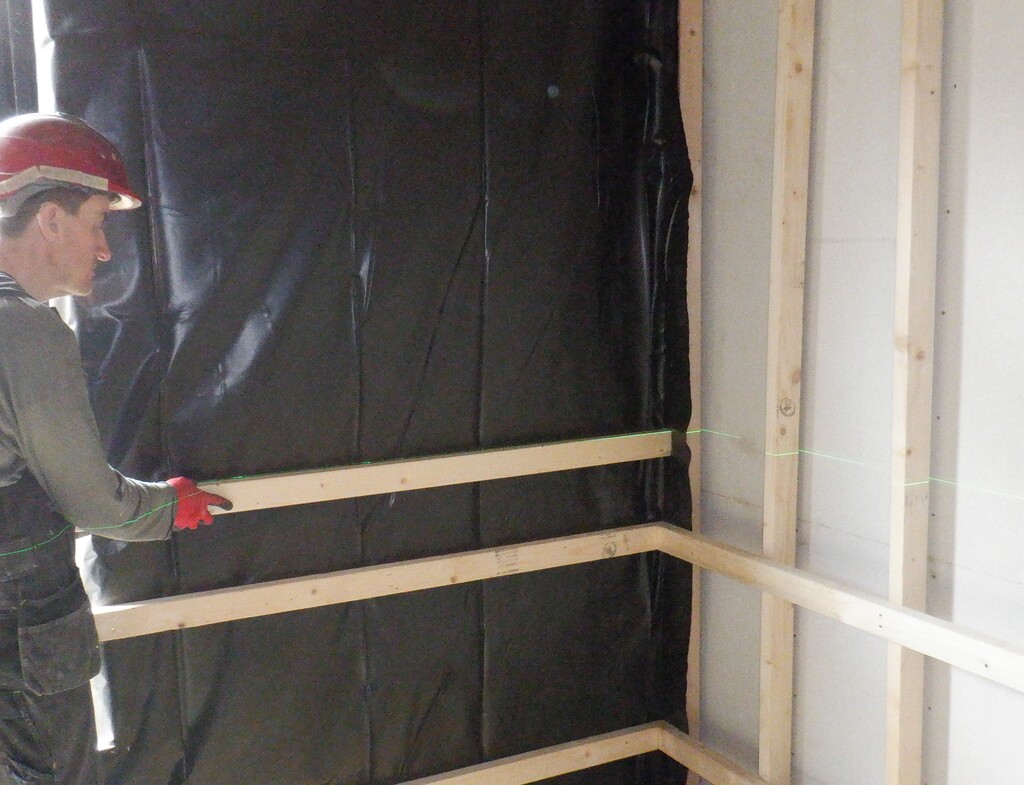
    In the meantime, we started on the task of nailing up the horizontal wooden rails, we called these utility rails because their function in life is to provide the space for our Utility Channel that goes around the whole room at the 800mm to 900mm height, plus also we are using this separation to allow for the air channel to run around the room too, down near the floor. Each of these horizontal CLS rails (our usual 63mm by 38mm timber) are positioned as follows:

    • 235mm off the floor (air channel)
    • 772mm (bottom boundary of utility channel)
    • 1010mm (top boundary of utility channel)
    • 1703mm (mid support point for wall board)
    • 2422mm (support of wall boards at top of wall)

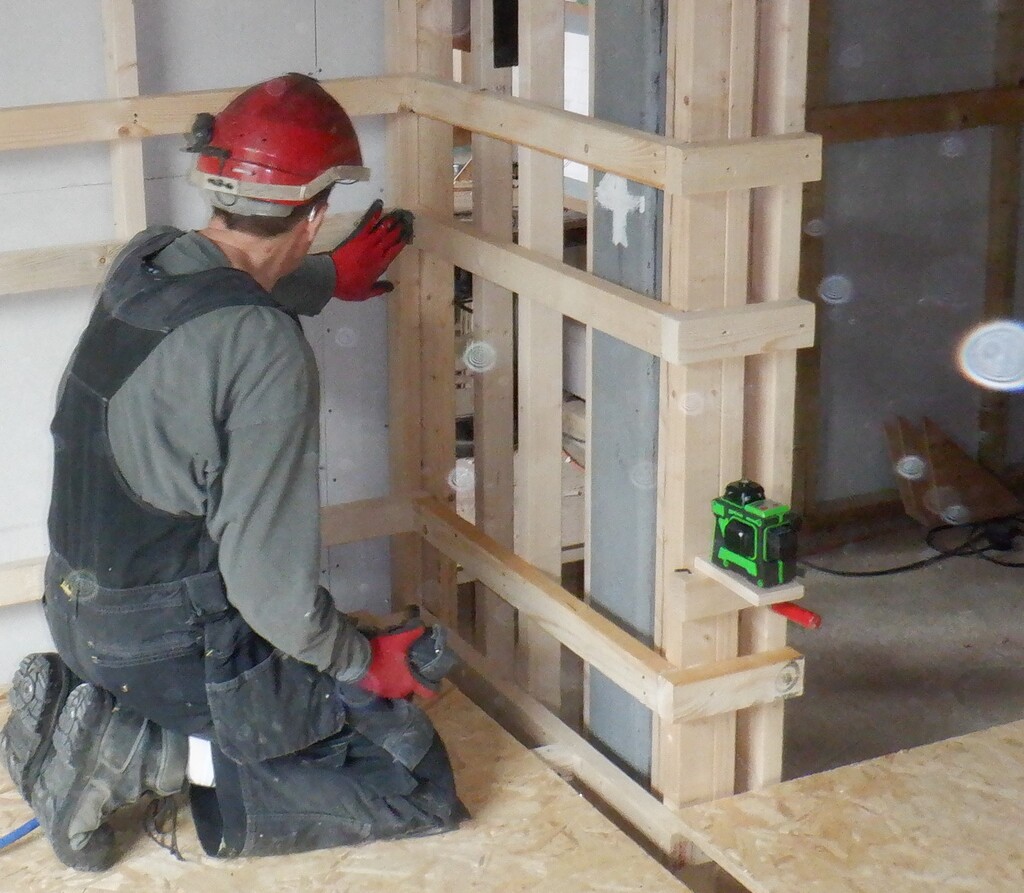
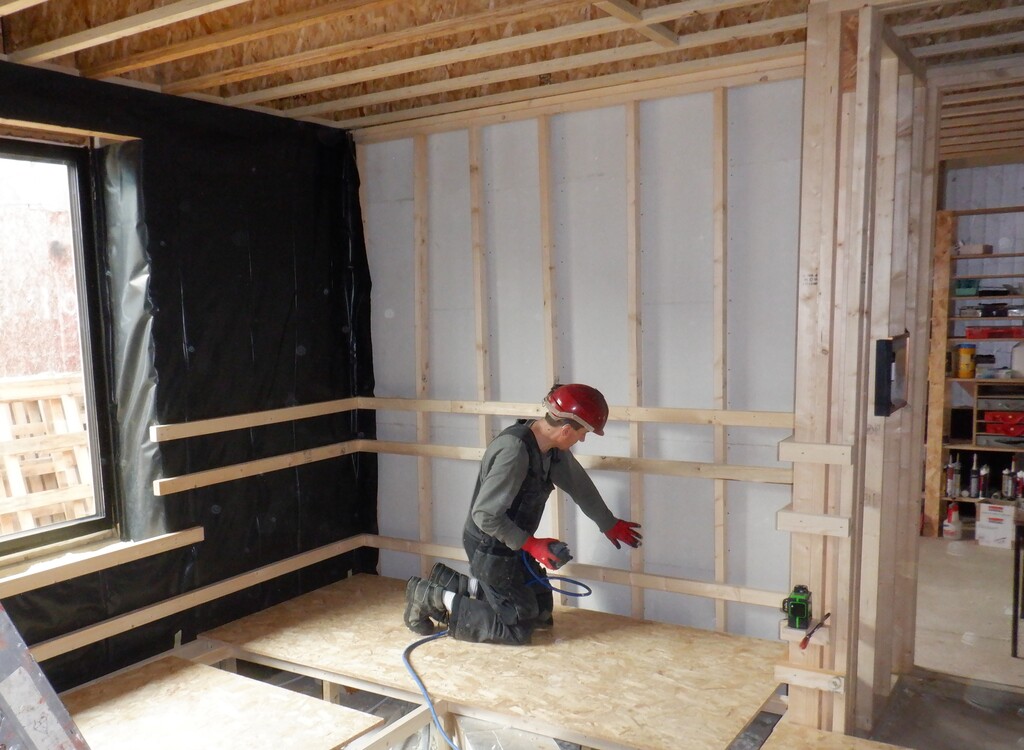
    These measurements are for the top edge of the CLS timber because we can see it with our green laser light (more later on) and a 22mm offset is also added because we are measuring from the floorboard supporting framework that will have the 22mm thick floorboards laid down later on. We marked the door post with these measurements and then clamp our green laser line generator which is sitting on a small shelf at each measured mark. Then we went around nailing up lots of CLS timber to create the wall framework for holding up the finishing surfaces and of course to provide the space for our electrical sockets etc.
    We started using our left-over timber (a large pile of it in the kitchen) to form these horizontal rails by using a biscuit joint to join smaller lengths together. We also inserted a horizontal rail at the window seat level, this one being 500mm off the floor surface.

    Aligning-a-rail-to-the-laser

    Aligning-a-rail-to-the-laser

    The-laser-bracket-clamped-to-the-wall

    The-laser-bracket-clamped-to-the-wall

    First-three-rails-fixed

    First-three-rails-fixed


    That concludes the work so far for this week and we will carry on next week with the wall support and laying in more conduits when they arrive.