Category: Utility Room

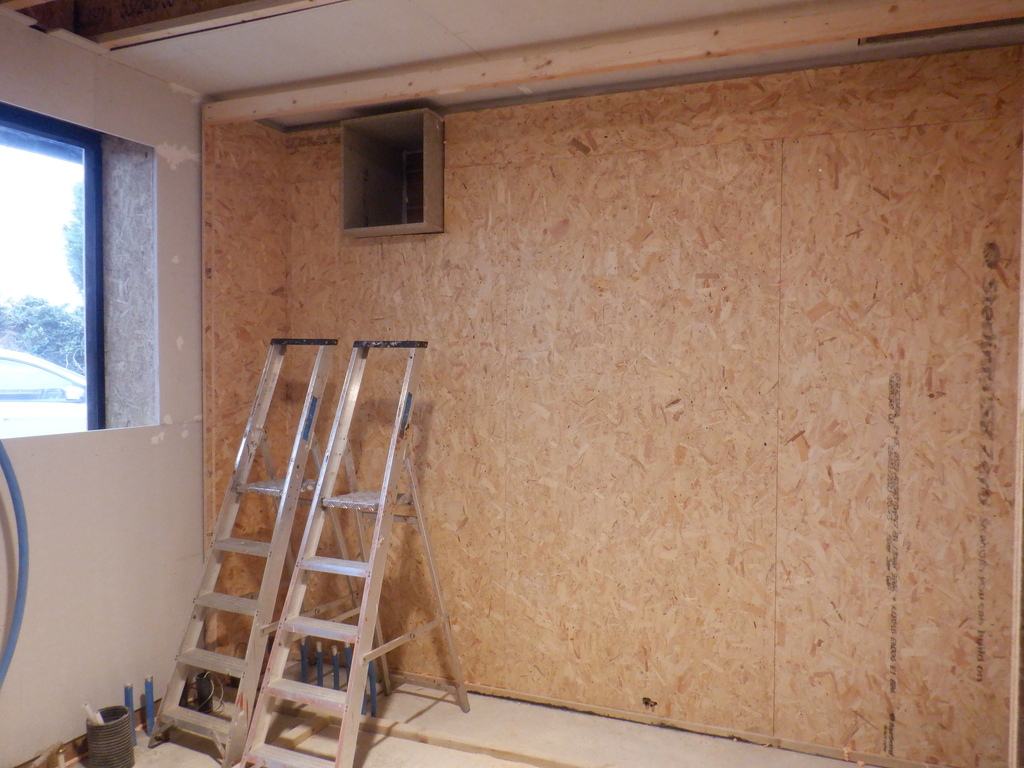
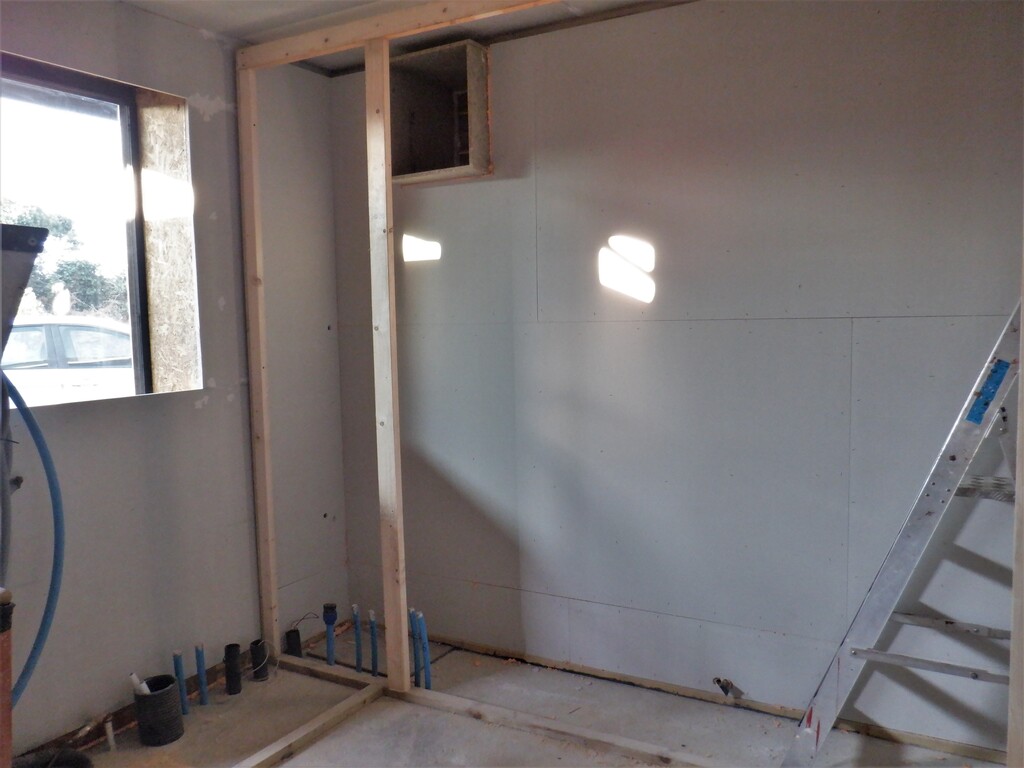
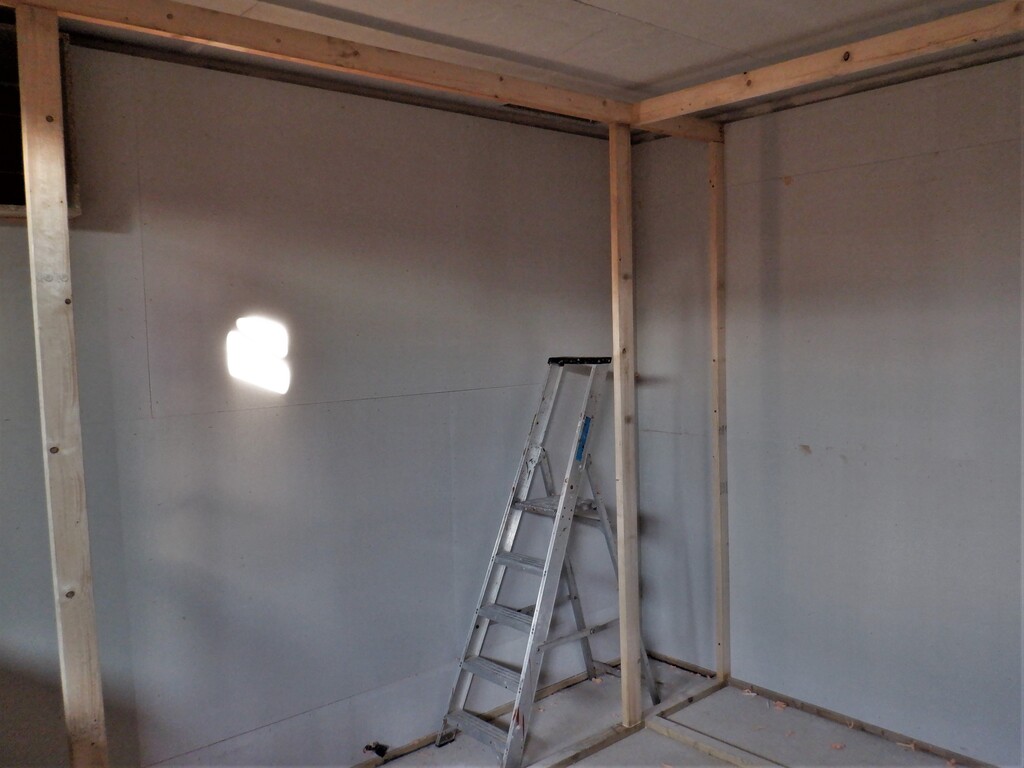
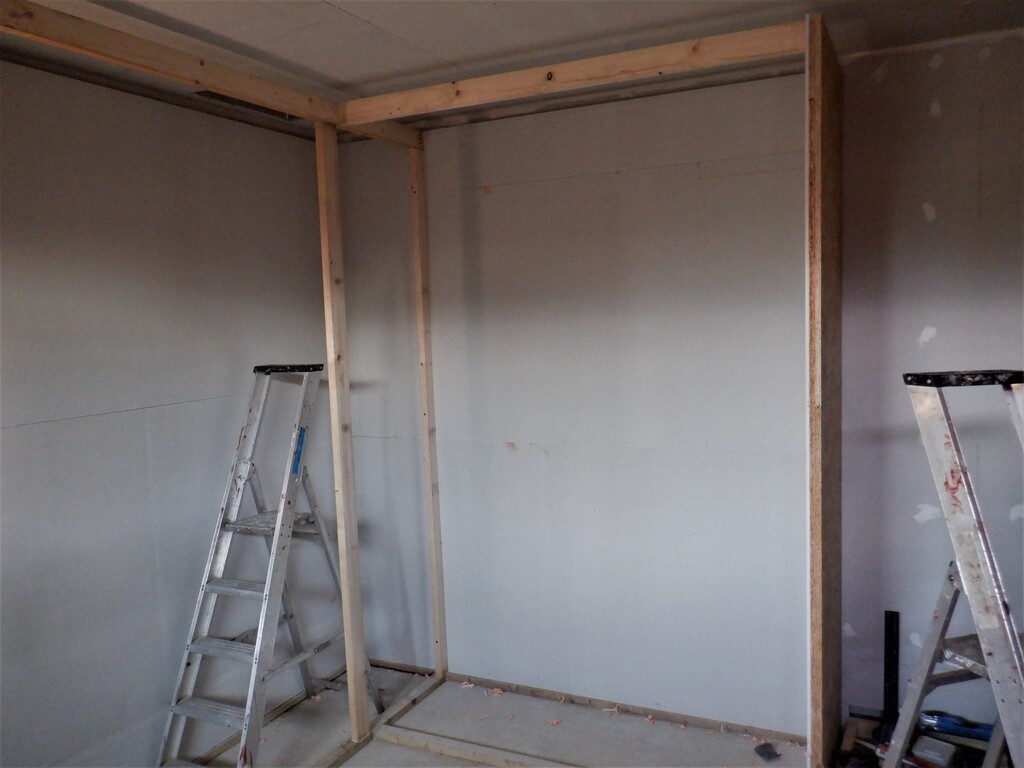
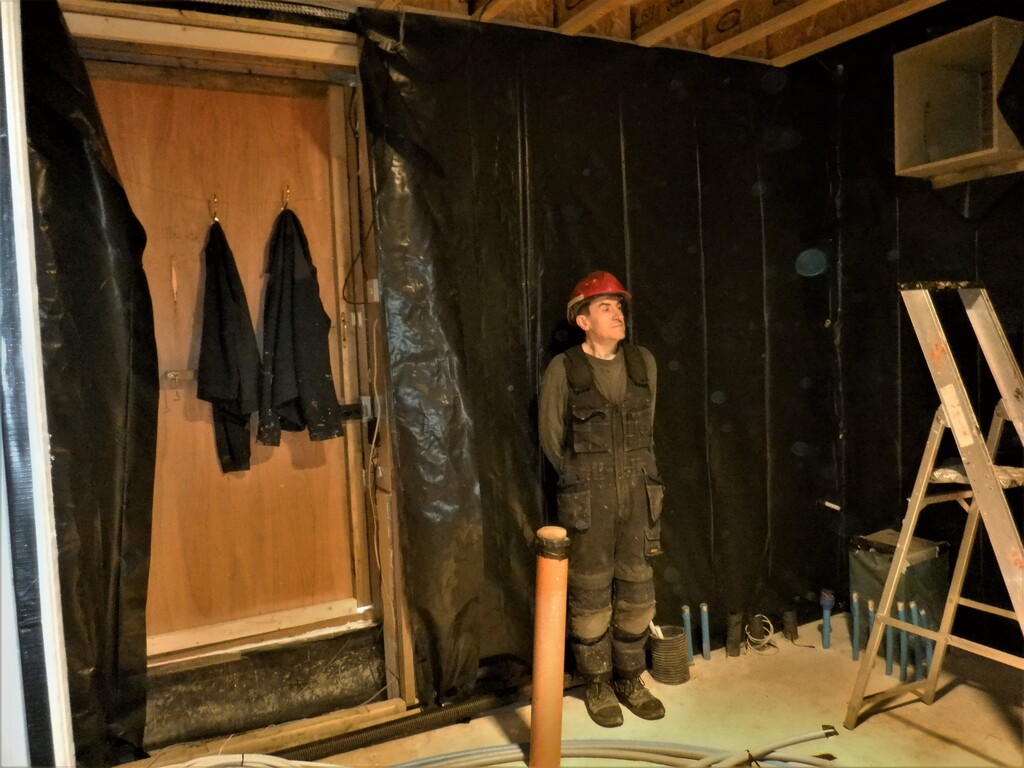
The ground floor Utility Room with sound proof Machinery Cupboard, airing cupboard, washing machine, sink.
Side door access to garage and driveway.

  • Plumbed in the Hot Water Tank and the Pump into Hot Water System

    We got on in tackling the next task of connecting up the Hot Water tank and the Pump to the pipework that is running around the house. This high capacity 28mm pipes forms a circulation system to supply constantly hot water to all our rooms. We started at the Hot Water tank and we have six connections to do. They are as follows:
    • Overflow
    • 28mm High and Low
    • 22mm to internal heat exchanger coils
    • 15mm Filling
    We needed to get these pipes out from the Hot Water tank, over the other side of the vertical air duct, to bend down towards the concrete floor of the Utility Cupboard. We needed to avoid the various removable hatches and modules on the air duct itself so we screwed on a couple of horizontal battens on the side of the air duct to help guide and anchor the pipes into place. That copes with the five water pipes but the Overflow pipe is different. This emergency piece of pipework needed to get down pass everything and then run horizontally off towards a U-bend trap, ready to go further into the waste pipework. We dealt with this pipe first because it will get covered up by all the other pipes. So we routed it out horizontally for a few inches from the tank and then immediately turned 90degrees down against the insulation until it reached the air duct that disappears under the floorboards. We then turned 90degrees, plus a little 45degrees horizontally so that we could run the overflow pipe horizontally along just inside the wooden framework of the cupboard, making sure that it constantly is travelling on a downwards slope. All the joints were solvent welded together so it is now permanent.
    Hot Tank Overflow

    Hot Tank Overflow

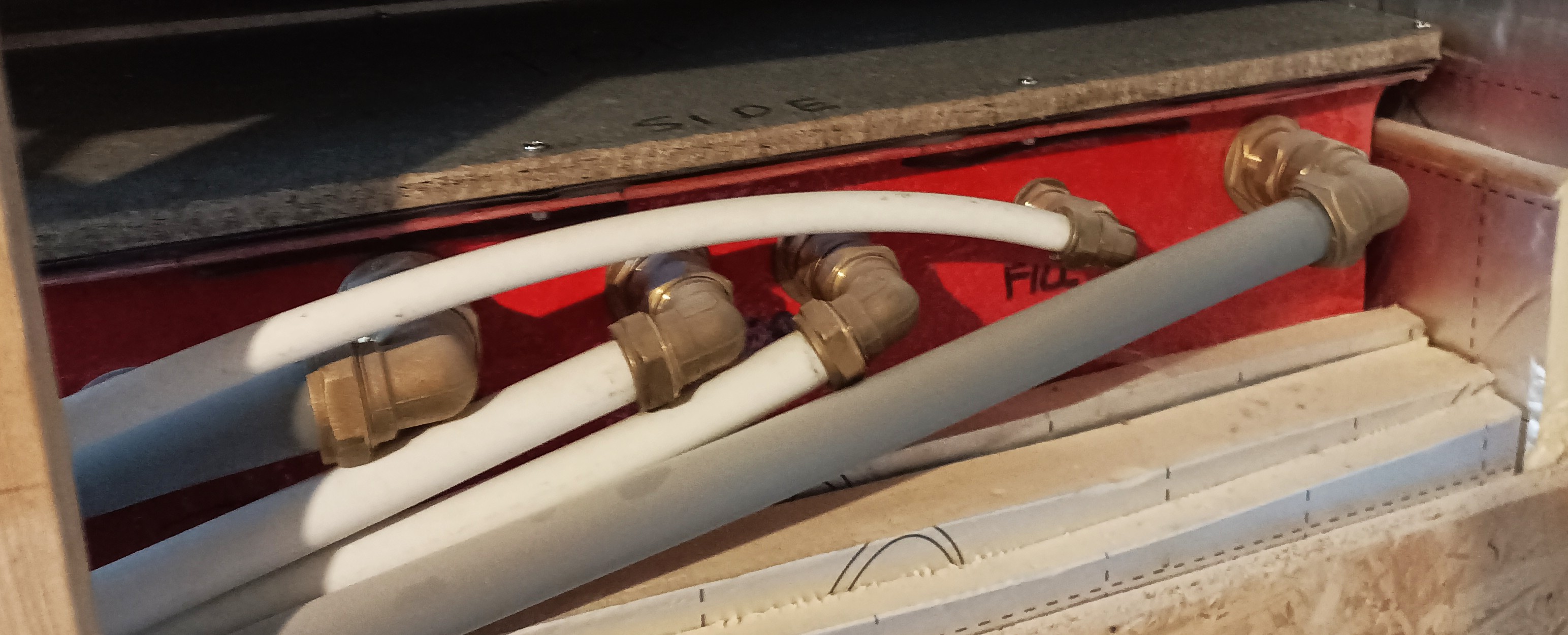
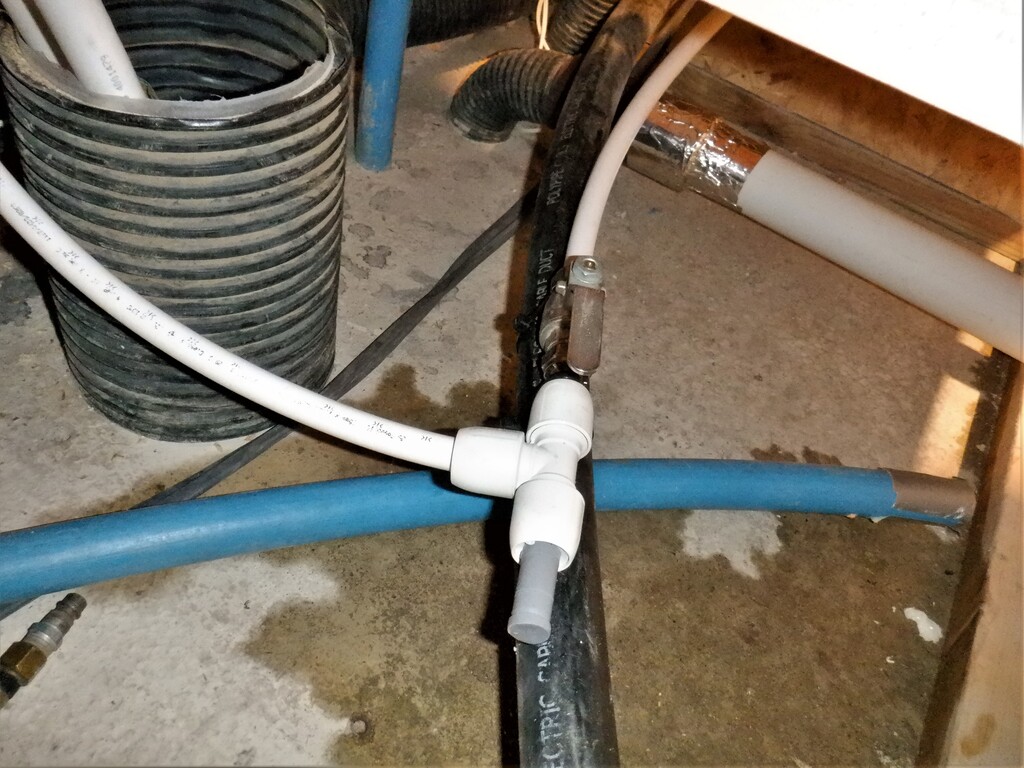
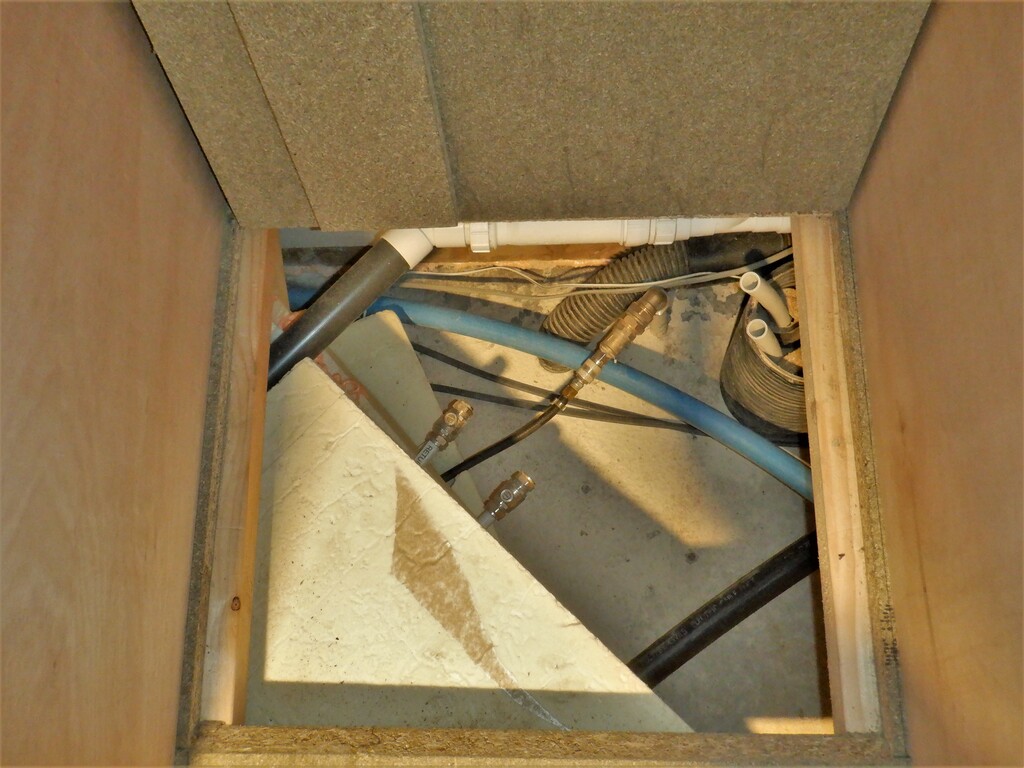
    The next pipe connection to do on the tank is the 28mm diameter pipe that sends the water deep inside the tank. This is our Low filling point and the water will always flow down this pipe and push water down at the bottom of the tank. This means that the circulating hot water coming back from the rest of the house, will immediately connect to this pipe. The hot water return comes into the cupboard, goes through a T-junction with a 15mm side connection that has a shutoff valve and a garden hose connection point (for allowing drainage of the pipework). The other side of the T-junction immediately has a right angle compression brass piece which connects to a length of 28mm plastic pipe to go up and bends around to connect to the tank we mentioned already.

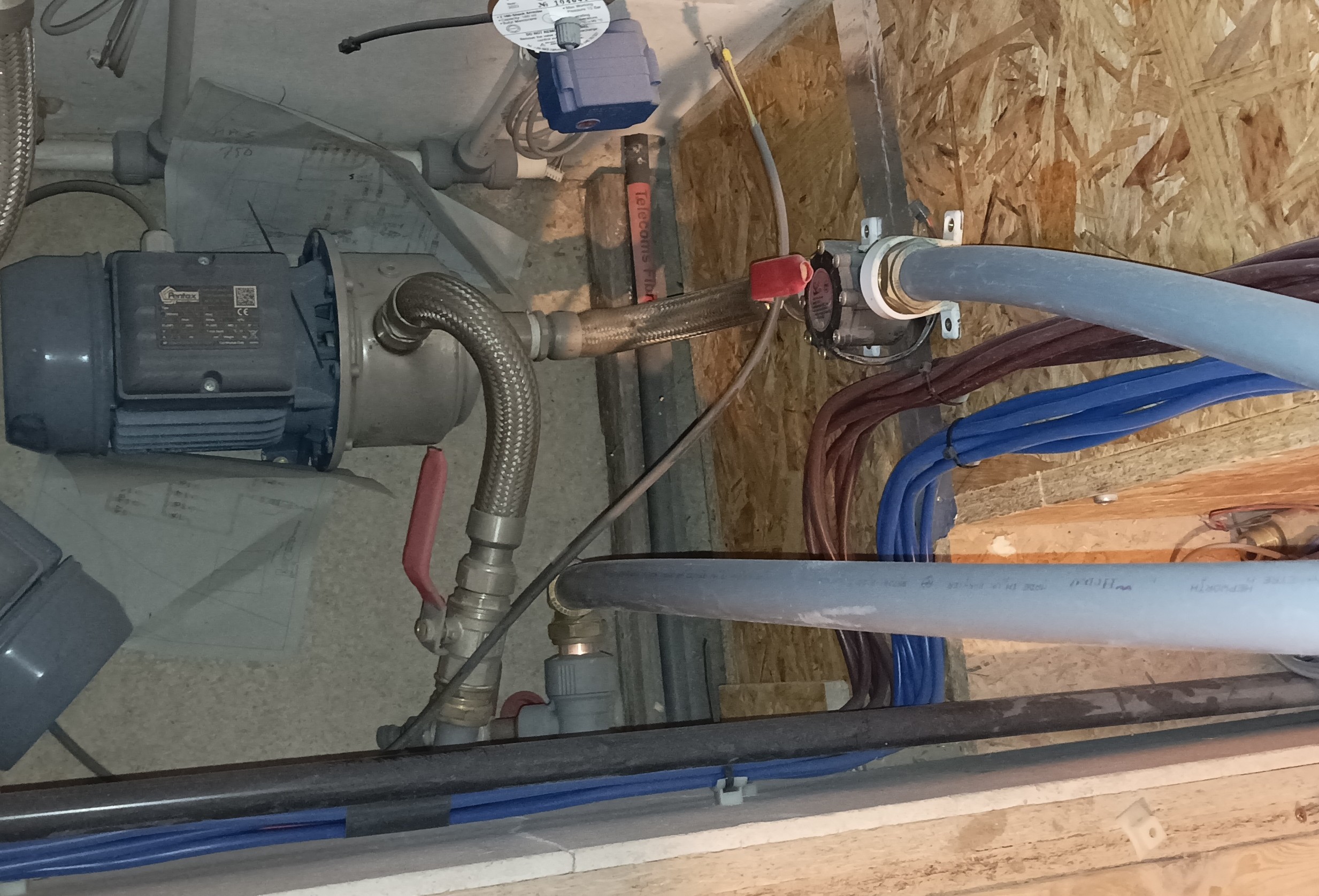
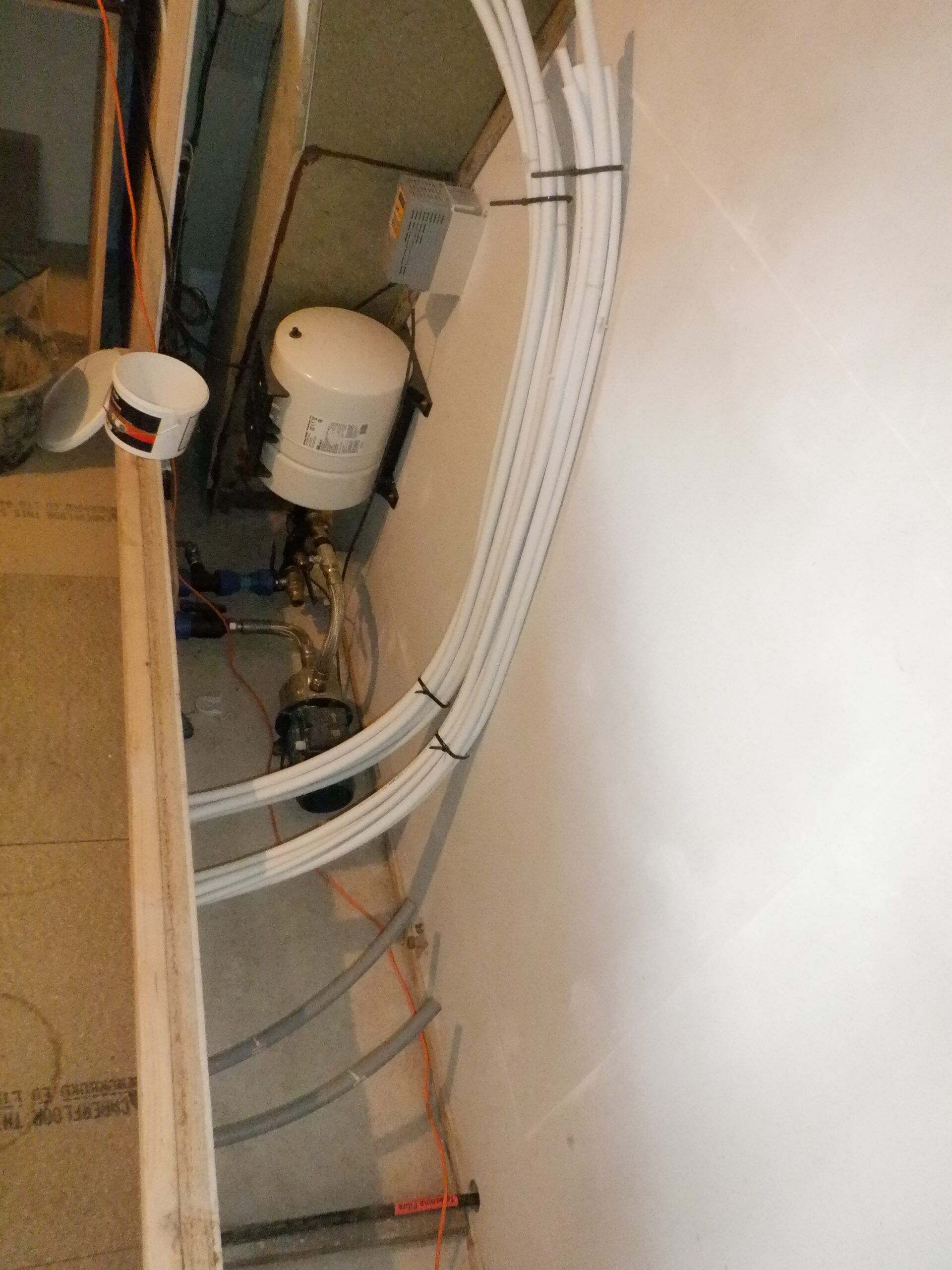
    The next connection on the tank is the first of the 22mm to the heat exchanger coils and that came out and also followed around in a gentle curve but diverted back towards the wall once it is across the air duct, ready to be connected to all the Water Management System. We repeated this with another 22mm pipe to connect to the second tank connection. The next point along the side of the tank is the 15mm filling point and again, that came out and also followed the route of the other 22mm pipes, back to the Water Management System. And finally, the last connection, is the second 28mm pipe for extracting hot water and sending it around the house. This pipe came out just like the other ones, and it curved around but, this time, goes slightly backwards so that it can connect to another isolating manually operated valve and a flow rate sensor, before going through a flexible rubber pipe to join to the pump. The other side of the pump then bends around in a tight sweep to go down to the second isolating valve and then connected to the main 28mm circulation system running around the house.

    Hot Tank Connections

    Hot Tank Connections

    Hot Tank Pump

    Hot Tank Pump


    The next task to do, before we can test the circuit and all our connections, is to go around installing a pair of isolating valves at each tap-off point at each of the Bedrooms, Bathroom, Great Room and the end of the circuit in the Kitchen. In the Kitchen, we installed a short length of 15mm plastic pipe to join the two ends together, so that we can test the circuit for any leaks.

    We then tested the plumbing by sticking the garden hose into the hot water tank and shoving the hose up the second 28mm extracting pipe inside the tank, to fill up the entire pipe circuit running around the house. We had to do that because the pump needed priming (filling it up with water) so that it has something liquid to suck upon. These kinds of pump do not run dry and cannot suck air, hence the need to prime the circuit with water and remove the trapped air inside. While the water was going in, we went to each tap-off point and check for leaks.
    None so far ..

    Once the pump is primed and connected to the electronic controller, we ran the pump at various speeds and pressures, to thoroughly test the entire system and make sure we don’t have any leaks. AND, We didn’t !!

    The flow rate sensor was sending a pulse every litre that is flowing through the pump every second and at the highest power setting, we managed to get a 47litres per minute rate. And that is with a little 15mm pipe acting as the temporary bypass in the Kitchen. If we had a full size bypass, then the rate could be quite a bit faster!! And this is deliberately what we want to see, so that when there are sudden demands of hot water in two or three different locations, the pump can adjust itself to supply even more hot water and the human won’t notice the change, especially something like the shower.

    This concludes getting the Hot Water circulating system commissioned and not having any leaks!

  • Installing Air Ducts Underneath Utility Room and the Hallways

    Today, we started the task of installing the air ducting for our fresh air. We decided to tackle this particular job now as we are waiting for more building supplies to come, plus also, we are waiting for warmer weather to stop the condensation from forming up in the Skylight. We need to dry out the moisture before we continue replacing the lining up in the Skylight.

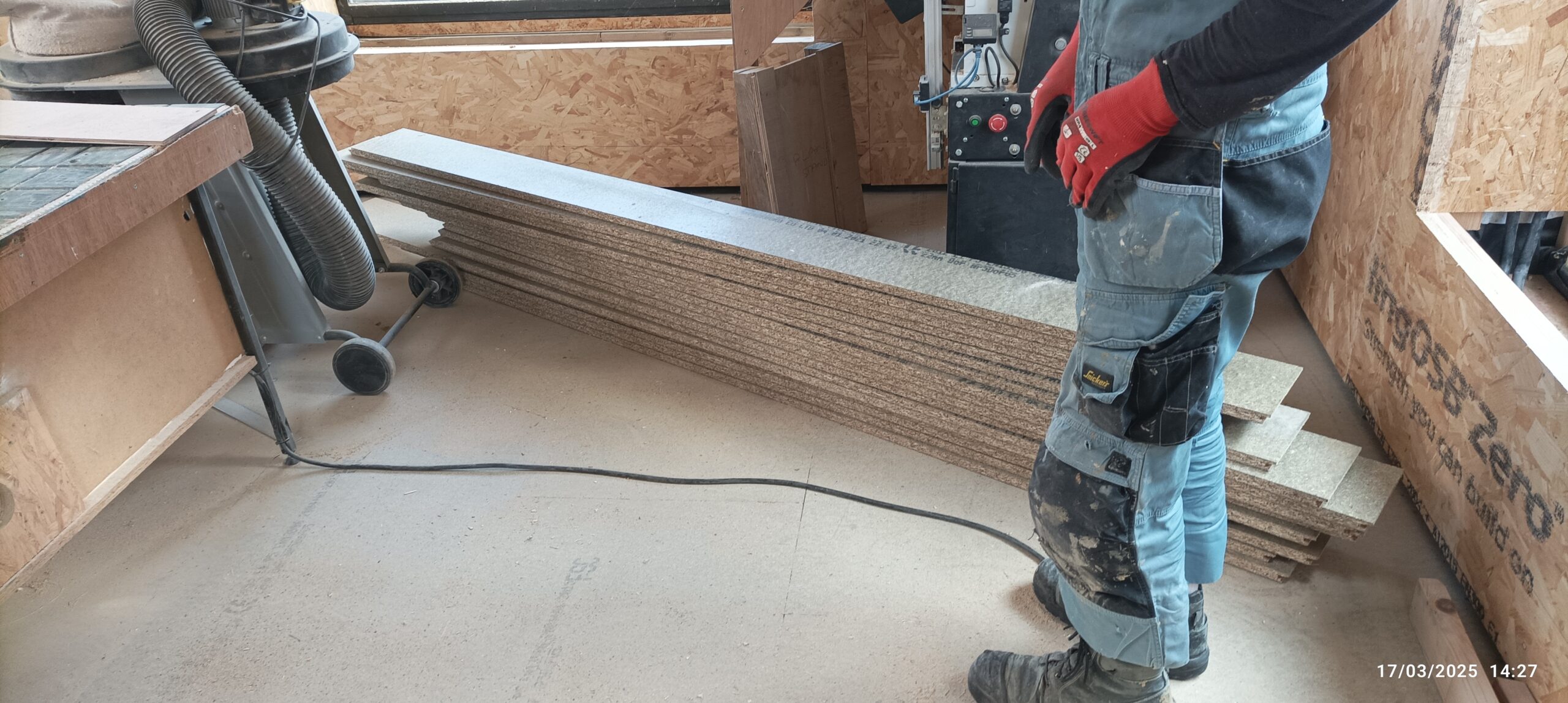
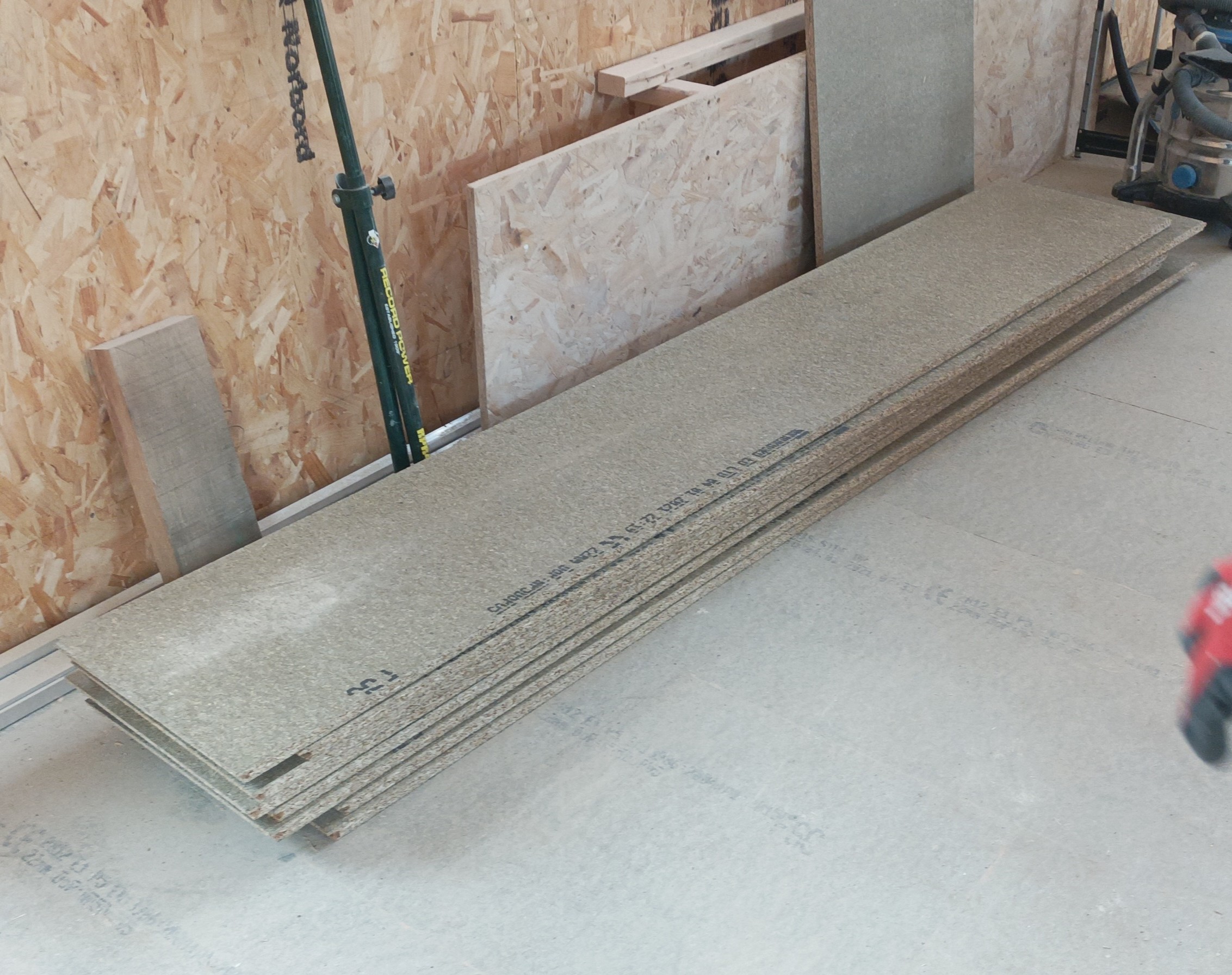
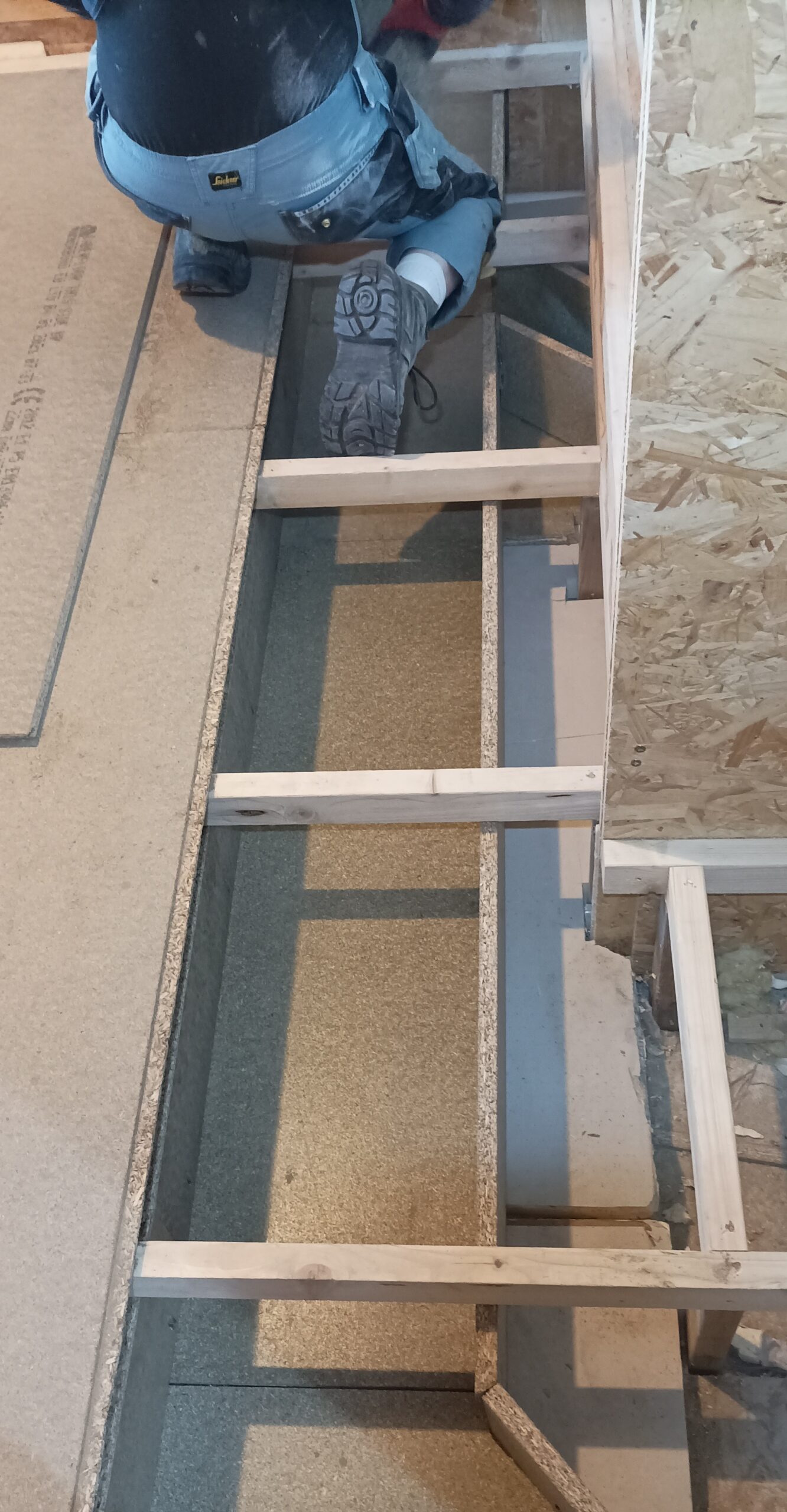
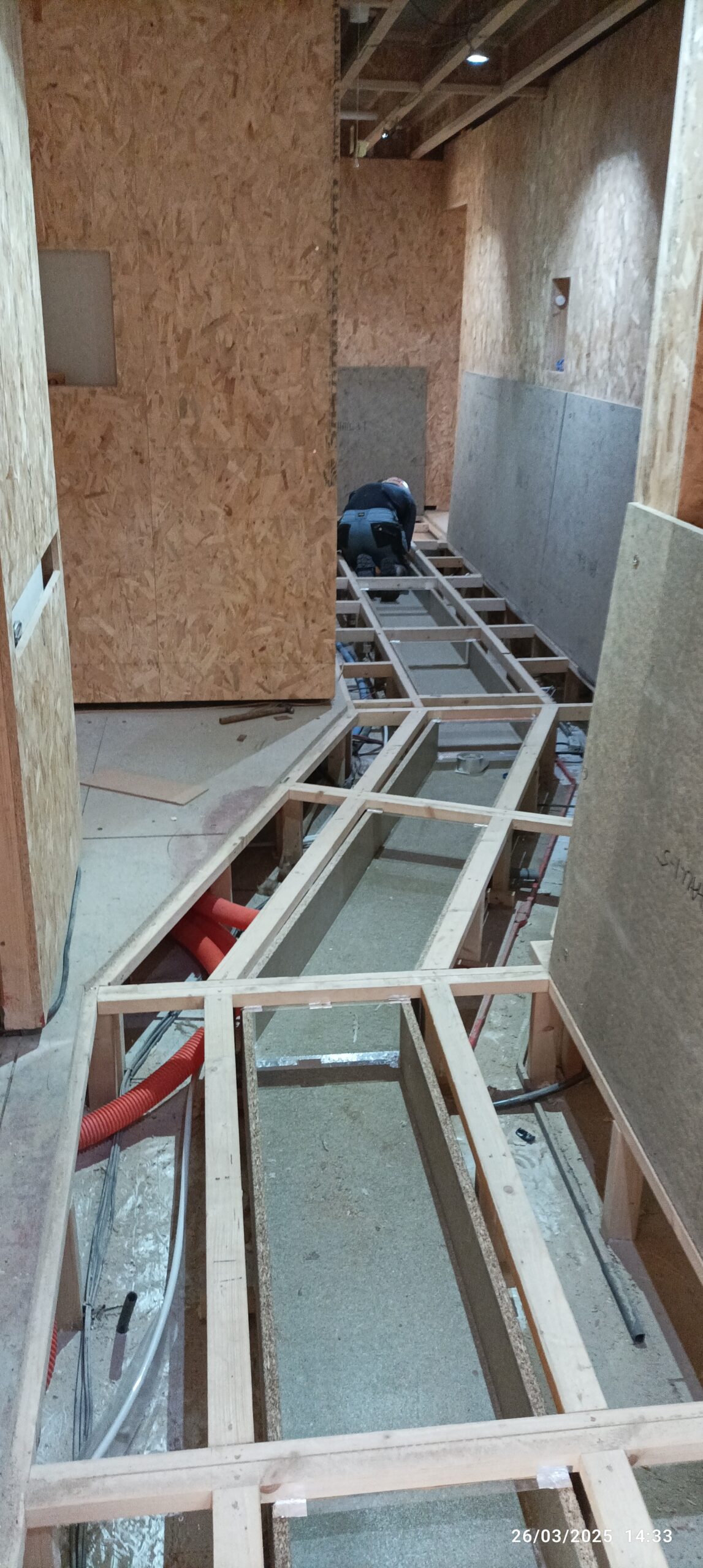
    The Air Ducting is needed to be built, to take our fresh air from the Utility Room, down underneath the floor, across the room, into the hall and down long the hall, going all the way to the Great Room and the Conservatory. This distance is 22metres approximately. We got a pile of left-over chipboard boards, that already had a coat of varnish painted on them, to seal them against moisture. There are twelve sheets, measuring 580mm wide by 2400mm long. We needed to sliced these boards up in such a way that we had the section in Hall Three created with 150mm high sides as the framework for supporting the flooring was done in a different method., compared to the rest of the flooring. And, Hall Three is about 5metres long, which is two sheets. So, we sliced two boards up, making the 150mm wide strips and the left-over piece will then become the base board of the ducting. We needed two more 150mm sides so we passed another one of our twelves boards through the table saw twice more, so we ended up with four equal 150mm strips. Now, we adjusted the saw table to a new width of 178mm because the rest of the framework under the floorboards, has more room but slightly narrower. We can fit in a 400mm wide base board instead of the 430mm that is in along Hall Three and after taking off 400mm the original board width of 580mm, we were left with 180mm. but before we go for that size, we have to take into account the thickness of the saw blade itself, which is just over 2.1mm thick. This is why we have gone for 178mm. So we sliced seven more boards to produce a single strip of 178mm and a left-over piece of 400mm. Now, we are left with two boards and we proceeded to slice these up into six 178mm strips, three off each board. And finally, one of our left-over piece, we also passed through the saw table to produce that seventh strip, to go with the first set of seven, to make the two sides of the Ducting, for each of the seven base boards.

    Sliced Up Boards

    Sliced Up Boards

    Sliced Boards 2

    Sliced Boards 2


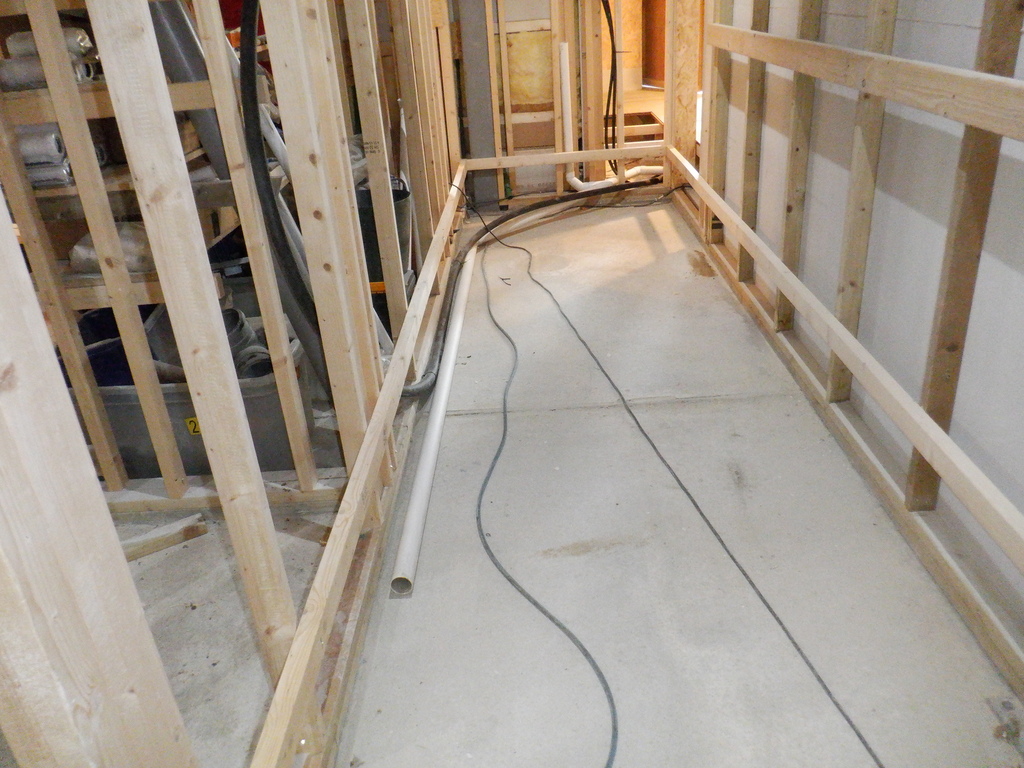
    So, starting in the Utility Room, we lifted a strip of floorboards, the line next to the Utility Cupboard that will contain the tumble dryer cabinet, the vacuum machine and small cupboards. There is a couple of layers of 50mm thick PU foam boards sitting on top of the concrete so the Ducting can sit on top of them. It just so happens that the gap between the foam boards and the floor joist running around the edge of our Utility Cupboard, is 200mm high. This is ideal because our base boards are 22mm thick and our sides are 178mm high, and fancy that, that makes 200mm in total !! We proceeded to saw out an rectangle hole through the cupboard wall, which is made up of two layers of 18mm OSB and one layer of 10mm Fermacell plasterboard. We sliced a 400mm wide by 200mm high hole, and our base board now can slide all the way along and into the Cupboard.

    Across utility

    Across utility

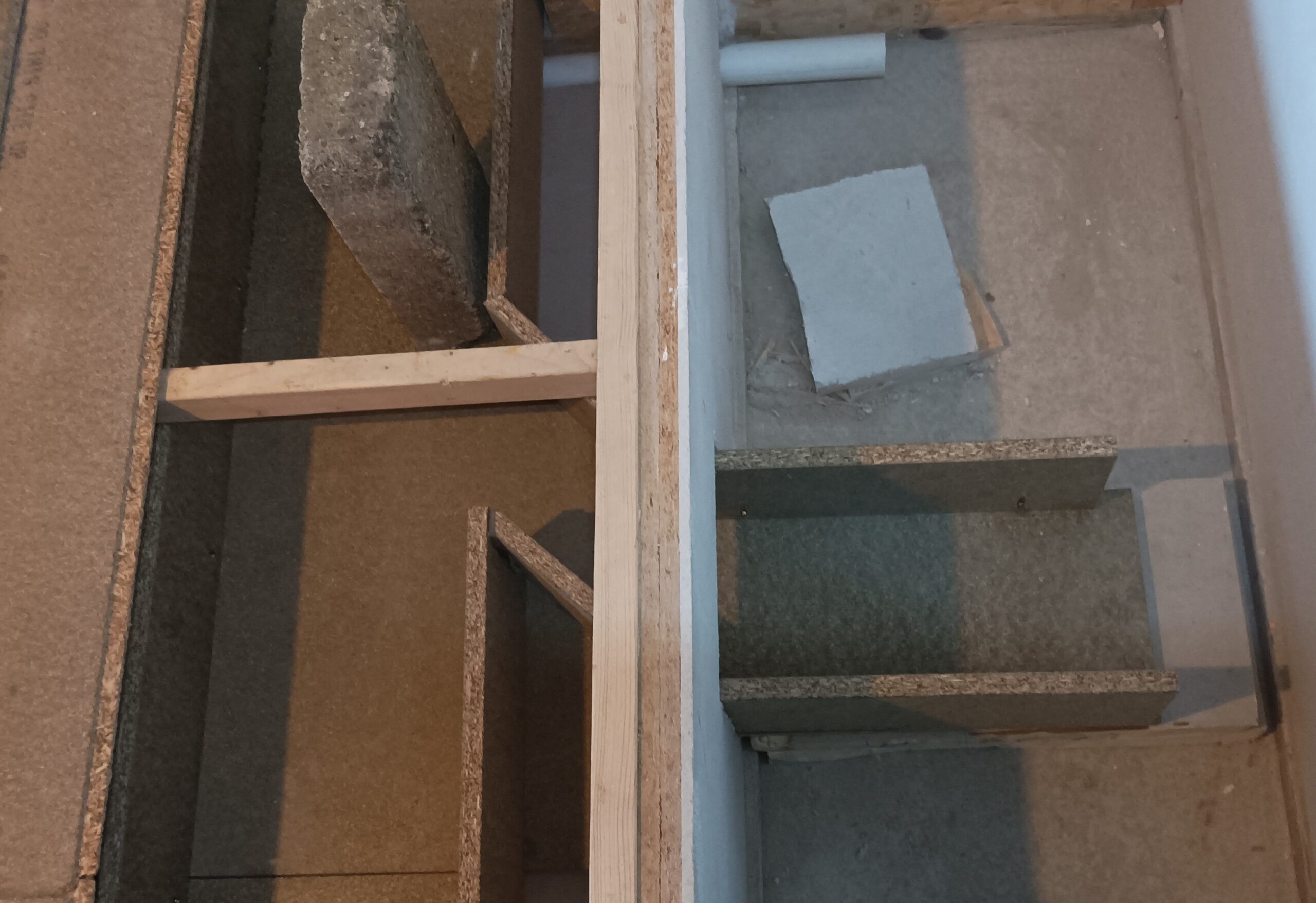
    Next, we built a side-shoot off to the side cupboard that houses the tumble dryer cabinet and the vacuum cleaner system so that they can have fresh air, plus also the Study Room upstairs needs a connection to our fresh air supply as well. Oh yes, the Utility Room itself also needs a heated fresh air supply as well, plus also, the vacuum system will need a supply of cooler air, to keep the motor from overheating. We realised that this side branch cannot have any control valves or flaps because it will be underneath the floorboard and they will be glued and screwed down (eventually!), which means, we cannot service the mechanisms etc. Hence why we are having a fairly large opening in the main duct and having it angled into the side branch. We used a larger piece of our coated OSB board to make this junction.

    Side branch in utility

    Side branch in utility

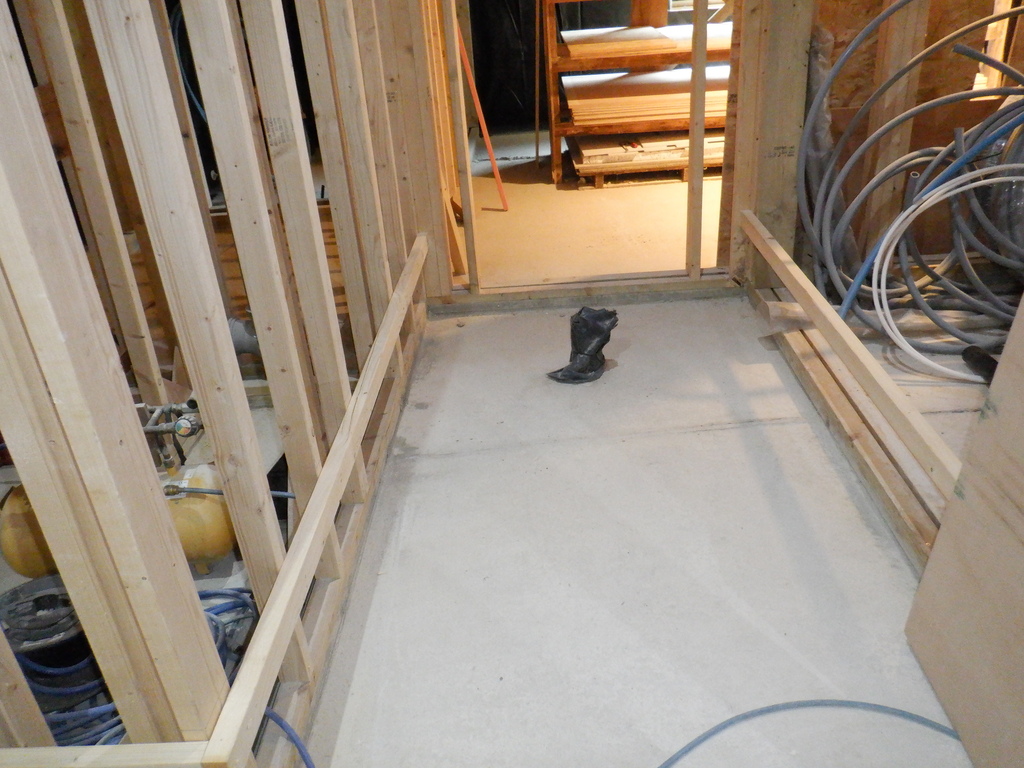
    We then carried on with the 400mm wide base board, turning the corner at an approximate 45degree angle and headed out underneath the doorway into the Hall, to connect diagonally to the next straight section running down Hall Three.

    Now, we took our vertical side pieces, the first ones being 178mm tall, to go from the Utility Cupboard towards the doorway. But, we realised that they were too high to allow us to slide a 6mm lid into place. So, off we go back to the saw table and slice off another 8mm, to give us room to get them in.
    For our side branch, we cut the compound angle on both pieces, half 45degrees, so that the joint was nice and neat. When it came to the side pieces for going under the doorway, it is a change of hight again, because the main ducting in the Hall is slightly higher up and slightly wider, being 150mm high and 430mm wide. So, that meant that the sides needed to be trimmed so that it fitted the gentle slope up, including to remember the extra 8mm gap to get our lid in. It was tight, very tight but we managed it.
    Now, we had to put in lots of pocket screws into the side walls, to help screw the pieces tight down to the base board, plus a load of glue as well.

    Turn into the hall

    Turn into the hall

    Once the glue had dried, we went around shaping the corners so that the air can flow more smoothly around the bends, especially the outside corner where we put in a thin sheet of plastic that can gently guide the air around the bend. We then taped up all the joints, corners and so on, with aluminium metal foil tape, to make sure that the joints are air tight and also provide a smoother path for the air too.

    Next, the lids were made of just 6mm MDF boards. We Got a full sheet off our rack and coated one side with two layers of varnish, to seal it in against water moisture.
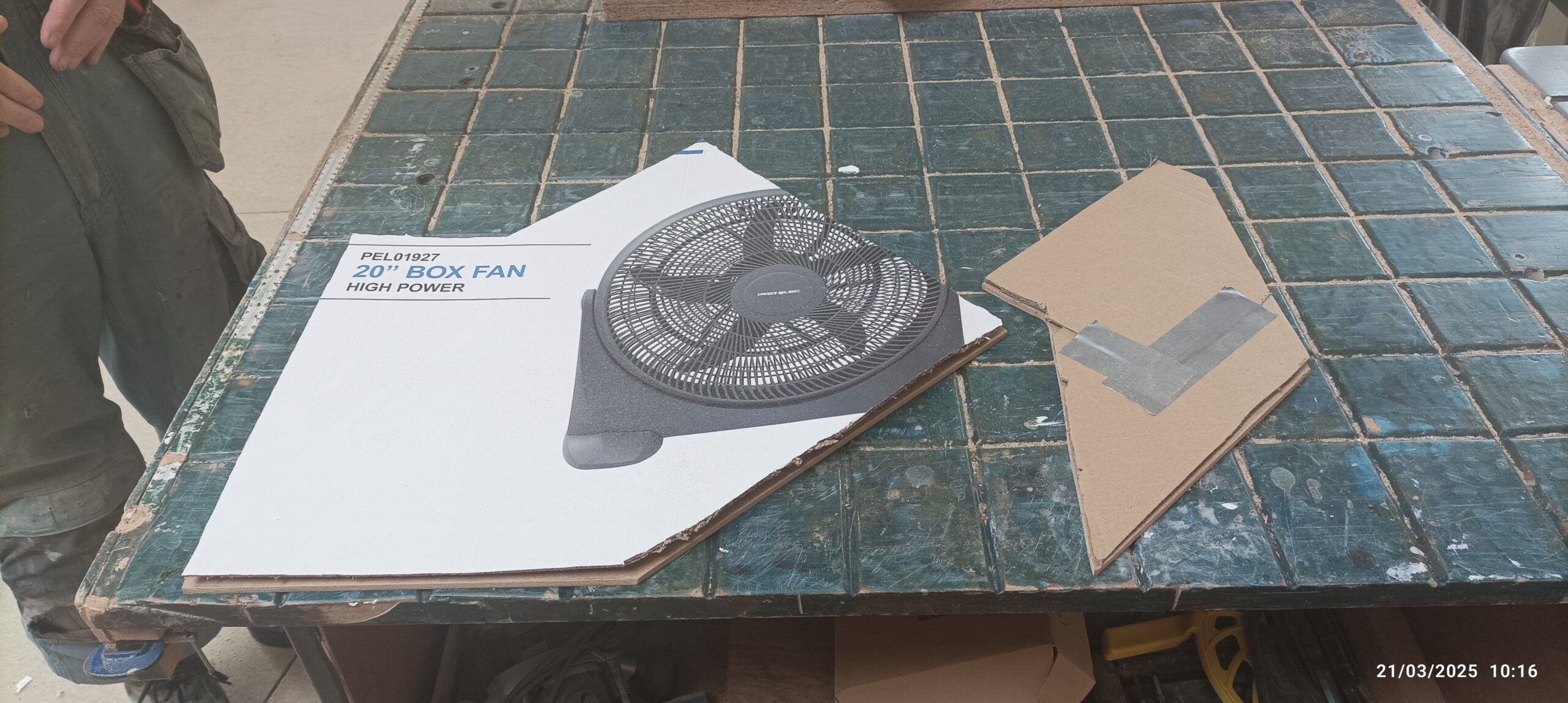
    We then sliced three strips off the narrow direction, creating 400mm wide pieces by 1200mm long. We proceeded to to slide each one into place over the air duct, cutting the necessary angles, to make them fit and going around the corner. We used a piece of carboard to “map” out the shape of the lid and then transferred it over to the MDF sheet, to cut the finished article. We did both the side branch going into the side cupboard, and also the bend towards the hallway using this method.

    Corner Template

    Corner Template

    Next, we screwed the lids down and then taped up the joints with more aluminium tape, to seal against any leaks.

    Covers on in Utility

    Covers on in Utility

    Finally, before laying the floorboards back down again, we drilled two 70mm holes into the wall of the side cupboard, and inserted two lines of our 50mm flexible conduit. This is going to be the hot fresh air supply for the coat hanging and footwear rack section, over beside the main exterior door.

    50mm Ducts in Utility

    50mm Ducts in Utility

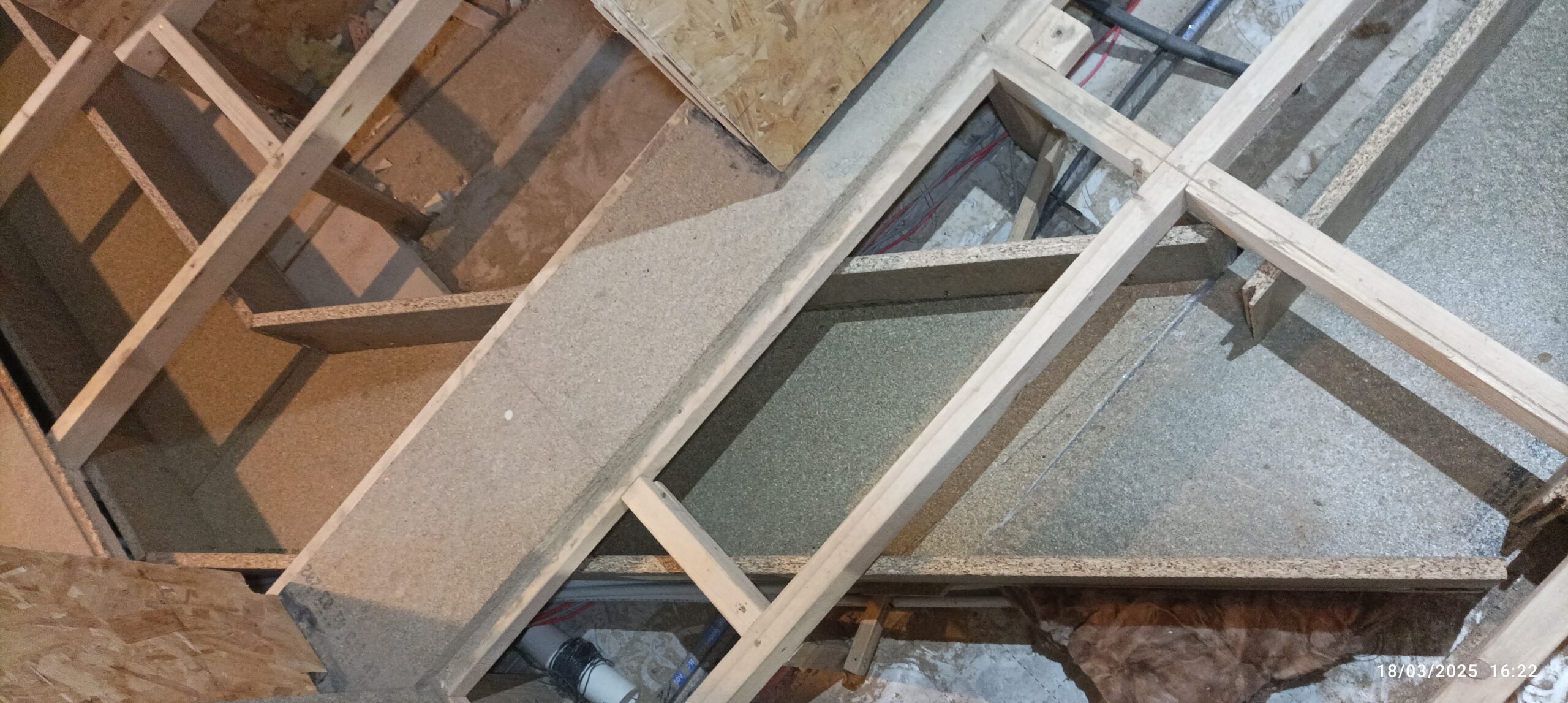
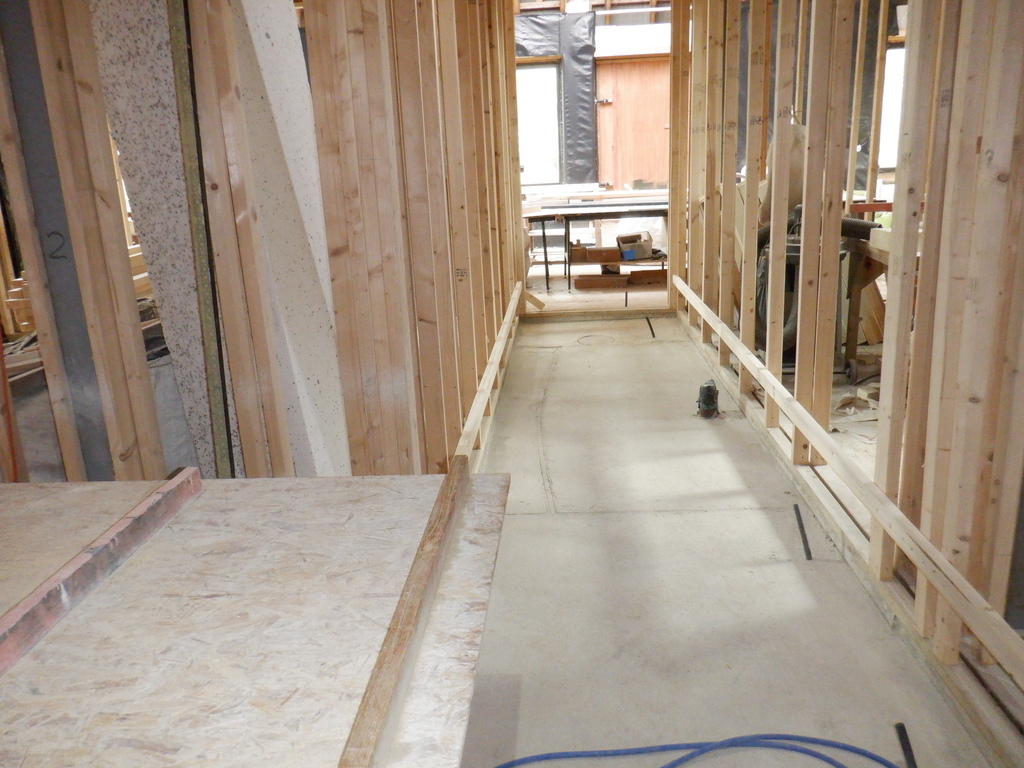
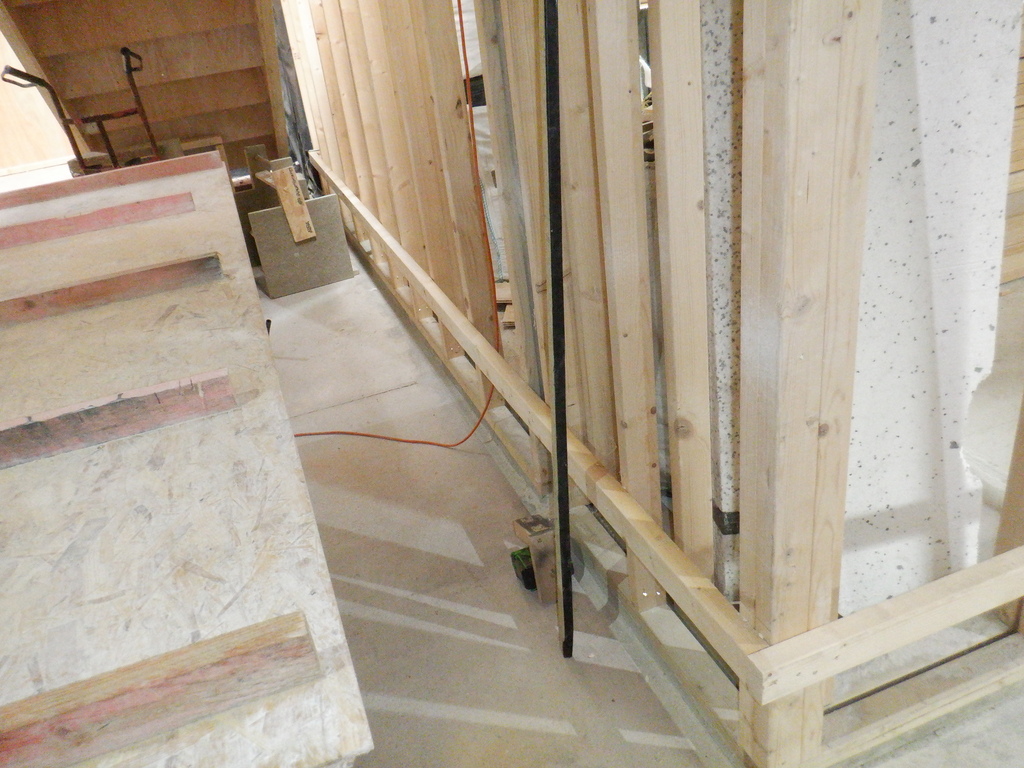
    Now, we carried on down Hall Three, this time, laying down 430mm wide base boards and 150mm high sides. We made little wooden wedges so that we could jack up the air duct so that it is tight underneath the cross rails that are the framework holding up the floorboards. We then crossed diagonally slightly at the Cross road Centre, which we changed over to 400mm wide and 175mm sides. The base board actually stays the same level, it is the lids that goes upwards because the framework design for the floorboards changes to have 63mm CLS planks going flat across, instead of the more traditionally upright aspect. That gives us more room for the air duct to be taller by another 25mm, and we could reduce the width down a bit as well.

    Anyway, we joined the Crossroad ducting in, having to cut the ends at an angle and then resumed the straight run down Hall One towards the Great Room. We again, had to cut a slight angle for joining to the base board in the Great Room. By this time, we were running very low on material as we had originally been using the pile of left-over chipboard floorboard pieces from building the First Floor and all the Ground floor rooms too. But, we just had enough for us to get three quarters the way across the Great Room. This is fine because the final destination for this ducting, is to supply fresh air to the Conservatory and we are planning to have an adaptor converting the output to four or five individual 50mm conduits, or perhaps 68mm rigid plastic pipework that we got loads of as well and taking fresh air to various locations around inside the Conservatory.

    Everything was glued into place and one or two occasional pocket screws as well, to help hold things together while the glue dried. The doorway into the Great Room was a little bit more complex because the joists running across the doorway had 63mm CLS in their upright orientation so we had to fill in the gaps upwards and then cover it up with lots of aluminium tapes to provide a smooth transition from one side to the other side.

    Hall Ducts built (1)

    Hall Ducts built (1)

    Hall Ducts built (2)

    Hall Ducts built (2)


    To add to this scheme of providing a smooth transition from one side, or chamber, to the next chamber, we made lots of small rectangular plastic strips to go underneath the cross rail, inside the ducting. We glued and stapled these clear thin strips and this helps to block off any air gaps that our lids may have generate. So we wanted to reduce any leaks as much as possible.

    The next job is to make the lids. We estimated that we needed two-and-a-half sheets of our 12mm thick MDF boards. We proceeded to apply a nice thick coat of varnish on all three of them and allowed that to dry overnight. Next, we sliced 5 pieces of 400mm, well actually, 398mm wide pieces on our table saw!! We did five pieces off each sheet and the sixth left-over one was exactly 430mm, which is exactly what we wanted. We repeated this on the second sheet and then slice two more 430mm wide pieces off our third sheet.

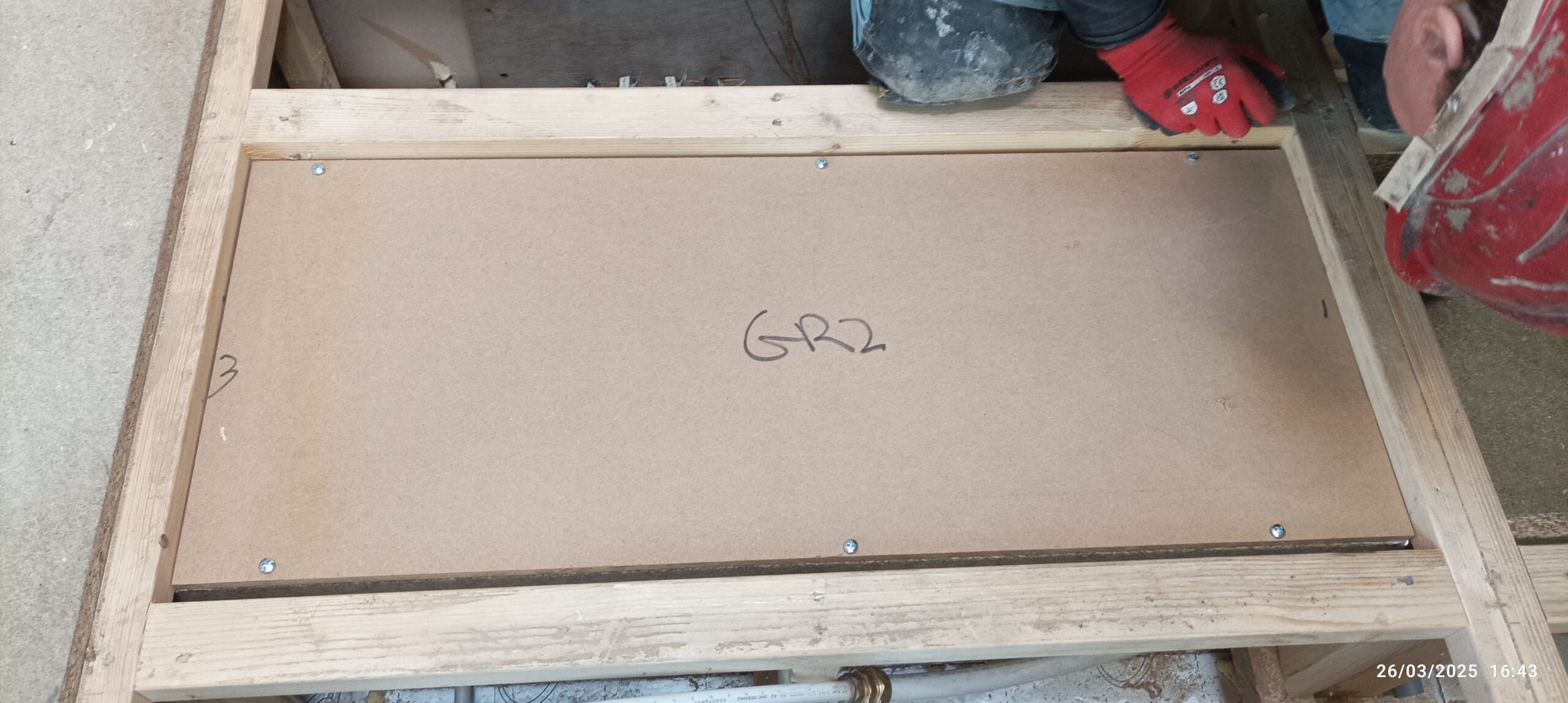
    Then, we cut each one to exactly fit each section. We started in the Great Room and worked our way all the way to the Utility Room. We drilled 6mm holes down both long sides of each lids, three of them and then screwed in a captive nut into the side wall of the ducting. Each lid now has six bolts holding it down.

    Lids all fixed down

    Lids all fixed down

    That concludes the main 25metres of air duct, to deliver the fresh air to all our rooms!
  • Sorting Out Pipes and Doing the Floorboards

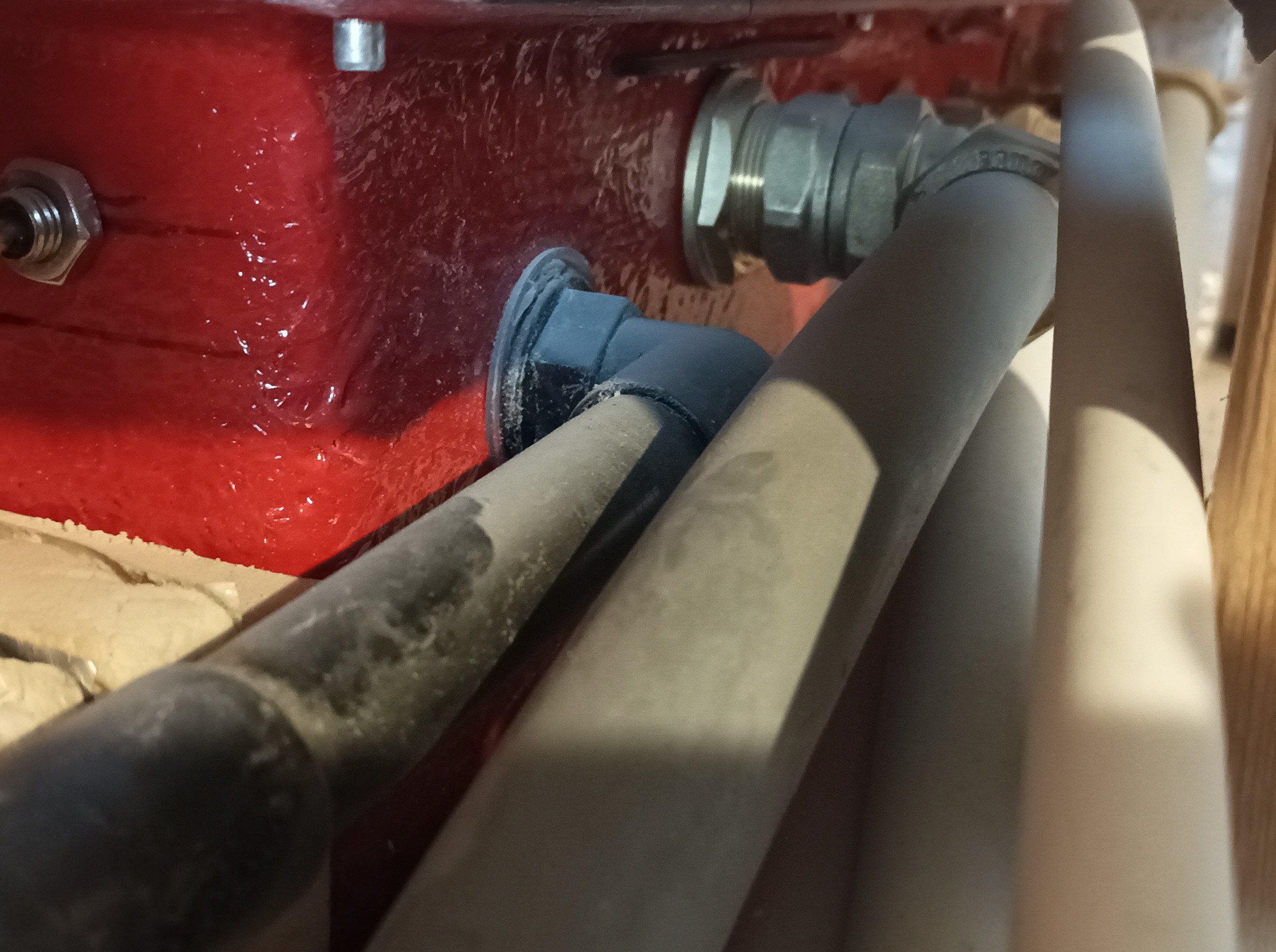
    We have been tackling our Utility Room, to sort out the pipes that have been “coiled” up in a untidy bunch for quite a while now, so that we can assemble the rest of the floorboards in the room. Why you may ask? It is because we actually want to get on with implementing and building the main Air Ducts that runs around the triangular void space up on the first floor, and we are going to use our left-over sheets of the 22mm thick floorboard pieces. But, we need some to finish off the flooring in this room, our Utility Room first! It would be really annoying to discover later on that we don’t have enough of these specially made sheets that has proper tongue and groove joints on all four edges and they cost an extra premium for that.
    So, we have been sorting out the water pipes that are bunched up, all coming from various sources all over the house. There are a pair of pipes from each of our five Energy Modules, a pair of pipes that goes to and from the two extreme corners of the house, ready to connect to our Swimming Lane, and finally, an additional pair of pipes, this time coming from our Garage and the Thermal Solar System that we will have mounted on the roof.

    But, first, we had to lay down the other half of the Swimming Lane connection that comes from the very very far corner, outside the Patio area. So, we had to lift all the hatches down our Hallways and across the Great Room, and slide in a single length of 15mm plastic waterpipe, connecting to the length of pipe that is coming underneath the Great Room flooring. And terminating in our Utility Room. Hence why we wanted to get that done now so we didn’t forget it later on.
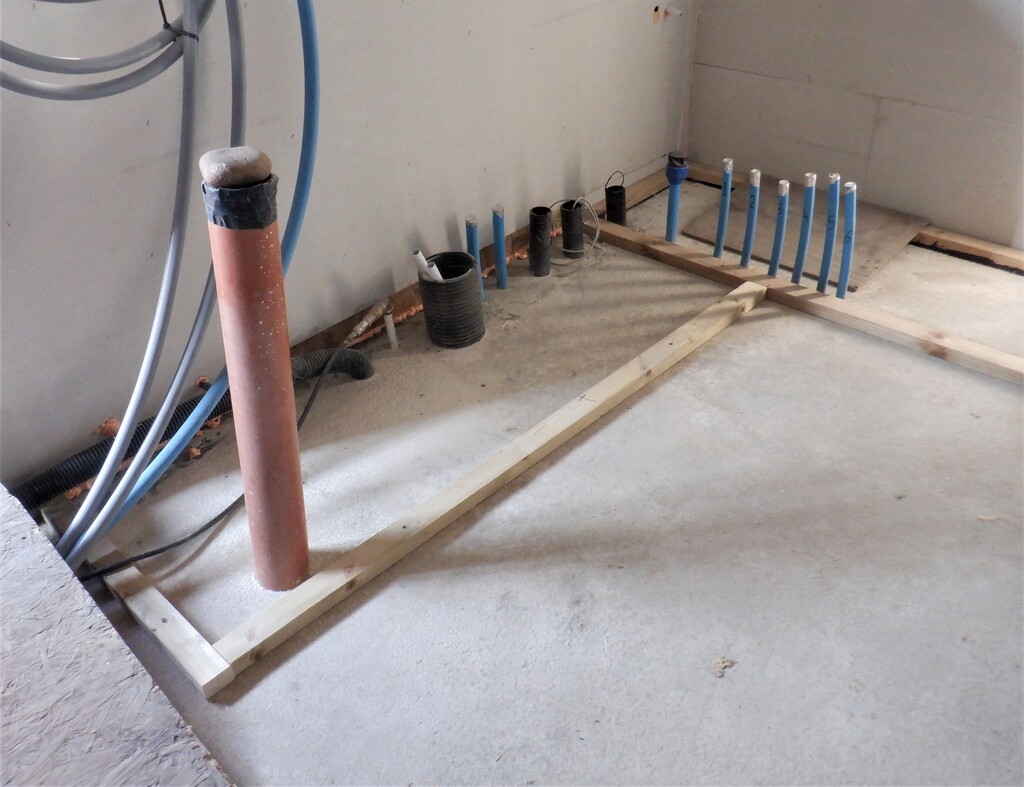
    We sorted out the bunch of pipes so that all the high filling pipes were grouped together, all seven of them and then the second bunch had the low filling point pipes. Then we cut two 95mm round holes through the cupboard wall underneath the flooring level, as high as possible and separated by about 100mm between them. We then pushed the collection of pipes through these holes, untwisted them and then anchored them up the wall, ready for further work later on.
    This includes connecting two 22mm pipes to the Garage’s Solar System as well, and having that coming around and joining with the other pipes.

    The other major pipe we sorted out, is the circulating hot water system, using our 28mm pipework. We needed that pair of pipes to curve around and enter into the Cupboard as well. So we drilled two 38mm diameter holes near the other holes we did earlier, over near the air ducting so they were relatively close to the Hot Water tank etc. The hot water only needs to connect to the pump, a flow rate sensor, temperature sensors and a couple of isolating valves plus also a couple of draining points.

    Plant Cupboard Incoming pipes

    Plant Cupboard Incoming pipes

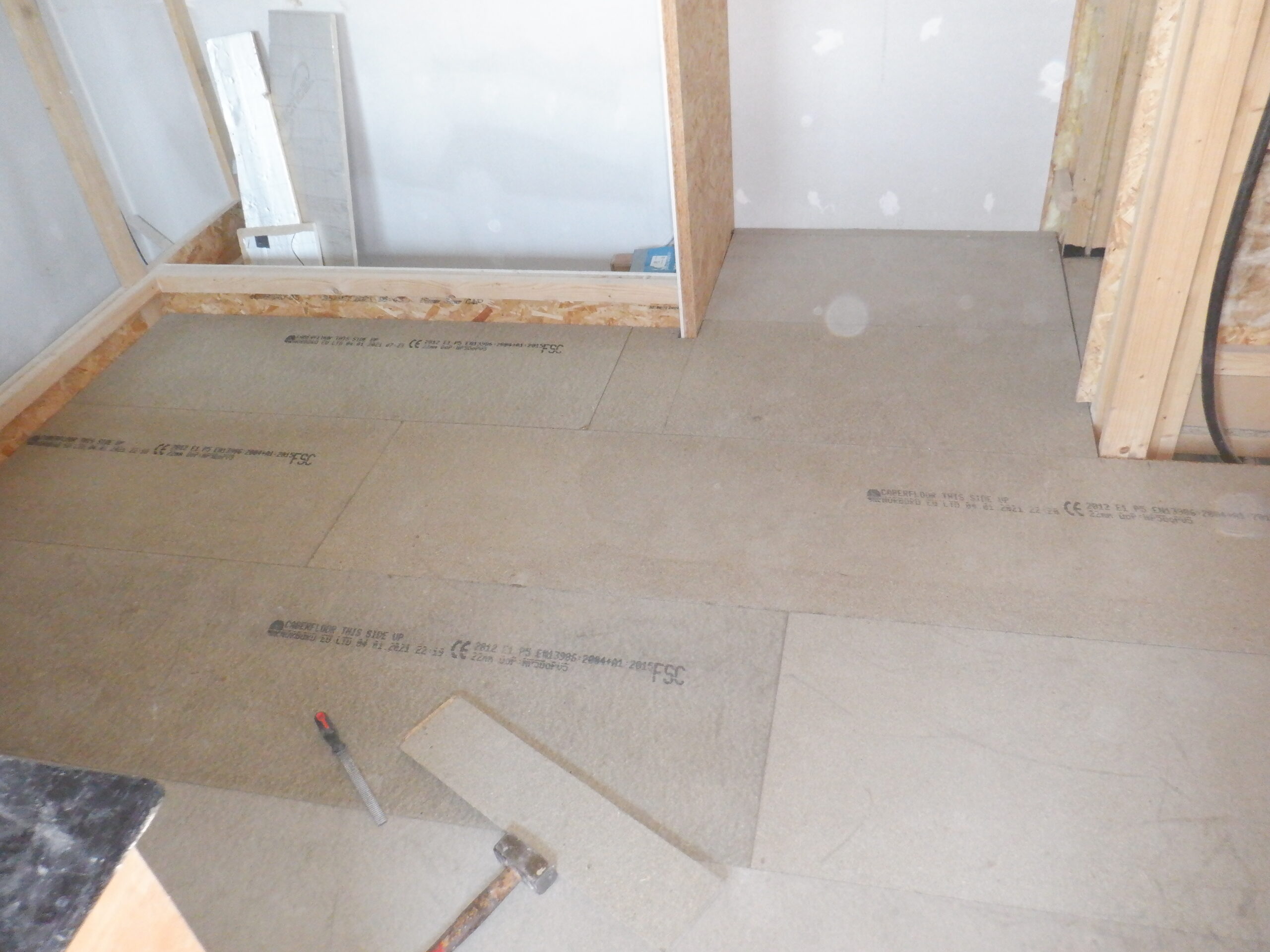
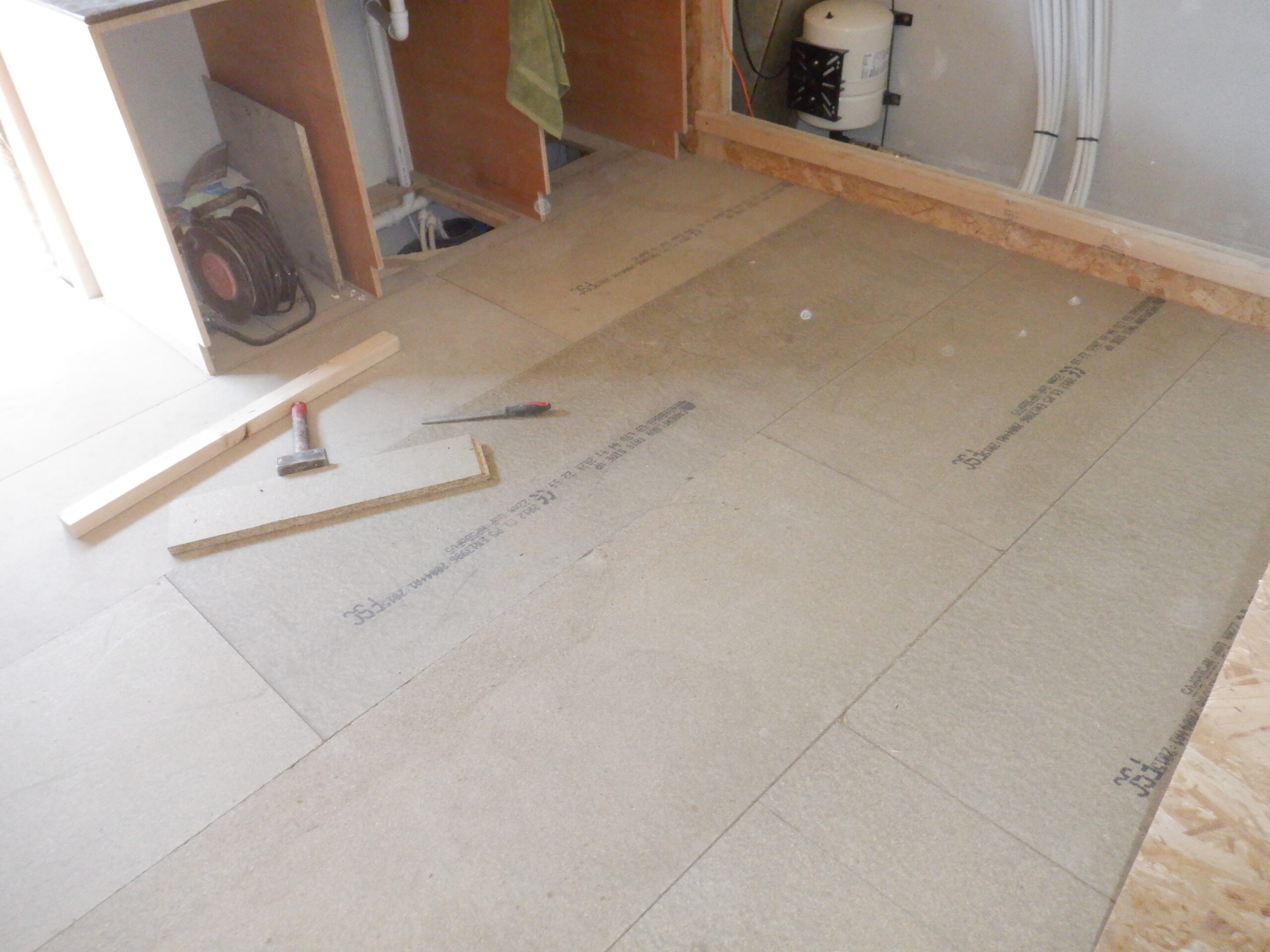
    Now that we got the pipework sorted, we now can complete the floorboards for the Utility Room, making sure that we use enough chipboard floor pieces, to cover the entire room. We won’t glue or screw them down because we still got a lot of stuff to do underneath in that space, like building the Air Ducting and putting in several more conduits for connecting data cables etc.

    Utility floor completed (1)

    Utility floor completed (1)

    Utility floor completed (2)

    Utility floor completed (2)


    We needed two and a half more boards to get it all done.

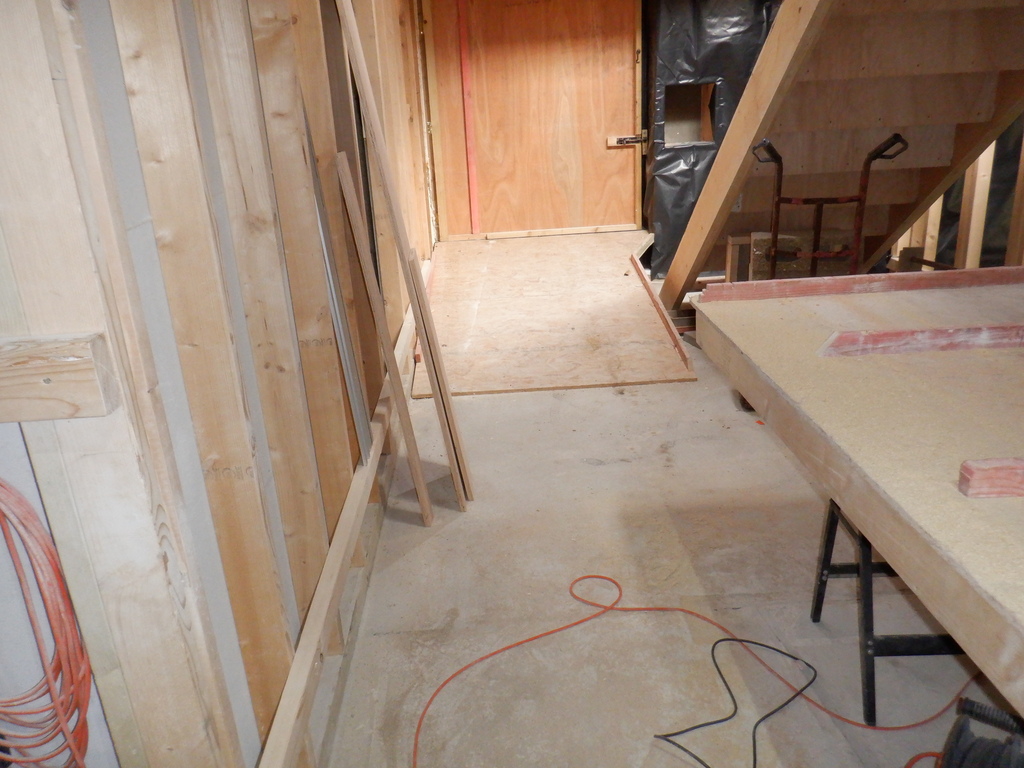
    It was quite tricky in getting the last section done, the doorway area going into the hallway. It was a funny “L” shape piece, with a little notch cut out as well, to fit around the corner of the cupboard. The last piece was relatively easy and only needed to glue on an extra 50mm wide strip of the chipboard floorboard to finish the job.

    With that now complete so we can start working on building the Air Duct upstairs !!

  • Worktop Plus Sink Installed and Started on Flooring for Hallways

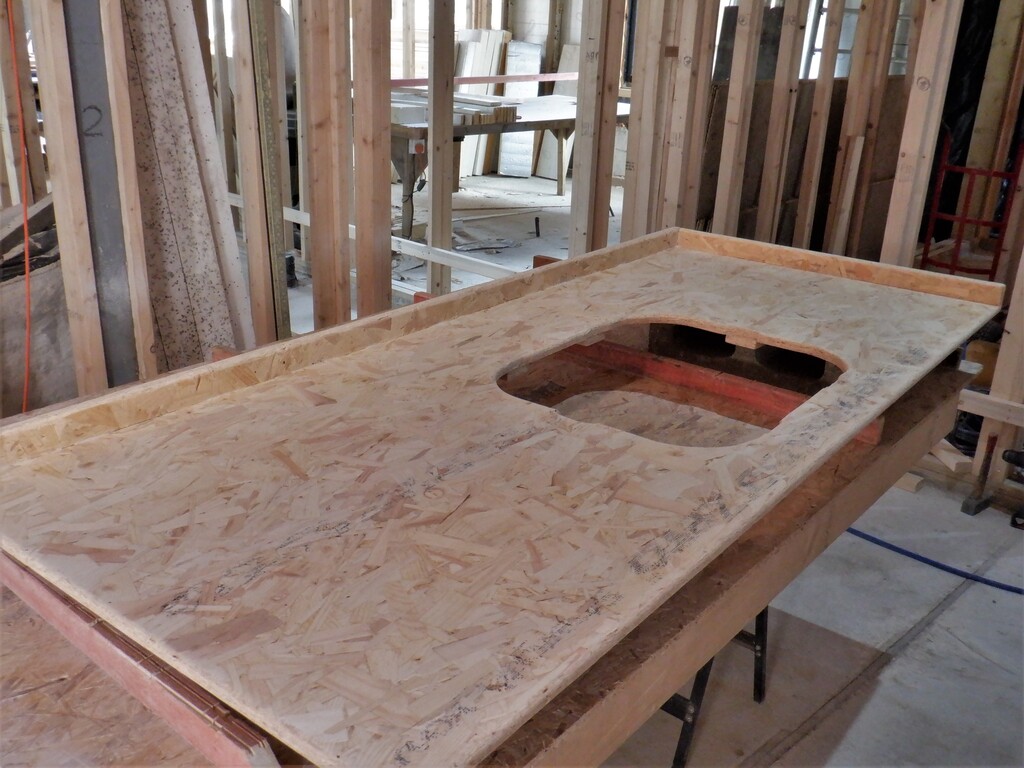
    We got the week going by taking our slab of OSB board we cut last week for the worktop in the Utility Room and cutting a large hole in the middle of it for the stainless steel sink to be placed. We wanted it fairly near the front and have more room around the back for pots and bottles to live and be ready to serve anyone using the sink. Then all the edges were rounded using a quarter turn cutter bit to take off the sharpness, rubbed down all over with the sanding machine.

    Worktop Plus Sink Installed and Started on Flooring for Hallways

    Temporary-worktop-ready-for-paint


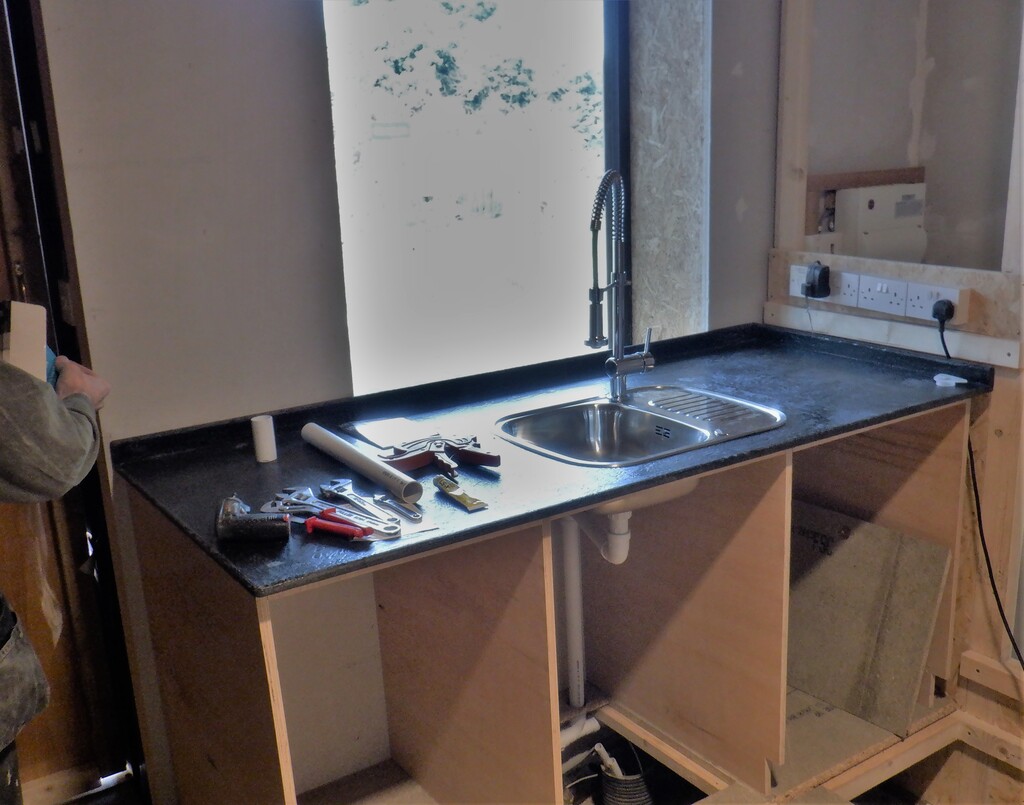
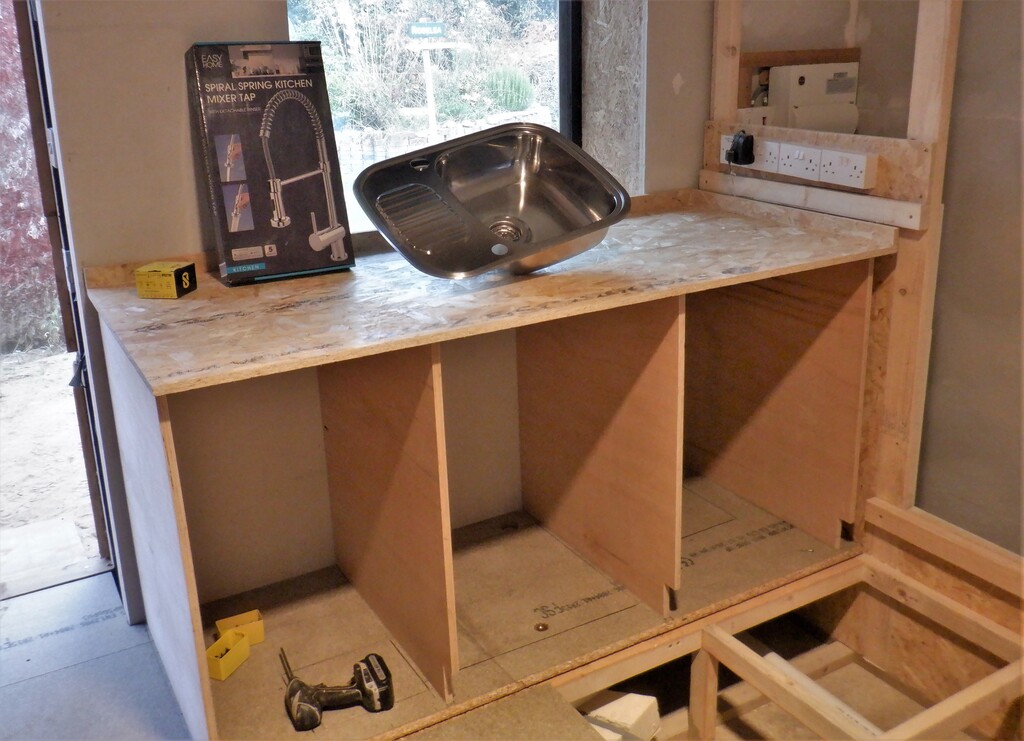
    Then  a coat of black two-part resin scraped and brushed all over the surface to provide a waterproof barrier. We put the drying worktop upstairs into the warmer sunshine to help cure and harden the resin for a day and then brought it to its final resting place in the Utility room, sitting on top of the four plywood sides supporting the worktop. The stainless steel sink was installed and tied down using the supplied clamps and putting in a line of sealant to stop liquids creeping under the edge and dripping into our drawers and cupboards under the worktop.
    Worktop Plus Sink Installed and Started on Flooring for Hallways

    Temporary-worktop-painted-and-sink-installed


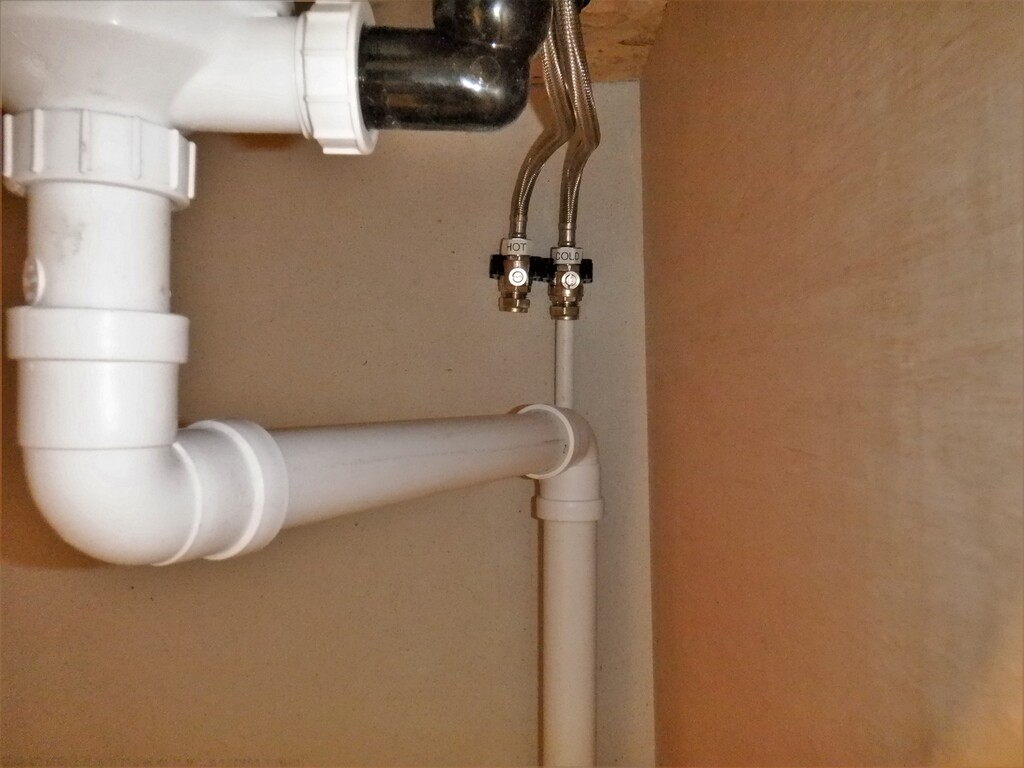
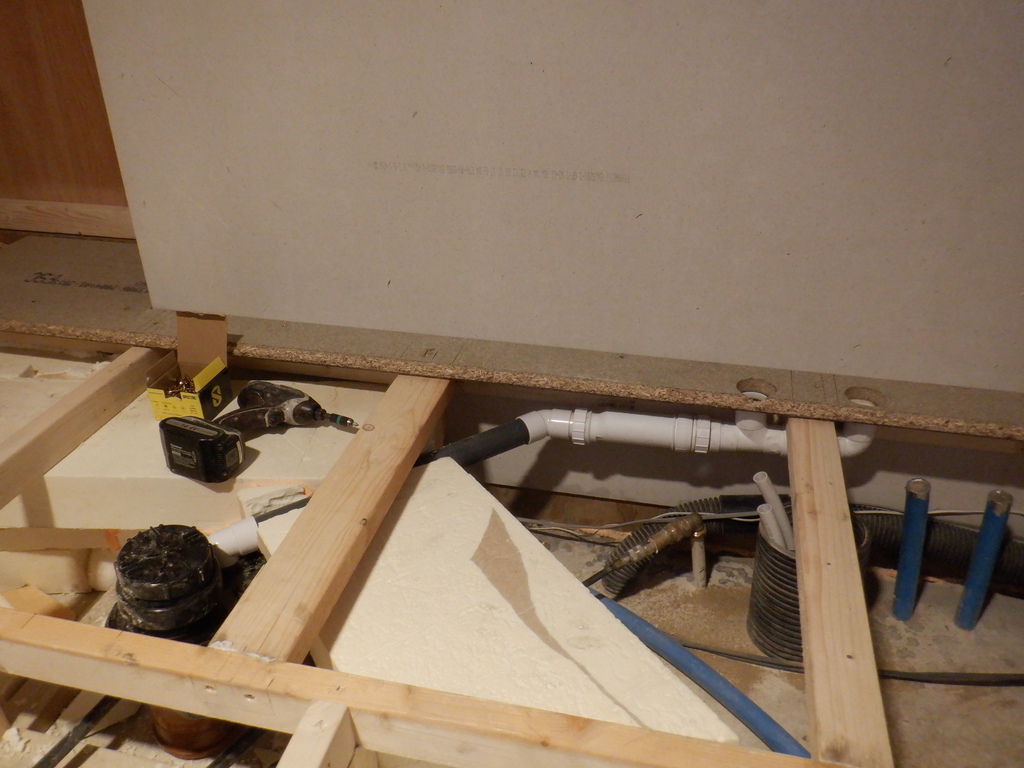
    Next, we plumbed in the waste pipe from the sink to the waiting socket we did last week and also inserted a long vertical waste pipe in the other waiting socket just positioned under the floorboard, this second one is for the washing machine in the future setup of the house when we finally move in properly.
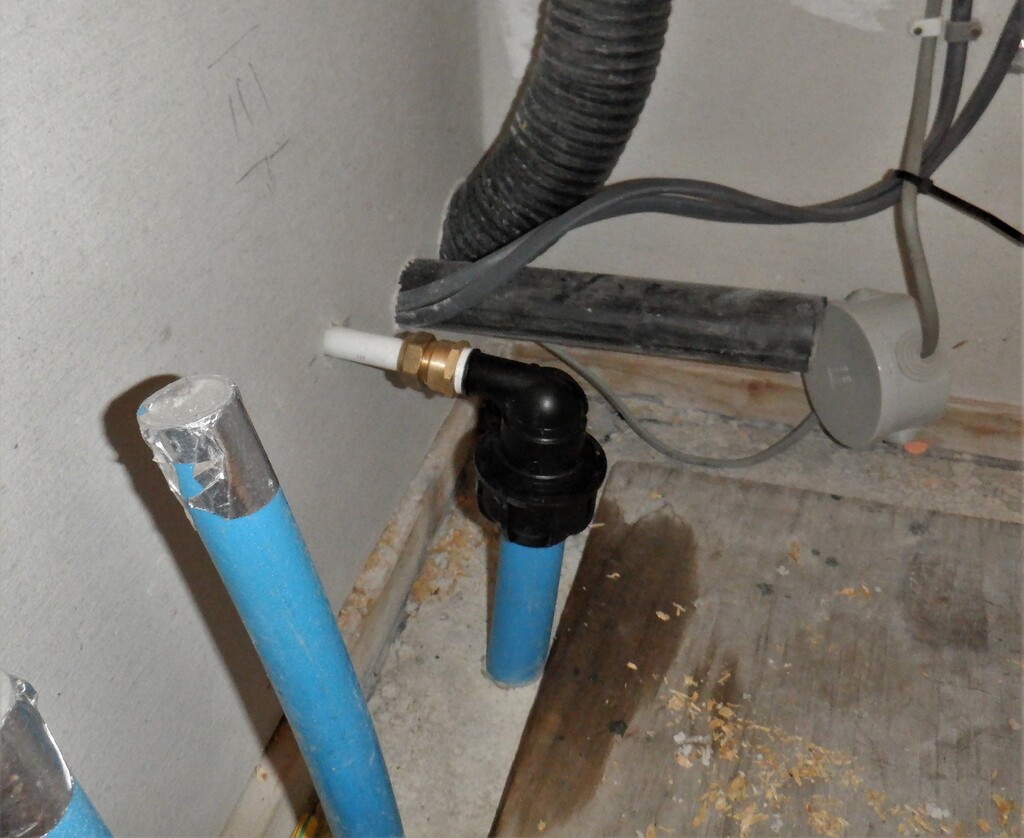
    Then, we turned off the mains water supply at our water meter so we can break into the capped off pipe that is coming up through the concrete floor, we put an right angle adaptor to convert from the 32mm diameter polyethene pipe to a standard 15mm internal plumbing pipework. This 15mm feed went through the side of the Equipment cupboard and had a cut-off valve inserted in just at the start of the middle cupboard (still under the floor) so it is relatively nearby and only requires lifting up a trap door to gain access. We will have clear labels to remind people to where it is but also we are planning to employ a motorised valve in series so we can tell the computer to turn off the mains water if we need to do any servicing. The other thing we added after this cut-off valve is a T-junction so we can feed a supply of cold water to our new mixer tap. The continuing 15mm pipe is terminated at this point but it will go all the way to the main kitchen and also upstairs to the header tank to feed those end points too.
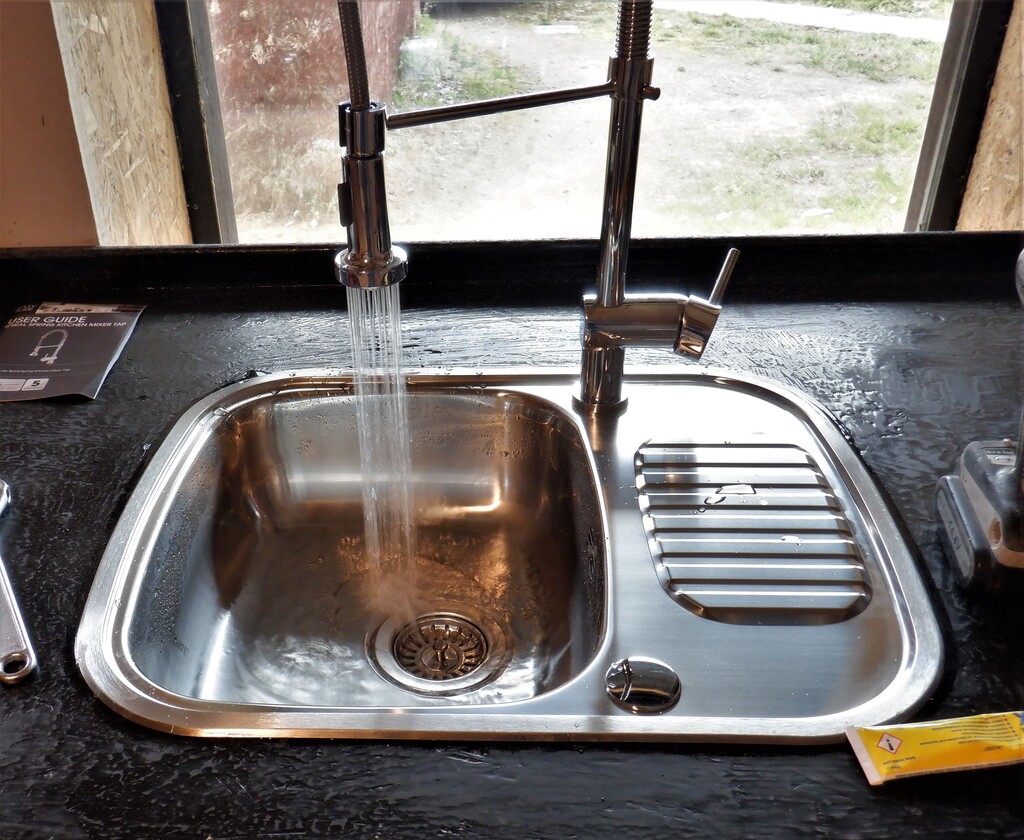
    The new mixer tap is a large flexible design with a mini shower head on the end pointing down into the sink bowl, being held up on an arm projecting from the body of the mixer tap. It has just cold water coming out for now but we will plumb in the hot water later on when we get that far with the pumps and tanks etc.
    Worktop Plus Sink Installed and Started on Flooring for Hallways

    Incoming-mains-water-turning-under-the-sink

    Worktop Plus Sink Installed and Started on Flooring for Hallways

    Mians-water-stop-cock-with-T-to-sink

    Worktop Plus Sink Installed and Started on Flooring for Hallways

    Mains-water-to-the-sink

    Worktop Plus Sink Installed and Started on Flooring for Hallways

    The-sink-is-working


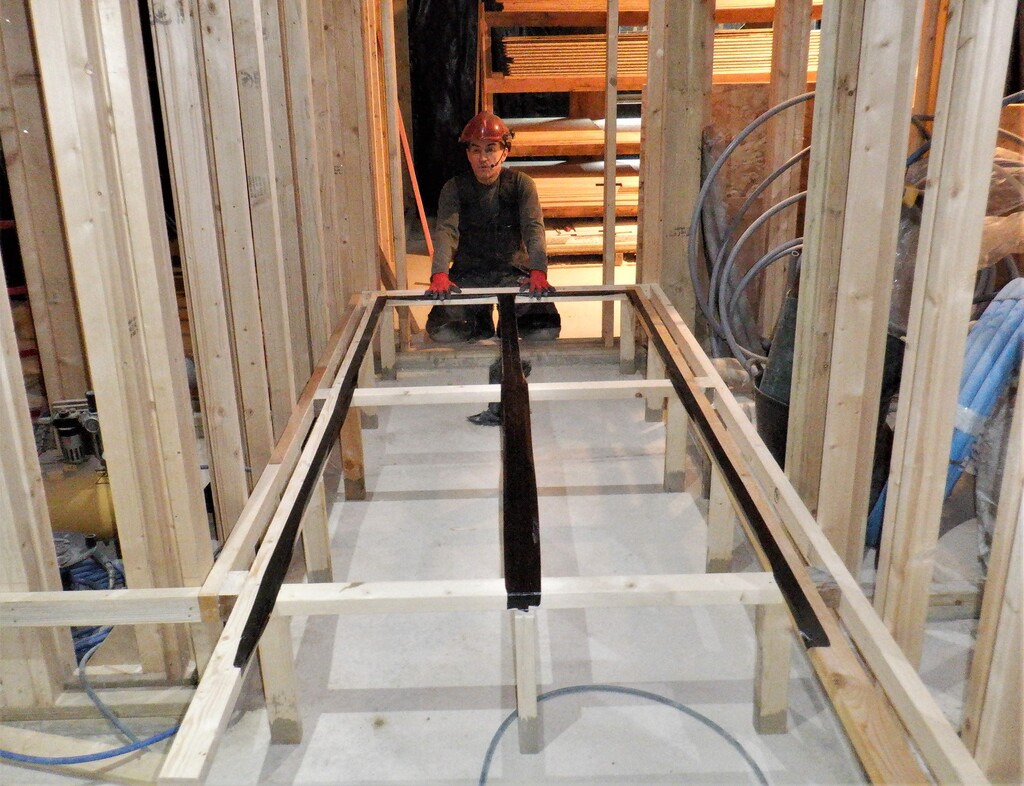
    In the meantime, between waiting for the black resin to harden, we proceeded in building the flooring in our hallways. We started outside the Utility Room and Bedroom Three and after much discussing, we wanted to have a middle section to take the large air duct which is 440mm wide and 150mm high, plus also, we need to break up the floorboards into modules so we can lift up an access panel to do any servicing or additions that the house might need in the future. This led us to have four long rails running down the length of the hall, positioned across the width at 440mm and 1100mm apart. In the other direction, down the length of the hallway, we then had noggings every 1200mm and this will be our trap door dimensions. It was quite fiddly getting in the four rails, using 63mm CLS timber, two of them laid flat that will form the outer edge of the liftable panel zones, and two vertically mounted CLS pieces down the middle to support the air ducting. The laser was used to guide us in cutting the legs, every 600mm down all four rails, and then a whole series of horizontal noggings to brace the framework together. Every joint was glued, as well as being nailed, so to avoid any annoying creaking noises if any old timber joint warps or dry out and start making noises in the future. We had to do quite a bit of adjustment in putting in wedges under some of the legs as we discovered that the original horizontal rail we had mounted on the Entertainment wall was ever so slightly lower than it should have been. So we had to “fill” in the gap with thin layers of hardboard (3mm thick) and very thin sheet of veneer 3ply sheet we inherited from one of our deliveries (1.5mm thick), to get it ready for the floorboards to be glued and screwed down.
    Worktop Plus Sink Installed and Started on Flooring for Hallways

    Bedroom-3-Utility-hall-framed


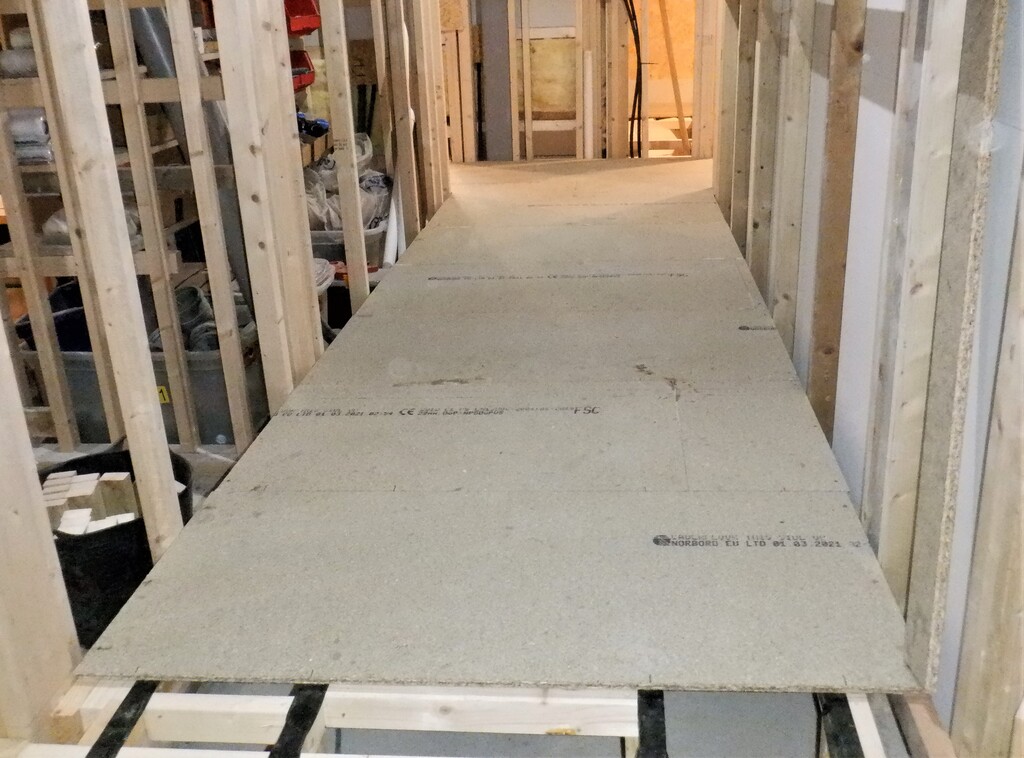
    Next, we could then, and did, lay down the floorboards, more of our 22mm thick tongue and groove chipboard material, down the first leg of our four hallways. We went across both doorways of the Utility Room and Bedroom Three, we had to insert extra pieces of CLS timber to support the cut edge of the floorboard at the start of the rooms. We shaped this first and second boards to fit around the two doorways but after that, it was easier in just putting down a row at a time, measuring 1335mm wide (getting slightly wider as we went along the hall) and used our PU construction glue to join the tongue and groove joints together. Oh yes, we also glued the outer edges of the framework but not the middle rails and we also stuck down lines of cheap tape to isolate the glue from the timber so we can free our “doors” when we cut through the floorboards at the correct positions. To this goal, we carefully marked the positions of the rails and noggings, up on to the floorboard surface, ready for that slicing task later on.
    Worktop Plus Sink Installed and Started on Flooring for Hallways

    Bedroom-3-Utility-hall-boarded


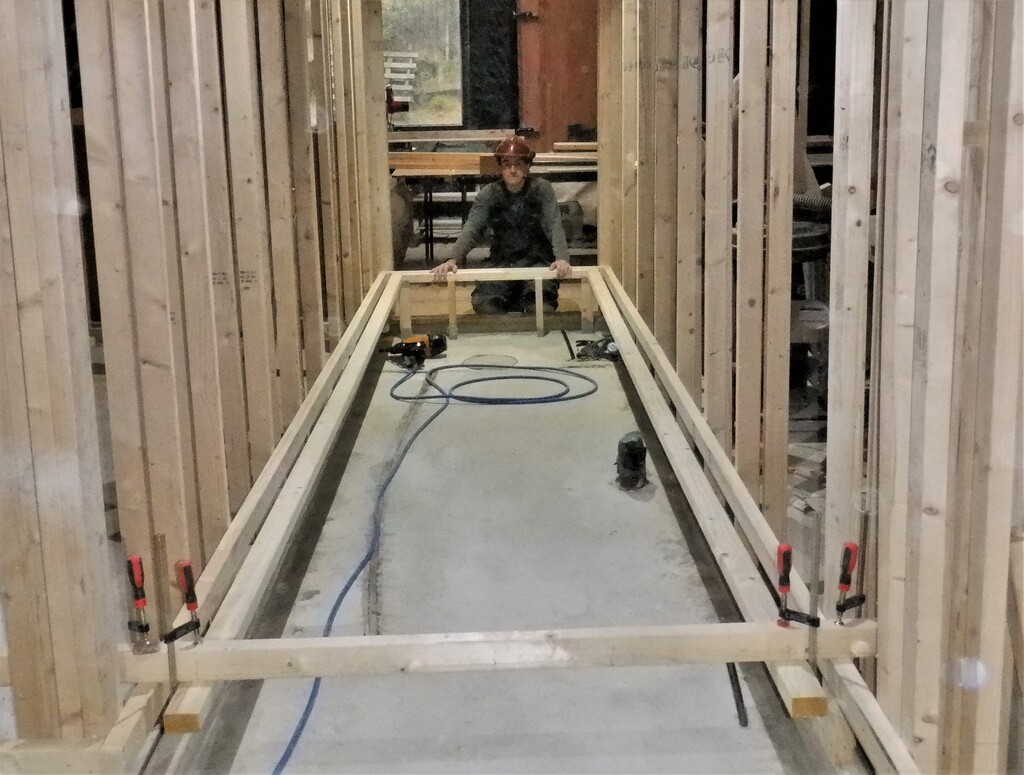
    The next section of hallway we decided to tackle, was the shorter one going down to Bedroom Two. This leg is a little simpler as it doesn’t have a full size air duct so we reduced the number of rails to just three, but with a difference. We would still have the tow outside flat rails that defines the outer edges of the removeable door panels but this time, have a flat set of noggings going down the exact middle of the hall. This middle line was made up of a series of 1137mm length pieces but interrupted every 1200mm to put in a full flat nogging going across the width to join the two outer rails together. It was much easier to deal with the cutting of the individual legs, which are still placed at every 600mm point, putting the outer set of legs on first and then put in a middle segment, one by one. Another trick we realised, was to mount a piece of CLS timber across the open end of the hallway, mounted on the side walls with clamps and in turn, clamped the two outer flat rails underneath this supportive bar, while we worked from Bedroom Two end of the hall, towards the open area where all four arms all meet together, at what we call the crossroads. This method allowed us to continue using the laser to highlight the height of the framework, without being blocked by other legs etc.
    Worktop Plus Sink Installed and Started on Flooring for Hallways

    Bedroom-2-Hall-Framing


    It worked out quite well, covering about 2.5metres of hallway, which we proceeded to cover over with six rows of the floorboards.
    Worktop Plus Sink Installed and Started on Flooring for Hallways

    Bedroom-2-Hall-boarded


    Finally, we finished off the week by getting the first set of the framework up for the third arm, the section coming from the Great Room, passing the Kitchen and Bedroom One. This arm is just over 4.8metres long so we clamped two more flat outer rails, just like the other section we have done and got those glued and nailed into place, with one cross nogging in place down at the Great room end of the hallway, along with their four legs holding that end up and everything.
    Worktop Plus Sink Installed and Started on Flooring for Hallways

    Great-room-hall-framing-started


    Next week, we will carry on with that arm and then design the framework for the Crossroads and even perhaps the framework going up to the Front door region, all before we put down any more floorboards. We will see!

  • Completed First Stage of Plumbing Plus Also Flooring

    The week started with the autumn’s annual task of the Sun Shield Taken Down and Thrown Away which occupied Monday morning. Then, it was a case of continuing on with sorting out the water pipes stretching across the Utility Room and finish putting three layers of insulation boards around the hot water pipes themselves, making sure they sweep under the worktop area for the sink and washing machine to have supplies of hot and cold water, before turning away and heading towards the Equipment Cupboard.
    We put in two more CLS support noggings to provide support for the floorboards but also to support the vertical plywood sections of the carcass that will form the stack of drawers and two cupboards under the worktop.

    Cupboard-side-supports

    Cupboard-side-supports


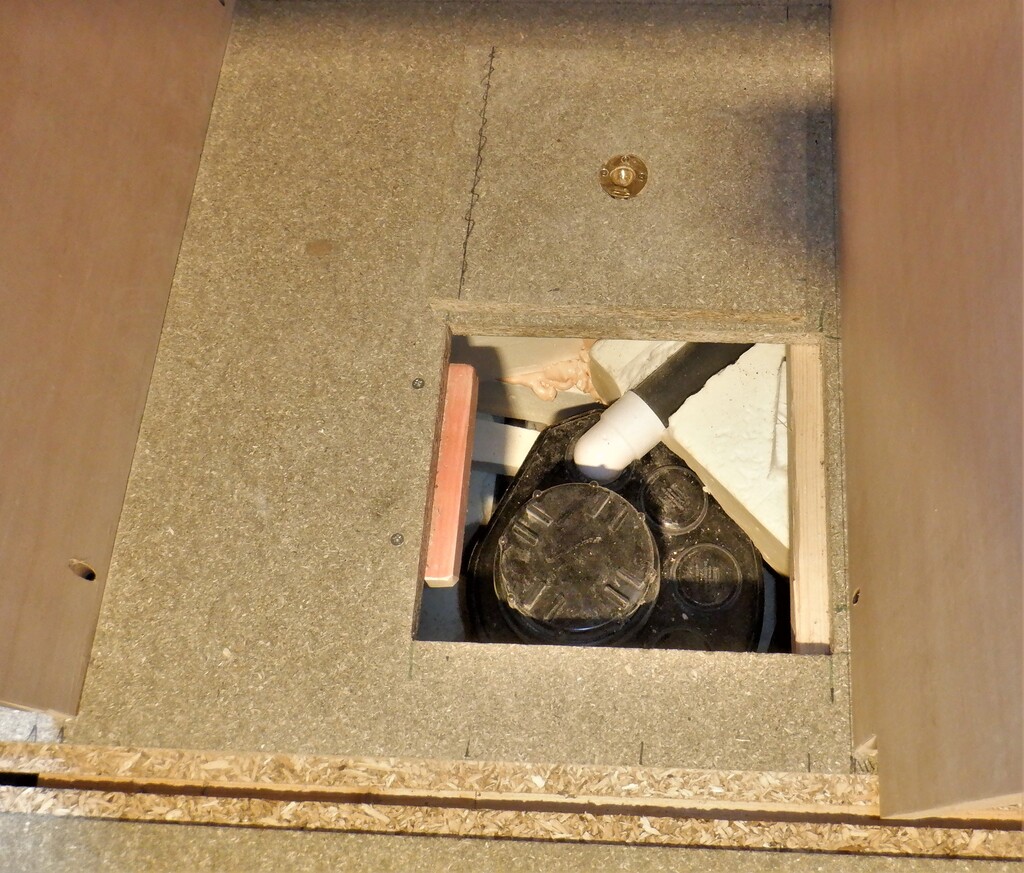
    Then we put down one and half strips of the flooring grade chipboard 22mm thick floorboards but only screwed it down just in case we needed to dismantle this and gain access to that area again, but it will be an unlikely event as all the plumbing and conduits bits and pieces are all done and fully accessible via the three new “trap” doors we also created in the floorboards. They are for the main sewage waste pipe that is under the stack of drawers, then the middle one under the sink section which is also the biggest one and the third trap door at the back in the left most section where the washing machine will live eventually, this access panel will provide the ability to work with the remaining conduits and pipes coming up from the concrete.
    Laid-floor-under-cupboards-and-cut-hatches

    Laid-floor-under-cupboards-and-cut-hatches


    We put down a loose set of more floorboards to make it easier to walk in and across the room to the hallway and beyond, they are loose so we can quickly move them out of the way to install the next set of pipes or conduits plus the main air duct that will come soon.
    The next step we decided to do is to mount a complete ring of floorboard support rails along on all the walls in all our four Hallways.
    Hall-Floor-Support-Rails-1

    Hall-Floor-Support-Rails-1

    Hall-Floor-Support-Rails-2

    Hall-Floor-Support-Rails-2

    Hall-Floor-Support-Rails-3

    Hall-Floor-Support-Rails-3

    Hall-Floor-Support-Rails-4

    Hall-Floor-Support-Rails-4

    Hall-Floor-Support-Rails-5

    Hall-Floor-Support-Rails-5


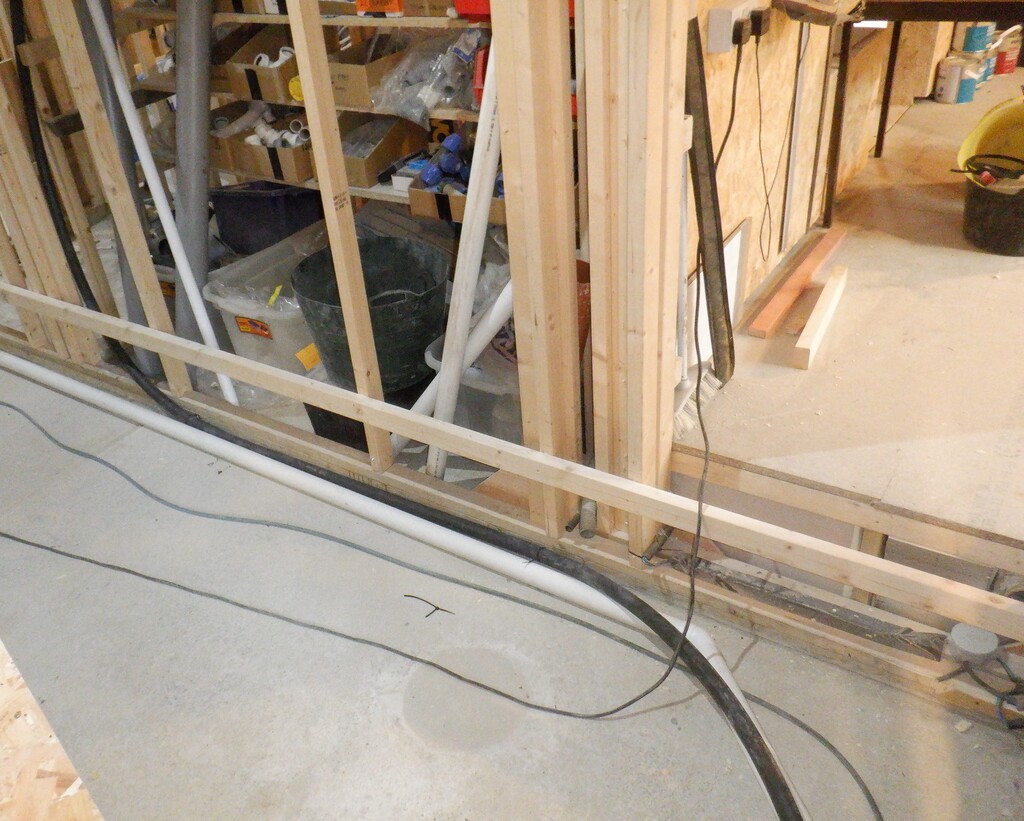
    This will provide the basic level and framework for the rest of the grid of support joists and posts to be installed next week, but first, before we can do that, we needed to make sure we have laid down any rigid pipework and conduits before all this fixed structure is in place. So we installed an electricity conduit, a 40mm wide plastic that we had left-over from when we were installing conduits from the Loke. This conduit will hold the 90Amps mains 230V AC lines to the Tech Cupboard where we will have the main consumer unit that will serve the rest of the house. The second rigid pipe we installed is the connection to our Central Vacuum System, a 50mm smooth pipework which will be solvent welded together and create a network to allow you to perform cleaning jobs across the house without carrying around a noisy machine, just a length of flexible hose that will connect to a nearest vacuum point. The 50mm pipe we installed was one going across the Utility room from the Hall to a T-junction and a side branch going off to one of the conduits coming up through the concrete that connects to the Garage.
    Vacuum-pipe-and-Electric-duct-1

    Vacuum-pipe-and-Electric-duct-1

    Vacuum-pipe-and-Electric-duct-2

    Vacuum-pipe-and-Electric-duct-2


    Friday morning we were sorting out more plumbing bits and pieces to order We had Friday afternoon off which made a change.
    On the last day we then got down to creating the carcass for cupboard units under the window and created a temporary worktop now so we can have access to some water in a sink, the first time we will have such provision in our new house. We always wanted to have worktops that are deeper than the standard 600mm so we have gone for a depth of 775mm which will allow us to fit in a washing machine inside the cupboard, including fitting a plinth that is inset a bit along the floor level. The carcass is made of four vertical plywood pieces, using 18mm thick top quality plywood that we used to make our staircase from, to form 725mm wide and 870mm high pieces. We cut out a notch measuring 100mm high and 40mm deep at the bottom front edge to provide that recessed area for our toes to fit in and the plinth to cover up the internal parts of the cupboards.
    Then we put in five pocket screw points on each vertical piece, two along the bottom edge to fix into the floor, one half way up the back edge to fix to the wall and finally, two more upwards to fix the worktop down. The carcass is now assembled so we have a 600mm space for the washing machine that will live nearest to the Equipment Cupboard, then another 600mm wide cupboard that is the position for the sink and all the associated bits and pieces that goes with sinks and the third section nearest to the outside door which is 500mm wide and will be a stack of drawers of various sizes, height wise but all being 600mm or even 700mm deep, to provide plenty of storage space.
    Utiltiy-cupboard-1-hatch

    Utiltiy-cupboard-1-hatch

    Utiltiy-cupboard-2-hatch

    Utiltiy-cupboard-2-hatch

    Utiltiy-cupboard-3-hatch

    Utiltiy-cupboard-3-hatch


    The last thing we did was to slice out of a sheet of 18mm OSB material, a single piece that will become our temporary worktop, measuring 775mm deep and 1810mm long. We added two narrow strips that will go along the back and right side of the worktop to provide one of those upstand protective features, to stop one losing items off the back and into the window area plus also keep the water from spilling over the back edge onto the wall or into the window area again.
    Utility-cupboard-bases-and-temp-worktop

    Utility-cupboard-bases-and-temp-worktop


    Next week, we will cut the sink hole into the worktop, and then paint the whole thing to colour it up and water proof the surface too. Then we can install a tap and have running water at last in our house!!

  • Equipment Cupboard Completed, New Electric Switch and Consumer Unit Installed and Flooring Structure Created

    We resumed work on our “Engine Room” within the Utility Room this week by putting on the thick heavy roof to the equipment cupboard. It is three layers of the fermacell boards, making use of left-over pieces where possible especially after we had put on the first layer which was tongue’d and groove’d to stop the edges sagging under the weight. We dug out quite a fair bit of old pieces of fermacell off the rack in the Garage that has been there for years. All to try and improve the sound absorbing qualities of the whole cupboard, to keep any “engine” noises from disturbing the household.

    Cupboard-ceiling

    Cupboard-ceiling


    We then built up the front of the cupboard, to continue with this sound proofing technique by putting on two lines of horizontal CLS rails positioned at the floorboard support point and another one higher up at just above the plinth feature that will be constructed around the bottom of the cupboard frontage. We also did the floor support frame for going around the sink worktop zone (under the window) as well. Then, using these two new horizontal rails, we proceeded to insert two layers of OSB 18mm thick boards to squeeze in between the upright posts, to fill in the gap and make a smooth internal surface (we had to insert thin 2mm shims to pad out the two layers of OSB sheets because the posts where 38mm thick and the two layers of OSB only came to 36mm, hence the little thin shims) at which point we went around putting on a layer of fermacell on the inside surface, again for both more sound proofing measures but also to provide a better fire proofing protection too. With all this plasterboard like material now covering all the internal surfaces, we went around filling in all the joints and rounding off the corners with Polyfilla which we then use our new bulk sanding machine that we bought several years ago, just for this purpose. It is connected to our DIY vacuum machine and it was a dream to scrub down the wall, and ceiling, surfaces, removing the excess filler everywhere. All that was left to do by hand were the corners which didn’t take too long to do either.
    Cupboard-boarded-at-bottom-1

    Cupboard-boarded-at-bottom-1

    Cupboard-boarded-at-bottom-2

    Cupboard-boarded-at-bottom-2


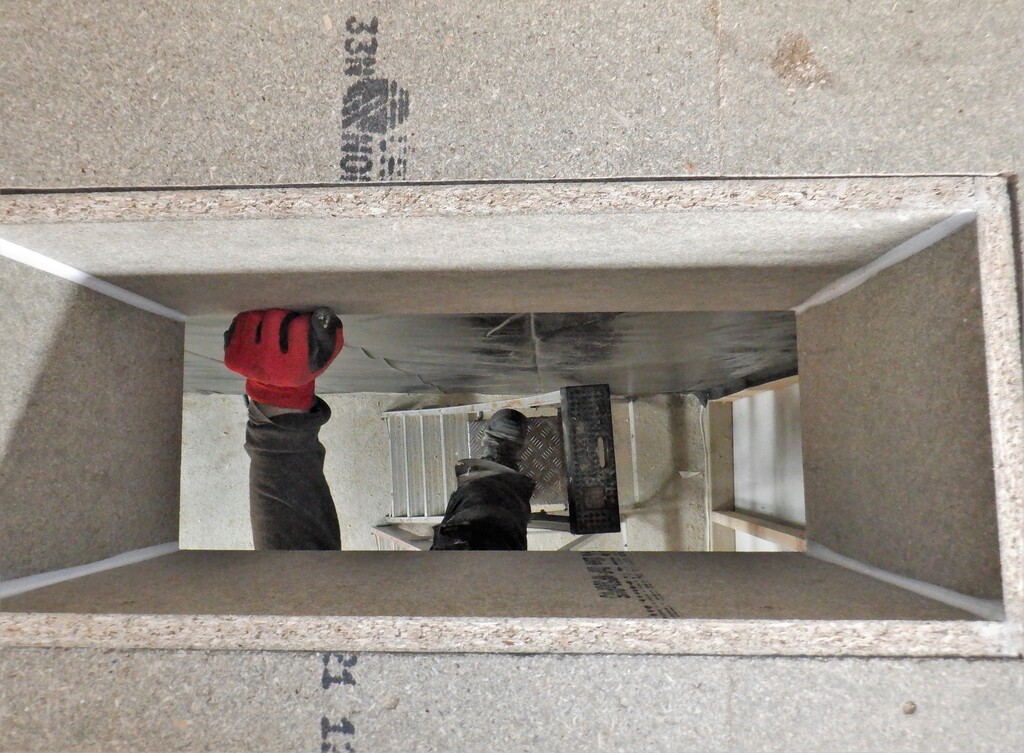
    One of the jobs we almost forgot to do was to cut a chimney hole up through our new roof so that we could have our air ducting chute to come down from upstairs. It took a few hours because of the tight close quarters but we managed it and we now have connection for our “waste” air returning from every corner of our house, ready to be refined, processed, recycled and discarded.
    Return-air-duct-through-cupboard-ceiling

    Return-air-duct-through-cupboard-ceiling


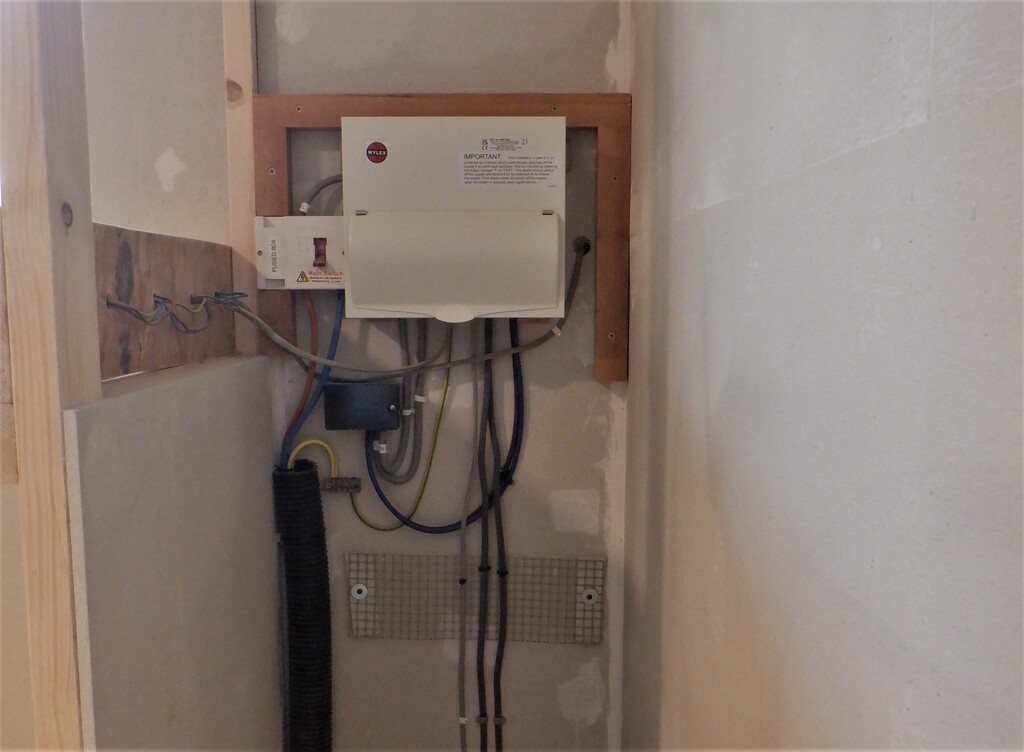
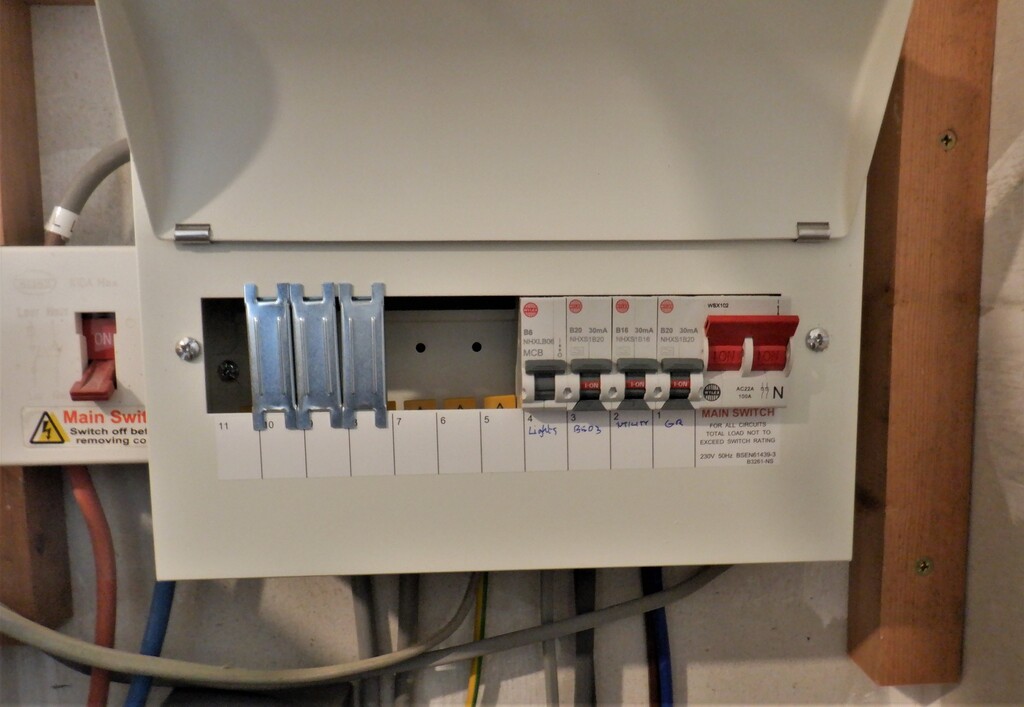
    Now that we have the basic shell of our cupboard completed, we could move and build a proper electrical switchboard, to hold the consumer unit, fuses, junction boxes etc. all in the new cupboard. We have located this equipment to be at the left end of the cupboard, just near the window so we can just open a door above the worktop and gain access to the cut-off master switch and individual switches for each piece of equipment that will be inside the so called “Engine” room for our house. We also installed a row of temporary sockets to use whilst building. It took a day to get everything moved, sorted and made neat and tidy but we now have a solid foundation to grow the electric system for the whole house, the only bit left to do, is to hire an electrician to “plumb” in a unfused tap into the main distribution panel in the garage immediately after the smart meter etc.
    New-consumer-unit-and-temporary-wiring-1

    New-consumer-unit-and-temporary-wiring-1

    New-consumer-unit-and-temporary-wiring-2

    New-consumer-unit-and-temporary-wiring-2


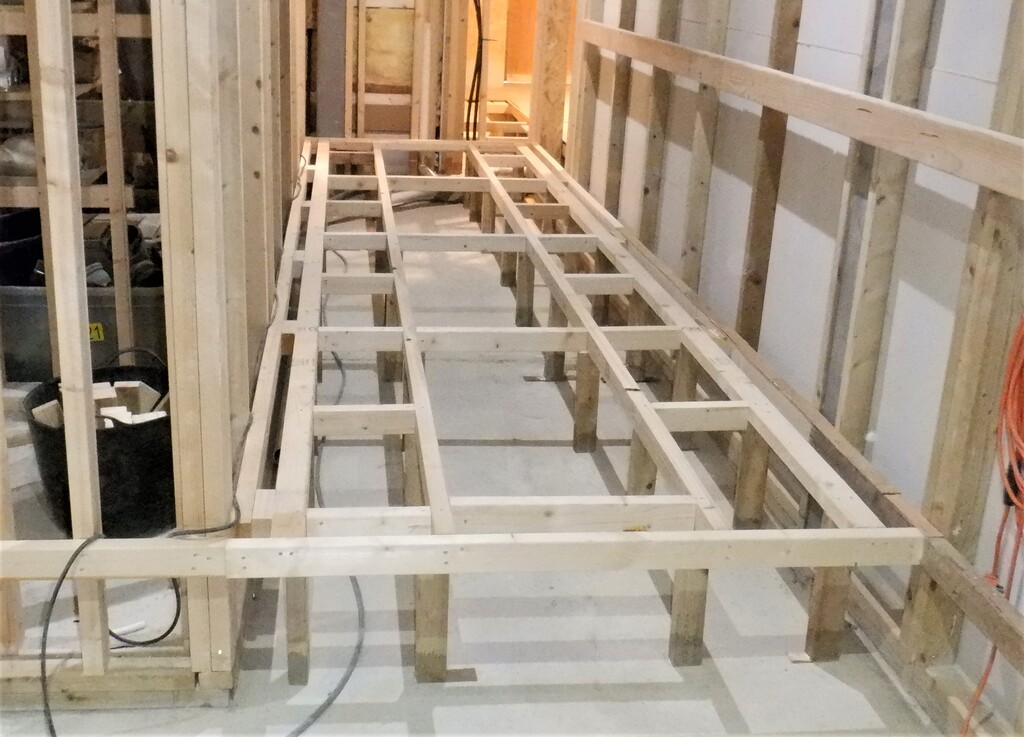
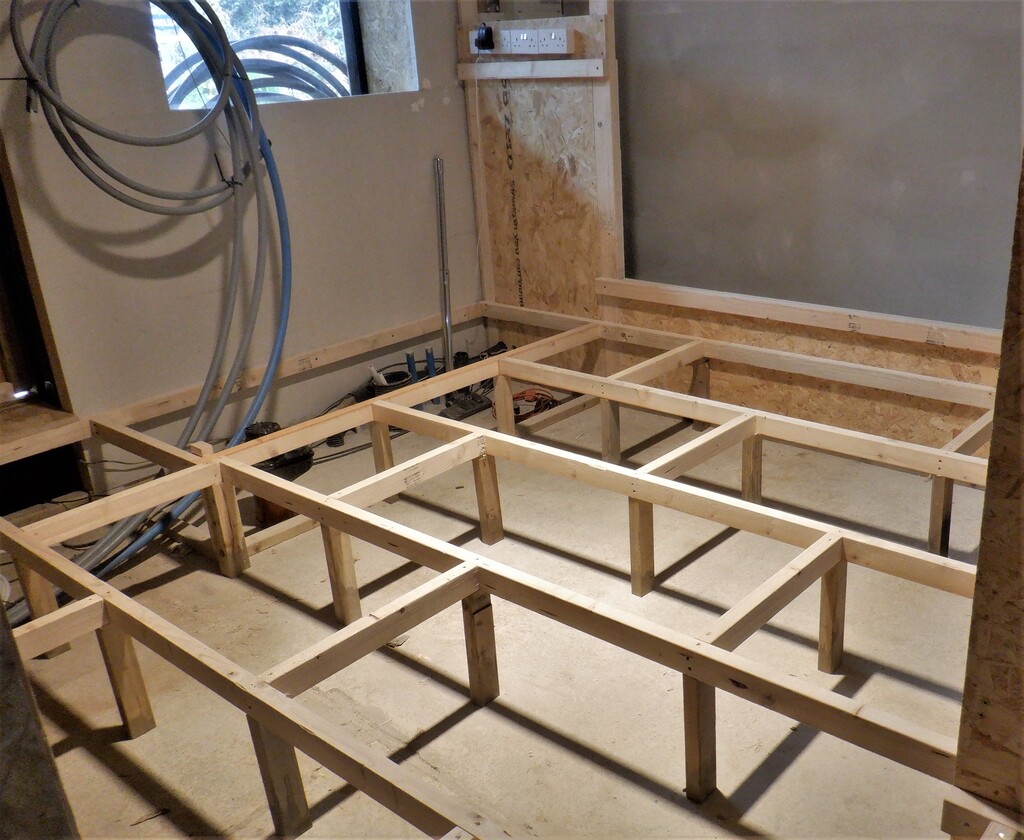
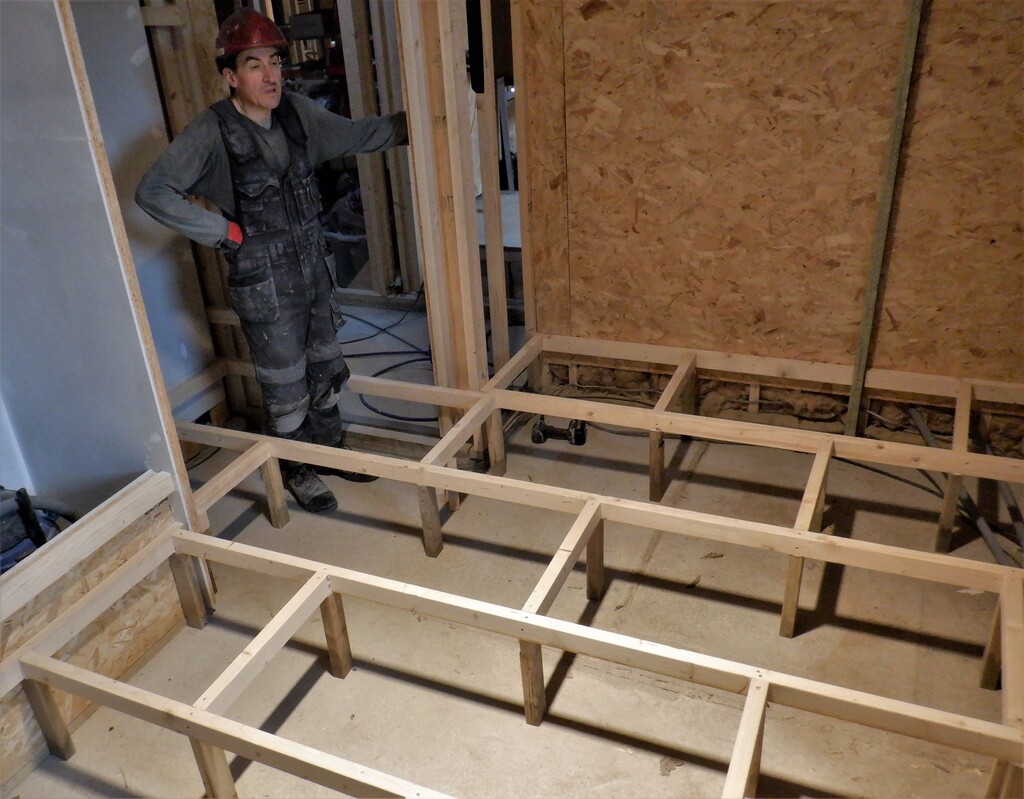
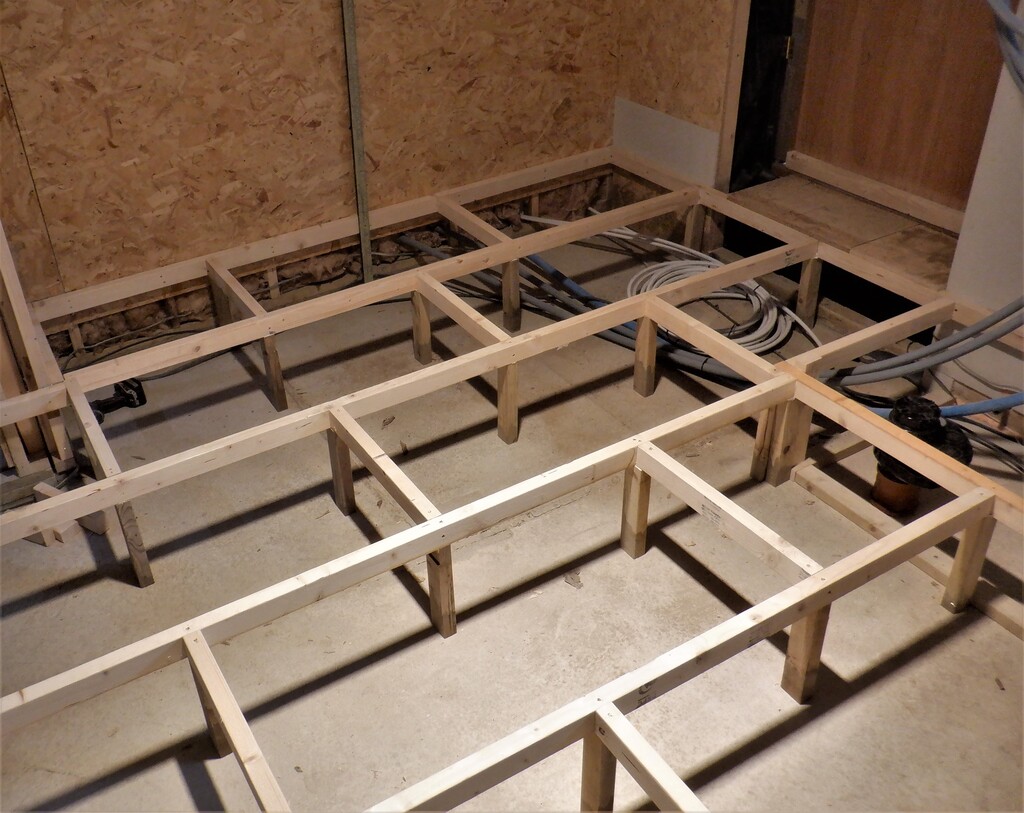
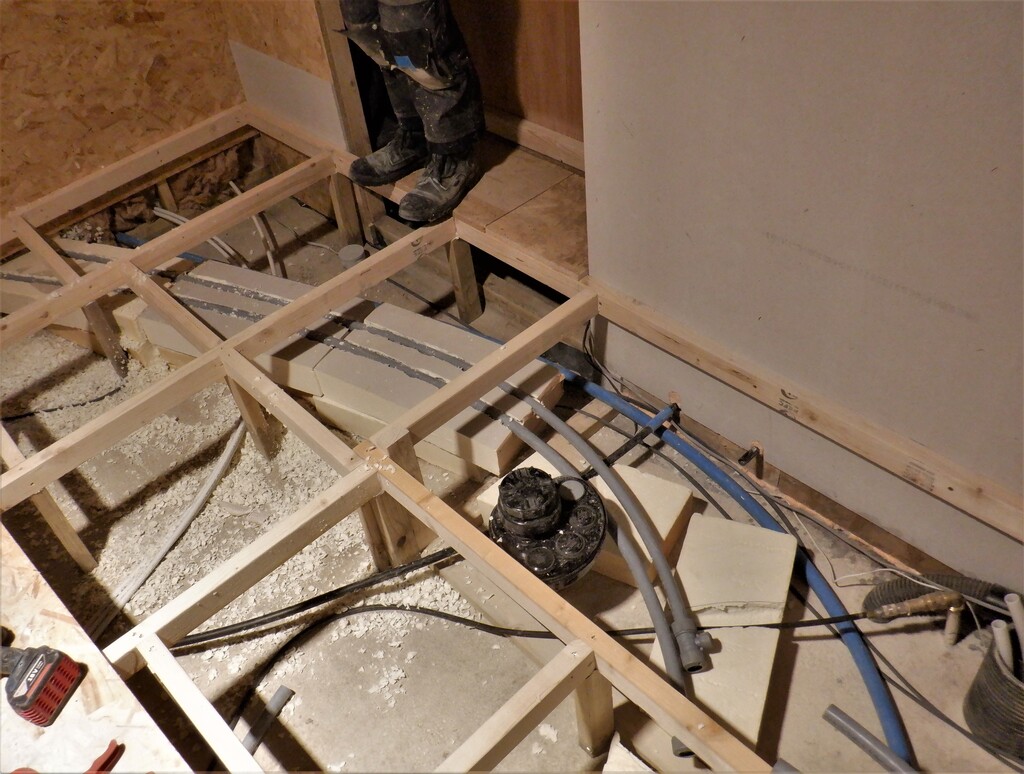
    The remaining day and a bit was spent constructing the grid like support framework for our floorboards going across the room, making sure we had room to lay down our air ducting which is our largest item that lives under the floorboards, to get across the room and diagonally towards the door and into the hallway.
    Utility-floor-support-grid-1

    Utility-floor-support-grid-1

    Utility-floor-support-grid-2

    Utility-floor-support-grid-2

    Utility-floor-support-grid-3

    Utility-floor-support-grid-3


    And then start putting in the insulation pieces that encapsulates the hot water “flow” and “return” pipes, snaking across towards the sink under the window and sorting out the conduits that needed to cross over etc. One of those pipes, is the main sewage pipe going down into the concrete and we bought a module that allowed us to have the ability to plug in four separate 40mm diameter waste pipes, coming from the sink and washing machine plus also any condensed water that drops out in the air conditioning sub-systems.
    Start-of-Heating-pipe-crossing-the-room

    Start-of-Heating-pipe-crossing-the-room


    Next week, we will continue with that process of sorting out the hidden pipes and conduits so we then can put down a strip of proper and permanent floorboards in front of the door and window which in turn means that we can build the sink worktop and the cupboard and drawers that goes underneath. We are just planning a rough and tumble worktop for the time being, just using some OSB material we have lying around so we can have a working sink sooner than later.

  • Equipment / Machine Sound Absorbing Cupboard Half Constructed

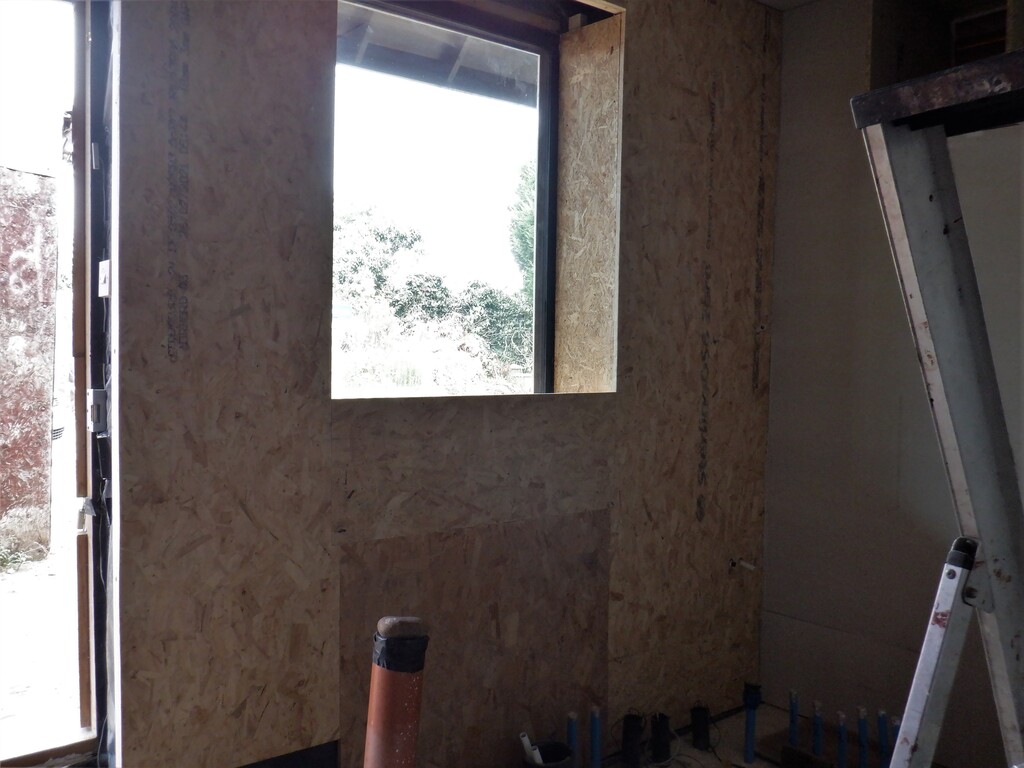
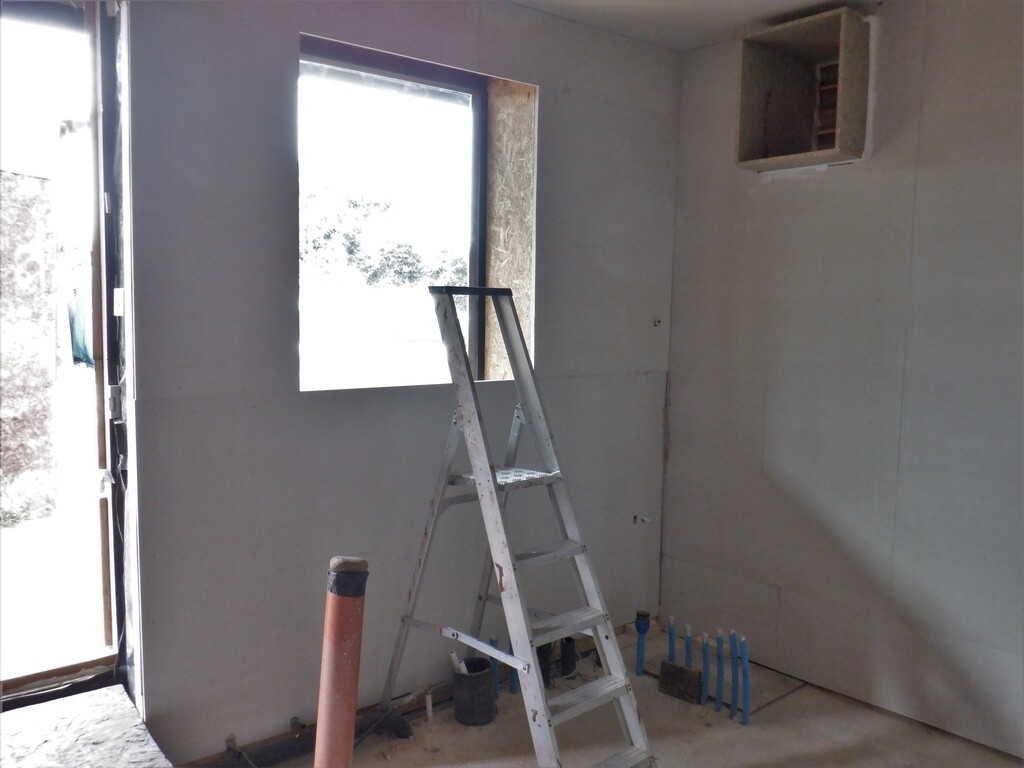
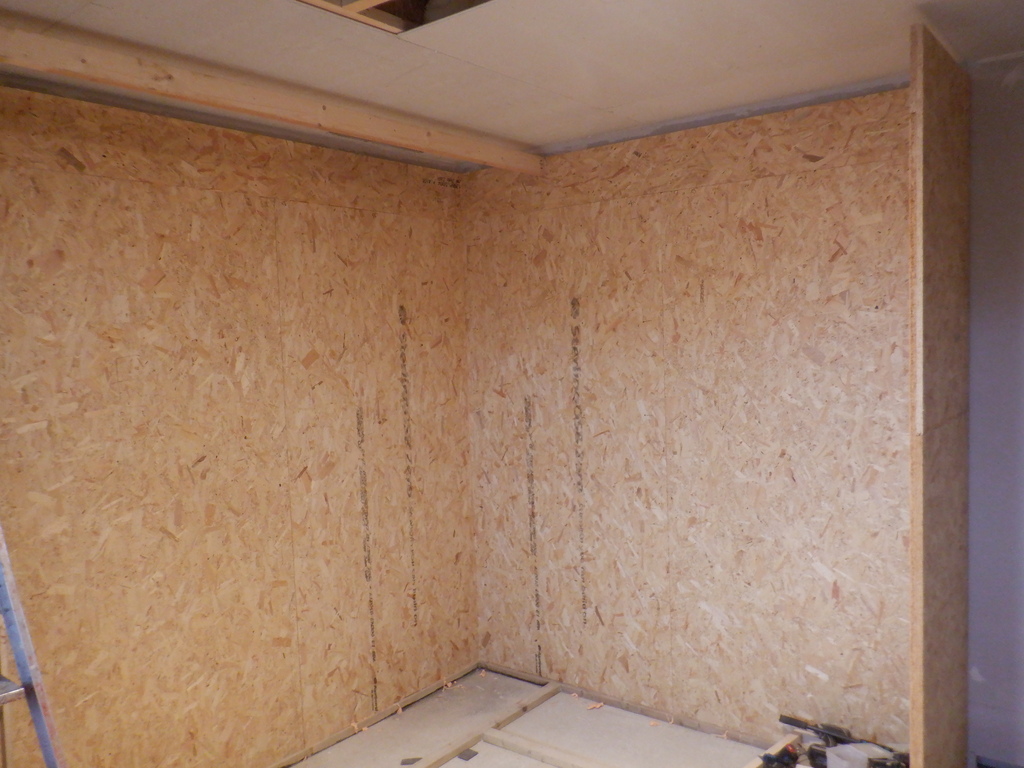
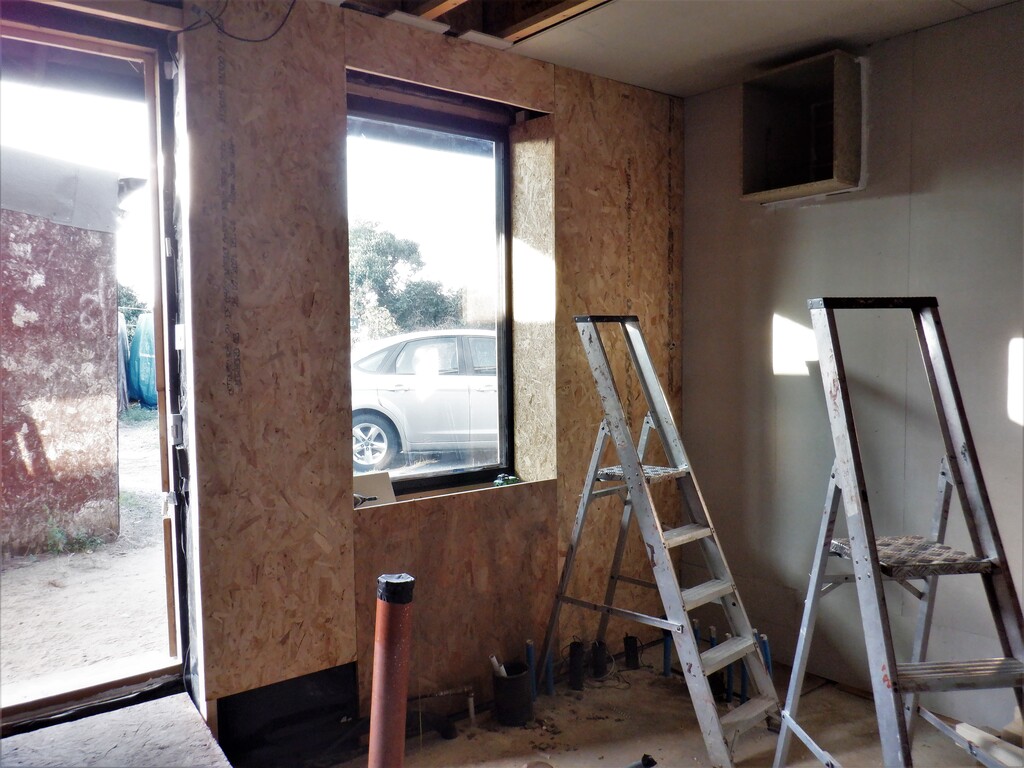
    At the beginning of the week, we finished off preparing the Utility Room by concluding the task of putting up OSB wall boards around the door and then trimmed the window .. well we eventually managed it .. slowly! The router bit we had is getting rather blunt so we ordered some more replacement cutters, nice and sharp! Afterwards we extended the height of this wall board layer inside the window area so it goes up to the level of the worktop by using a whole series of biscuit joints around the three edges and sliding in the new piece from above and then fixed in with PU construction glue.
    Next, we proceeded to cover all this OSB material with Fermacell boards which was a simple process of spraying lines of PU glue foam all over the surface and then staple each piece up with 25mm long staples fired from our compressed air stapling tool. The joints between pieces were stuck together using the thicker PU construction glue instead, to achieve a tougher and stronger joint.

    OSB-on-window-wall

    OSB-on-window-wall

    All-walls-have-fermacall-applied

    All-walls-have-fermacall-applied


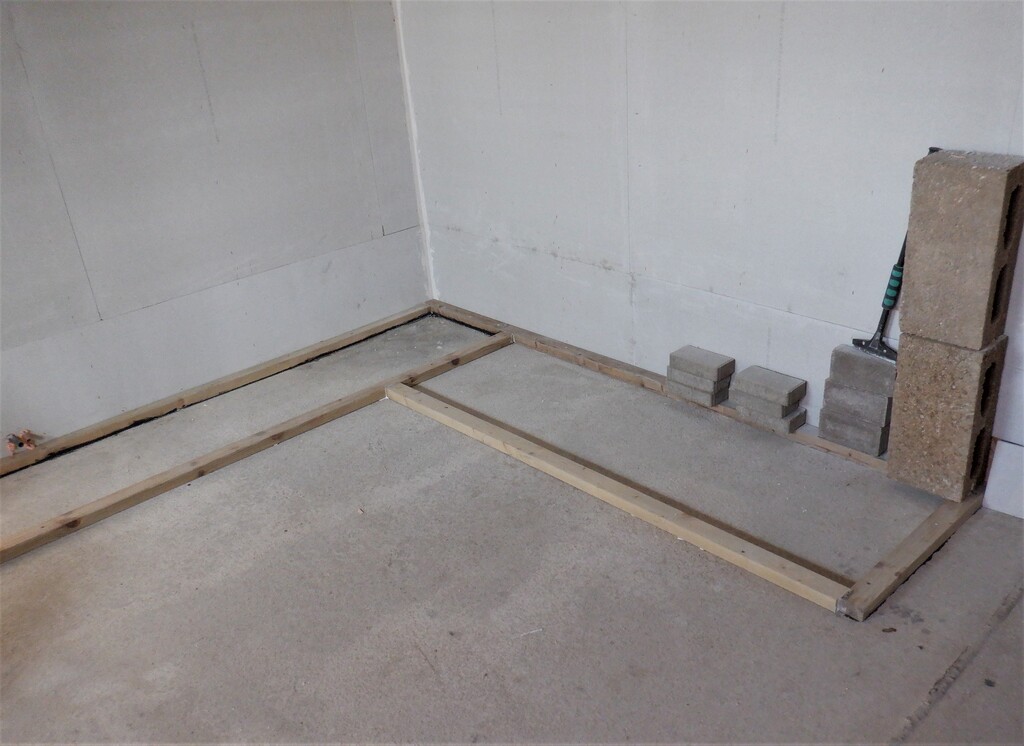
    That pretty much concluded the preparation work in getting the basic room done enough so we could start constructing the next object, namely an equipment come machine cupboard to hide away all the various devices, gadgets, mechanisms and storage that will provide the Utilities for the whole house and garage. It is essentially is a room within a room and we are constructing it using thick/heavy materials to try and reduce the noise levels as much as possible and not disturb the rest of the household. So we decided that we would have a cupboard the complete width of the room, from floor to ceiling, along the “E” wall and it will be 600mm overall deep including the wall thicknesses. Part of this design criteria was that we did not want to encroach too closely to the window, to give the window a better look and also we selected 600mm because we didn’t want to have a pile of waste pieces left over when we built the roof out of our 1200mm width sheets. Joining to this basic rectangular shell will be the cupboard region that will hold the clothes drying and vacuum machines, coming along the entertainment wall side of the room and stopping just short of the entrance way to the hall, allowing for the door to open fully and back against the wall. This section is going to be 700mm deep and it turns out to be about 1900mm long, which can be sub-divided into separate modules for each of the machines and other functions like shelving units. This is the extent of what we wanted in creating a noise reducing box like cabinet so we laid down a footprint of treated CLS 63mm timber pieces down on the concrete floor, glued and bolted that defines the outline shape. We also put down extra pieces in front of the window too, to define what would be our worktop and sink section, again being 700mm deep and also being about 1900mm long too.
    Cupboard-Footplates-fixed-down-1

    Cupboard-Footplates-fixed-down-1

    Cupboard-Footplates-fixed-down-2

    Cupboard-Footplates-fixed-down-2


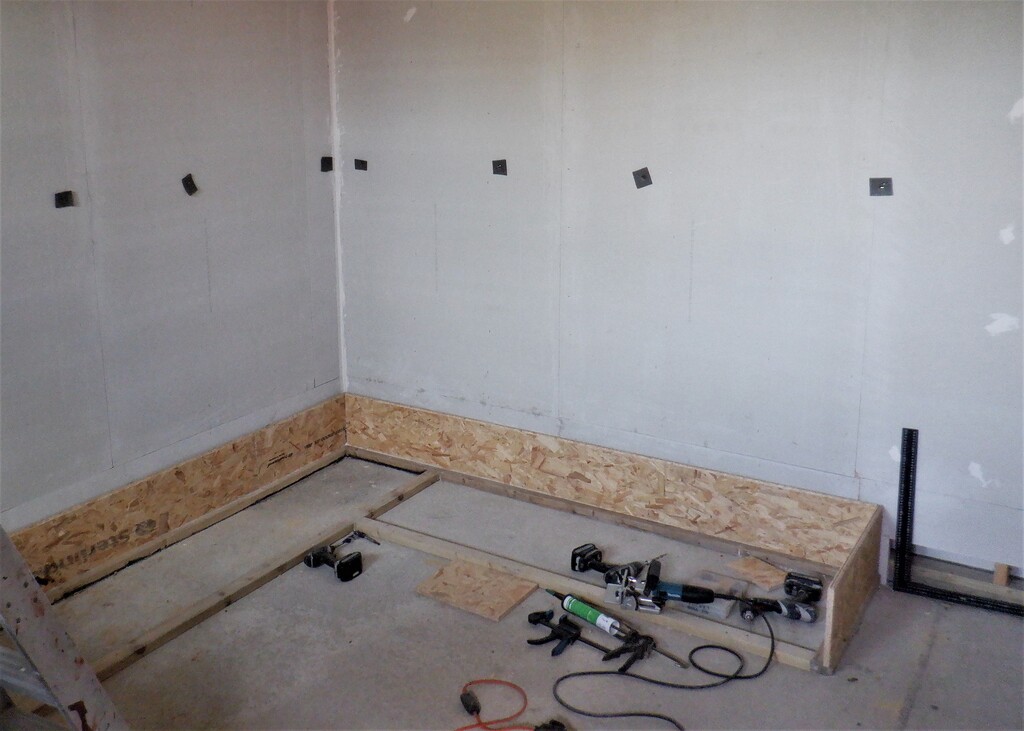
    One of the minor tasks we completed before we continued with the cupboard, was to fill in the joints and corners around the fermacell walls with Polyfilla and smooth it all off so it is sealed. After that, we started building the cupboard using 18mm OSB boards but just before that, we stapled up little squares of foam material that is 8mm thick so that we can maintain a air gap between our new cupboard and the room’s walls, to disconnect any direct transmission of any sounds being generated by motors etc. inside the cupboard.

    We brought a dozen sheets of 18mm OSB inside from our pile outdoors and got them ready. One thing we wanted to do was to use a tongue and groove joints so they formed a solid structure, a backbone for the rest of the cupboard to be built from. Also, we needed room at the top of these walls to fit a “lid” on top and still be separated from the ceiling, this meant that we needed a full height board (2440mm high) plus a narrow strip of 270mm wide to start at the bottom line sitting on the newly installed CLS footplates. So sliced up two board into eight narrow strips and then cut a set of tongue edging on four of them plus groove edging on the other four.
    We proceeded with the narrow strip first, right around outer sides of the cupboard and then put a row of horizontally mounted full sized sheets, again with a set of tongue and groove edging. The long side of the cupboard (against the “E” wall) is 3740mm long so we put in a full sheet in the middle and filled in the left and right ends with 650mm pieces. We were making sure that no joints lined up with each other and creating a stronger monolithic backbone. The top line of OSB board had to have a large section cut out to make way for the air ducting sticking through the wall. Oh yes, the same for the five other sticking out conduits and pipes at various places and also we had unscrewed and lifted the air duct that is coming down through the ceiling.
    we ended up with the first layer all done, starting about 300mm from the window, coming along the “E” wall some 3.7metres and turning along the entertainment wall another 2.5metres before finally turning right angled from the main wall to form the end of the cupboard which is a further 750mm wide.
    First-row-of-OSB-for-cupboard

    First-row-of-OSB-for-cupboard


    That took a while to do because of all the tongue and groove edges we needed to cut and fit everything together with glue etc. but once we have done that first layer, we could mount on the second layer much faster because we didn’t need to do any further tongues or grooves again as we had the backbone layer to press against, keeping the joints neat and tidy. We proceeded to spray a zigzag line of PU glue foam all over the surface and screwed this second layer straight on to the first layer. We had drilled clearance holes all over the sheet, we did a grid of four rows by six columns, giving us a total of 24 screws to tighten the two sheet together squeezing the glue out thinly. We used about 200 screws by the time we done all the second layer!
    Next, we put up a solid CLS 89mm piece of timber right across to form a lintel for the front of the cupboard to help support the heavy “lid” which will be made of three layers of fermacell sheets.
    All-cupboard-OSB-placed-and-glued-1

    All-cupboard-OSB-placed-and-glued-1

    All-cupboard-OSB-placed-and-glued-2

    All-cupboard-OSB-placed-and-glued-2


    On our last day, we went around fitting in a third layer of material, this time our fermacell “plasterboard” sheets, again, just went straight up onto the wall surface with the PU foam glue and this time, was stapled on with 25mm staples. It didn’t take very long and we finished off the day by putting four vertical CLS posts, two 63mm ones up against the walls under the lintel, and the other two being 89mm pieces, again fitted under the lintel but this time 800mm out from the walls. All four will help support the lintel and in turn, the roof of the cupboard. The last piece of CLS, another shorter 89mm piece, went along the front of the side arm of the cupboard, also to support the heavy “lid” over this side section of cupboard.
    Cupboard-lined-and-basic-framework-errected-1

    Cupboard-lined-and-basic-framework-errected-1

    Cupboard-lined-and-basic-framework-errected-2

    Cupboard-lined-and-basic-framework-errected-2

    Cupboard-lined-and-basic-framework-errected-3

    Cupboard-lined-and-basic-framework-errected-3

    The-whole-cupboard-is-isolated-from-the-wall-of-the-room

    The-whole-cupboard-is-isolated-from-the-wall-of-the-room


    Next week, we will start building the lower sections of the front parts of the cupboard, up to the floor levels and getting ready for the flooring supports for the room and starting to lay out the pipework and ducting etc. going across the room and out into the hallway.

  • Preparing Utility Room so Ready to Build Equipment Cupboards

    We arrived for this new week to resume our work on preparing the Utility Room, to get it ready for installing the vast collection of equipment, tanks, switches, pipes and many other bits and pieces that will provide the services like water, air, electricity, vacuum and other utilities.
    We got going on dealing with the black plastic that is pinned up on the wall, covering the window so that got sliced and wrapped down the sides. We also inserted the plastic liners for both the bottom and top cavities that sits below and above the window too. We are just repeating the same procedure as we had done for Bedroom Three windows and these cavities are designed to provide space for the mechanism to control the automatic window blinds. As part of dealing with the window, we put in the extra pieces of CLS timber to frame on all four sides and then put up two vertical 11mm OSB boards on the left and right sides but only after we remembered to install several lengths of 20mm black conduits. We nearly forgot to put one conduit in to allow us access and the ability to feed through whatever electric wires we would need for the mechanism. It was a tight squeeze to slip the conduit behind the plastic already up on the wall but we made it. As part of putting up the plastic and wrapping it into place, we used our malleable white tape to seal tight all the conduits poking through the plastic but also did the large air duct boxing too.

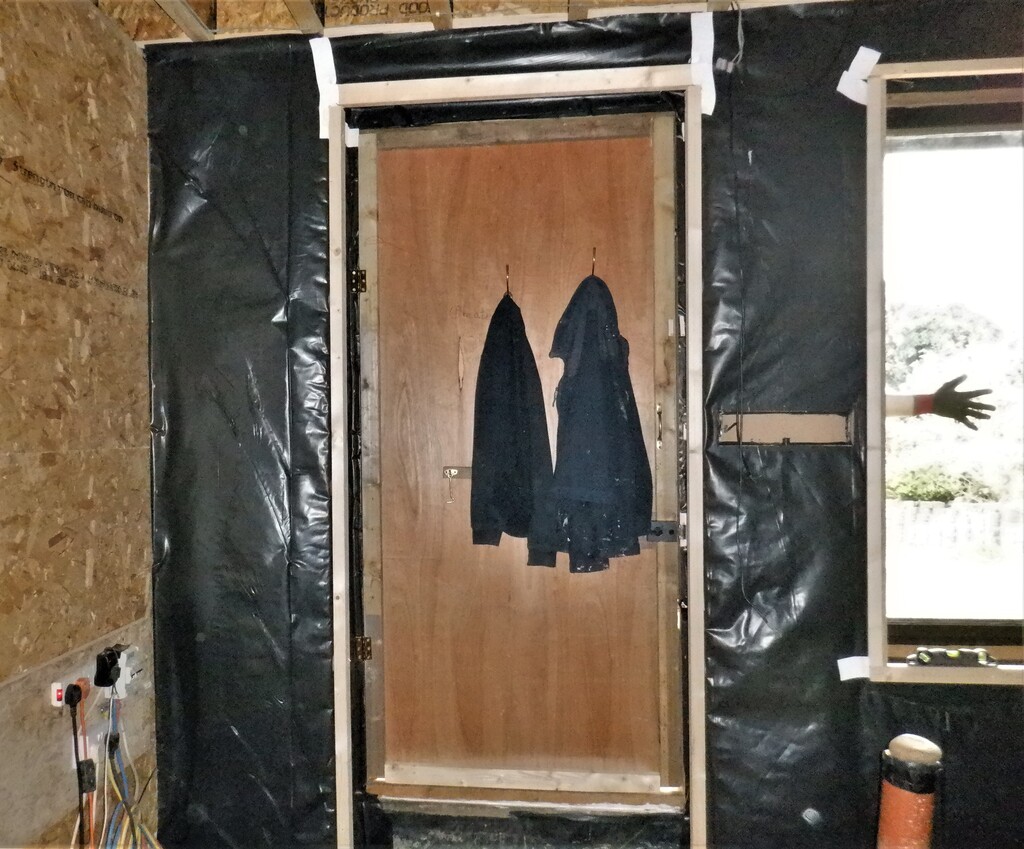
    Next we did the doorway. We had to take off the door again plus all its equipment like electronic lock and sensors etc. so we could wrap the plastic up and onto the door framework, to ensure that we are creating a good vapour barrier. We also put on three extra CLS 63mm timber pieces around the frame that will form the inner surface wall and door entrance. We remounted the door, changing the hinge position slightly and put back all the door furniture and reapplied the door hook too.

    Dorr-framing-redone-and-door-rehung

    Dorr-framing-redone-and-door-rehung


    Looking at the order of things, we then got on with installing the ceiling covering. We needed to do the ceiling next because we are planning to build the equipment cupboard and that will go from floor to ceiling almost and we wanted to put up one layer of the fermacell (this is like a plasterboard material but highly accurate and engineered gypsum mixed with recycled newspaper and no paper liners) to improve the sound proofing levels to stop the machinery and equipment we are planning to employ from disturbing the rest of the household, especially the living spaces up on the First Floor. So towards that goal, we built a second air ducting but this time, it is coming down through the First floor joist structure. We used more of our 18mm floorboards chipboard material to create an oblong shape measuring 600mm long and 240mm wide, narrow enough to fit between two joists and also enters cleanly into our equipment cupboard too. We made it 370mm tall, enough to traverse through the first floor floorboard and joist space. Next, we lined up the box against the floorboard to mark where we want our hole and sliced our way through. This will allow the exhaust air that is being all collected upstairs and being routed around to this spot, to be diverted downwards into our equipment cupboard, to be processed and then rejected outside. We only screwed in this air ducting for now because we can see that we will need to move it out of the way when we come to build the cupboard later on.
    Air-duct-down-from-first-floor

    Air-duct-down-from-first-floor


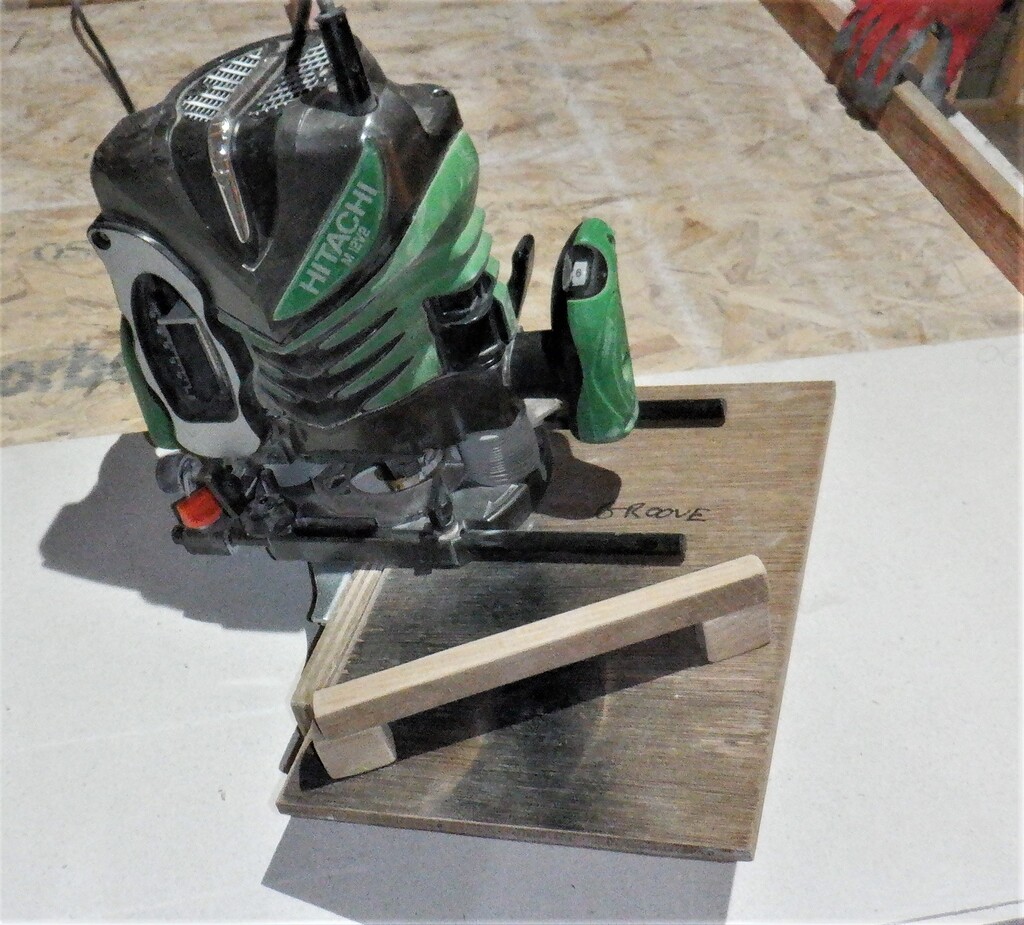
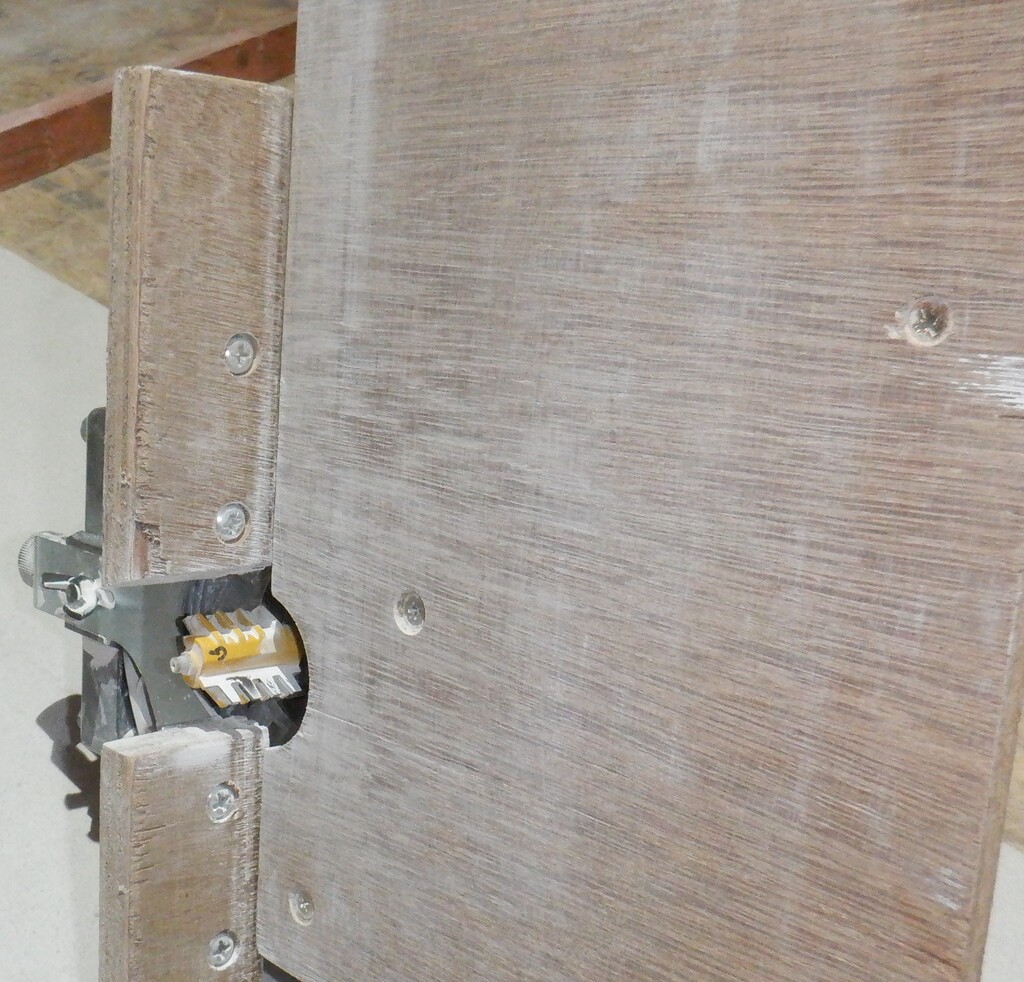
    Before we can mount our fermacell boards up on to the ceiling, we need to cut a set of tongue and groove into selected edges. We discovered way back when we built the Garage that we couldn’t keep all the sheets of fermacell dead level to each other, even though we put on PU glue and fixed little screws in the joints to hold them steady while the glue dried, it came out very slightly wobbly and it took a great deal of sanding to get it smooth again. So back then, we tried cutting a tongue and groove into the fermacell and it worked like a treat. So today, we took that experience and set up our two router machines with new cutters, both are identical shaped cutters, that does both a series of tongues and groove within the thickness of the material. These cutters can do up to 25mm thickness but we are only wanting to do either 10mm for the fermacell boards and 18mm for our OSB boards.

    We also adapted the two router machines by extending their bases to a much larger supportive area so the heavy machines won’t tilt off the edge and we can pull it along against the surface and the fence, to get a smooth, regular and neat cut. The only different between the two routers is to the exact position of the cutters, one will do the grooves and the other one does the tongues.

    Router-with-extended-base

    Router-with-extended-base

    TG-cutter-in-new-base

    TG-cutter-in-new-base


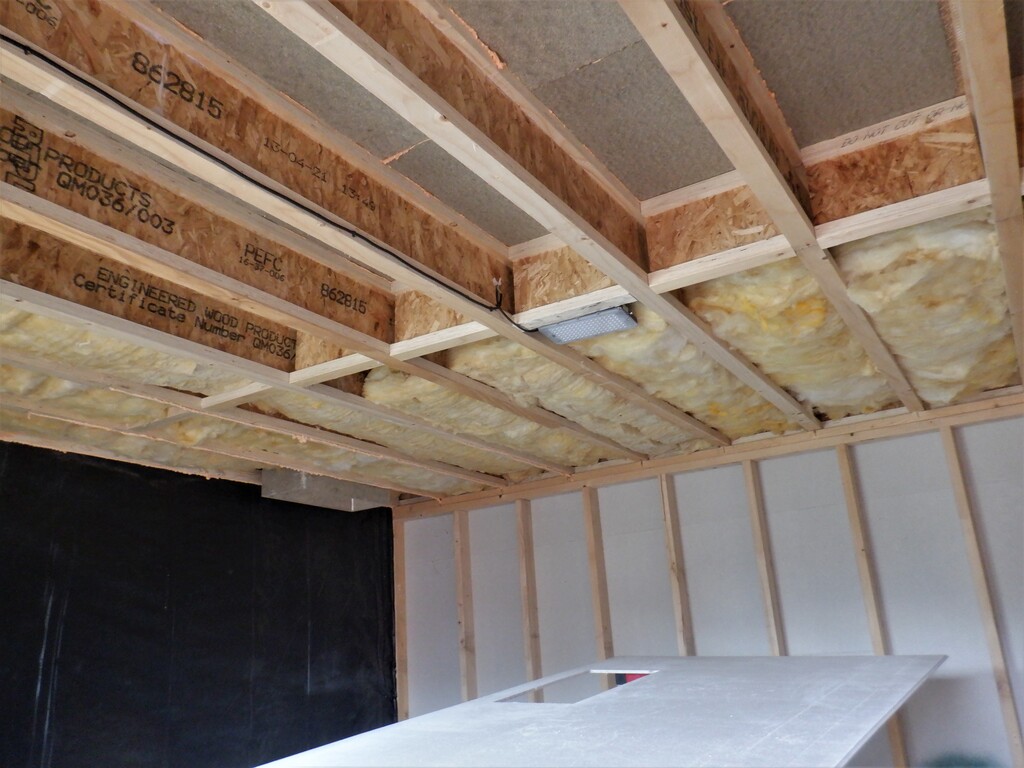
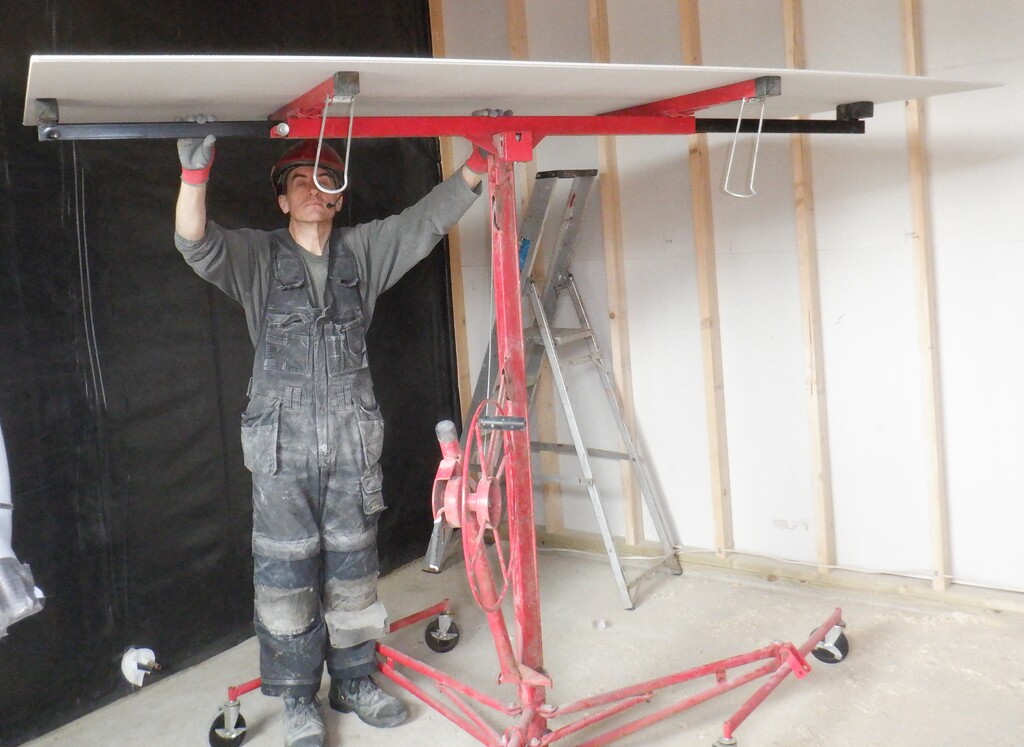
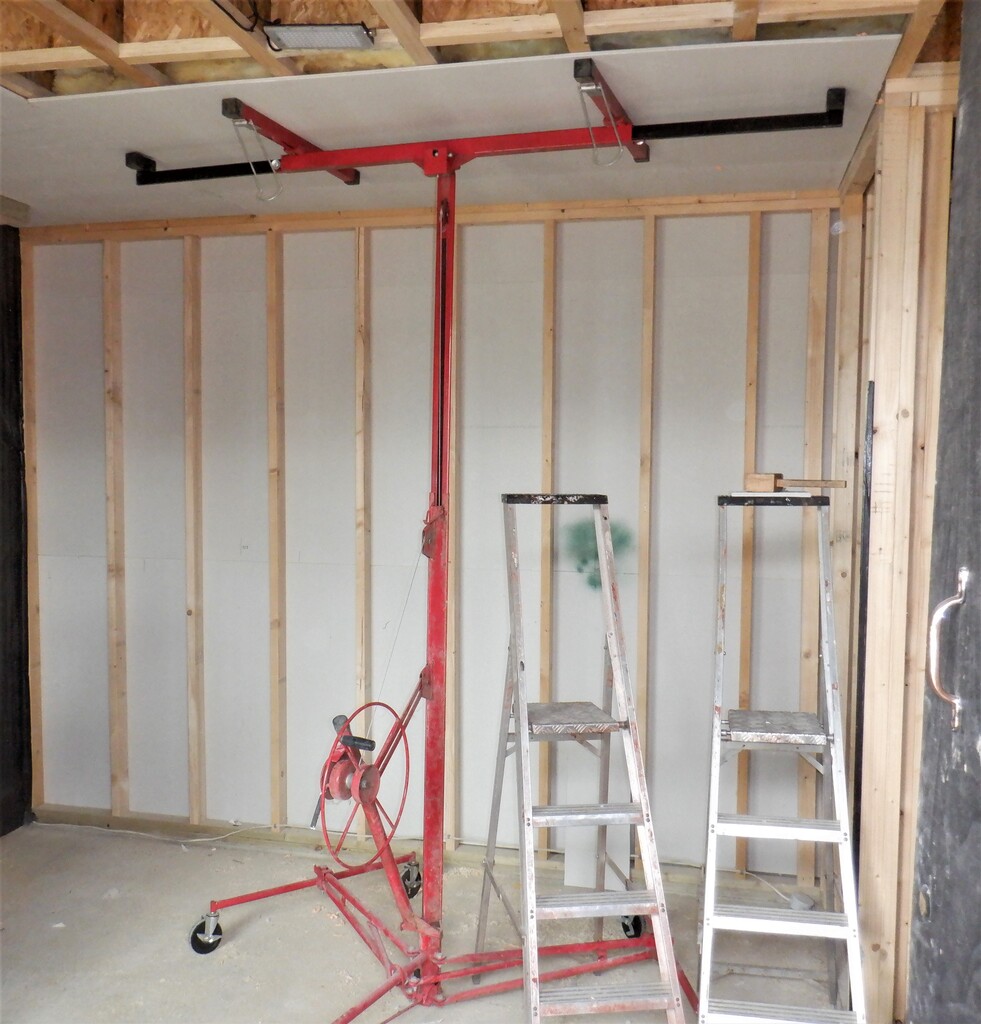
    It took a little while to do these modifications and testing sessions but it is well worth the time, in order to get good quality results in the long run. So with these new tools, we proceeded to put up a set of fermacell 10mm thick boards up on the ceiling, using our very handy and strong board lifting contraption (It’s a bit rusty from being stored in a shed for 10 years). It runs on highly adjustable wheels so it can squeeze into corners and go around obstacles. But before we did that, we loaded the joist space with a load more of 200mm thick glass wool material to provide more sound proofing.
    Insulation-in-the-ceiling

    Insulation-in-the-ceiling


    We, and our lifter (each full size board weighs 25kg each!), did a row of boards, some 1200mm wide strip next to the “E” wall and then did a wider 1600mm strip along towards the door entrance into the hallway. We did this much of the ceiling because our equipment cupboard will go along the “E” wall and also along the Entertainment wall and stop about a meter before the hall door. We put spray PU glue on the joist flange itself and construction PU glue into the groove to joint two sheets together and plenty of 35mm long staples to fix the board up for the long term. The roof will be inaccessible after we have built the cupboard.
    Board-lifter

    Board-lifter

    Holding-up-a-board

    Holding-up-a-board


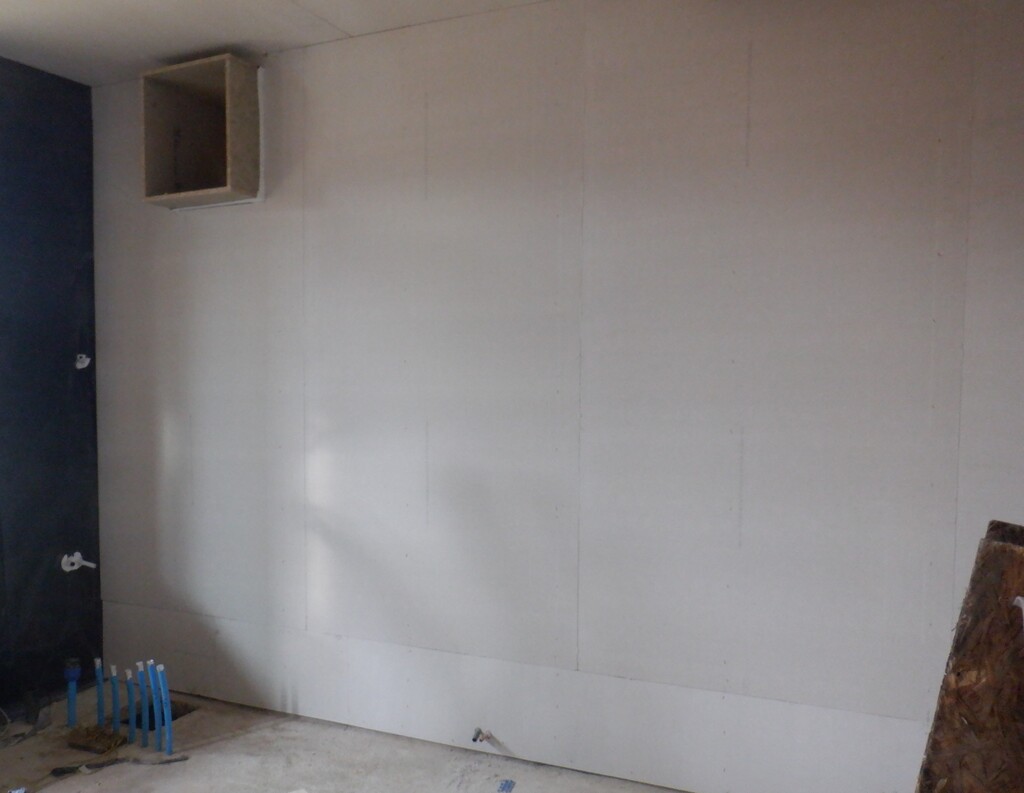
    After dismantling the board lifter, we then tackled the “E” wall and covered the entire surface with more fermacell, from concrete floor and right up to the ceiling. We had to put up three and a bit sheets along the upper wall plus a narrow strip along the bottom to cover up the plastic.
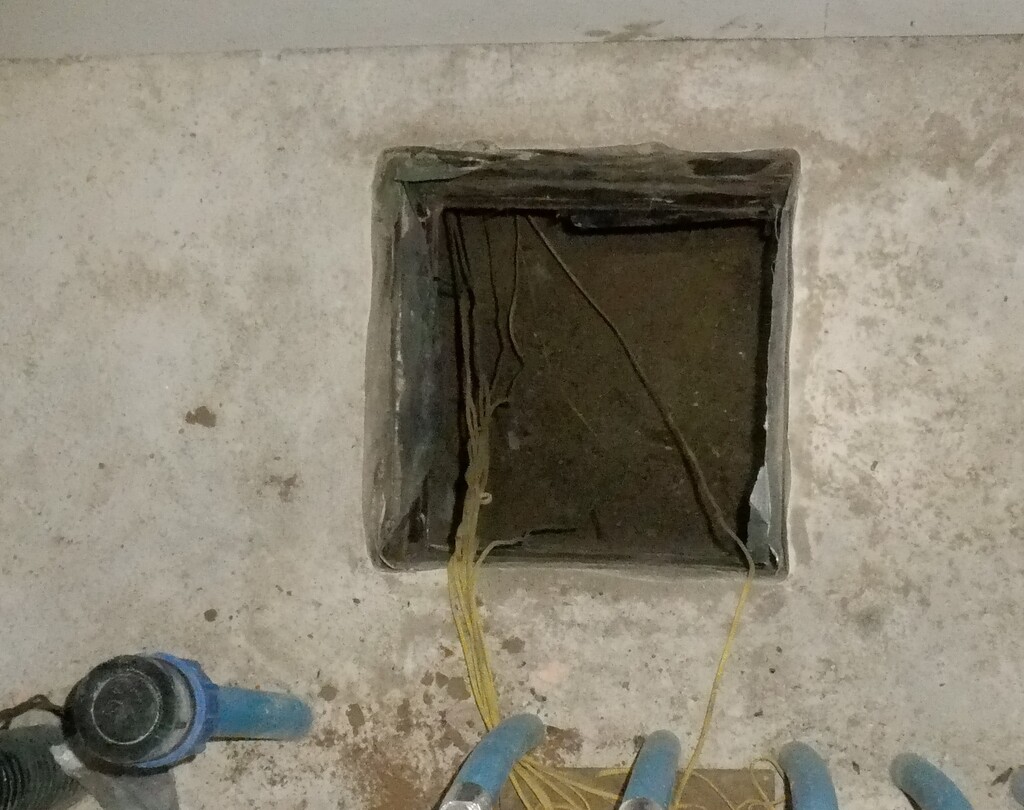
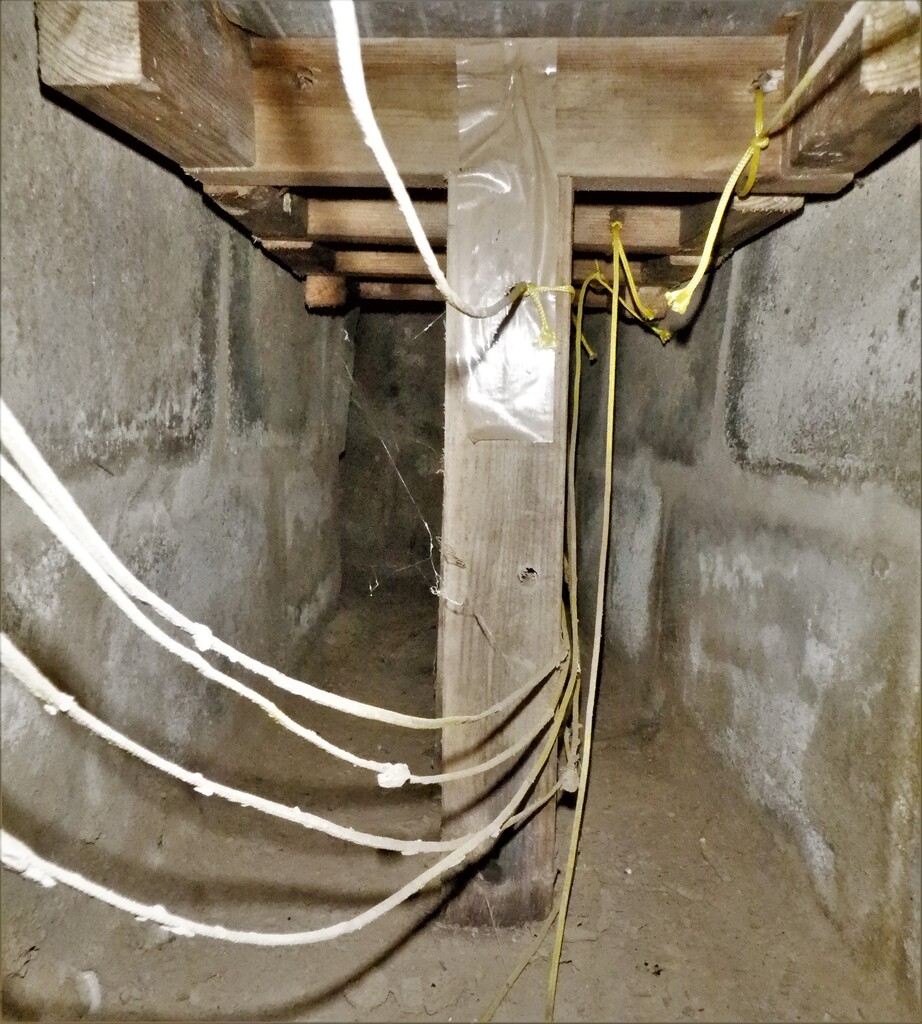
    Before we put up the last piece at the bottom we had to remove the very old ‘chimney’ which protected the entrance tunnel for the air from the earth tubes. This just pulled out of the hole in the floor and we had a peek down the tunnel because we didn’t actually know if the tunnel was OK.
    Top-the-Earth-Tube-tunnel

    Top-the-Earth-Tube-tunnel

    View-along-the-tunnel

    View-along-the-tunnel


    This layer, and the one on the ceiling too, will provide additional fire protection too, making our wooden house that much harder to catch alight if we ever had a fire as the Utility room is the most likely place to catch fire in the first place. We will put in extra measures when we build the equipment cupboard and there would be active fire suppression devices installed inside, plus plenty of alarms so we are fully aware when there is a problem.
    E-wall-boarded

    E-wall-boarded


    Now we moved around to tackle the Entertainment wall which is a stud wall made of 89mm thick CLS posts, we only wanted full board of OSB beside the hall entrance so we nailed up narrow strips of OSB pieces on the rest of the legs. We did have to pull off that full sized board because we forgot to put in the glass wool material first! So we duly put in more 400mm wide strip of the 200mm thick glass wool and stuffed them into the 89mm space, yes 200mm into 89mm! This will obviously compress the wool down when we put the series of board on the wall and this is great because it will reduce much of the sound and noises coming from the Utility Room and entering into our Entertainment room where you may be watching and listening to a movie and the last thing you want is, to hear the washing machine spinning or the vacuum system whirling away!!
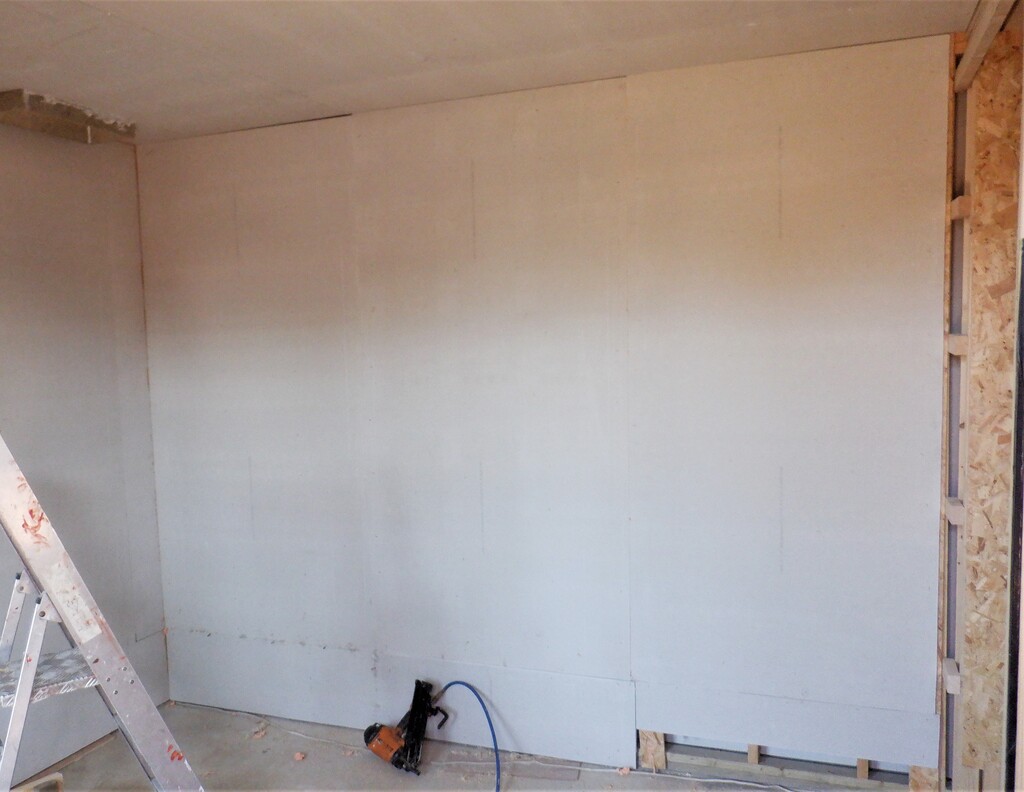
    So this wall had a layer of fermacell put on, compressing the wool down and this finishes off this wall completely too. Again, we did this now because of our equipment cupboard which will be built slightly removed from these walls to provide another air gap for sound insulation.
    Entertainment-wall-boarded

    Entertainment-wall-boarded


    You may have noticed that we are putting these boards directly onto the wall posts and not on any horizontal rails. This is deliberate as there is hardly any needs for having electrical sockets or switches. Most of the Utility Room will have cupboards, cabinets and shelves and they will have their own electrical sockets inside these regions and nothing will be visible. The only exception is the little length of worktop in front of the window for a sink and we might put up a socket on the side of the cupboard at the end of the worktop.
    The last bit of work for this week is putting up the first layer of OSB board along the “F” wall, to cover up the plastic and provide a strong screwable surface for mounting anything up on the wall, like a worktop! We got as far as the door, again each piece was cut to give a tongue and groove edging to bring together each piece in a nice smooth finish, ready for the layer of fermacell to go on too.
    Window-wall-OSB-started

    Window-wall-OSB-started


    Next week, we will finish the OSB around the door, trim the edges and then put up the fermacell to get that finish. After that, we will start building the equipment cupboard which will be fun!

  • Preparing Utility Room

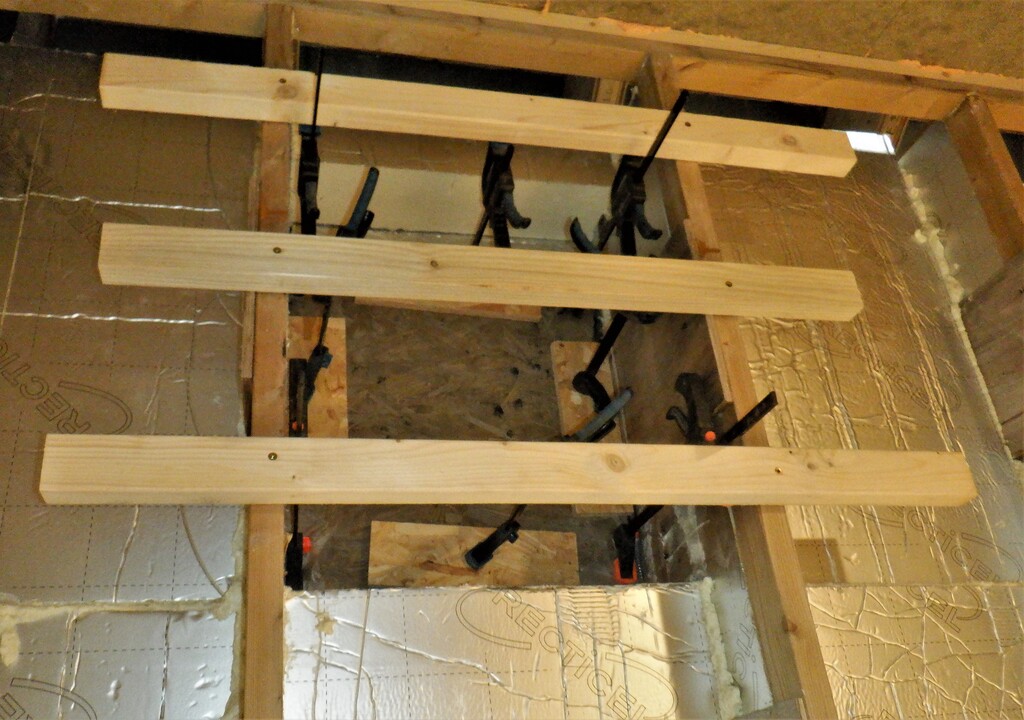
    One of the first jobs was to move the existing electricity control board from over beside the window and position it out of the way on the dividing wall between this room and Bedroom Three and reconnect some of the electric cables so they were all out of the way before we could fill in the walls with rock wool and cover it up with the vapour barrier. We also did some extra lighting for our hallways, see Installed Lighting Along Hallways. We then started preparing the Utility Room to be created with all its equipment, pipes, valves, pumps, tanks etc. that will serve the house and one of these items was to create an air outlet vent that will allow the exhausted air to escape the house and we did this by chopping our way through the 200mm thick foam insulation near the ceiling and near the left side of the “E” wall as you stand inside the room. The hole we made was the full width between two wall legs, some 550mm wide and a height of 600mm, reaching the cement board outer skin layer where we sliced a 450mm wide by 500mm high hole through the 10mm thick board. We had some stainless steel woven mesh (left-over from replacing our filter in the rain water filtration system), the mesh is woven with fine wire and has 2mm holes which should stop almost all insects and animals from entering the dangerous zone of a fast spinning blades of the air fan. We used some MS Polymer black glue to attach the mesh to the inside surface of the cement board and held it in place using a plastic covered piece of OSB board with clamps to keep it firmly pressed tight while the glue cured.

    Gluing-the-HVAC-exit-vent-mesh

    Gluing-the-HVAC-exit-vent-mesh


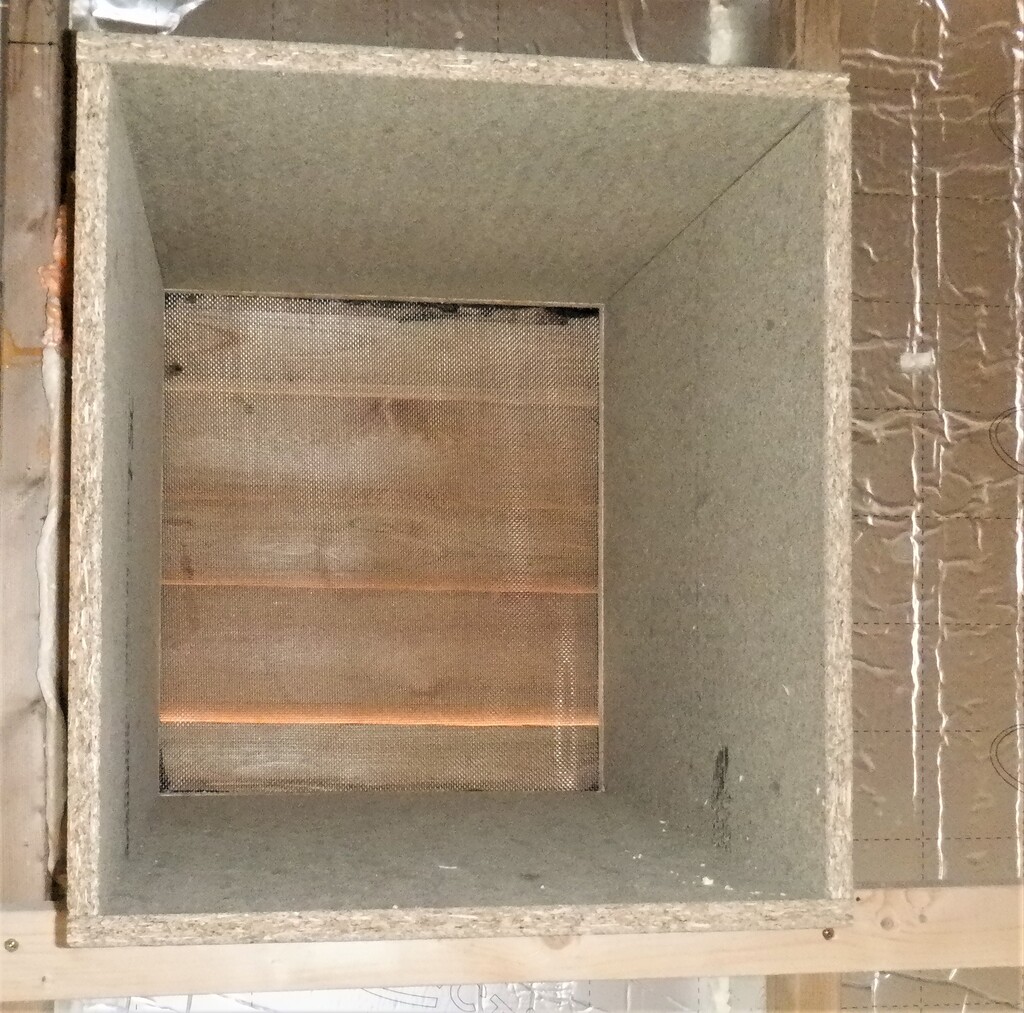
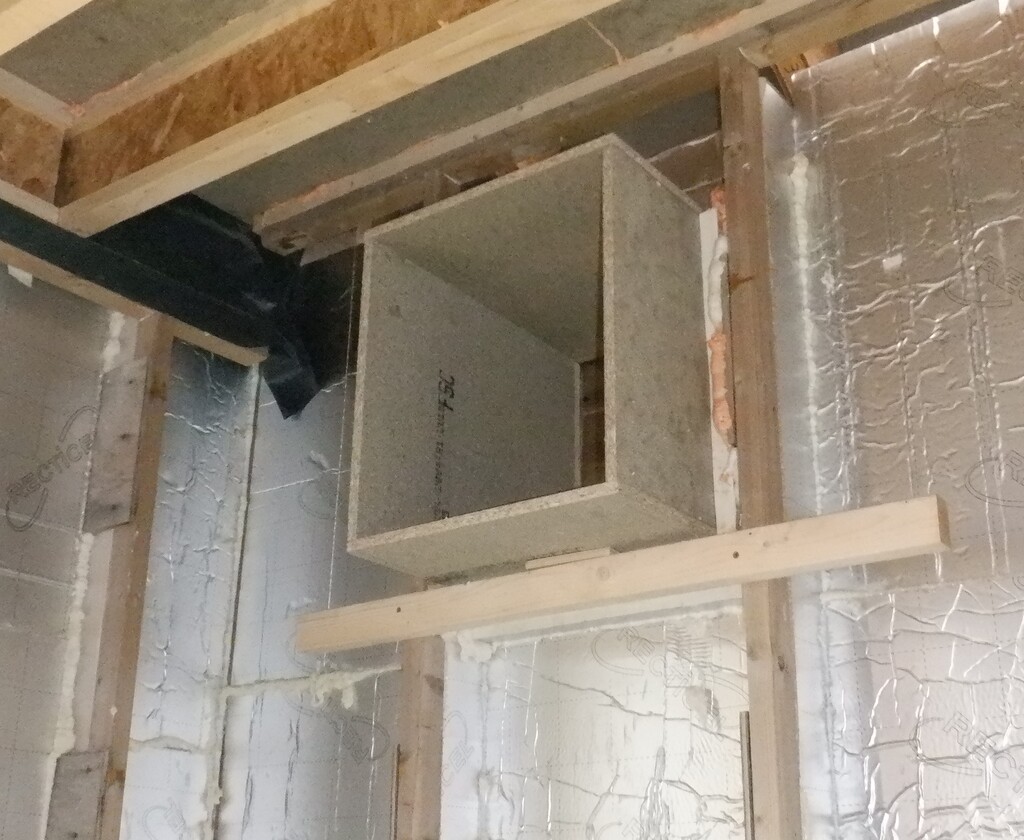
    Next, we took some of our left-over 18mm floorboard chipboard material and created a box that will form a large square duct that will help guide the air out of the building. It measures 450mm by 500mm to match the hole through the cement board and put on a ring of 50mm wide strip to provide a larger surface area to bond to the outer perimeter of the wire mesh. The whole box extends well beyond the thickness of the wall so we have options to how much we need when we connect the rest of the ducting and fan later on. Talking about the fan, got one of our new 300mm diameter fans and temporarily seated it inside the new vent hole and powered it up. We did some test runs with different air flow rates and went outside to listen to how noisy it was. We even got out our sound level analyser and took some readings. So at maximum air speeds, we were getting a reading of 63dB at a distance of about 2metres and 65dB and 68dB using different settings on the analyser, representing different patterns of sound pressure and frequencies. The background noise at the time was 40dB, it wasn’t very windy at the time. These figures are quite loud but this was for the maximum possible speed and the sheer power of the fan is that we will only need that kind of air flow rate during the very hottest times of the day in the middle of Summer. Most of the time, the fan will be running much more slowly and we think that it will be about 50dB which is a quiet murmuring noise that fades away when we moved some 5 metres away like the front door or out in the Loke.
    Oh yes, just to make clear, the outside layer of Larch timber was still there, the air was escaping through the gaps between all the planks and it seems to be working very well. It gives us the benefit of having somewhere for the exhaust house air to escape but not having a ugly large metal grill visible.

    So upon the good test results of running the fan, we proceeded to glue the wooden box ducting into place and filled around the edges with more foam boards, using PU spray foam to stick the whole lot together.

    HVAC-Exit-vent-1

    HVAC-Exit-vent-1

    HVAC-Exit-vent-2

    HVAC-Exit-vent-2


    The next job was to insert a long awaited conduit that needed to go from the concrete floor level and all the way up to the Eves, to provide a water irrigation supply for any hanging plants etc. We positioned this conduit near the copper water pipe already installed some weeks ago. There were a couple of other conduits that we also extended and positioned so they were poking out into the room, these were the mains socket in the wall and a couple of underground connections too. Another little task was to screw and glue a vertical CLS post in the corner, the E-F corner to provide a mounting leg for the wall boards when they go up later.
    Because the Utility Room has lots of cupboards, a worktop and the door and window too, this meant that there was virtually no where to put sockets and other switches etc. so we decided that we didn’t need to employ the same design of creating a Utility Channel running around the whole room. It is a bit ironic not having one of these channels, called a Utility Channel, in our Utility Room! Oh well. We did realise that we would like a switch beside the Side Door entrance so we could activate the lights or trigger the garage doors to open if we were going that way, so we embedded two short CLS pieces between the wall legs that is sandwiched by the door and window, to form a pseudo Utility Channel. Oh yes, We remembered to insert another piece of conduit that went down to the concrete!
    Another preparation task was to go around and plane off all the little sticking edges of the plywood that formed the wall leg structure, there are three of these plywood pieces for each leg and some of them are proud of the leg itself and we need it to be all smooth and ready for the wall boards to go up next week.
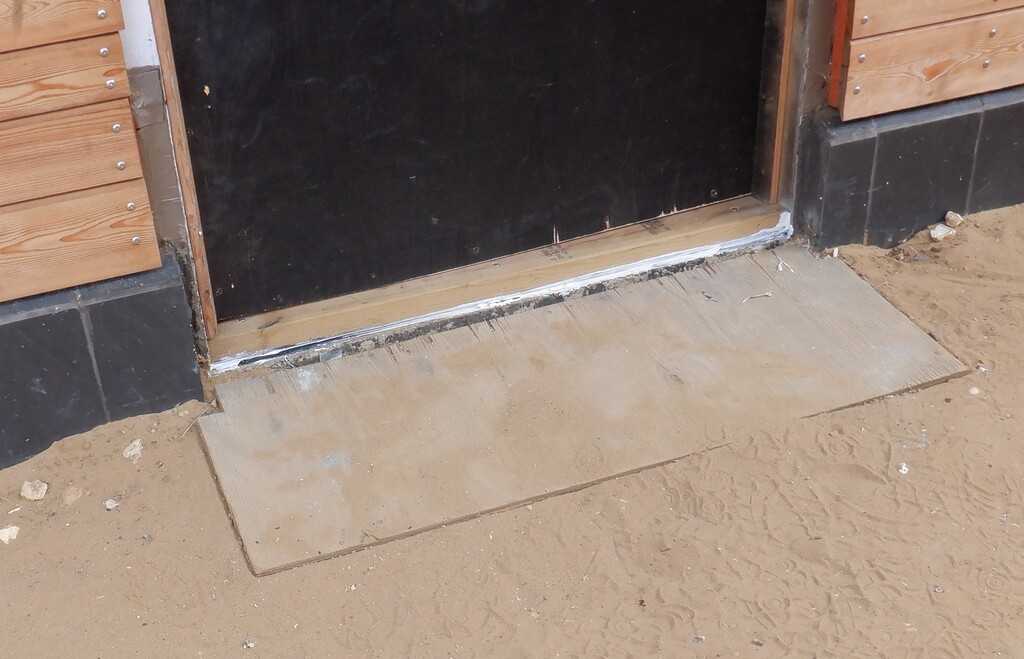
    Another job that needed doing was measuring and making horizontal rails for the bottom and top of the window and the top of the door too. These rails are the exact position that defines the height and hole of the window at 500mm from the floorboards and 2200mm at the top, also the same for the door too. But we don’t have the same utility rails that other rooms have, we had to fit them inside the framework instead and there is already pieces of CLS timber in place but only approximately at the correct position. We needed to create a special piece for the window, a 45mm to 47mm high piece for the bottom rail and a more even 30mm piece at the top. The doorway was easier and a normal 63mm piece went in straight. Well perhaps not easier after all, because we discovered that our temporary door was too tall and hit this new framework piece. This led us to having to deal with the door itself next. We took it off and decided that while it is off, we would go ahead and install a new temporary door sill, to make sure that we will get above what will be the new floor surface when we put down the floorboards. We found a piece of “4by2” treated timber, cut it down to 1040mm length, to fit the width of the doorway, levelled it off by using a couple of solid 5mm plastic spacers and a smaller 3mm one in the middle and fixed it into place using three concrete screws plus a heap of MS polymer glue to seal the outside joint to provide some water protection against future rain floods.
    Temporary-side-door-sill

    Temporary-side-door-sill


    Now that we had the new sill in place, we could measure the amount of material we would have to remove at the bottom of the door, some 45mm in total. We put in an replacement CLS frame to ensure the bottom of the door was still reasonably stiff. Then we chopped off 10mm off the top to clear that new upper rail and then put the door back. We did have to do further adjustments by running the planer across the bottom edge as the door turned out not to be exactly square but since it is only a temporary door, we kludged it to get it to fit without scraping!!

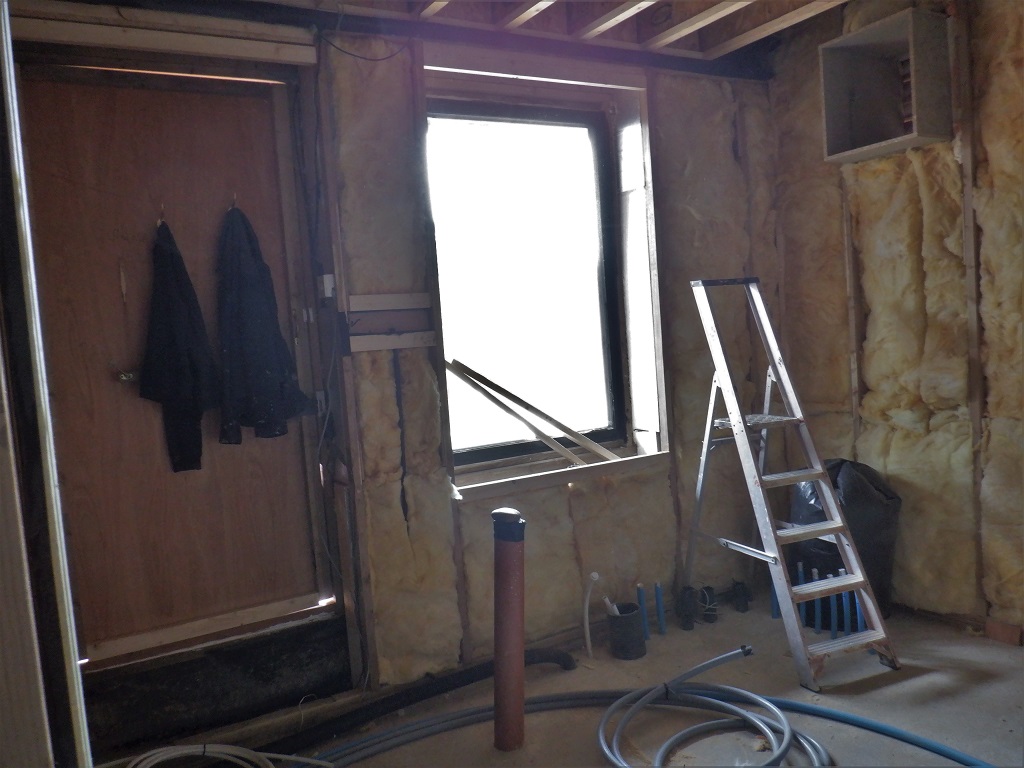
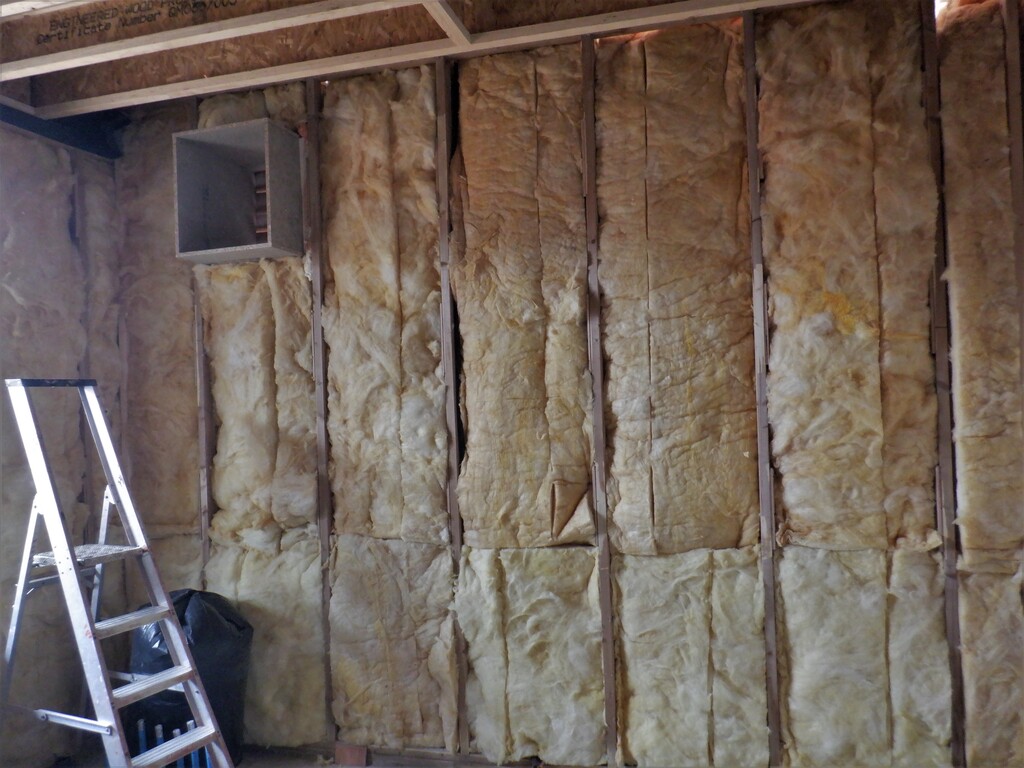
    Finally, we were in the position to do the next stage of filling in the walls with glass wool and the plastic vapour barrier membrane. We scrubbed the aged timber surfaces along the bottom, applied a line of the butyl heavy duty double sided sticky tape along the bottom edge, around the window and along the top edges too. Where there were a plastic layer already, we used acrylic sticky tape instead. Next, we unrolled and cut up lengths of glass wool pieces, 100mm thick stuff for the lower half and longer pieces of 200mm thick stuff for the upper sections. We filled in the corners and around the door and window so everything is now filled in.

    Fibre-in-utility-walls-1

    Fibre-in-utility-walls-1

    Fibre-in-utility-walls-2

    Fibre-in-utility-walls-2


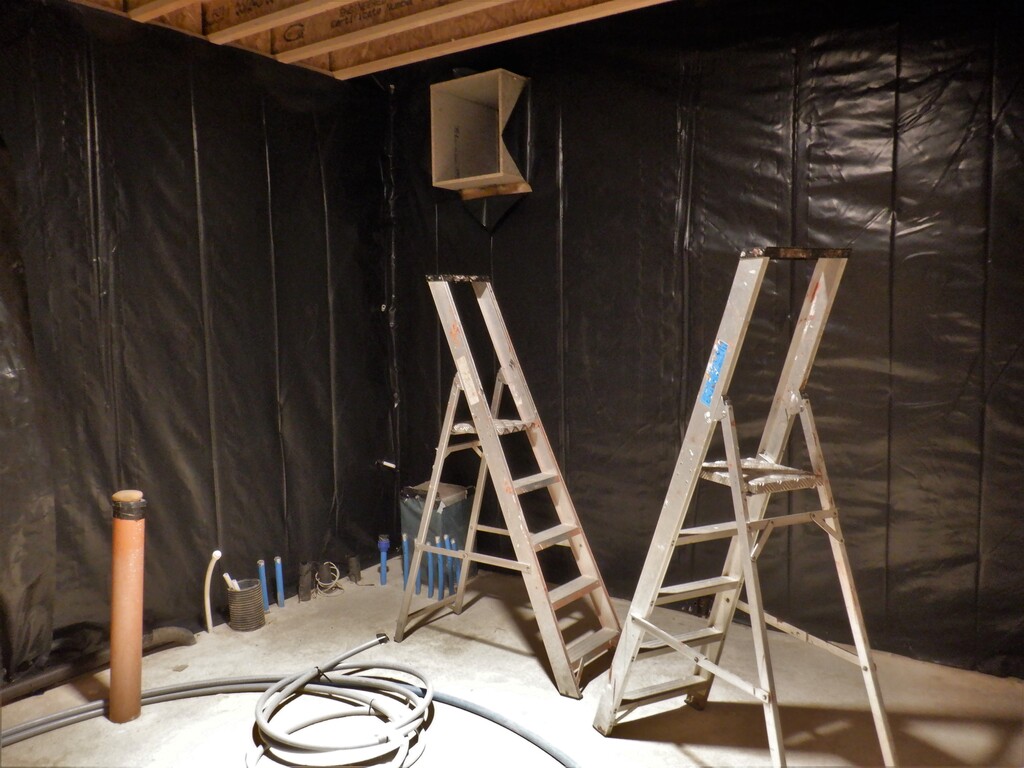
    After that, we put on sheets of plastic to encapsulate the yukky glass wool stuff and provide a vapour barrier to stop condensation from forming in the body of the wooden walls and hence avoid potential rot problems.
    Utitlity-walls-with-vapour-membrane-1

    Utitlity-walls-with-vapour-membrane-1

    Utitlity-walls-with-vapour-membrane-2

    Utitlity-walls-with-vapour-membrane-2


    We now have finished covering up the walls, just a little bit to finish off like sealing around the air duct and various conduits sticking out, plus finishing off the window and door too. Then we can install a layer of plasterboard to cover up this plastic to provide a fire resistant barrier and then we can start on building the internal “cupboards” that will contain the equipment that provides the utilities and services for the house.

  • Rebuilt the Utility Room and Its Shelves

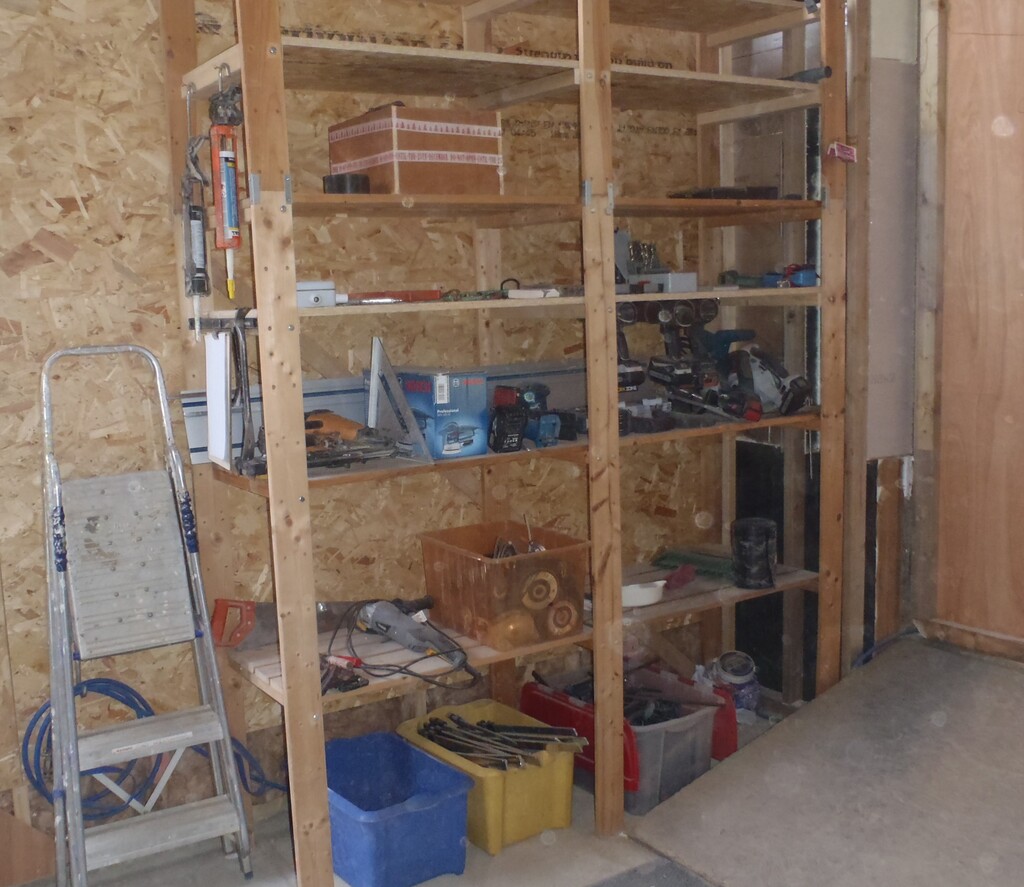
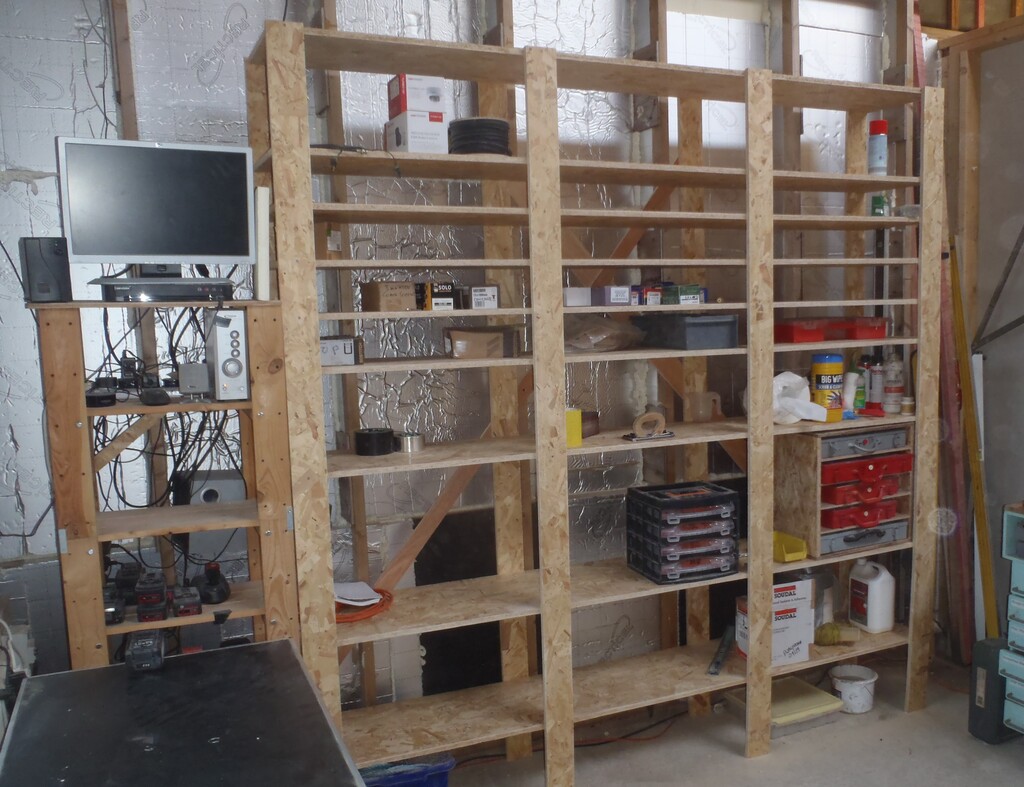
    Whilst tidying up the house of the insulation foam rubbish, a new set of shelves was created to provide more room for tools and parts to be on hand for this phase of working inside the house. We moved the Ikea shelves over to beside the new wall between Bedroom 3 and added an extension upwards plus also we sliced up two more 500mm wide OSB 6foot strips and used several 63mm CLS pieces to act as shelf supports, so we sub-divided the larger gaps to provide more capacity.

    Rebuilt the Utility Room and Its Shelves

    New-tool-storage


    The smaller Ikea shelf system was also extended upwards and moved into the corner beside the electrical consumer units and sockets and this became our electronics stack.

    The new shelf system is 8feet from left to right, 8 feet tall and 400mm deep, made using four whole sheet of 18mm think OSB boards. We sliced three of them into 9 400mm 8foot strips and the fourth sheet had eight 100mm wide strips to form the legs (four on each side of the shelf) with the final 400mm strip to go right to the top of the larger Ikea set of shelves where the overhanging piece was anchored to the wall with an angle bracket.
    The new shelves were screwed together with just screws into the edge of each 18mm OSB strip (we recognise that much of the materials and ironmongery parts are relatively lightweight (apart from the huge collection of screws where we did use several more angle brackets to reinforce the shelf!). We decided that we would fix the position of the shelves and looked at our shelves in the garage to see what sort of sizes and gaps we would need and settled on 300mm for the gap at the bottom on the floor, followed by 400mm, 500mm, then four 150mm shelves and finally a 300mm gap to the final top shelf.

    Rebuilt the Utility Room and Its Shelves

    New-parts-storage


    We dragged it into the corner (weighing about 75kg at least!) and shoved it up against the E wall, and slid it along to meet the electronic shelves.
    We can now see what we got and keep things tidy!