Category: Slates

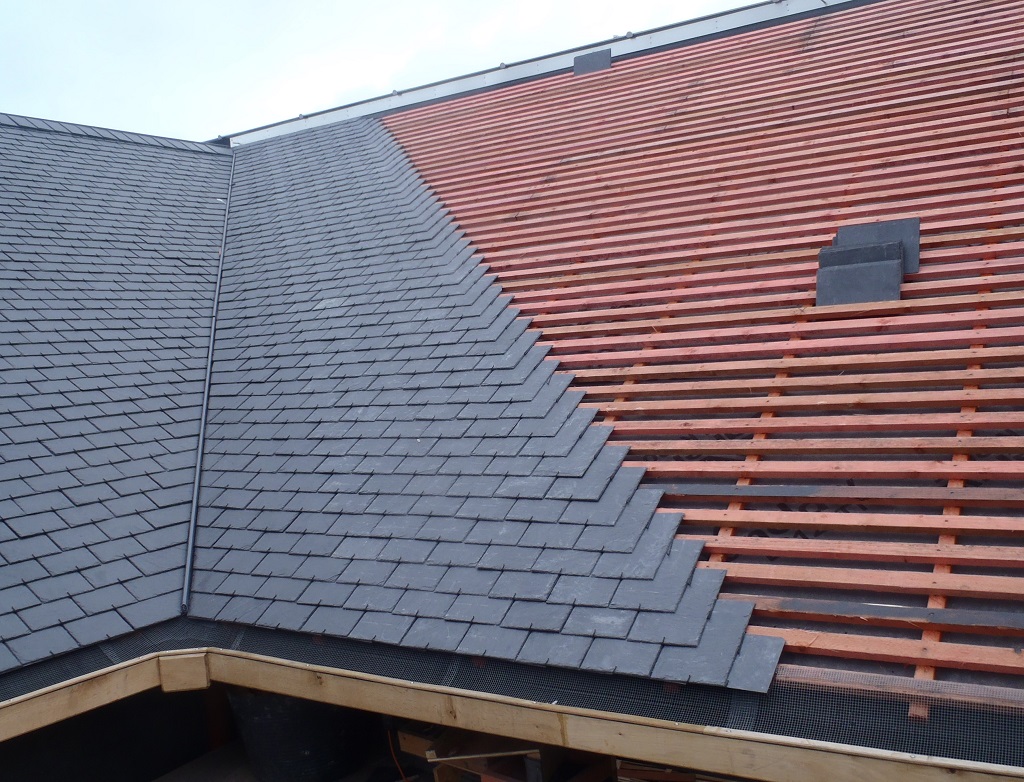
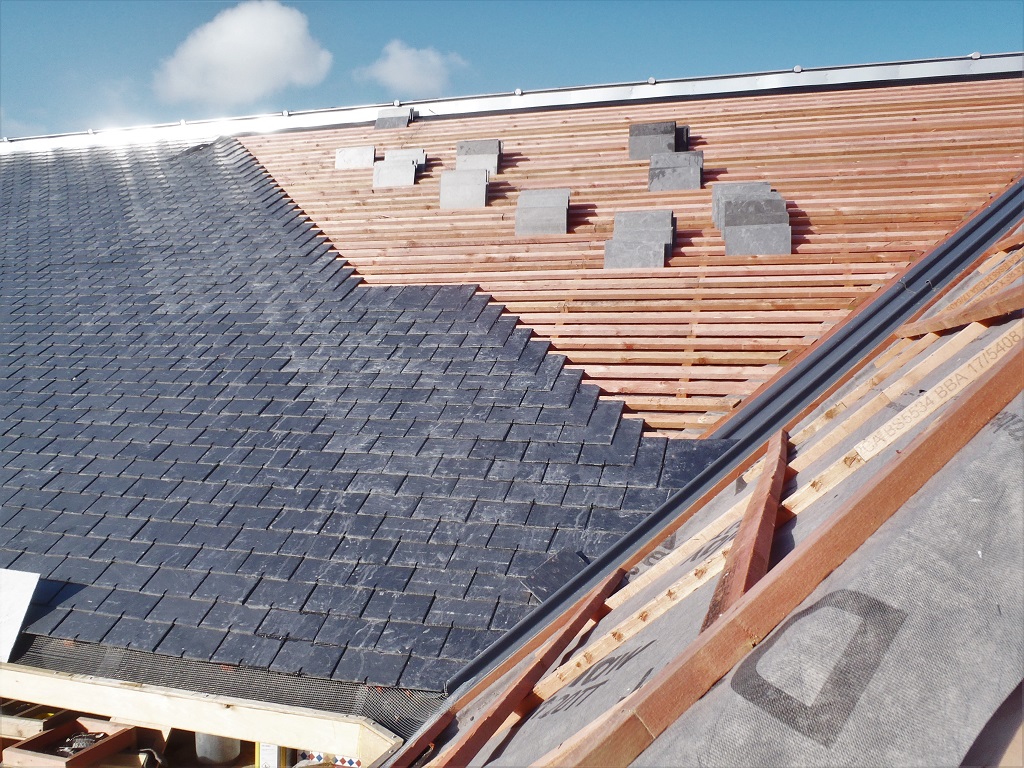
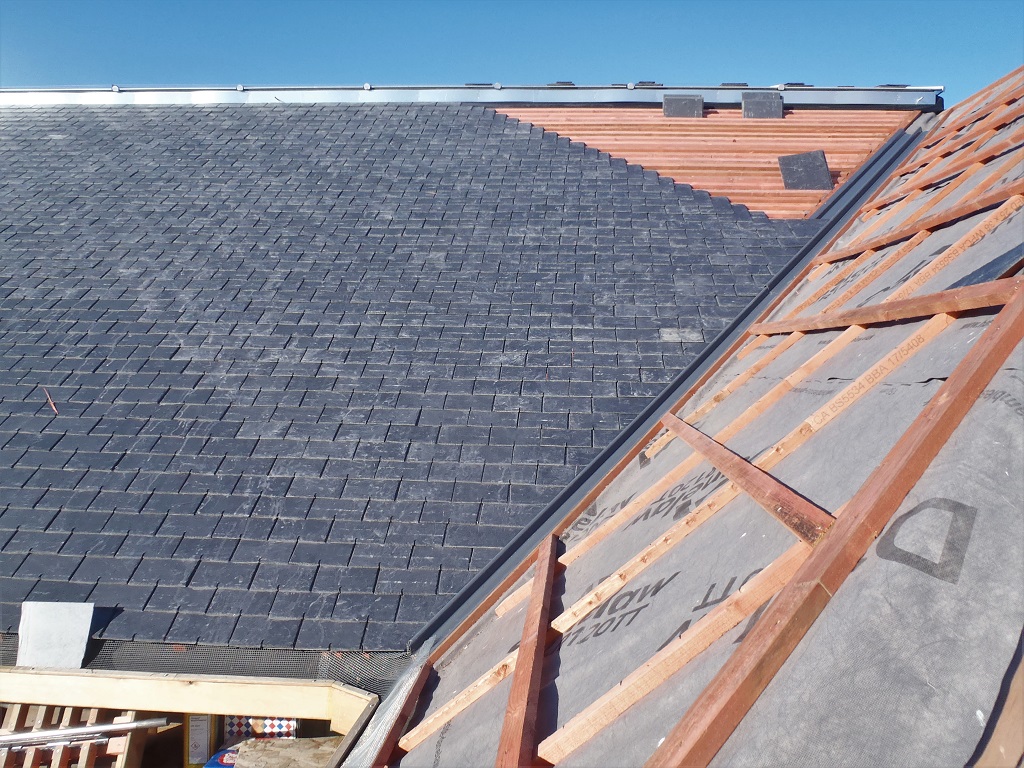
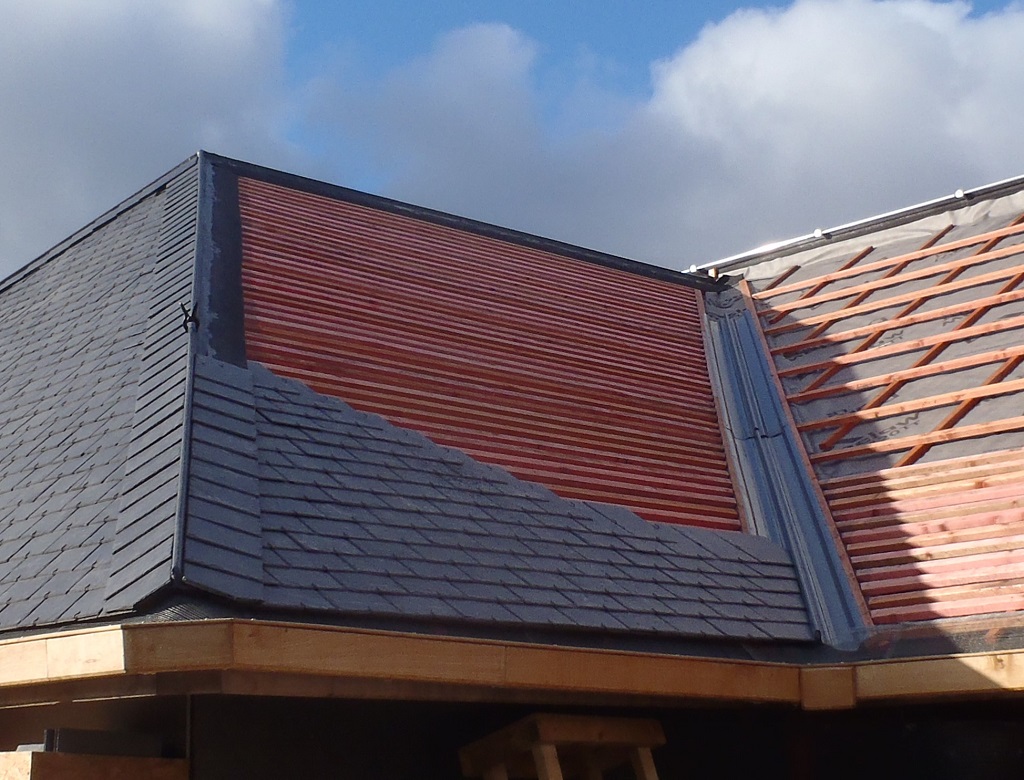
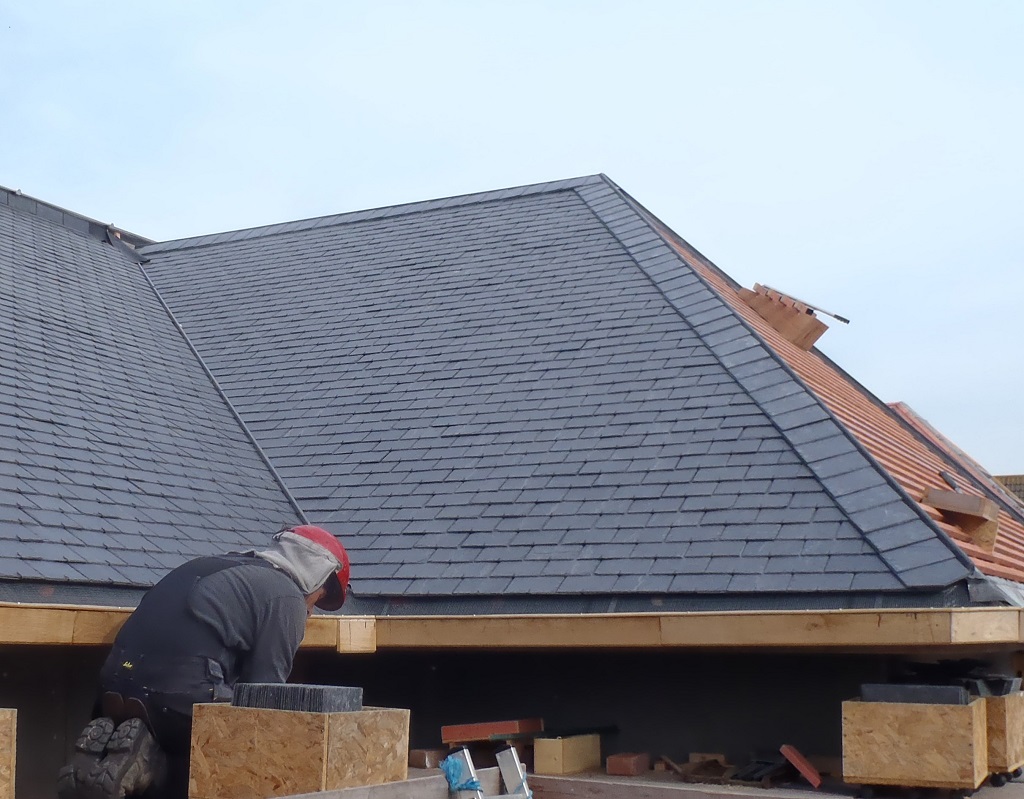
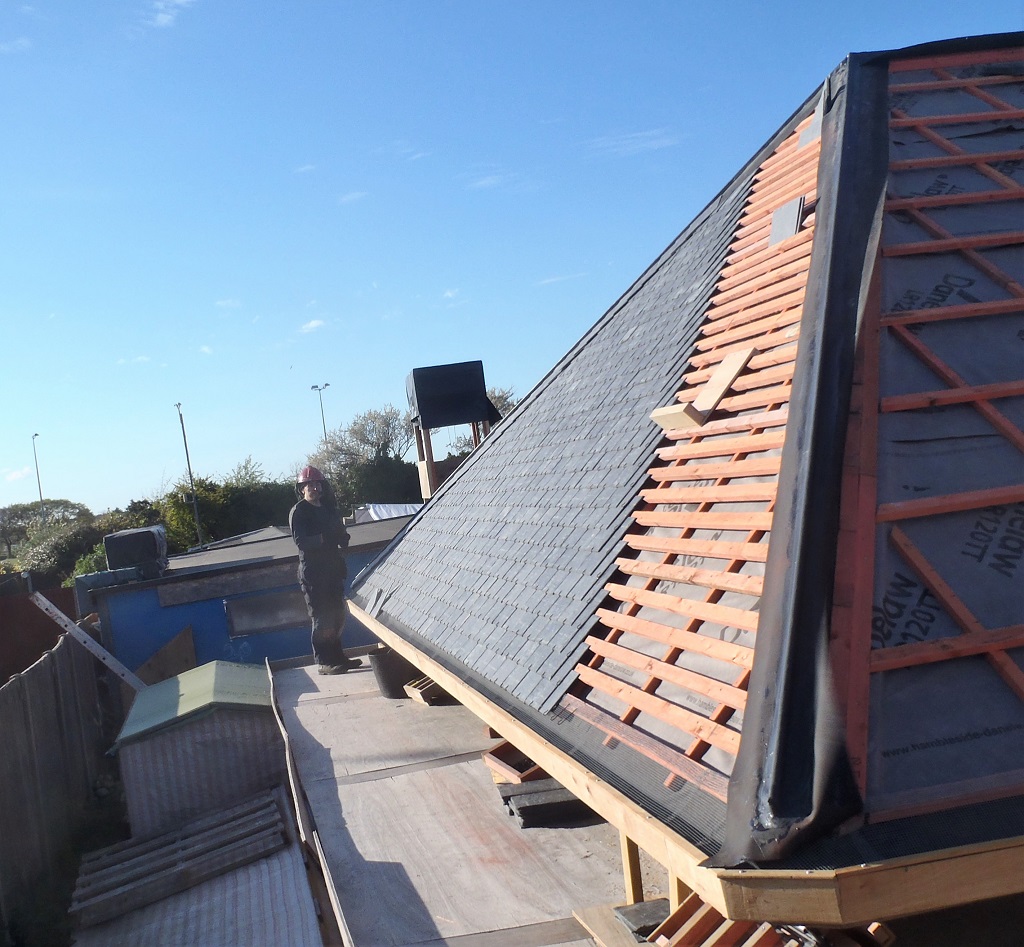
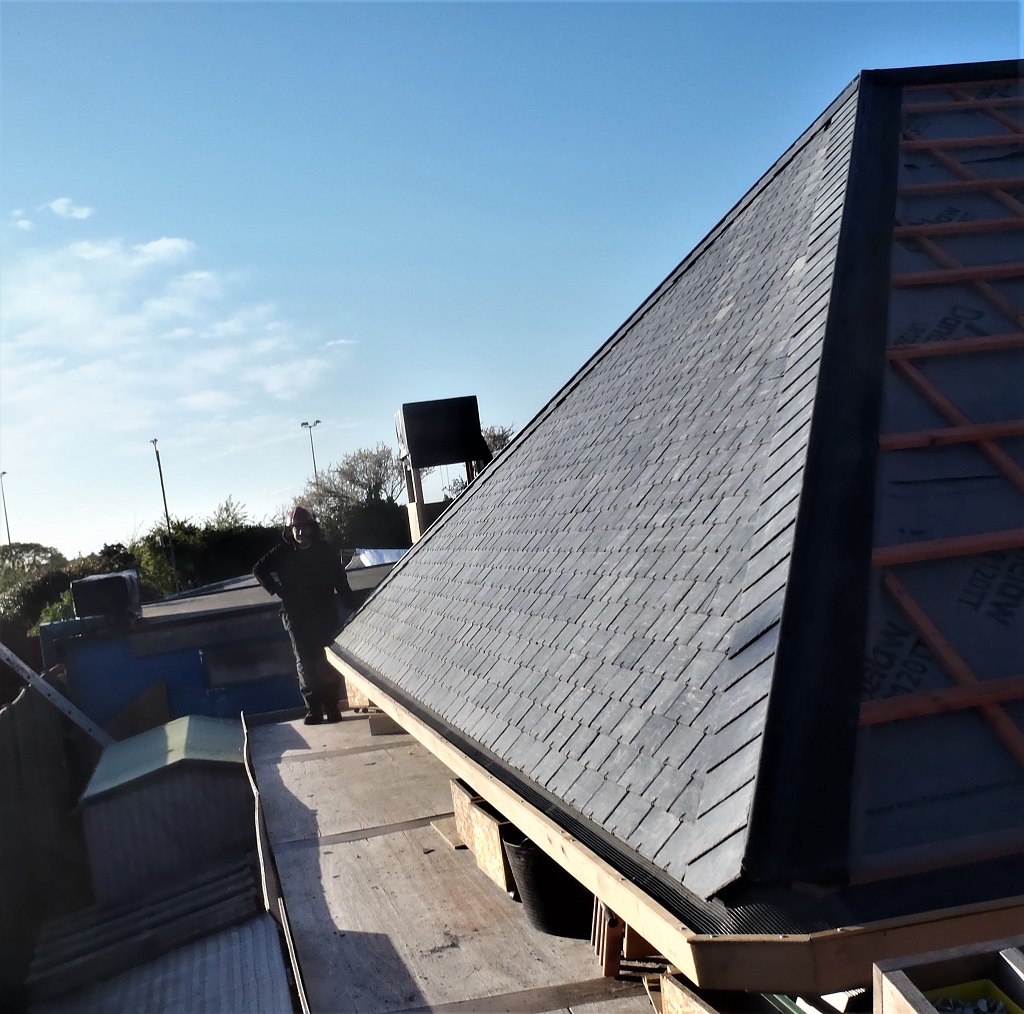
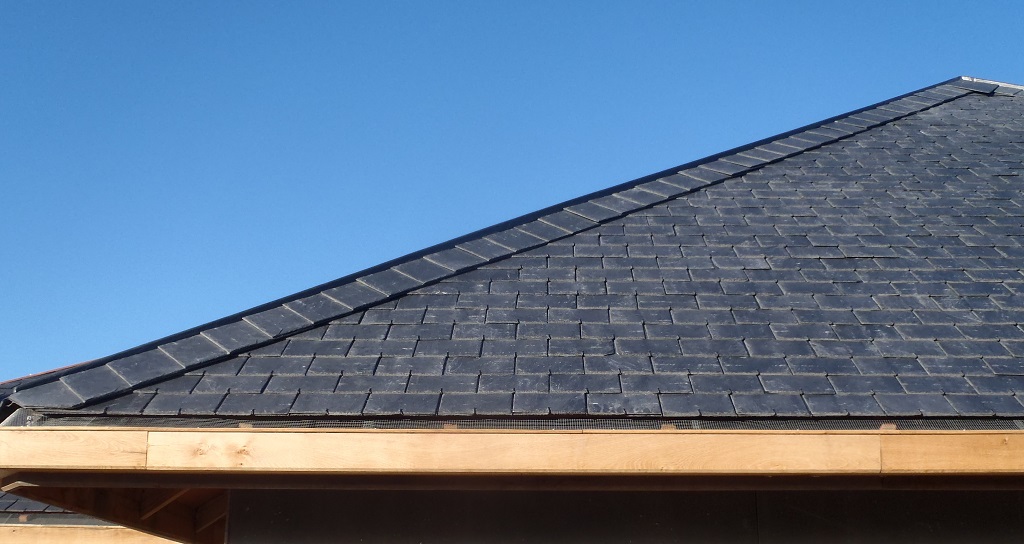
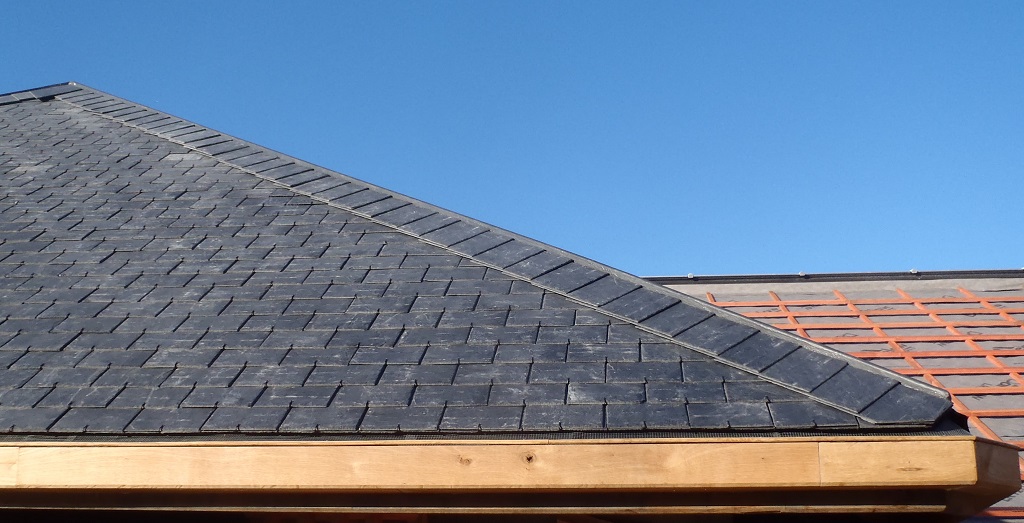
Slate Tiles measuring 300mm by 200mm, 18600 in total, covering 360 square metres.

  • A Mixed Bag of Tasks and Jobs Done This Week

    A week of a mixed bag of lots of little tasks, jobs and errands, with a mixed bag of super-hot days, thunderstorms and a cool damp day to finish the week!
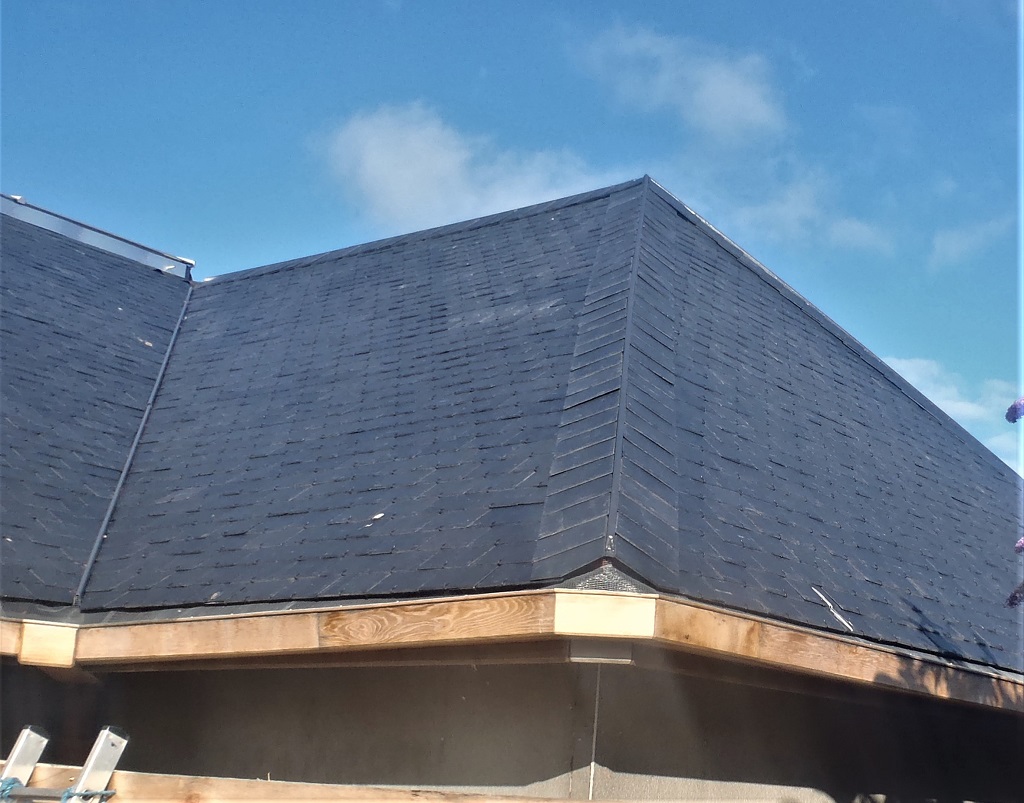
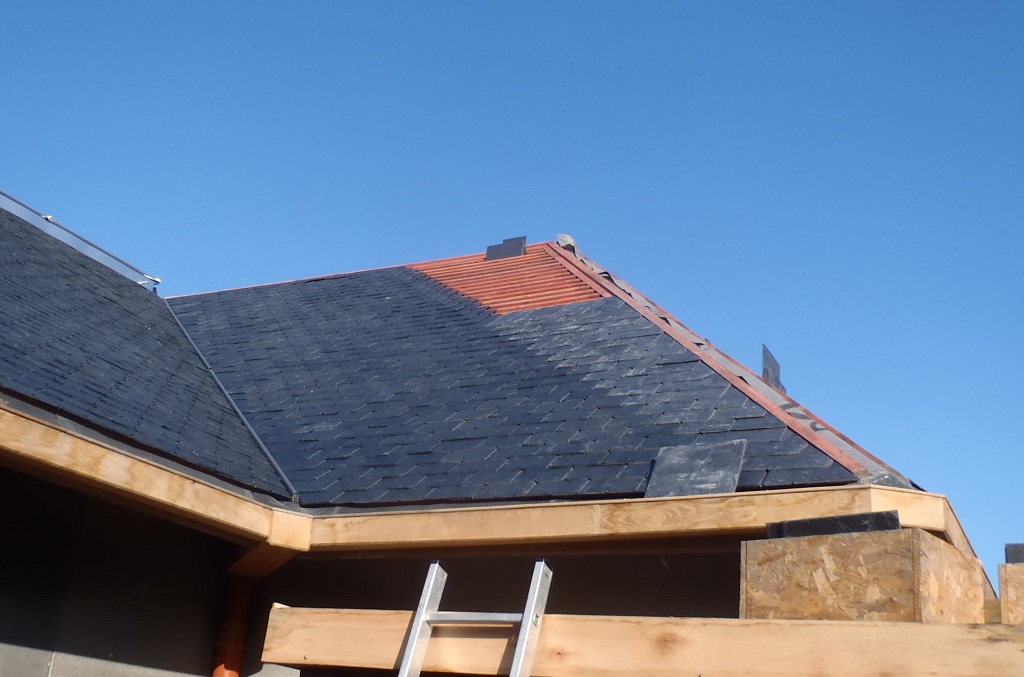
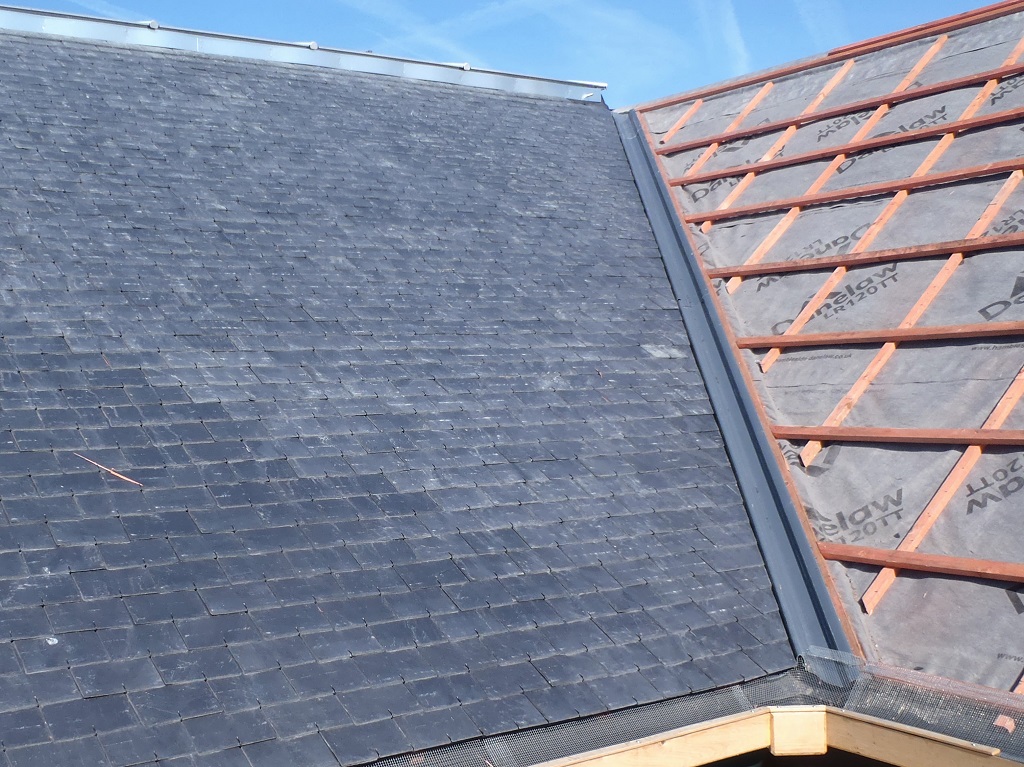
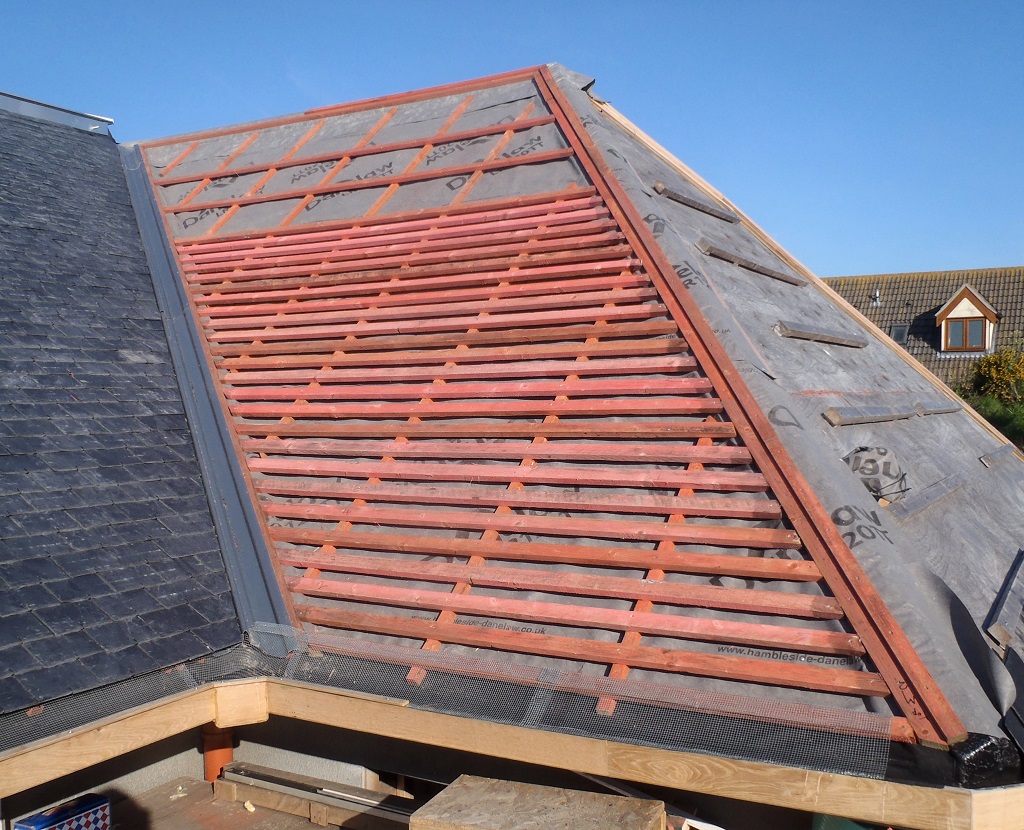
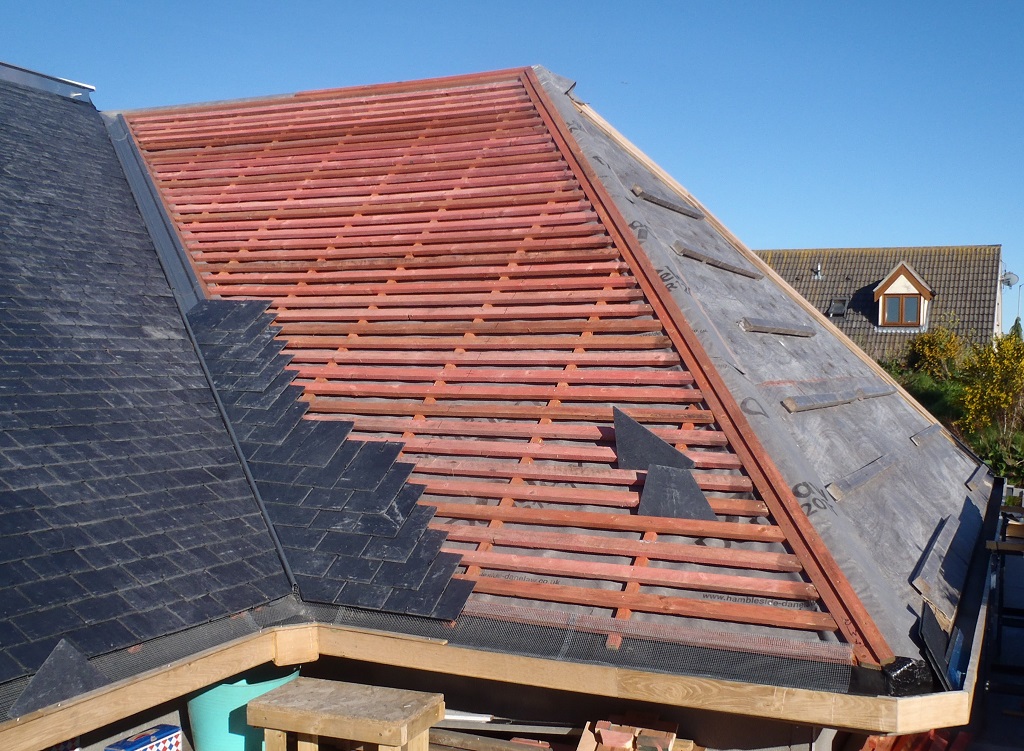
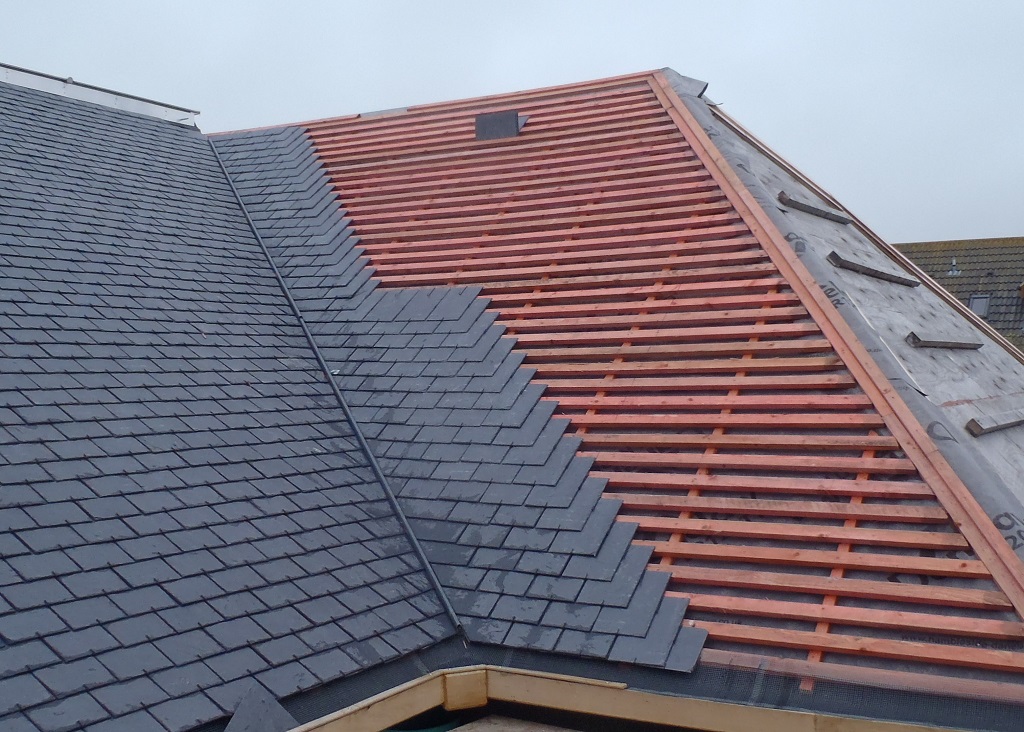
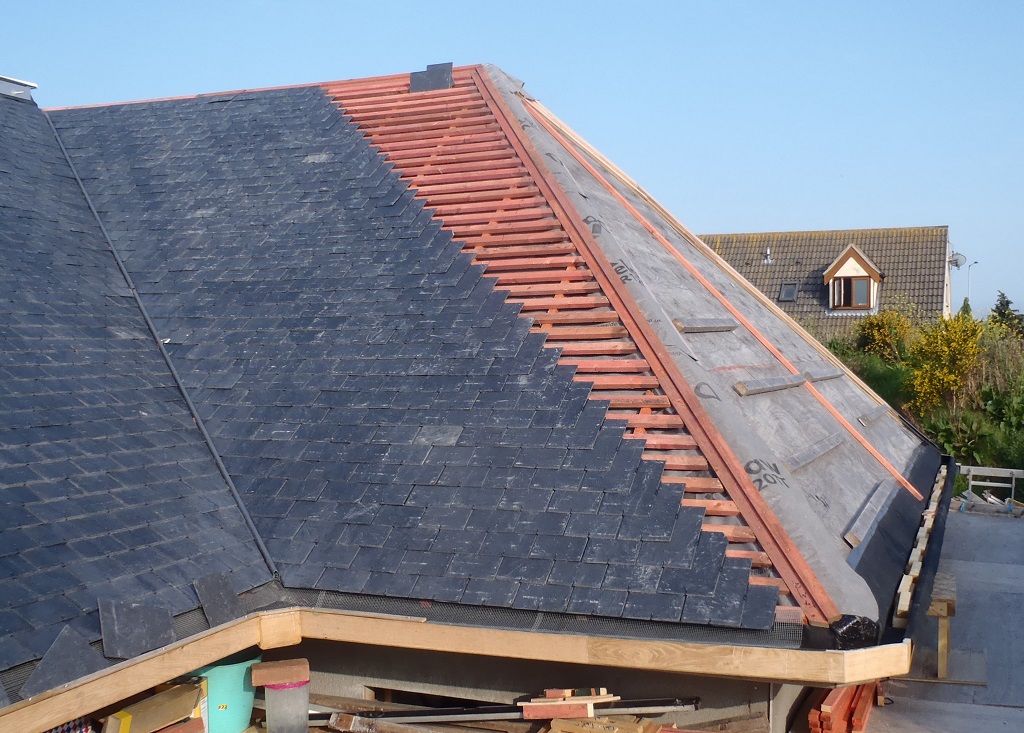
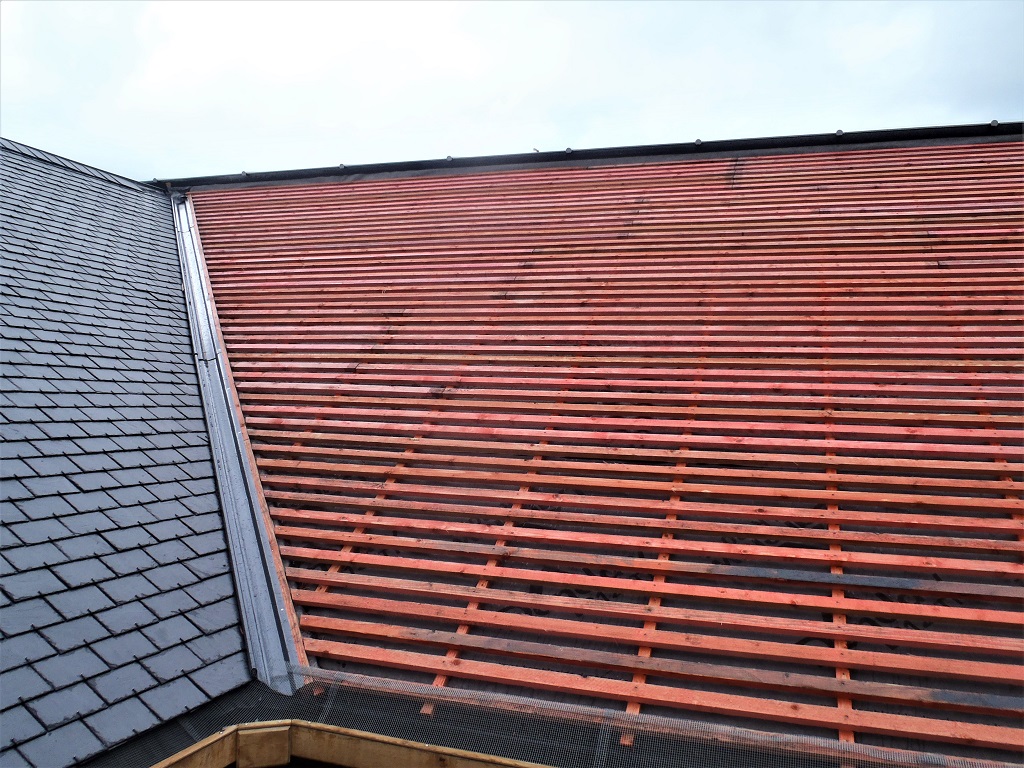
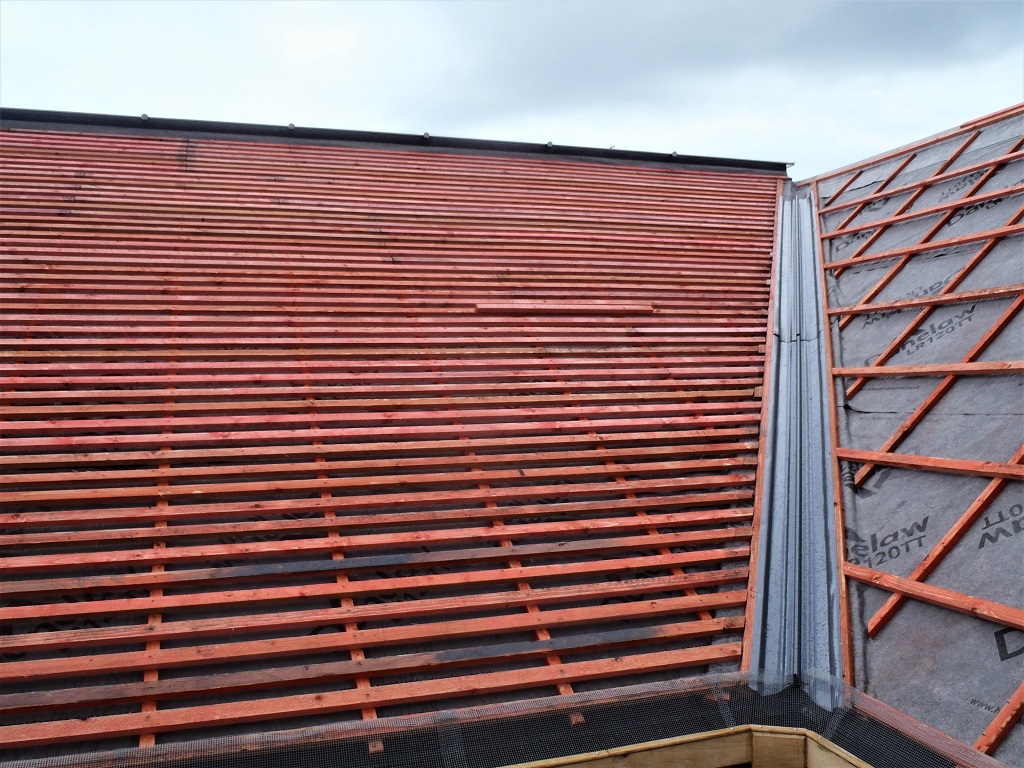
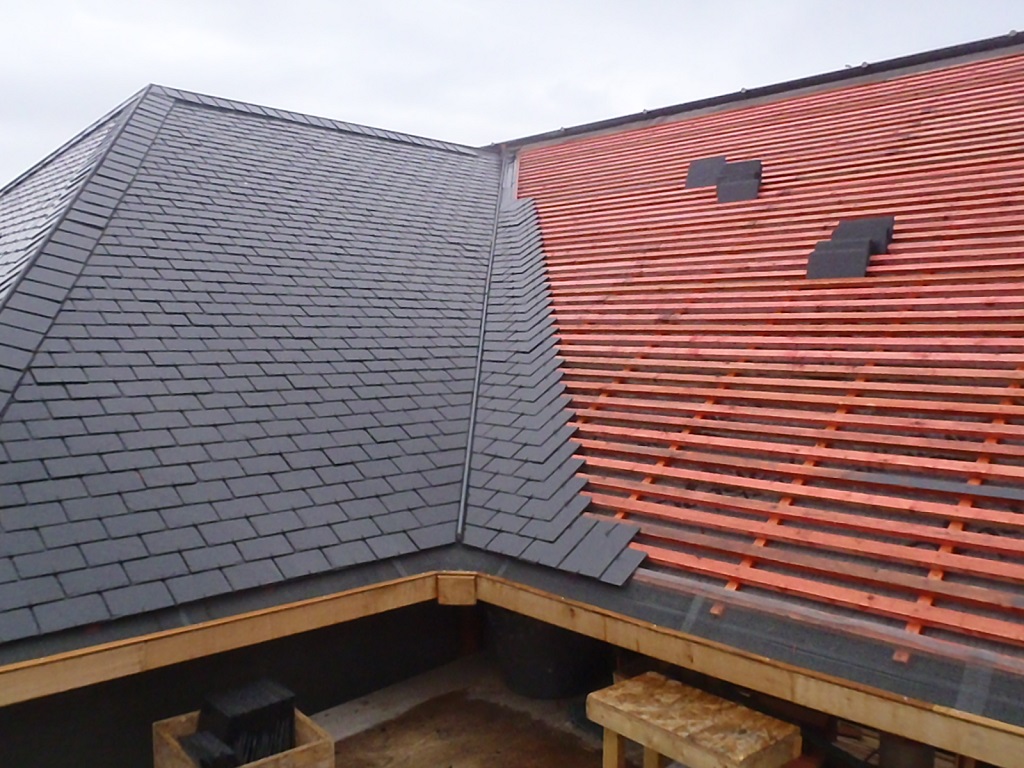
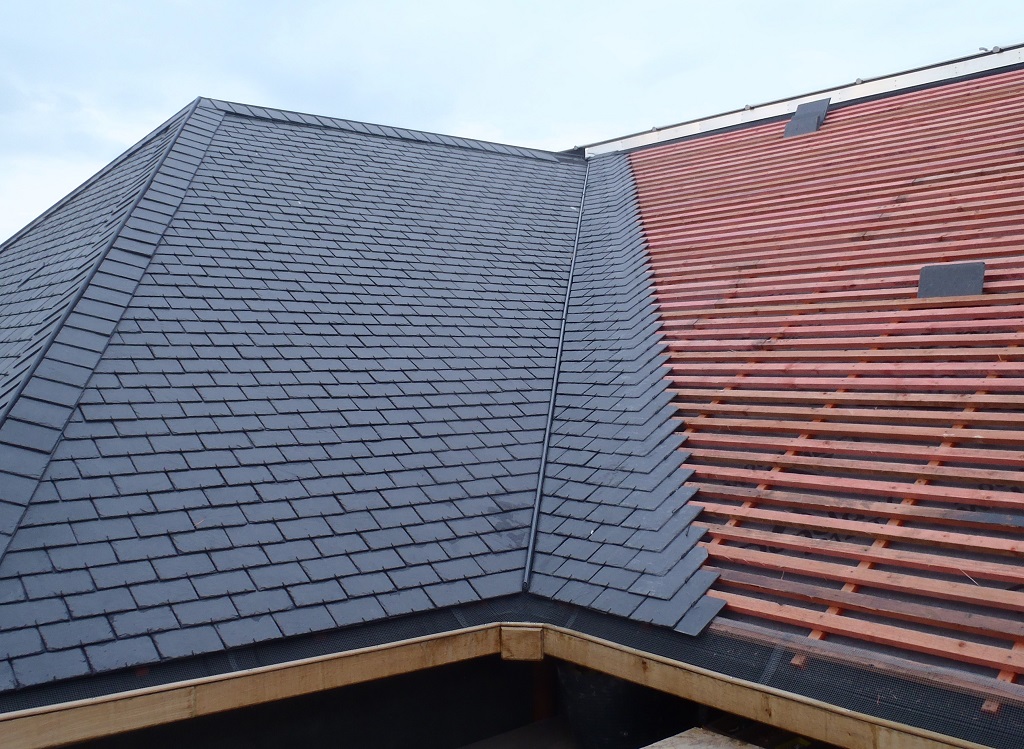
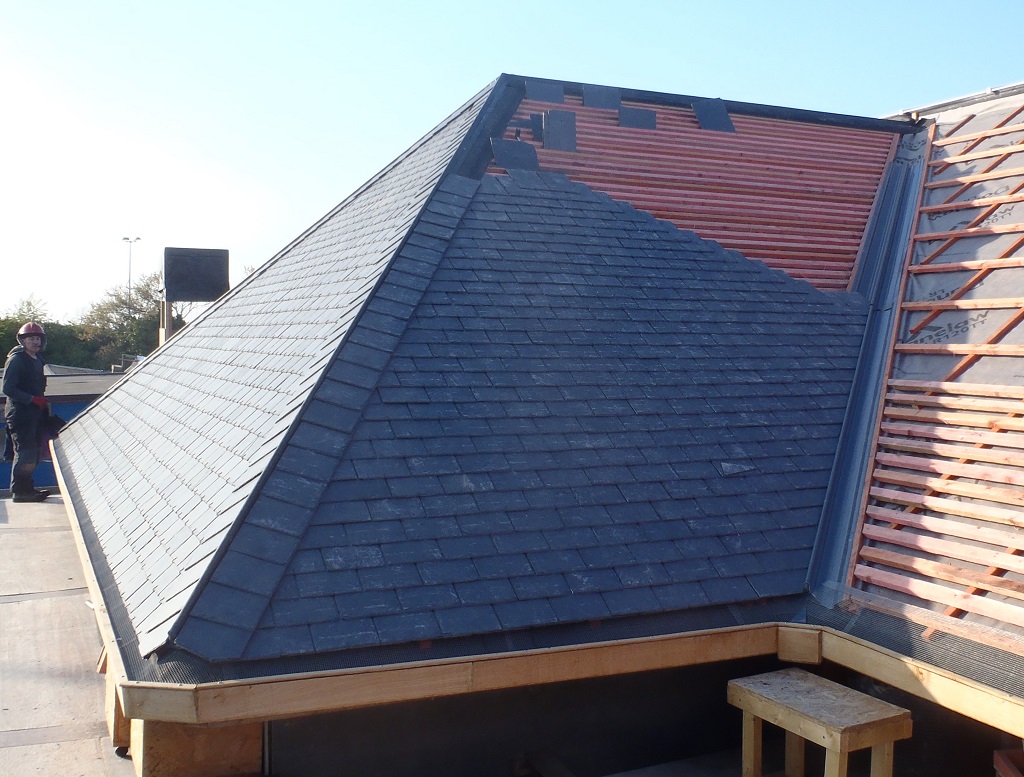
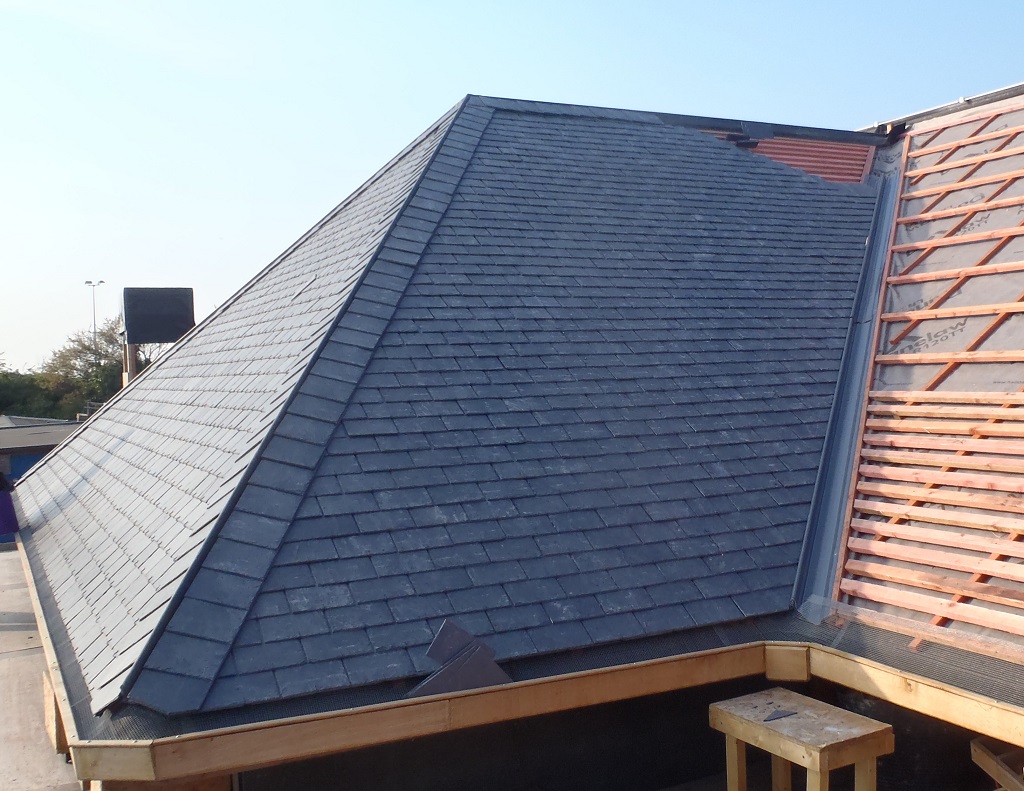
    For the first job on Monday was to finish as much as possible the of the ‘P’ section of the roof, putting on several hundred more Slates. We couldn’t finish it as the last few columns need to have access from the other roof surface (the ‘A’ section along the front of the house) so we had to stop there and started the process of tidying up everything off the platform modules, ready for them to be moved.
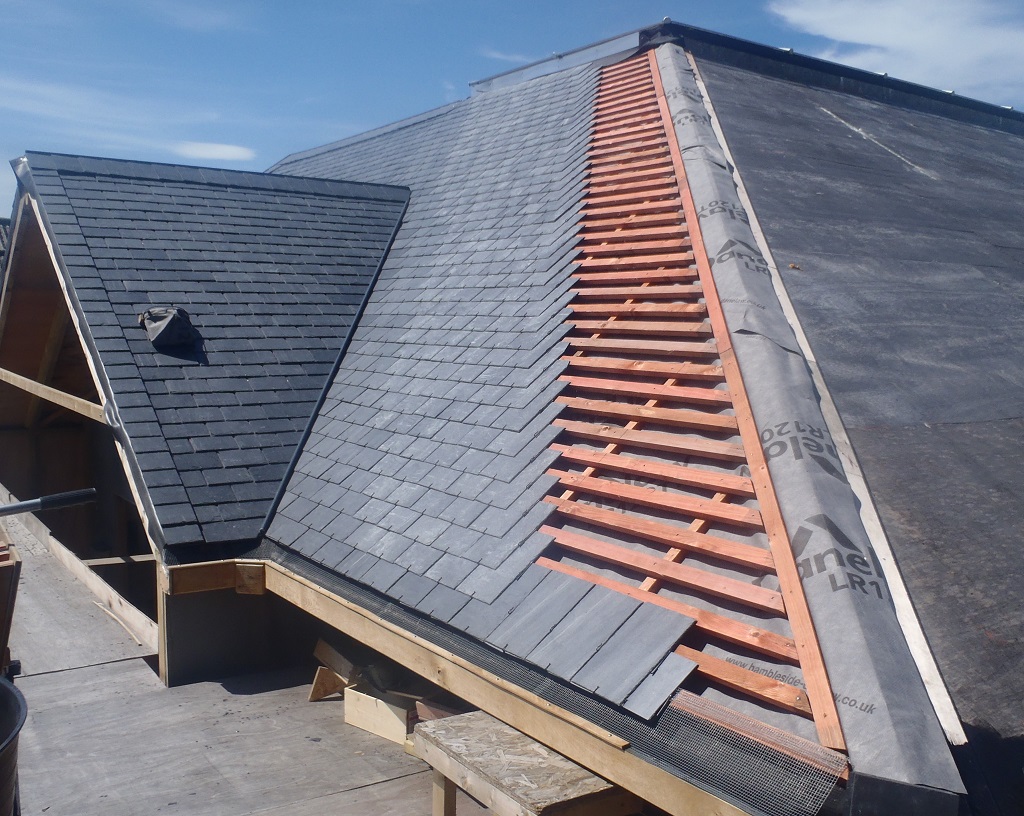
    P2-Slated-as-far-as-we-can-go-now

    P2-Slated-as-far-as-we-can-go-now


    But first, after almost forgetting to do it, we washed out the finished gutters using the pressure washer and sanded smooth the joints (removing the expanded glue) and surfaces along the guttering. Then we removed all the edging plywood strips off our working platforms, removed all the screws joining the modules (there were eight of them) together and released them from the walls of the house too.
    But we couldn’t move them for two reasons number 1 was that we had two crate’s full of Slates were in the wrong position, or rather, they clashed with the need to locate the line of our working platform to go along the front of the house and secondly, the old little covered storage hut (containing sheet materials) was blocking the route when we needed to move the eight modules around to the front.
    So the next job was to make a new storage rack inside the house, this time, a four layered construction with room for a large pallet on the concrete floor for the cement boards.
    After the external storage hut was emptied, we took it apart and recycled some of the bits and screws but most of it was beyond use and carried away ready for burning or other items put into the rubbish bins.
    Now the next job was to empty two crates of Slates and we moved about 3200 of them and piled them on top of our other four crates. We used our large flat bed trolley to help us with that massive heavy job!
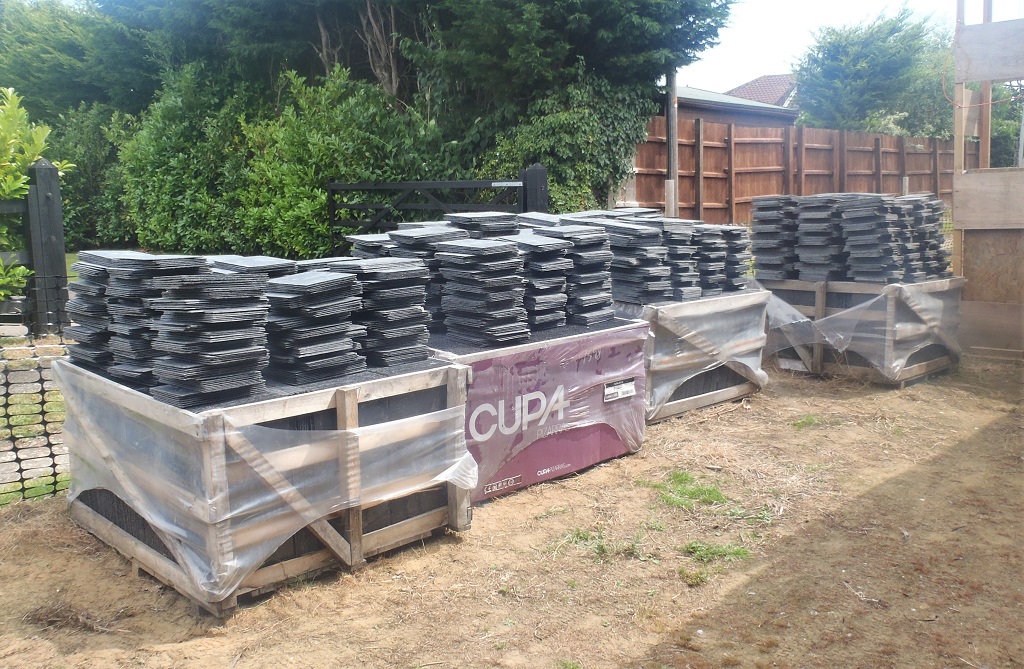
    Slates-moved

    Slates-moved


    Now at last, we could move the eight modules, one at a time. We made it easier for us by clamping a wooden bar across the legs and carrying each one the long way around the house. The eight modules gave us the scope to work on all the ‘A’ section, all the ‘B’, ‘C’ and ‘D’ and the first bit of the ‘E’ sections of the roof, this is nearly all the sections along the front of the house. We will have to move two more modules to enable us the access to the rest of the ‘E’ section to the corner with ‘F’ but we will do that later on.
    That was the end of Wednesday and we finished a little early too because it was very hot (our air temperature was 33°C and the ground was reading 40°C on the sandy soil but our slates on the roof was reading 50°C!!

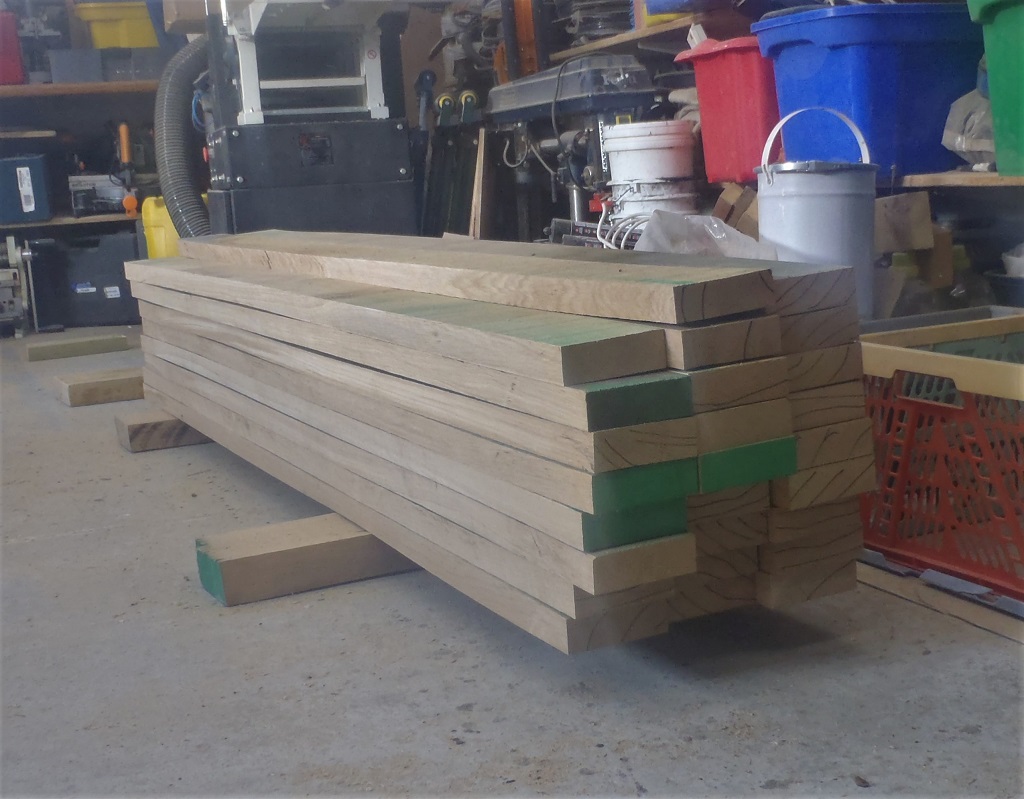
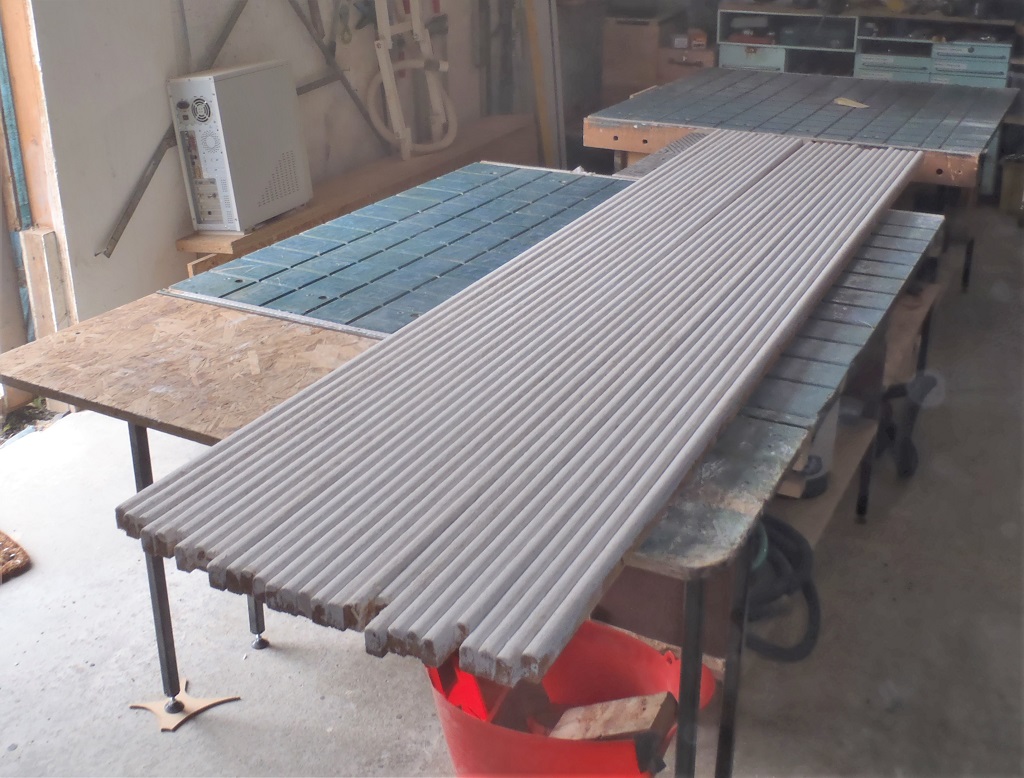
    Thursday, we avoided the hot sun by working in our workshop to process the next set of Oak timber planks, to make a series of narrow flat vertical pieces to form the octagon shaped pillars on each side of the windows. We brought in all the 27mm thick by 2metre oak planks, about 75 in total. We will only need some of them as we are making a set of 100mm wide parts and a set of 70mm wide parts, 26 of each (we should be able to get two parts from many of the wider planks). We would like to pull out the nicest quality ones so we try to avoid those ones with knots and twisted grains. We first chopped all the ends, removing any split ends and other defects and got started on slicing one straight edge using our track saw. We managed about 25 planks so far.
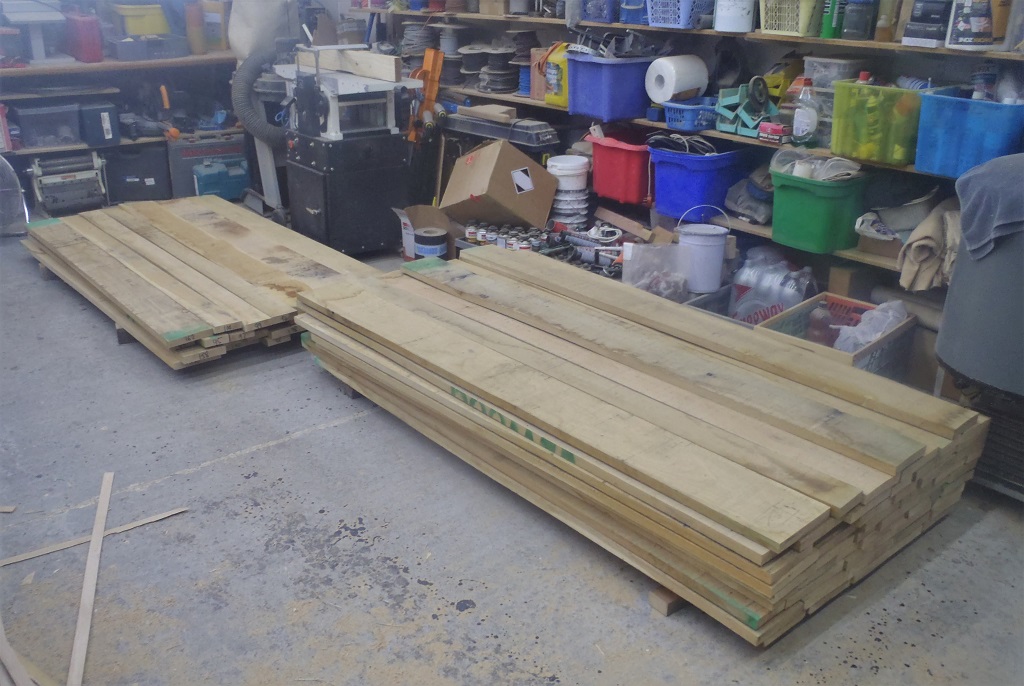
    Lots-of-Oak-planks-for-window

    Lots-of-Oak-planks-for-window


    We had Friday off because of other commitments but we resumed on Saturday and catching a break in the rainy weather, we went out to fix and join all the eight platform modules together and anchor them to the building, also putting on the edge plywood edging strips too.
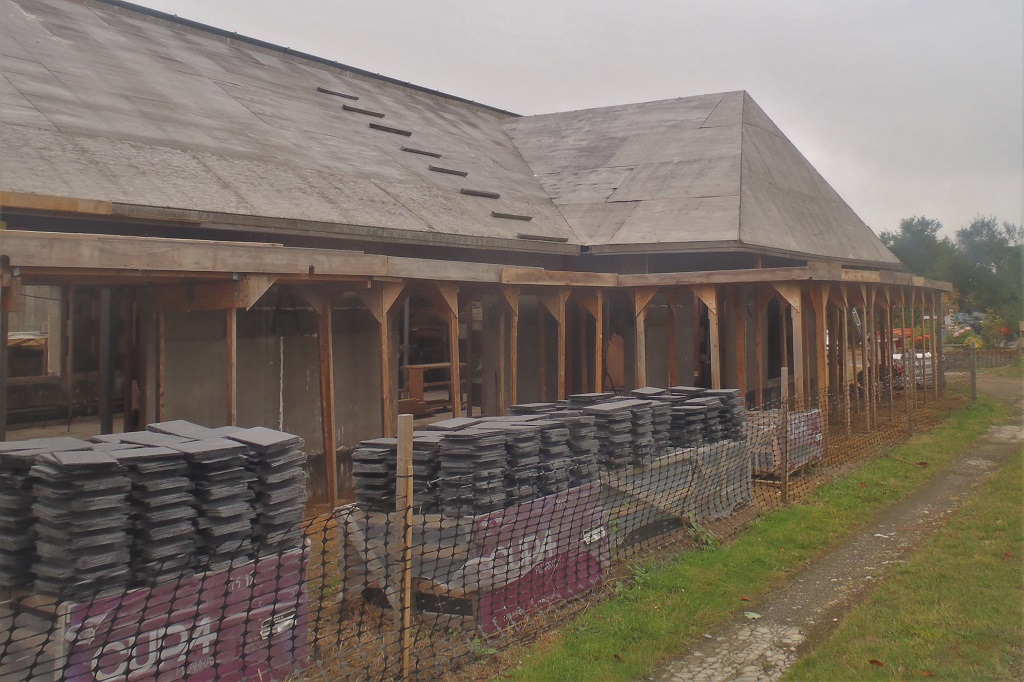
    Scaffold-platforms-along-ABC
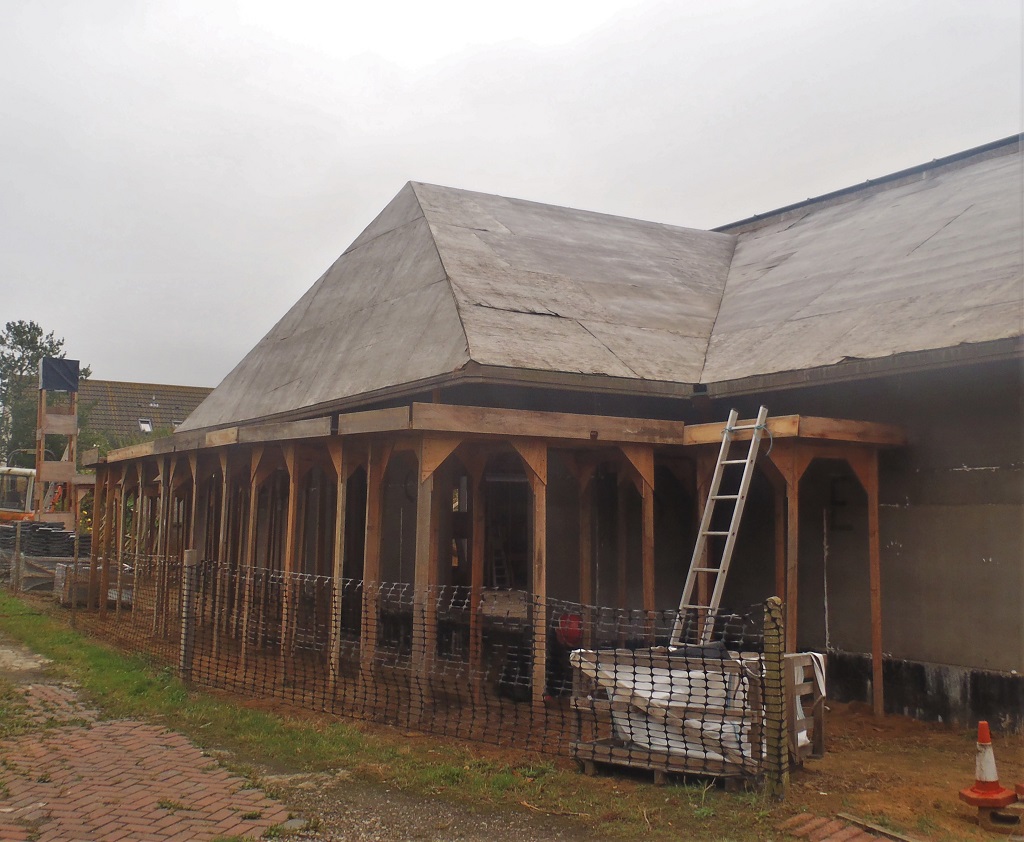
    Scaffold-platforms-along-ABC

    Scaffold-platforms-along-CDE

    Scaffold-platforms-along-CDE


    That concludes the mixed bag of things we did this week, but at least, we now have everything ready so we can resume work on the roof, this time along the front of the building where we continue putting on the gutters, fibre-glassing the corners, inserting the rubber and then the membrane and everything else!
  • Both Sides of Q and Three Quarters of P Covered in Slates

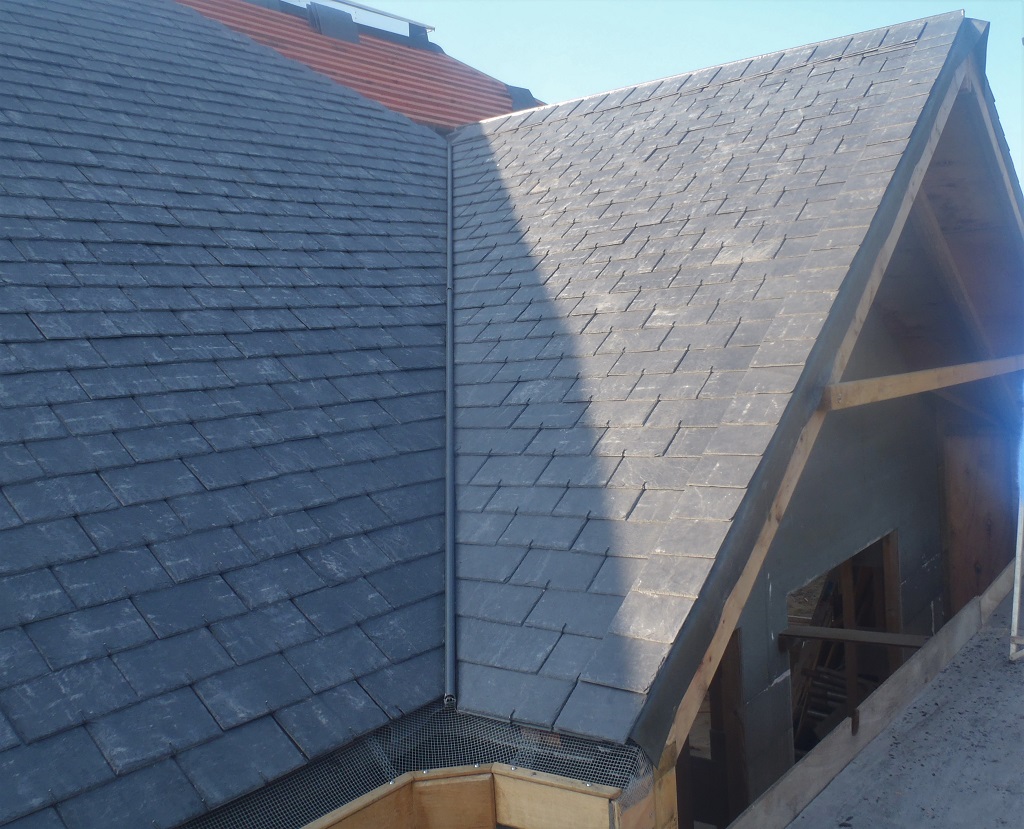
    For the first three days of the this week of work, we were lucky with the weather but also unlucky as we suffered in the heat too! But we did manage to cover both sides of the “Q” Conservatory roof sections, but for only 200 slates for each side, it took us two days to get that done. Very short strips and awkward access getting up and over the gable end slowed thing down.

    Q1-slated

    Q1-slated


    For the third day, Wednesday, we doubled checked our earlier procedure of transferring the slate positions on the first half of the “P” roof and make sure it was still lined up with our markings. Yes it was! Amazingly enough! Grin!
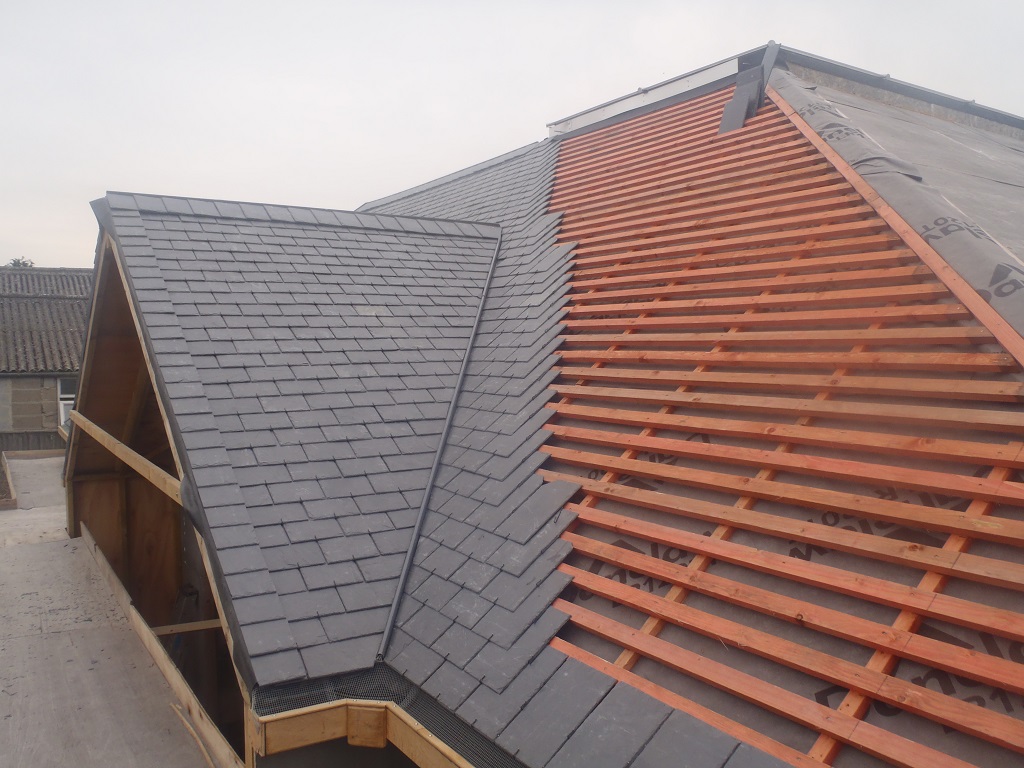
    We then proceeded with the second half of the “P” roof section, starting as usual at the guttering line and working up the valley, putting slates across the fibre-glass trough. We reached the top of the “Q” roof and .. the moment of truth .. the meeting of the two surfaces! and the slates met together with joyous congratulations of getting it “just right”!

    That was the first hurdle pass and we continued up and headed towards the top of the “O” ridge line where it meets the corner of the Skylight. After careful analysis and fiddling with different shaped slates and flashing slates too, we managed to get that lots sorted out too! Hurray and a Big Phew!!

    Q2-and-start-of-P2-slated

    Q2-and-start-of-P2-slated


    That was pretty much the end of the work on the roof for this week as the forecast for the next three days were wet, wet and wet!
    But next week, apparently, is going to be a sizzling hot hot hot weather all week, with a hot air from Europe rushing in!! Double Phew!

  • Nearly 2000 Slates Mounted + Some Work on Window Frames

    We started this week with good dry weather in resuming the job of mounting Slates up on to the roof. We finished off the little bit left to do on the “N” roof section and then moved around to then complete the whole of the “O” section in the first couple of days.

    N-O-Complete

    N-O-Complete


    One of the finishing task was to place and nail the flashing slates along both sides of the Hip and Ridge lines, remembering to do this job each time we got up a strip of slates as the opportunity had only a limited window to practically and safely do the nailing while leaning over across the slates.
    We had one small moment of interruption with the forecast of the weather showing an afternoon of sharp summer thunderstorms so we diverted our efforts to the workshop and got on with the task of preparing the next batch of Oak Timber to make the vertical side framing pieces of our 13 windows. We pulled out 26 lengths of Oak timber and after careful analysis of the grain patterns, we swopped six of these planks for another set. The first job was to trim off one edge to make it straight using our track saw. Then after that, we set up our bench saw with the fence guide set at 105mm and proceeded to slice all 26 planks down to this width. Some of the cut-off pieces, the bigger ones, went back on the Oak rack storage for later use, and the smaller pieces went into the garden shed to be added to other left-over pieces, also to be use later on.
    Window-sides-cut-to-size

    Window-sides-cut-to-size


    But when the sun was out and the day was dry, we carried on working on the roof, mounting more Slates, now on the “P” section. This large area has one complex situation to be dealt with and that is the Conservatory roof (the “Q” section) poking out. The way slates (and for that matter, all other types of roofing tiles as well) are installed, one has to always start at the bottom of the cascading nature of these overlapping tiles. This means that we have to start at the bottom at the gutters, on both side of the conservatory and we must get the alignment of the slates the same so when the two sides come up and meet at the middle of the “Q” ridge line, they will marry together “Nice and Neat” and continue up to finish off at the skylight.
    So we had to project a couple of vertical lines and then project out sideways over the ridge line and come back down again to the gutter on the other side. We hope this will work but we will double check when we get to work on the other side and compare the positioning of the slates etc.
    By the end of the week, we got about half of the “P” roof covered, almost reaching the “Q” Ridge line, which is where we stopped.
    P-Half-done

    P-Half-done


    So for this week’s work, we put up about 1800 slates, about the content of one crate, and next week, we will then do the two sides of the “Q” roof and start on the second side of the “P” roof (after making sure we are aligned). We hope the weather will hold good again but if not, then we will work in the workshop on our windows again – No Rest for the Crew – smile!
  • Whole of P and Q Roof Sections All Prepared, Flashing Layers Assembled and Ready to Slate!
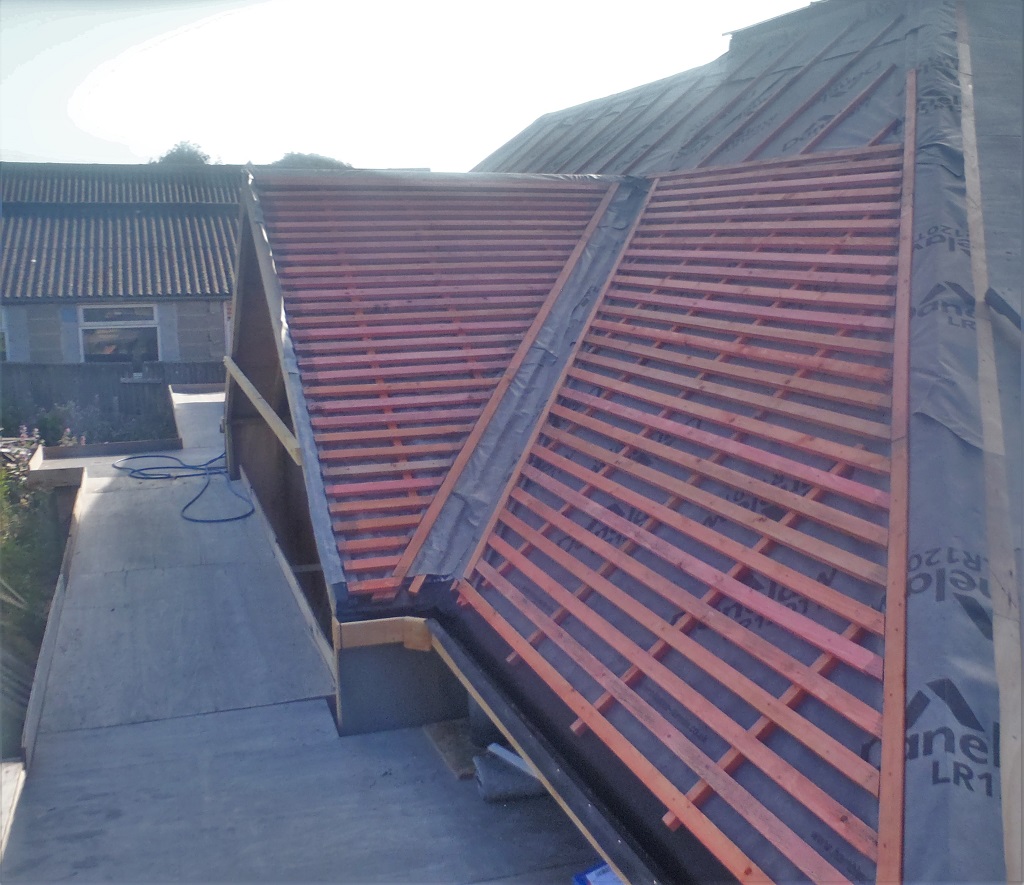
    With a lovely prospect of good weather ahead of us, we got on putting up the final rows, about 13 of them, of the tile battens to finish off preparing them for the slates. But before the slates could go on, there were plenty of other tasks to be performed. The next job was to nail up the flashing battens along the two hips and two ridges, using a string to guide us and keep us on the straight and narrow.
    The other job we did was to put up the Skylight kerb flashing strip made of the aluminium metal sheets, with the rubber membrane to actually provide the diversion of the rain water.
    After that, the metal mesh went on the gutters, fixed down as usual with the thin oak strips to clamp down the edge of the mesh and rubber membrane on the gutter.
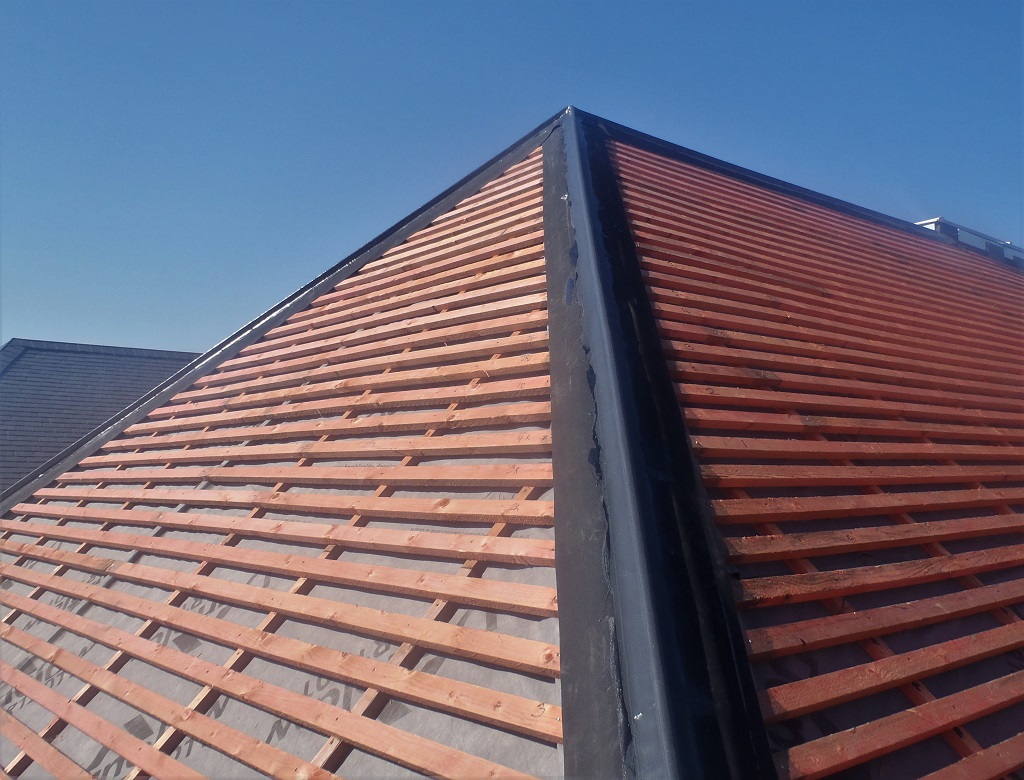
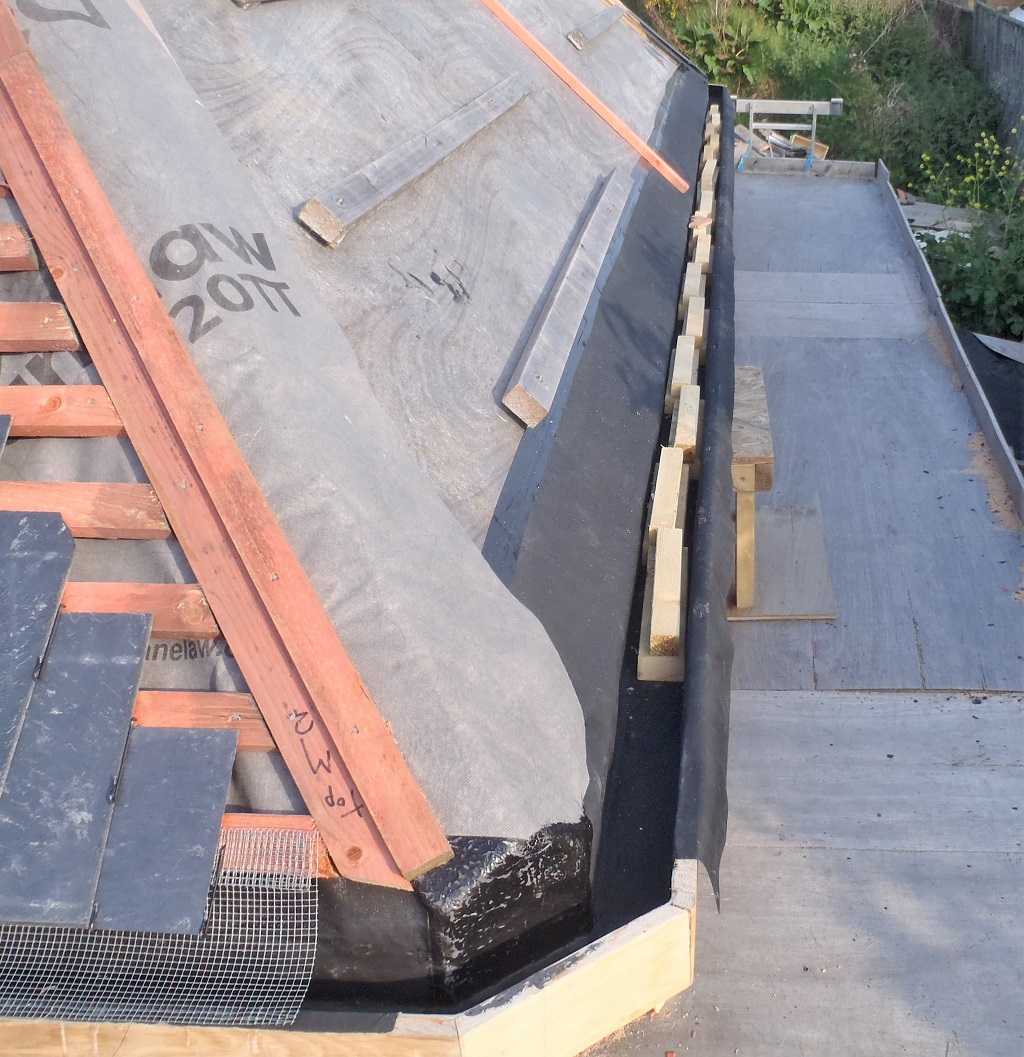
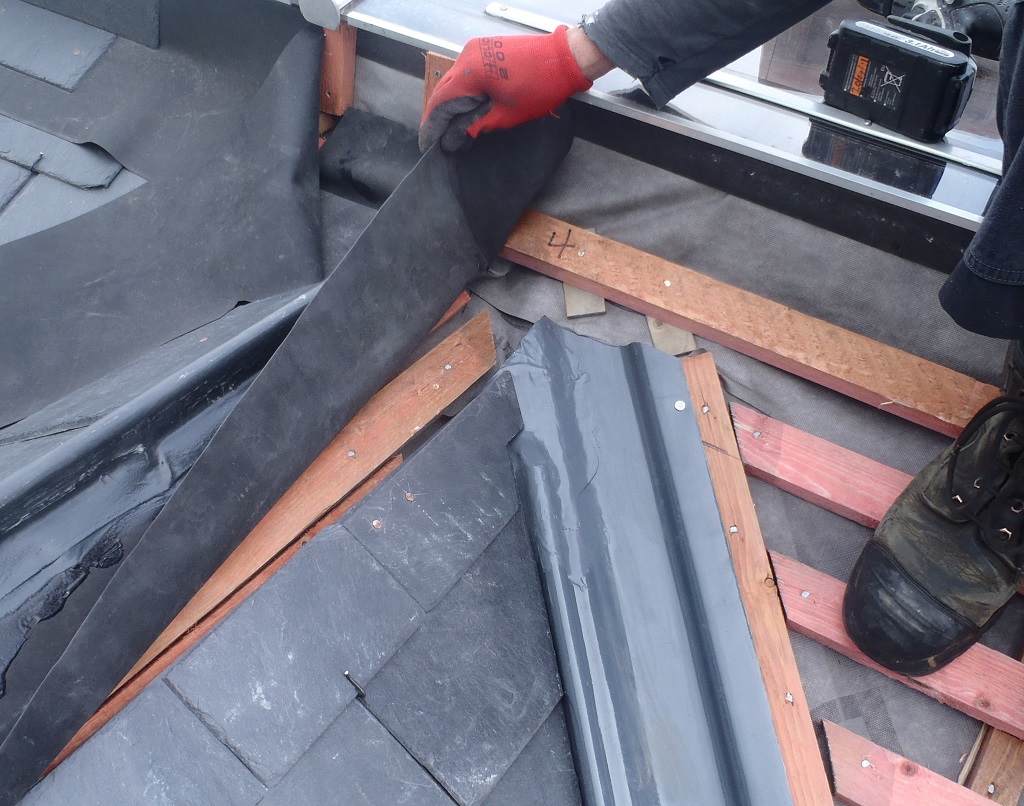
    Skipping over a 4 hour job in helping a friend out with a plumbing crisis, we continued in preparing the roof sections, this time in doing the special bull-nose upright flashing strips on the two hips and again the two ridges too. This was made up of the shaped wooden strips with the woven glass-fibre ribbon wrapped over the top of the bull nose, all sitting on the rubber membrane that will provide the protection against the rain water. We put on three coats of resin, the last layer being a grey flexible top-coat to finish it off nicely.

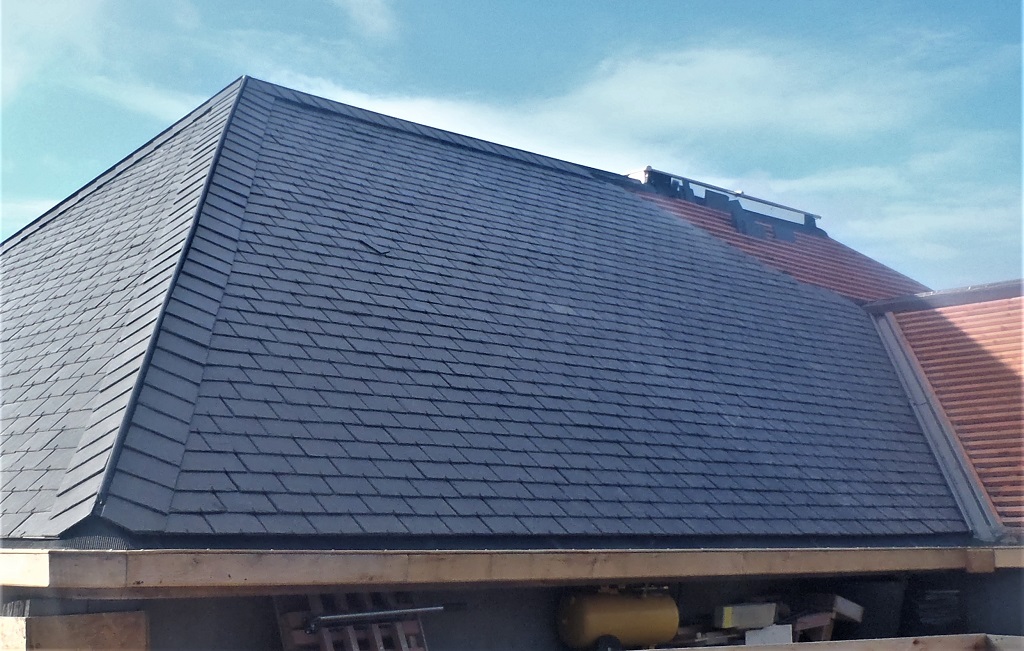
    Whole of P and Q Roof Sections All Prepared, Flashing Layers Assembled and Ready to Slate!

    O-P1-roofs-ready-to-slate

    Whole of P and Q Roof Sections All Prepared, Flashing Layers Assembled and Ready to Slate!

    Q-roof-ready-to-slate


    This concludes the preparation work for these sections of the roof (the “N”, “O”, “P” and “Q”) and we can start slating .. .. but the last day of the week, the Saturday, was lost to rain but we worked inside in the workshop instead.

  • P and Q All Covered in Membrane and Almost Complete with Tile Battens

    We had a very disrupted week of work, losing three and a half days, due to other commitments and meetings. It is just one of those things that happens now and again.
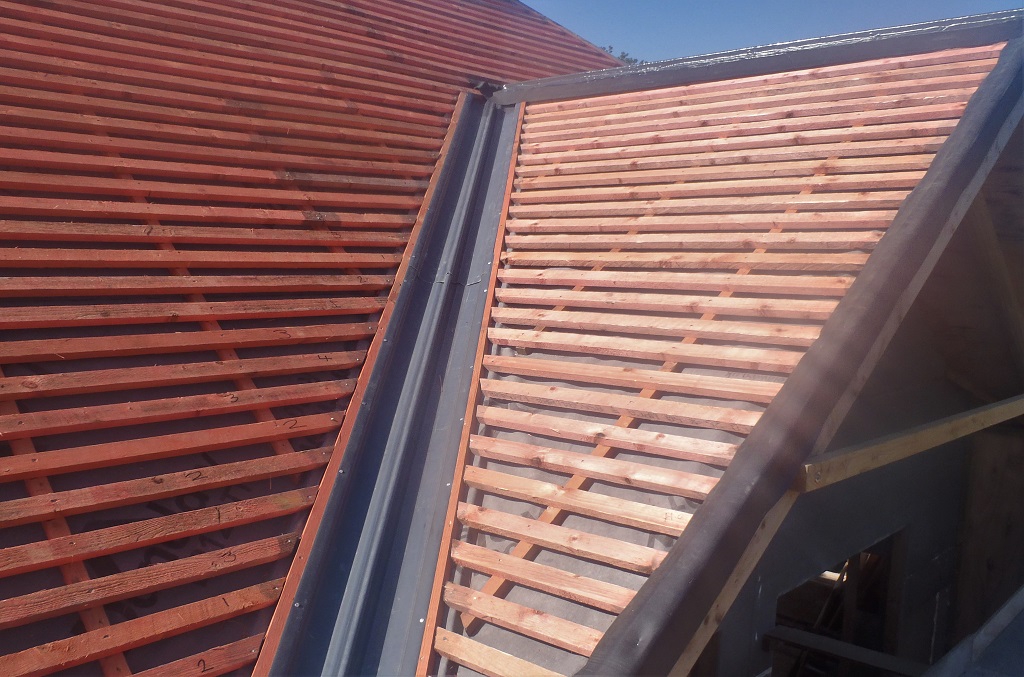
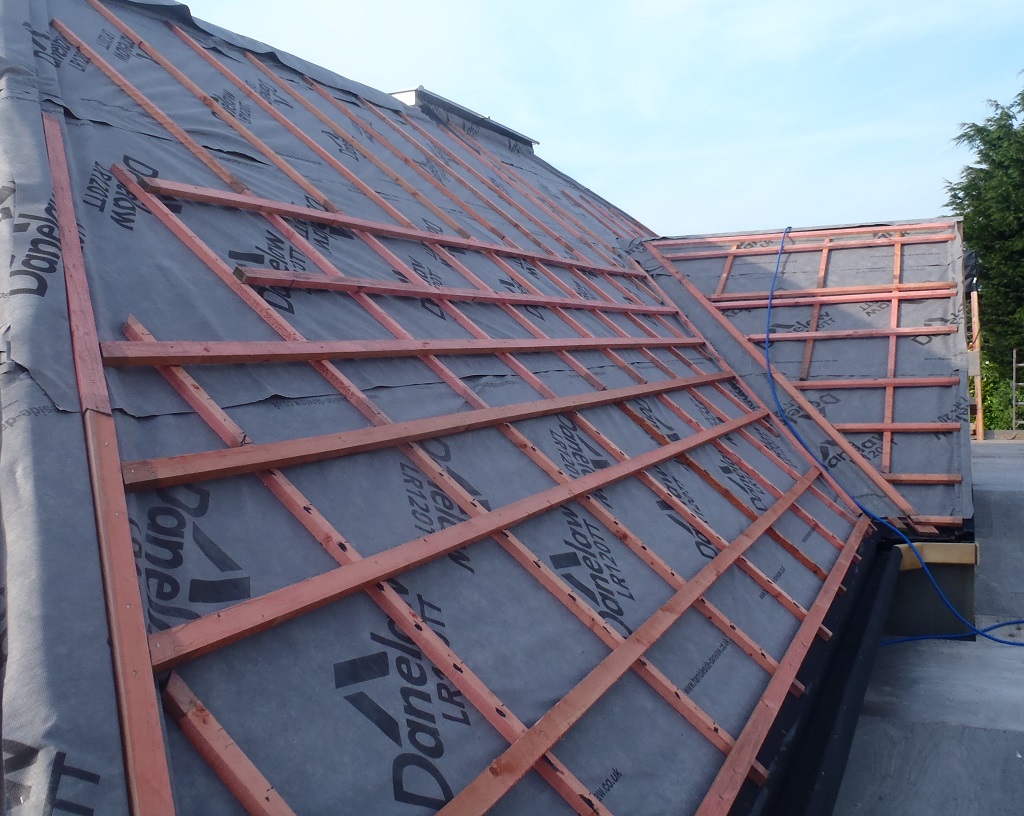
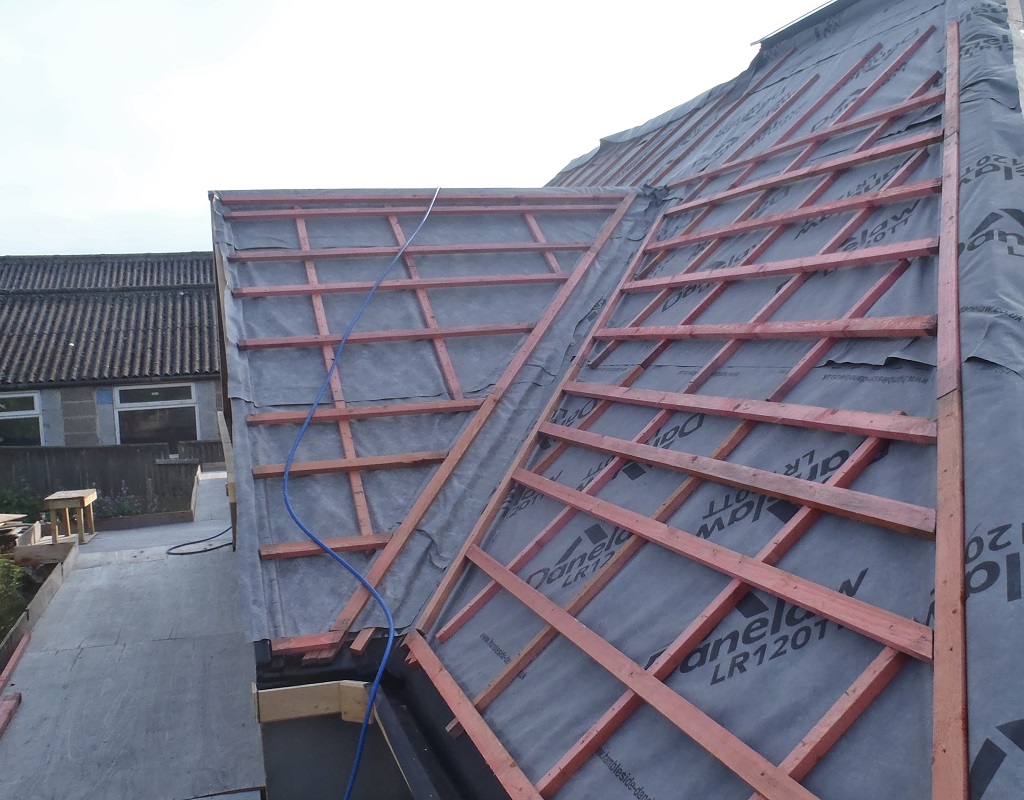
    We at least, got all the breathable membrane up on Monday and Tuesday so the “P” and “Q” sections of the roof are both now protected against rainwater, held down with a few vertical battens and some horizontal tile battens.

    P and Q All Covered in Membrane and Almost Complete with Tile Battens

    Membrane-on-P1-Q1

    P and Q All Covered in Membrane and Almost Complete with Tile Battens

    Membrane-on-Q2-P2


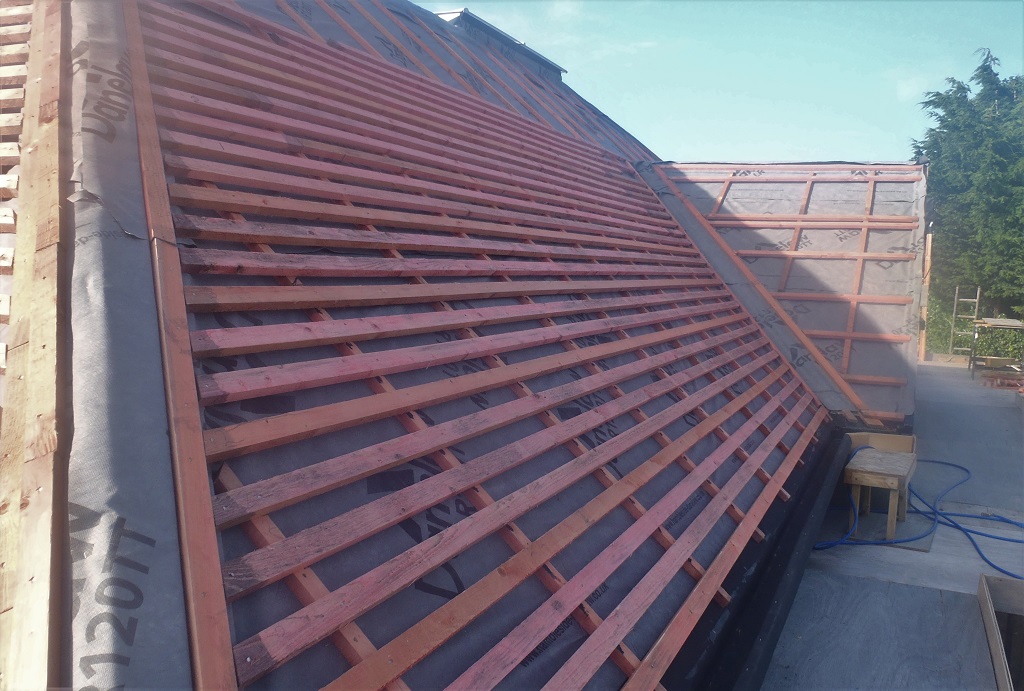
    The final day, Saturday, we did a solid day of work of putting up all the rest of the counter battens, and got most of the tile battens nailed up too. We had to make a slight adjustment to some of the horizontal battens near the ridge line of the Q (the Conservatory) roof where the two “P” half sections meets together, there was a little 20mm mismatch to the lines of the battens so we “corrected” four lines of battens just below on the right hand side so there wasn’t a sudden “jump” in the line of the Slates.
    P and Q All Covered in Membrane and Almost Complete with Tile Battens

    Most-Tile-battens-on-P1

    P and Q All Covered in Membrane and Almost Complete with Tile Battens

    Most-tile-battens-on-P2-Q2


    Next week, we hope that we will get in a full week of work and make solid progress on finishing the “N”, “O” and some of the “P” and “Q” roof sections, putting on thousands of Slates etc.!

  • Gable Roof Extended, Two Downpipe Channels Created and Resumed Preparing the P Section of Roof

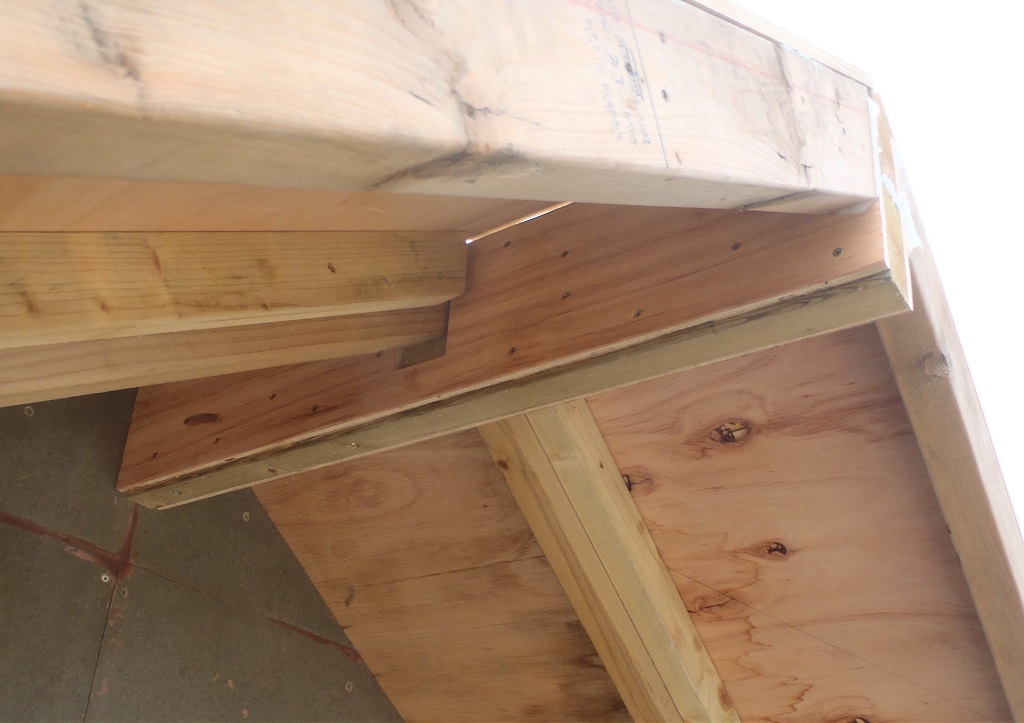
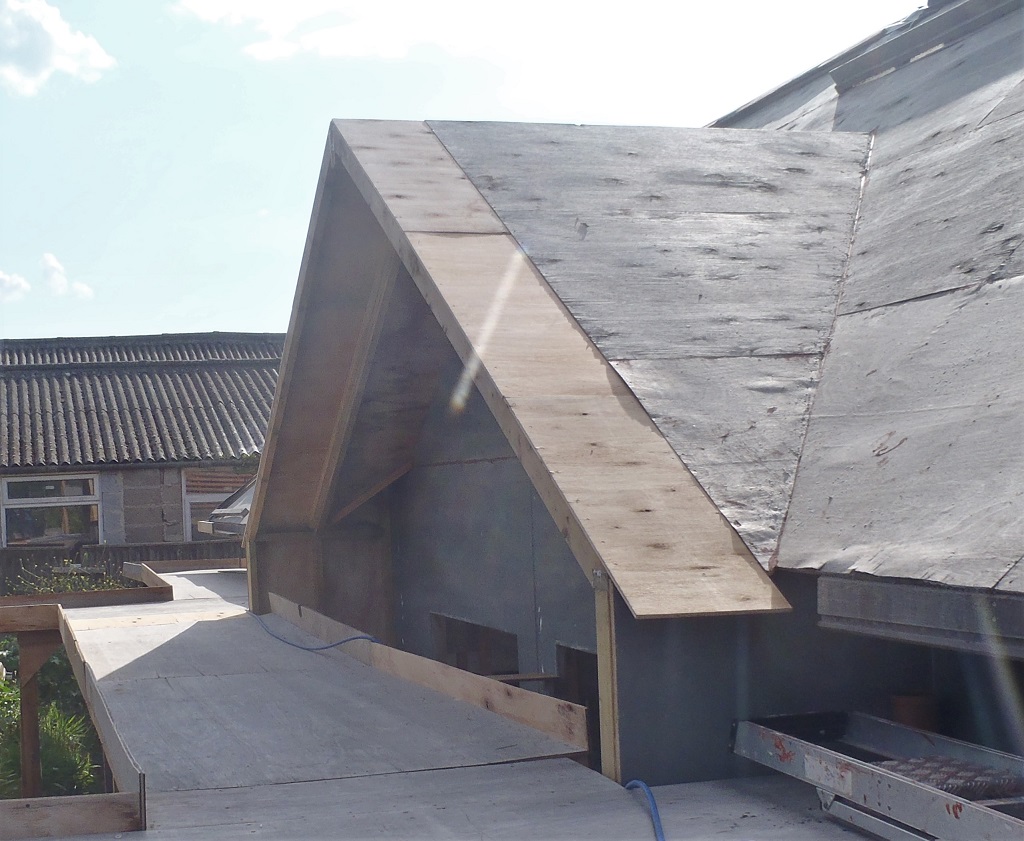
    On Monday, we extended the existing Gable section of the roof that will form part of the Conservatory. Using the new stud walls built last week, we put up a 420mm extension to the ridge beam to make a sum total of 910mm (3feet). This new ridge was sandwiched between two layers of our structural 12mm plywood, glued and screwed together with a second full single length of 95mm by 45mm treated timber underneath to reinforce the extension.

    Gable Roof Extended, Two Downpipe Channels Created and Resumed Preparing the P Section of Roof

    Extension-of-Q-ridge


    Then a couple of CLS 63mm timber pieces were fixed to the long diagonal rafters to provide support for the new roof boards and two fresh lengths of 4by2 timber cut to form the outer rafters of the new extended roof.
    The narrow strip was covered with more 12mm plywood segments and it is now ready for the next stage of counter battens and the breathable membrane to be put up.
    Gable Roof Extended, Two Downpipe Channels Created and Resumed Preparing the P Section of Roof

    Extended-Q-roof


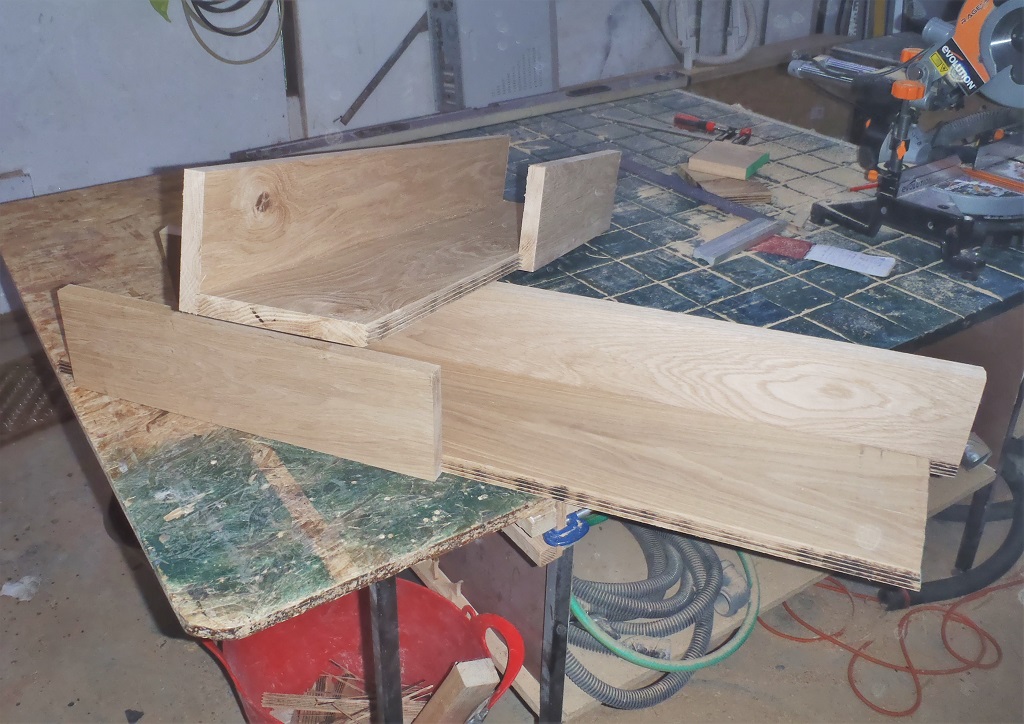
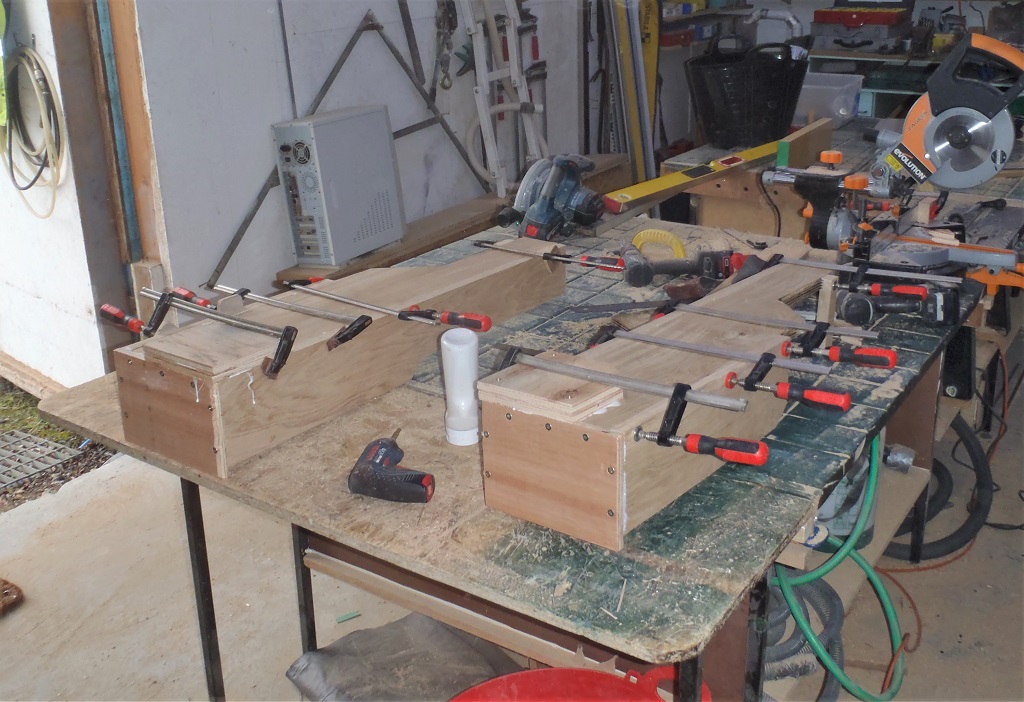
    Tuesday through to Saturday morning was spent working on two new Downpipe Channels to connect to the gutters and to the future Conservatory. We carefully measured each position of each channel module (PQ-1 and PQ-2) and then pulled out a couple of planks of Oak timber, 27mm thick but one plank being 150mm wide and the other being 250mm wide. We also had a couple of left-over pieces already planed from a previous job. These forms the two sides and the wider bottom pieces of the channel module.
    All was planed and cut to width.
    Gable Roof Extended, Two Downpipe Channels Created and Resumed Preparing the P Section of Roof

    Start-of-Q-Downpipe-Channels


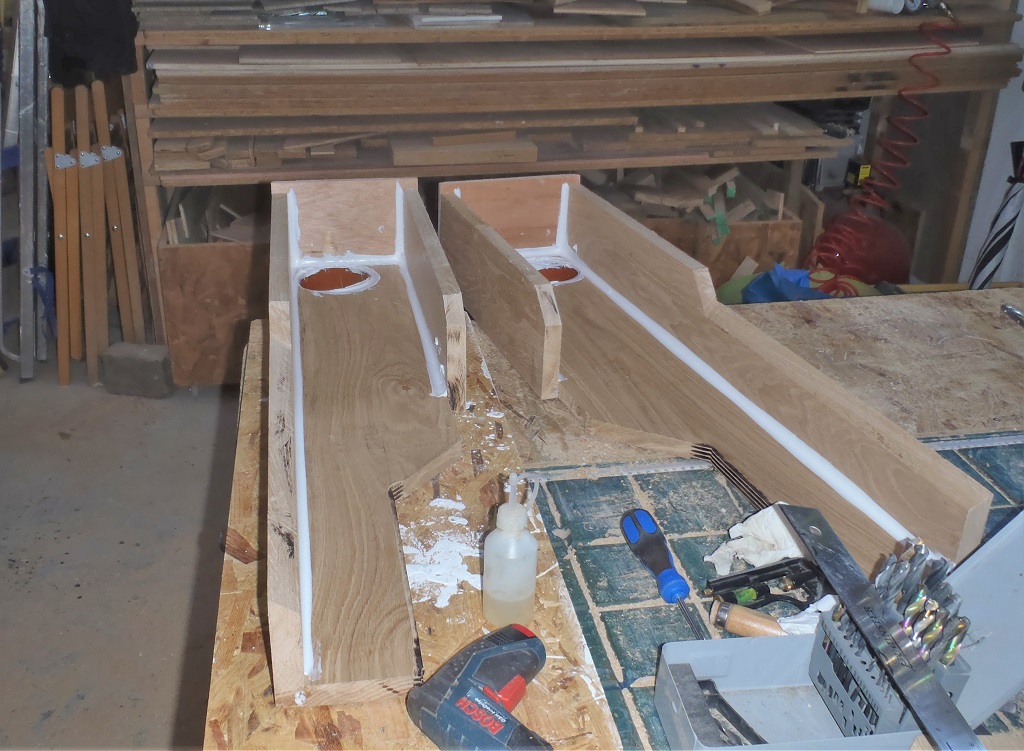
    The next job was to put on the tongue & groove edges to join the pieces together and using a PU glue, formed a very strong joint and a much more robust module. The two sides were shaped in a particular fashion so they will slide in and under the overhanging roof boards of the “Q” conservatory roof.
    Gable Roof Extended, Two Downpipe Channels Created and Resumed Preparing the P Section of Roof

    Q-Downpipe-Channels-Glued


    Another gluing job was to stick on two layers of 12mm plywood squares (150mm across) and stick them under the modules in the position where the plastic drain pipe will come through. After they had set, we drilled a 114mm diameter hole through all the layers (22mm of Oak and the two layers of the 12mm plywood) and then glued in short lengths of drain pipe.
    Gable Roof Extended, Two Downpipe Channels Created and Resumed Preparing the P Section of Roof

    Q-Downpipe-Channels-with-Pipes-fitted


    While that was drying and curing, we went outside to resume work on putting up Slates on the narrow diagonal strip to finish off on the “N” section of the roof. We got half way up by the end of the day.
    Gable Roof Extended, Two Downpipe Channels Created and Resumed Preparing the P Section of Roof

    N-Nearly-done


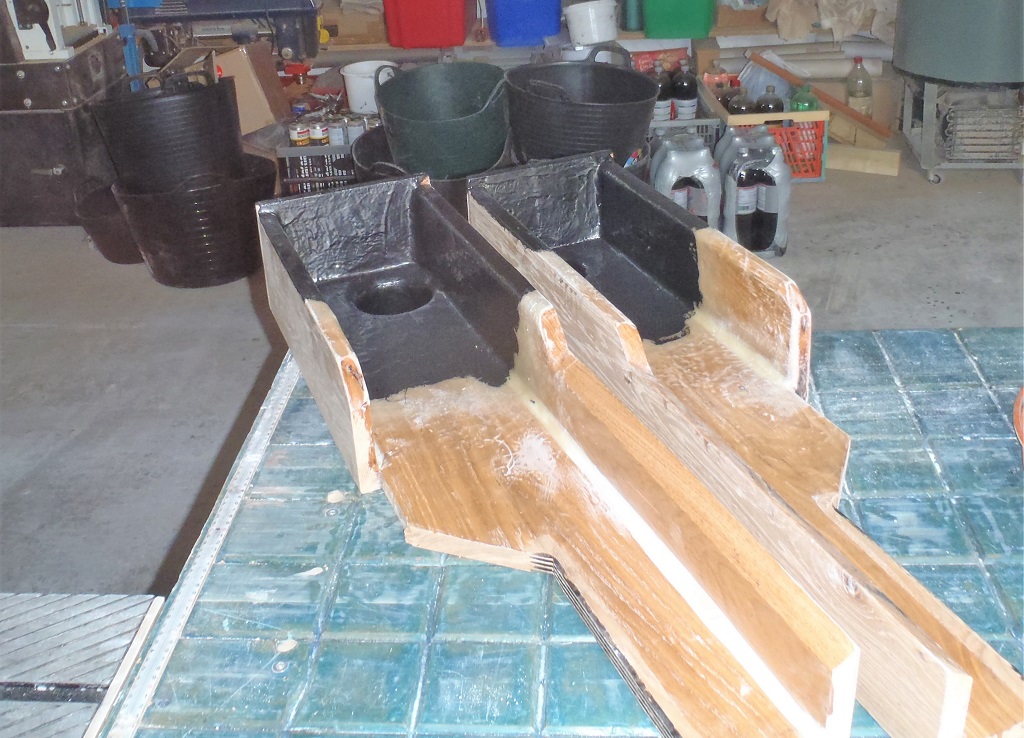
    On the following day, we carried on working on the downpipe channels by cleaning up all the edges, especially the newly installed plastic pipe sticking through the bottom of the channels and then applied a coat of polyester resin and glass-fibre matting to fully waterproof these channels and provide a smooth surface for the rainwater to flow into the pipework. And finally on Saturday morning, we applied the black coloured top coat layer of resin to provide the slick surface and colour.
    Gable Roof Extended, Two Downpipe Channels Created and Resumed Preparing the P Section of Roof

    Q-Downpipe-Channels-ready-for-fitting


    While that was hardening, we brought in all the thin OSB strips that has a “bull-nose” on one edge. We discovered from the first time we used these strips to form a flashing waterproof barrier for the Hip and Ridge lines, that the resin soaked into the open grain of the material so we spent a hour or so applying Polyfilla to all of them to bulk fill these gaps.
    Gable Roof Extended, Two Downpipe Channels Created and Resumed Preparing the P Section of Roof

    Bullnose-Strips-filled


    We are in the middle of some very changeable and windy weather at the moment so we hope we can still proceed with our work. We have been lucky so far this year in general. Next week, we will install the new downpipe channels, put on the guttering and then start laying on the strips of roofing membranes all along “P” and the “Q” roof sections.

  • M Section All Done and N Half Way There

    On Monday, we resumed work on the M section of the roof. The first job was to cut, trim and seal the fibre-glass trough module to fit the top of the valley and while the resin was curing, put up more slates. After lunch, the modified third piece of the valley trough was fitted and we then finished off the small triangular patch to complete the whole of the M section. This piece of roof has over 1800 slates on it. this now means we have covered approximately 30% of the whole roof.

    M-Complete

    M-Complete


    For the final couple of hours left on Monday, we swapped our tools over to begin nailing up the tile battens up on the next section, the N part.
    N-partial-battening

    N-partial-battening


    Tuesday saw the completion of the tile battens nailed into place and then we started on putting on the slates.
    But we spotted something very odd in our gutters.
    N-Gutter-Bulging-rubber

    N-Gutter-Bulging-rubber


    The rubber liner had “swollen” up in a bubble and when we had lifted up the metal mesh, realised that it was water underneath the rubber membrane, sitting on the oak. We had never noticed it before and we had to wonder where and how the water got into and behind all the layers of the breathable membrane up on the roof. Did this mean a hole somewhere? Did this mean a sealed joint wasn’t holding? Well, we got the vacuum cleaner out to sucked out the water and made sure that no more was lurking elsewhere.
    Then we got out our garden hose and emulated a very heavy rain shower by spraying water from the top of the ridge line and all the way down the hip, to make sure that all the breathable membrane was fully covered in running water. We then waited over lunch for any developments.
    After lunch, the verdict was no signs of any more water bubbling up behind the rubber. We can only put down this experience to a moment when we was putting up the membrane in the first place several weeks ago (by reviewing our photo gallery) and there is a possibility that one night, there was a short sharp shower and managed to allow a small amount (about 100millilitres) of rain water to slip behind the top line of membrane up the top of the roof, where the ridge line wasn’t covered until the following day.

    We will have to keep an eye on this but nothing materialised during our water test and beside, as soon as we have put on all the slates, it will be fully waterproof anyway.
    We put back the metal mesh over the gutters again and resumed the job of putting on the slates, starting at the valley end and working up the diagonal. We have also learnt our lesson about providing a fixed reference marks for the left end of all the rows by projecting up a vertical line and then measuring back from this one reference line, to all the starting points on the left end of each tile batten.
    N-slating-started

    N-slating-started

    Wednesday and Thursday were taken up with Stephen’s Birthday and meetings but on Friday we got back to putting up more slates and continuing up the valley.

    N-Slating-valley-slated

    N-Slating-valley-slated


    We managed to get the complicated valley all done and covered most of the N section with slates by Saturday afternoon. We had to stop because we ran out of room and we couldn’t get up and over on to the N section to complete the last few rows.
    N-Mostly-slated

    N-Mostly-slated


    So for the remaining of the afternoon, we got on with the task of putting the rubber liner inside the gutter on the next section, the “O” section, and put up one central counter batten. This central batten was special because we couldn’t just nail it into place as the underlining structure, at this particular point, has a thick steel plate that reinforces the rafters. This means that nails straight down cannot penetrate into the rafter and secure the counter batten into place. instead, we used glue plus nails and positioned the batten slightly offset to one side. We fired extra-long nails at a slanting angle to hit and grip wooden rafter, bypassing the steel plate on the front of the rafter.
    O-gutter-lined

    O-gutter-lined


    Next week, we will put up the breathable membrane, secured down by more vertical counter battens and then put all the horizontal tile battens right across the O section and we can climb this to complete the N roof, and also put another 500 slates on the O roof.

    And here’s this week time lapse…

  • Starting on M Section

    Today, at the start of a new week, under a wet cloudy chilly sky, we finished putting up the tile battens on the M section of the roof, all before lunch time.

    Battens-complete-on-M-1

    Battens-complete-on-M-1

    Battens-complete-on-M-2

    Battens-complete-on-M-2


    After lunch, we started putting up the slates, going up the valley and in the three or so hours of the afternoon, we managed 32 rows with two or three slates in each. It is a slow job measuring and fitting the slate into the angled valley, we got a good way up with about 19 rows to go.
    First-few-slates-on-M-End-day-6

    First-few-slates-on-M-End-day-6


    Tuesday saw the installation of the kerb flashing along the Skylight, made up of a strip of rubber and a line of aluminium strips in front, both mounted on wooden short batten pieces spaced out every 500mm (see 1:29 in video).

    Then in the later part of the afternoon, we finished off the valley rows and also finally, fitted the last couple of slates over on the I roof and the final ridge flashing slate along the J roof.

    Left-Valley-completed-End-day-7

    Left-Valley-completed-End-day-7


    All day Wednesday and Thursday morning was a complete wash out in terms of working on the roof but we did instead do some analysis of the task in doing the windows (see Sorting Oak Timber for Windows) so wasn’t a complete waste of time.
    Thursday afternoon, we resumed work on the roof and finished off the complex intersection of the K ridge line meeting with the valley coming up the L and M section of the roof. After that, we were able to mount approximately 300 slates in just two hours to conclude the day’s work. That was fast work!
    Progressing-across-M-End-day-8

    Progressing-across-M-End-day-8


    Friday also had some rain interruptions and we lost a couple of hours in the afternoon. But we still managed to get a further 500 slates up on the M roof, we are well started up the other valley (the M-N valley) now but probably still have another 800 slates to go to finish this roof section.
    Starting-up-Right-Valley-End-day-9

    Starting-up-Right-Valley-End-day-9


    On our final day Saturday, we continued putting up more slates, working up the valley, with shorter and shorter strips and in total we did about another 500 slates. There is just a fairly small triangle patch of roof left to do.
    Nearly-finished-M-End-day-10

    Nearly-finished-M-End-day-10


    But we did have a short pause where we had to analyse why the position of one row of slates was slightly off (you will see the moment in the video below) and this is the first time it has happened. We concluded that the beginning of the horizontal row was not started in the correct position, we realised that there was too much of a risk of drifting whenever we start a new row on the left end. The lesson learnt today will help set up the next section of roof properly and mark the starting point on the left ends of each row from a known reference vertical line in the middle of a roof section.
    In conclusion for this week’s work, we could have done the whole of the M roof section if we had not had the rain interruptions on Wednesday, Thursday and Friday.
    Now enjoy the video of us dashing about on the roof!

  • Proceeding with L to N Roof Sections

    For our week’s work, we got on with the next three sections, the L, M and N which forms a U shaped inset. We first got all the tile battens up on L section and then used up the remaining full length battens we had up on the platform to do the first eleven lines on the M roof, all by Monday lunch time.
    We then started putting up the slates on the L slope, to have a change of job as it can get painful on our muscles in our legs having to crouch down, especially doing the slates.

    N-End-of-Day-2

    N-End-of-Day-2


    Being such a short section of the roof, we are having to stop and start a new diagonal strip of slates quite often (starting at the valley and stopping at the hip), and that slows us down considerably. By the end of Tuesday, we estimated to have put up only about 280 slates for a day and a half of work.
    N-End-of-Day-3

    N-End-of-Day-3


    Wednesday saw the “almost” completion, with another 300 slates, of the L strip of roof, only leaving a small triangular bit right up at the top of the valley. We needed to cut and trim the third small length of the fibre-glass trough to fit, modifying one batten to make sure the trough will go as high as possible to ensure capture of all the rain water.
    N-End-of-Day-4

    N-End-of-Day-4


    On the next morning, on Thursday, we trimmed off the bull nose middle part of the trough and reapplied a new layer of fibre glass woven mesh and dark grey resin to seal up and form a solid waterproof trough again.
    Top-of-N-M-Valley

    Top-of-N-M-Valley


    While the resin was hardening, we spent most of the day (running late into the afternoon because we thought there was going to be a heavy rain shower mid-afternoon plus also we had a meeting to attend) putting up lots and lots of tile battens up on the M section. We used thirty or so full length battens to cover almost the whole of this section and only has the left-over bits to fill in next week.
    After our late lunch, and no sign of the rain, we took out our new modified trough out and fixed it into place and then continued putting in the final fifty slates or so to completely finish the whole of the L section, including nearly all the flashing tiles too. The final part of the intersection of the four roof sections will be completed when we reach it with the slates on M next week, as we need to know exactly were the slates meet.
    N-Complete-Nearly

    N-Complete-Nearly


    The next two days (Friday and Saturday) were washed out so we didn’t fancy working in the wet and slipping on the battens. We will resume next week on Monday and finish putting the tile battens on M and then start slating that segment next. We have covered about twenty percent of the roof (4 segments) so far but it will jump to about thirty-three percent when we get both the M and N sections finished, which hopefully won’t be too long in coming.

    And we have resumed shooting daily videos of our work so here are the time lapse versions for you to watch…


  • Flashing for J Hip Complete and the K Roof all Covered in Slates

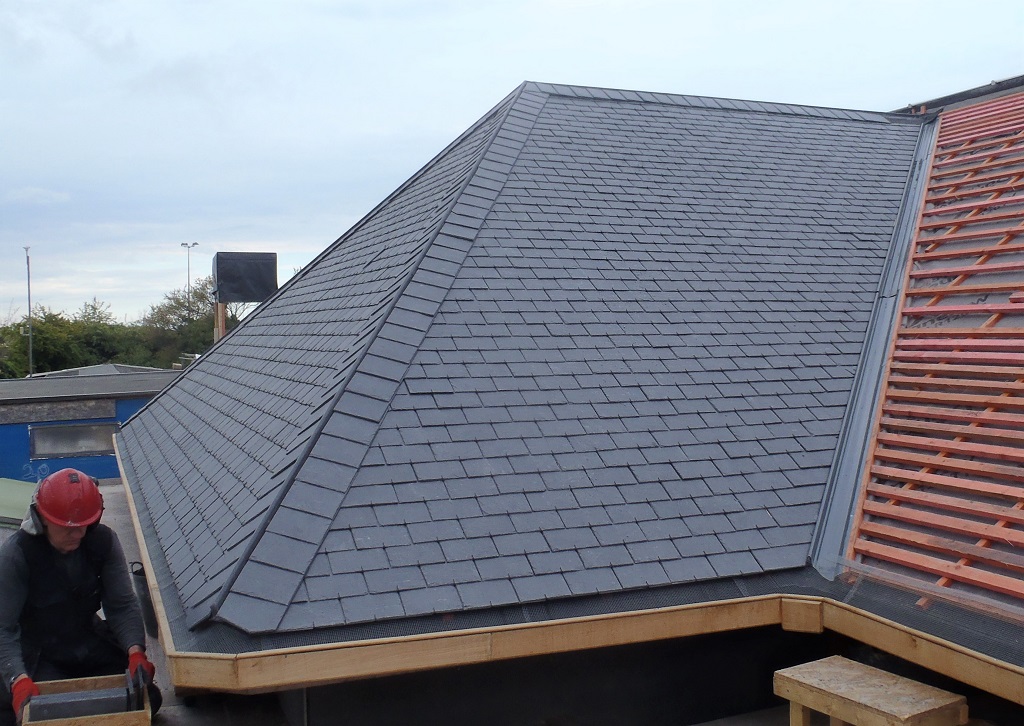
    We started the new week by finishing off the “Hat” covering the Hips for J-K and K-L as well as the ridge between J-L roof slopes. We filled in the little pin holes in the top of the bull nosed with plastic padding filler, rubbed it all down and coated with another top glossy finishing coat of the resin.

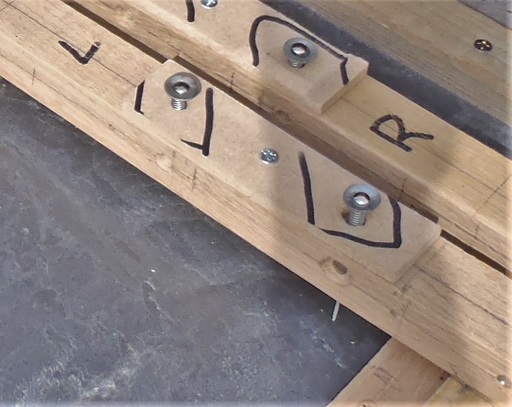
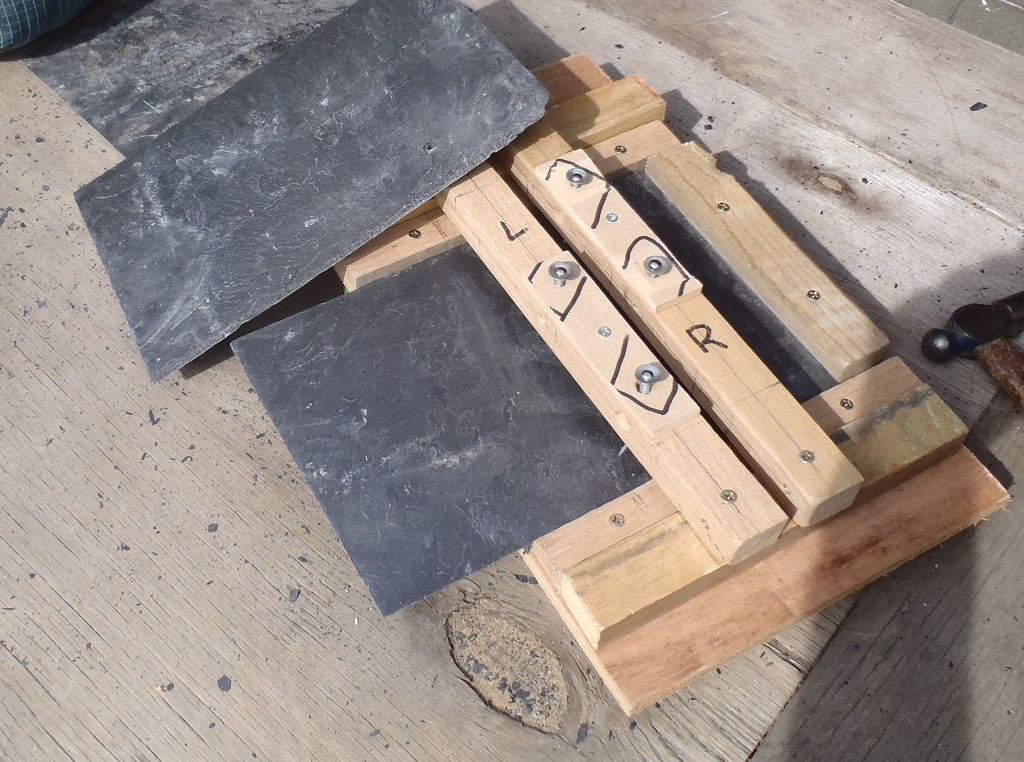
    Then we designed and constructed a template tool for making nail holes in a slate. These slates are the flashing slates to go up the hips to cover up the rubber membrane and the jagged edge of the main slates and provide rain protection at these joints.

    Hip-Flashing-slate-hole-punch-1

    Hip-Flashing-slate-hole-punch-1

    Hip-Flashing-slate-hole-punch-2

    Hip-Flashing-slate-hole-punch-2


    We tested out our new tool by preparing about sixty slates to go up the J side of the Hip and Ridge which we duly went and installed them all!
    Roof-J-Complete

    Roof-J-Complete


    After that, we got on with slating the K roof, like for example, on Wednesday, we did managed to put up an estimated 500 slates in a single day session which is amazing!
    Roof-K-Half-Done

    Roof-K-Half-Done


    But it took another whole day (Thursday) to complete the K section, including all the flashing tiles. The bulk of the roof was just, almost, simply shoving the slates onto their hooks, but reaching the other Hip meant lots and lots of fiddling with angles and slicing slates to fit the last piece into place.
    Roof-K-Done-1

    Roof-K-Done-1

    Roof-K-Done-2

    Roof-K-Done-2

    Roof-K-Done-3

    Roof-K-Done-3


    We are calling it a 2 day session to fully put up all the estimated 800 slates for the K segment so that is pretty good for us but we could beat that record when we get around to the front of the building for even bigger sections of roof to do!

    Finally, we started filling in the tile battens on the L and M roof so we could start on slating them next week .. but Storm Hannah came along to disrupt our work with strong winds and rain showers so we only managed to do a couple of hours on Saturday morning!!