Category: Steelworks

  • Seventh And Final Leg Is Standing Proud!

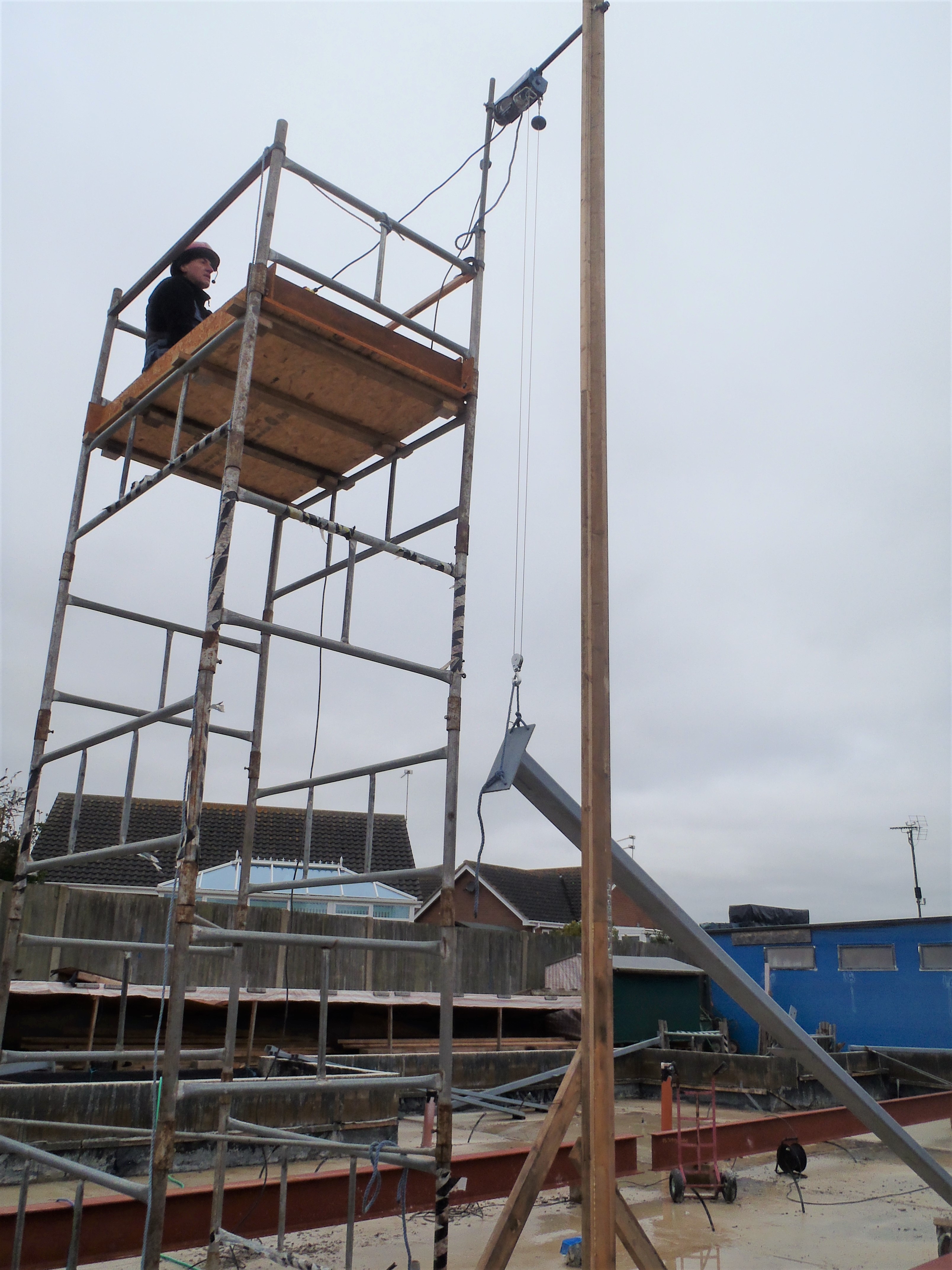
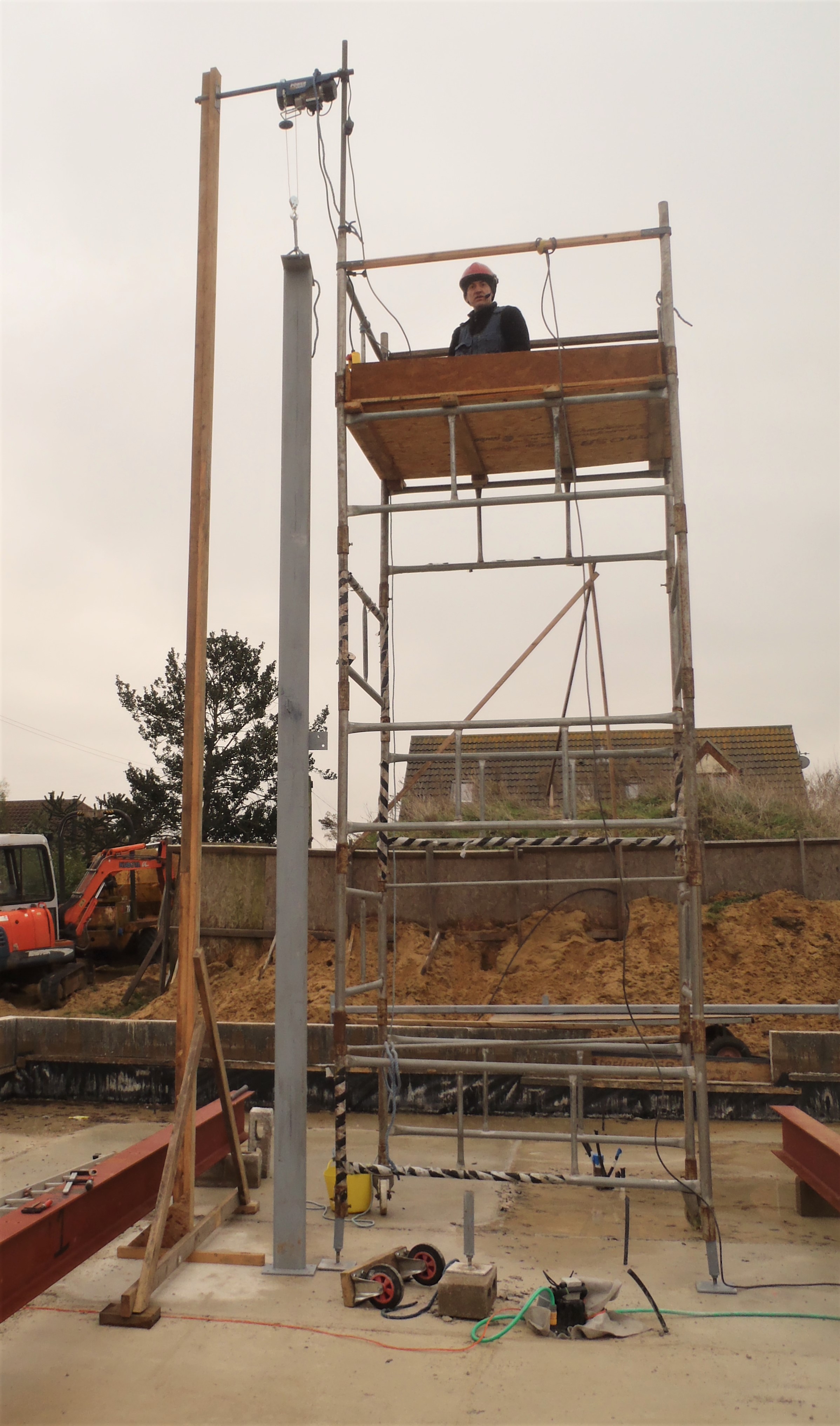
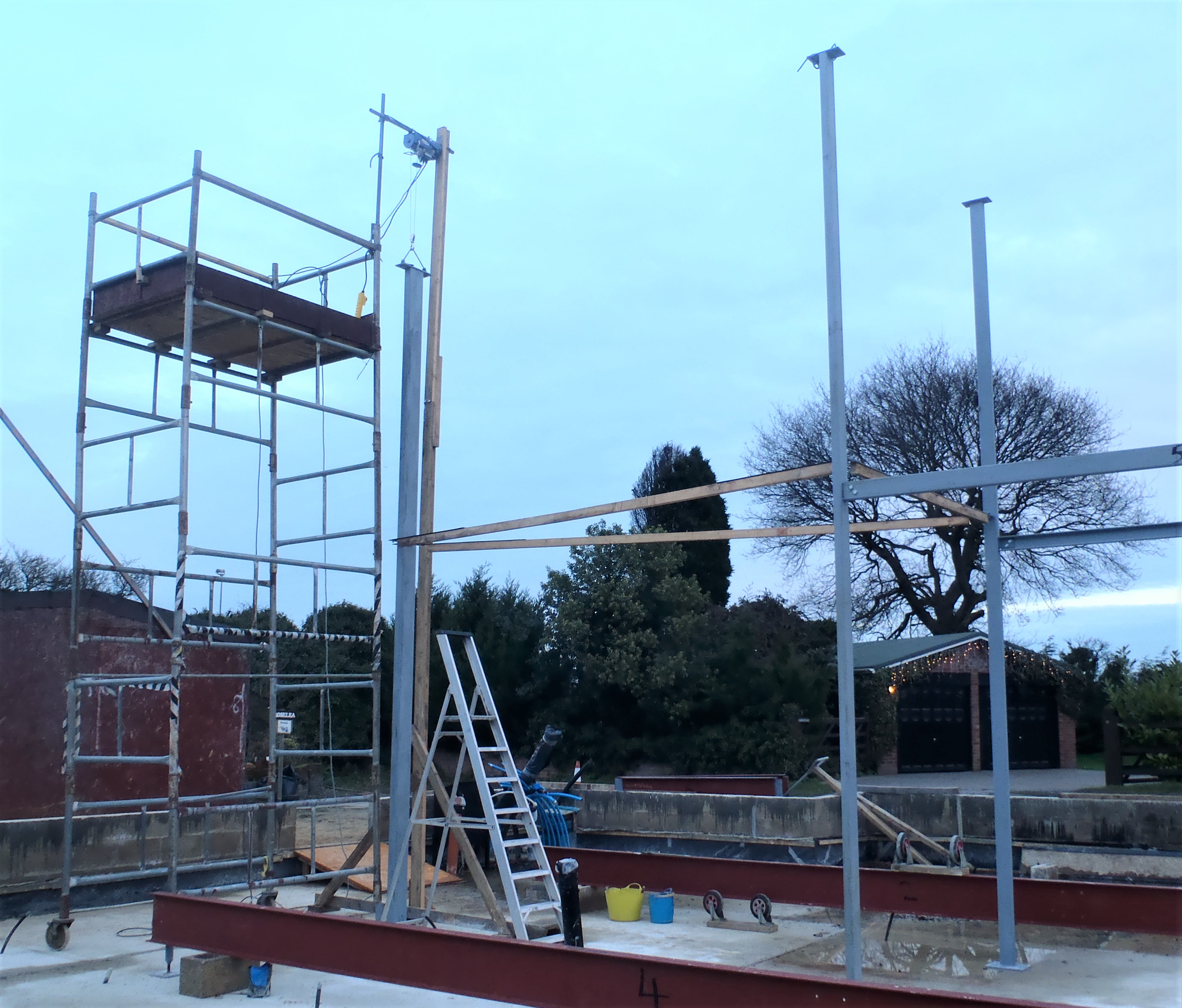
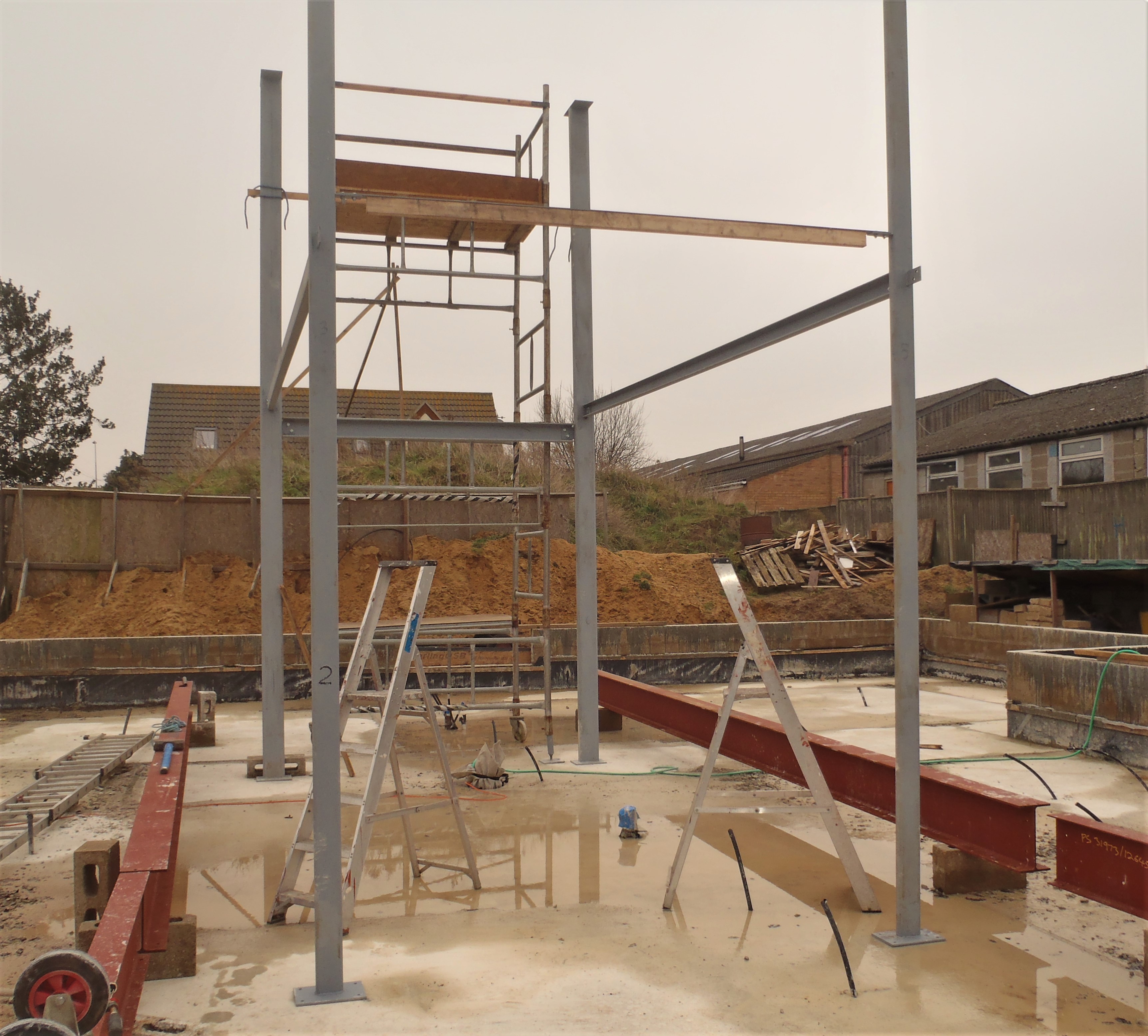
    On a rather warmer day, we got the seventh and final steel leg hoisted and positioned in the required place.

    We prepared for this operation by making two bracing beams using a couple of 63mm CLS timber pieces with metal strips screwed on each end to provide the anchorage. These bracing beams are only temporary to hold this leg in place while we make further precise measurements to each and every leg before we bolt them all down into the concrete.

    This final leg is our third heavy duty version (weighing 160kg) and it all went just fine with no signs of tension or trouble with our repaired crane wooden leg.
    Leg-7-in-place

    Leg-7-in-place

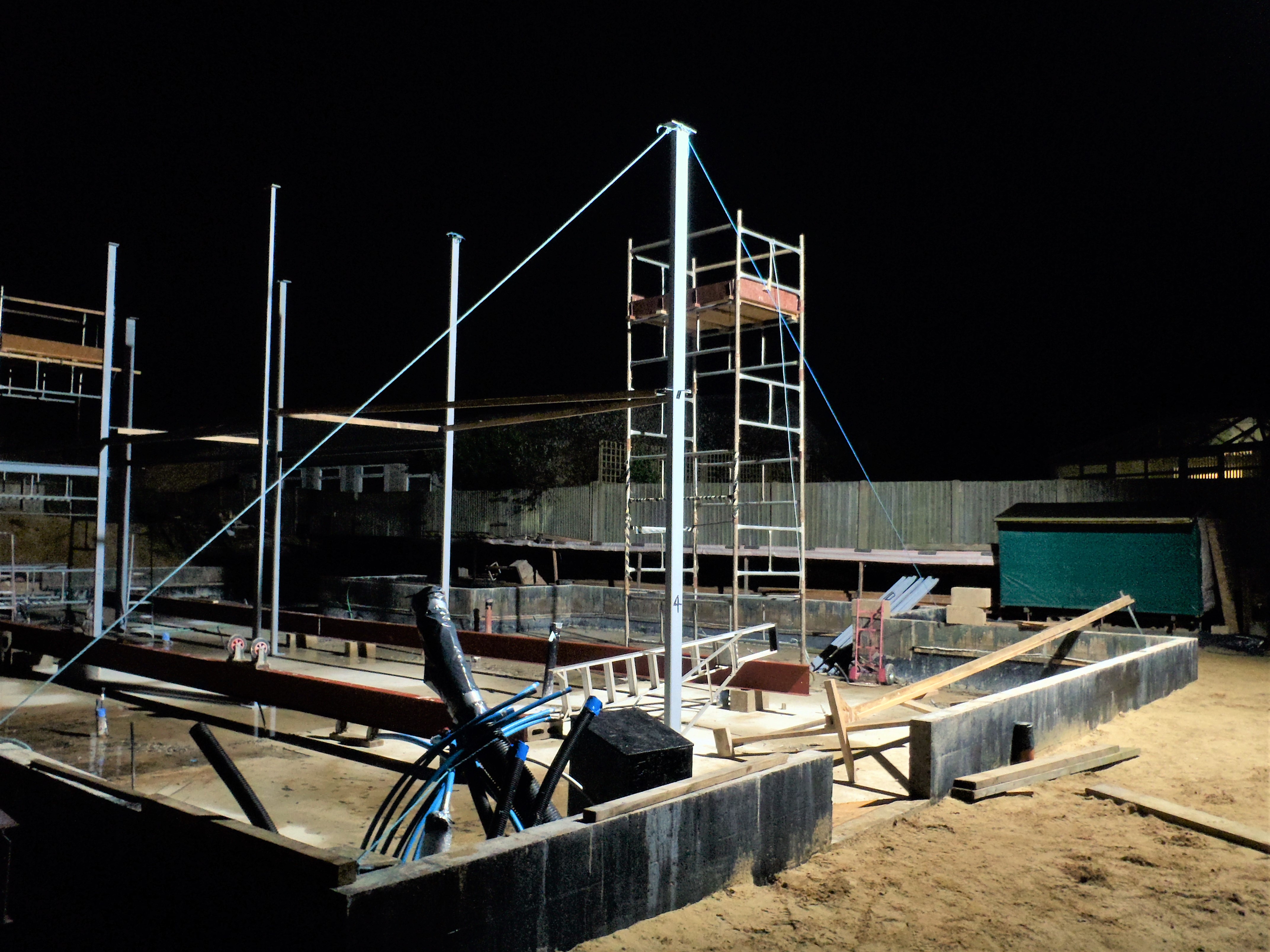
    We verified the position of the previous pair of legs (number 3 and 5) to make sure they were in the correct location (only needing a slight adjustment) and then we were able to put on our bracing beams from those legs to our final leg to secure it and hold it stable. But we were concerned with a potential mishap if we had any strong winds and it may have caused  a possibility of pushing this leg (number 4 it is) over sideways so we tied two lengths of rope and anchored back to the concrete wall (just like tying down a tent with guy ropes).
    Leg-7-with-guy-ropes

    Leg-7-with-guy-ropes

    We then went back to the first pair of legs to start the exact process of measuring distances and angles to confirm the positions of the legs against the drawings. We used a laser beam to project right across from the Kitchen front wall, skimming pass the two steel legs and reaching the other side of the Great Room. We then measured from each corner of the Great Room to the laser beam and both were very, very similar (5564mm) and the gap between the laser beam to the side wall of the extension was 40 to 50mm which conforms very closely to the plans – phew thank goodness for that!

    We then made sure that the distance between the legs (number 1 and number 7) were the same at the bottom and at the steel lintel (measuring 2327mm) which is within 1mm of the precise number off of the drawings.

    But we were concerned about the verticality nature and our digital spirit level was saying 89.85° for these legs and we wanted to make sure that both were 90°. For every 0.05° out, then there would be an offset of almost 5mm (precisely 4.8mm) at the top compared with the bottom, therefore that 89.85° value would indicate that the top of the leg would be over 14mm further apart compared  with it’s neighbouring leg and our steel cross struts wouldn’t connect together and allow our bolts to go into the holes!!

    After some discussion, we came up with the idea of clamping pieces of timber between the legs at the top at the exact distances so that we can be reassured that the bolt holes will line up with the I beams and the cross struts when they get hoisted into place.

    All this careful considerations was needed because we want to drill the mounting holes into the concrete to bolt down the foot plates of our legs and have them much more secure and stable before we haul up the very heavy I beams on top of them! But of course, if we bolt down the legs and then find that the tops are NOT in the correct positions and we couldn’t line up the bolt holes and locked the pieces together .. we would be rather annoyed! Hence why the deep thinking and discussion session we had to solve this problem. We will implement our solution on Monday – Phew!
  • Third Pair of Leg Are Up and Connected

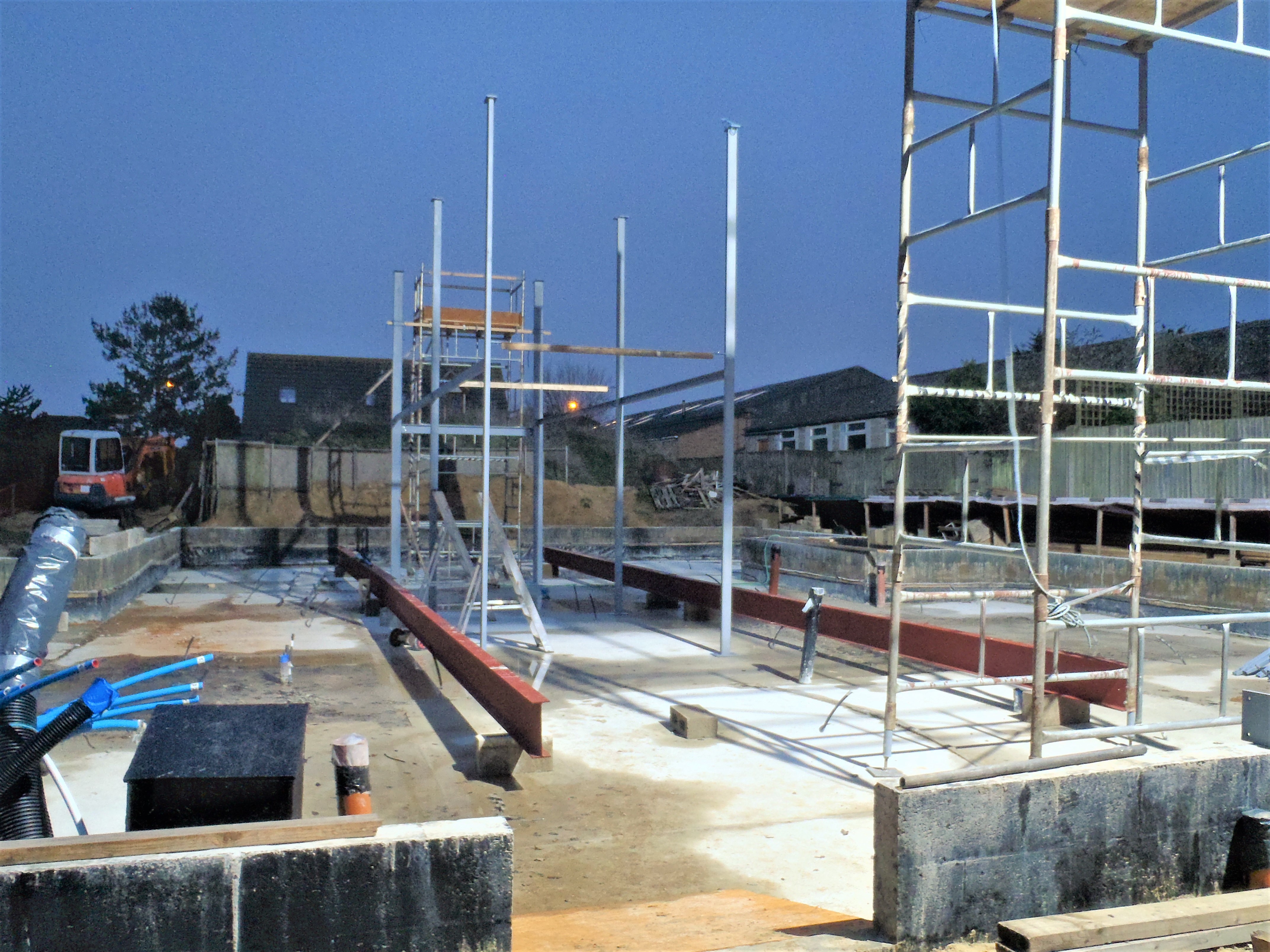
    This morning, in a freezing strong wind, we connected the second pair of legs (number 2 and 6) back to the first pair (number 1 and 7) using U Channel steel elements. They are 4.77 metres long of a u shaped piece measuring 100mm high by 50mm wide and made of 8mm thick flanges on the top and bottom edges and the vertical webbing is 5mm thick. They weighs just about 50kg each.

    Then, we put between the second pair of legs a thin metal strip to tie the legs together. This strip would normally be screwed down into the first floor joists but that isn’t in place yet!! This strip is 2.4metres long of a 5mm thick steel by 50mm wide. It was screwed onto a piece of 63mm CLS timber to help in lieu of the floor to stop it buckling if the legs tried to lean into each other.

    Four-legs-up-and-connected

    Four-legs-up-and-connected

    We finished off the morning work by moving along the scaffolding tower to the next pair of legs to do.

    After lunch, we hoisted up the third set of legs (number 3 and 5), these being also of the light duty square box steel measuring 100mm by 50mm with 5mm wall thickness. Each of these legs weighs 65kg. it was blooming chilly, well freezing actually, in the strong breeze up there on top of the scaffolding tower!!

    Next we hauled up two more U channel steel beams to connect these legs back to the previous legs (the second set, number 2 and 6). These horizontal steel pieces were the same specs as the previous u channel shaped beams used, so we now have a continuous connection from leg 1 to leg 2 and onto leg 3 and the same on the other side from leg 7 to leg 6 and on to leg 5.

    The final job was to put the tie strip between these third pair of legs, just like last time.

    Six-legs-up-and-connected

    Six-legs-up-and-connected

    We did have one incident at this point, the wind picked up a bit and blew over our tall wooden crane leg and caused some minor damaged two thirds the way up. We had moved it out of the way and it was sitting on its spreading out support arms but there was enough strength in the wind to knock it off balance (especially with a metal bar unbalancing it at the top) and it came crashing over and landed across one of the steel I beams and ramming the steel bar down onto the concrete slab. Fortunately, we were not in the way of this crash!.

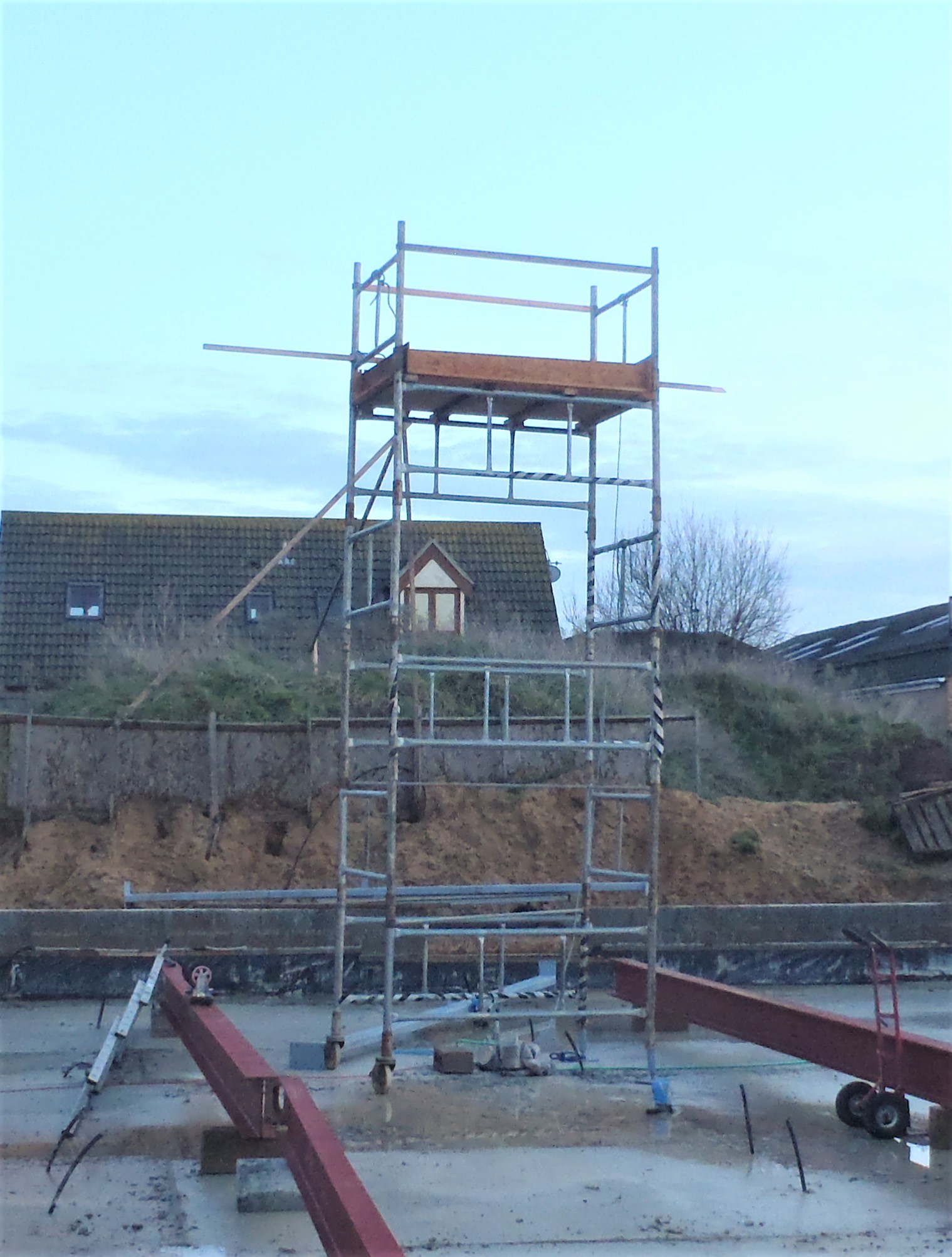
    We finished off the afternoon by moving the scaffold tower over to the final position for hoisting up the seventh and final leg, which we will tackle on Saturday.

  • Next Two Legs Goes up!

    It wasn’t so bad today in regards to ice, there were still patches of ice here and there but they were just melting and breaking up as soon as you stepped on it.

    So we started the day by adjusting the position of the first two legs (the heavy duty ones at the Great Room end) and got them almost exactly in their correct positions.

    Next, we assembled the crane and hoisted up the next two legs, which are the lighter duty steel legs positioned at the Kitchen and Hall boundary, and hauled them into the correct point of the concrete.

    Legs-3-and-4-Up

    Legs-3-and-4-Up

    We stopped for a late lunch and the afternoon, we will be spent doing other tasks, so we will continue tomorrow, Thursday morning.

  • Hurray! Two Legs Are Up and Tied Together!

    Yippee! The temperature overnight was warm, positively balmy at 5°C and the water lying around on our concrete didn’t freeze again and nearly all the remaining ice had melted by the time we started our work at 10am today.

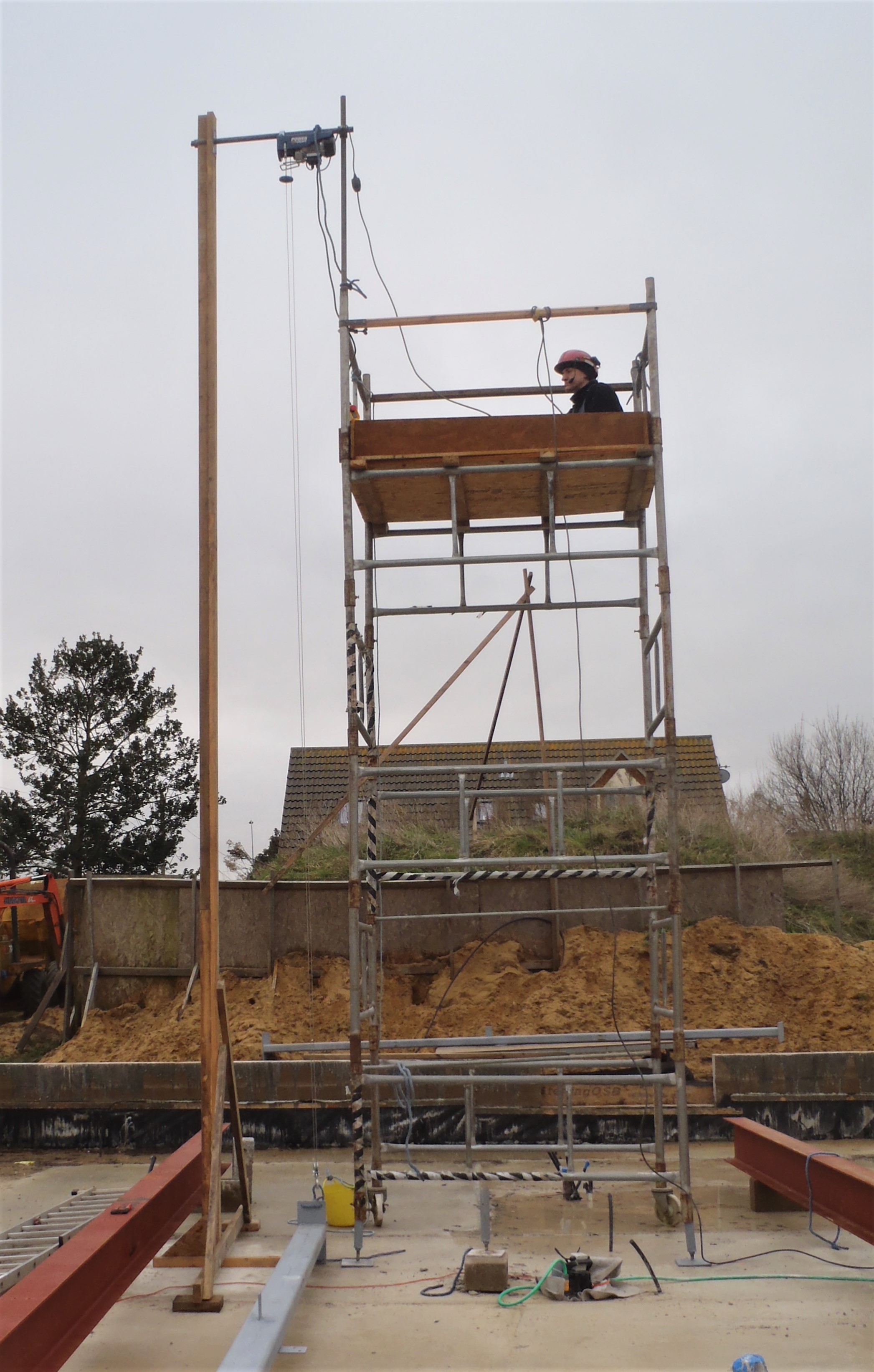
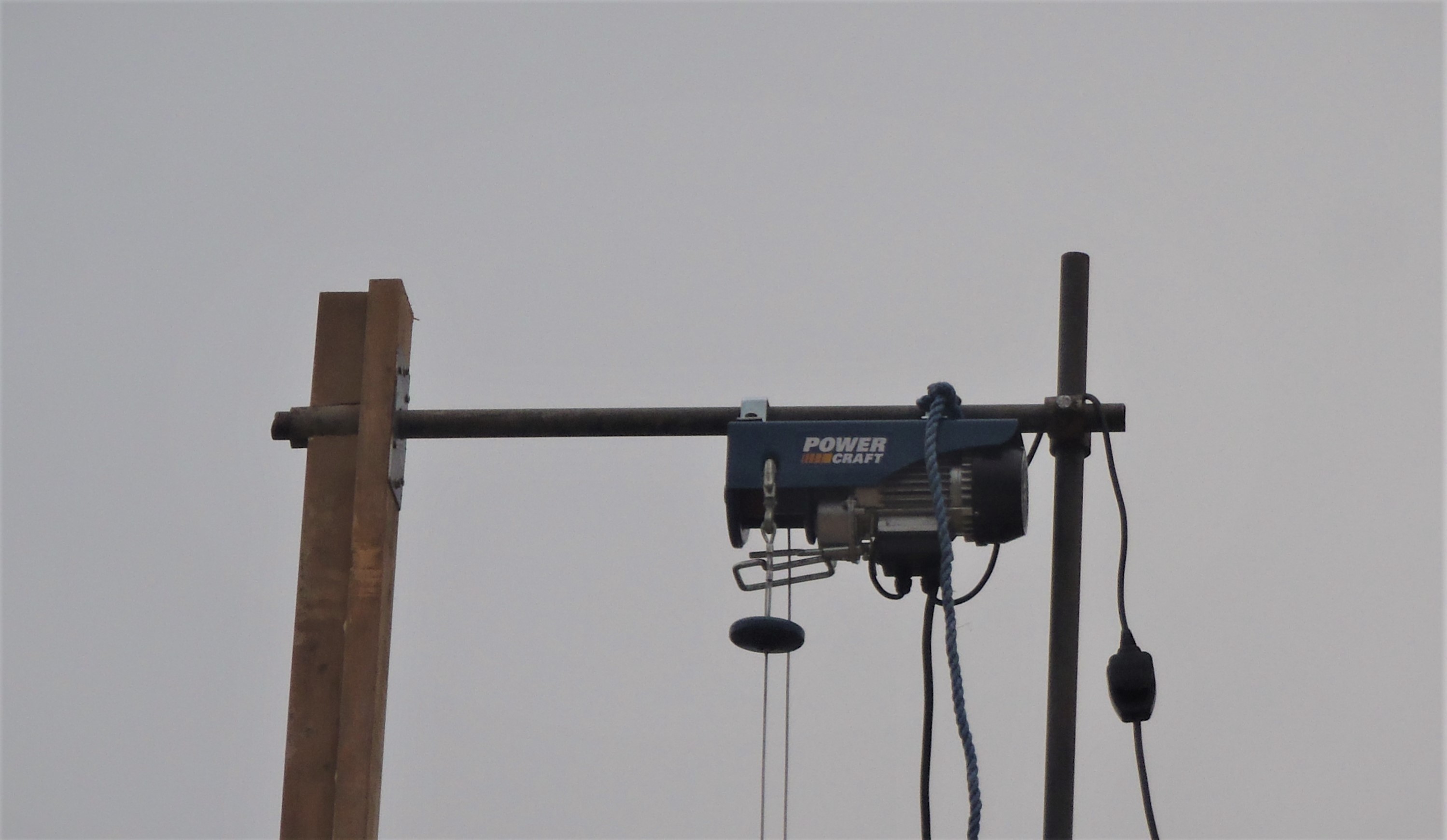
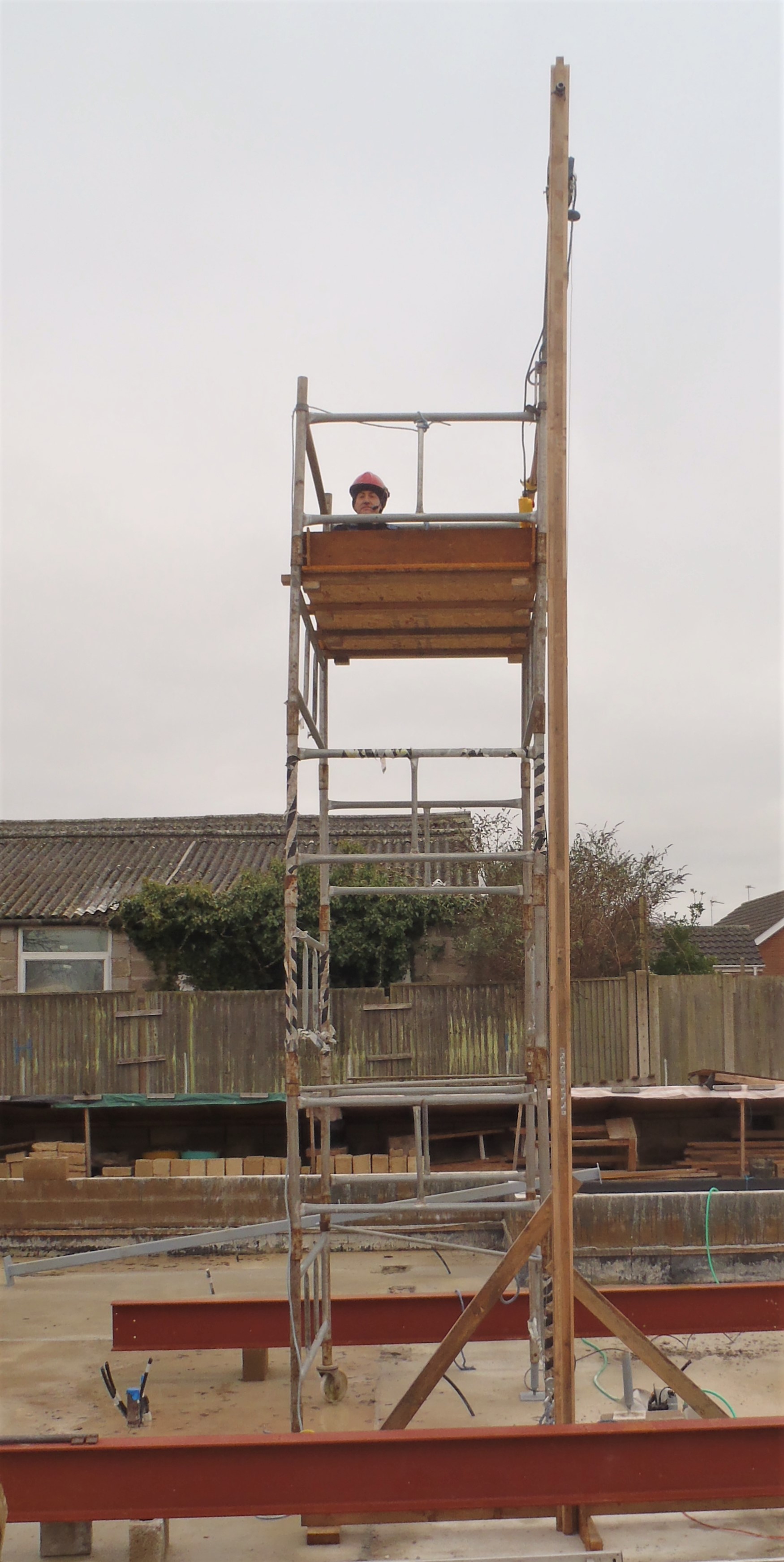
    We brought out our new homemade crane mechanism and got it assembled and installed at the top of the scaffolding tower.

    First-leg-lift-ready-to-lift

    First-leg-lift-ready-to-lift

    First-leg-lift-the-top-of-the-crane

    First-leg-lift-the-top-of-the-crane

    First-leg-lift-ready-to-lift-2

    First-leg-lift-ready-to-lift-2


    We then attached the end of the hook which had the wire going down through its pulley and back up to the winch. This setup provides double lifting strength at half speed which is good so we can monitor carefully what is happening and be able to stop and reverse if necessary.

    So having tied the top of the leg to the hook, we started carefully lifting it up. The scaffolding tower was holding firm and was not moving, the long wooden leg as part of the crane mechanism was solid and showing no signs of distress so we carried on winding in the steel cable into the winch and finally got the whole leg upright and dangling from the winch all by itself. We then lowered it back into position on the X marks the spot!

    First-leg-lift-halfway-there

    First-leg-lift-halfway-there

    First-leg-lift-upright

    First-leg-lift-upright


    This steel leg is one (of 3) of our heavy duty legs weighing about 160kg and 5.4 metres long. It stood there on the concrete quite well and was pretty stable all by itself, but we weren’t taking any chances so we clamped a short piece of 2inch by 2inch timber horizontally onto the scaffold tower and the sticking out end was tied to the leg with rope, all this near the top of the tower as possible. That was that Leg done.

    After lunch, we repeated the whole process over again, moving the crane unit over to the other side of the scaffolding tower and then lifted the 2nd heavy duty leg up into place and got that one tied to a second similar support arm sticking out the side of the tower.

    Then we tied the two steel legs together using the steel U channel piece which will serve as the lintel over the Great Room entrance to the hallway. This lintel is 2.5metres long and it is 150mm high by 75mm wide with a flanges of 10mm! that piece of steel weighed 45kg as well!!

    (No picture I accidentally deleted it…)

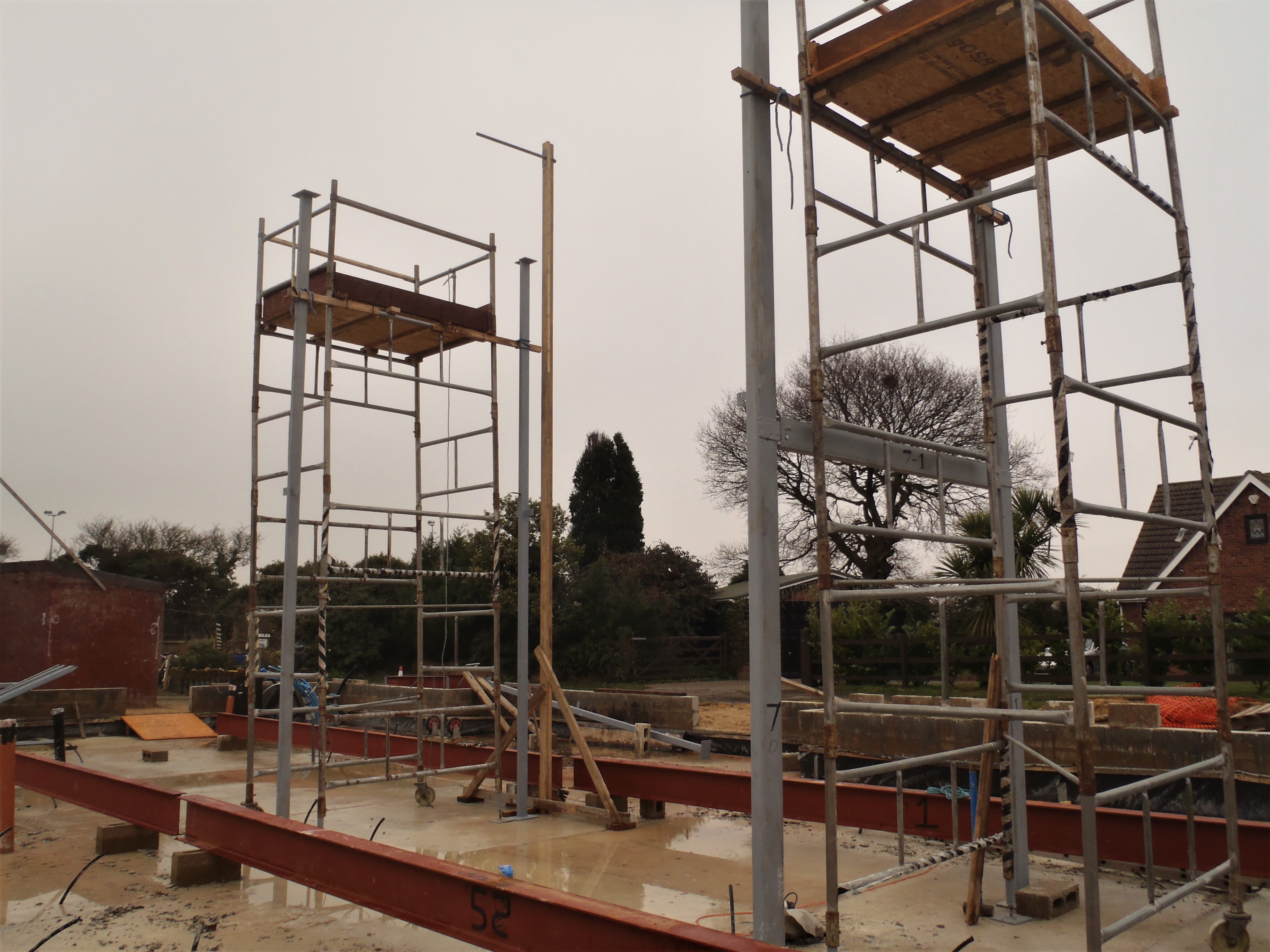
    Finally, as to finish off the day’s work, we assembled the second scaffolding tower, put the wooden platform in place at the top and installed the safety bars and kick boards around the edge of the platform.

    We were working completely in the dark by the end, but were well lighted with our super-duper 300W LED flood light! Tomorrow we will get up the next two legs and get them tied together AND back to the other two legs we have already erected!! Yippee!

  • Day 2 of Assembly of Roof Steel Framework

    We started today, in amongst the showers of snow and hailstones, by finishing off the scaffolding tower with the installation of the wooden  platform at the top. This took longer than we thought as we dropped a part and broke it.

    Scaffold-tower-with-platform

    Scaffold-tower-with-platform

    The next job was to lift each of the legs upright, we tried an arrangement of a rope and pulley hook up to lift up our first leg, number 1 leg at the Great Room end (it’s being one of the heavy one at 160kg) proved difficult to just simply rotate it upwards from its lying down position. The rope was tied to the top of the leg, went up to the top of the scaffold tower, through a pulley and back down to ground level to an electric winch. It was ok in pulling in the rope with plenty of power in the winding, but the scaffold tower started moving around and the leg slipped sideways a foot or two and landed back on the concrete. We were both well clear of the danger zone, we were back at the motorised winch and the control switch at least 10 metres away!

    So plan B!

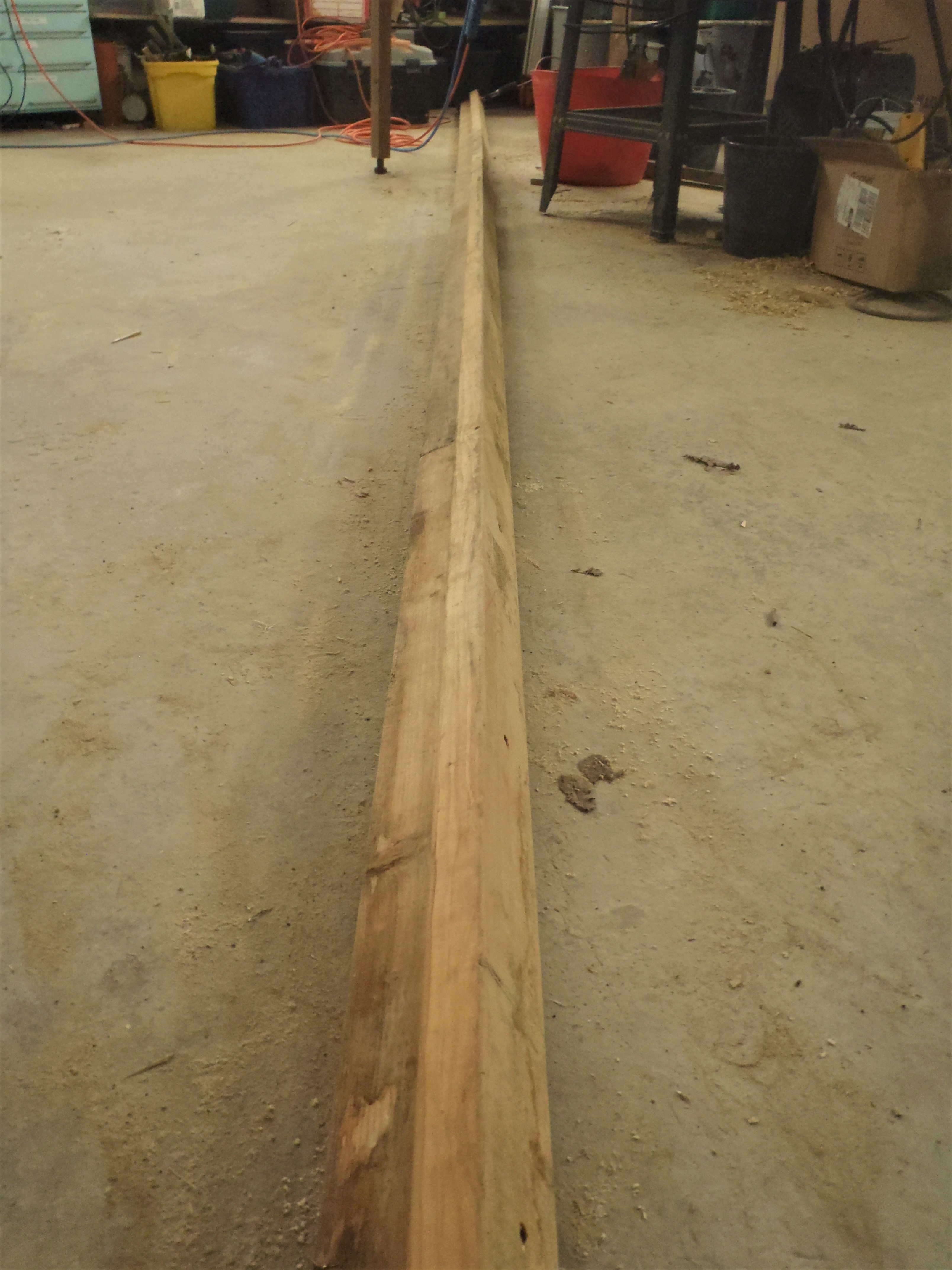
    After thinking it through, we decided that we needed a separate crane arm and leg unit to do the job of lifting the legs and the I beams. Since we would have to make this module for dealing with the even heavier I beams, we would make it now and help us lift the 7 legs too! We spent the rest of the afternoon making a double T shape wooden leg measuring 6.8metres tall. It was constructed with a 89mm CLS and a 63mm CLS glued and screwed at right angled to form a T joint.

    Crane-Timber-leg

    Crane-Timber-leg

    This leg will form the second leg of the crane module, supporting a horizontal metal bar that has the winch hooked on it (this will allow a much more controlled pulling forces in just the vertical direction) and the other end of the horizontal bar will be fixed to our scaffolding which will form the first stable leg of our crane mechanism.

    We will need to do some metal welding to form the connection to the scaffolding tower but that’s not a difficult job and we will do that Monday.

  • Assembly of Steel Framework Starts At Last!

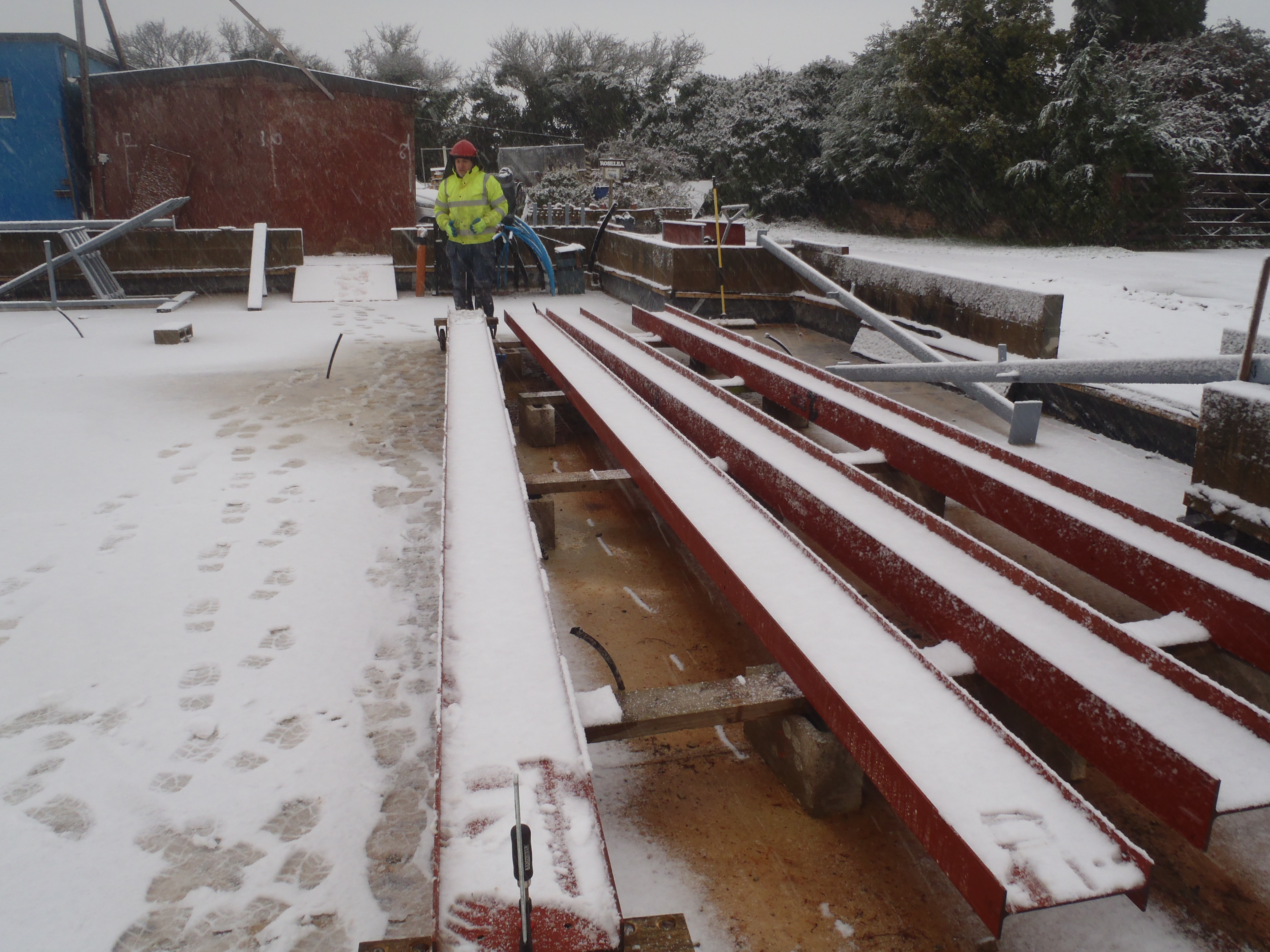
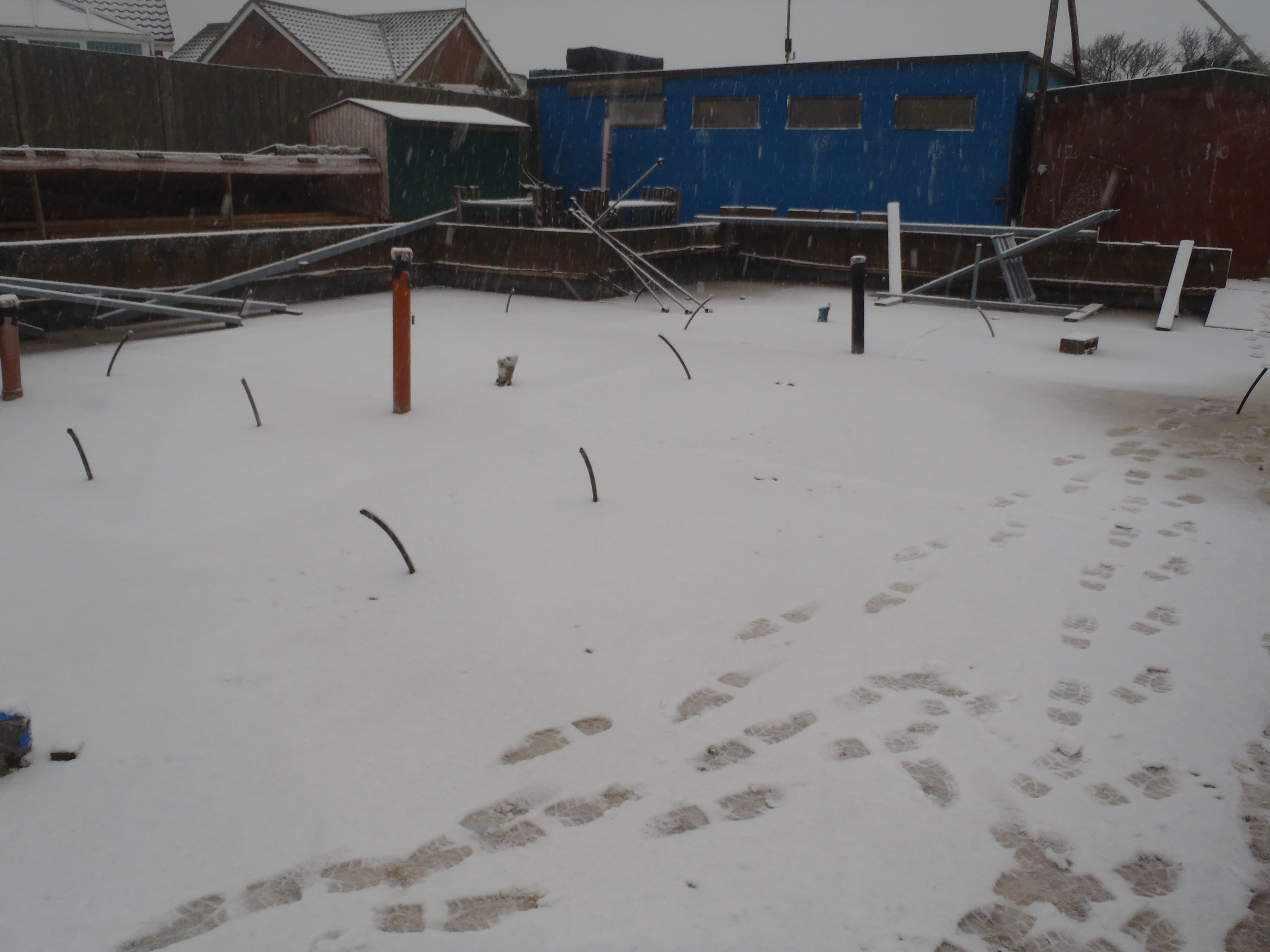
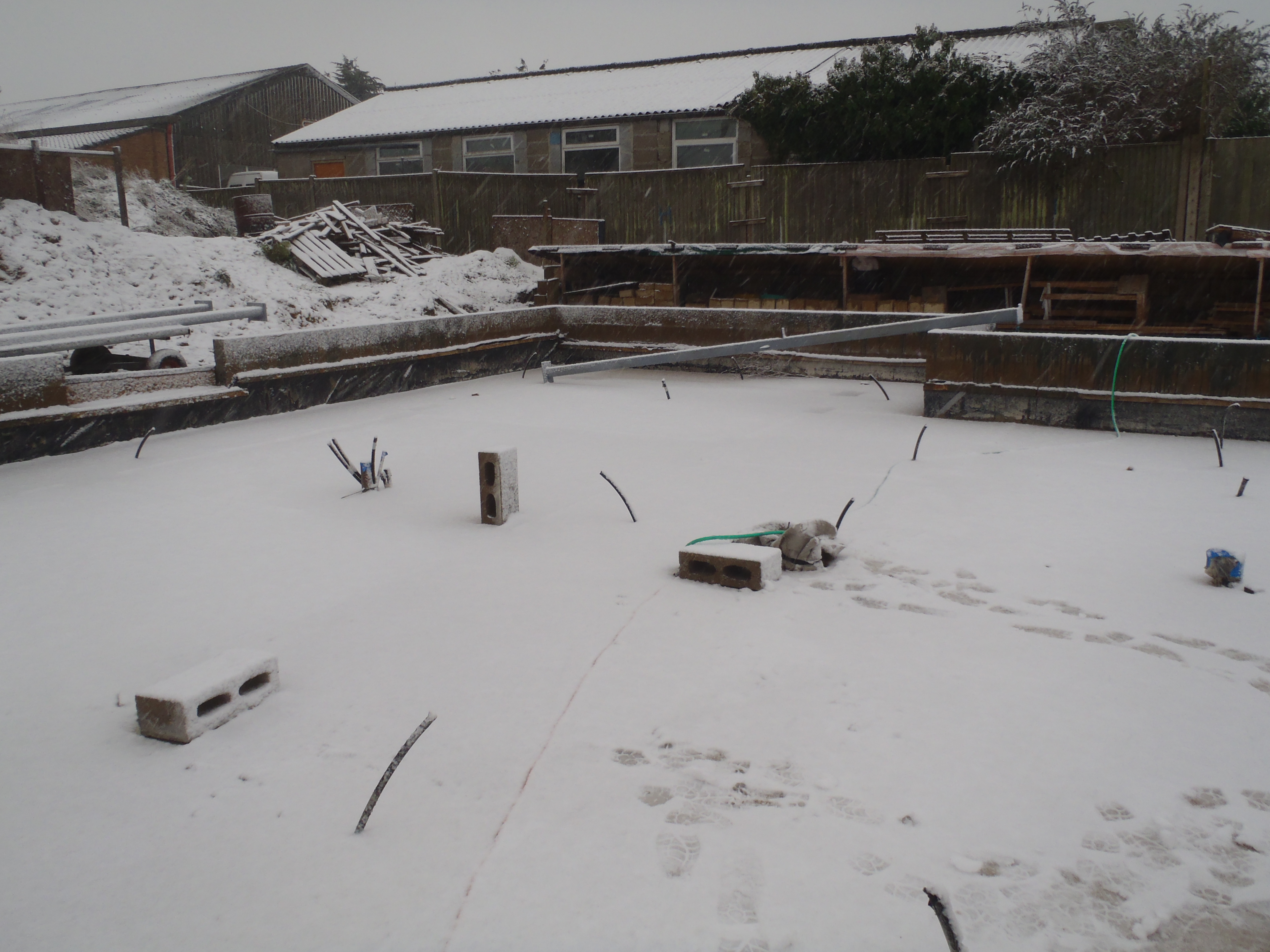
    Today, we started the big task of assembling the central steel framework that makes up the key structural core for the whole house. it was a very interesting start to the day, we had snow falling all morning and we were sloshing around in 2 inches by lunch time – Smile!

    Snow-on-Steel-beams

    Snow-on-Steel-beams

    Snow-on-everything

    Snow-on-everything

    Snow-on-everything-2

    Snow-on-everything-2


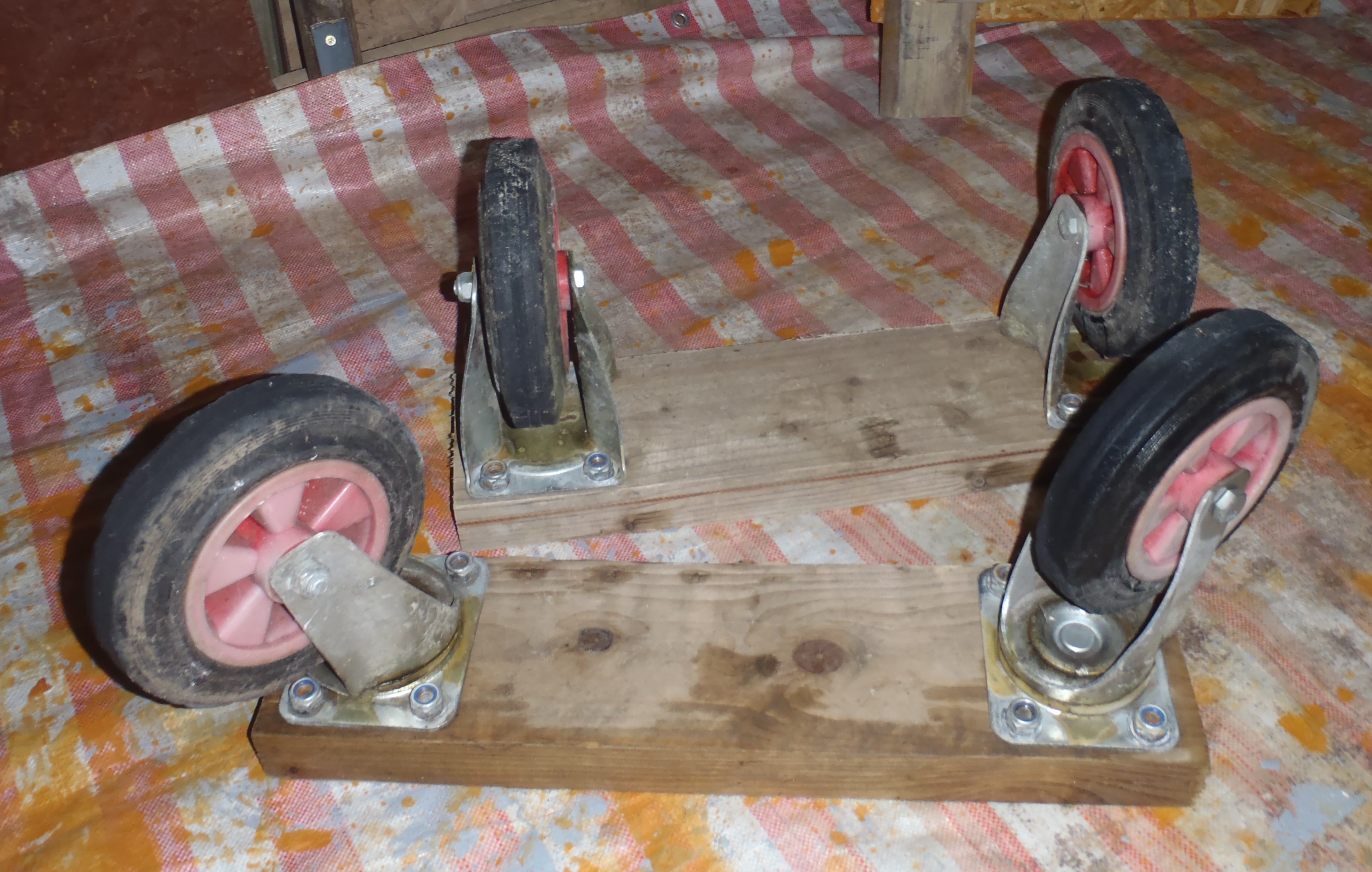
    We first constructed two little wheeled platforms, basically a plank of timber 2inch by 6inch and long enough to have two heavy duty castors bolted on. One had the fixed castors and the second one had the swivelling ones. See photo below.

    Wheel-boards

    Wheel-boards

    We managed to move all four steel I beams, one at a time, using the castor units and they are now resting on concrete blocks ready for the big job of being hauled up into the air to land on top of the legs.

    The final job of the day before we had to finish slightly early, was to erect one of our scaffolding tower in very cold and stiff winds, positioned at the Great Room end of the house.

    We will use the tower to help hold the first two legs upright and then use the second scaffold tower to lift up the third and fourth legs upright and tie them back to the first pair. We slowly will assemble all seven legs this way and have them all interlocked together and self-supporting before we tackle the Big Job of hauling up the I beams!! We hope the weather WILL be a little better – grin!!

    See the video below for the snow and us moving the I beams, then assembling the scaffold tower – phew!!

  • The Legs All Painted

    We started to paint all the legs yesterday but ran out of paint, after ordering some more of the metal primer paint, we finished painting the last steel legs and making sure the bottom portions are double painted as they will sit in water during heavy rain showers etc.

    The painting tent has served its purpose now so we can take that down and move onto the next task of assembling the central framework of the roof.

  • Final Odd Jobs Completed

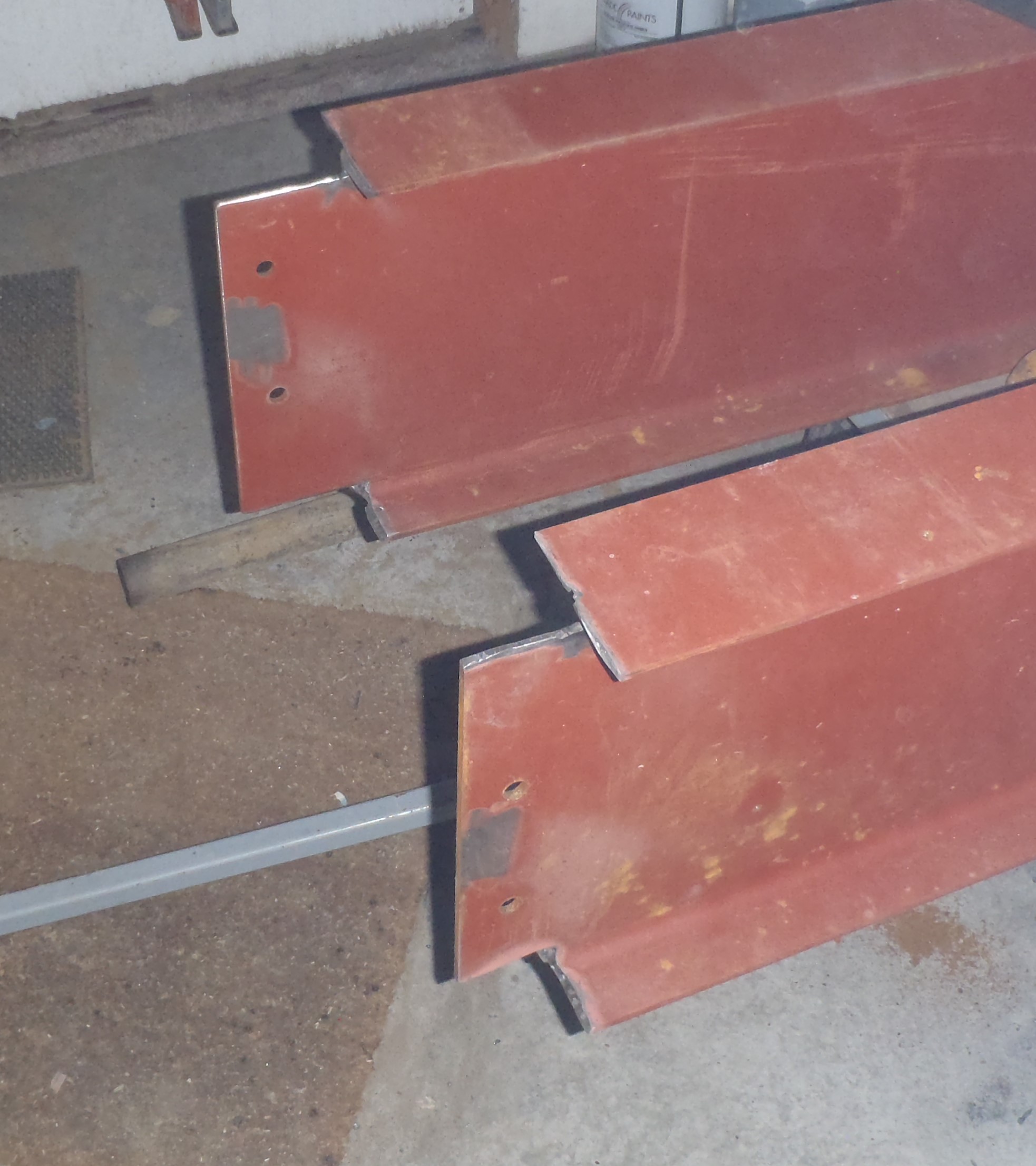
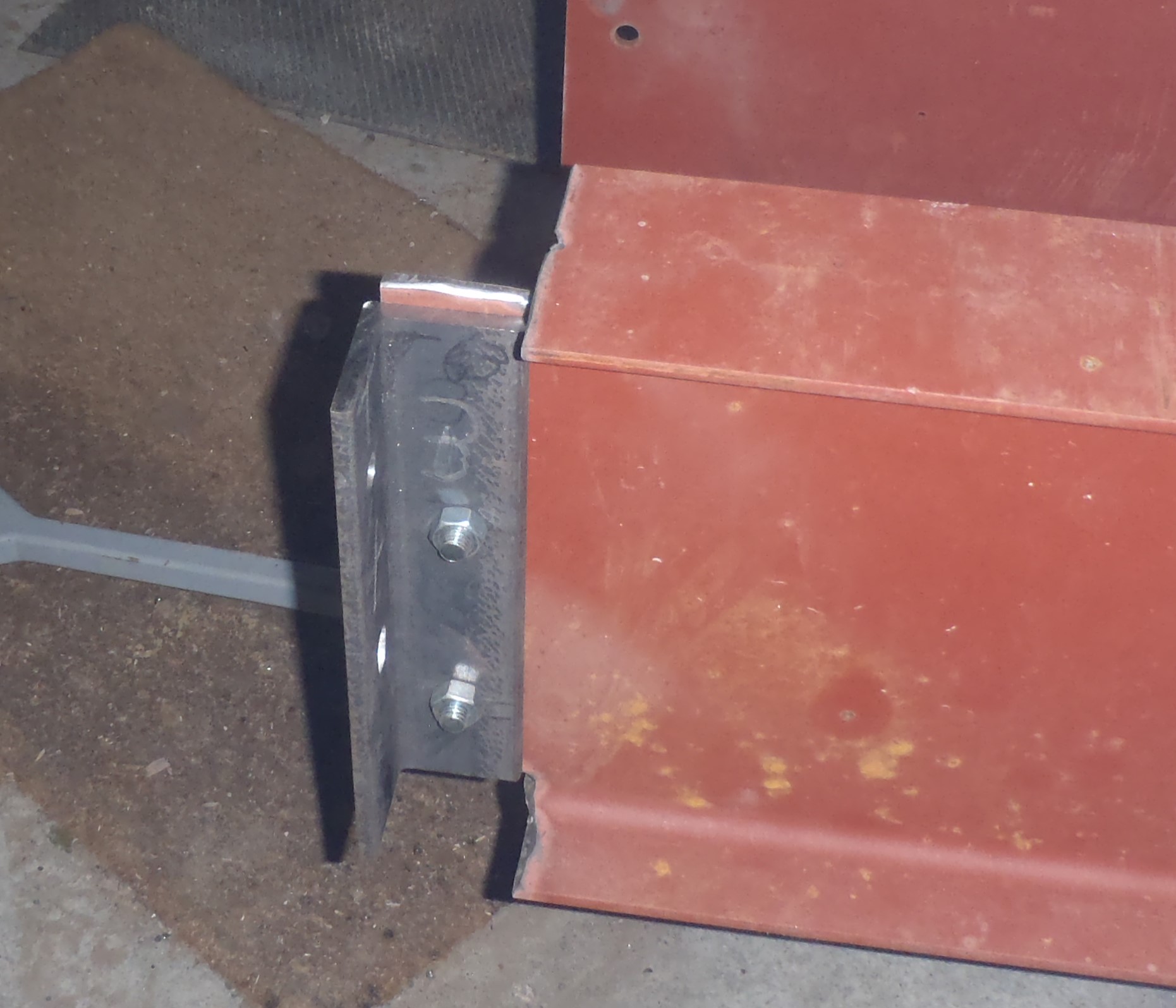
    Over the last couple of days, We took in the shortest steel I Beams into the workshop where a short piece of the top and bottom flanges, at both ends was cut away, (using the plasma cutter) so the now sticking out webbing can interlock at right angles to the sides of the longer I Beams and be bolted together (using a heavy duty right angle bracket).

    End-beams-cut-to-fit-inside-flanges-of-main-beams

    End-beams-cut-to-fit-inside-flanges-of-main-beams

    End-beam-with-joining-bracket

    End-beam-with-joining-bracket


    Also, we cut another piece off the 10mm thick plate to make a mounting bracket for the chimney “module” extension arm to be welded to. We just need to drill the 4 bolt holes through the plate and the top flange of the I Beam at the same time and that will be ready for completion nearer the time when we construct the roof itself.

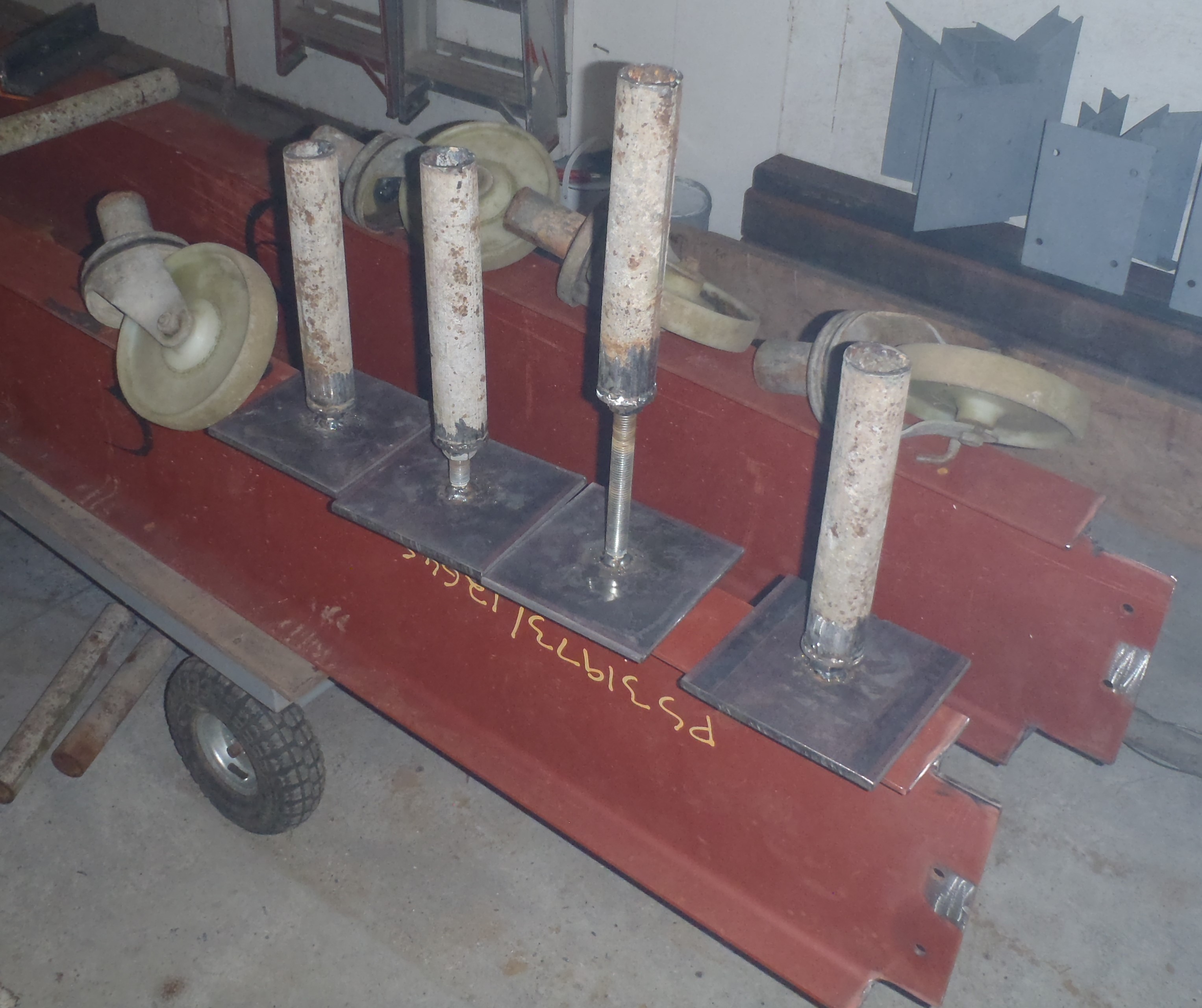
    Then, taking more slices off the 10mm thick plate we got left over on our spare steel rack collection, we made 4 square foot plates with a 20mm thick bolt rod sticking up to form foots for the scaffolding tower along with matching nuts welded to the end of lengths of tubing. A pair of the tubes are clamped into the bottom of a scaffold tower on one side with a pair of wheels on the opposite side. We can then twist the foot around to balance up the tower and remove any annoying rocking motions etc. and make our lives safer.

    Scafold-tower-Wheels-and-Adjustable-feet

    Scafold-tower-Wheels-and-Adjustable-feet

    There are more steel work to do but that will be later on when we are building the roof proper, after all the perimeter walls are constructed.

  • Final 4 Legs with Pieces Welded On!

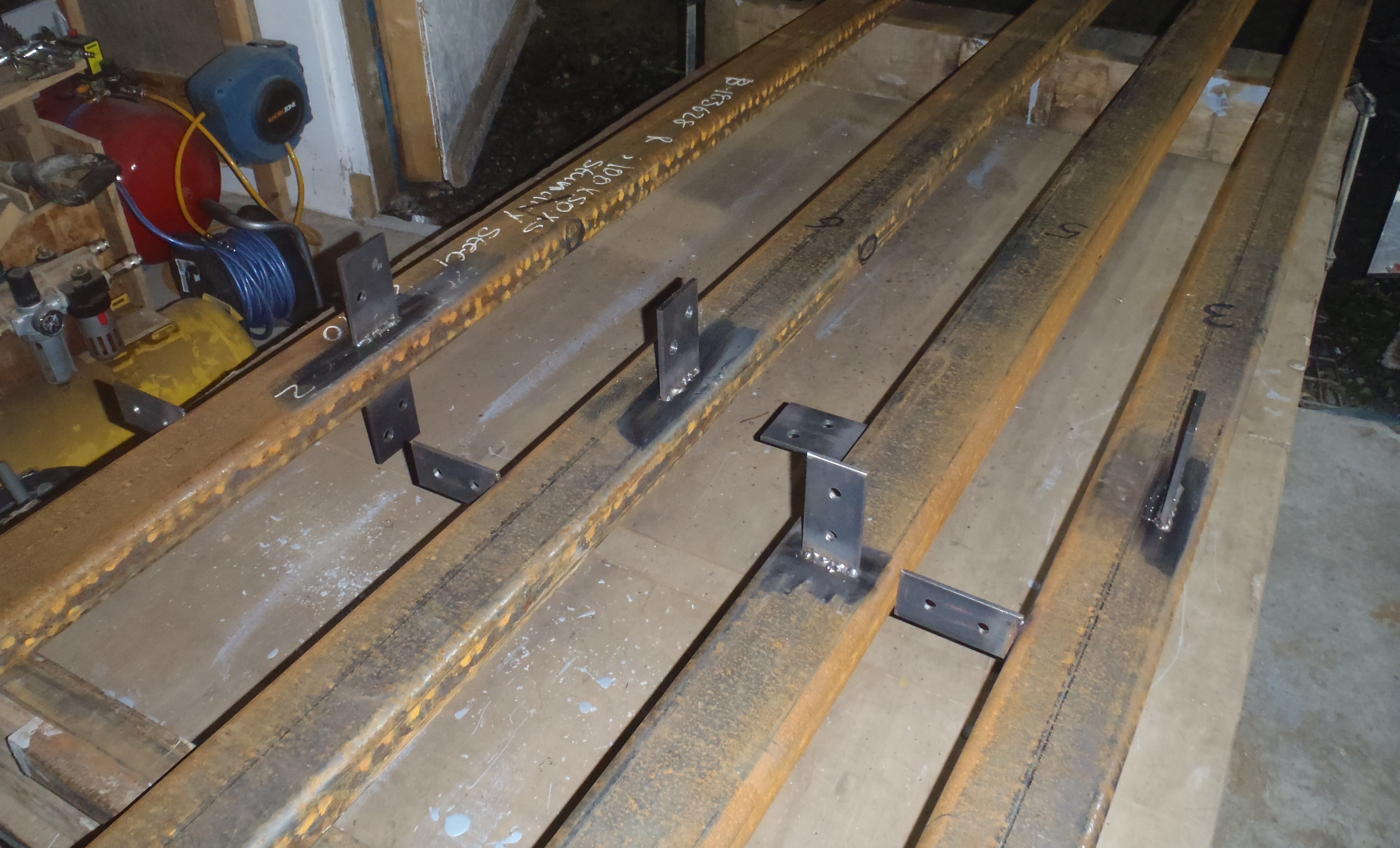
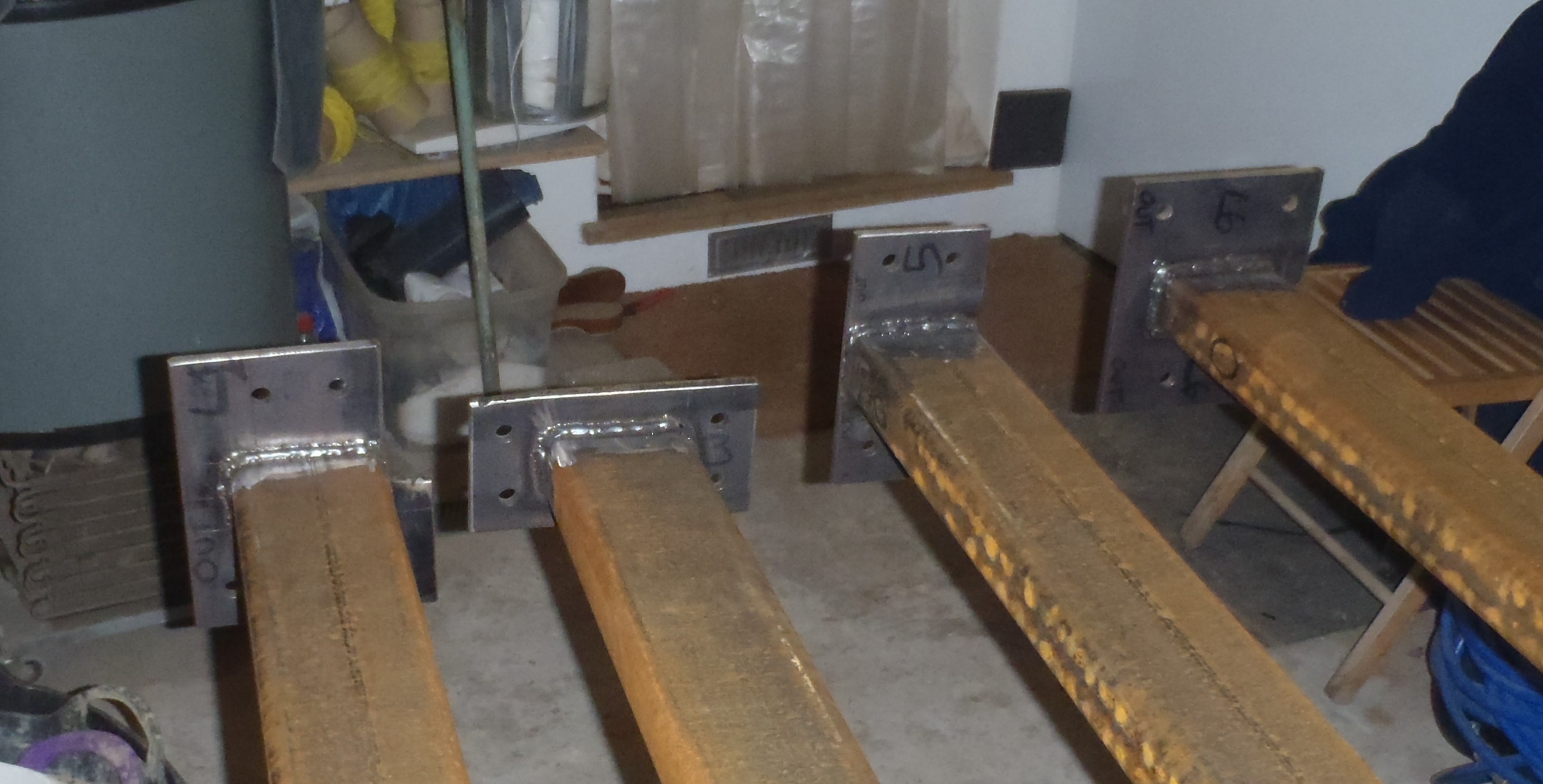
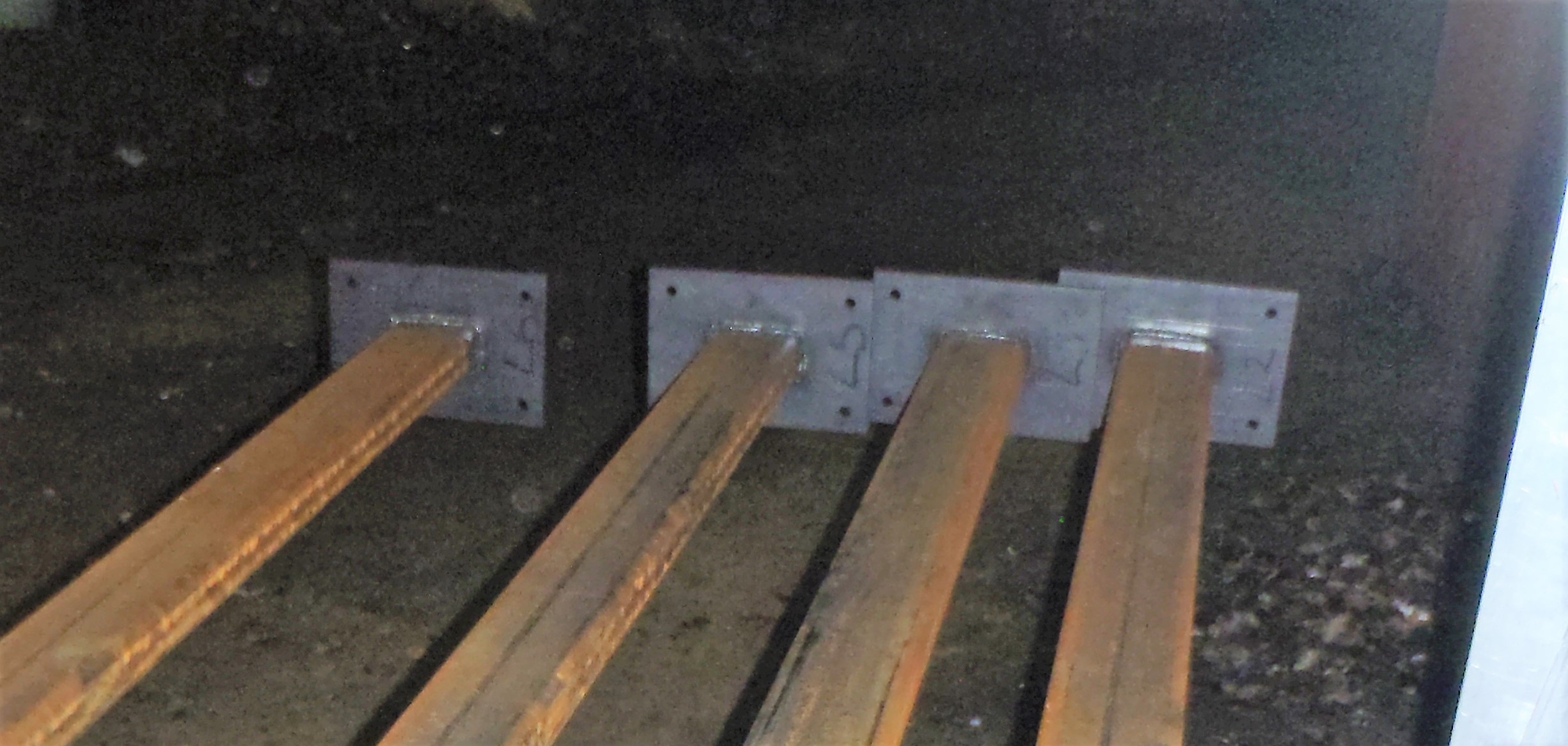
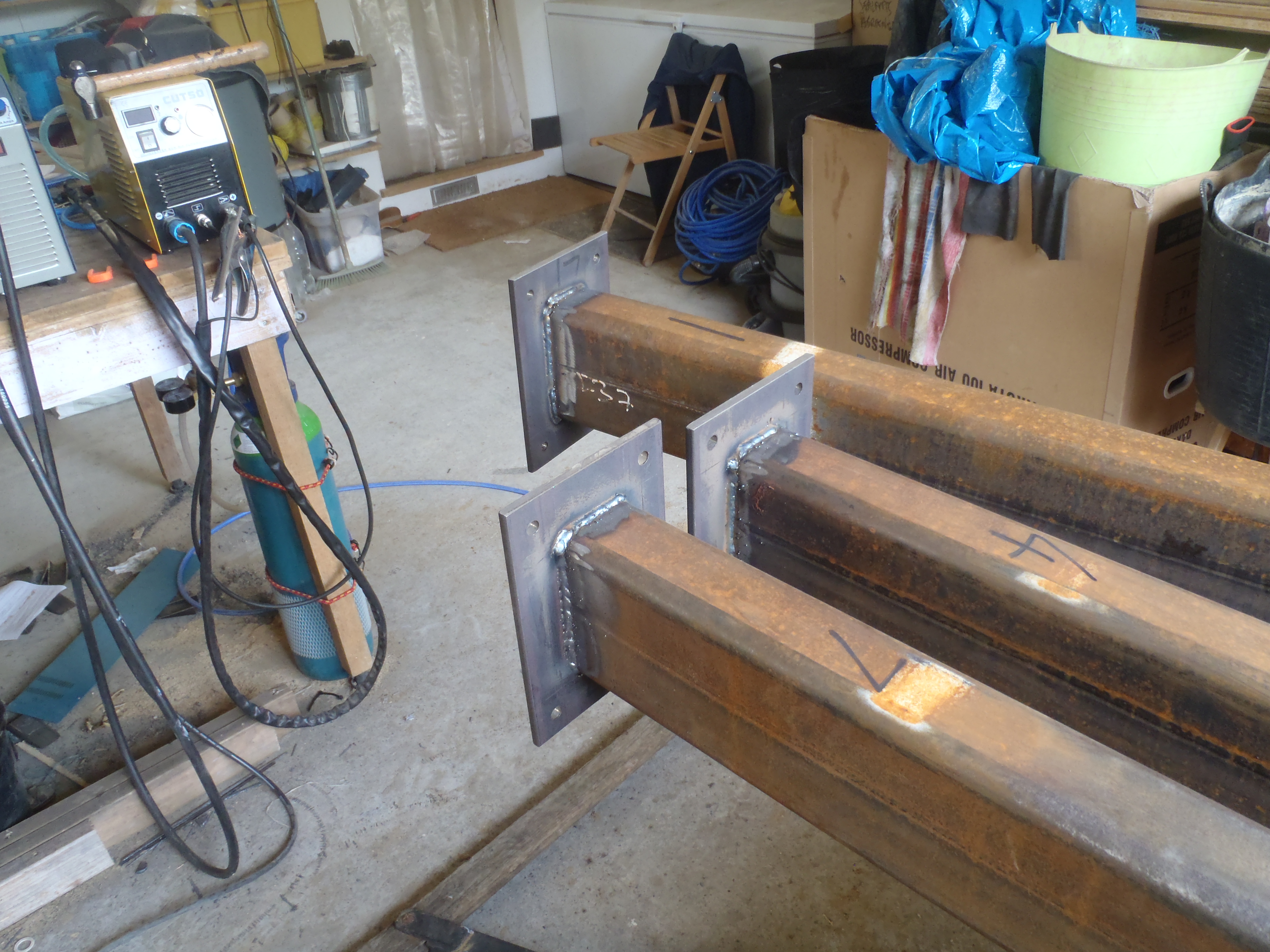
    This afternoon, we unloaded the 3 heavy legs and loaded the remaining 4 lighter legs onto the trolley and transferred them into the workshop. The Foot plates and Top plates were welded on and then the collection of sticking out tabs were welded half way up the legs in the appropriate positions to achieve the necessary connections between the legs (just like what we had done on the first 3 legs).

    Last-4-legs-brackets-welded

    Last-4-legs-brackets-welded

    Last-4-legs-top-plates-welded

    Last-4-legs-top-plates-welded

    Last-4-legs-base-plate-welded

    Last-4-legs-base-plate-welded


    The final job is to paint them tomorrow and we will be all finished! Then the fun job of assembly will begin …. wish us luck!!

  • 3 Big Fat Legs All Completed!

    Today, we tackled the heavy duty legs (number 1, 4 and 7), each measuring 160mm by 80mm by 5.4metres tall and with a wall thickness is 8mm!! (Each weighs about 150 kg or 24 stones)

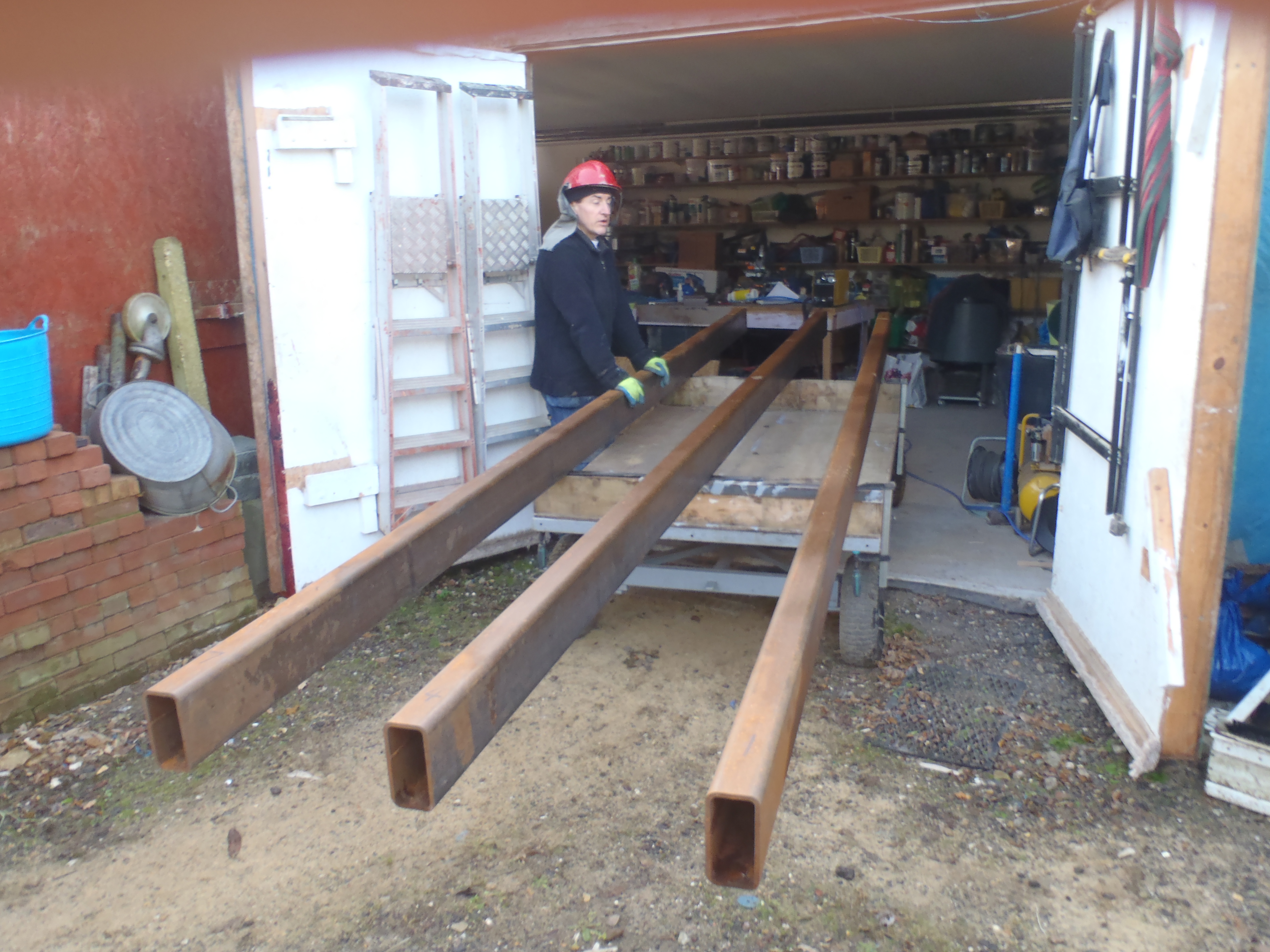
    We managed to man handled them onto our large trolley and trundle it into our workshop, with half the length still sticking out the doors.

    First-3-legs-on-trolley

    First-3-legs-on-trolley

    We labelled each one with their number and then sliced off 10mm of number 4 leg to compensate for the concrete being slightly higher at that point. Next, we welded the 10mm thick bottom plates on the ends as shown in the picture below

    Base-plates-welded-to-first-3-legs

    Base-plates-welded-to-first-3-legs

    Then we had to push the trolley out and make a 3 point turn to get the other ends into the workshop and weld the 10mm thick plates on the other end of the legs.

    Top-plates-welded-to-first-3-legs

    Top-plates-welded-to-first-3-legs

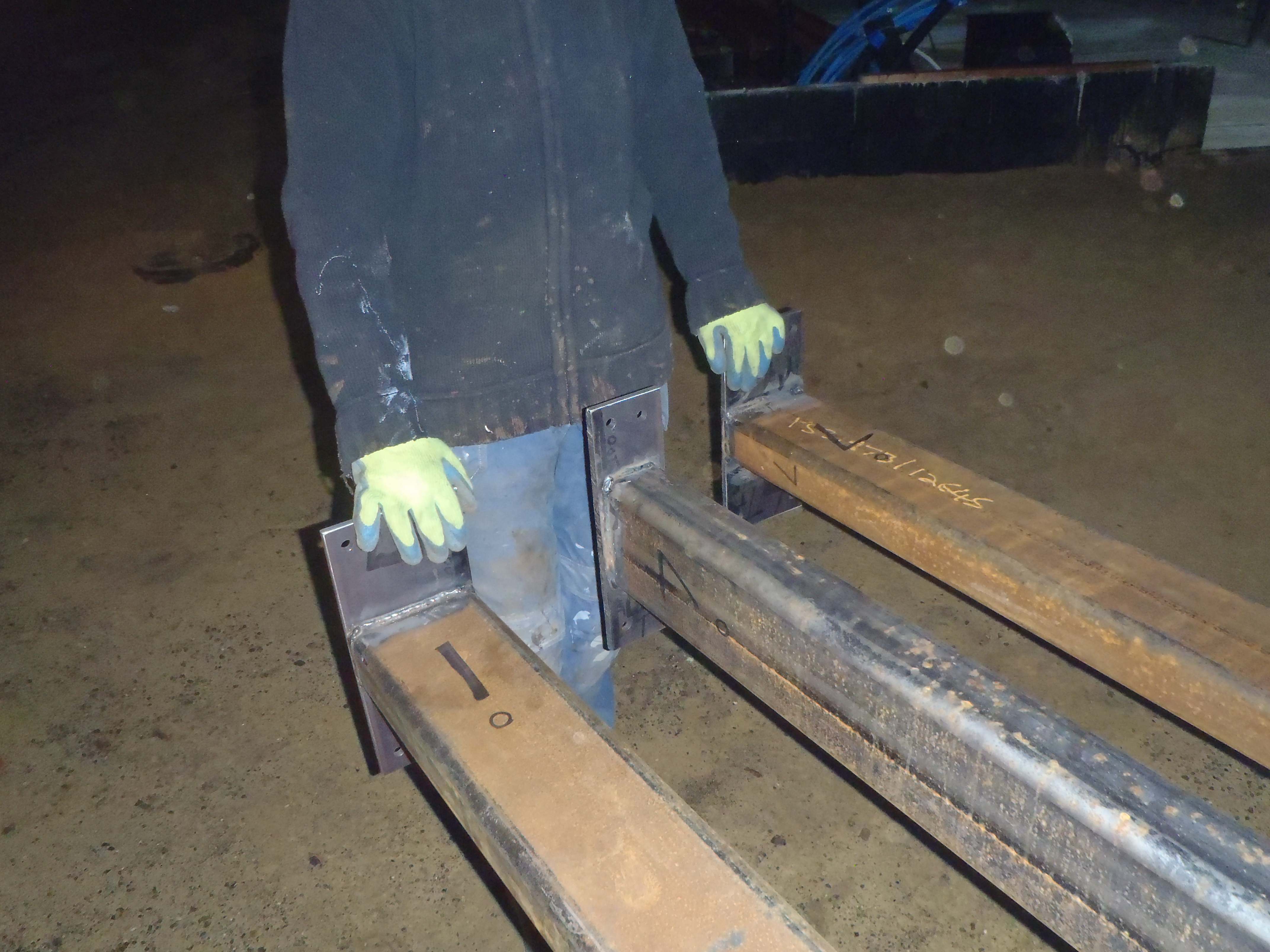
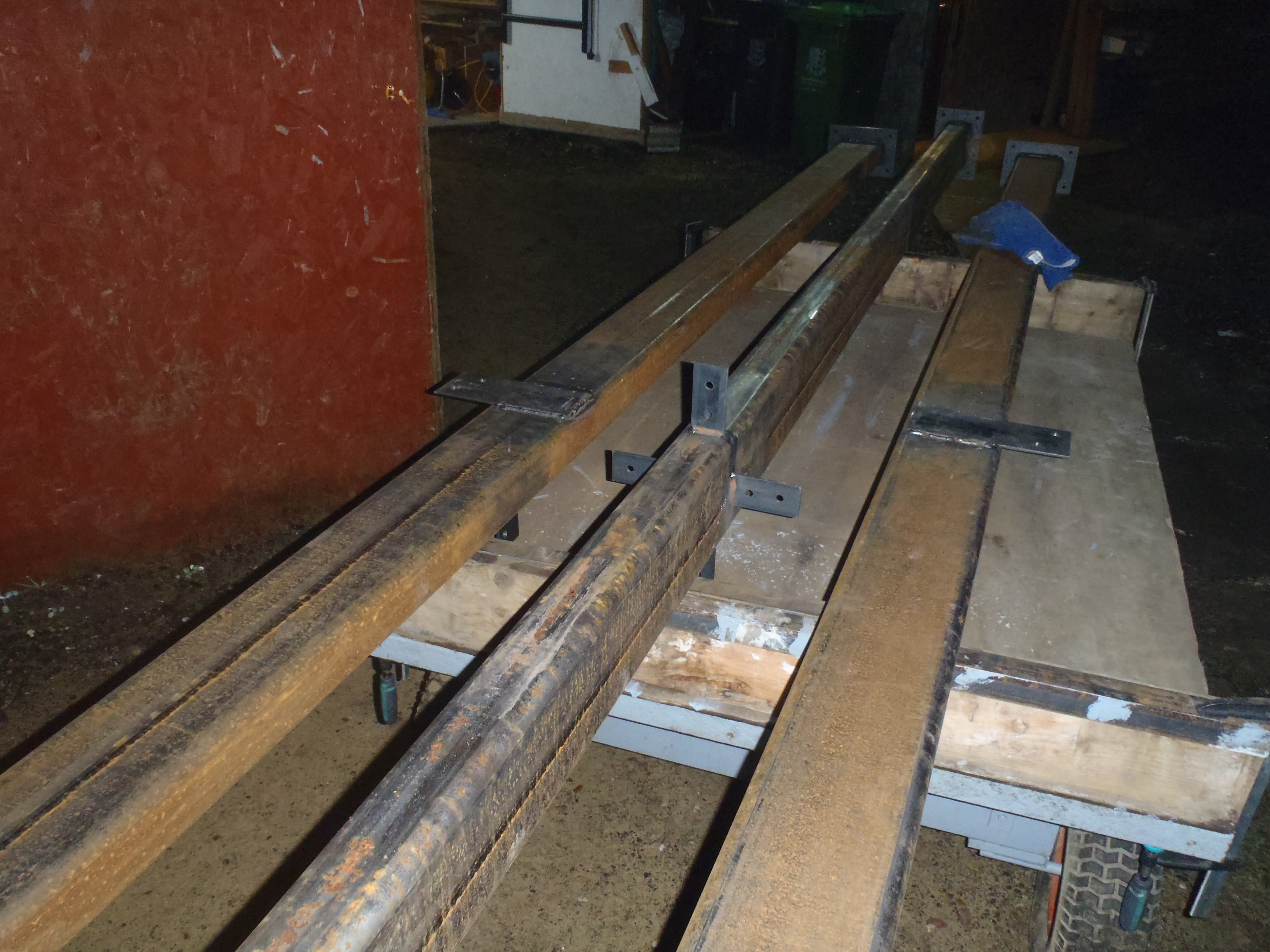
    Next came the fiddly job of placing steel tabs sticking out half way up the legs to hold cross struts (between leg 1 and 2 plus leg 7 and 6) and a lintel (between leg 1 and leg 7). Leg 4 had also more steel tabs welded on all 4 faces of its leg (for tie down steel strips upon the 1st floor boards to anchor this leg).

    Restraint-brackets-to-welded-first-3-legs

    Restraint-brackets-to-welded-first-3-legs

    Finally, we painted the 3 legs with the rust proof primer under our painting tent outside in the dark. That those 3 leg done, now we have just the remaining 4 lighter duty legs to do and we will be all finished!