Category: Equipment and Tools

The Tools we are using on this Project

  • Created a Sheet Material Hoist for Upper Level

    We spent the last couple of days creating a much needed hoist to haul up lots and lots of sheet material up to our Upper Level. We have a great number of 18mm thick OSB sheets, each weighing 25kg each, and our even heavier 33kg sheets of the 10mm thick Fermacell – high performance plaster boards.
    The first thing to design and create is the Cage that will hold up to five sheets and the whole thing will be hoisted up. We decided to build a complete frame using 63mm CLS planks and heavy duty right angle brackets on each corner, to both ensure a proper solid joints and also for the steel rope to hook into the groove on the back of the brackets. We put a double pair of CLS planks on the bottom edge for extra strength and then three large pieces of 11mm OSB boards to provide racking stiffness and also to retain the sheets material we are transporting. We also put on an extended bottom shelf with a batten on the edge, to make sure our sheets will not slide free and come crashing down to the ground floor. The steel wire that goes around the whole Cage, was a bit tricky to install. We wanted to tension it up as tight as we could so that there was not too much slack in the wire when the electric hoist pulls on the wire to pull the whole Cage up. We finally managed to tension up the rope by using a hand operated cranking racket device we found in our Garage. We used three clamping grips to join the two tails together.

    Next, we created the two vertical tracks for the Cage to travel in. The Cage will have caster wheels bolted to it and these wheels will run inside the track. The track is made using three 63mm CLS full length planks, using the straightest ones we could find without bows and bends. These three planks were screwed together and then repeated for the second track. The next item to put on the top of these two vertical tracks, is a C channel steel beam. We had one that we had swopped out for a wooden beam so we had a 3.7metre length lying around. Our Cage measures 2600mm wide so we need the two vertical tracks to be positioned slightly wider than that. Hence, we sliced the steel down to 2800mm wide, enough so that we could mount two more right angled brackets to hold the C-Channel in place. All this assembly was done while the two tracks and the Cage is lying on the floor of our Great Room, underneath the Gallery. We then mounted the electric winch in the middle so that the steel cable with its hook is approximately centred. The next trick we had to perform, is to lift the whole lot up into its vertical position. It is rather heavy especially with the steel beam situated at the top. We employed a four way block and tackle and plenty of rope to slowly lever the whole contraption upwards and then shuffled it so that it was leaning on the Gallery.

    We slid on a couple of wooden footplates to help spread the load of the hoist across the floorboards, especially that we will be lifting up a potential weight of more than 150kg loads! We also put on a toggle to rotate from the top edge of the Cage, to ensure that the sheets will not tilt forward. We then put on a further four caster wheels to brace the Cage sideways so it didn’t jam on the vertical tracks. Plus also, we noticed that the steel rope was still being pulled quite a bit when the electric winch lifted the Cage so we decided to bolt on a pair of U bolts to straddle the steel rope in the middle, where the hook is connected. This made it much tighter and didn’t suffer very much stretching this time.

    Sheet Lift 1

    Sheet Lift 1

    Sheet Lift 2

    Sheet Lift 2


    We put on guard rails around the hoist up on the Gallery and everything is well secure and safe now for operation later on this year.

  • Arc Welder Mobile Station

    One of the first job to do, is to create a mobile arc welding station, which we have been meaning to build for several years now. The reason that it has come around now, is because we will need to weld on extra pieces of steel tabs right up inside our Skylight section and it would be far more convenance if the equipment was reasonably mobile. So, we went about designing and creating a medium size box like structure, with four drawers in total. Three smaller ones and one larger one. We had a pair of solid rubber tyre 6inch plastic wheels and we found some 12mm steel rod for the axle. The argon gas cannister is positioned at the back of the station, held in place with a Velcro strap, the welding machine was situated on top of the box, and clipped down to anchor it down. We used double extension drawer ball-bearing runners for all four drawers.
    Welding Cart 1

    Welding Cart 1

    Welding Cart 2

    Welding Cart 2


  • Broken Window!

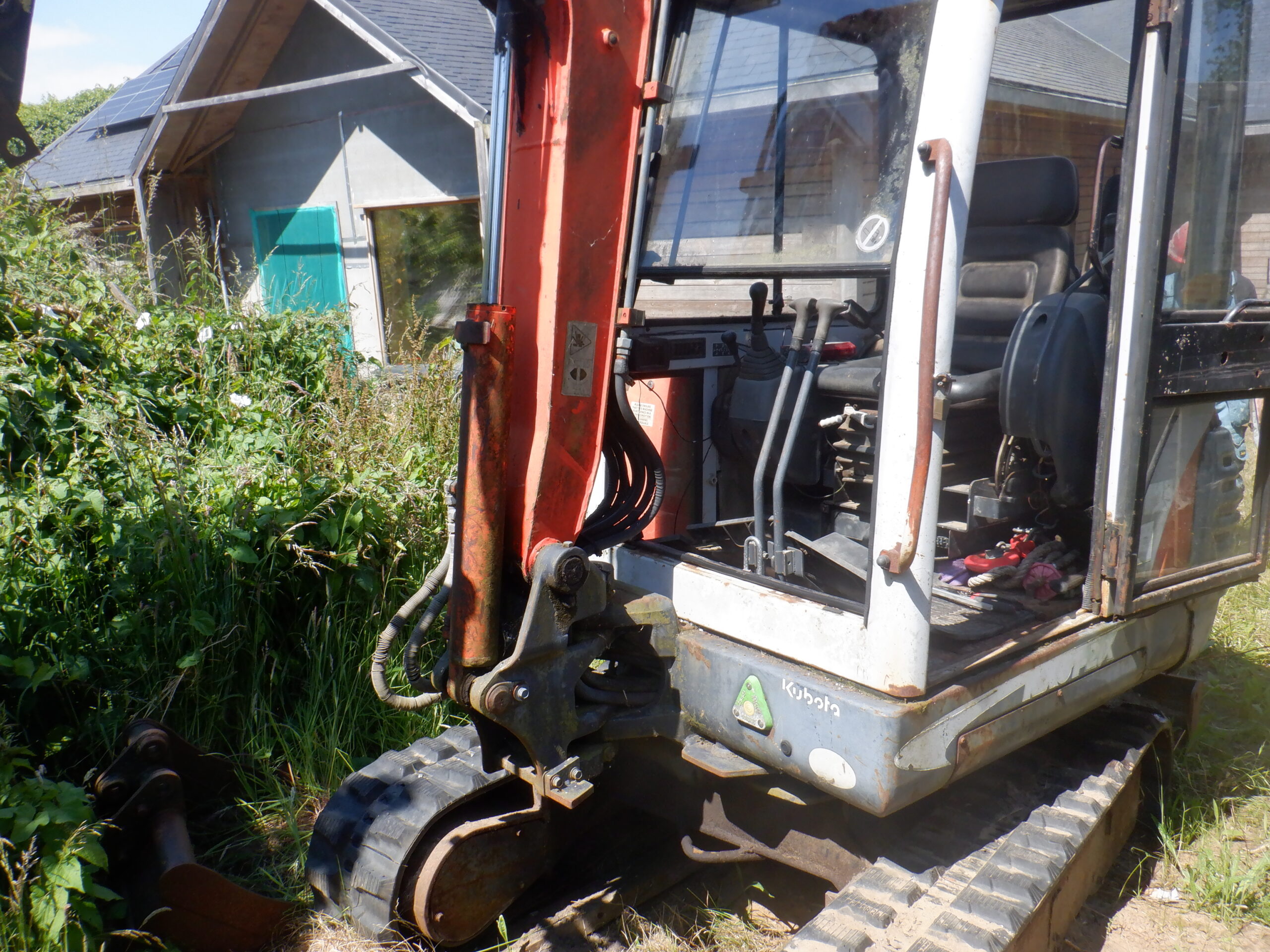
    While out cutting our jungle, oops, I mean, grass, we discovered that one of our windows on our mini-digger is broken. It is the lower window on the front. It could have been broken for a few weeks as we rarely go past the digger. It is safety glass so it has shattered into lots of small pieces. There is no evidence of vandalism so perhaps a bird strike. Poor bird.
    We picked up most of the broken glass and have measured the gap so we can order a plexiglass replacement. It measures 795mm wide and 530mm high. We also will try and find a rubber seal that will join between this fixed section of glass, and the moving window above it.
    In the meantime, we covered up the poor old mini-digger in tarpaulin, to minimise the rain from getting inside.
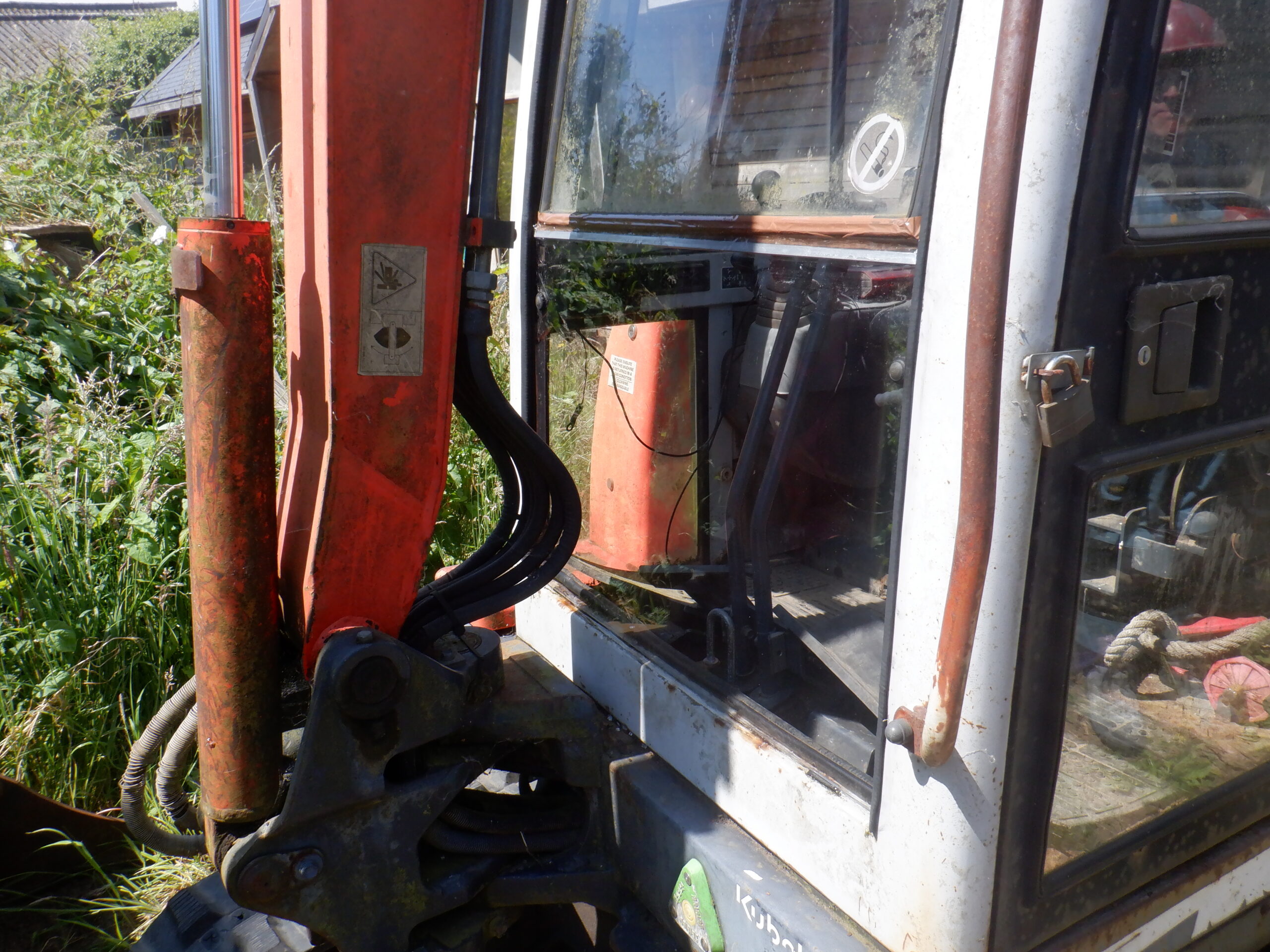
    The new window came a few days later and we cleaned up the seals and installed the new plastic, we applied some sealant where necessary.
    Digger front window got broken

    Digger front window got broken

    And replaced with Polycarbonate

    And replaced with Polycarbonate


  • Decommissioned the Slicing Table and Converted it into a High Working Platform

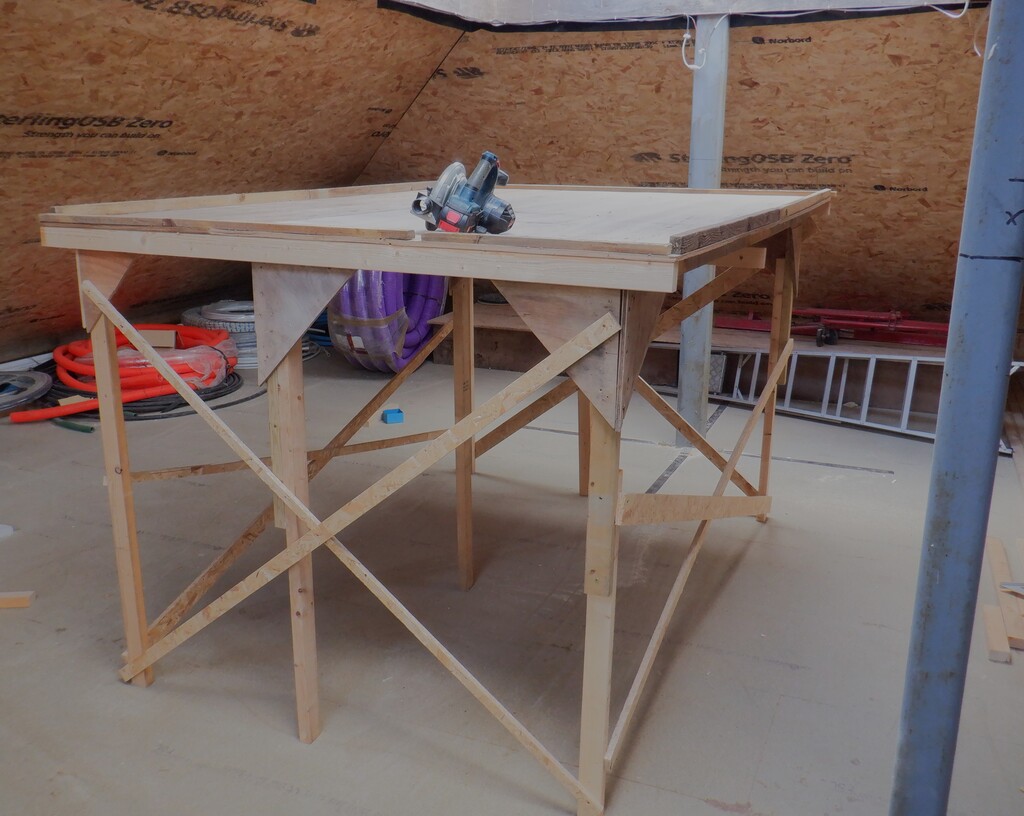
    Today, after we have sliced up all the remaining foam boards yesterday, we proceeded to demission the slicing table, taking off the sabre saw that had been mounted underneath the table (with the blade sticking up through the top) for the last couple of years. We converted this table and extended it original 8foot by 4foot size by adding another 2feet width to the long side, reinforcing the framework, extending and putting in additional legs and then stiffened the whole thing up with bracing structs so that the new working platform is much stronger, safer and also much higher so we can reach comfortably the Skylight.
    Skylight work platform,

    Skylight work platform,


    It has a tactile edge strip all the way around the edge of the 8feet by 6feet platform so our feet can detect when we are getting close to the drop off, especially that the platform is five feet off the ground now! We will need a step ladder to climb on and off it!!
    We are using this platform so that we can easily install our double glazing window units, but also, we can build the upper boxing on the back half of the Skylight for the air ventilation, solar panels, the window blinds and lighting units, all inside this box-shaped construction.
  • Mobile Storage for Nails and Staples with Compressed Air Tank Affixed on Top

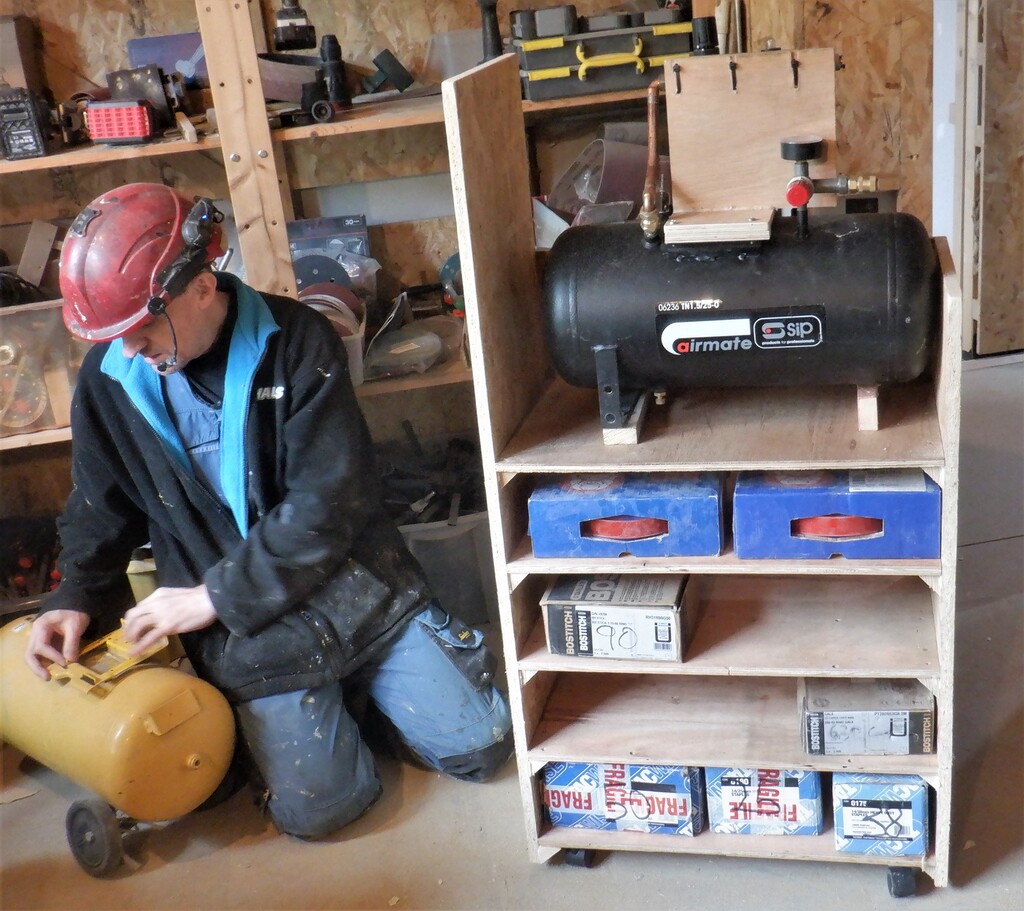
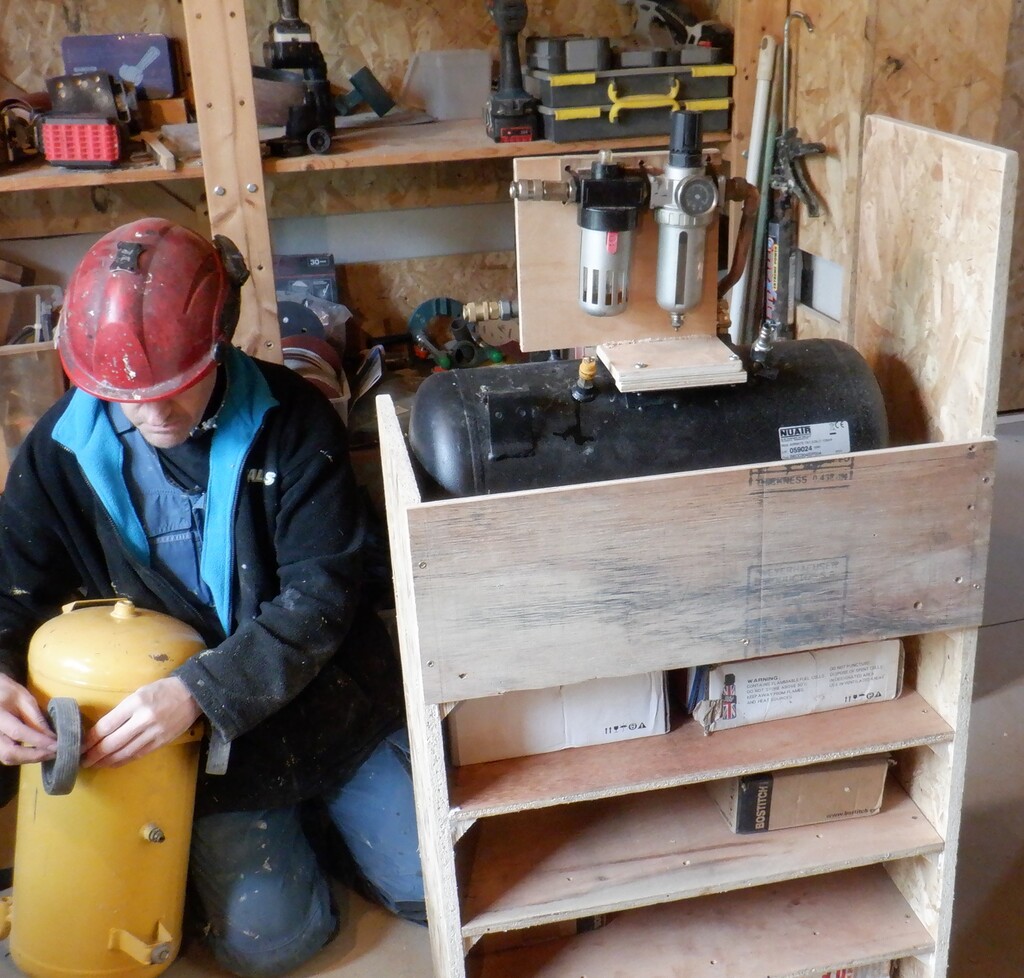
    Yesterday and today, we created a much needed piece of equipment. It is a set of open shelves that will hold a collection of nails and staples in their boxes and on the top shelf, is our 10bar Compressed Air Tank which is clamped down. The whole unit will have castor wheels so it can roll in any directions.
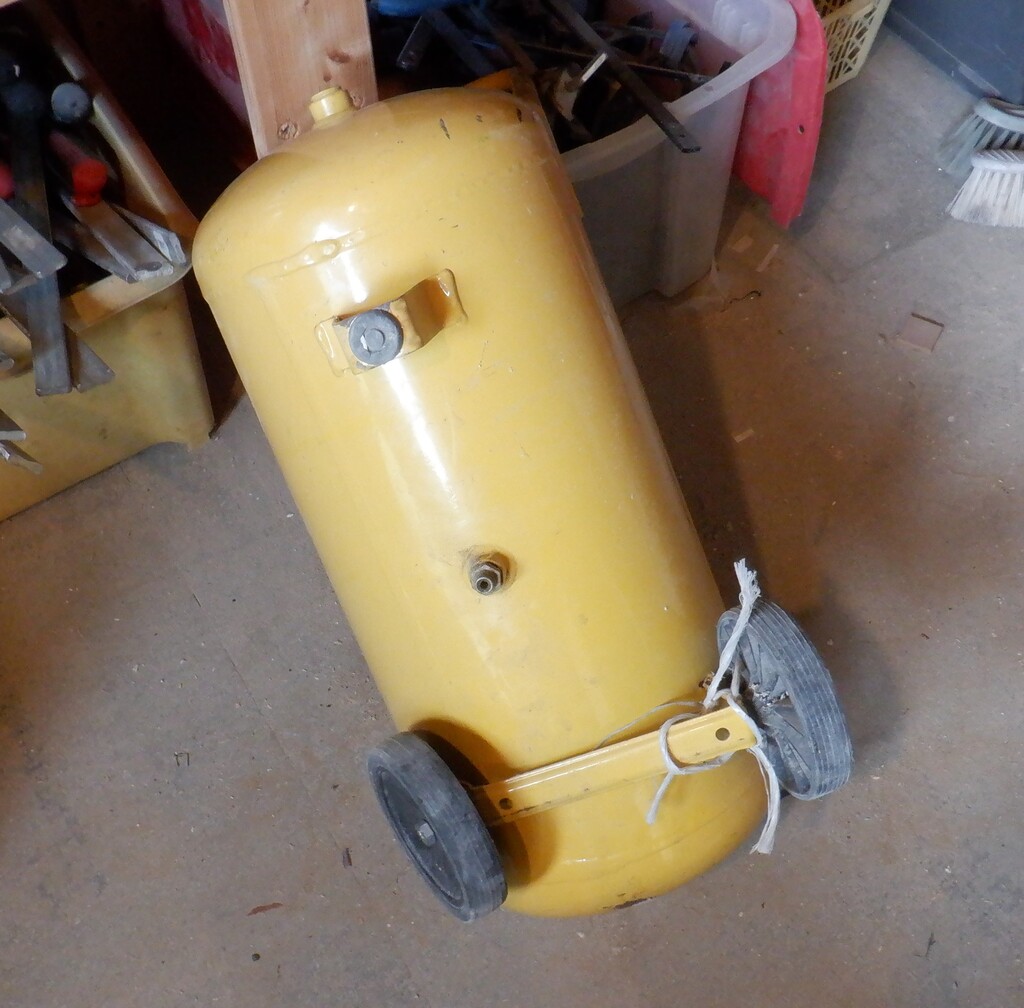
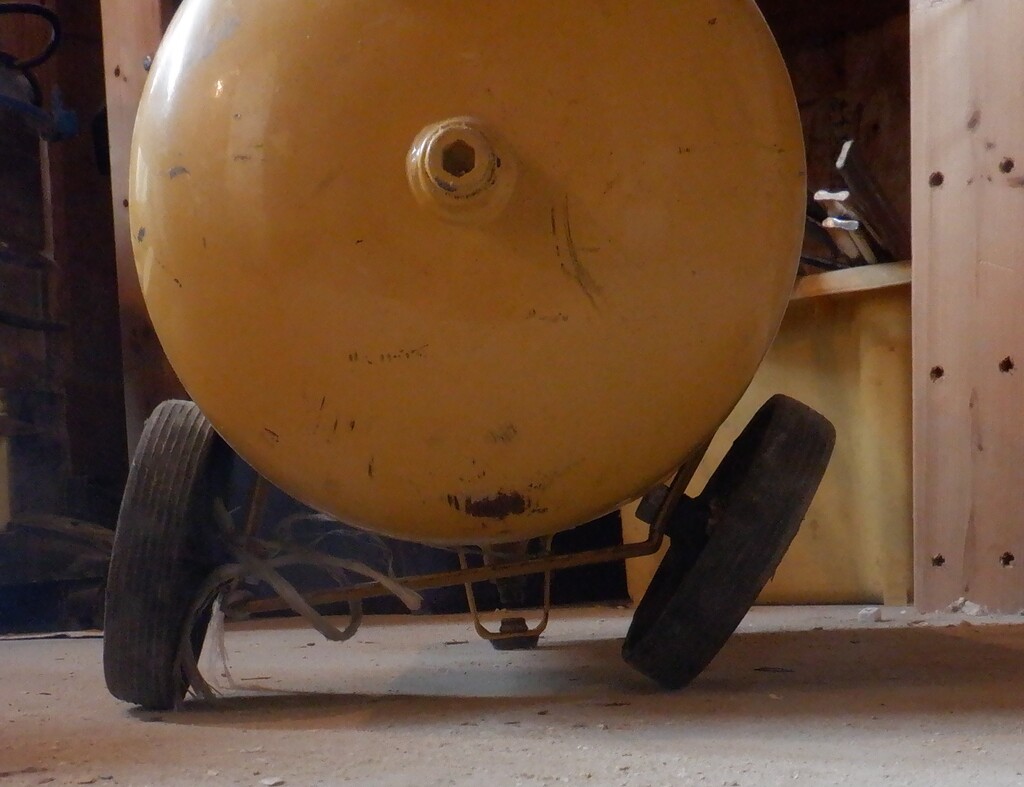
    The reason that we got on with this task now, is because we had an accident where the old air tank was knocked over (it sits on two large wheels and a third front positioned foot) and unfortunately, it managed to roll over and fall off the First Floor and down the stairs, to land on the ground floor with a loud thump!! The air hose was still attached and that caused it to mostly turn back upright again and land on its wheels. But, the poor wheels are now rather bent at very odd angles!
    Old tank with bent wheels 1

    Old tank with bent wheels 1

    Old tank with bent wheels 2

    Old tank with bent wheels 2


    Since we had to do some repair work on it anyway, we decided that it was time to implement one of our long-awaited ideas of building a cabinet on wheels to take a air tank and have room for nails and staples. In our original grand idea, we had drawers on runners, doors on cupboards and hooks for the guns themselves! We went for a much more basic and simpler design .. four open shelves, a platform for the tank and one upright tall end plate to hook one or two guns.
    We examined our boxes of staples and nails, and decided that the dimensions of a shelf would be 350mm deep and 600mm wide, using 12mm thick plywood material. This was large enough to have the fifth “shelf” to act as the platform for the air tank to be clamped on to.
    The tall end would be 1200mm tall by 350mm wide and the other end only being 900mm tall. We had several left-over pieces and used those to put on the longer side at the top, to act as both a shelf barrier for the tank, but also, to help stiffen up the cabinet as a whole. The second piece went down near the bottom to repeat this stiffening function.
    We used another piece of left-over 45degree sliced CLS timber, cut into 340mm lengths, to provide shelf brackets, which were glued and screwed into place, to form the five layers.

    One of the other upgrades we have gone for, is to use our alternative spare air tank which is rated for 10bars of pressure instead of the more standard 8bars. This will give a better performance of being able to quickly recharge our nail guns to full power and we can drive the nails, especially the longer 90mm ones, deeper and more quickly. In addition, we are going to buy replacement pressure gauges, so we can monitor the tank’s pressure, the regulated output and perhaps one for the input air feed too.
    Finally, four castor wheels were screwed to the bottom shelf and this gives the whole thing a nice easy moveability, at least on our internal flooring, which is all smooth and level. This is the majority of our work from now on. We feel much happier now, the silly tank won’t keep falling over, which kept on breaking the delicate pressure gauges. The whole thing will be weighed down by the staples and nails, but also the tall ends will give some protection if and ever it does get knocked over again!!

    New Air tool trolley with tank (1)

    New Air tool trolley with tank (1)

    New Air tool trolley with tank (2)

    New Air tool trolley with tank (2)


  • Shredding Machine Mark 2

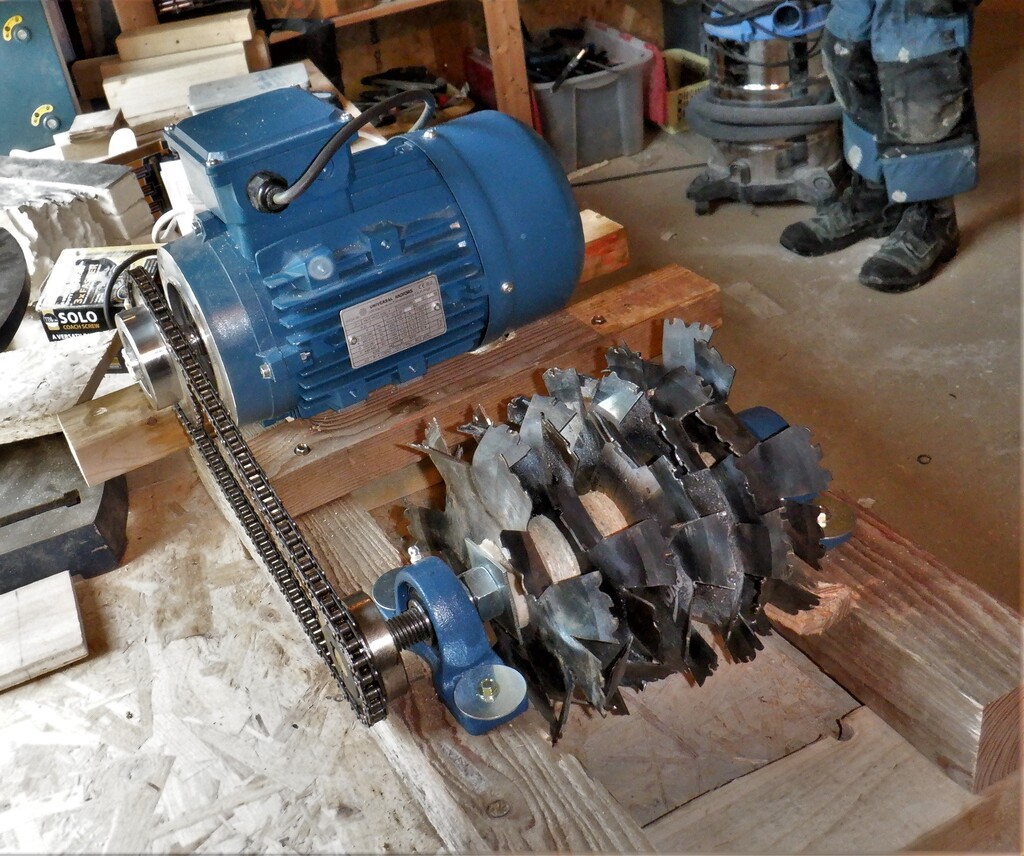
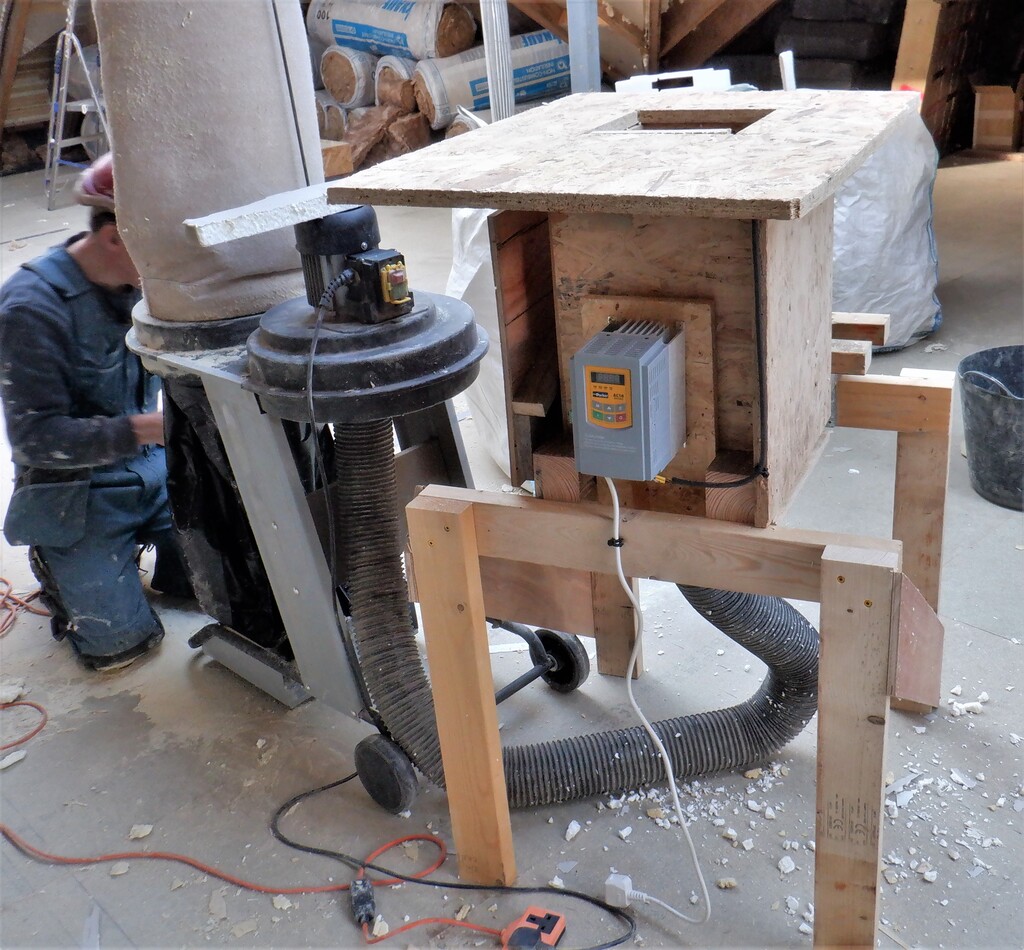
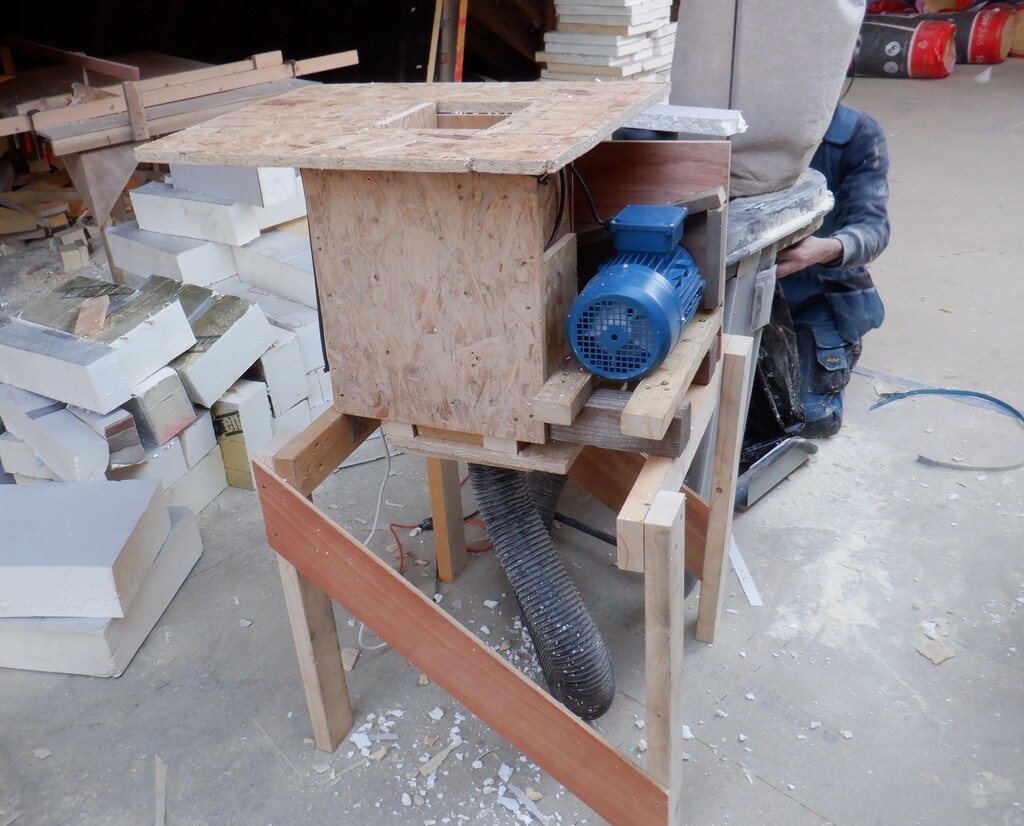
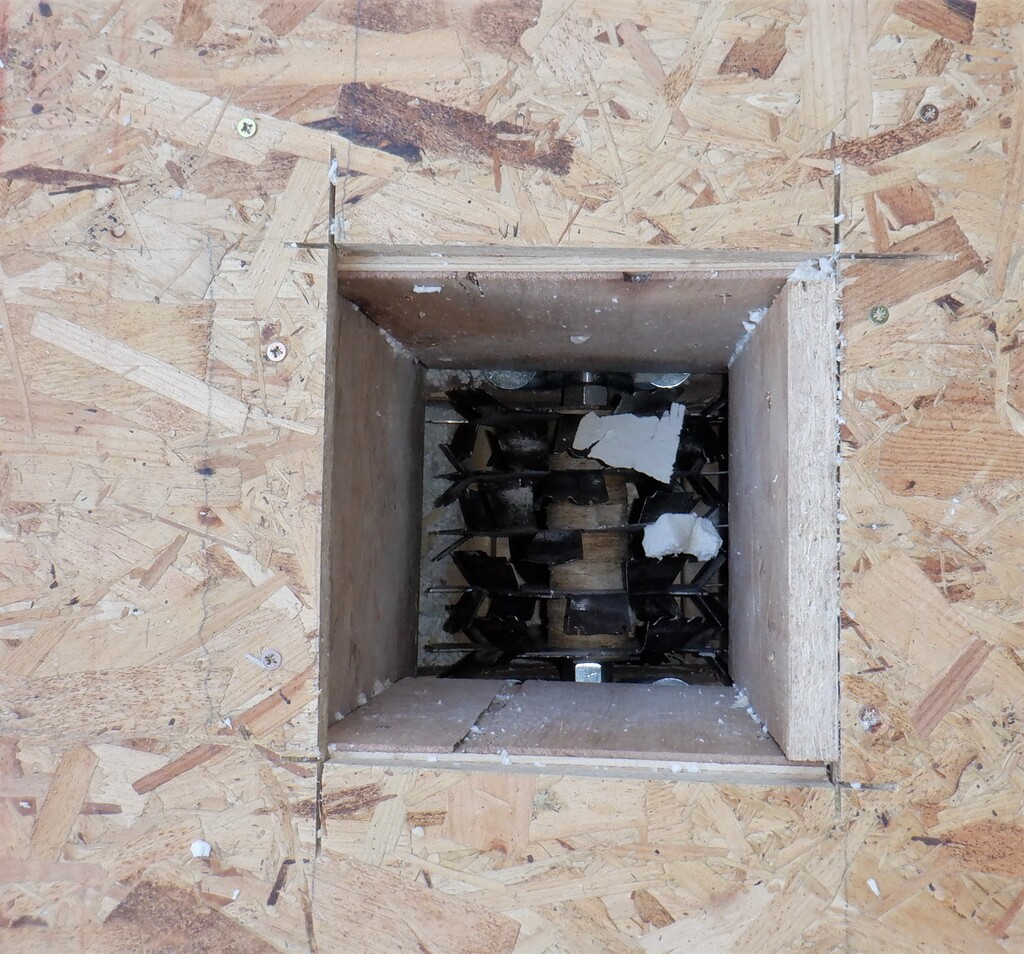
    Yesterday and today, we built a second generation shredding machine. Our first one had a motor failure because we overdid it. The motor wasn’t rated for continuous use and it got too hot and burnt out some of its motor windings. Oops!!So, this time we decided to make use of our heavy duty stair-lift motor with a speed controller to drive a homemade axle loaded up with blunt old circular saw blades. We bought some 20mm threaded rod, got a piece of aluminium tube that just about slides over the rod and the saw blades then fitted on the aluminium tube very tightly. We made 18mm spacers from pieces of OSB board, stacked them together with 2 large nuts, to form a six bladed cylindrical object that spans about 200mm in both directions. We also bent over some of the teeth (by heating them up with a blow torch and bending it while it was very hot) so that it would chop into the foam rubbish pieces and break it up even more.

    We bought two pillow bearing blocks (yes that is what they are called!) that holds the axle nice and tight and we put a cog wheel on the back on the end of the axle which then has a chain wrapped around it and going off to the larger cog wheel on the motor, as you can see in the photo above.
    Also, you can see to how naked .. and dangerous it is currently looking!!

    So we then proceeded to build barriers and shielding to protect us from the spinning teeth and whirling chain ..

    And we also realised that we could connect up our vacuum dust extractor that we already use for when we are slicing up the foam boards and put the resultant rubbish into large bin bags. It would reduce the cloud of dust and pieces flying in all directions.

    We put the whole thing on sturdy legs and put a large lid on top to deliberately force us further away from the “chute” which is also a foot deep clear of the sharp claws too. We will always be careful with these sort of machines and made it much more difficult to be able to reach in accidentally or on purpose.


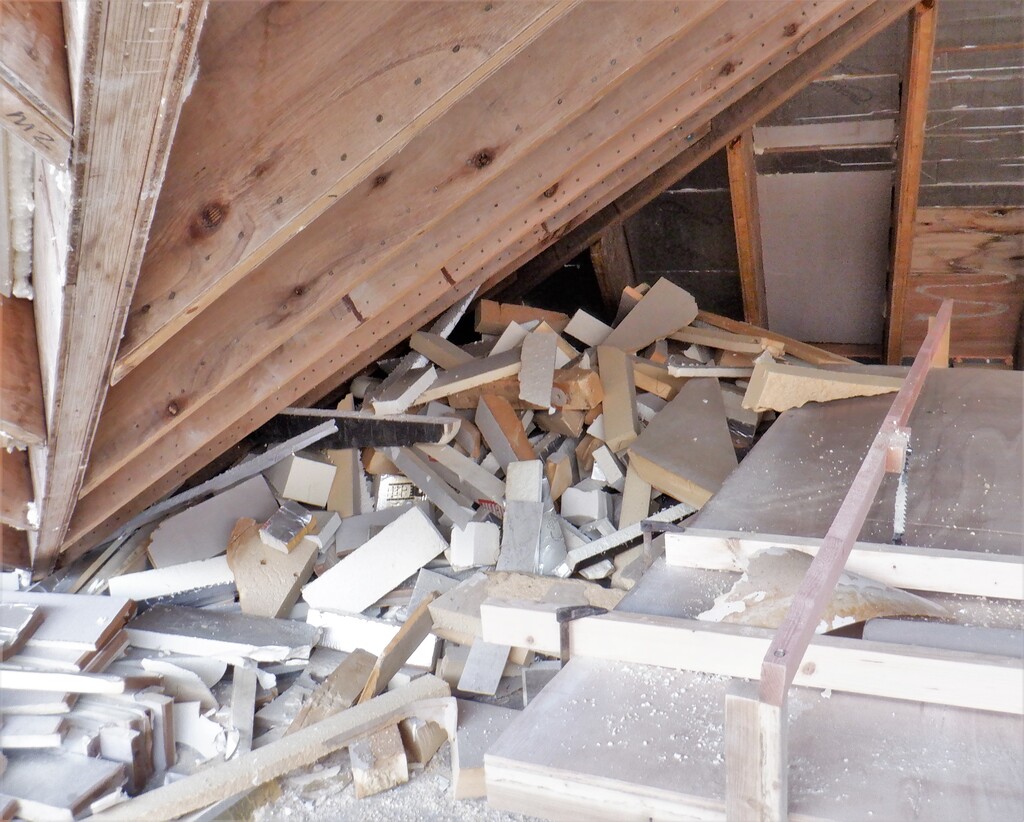
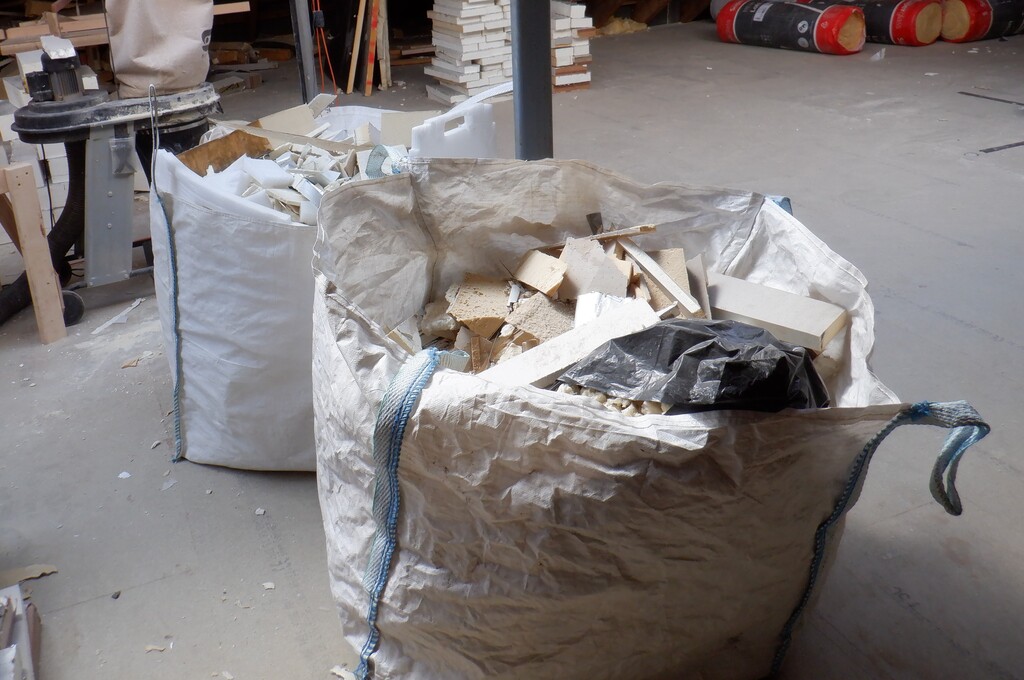
    So next week, we can start tidying up the large rubbish pile, plus also two large ton bags of stuff too.


    And when we got that done, we can move our slicing table out from that section of the First Floor so we can continue filling in our roof rafters along the J, K and L and the M section.

  • A Thorough Overhaul of our Mini-Digger With Major Replaced Parts

    We have been examining our mini-digger these last few days, tracking down the reason to why it won’t work. There is no noises, just a silent nothing of no engine turning over etc.
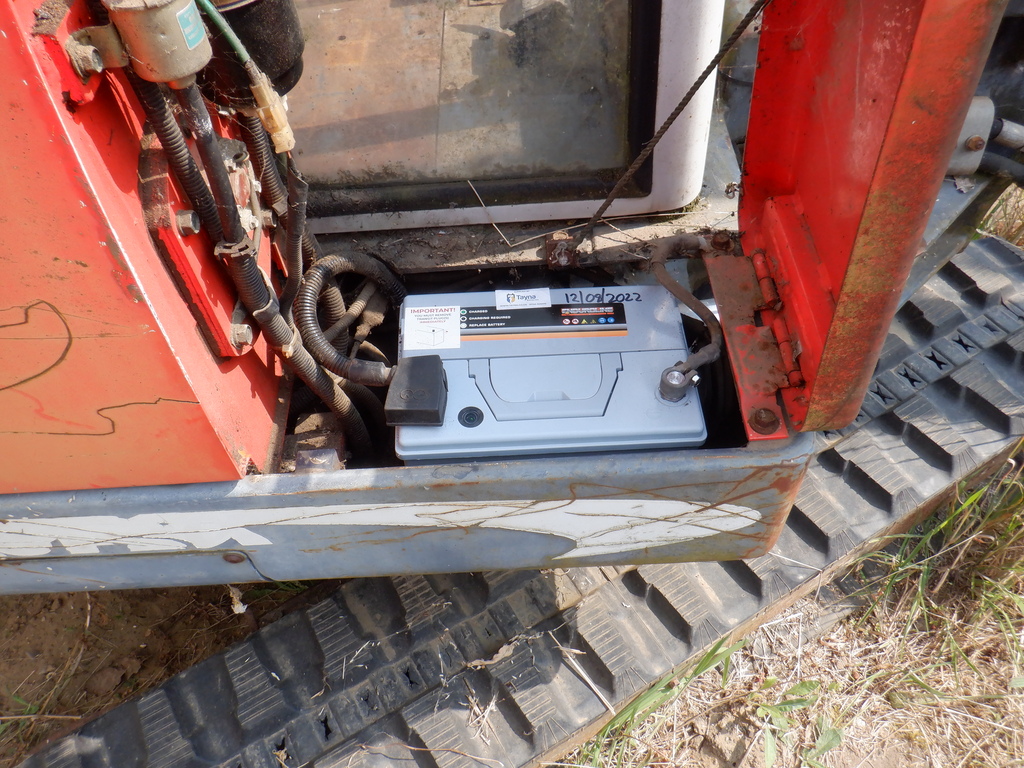
    We checked the battery and it is showing signs of being old, not holding it voltage when we turn the key to ignition mode. The voltage just falls very quickly below 12V which is not good. So we decided that we ought to buy a new lead-acid battery replacement. That duly arrived (on Saturday) but unfortunately, it didn’t solve the problem.

    A Thorough Overhaul of our Mini-Digger With Major Replaced Parts

    Digger-New-Battery-Aug-22

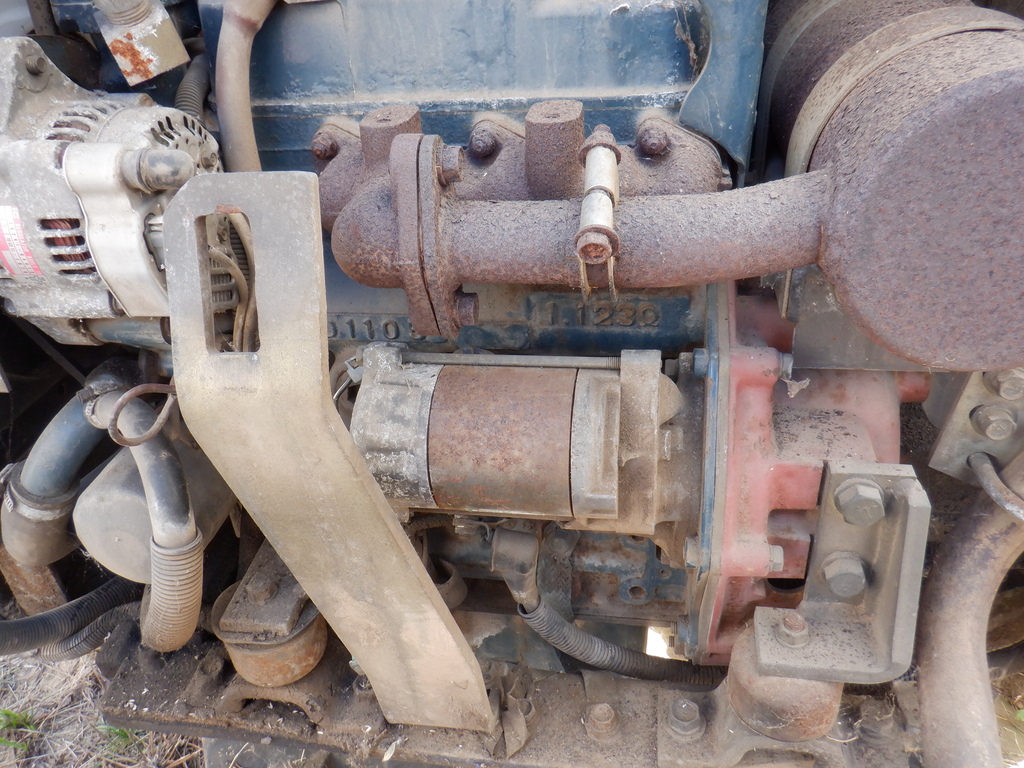
    The starter motor still wouldn’t want to turn over. We had always had a problem with our starter motor, and quite often, we had to hit it with a hammer to ‘jolt’ something to make it work, but, it seems that it decided that it had enough .. permanently!!
    So we had to dismantle the back-end of the digger, taking off four very heavy pieces of body work, in order to reach the starter motor and its two bolts!! Some of those bodywork bolts were very awkward to reach and for one set of two giant bolts, we had to put an old scaffolding pole over the handle of the wrench to get enough leverage to crack the bolt! We started testing the motor, it was getting electricity to it, but nothing was happening, so out it came.
    So we surfed the web and found the starter motor part number and then found a replacement spare part. The cost wasn’t too bad @ £150, and so we ordered it.
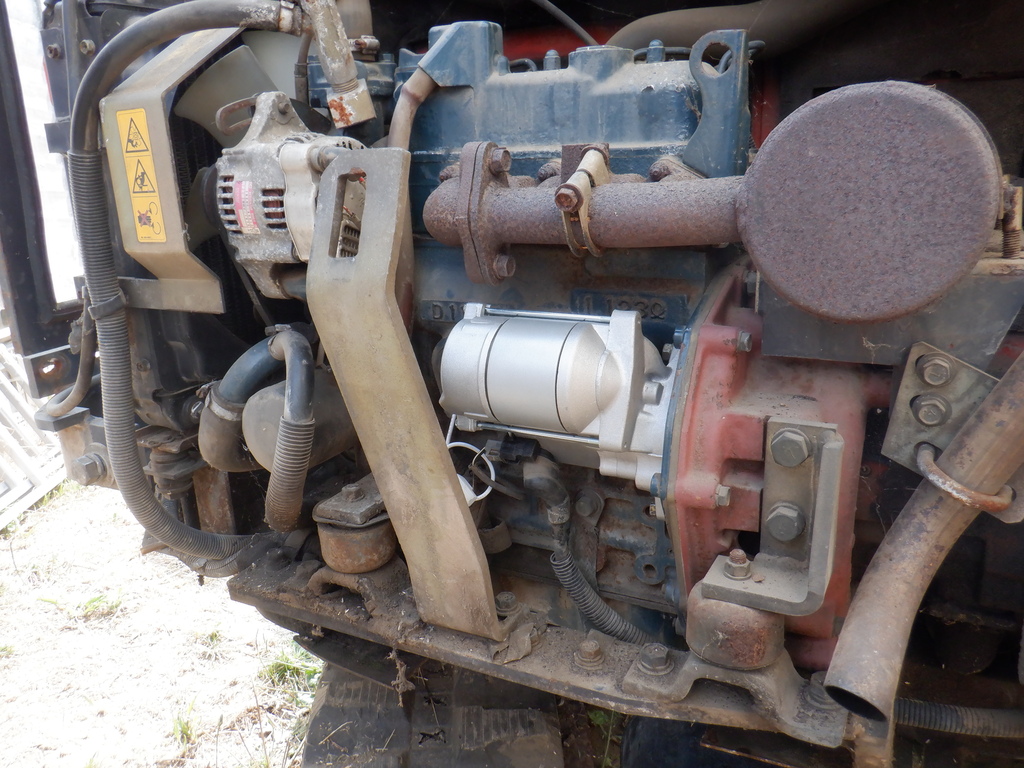
    It came today and we fitted it this morning and .. hey presto .. it worked! Every time!!

    A Thorough Overhaul of our Mini-Digger With Major Replaced Parts

    Digger-Old-Starter-Motor

    A Thorough Overhaul of our Mini-Digger With Major Replaced Parts

    Digger-New-Starter-Motor


    We cleaned up various parts, checked the engine oil and put some more in and then re-assemble the body work back into place again.
    We greased all the joints all over the digger, filled it up with more diesel and put grease on various handles and window latches etc. All a bit better now, for a 2002 vintage machine! We have only added 366 hours of run time since we bought it back in May 2009, on top of the 2953 hours already on the clock.

  • Extra Large Sliding Saw

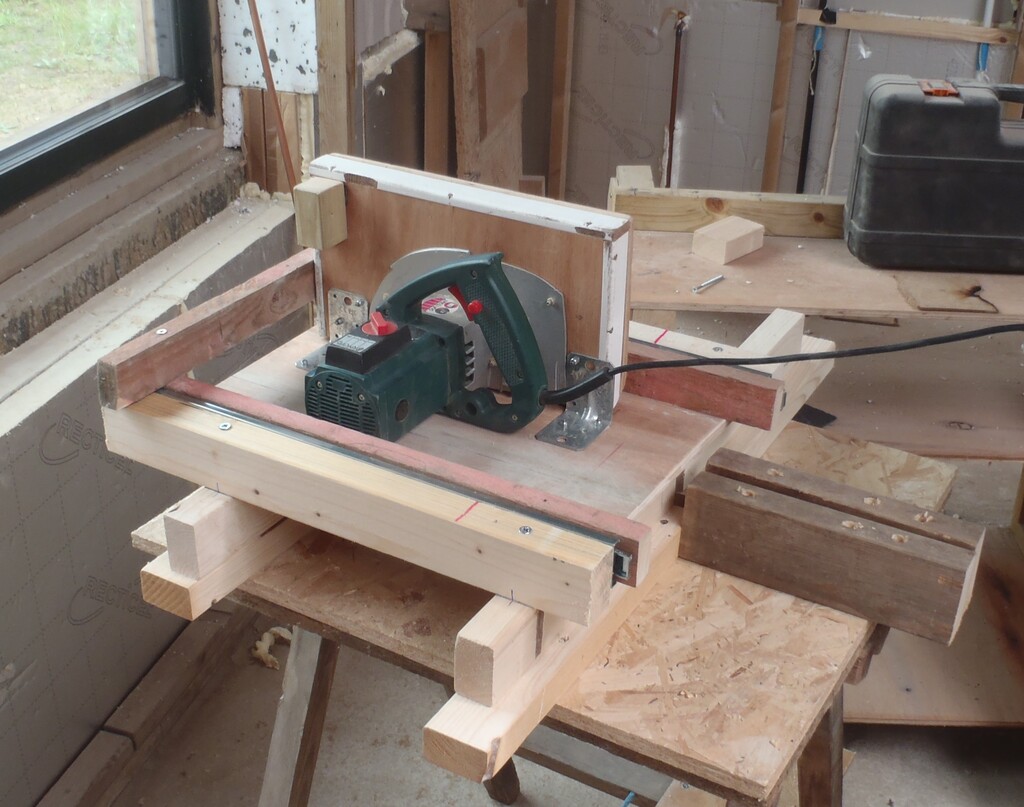
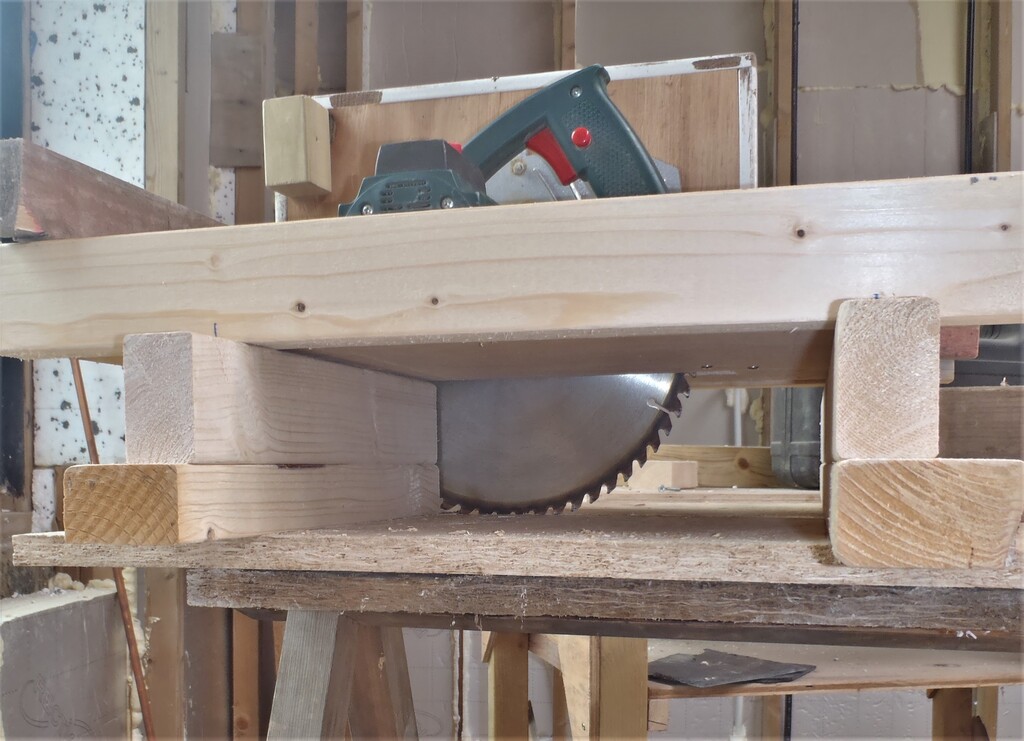
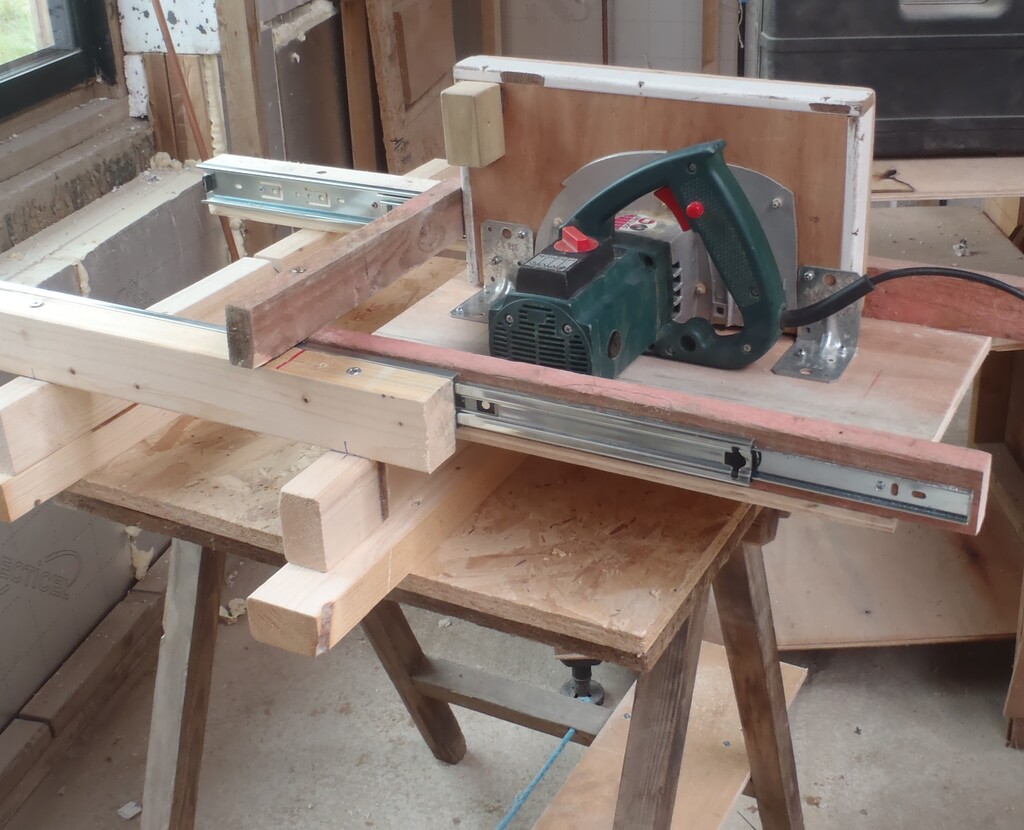
    The other piece of equipment we made while we waited for this day, was to build a special chop saw table to cope with slicing these I-Beams. Their physical size, especially the biggest one is 96mm wide (the flanges) and 240mm high. No standard chop saw, or even mobile saws, have enough depth of cut to cope with that kind of magnitude so we pulled out an old piece of equipment we had made several years ago (see
    Bevel Slicing Machine Repaired
    back in November 2017) and adapted it for our new task. The base board and hinge was removed and a new fixed plate mounted and then two double extension drawer runners were screwed on. Then, one of our old trestle tables was used to build a framework to allow the I-Beams to slide through this module against a straight and square fence. The saw part was then connected to the support table and we now have a smooth sliding saw ready to slice up our I-Beams into the required lengths.

    Extra Large Sliding Saw

    Cross-cut-saw-for-Joists-1

    Extra Large Sliding Saw

    Cross-cut-saw-for-Joists-2

    Extra Large Sliding Saw

    Cross-cut-saw-for-Joists-3


    Next is to prepare the trolley to help transport these I-Beams down our Loke.

  • Homemade Foam Board Shredder

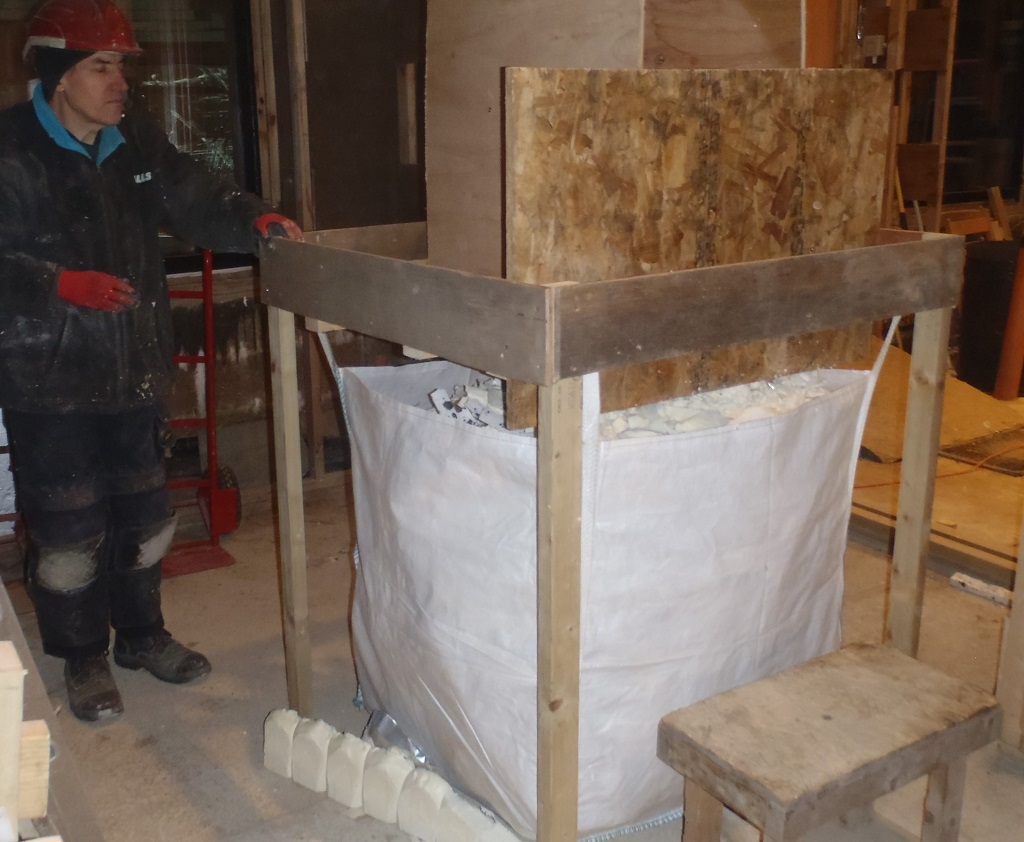
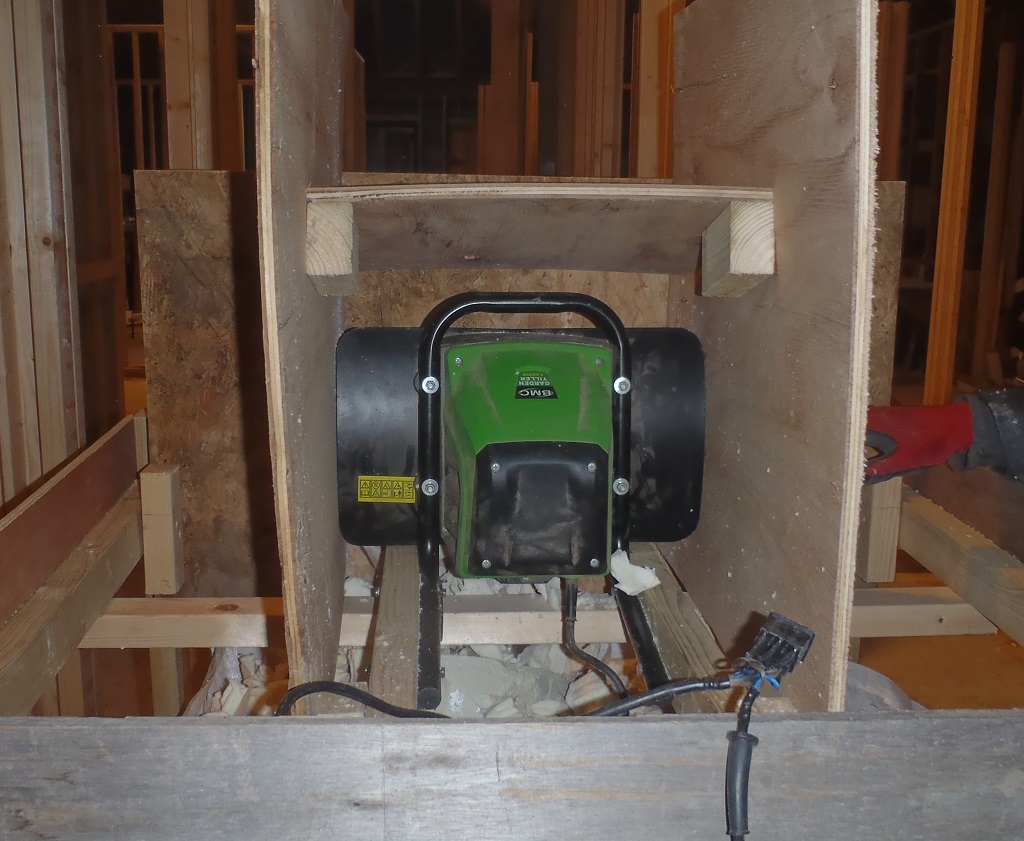
    Today, we thought we had better build a quick “Home-made” foam board shredder so we can deal with all the millions of pieces of cut-offs we will be generating from slicing down the large boards. Many has unformed bumpy edges and other defects plus also there will be narrow strips left-over pieces as well. We always planned to “throw” this rubbish away under our suspended ground floor (we got 400mm of space to fill with insulation) but the random nature of all these cut-offs meant that it would be very awkward and annoying to try to get them laying down flat and reasonably efficiently connected together to form a good insulated barrier against the concrete foundations so we considered that it would be so much easier to shred this rubbish up and just pour it in like fluffy balls.
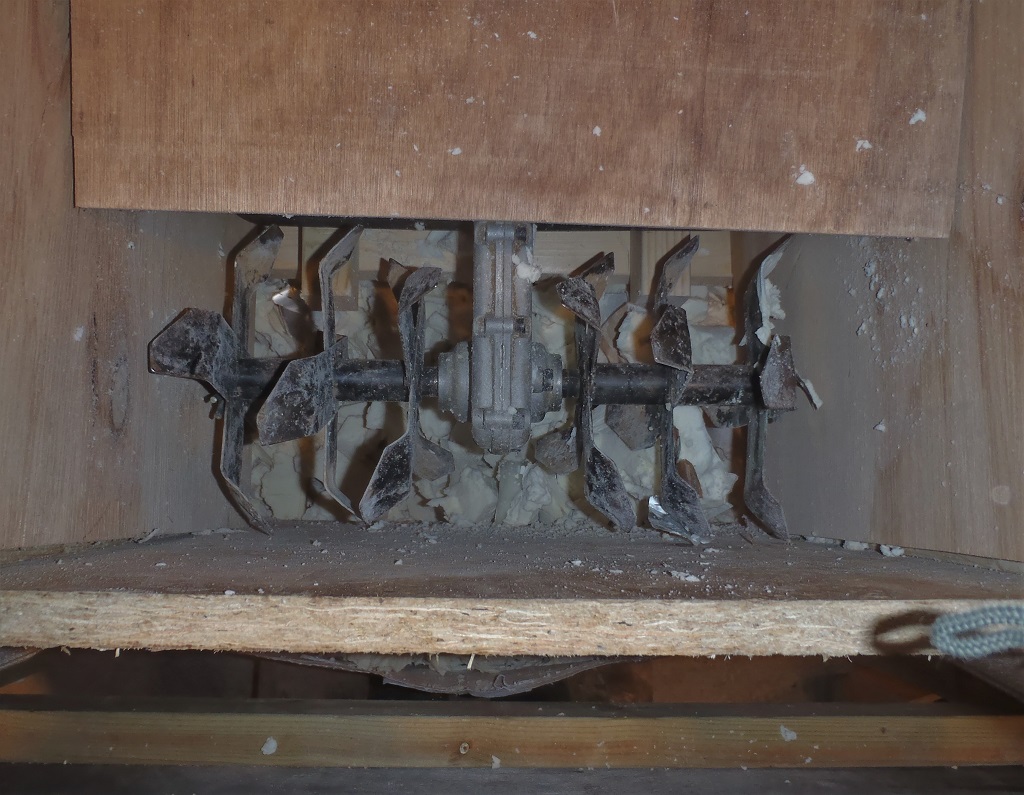
    So we took our garden cultivator which had eight rotating blades, unbolted the handles and wheels, screwed together a new framework to bolt the motor and its blades to and then build a box around the whole lot to allow a large “ton” bag to hang underneath to collect the shredding.

    Homemade Foam Board Shredder

    Foam-shredder-Mk1-1

    Homemade Foam Board Shredder

    Foam-shredder-Mk1-2

    Homemade Foam Board Shredder

    Foam-shredder-Mk1-3


    We have to make some improvements as our tests revealed that the foam would get trapped in between the blades so that is the next task when we have a moment spare.

  • Pallet Fork Attachment for our Mini-Digger

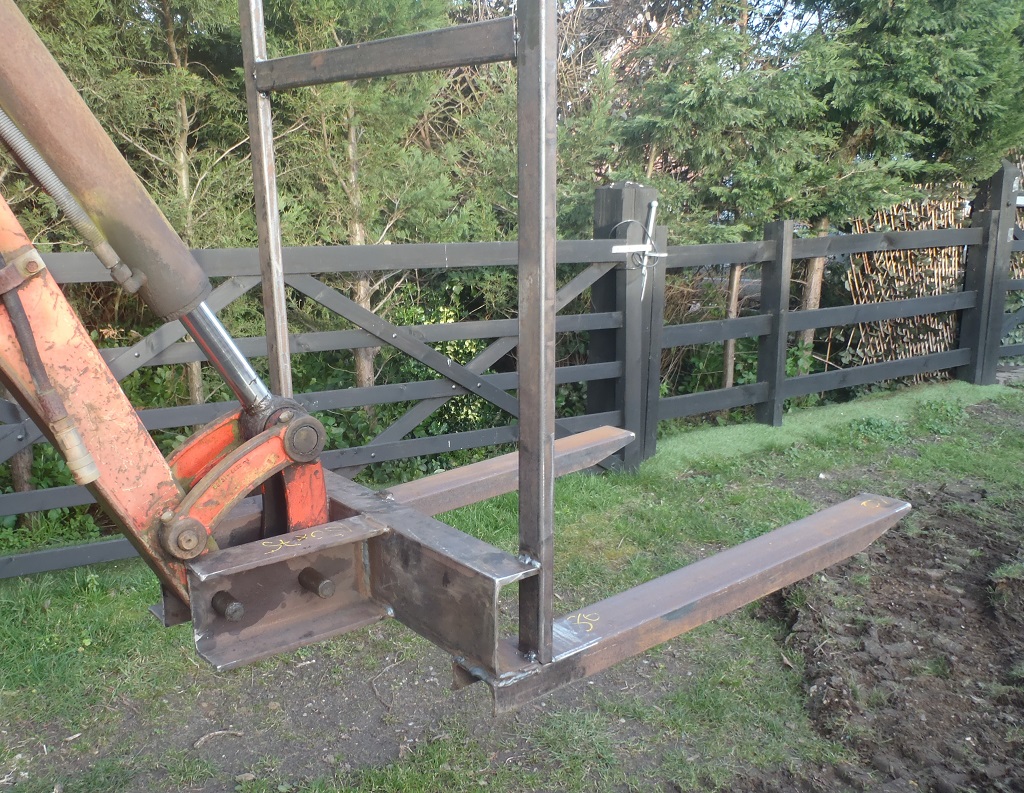
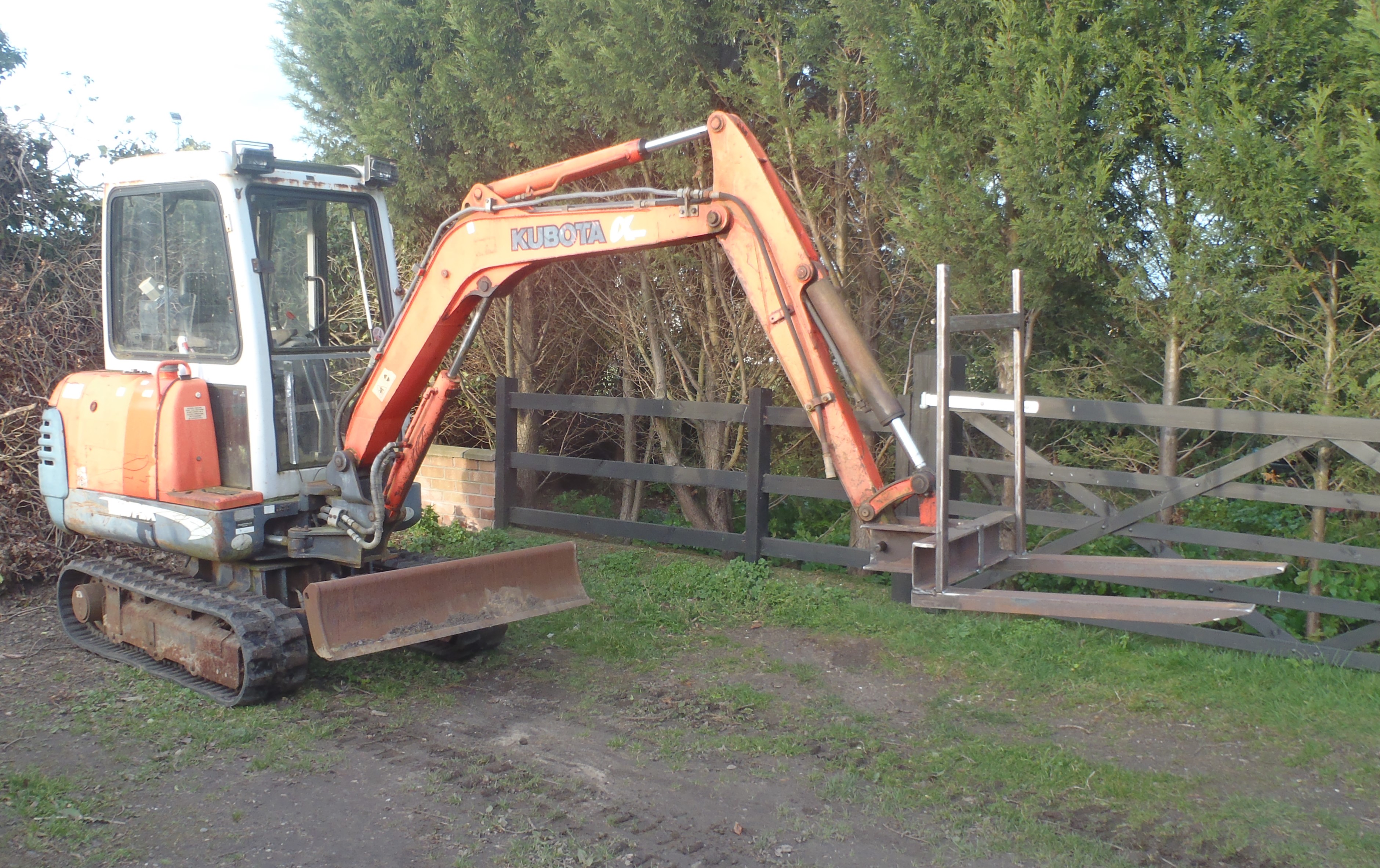
    We decided that we needed to construct our own Pallet Forks to enable us to unload the load of Pallets that would be arriving soon, full of PU foam boards. We had plenty of left-over pieces of steel, both a large and medium sized C channel bars, some rectangular box bars and angle iron pieces too.
    We took an old 4foot pallet and measured the spacing so we could design a particular size and spacing of the prongs, of course it had to be a compromise and a slight gamble against the unknown shape and size of the forty pallets coming.

    All the pieces were cut using our plasma cutter and then welded together using our MIG welder. Then an angle grinder with various cutting and grinding discs to clean up the ends and edges.

    Then, it was time to practice using this new piece of equipment attached on the mini-digger, using a suitable pallet, loaded with 10 concrete blocks to emulate what the weight would be like and getting the movement of the digger’s two arms to work in a way that lifted and moved the pallet in a horizontal manner without tilting too far forward or backwards.

    Pallet Fork Attachment for our Mini-Digger

    Pallet-forks-fabricobbled-1

    Pallet Fork Attachment for our Mini-Digger

    Pallet-forks-fabricobbled-2


    We are ready!