Category: Equipment and Tools

The Tools we are using on this Project

  • Toilet in Garage Serviced, and Also Garden Shredder Fitted With New Replacement Cutting Shoe

    Today, for this hot Sunday. We tackled a long overdue job of servicing the toilet in the back of the Garage. There was an overflow problem and it seems to have gotten worse in the last few months. Our water bill said that our consumption has gone up significantly. So we inspected the water inlet valve mechanism and discovered a small lump of foreign material. We cleaned the valve and put it back together and all seems to be back to normal again. But we did have to replace the front plasterboard panel that made up the boxing surrounding the cistern.

    We also glued the old ceramic toilet bowl on one side where there was an old crack from years ago when we rescued this serviceable piece of bathroom ware from the outside toilet as it was then when we brought the property 17 years ago. It probably was the original toilet from when it was constructed way back in the 1945 approximately we think!!
    Then after the Formula 1 Grand Prix, we serviced the garden shredder, our heavy duty machine that chops up garden waste up to to 40mm thick fresh branches or 25mm dry stuff! The shredder needed a new “crunching” aluminium plate shoe that is adjustable to achieve zero gap between the slowly rotating steel blades and this shoe, ensuring that the plant material is chopped into pieces, no matter how small or thin it is. It has a clever trick of crunching the thicker pieces so the woody parts are slit apart to speed up composting.

    The old aluminium plate had a crack across its structure and that is probably what had caused the shredder to not work very well for a while now.
    We tested out the newly serviced machine with a large pile of holly clippings (recently freshly done) and a really old pile of ivy trimmings and produced about 6 very large trug loads of shredded material and a couple of trugs of leaves, all dumped onto our pile of sod at the top of our garden.
  • Four New Adjustable Feet Created for Scaffolding Tower’s Wheels

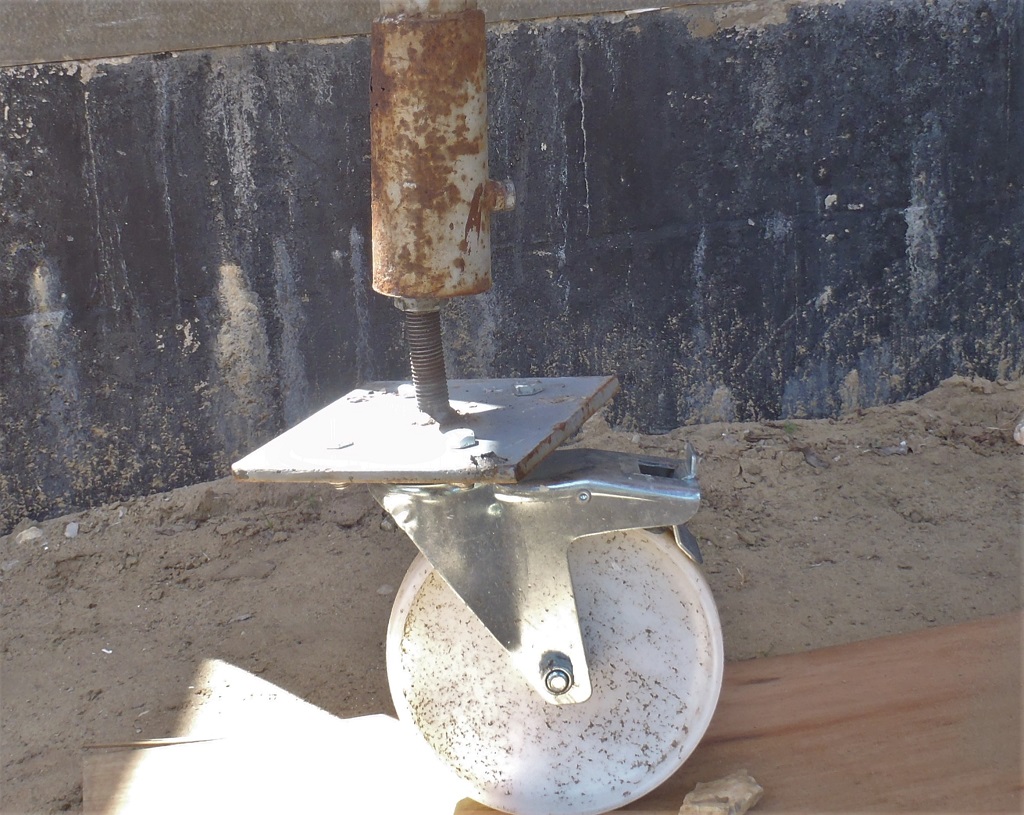
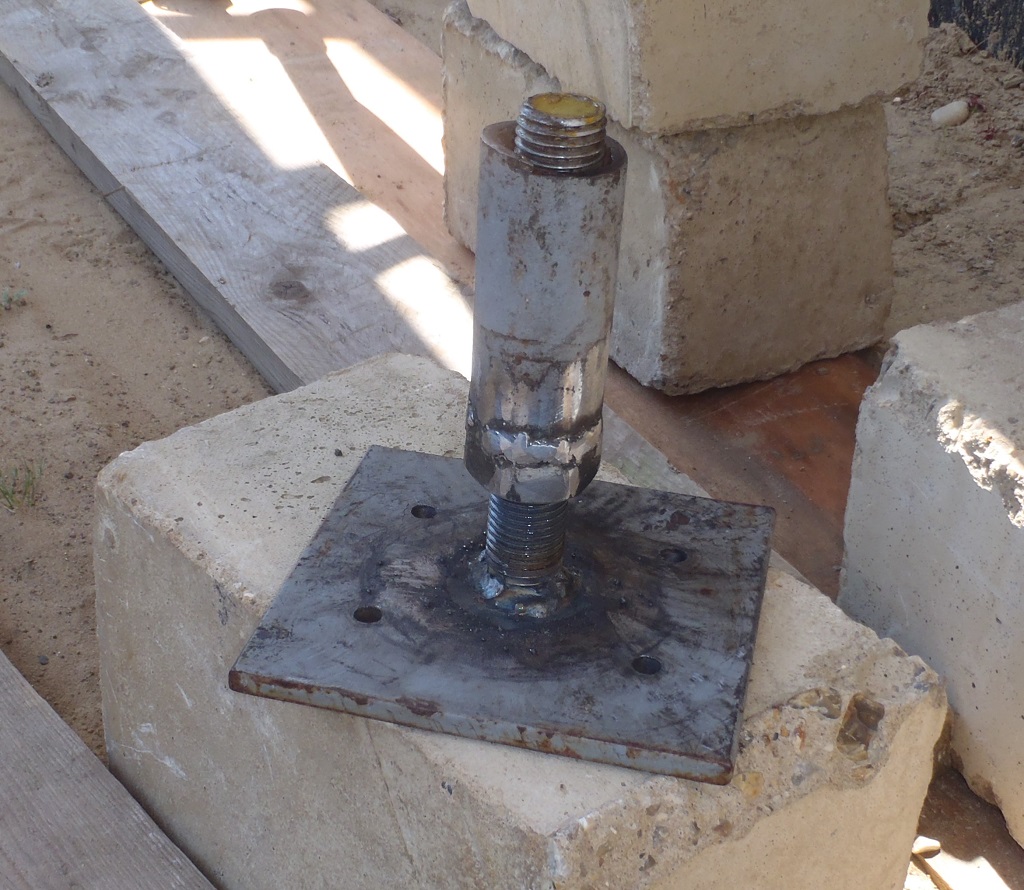
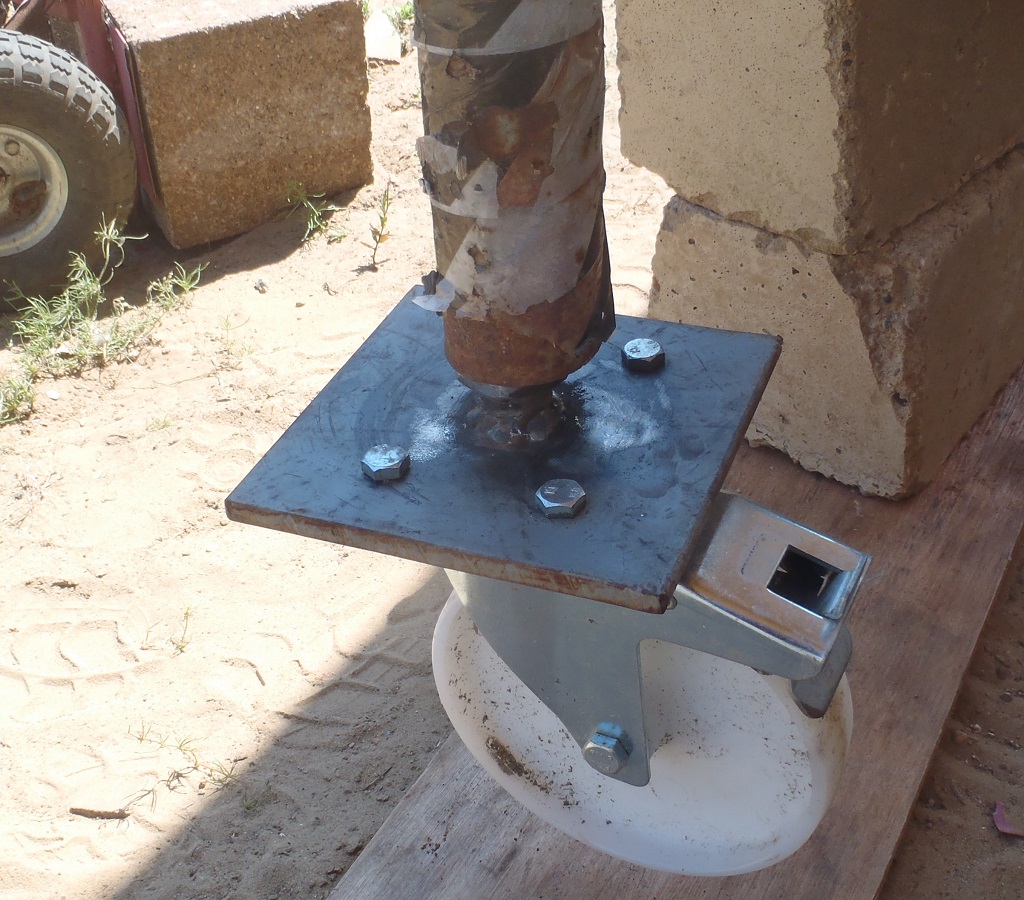
    This morning, the various steel parts were welded together to form four new adjustable feet, much stronger than before.

    Four New Adjustable Feet Created for Scaffolding Tower's Wheels

    New-ajustable-Feet-finished-1

    Four New Adjustable Feet Created for Scaffolding Tower's Wheels

    New-ajustable-Feet-finished-2


    We can now have confident that our mobile scaffolding will support us safely, while coping with bumping up and down, going through heavy conditions in the areas outside our house, which are mostly sandy soil and rather soft.

  • Scaffolding Tower Gets New Adjustable Wheels

    This afternoon, we needed to replace the threaded rod that are currently employed on our mobile scaffolding tower to allow for adjustment for each wheels to balance and stabilised the tower. The problem we had was the original 20mm diameter rod was bending under the dynamic loading while trying to move the tower in semi hard sandy dirt, with the wheels digging in too much.

    Scaffolding Tower Gets New Adjustable Wheels

    Bent-thin-leg-adjuster


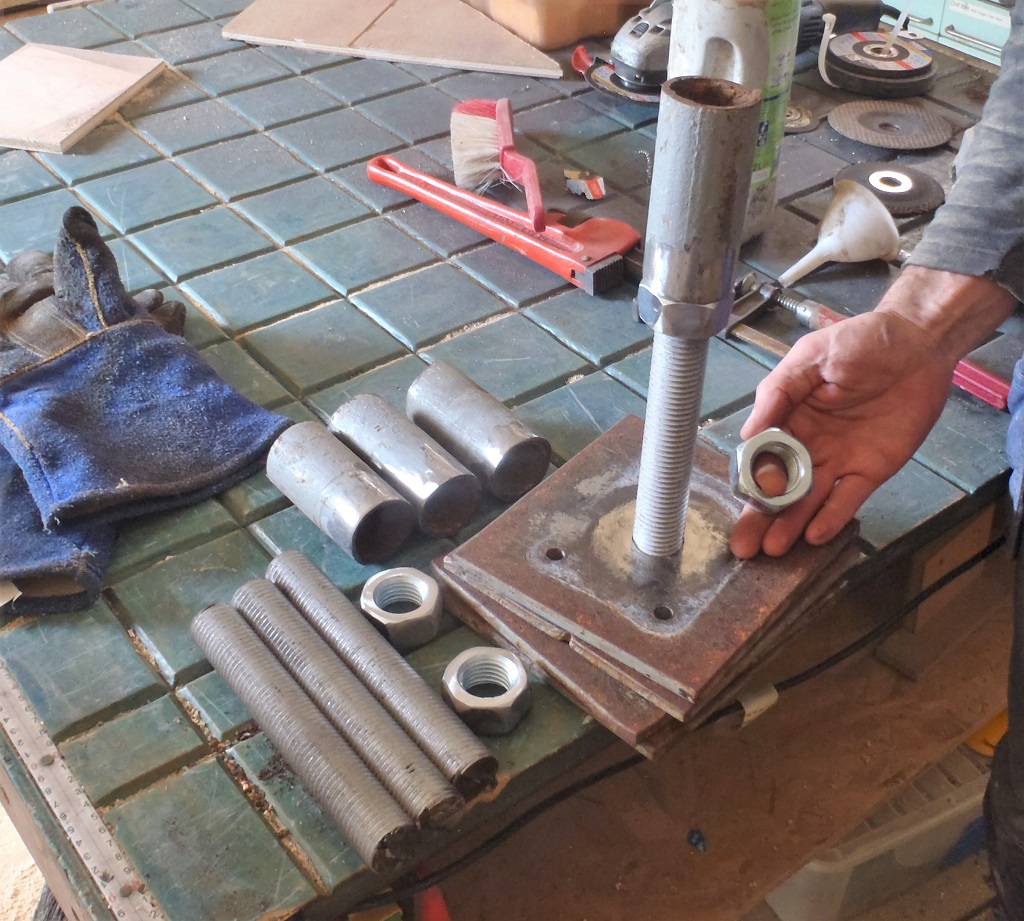
    So the new 30mm diameter high tensile steel threaded rod arrived yesterday and we proceeded to prepare all the parts including grinding the old 20mm rod off the foot plates, cut off the old nuts off the steel fat tube and then drill a new hole into the foot plates, cut up the 30mm rod into 200mm long pieces and get everything ready for welding.
    Scaffolding Tower Gets New Adjustable Wheels

    New-thicker-leg-adjuster-parts


    The welding will be done first thing in the morning and we can put back the wheels onto our tower and continue with the task of cutting the slot into the Fascia boards.

  • Mobile Scaffolding Tower Is Now Extended

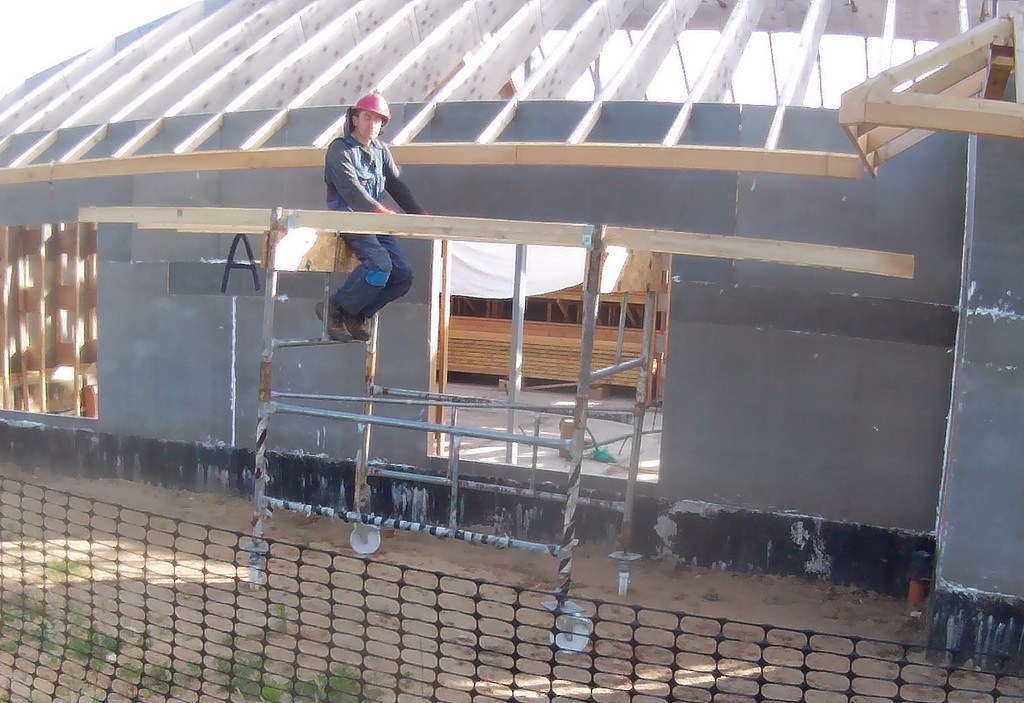
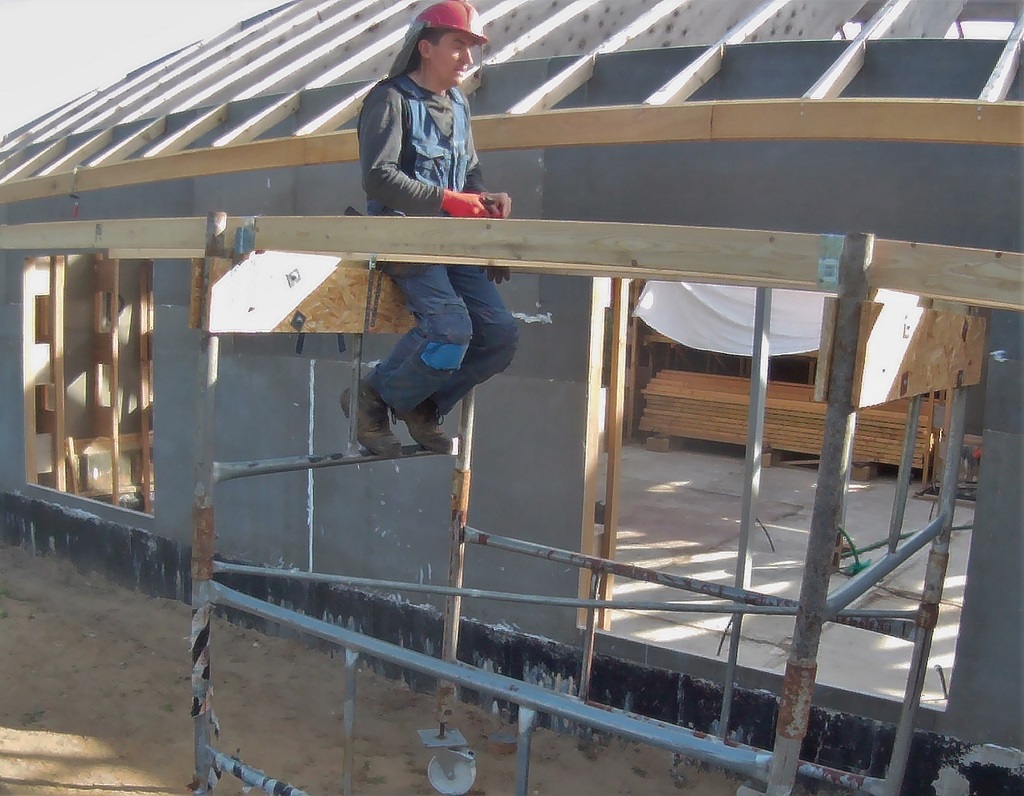
    This morning, we completed the task of extending our mobile scaffolding tower and it is now has the capacity to provide a 4.8m (16feet) length of work platform by 1.2m (4feet) wide. The edges all has the same safety kick board and we have loaded eight huge concrete blocks (each weighing about 25kg), positioned at the bottom of the metal tower, four at each end near the wheels.

    Mobile Scaffolding Tower Is Now Extended

    Extended-mobile-scaffold-1

    Mobile Scaffolding Tower Is Now Extended

    Extended-mobile-scaffold-2


    It is very stable now and we cannot tipped it over, even with both of us trying hard by hanging our weight off the end of the platform!!!
    But we did hit a snag, we couldn’t roll it along the ground! The ground was too soft and the wheels kept digging in! We then used narrow strips of plywood to aid the wheels to roll smoothly but discovered that we had slightly bent the threaded rod that allows us to adjust the height to compensate for uneven ground levels (which we had done – of course!) and the 20mm diameter rod wasn’t thick enough to cope with the dynamic forces involved in us yanking and pulling the tower along in the dirt and getting it up onto the plywood. Oh Blow, What a Pain! So we ordered another threaded rod but this time it is 30mm thick and twice as strong in tensile strength too. That will come in a day or so.
    In the meantime, after lunch, we started working on designing and building a template to allow us to cut the slots into the Fascia boards to hold the base layer of the guttering channel. We think it will work if it “hooks” over the Fascia, has four evenly spaced out “arms” to hook behind the Fascia board and can be clamped down once the slope angle has been achieved. The slope angle will probably use a long bolt through a block of wood and that will allow us to adjust the height of the template on the Fascia boards at each end and thus achieve the slope we want.
    Mobile Scaffolding Tower Is Now Extended

    Gutter-base-routing-template-started


    We will finish that tomorrow and then we can start trying it out along the back of the building while we wait for the new threaded rod to arrive.

  • Mobile Scaffolding Tower Extended

    Today, we tackled the task of extending our mobile steel scaffolding tower so we can have a platform that is nearly 5 metres (16feet) long to work on our roof and Fascia without having to keep moving the tower along so many times.
    We used our good clean working set of scaffolding wheels that has proper locking mechanisms, which were bolted to two layers of the scaffolding elements and rolled it through the front door (yes it was big enough, being 5 feet wide and 7 feet tall!) and build two extra “lintels” to boost up the level of the final platform height so it misses the metal corner poles. This height being about 2metres up. The lintels were securely bolted to the end railing bars, one above and one below to lock it all together.
    We finished off the day’s work by putting on three 4.8 metres 95 x 45 mm timber planks and used metal joist brackets to nail down these “joists”, at both ends .

    Mobile Scaffolding Tower Extended

    Start-of-making-mobile-scaffold-platform-1

    Mobile Scaffolding Tower Extended

    Start-of-making-mobile-scaffold-platform-2


    Another little job we did this morning was to reinforced some of the joints in our wooden scaffolding structure so the edges will not dip under extra loads like a trolley carrying a large number of slate tiles.
    On Monday, we will go and put on two sheet of 18mm thick OSB boards and put in dozens of coach screws with large washers to make sure we very securely hold down the platform to the joist beams. We will also put on many concrete blocks to the bottom of the tower to improve the centre of gravity to reduce the chance of the sticking out platforms extending out beyond the scaffolding tower and plus we will put on support arms from the platform too, to screw on to the wall every time we stop at a position. This will maximise the stability of the whole 16feet length of the platform so we can just get on with the work while still having a reasonably easy process of moving it along and get safe again quite quickly. Oh Yes – Safety Rules The Day!!

  • Wooden Scaffolding All Complete, Fixed and Safety Features Implemented

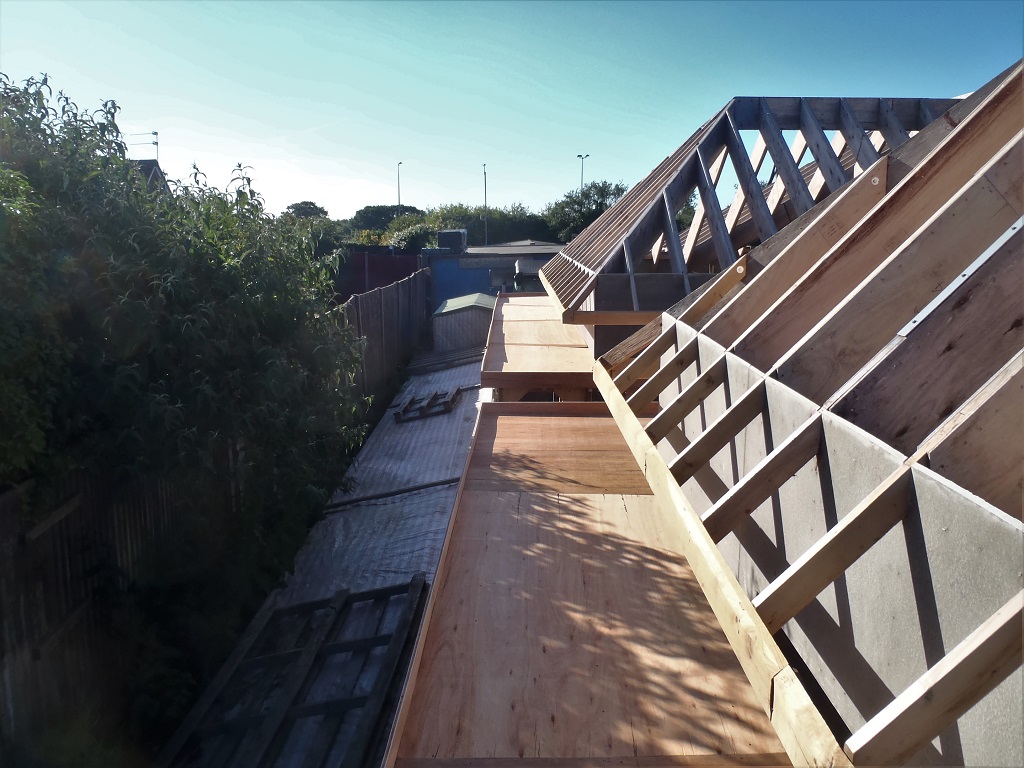
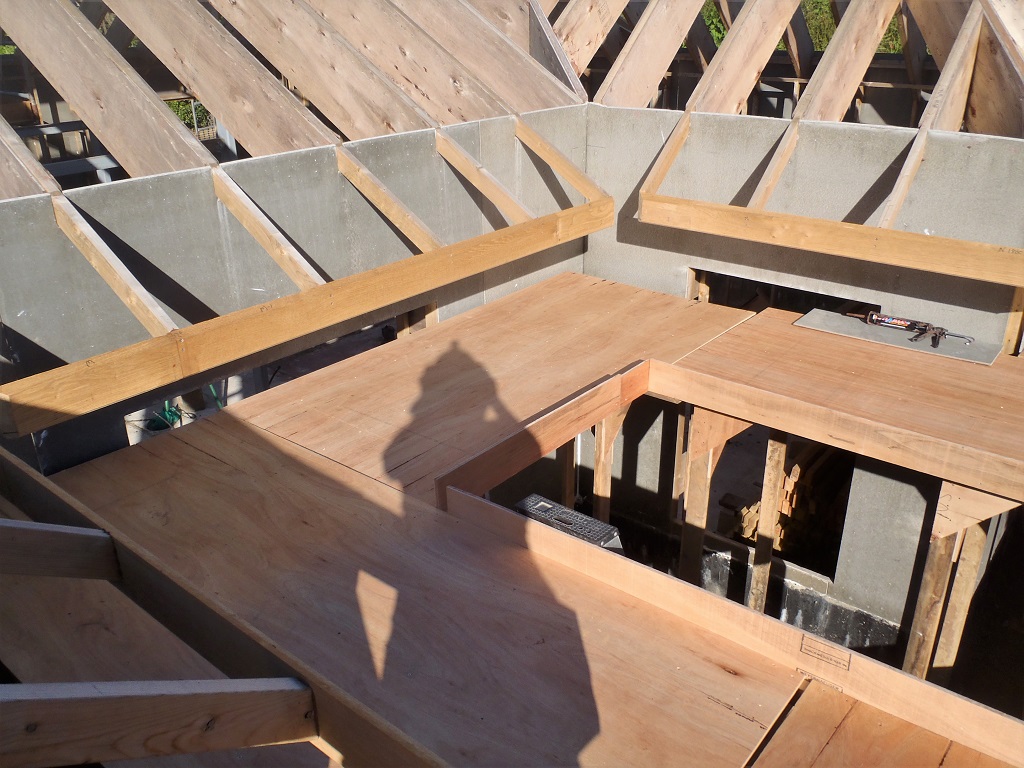
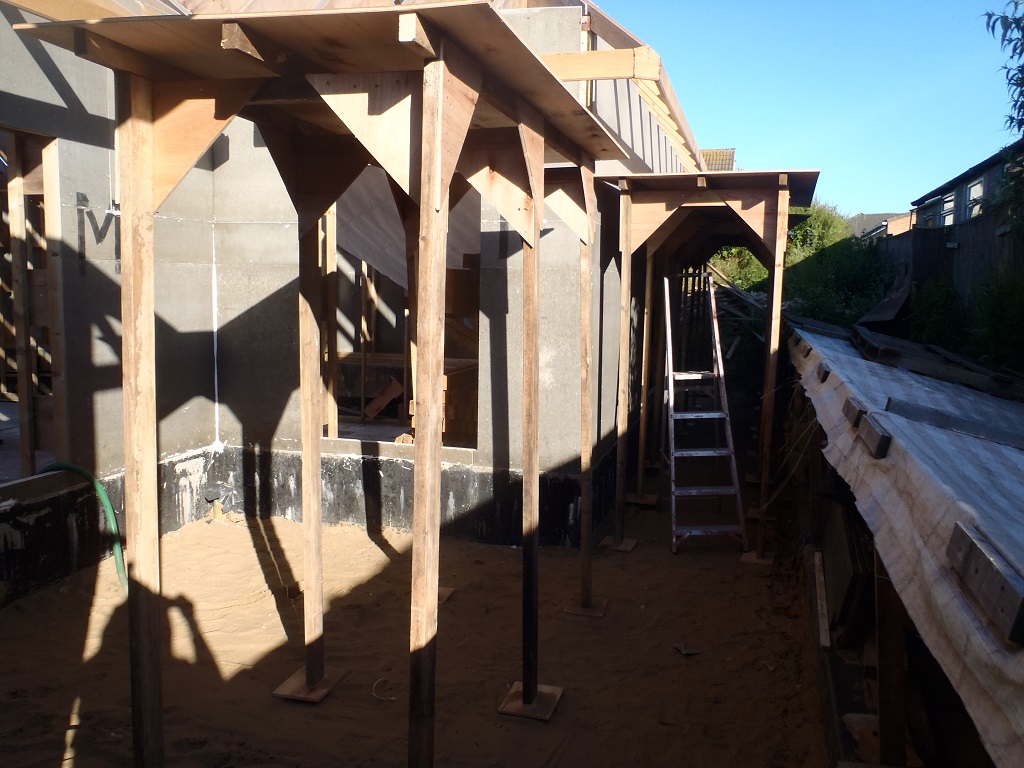
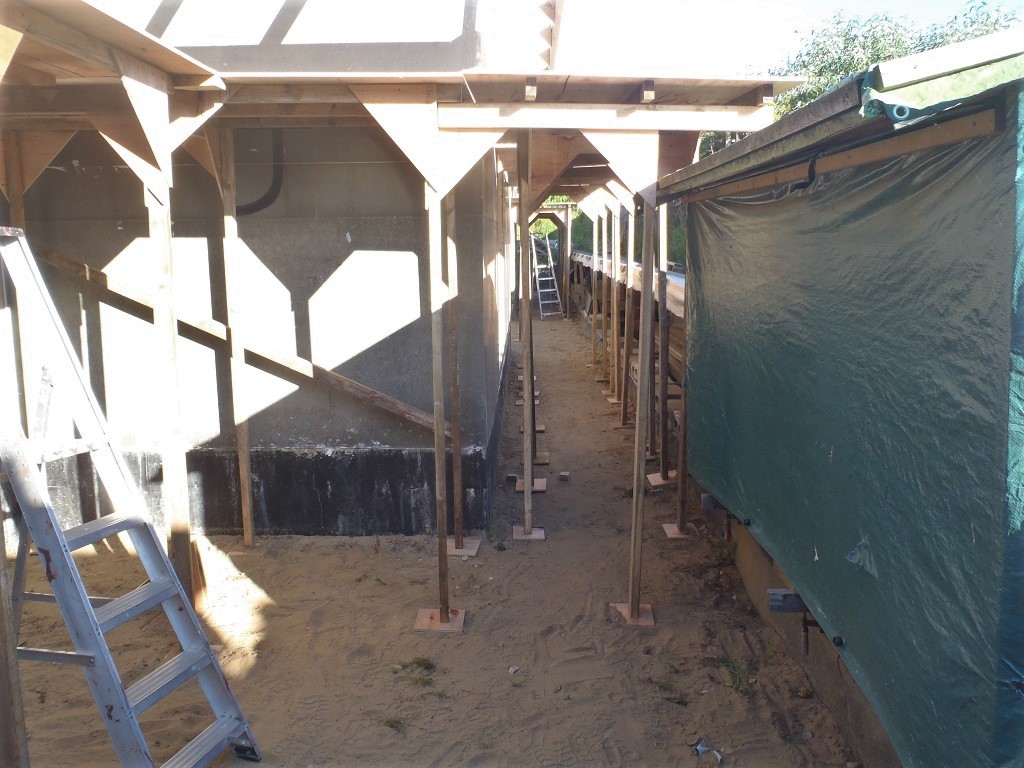
    Today, we continued with the task of getting the line of scaffolding platforms installed and we got each of the eleven modules positioned so each corner had a full 4feet overlap to keep the outer edge all in line. We had to put in short filler pieces between some of the modules, especially along the “K” and “O” sections but we now have a continuous walk way tracing the line of the building from “I” corner (the back right corner near the Garage), all the way along the back until the last corner where the “O” finishes (the back left corner near the conservatory).

    Wooden Scaffolding All Complete, Fixed and Safety Features Implemented

    Timber-Scaffold-complete-2

    Wooden Scaffolding All Complete, Fixed and Safety Features Implemented

    Timber-Scaffold-complete-1


    We also installed a safety feature of a kick board mounted on the outer edge so that no one can accidentally step off or lose trugs of tools etc.
    We can now walk from one end to the other, all 30metres distance,

    This very useful structure will stay put until we have completed the roof and got the final guttering all done too. Yes we wish we could have it going all the way around but we didn’t have enough timber and we do have our mobile metal scaffolding tower which we will put on its wheels and extend the platform length so we don’t have to keep moving it so much. We will also have wall mounting points at regular intervals to lock down the mobile tower to make sure we are working as safe as possible. The extension will be done tomorrow and next week we then can start on putting the groove into the Fascia board that will hold the base board of the gutters.

  • Eleven Scaffolding Modules Created

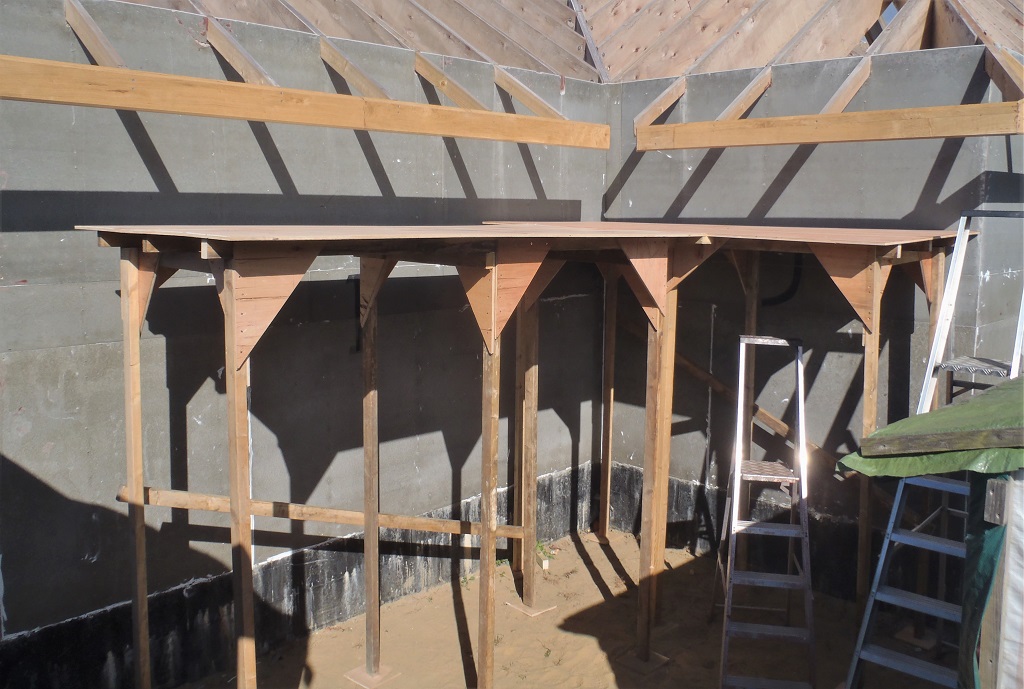
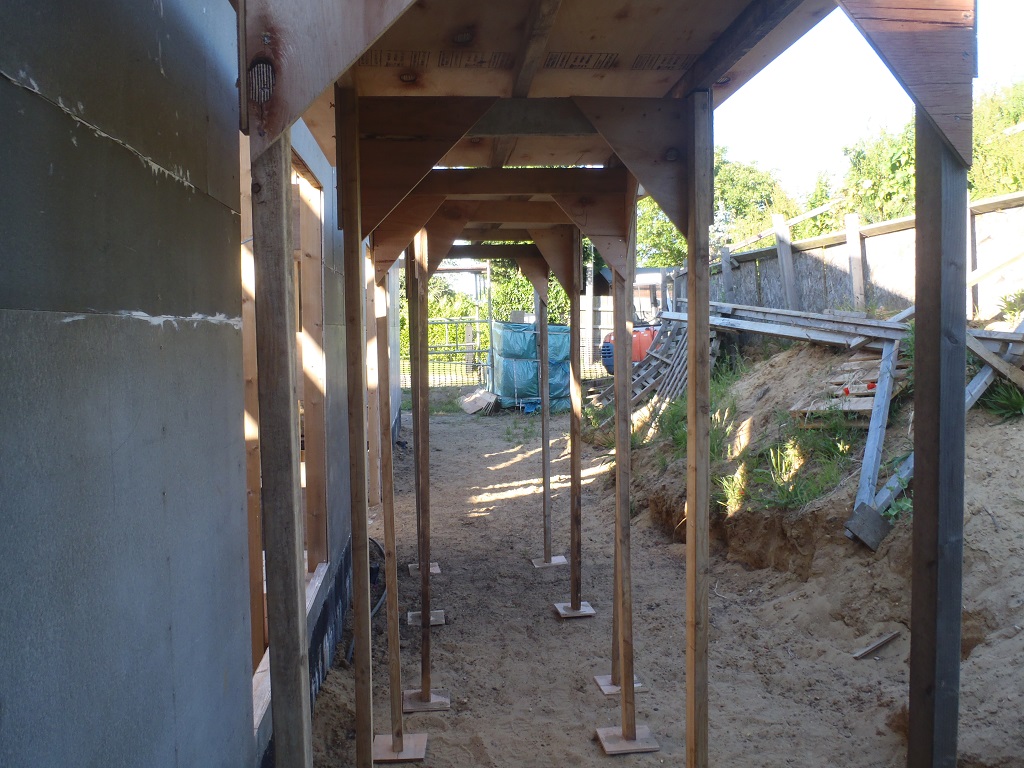
    These last two days have seen the creation of new wooden scaffolding modules, eleven of them in total, each measuring 8feet by 4feet and 2.1metres (7feet) high.
    We spend half the day yesterday in creating the various parts, ready to be assembled, and we had time to make two modules yesterday.

    First-section-of-Timber-Scaffold-made

    First-section-of-Timber-Scaffold-made


    These two were also fixed to the building structure which made it very solid without hardly a wiggle when we stood on the platform.
    Today, we continued making a further nine modules ..

    .. and we now have a total of eleven modules, to allow us to build a complete walkway from one corner at the back of the building, to the other far back corner.

    Eleven Scaffolding Modules Created

    9-more-Timber-scaffold-units-made-1

    Eleven Scaffolding Modules Created

    9-more-Timber-scaffold-units-made-2

    Eleven Scaffolding Modules Created

    9-more-Timber-scaffold-units-made-3


    Tomorrow, we will adjust the positioning of all these modules and fixed them to the building itself to make it all rigid and safe, including mounting a 150mm high kick board on the outer edge to stop both “workers” and “tools” from slipping off the platform!!

  • Wooden Scaffolding Framework To Be Built Around Back of Building

    This afternoon, we decided that we needed to build a fixed scaffolding framework around the back of the house as our mobile scaffold tower will not be able to navigate down the back as the gap between the house and swimming lane is barely 1200mm wide and the tower itself is 1300mm wide in the first place but also we have tight corners and we won’t be able to move the steel scaffold tower around these corners either. So instead, we are going to build a fixed semi-permanent wooden framework of legs and struts to hold up a sheets of 8feet by 4feet plywood, and join them together to form a walk-way at about seven feet off the ground (about 2 feet below the Fascia level). We would be able to go from the “I” section at the start of the back of the house, along “J”, “K”, “L”, “M”, “N”, and “O”, the other end of the house. We using old CLS timber we have recycled from other jobs and cut them into the various parts to make 30 twin-leg modules to make five 8feet long platforms and three 16feet longer platforms. They will be connected together and also fixed to the building in lots of places to ensure that the whole framework is good and solid for maximum safety.
    This scaffolding will probably be there for most of the rest of the year while we work on the roof, getting all the elements done, including the Skylight. we will only take it down when the slate tiles are on and the guttering is all complete and fully working. It might take a few days to build it all but it will save many hours, or even days in not having to keep moving the mobile tower around all the time. We can afford this because we had recycled timber to hand and spare plywood boards but doing it properly using steel equipment would have cost many thousands to hire or buy, as we can only work so quick and we rather spend the money on buying materials like Oak Timber instead.
    Tomorrow, we will carry on preparing the old recycled timber, chopping it down into 30 pieces of 900mm lengths and 60 pieces of 2100mm lengths. Also make 60 triangular plywood pieces plus 60 flat “foot” (using more plywood leftover pieces) and then long 16feet (4.8metres) CLS timber, three of them for each long platform module which will have two full size sheets of plywood screwed down. All the platforms will have safety edges on them to provide some protection against walking off the edge or kicking a box or trug of tools over the edge too!

  • Four Jig Modules Created for Screw Holes in Fascia Boards

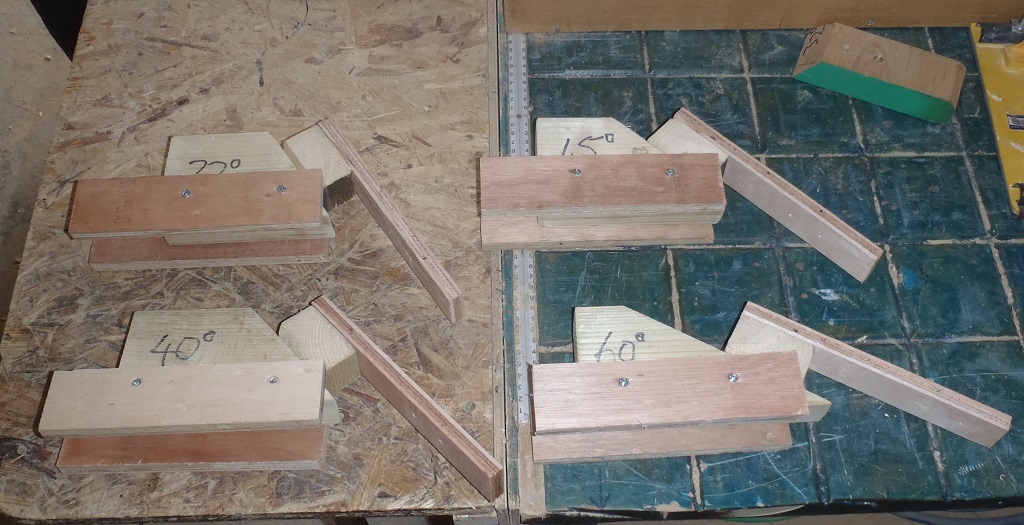
    Today we calculated and created a design for a jig to help us drill two clearance holes through the Fascia boards, positioned in such a way that the two stainless steel screws will drive into the ends of our rafters and pull tight the boards good and tight.

    Four Jig Modules Created for Screw Holes in Fascia Boards

    Facia-fixing-screws-Jigs


    There are four of them to match the different slopes of the roof sections around the house. The 32 degree and the 33 degree versions are created in one jig as the differences are very small. These jigs will allow us to repeat this task of drilling these clearance holes with precision and be consistent on all 196 “ends” that we have in total!
    The diagonal Hip rafters will have a similar jig but not for drilling the hole directly, only to draw the position of the rafter as it joins on to the 45 degree corners. There are only ten of these corners to worry about so we will deal with each one in turn as they come along and drill the holes by eye instead.

  • Planer Machine Serviced and Repaired

    Yesterday and today, the planer machine was serviced, and some repairs were performed. We had been having trouble with the power supply while using the machine and occasionally, we would trip the circuit breakers and a popping sound would be heard. So we took the opportunity to give our planer a good looking over, doing a redesign of the main power safety switch and power cord inlet (which is a large sticking out mess) and also replaced the electric motor starter capacitor. The popping sounds was the capacitor having a breakdown moment inside the can (hence the popping sound).

    Planer-Old-Power-switch-and-Inlet

    Planer-Old-Power-switch-and-Inlet

    Planer-New-Power-switches

    Planer-New-Power-switches


    The new layout for the start button and the emergency stop button are now flush fitted to the metal cabinet itself and the power cord now comes in behind the machine instead. All the safety cut-off switches (thermal overload on the motor and several absent of equipment sensors) were re-joined into the circuit behind the new buttons. Finally, we replaced the capacitor that arrived in the post and all seems to be ok .. so far!!