While the rain came down, we went back and continued with the construction of our new workshop Vacuum system. We started building up the boxing and chambers it will need for the two separate filters and non-return flappy valves. We now have the filter box made with two attachments to hold the two paper cylinder filters, a sharing layer so that if one motor is only running, then both filters are always being used to reduce the airflow through each filter and hence reduce the speed which the filters will block up. The next layer is where the non-return valves will be situated but sofar we have just made the boxing and glued it together.
Tomorrow, holes will be made to let the air through, both up and down, and the motors then can be fitted on top.
Category: Equipment and Tools
The Tools we are using on this Project
-
Vacuum System Continues Construction
-
Making a Workshop Vacuum System
This afternoon, while we waited for the glue to dry on the rafters, we carried on with the construction of a new vacuum system. It is a non-mobile system, using a vortex separator and twin motors to provide the suction power.
The first larger chamber has been made using the vortex column and this will collect all the bigger and heavier rubbish being sucked up and then a second chamber to collect everything else down to fine dust size. Today, we were building the second chamber that will have two cylindrical paper filters, two suction motors and a box to collect the smaller particles of rubbish.
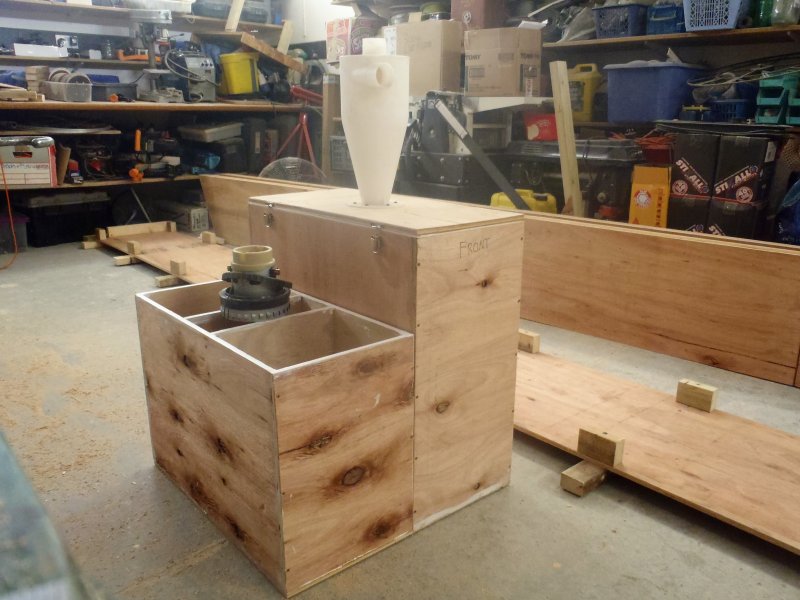
Partially-made-vacuum-system
We will carry on when we have another loose moment in our work schedule to finish it off later in the week and install it into our saw table. We will also buy new quality extension pipes so we can clean the rest of the workshop too. -
Created Rafter Template and Jig Unit
Today, we set out to build the enormous template that will hold all the pieces that makes up a rafter element. The longest rafter we have to manufacture is 6.1metres long! So we took 2 sheet of our regular 12mm thick plywood and cut 3 strips of each being 476mm wide. Then we chopped up 12 CLS timber pieces each measuring 590mm long to provide the footings under the plywood and also joiners to connect the 3 strips together. Then, we again chopped up some further 26 pieces of CLS timber but this time being 100mm long. These had a 6mm hole drilled down through the wider direction and with a 100mm long screws, were fixed down on the edges of the plywood at the same position of the footings. These smaller items provides constraint to brace and hold the flanges in place when we assemble the each rafter in turn.
There was a special requirement to cater for, for the LVL diagonal rafters and ridge beams, where all 17 of this type, comes in a variety of sizes, but most importantly, about 5 different heights. This means that we had to have some means of extending the width of the template and we did this by cutting a further 9 strips of the plywood, a set of 23mm wide, a set of 33mm and finally a set of 76mm wide strips which we can place alongside the main plywood base board and extend the overall width by a combination of different width by using one or two strips together and screw the second constraints in place to lock the whole lot tight.
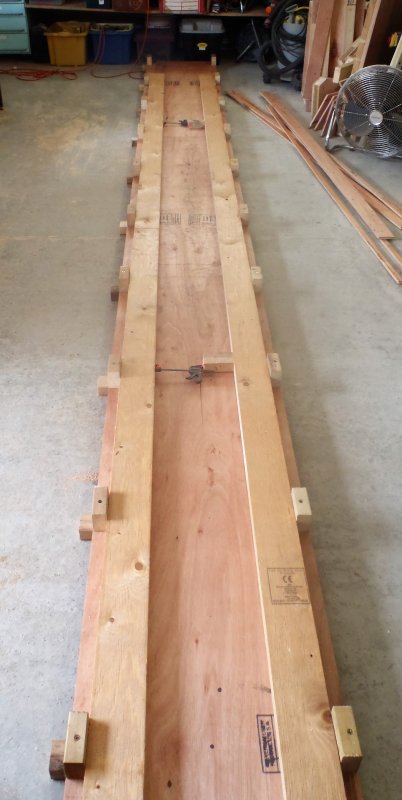
Rafter-Jig-Portrait

Rafter-Jig-Widescreen
It only just fitted on the floor of our workshop, the total length of our template is 6.6metres long! Phew!
We stopped slightly early to go back to the computer to make a definite and final list of the LVL rafters and ridges along with their sizes and how many plywood webbing strips we would need to build each rafter.
Tomorrow, we will slice up some more plywood sheets to make a stock pile of prepared webbing and also the same for the polystyrene foam strips too. -
Final Measuring Templates Created
Today, we carried on creating more measuring templates, this time, the 40 degrees and 45 degrees versions. The 40 degrees one is a pair as there are a small number of rafters that connects up to the steel I-Beams (on the short ends of the Skylight).
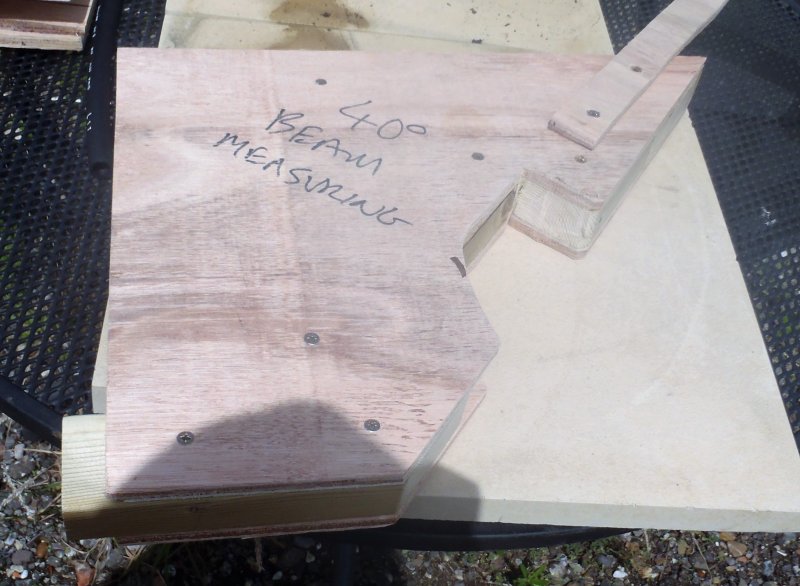
Steel-Frame-End-Measuring-Jig-40-Deg
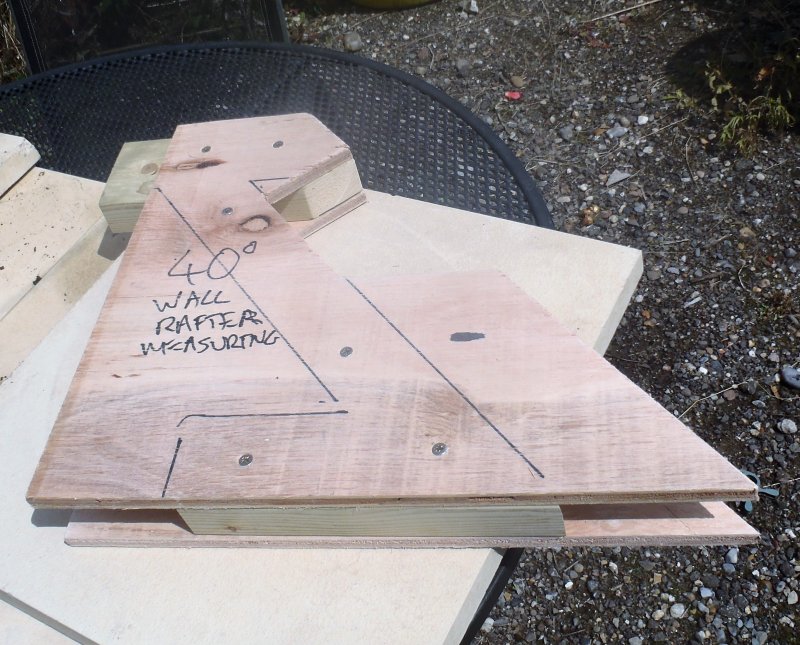
Wall-End-Measuring-Jig-40-Deg
The 45 degrees version is only needed for the wall end as all rafters goes up to hip and valley rafters instead.
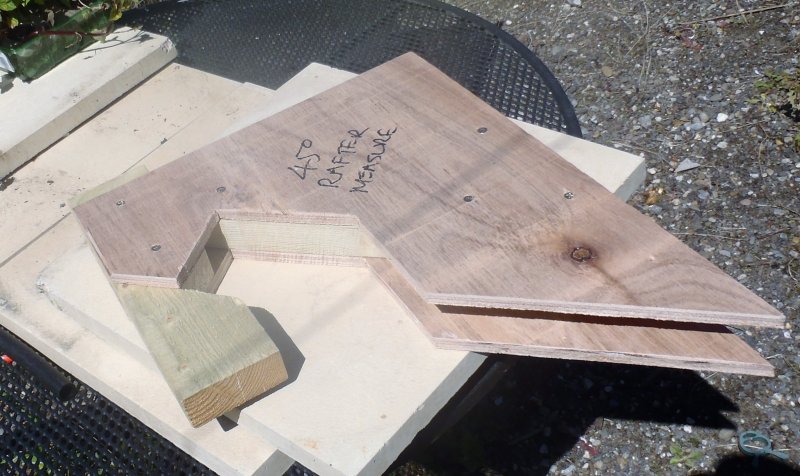
Wall-End-Measuring-Jig-45-Deg
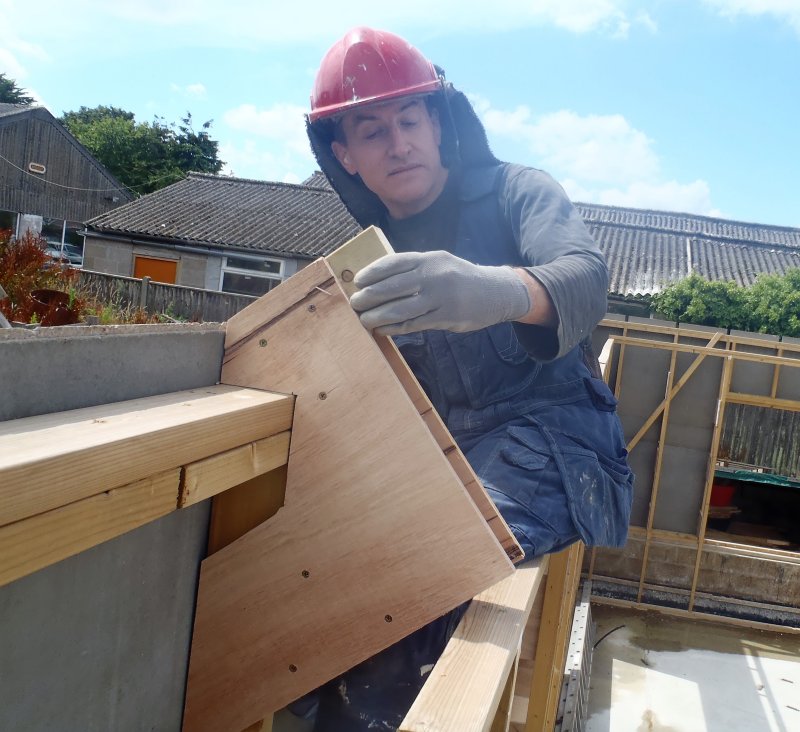
Wall-End-Measuring-Jig-45-Deg-On-the-wall
This concludes the collection of the measuring templates, a total 6 in all. The other angle of roof we got, the 60 degrees over the front porch, is just an ordinary straight forward CLS timber and we can measure the required lengths in situ at the time.
The rest of the day was doing necessary adjustments to the construction drawings to reflect the real world and the sizes of our newly arrived LVL timber which is bigger than the original drawing was done for. They are 108mm wide instead of 100mm, and also we decided to make life a little simpler and not have fancy crafted double slopes and valleys in the top and bottom edges of the LVL and just leave them flat. This means adjusting the overall height hence why we have sat down at the computer and did the work of updating the drawings. -
Measuring Template and Scarf Joint Jig Created
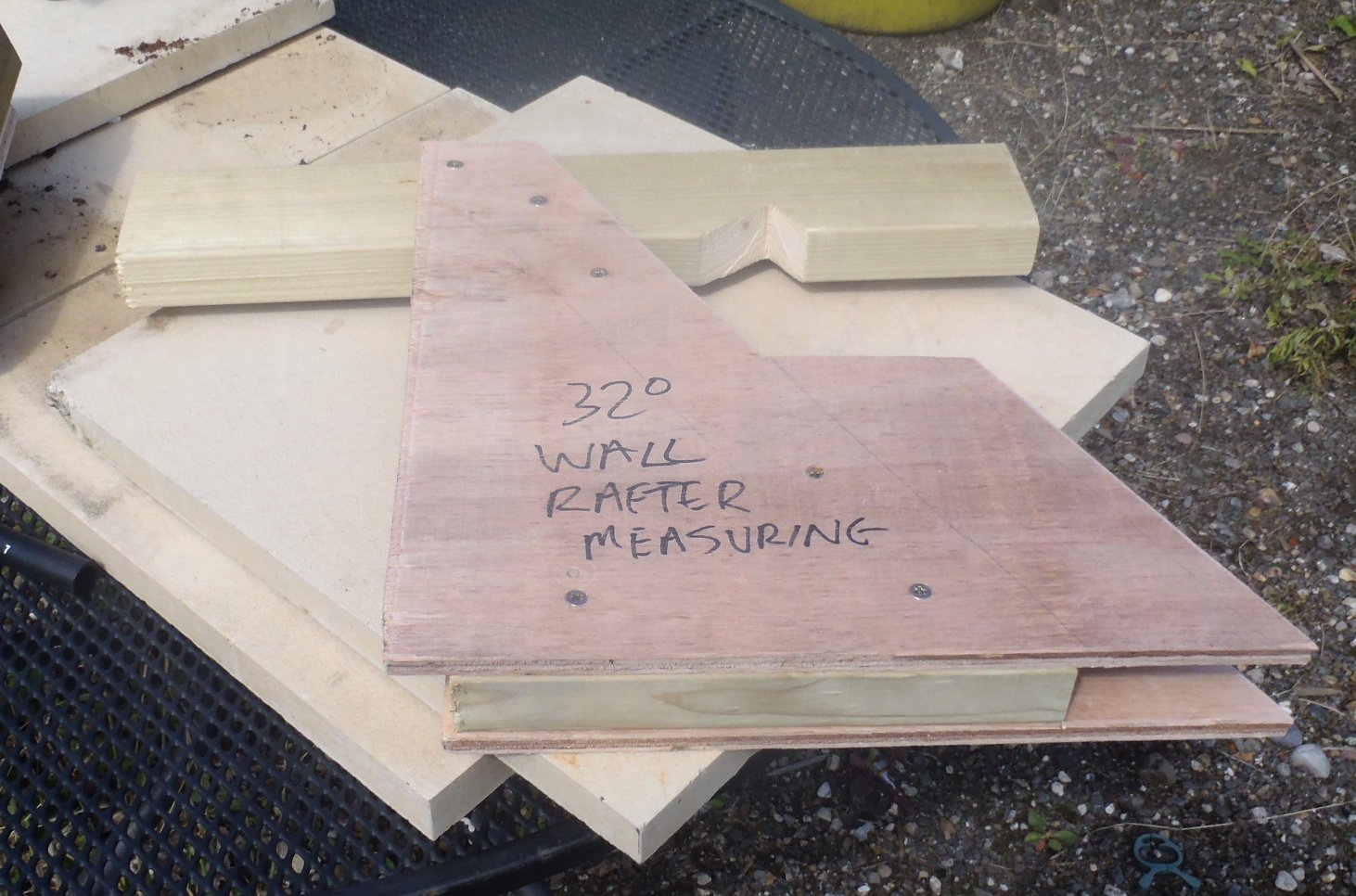
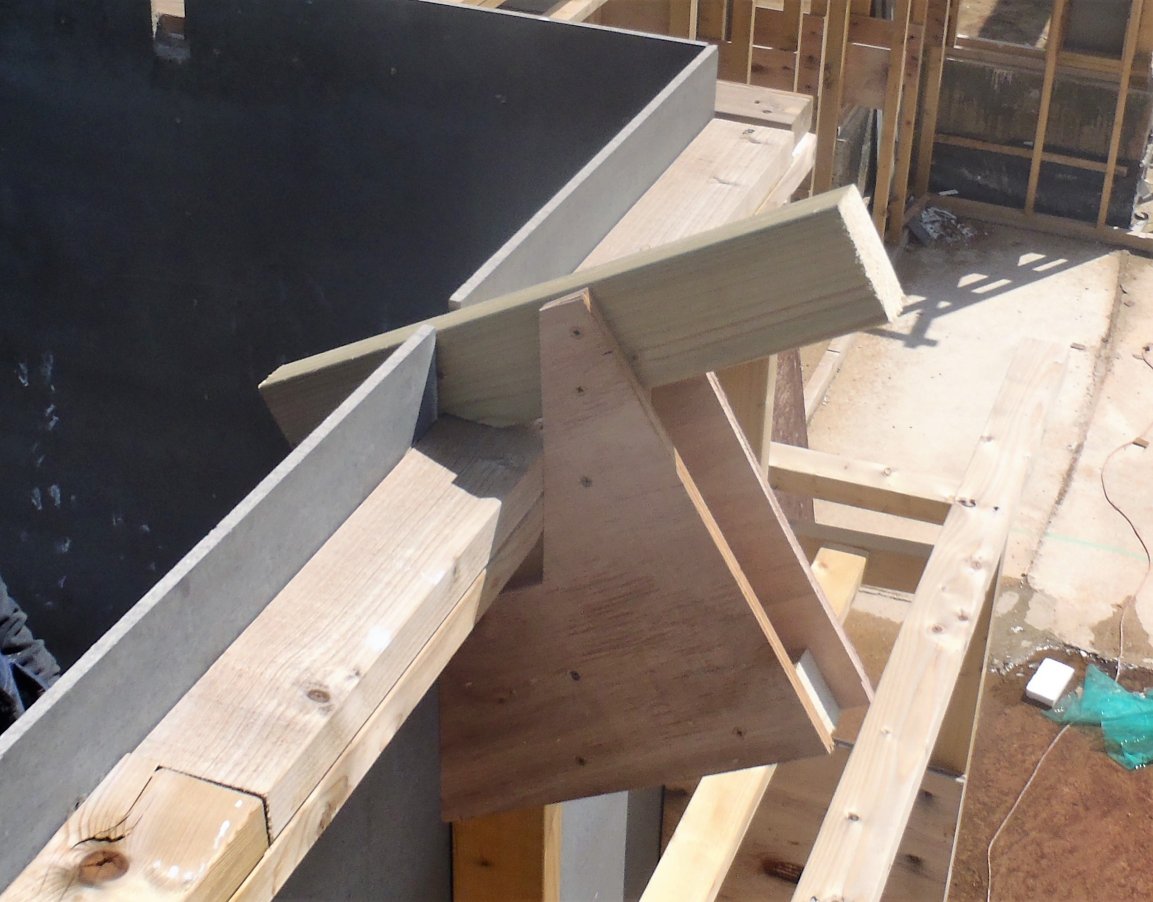
Today, we set out to create several templates to help us measure the distance between the I-Beams up on the top of the roof and down to the walls. Every rafter will be an unique length especially when going down along the diagonal hip or valley rafters.
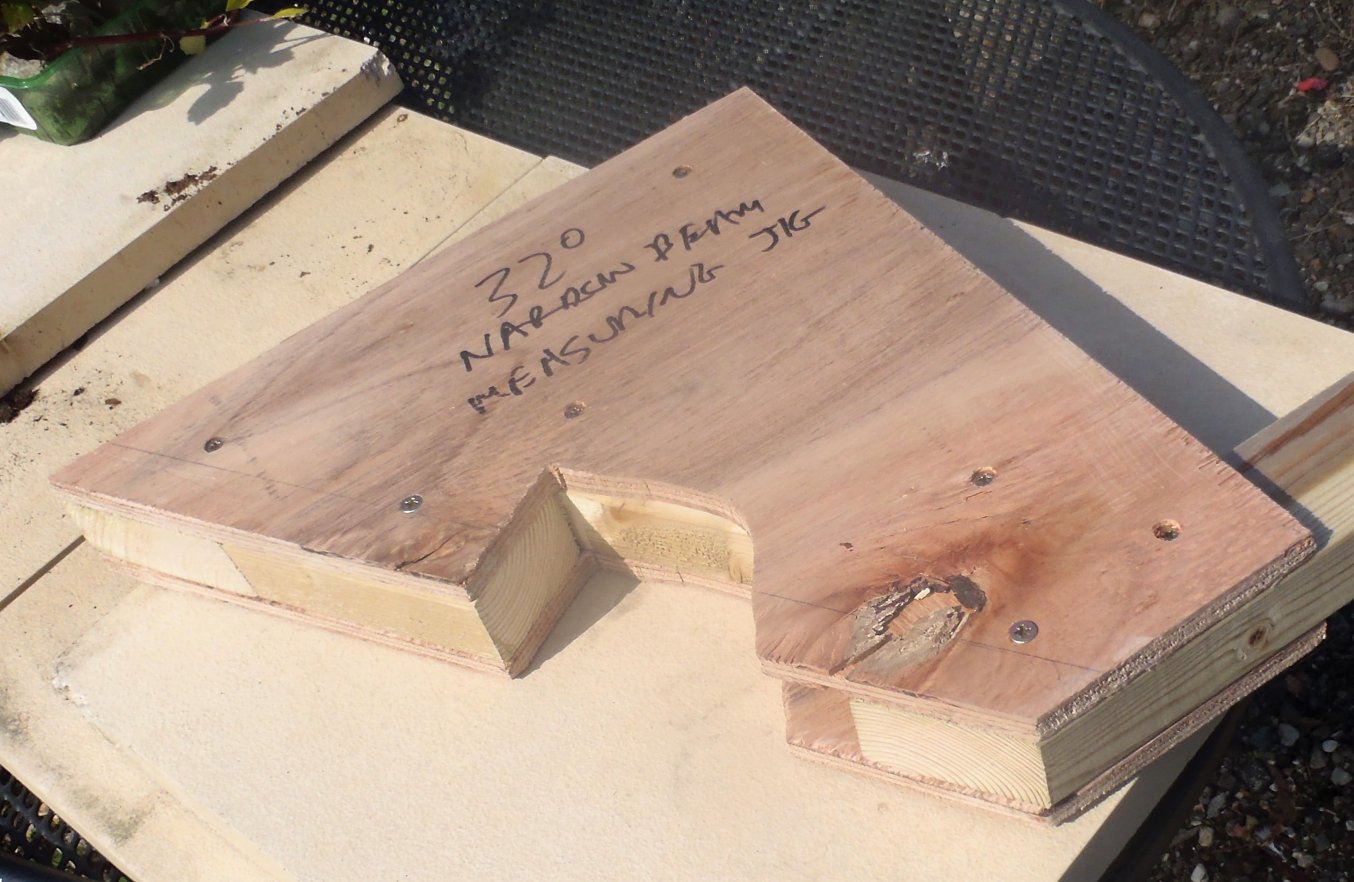
we started with the 32 degree version and made one for the wall and two for the I-Beam end.
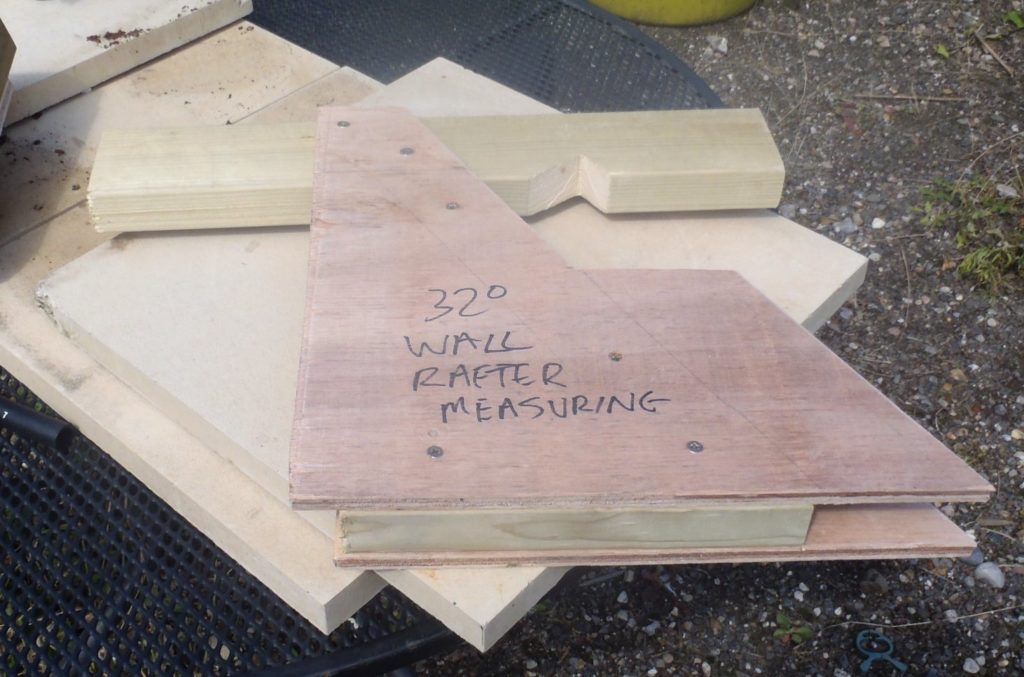
Wall-End-Measuring-Jig
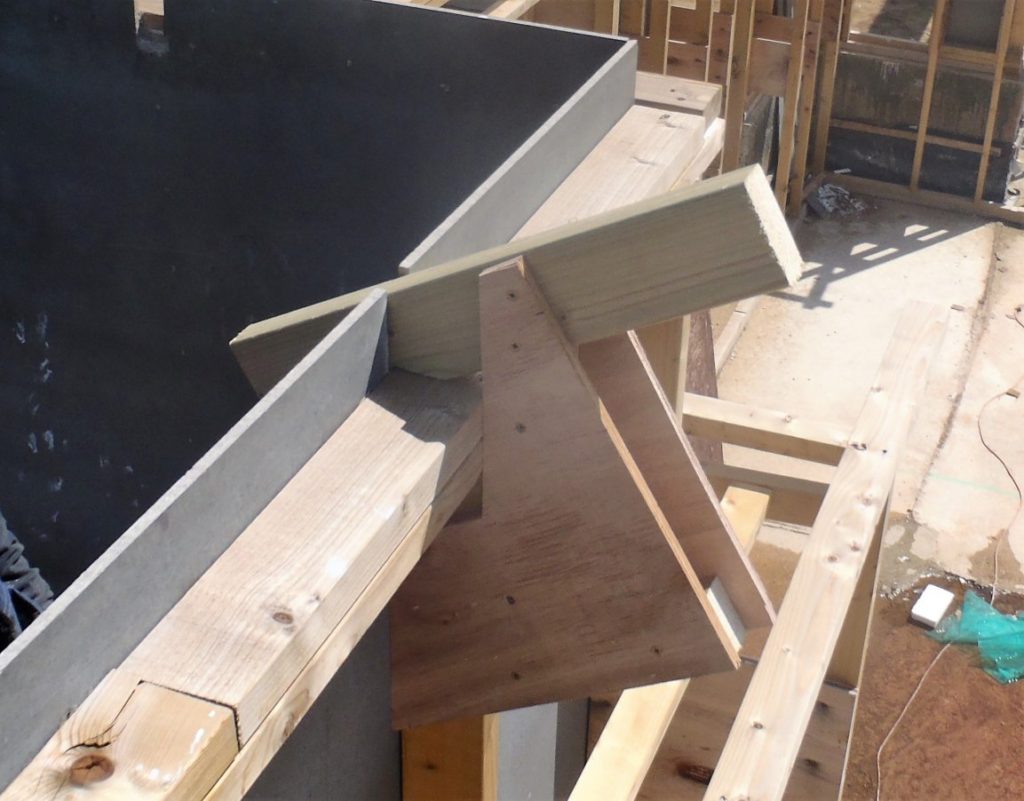
Wall-End-Measuring-Jig-On-the-wall
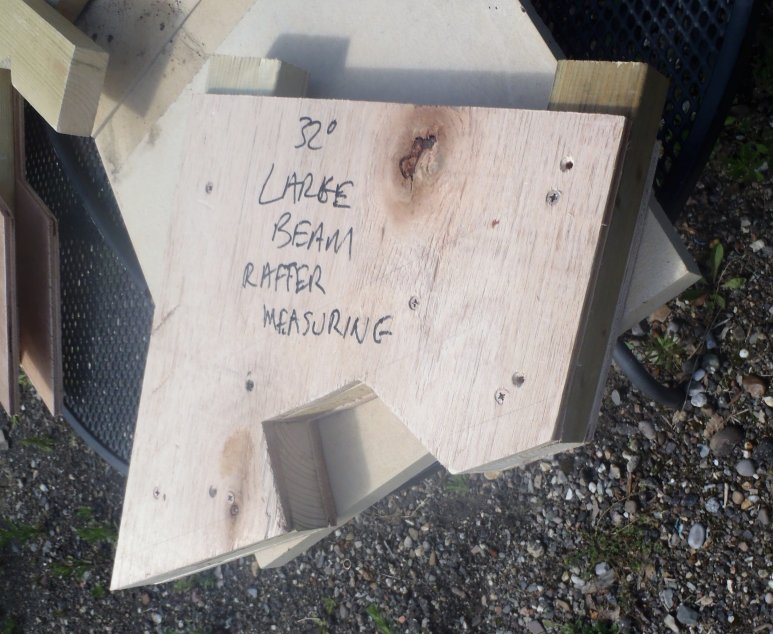
Steel-Frame-End-Measuring-Jig-32Deg-Wide-Beam
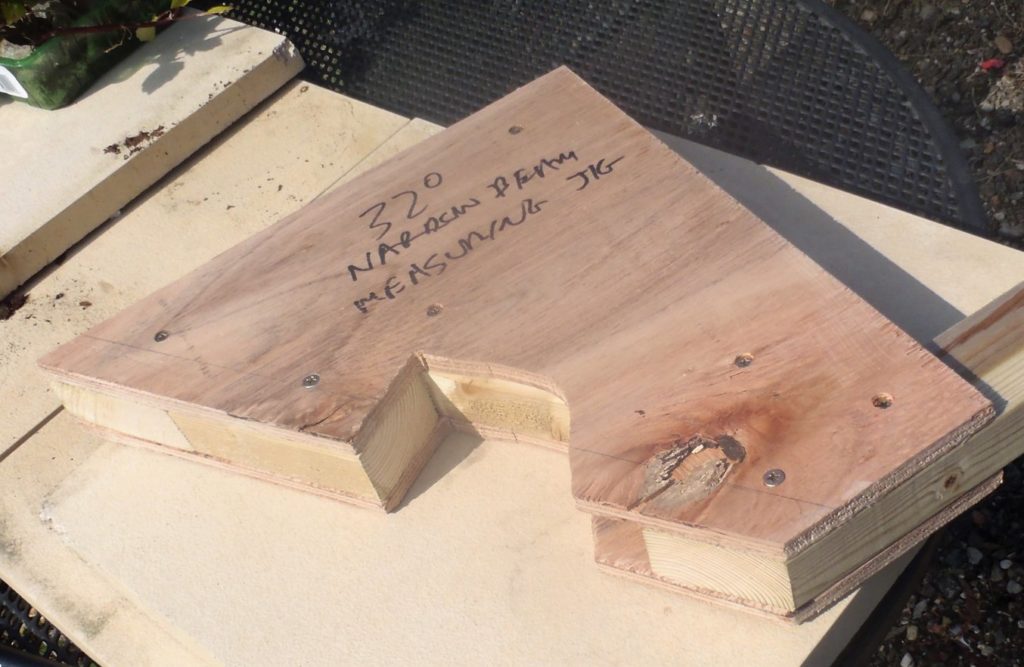
Steel-Frame-End-Measuring-Jig-32Deg-Narrow-beam
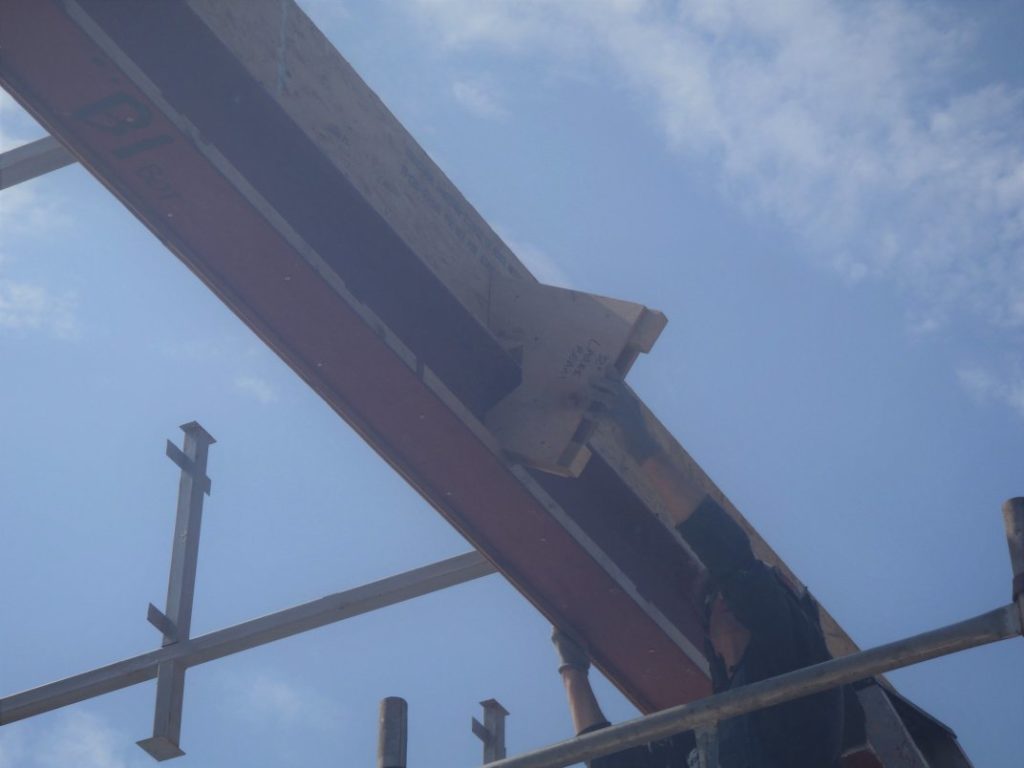
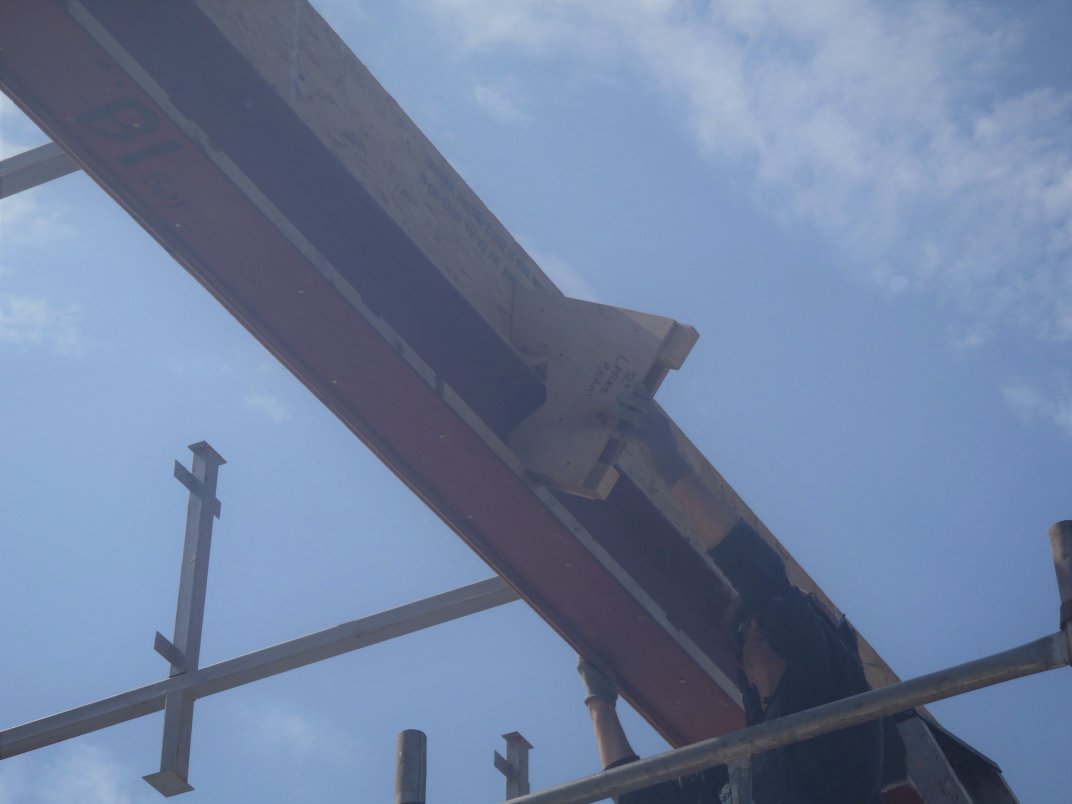
Steel-Frame-End-Measuring-Jig-On-the-Beam
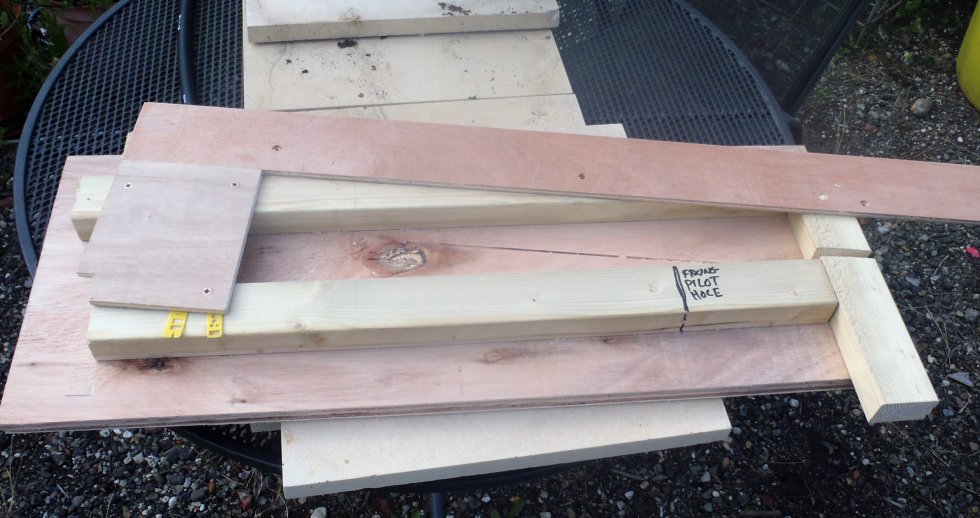
We needed two because the steel I-Beams we got are of two different widths so the template needed to hook up and bridge around the steel flange to land flat upright against the Kerb.Then, to finish off the day, we created a Nibbed Scarf joint maker. This is a very long shallow diagonal cut across the timber with little notch ends. The traditional wisdom is to have at least a 5 to 1 ratio of the length being five times longer than the width of the piece of timber being joined together. We made a jig to help us guide the circular saw to cut across the end of the 89mm CLS timber pieces.
Scarf-Joint-Jig
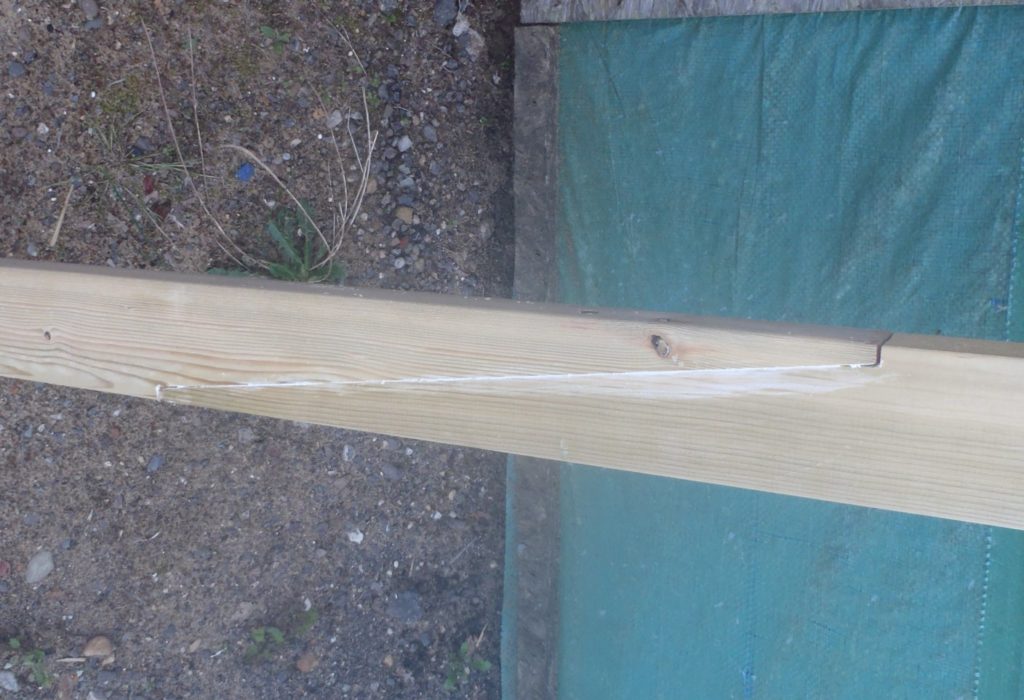
Completed-Test-Scarf-Joint
We tested this out and have glued and screwed together a couple of short pieces of the CLS timber and we will give it a week to dry and cure properly before we try bending the joint against a fresh CLS timber and see what sort of deflection we will get or indeed how much weight before breaking completely!!
Tomorrow, we will continue and make the 40 degrees version of the measuring tool and then carry on with other templates and jig as needed. -
Birds Mouth Jig and Eve’s End of Rafter Template is Finally Created
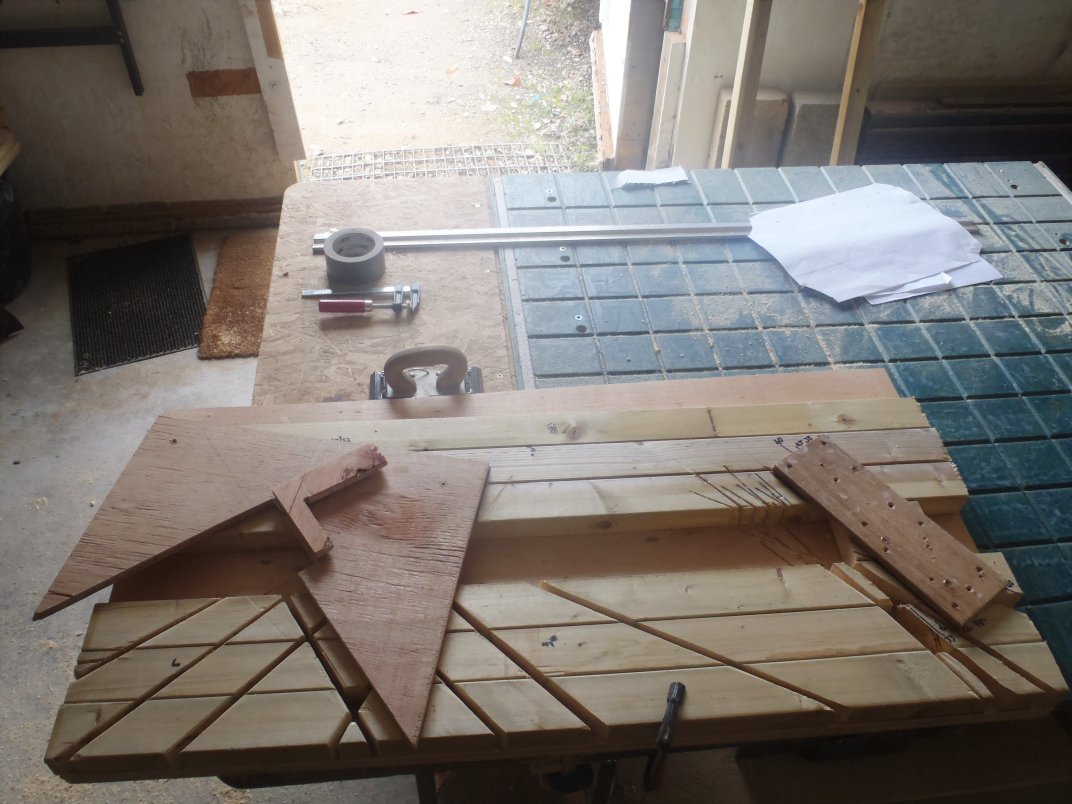
Today, we resumed our creation efforts of a Birds Mouth and End of Eve template. We had a think overnight and we have decided that we could use the battery circular saw machine after all. After careful considerations, we started building up the layers of the template and then lines of 63 CLS timber, three lines at the bottom and a gap for the 89mm CLS Rafter Flange and another three lines of 63mm CLS timber. All this was glued and screwed together because we couldn’t rely on the screws surviving when we cut a whole series of clearance slots at the different angles we will need for making the Birds Mouth. We have five angles in total as follows:
• 32degrees – rafters coming down onto Wall A and E plus M and I.
• 33 degrees – Rafters to Wall B and D plus L and J.
• 40degrees – Rafters to Wall P, N and H.
• 45degrees – Rafters to Wall O and K.
• 60degrees – Special Rafters for Porch on Wall C.
We printed off on A3 paper all the Birds Mouth shapes and stuck it down on our wooden template and drew lines across the surface and used our heavy duty mains powered circular saw which has a thick strong saw blade in it and sliced clearance channels along 8 separate slots. We then did the same at the other end of the template to provide a place where the Ends of the Eve is also done at the same time as both the Birds Mouth and where exactly to cut the end is very much related to what roof angle we are dealing with. The important factor is that the gutter’s must all line up to the same height, no matter what angle the roof is. So we had a collection of numbers to position where the jig needed to go for doing the end of the eves. Again, the heavy duty saw came into its own in making more slots so our battery saw can just slide along the guide and just cut the 89mm CLS timber where we needed and get the job done quickly.
Next, we took a square piece of plywood and cut out a right angle segment (plus an extra piece to accommodate for the battery saw base plate) and this will provide the actual and exact guide for running the battery saw long. This was similarly done for the other end to provide a guide for the different angles at the end of the timber which will in turn be connected to the Facia board.
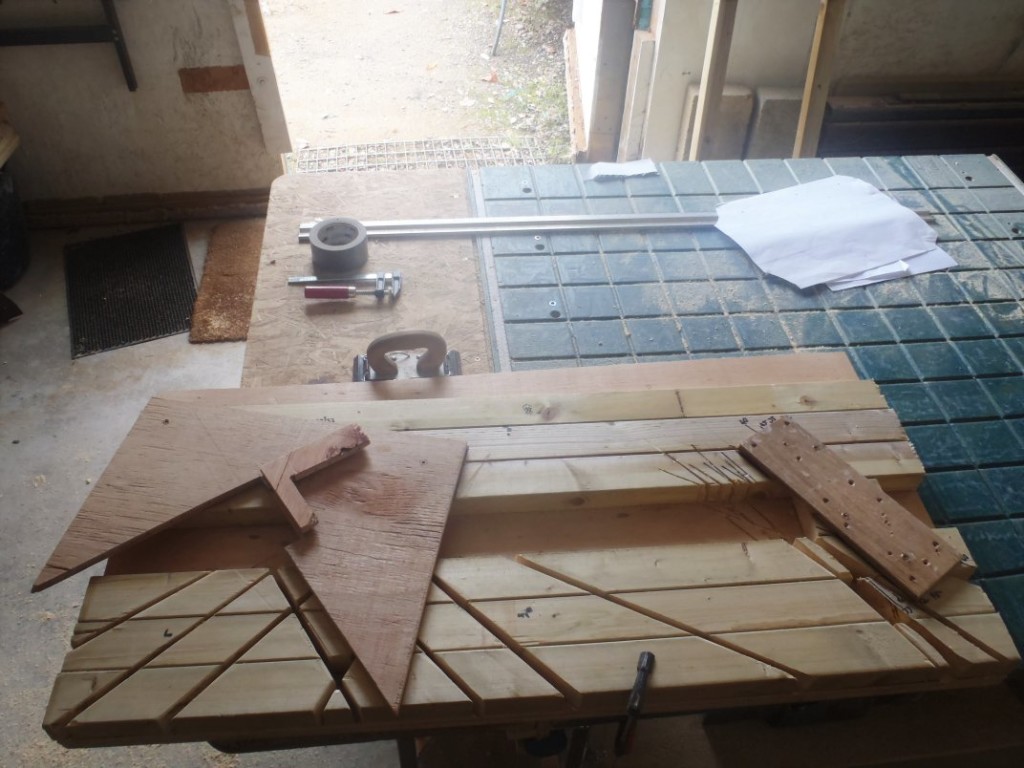
Birds-Mouth-and-end-cutting-jig
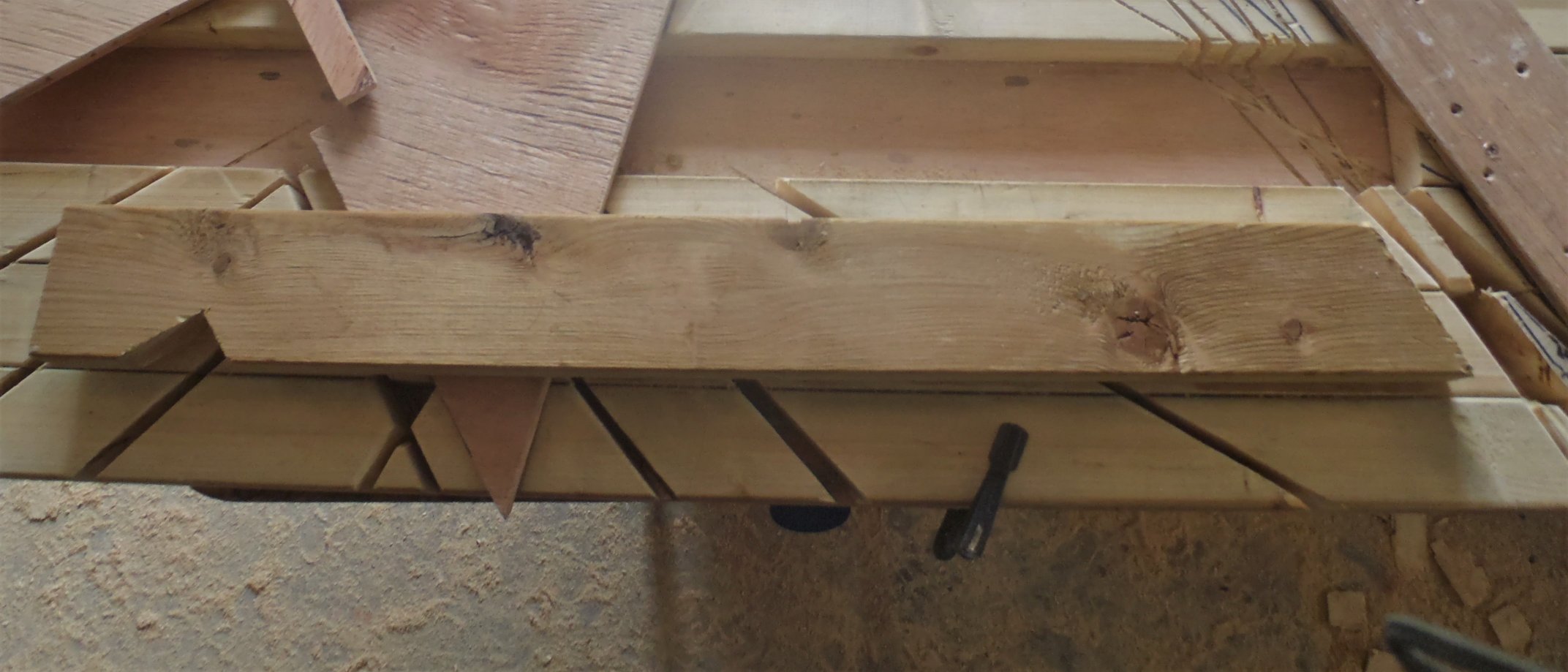
We were successful at the end of the day, by creating a Birds Mouth notch and the correct angled cut on the end of the timber as seen below in the picture
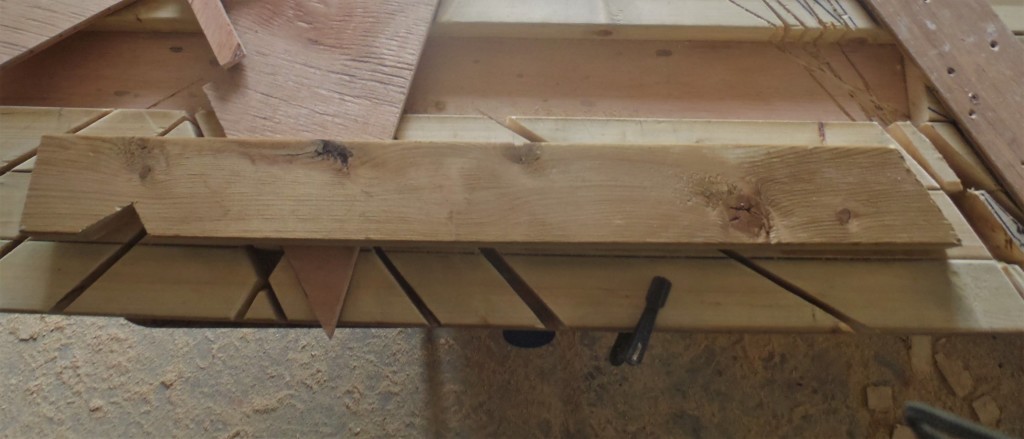
Test-piece-cut
It is quite complex but we made it or at least we hope, so as we haven’t used it in anger under full production runs so we will have to keep our fingers crossed!
Tomorrow, we continue with the next tools and jig template like the measuring template to help us get the length of each rafter accurate and be able to trim little amounts off the top end. -
Bird’s Mouth Jig Much More Complex Than Originally Thought
This afternoon, we tackled the next tool and template we will need for the production of our roof rafters and this time, it was the Bird’s Mouth jig template. We thought we could use the jigsaw machine to give us the means of quickly cutting the two straight sides of the “notch” at the bottom of the 89mm CLS timber. But our tests revealed that the jigsaw does NOT like being guided by an external straight edge, it kept wanting to curve towards the guide edge and bending the blade! it seems that jigsaws works best free form, meaning that one has to follow the line by eye, rather than the whole machine being guided by something else. it was quiet annoying to realise this!
Next, we tried using a router with a long straight cutter bit but the piece of our timber we are trying to cut is 38mm thick and it proved too hard for the router machine to cope with it all! Phew! Finally, we looked at using a circular saw! But, even though it cuts a lovely straight line, the machine itself is not very symmetrical and would have meant a very complicated template with moving flaps to make it work properly!!
That brought us to the end of the day and we abandon that task as well!!
Tomorrow, we will tackle this problem again and probably end up with a simple jig to guide a hand saw and we will have to do the job of making over 200 Bird Mouth notches by muscle power alone! Phew! -
Rafter Joint Squeezer Tool Created
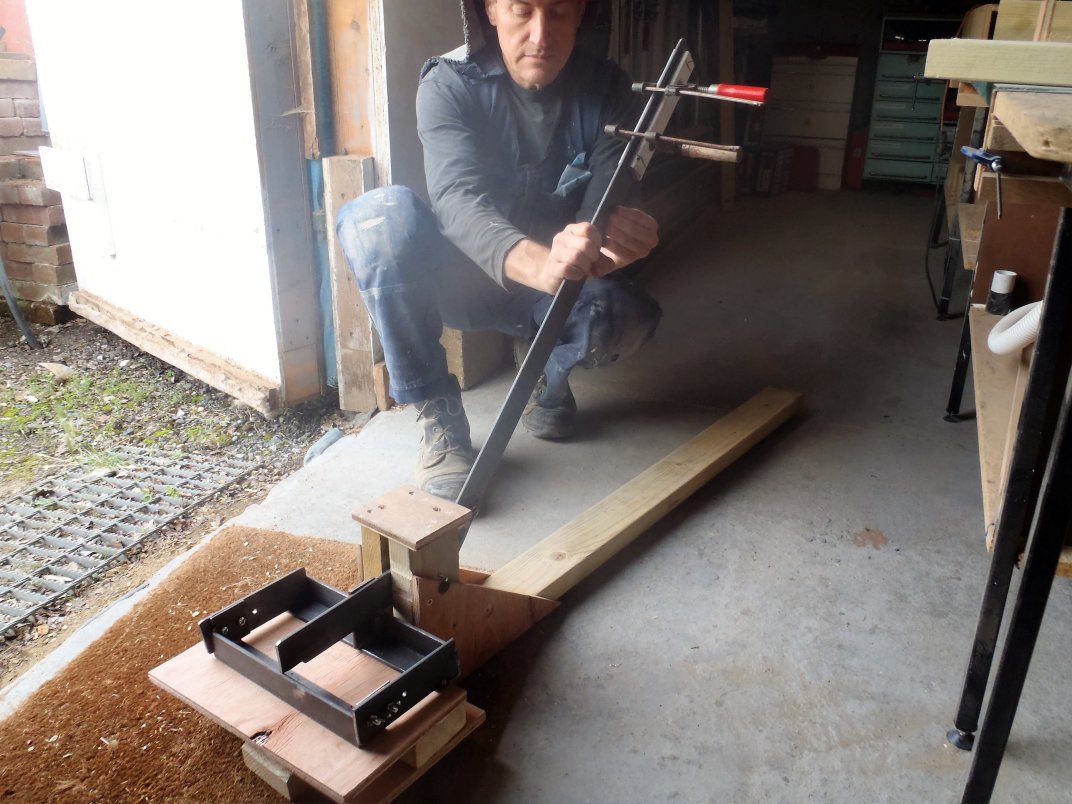
We made our first tool today! It is a joint compressor for squeezing the webbing (the plywood layers) hard onto the flanges (89mm or 63mm CLS timber planks) and making sure the glue is spread as thinly as possible to gain the maximum strength in the joint.
It is made using steel angle iron pieces with side arms and little upright piece and then a long “handle” with a couple of holes to provide the pivot point. A wooden footplate and sturdy short pillar to hold the bolt that is holding the metal part of this tool at the correct height to squeeze the rafters, first with just one plywood layer and then again when the second layer goes on later.
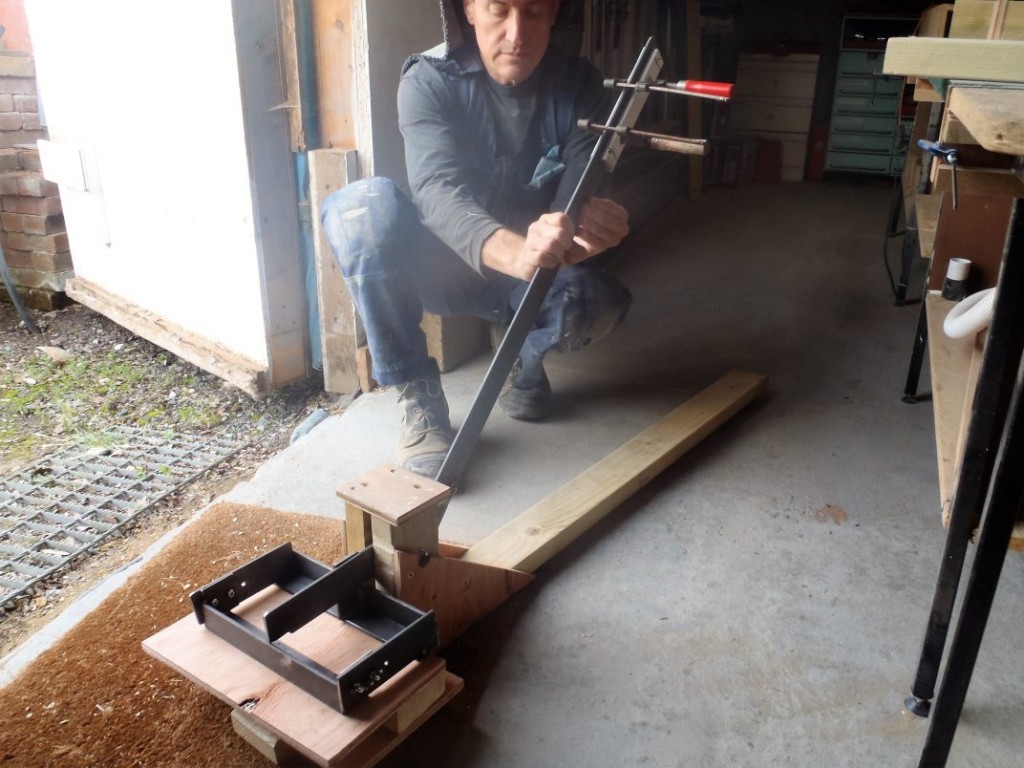
Joint clamp – The machine
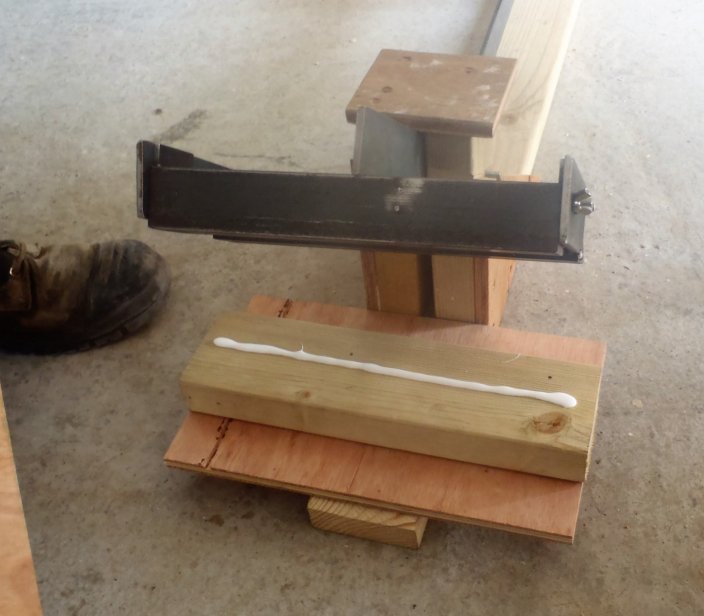
Joint clamp – First Apply glue
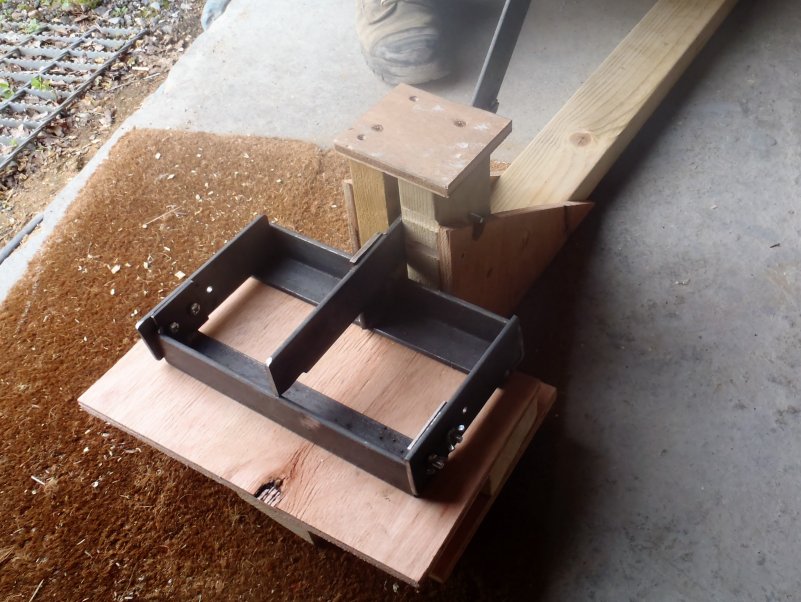
Joint Clamp – close and apply pressure
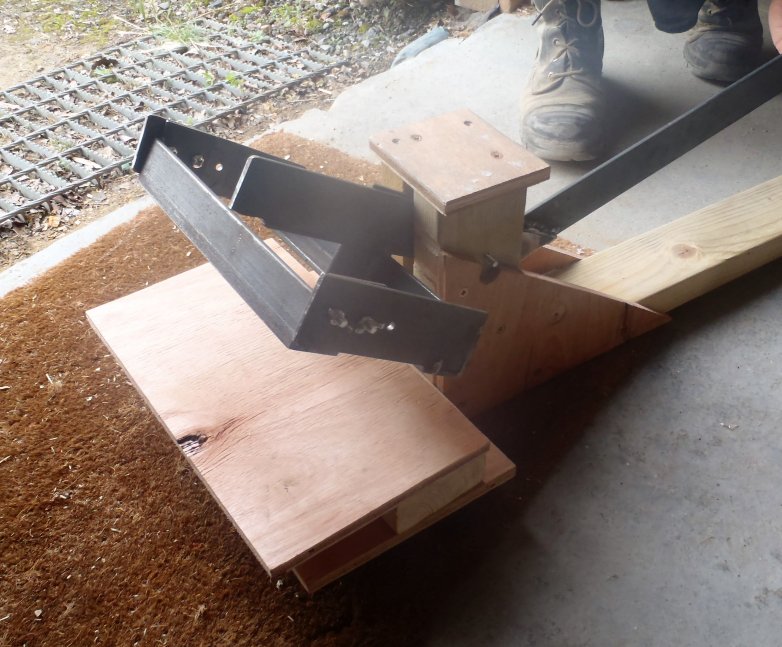
Joint clamp – Open and move to next position
This tool will slide under the edge of the template that will hold the component parts of the rafter and squash the joint and hold it tight while the nail gun comes along and puts in four or five nails to lock things together while the glue dries and make it good and permanent.
Tomorrow, we will work on the next tool and template, probably the Bird Mouth and “end of Eve’s” template! -
Tidying Up and Planning the Next Stage of Work
We did some miscellaneous tasks around the building site this afternoon, at the same time, talking about what we needed in terms of tools, jigs and templates to help us with the manufacturing of our roof rafters.
The tasks were as follows:
• Fixed and cleaned out the water pump non-return valve.
• Tidy up the workshop of all the polystyrene foam waste bits and the tools
• Sprayed weed killer around different areas of the building site
• Trimmed back the old hedge along the Loke
• Repaired the Sabre Saw where the blade wouldn’t hold in place anymore(a little spring clip has been knocked out of position).
• Emptied RubbishThe tools and templates we talked about are as follows:
• A squashing tool to ensure a tight joints between the plywood webbing and the flange of all the rafters
• A measuring jig that hooks up on the steel I-Beams and the outer walls to allow us to check the distance down to the outside walls.
• A rafter template to hold the long lengths of the timber and plywood in place, ready for gluing and nailing.
• A birds mouth jig for making the notch in the flange
• A jig to create an nibbed scarf joint (long diagonal joint with stepped ends) to join up two CLS pieces together making the required stronger lengths.
• Planning the logistics of materials and workshop layout for supply of parts and placement of finished items.On Monday, we can start in earnest with all those items of action points above!! Grin!
-
Router Straight Cutter Ruined!
During the task of cutting the vertical slots into the cement panels on top of the walls, Shaun ruined the router cutter bit on a nail! He didn’t see it in time or rather feel it and remove it with a crow bar and hammer! The cutter bit now has smashed edges!
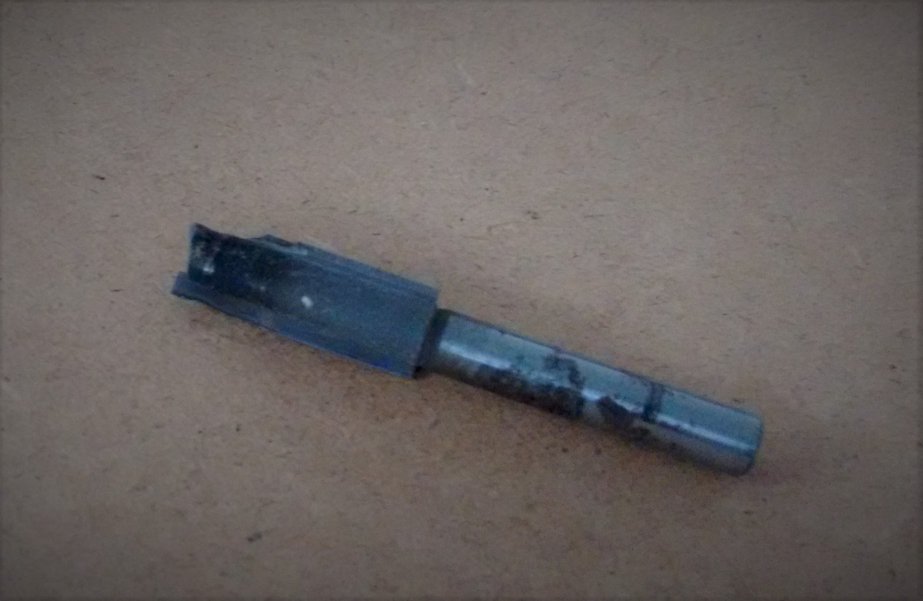
Broken-cutter
So an hour was lost while we went off to the shop to buy 5 more bits, some spare ones too just in case!!