Category: Equipment and Tools

The Tools we are using on this Project

  • Router Machine Blew A Capacitor!

    The Bosch router machine suddenly stopped working while cutting the window on the “O” wall of the Great Room. It blew the fuse in the plug back in the garage!

    We managed to track down the problem to a capacitor which had blown up! We replaced it with a new one (measuring 0.15 microfarads 400 volts) which we assumed that this capacitor suppresses spikes from the motor when you initially start the machine.

    It took about an hour to do the repair job and get it back into working order again!

  • Hot Wire Slicer, Router Template, Laser Guide and 3D Glue Spreader

    While half the workforce is disabled, Stephen was busy designing and building several new pieces of equipment and tools to help with various future jobs that will be needed to be done as part of building the rafters and walls.
    The tools were created approximately in the following order:

    Polystyrene Foam Board Hot Wire Slicer
    Insulation-slicing-Triple-hot-wire-cutter
    Insulation-slicing-Triple-hot-wire-cutter

    Hot-wire-power-supply

    Hot-wire-power-supply


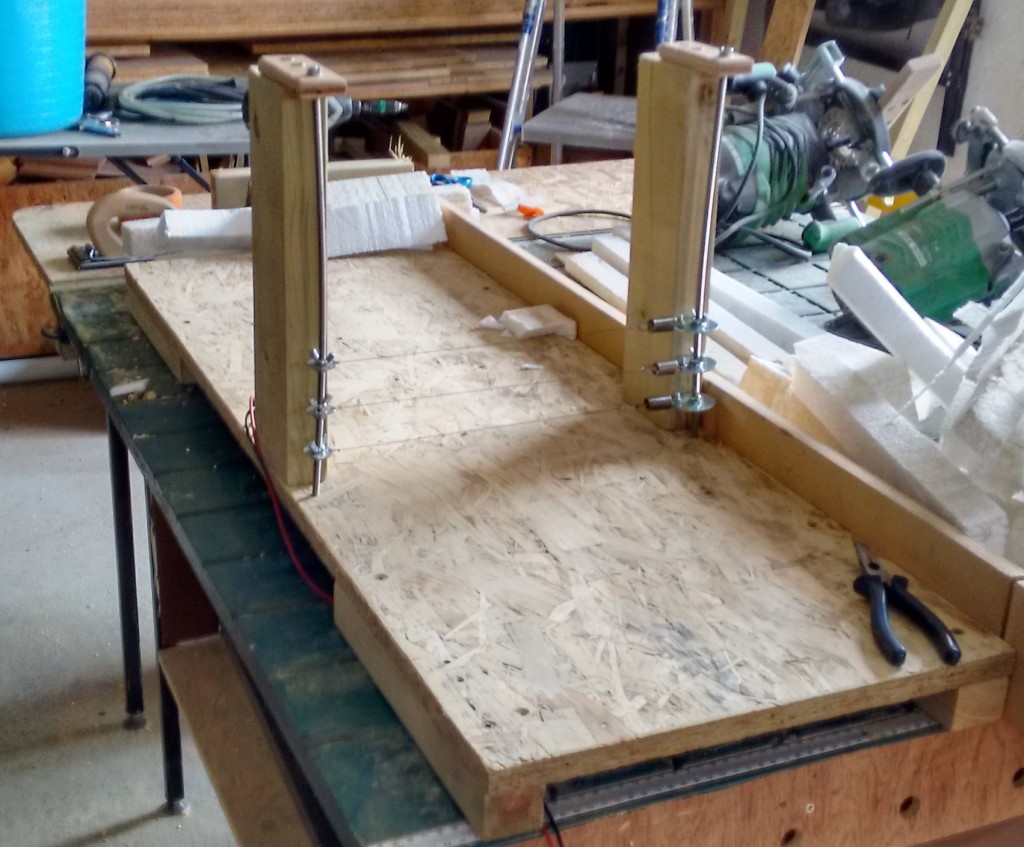
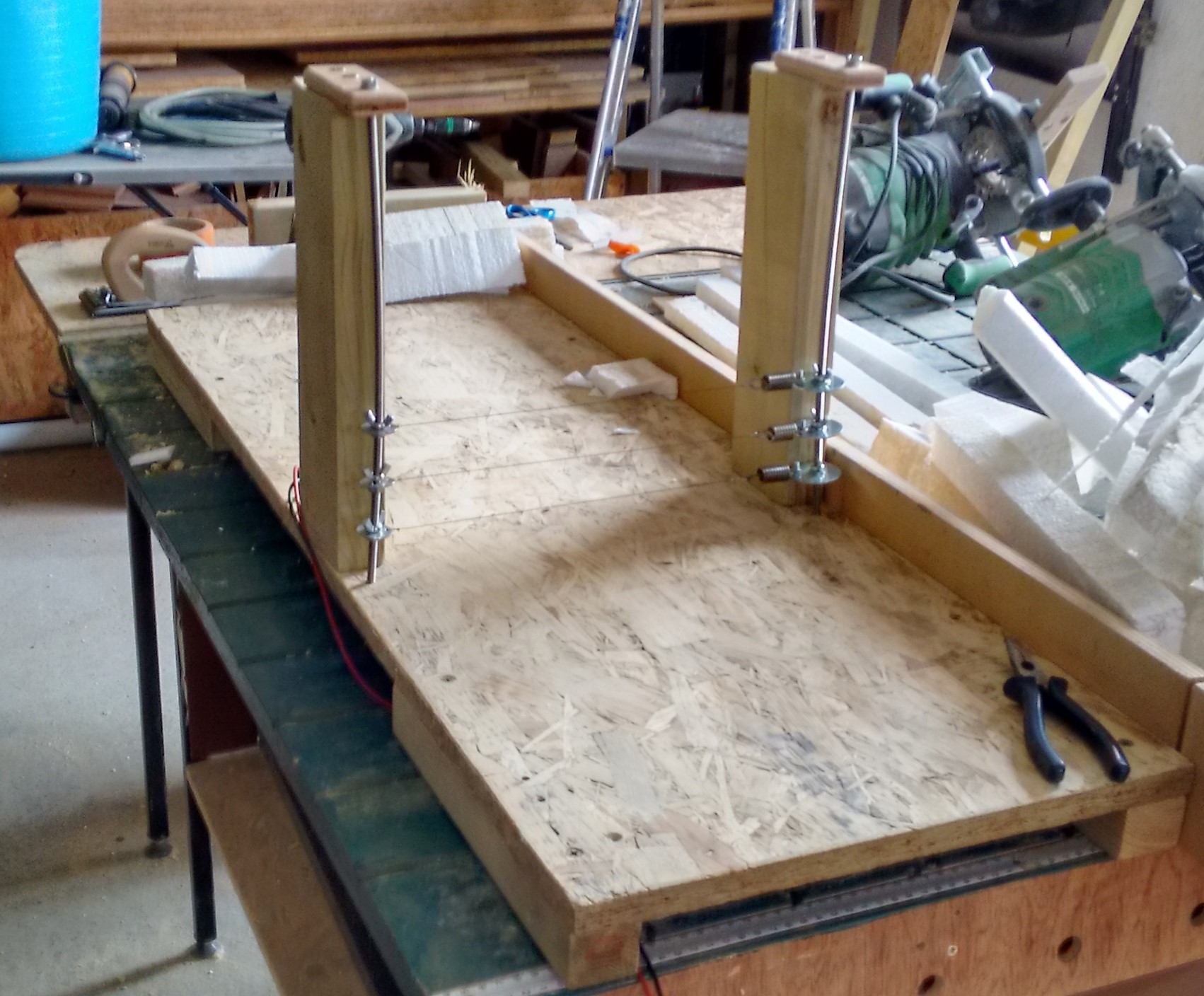
    We needed a tool to slice our pile of 8 foot by 4 foot 120 mm thick boards into much thinner sheets (38mm thick) and a few different heights (between 248mm and 265mm). We couldn’t buy the correct thickness of sheet (only 35mm or 40mm) and 120mm thick boards were much less than 3 times the price of the the thinner sheets so we decided to slice the thick sheets down.
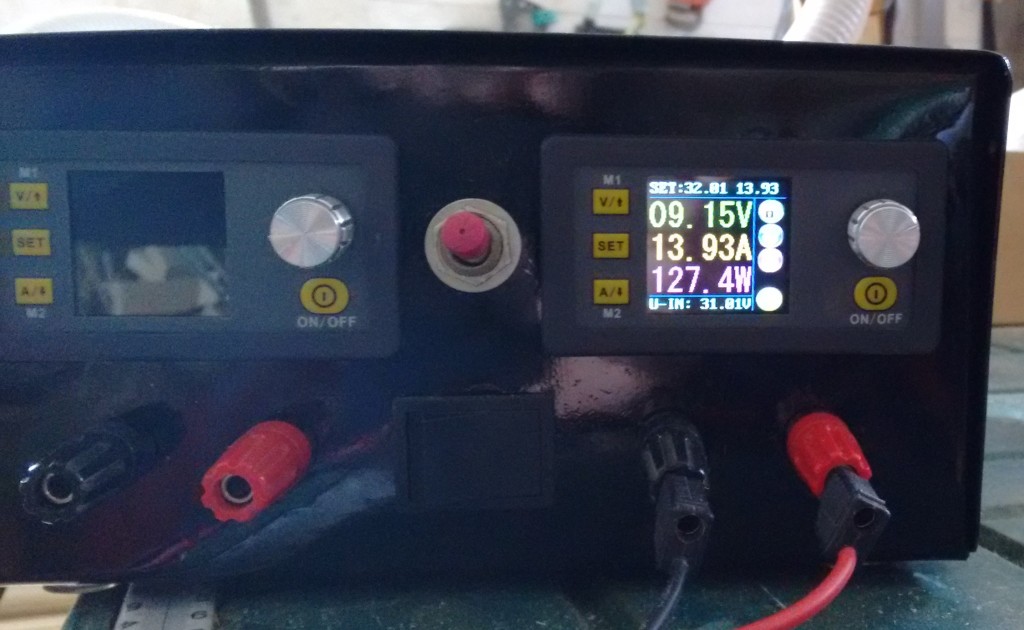
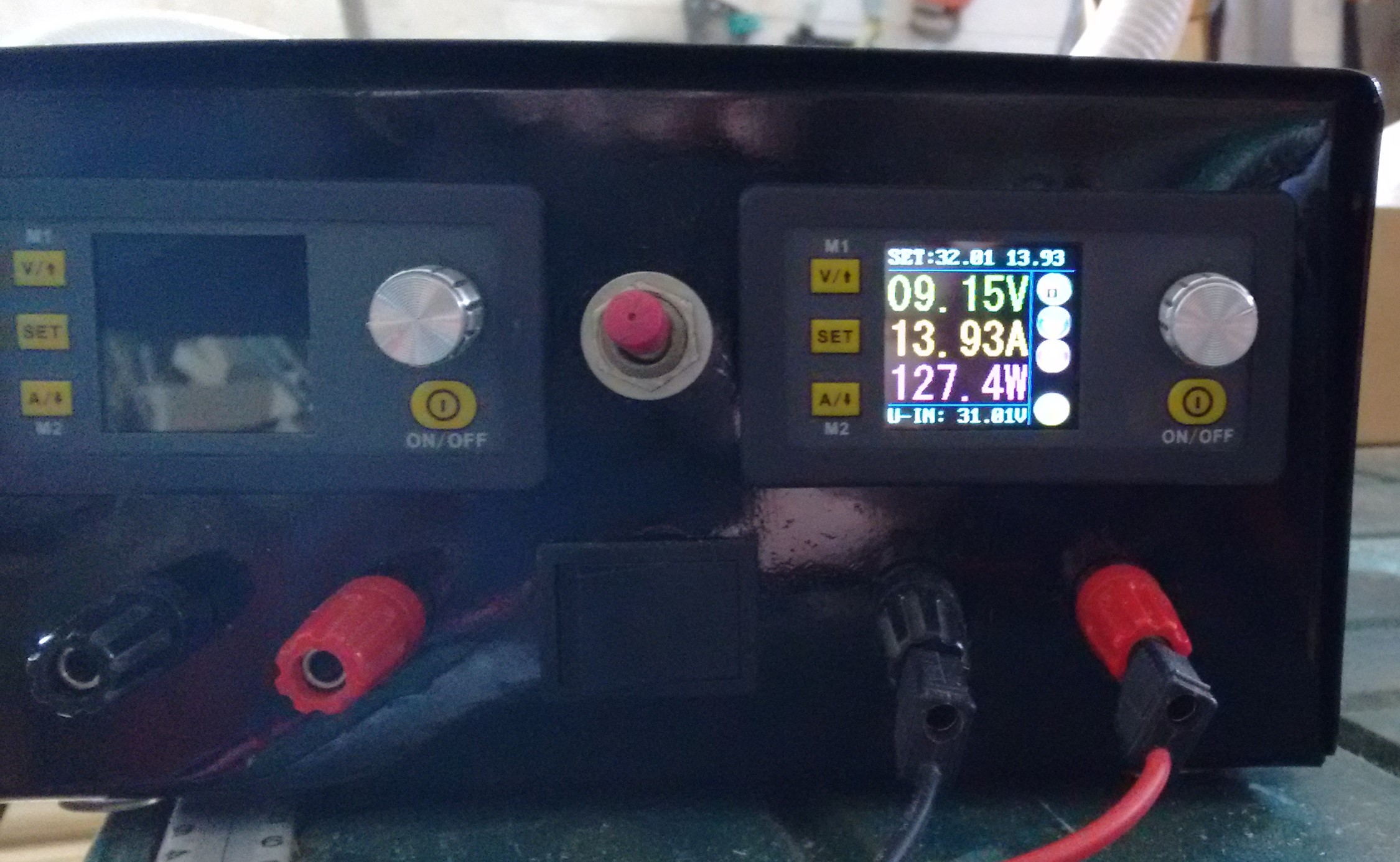
    Using high resistance wire to form the basis of the machine, we can have 1, 2 or 3 wires, fully adjustable to different heights and separations, and connected to a high powered electrical generator to heat up the wires to melt the polystyrene foam.

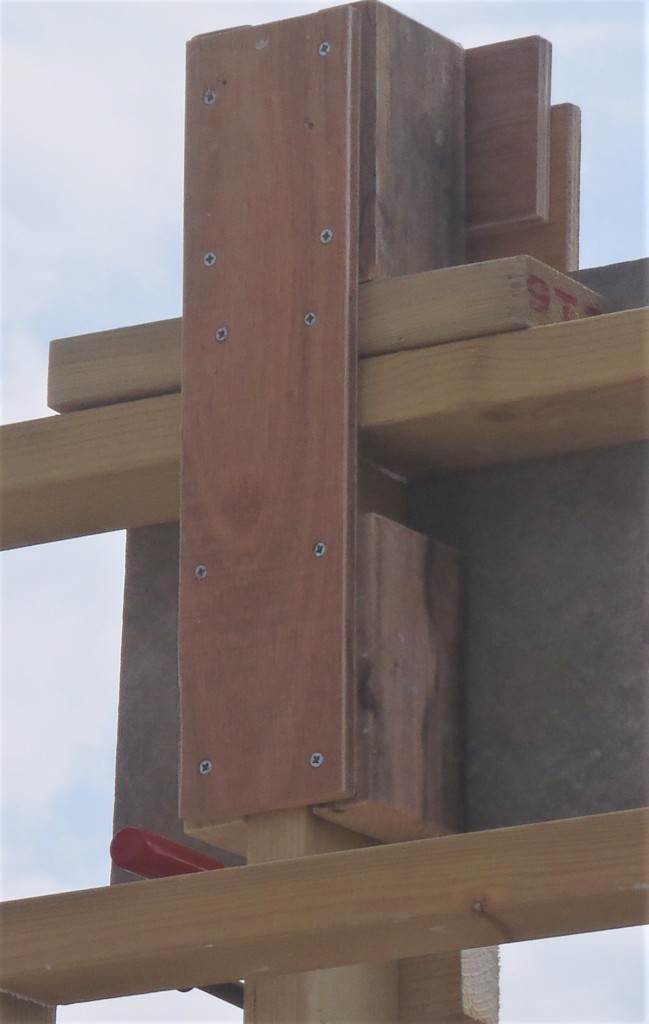
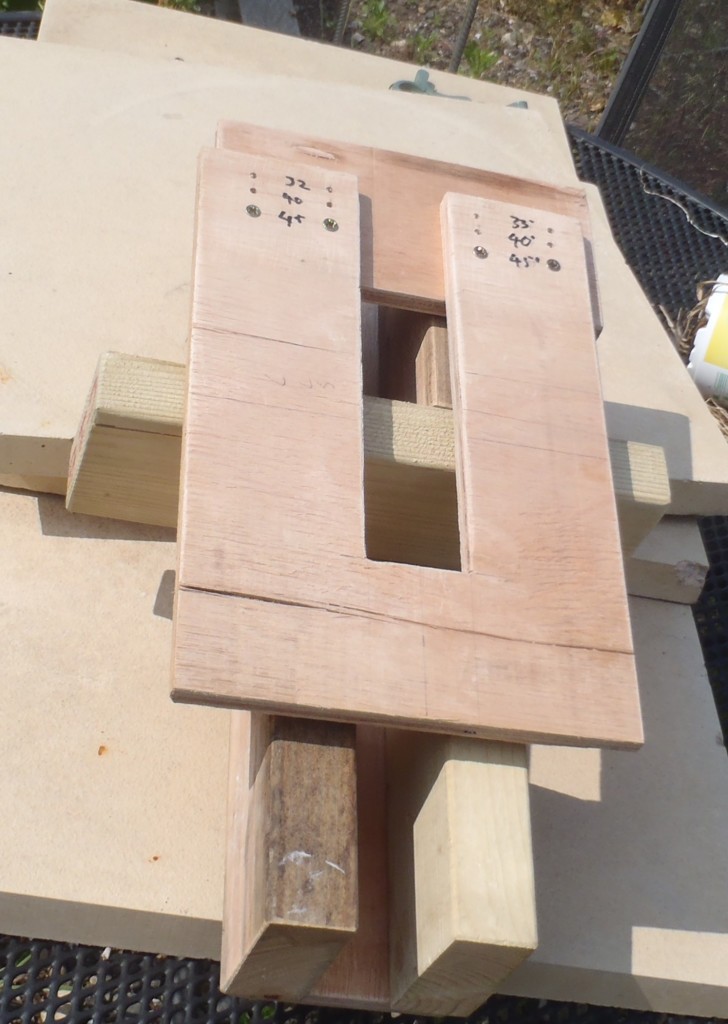
    Router Jig to Cut Rafter Slots in Cement Boards
    Rafter-end-slot-cutting-template-1
    Rafter-end-slot-cutting-template-1

    Rafter-end-slot-cutting-template-2
    Rafter-end-slot-cutting-template-2

    Rafter-end-slot-cutting-template-3

    Rafter-end-slot-cutting-template-3


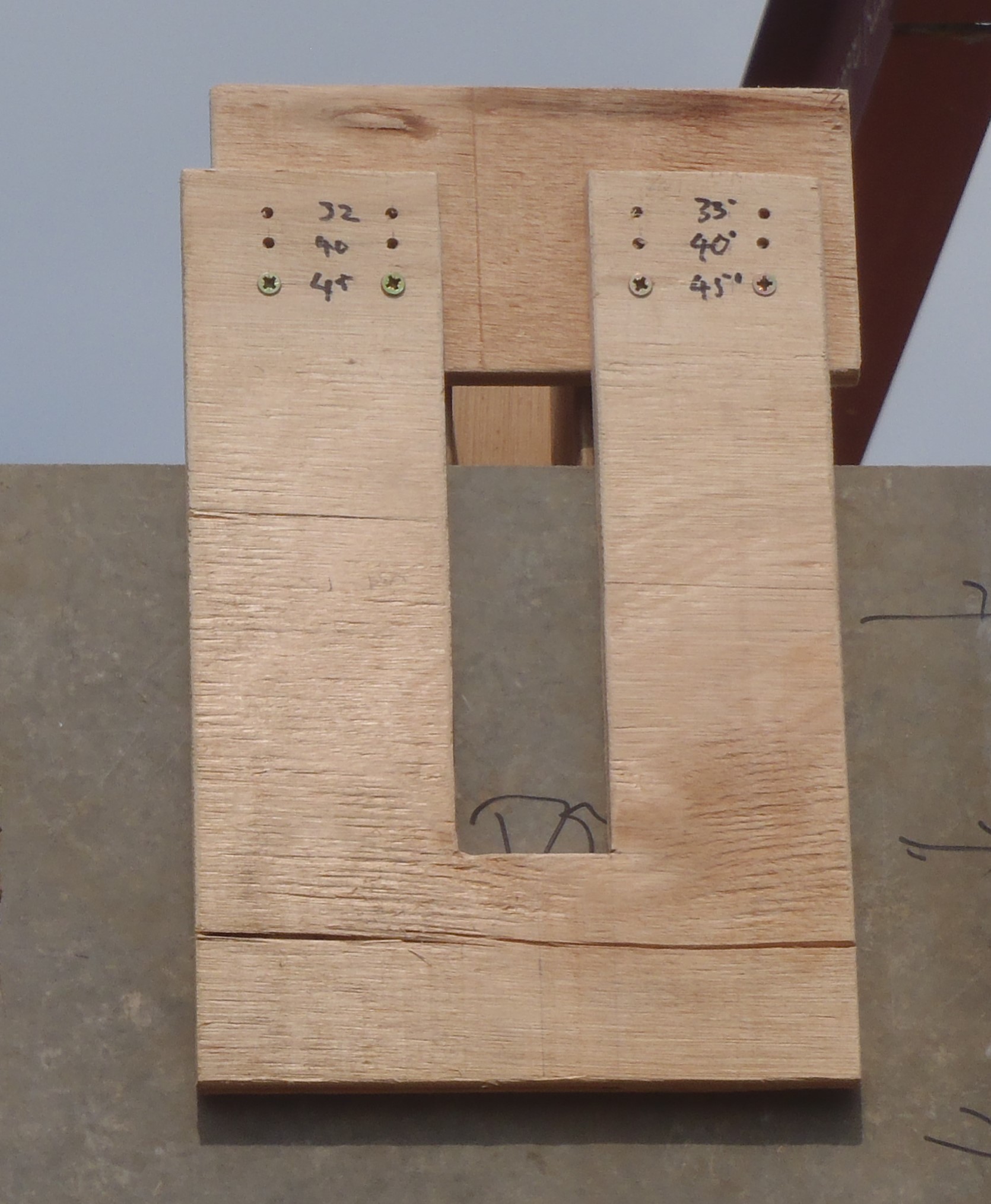
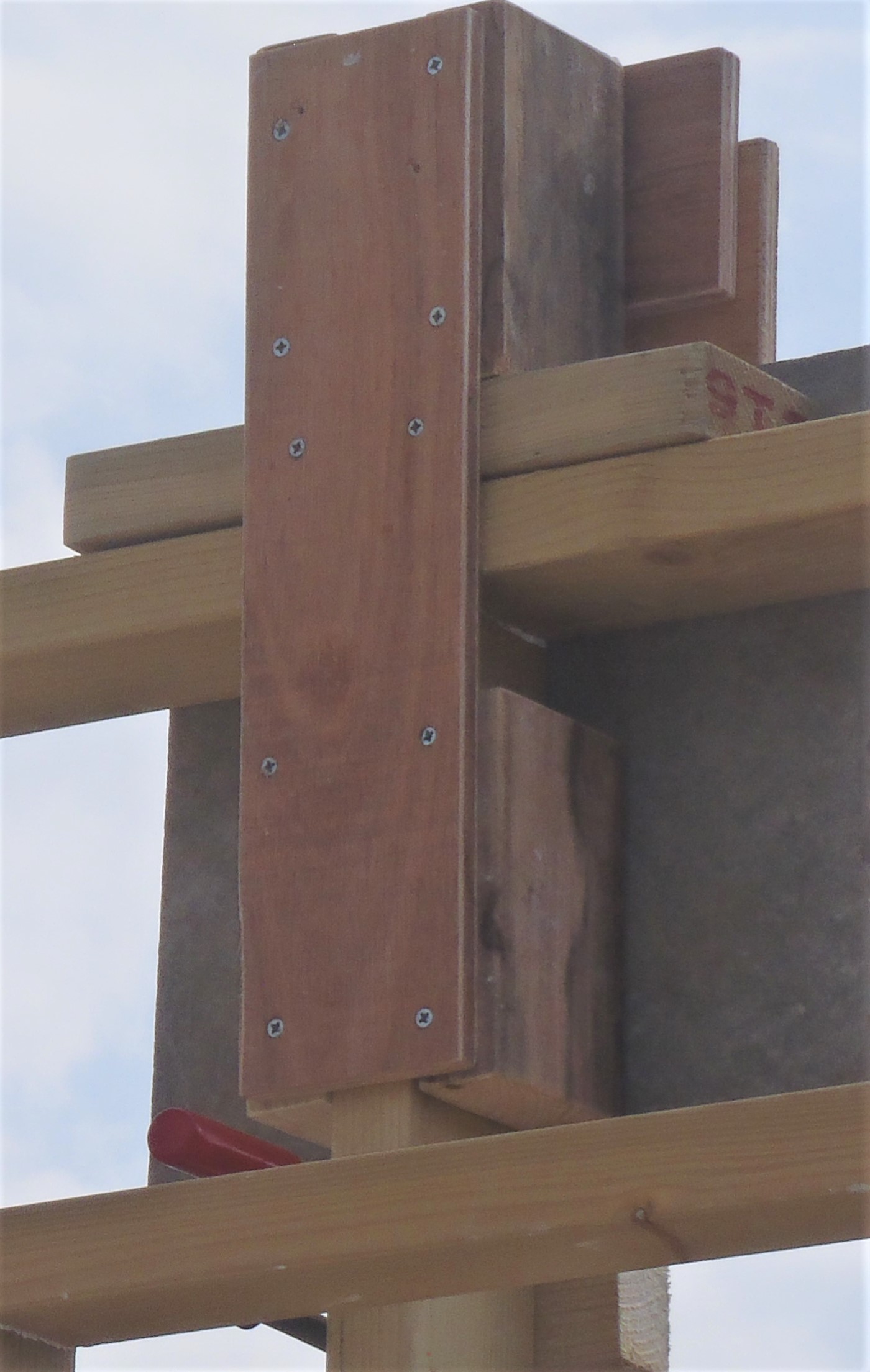
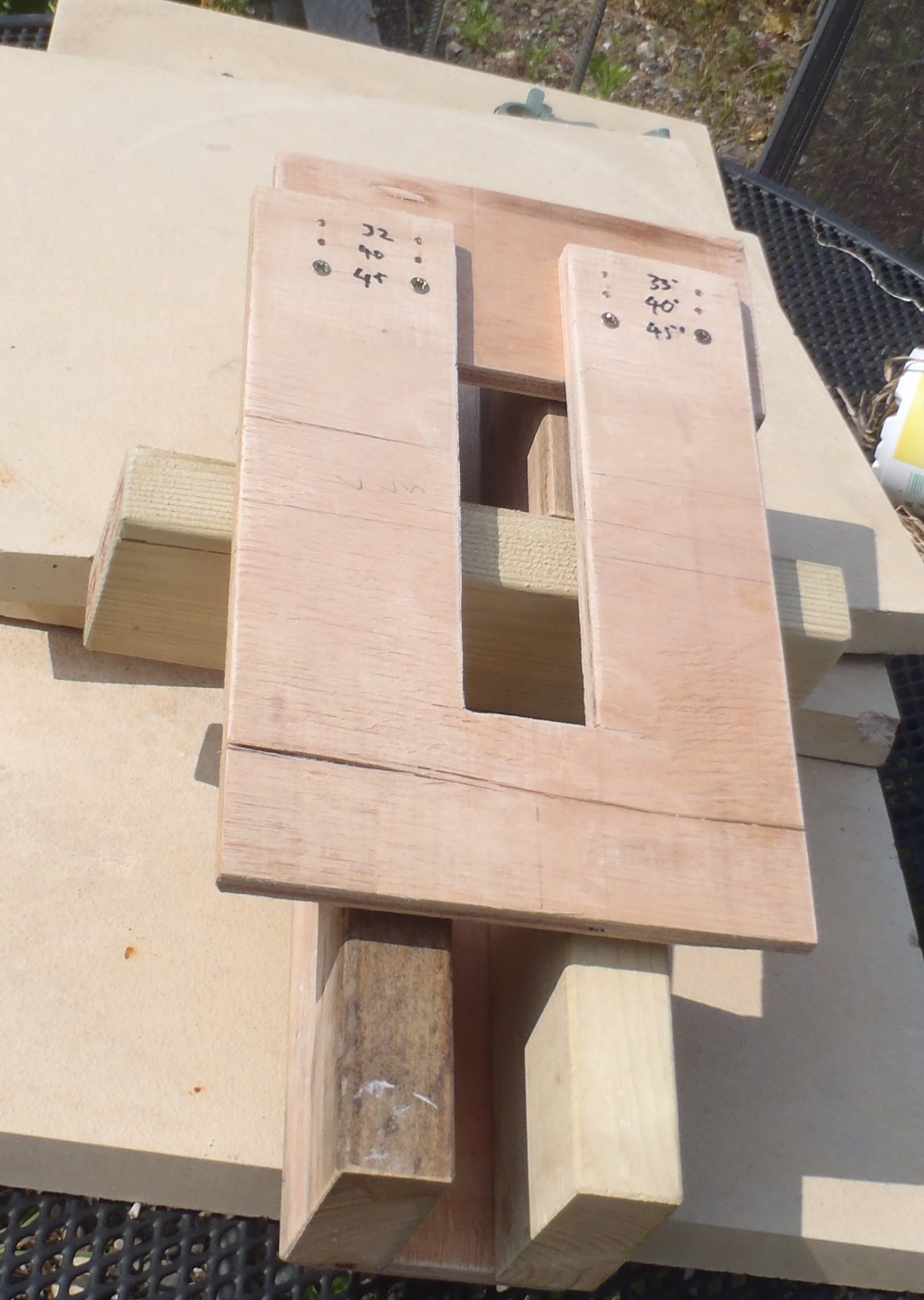
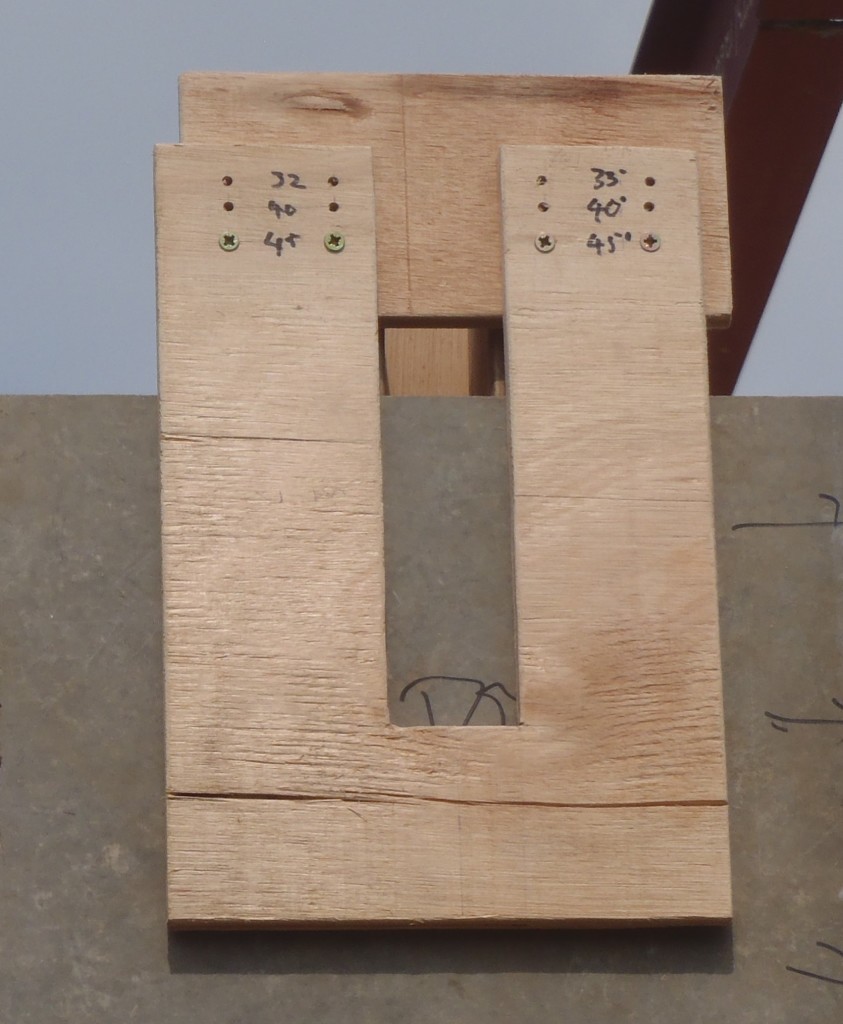
    This template slots on top of the wall, at each rafter and leg position, to guide a router to slice out a vertical slot in the wall cement boards. These slots allows the top flange of the rafters to pass through the wall and stick out to form the eaves.
    It is adjustable to accommodate the different angles of the rafters.

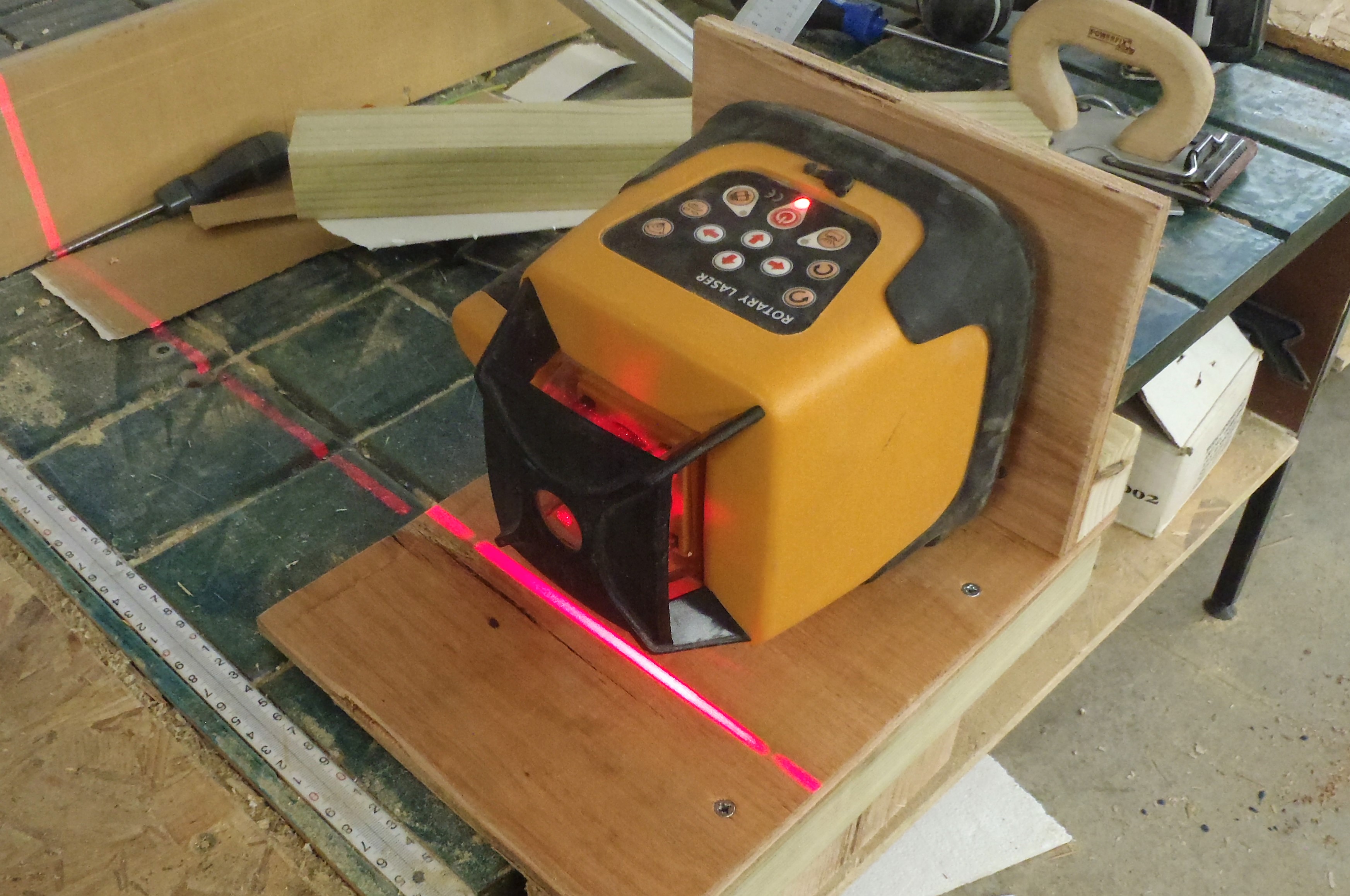
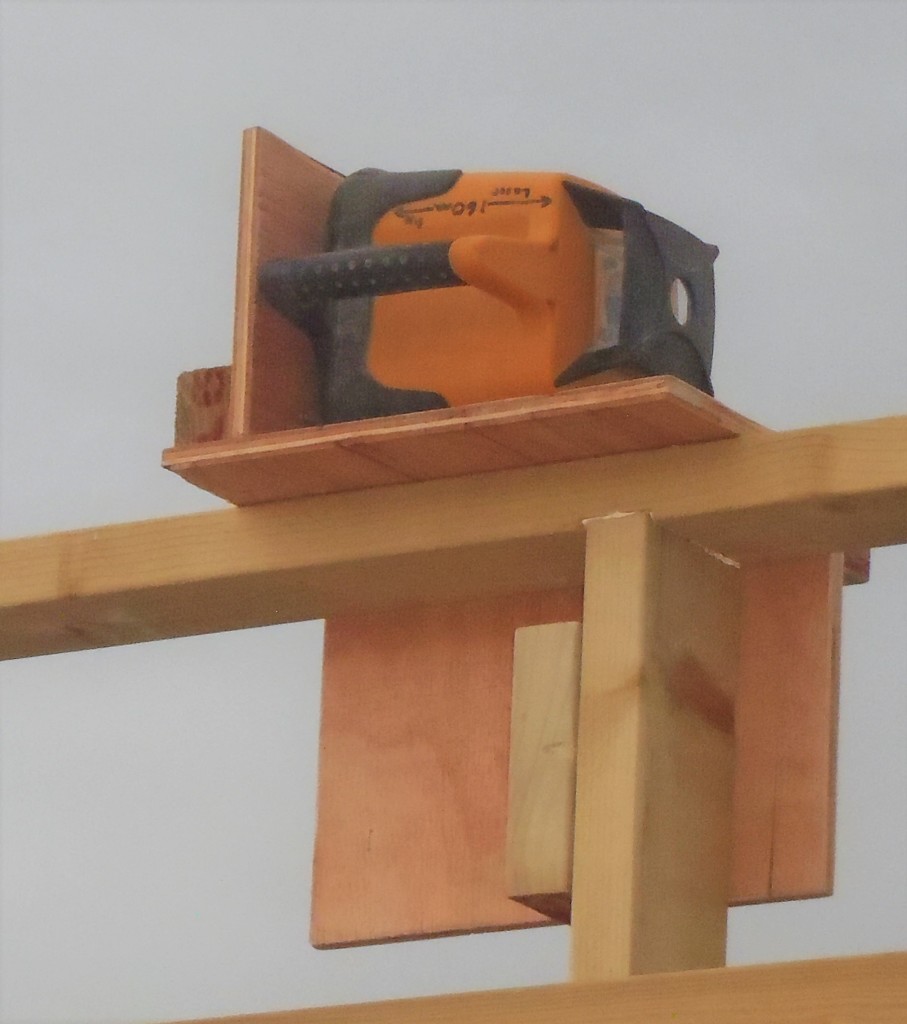
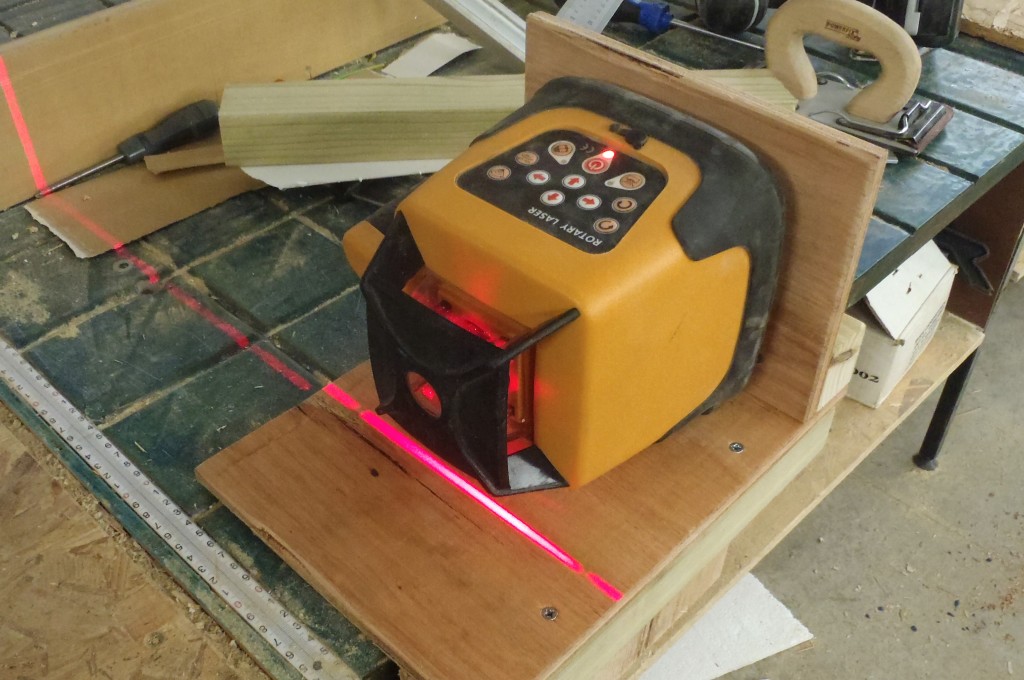
    Laser Guide for Wall to Steel Framework Alignment
    Laser-Rafter-alignment-jig-1
    Laser-Rafter-alignment-jig-1

    Laser-Rafter-alignment-jig-2

    Laser-Rafter-alignment-jig-2


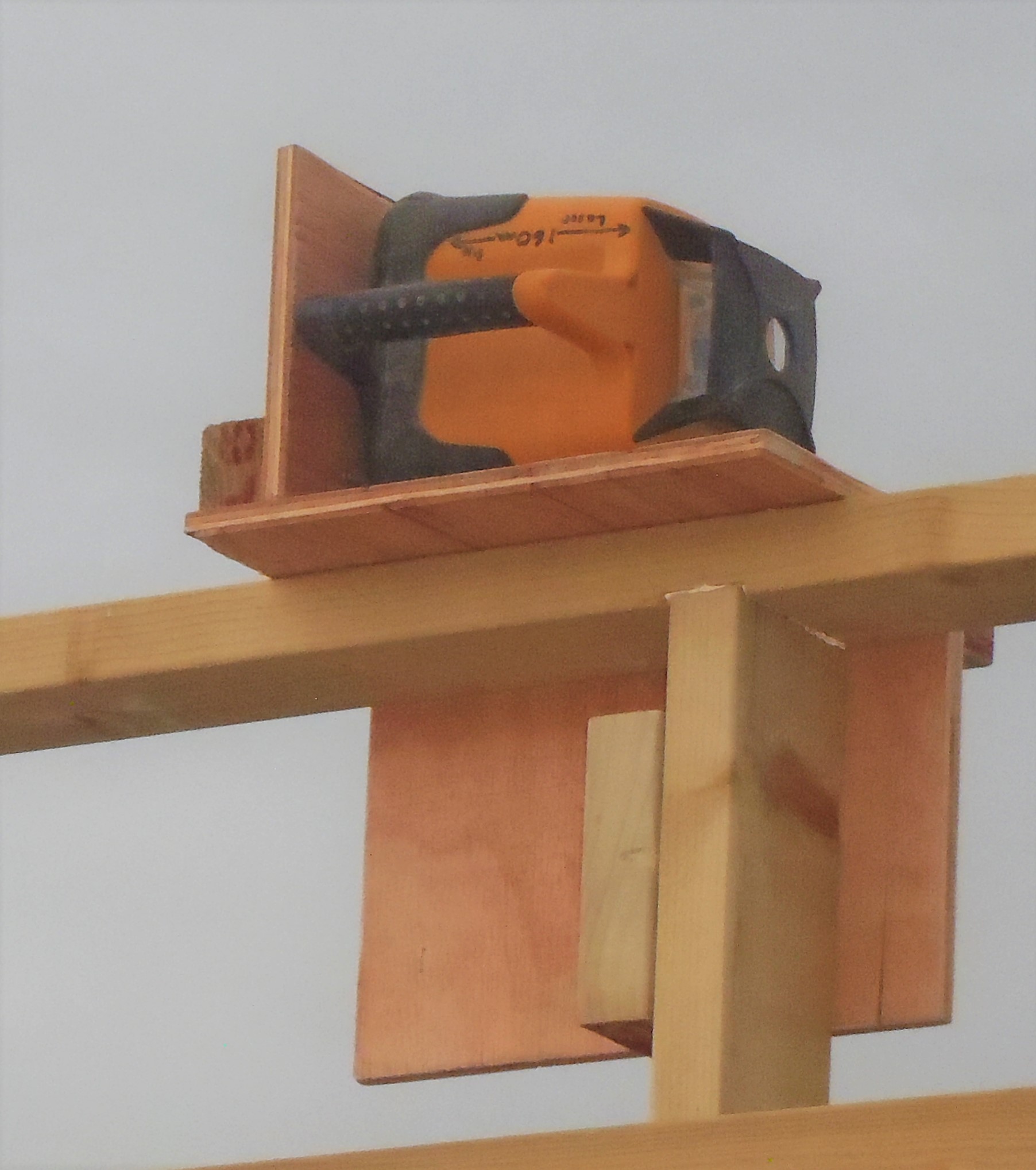
    We needed to transfer the position of the Wall Legs where each Rafter sits on, up to the Steel framework so the rafters will be exactly in the correct orientation and be locked into place. The steel framework will have planks of timber glued and screwed against the webbing and flanges of the steel i-beams, but also these timber pieces will have a series of 10mm deep slots sliced in, at the regular 612mm spacing. We need to make sure these slots are perpendicular in relation to the wall legs that the rafter will be joining onto. The laser is aligned to a leg and projects a line at right angles up to the steel beam.

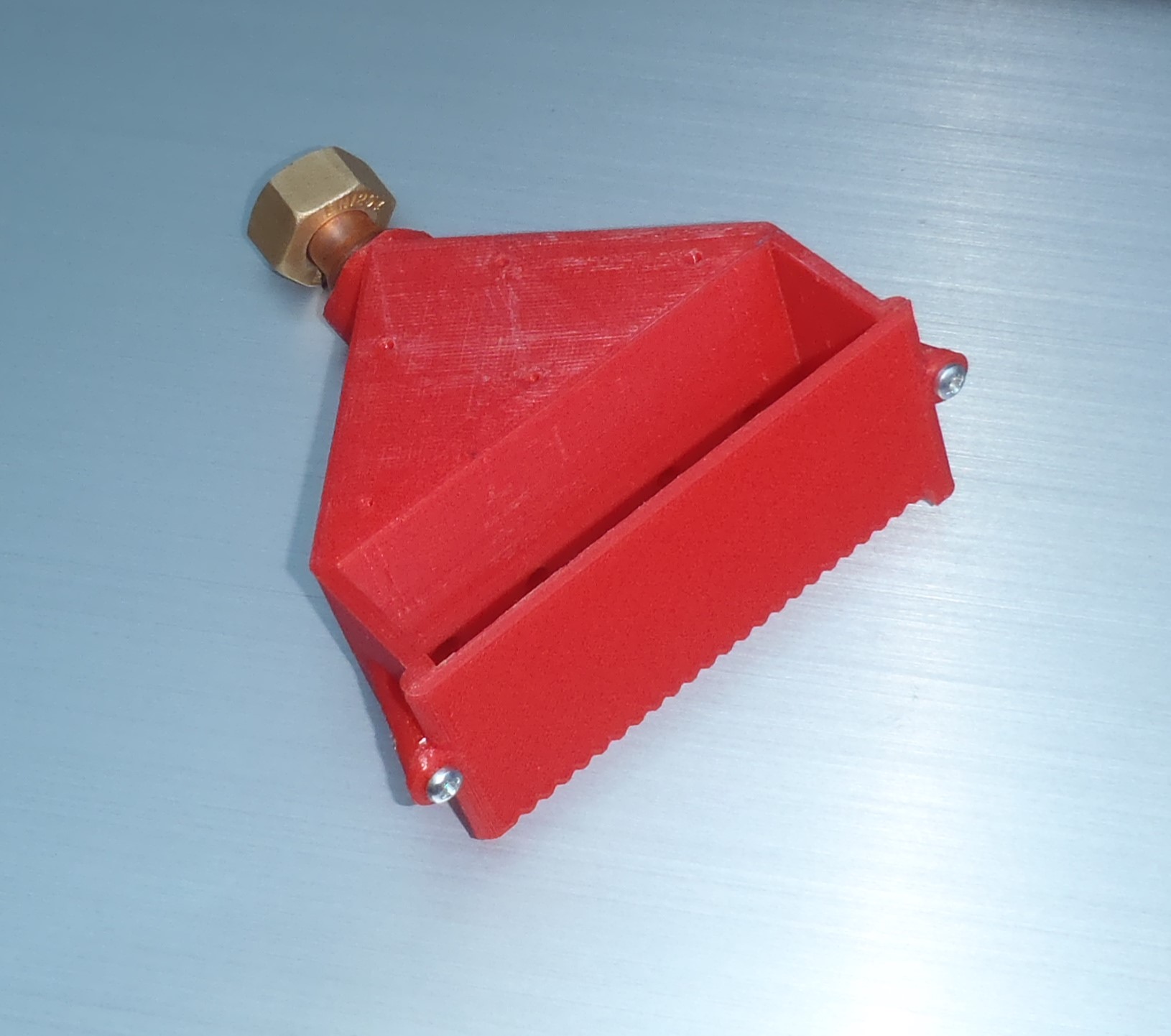
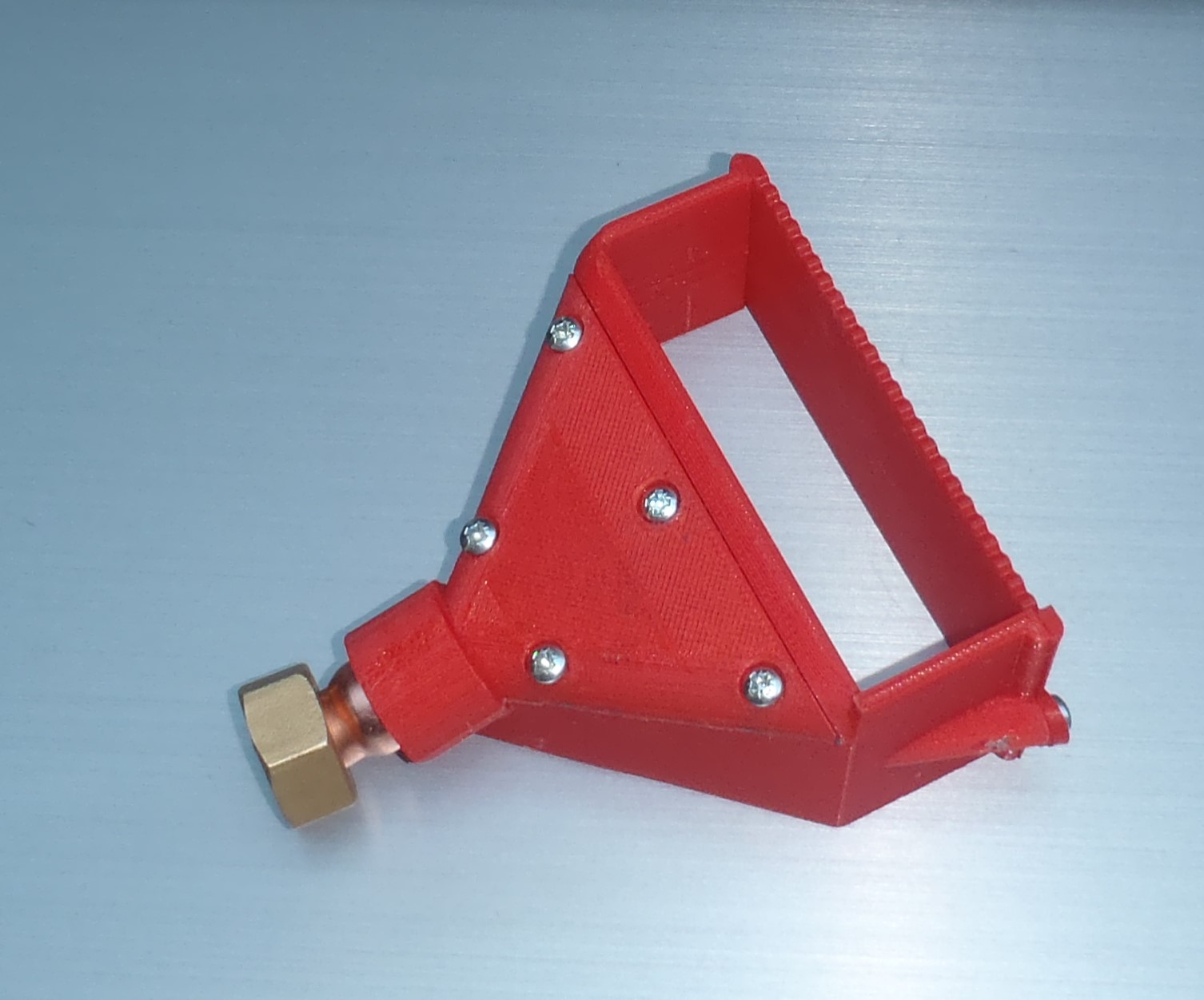
    Glue Spreader
    Glue-Spreader-MK1-2
    Glue-Spreader-MK1-2

    Glue-Spreader-MK1-1

    Glue-Spreader-MK1-1


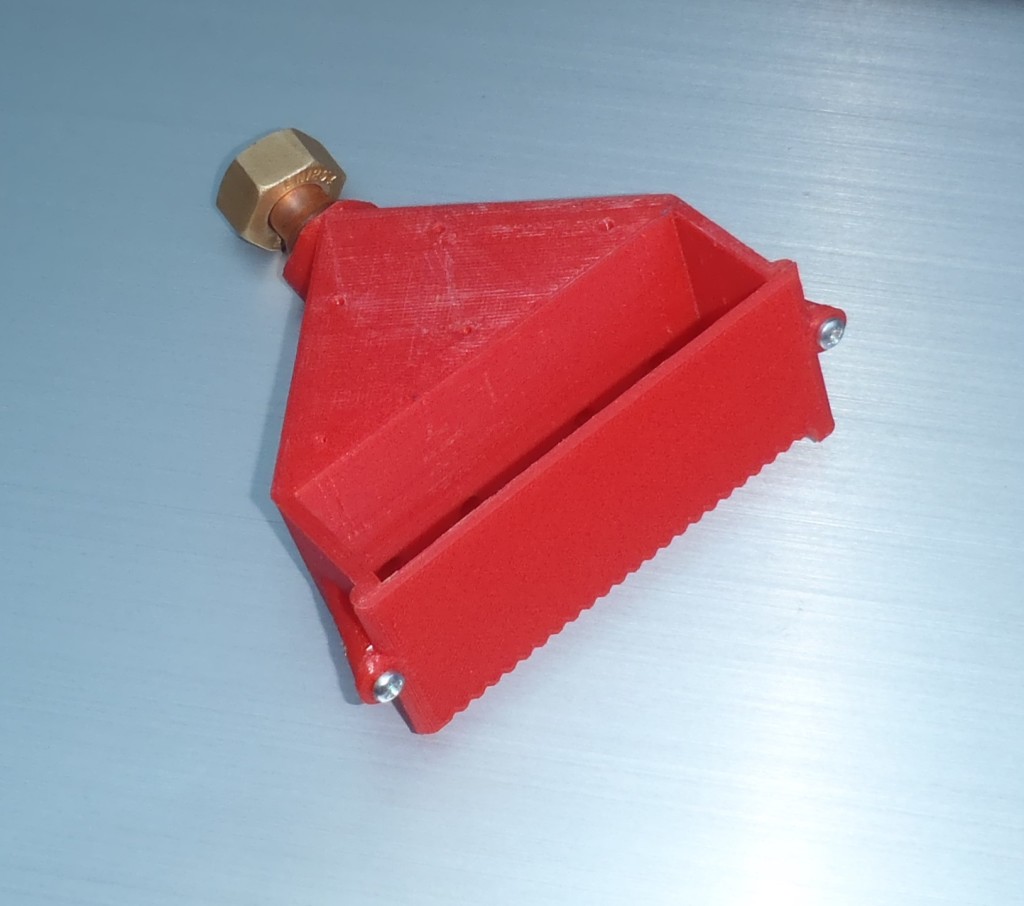
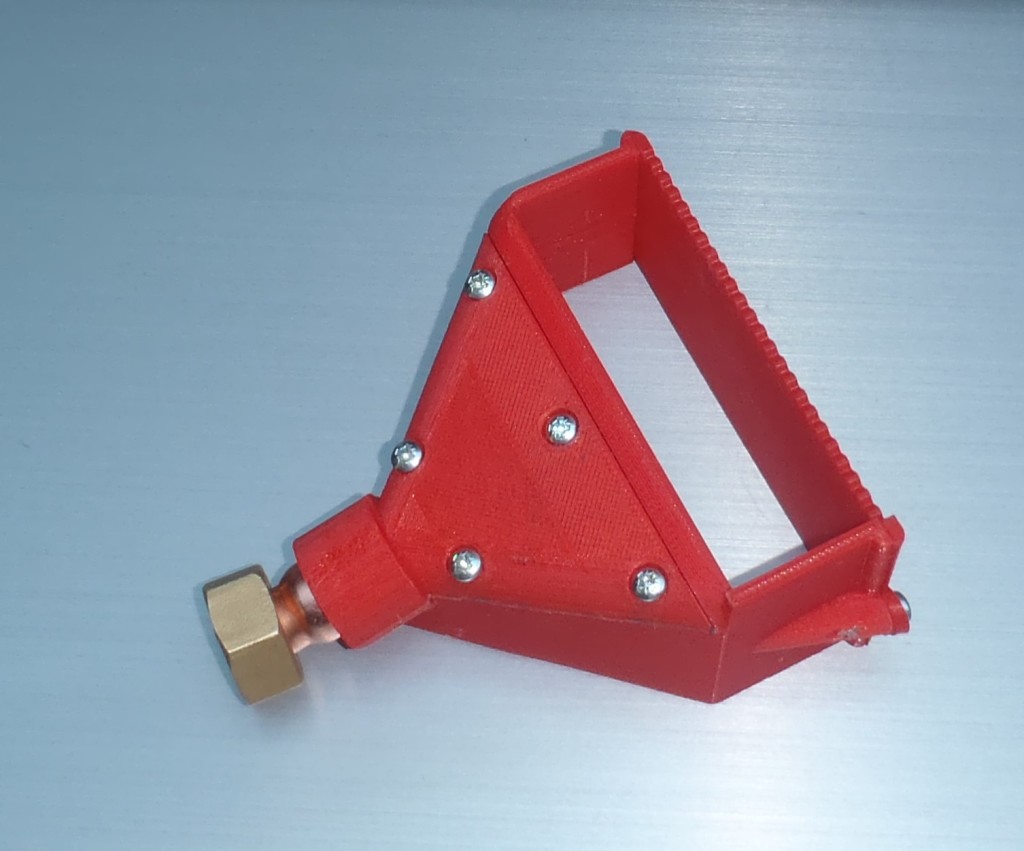
    Using our 3D printer, we designed a glue spreader to help us lay down a thin film of the glue on to the timber and stick down other materials like plywood etc. The glue is pumped into a the open space via small tubes, the chamber has a notched side to allow a controlled amount of glue to be spread as the tool is dragged along. The first version was drawn on the computer and then converted into a multi-layered object for the plastic extrusion printer to build, layer by layer, into a solid object.
  • Workbench Vacuum System Designed and Fitted

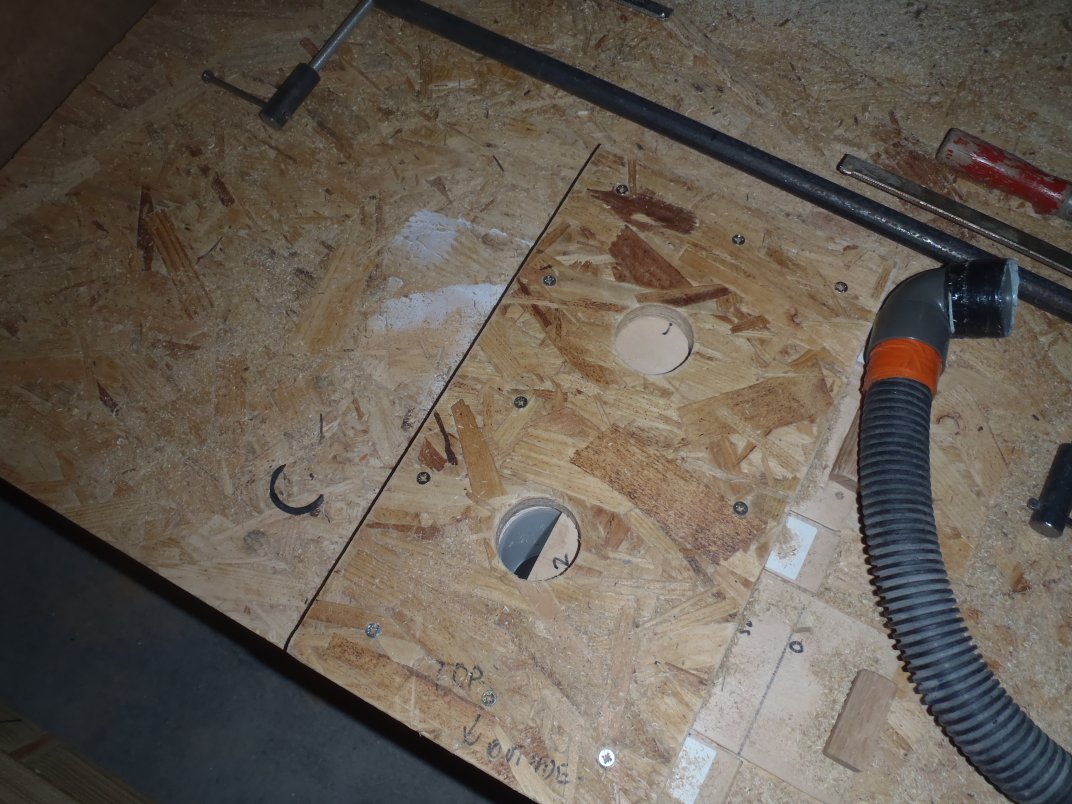
    These last two days has been time spent on adding a vacuum system to the modular Workbench unit. Using rigid plastic pipes and right angled corners plus a Y junction, to provide two sockets to connect up flexible hose pipes to various equipment  that are currently installed.

    Vacuum-Starts-Here

    Vacuum-Starts-Here

    and-Runs-under-bench-to-

    and-Runs-under-bench-to-

    Two-ports-near-the-machines

    Two-ports-near-the-machines


    The two sockets have little sliding shutters to control the amount of vacuum suck for each line, or completely shutting one off if desired.

    One thing we discovered was that the vacuum unit itself has a comb filter and even though it looked cleaned, when we air blasted it with high pressure compressed air, the sheer increase in suction  power was amazing!! We must remember to air blast the filter now and again!! We are thinking of getting a Vortex Chamber to provide the 99% dust separator without the need for paper filters etc. We will order one which are quite cheap nowadays and experiment.

    Each of the machine modules has had appropriate extraction hoses fitted which plug into the ports on the table.

    Finally, a multi-jointed arm stretching from the middle fence was designed and built. It has a long rectangular box on the end of the arm to sit over the circular saw blade which  is exposed so this modification will provide both a safety feature of covering up the dangerous spinning blade but also to suck up the flying sawdust off the blade too.

    The-blade-covere-and-dust-extractor-arm-

    The-blade-covere-and-dust-extractor-arm-

    The only little tricky bit was the joints on the arm as the wing nuts and bolts couldn’t be tightened hard enough to stop the arm drooping down under gravity and weight of the protection box. We now trying to fix this problem by using little squares of an old sanding belt, cutting them up and gluing them in pairs at each joint so the rough surface will hopefully clamp together and grip much more strongly this time to stop the droop!!

  • Chop Saw Adapted for Modular Work Table and Spring Clean in Workshop

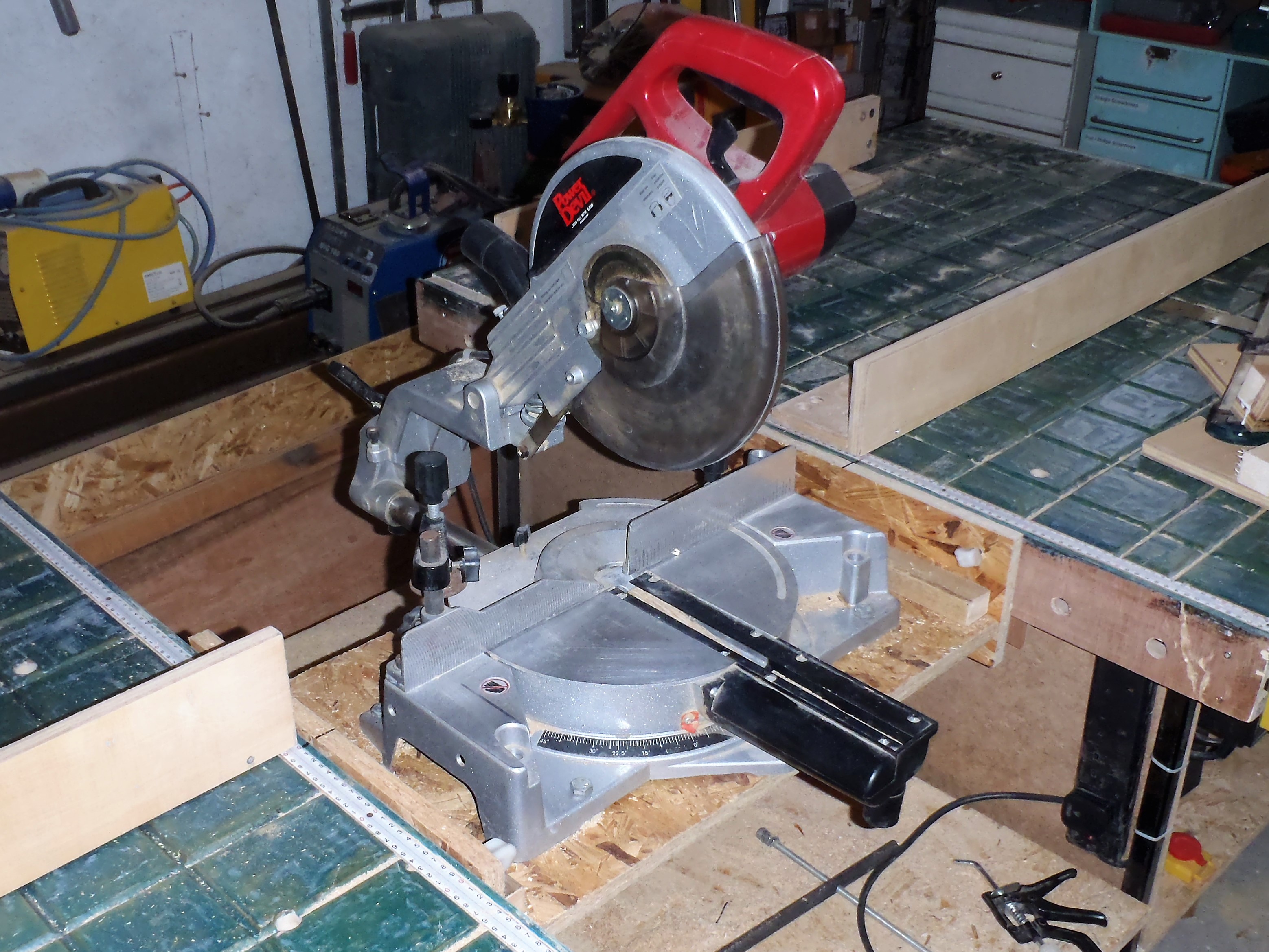
    A mixture of sorting out and tidying up our workshop and also adapting our large chop saw for our modular workbench system.

    Chop-saw-module

    Chop-saw-module

    The chop saw is our old one we have had for years, capable of slicing material as wide as 300mm and as deep as 80mm, which will be very useful when we come to slicing roof rafters and floor joists. The saw is able to be slid into place and be locked into position with it’s own fence lining up with the workbench’s twin fences on either side.

    While that was being executed, the whole workshop got a spring clean, starting with our box trolleys on wheels, four of them in a line under our stack of sheet material. Each of these boxes contains off cuts of various material like OSB, pine timber, plywood and Oak hardwood pieces. We decided that any piece that is smaller than 4 inches goes out and off to the fire pile.

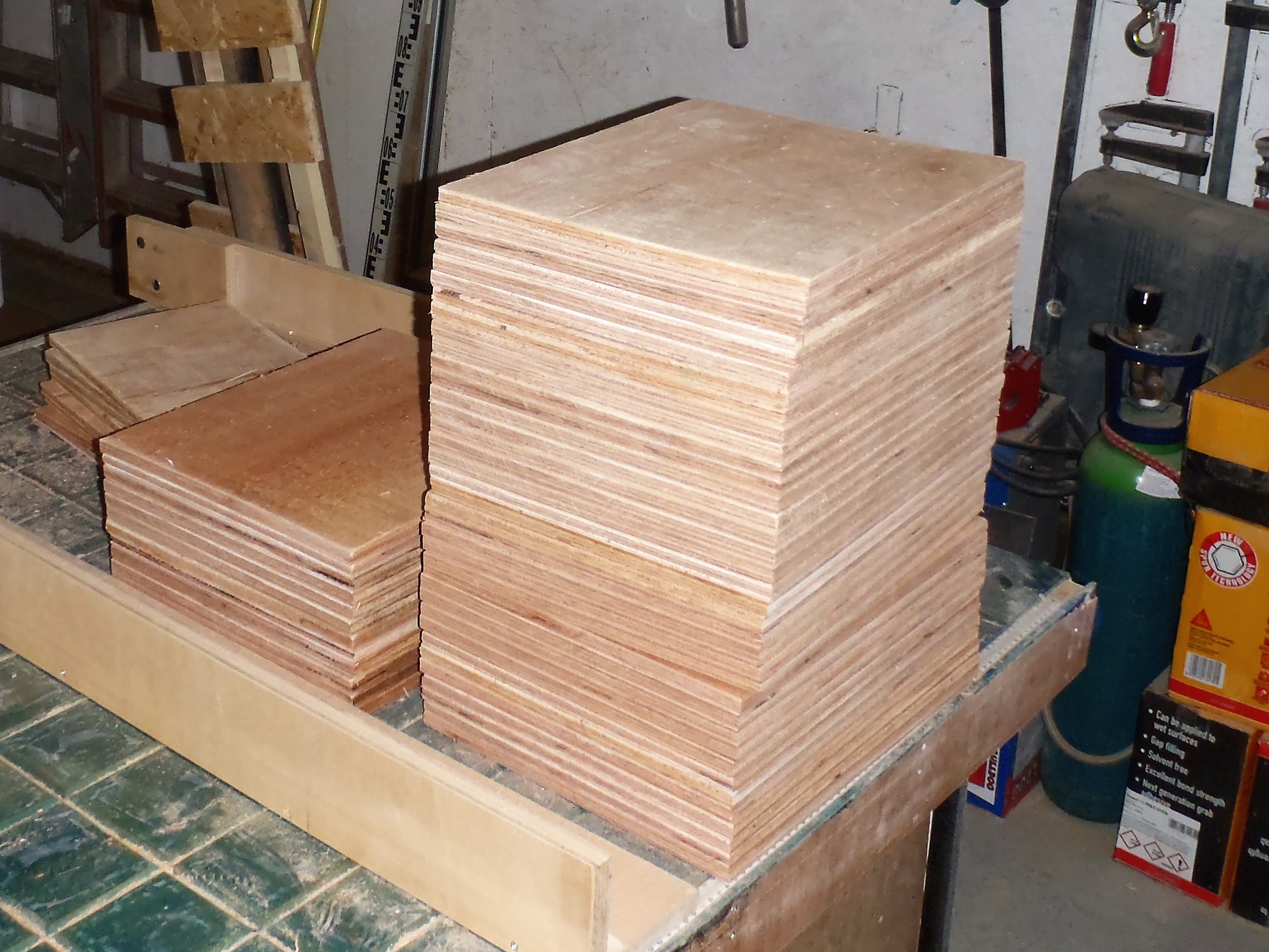
    The new chop saw was use to cut up strips of plywood to start to make the spacers which will hold the outer and inner legs apart, this is  a pile of 48 but we will need over 300 of them….

    Leg-Spacing-pieces

    Leg-Spacing-pieces

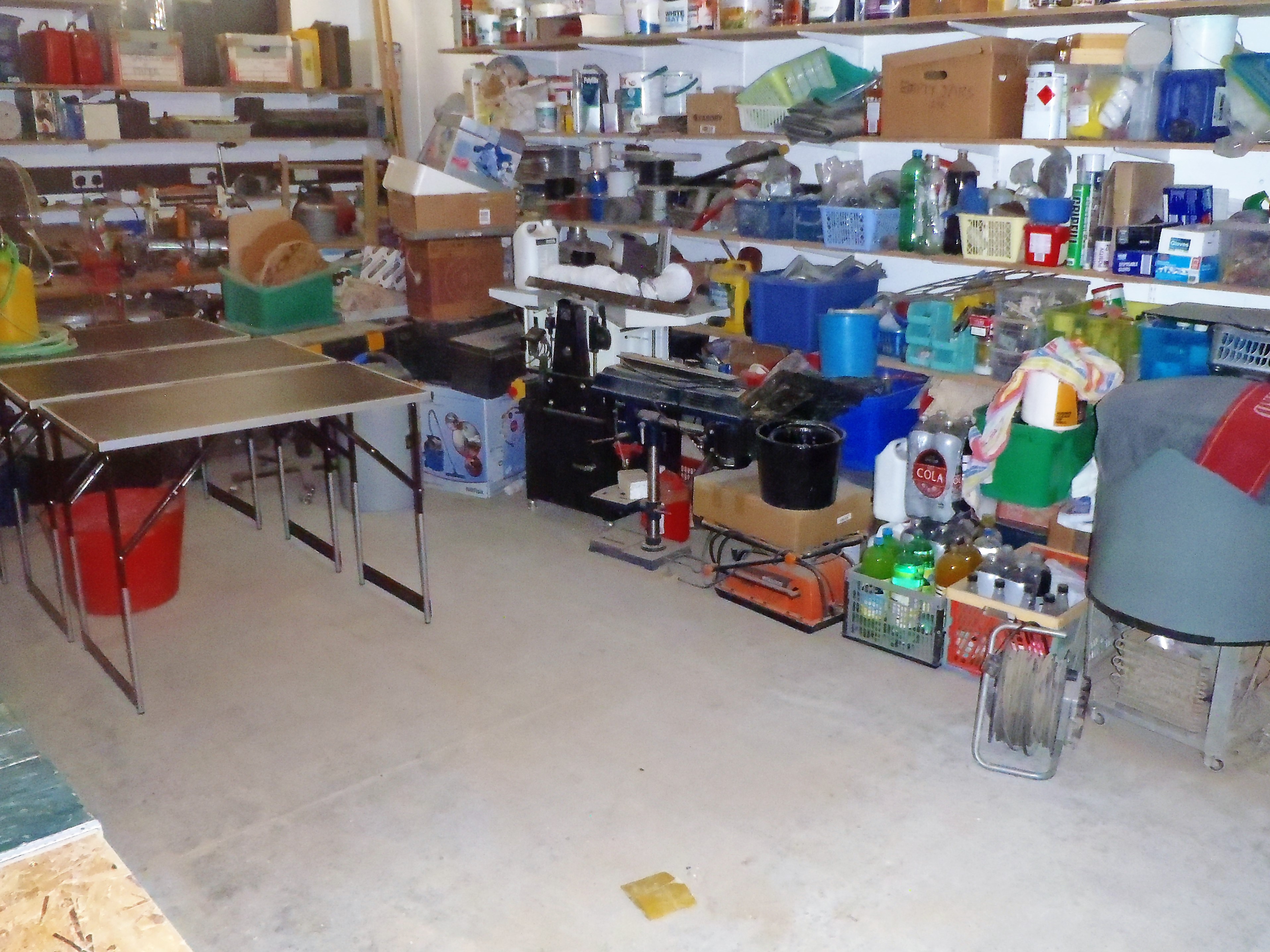
    Then the old saw table (a full 8feet by 4feet) was put away by removing its four legs and sliding the whole thing up onto the top tier of our rack of sheet material. It was far too large to have around, now we have our new modular workbench. We needed the room to have a pile of building elements to be stacked up while the glue is drying and room for raw materials to come in and get processed into whatever we need for the house construction.

    Empty-space-in-workshop

    Empty-space-in-workshop

    Tomorrow, we will just finish off the tidying up operation and then start chopping up 89mm and 63mm CLS timber to make our External Legs!!

  • The Router Table Is Adapted

    Today, after a couple of days of interruptions and doing other maintenance jobs around the house, We have adapted the Router table to become a sliding module for the new modular Workbench system.

    Using a brand new Router Machine, we now have the ability to do very controlled operations to pieces of timber wood, sheet materials and other jobs that needs a large flat area and a long fence guide to bring in the work pieces that needed trimming  or shaping in some form or other.

    The final module to be made will be the Chop Saw for doing lots of cuts at fixed angles to the fence like 90°, 30° or other angles we might need.

  • The Saw Machine Module Has Adjusting Bolts fitted

    The workshop Saw Table now has a screwing adjustable rod to allow the machine modules to be moved back and forth to gain the desired cut distances we want.

    Machine-adjuster

    Machine-adjuster

    Then, a measuring scale is being designed and printed to be fitted into place so the fence can be positioned and the “Tool” module can be adjusted to precise positioning.

    Measuring-Scale

    Measuring-Scale


  • Stage 2 Construction of Modular Work Bench Progresses

    The Modular Work Bench for our Circular Saw, Router and Mitre Saw is progressing. The last few of days of work have seen the construction of the fence and also preparing the surface of the Work Benches.

    Work-Table-Groves-2

    Work-Table-Groves-2

    The fence is made up of 18mm Plywood strips, one for the vertical to act as the guide surface, and the 2nd strip is flat horizontally to provide stiffness to keep the fence from bending under loads. The gap between the two Modules, saw another but shorter fence being made which will cross pass the Machine Module and connect together both sides, to make one very long fence, totalling about 3metres (10feet) of straight guidance.

    The shorter piece was designed to be “Plug and Play” using 16mm round steel rod pieces to lock the ends together.

    Fence-peg-and-Hole-in-Bench

    Fence-peg-and-Hole-in-Bench

    Work-Bench-Fence

    Work-Bench-Fence


    Then, the Work Bench itself had a series of 16mm holes, spaced apart 200mm laterally to allow the whole fence to be locked into various positions that will provides a good support when working on whatever Machine Module is being used.
    Plus also a series of V slots, both vertically and across, has been cut into the surface of both benches to allow for the sawdust to hide away when a work piece is being pushed through the Machine Module, hence reduce the problem of too much sawdust causing the work piece to ride up on a cushion of sawdust.

    A large woodworking vice was bolted to the bench along one edge. Then the electrical system was installed with a 4 way strip being controlled by a NVR safety switch (No Volt Release) which turns off if the power in interrupted. This allows a emergency stop switch to be fitted on both sides of the bench.

    Fence-joint-Woodworkers-vice-and-Emergency-Stop-Switch

    Fence-joint-Woodworkers-vice-and-Emergency-Stop-Switch

    Last of all, the whole surface of the two Work Bench modules and the vertical surface of the Fence, were coated in polyester resin to provide a hard wearing and smooth finish to reduce the friction.

    Work-Bench-Surface-finished

    Work-Bench-Surface-finished


  • Multipurpose Modular Workbench for Circular Saw, Router and Chop Saw

     While we have been waiting for the prices and delivery of the building materials to be completed, we needed a replacement saw table to make it as easy as possible to accurately slice our materials into their required shapes and sizes.

     So using 10 metres of 2 inch by 1 inch box steel tube and another 7.5 metres of 1 inch by 1 inch box steel tube, we made 3 modular frames, 2 of them a square with 4 legs and the third one a 2 leg “end” frame.

    Work-Table-Frames-1

    Work-Table-Frames-1

    Work-Table-Frames-2

    Work-Table-Frames-2

    Work-Table-Frames-3

    Work-Table-Frames-3


    Then using a 25mm thick MDF sheet, we sliced it up into 2 halves, each being 4feet by 4feet and screwed down onto the metal frames. Hanging off the edges are sliding channels using some of our Oak timber to provide a smooth slots for the machines (like the circular saw module) to easily run in and out for adjustment against the position of the fence.

    We have adapted our circular saw, the router table and our big chop saw, each having their own Oak sliding rails mounted on them so we can just swap in and out the machinery we need next.

    Work-Table-Mostly-done

    Work-Table-Mostly-done

    We will finish the table by making a fence which can be moved back and forth by 200mm steps and the machine then can be moved to provide the necessary width of cut or guide for the router.

    This will allow us to be consistently accurate and produce regular pieces at all the same size etc.

  • New Incinerator for Rubbish Clearance

     Today, while we are still waiting for prices and quotes from the last of our building merchants to come back to us, a new Incinerator was constructed!!

    Fire-Barrel-with-new-Grate-1

    Fire-Barrel-with-new-Grate-1

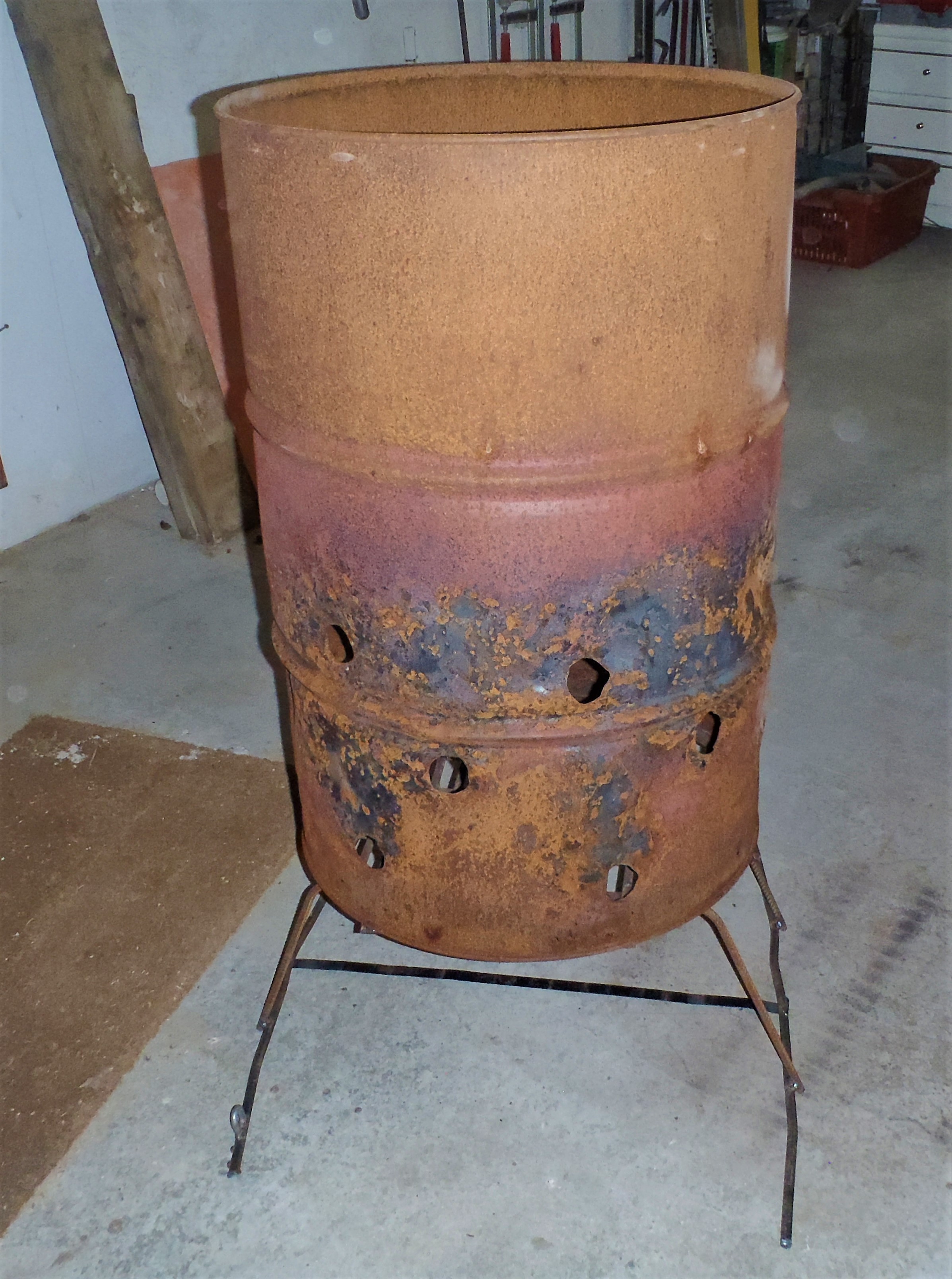
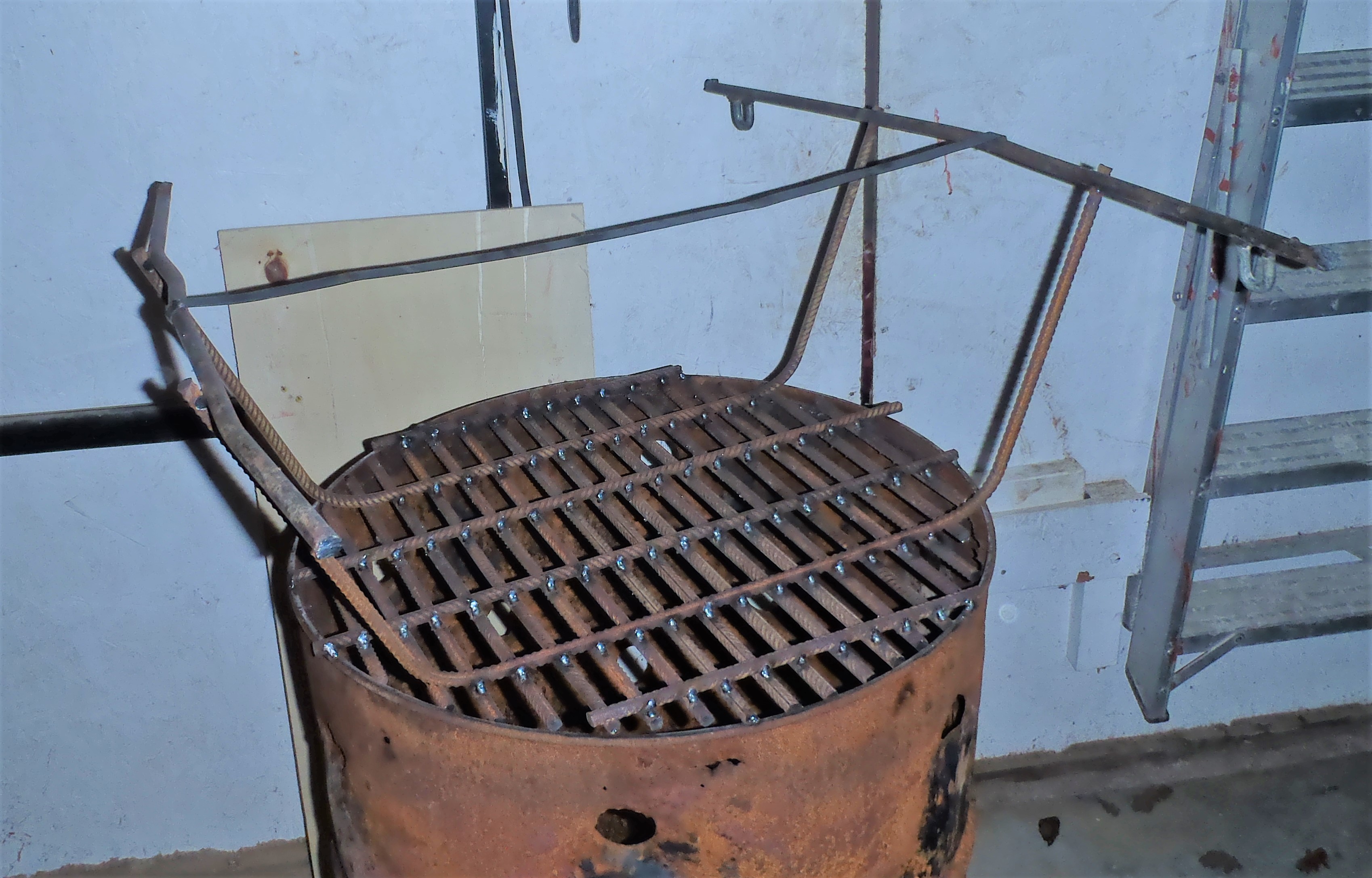
    It was made using an old oil barrel which had already been made into an incinerator,but it had been a struggle to keep it going for long jobs as the ash would fill the barrel up and we couldn’t get it out as it didn’t have any holes in the bottom!

    So, taking this bit of spare time, and using lengths of 10mm reinforcing bars, welded together a grid of closely spaced bars for the drum to sit on and then raised the whole thing up 300mm on legs to allow the ash to fall out and move it out of the way.

    The bottom of the oil drum was sliced out completely and then the barrel turned up and spot welded to the new iron grate in a couple of places to hold the whole lot together.

    Fire-Barrel-with-new-Grate-2

    Fire-Barrel-with-new-Grate-2

    This weekend, it looks as if it will be wet so that would be our chance to try out this new piece of equipment to help with keeping our site clear of rubbish!!

  • Repaired and Modified Scaffolding Platform

    Since it got dark and too cold to work outside, we carried on in the workshop to repair the damaged platform segment (this is the middle of the 3 segments that makes up the whole platform) which we dropped the other day (from the top of the scaffold tower  onto the concrete!). We removed completely the broken 89mm CLS timber from one side of the segment and cleaned off the old glue joint etc.

    We then put on a new piece of the 89mm CLS timber, 1400mm long, all sanded to remove old dirt, onto (glued and screwed) the 1st segment of the platform so that both platforms are now the same design and have the same method of assembly.

    We are now ready to build up the second scaffolding tower later on when we are lifting the very long and very heavy steel I beams!!