Category: Equipment and Tools

The Tools we are using on this Project

  • Crane Unit Completed

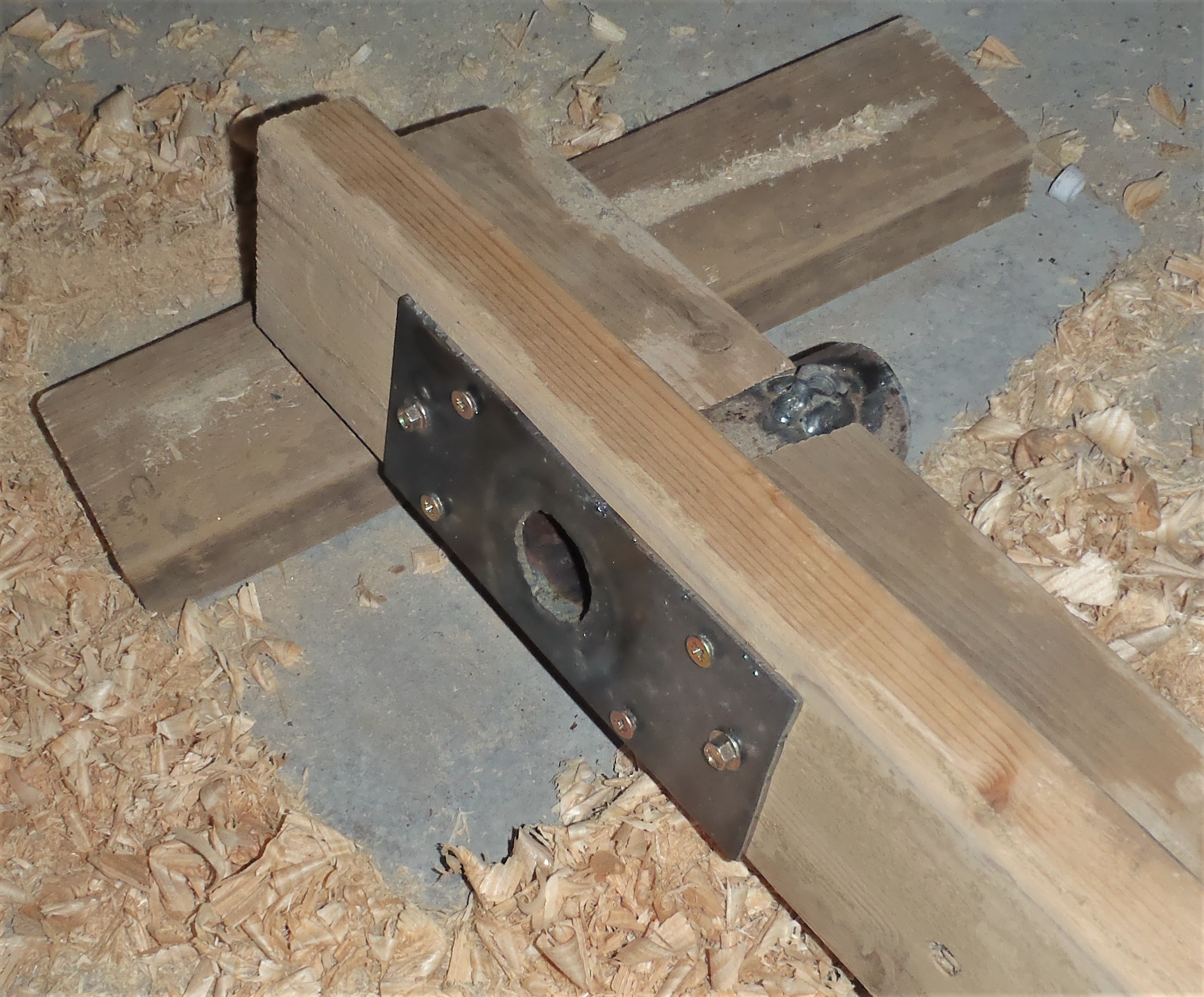
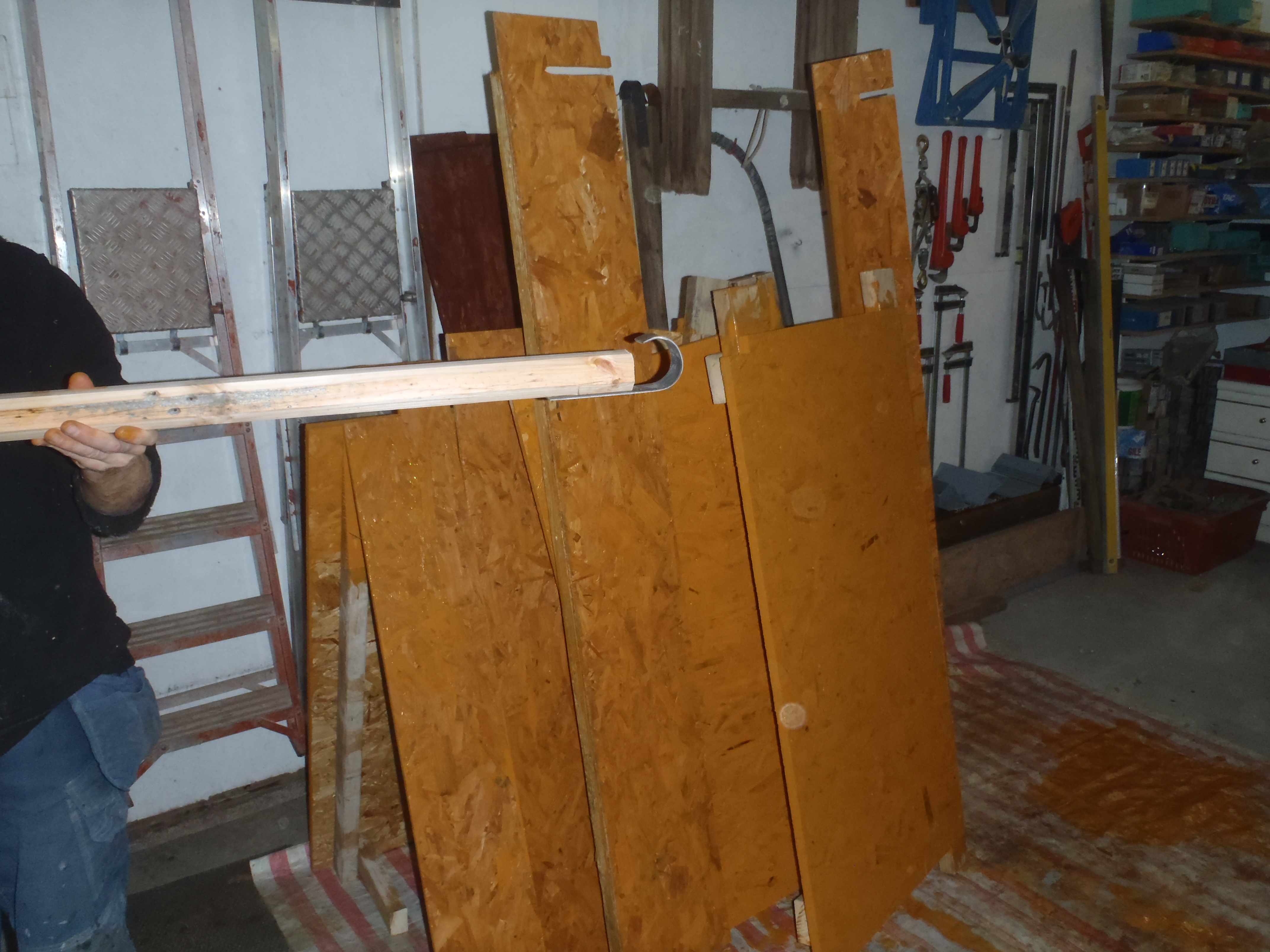
    We finished off building our little crane unit by making a hollow tube attachment welded on to a metal plate, this will hold the other end of the horizontal bar (that has the electric winch hanging off it). This piece will go  through the wooden support leg near the top.
    Crane-Top-of-Timber-leg

    Crane-Top-of-Timber-leg

    The tube is another piece off an old 2inch steel pipe, 100mm long to go through completely the wooden leg. A plate about 250mm high by 85mm wide had a large hole cut using the plasma cutter tool, in the middle and 6 small holes drilled around it for mounting screws. The tube was welded on and then the wooden leg had a large hole drilled through at about 200mm from the top to accommodate this metal tube and plate and help spread the load of the steel item being lifted up without running into the risk of splitting the wood!

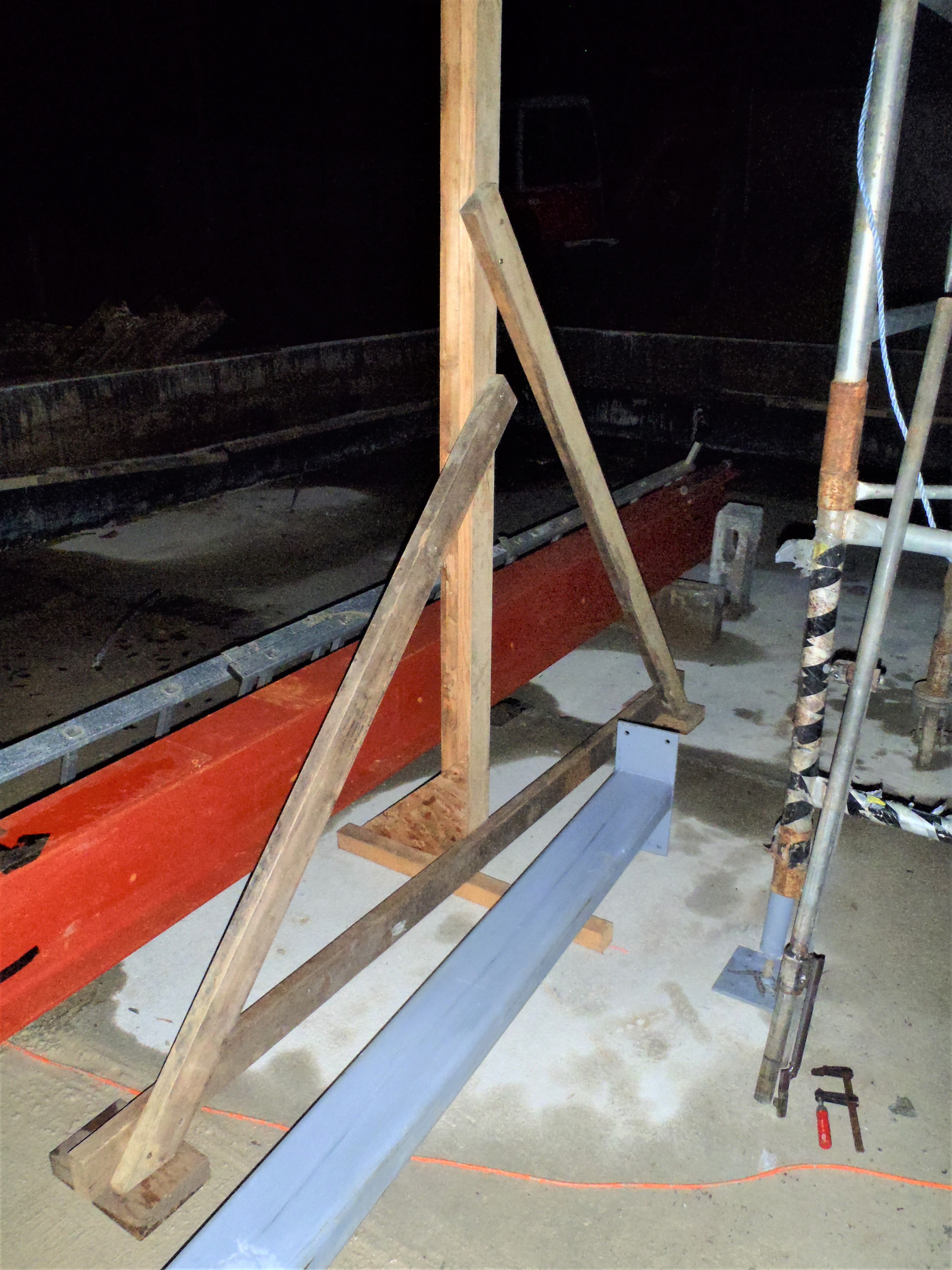
    Then after a late lunch, we constructed various bracing elements for the bottom of our crane support leg using a beam (about 2.4metres long) of 89mm CLS timber mounted on two 2inch by 6inch timber blocks as feet. Another shorter bracing beam (made from 600mm of 2inch by 2inch timber) went cross ways reinforced with a triangular OSB board to stiffen the joint. Both were attached to the leg outside as we could no longer work in the workshop as the thing was getting too big!!
    Crane-Base-of-Timber-leg

    Crane-Base-of-Timber-leg

    We took the completed leg over to the scaffolding tower and pushed the whole thing upright on its bracing feet elements and it stands there all by itself and is quite stable .. so far!

    The last job as the daylight was disappearing, was to rotate the tower around and moved it so it was positioned outside the footprint of the 7 steel legs. We decided that it was too dark, even with our flood lamp switched on, to continue and it was getting very cold so we are going for the fresh start in the morning!
  • Hoisting Crane Framework Is Constructed

    Today, we worked on designing and building a simple crane/hoist framework so we can haul up our steel pieces into place.

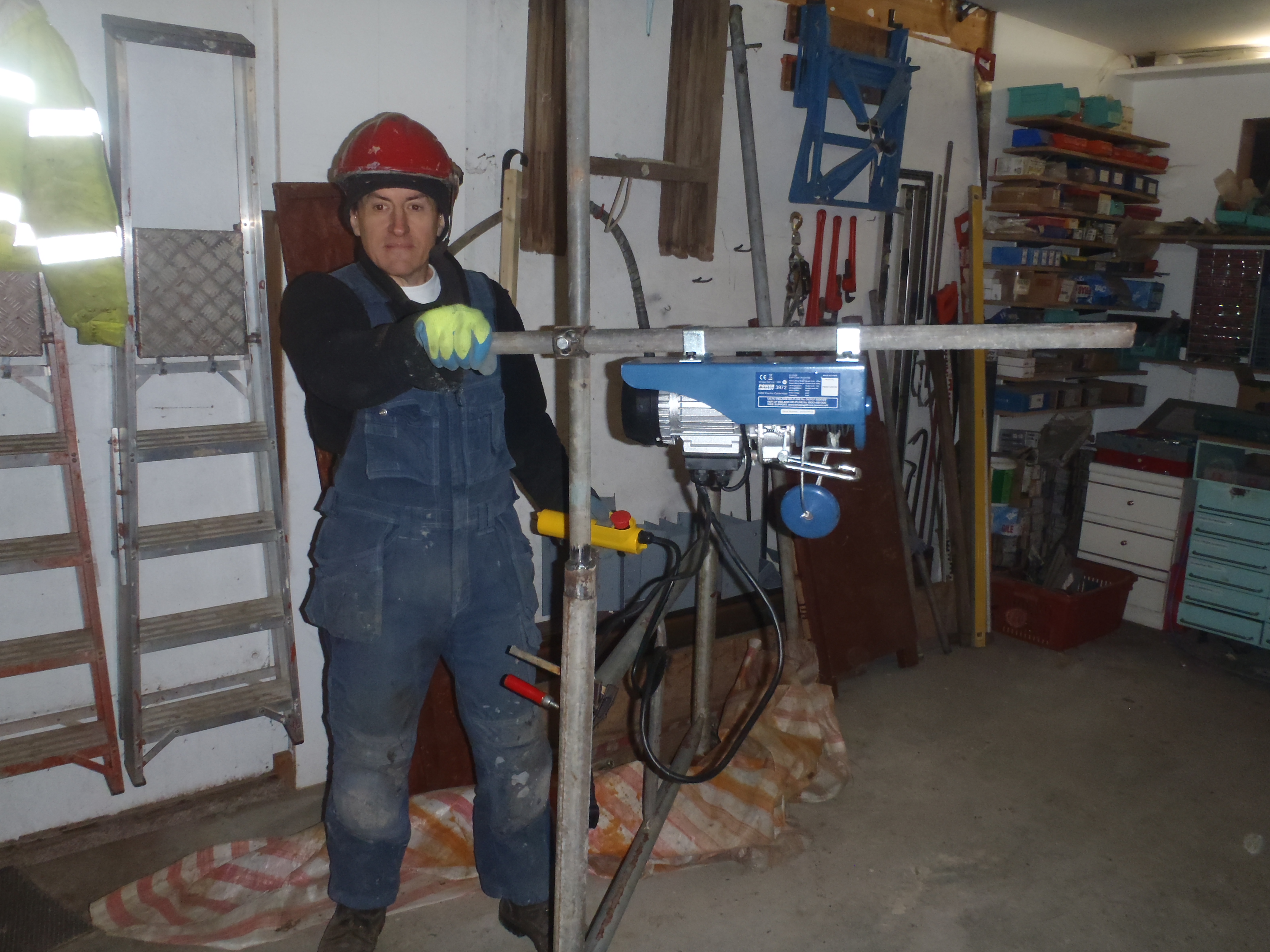
    Using a steel pipe we had lying around (an old iron water pipe), we welded on a additional steel collar and support arm so that the whole vertical arm can slide down into the scaffold corner pole and hook around the horizontal bar to provide an anti-rotation lock.

    Then, after welding together two more short tubular steel pieces, slightly larger in diameter this time, we made a a right angle bracket to both slide up and down the vertical pole and also have a horizontal pole sliding left and right too. Both can be cramped down tight using nuts welded onto the sides of the collars and a bolt driven through to engage onto the vertical and horizontal poles.

    Crane-Tower-exstension-and-winch-arm

    Crane-Tower-exstension-and-winch-arm

    The horizontal pole has the electric winch unit hanging from it and the other end of the pole will be clamped into the wooden 6.8metre leg we made on Saturday. That is the final step to finish off this mini crane module and then we will be ready to start lifting the very long (tall) legs up into their vertical positions!

  • Platform Number 2 Completed

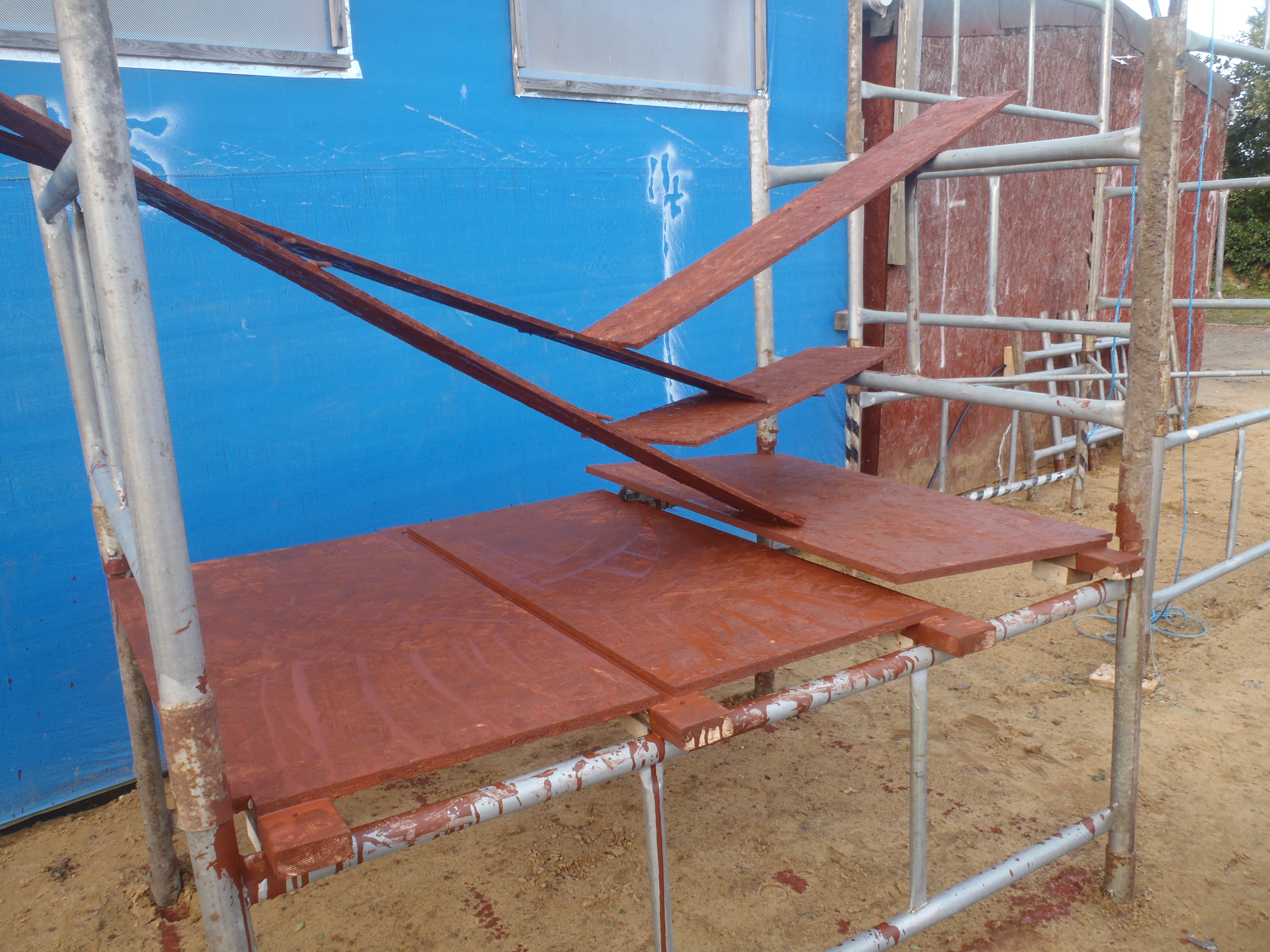
    We finished the 2nd platform today with a paint of exterior shed treatment which will help repel the rain water.

    The wooden safety hand rails were made using 50mm square timber, planed down  into an eight sided form, screwed with metal “hoops” made using 37mm wide by 3mm thick steel strips, started yesterday and finished off this afternoon.

    Painted-platforms-and-hand-rail

    Painted-platforms-and-hand-rail

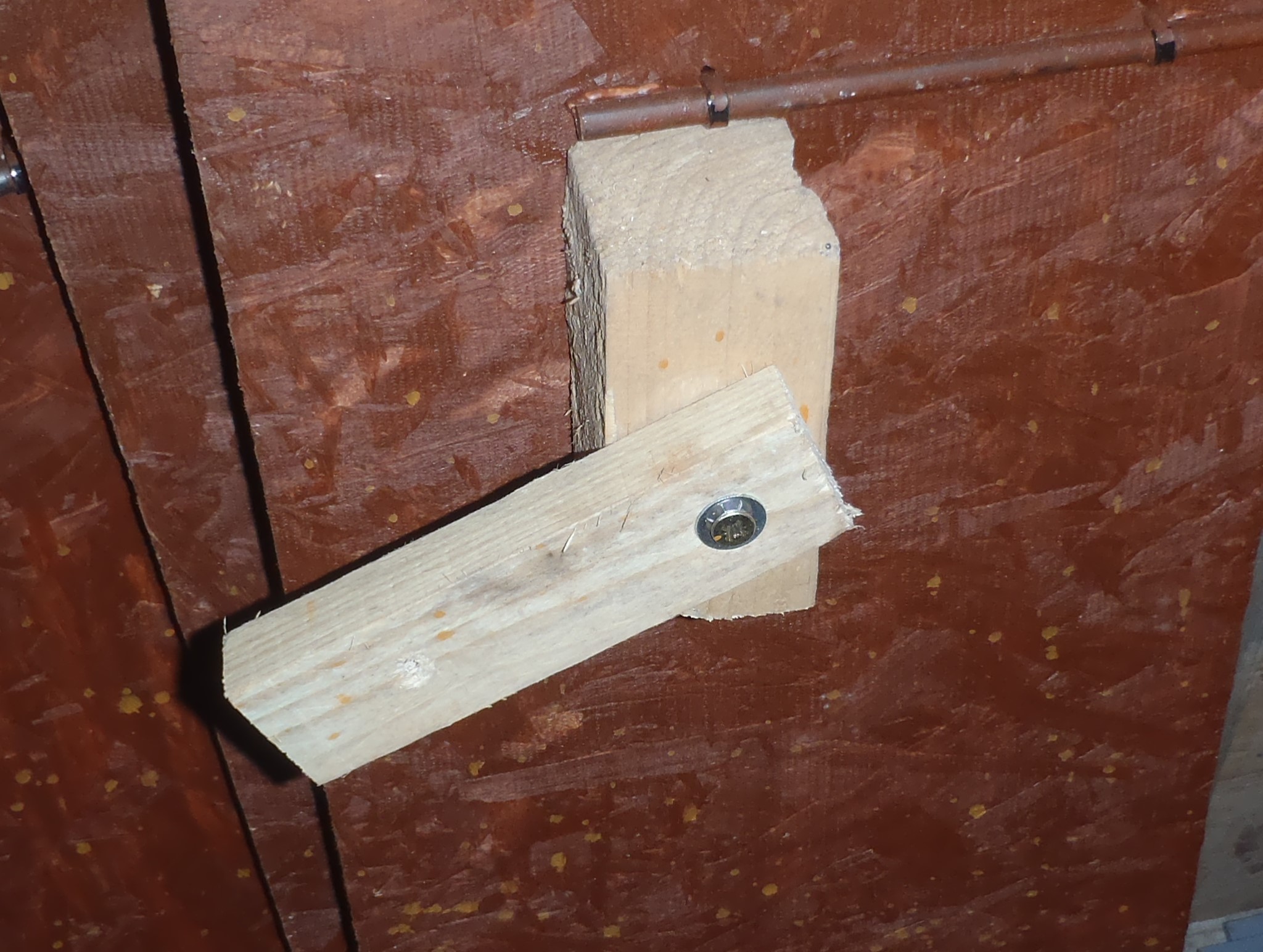
    The 1st platform was checked over and we improved the kickboards, the narrow end ones, by adding a rotating anchoring arm to grip the metal tube of the scaffold, to hold them upright and not shake loose and flop down.

    Kickboard-fixing

    Kickboard-fixing

    As soon as the wood treatment is dry, hopefully tomorrow, we can then start the next job of moving the steel I beams around inside the house and get them approximately in the correct places. They are very heavy so will need careful handling and loads of leverage!

  • Scaffold Platform Number 2 Being Constructed

    Today, we resumed work on our house building project after the disruptions of Christmas and new year holidays, some illnesses and a jury call up!! We needed another platform for our scaffold tower to go with the 1st one we made late last year (for doing the flood light) and the 2nd one will be used when we start assembling the steel framework.

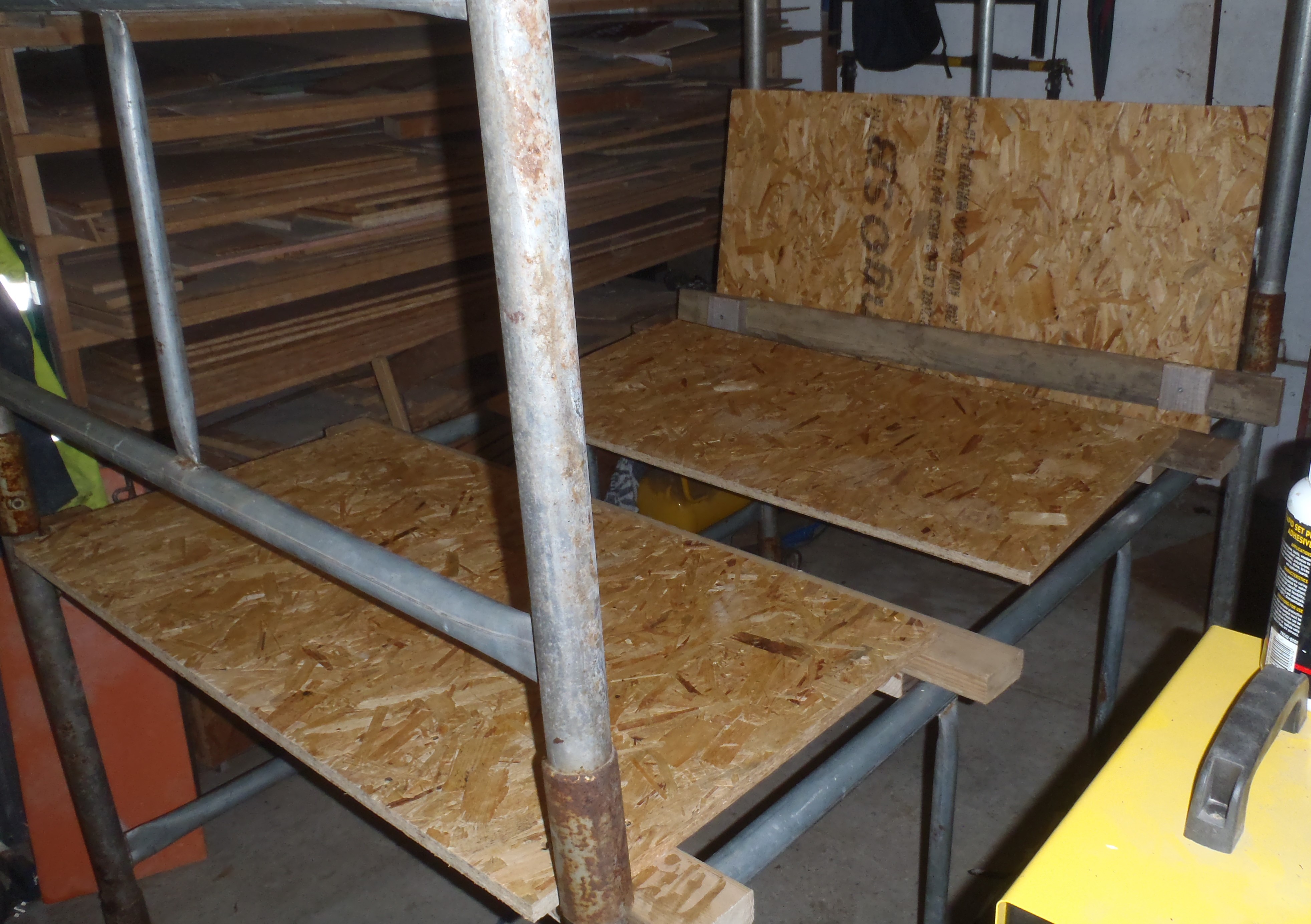
    So the wooden OSB board was cut into 3 strips and using 89mm wide CLS timber, screwed and glued them together, to make 3 portable modules so we can haul each one up and down the scaffolding tower when we put a tower up.

    Scaffold-Platform-MK2-Construction

    Scaffold-Platform-MK2-Construction

    We will finish the job in the morning with the construction of “kick boards” around the edge of the platform to keep tools from being kicked and rolling off plus also to make sure our own feet never accidentally “miss” the edge and fall off!!!

  • Platform for Scaffolding Tower

    Yesterday, We constructed the 1st platform for our scaffolding tower units, using 18mm OSB boards, made into 3 sections to straddle across the top of the scaffold sides, using 89mm CLS timber as the main structural supports. Also, kick boards were made to hook into around the edges of the platform to prevent both accidental “missteps” while working on the platform but also to prevent losing equipment and trugs that may get bumped into and fall off the top of the tower!

    Scaffold-platform

    Scaffold-platform

    Today was the final job of painting the pieces with the waxy solution that will help keep the platform weather resistant and keep its structural integrity longer while being exposed to the weather and sunshine.

  • Magnetic Drill

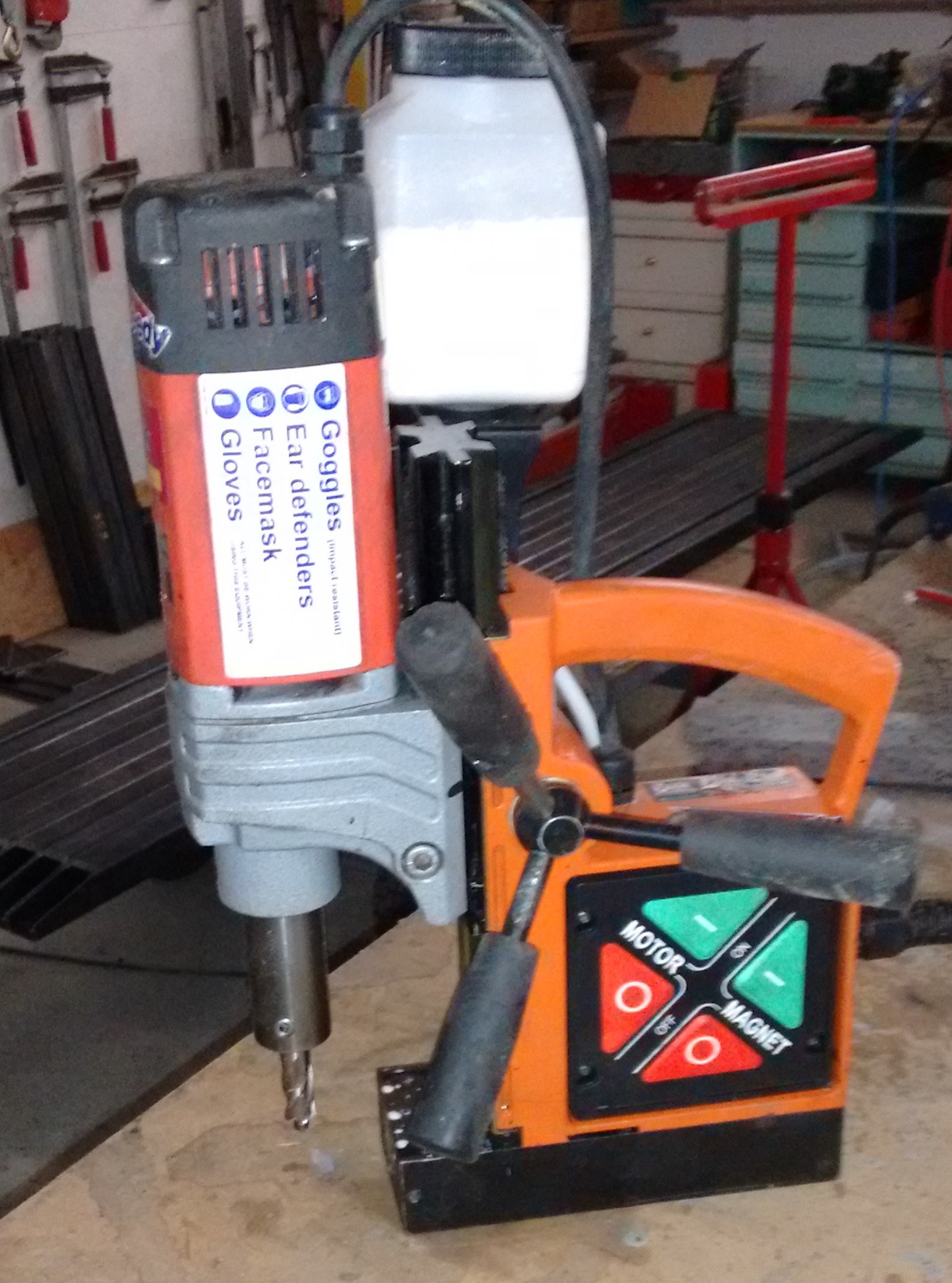
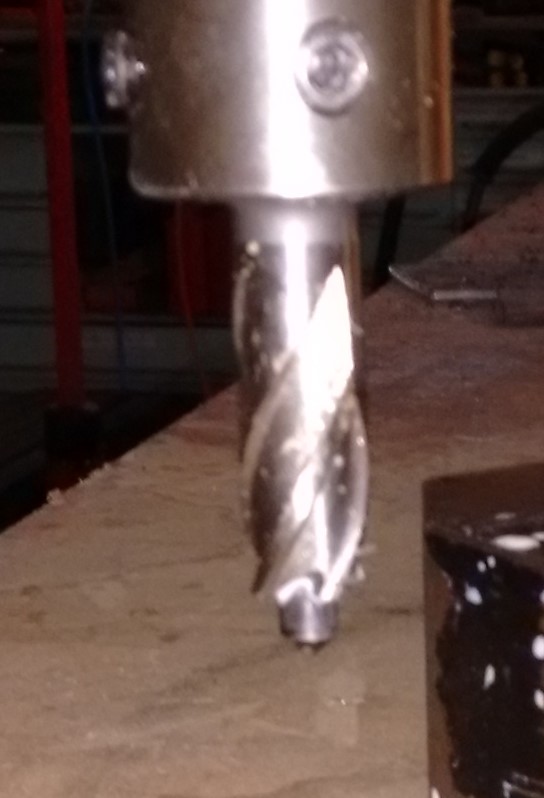
    We collected the rented Magnetic drill this morning. The drill has an electromagnet in the base so once you position the drill you turn on the magnet and the drill is fixed in position so you can drive the cutter into the work. The cutter is hollow and has a retractable center pin which allows the accurate positioning of the drill, cutting fluid also flows down this hollow from the bottle above the drill.

    The-Mag-Drill

    The-Mag-Drill

    Mag-drill-cutter-and-center-guide

    Mag-drill-cutter-and-center-guide


  • Concrete Deflector for Top of Perimeter Walls

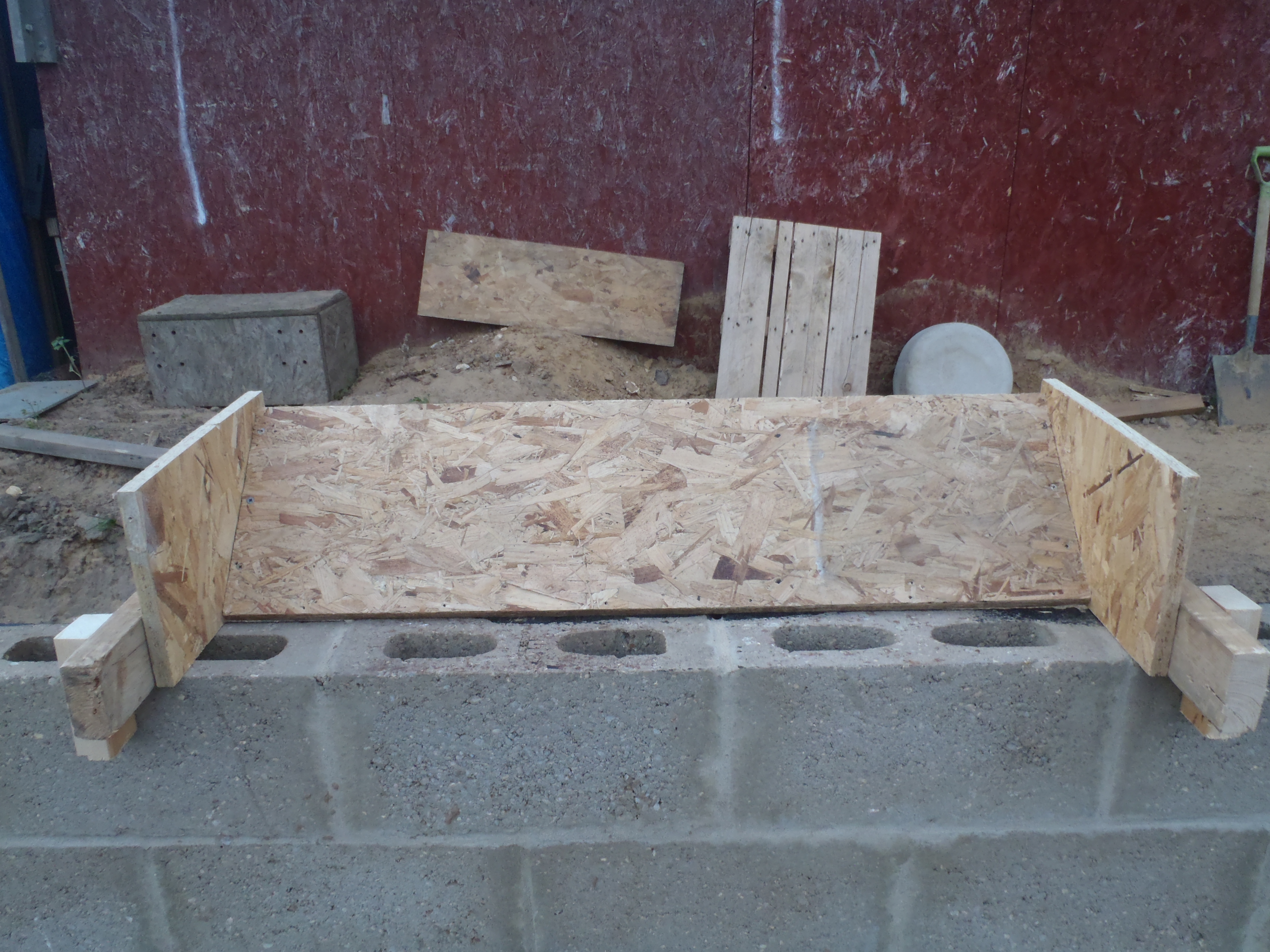
     We finished off the day’s work by building a deflector to control  the sloshy concrete being poured onto the top of the Perimeter Wall. The walls has hollow columns and they are all being filled up with the same ready mixed concrete being poured for our Floor Slab.

    Tool-to-aid-filling-the-columns

    Tool-to-aid-filling-the-columns

    The Concrete is going to be pumped using a big 30 metre boom arm coming from a massive diesel powered engine and the controller will move the wide diameter tube over the hollow columns by remote control, so we made this deflector to help him aim better!

    It is made of OSB boards and CLS timber, to make a 45 degree angle slope at the back and hooks to allow the tool to sit on top of the concrete  block walls without tipping off but allow it to move along. We also put two movable side hooks so one can lift these hooks when we come to a corner of the wall.

  • Grease Loaded into All Joints!

     This afternoon, Stephen performed some basic maintenance tasks on the mini-digger and loaded grease into all the joints and moving parts. The digger needs re-greasing fairly regularly, every 20 “clock” hours approximately.

  • New Stop Knob Fitted!

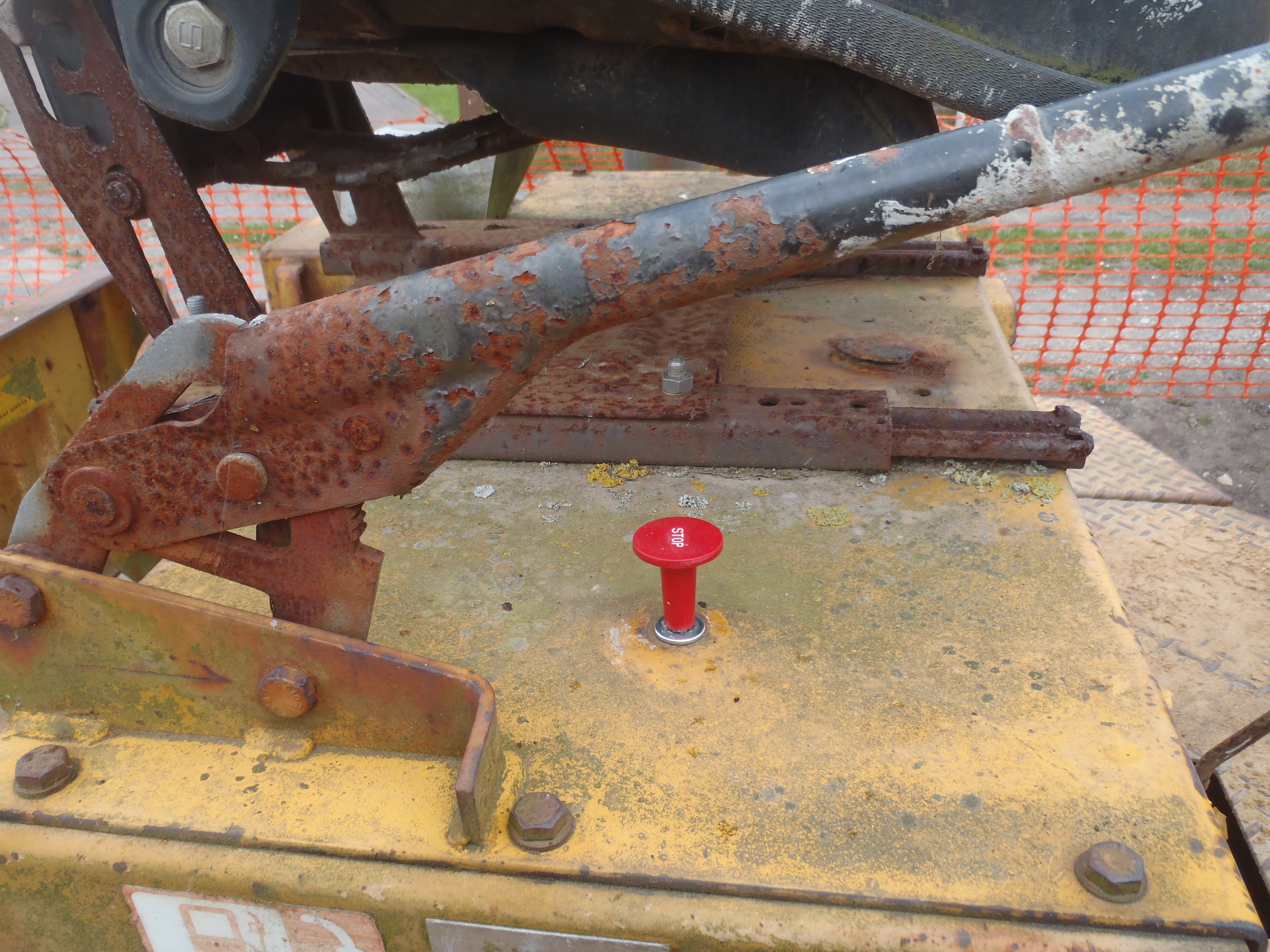
     Stephen replaced the old defunct Engine Stop knob on the dumper truck with a shiny new one!

    Dumper-New-Stop-Handle

    Dumper-New-Stop-Handle

    It was a relatively simple job and took about 30 minutes.

    It is lovely now and really easy to stop the dumper truck – Thank Goodness!

  • Dumper Truck Wouldn’t Stop!

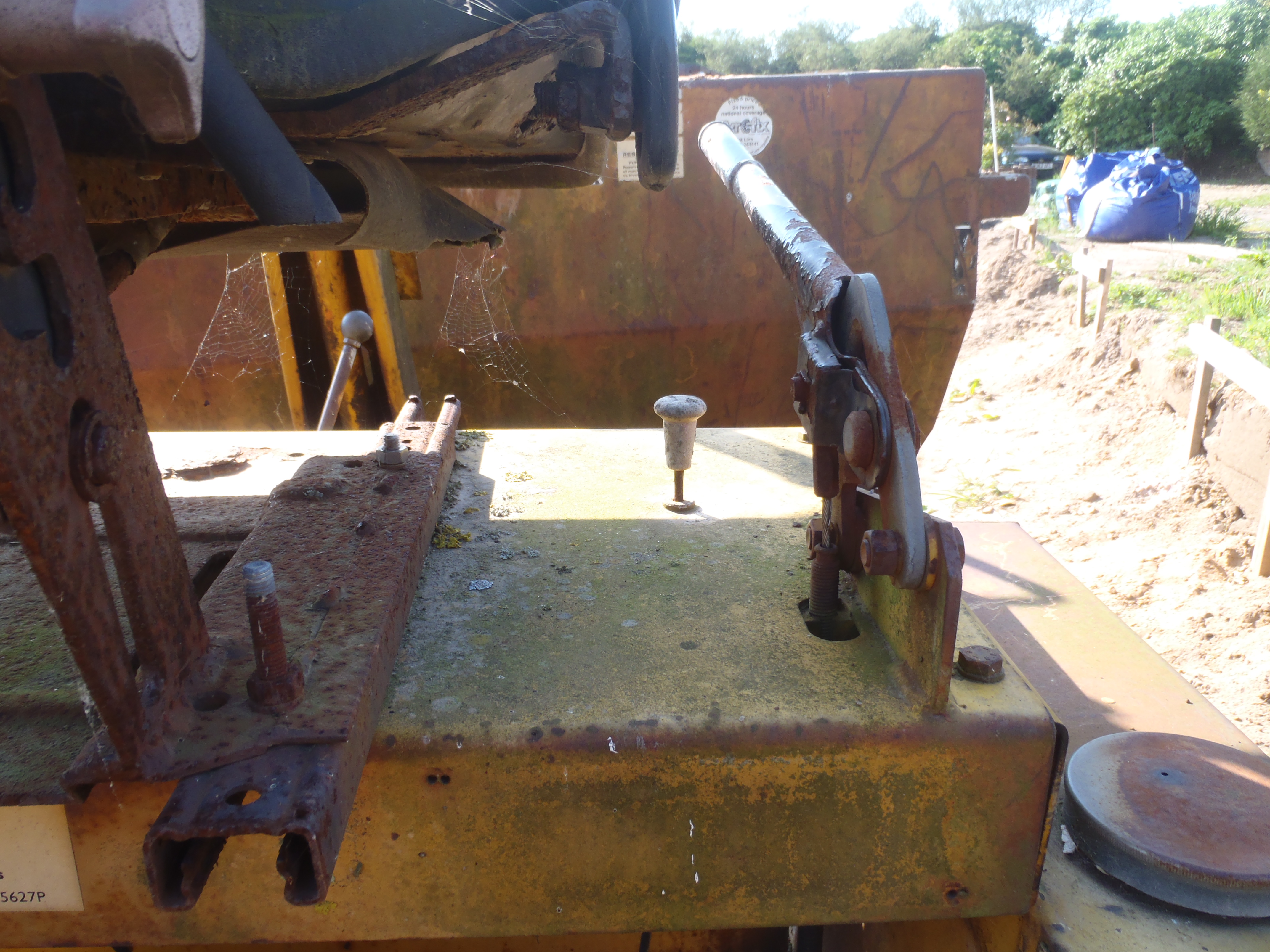
     Our old dumper truck wouldn’t stop when the stop button was pulled – a real ironic case of a Stop button causing a Stoppage!

    Dumper-Stop-Handle-It-should-pull

    Dumper-Stop-Handle-It-should-pull

    Dumper-Stop-lever-on-engine

    Dumper-Stop-lever-on-engine


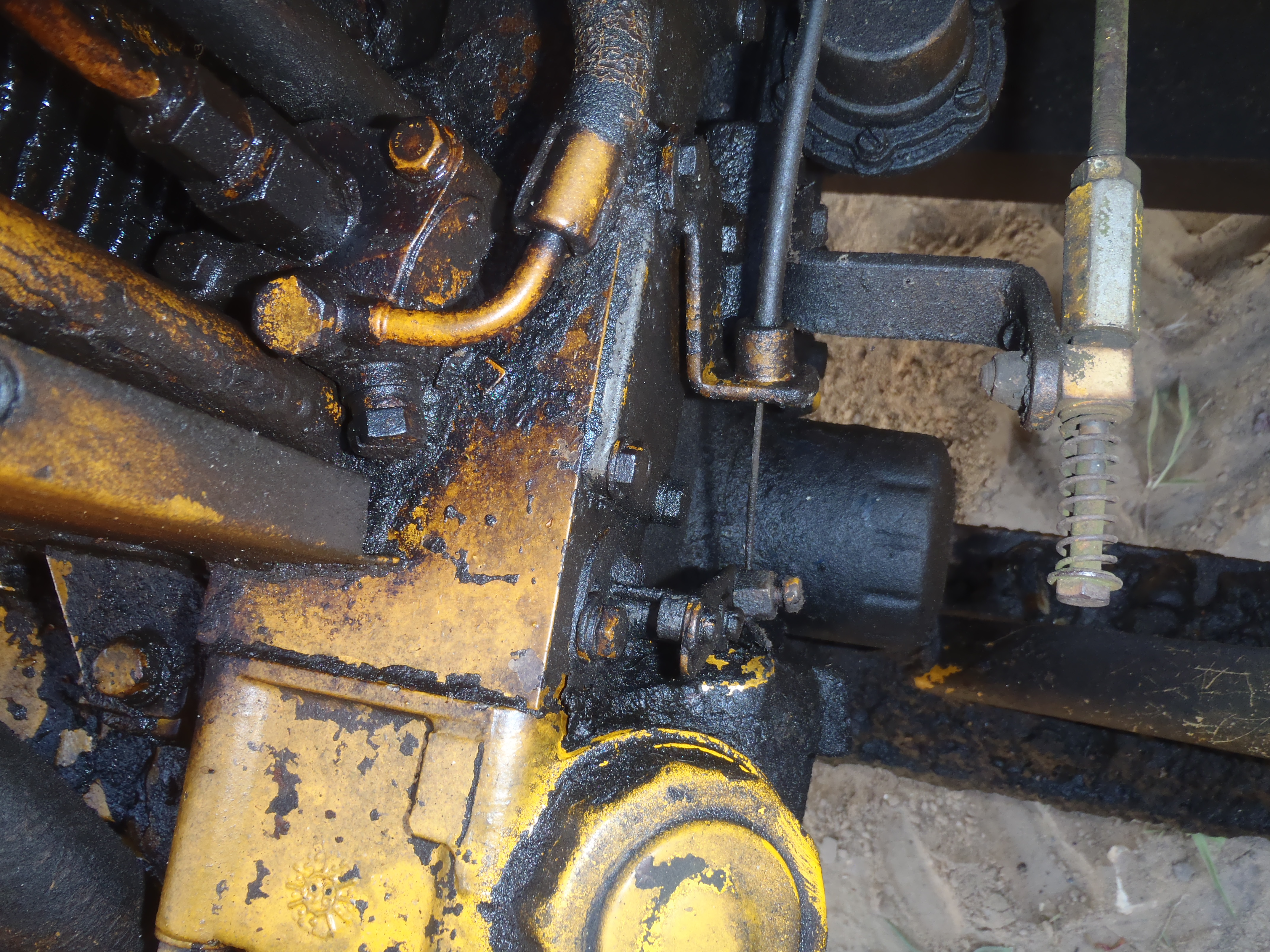
    The cable from the spring loaded pull knob had come adrift. The cable is very similar to any brake cable found on bicycles and any vehicles, which is connected to the cylinder head of the diesel engine to open a gate valve to disrupt the compression chamber’s integrity so the fuel cannot be pressurised, and cause the next explosion to drive the piston down again, thus stopping the cycle of the engine.

    We will have to surf the net for a spare part, hopefully we can find someone who has a new bit, or else, we will have to make a new switch mechanism to achieve the same job!!

    P.S. Found a new part, a complete knob and cable for £10, should be delivered Wednesday.