Category: Materials

  • Monster Plastic shopping Order finished!

    After all the analysis of design and everything, we come to a final list of plastic pipes, tubes and crates. It adds up to over £6500! The lion share are the AquaCell crate modules for our energy storage system. We have ordered most of what we need for phase 2 of our build and that would represent about £500 saving in the next six months and we would never get that kind of interest rate on any saving account out there!

    Phew!

    Now back to the grind and back to the garage interior work!

  • Monster Plastic Shopping Order

    We have been working on building up a shopping list of all the plastic pipework, crates and other plastic items. We were told that the prices for these will be going up by 8% on 1st March probably caused by the higher oil price. So we sat down to analyse our house design to quantify what we need in the following areas:

    . Central Vacuum system

    . Hot water

    . Cold water

    . Sewage above ground & underground

    . Rain water underground & downpipes

    . Energy storage modules and connections to and from each underground tanks

    We have done quite a bit of analysis so far but a few more days to go. We are taking a break for a change of scene and are back to working in the garage.

  • Fermacell Arrives!

    Our 120sheets of Fermacell has arrived! The lorry couldn’t fit down the Loke so they got their fork lift truck (they bought it with them!) and offloaded, separately, the two pallets, up on the main Beccles Road and drove down the Loke! They even managed to drive into our garage to dump the second pallet inside!

    The Fermacell sheets are 10mm thick and the usual 2400mm by 1200mm metric size! Fermacell is very flat and very constant in thickness. It is fibre reinforced gypsum and compressed to form a level surface, ready to be covered (wallpaper or paint) straight away. Fermacell do not have that paper finish, all edges are square and sharp! Just butt the boards together with a thin line of glue specially formulated to form strong joints.

    They supply a “surface” treatment paste (we bought a tub) which you can apply to the board and scrape off using the metal spatula to form a very smooth finish, ready for painting directly. The original surface has very tiny pits as a result of the manufacturing process and even here you can paint the surface using rollers to get that matt finish!

    The Fermacell is very strong compared with the old fashioned plasterboards, one screw, once in the board, can hold 20kg all by itself! Even more for thicker boards!

    No more need for that highly skilled chore of plastering the walls! So time and money is saved at this point which of course is taken up by the higher cost of the Fermacell in the first place, but they are ideal for us!

  • Rubber Membrane for roof arrives!

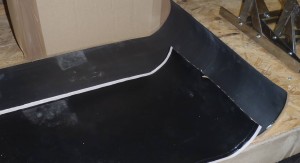
    The Firestone EPDM Rubber Roof has arrived! The membrane measures 9m by 9.5m or at least that is what is written on the label! It is all folded up and weighs tons! We haven’t unfolded it to find out if it is correct!

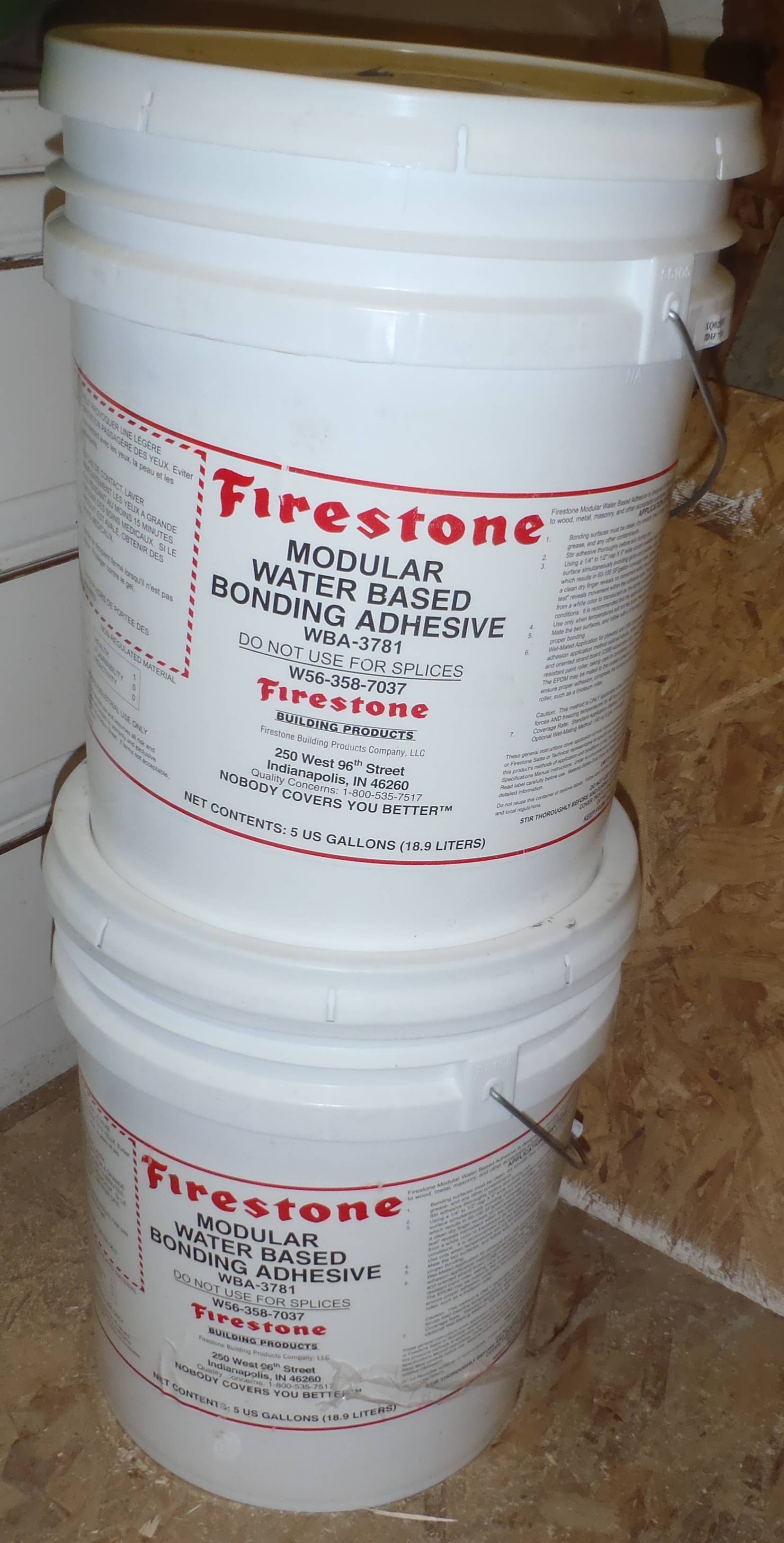
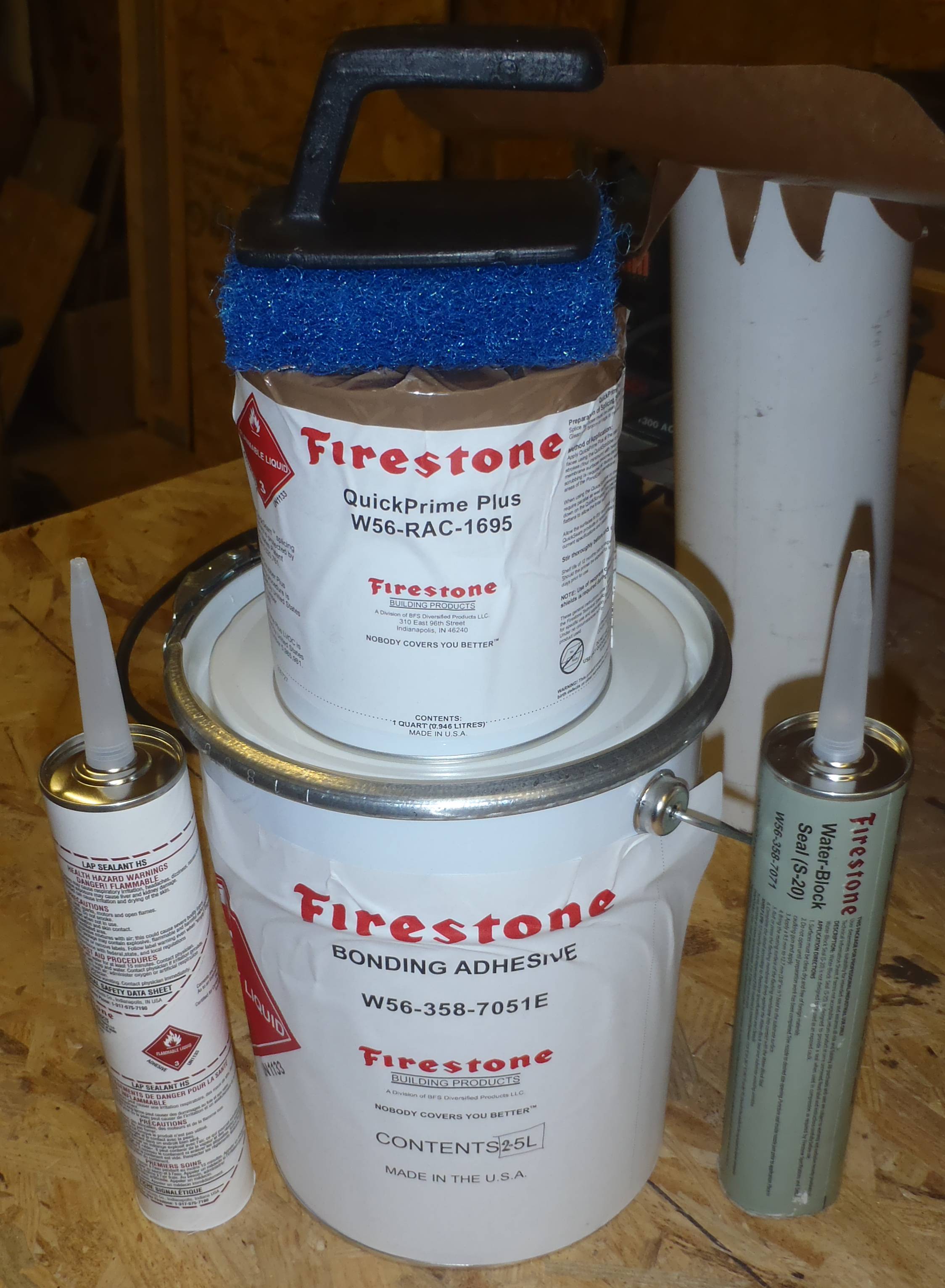
    The other items delivered were two drums of rubber solution to stick the membrane down onto the roof boards. Each drum is labelled 5 gallons but it is also labelled 18.9 litres, which is strange until you realise that it is American Gallons and not English! So our two drums only adds up to 37.8litres and we had “ordered” 40 litres as the result of our calculations of the glue coverage rate! The web site stated that you can buy 2.5, 5 or 10litres containers of this glue so we ordered four 10litres containers. But we got two drums! Very odd and a little bit naughty by the retailer not to explain that the drums are American sizes.

    Even more strange that the labels also states the coverage of 100 square feet per gallon so one drum would cover 500 square feet which is 46.5 square metres so the two drums adds to 93 square metres. Our roof area is 85.5 square metres (9m by 9.5m). The web site stated a coverage of 2square metres per litre so the 85.5 square metres would mean 42.75 litres hence why we ordered 40litres! Most Confusing and I think it is time for the Americans to go metric! Smile!

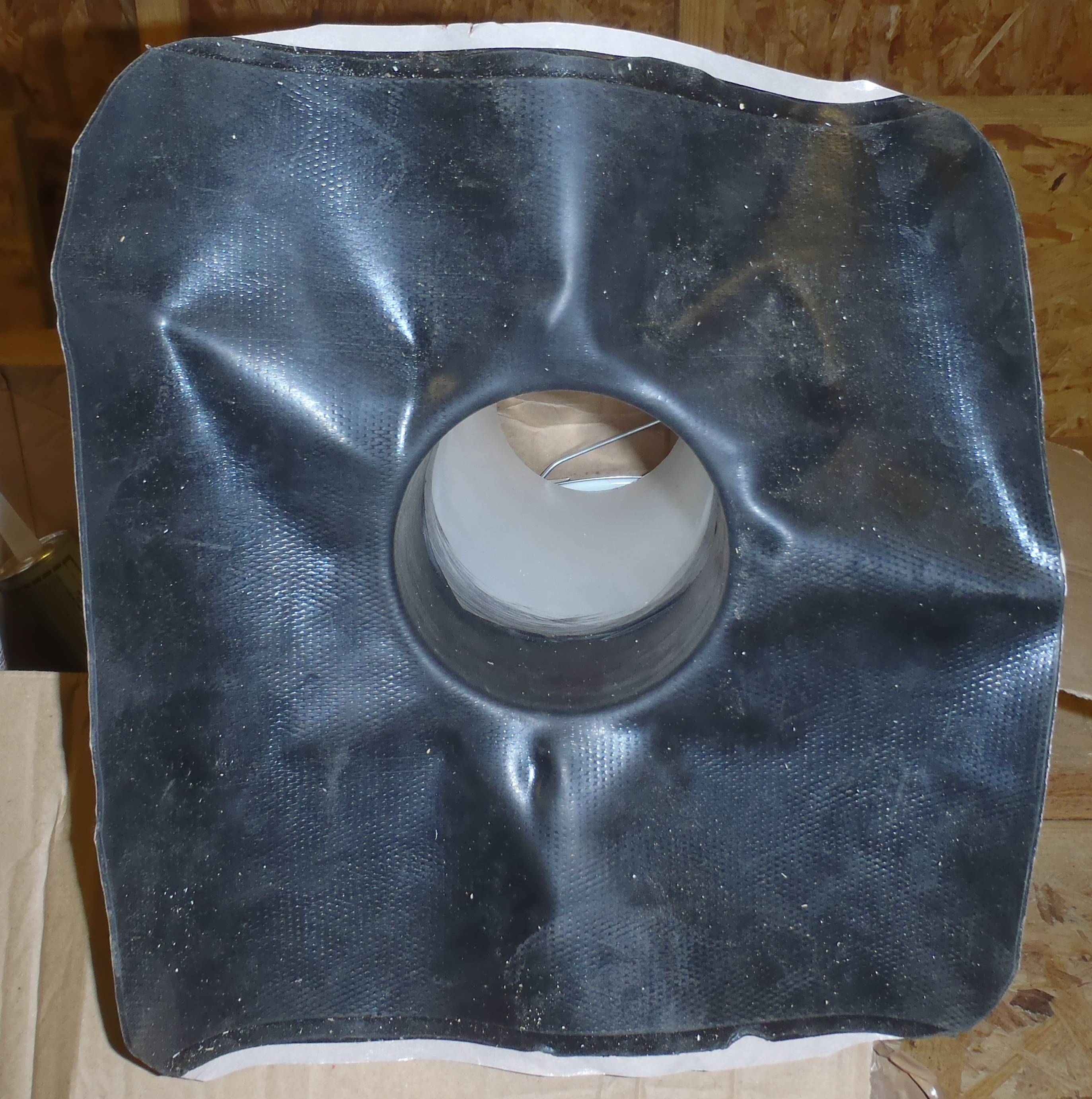
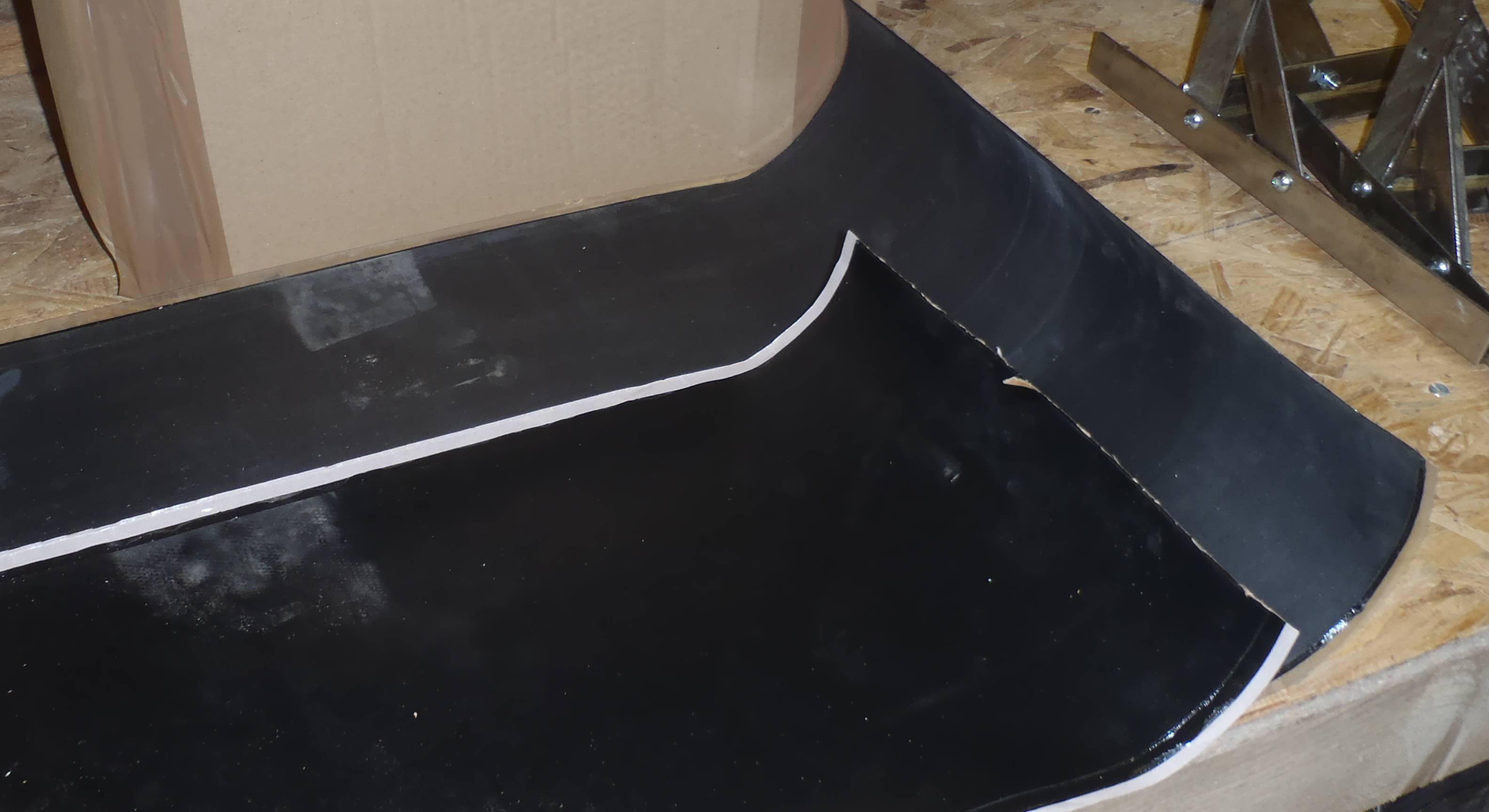
    We got an adapter to allow us to make a hole in the corner of the roof to let the rain water through and down into our rain water collection and filtration system. It is a small piece of 110mm plastic pipe with a square piece of the rubber membrane stretched and glued on to the top and inside the pipe. It has a layer of very sticky substance with a peel off paper protection.

    The next item is a set of aluminium bars for fixing the edges of the rubber membrane down. The bars are 2.5mm thick with a screw hole every 100mm. we decided to rely on these for holding down the rubber for long term peace of mind instead of wooden battens.

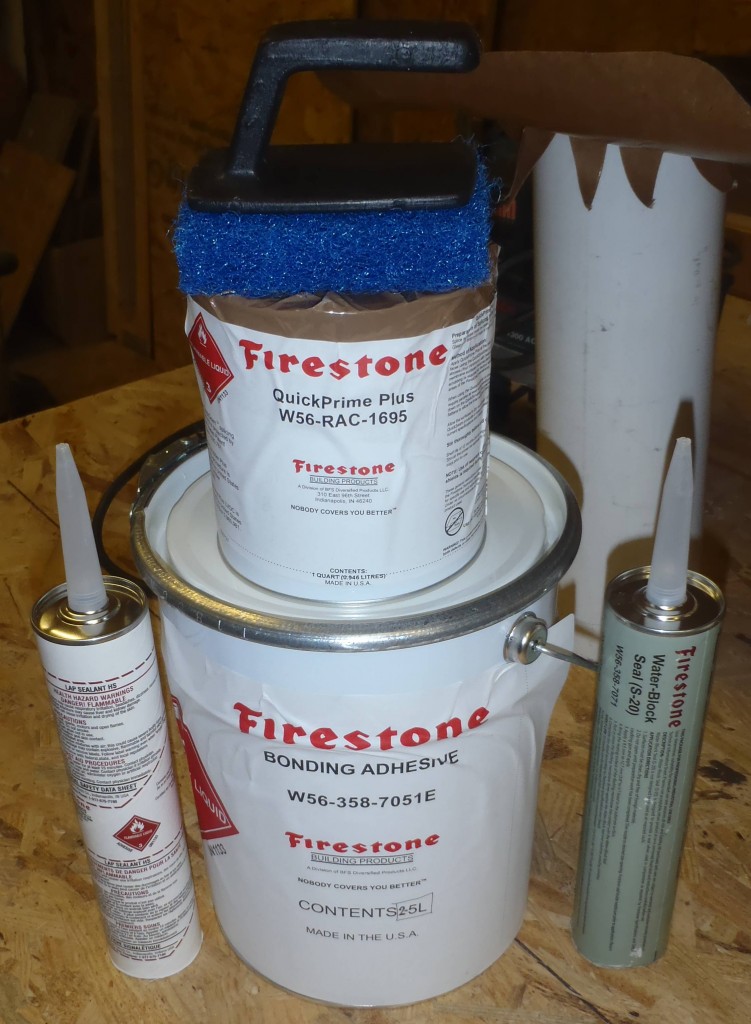
    Finally we got contact adhesive for the edges of the roof to allow an instant stick (so the wind wont lift it off before we can fix with the strips), two pieces of flashing  (for

    sealing pipes through the roof) and the primer to allow these and the rain water adapter to stick permanently.
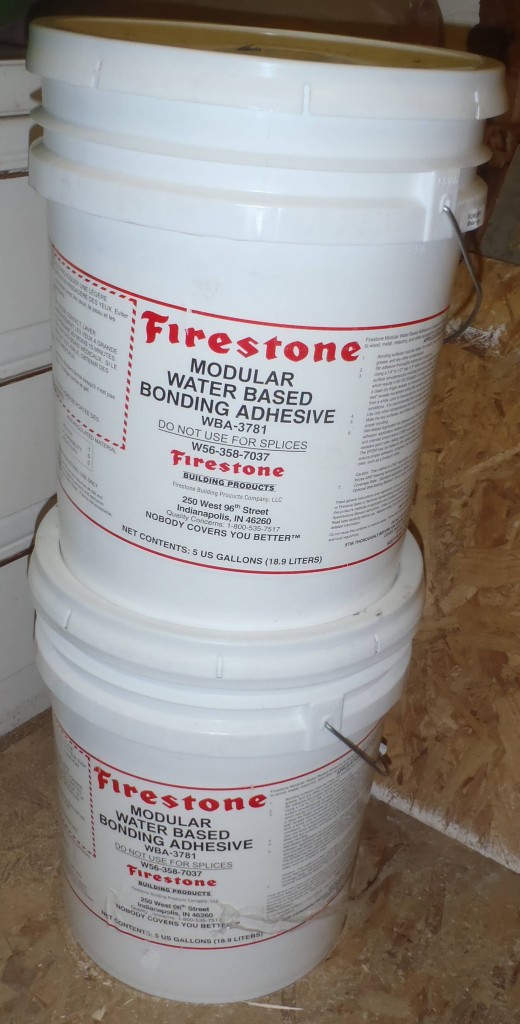
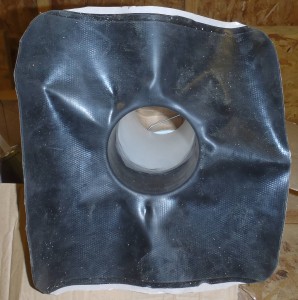
    EPDM Roof adhesiveEPDM rainwater outletEPDM Flashing stripsEPDM cemicals

  • Stainless steeel mesh

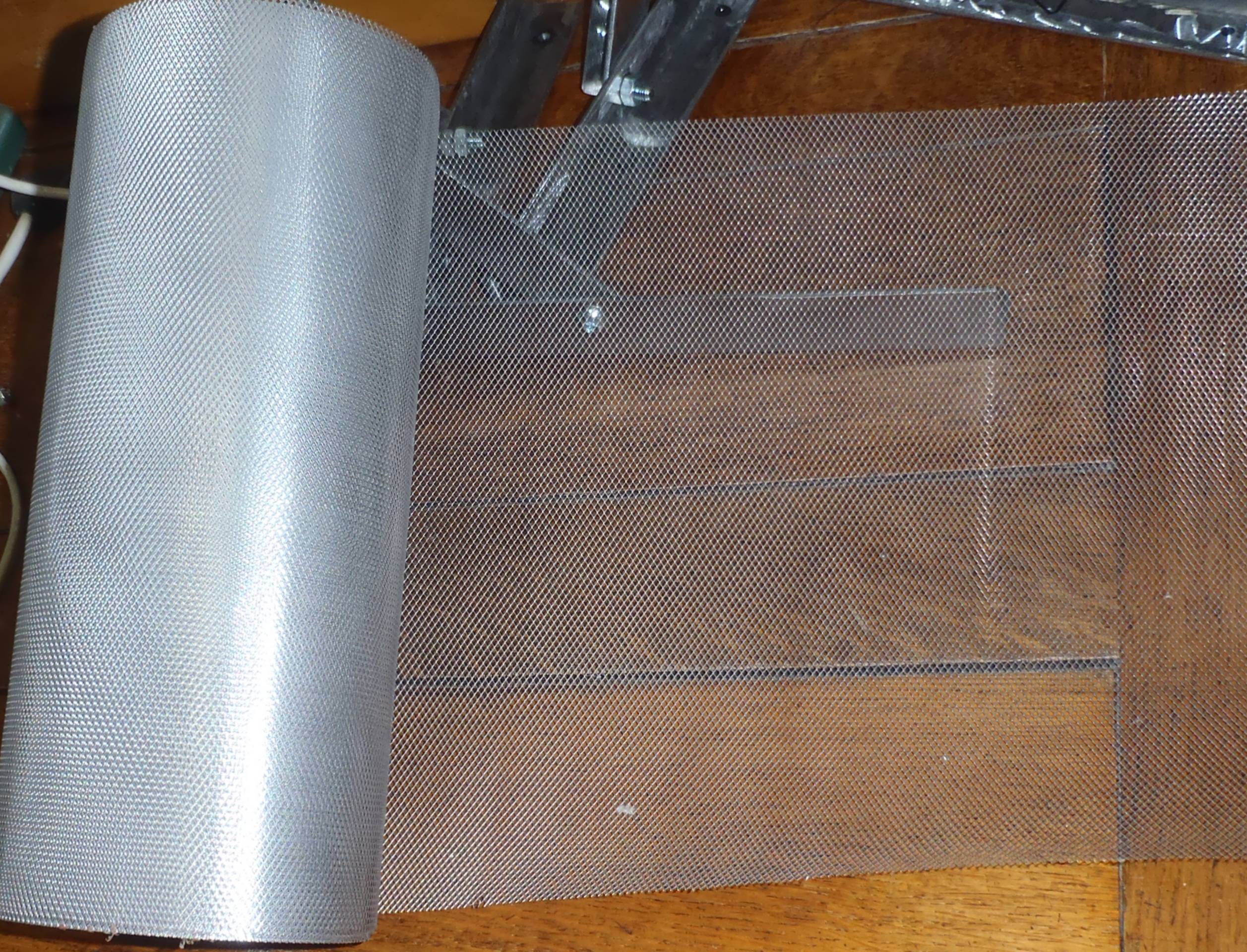
    We have bought a roll of stainless steel expanded mesh to use for insect screening in the ventilation gaps around the building. We also plan to cover all of the gutters with it, to keep out all the leaves!

    Once again the Internet allows us to buy a product at much reduced prices from the retail. Screwfix sells this mesh in 75mm x 30m rolls for £74, we bought a 300mm (4 x wider) x 30m roll for only £95! (It’s even cheaper in wider rolls)

    roll of meshSS Mesh Detail

  • Cement boards arrive early!

    The cement boards arrive a day early. The lorry was too high to come down the loke, so we took the trolley up tothe top of the loke.

    When we started to pull the trolley we found two tyres were soft and this caused the steering arm to bend while trying to turn into the loke! The two front wheels pointed in different directions…

    We then brought the dumper truck up and transfered the boards and drove them down to the site.

    Shaun dragged the broken trolley down after the dumper!

  • Oak Timber has arrived!

    Oak Timber has arrived!

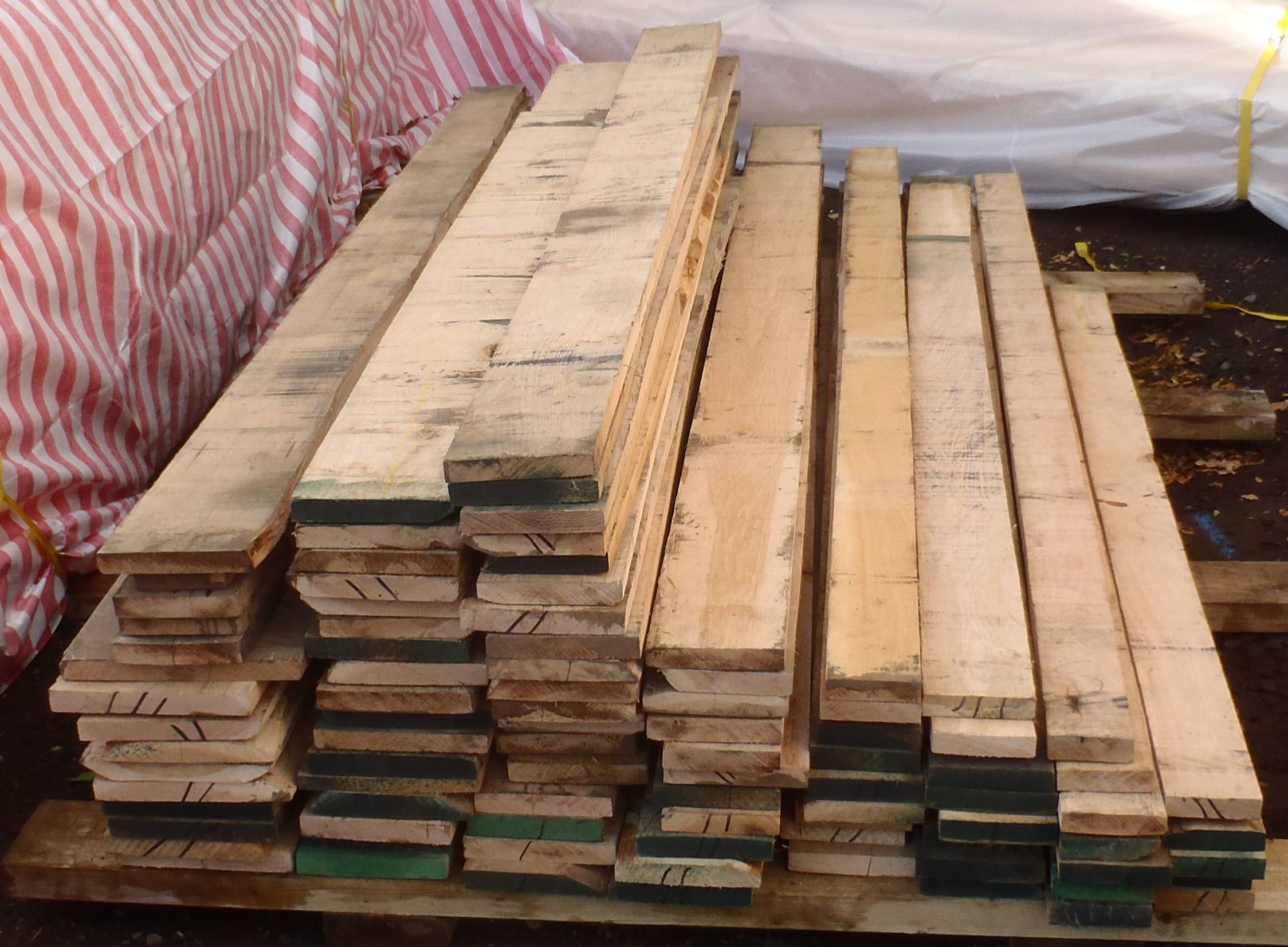
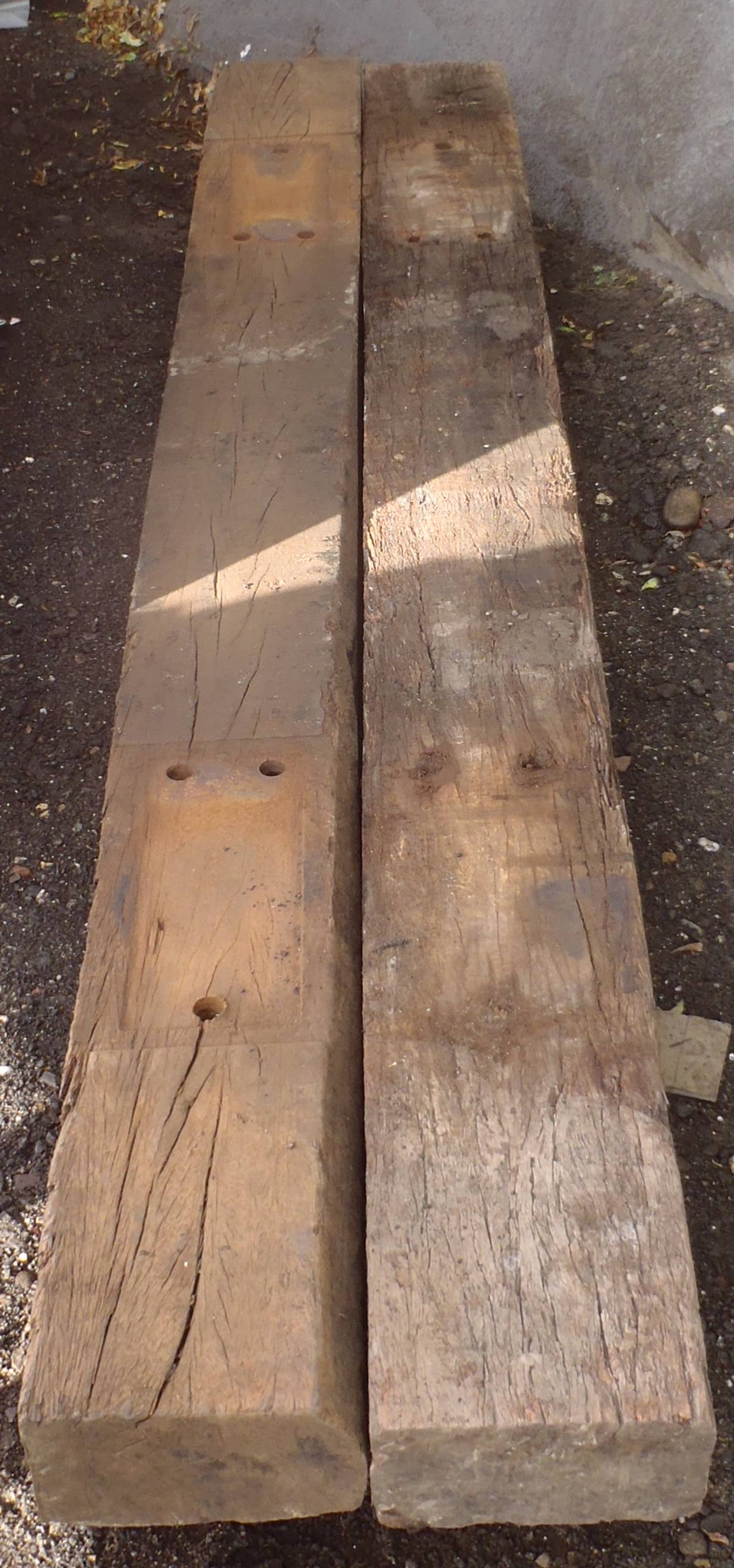
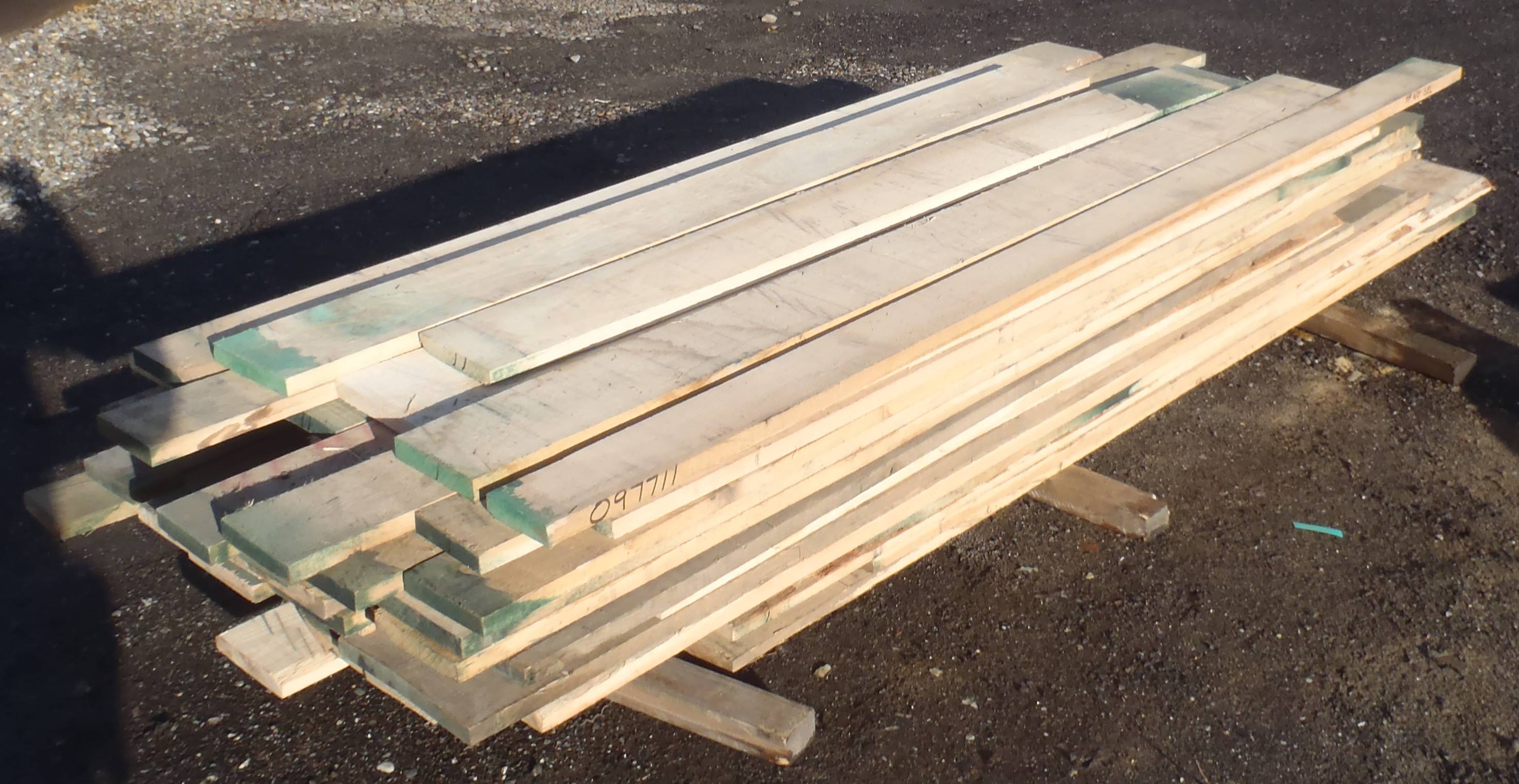
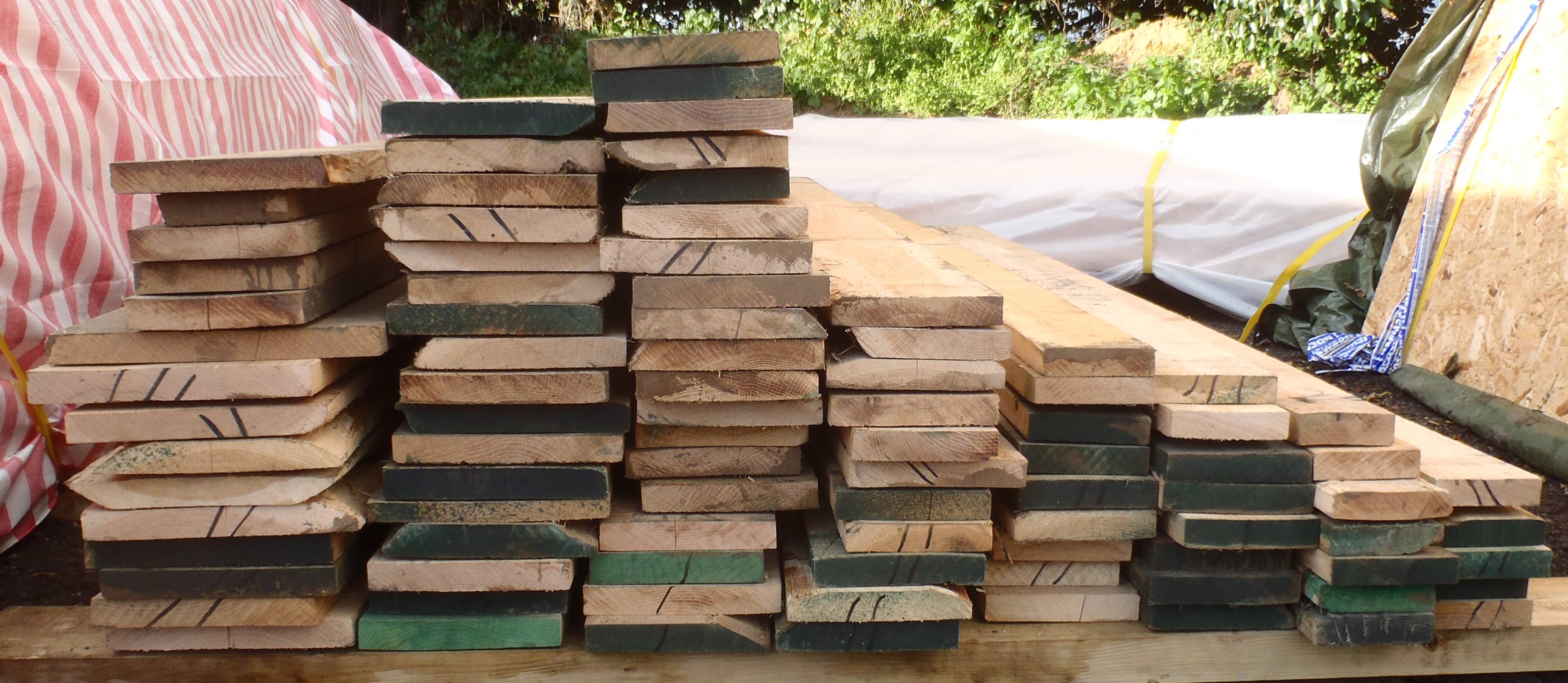
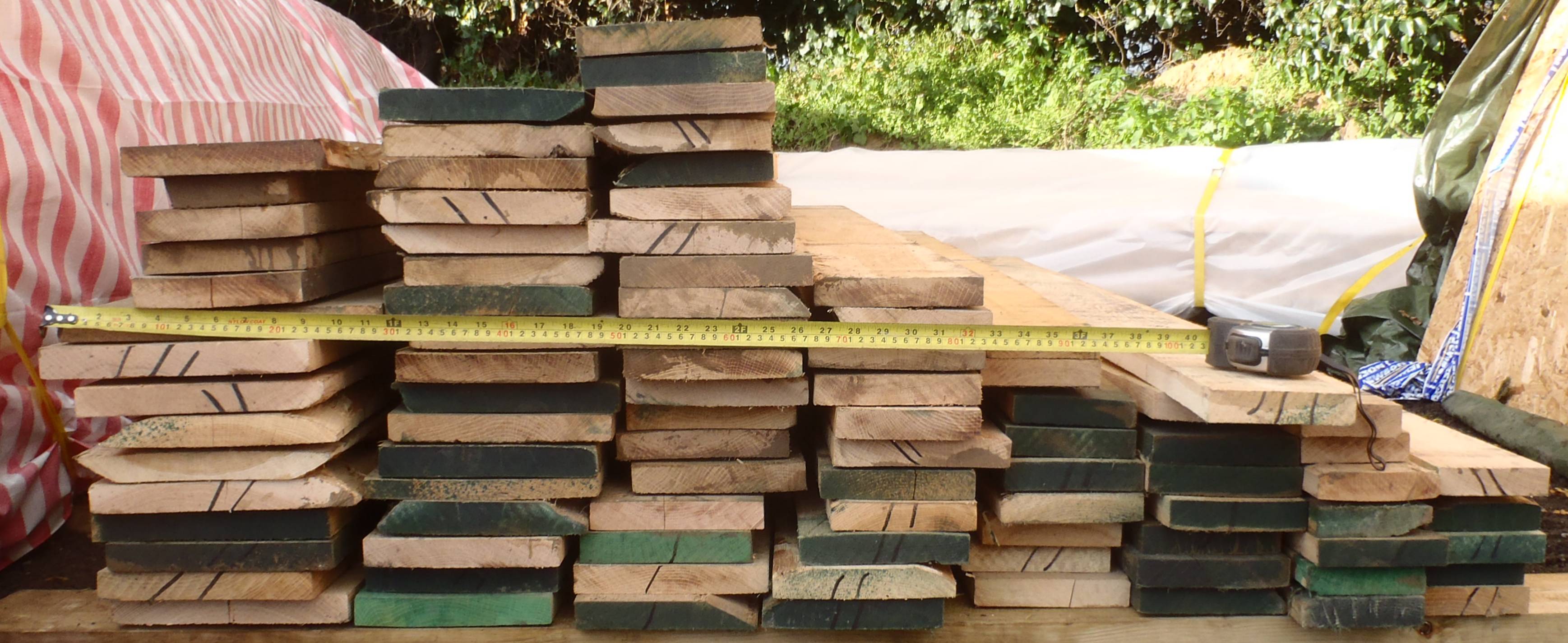
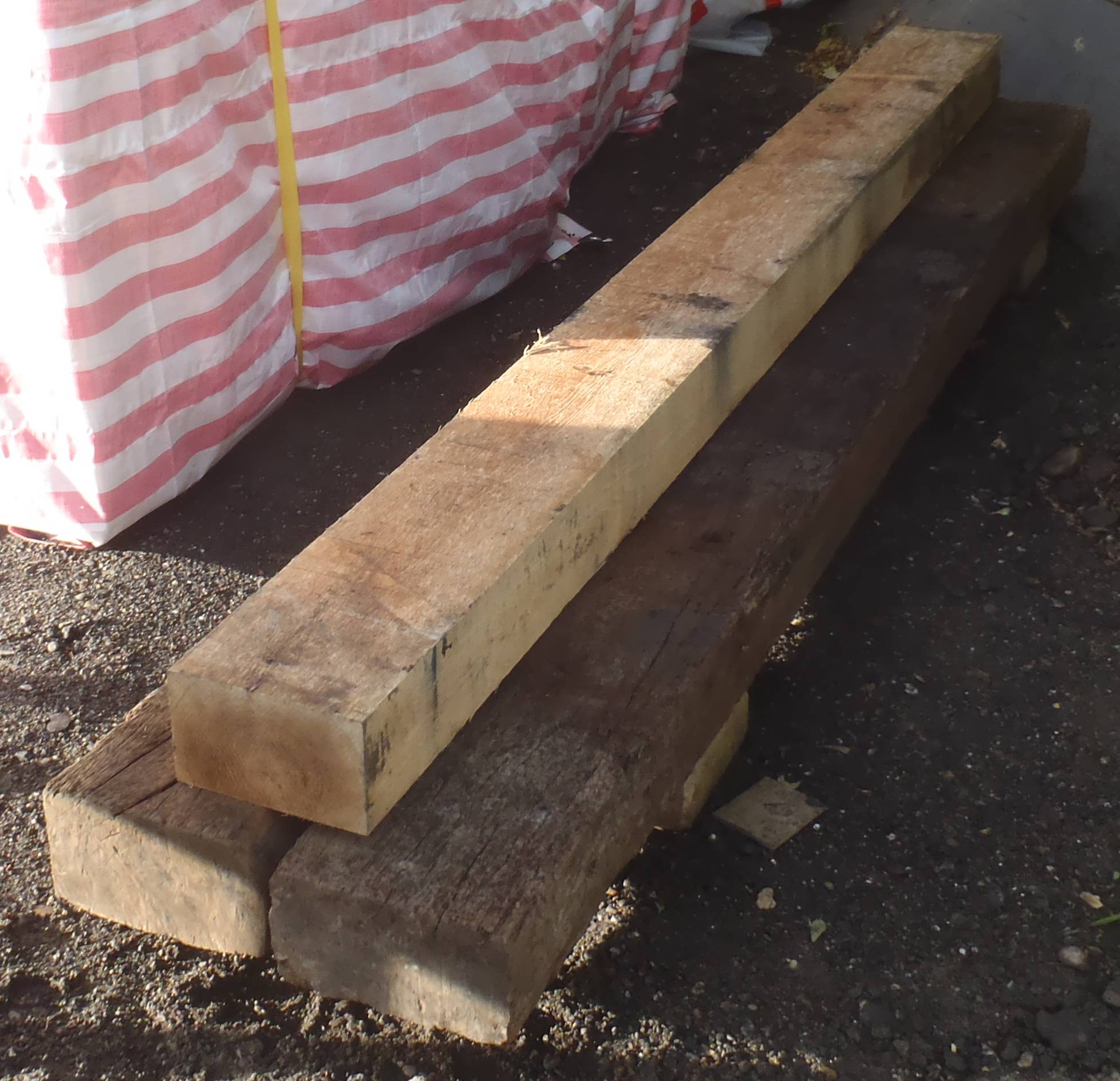
    Our cubic metre of English Oak has arrived today just before Lunch. There were the two old sleepers we ordered as well just to see what they are like!

    The 91 oak planks are very nice in the main, with only one or two odd pieces of older looking ones and one thinner one (only 19mm thick!). we got mostly sizes between 2mtres (6 feet) and 2.5metres (8 feet) and majority more than 120mm wide going up to 300mm! we are pleased with them!

    Such a nice smell too!

    The old railway sleepers are very interesting and the sheer history in them is lovely to see! The old screw holes and the coupling plates outline compressed into the surface, to show the age and number of trains that has rumbled over these sleepers! We also bought a untreated and unused Oak sleeper to see what this size is like too.

    The Azobe wood is very very heavy indeed! It is 2.6metres long (8.5 feet) by 250mm wide (10 inches) and 150mm thick (6 inches)!

    The Jarra wood is very similar but slightly thinner at only 130mm thick! Only! This wood is very heavy as well!

  • Cement Boards delays!

    The supplier for the cement boards are being very slow in delivering them. We found out today that they are waiting for other orders to come in, to make it worthwhile for them before delivering all the way from Birmingham!

    It is very frustrating for us and it is very much the case of rare use of these cement panels and our relatively small order thus making the problem worse.

    We tried phoning half a dozen local building suppliers to see if any had these types of cement panels in stock and none had! Oh well! In hindsight we should have ordered these panels a month ago!

    We are not quite losing time just yet, we are preparing all the timber for the other parts of the walls and roof, the wire suspension system on the back wall for hanging our long ladders and other items that are too long for storing inside. We probably have about 2 or 3 days worth of jobs left to complete before we hit the point of twiddling our fingers!!

    Fingers crossed!

  • Sometimes it’s the simple things …

    The back wall of the garage is very close to the fence and will need to be made in one piece and stood up as the will be no access to the back. The close proximity to the fence also means the wall will have to have a fire proof exterior.

    Simple we thought, just use fibre cement boards to cover the OSB! But when we asked Jewson for some they could only offer strips 125mm wide for soffits! Jewson checked their suppliers and came up blank (other than tile backing boards).

    Internet to the rescue! There appear to be dozens of different sheets available, now to find a supplier willing to ship only 10 sheets… we found a supplier who will send any number you want for a fixed delivery charge. Sheets were £14.50 each and delivery £55! Now we hope the will deliver fairly quickly…

  • Joining OSB Sheets

    The structural surface of the garage roof is made from 18mm OSB sheets. The rafters run from front to back and the OSB will run side to side. All edges of the OSB should be fixed so as to keep the roof flat. This is done by having the short edges start and stop on rafters and the long edge being tongue and grooved (t&g) into the next sheet. When we got prices for commercially made t&g we were shocked that it was 50% more than plain boards (£18 vs. £12). This is over £180 for the garage alone! The same thing will be done on the main house and would cost £600 extra!

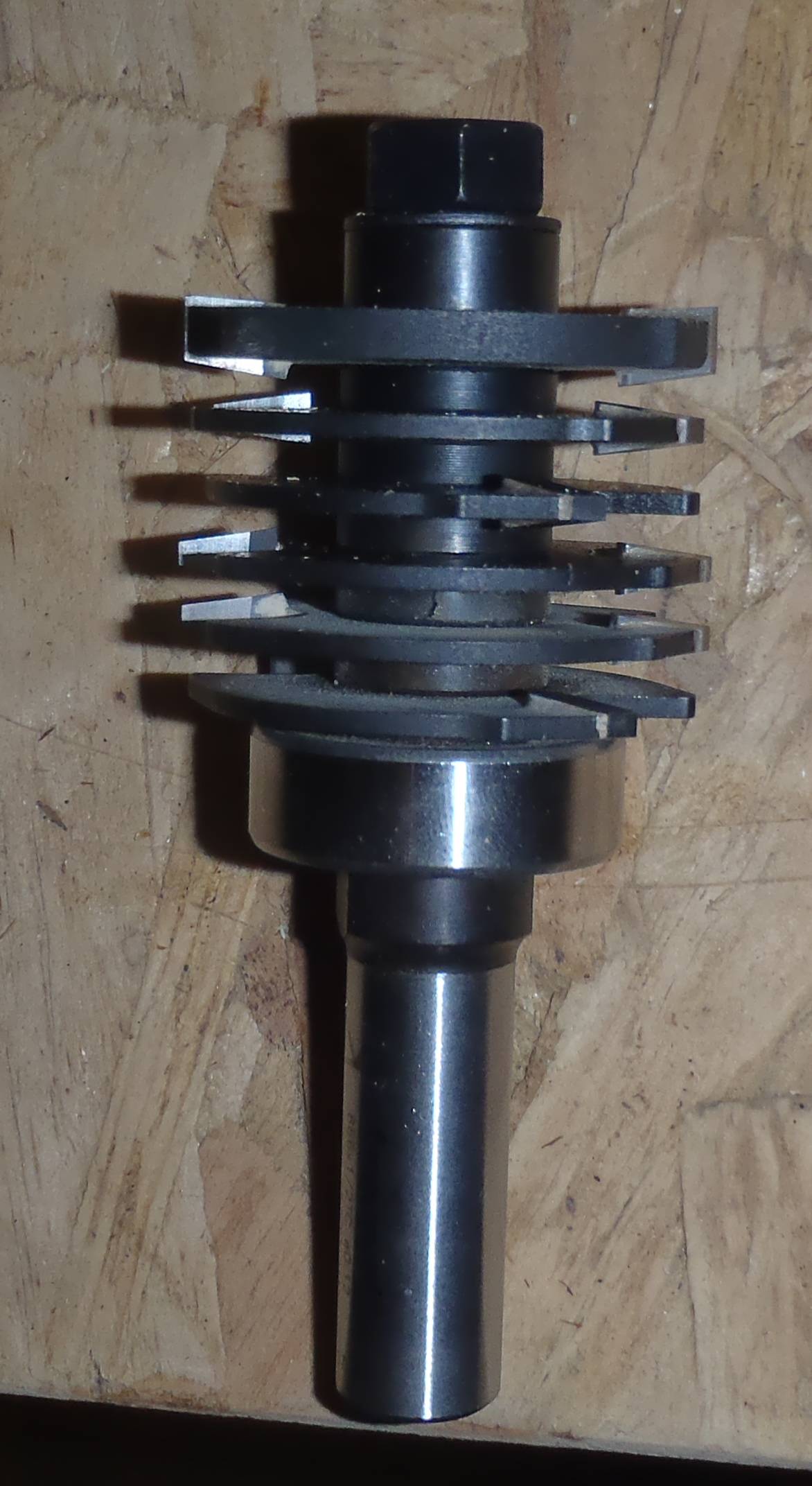
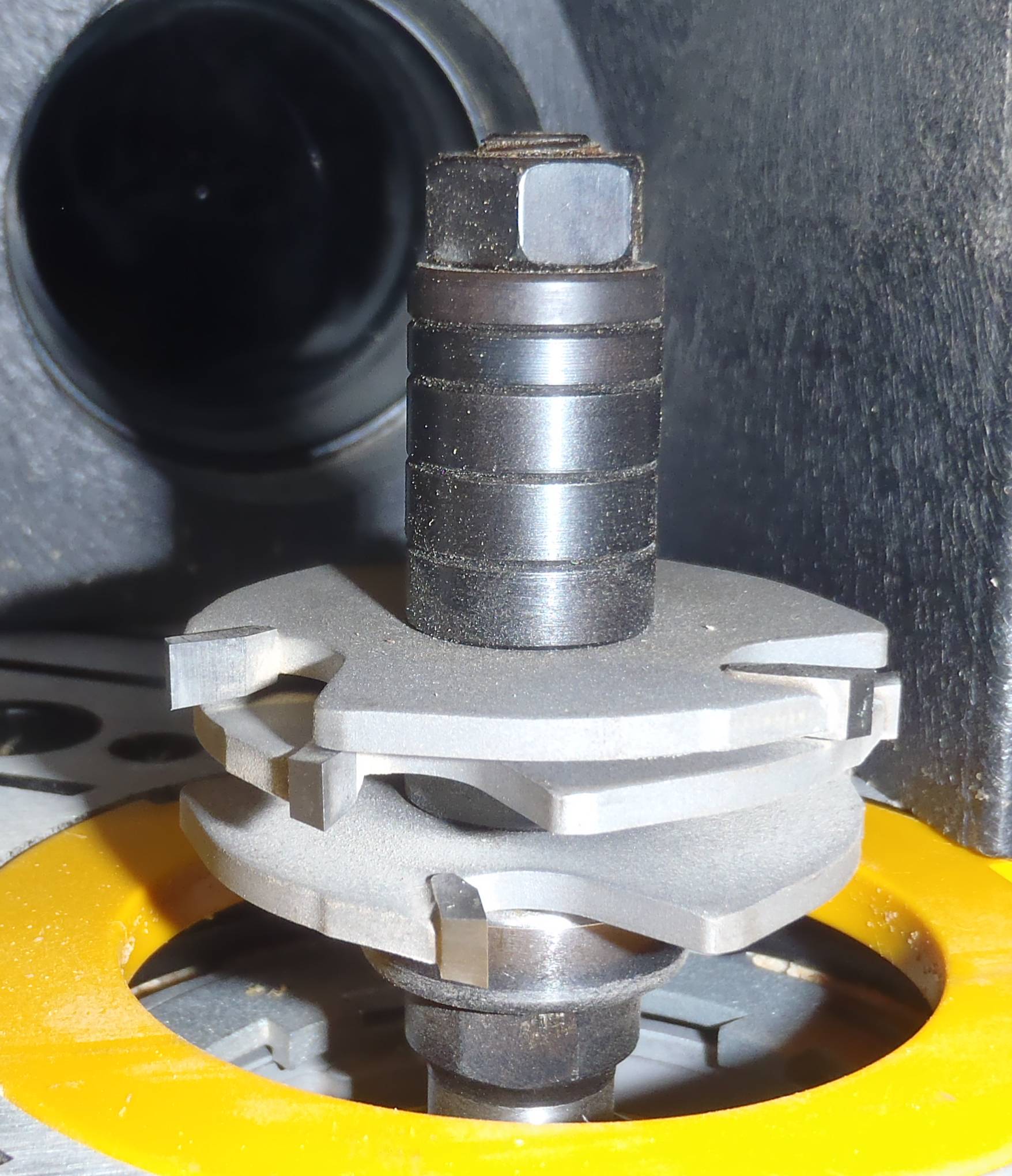
    Something had to be done, so in our usual style we decided to DIY… Investigating tools gave us three options :- locked mitre, finger and comb joints. But I could not decide which would be best in OSB so I decided to try all three!

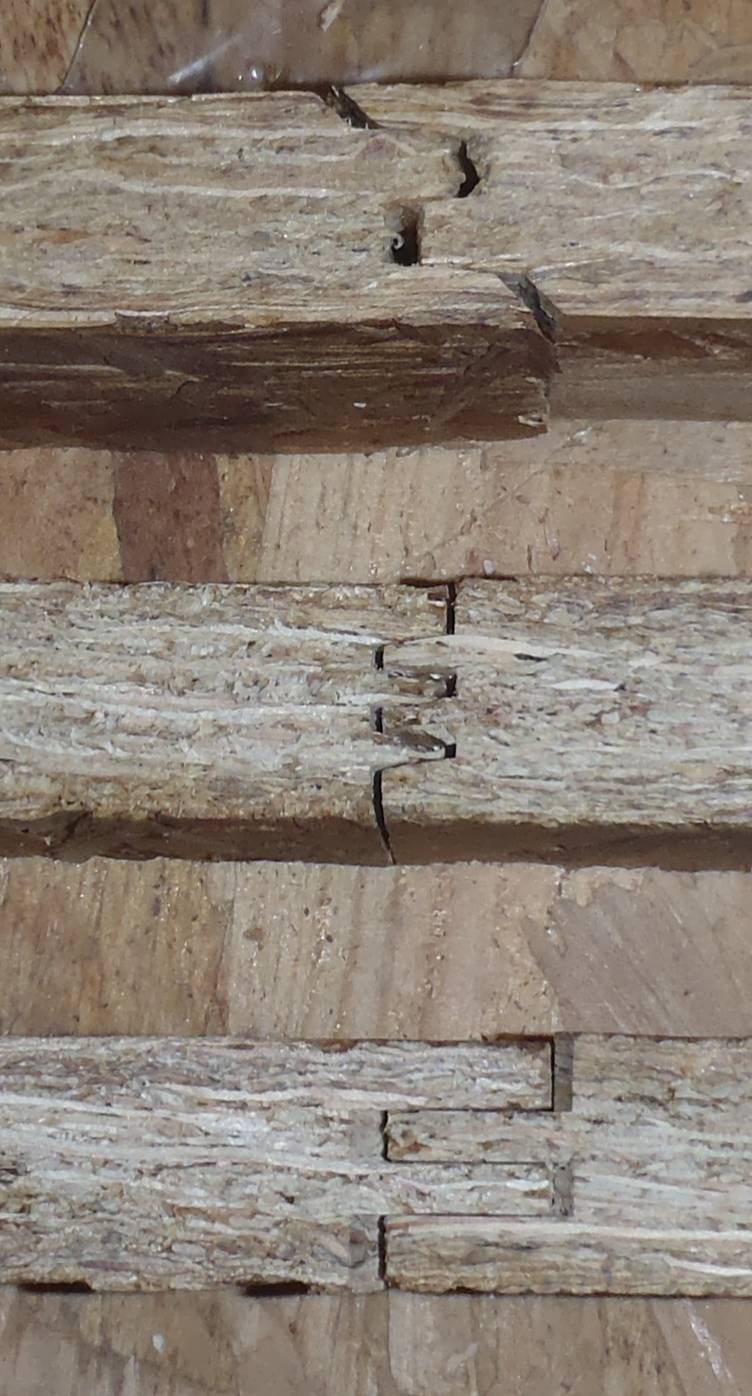
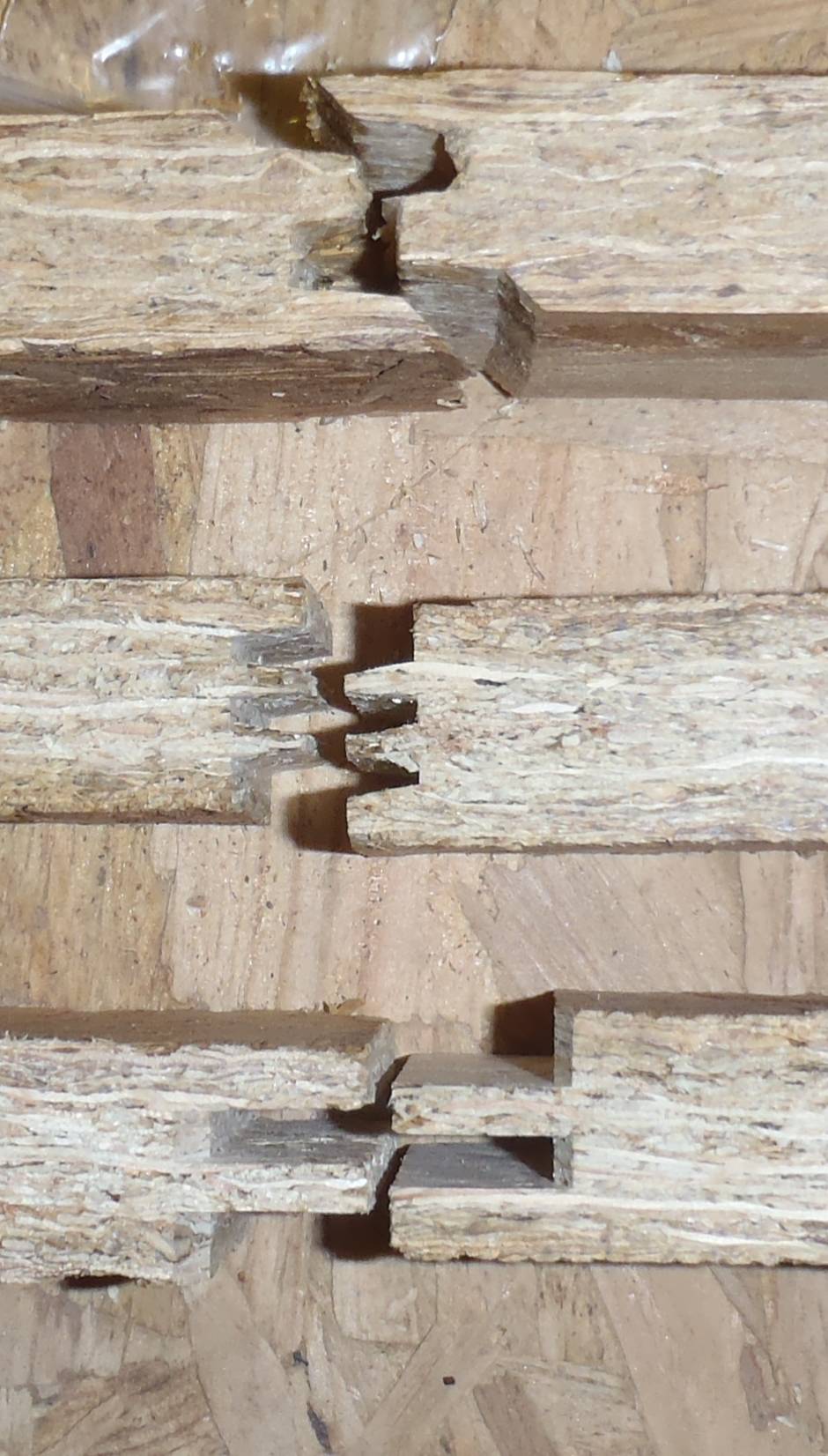
    We made sample joints using the cutters and are waiting for the glue to set… We will destructivly test the joints to determine which is best, but after the comb joint is the easyest to make. You can see examples of the joints below in order.

    Joints open

    And here are pictures of the cutters

    finger cuttercomb cutter