Today, for our Entertainment Room, we calculated the number of concrete blocks and concrete floor beams needed to build a sound reducing barrier around the walls and ceiling. There are twelve rows of standard dense concrete blocks, a lintel for going over the doorway and eleven 4 metre long concrete beams, the smallest one available (the 150mm by 120mm wide version) because it is just a false ceiling and not holding up any loads apart from itself. The concrete shell is approximately 5metres long by 4metres wide and 2.6metres high, just shy of the first floor joists.
The total number of blocks is around 635 but we ordered 650 to have some spares. We also ordered a ton bag of soft sand and eight bags of regular cement and a concrete lintel measuring 1200mm long, 100mm wide and 65mm thick to go over the doorway, it is rated at seven kilo-newtons (7kN/m) and we calculated that the block and beam ceiling will be 3.6kN per metre , loading over the 900mm wide doorway. That means a double safety factor, without us having to do anything special, just the minimum strength of the lintel we selected.
We have asked Jewson’s for a price on the whole job and we are waiting for it…
Category: Materials
-
Ordered Concrete Beams and Blocks plus Sand and Cement for Entertainment Room
-
The Larch Timber for Wall Cladding Arrives
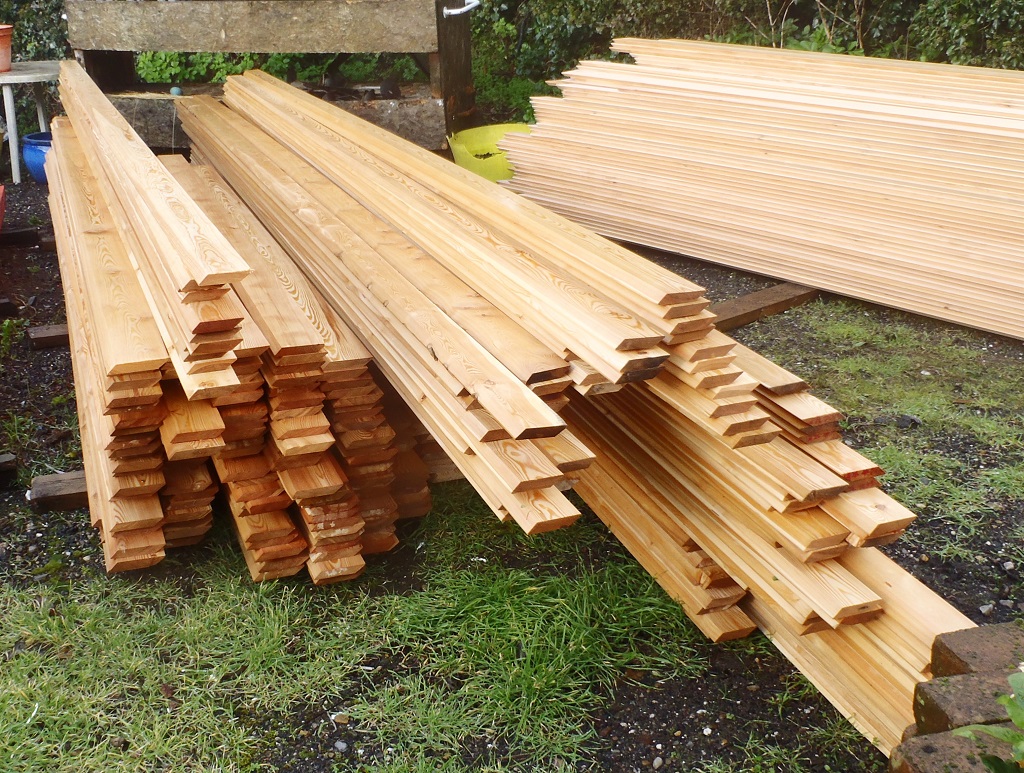
Today saw the arrival of our Larch wall cladding timber! But it was most unexpected and the first sign that it was coming, was a phone call from the driver saying “I’m ten minutes away!” We were told delivery would be 2-3 weeks and it’s only been 9 days!
O boy!
The day was a very wet with virtually continuous rain all morning and we hadn’t planned to be out in it at all! But the phone call changed everything!!
We hastily got changed into work clothes, put on rain jackets and gloves and got outside into the rain!
The first job was to guide the lorry down our Loke, but at least and thank goodness, the driver was confident to reverse his soft shell high sided vehicle, all the way down to the bottom. The delivery truck had no crane and was expecting a fork-lift vehicle on site to unload the two pallets but alas we don’t have one of those!This meant that the whole lot, all 5 tons of it, had to be unloaded by hand, plank by plank, a total of 600 Planks!
We got two trestle tables out to help organise carrying piles and several two by sixes to laid on the ground to support the larch out of the way.The load arrived at 10:10am and we got it all unloaded by 12:40am, a total of two and an half hours of solid back breaking continuous effort without a single rest!
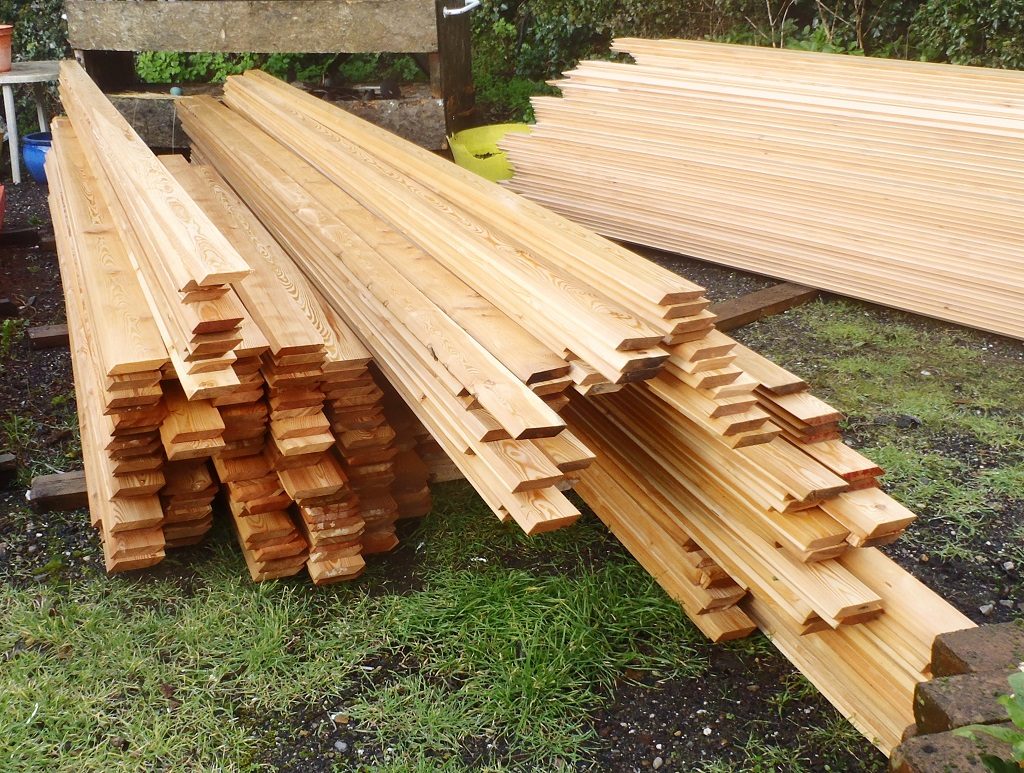
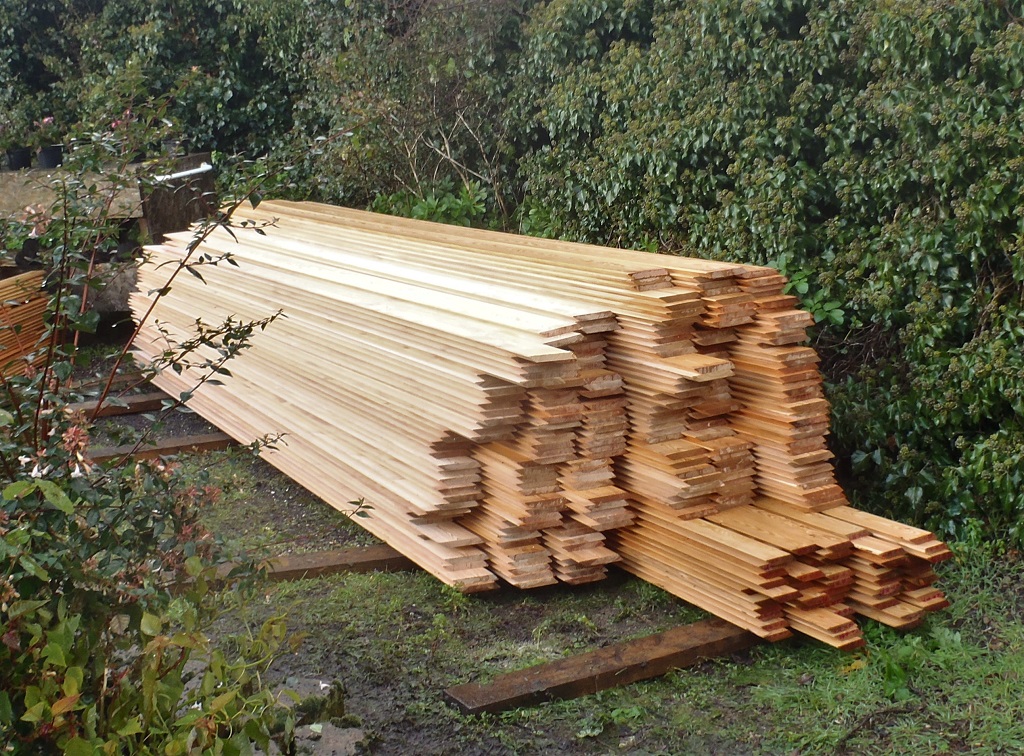
Larch-Delivery-1
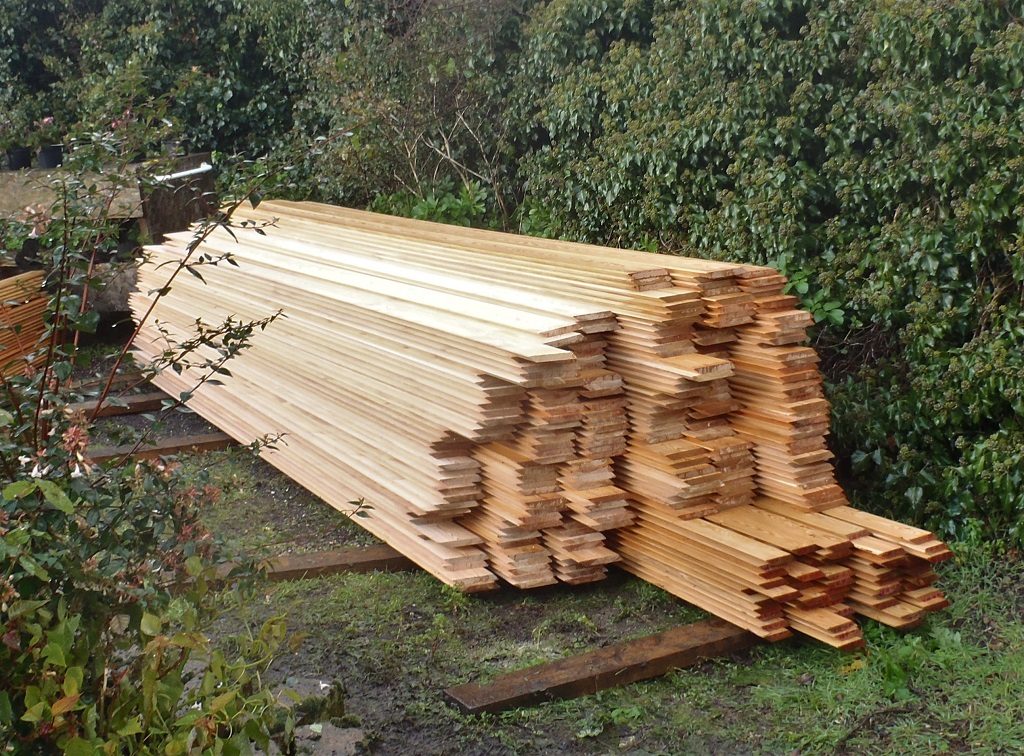
Larch-Delivery-2
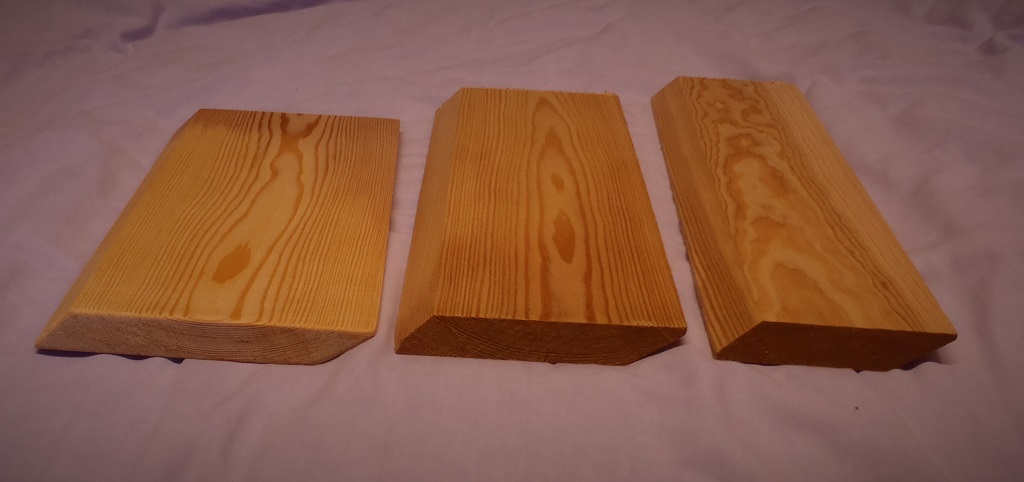
There are three different widths (145mm, 126mm and 95mm) planks and they came in various lengths. The narrow ones were the longest with most of them being nearly 6 metres long!
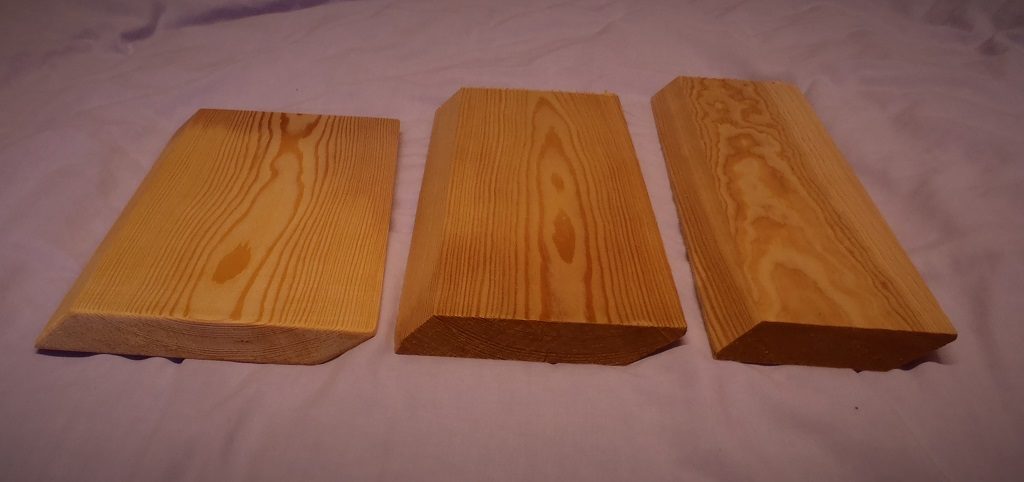
The-3-Widths-of-larch-rainscreen
The larch planks are very nice indeed, with hardly any knots and very smooth!
The first quick analysis of what we got, seems to suggest that we were delivered 870metres of the widest planks, and about 810metres of the other two planks each. We ordered 850metres of each width.
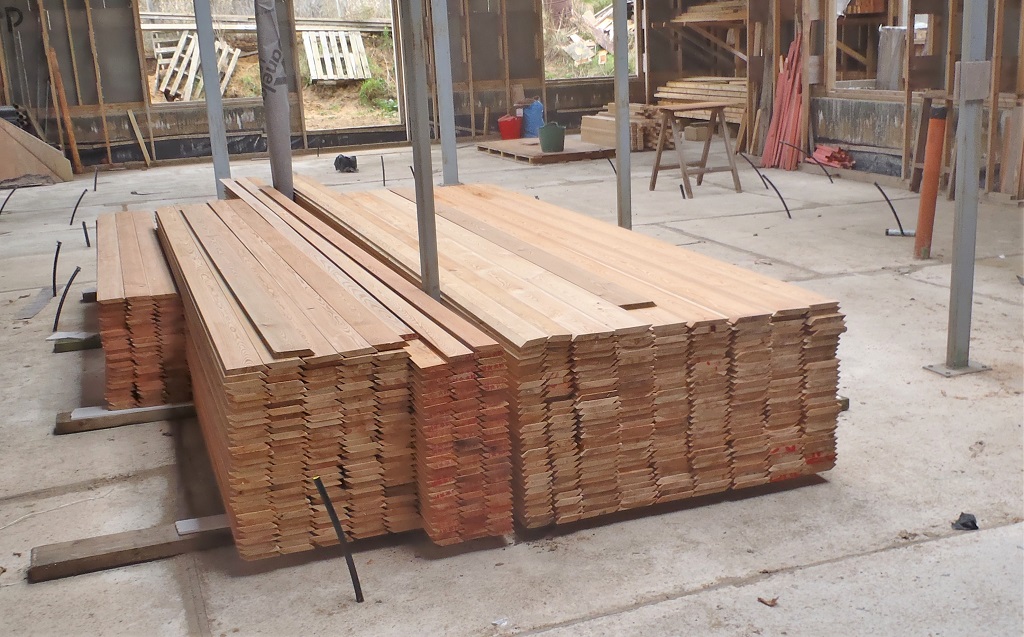
On the following three working mornings, Friday, Saturday and Monday, we moved all of them inside our main house so we could more precisely tally what we got, but also to stack them up in a much neater way, allow the planks to air and dry off from all the rain and get them ready for the two liquid treatment procedures they will need.
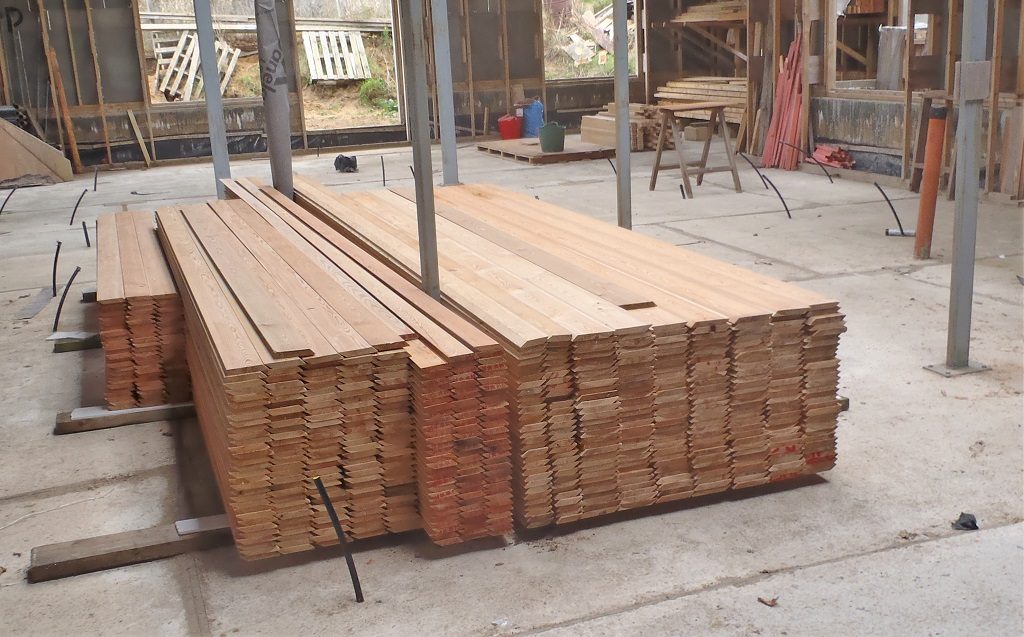
All-the-larch-cladding
The tally results for our timber were as follows:
* Widest (145mm) : 213 x 4 meter = 852 meters
* Medium (126mm) : 75 x 3 metres and 156 x 4 metres planks making 849metres
* Narrow (95mm) : 62 x 5.4 meters plus 90 x 5.7m and one 4.9m = 852 metersThis has meant that we were interrupted from our work on the roof and doing the windows! But it has to happen anyway.
-
Sorting Oak Timber for Windows
Because we had an interruption of work outside, due to rain all day Wednesday and also Thursday morning, we switched over to doing alternative work indoors. This time, we tackled the task of sorting out the design and quantity for the Oak timber used in our windows in the house. The windows will be our next task to do after we have finished putting the slates on the roof.
We have 13 windows as follows:
- 9 large windows, 1700mm wide
- 2 medium windows, 1100mm wide
- 2 small windows, 500mm wide
They all have a height of 1600mm and are set at 500mm above the floor level.
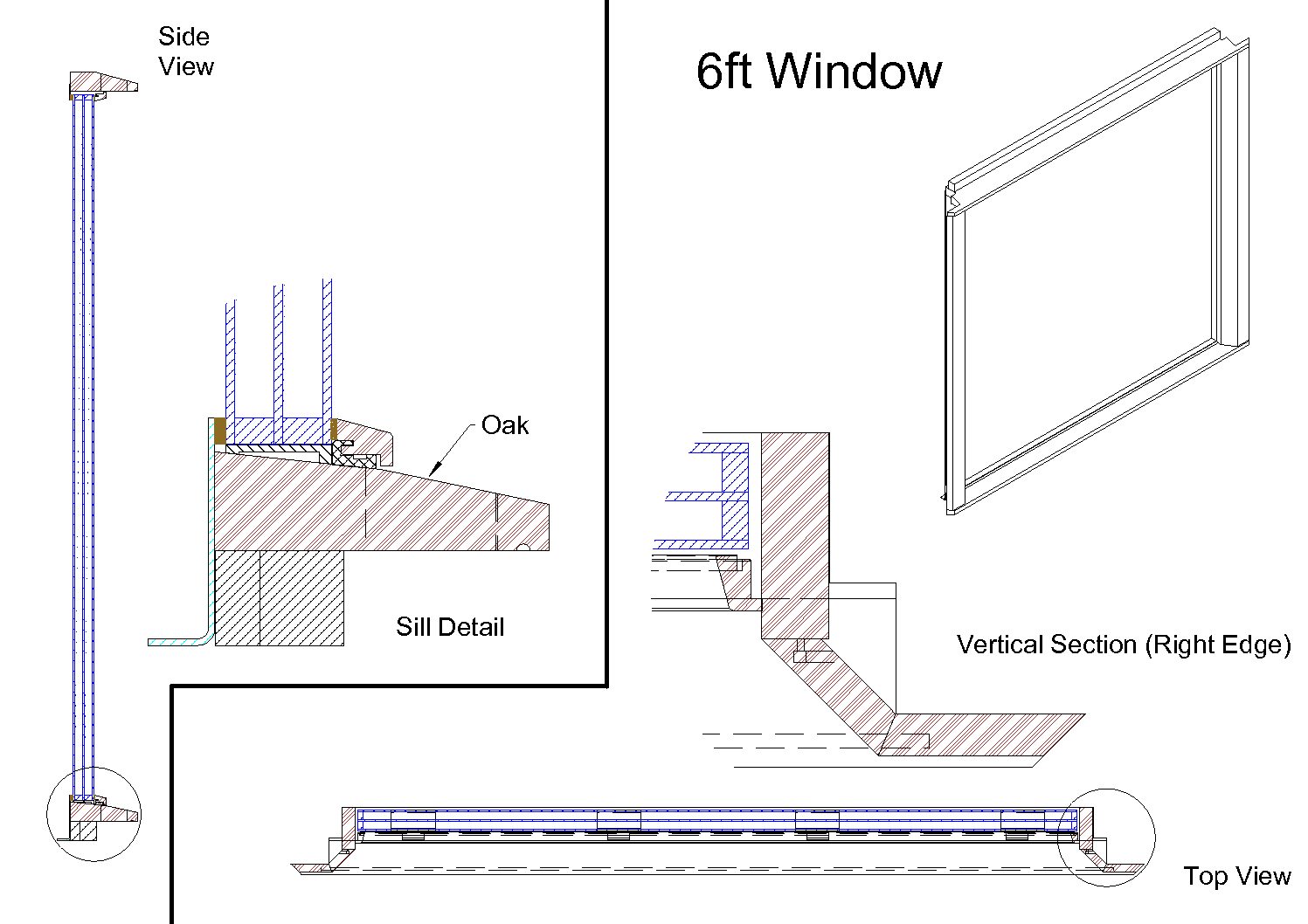
This is the basic design of all windows (showing the front and side cross-sectional views)
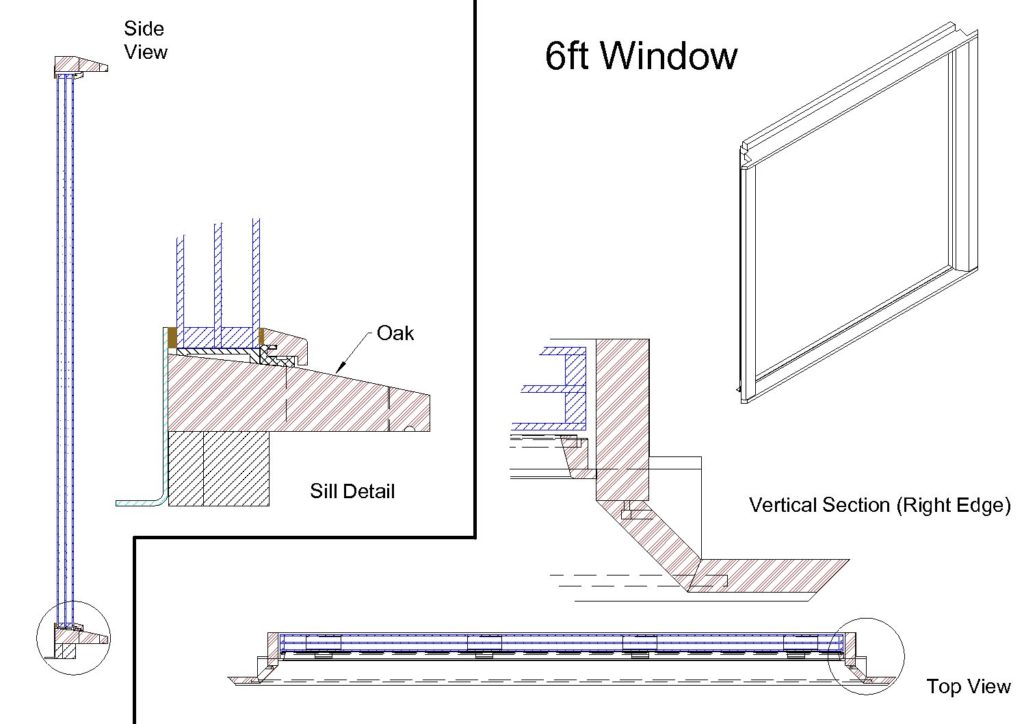
The glass we are planning to use is triple glazing units which measures 50mm thick so some adjustments is needed to the framing to accommodate this. We had originally planned to use double glazing, one on the outside and one on the inside. But we can get better performance in thermal insulation using the triple glazing units at barely higher prices since triple glazing is becoming more popular.
The Oak timber summary (of 2m long planks) is:
- 12 pieces of 50 x 160 mm for the sills
- 12 pieces of 50 x 160 mm for the lintels
- 26 pieces of prime 35 x 95 mm for vertical framing pieces
- 52 pieces of 20 x 90 mm for the octagon “covers”
- 52 pieces of 25 x 20 mm for the glass beading
We will start processing these oak pieces whenever we have rain in the future and build up a stockpile inside our dry house, ready for the day when we do the windows!
-
Quantifying the amount of Oak Planks
Today was spent on the computers, looking at the guttering, the facia and the windows, to decide on what kind of Oak we will need, what size and how much. The items we are examining are as follows:
· Facia: This would be 150mm high and at least 27mm or 40mm thick.
· Gutters: These will be 100mm high by 100mm wide and probably 20mm to 25mm thick.
and for windows ..
· Vertical frames: 40mm to 50mm thick by 75mm wide
· Lintel and sill: 50mm thick by 150mm wide.
It seems that the prices for Oak comes in a variety of different packages, bundles where width can be a little random but all the same thickness and length which is about £1200 per cubic metre of total Oak, or more precise and controlled width along with thickness and length will cost more at about £1500 per cubic. These are for seasoned Oak, but there are green waney boards that comes in at a starting price of £750 per m³.
It is an interesting choice and we have to decide on what level of work we want to do ourselves, what chance we will take to what comes in a package and what the quality of the supplied Oak is too.
More analysis and calculations are needed before we can send off the final shopping list to these timber suppliers and get a final quote. -
First Twenty Crates Washed!
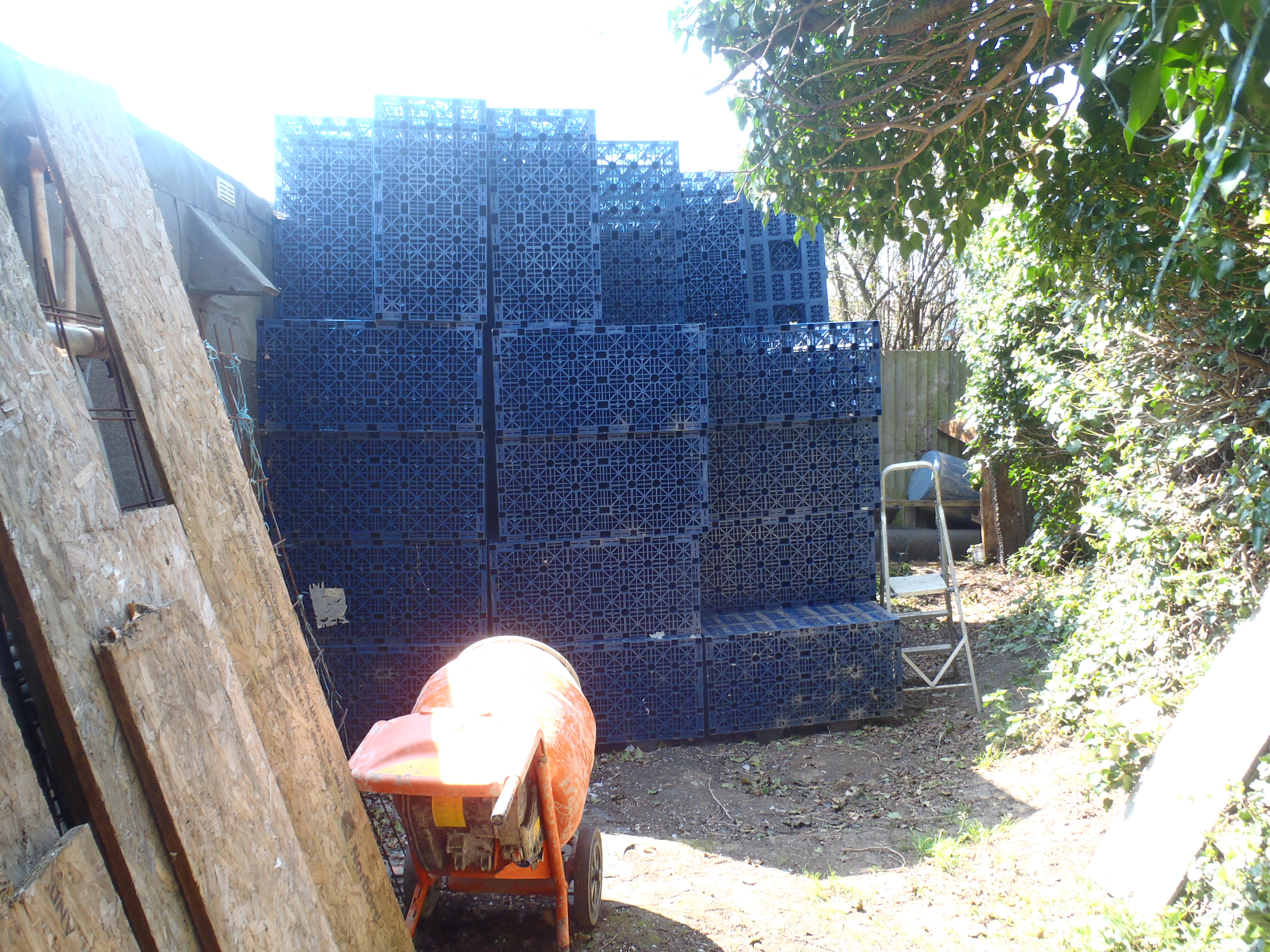
This morning, we got the first 20 Aquacell crates opened up, blasted with
jets of water and reassembled back together again!We made a small dent in the pile of our Aquacell mountain ..
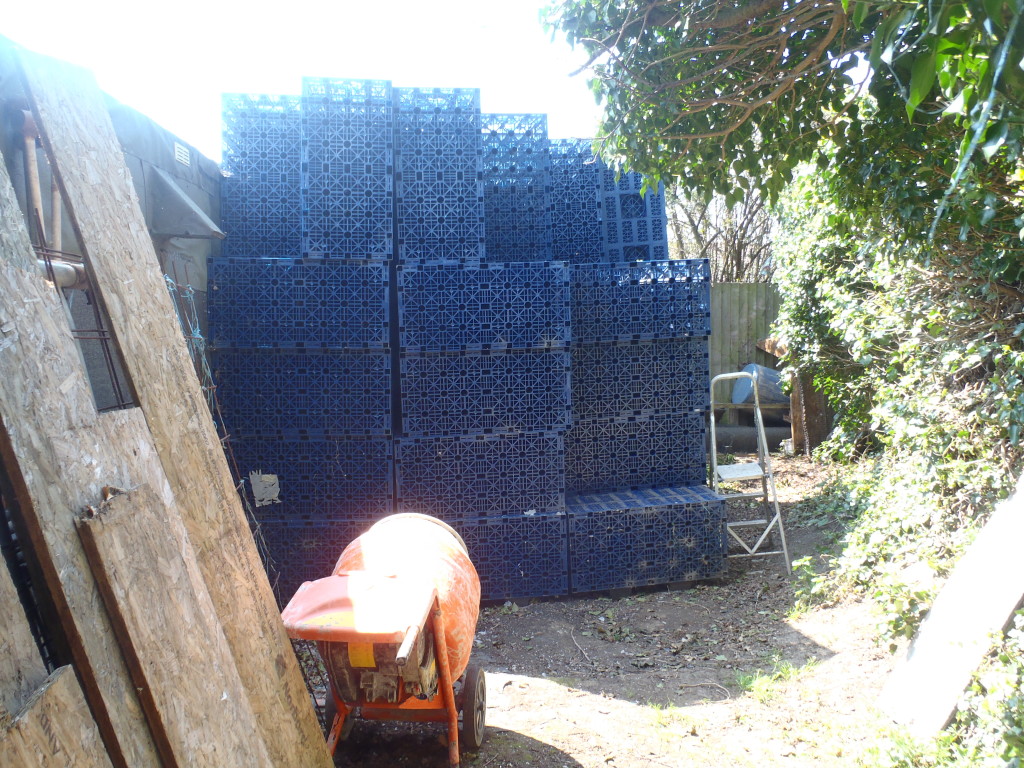
Stack-of-Aquacells
Only another 180 crates to go!!
We used our crate splitter tool, then used the pressure washer to spray
water into all the crevices and then loaded our trolley with the sparkling
clean plastic crates afterwards.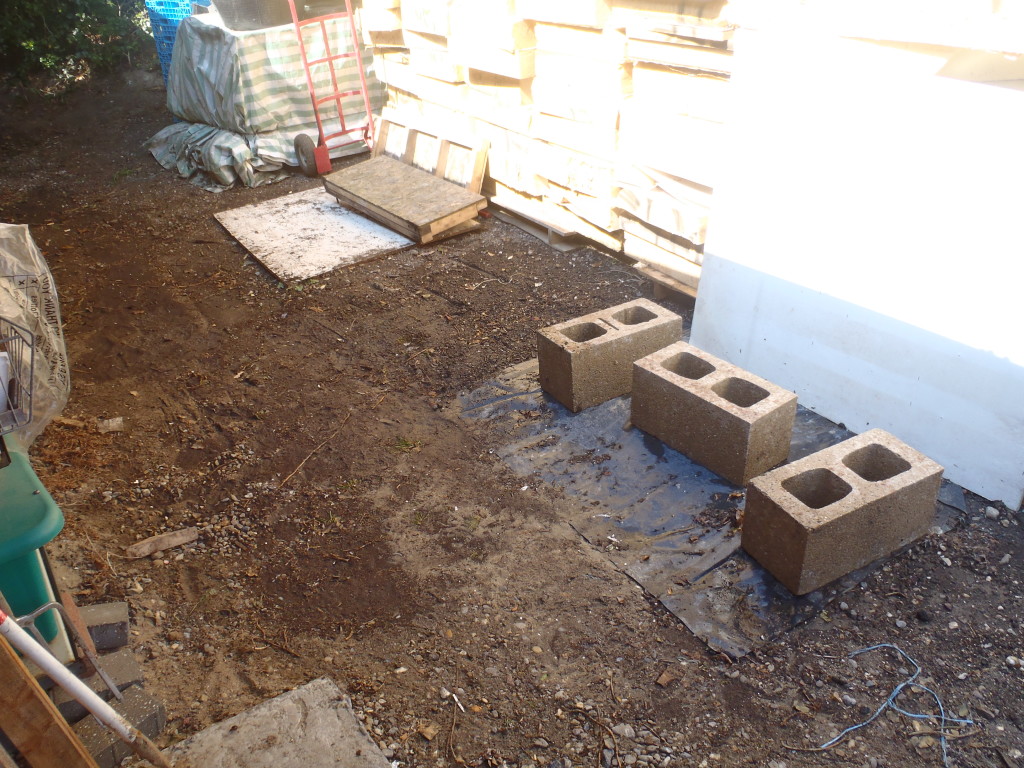
Washing-Area
A very wet job it is too!
-
New Tool to Split apart the Aquacell Crates
This afternoon, while we waited for the black metal paint to dry on the wheel
hub, we made a new tool to help us take apart the plastic holey crates, so
we can clean them out!! You might ask why we are having to do this task?
Well, several years ago, we took advantage of the cheaper oil prices and
hence the prices of these plastic crates called Aquacell. We bought 200 of
them and stored them around and behind our temporary living quarters. The
problem has been caused by overgrowing ivy and other trailing plants from
the neighbour’s garden, plus also we might find lots of slugs and snails
living inside these dark spacious rectangular boxes (each measures 1000mm
long by 500mm wide and just about 400mm high) and generally have dust and
dirt blown into them over the years!!So we design this new tool to lever apart the two layers of the crate.
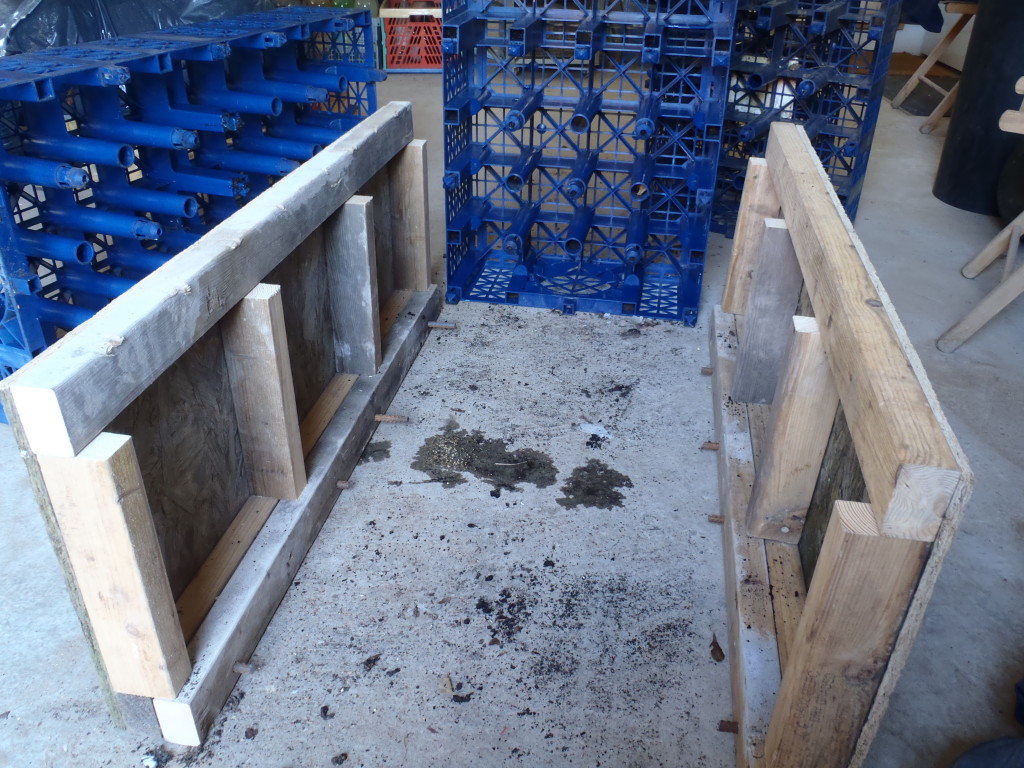
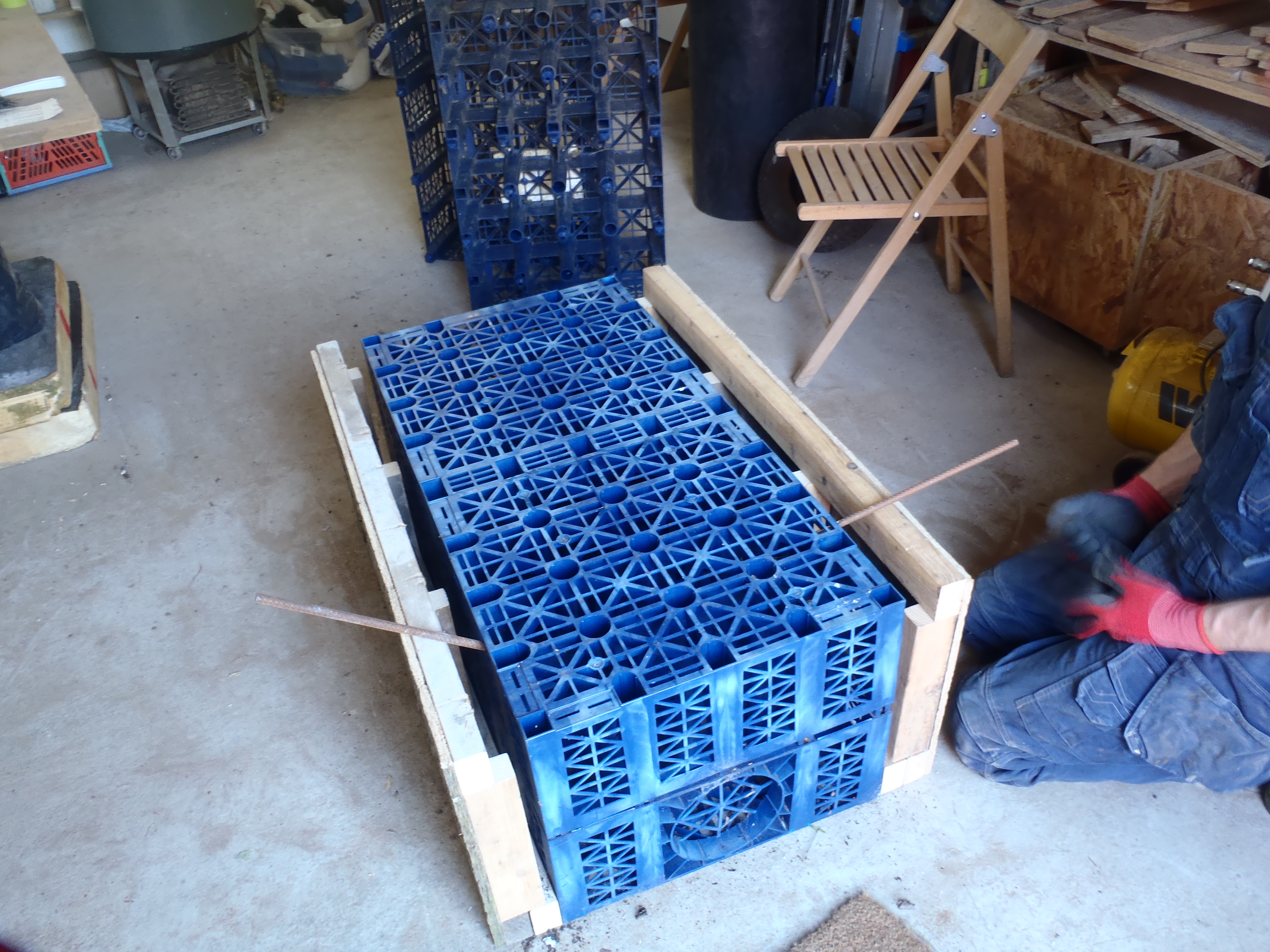
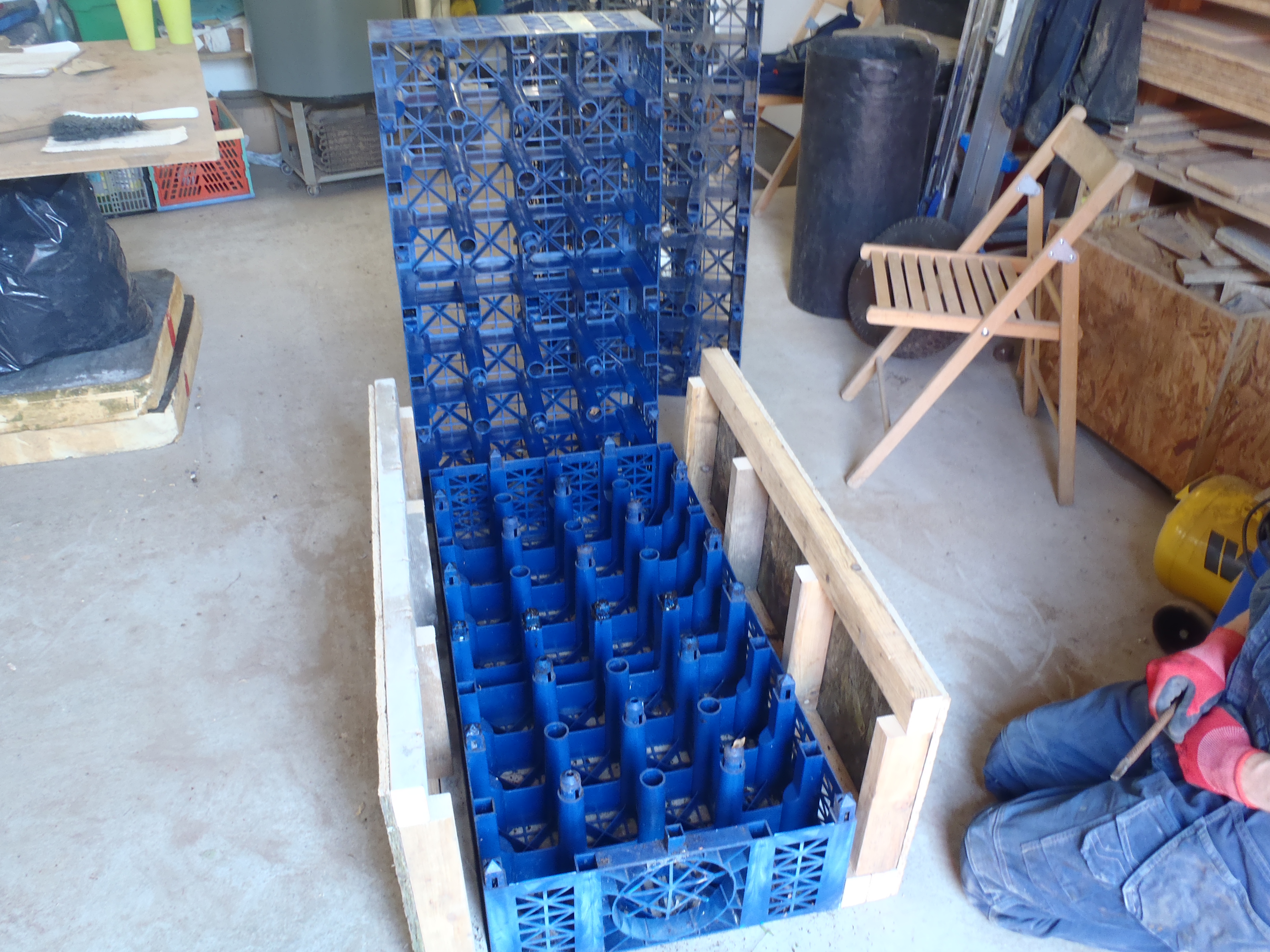
Aquacell-Disassembly-Bottom-holding-studs
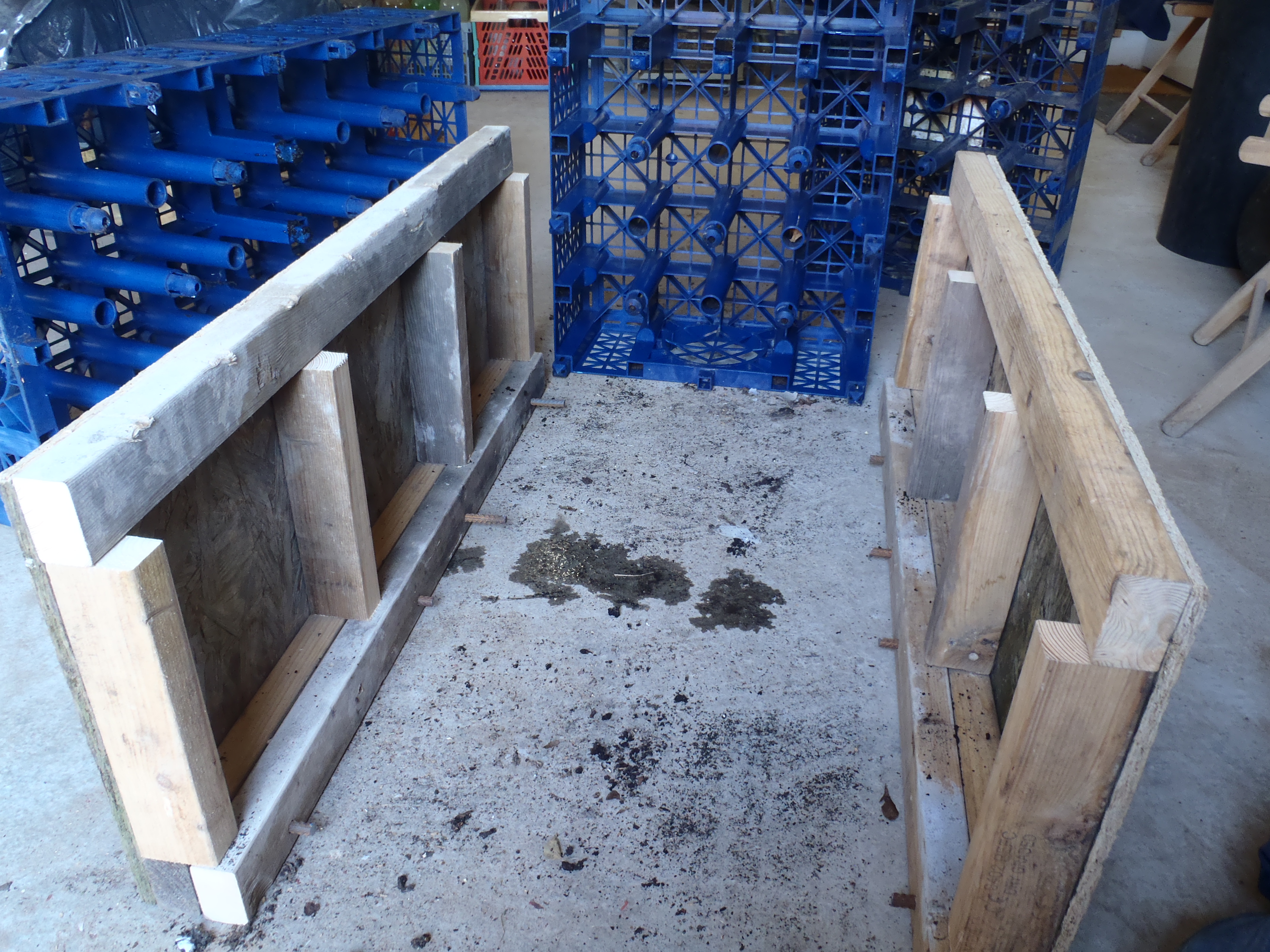
Fortunately, they are just held together by friction and so we just
constructed two vertical walls with metal rods sticking out at the bottom
for the Aquacell to hook onto and then, in tandem, using steel rods, to hook
into holes at the top of the crate and lever them apart. Quite easy as it
turned out – thank goodness!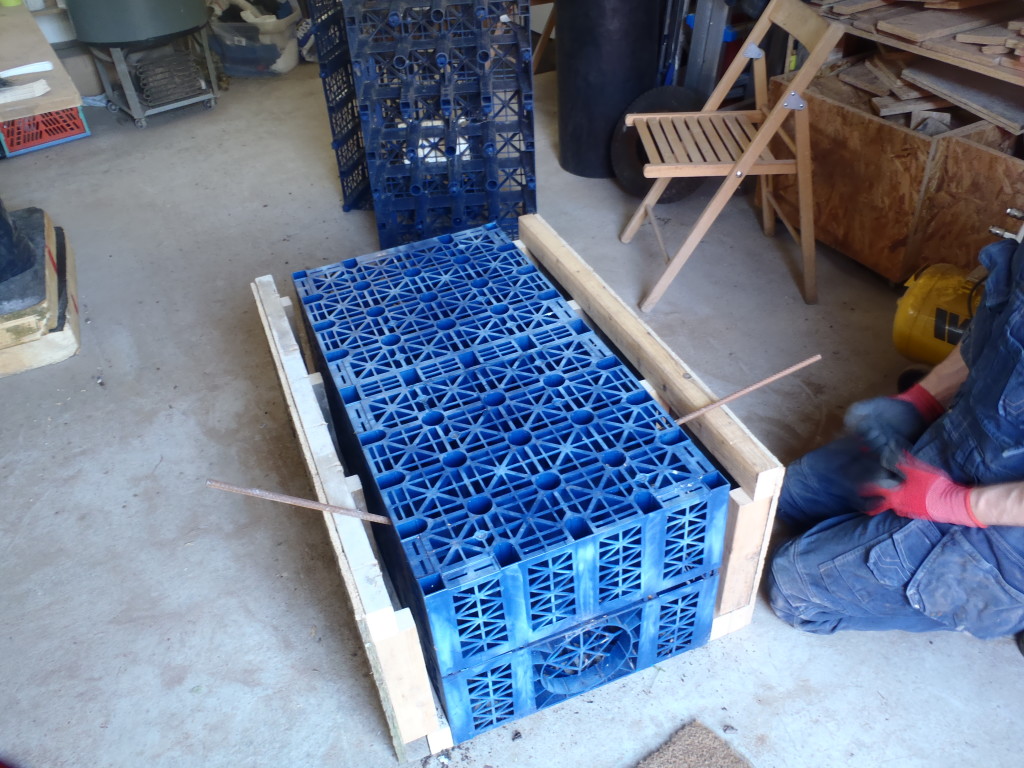
Aquacell-Disassembly-Insert-Levers-and-lift
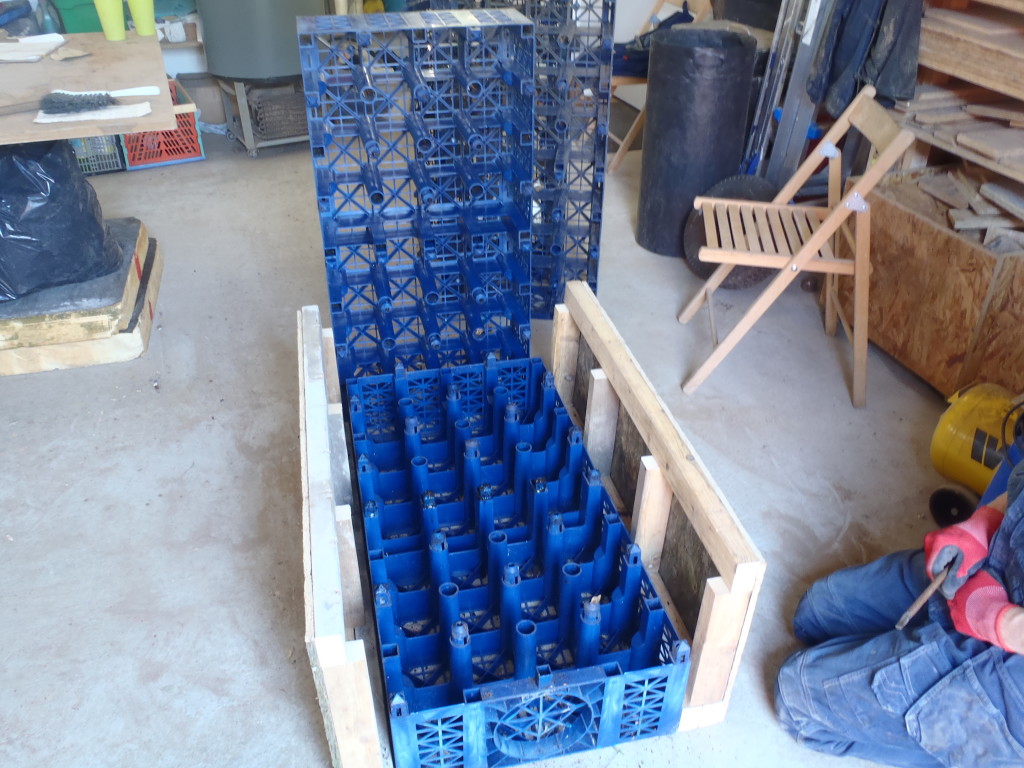
Aquacell-Disassembly-Separated
We will get our pressure washer out and blast the interior clean of the dust
and dirt, as well as the ivy and slugs too!! -
Damaged Cement Bags
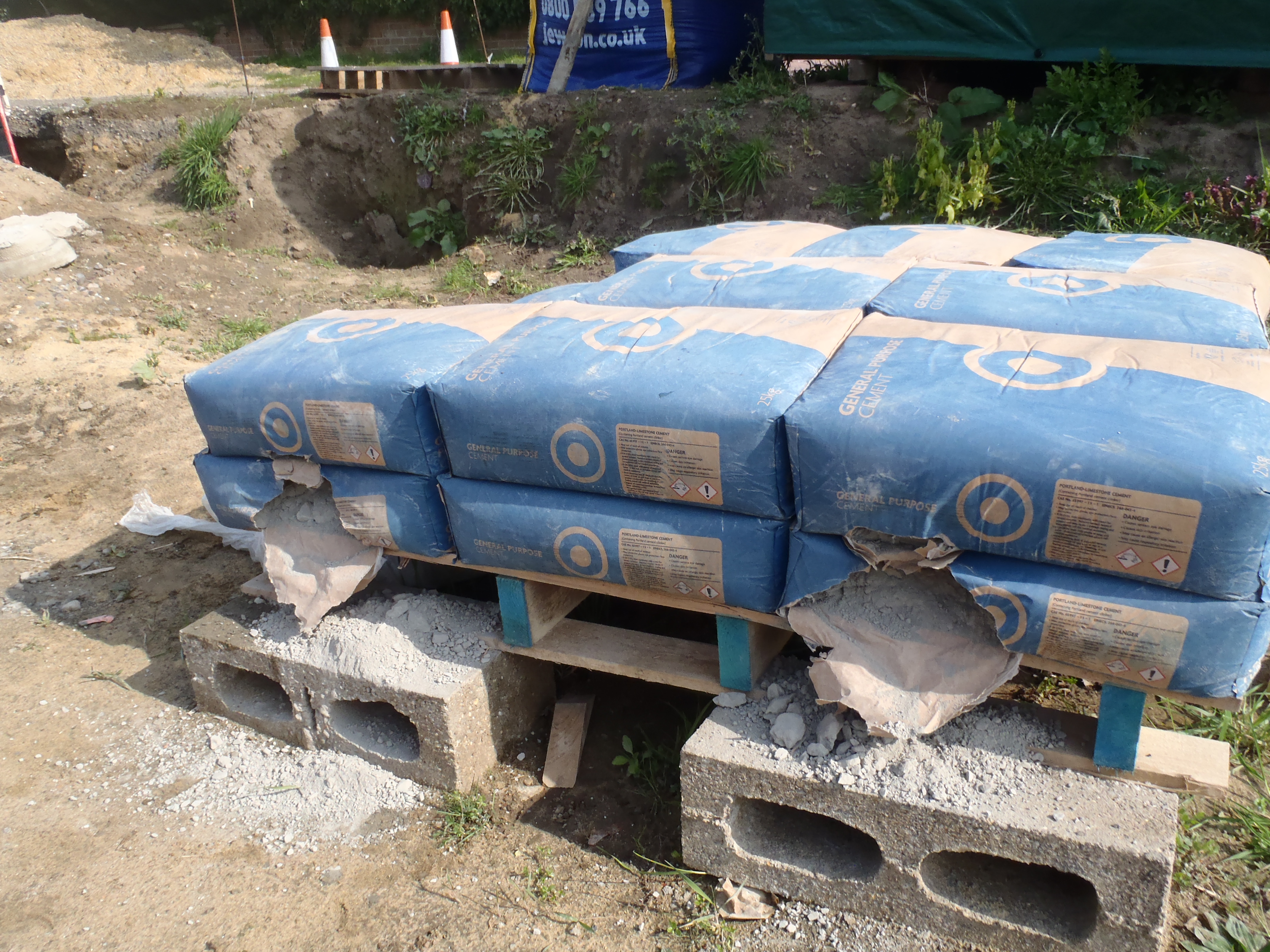
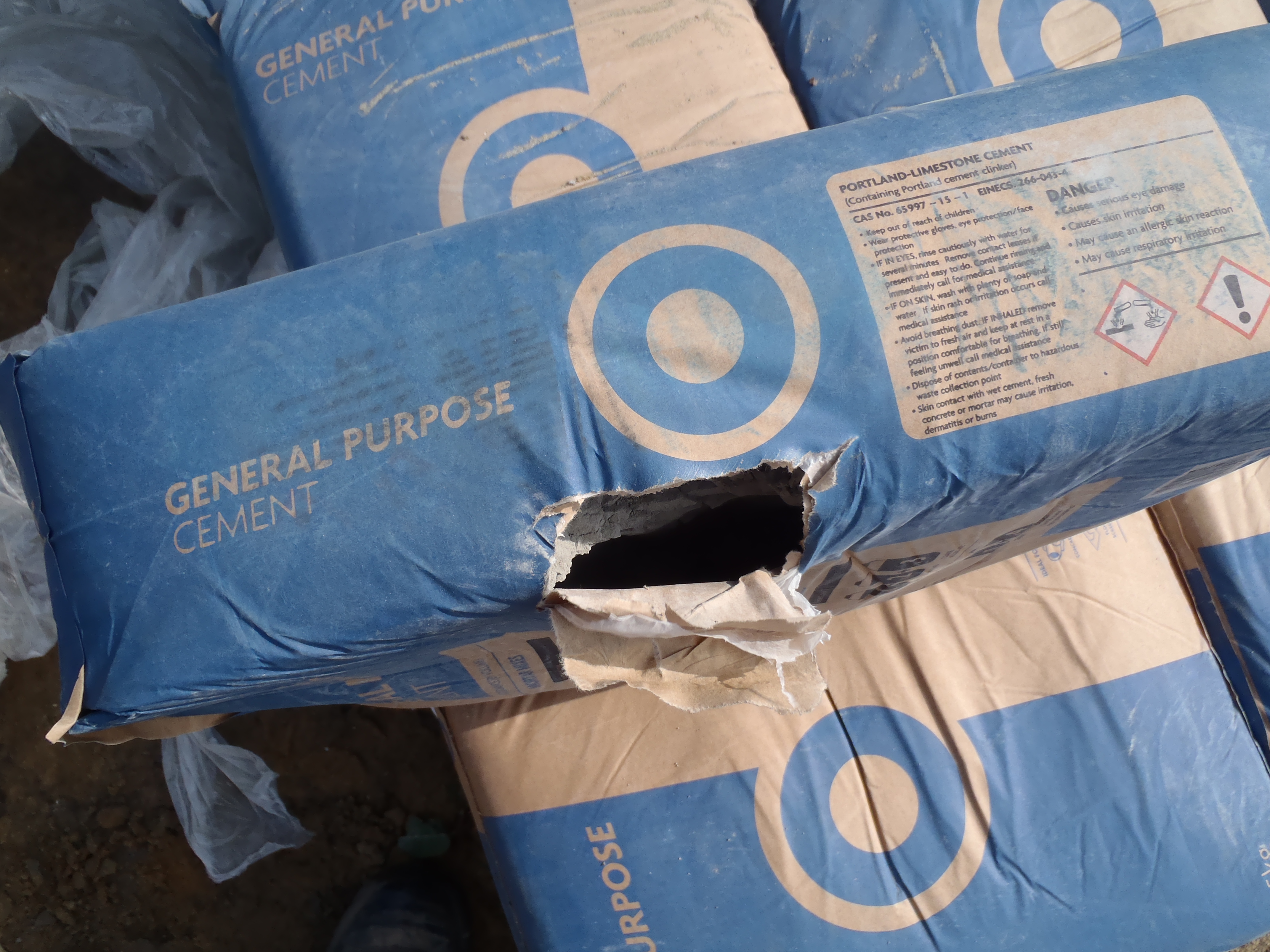
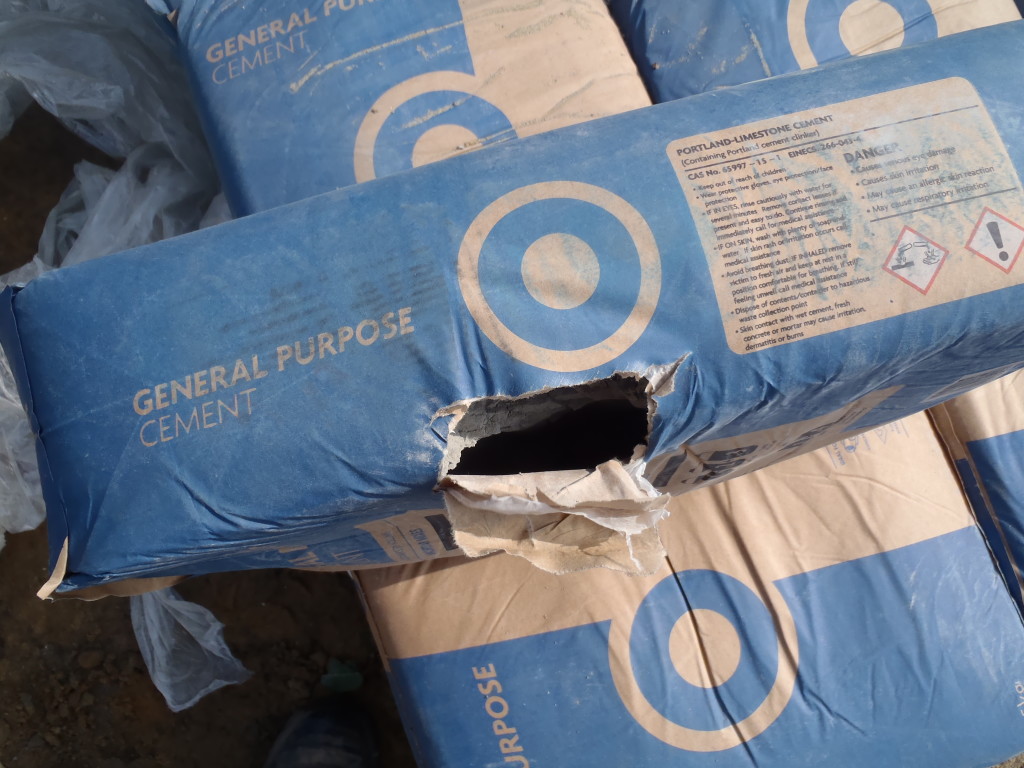
Today, during our tidy up of the site, we were moving the last 18 bags of
cement, and discovered that several of the bags, 4 of them, were damaged.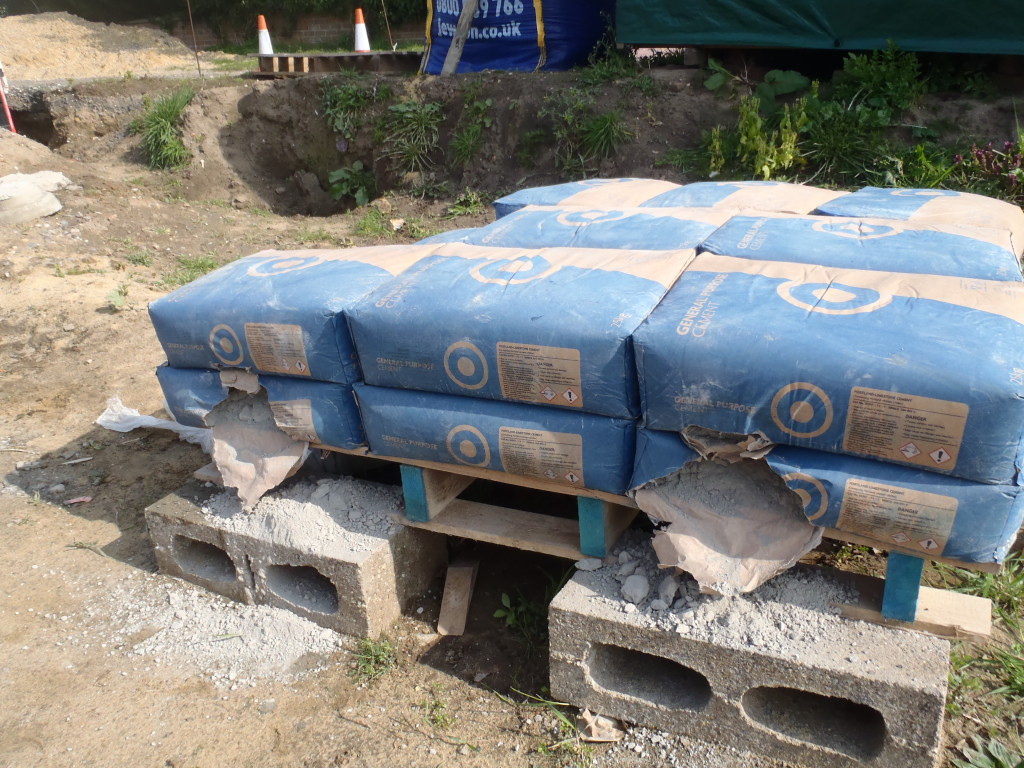
Damaged-Cement-Bags-2
Damaged-Cement-Bags-1
We think that the fork lift truck driver missed his aim and rammed into the
bottom layer of the bags and ripped two great big holes and two minor holes
into the next bags above. Even the wooden pallet was damaged too.We have no idea when it happened, somewhere along the line from the Blue
Circle factory to our builders merchant, it had a coming together with the
tongs of the fork lift machinery!! We have reported this incident to our
builders merchant and we await for replacement bags we hope. -
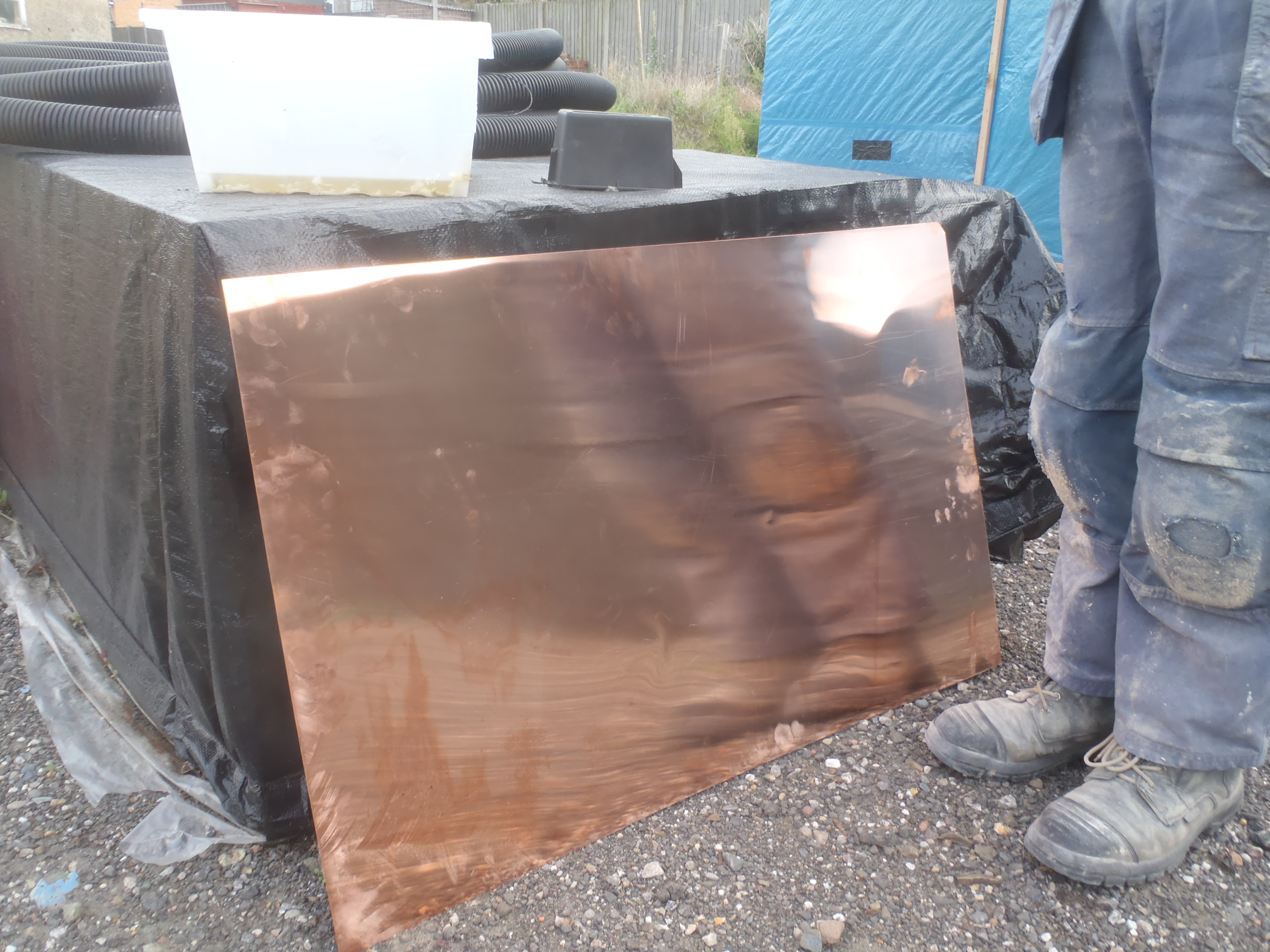
Copper Sheet
We bought a sheet of copper, 1000mm long by 640mm wide and half a millimetre thick! This piece will serve as our base of the heat exchanger for the shower.
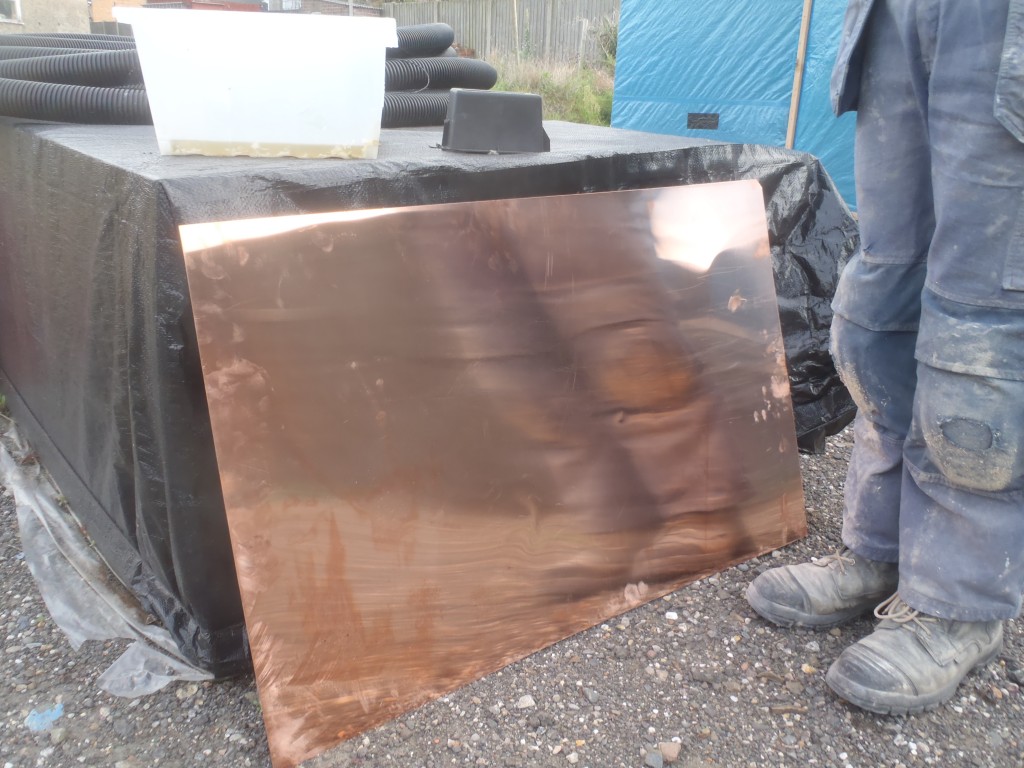
Sheet of copper 640mm x 1000mm x 0.5mm
-
Energy Storage Modules!
We had the delivery of our plastic crates today. It was a long day of sorting it out and storing them away. It was funny as well because while we were processing this order, another lorry turned up with a duplicate of the order and the driver said “Oh!” and went away again! We were exhausted and called it a day. Back to the garage tomorrow!
-
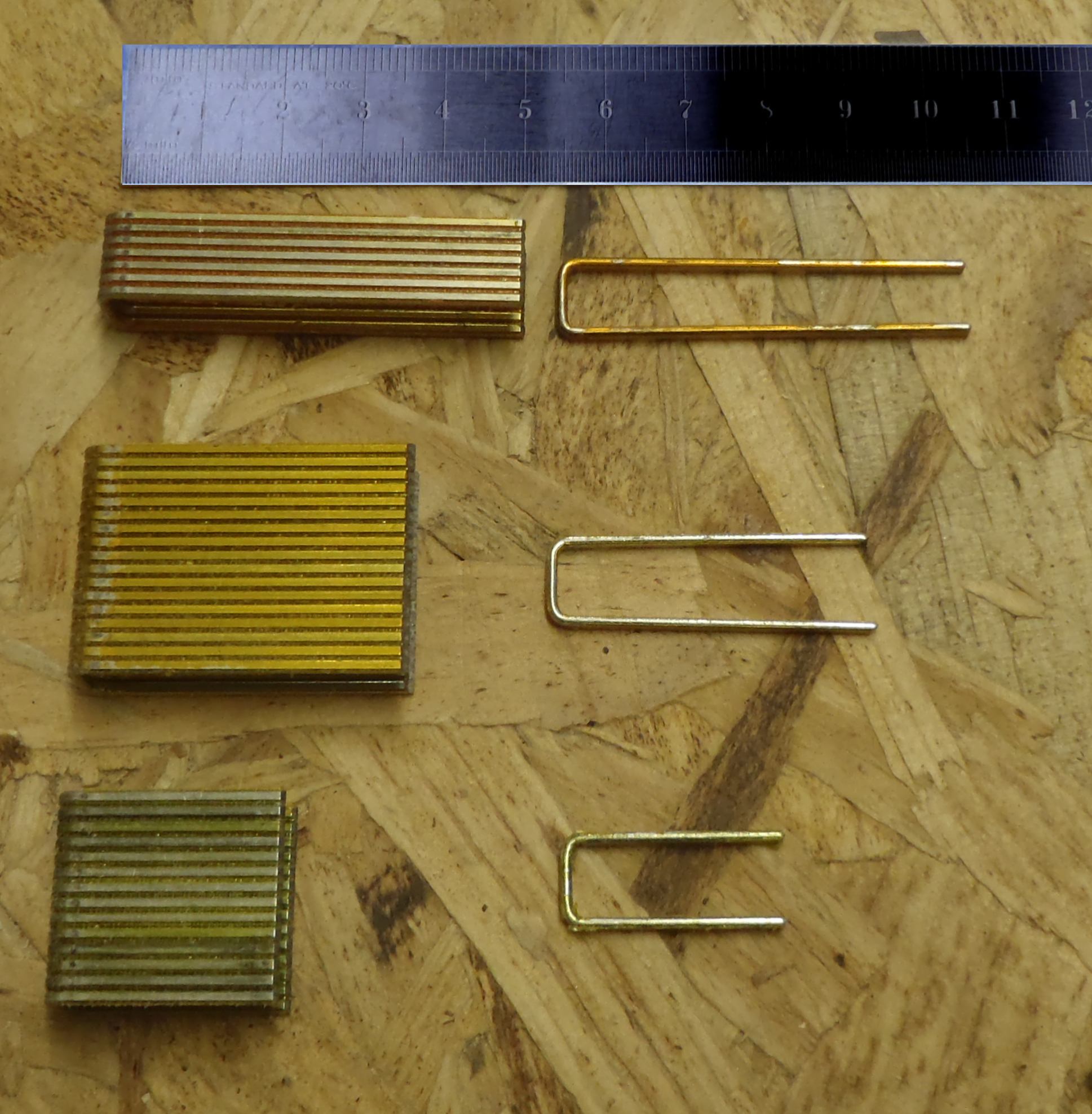
Framing Staples
The staples we are using to hold the Fermacell up are heavy duty wide crown staples. The crown in just under half an inch (11.1mm) and the wire is 1.5mm square. They are available in many lengths from 25mm to 50mm. We will also be using these staples in Stainless steel for attaching the Cedar cladding and shingles.
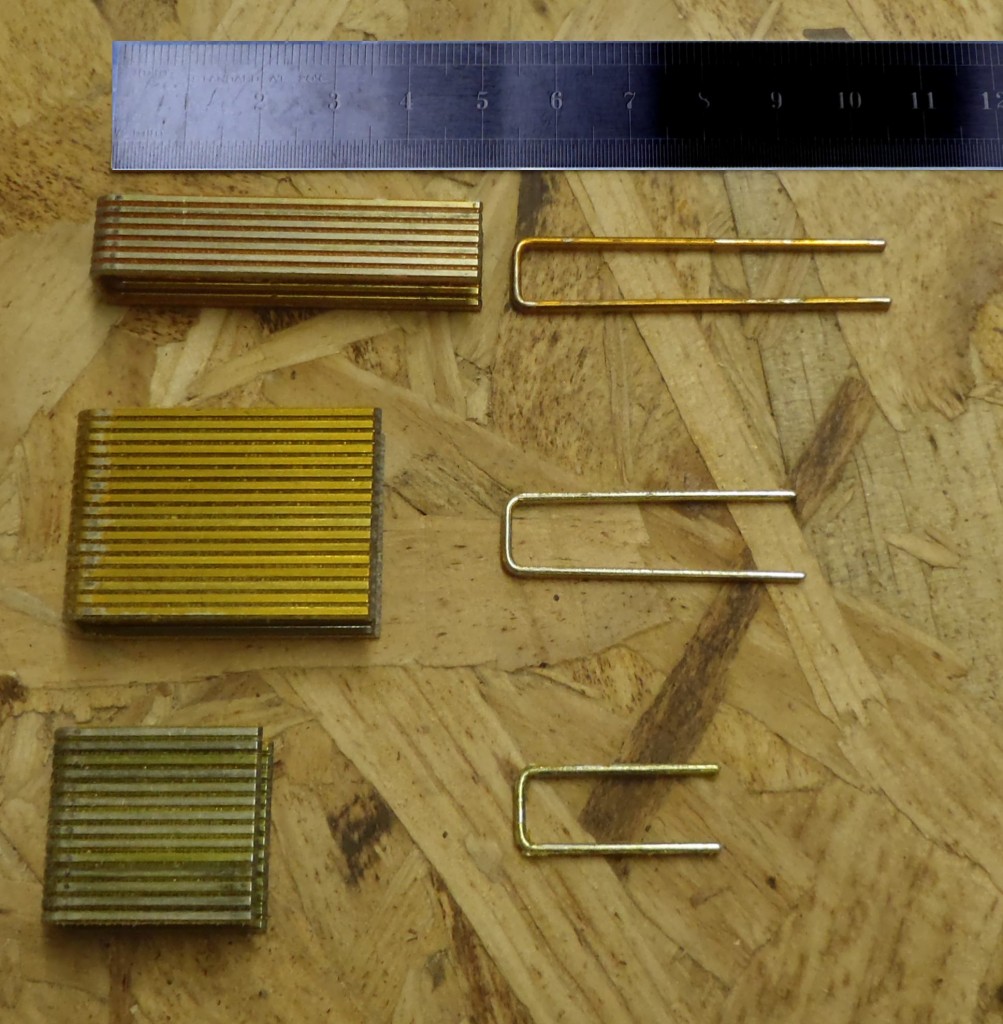
Framing Staples