Category: Phase 3

Construction begins on main house, groundworks, energy modules, swimming lane, foundations, block wall and floor slab.

  • Air Tunnel Finished – Part 2!

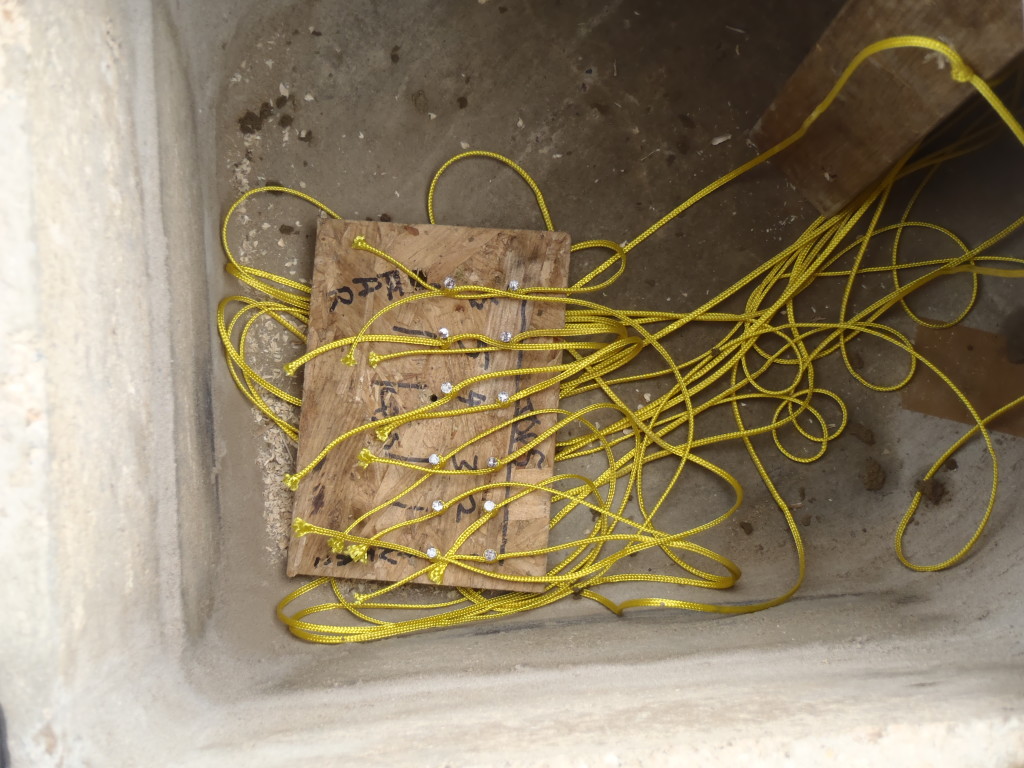
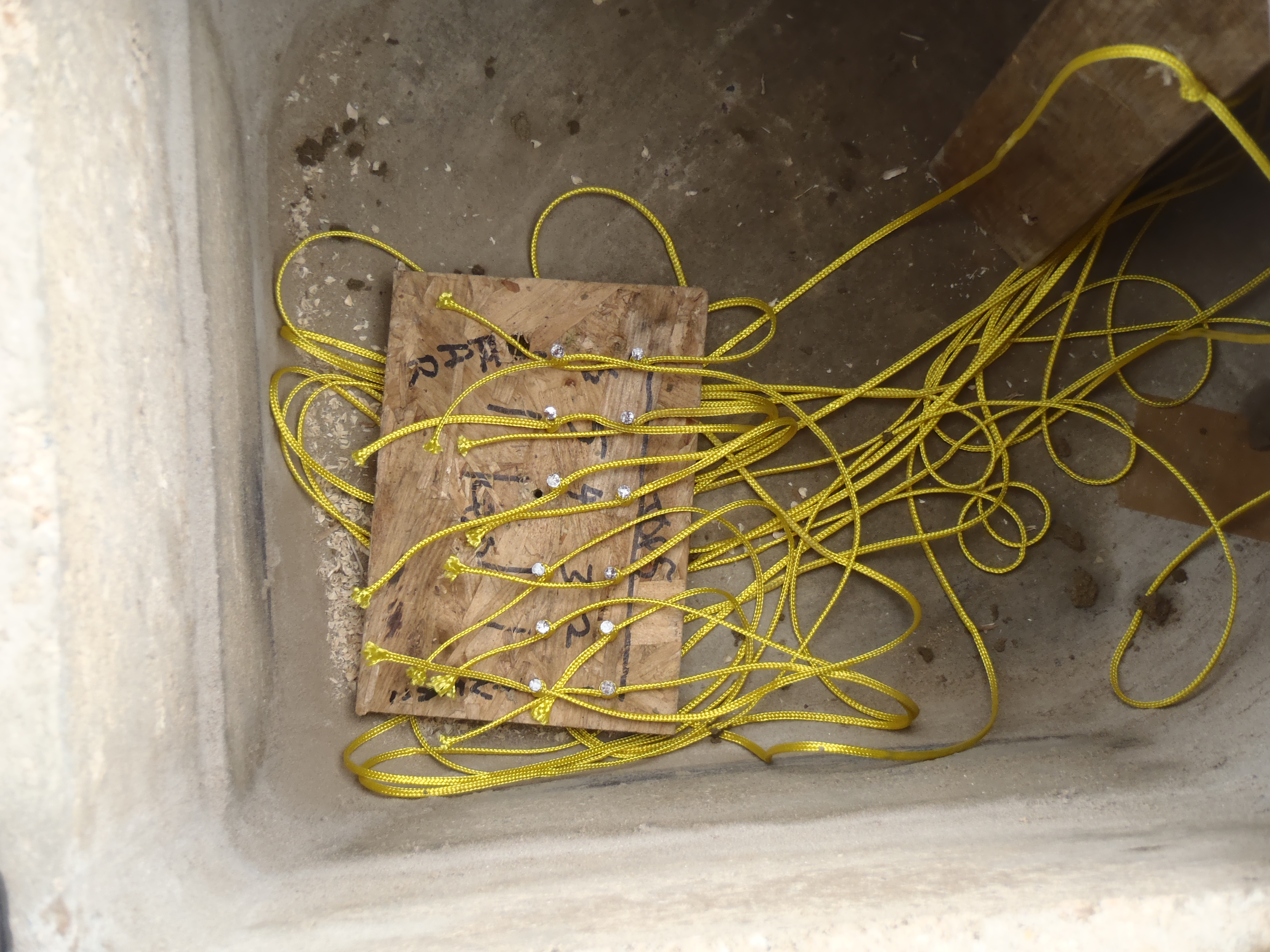
    This morning, we tied our pulling ropes to the 6 support struts and mortared
    the cement board down on top of the wooden T supports.

    Cement-board-mortared-in-place

    Cement-board-mortared-in-place

    We are letting it set and cure before we screw the cement board down and
    start filling in the whole area with the sandy soil, hardcore rubble and
    everything else that is rubbish to compact it down solid and rebuild up the
    level back up to the foundation point.

  • Finishing off the Air Tunnel – Part 1

    Today, while we waited for the delivery of our 300metres of the 20mm black
    plastic pipe to come, we worked on finishing off the Earth Tube Mixing
    Chamber and the Air Tunnel structures.

    We dug around the whole chamber and tunnel, removing a spade width of soil,
    down to the foundation slab. This is to allow for us to insert a layer of
    DPM plastic sheeting all over the concrete blockwork plus a sticking out piece of
    about 100mm as well. All this is to keep the whole unit dry and keep our air
    supply from getting damp with wet weather.

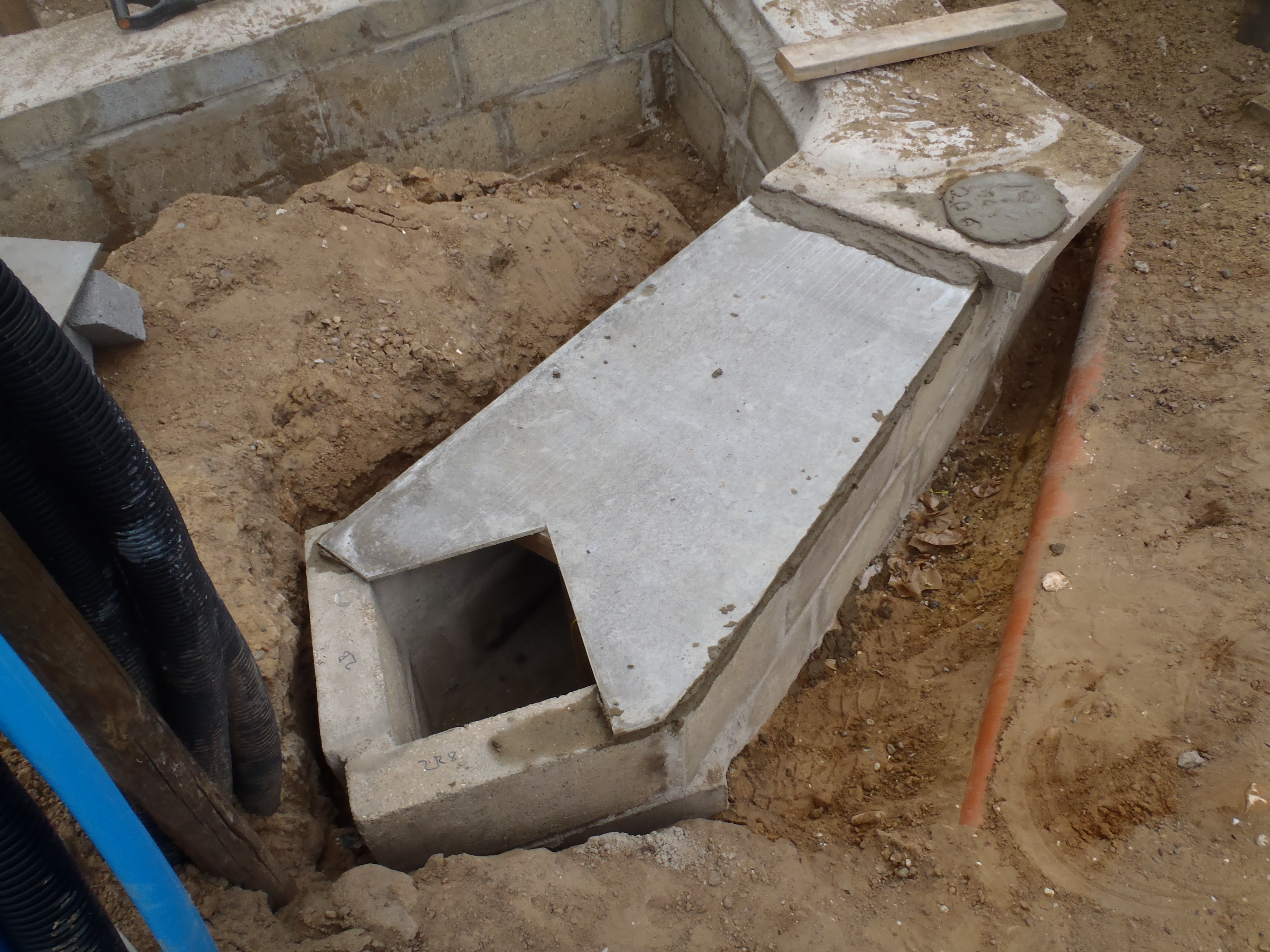
    Next, we got a large piece of cement board, 10mm thick stuff, and placed it
    on top of the remaining part of the tunnel that goes under the main house
    foundation, and cut it down to size, with a triangular notch cut out to make
    a 300mm square “hole”.
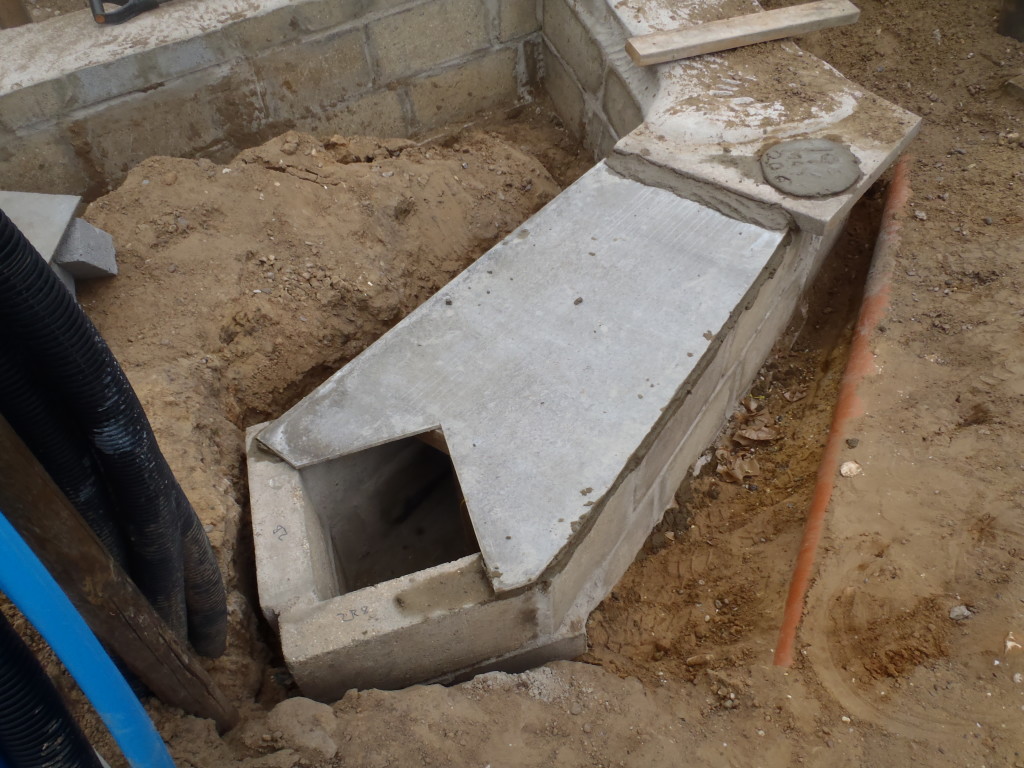
    Cement-board-mortared-in-place

    Cement-board-mortared-in-place

    This cement board needs lots of extra support inside the tunnel as it is
    going to have to take the load of ready-mixed concrete being poured on top.
    We wanted to make sure that the weight of the fluid concrete will NOT
    suddenly snap the lid! We tested the strength of the cement board by putting
    a medium sized piece 150mm apart on two bricks, and put more and more load
    on the middle and find out if broke or not. It survived Stephen’s weight of
    80kg at the end!! We tried separating the spacing to 250mm and worked our
    way up with the extra load but it snapped with my weight of 70kg. This led
    us to conclude that a spacing of 180mm would be just fine and we can have
    enough to fully support the whole board.

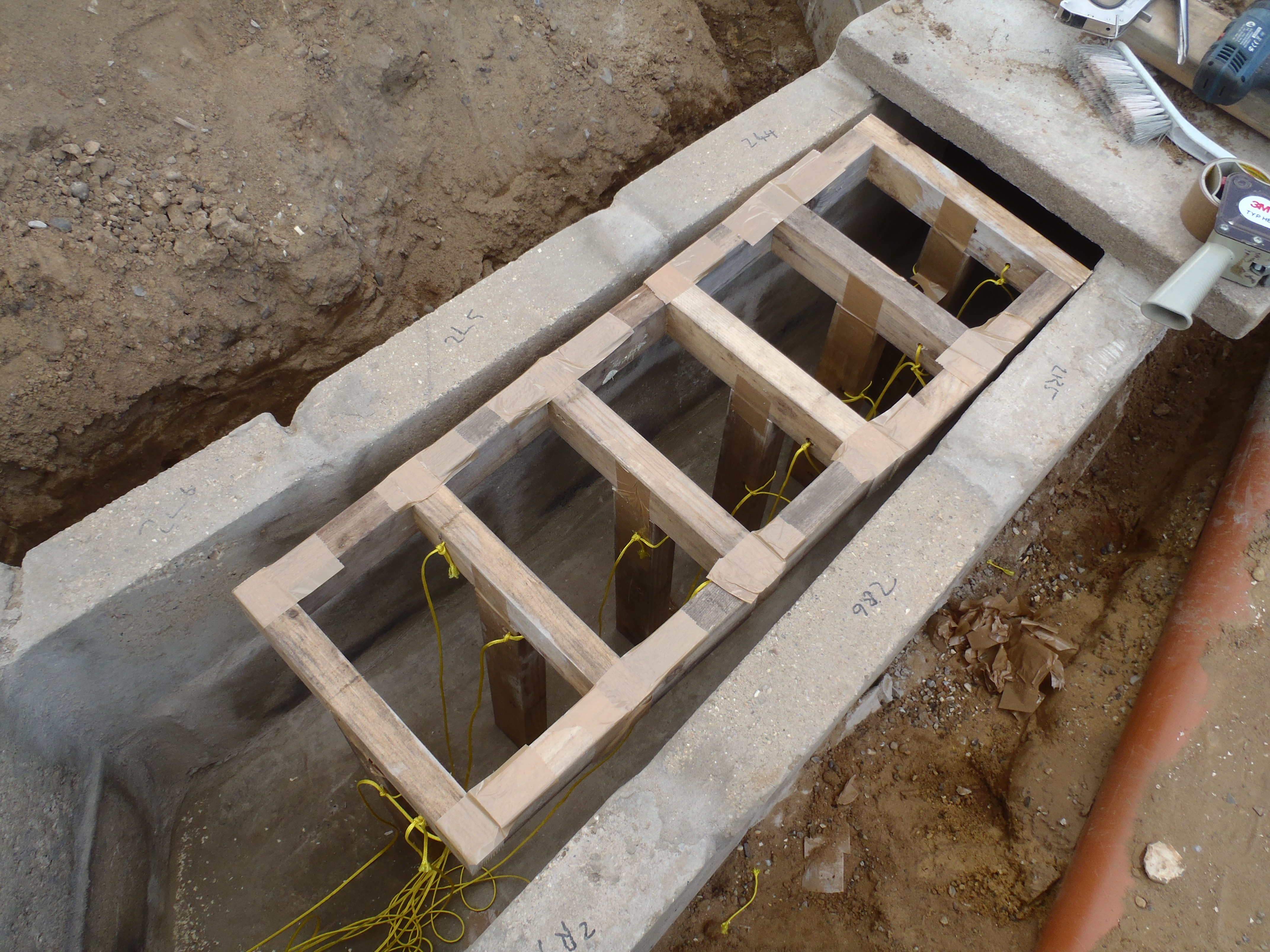
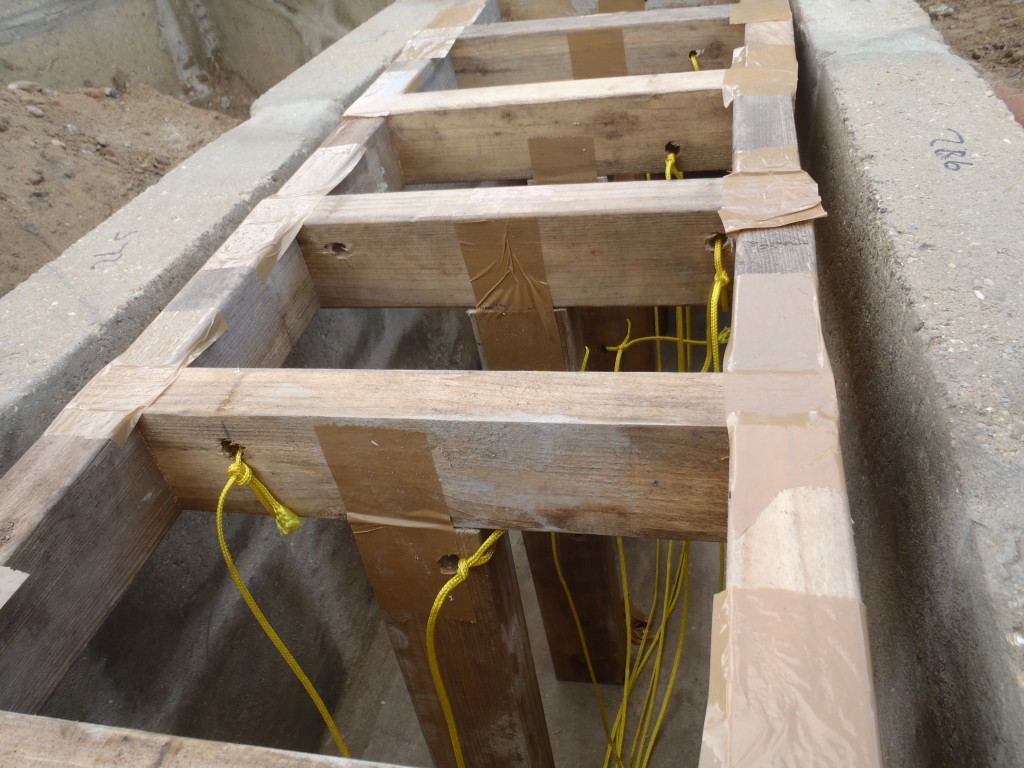
    So we made six T shaped wooden module with one horizontal strut and one leg.
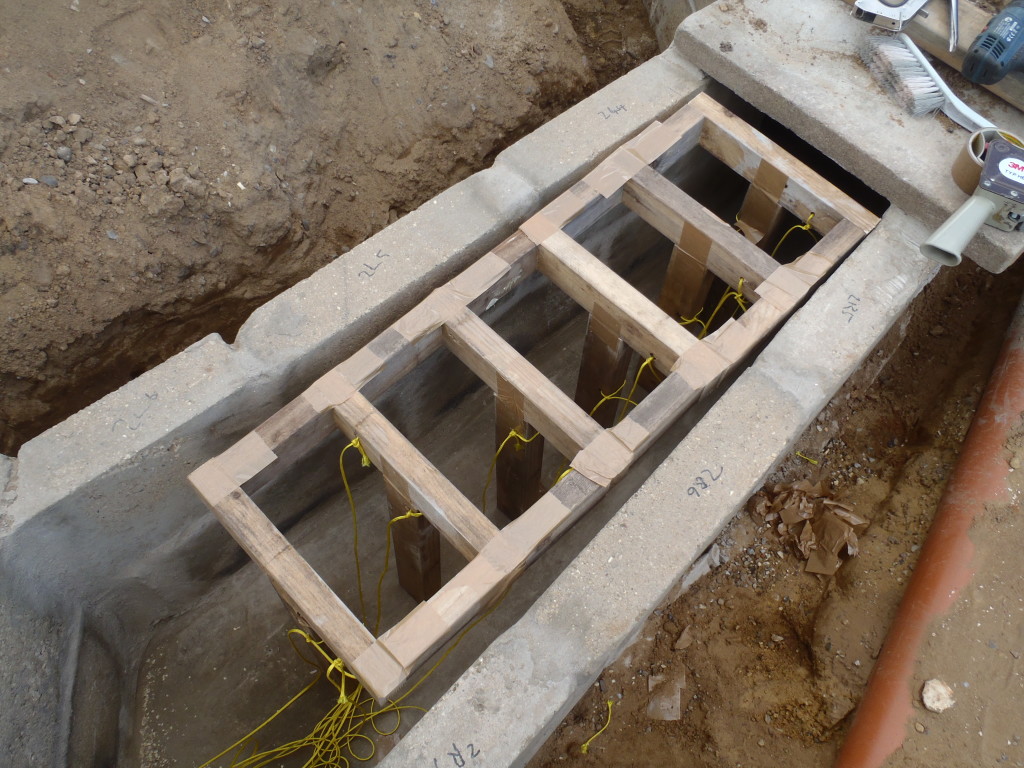
    Cement-board-supports-1
    Cement-board-supports-1

    Cement-board-supports-2

    Cement-board-supports-2


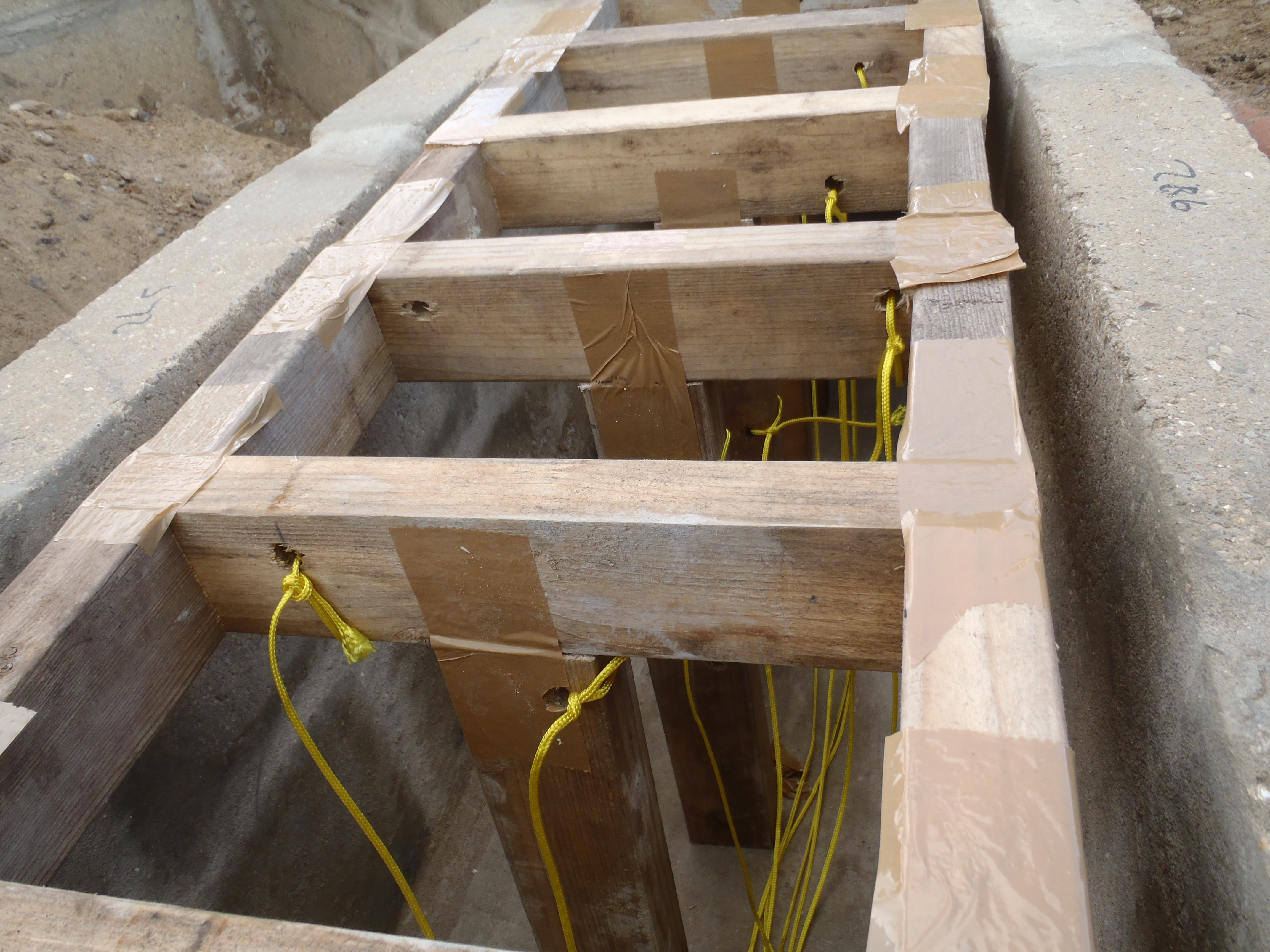
    Each piece of wood will have a length of string tied to them, ready for the
    final process of removing this support mechanism.

    Tomorrow, we will seat the cement board on fresh mortar on the edges of the
    tunnel and press down to firmly hold the support struts into place. Once the
    concrete is poured and set, we can pull on the twelve ropes to yank out the
    individual pieces of the support modules!! We hope we can rescue the pieces,
    all 22 of them!!
    The-strings-to-remove-the-supports
    The-strings-to-remove-the-supports
  • Temperature Probes

    This afternoon, we looked at our requirement of installing temperature
    sensors around each Energy Module. But we don’t have the actual temperature
    probes or wires yet, so we need narrow pipes to act as conduits for sliding
    these temperature sensors in later on. So we have ordered some narrow
    20mm diameter polyethylene pipes and we will cut various lengths and bury them in
    the ground around each module plus also some under the modules too. Then later
    on we can slide in the wires with the temperature probes soldered on the
    wire at the calculated points so we can take measurements and record
    progress of how well (or badly) the energy module is performing.

    So this afternoon, we have been experimenting with ways to seal off the cut
    ends to stop water and dirt getting in and also providing a “end stop” for
    the process of sliding in the temperature sensors in. we discovered that
    polyethylene, when heated with a small gas flame, will melt quite easily and
    we just squashed the end in a vice to fused the end into one solid sealed lump. It worked out very nicely after all.

    Sealed-end-of-conduit

    Sealed-end-of-conduit

    We will install the temperature probes on a stiff wire and then put a cotton
    ball or padded disc between each sensor to keep the air from circulating
    which might interfere with their neighboring temperature chips and ruin our
    data logging abilities and learning what is happening down there with the
    heat.

  • Number 1 Energy Modules Installation Started

    It was our first hole to do (out of the total of 5!) and it is the 2nd
    smallest one to dig out! It lives under bedroom 3, half in and half out of
    its en-suite wet room.

    We dug out 3metres by 2.5metres and 1.2metres down (10feet by 8feet by 4
    feet down), to make room for the insulation (200mm thick under and around
    the edges with 100mm on top), wrapping around the energy module, measuring
    2.5metres by 2metres and almost 1metre tall, being made of 2 layers of 10
    crates, to make a 20 Aquacell “hot water” tank.

    We dug out most of the hole using the digger.

    Module-1-Rough-dug-hole

    Module-1-Rough-dug-hole

    Then Shaun cleaned the bottom with a spade until it nearly level. We got the petrol powered plate vibrator (which is very heavy) into the hole using the mini-digger to lower it down (and back up again!) and ran it around make sure the bottom was compacted
    nice and solid.

    We needed to make sure the bottom is as level as we can make it so we put
    down two edge strips and got them positioned using the site laser height
    gadget and set the two edges exactly at 2.7 metres on the sighting pole. Just
    to clarify, the level generator is sitting on a reference point 1 metre above
    ground, and the foundations (and the whole house) is 500 mm down below ground
    level, thus making the ground we are working on 1.5 metres below the
    reference point so 2.7 metres minus 1.5 metres makes 1.2 metres which is the
    depth of our hole!! Nothing to it!! Smile!

    Module-1-Guide-rails

    Module-1-Guide-rails

    We scraped along the two edges with a flat straight CLS 89 mm timber and got
    the bottom of the hole fairly flat and level so when the water tank (oops I
    mean the Energy Module) is set down, the water will not spill out on one
    edge or another as it rises and falls. We Hope!! Grin!

    Module-1-Hole-ready

    Module-1-Hole-ready

    Tomorrow’s job is to cut and get ready the insulation boards and make up the
    required thickness on the bottom and vertical edges, while we wait for the
    delivery of the 20 mm plastic pipe that we are suing as a conduit for the temperature
    sensors we want under the tank.

  • A new Boring Tool made

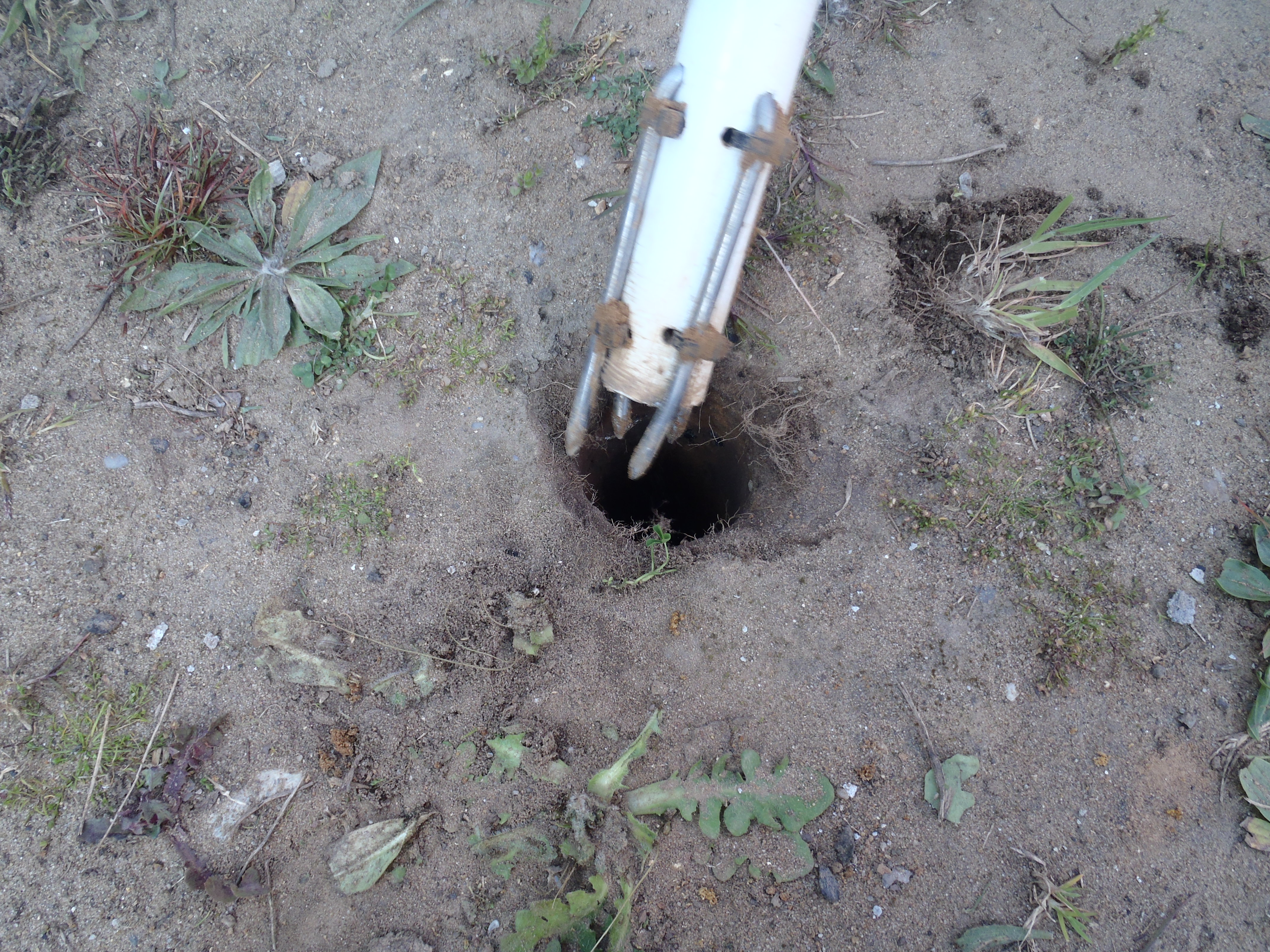
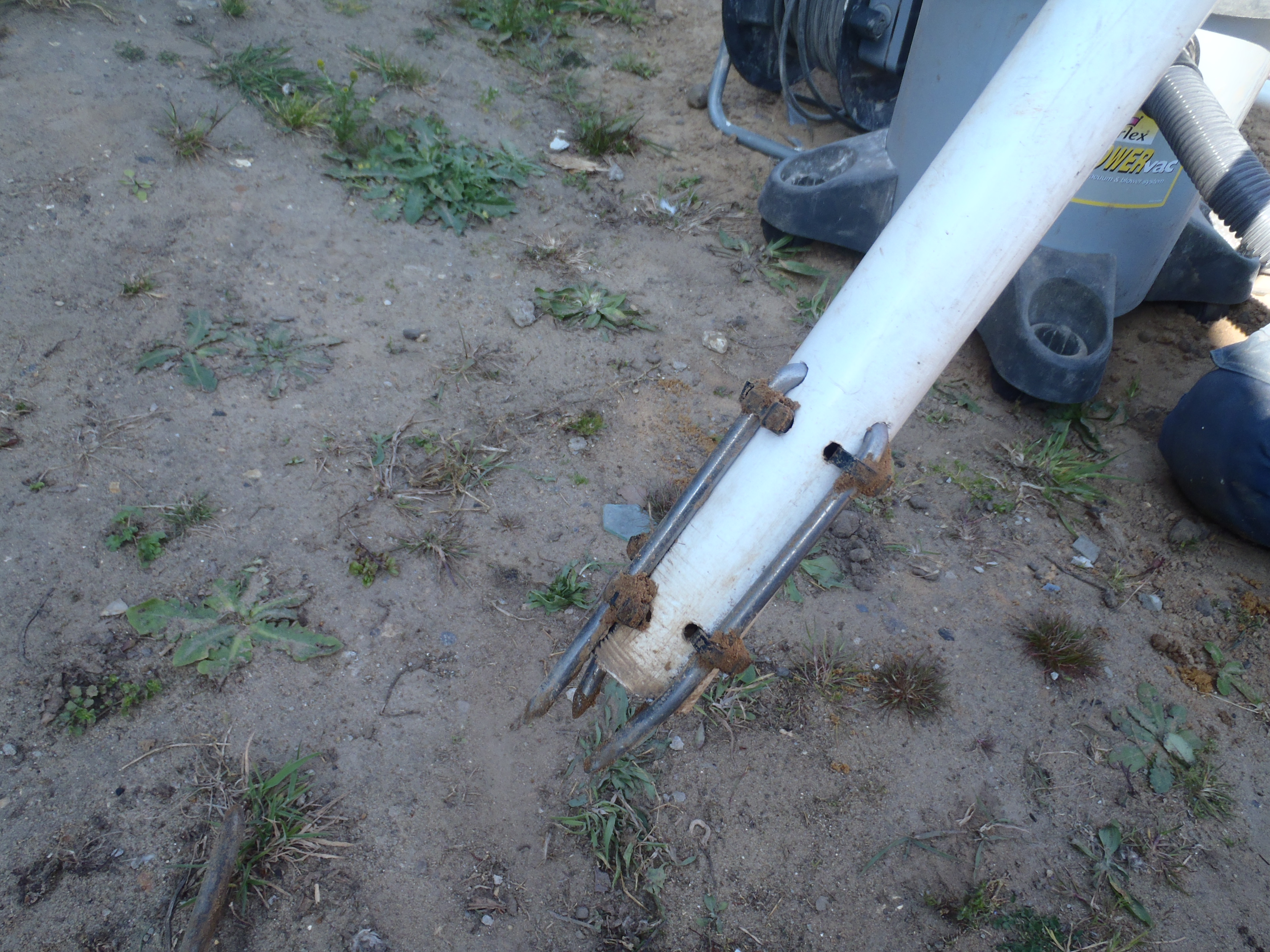
    This afternoon, we researched and designed a simple boring tool for making
    holes into the soil where we need to insert temperature sensors in and
    around the Energy Modules.

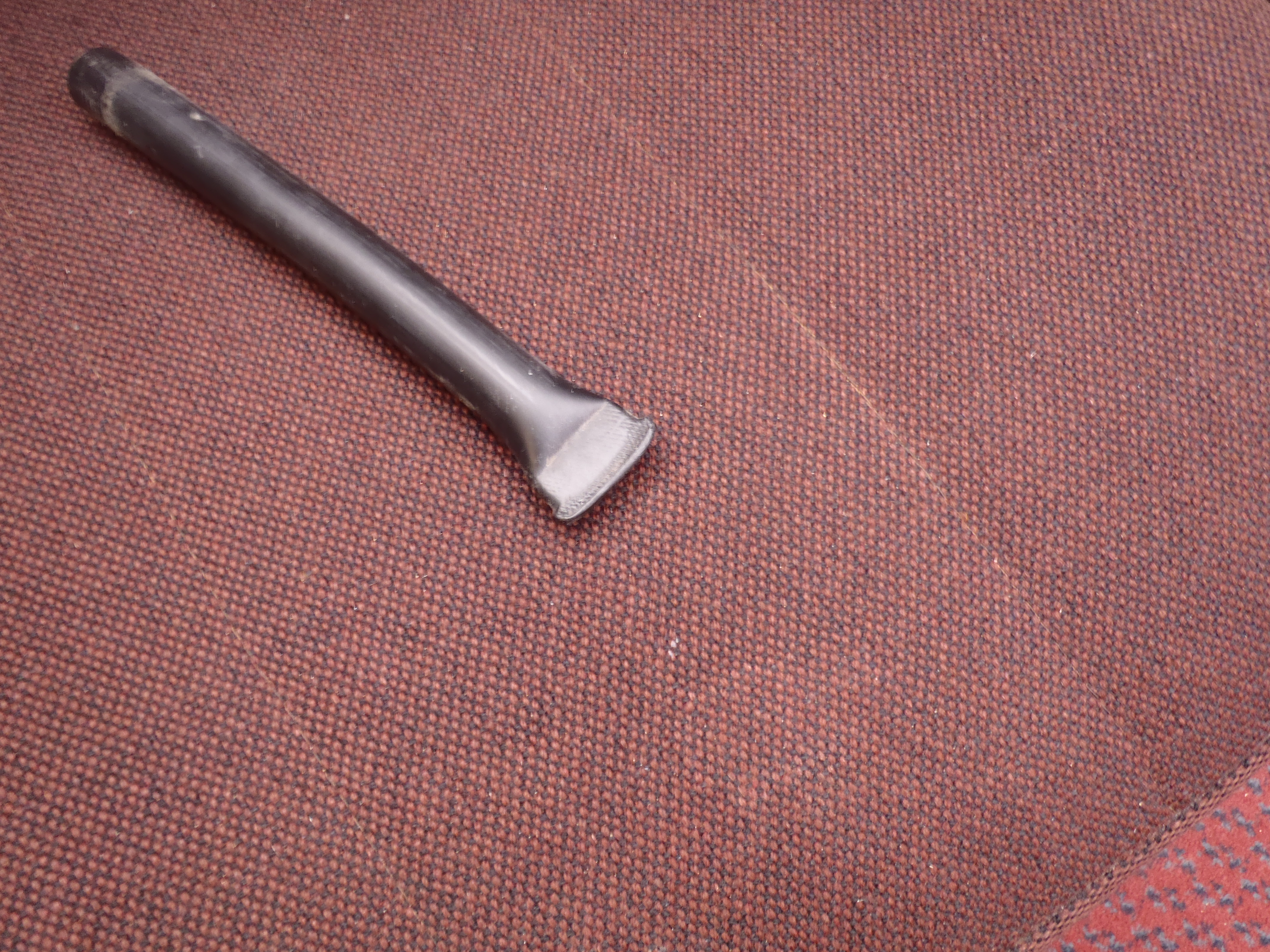
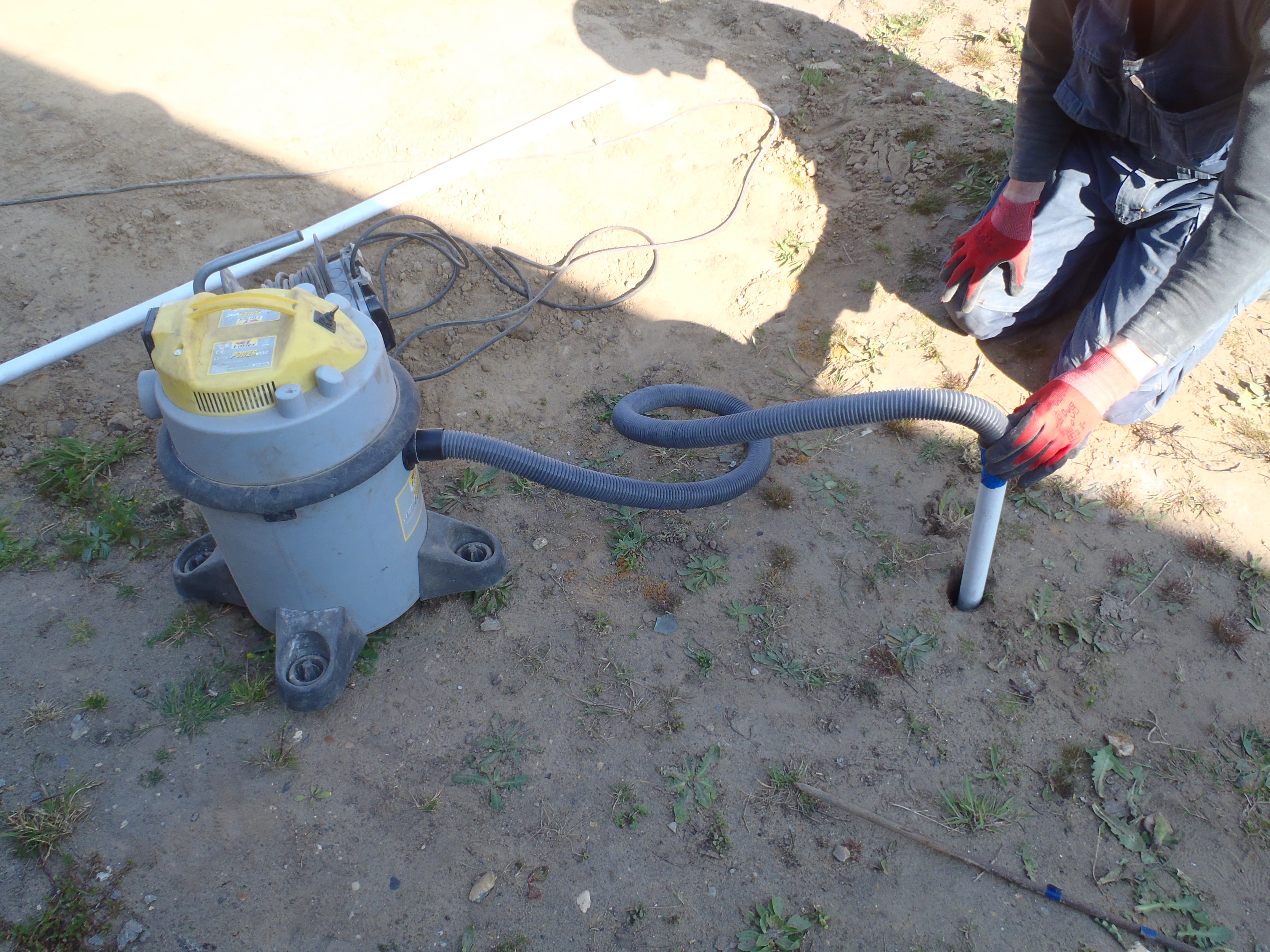
    We used a 32mm diameter plastic pipe, a metre long, and took 4 6-inch nails
    and fixed them to the end, with about an inch sticking proud out the end.
    Then the plastic tube was connected to our powerful vacuum cleaner and
    managed to “drill” down into the sandy soil!

    Hole-borer-1

    Hole-borer-1

    Hole-borer-3

    Hole-borer-3

    Hole-borer-2

    Hole-borer-2


    We did hit the gravel interface which was hard to get pass, but we did
    managed to get down 1 metre.

    But the pipe did clog up with the damp sand so we will have to clean it out
    regularly, but fortunately, we have only 35 holes to drill!!

  • First Twenty Crates Washed!

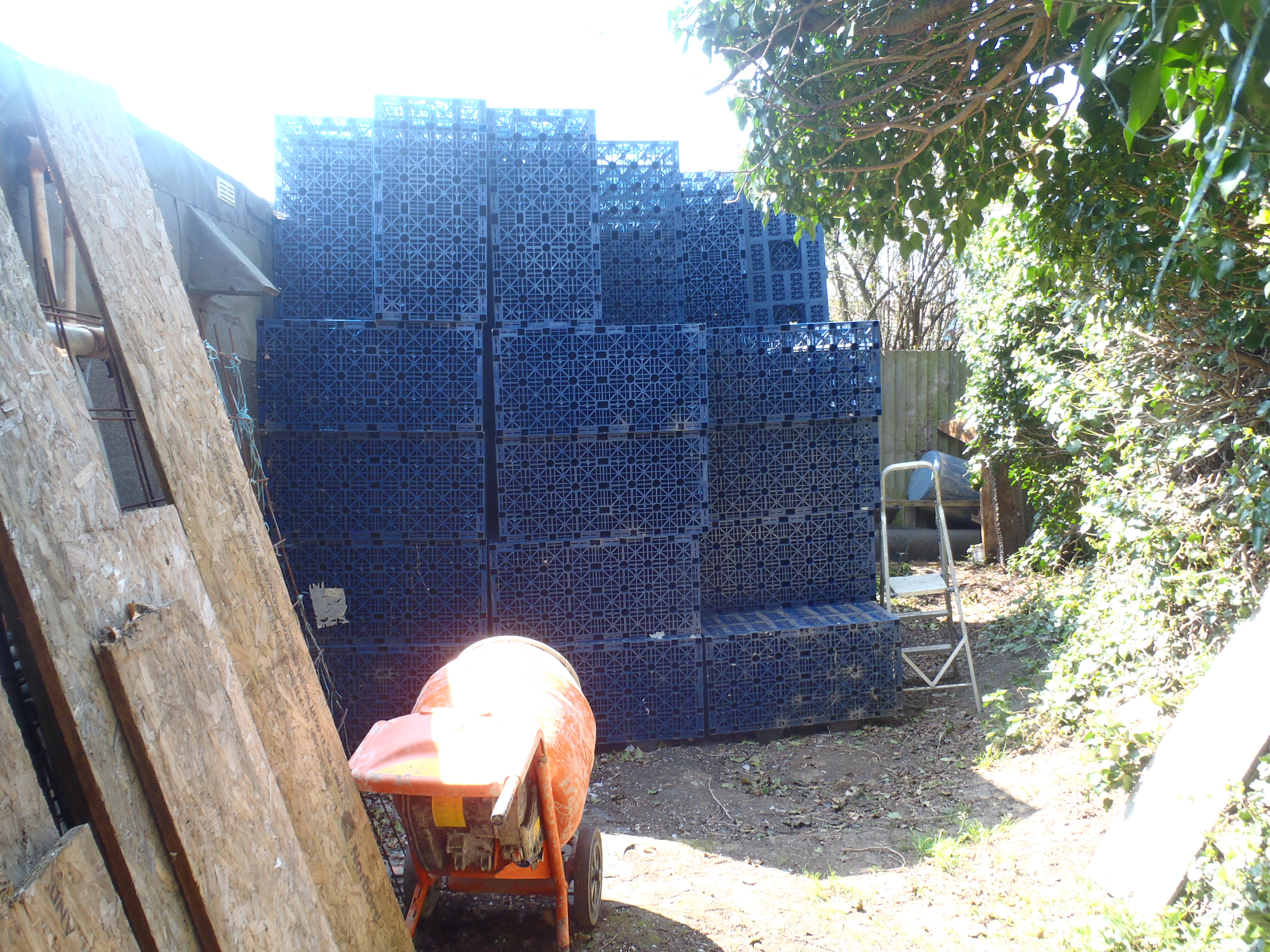
    This morning, we got the first 20 Aquacell crates opened up, blasted with
    jets of water and reassembled back together again!

    We made a small dent in the pile of our Aquacell mountain ..

    Stack-of-Aquacells

    Stack-of-Aquacells

    Only another 180 crates to go!!

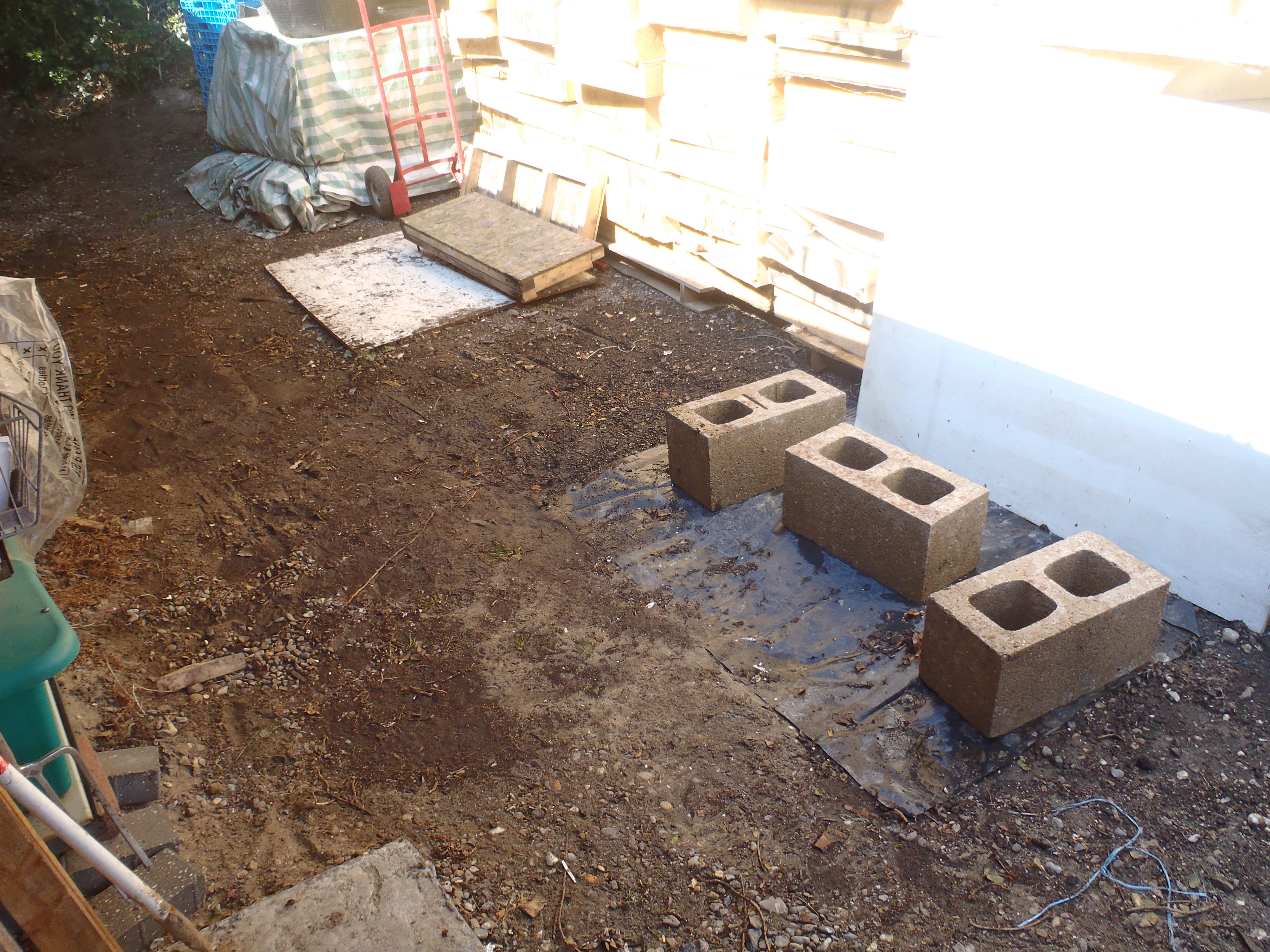
    We used our crate splitter tool, then used the pressure washer to spray
    water into all the crevices and then loaded our trolley with the sparkling
    clean plastic crates afterwards.

    Washing-Area

    Washing-Area

    A very wet job it is too!

  • Jigsaw Air Tunnel all Mortared Together!

    During a long session, starting this morning at 10am, we assembled and
    mortared all the pieces of the air tunnel together and finished about 2:30pm
    with the lids going on!

    We needed to mix two loads of mortar as we just ran out at the point of
    having done the two rows of the walls. So all the remaining mortar, after
    finished cementing down the concrete blocks on as lids, we spread it out all over the
    whole Earth Tube Mixing Chamber and down the slope of the air tunnel to seal
    and cover up the joints.

    Earth-Tube-Tunell-Mortered-Together-2

    Earth-Tube-Tunell-Mortered-Together-2

    Earth-Tube-Tunell-Mortered-Together-1

    Earth-Tube-Tunell-Mortered-Together-1


    We will now let that all set for a couple of days to harden, then start
    chucking in all the remaining hardcore and sandy soil around the area to
    build up the levels again, ready for the foundation!

    In the meantime, we start doing the Energy Modules!!

  • Air Tunnel ‘Jigsaw’ Pieces Cut!

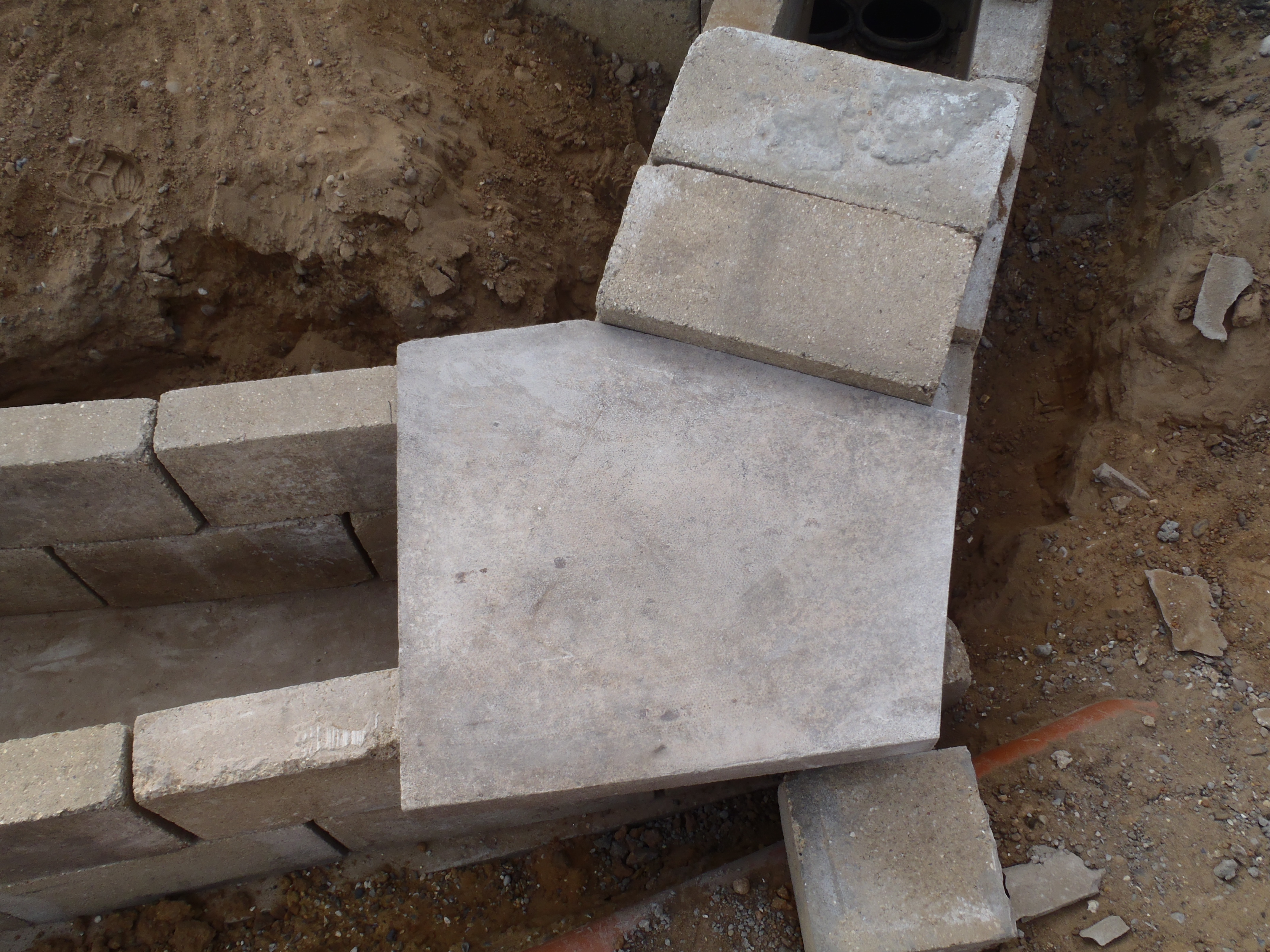
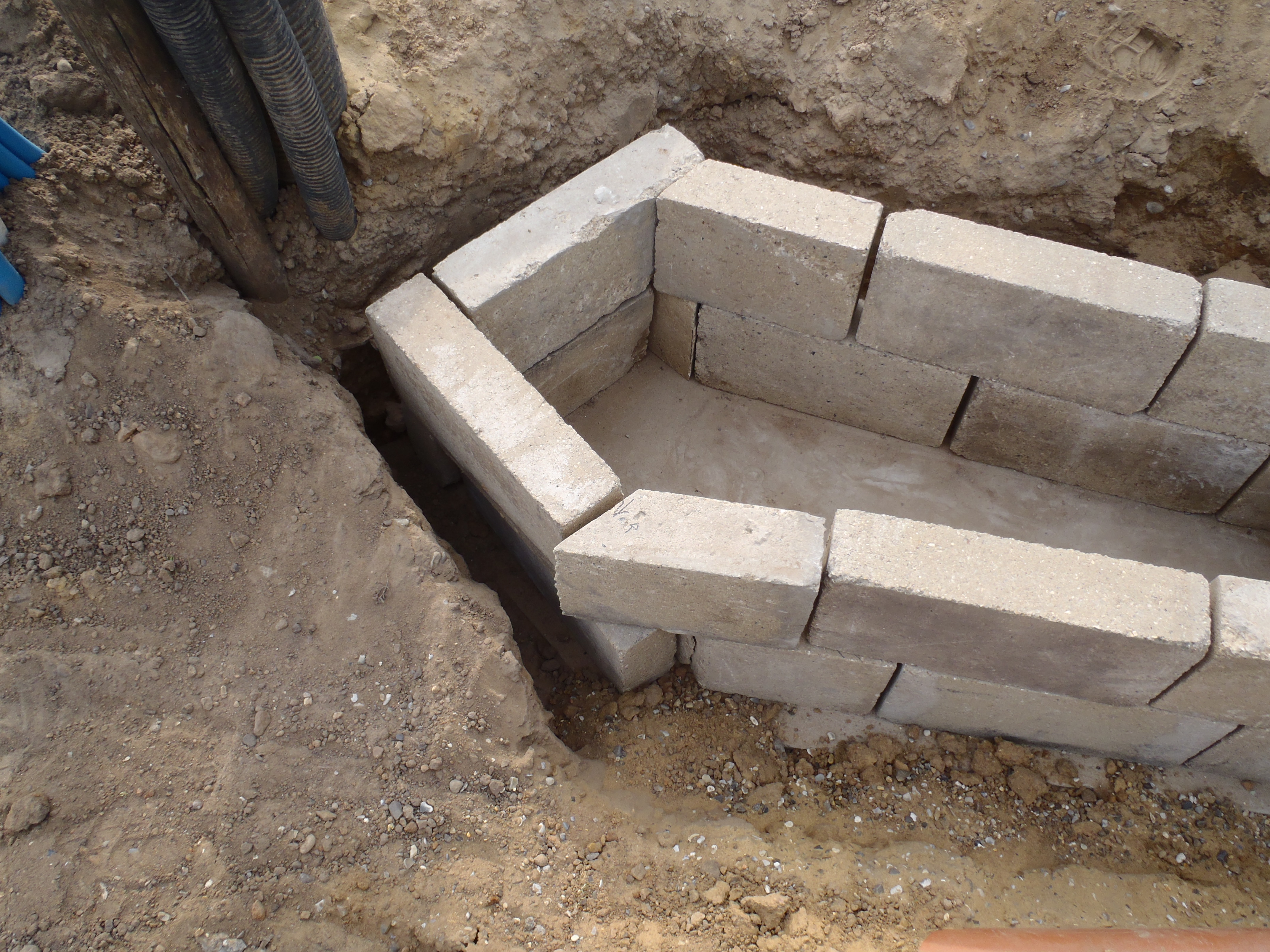
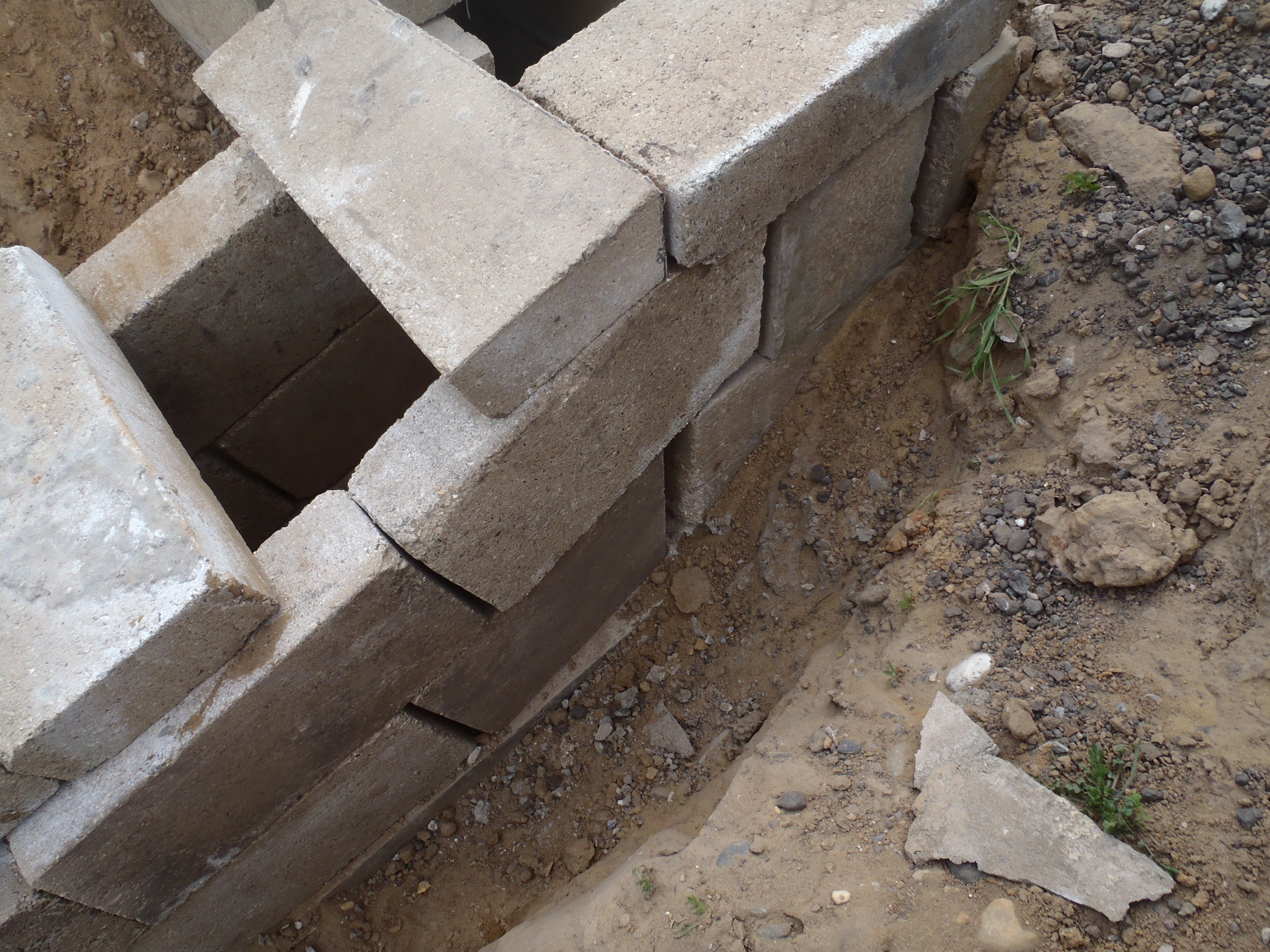
    Today, it was the day of slicing many concrete blocks to create the air
    tunnel from the Earth Tubes Mixing Chamber to the house! The jigsaw puzzle
    was very complex with a three dimensional aspect to it, both sloping
    downwards, curving around and also widening out too!!

    There was at least 17 cuts made, using a 9inch diamond disc in a high
    powered angle grinder machine.

    Erth-tube-tunnel-blocks-cut-to-fit-1

    Erth-tube-tunnel-blocks-cut-to-fit-1

    Erth-tube-tunnel-blocks-cut-to-fit-2

    Erth-tube-tunnel-blocks-cut-to-fit-2

    Erth-tube-tunnel-blocks-cut-to-fit-3

    Erth-tube-tunnel-blocks-cut-to-fit-3


    We need to go and buy two more concrete blocks to complete the “lid” to the
    tunnel. That’s tomorrow’s job along with mortaring all the pieces together
    into one smooth solid unit!

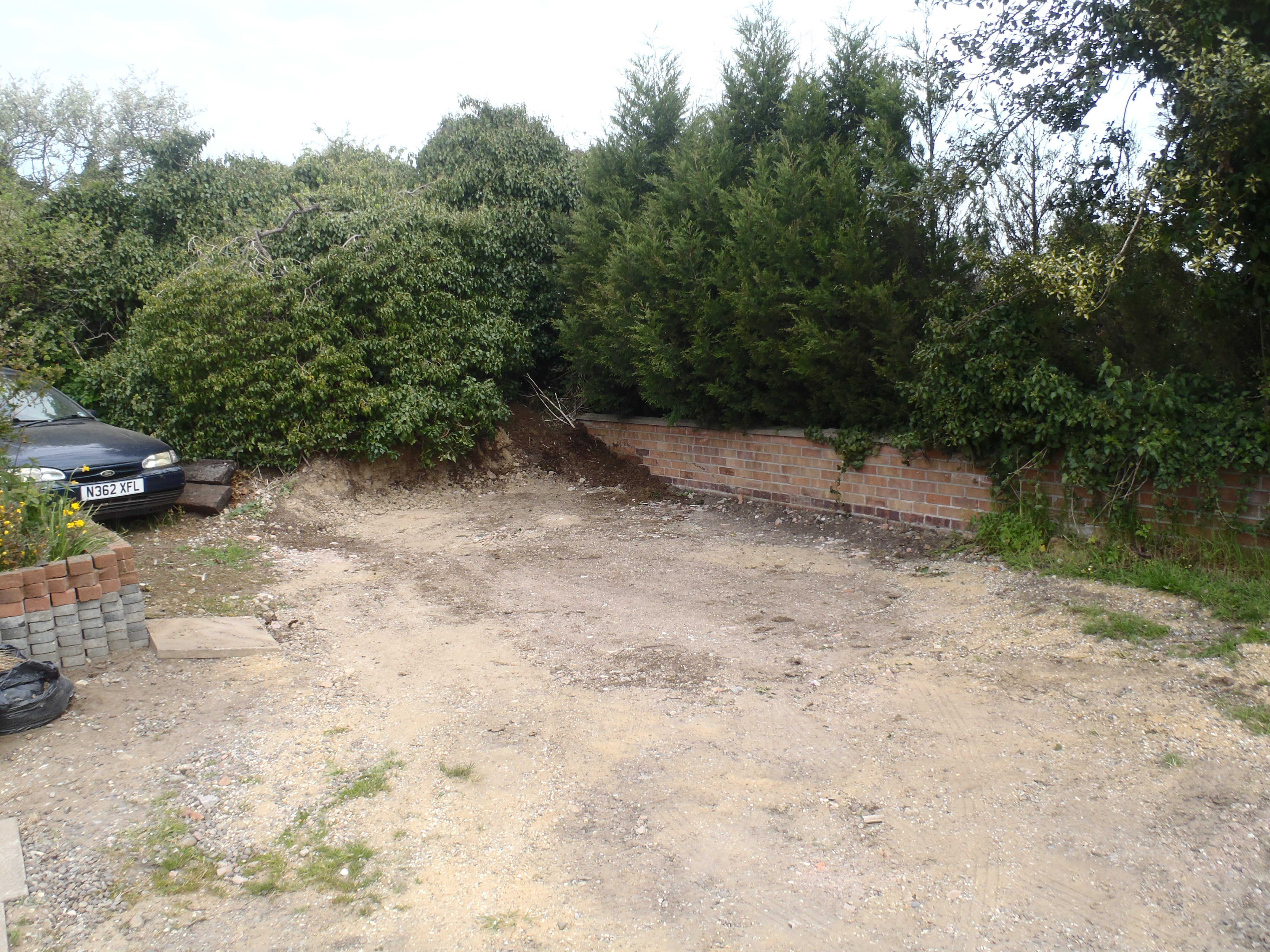
  • The End of the Loke is now Clear of rubble and Gravel!

    As part of our commitment, with our neighbours, to keep the Loke neat and
    tidy, we scooped up the remaining hardcore and ballast gravel and sharp sand
    mixture and moved them off the end of the Loke and down into our building
    area. We scraped and levelled the surface and compacted it all over to make
    it nice and neat.

    End-of-loke-cleared

    End-of-loke-cleared

    We can at last get our old car out again!!

  • Air Tunnel Construction Started!

    After we have finished the sewage pipes (the filling in of their trenches),
    we started with the adjustment to the Earth Tube Mixing Chamber and the Air
    Supply Tunnel construction.

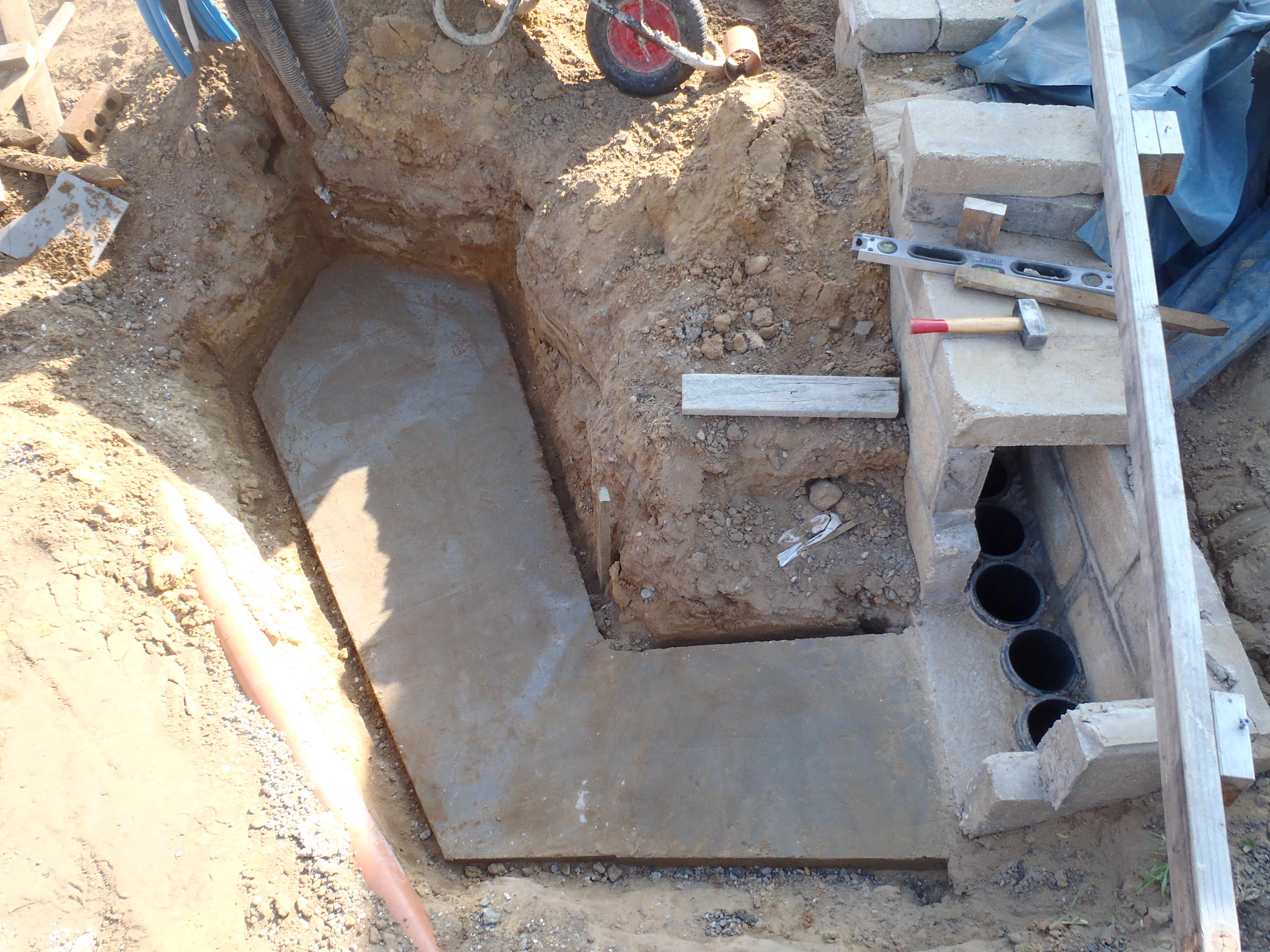
    The foundation slab is all set and very nicely done!

    Earth-tube-Concrete-finished

    Earth-tube-Concrete-finished

    We managed to get the end segment off the chamber with only having to
    destroy one of the concrete blocks. Now we are planning the procedure of
    what blocks to go where and what angles to slice certain blocks to form the
    downward slope of the tunnel exiting from the mixing chamber etc. etc.

    On Monday, we will resume and finish this task and then fill in all the soil
    and the remaining hardcore material back in around the chamber and tunnel
    and compact it all to build it up to the required level for the main house’s
    foundation etc.