Category: Conservatory

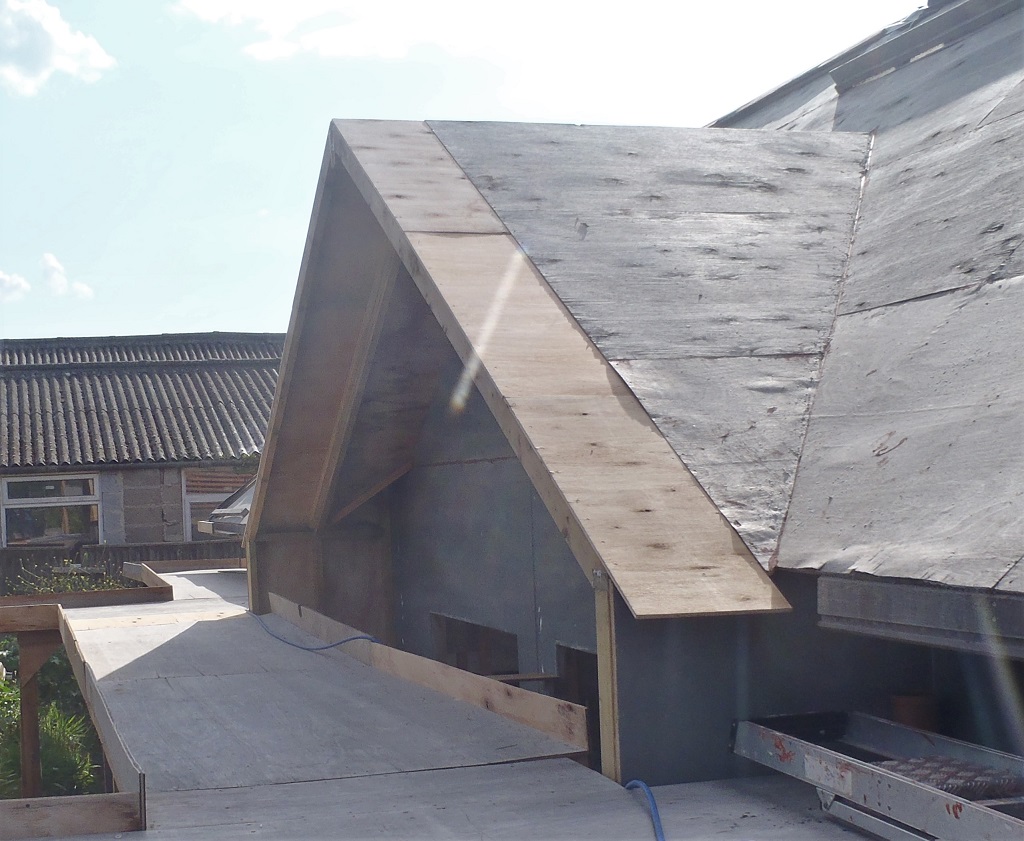
The Conservatory including the gable roof and stud walls as part of the main house.

  • Extended the Ventilation Ducting for the Conservatory

    We spent this week building and constructing the rest of the ventilation ducting that connect the Conservatory to our Air Con system. We had built the lower half that went across the Great Room, underneath the flooring and then up inside the wall structure between the window and the door facing the Conservatory. See  Conservatory Air Duct Built Inside Wall for more details on the work we did two years ago.
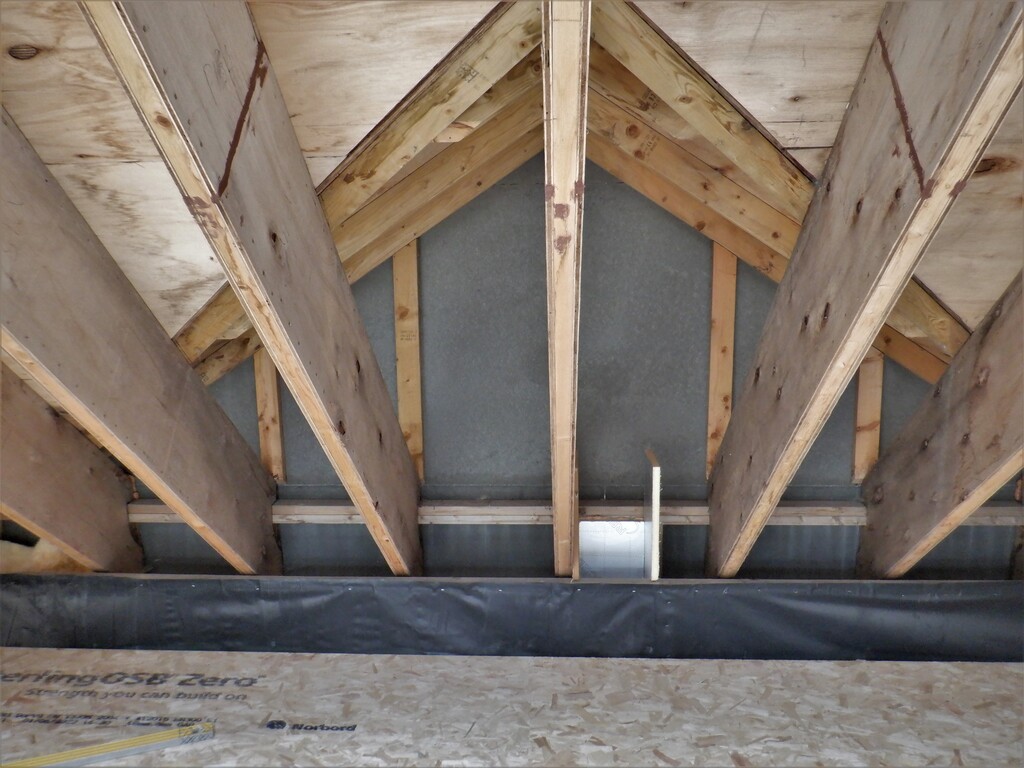
    Just the duct from below

    Just the duct from below


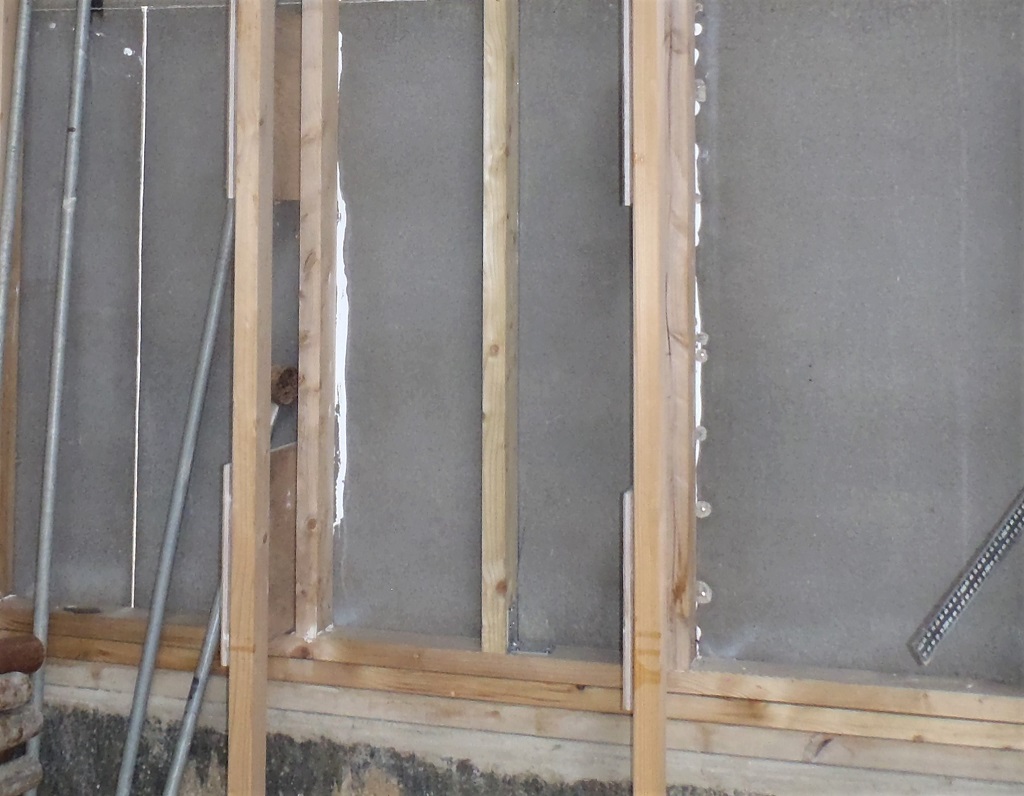
    The internal gable wall that separates the Conservatory from the Great Room goes up 14feet up (about 4¼ metres) above the ground floor and now that we got our temporary platform built, we could gain access at last. The first job was to put a layer of 100mm thick PU foam boards all across the back of the cement boards and followed by a layer of smooth aluminium coated 25mm thick PU sheets. This forms the back surface of the air ducting we are going to make. We then drilled a small 5mm hole on either side of the central vertical post, keeping well clear of it so we can then cut a large 180mm (about 7inches) hole on both sides. This hole then had a short length of some left-over twin-walled plastic pipe inserted into it. Everything was glued into place and left overnight to set.
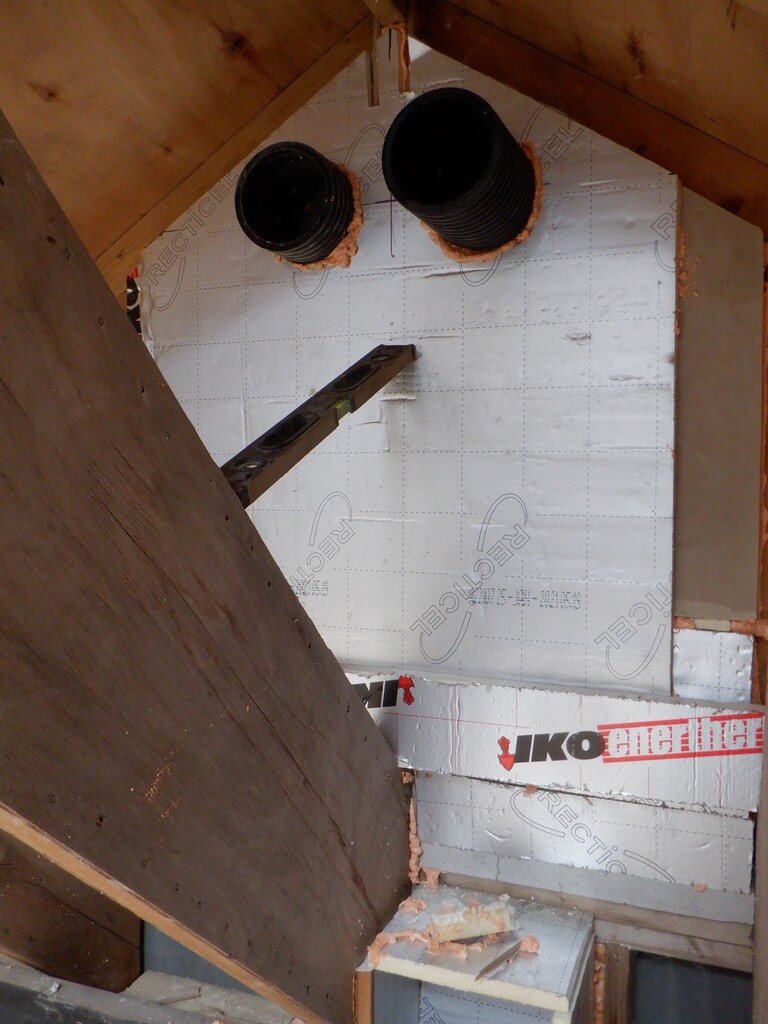
    Insulate wall and insert two inlet ducts

    Insulate wall and insert two inlet ducts


    Then, the next job was to build up the two left and right vertical sides of the air ducting, using more of our 25mm smooth aluminium coated foam board, connecting from the existing ducting coming up from below, and widening it out so both holes can be encapsulated within the ducting. We shaped the final part at the top of the two sides so that we can bend the lid around a quarter circle to help guide the air flow more smoothly when it is sucking the air out of the Conservatory.
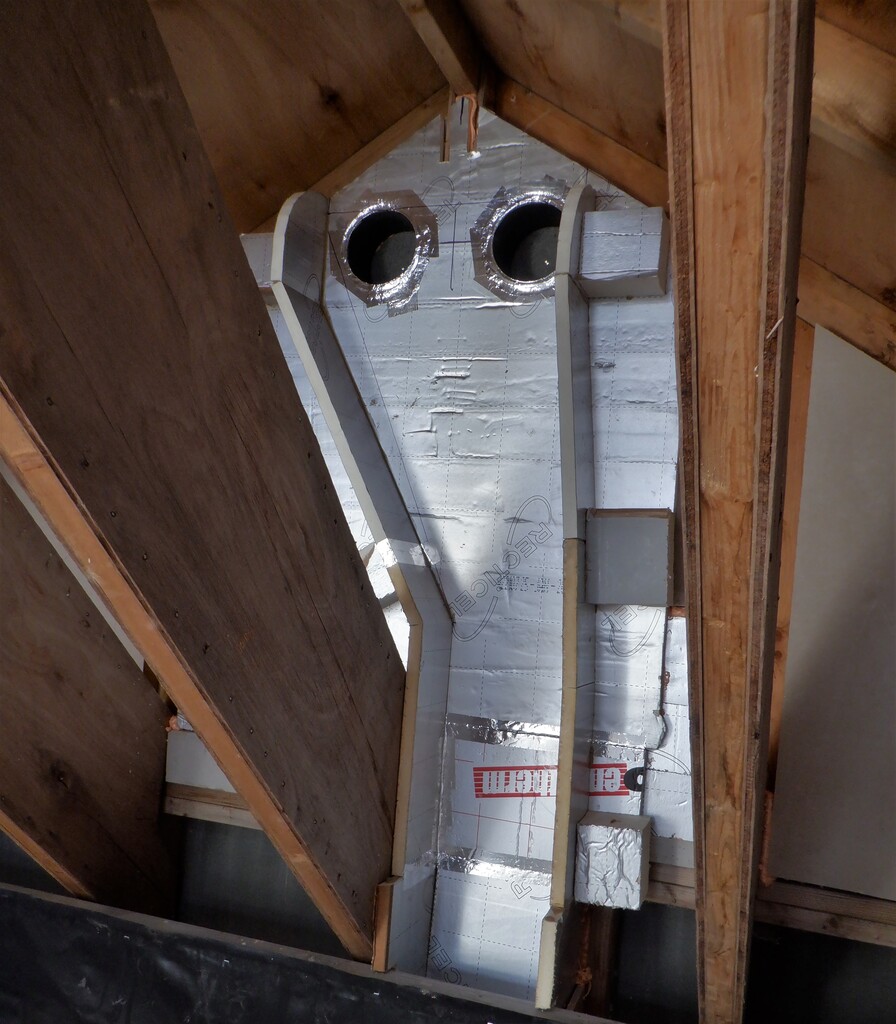
    Ducts trimmed & Side walls built

    Ducts trimmed & Side walls built


    Then, the final fourth side was created, the lid in front. As previously mentioned, the lid had the foam sliced at regular lines across the sheet and this allowed the board to ‘bend’ around the curve. The whole thing was then glued into place and aluminium metal tape stuck over all the joints, to make sure that we are air tight and where possible, the joints are nice and smooth so that the air won’t catch any sharp edges.
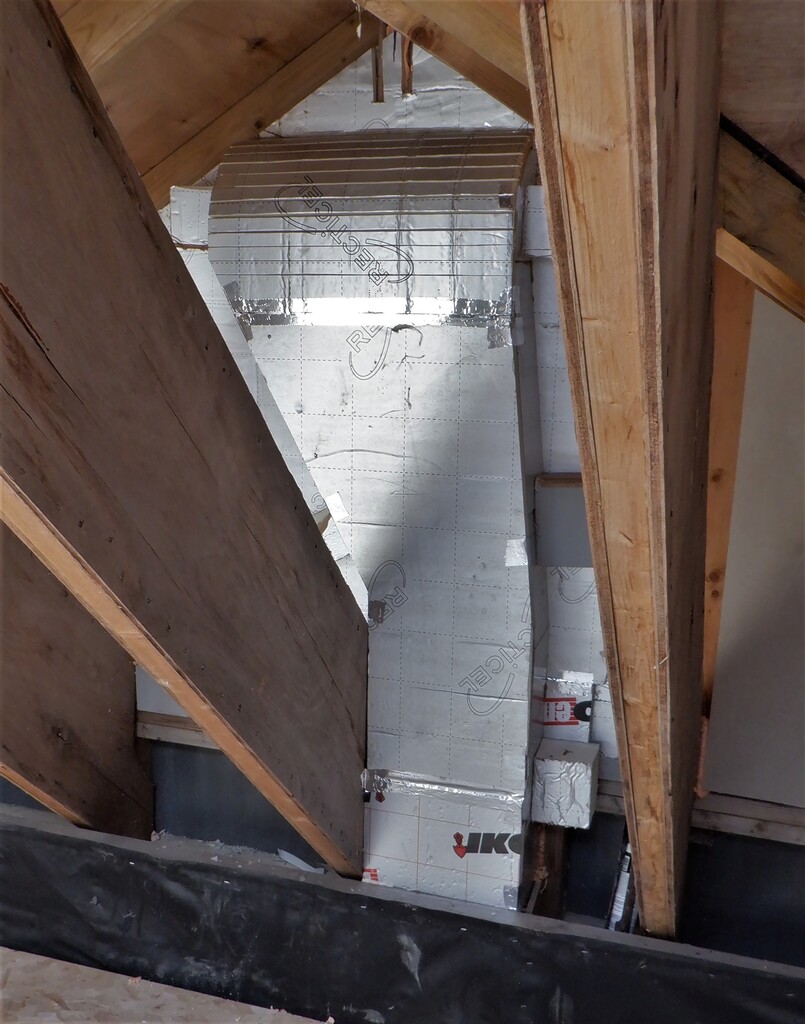
    Duct covered

    Duct covered


    Eventually, we will cut out the large holes through the cement boards when we have built the Conservatory and put on a couple of neat unintrusive air grills that will allow the passage of lots of air with minimal noise.

    We want to be able to keep the Conservatory cool and comfortable, even during very hot sunny days, hence we have done this very large capacity ducting, equivalent to four 100mm diameter pipes.
  • Gable Roof Extended, Two Downpipe Channels Created and Resumed Preparing the P Section of Roof

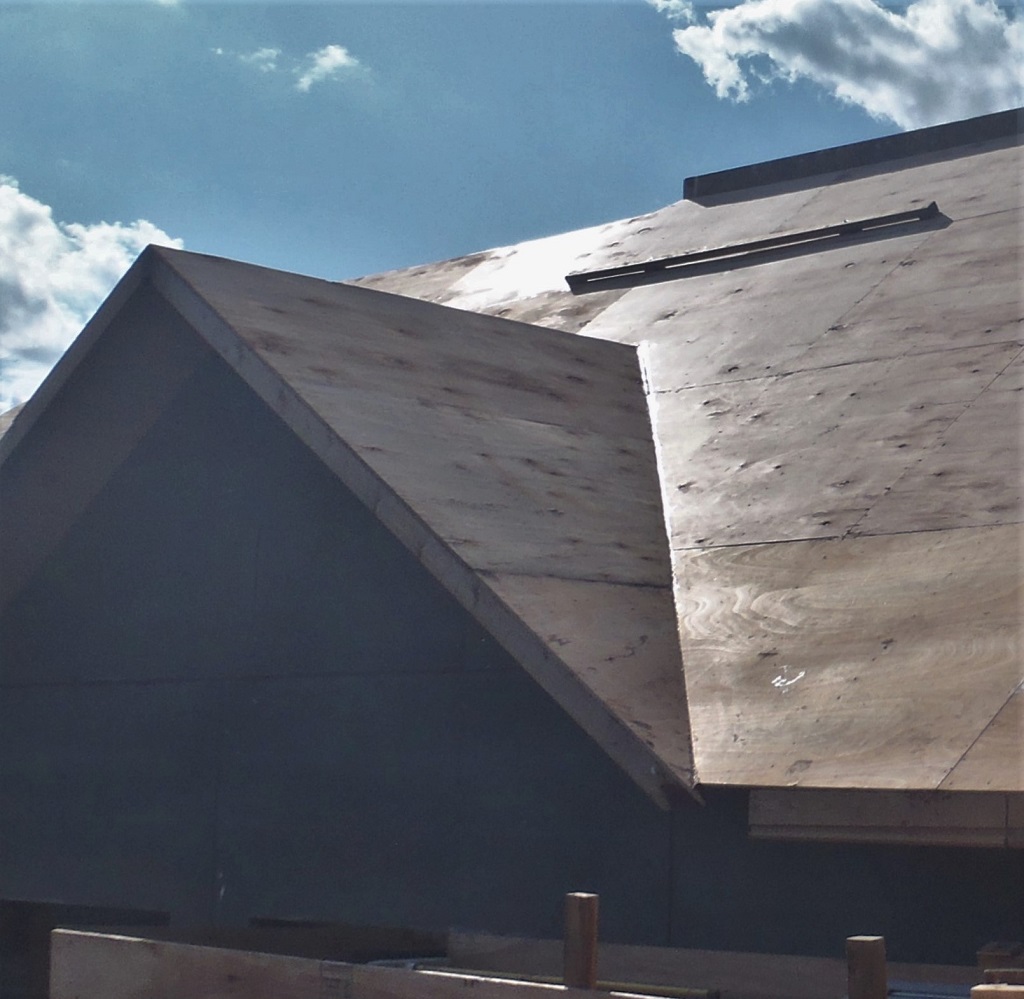
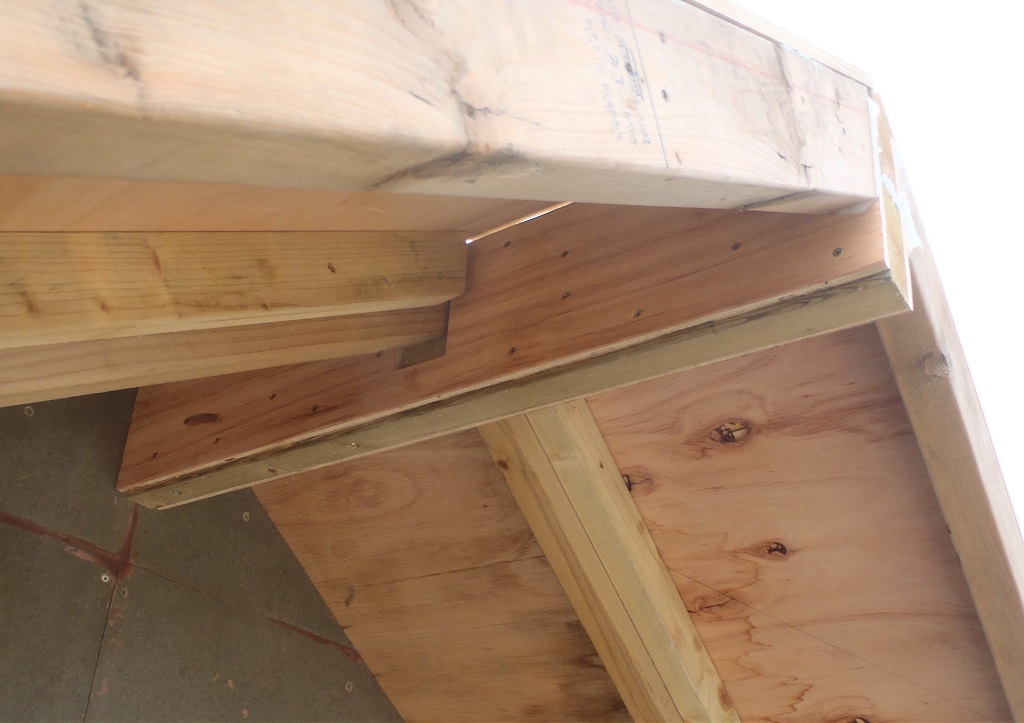
    On Monday, we extended the existing Gable section of the roof that will form part of the Conservatory. Using the new stud walls built last week, we put up a 420mm extension to the ridge beam to make a sum total of 910mm (3feet). This new ridge was sandwiched between two layers of our structural 12mm plywood, glued and screwed together with a second full single length of 95mm by 45mm treated timber underneath to reinforce the extension.

    Gable Roof Extended, Two Downpipe Channels Created and Resumed Preparing the P Section of Roof

    Extension-of-Q-ridge


    Then a couple of CLS 63mm timber pieces were fixed to the long diagonal rafters to provide support for the new roof boards and two fresh lengths of 4by2 timber cut to form the outer rafters of the new extended roof.
    The narrow strip was covered with more 12mm plywood segments and it is now ready for the next stage of counter battens and the breathable membrane to be put up.
    Gable Roof Extended, Two Downpipe Channels Created and Resumed Preparing the P Section of Roof

    Extended-Q-roof


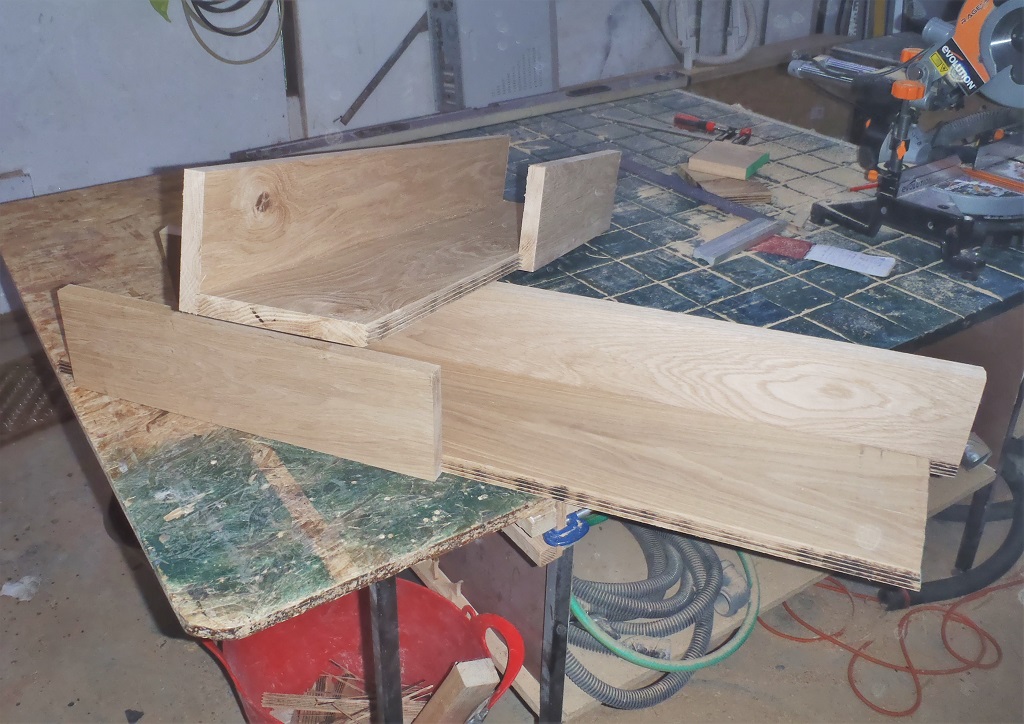
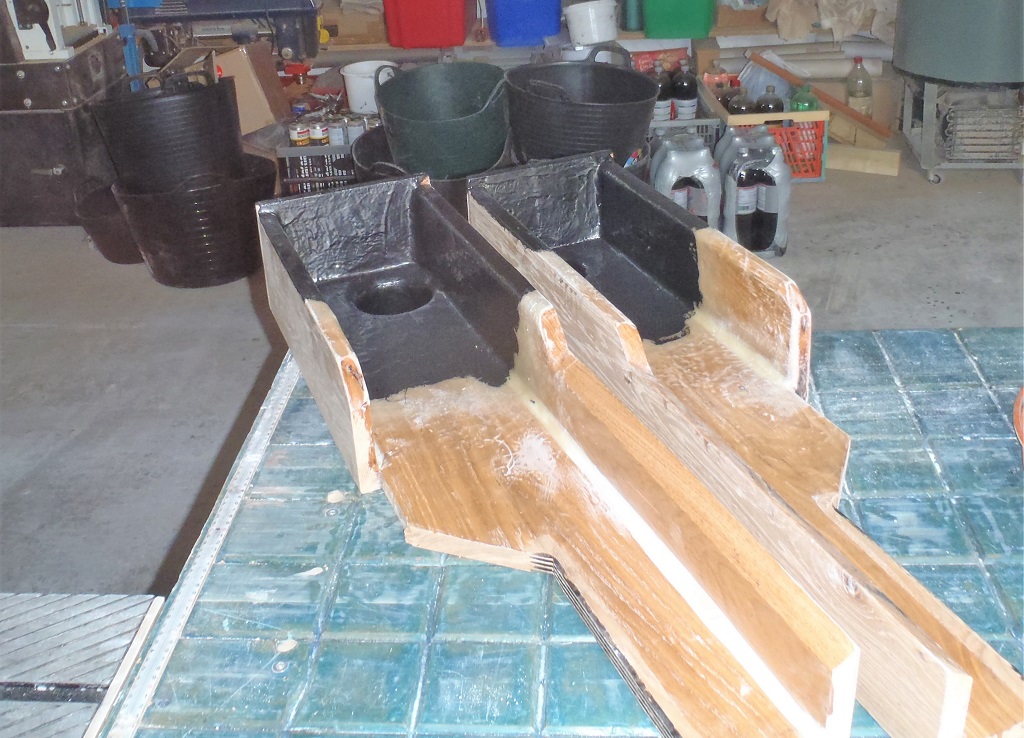
    Tuesday through to Saturday morning was spent working on two new Downpipe Channels to connect to the gutters and to the future Conservatory. We carefully measured each position of each channel module (PQ-1 and PQ-2) and then pulled out a couple of planks of Oak timber, 27mm thick but one plank being 150mm wide and the other being 250mm wide. We also had a couple of left-over pieces already planed from a previous job. These forms the two sides and the wider bottom pieces of the channel module.
    All was planed and cut to width.
    Gable Roof Extended, Two Downpipe Channels Created and Resumed Preparing the P Section of Roof

    Start-of-Q-Downpipe-Channels


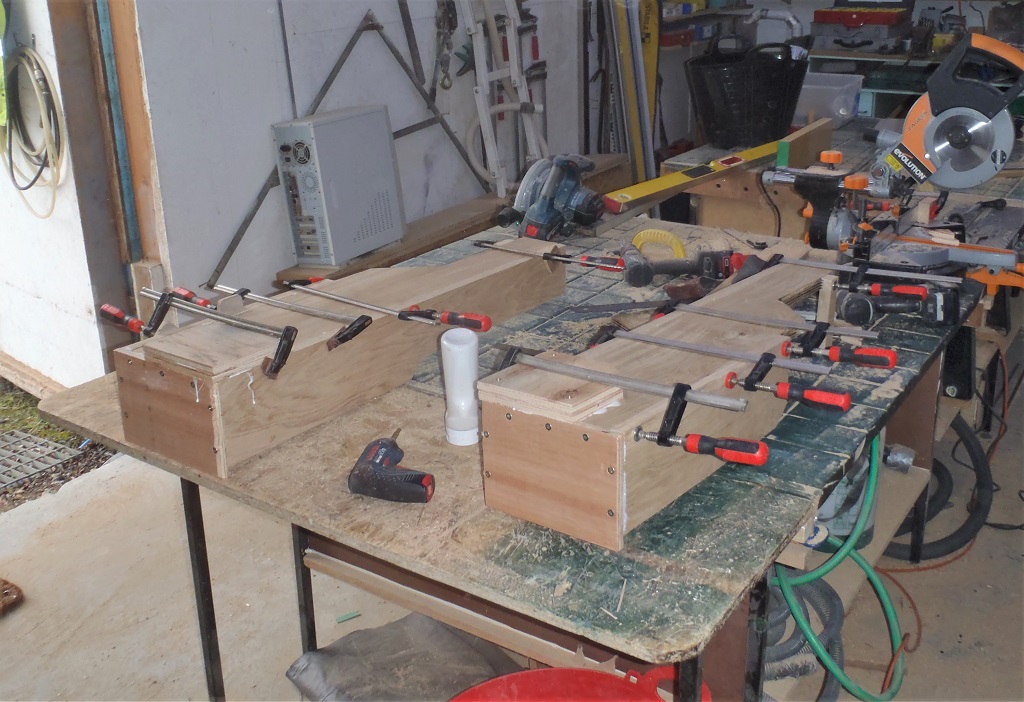
    The next job was to put on the tongue & groove edges to join the pieces together and using a PU glue, formed a very strong joint and a much more robust module. The two sides were shaped in a particular fashion so they will slide in and under the overhanging roof boards of the “Q” conservatory roof.
    Gable Roof Extended, Two Downpipe Channels Created and Resumed Preparing the P Section of Roof

    Q-Downpipe-Channels-Glued


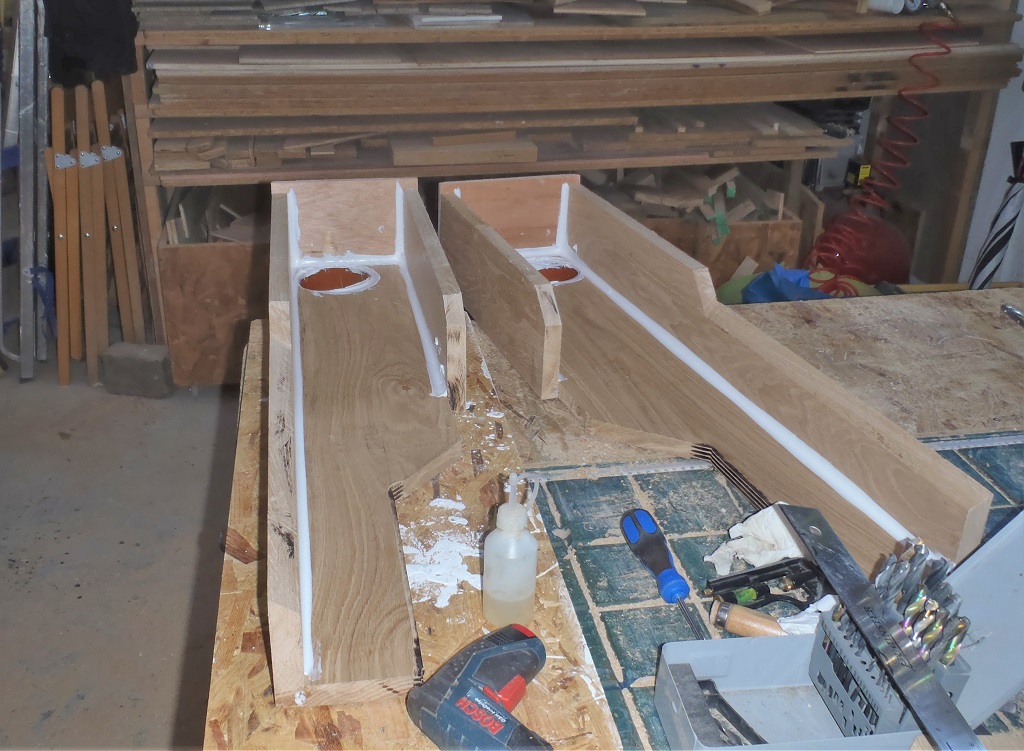
    Another gluing job was to stick on two layers of 12mm plywood squares (150mm across) and stick them under the modules in the position where the plastic drain pipe will come through. After they had set, we drilled a 114mm diameter hole through all the layers (22mm of Oak and the two layers of the 12mm plywood) and then glued in short lengths of drain pipe.
    Gable Roof Extended, Two Downpipe Channels Created and Resumed Preparing the P Section of Roof

    Q-Downpipe-Channels-with-Pipes-fitted


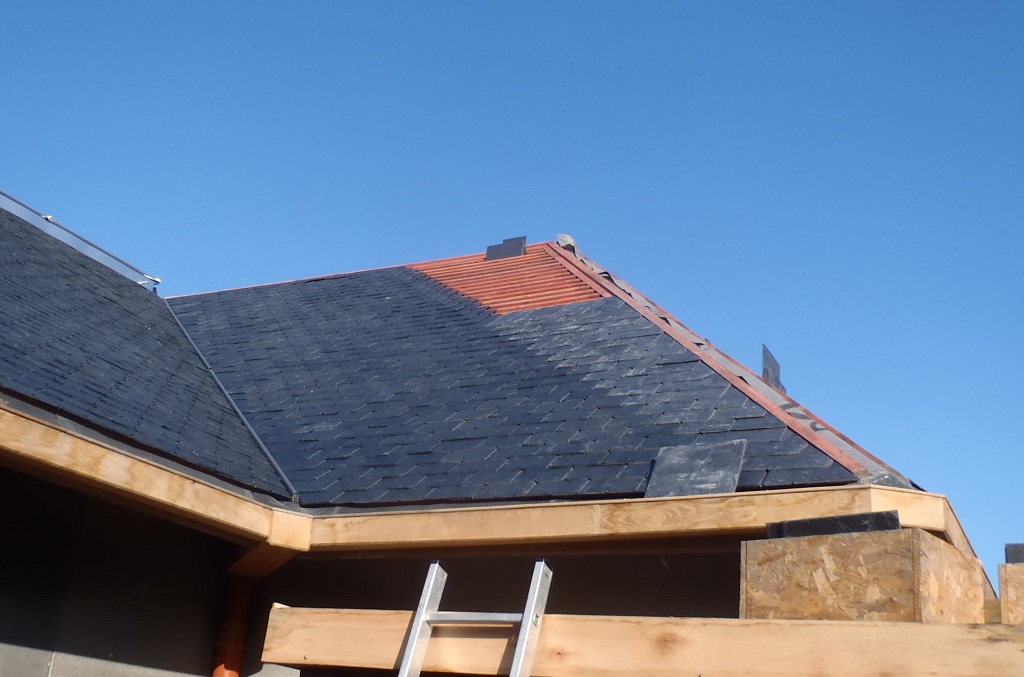
    While that was drying and curing, we went outside to resume work on putting up Slates on the narrow diagonal strip to finish off on the “N” section of the roof. We got half way up by the end of the day.
    Gable Roof Extended, Two Downpipe Channels Created and Resumed Preparing the P Section of Roof

    N-Nearly-done


    On the following day, we carried on working on the downpipe channels by cleaning up all the edges, especially the newly installed plastic pipe sticking through the bottom of the channels and then applied a coat of polyester resin and glass-fibre matting to fully waterproof these channels and provide a smooth surface for the rainwater to flow into the pipework. And finally on Saturday morning, we applied the black coloured top coat layer of resin to provide the slick surface and colour.
    Gable Roof Extended, Two Downpipe Channels Created and Resumed Preparing the P Section of Roof

    Q-Downpipe-Channels-ready-for-fitting


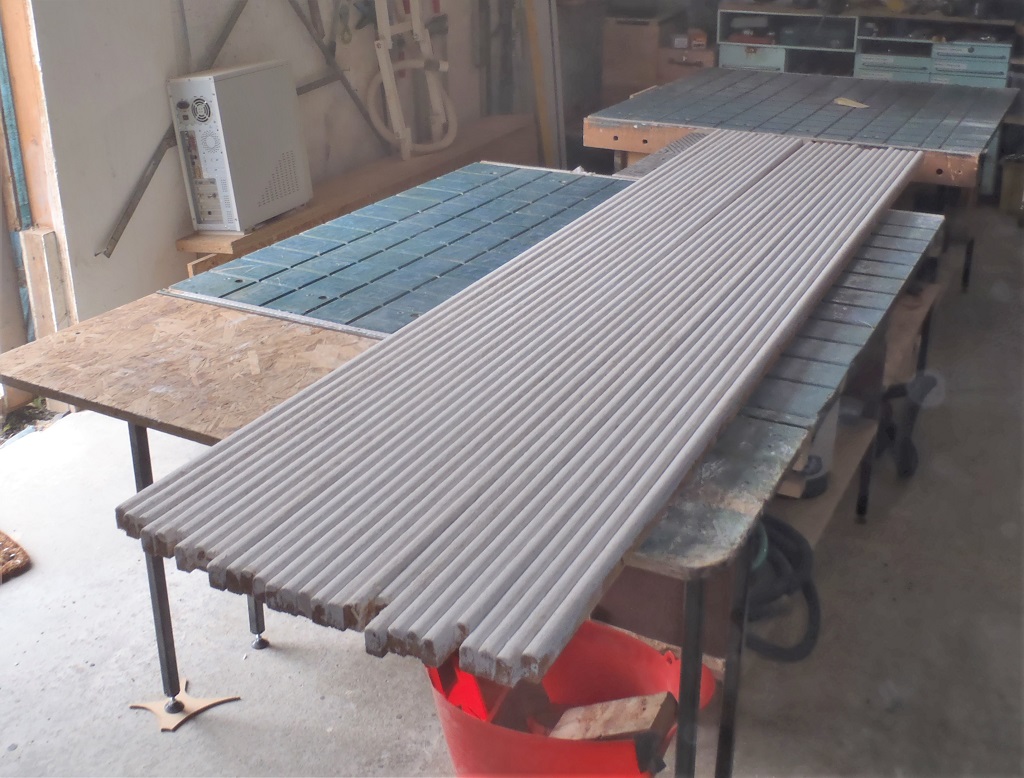
    While that was hardening, we brought in all the thin OSB strips that has a “bull-nose” on one edge. We discovered from the first time we used these strips to form a flashing waterproof barrier for the Hip and Ridge lines, that the resin soaked into the open grain of the material so we spent a hour or so applying Polyfilla to all of them to bulk fill these gaps.
    Gable Roof Extended, Two Downpipe Channels Created and Resumed Preparing the P Section of Roof

    Bullnose-Strips-filled


    We are in the middle of some very changeable and windy weather at the moment so we hope we can still proceed with our work. We have been lucky so far this year in general. Next week, we will install the new downpipe channels, put on the guttering and then start laying on the strips of roofing membranes all along “P” and the “Q” roof sections.

  • Stud Walls Built to help Extend Conservatory

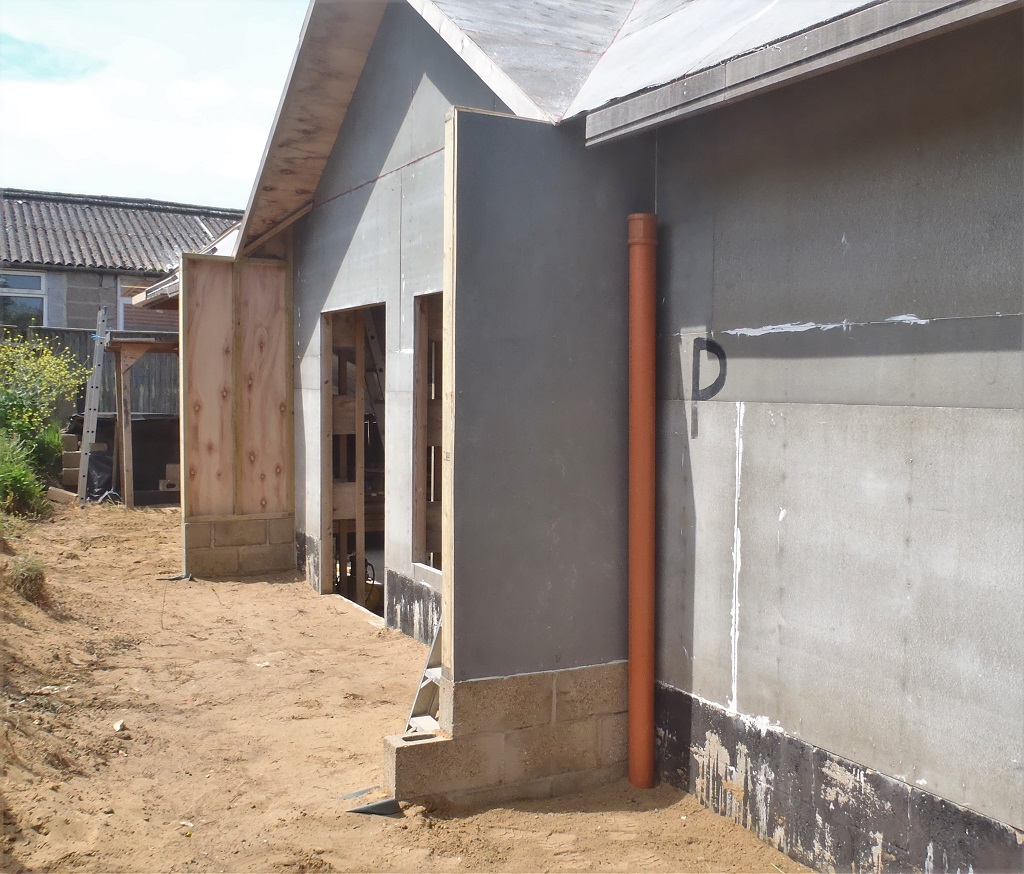
    We resumed work on building up the stubby stud walls, on the newly formed concrete block work and foundations, in order to help support the upcoming extension to the Gable Roof sticking out the “P” section of the roof (over the Great Room).
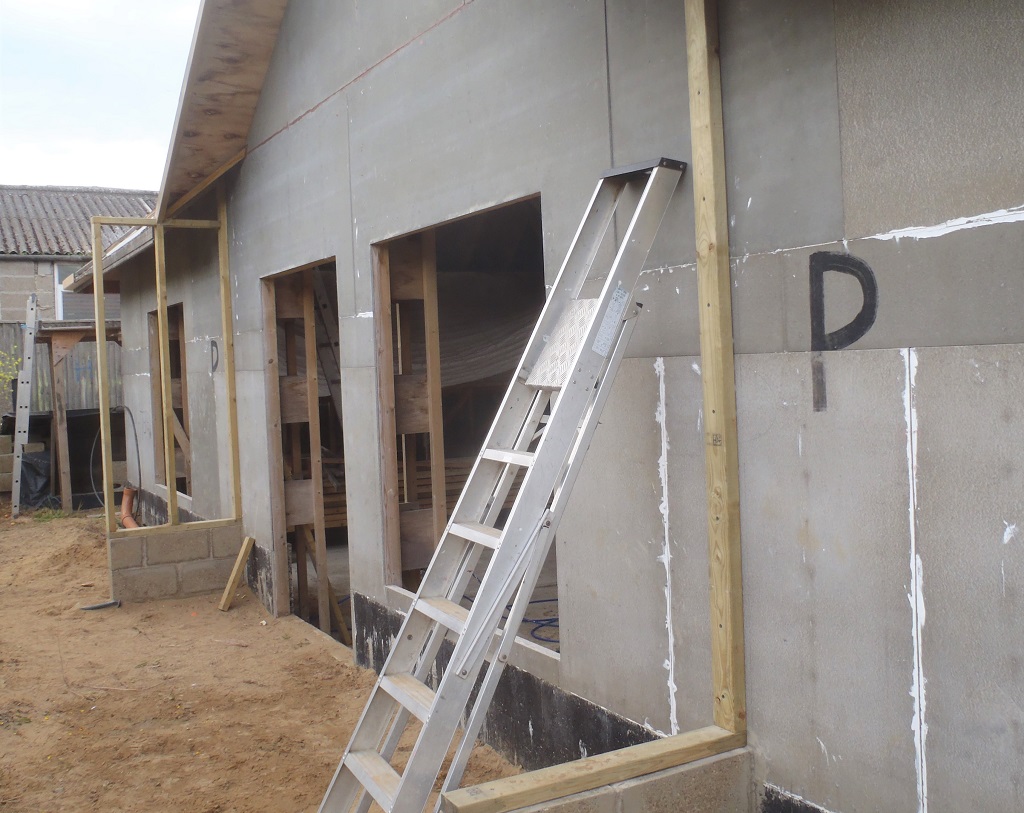
    The new stud walls are 900mm wide and we used our nominal 2″ by 4″ preservative treated timber to put together a framework that bolted onto the 140mm wide concrete blocks and reaching up to the eves. It is attached up the full height to a post added to the inside of the main house.

    Framework-for-Q-walls

    Framework-for-Q-walls

    Attached-to-extra-post-inside

    Attached-to-extra-post-inside


    We put on two layers of sheet material on the outside, the first one being 12mm plywood which we glued and nailed directly onto the framework and then the second layer was a sheet of 12mm thick cement board to provide the weather proofing and we glued around the edges with more PU glue and then nailed with plenty of nails to provide a strong solid racking to support and brace the main building and conservatory both.
    Completed-Q-walls

    Completed-Q-walls


    We finished by lunch time Wednesday and the next job is to make the downpipe channels using our Oak timber to form the interface to our guttering system, but before then we have to move all the scaffold platform modules.

  • Section O Battened Up, Gutters Cleaned, Platforms All Tidied Up and Conservatory Stud Walls Started!

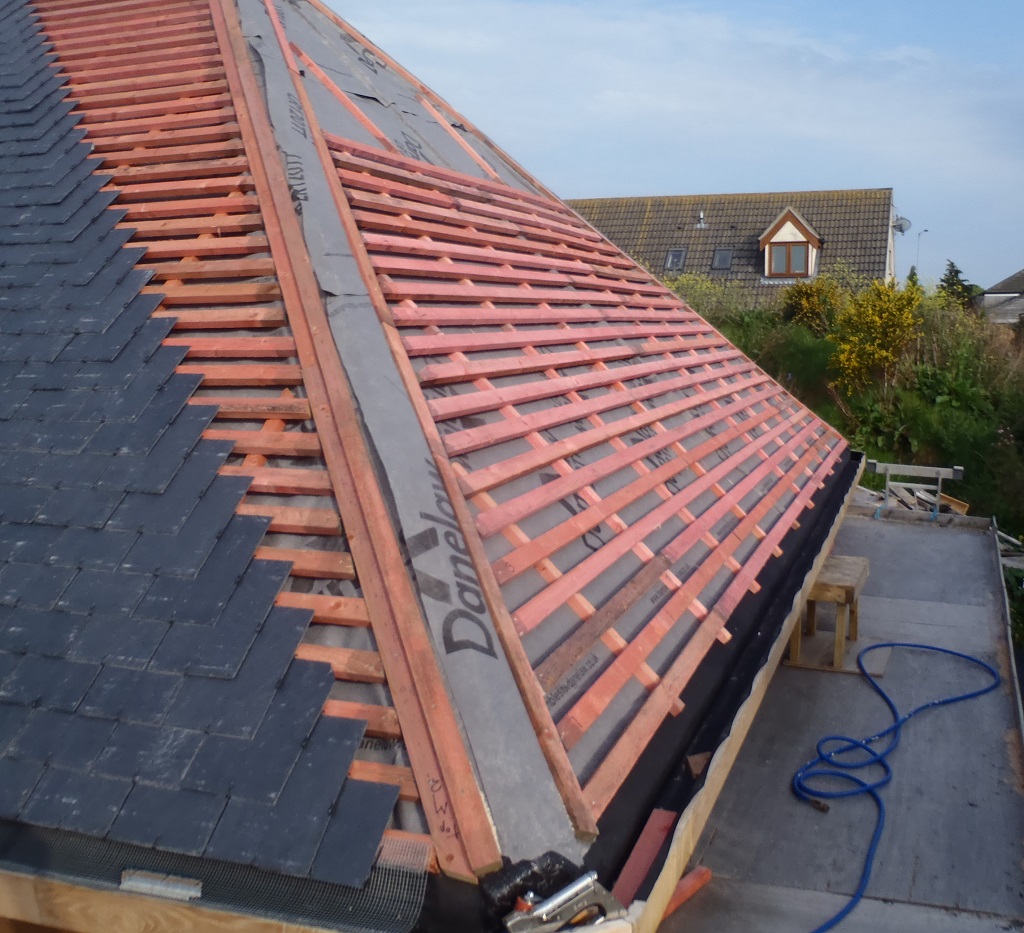
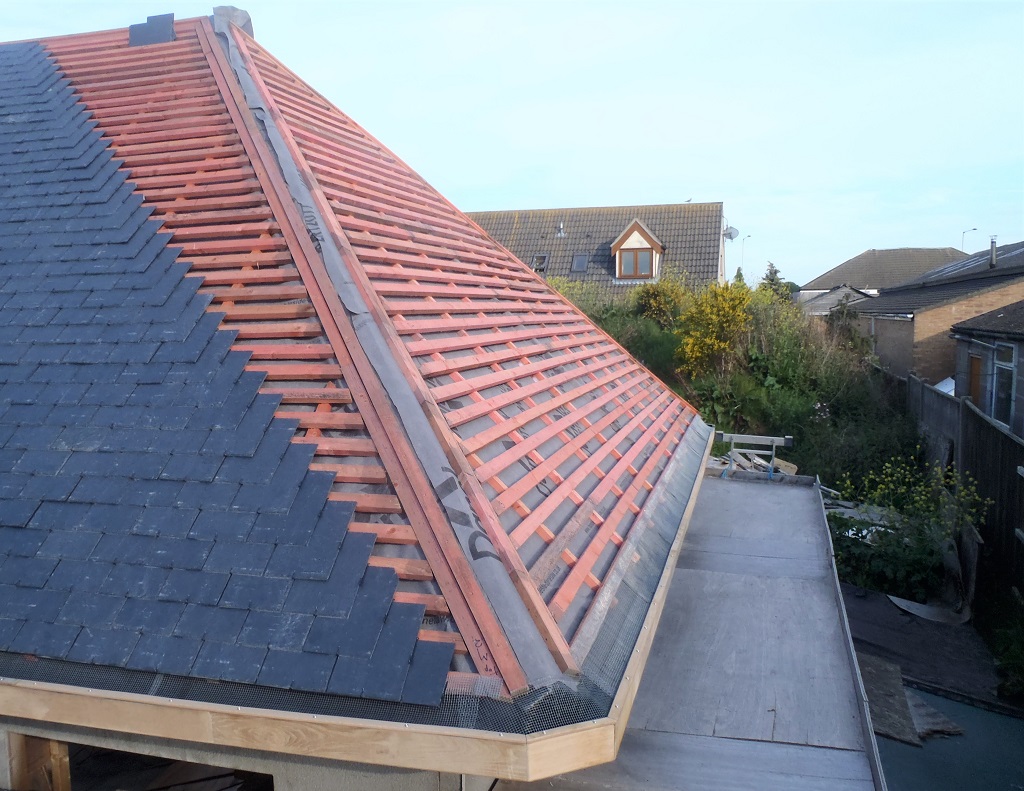
    Monday, we got on with the task of putting on the three strips of the breathable membrane across the O section, all held down by vertical counter battens.

    O-mostly-Battened

    O-mostly-Battened


    Then by Tuesday lunch time, we got all the horizontal tile battens nailed into place too.
    The remaining of the day was spent tidying up everything off the working platforms because we will have to move and adjust all our platform modules to go along the “P” section of the roof and around to the front of the building along the “A” section too.
    The reason we are doing this now, before we have completed the task of putting up the Slates on the last bit of N and all of O, is because we need to make our “bull-nose” fibre-glass and rubber flashing protection covers that goes along both diagonal hips (the N-O and O-P hips) plus also along the ridge line between the N and P rooves and we haven’t got the “P” section done at all. We need at least the breathable membrane strips in place so it can overlap at each boundary before the flashing battens can be put into place.
    This is why we are having to stop at this point and start work on the P roof.
    But .. ..
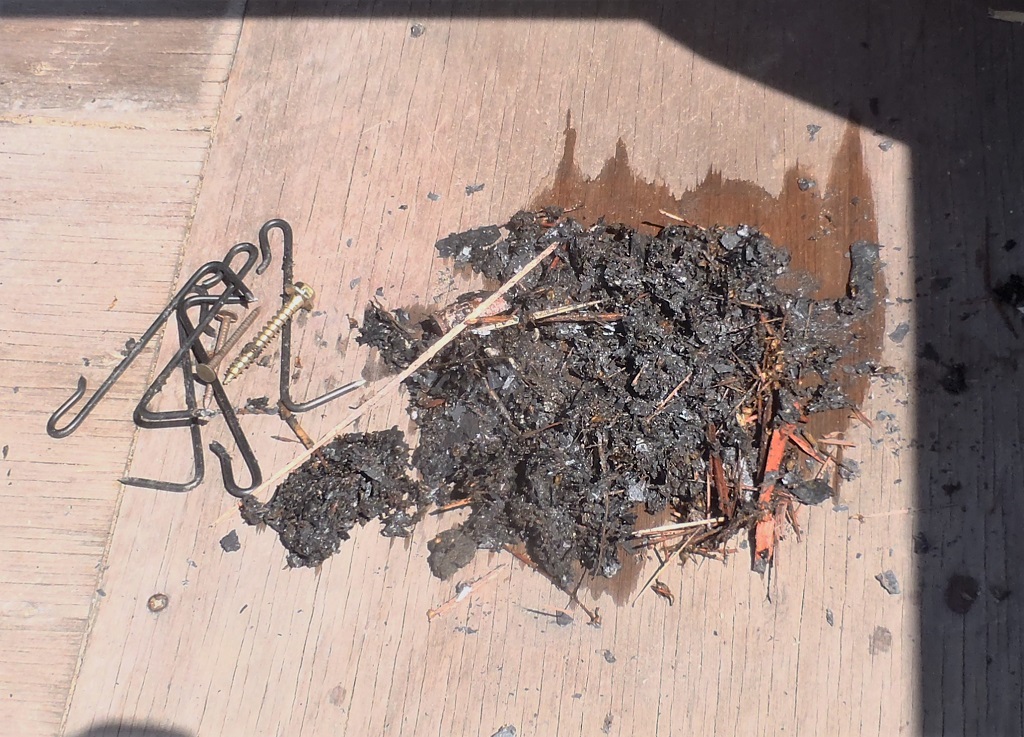
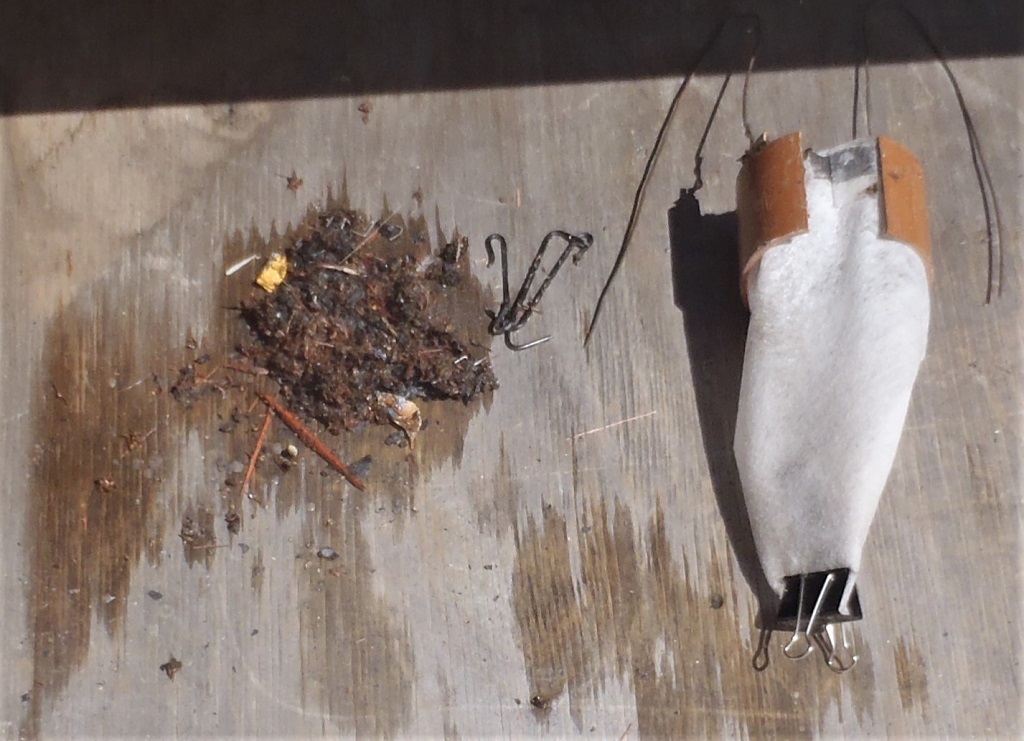
    On Wednesday, we realised that before we dismantled the platform modules, we took the opportunity of cleaning up the gutters, both inside and outside! There are loose nails, slate fragments and lots of wood splinters lying in the gutters, and also the joints still has the hardened glue sticking out in various places. So the morning was spent scraping and sanding the glue and smoothing the joints with chisels and sanding machines and then using a pressure washer, and a cloth filter plugged into the top of the downpipes at the back of the gutter channels, we blasted all the bits and pieces along.
    Debris-from-gutters

    Debris-from-gutters

    More-debris-and-Filter-unit

    More-debris-and-Filter-unit


    In the afternoon, we also saw that we could finish off the metal mesh coverings over the gutters and screw down the oak “caps” to lock the mesh and rubber down. We also put in twice as many stainless steel dome head screws as previously to provide a stronger pressure and keep the cap tight down in more places.
    O-Battened-and-gutter-mesh-installed

    O-Battened-and-gutter-mesh-installed


    And here’s the time lapse…

    Sooo that means we are ready to move the platforms around .. NOT!!
    Another realisation is to do with the design of the valley troughs (the fibre-glass modules) and the minimum required space and clearance its needed to do its job properly. Actually, we had realised this several weeks ago so we have been thinking on this problem to how to adjust the Conservatory gable end around on the “P” section of the roof.
    Conservatory-gable

    Conservatory-gable


    We came to the conclusion that we needed to extend outwards the gable end another 300mm. Also it was felt that we really ought to build out the perpendicular stub walls that forms the start of the Conservatory and will fully support the sticking out section of roof, especially loaded with the extra Slates.
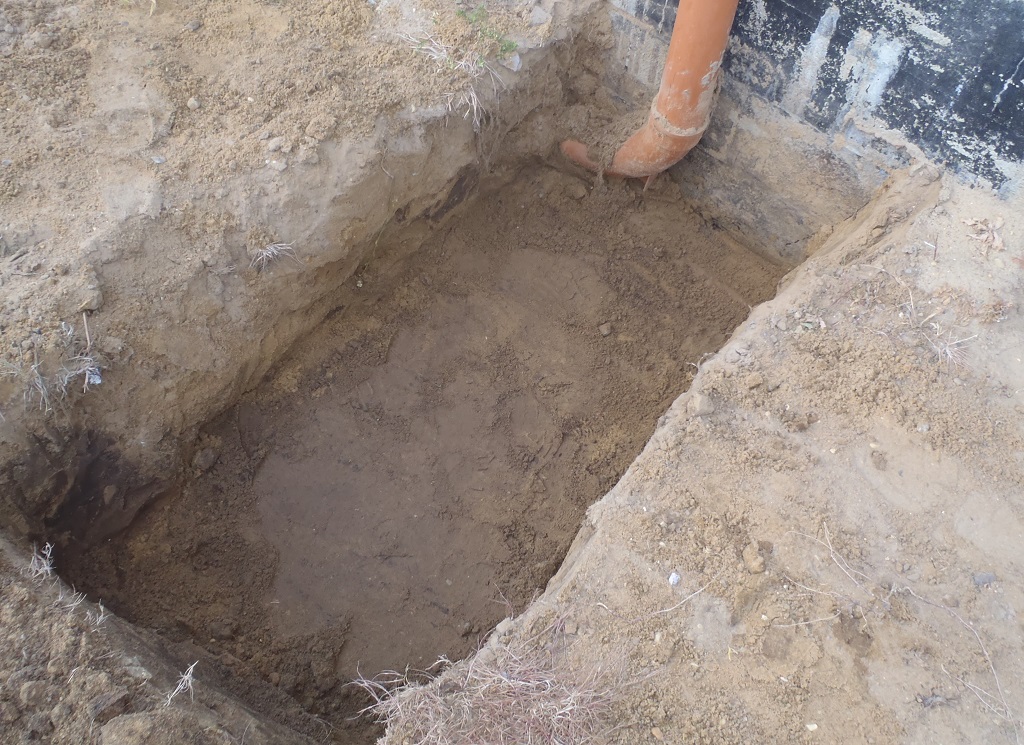
    So Thursday and Friday, we dug out two trenches on both sides of the position of the Conservatory’s walls, removed the plastic rainwater pipes and the sand was compacted using a thumper and levelled off.
    Conservatory-Hole-dug-for-foundation

    Conservatory-Hole-dug-for-foundation


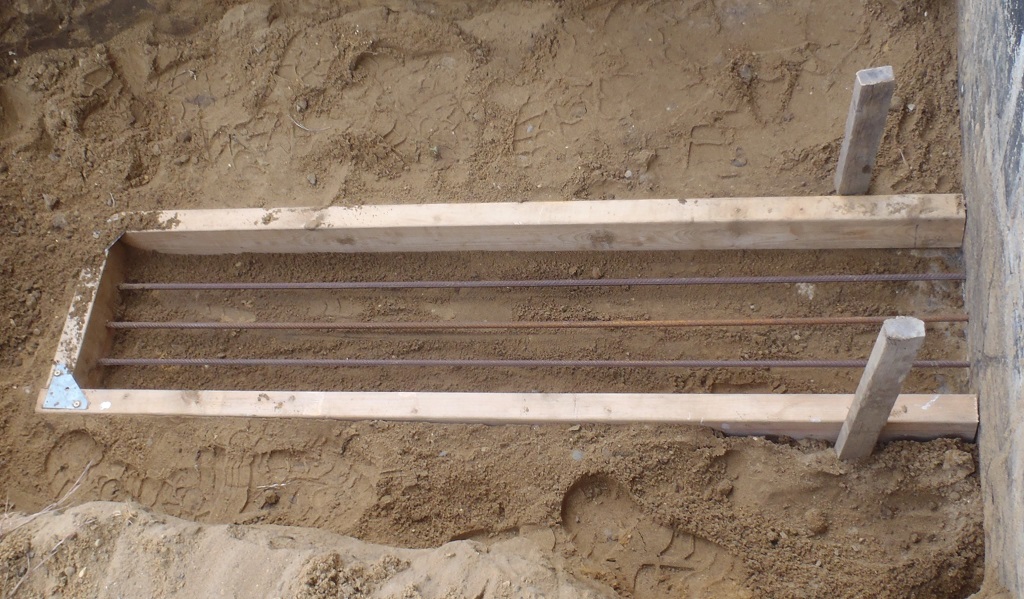
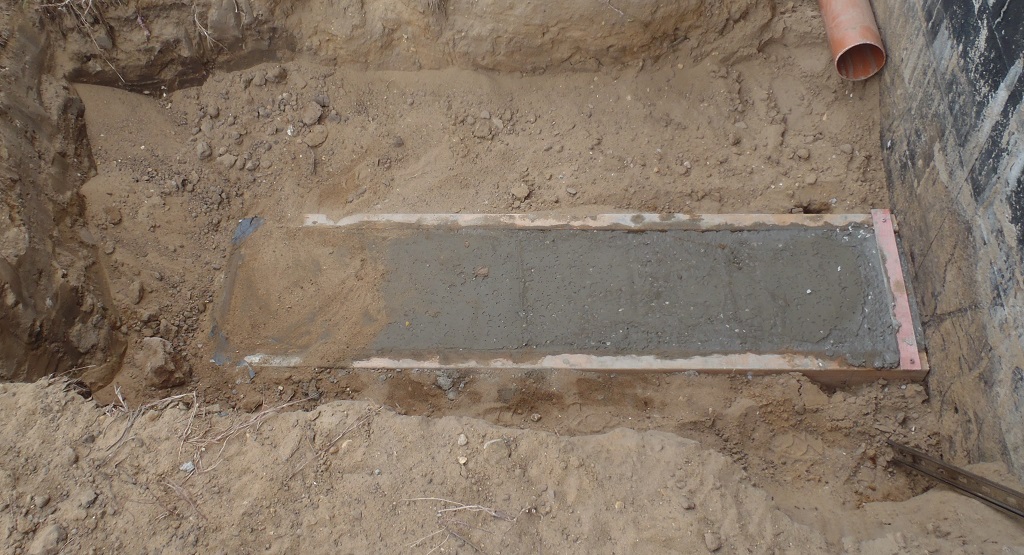
    We constructed rectangular frames to hold the concrete that will form the foundations. Then we put in three reinforcing bars in each framework (holes through the narrow wooden end and holes in the concrete blocks of the main wall). This will both help strengthen the foundation but also provide a connection point when we come to do the rest of the Conservatory later on. These foundations are only 1500mm and 1700mm long strips as we couldn’t go any further without going into our massive mountain of sand and soil we got piled up at the top of the garden!
    Conservatory-Foundation-shuttering

    Conservatory-Foundation-shuttering


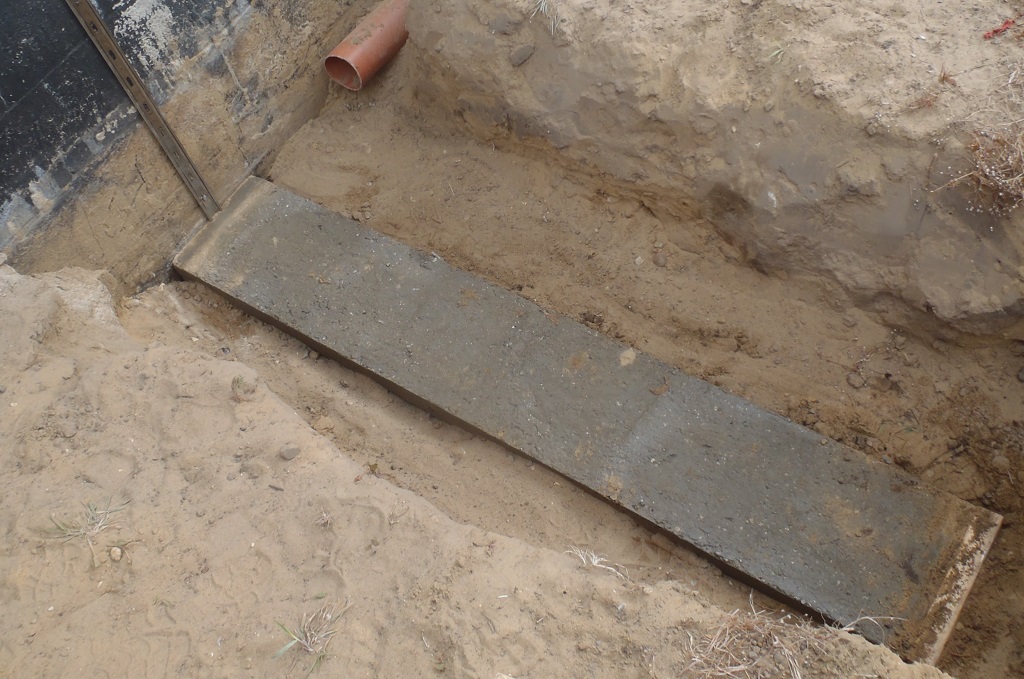
    So the last task on Friday morning was to mix nine builders buckets of sharp gravel and three bucket of cement and pour in the concrete to set over night.
    Conservatory-Foundation-Finished

    Conservatory-Foundation-Finished


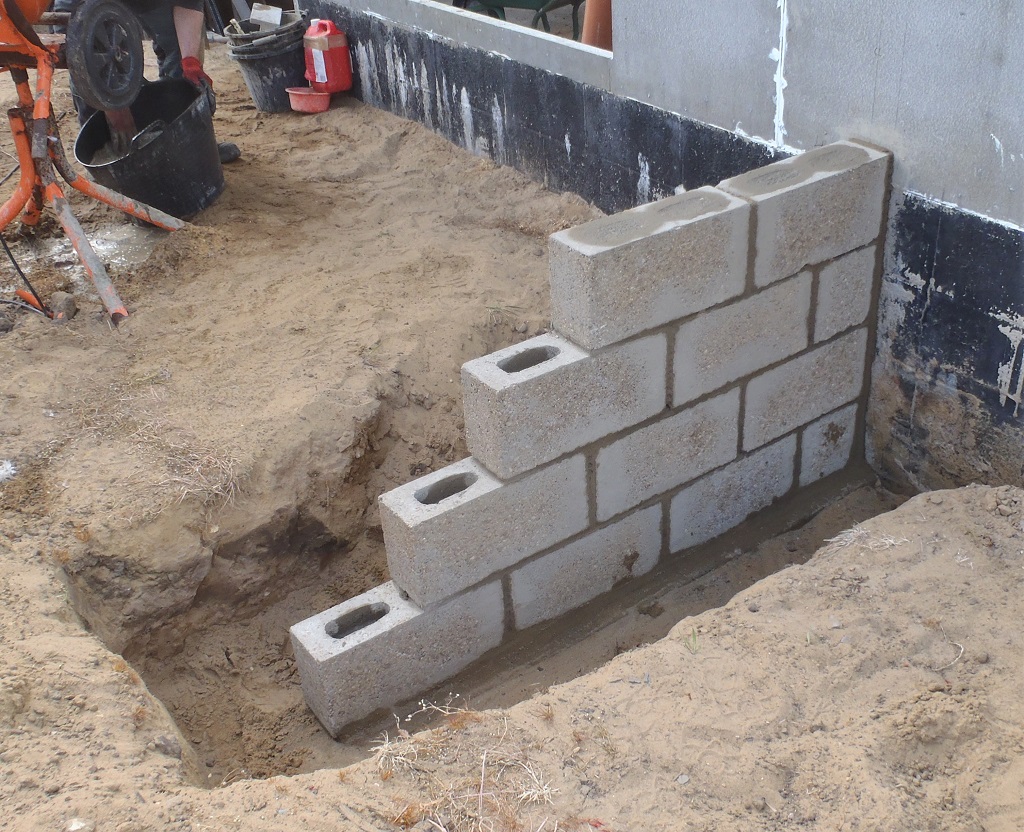
    On Saturday, we pulled out 21 concrete blocks from our swimming lane storage yard, split four of them in half and got everything ready, including sieving three buckets of soft sand from our own natural sand dune we got in our garden ! We then prepared the foundations for the walls stripping the form work and marking them for the right angle from the wall.
    Conservatory-Foundation-stripped

    Conservatory-Foundation-stripped


    One wall is just a simple staircase arrangement of the blocks, starting with three and an half along the bottom (hence why the foundation needed to be 1700mm long) and the fourth and final row is just two blocks wide. This is what we want regarding how far out we need the stud walls, a distance of 900mm. The new wall is attached to the old one with a stainless steel strip bolted to the old wall which has ‘L’ brackets to embed in the mortar of the new wall.
    Conservatory-Front-wall-start

    Conservatory-Front-wall-start


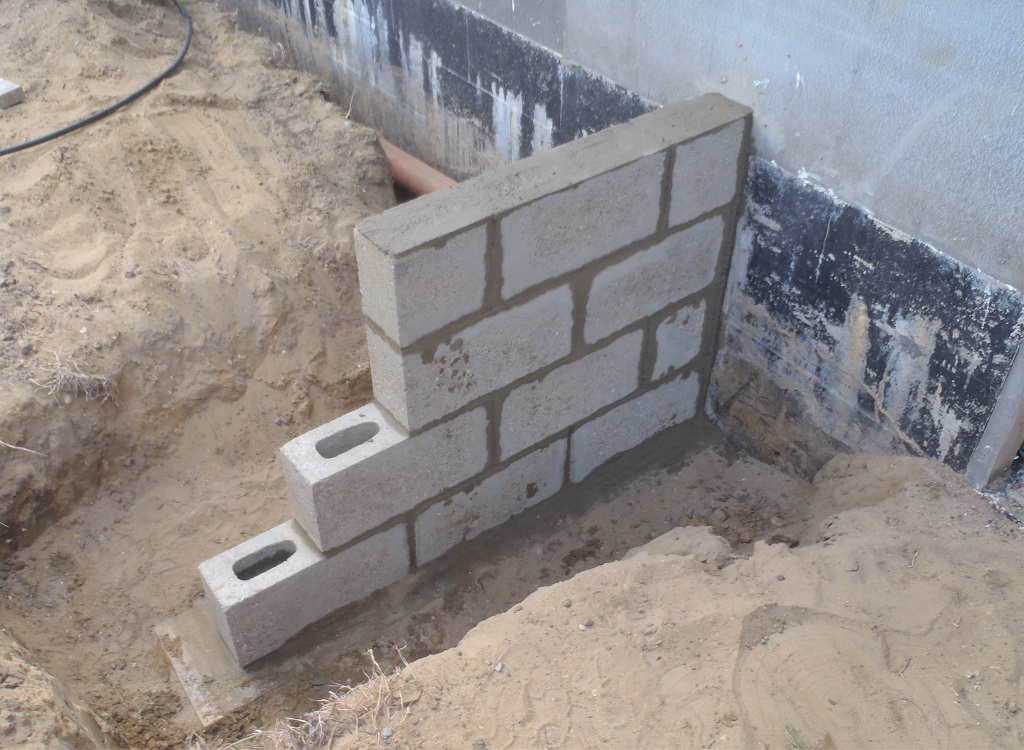
    The other blocks had to be laid down slightly differently because there is the Conservatory doorway positioned here, so we needed the two final rows to be both two block wide and then the usual staircase effect there after with the bottom line being just three blocks long (and the foundation only 150mm long).
    Conservatory-back-wall-start

    Conservatory-back-wall-start


    The last job of the day (and week!) was to mix more high strength concrete and pour them into the hollow columns inside the concrete blocks themselves. Oh yes, we also moved the extracted sandy soil back around the new walls and levelled the ground back up again.
    Did you notice the walls are higher than those of the house? This is to get the sill of conservatory the same height as the house windows…

    So next week, weather permitting, we will build up the wooden framework of the stud walls and connect them to the roof above and then we can start moving the platform modules – hurrah!