Category: Solar

Everything to do with the Sun, whether it is eletrical via solar panels, or water thermal via vacuum tubes on the Garage.

  • Installing Third String of Solar Panel up Inside Skylight

    Installing Third String of Solar Panel up Inside Skylight

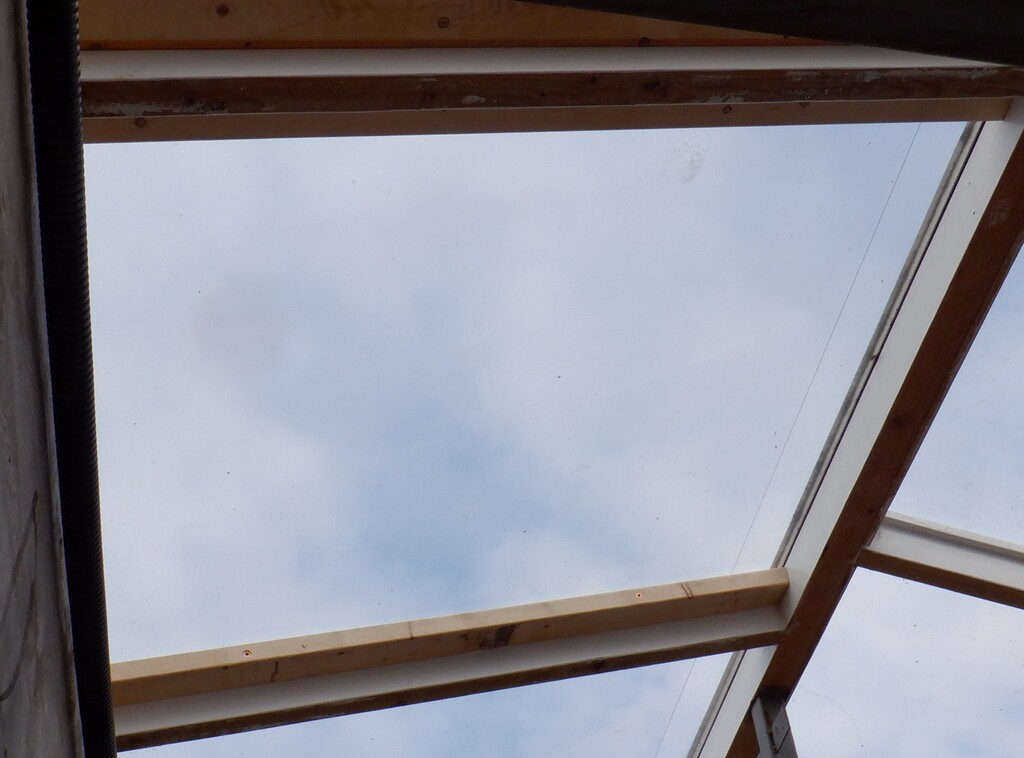
    We started the new week by tackling the next phase of installing our green solar capture schemes, this time, the third string of panels, basically almost square shaped ones, measuring 1200mm by 900mm, small enough to fit up inside our eleven Skylight windows. Each of these windows which we had originally designed 10 years ago, measures 1040mm wide by 1200mm high. We had always intended to have solar electric cells put in these windows. We had originally inteneded to make our own solar panel from individual cells, but we realised that we could buy fully constructed panels for a reasonable price not much more than the raw parts, plus also we would not have to run the risk of not being able to make long lasting and reliable finished modules either.
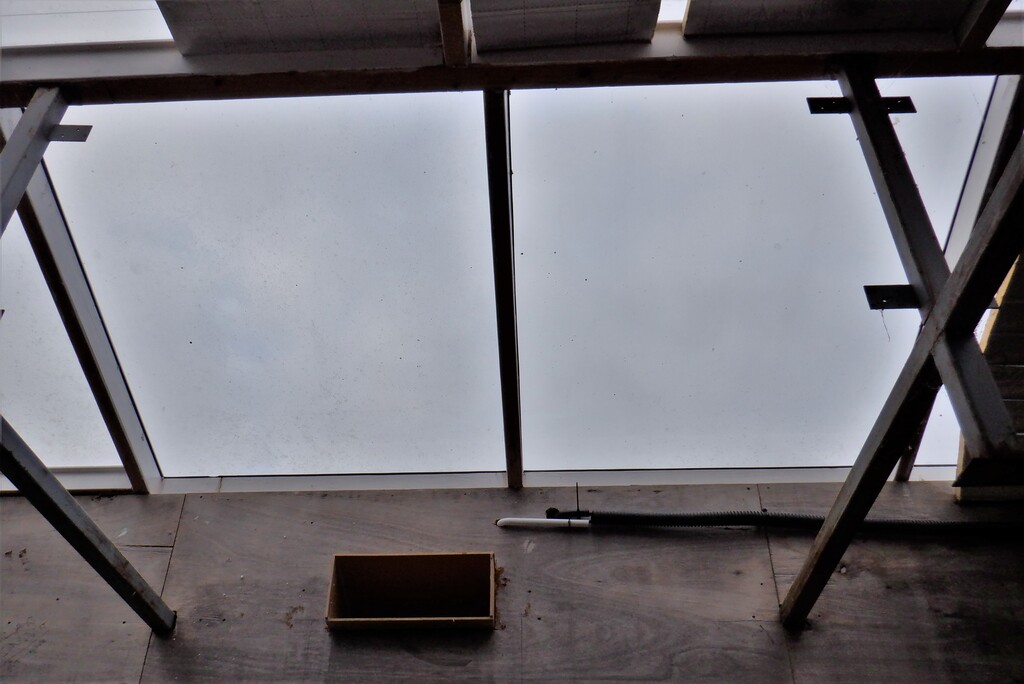
    The first job was to measure all eleven windows and most of them were 1040mm wide, but one or two were slightly bigger and one or two were even a little bit smaller (measuring 1034mm wide). Then, we thoroughly washed the glass (actually polycarbonate plastic) with warm soapy water with a floor mop! We also washed down the framework too so it is ready for the glue to stick down the CLS timber we are going to apply.
    We then cut twenty-two lengths of 63mm, measuring 1195mm long CLS timber, with a 15degree angled ends and drilled two clearance holes through the wider direction in each piece. We applied a line of glue and proceeded to screw each piece using 100mm 6mm thick screws. This CLS timber will provide the anchorage for holding the actual solar panel themselves in place.
    Installing Third String of Solar Panel up Inside Skylight

    Skylight-solar-panel-frame


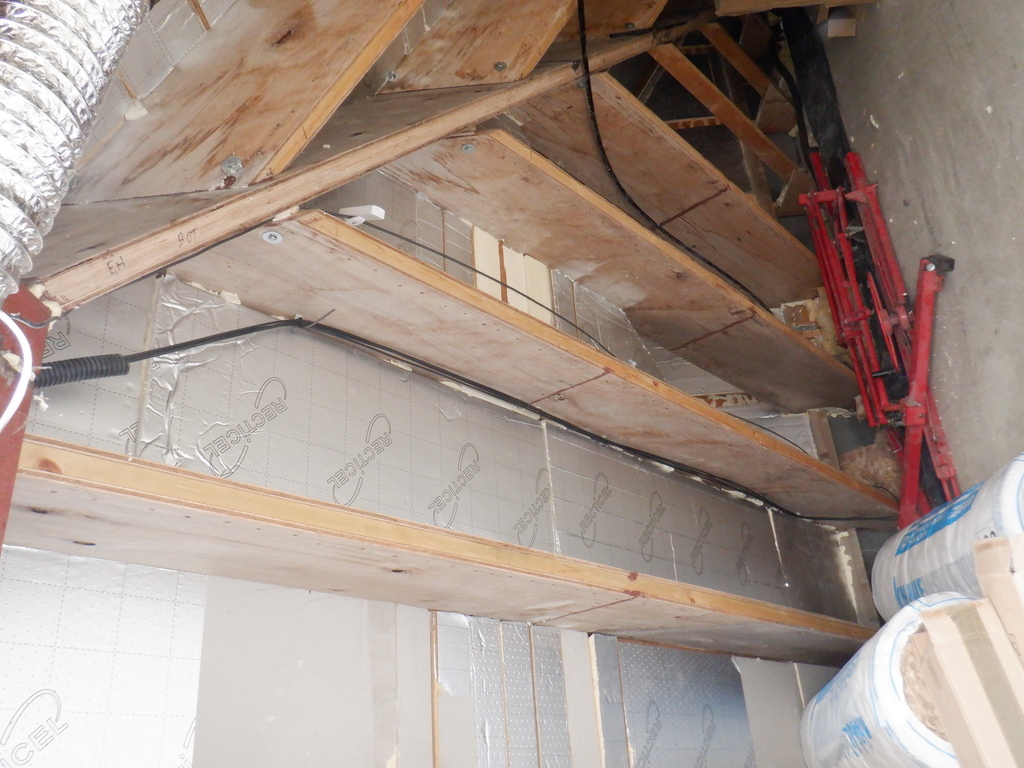
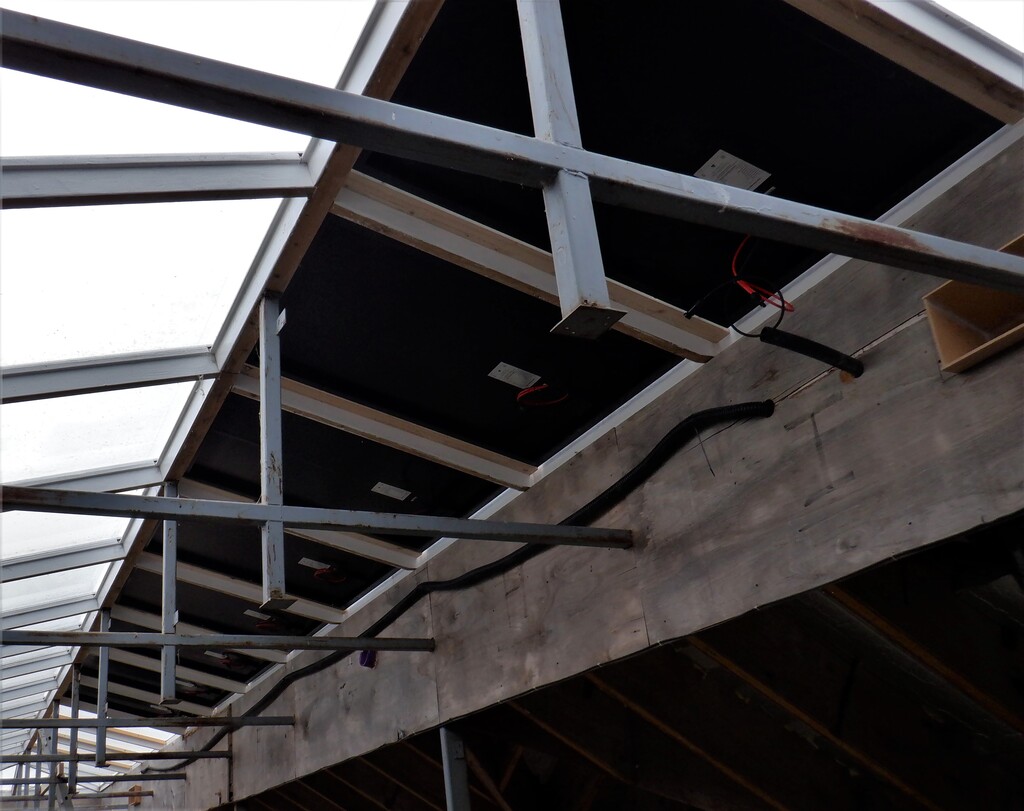
    The CLS timber will almost fill up the gap and block the sunshine from getting through to the insulation boards that will sit behind each solar panel, leaving a small gap that we will allow the air to circulate in and around the panel to keep it cool and ensure that we evaporate any condensation of water that may form on the glass. Each of the eleven window with its solar panel, will have fresh air piped in from our main air conditioning system so we can provide some cooling energy to the panel themselves, especially during the hot Summers, which will improve the efficiency of the silicon wafers converting the solar energy into electricity.

    We then put small pieces of double sticky foam on all four corners of each solar panel modules, sticking 100mm long pieces onto the metal frame and this will provide a reasonable air gap between the panel and the glass surface, and also we drilled three holes through the metal framework on both sides of each panel sideways, so we can screw the panel in place, using our mushroom headed stainless screws, up in the Skylight window and press up against the plastic surface. We even stuck on two small pads of 6mm MDF material so we ensure another air gap at the top of the panel, again to allow the air to circulate etc.
    Installing Third String of Solar Panel up Inside Skylight

    Most-skylight-panel-fitted

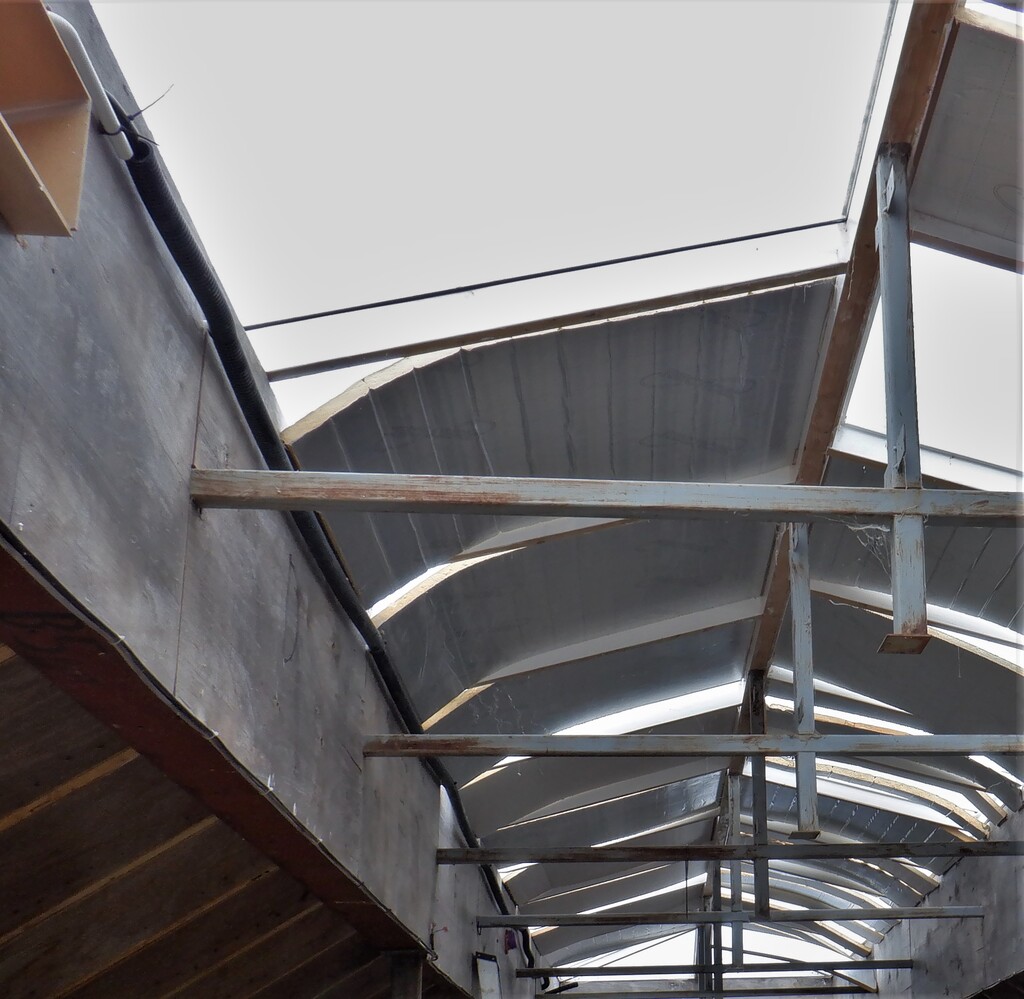
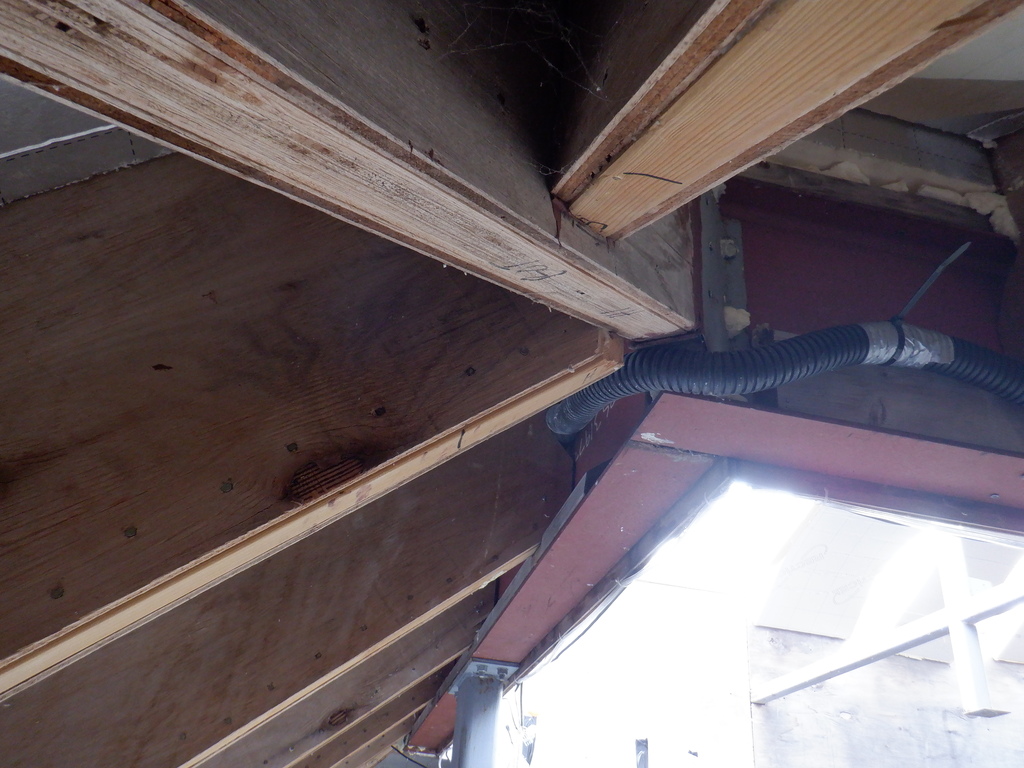
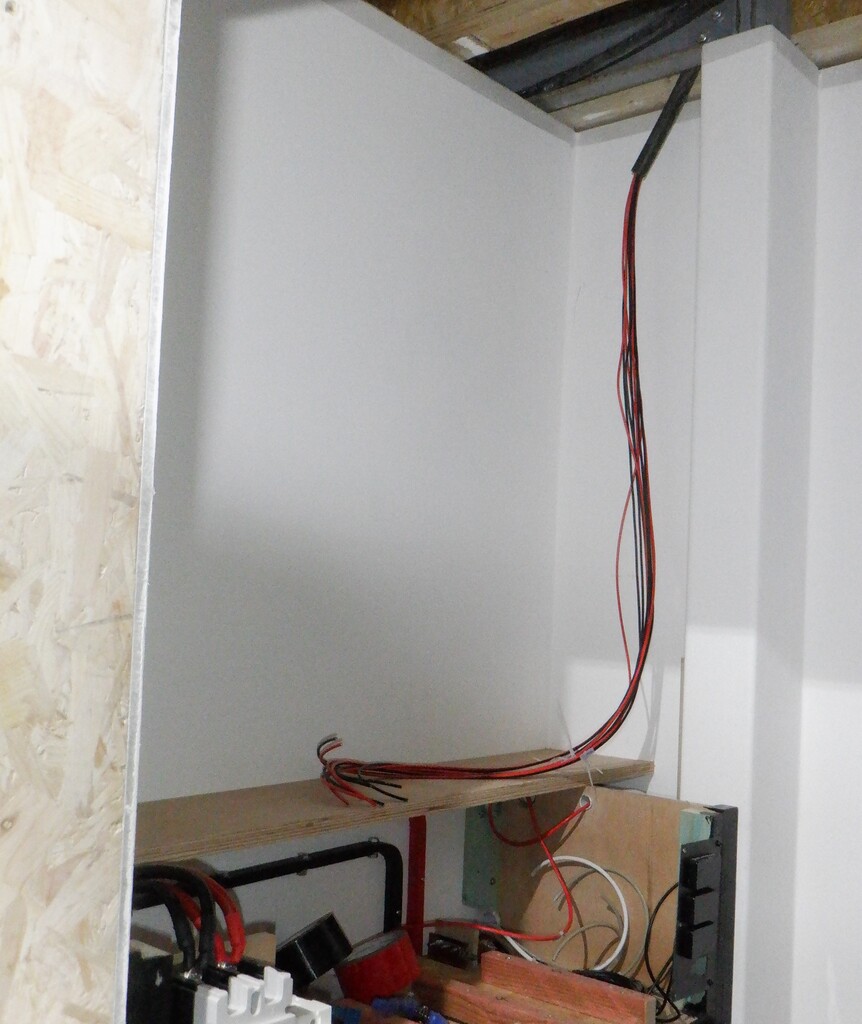
    Next task was to plumb in a conduit from inside our Tech Cupboard, up into the ceiling, through the floorboard, up the steel leg and terminate right up inside the Skylight near the top.
    This will provide the path for our five pairs of 2.5mm square millimetre copper wires, coming from the eleven Solar Panels, grouped into five sets. We decided that we will have a sequence of one panel on a pair of wires, then followed by a group of four panels joined together in series and connected to another pair of wires. After that one, is another single panel on a third pair of wires, followed again by another group of four panels on the fourth pair of wires and finally the last single panel on a fifth pair of wires. All the wires were fed up from inside the Tech Cupboard and went off to each of these set of panels.
    Installing Third String of Solar Panel up Inside Skylight

    Skylight-solar-cables-in-Tech-cupboard

    We did it that way so we could configure different combinations of connecting the panels together, to provide the maximum conversion of solar to different target battery voltages. We are wanting to charge our 12Volt battery but also want to charge our 50Volt packs too. in fact, for the time being, we would like to take all the output of all eleven solar panels if it is possible and convert all the energy into our 50Volt packs and maximise the benefit of avoiding having to pay these ridiculous grid electricity prices.

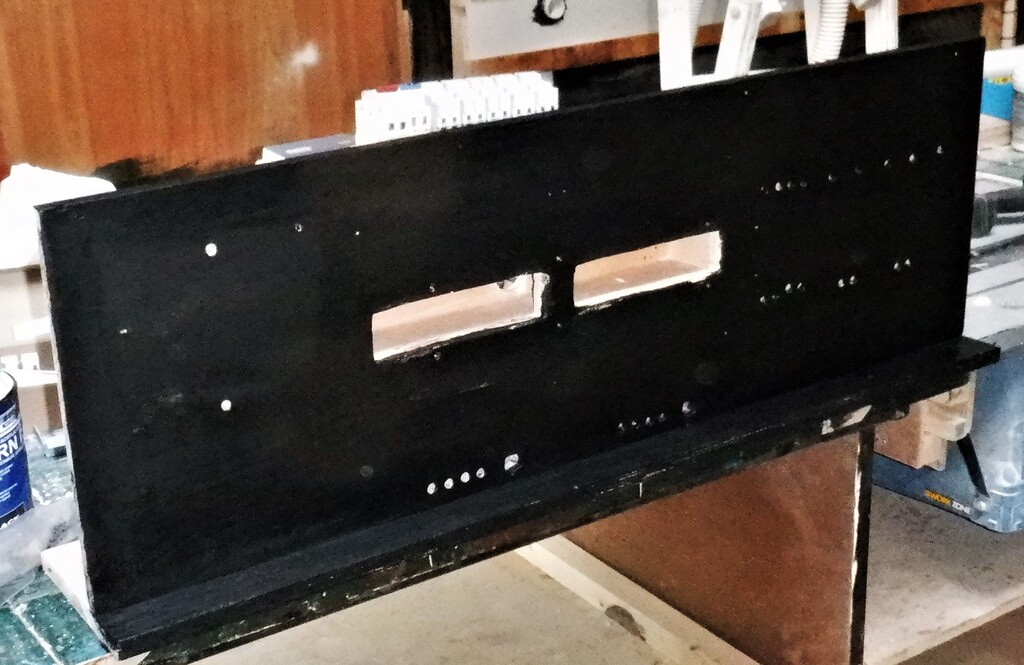
    Now we needed to make a front panel to mount the solar charging equipment, the switches and the fuses too. We found a piece of plywood left-over piece from when we were doing the staircase, a lovely quality of 18mm plywood, measuring 345mm wide. We sliced off a length of 1070mm long so it can fit right across the Tech Cupboard, mounted in a vertical direction and facing outwards, and sitting on top of the Battery Cabinet. This front panel will have a distribution fuse box starting on the left end, to provide low-voltage (both 50V and 12V) fused protection for various pieces of equipment in our Tech Cupboard like network hubs and fileservers etc. Then are the two solar charger modules next on the front panels and finally another distribution box that will have two isolation switches and more fused connections coming from the solar panels themselves. We drilled a load of access holes to allow the various wires through to join into these modules. We also sliced two rectangular narrow slots behind the two solar chargers, to allow fresh air to blow on the cooling fins that runs top to bottom on the back of the units.

    We also took the lid of the Battery Cabinet, which we hadn’t processed yet, and cut that down to size to fit in between the walls and the steel leg. We decided that we needed to also slice the whole lid in half, down the length so that we had a more permanent section at the back and still have the front half removable for any future adjustments or modifications inside the Battery Cabinet itself. Our new front panel will sit on the back shelf piece some 50mm inwards and is screwed upwards to join the two pieces together.

    Then, we painted all three pieces in our black paint to match the rest of the Cabinet.
    Installing Third String of Solar Panel up Inside Skylight

    Solar-Equipment-panel

    While the paint dries, we got on in making covers to put over the new Solar Panels up in our Skylight so that we both keep the dust out, but also, to provide a sealed chamber so we can pump in fresh cool air at the bottom of the window and suck the warmer waste air out at the top. These covers are made using 6mm MDF sheets, cut down to just fit inside the Skylight rafters, the height being 1210mm long and the width being set to 1030mm as a minimum so it can fit in all the skylight windows. Two 50mm air holes were drilled into the left bottom corner and then diagonally at the top right corner and also we drilled two 20mm holes in the lower middle point to allow the electric cables to come through from the Solar Panel. We found that it is a tight squeeze to get these covers in place so we decided to slice every board in half and it was so much easier to tackle the problem of installing these covers. Each had three screws put in on each edge. Finally, we covered up the holes with aluminium tape and also sealed the bottom and top edges with a line of spray foam so we keep the dust away from the solar panels.
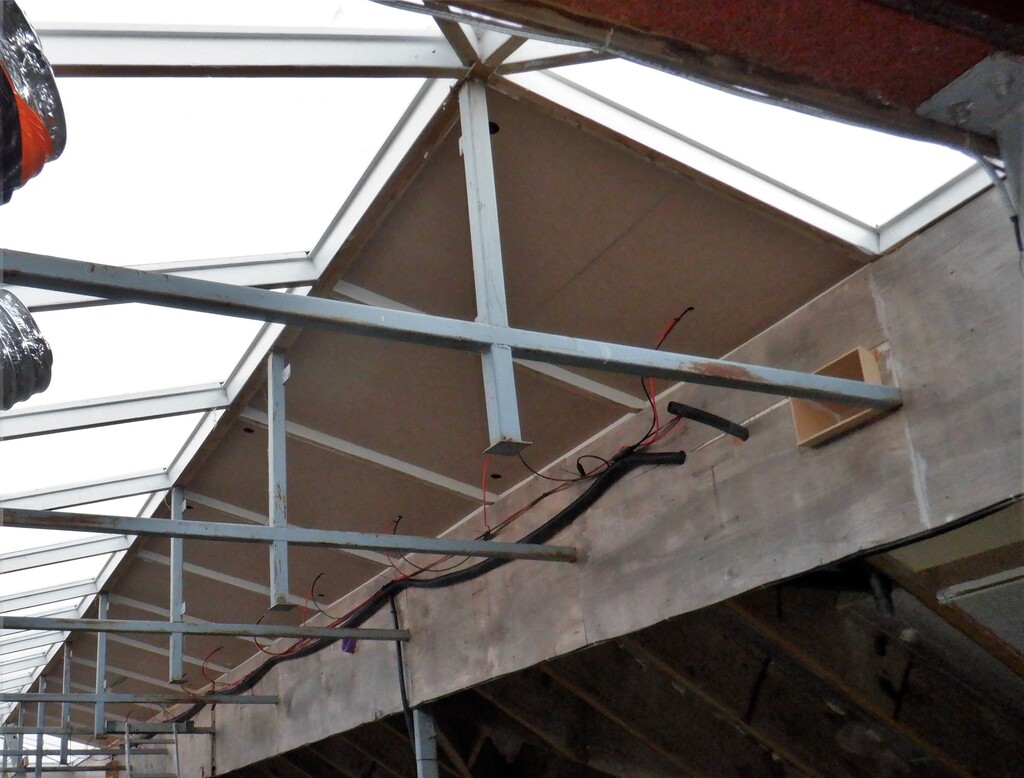
    Installing Third String of Solar Panel up Inside Skylight

    Skylight-solar-cover-panels-fitted

    Finally, we wired up all the equipment that now have been mounted to our freshly painted front panel, connecting the five individual groups of the solar panels into the switch bank and then wired in the isolation switches from the solar chargers themselves. We then installed this front panel on top of the Battery Cabinet and screwed it into place and connected it to the 50Volt bus bar, plus also all the cables coming down from the Skylight were connected into the top side of the bank of switches. We now have a working third string of solar panels!
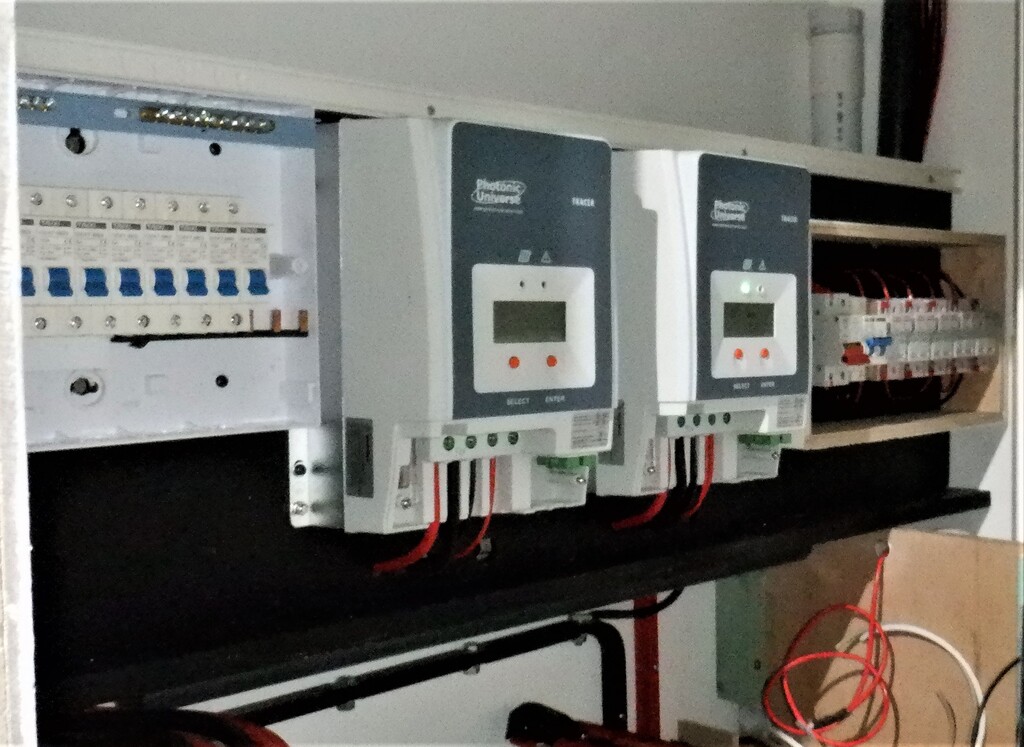
    Installing Third String of Solar Panel up Inside Skylight

    Solar-Eqipment-fitted

    Installing Third String of Solar Panel up Inside Skylight

    Skylight-solar-charger-working


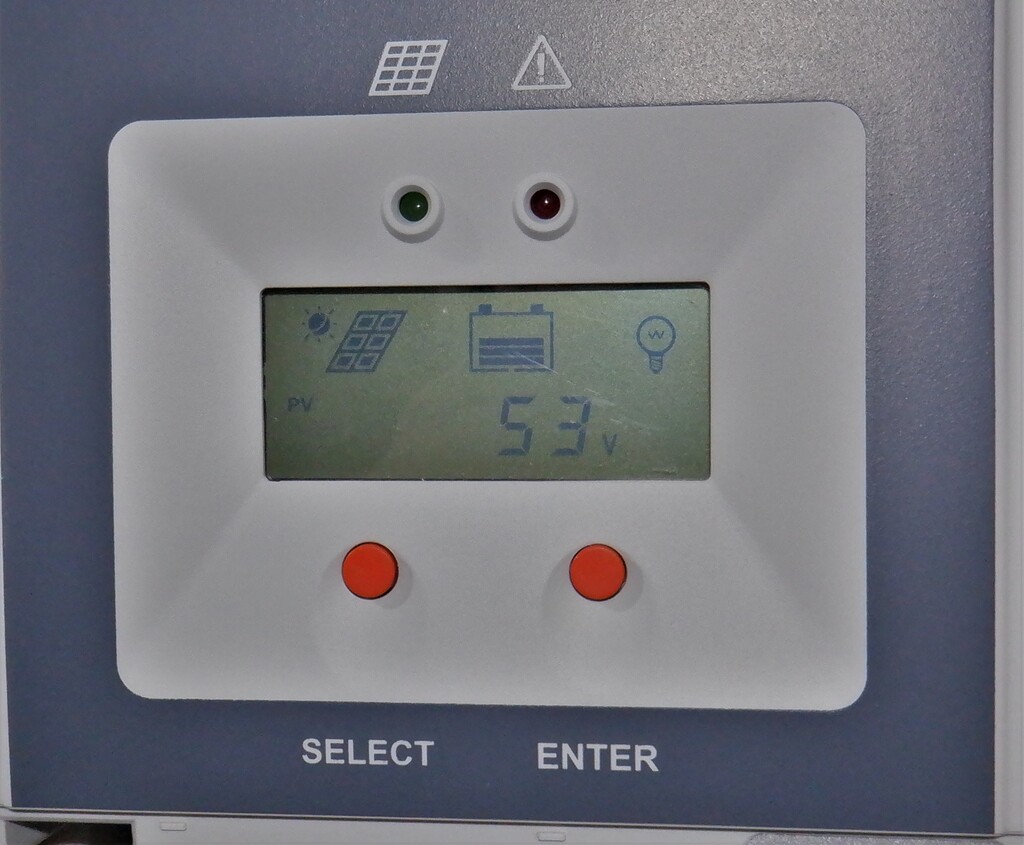
    Today, we collected 4kWh worth of energy but we do need to go outside and climb up onto the roof, to clean the Skylight windows as they have several years of accumulated grime. We will do a test of cleaning half the windows and then flip between the two halves and find out how much difference it might make to our Solar power collected.

    That pretty much concludes everything to do with our Solar, the electrical version for now, we got a thermal one to tackle sometime in the future. We will now get on with installing extra insulation into our temporary living quarters, to help reduce our electricity burden!
  • Installed Second String of Solar Panels Up on P Roof

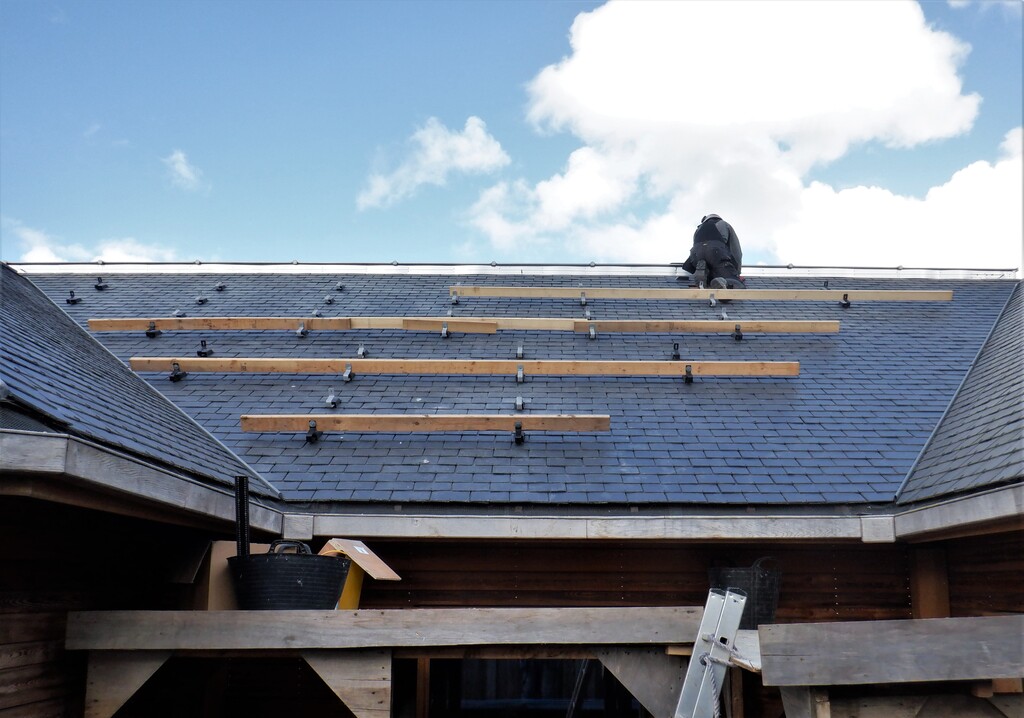
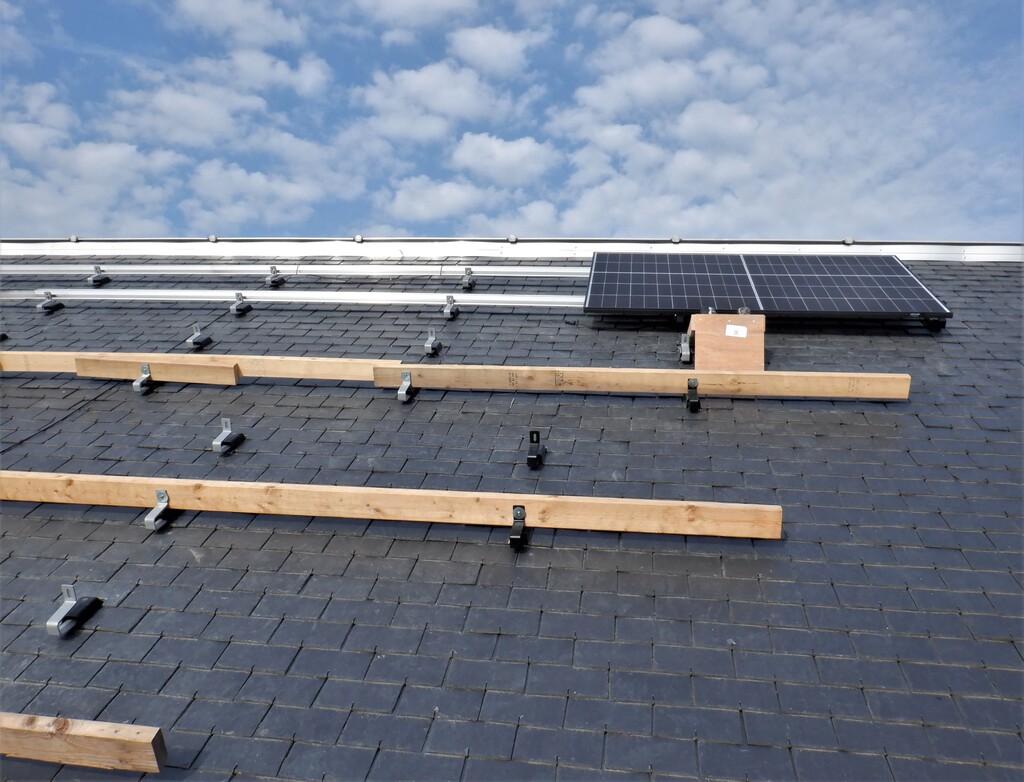
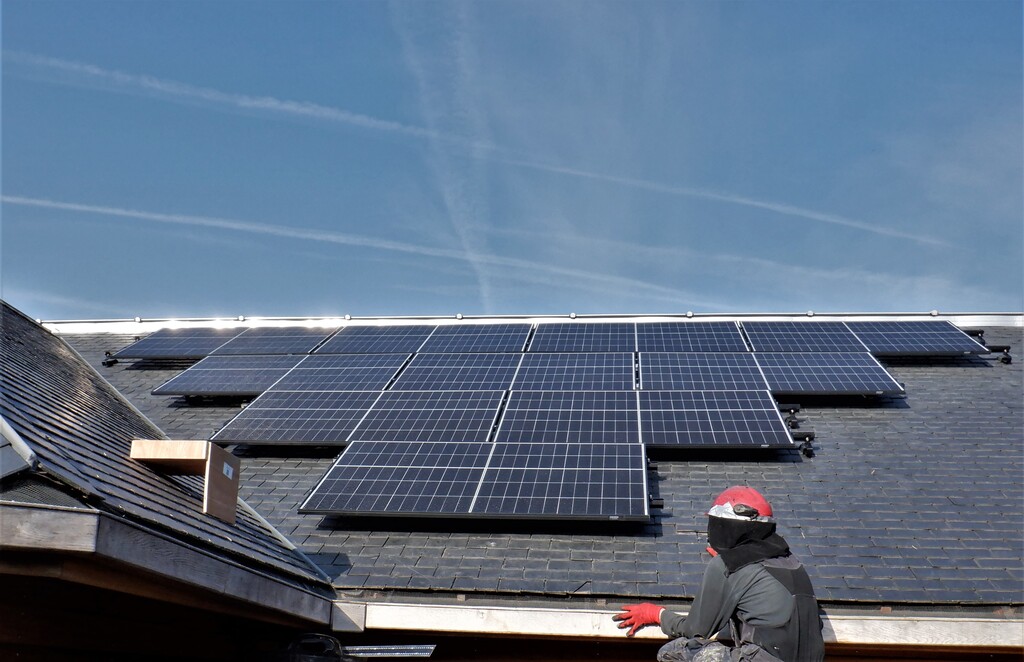
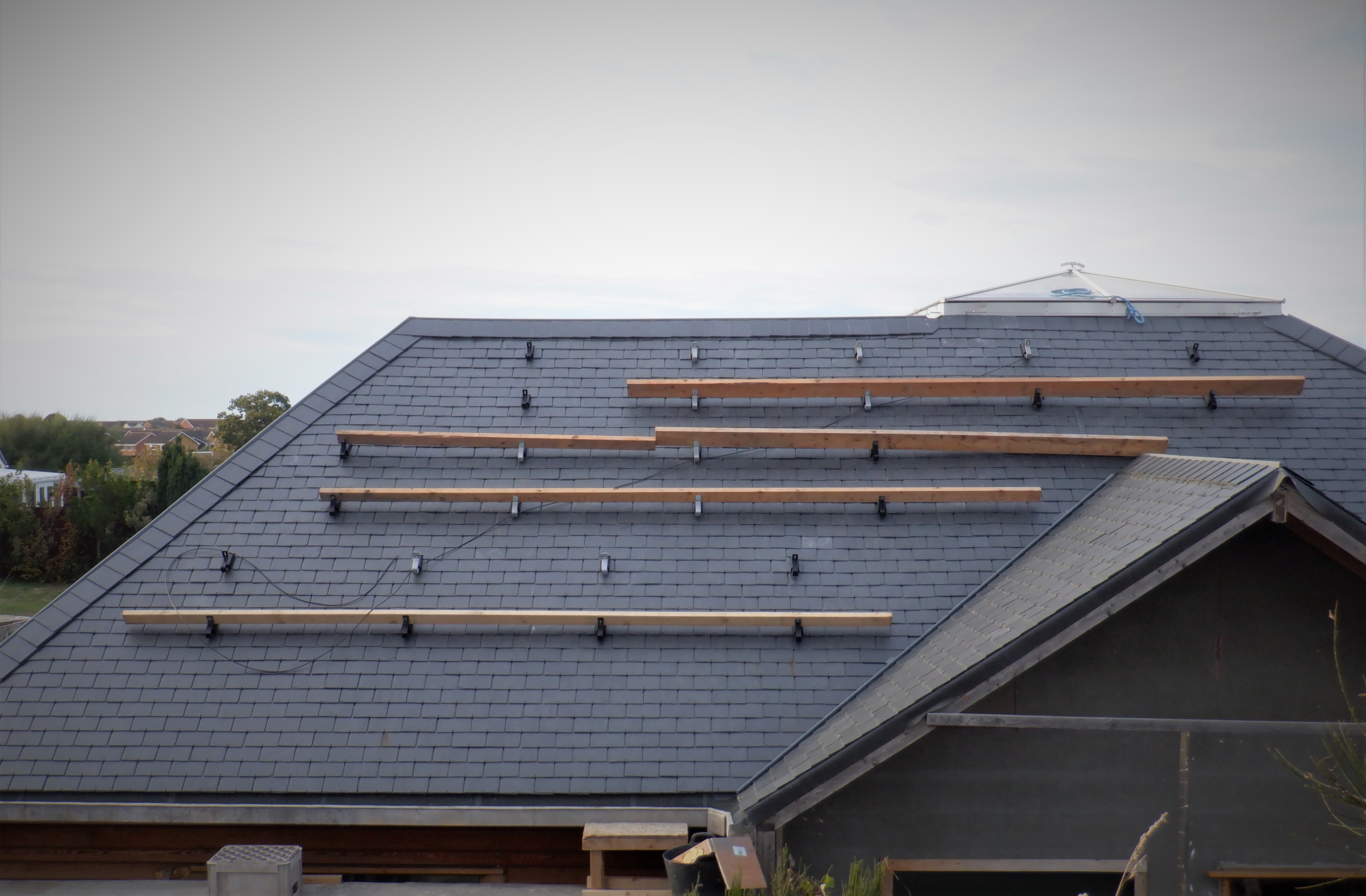
    For this week, since we have built the two battery 50Volt drawers, we decided to get on with installing the second string of Solar Panels, up on the P section of the Roof, which faces the Sun during the morning hours. We didn’t start until Wednesday, removing and cutting the slates for each metal bracket position and proceeded to mount eight brackets for the first row of two Solar Panels, then another eight brackets for the next two Solar Panels and then finally ten brackets for the third row of three Solar Panels, situated up near the top of the sloping roof.
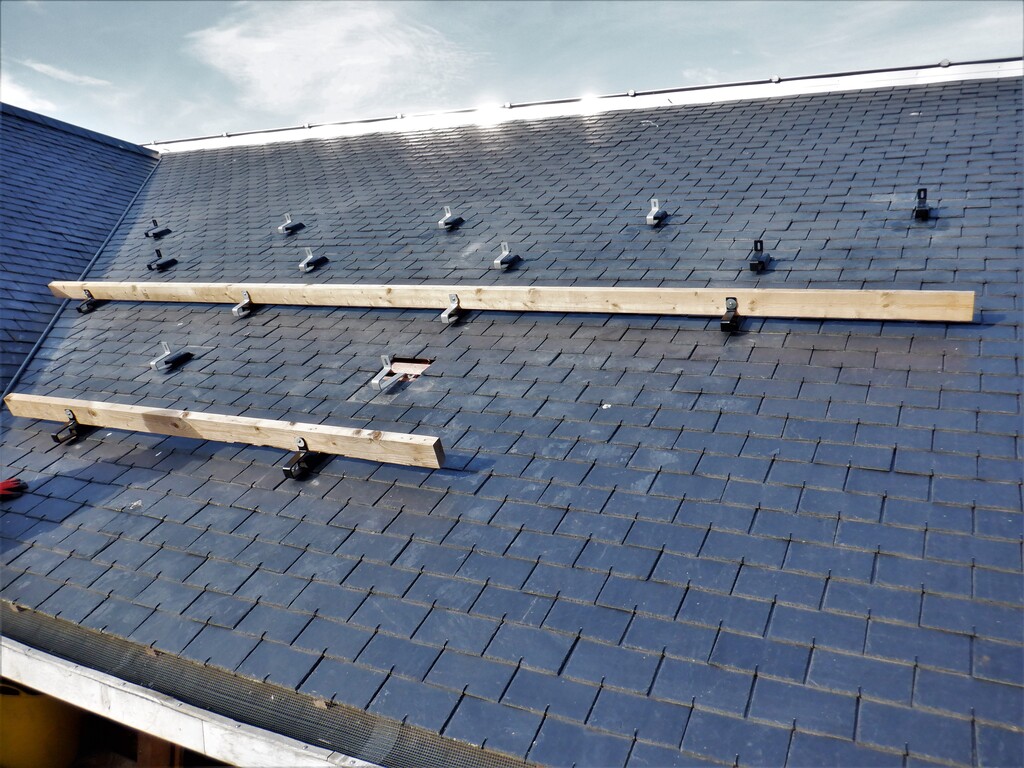
    We used lengths of timber screwed to a completed line of brackets, to afford us some safe footing as we worked our way up the roof.

    Installed Second String of Solar Panels Up on P Roof

    P-All-Brackets-


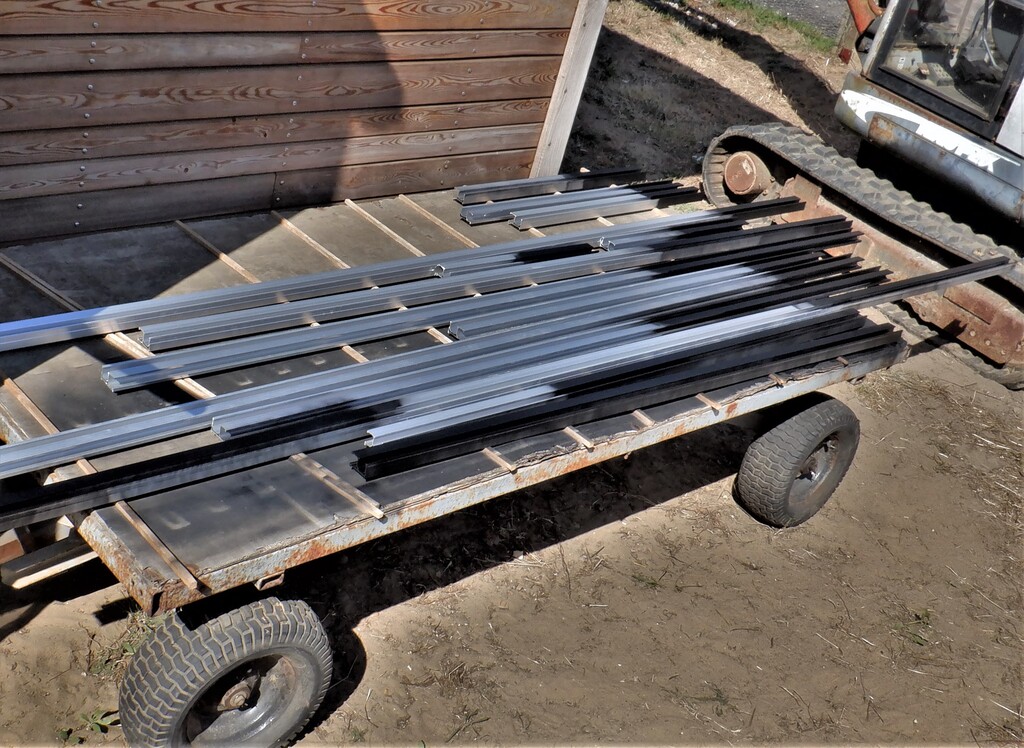
    We also cut the aluminium bars into three completed sets, two approximately 3900mm long and the third set 5500mm and then painted the various parts which will be exposed, in a black colour, to blend with the dark slates.

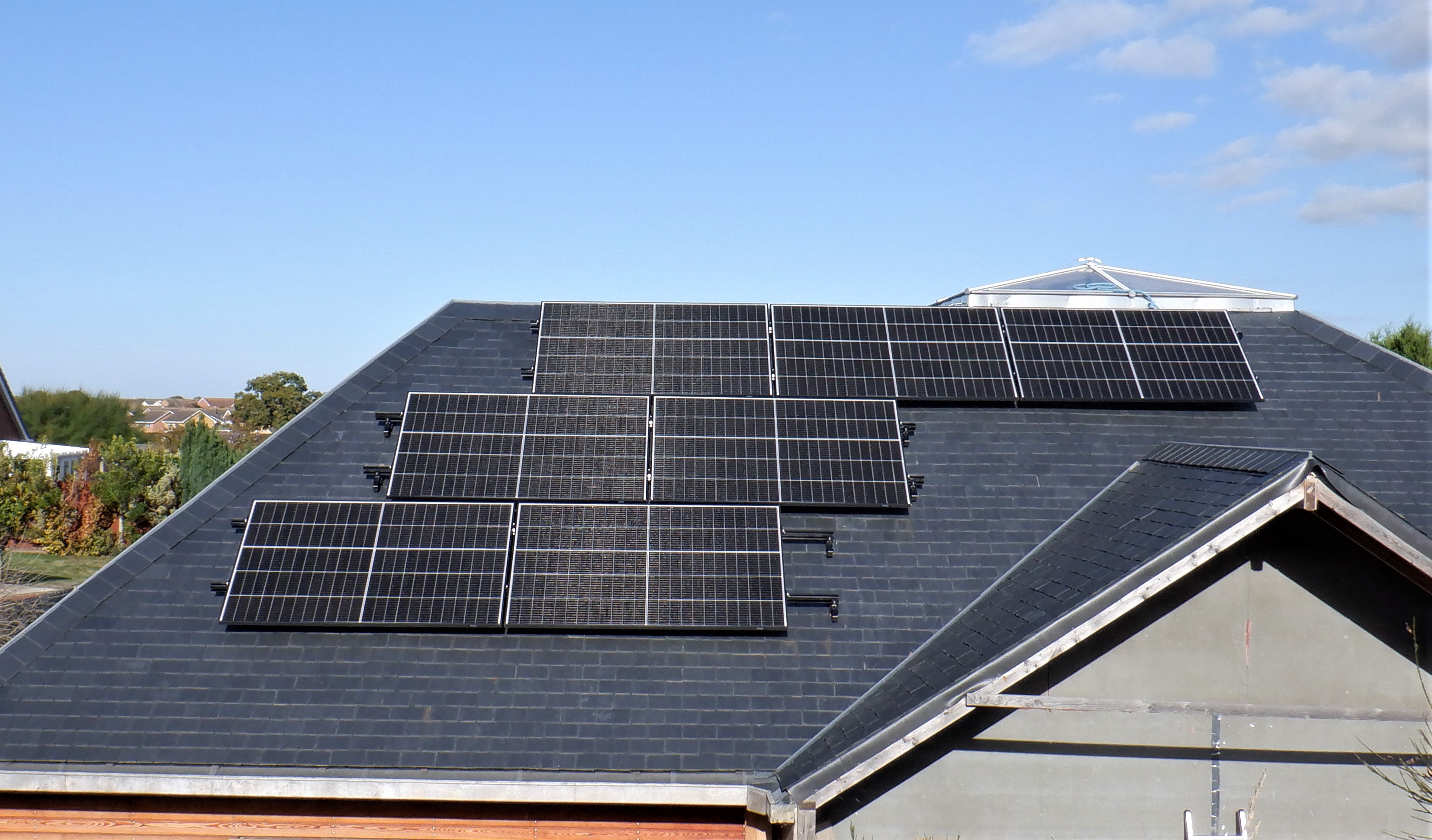
    Then on Saturday, we took up our newly painted aluminium bars and started at the top row, mounting the horizontal bars across their five brackets and then brought up three Solar Panels and clamped them down to the bars, connecting up the wires etc. We did a quick electrical test by connecting the trailing cable to the third panel and went indoors to our Utility Cupboard to measure 118Volts coming out the other end which is very good. We then, after lunch, repeated the same process for the second row, this time, two Solar panels, and then finally the third bottom row with two more Solar Panels, doing the same electrical test for each row completed and all was just fine.

    Installed Second String of Solar Panels Up on P Roof

    P-Solar-Panels-installed


    It was a very hot day in full sunshine and hardly any wind to cool us down! Phew! But we now have seven more Solar Panels installed and connected to our Solis Inverter box, generating another 2.8kWatts maximum during the earlier hours of the day.
    The final task of the day was to disassemble our working platform that helped us get on and off the roof, the two platform modules had their legs unscrewed and stored back in the Swimming Lane for another occasion and the two flat tops were also stored in the lane too. We now have a cleared path all the way around the house. Lovely!

    Update: Sunday was a lovely day and after a cloudy start the rest of the day was almost perfect. The P roof started generating a usefull amount of power at 8am and by 9 was going strong. It peaked @ 2.68kW (96% of Max) about 11am. The Total output peaked at 1pm @ 4.86kW and the combined system generated more than 28kW hours of energy. This is enough to charge the battery by over 18kWh.

  • Third Battery Drawer Assembled, The 12Volt Pack

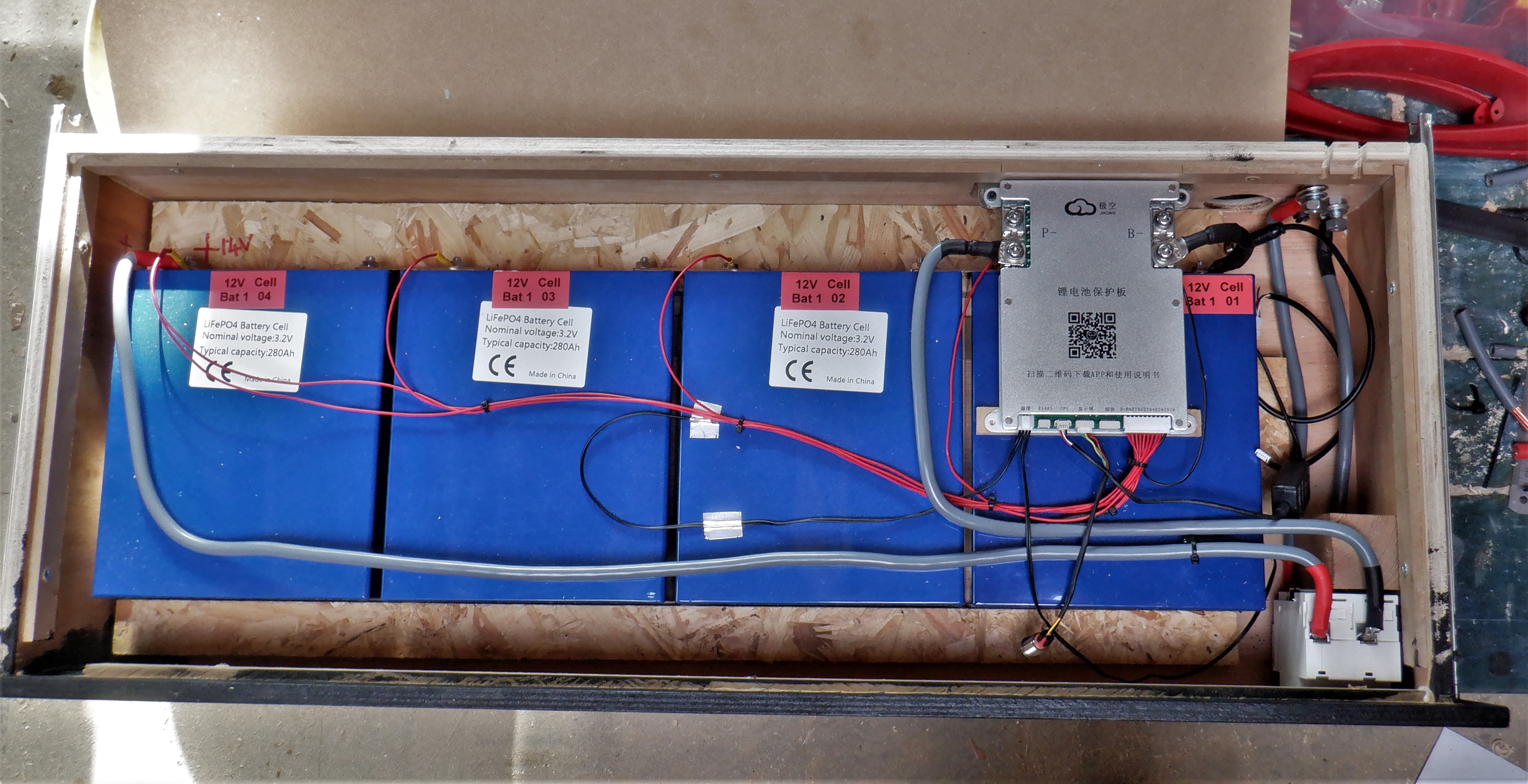
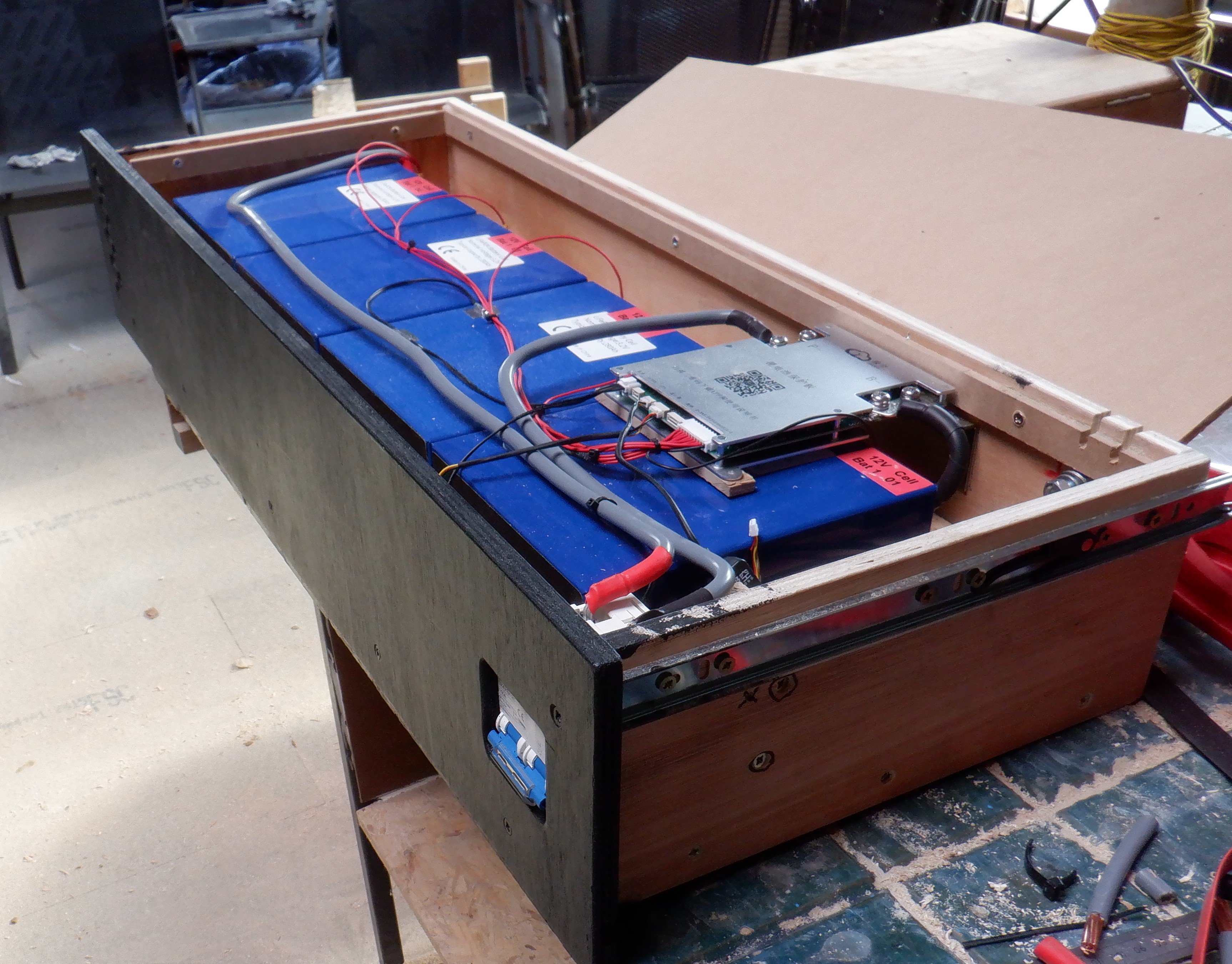
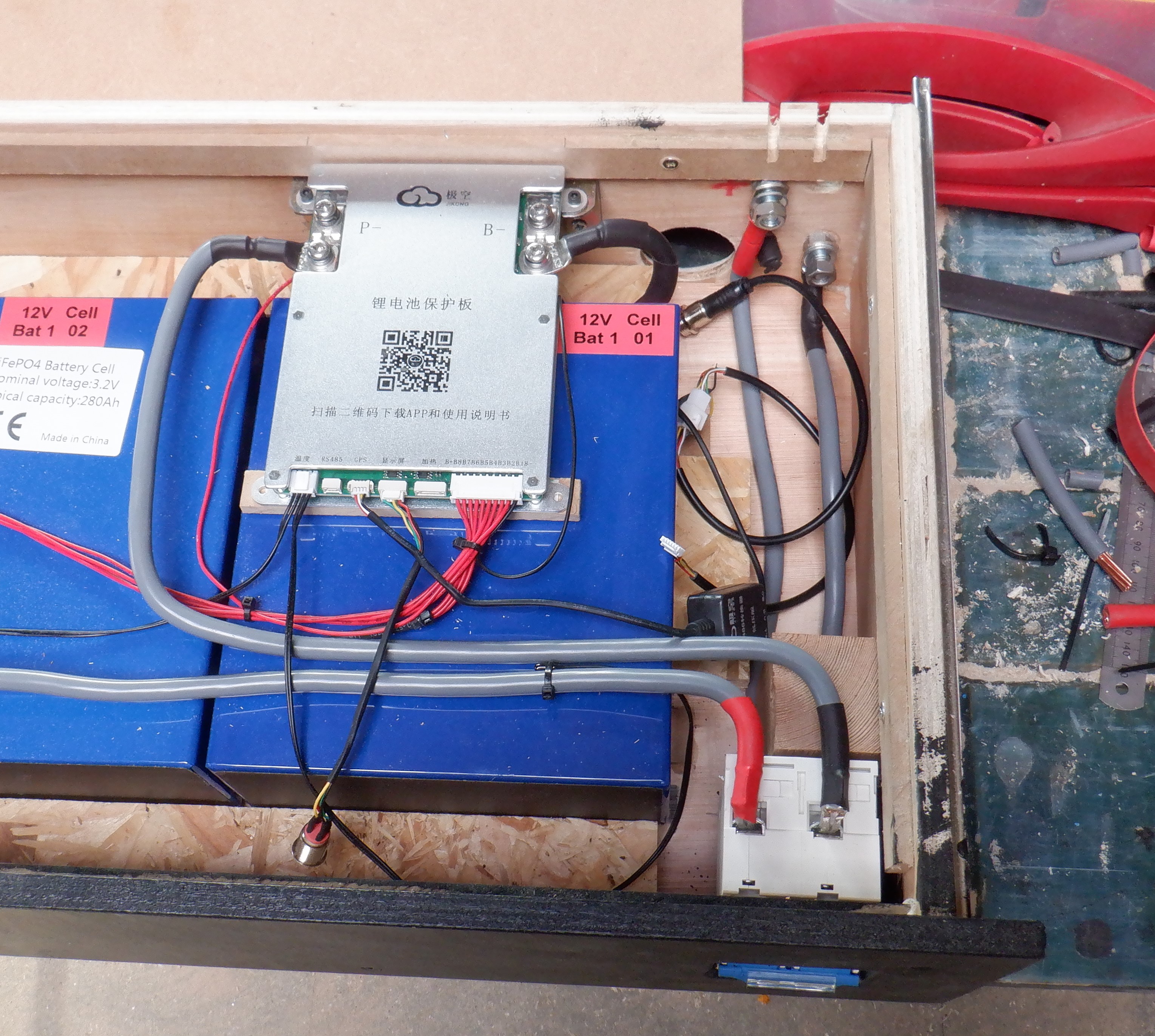
    Our third drawer, the smaller one, had the remaining four battery cells installed and wired up. We swopped out the isolating switch for a heavier duty model, capable of handling up to 100Amps. It is now ready to be installed into the cabinet itself.

    12V Battery Draw

    12V Battery Draw

    Third Battery Drawer Assembled, The 12Volt Pack

    12V-Battery-draw

    Third Battery Drawer Assembled, The 12Volt Pack

    12V-Battery-connections


    We got one more drawer which is empty at the moment but we may invest in buying some more cells next year if we deem that it would be useful and help us capture more Solar and cheaper electric rates during the off-peak periods. We also will wait until the pound grows a bit stronger again as we have to buy the equipment in American Dollars!!

  • The Final String of Solar Panels and Equipment Ordered and Delivered

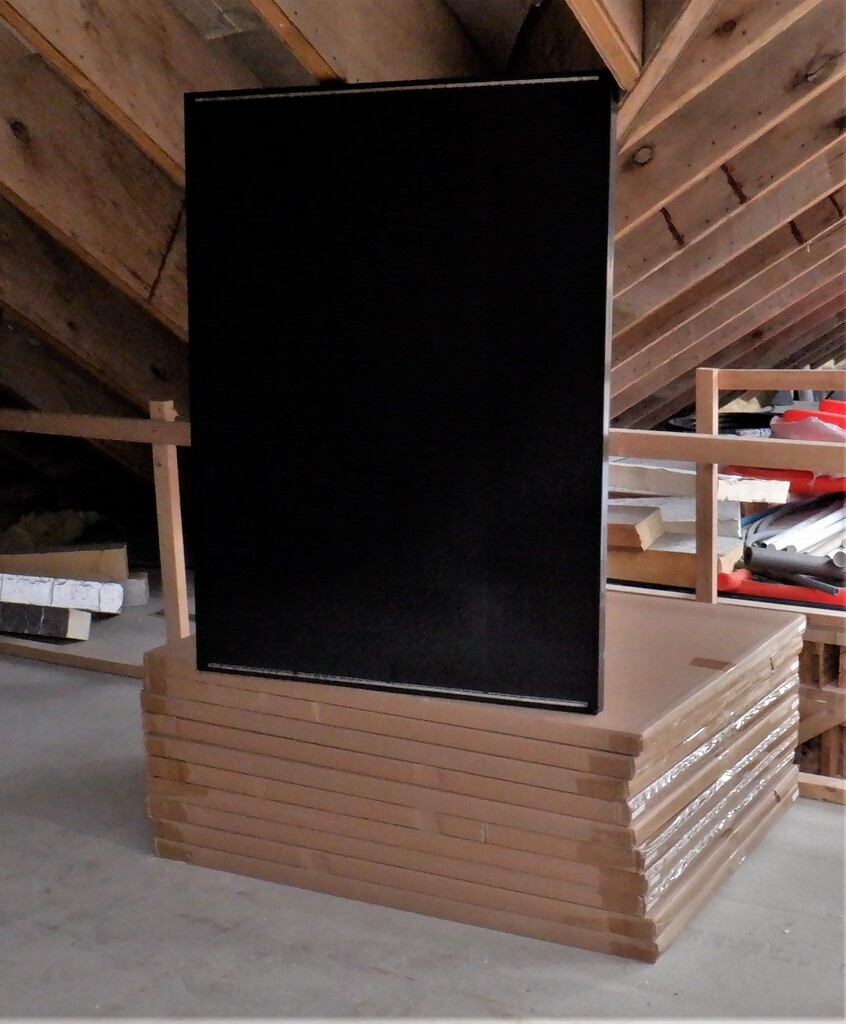
    We have been hunting around for a suitable Solar Panels to fit up inside our Skylight for the last couple of months and finally have discovered a particular source that is fairly close to the required size of 1200mm by 1030mm. Of course, when we had designed our Skylight ten years ago, we had the bright idea of building our own solar panels by buying the actual silicon wafers themselves and assembling them into a flat grid to capture the sunshine etc. because the price of the factory built panels were very high in those days. But in ten years, the price has fallen off the cliff like a large rock and it no longer made any practical sense to make our own ones when we could buy a fully working panel for peanuts! But because of economies of scale these smaller 200W panels cost more than the more popular 400W large panels!

    The Final String of Solar Panels and Equipment Ordered and Delivered

    New-panels-for-skylight


    These panels are the closest we could find to fit our windows but there is a narrow strip where it doesn’t quite cover the transparent part of the window. We will just fill in the gaps with insulation foam board pieces.
    We have ordered eleven panels for our eleven windows, each generating around the nominal 200Watts so that means another 2200Watts of energy, to add to our solar system.
    The Final String of Solar Panels and Equipment Ordered and Delivered

    Fit-panels-into-these-gaps

    The Final String of Solar Panels and Equipment Ordered and Delivered

    Down-this-side-of-the-skylight


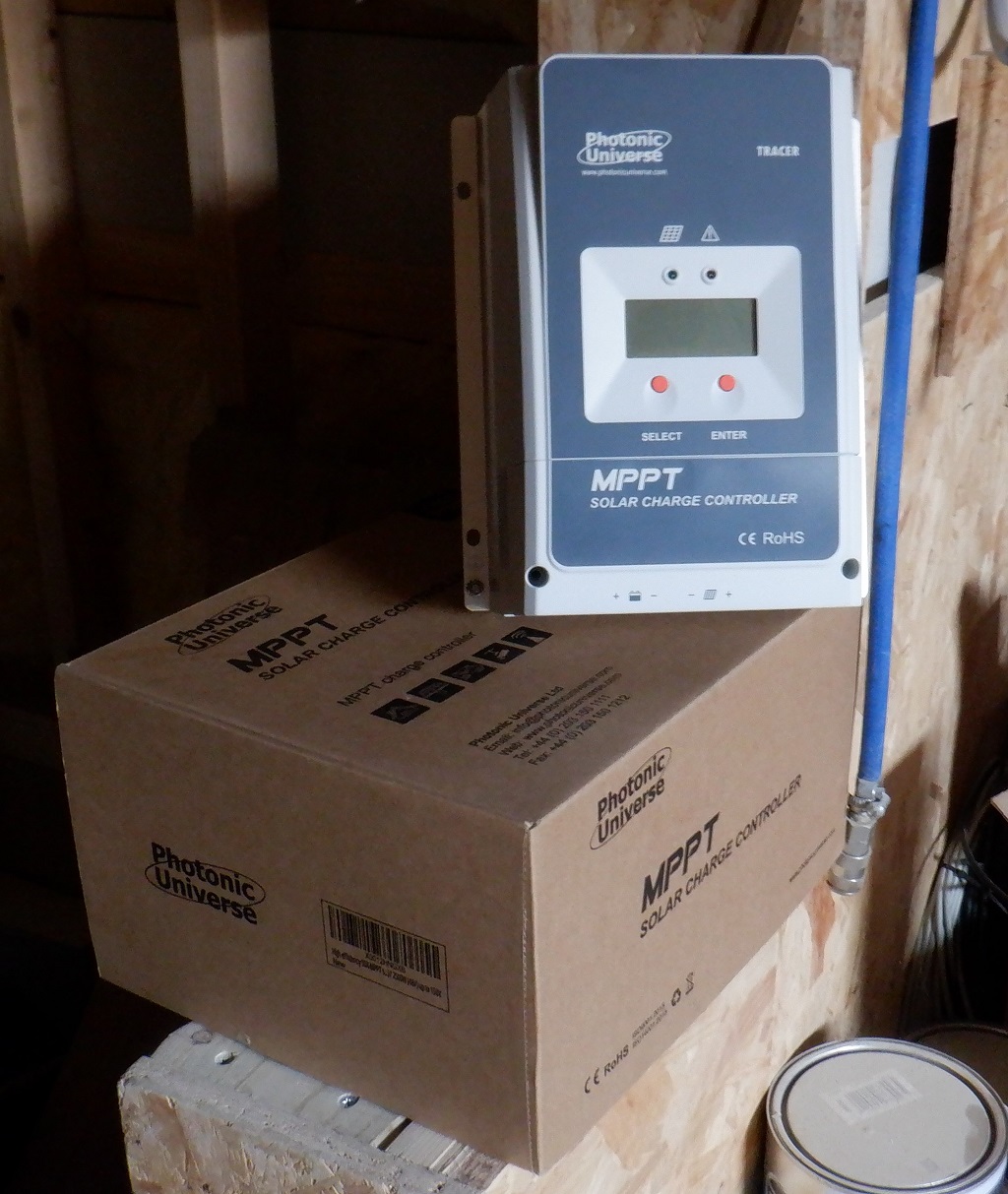
    To convert the Solar energy into suitable voltages for charging our battery packs, we bought two solar chargers, to produce either 12Volts or 50Volts. We can select which battery we would like to charge depending on whether it needs topping up or not.
    The Final String of Solar Panels and Equipment Ordered and Delivered

    Solar-charge-controllers


    We will connect the panels into 2 strings of 4 panels and 1 string of 3 panels.
    This concludes the purchasing of all our Solar Panels and equipment, completing our investment into going Green and trying to reduce our dependency on the incredibly high electricity prices.

  • Stage One of Mounting of Solar Panels on Roof

    We started the new week with a new complete change of project, with the installation of our new Solar Panels on our slate roof. We have seventeen panels to mount, ten on the M roof (overlooking the Swimming lane, slightly West of South) and seven out on the P roof (overlooking our Patio, pointing slightly East of South), using a collection of metal brackets and horizontal aluminium rails.
    But, we have to make this job as easy and safe first, so we pulled out four old scaffold platforms we had stored and re-assembled them. We put two in the alcove formed by the L, M and N segments of the house, and anchoring then to the walls by hooking a thin piece of plywood behind the window wings and joining the two module together too. We put up safety boards along the edge of the platforms to provide tactile warnings of the looming edges and then tied a ladder up against one of the shorter edges.
    We did the same around the corner in the Patio area so we can gain access to the P roof section too.

    One of the jobs we did prior to this point, was to paint about a third of the metal brackets with a primer and black paint, to match the black colour of the Solar Panels but also our dark slate tiles too. We didn’t want to have silvery gleam poking out around the edges of the panels.

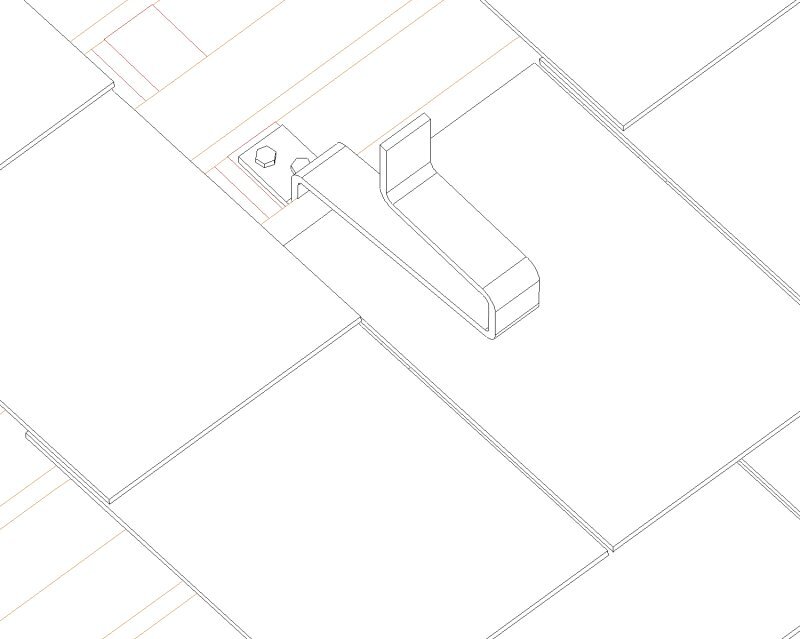
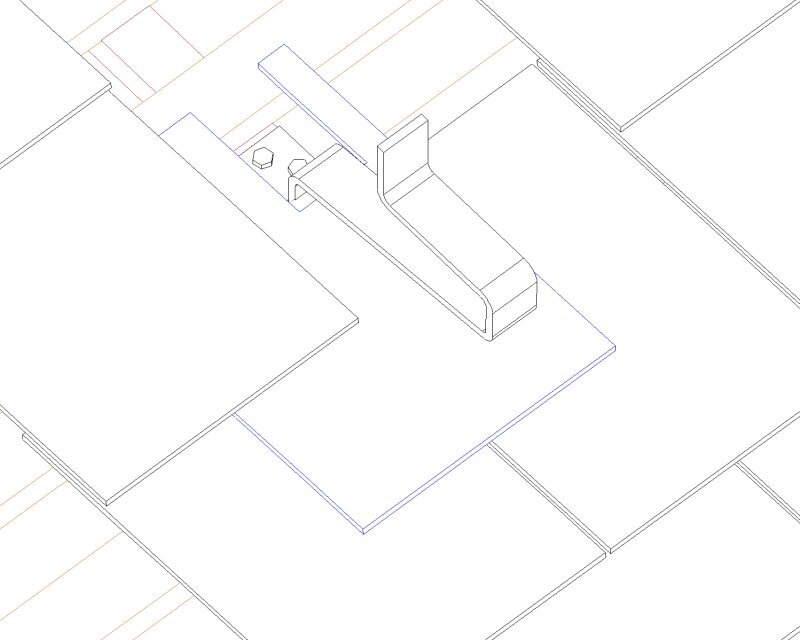
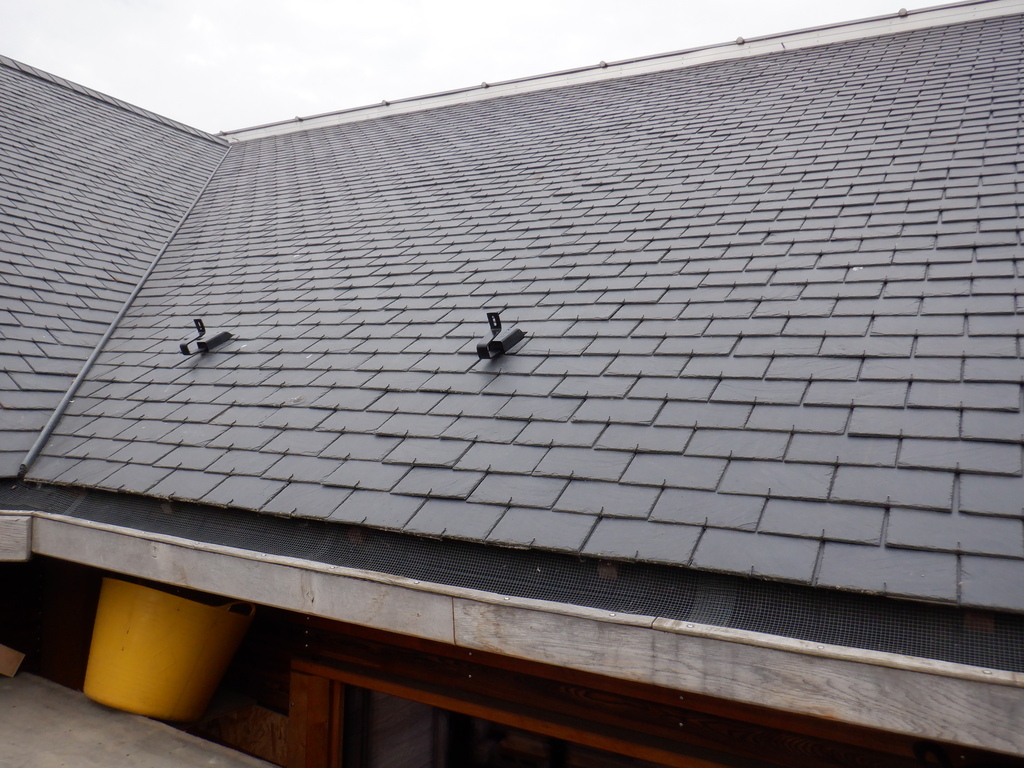
    So, we then proceeded to install these chunky metal brackets, using the black painted ones where they would be seen, and the unpainted ones in the middle. We needed eight rows of brackets, grouped into four sets, as we have four rows of panels  on this M roof segment. The first row from the bottom is a single panel and it has four brackets. We twisted the slate hook sideways to release the slate and then able to slide it downwards with a strong wiggle and tugs. We calculated that the first position for the brackets would be eight rows of tiles from the bottom of the roof, aligned up on the main roof rafter underneath. We removed half dozen tiles to exposed the vertical batten and then we could screw the metal bracket using 100mm heavy duty coach screws, two of them for each bracket down on the batten and screws deeps into the main structural rafter underneath.

    Remove-Slates-to-expose-rafter-and-fix-hook

    Remove-Slates-to-expose-rafter-and-fix-hook

    Stage One of Mounting of Solar Panels on Roof

    Notch-slate-below-hook-and-refix


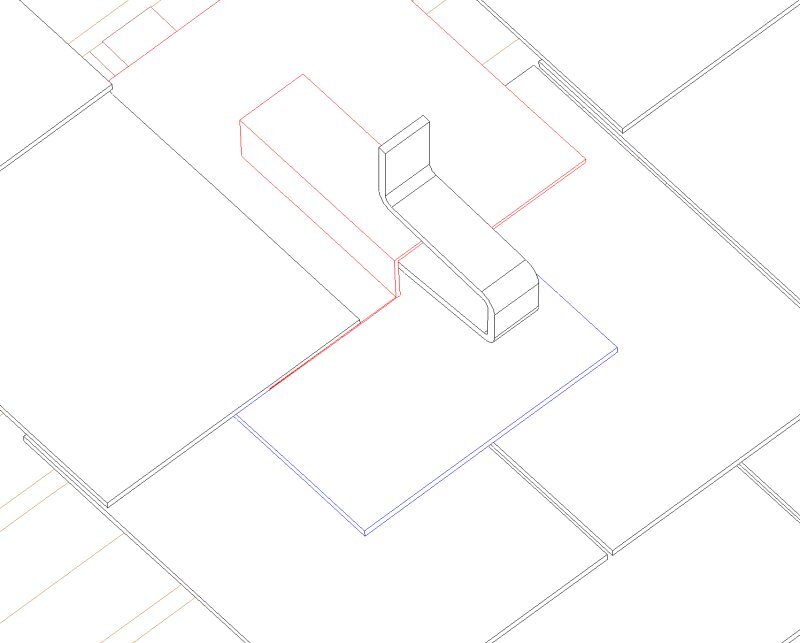
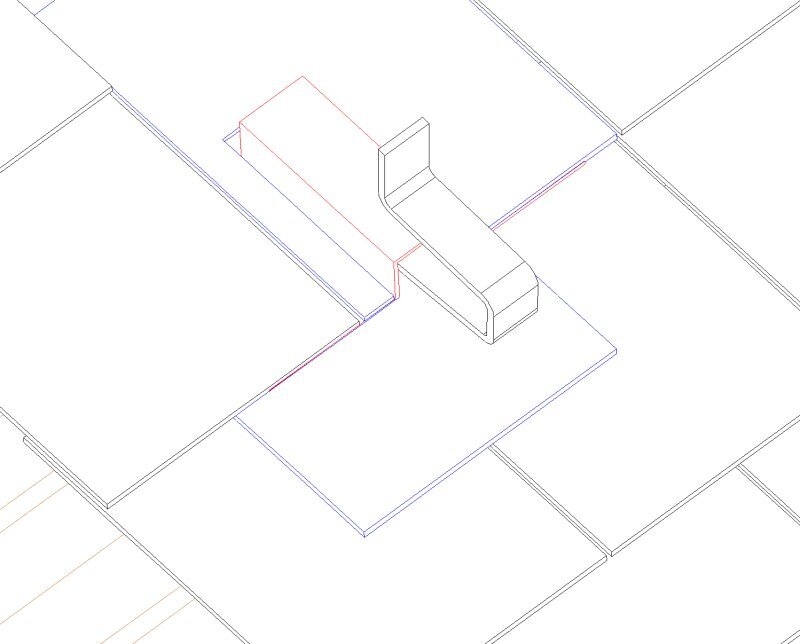
    Then we put a plastic flashing protector over the bracket and cut each slate to fit around the “nose” that is sticking up above the surface of the slate tiles. Usually we needed to trim three slates and sometimes we had to remove the original hook nail and had to nail the newly shaped tile in with old fashioned copper nails instead. It was quite a task to wiggle the slates back into place, sometimes needing to remove more, just so others could go back in again.
    Stage One of Mounting of Solar Panels on Roof

    Place-flashing-over-hook

    Stage One of Mounting of Solar Panels on Roof

    Notch-slate-around-flashing-and-replace


    It was a fairly slow process and we had thirty-six of them to do for this roof and it took us three days to complete this task.
    The placement of the brackets were mapped out so that the set of ten panels were positioned as far leftwards as possible, to avoid the potential shadow created by the ridge line on the right side of the roof.
    Stage One of Mounting of Solar Panels on Roof

    M-First-2-brackets

    Stage One of Mounting of Solar Panels on Roof

    M-First-5-rows-of-brackets

    Stage One of Mounting of Solar Panels on Roof

    M-All-8-Rows-of-Brackets


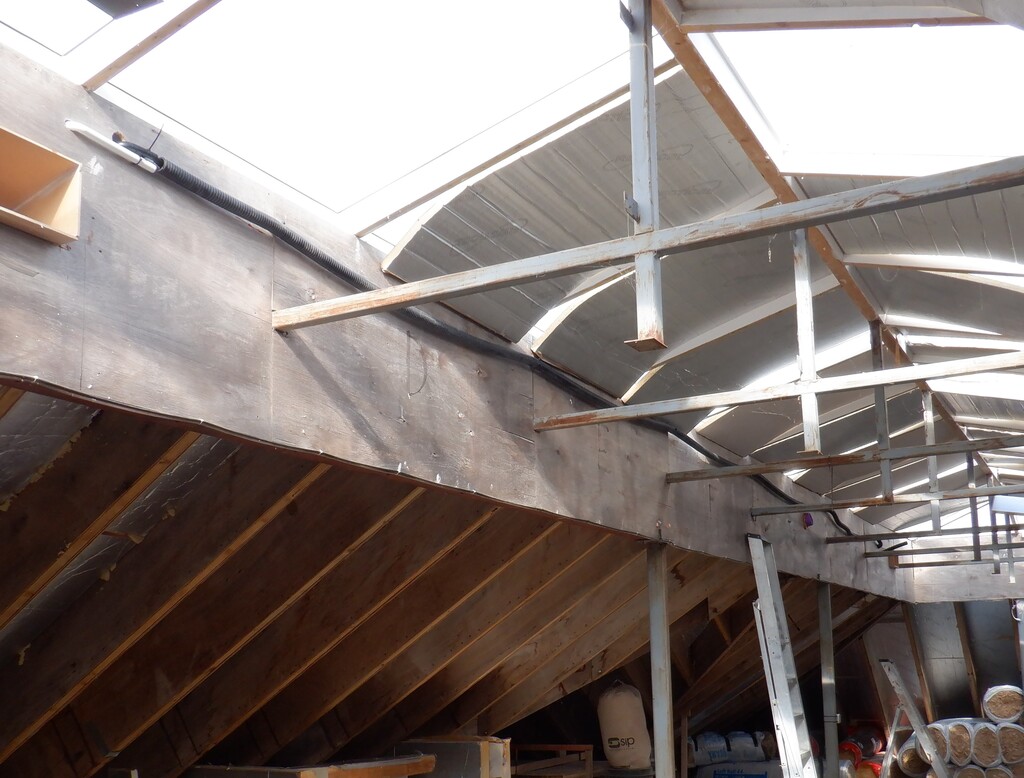
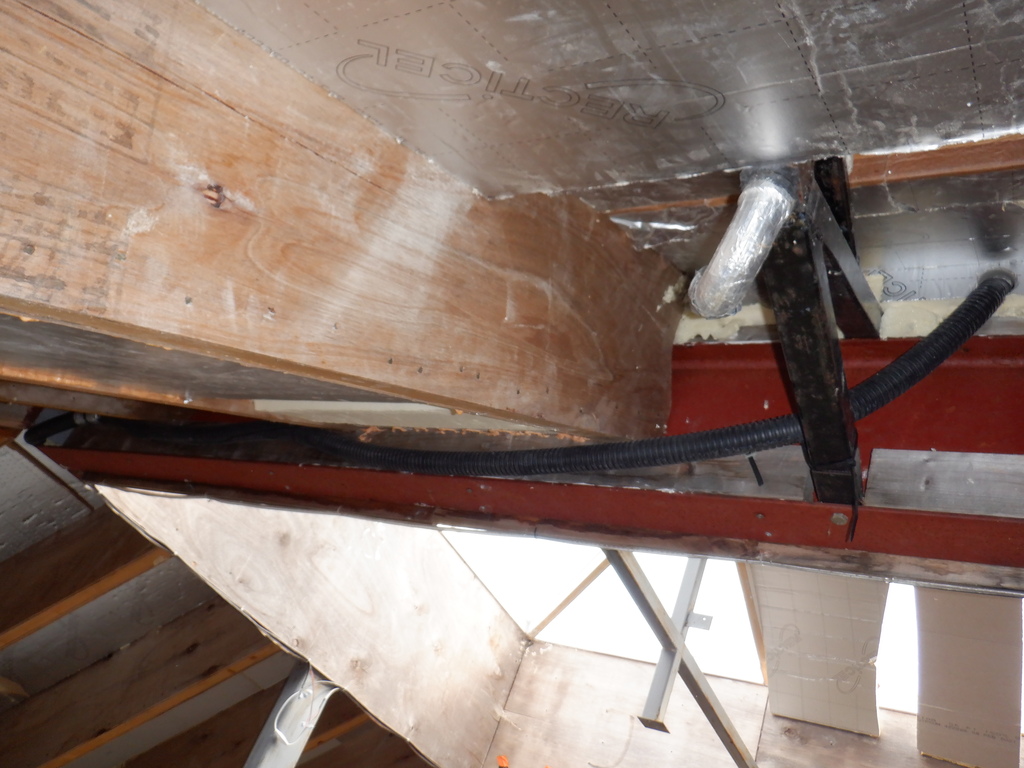
    We were interrupted with this job by rain on Thursday and other commitments on Friday, so we worked indoors installing a 40mm flexible conduit to take the four solar panel cables, all the way from the Skylight near the Great Room, right along to the other end, routed down inside one of the rafters to the external wall position and then along the floorboard into the corner that is over the Utility Room downstairs, where we drilled a hole through the ceiling panel and the lid to the Equipment Cupboard and stop just inside. We can now thread the the four separate double insulated 4mm copper wires all the way from the control box to the panels outside on the roof. The last job, which we haven’t done yet, is to drill a hole or two through the kerb wall itself, up in the Skylight to provide that final access for the wires to get out onto the roof.

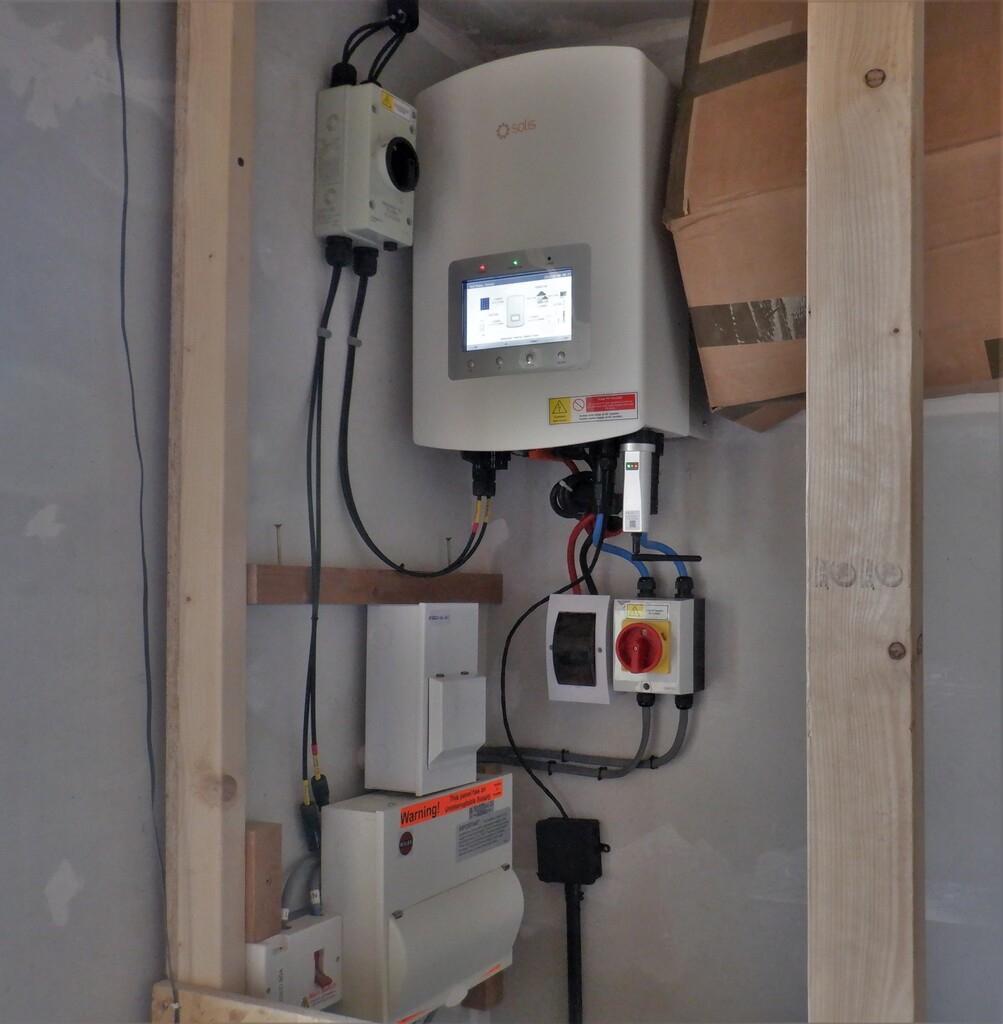
    Then we installed the hybrid inverter on the wall inside our Equipment Cupboard, tucked in the corner just right of the window. There is (will be) a door above the worktop and we would be able to pull it open to read the status display on the front of this box of electronics magic!
    There is a lot of safety switches and fuses that had to be installed around this Invertor, to make sure that we can at any time, disconnect any part of the system, like for example, the batteries, or the solar panels or indeed the mains electricity as well.

    Inverter-and-connections

    Inverter-and-connections

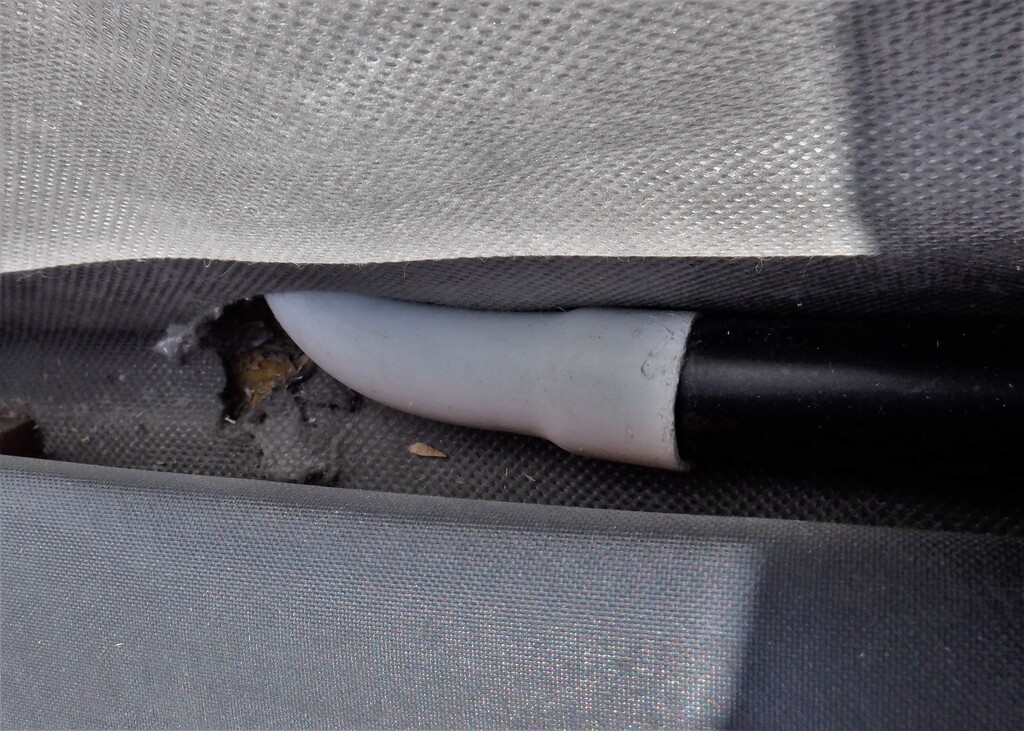
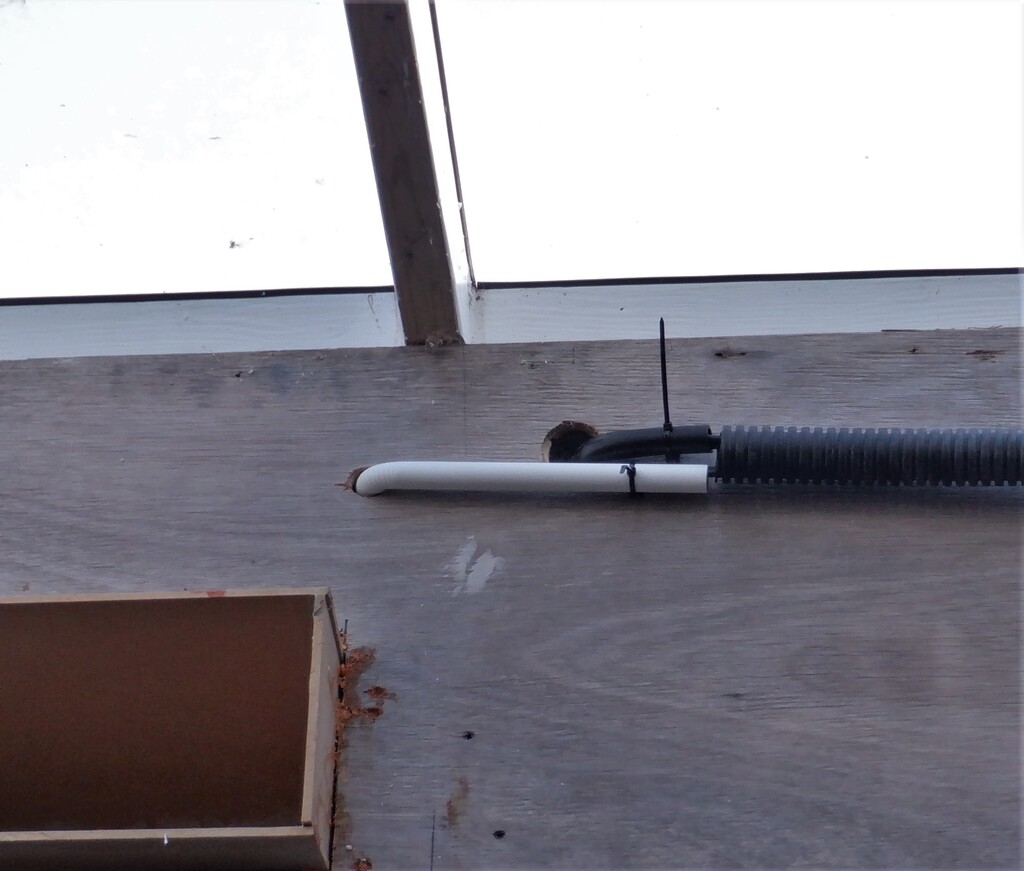
    Back on the roof, we then proceeded to drill two 20mm holes through the kerb of the Skylight, one for a conduit to go straight out on the M roof and slide under the tile battens and down to the first metal bracket. The second hole had a 20mm conduit turning a sharp right angle turn and running along the kerb behind the flashing rubber membrane and aluminium strip, to end up out on the P roof, curving around to a metal bracket ready connecting to the top solar panels out there. We bent the other ends of the two conduits so it went flat along the kerb inside the Skylight and went to where the 40mm flexible conduit ended.
    The next job was to thread the four cables through the conduit we had previously put in, but, we discovered a very annoying difficulty. There were too many bends and the conduit was too flexible as well, and our cable kept jamming after we had only pulled through ten metres or so. We even tried using a motorised winch to provide 250Kg pulling power but we broke the rope and cable connection and it went ping!!
    So, in the end, we had to cut up our lovely conduit and threaded the four cables in sections. We finally made it and got the wires going down into the Utility Room, ready to be connected to the cut-off switch and the other ends going right up in the Skylight and going through the two 20mm conduits we put up earlier. We pulled through enough cable for both roof sections and make sure one half of the twin cables was long enough to reach the bottom of the roof too.

    Stage One of Mounting of Solar Panels on Roof

    Conduit-through-the-kerb-before-sealing

    Stage One of Mounting of Solar Panels on Roof

    Conduit-inside-the-skylight

    Stage One of Mounting of Solar Panels on Roof

    solar-cable-run-along-the-skylight

    Stage One of Mounting of Solar Panels on Roof

    Through-the-skylight-frame-and-around


    Stage One of Mounting of Solar Panels on Roof

    the-corner-and-through-the-ends-of-the-rafters-until

    Stage One of Mounting of Solar Panels on Roof

    it-comes-down-a-rafter-and-along-the-bottom-to-the-Utility-room-in-the-corner


    The next job was to create the aluminium horizontal rails that will connect to the sticking up metal brackets and form four sets of support bars that will hold the solar panels in place. They then needed their ends painted black to disguise the shiny silvery gleam, just like what we already have done to the metal brackets.

    Stage One of Mounting of Solar Panels on Roof

    Ends-af-rails-painted

    Now that we have the wires in place, and also connected to our isolation switch back in the Utility Room, we proceeded to install the first ten of our Solar Panels, starting at the top with four panels in a line. Two aluminium support bars were joined together and then anchored to the seven metal brackets for each rail. We then carefully carried up each Solar Panel module up one by one, connecting the cable into each panel, making sure that we had every panel pointing in the same orientation, with the positive connection point upwards.

    Stage One of Mounting of Solar Panels on Roof

    First-panel-in-place


    We slowly proceeded for each new line of panels, three panels in the second row, and then just two for the next line and finally finishing off with the single panel at the bottom.
    Stage One of Mounting of Solar Panels on Roof

    Solar-on-M-finished


    To make sure that the wires were working, and that each lie of panels were ok, we connected the negative wire to the last panel in the line and measured the voltage back in the Utility Room. The first row produced 156Volts. We repeated this test every time we had completed a line and we were getting higher and higher measurements each time which is very good news.
    The final measurement returned 392Volts for all ten panels.

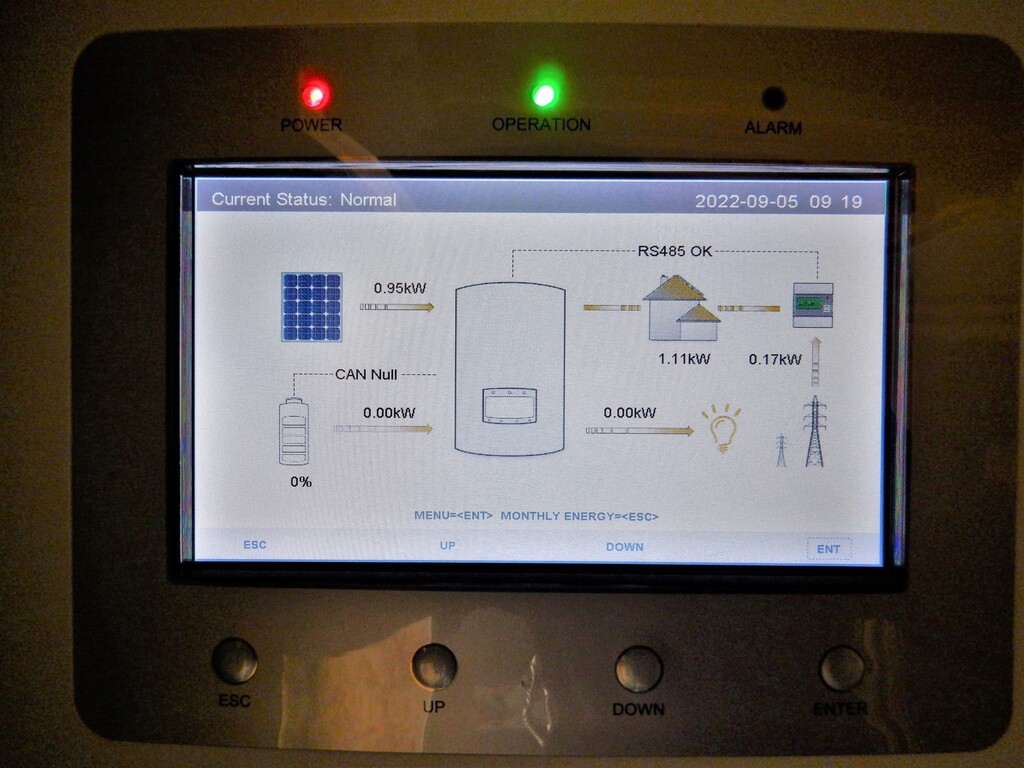
    The last thing we did for this stage of work, was to connect the output of these Solar Panels to our Inverter magic box and switch it on. It came alive and showing that we had a connection to our Solar Panels and it immediately started reporting that we were generating 2kW of electricity. This was in the evening at 6pm so that wasn’t too bad at all.

    Stage One of Mounting of Solar Panels on Roof

    Inverter-display


    One of the things the Inverter wanted, was a electricity current sensor fitted to our household mains connection going into the smart meter so it can calculate how much we are drawing from the mains and adjust its own circuits to avoid exporting any excess electricity out on to the National Grid. This is good because we won’t get paid for any exported energy and strictly speaking, we are not allowed anyway.
    So we had to install a bunch of network cables from the House to the Garage, we took the opportunity to also include a replacement LAN network cable that will go all the way back to the Tech Cupboard plus also a telephone landline extension so that we can have our DECT base station in the house instead of the garage. The third cable is the connection for the mains current sensor but that one needed to be threaded up to our Utility Channel in the garage and then all the way along to the front of the building where it terminated in a network socket. We had to unscrew every other section covering the Utility Channel, screw a series of L hooks to keep our data cable away from all the mains electricity that is already crowding the bottom half of the channel and tie little cable ties to keep it all nice and neat.

    I conclude this report now but to finish off with some further numbers, during Saturday, yesterday, while we were working on sorting out the network cables, the Solar Panels collected another 16kWh (kilo watt hour) or 16 units of electricity, we had the Inverter box switched on from about 9am and looking at the historical data, for this time of the year, it matches what we had generated. Very Nice!

  • We Had Our Delivery of Solar Panels

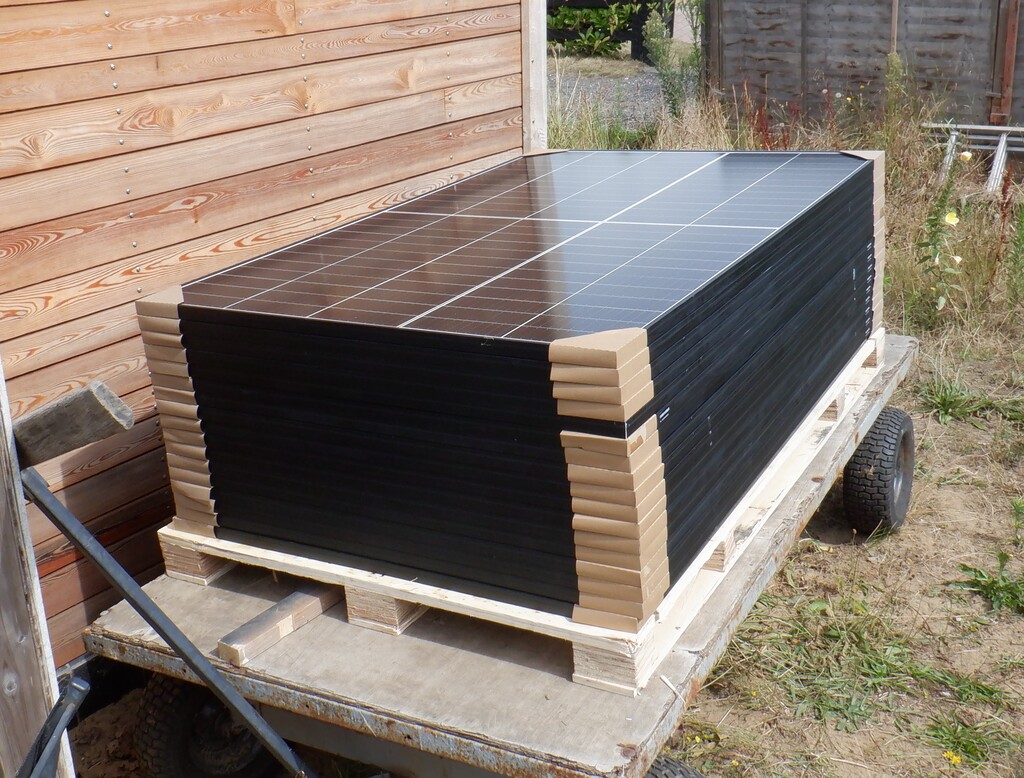
    At 11am this morning, we had our delivery of our new solar panels, all seventeen of them. They came flat on a large pallet, strapped down good and tight. Each panel measures 2metres by 1metre and they are capable to generate about 400watts on a good sunny day.

    We Had Our Delivery of Solar Panels

    Solar-Panels-have-arrived


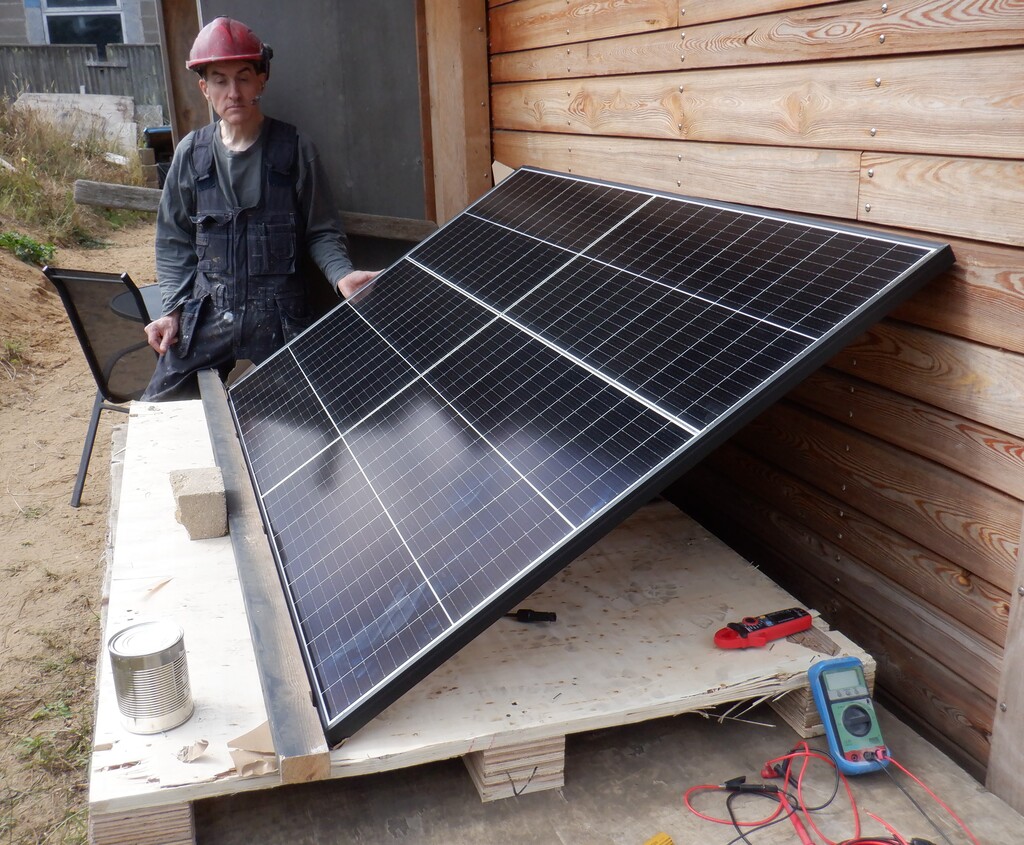
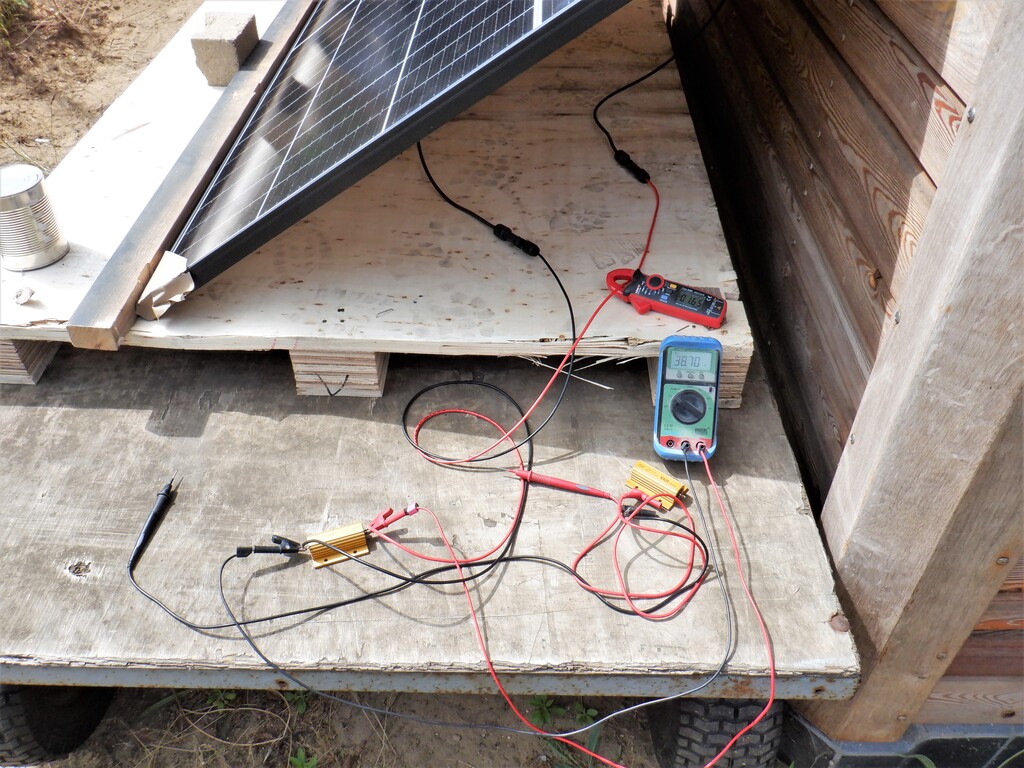
    We inspected each one in turn for damage and electrically tested them and all works. For the last one, we left it outside in the sunshine and found several high powered resistors to measure what power we can get. The first resistor was a 22ohm and using two test meters, one to measure the current and the second one to measure the voltage, we were getting 38Volts and about 1.7Amps in bright sunshine. This works out at around 50watts, which is not very high at all. So, we switched over to our other resistor, 3.2ohm instead and rated at 100watts and watched the meters. Suddenly we were getting 33Volts and 4Amps which is over 120Watts which is much better. Then, Stephen told me to get my shadow off the corner of the panel and suddenly we got 35Volts and 9.2Amps which works out at well over 300Watts. That is much much better. In fact, we were so engrossed in the changing numbers as the Sun came and went in the hazy sky that we didn’t realise that our poor resistor was melting and boiling!!
    We Had Our Delivery of Solar Panels

    A-solar-panel

    We Had Our Delivery of Solar Panels

    Testing-a-solar-panel


    It is very interesting to realise that even a small shadow on the solar panel causes such a change to the performance and we have learnt first hand that you must avoid shadows as much as possible.
    We are now waiting for the metalwork to be delivered that will allow us to bolt the panels up on our roof. We are planning to put up seven panels up on the P roof, this faces slightly East of South (looks over our Patio) and a further ten panels up on the M roof which faces West of South (looks over the swimming lane) and each area will be “strung” together in series and the two sets of cables routed all the way back to our invertor “magic” box in the Utility Room. We will need to break into the Skylight to get the cables through but we will be careful and make sure it is all weather sealed and everything.

  • Taken the Plunge and Ordered Solar Panels and Batteries Plus Supporting Electronics

    After considerable discussions, we have decided to take the plunge and invest in some Green Energy solutions. We have ordered seventeen electric solar panels, measuring 2metres by 1metre high, rated at 405Watts per panel. This power rating isn’t set in stone as you can imagine when we got something like our Sun that keeps moving around, hazy skies, rain and the occasional solar eclipse producing shadows and affecting what power we can generate. The solar panel manufacturers all have to measure their panels using a standard 1000Watt testing rig but they also have to quote a so-called realistic figure as if we only got 800Watts per square metre, so these ratings that they have printed on the panels are only a guide and we could indeed, on rare occasions, get more!! But, big sigh, our Good Old British climate, we will likely only get 300 to 350Watts per panel on a very very clear blue sky day.
    So with our seventeen panels, seven on the P roof (overlooking our Patio) and a further ten on our M roof (overlooking our swimming lane), we could be producing 5 or even 6kiloWatts on a good bright sunny day when the Sun is right overhead. Otherwise, we would generate about 2kiloWatts on our P roof in the morning times and then 3kiloWatts later on in the afternoon and evening. We expect to generate about 10,000kWh per year.

    We ordered the panels from a UK stockist because the country now imports so many panels that it is not cheaper to buy direct from China these days. Hopefully, we will get those in a week or so.

    Another collection of items that we have ordered, is the mounting brackets and bars for fixing our solar panels on our roof, going through the slates but maintaining a waterproof seal etc. That is quite complicated shaped pieces of steel & aluminium and it costs almost as much as the solar panels for that mounting hardware.

    Next, we did go direct to a Chinese supplier for our batteries. It is not so common .. yet .. in this country, or rather, the batteries are being packaged into a single product and sold including installation fees added on top and it is many thousands to get hold of that type of batteries and the associated electronics. But, we like to do things ourselves but also, mostly, because we are wanting a much larger battery capacity and no one does a bigger system for a sensible price. So we are ordering 36 “cells”, each rated at 280 Amps Hour at 3.2Volts, measuring 72mm thick, 225mm high and 174mm long. They are about a third of the width of a typical car battery with both of them having about the same power capacity, which is amazing especially considering that they are much lighter and also have very good number of discharge and charge cycles. We are building two 50Volt battery sets, each having 16 cells, giving us about 30kiloWattHours capacity and one 12Volt set with four cells giving us nearly 4kiloWattHours. Each set will have a management computer overseer, to keep an eye on each separate cell and also the whole overall performance as well, protecting the batteries from any short circuits and other faults that may develop and shut the whole set off just in case. These computers are rated at 200Amps. The shipping will take six to eight weeks so sometime in late August or September.

    Another piece of equipment we ordered is a 5Kw hybrid inverter that takes two strings of electric solar panels and transforms those strings into both mains electricity to use generally and 50Volts to charge the two battery sets.. The box will take the power from the solar panels and either provide it as 240V mains electricity for general use and when the house is not using all of the power it will charge the batteries. If the house need more mains electricity than the solar can provide then the box will use the batteries to add extra output. It can be programmed to respond in various ways, depending on our requirements. This box will also act as a battery backup and will power our critical mains electricity usage (up to 5kW) if we have a power cut

    This is a major step for us to be taking right now, but, we really need to do something to help us avoid much of the enormous price increases we all are facing! But, we had always had plans to install solar panels, it is just coming much sooner than we thought, and the batteries have become much more affordable these days and be able to pay off the investments quite quickly.

    Spending less than £10,000 now will give us enough free power to mean that yearly electricity bills will be tiny for 20+ Years to come!

  • Deep Analysis and Simulations of Green Solutions using Real Weather Data

    As everyone knows, we are facing a future climate of massive energy price increases and we are particularly at a disadvantage with our current setup, with the way our Temporary Living Quarters are constructed. Since they were only temporary, we had originally put in minimal insulation into the walls and ceiling, but the Sun Corridor is the main culprit in terms of energy losses, especially during the Winter and Spring months.

    We have plans to reduce this loss for the next Winter / Spring periods, by shutting off half the Sun Corridor and also insert additional insulation into our bedrooms and living room too. This will hopefully reduce our running costs.

    But, this really made us think about the whole world of renewable energy, capturing the solar energy in both electricity and thermal forms. Plus, also, what to do with this energy once we have caught it. This means some form of a storage system like batteries or underground water tanks. We have already explored the Thermal capturing and storage side of things, after all, we have five very large water tanks buried underground and they are ready to store the Sun’s energy once we have assembled the thermal solar panels on top of our Garage roof.

    So, Stephen has been analysing and running simulations of what our house needs to keep it warm, what sort of electricity we might need to keep the “lights” on and what values of sunshine and temperature we get here. He found both NASA and ESA datasets describing the last ten years of recorded temperatures and sunshine falling on our corner of the world. He calculated the building’s energy losses, the solar gains via the windows and Skylight (as the Sun moves around the sky in the different times of the year etc.) and looked at our historical electricity usage. He then calculated the energy usage (heat & electricity) and generation for each hour of the day and night for a least a year.

    Then, we started adding various combinations of Green solutions to the simulation runs. Like for example, our built-in solar electric panels in the Skylight (2200Watts over 11 panels), then extra panels on our P roof (faces slightly East of South) with various sizes, then did the same on the M roof (faces slightly West of South) with various number of panels as well.

    All part of the simulation runs, are the calculations of how much money we would save on our electricity bills, and changing to combinations of different Green Solutions.

    This includes our buried Energy Modules and also the Thermal Solar that we will have on the Garage roof too, all this got into the mix too.

    So far, we have not looked at batteries yet, but we are getting a turnaround time of about 3 to 5 years to pay for the cost of the solar panels and the associated electronic control gear to handle it and that is assuming today’s prices of 20p per kiloWatt Hour. Just imagine how quickly we could pay off the investment if the price of electricity goes up even more, like 30p or 40p per kiloWatt Hour!!

    But, this setup is purely a daytime only solution, and only when the Sun is shining too. We recognise that there will be times, perhaps quite a lot, where we don’t get enough sunshine to cover the basic energy requirement of our household. So, Stephen started investigating batteries, in particular, lithium-iron-phosphate (LiFePo) batteries that are designed for more robust applications and there is a growing market for these types. We can get hold of large batteries that has very good long life cycle times, in the order of six thousands (6,000) deep discharge and charge cycles. And, if the size of the battery is such that we only need one cycle for each day, then we would get about 18 years of life out of them. That is plenty of time to pay back the cost of buying all the batteries, with the money we would also save.

    So, Stephen did many more simulation runs with different battery capacity, taking the solar electric to charge them up, but, also using national grid electricity during the off-peak night-time to tap into cheap nighttime rates and concluded that we could also pay back the cost of the batteries in the same 3 to 5 years.

    Remember after the payback period all further savings are pure profit meaning the house will need very little money for heat and light.

    This is very interesting and there was a great deal of discussions between us all, weighing up the pros and cons, what can we afford upfront and what we needed to do right now, to fend off the future price rises. We will decide soon, very soon.

  • Service trench completed

    Service trench completed

    Thursday 30th

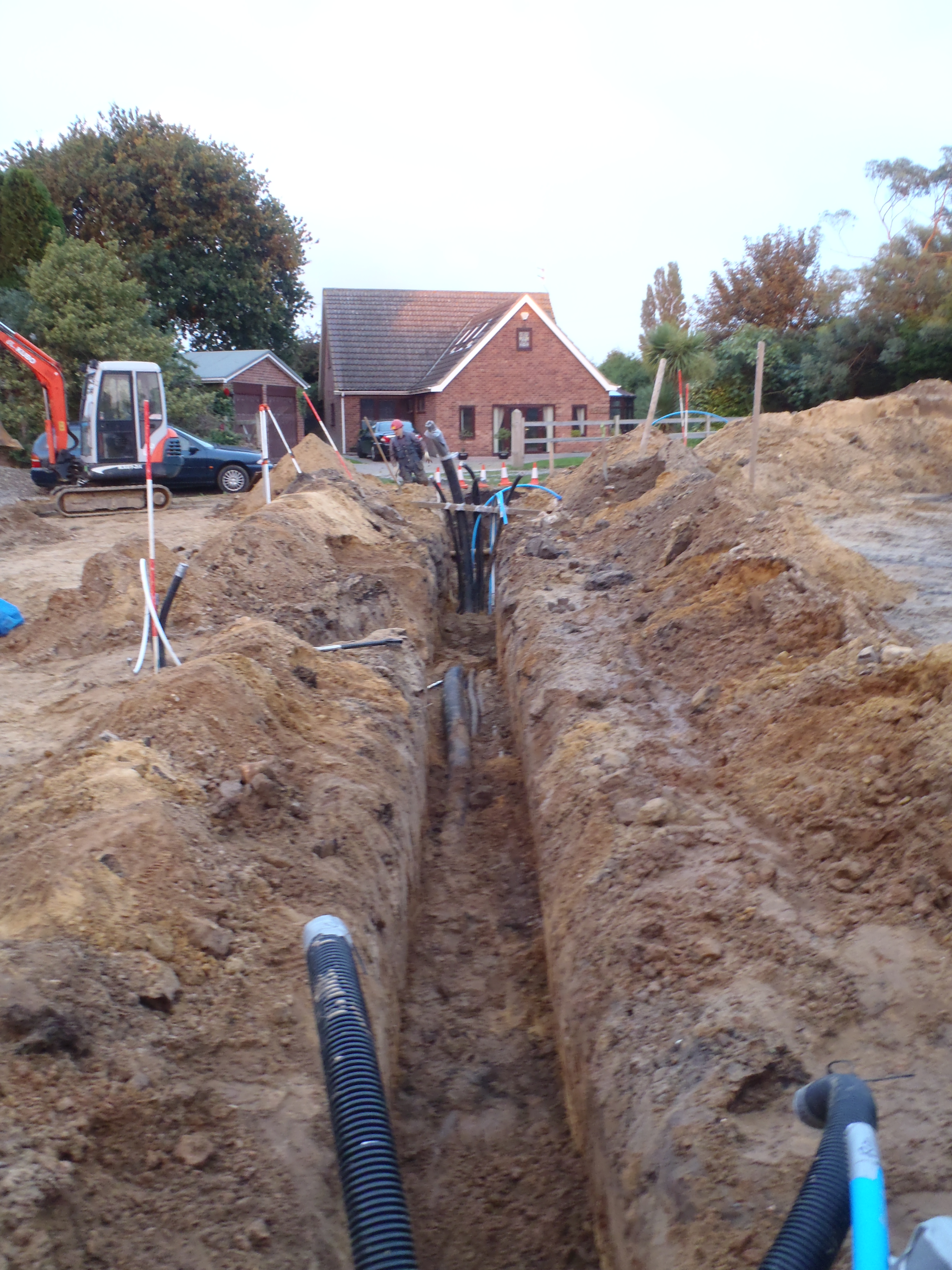
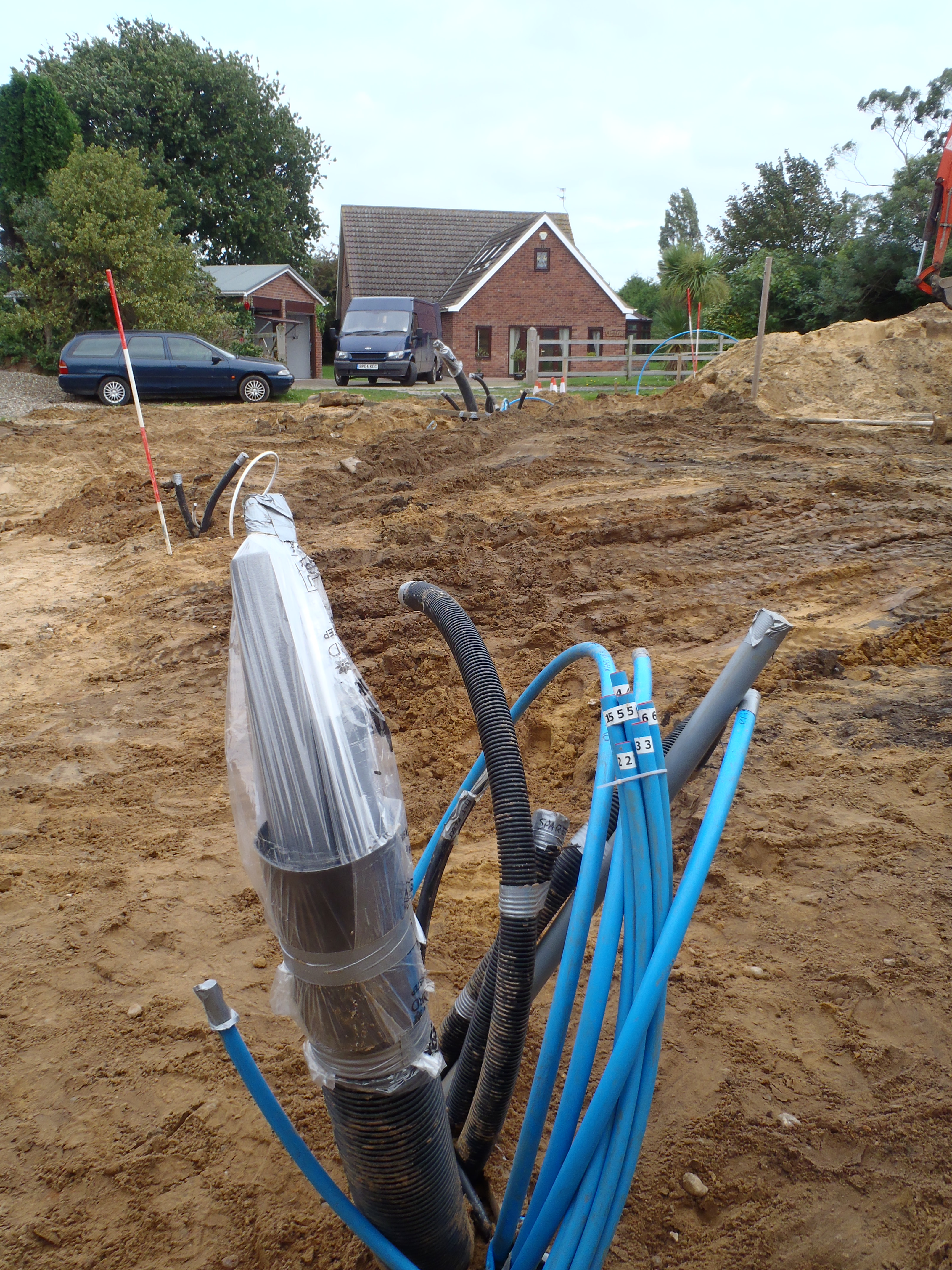
    Installed all the pipes and conduits into the trench after sliding 2 x 22mm plastic plumbing pipe with foam insulation (25mm on flow and 19mm on return) into the large conduit (tried insulating with rockwool and gave it up as a bad job!).

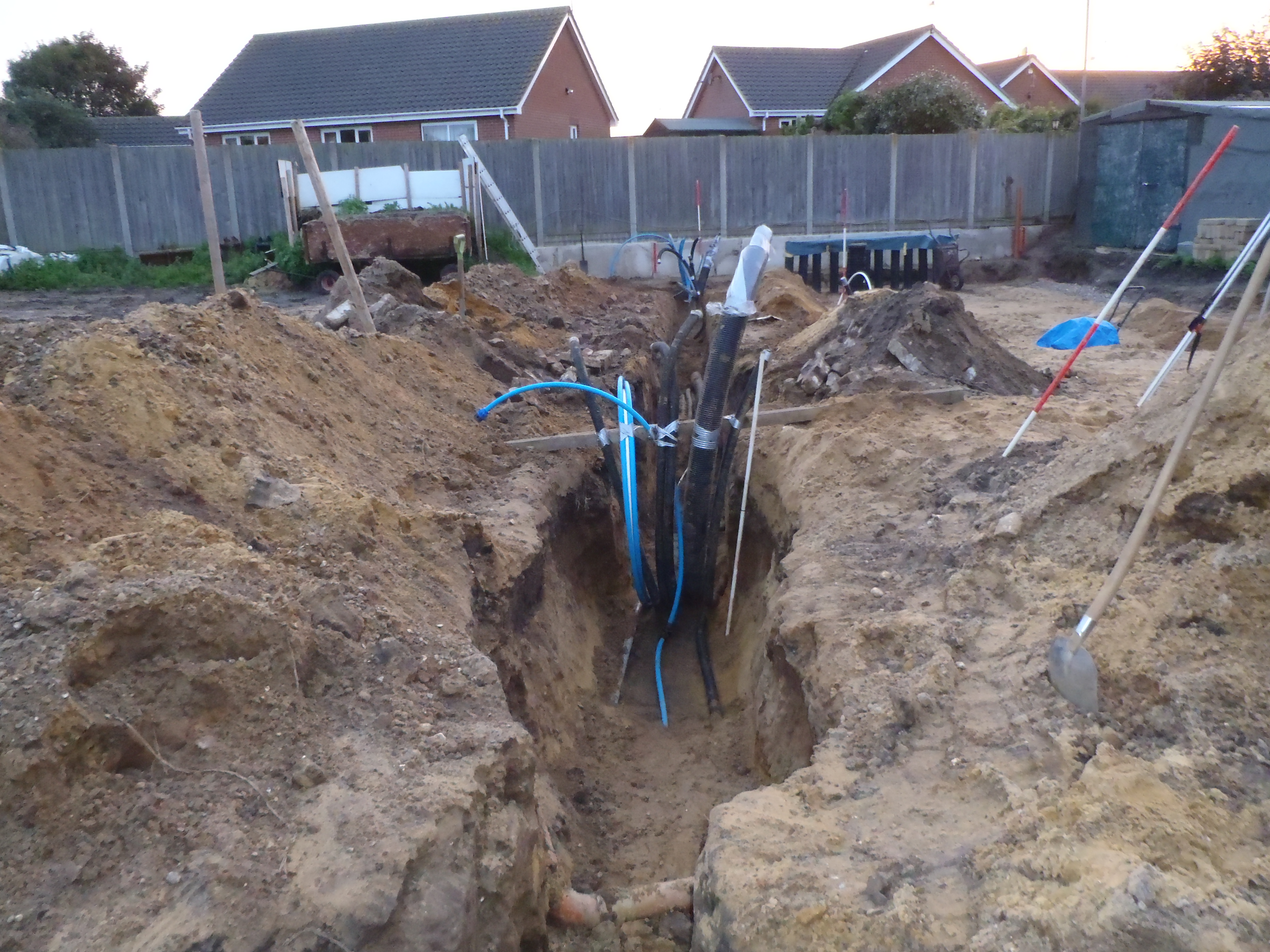
    Service Trench All conduits in place

    They are from left to right :- Data, rainwater1, compressed air, rainwater2, mains water, central vac, spare, solar water & electricity.

    Friday 1st Oct

    Started by filling trench to approx 300mm above conduits then placed warning tapes (100mm wide polythene printed with warning messages about water & electricity below) along the trench. We then filled the trench to the top.

    Service Trench Filled

  • Solar data from Nasa

    I’ve been using satelite data from Nasa to estimate the output of our solar panels. This website gives you more data than you can possibly use ! For my purposes the ‘data tables for a particular location’ (under Meterology and Solar Energy) are what I wanted. In particular the table of Average monthly insolation on tilted panel.

    For our location (51.7N-1.7E) this gives this table:-

    Monthly Averaged Radiation Incident On An Equator-Pointed Tilted Surface (kWh/m2/day)
    Lat 51.583
    Lon 1.71
    Jan Feb Mar Apr May Jun Jul Aug Sep Oct Nov Dec Annual
    Average
    SSE HRZ 0.82 1.46 2.45 3.72 4.71 4.97 4.98 4.34 2.93 1.79 0.99 0.62 2.82
    K 0.35 0.37 0.39 0.42 0.44 0.43 0.45 0.46 0.41 0.38 0.36 0.32 0.40
    Diffuse 0.55 0.87 1.47 2.10 2.56 2.76 2.65 2.26 1.60 1.00 0.63 0.43 1.58
    Direct 1.22 1.88 2.33 3.13 3.78 3.78 4.03 3.85 2.89 2.25 1.43 0.93 2.63
    Tilt 0 0.80 1.44 2.42 3.70 4.73 4.99 5.00 4.31 2.88 1.75 0.95 0.62 2.81
    Tilt 36 1.29 2.07 2.94 4.00 4.67 4.75 4.84 4.54 3.40 2.42 1.49 1.02 3.13
    Tilt 51 1.39 2.17 2.93 3.83 4.30 4.31 4.42 4.29 3.36 2.51 1.60 1.11 3.02
    Tilt 66 1.43 2.17 2.79 3.49 3.78 3.79 3.90 3.85 3.16 2.48 1.63 1.14 2.80
    Tilt 90 1.33 1.93 2.32 2.69 2.79 2.70 2.80 2.88 2.55 2.17 1.49 1.07 2.23
    OPT 1.43 2.18 2.95 4.02 4.85 5.05 5.09 4.59 3.41 2.52 1.63 1.14 3.24
    OPT ANG 65.0 57.0 43.0 29.0 16.0 11.0 13.0 25.0 39.0 54.0 63.0 67.0 40.0