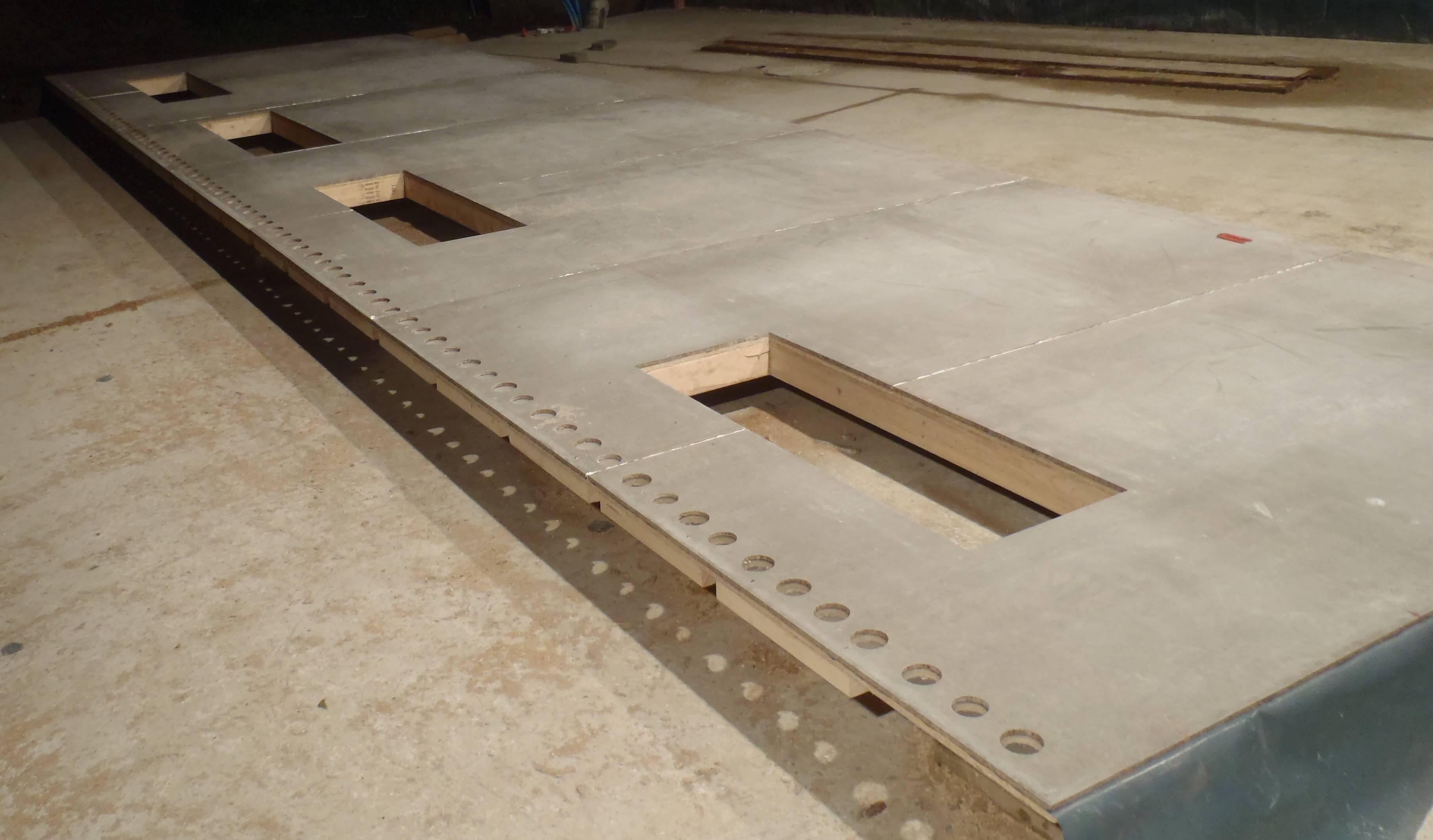
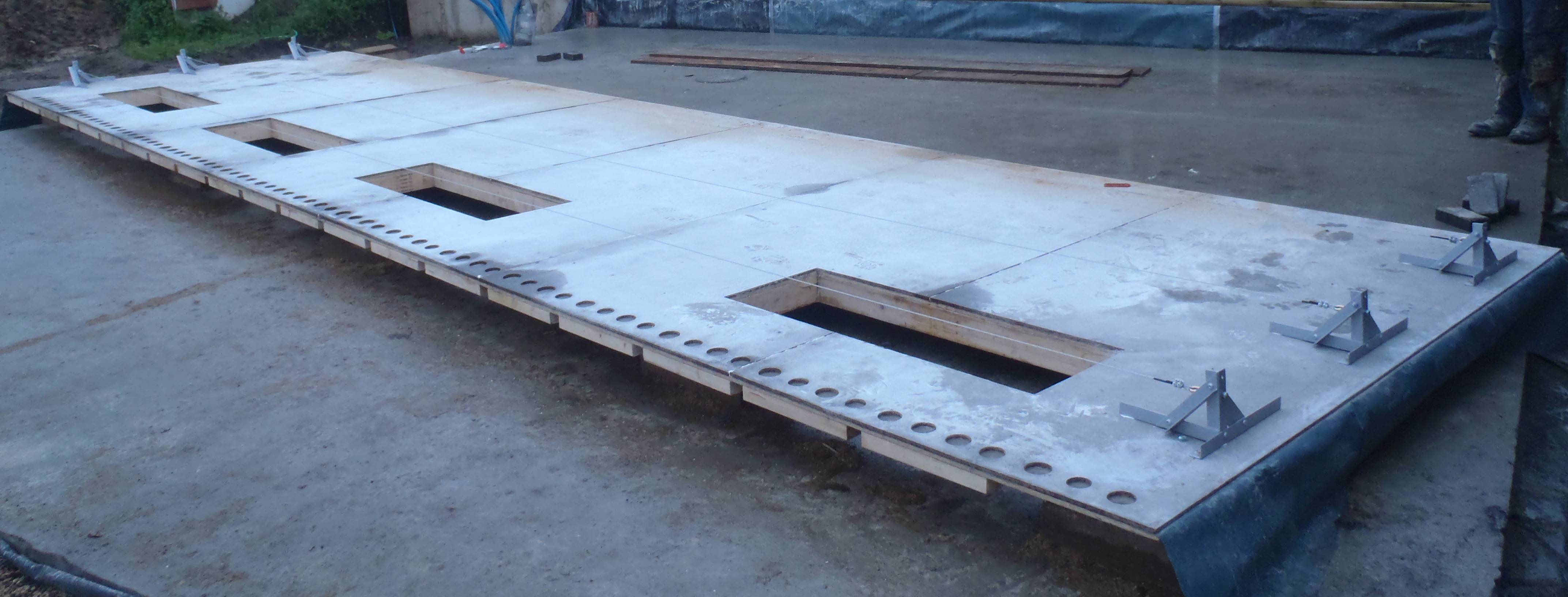
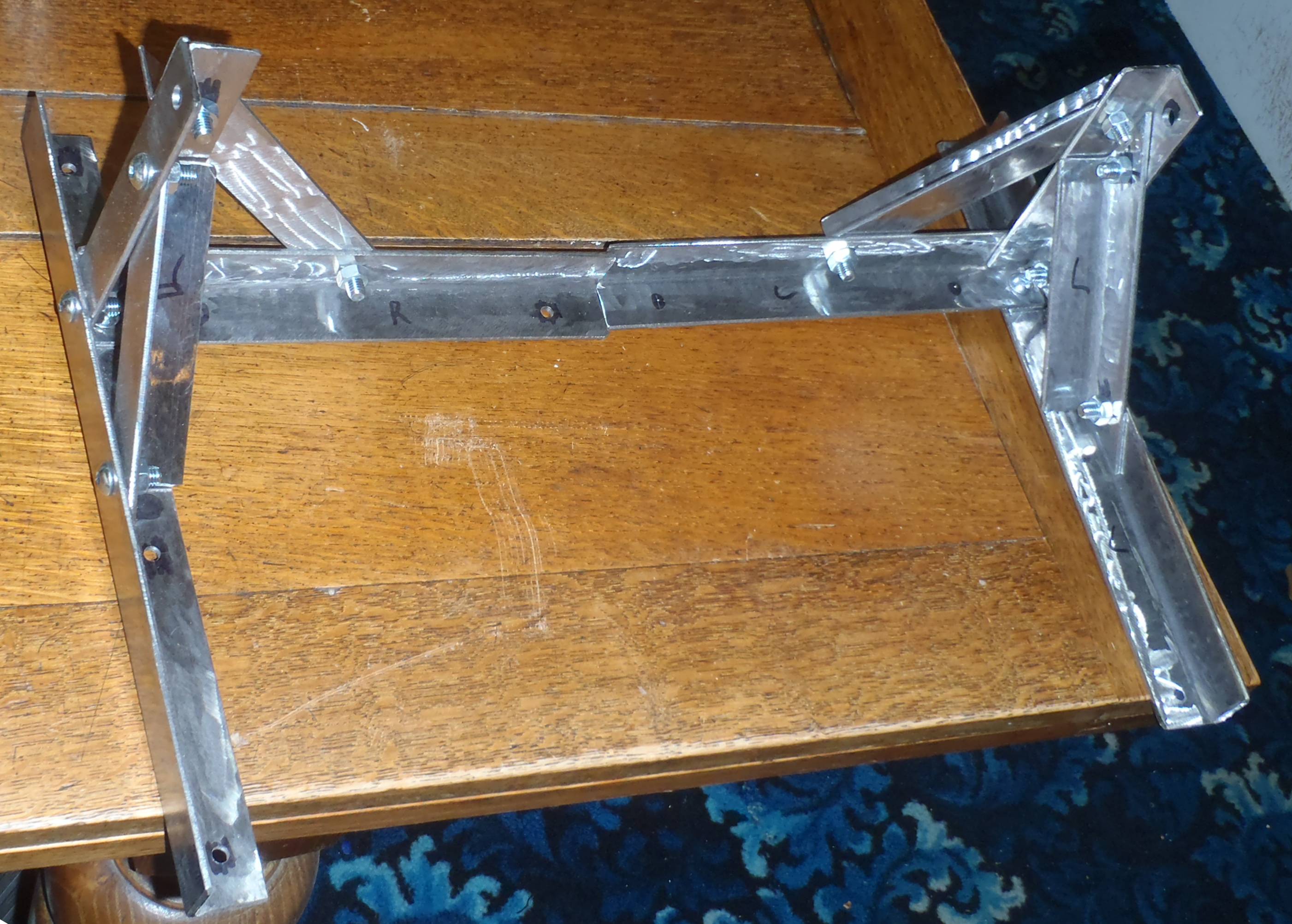
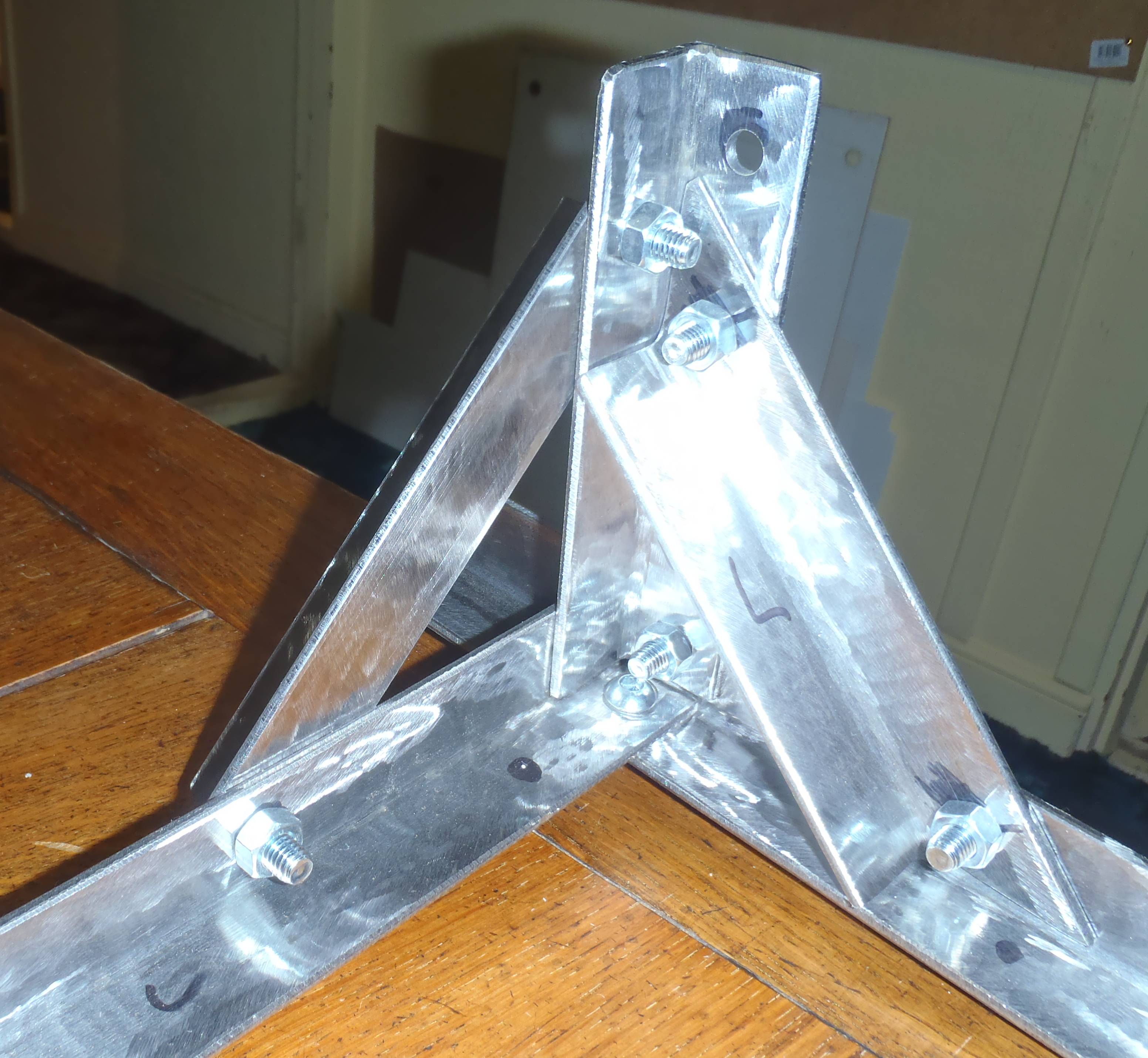
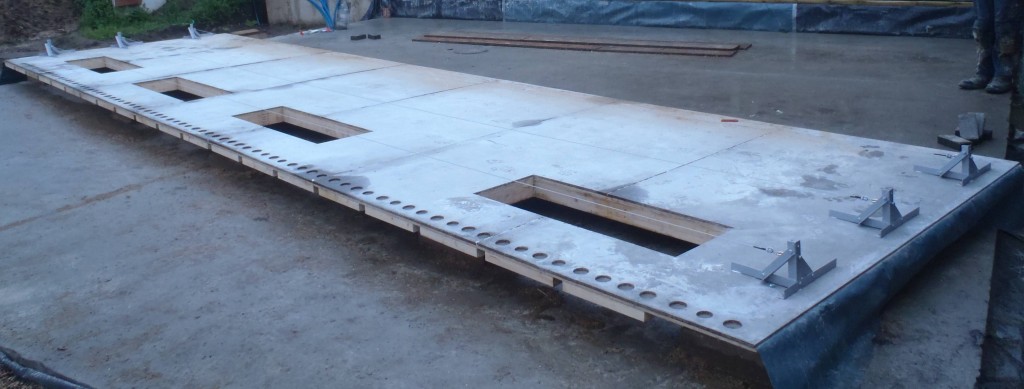
We have made the four ramps needed to lift the back wall over the conduits and pipes and up to the level of the mass wall. We have probably over engineered them as usual but better to be safe than sorry. All the pipes have been bent down out of the line of fire and restrained by straps or a piece of OSB.
Author: Stephen
-
Finished back wall
Spent the last few days finishing off the back wall now the cement boards are here…
First we fixed a sheet of thick polythene over the OSB as a final waterproofing layer, this took longer than we thought as we had to work hard to get the wrinkles out. Cut the plastic around the window holes. Then placed and aligned the cement boards.
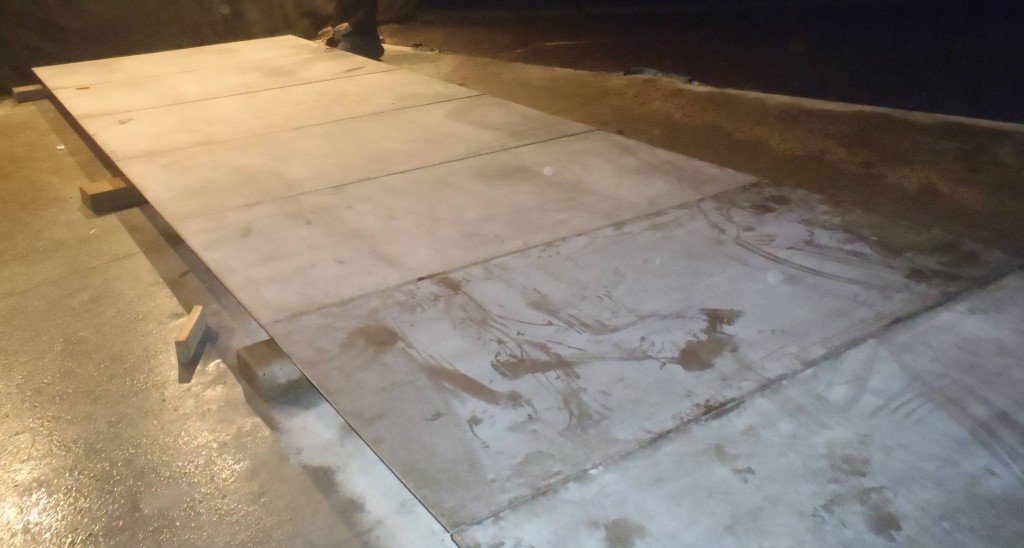
The next job was to cut and install two rows of noggins at the top of the wall. These will keep the end of the roof I-Beams upright.
Next day we drilled the ventilation holes for the roof in the wall, 79 of them (each needing to passes with a hole saw). In fact Shaun kept busy removing the cut disks from one hole saw while I used the other on the next hole.
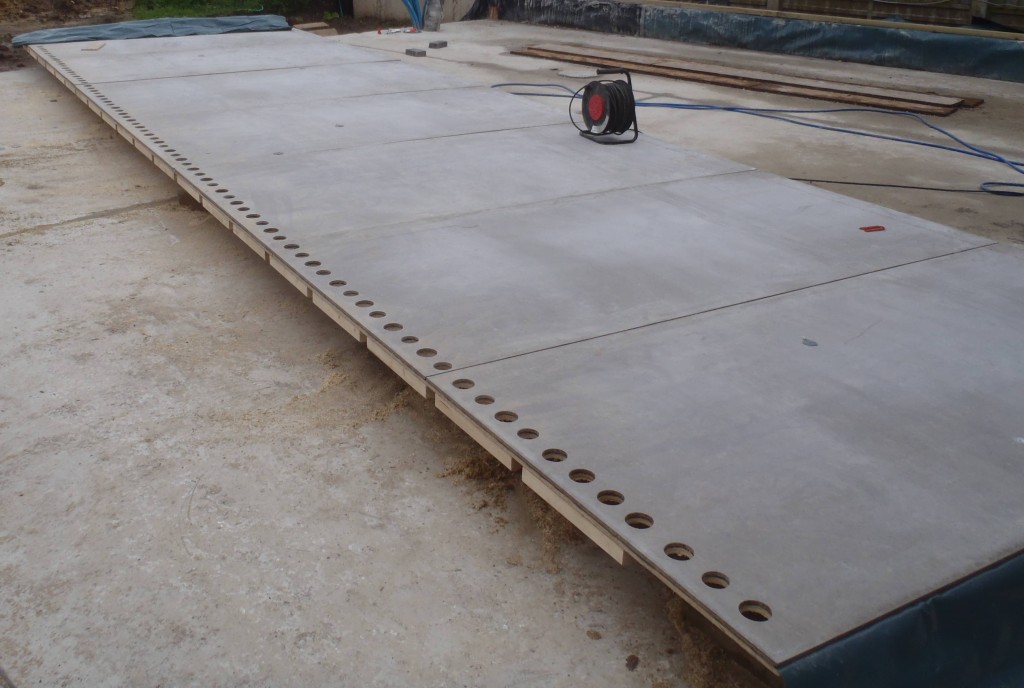
In the afternoon we slid strips of SS mesh between the cement board and the OSB to cover the holes and fixed them down. Then we routed out the window holes. Last thing of the day was to seal in the joints between boards with Polyurethane sealant.
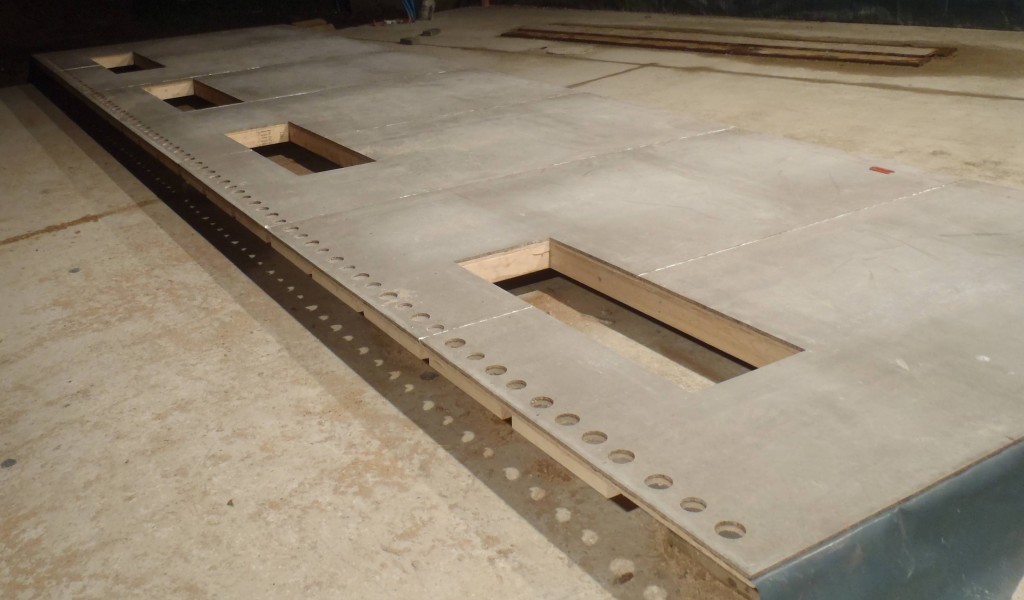
Trimmed off the bottom of the cement boards to the right height. Fitted the ladder brackets and installed the steel ropes and tensioned them (we then de-tensioned them until the wall is installed in final position). The wall is now ready to be moved into place.
-
Ladder brackets ready
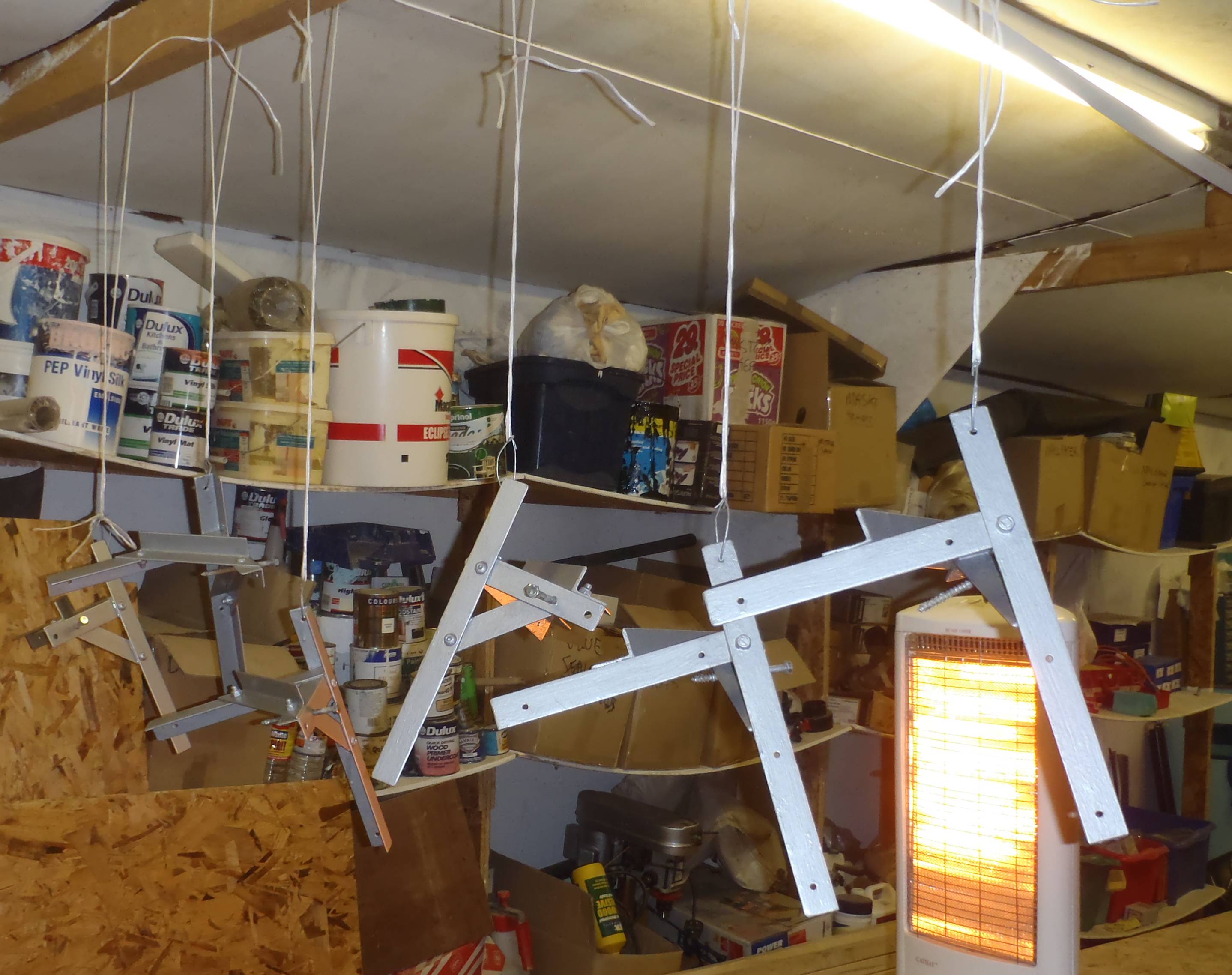
Finished cutting and drilling the pieces for all six ladder brackets. Shaun carefully washed and dried all the parts, then we assembled them. Finished them by Applying three coats of Hammerite silver paint, hopefully this will keep them rust free for a good few years!
-
Storing things behind the garage.
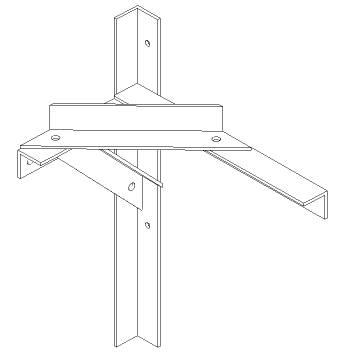
There will be a small (200mm/8inch) space between the back wall of the garage and the boundary fence. We want to use this for storing those awkward things like ladders! We went through a series of ideas before settling on having a set of tight steel ropes and hanging items from them on sliding loops. Now we needed brackets to hold the rope up and tensioned.
Typical us, we decided to make our own!
We bought steel angle from our local steel stockist and cleaned off the foundry crud with a grinder. Then we cut the parts using our universal chop saw. Joining holes were drilled and the bracket assembled. A matching bracket for the other end was made next.
-
Stainless steeel mesh
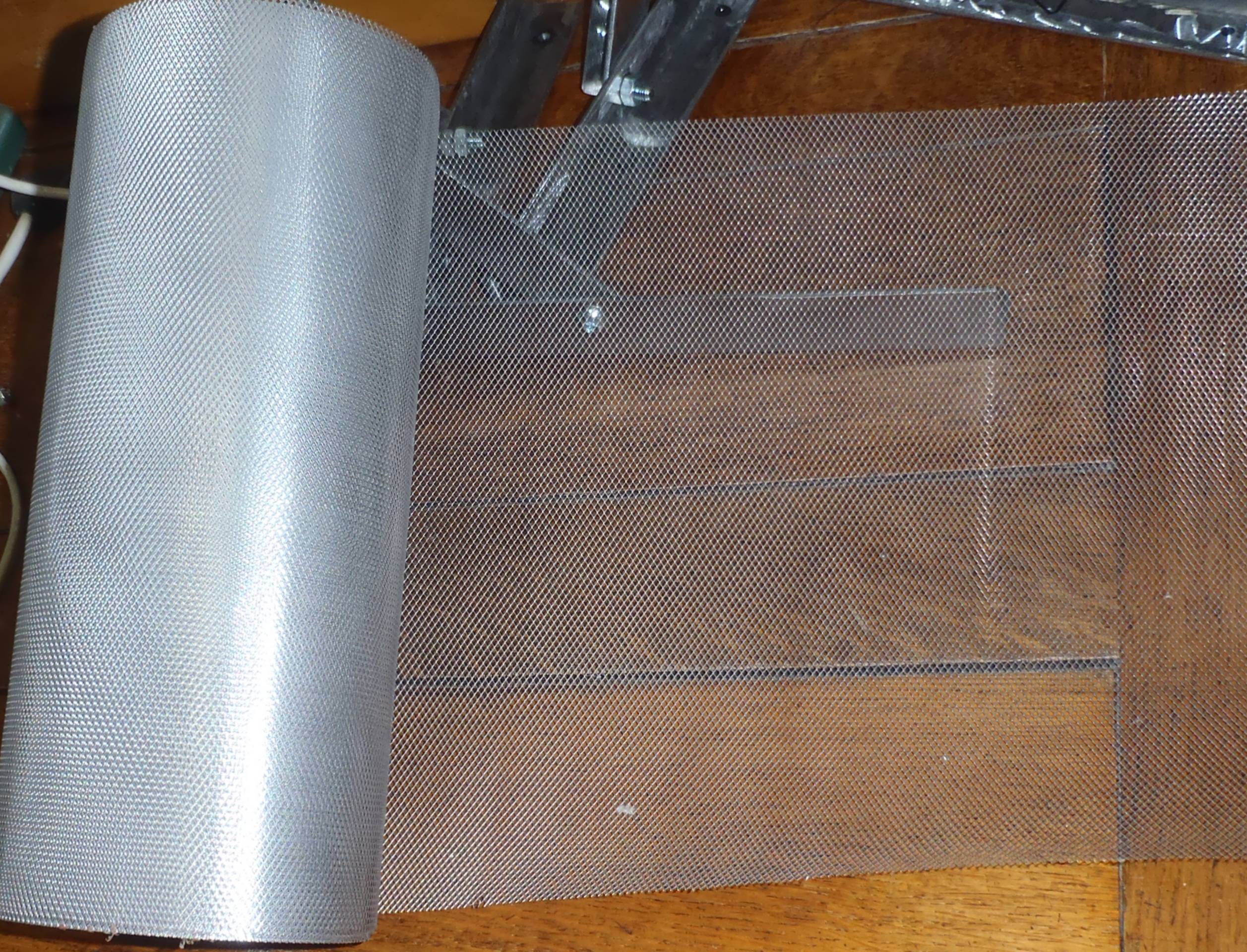
We have bought a roll of stainless steel expanded mesh to use for insect screening in the ventilation gaps around the building. We also plan to cover all of the gutters with it, to keep out all the leaves!
Once again the Internet allows us to buy a product at much reduced prices from the retail. Screwfix sells this mesh in 75mm x 30m rolls for £74, we bought a 300mm (4 x wider) x 30m roll for only £95! (It’s even cheaper in wider rolls)
-
Cement boards arrive early!
The cement boards arrive a day early. The lorry was too high to come down the loke, so we took the trolley up tothe top of the loke.
When we started to pull the trolley we found two tyres were soft and this caused the steering arm to bend while trying to turn into the loke! The two front wheels pointed in different directions…
We then brought the dumper truck up and transfered the boards and drove them down to the site.
Shaun dragged the broken trolley down after the dumper!
-
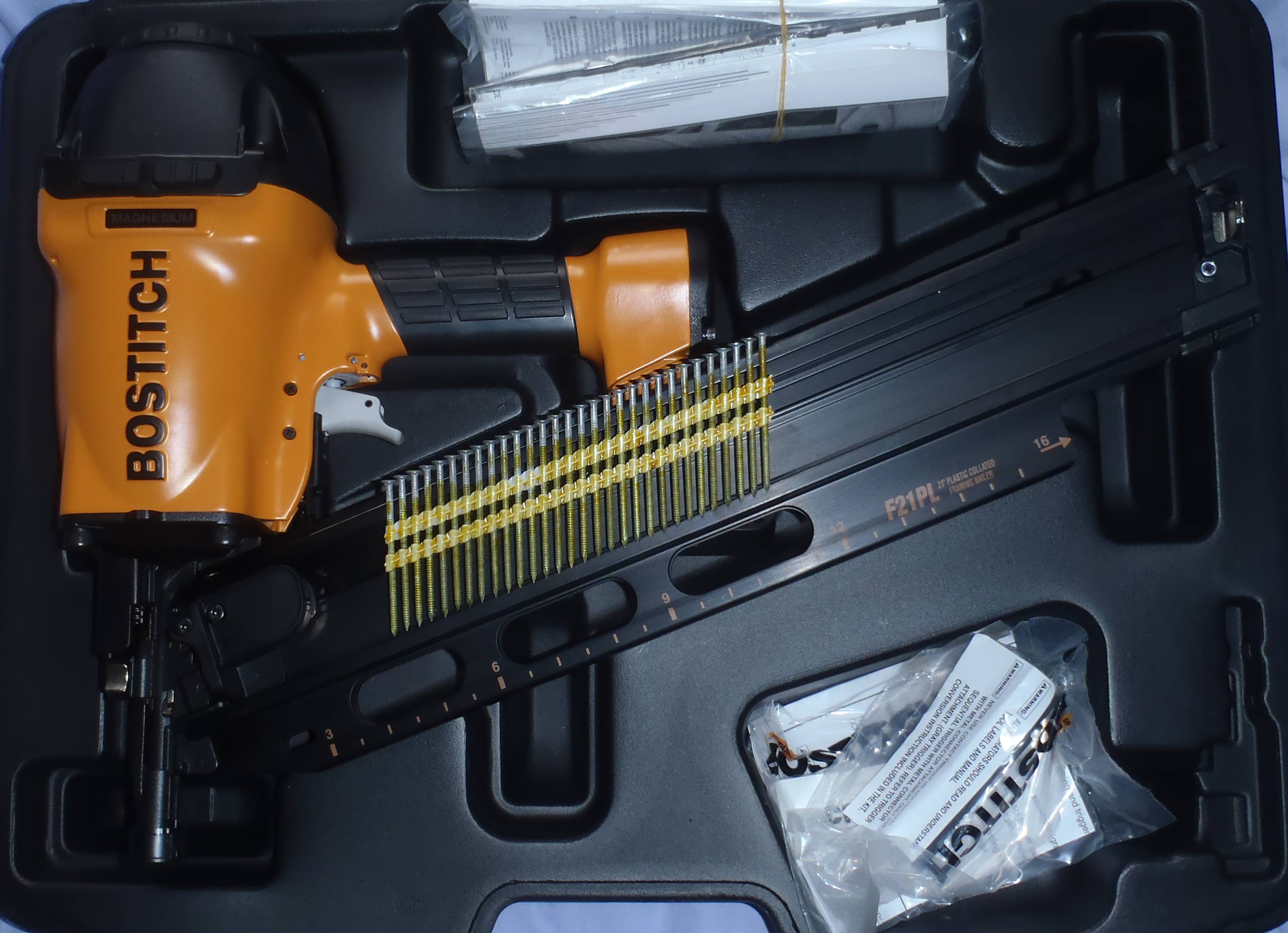
Nail gun arrives
Our new nail gun was delivered today (quite quick!). This gun comes with two tips,one allows you to drive standard nails into timber for joints and panel fixing, the other one has a pointed bit which locates in a hole in a metal fitting and allows you to fire a nail through the hole.
I have tried the standard nose with the nails which came at the same time and it works great! I can’t try the metal connecter one yet as the special nails havn’t come.
-
Sometimes it’s the simple things …
The back wall of the garage is very close to the fence and will need to be made in one piece and stood up as the will be no access to the back. The close proximity to the fence also means the wall will have to have a fire proof exterior.
Simple we thought, just use fibre cement boards to cover the OSB! But when we asked Jewson for some they could only offer strips 125mm wide for soffits! Jewson checked their suppliers and came up blank (other than tile backing boards).
Internet to the rescue! There appear to be dozens of different sheets available, now to find a supplier willing to ship only 10 sheets… we found a supplier who will send any number you want for a fixed delivery charge. Sheets were £14.50 each and delivery £55! Now we hope the will deliver fairly quickly…
-
It’s getting dark!
With the nights drawing in and the clock going back on Sunday we decided to put up some floodlights! A quick shopping trip gave us 4 x 400W lights which we have put on poles attached to the sheds and wired together to a switch inside. They give a good level of light to work by and cost less than £20 all together.
-
Joining OSB Sheets
The structural surface of the garage roof is made from 18mm OSB sheets. The rafters run from front to back and the OSB will run side to side. All edges of the OSB should be fixed so as to keep the roof flat. This is done by having the short edges start and stop on rafters and the long edge being tongue and grooved (t&g) into the next sheet. When we got prices for commercially made t&g we were shocked that it was 50% more than plain boards (£18 vs. £12). This is over £180 for the garage alone! The same thing will be done on the main house and would cost £600 extra!
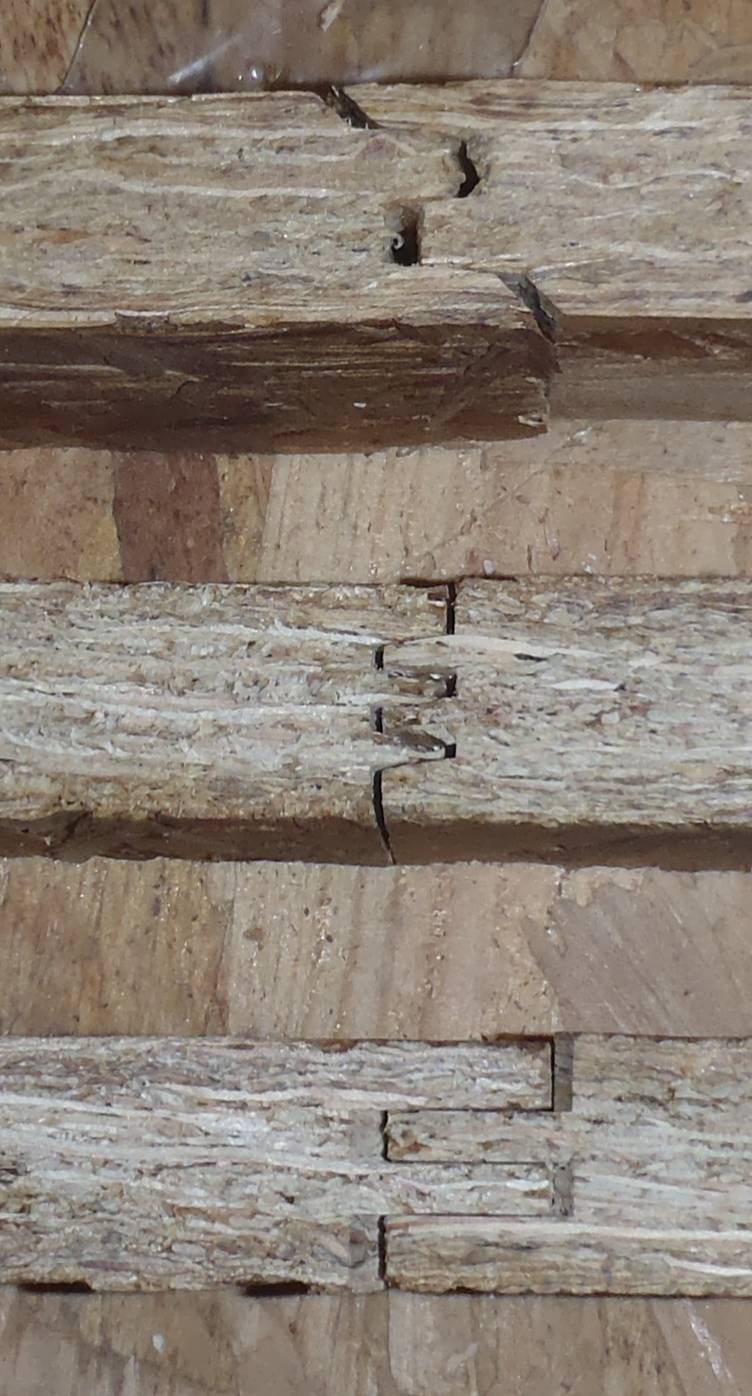
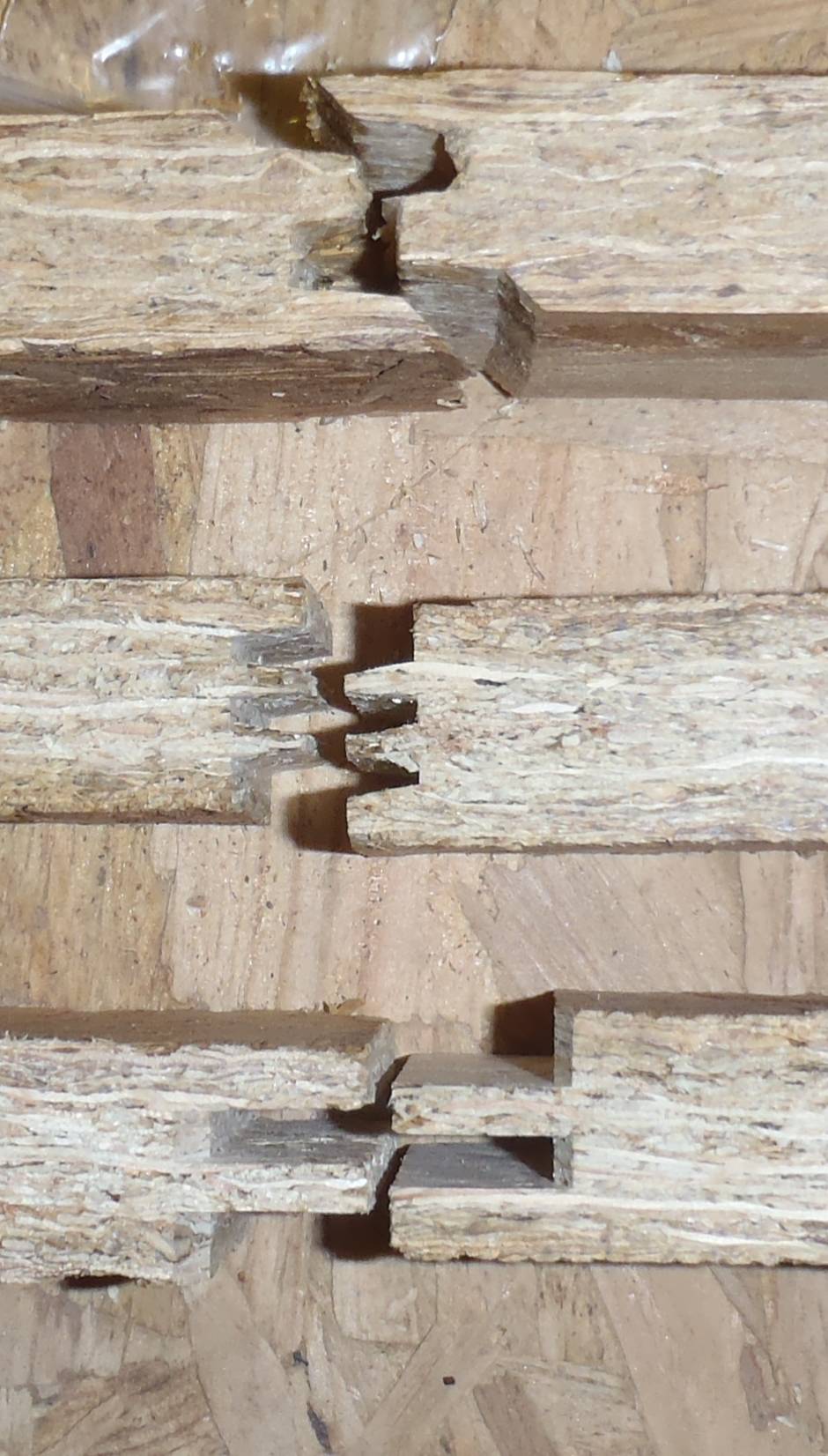
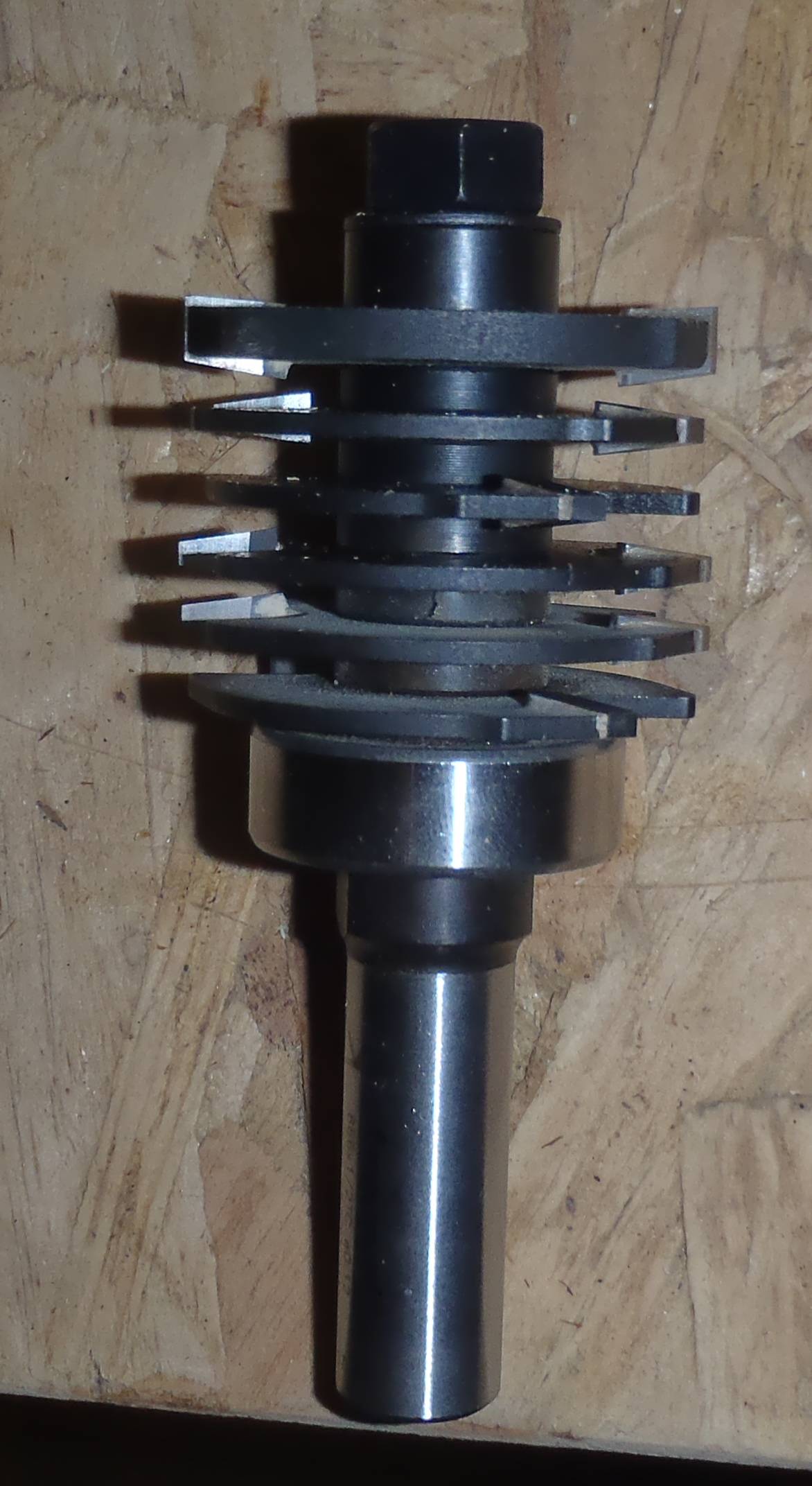
Something had to be done, so in our usual style we decided to DIY… Investigating tools gave us three options :- locked mitre, finger and comb joints. But I could not decide which would be best in OSB so I decided to try all three!
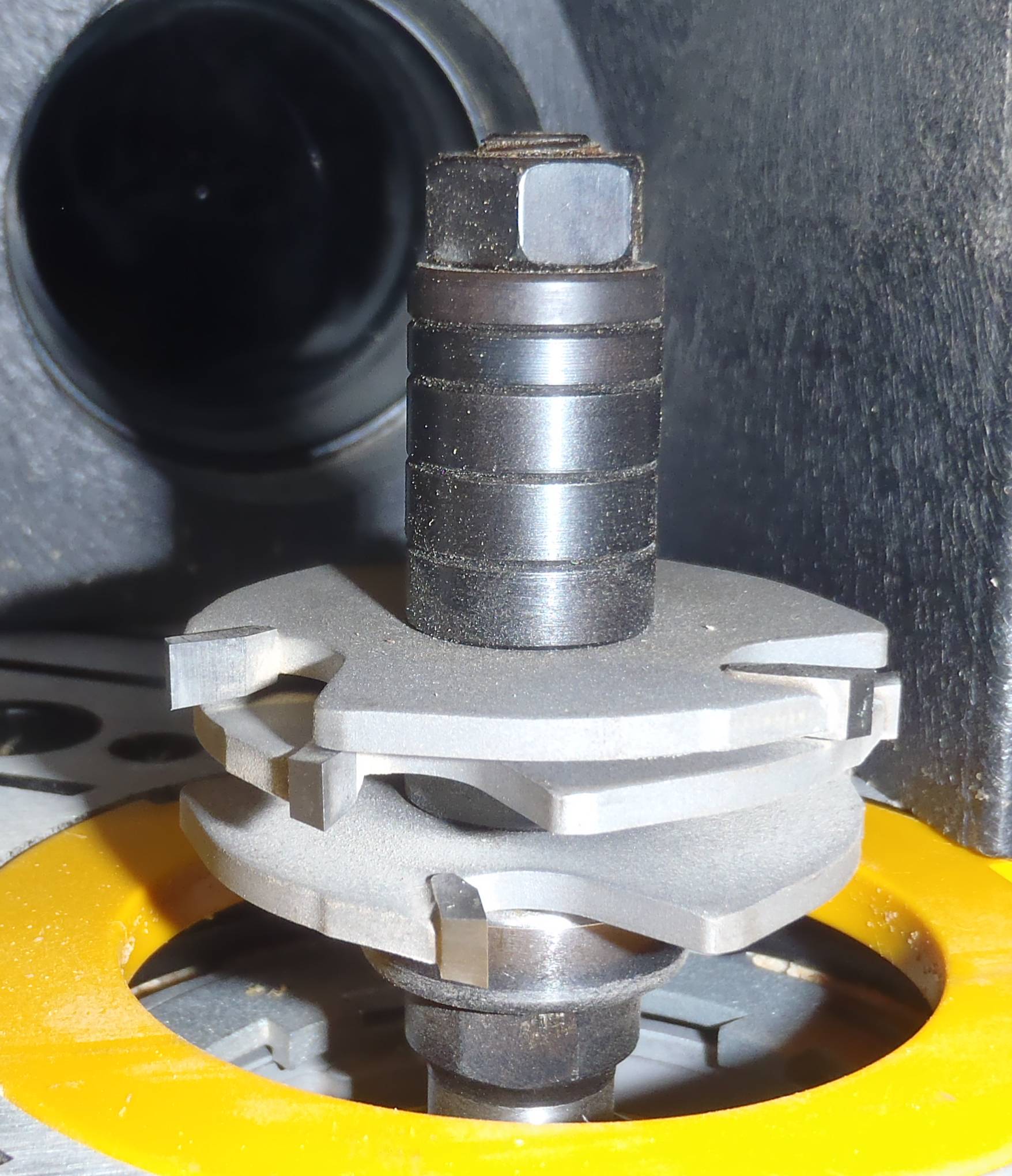
We made sample joints using the cutters and are waiting for the glue to set… We will destructivly test the joints to determine which is best, but after the comb joint is the easyest to make. You can see examples of the joints below in order.
And here are pictures of the cutters