Category: Phase 1

  • First Layer of wall boards is going on!

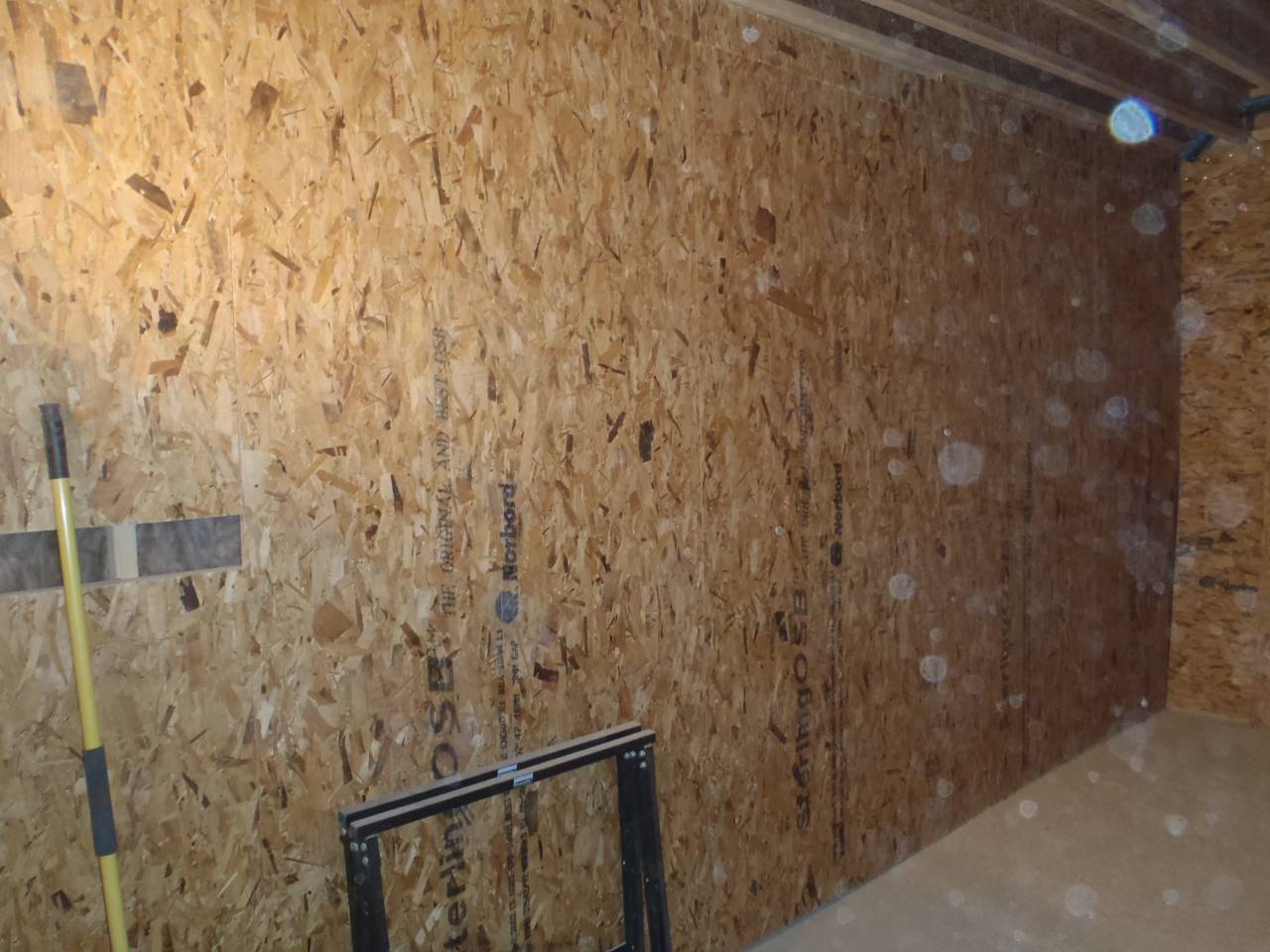
    In the garage, the front part, we have been putting up the first layer of wall boards. This layer is made of sheets of 18mm OSB with the edges cut to form tongues and grooves interlocking structures to make a very strong joints without the need to keep aligning the sheet’s edges onto the horizontal battens.

    We have done the left and right hand side of the garage and have started on the middle wall.

    OSB lining on outside walls

    OSB lining on outside walls

    OSB lining on outside walls

    OSB lining on outside walls

    Once we finished the middle wall, we will then insert the glass wool insulation into the roof space and cover it all up with our new Fermacell. Then go around to place more Fermacell on the walls too! That would make the front part of the garage pretty much finished, apart from the lights, utility rail and electrical cables!

  • Fermacell Arrives!

    Our 120sheets of Fermacell has arrived! The lorry couldn’t fit down the Loke so they got their fork lift truck (they bought it with them!) and offloaded, separately, the two pallets, up on the main Beccles Road and drove down the Loke! They even managed to drive into our garage to dump the second pallet inside!

    The Fermacell sheets are 10mm thick and the usual 2400mm by 1200mm metric size! Fermacell is very flat and very constant in thickness. It is fibre reinforced gypsum and compressed to form a level surface, ready to be covered (wallpaper or paint) straight away. Fermacell do not have that paper finish, all edges are square and sharp! Just butt the boards together with a thin line of glue specially formulated to form strong joints.

    They supply a “surface” treatment paste (we bought a tub) which you can apply to the board and scrape off using the metal spatula to form a very smooth finish, ready for painting directly. The original surface has very tiny pits as a result of the manufacturing process and even here you can paint the surface using rollers to get that matt finish!

    The Fermacell is very strong compared with the old fashioned plasterboards, one screw, once in the board, can hold 20kg all by itself! Even more for thicker boards!

    No more need for that highly skilled chore of plastering the walls! So time and money is saved at this point which of course is taken up by the higher cost of the Fermacell in the first place, but they are ideal for us!

  • Conduits in Walls

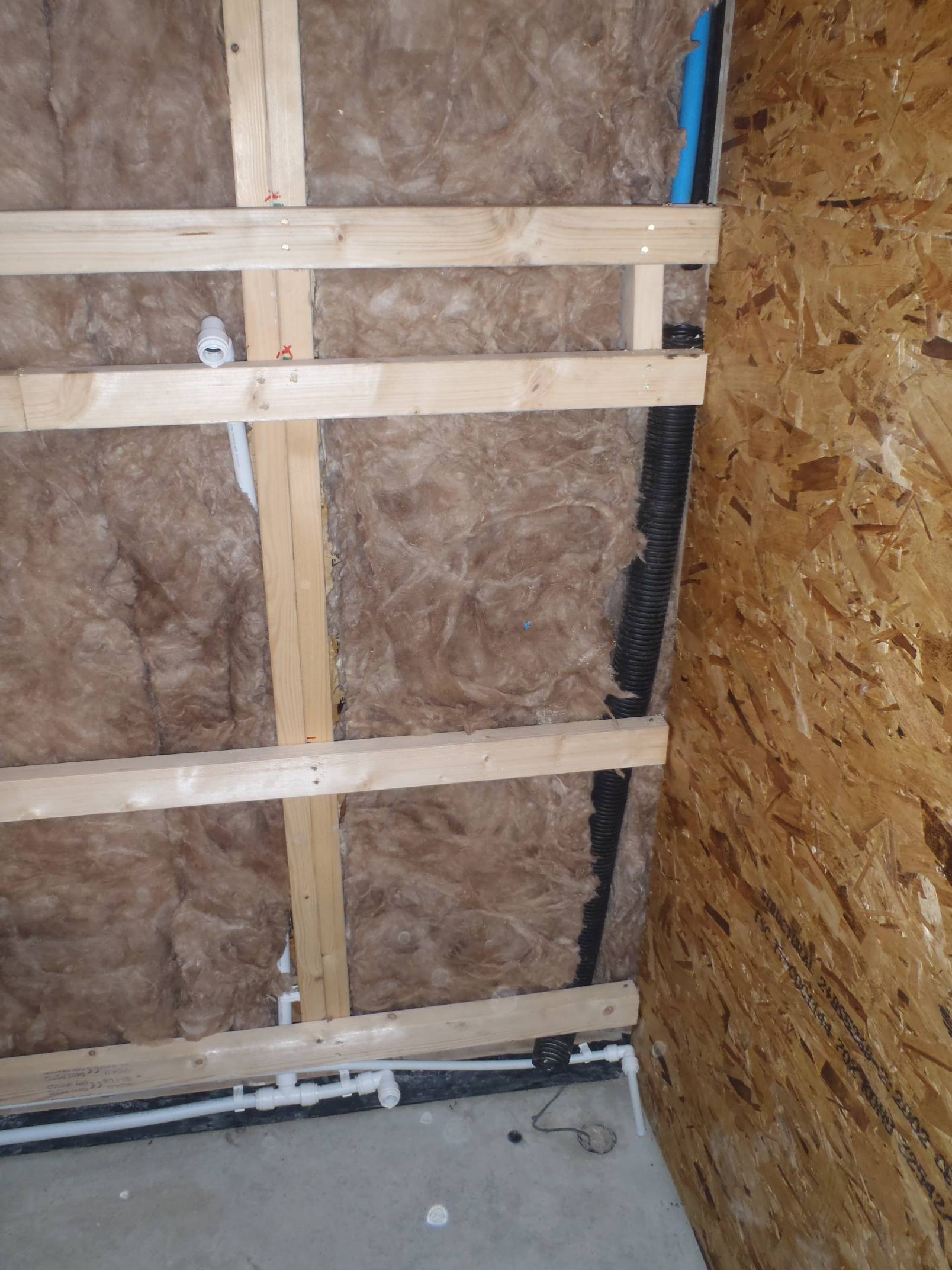
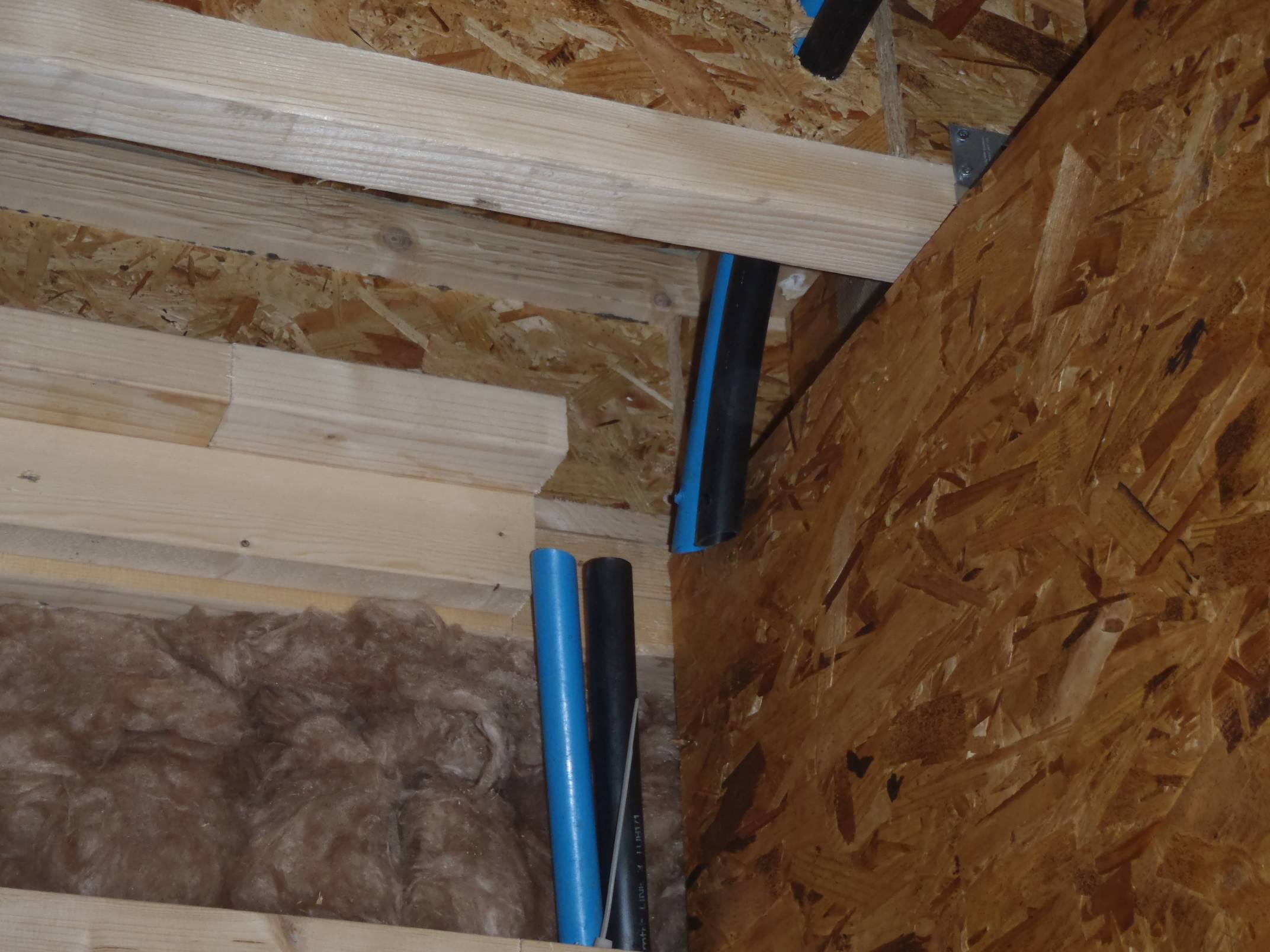
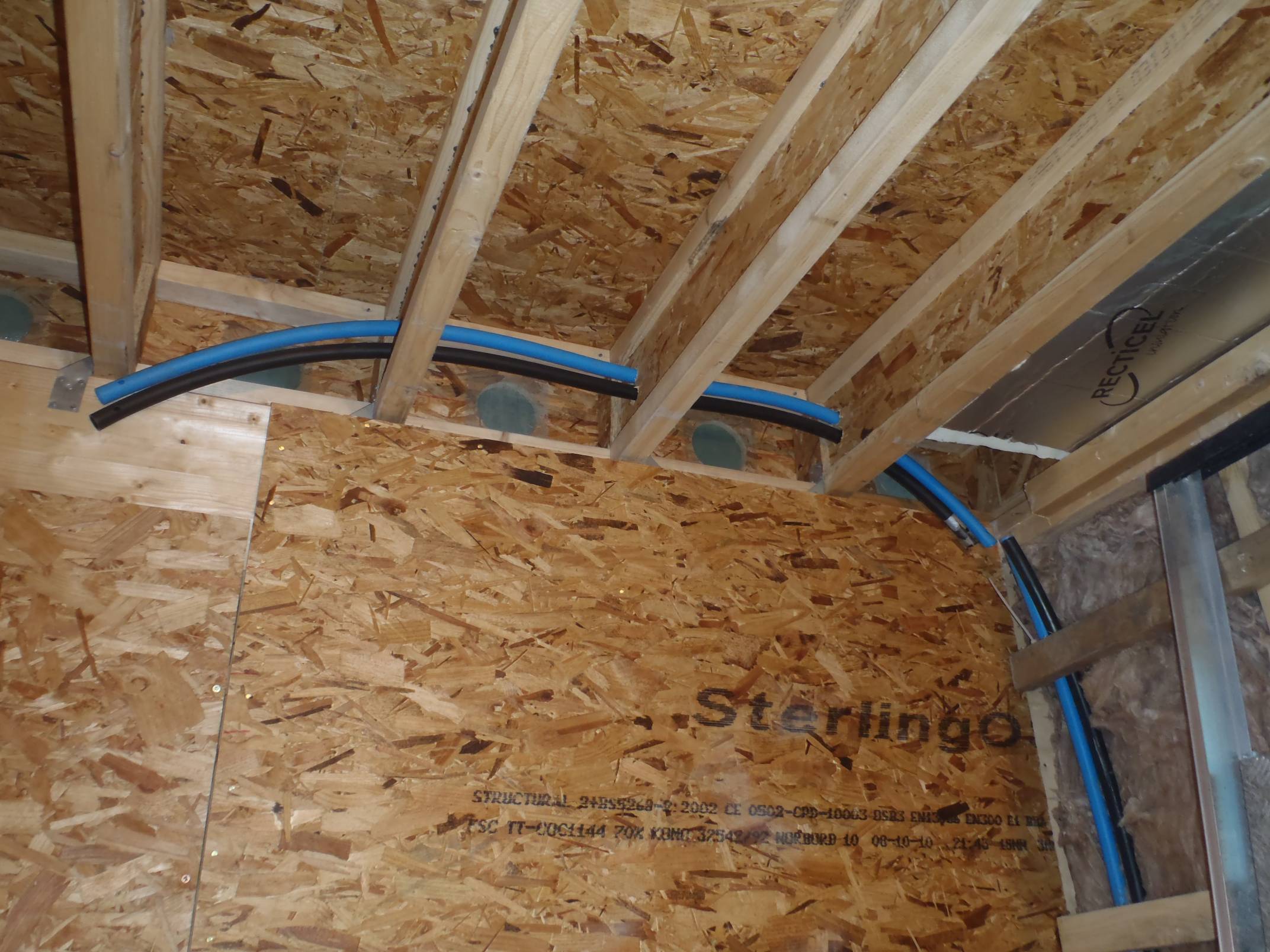
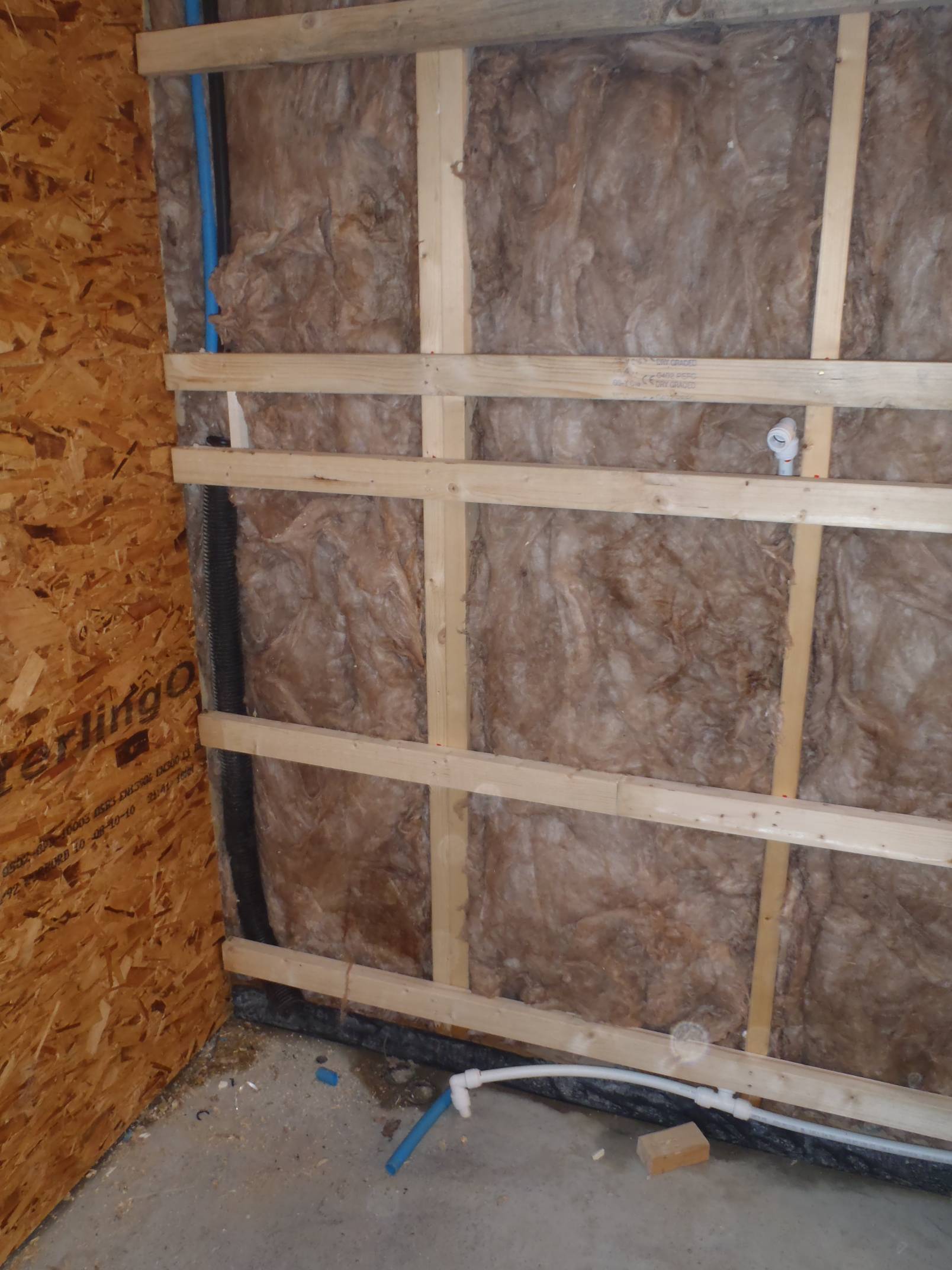
    We have been inserting the conduits in the walls and other pipework! The electrics data and along with other pipes like compressed air, vacuum and water & waste.

    It is a fiddly work, routing the various lengths of plastic conduits up into the ceiling space for lighting circuits, smaller conduits for data cables and connecting compressed air to both sides of the garage and into the garden room too!

    but all this has to be done first before we can put up the base 18mm OSB boards.

    Garage Wall ducts

    Garage Wall ducts

    Garage Wall ducts

    Garage Wall ducts

    Garage Wall ducts

    Garage Wall ducts

    Garage Wall ducts

    Garage Wall ducts

    Garage Wall ducts

    Garage Wall ducts

  • Framed the WC and finished the battening

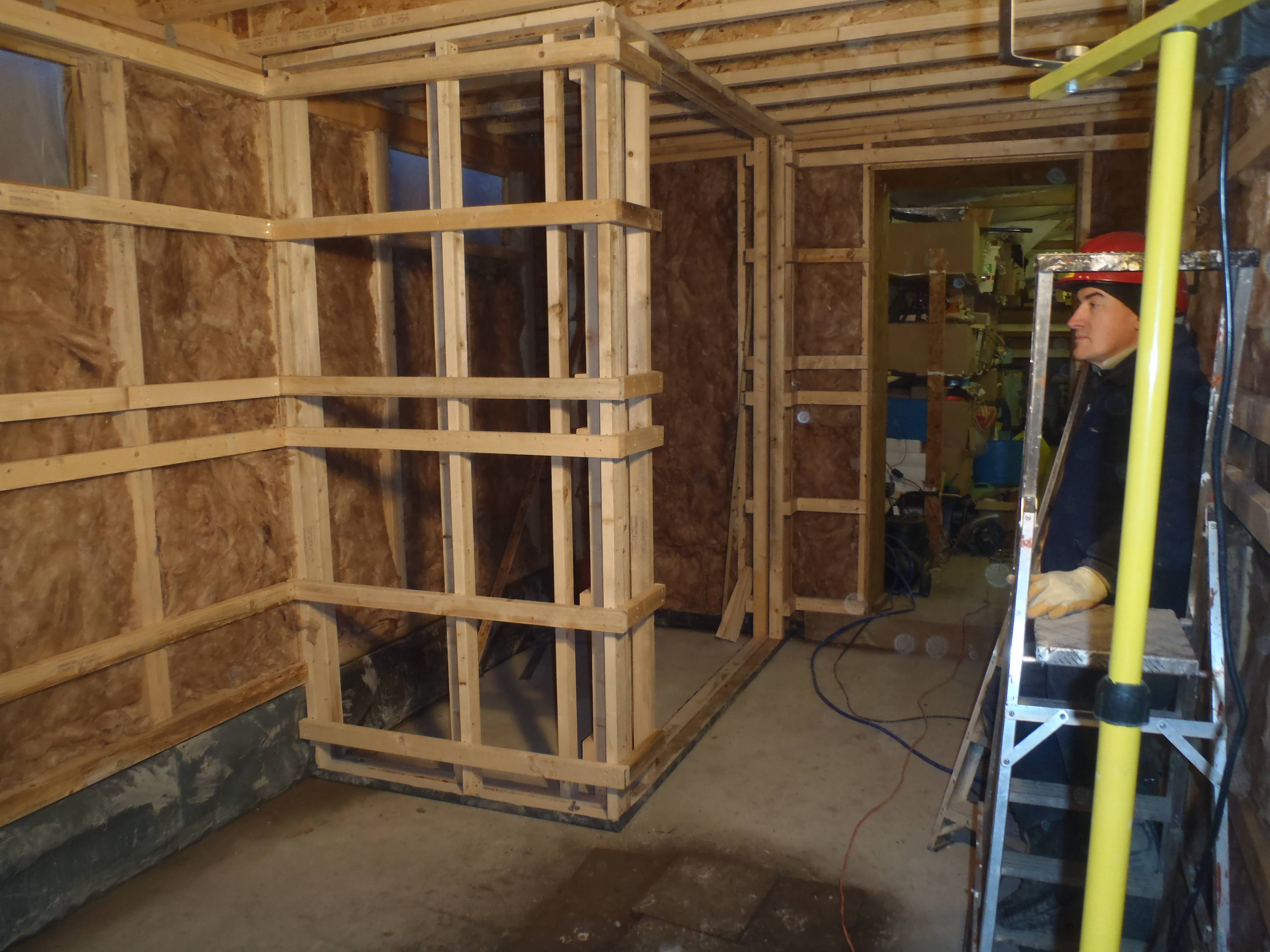
    We framed out the WC for the garage which will have just a loo and basin in it. Spent some time getting it square all round! Then we finished off the wall battens.

    WC Framing

    WC Framing

  • Counter battens fixed

    We have fixed up the 38mm x 63mm battens on most of the walls, these are to provide a services area behind the wall surfaces. The gap between the close together battens will be the ‘utility rail’ where sockets and switches will go.

    Horizontal rails fitted

    Horizontal rails fitted

    Horizontal rails fitted

    Horizontal rails fitted

    Horizontal rails fitted

    Horizontal rails fitted

    Horizontal rails fitted

    Horizontal rails fitted

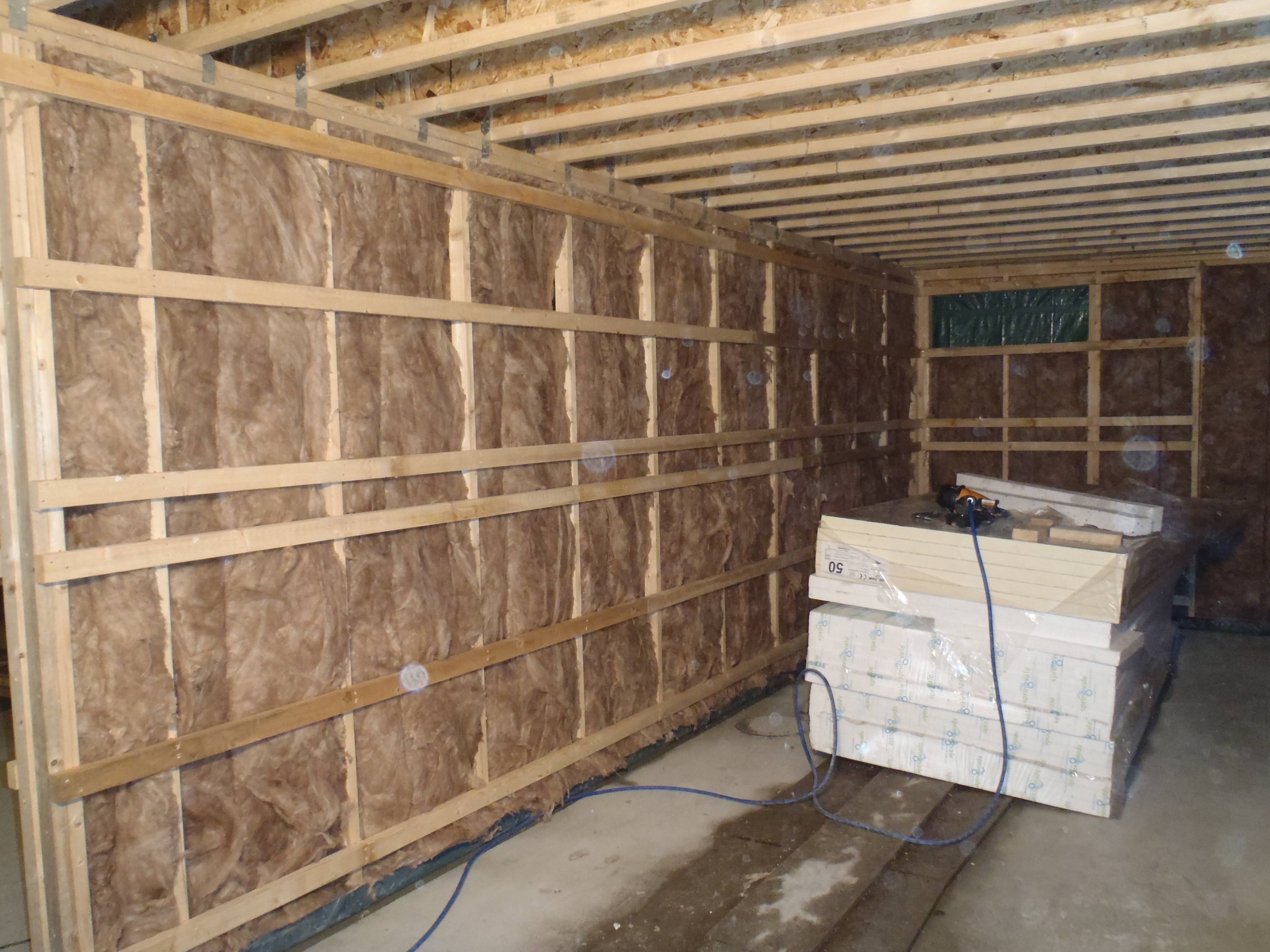
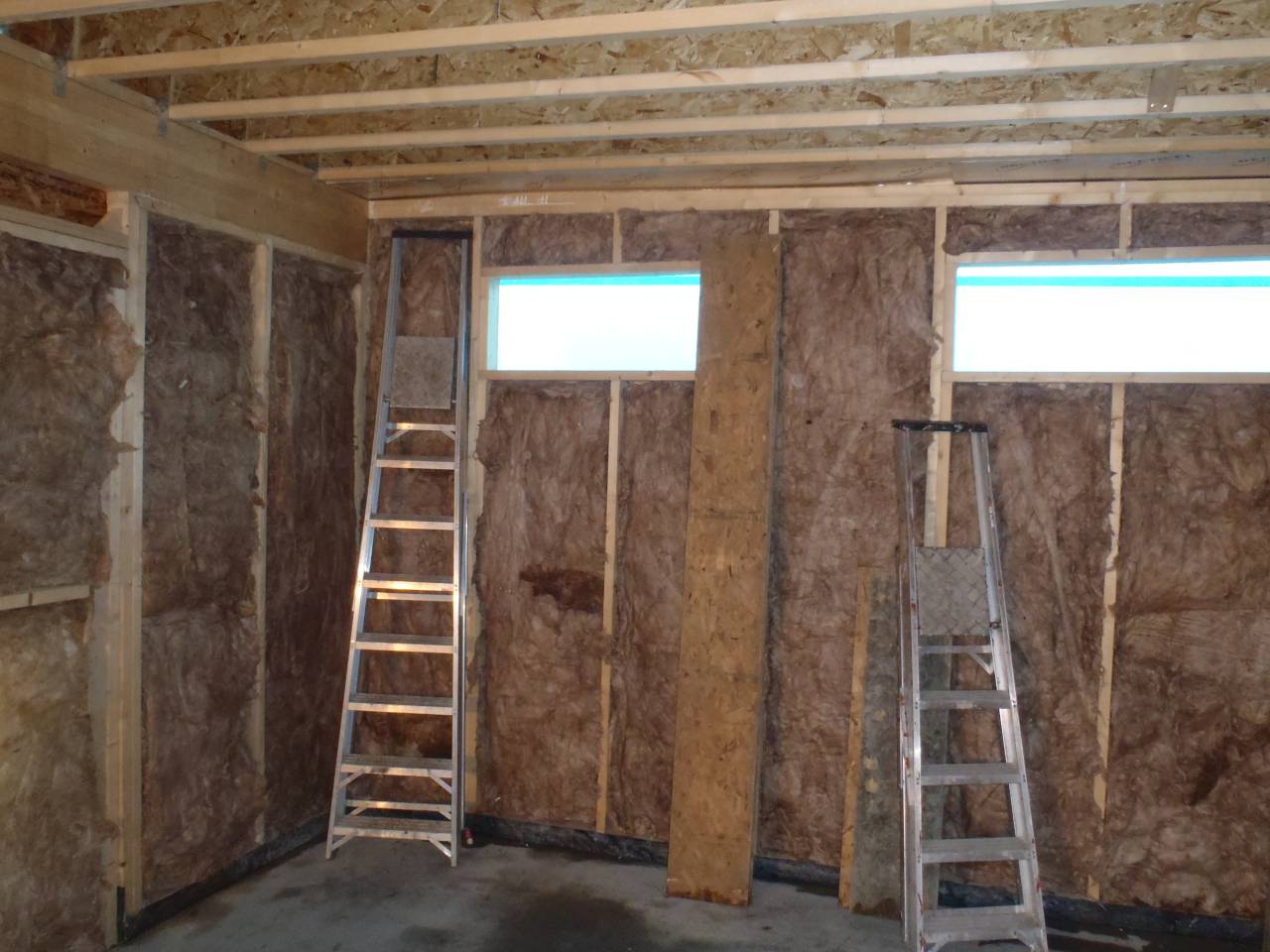
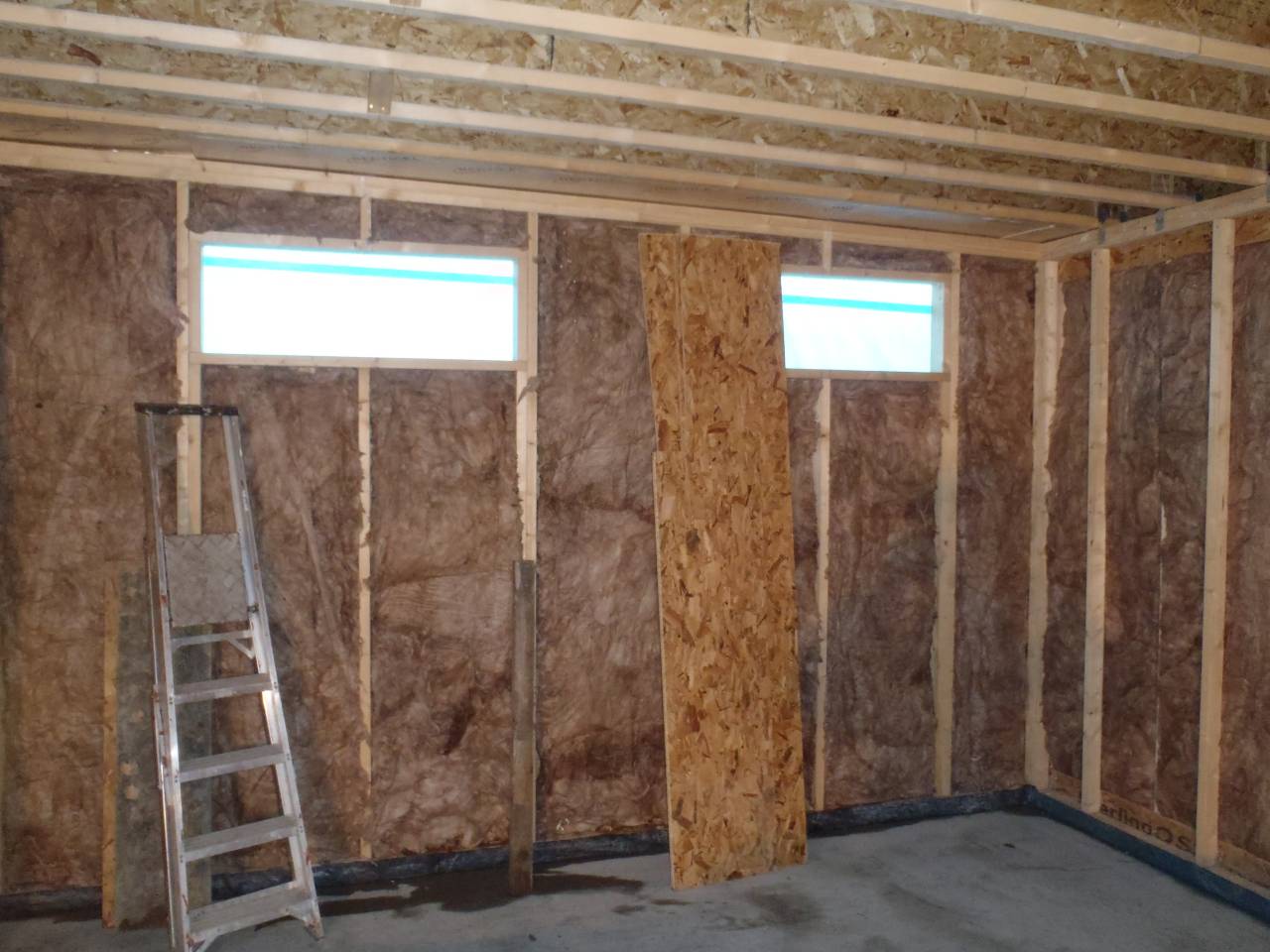
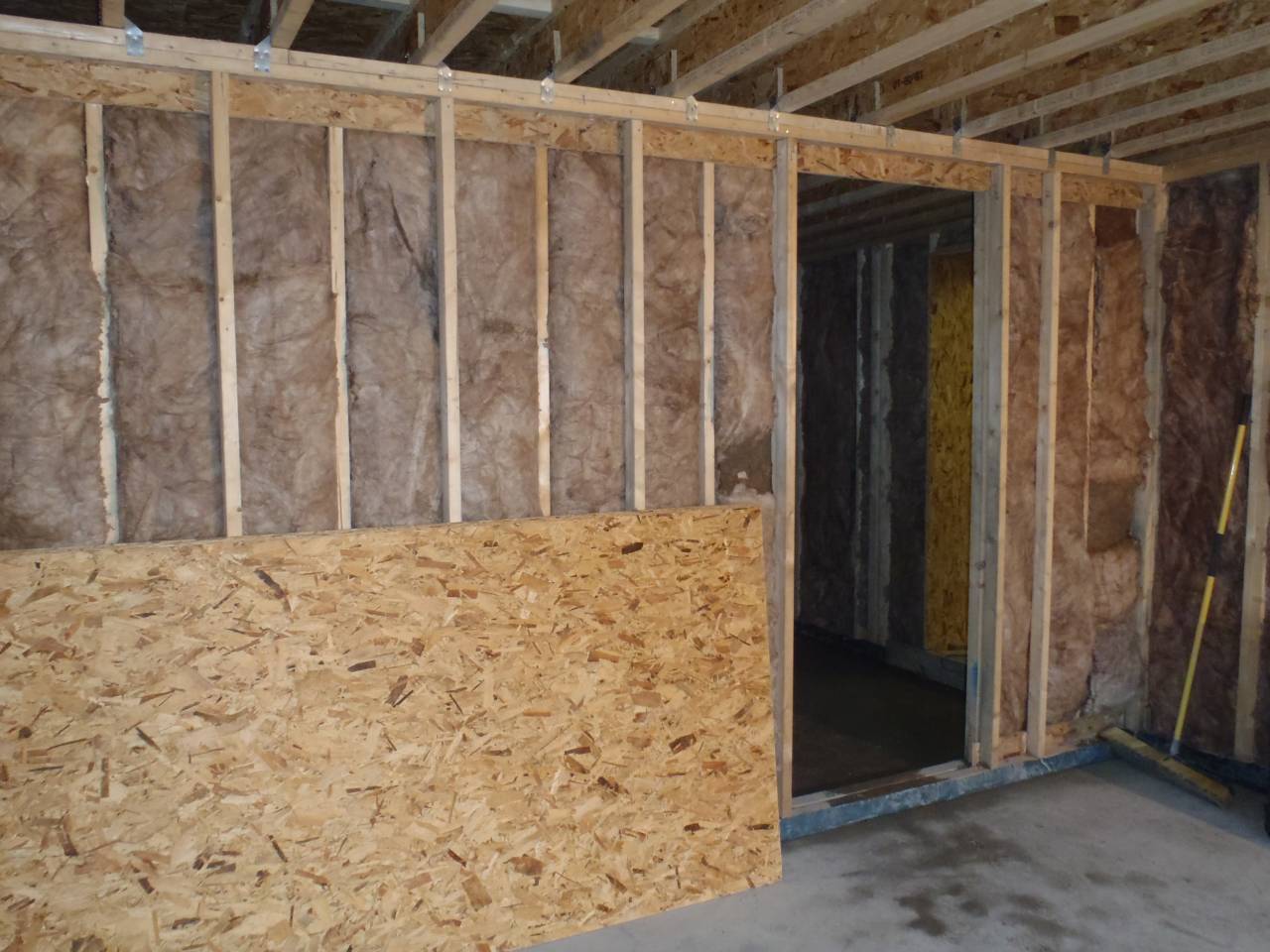
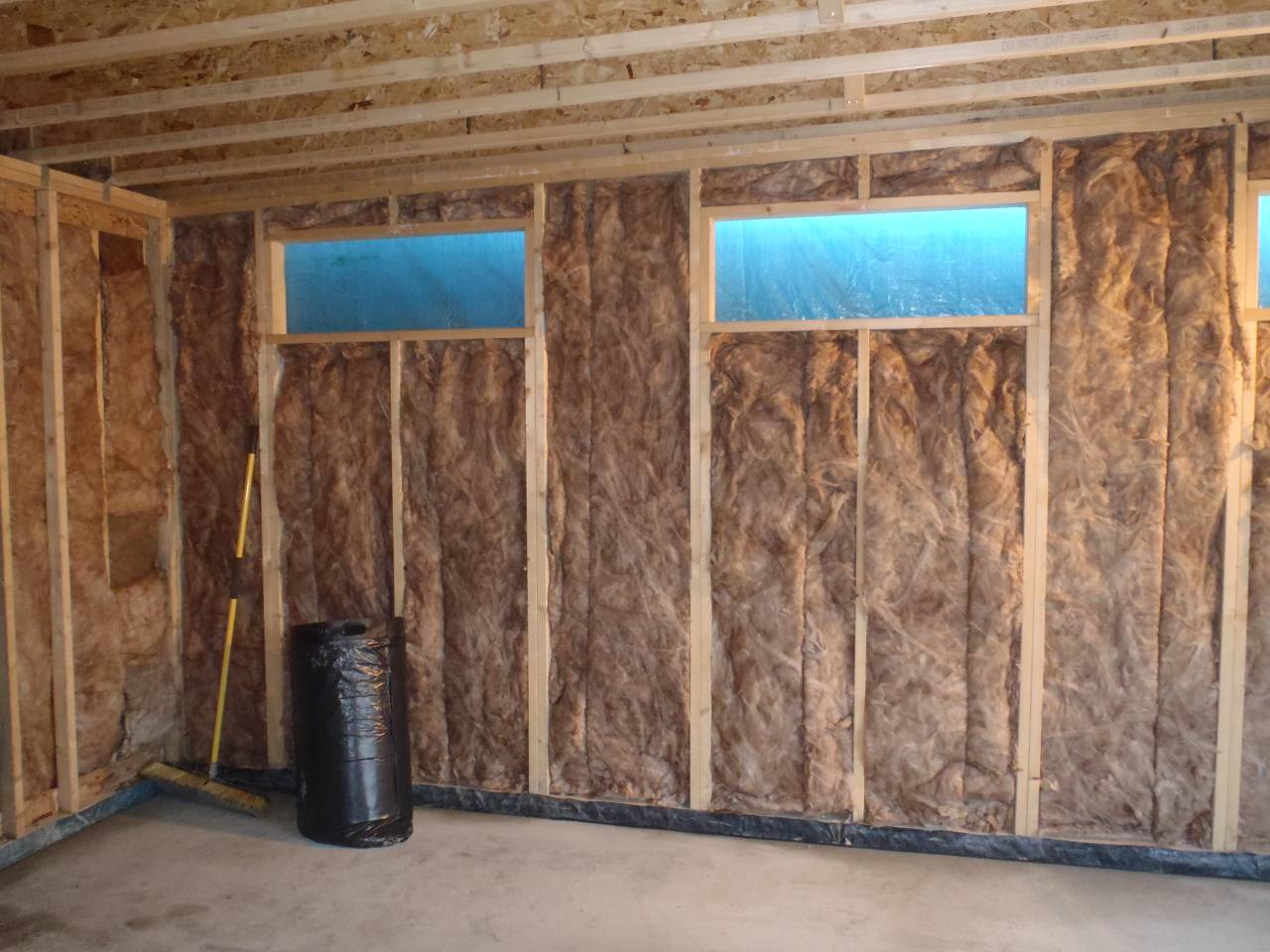
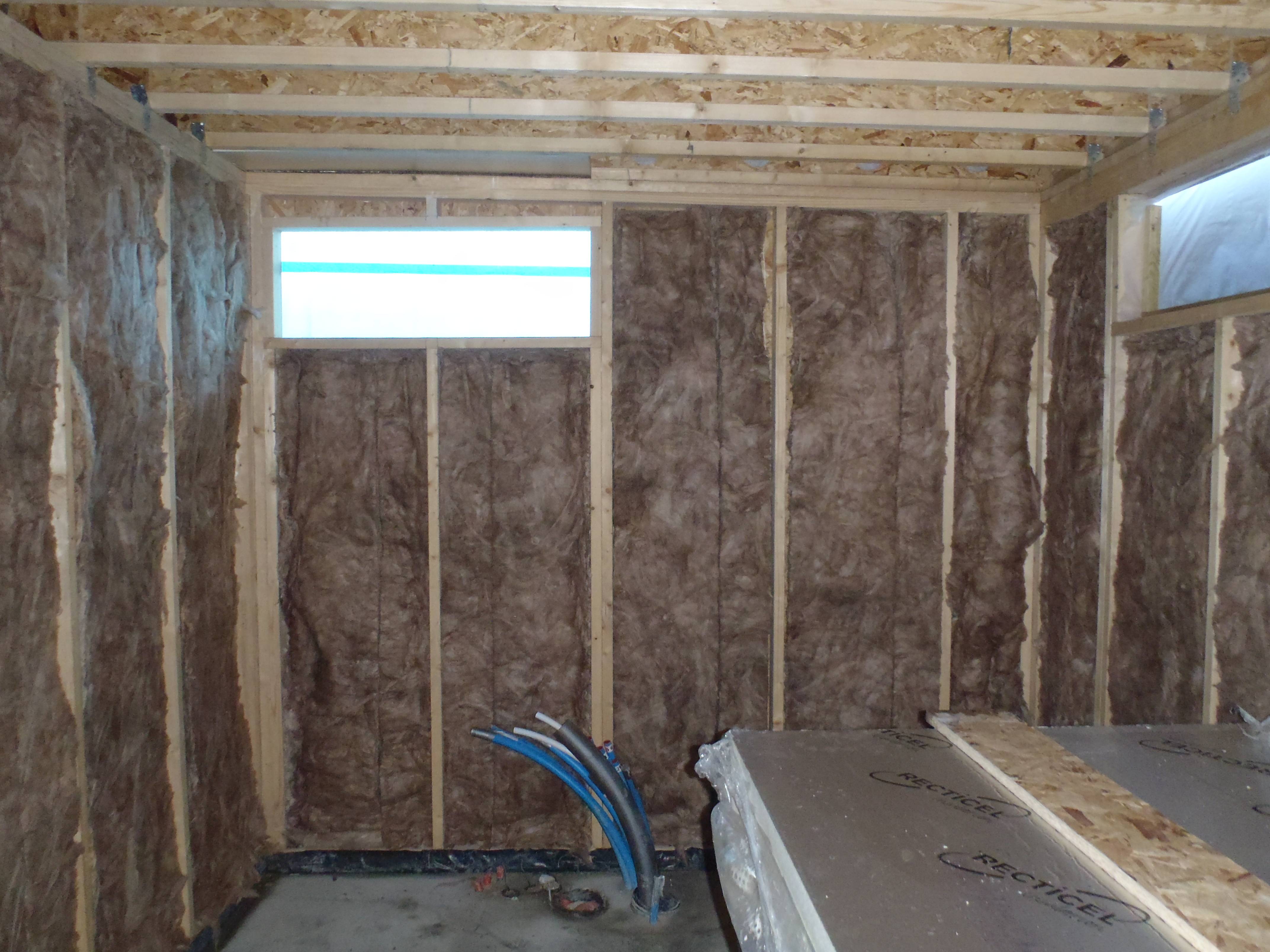
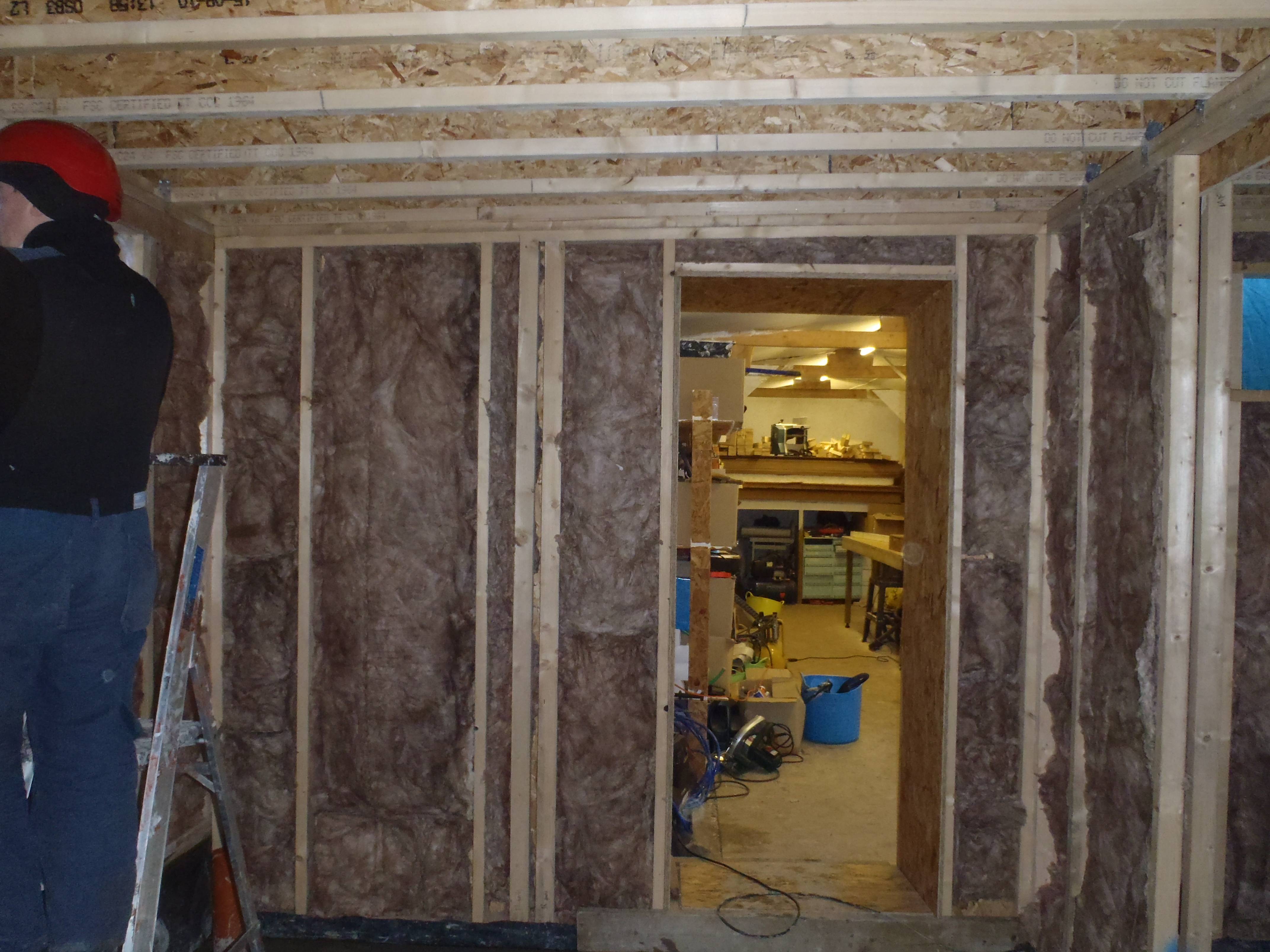
  • Glass Wool Insulation Installed!

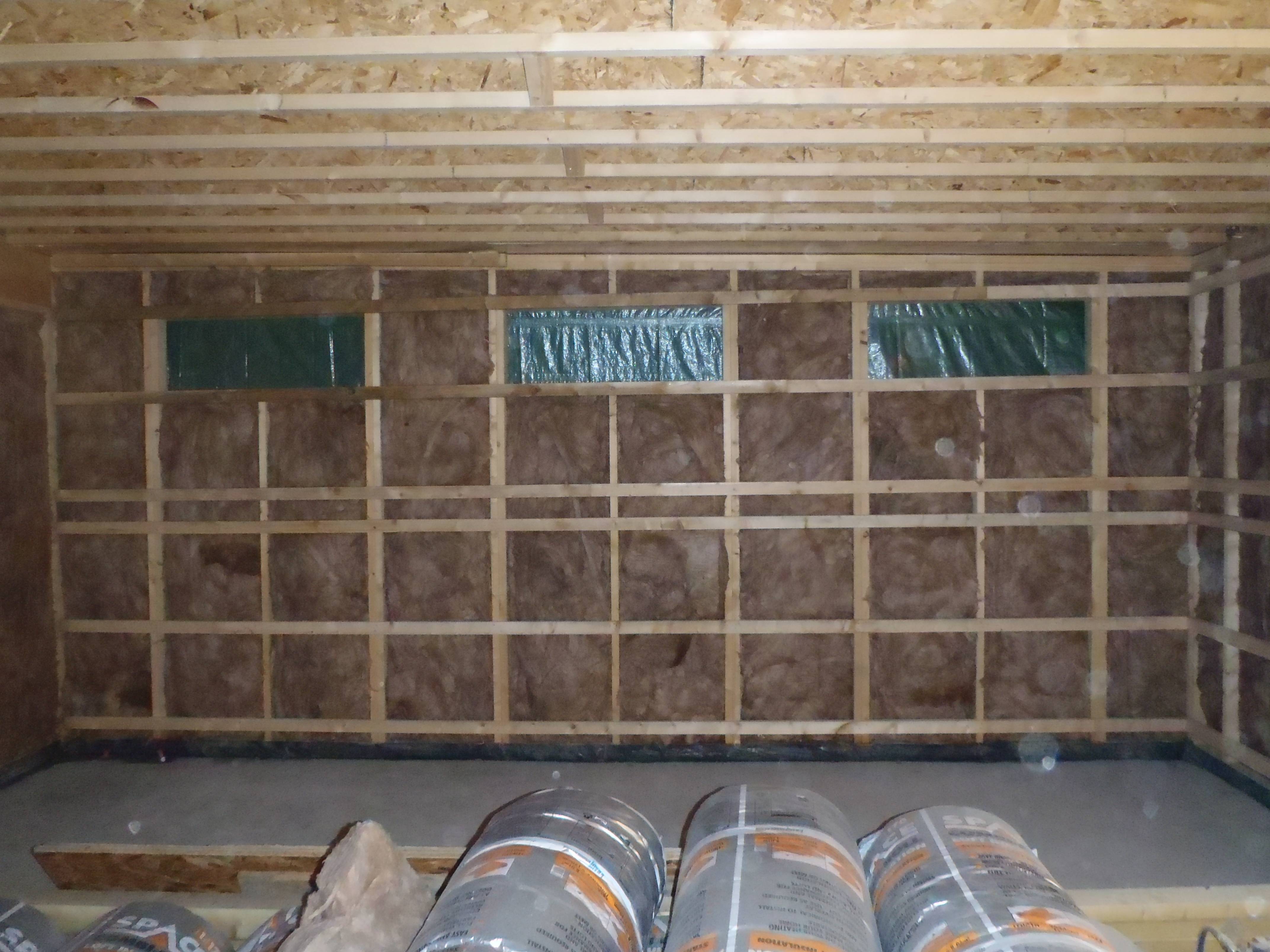
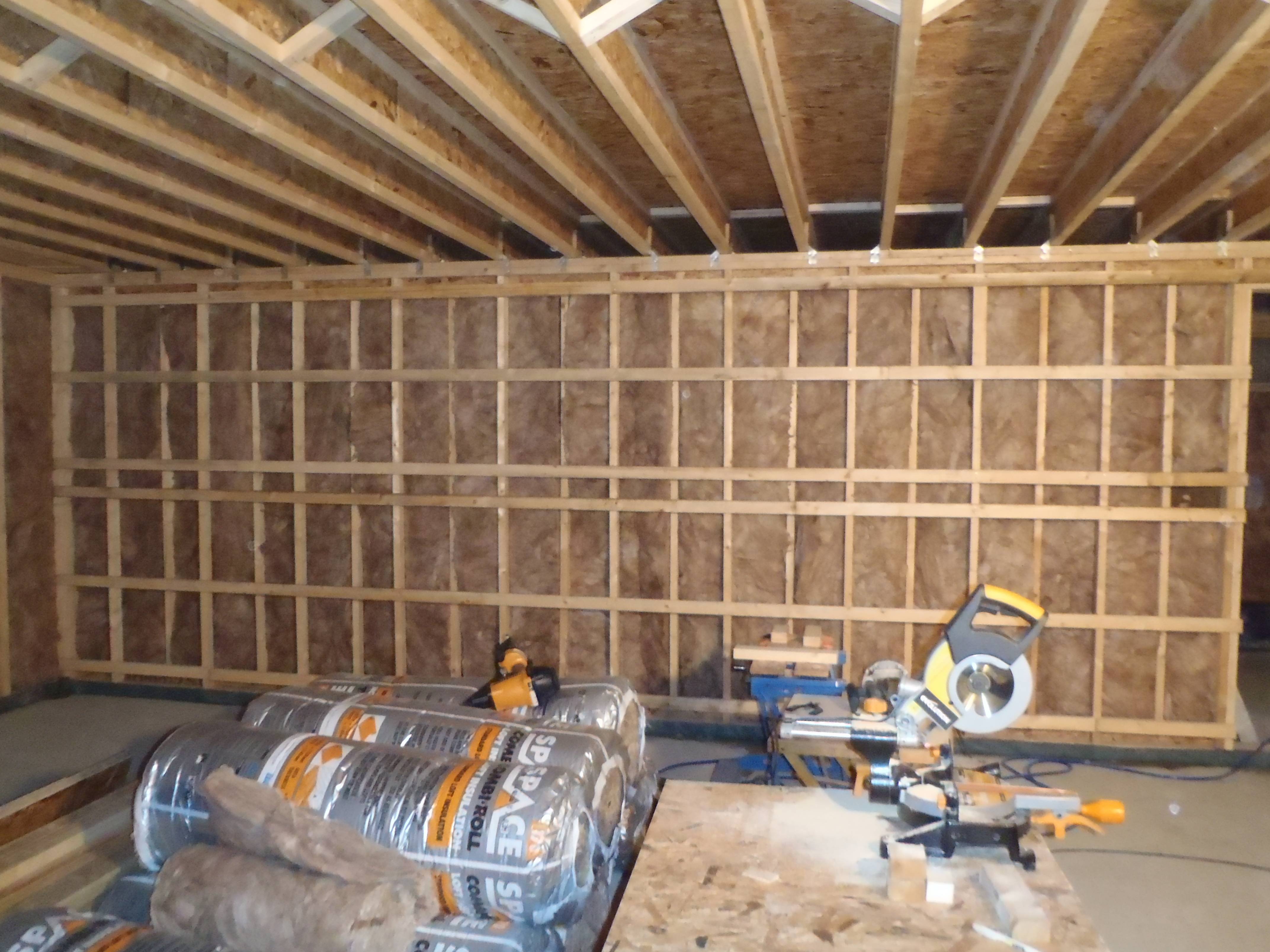
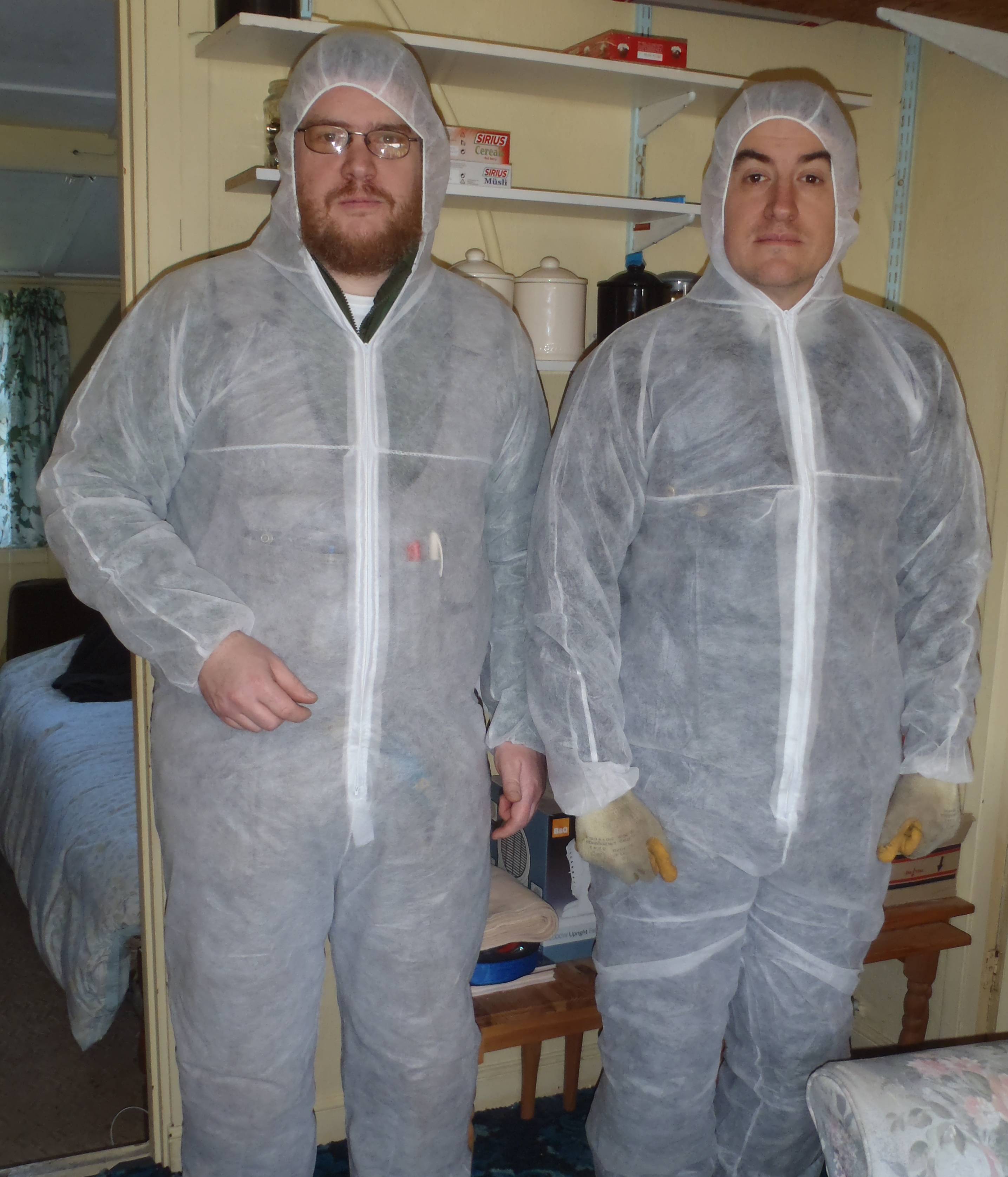
    Today we put up 100mm thick glass wool insulation in all the walls (front, middle, back and the two sides). We wore one piece dust protective suits and dust masks to minimise the really itchy nature of the glass wool.

    The Men in white

    The Men in white

     (in our suits)

    It went quite quickly and we finished all the walls by lunch.

    Glass Wool installed

    Glass Wool installed

    Glass Wool installed

    Glass Wool installed

    Glass Wool installed

    Glass Wool installed

    Glass Wool installed

    Glass Wool installed

    Glass Wool installed

    Glass Wool installed

    Garden Room

    Glass Wool installed

    Glass Wool installed

    Glass Wool installed

    Glass Wool installed

    The only part that is not done is the roof. We are waiting for the ceiling boards to come first!

  • Joined Up!

    The Garage and the old workshop are now connected together via a short corridor! We used sections of old pieces of 18mm OSB sheets to build the mini ceiling, the two side walls and a floor!

    The Joining Corridor

    The Joining Corridor

    But first we had to cut out a “door” size hole through the side wall of the workshop! Thank goodness for long sharp blades in our Sabre Saw! We sliced both inner and outer layers plus the insulation in one go and out popped a piece of the wall and a bite of the old door too!

    We are very glad that we built a strong workshop all those years ago that we could slice a section out of the wall and the door frame, without any sign of movements or collapse!! Phew!

  • Roof Nailed and Covered with Rubber!

    It was a nice day again so we finished off the nailing requirement as specified in the structural engineer’s report. It was very nice having a compressed air nail gun to do the job! There were approximately 500nails in total! But with the bump trigger selected, it was quite easy to just go along and “bump” the gun down and it fires a nail, move along and bump another nail in and so on!

    We decided to put up our long term rubber sheeting to solve the water leaks! The tarpaulin we bought for the temporary job of water proofing didn’t work! It was too short in the first place, this was amazing as the packaging stated that the size was 10metres by 10metres and it simply didn’t do the 9.3metres direction!! This is typical of cheap tarpaulin! But in the second place we think the cheap tarpaulin was also too thin and was being punctured too easily with us walking on top of it!

    So after the nailing, we spent the afternoon cleaning the whole roof, smoothing out any sharp edges and lumps, making sure no nail heads were sticking up and sweeping all the crud off!

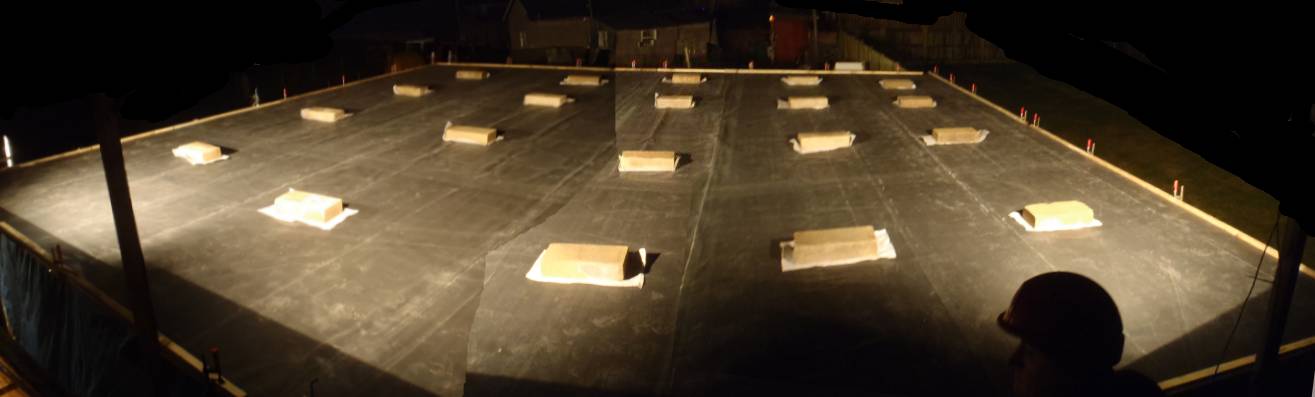
    Then using our mini digger to lift the rubber bundle up (it was very heavy indeed!) we pulled, pushed and unfolded it out to nicely cover the whole roof. We used a set of double battens to grip the edges of the rubber top after it was folded over the edge of the roof. We used loads of clamps to hold it in place until we have another dry day to make the proper designed edging. Finally we loaded the middle of the roof with 20 concrete blocks lying on small protection pads to stop any possible damage. These will stay there until we have a good chance of 2 or 3 days of dry and warm weather to glue the rubber down properly.

    (rubber sheet laid out with 20 concrete blocks to hold down middle)

    Now we will see if we have any leaks!! Blooming well hope not!!

  • Finished roof boards

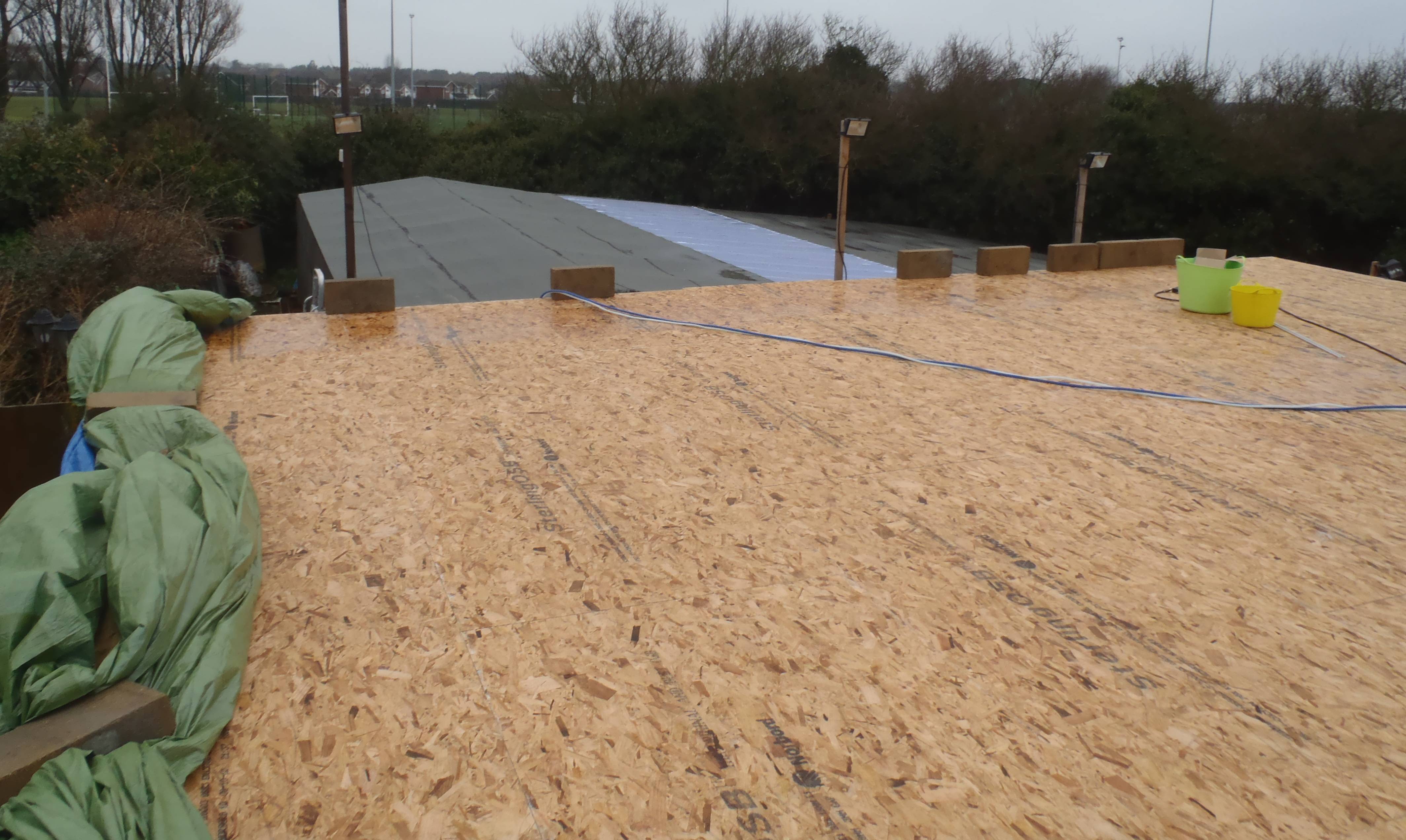
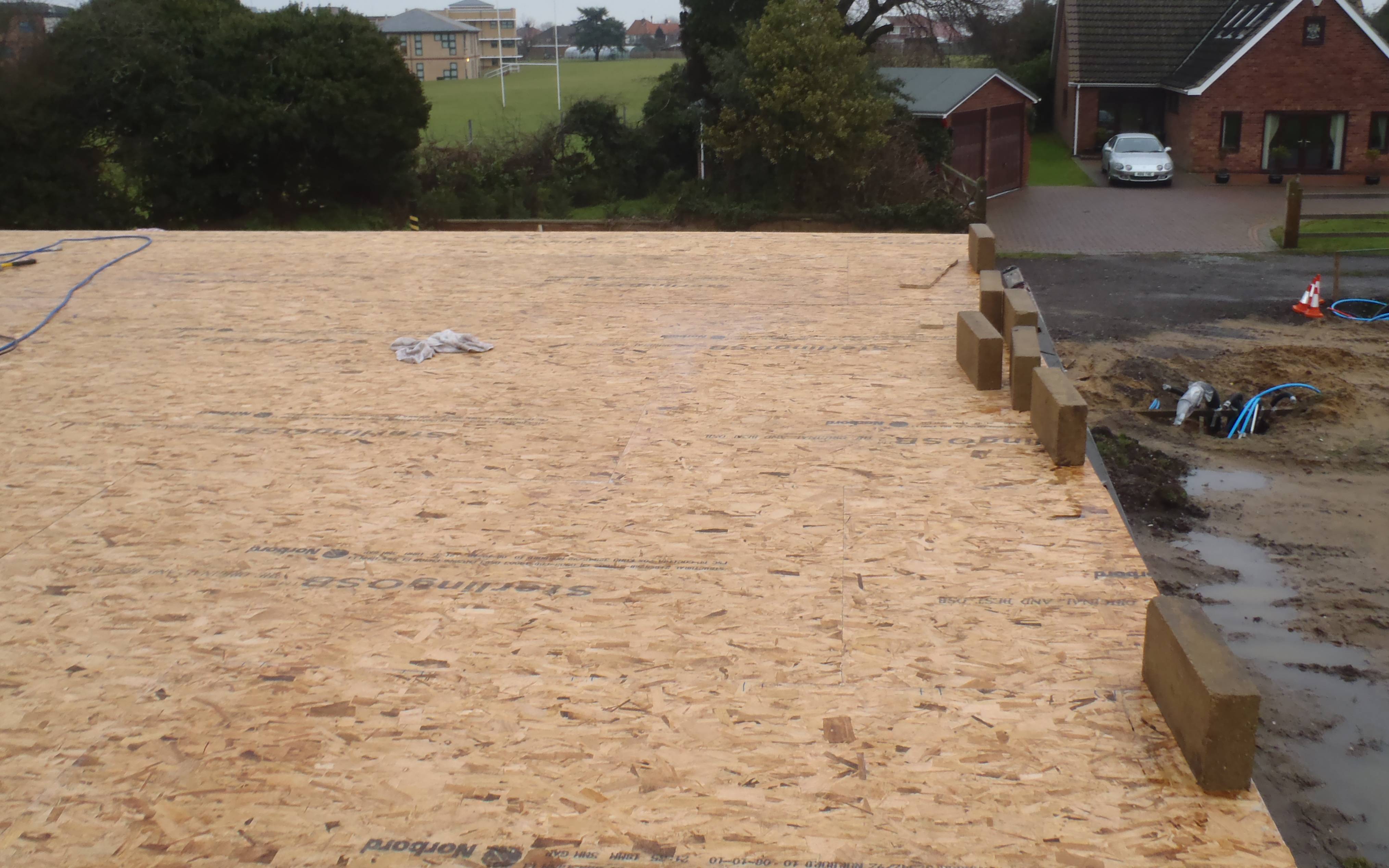
    Finished off the last row of boards after the rain stopped this morning… We thought we would get all the nailing done but the rain returned! So we recovered the roof with the tarpaulin until another day (may be Saturday -looking at the forecast).

    Roof boards all on

    Roof boards all on

    Roof boards all on

    Roof boards all on

    Tarpaulin day 3

    Tarpaulin day 3

  • roof Boards are on!

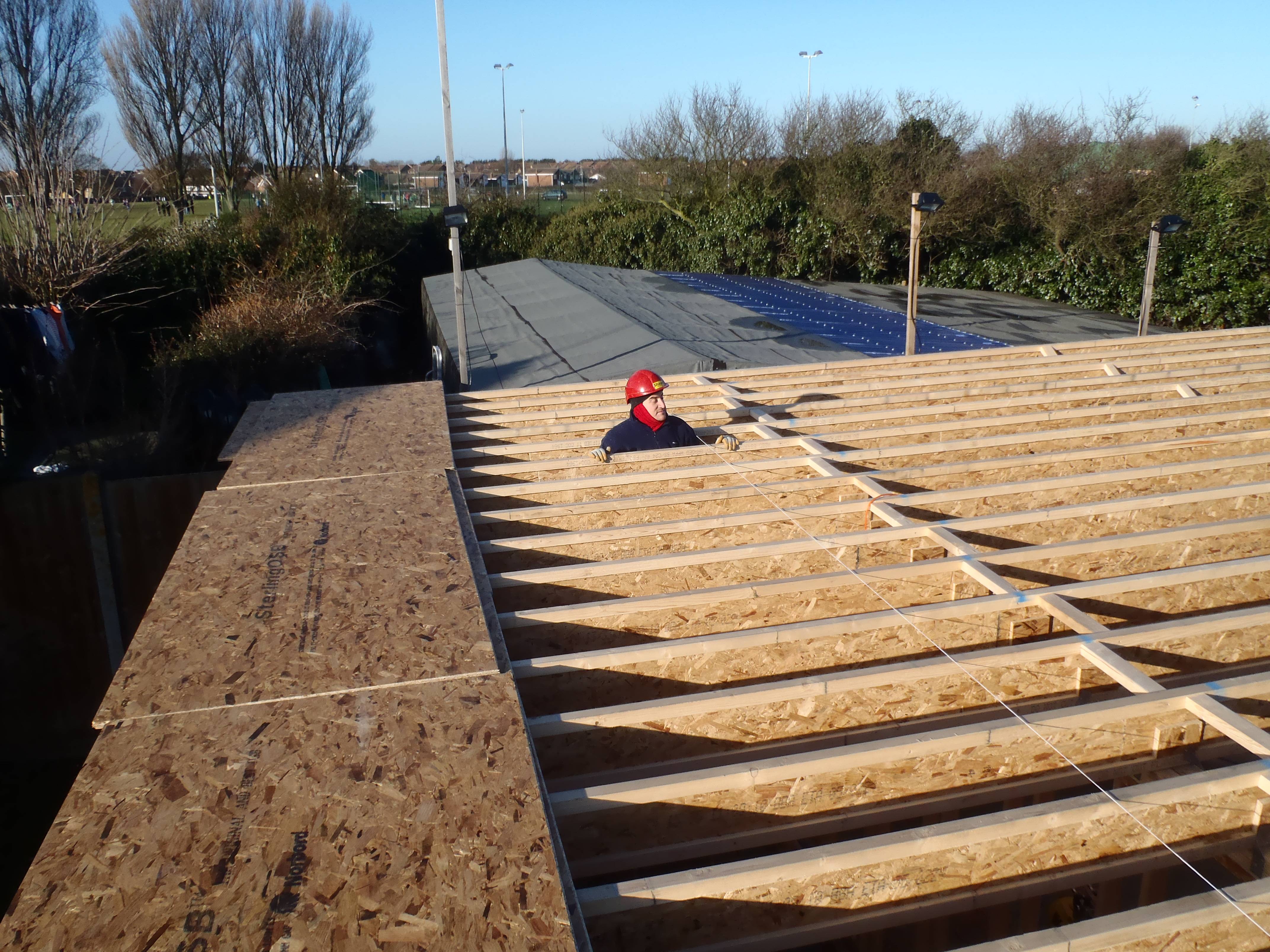
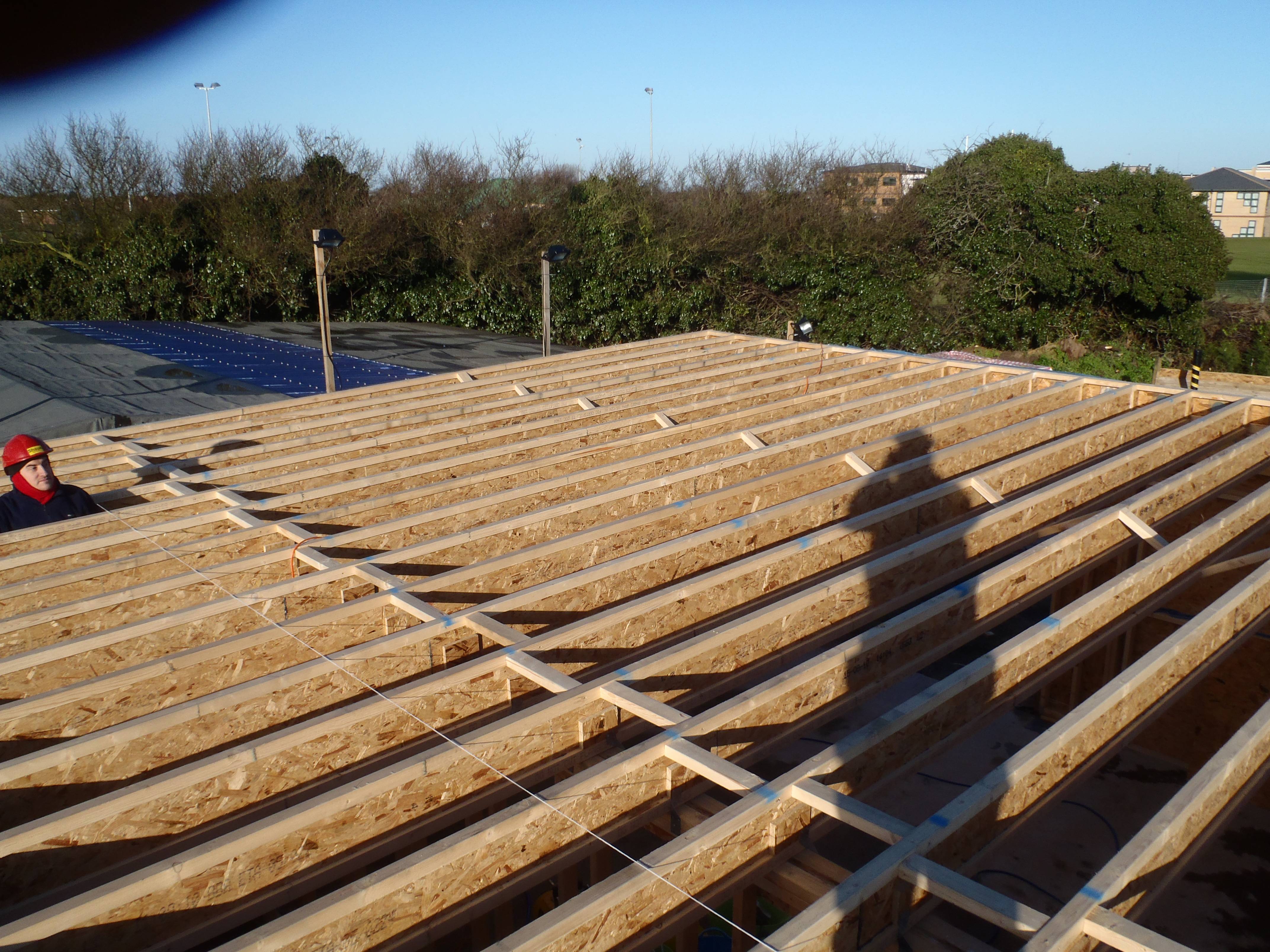
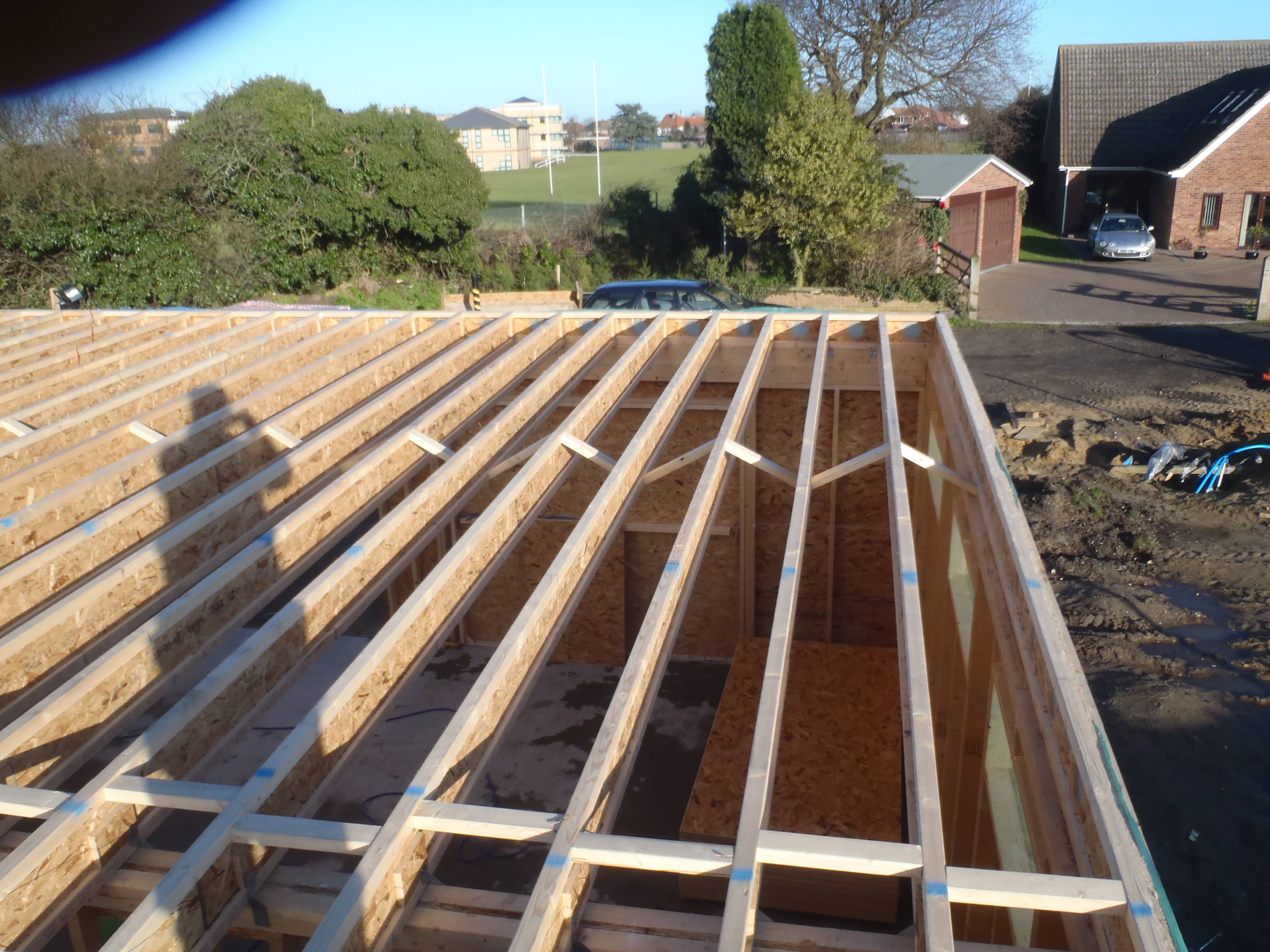
    The last two days we have been humping up 30 sheets of 18mm OSB boards on to the Garage roof, grabbing the fine dry weather! This was to ensure that the builder’s construction glue sticks properly to the rafters! The iBeam manufacturer recommended using this type of glue to stop creaking noises!

    Day 1 – Sunday 9th January 2011

    Starting very early (9:30am), we first had to deal with the heavy frost we had overnight by wiping all the rafters and allowing them to dry off in the lovely sunshine! Then using a chalk line to establish a starting line for the first row of boards and proceeded from that point. The tongue and groove joints were proving more difficult than we thought.
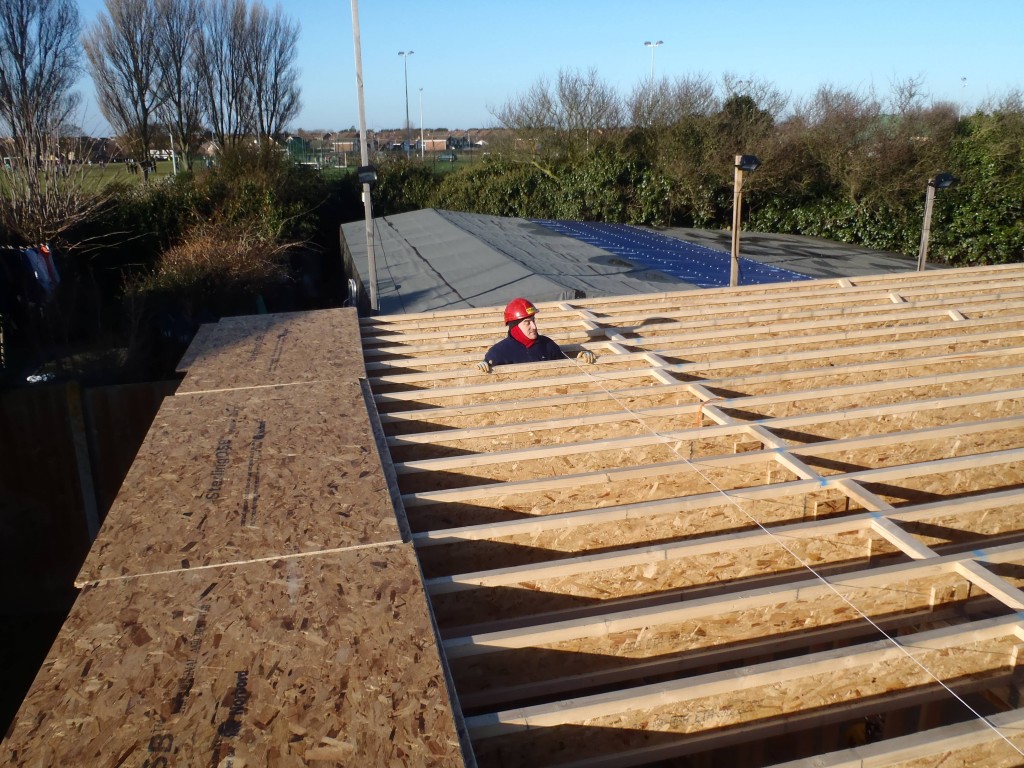
    Starting to cover the roof rafters
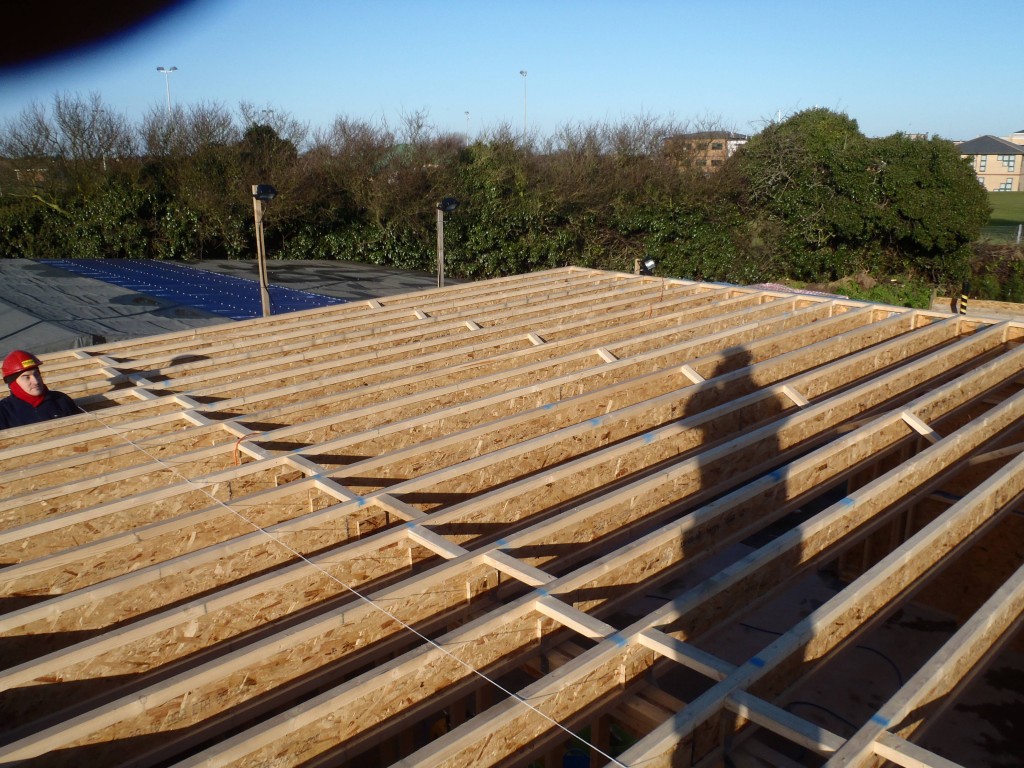
    Starting to cover the roof rafters
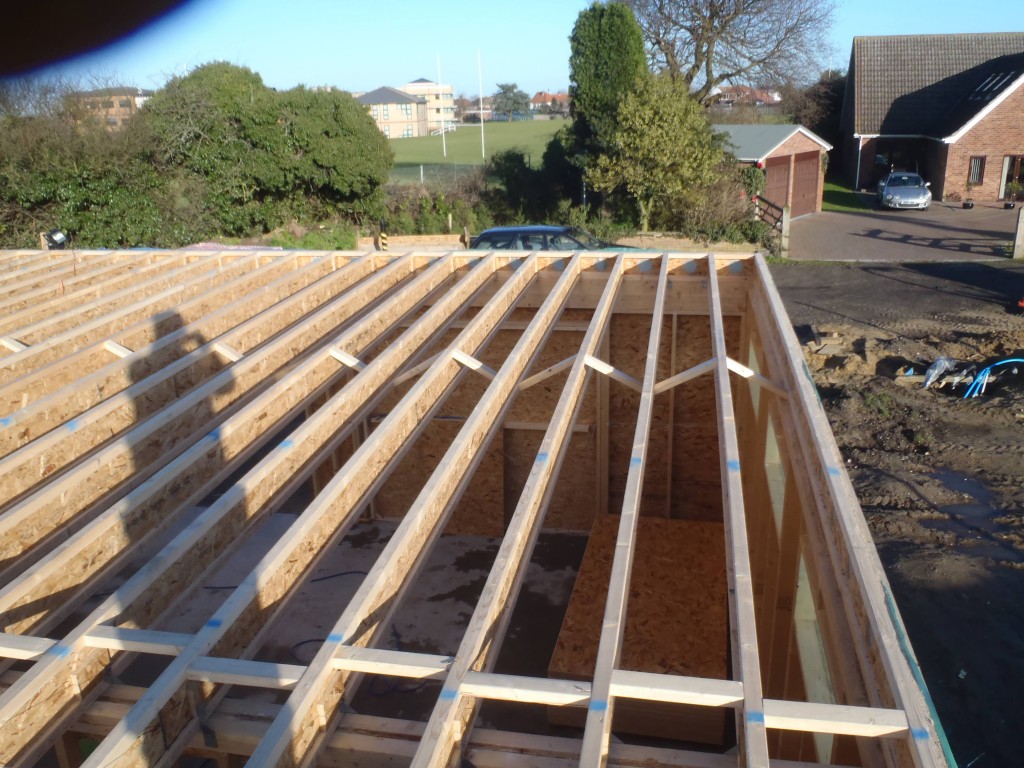
    Starting to cover the roof rafters

    Starting to cover the roof rafters

    Starting to cover the roof rafters

    Starting to cover the roof rafters

    (first row completed)

    We managed 3 rows of completed glued and nailed boards.

    It was dark at this time and the dew was already quite heavy and even freezing which made it very slippery! We decided to cut and put up all the remaining boards onto the roof ready for the next day and finished off by covering the entire roof with our 10metre by 10metre tarpaulin to protect the remaining rafters and boards against the frost. We put up 6 concrete blocks to hold down the front edge but fortunately there wasn’t much wind!

    We staggered home 8:15pm!

    (all the boards up but only half fixed down)

    Day 2 – Monday 10th January 2011

    We got going a bit later today, at 11am! We resumed where we left off yesterday and managed 4 more rows to take us to almost the front of the garage! We have only 600mm (2feet) to go, a half a board width!

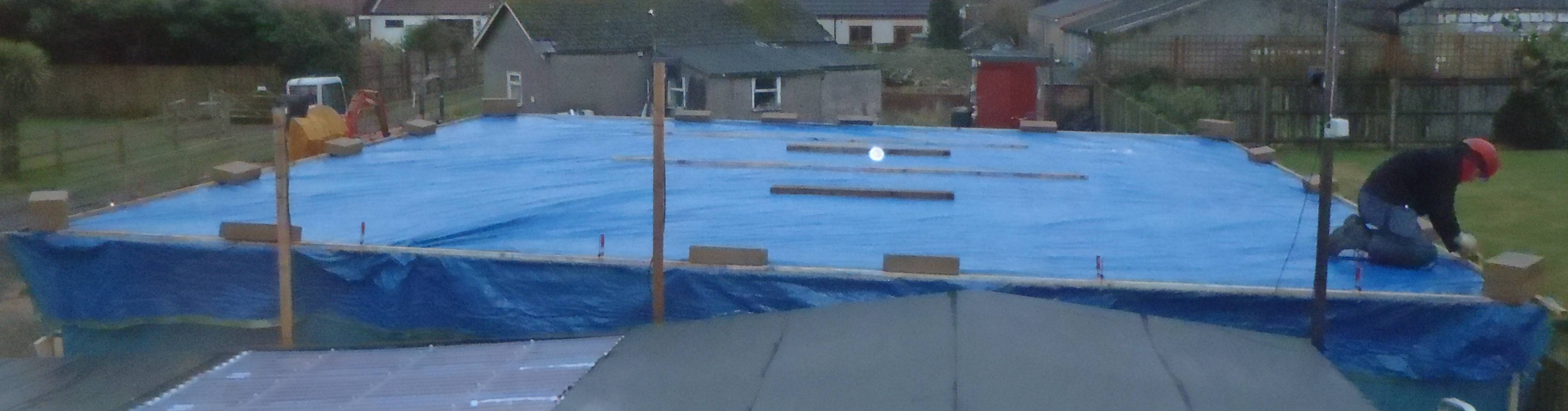
    We re-covered the roof back over with the tarpaulin and this time tossed up a further 13 more concrete blocks to hold down all four edges against the wind and the forecast of heavy rain overnight!

    http://roselea.co.uk/wp-content/uploads/2011/01/Roof-Nearly-done.wmv
    (Tarpaulin covered roof and concrete blocks)