Category: Phase 1

  • Garage sewage pipe trench ready

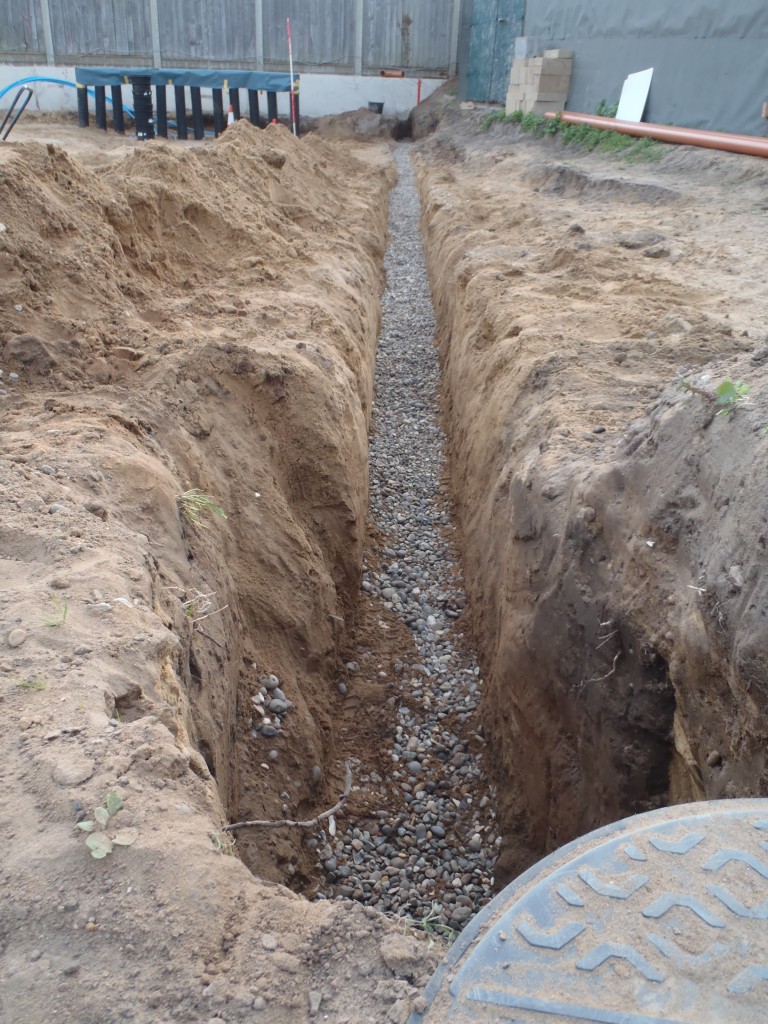
    Marked out the position of the garage on the mass wall. The thick black vertical lines are the outside measured positions of the walls and thinner lines defines the foundations. This gives us the position of the sewage connection for the garage so we could markout and dig the trench to place the sewage pipe.
    shows the gravel in the trench

    We await for our building inspector to approve it.

  • Rain Tank Capacity

    The Rain Tank!

    Dimensions

    5m (16feet 3inches) long
    3m (9feet 9inches) wide
    1.2m (4feet) deep

    Capacity:

    Hole dug out = 18 cubic metres (635 cubic feet) about 38tons of sand and soil
    Water inside is 95% of hole size = 17.1 cubic metres – due to the plastic construction of the crates
    Overflow starts 50mm below top surface of tank so will never fill to maximum therefore subtract 0.72 cubic metres.
    Plus the pump cannot reach right to the very bottom of the tank as the plastic crates has structural flanges which will contains a certain amount of water. The highest flanges are 50mm high so therefore that is another 0.72 cubic metres of unuseable water!
    Total Storage for rain water is 15.66 cubic metres
    That is 15,660 litres
    or
    3,445 gallons (UK measurements – its 4,137 US Gallons)
    Or
    27,558 pints !

    Now that is a big water butt!

    Construction

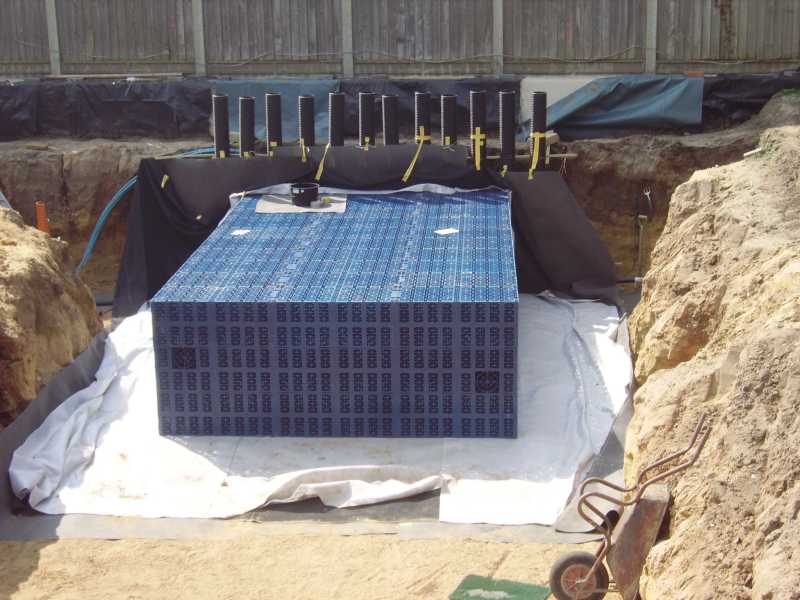
    There are 90 crates each measuring 1000mm by 500mm by 400mm (well actually it is 390mm high – the manufacturer states that each crate is 200litres capacity but in reality it is only 195litres!) made of a polyproperlene materials. We layered 15 crates on each layer and rotated them around to provide maximum loading spreading. There are 4 layers altogether. Then a thick geotextile (measured as 250gsm) is put on first to soften the edges of the crates (we also sanded the edges and especially the corners). The rubber membrane is the next layer (the rubber is a man-made material with long life stability, we decided to buy the 0.75mm thick grade. You could have 0.5 or 1mm thicknesses) and finally on the outer most an another layer of thinner but tougher geotextile (about 150gsm) to keep the sand and soil from wearing or puncturing the rubber!

    So far we have 200mm of water in the tank and it is still there after a week! phew!

    Applications

    We can use it to flush our toilets, wash the car, have showers, provide automatic watering for the garden and even use it for the washing! We of course will have the normal Mains Water taps in the kitchen etc. for drinking.
  • New Rain Feed is installed!

    Right, the new diverted feed from the rain filteration system is now installed to the other corner of the rain tank. Hopefully we have avoided any leaks !

    The old hole in the manhole access tube is blocked up with geotextile so no sand and soil can get in!

  • Modifying rain Water feed to Tank

    In the light of conversation about filtering the rain water and how small (or large) the particulates would get through the
    filtration system, we have decided to re-route the feed pipe from its first placement which is going into the manhole access chamber
    where the pump is situated which means it would immediately suck up any “bits”.

    The feed pipe will now be routed across the rain tank to the diagonally opposite corner and make its entrance!

    We are off to buy some extra fitments to join the 40mm pipe together for its new route!

  • Earth Tube Collection chamber

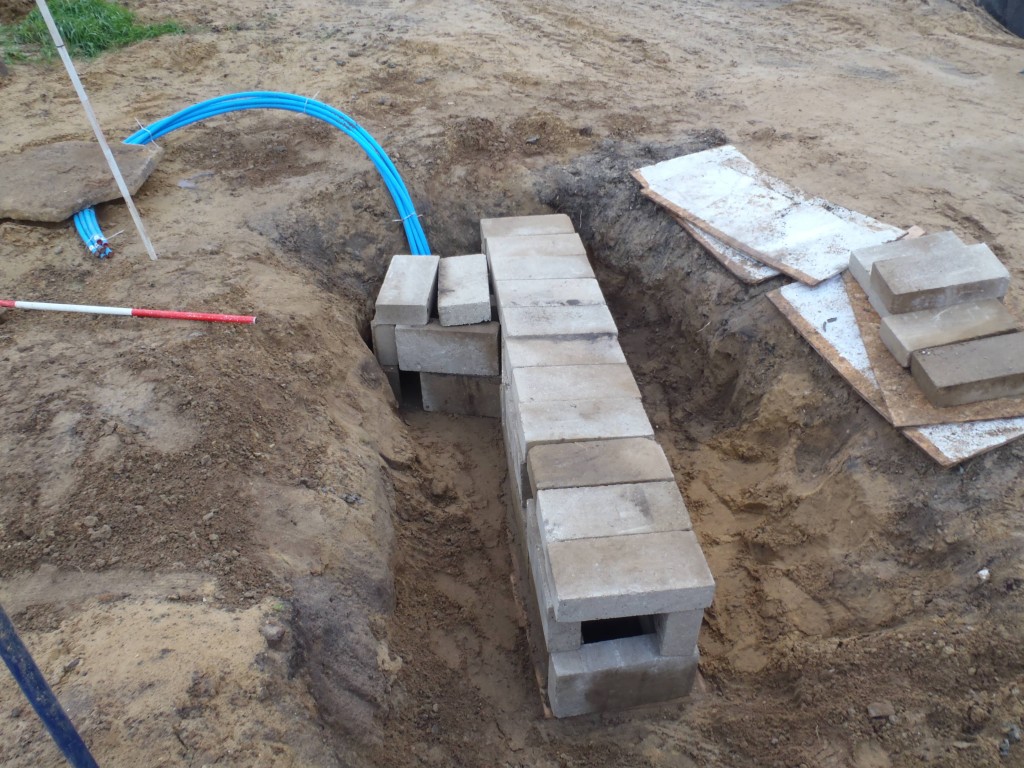
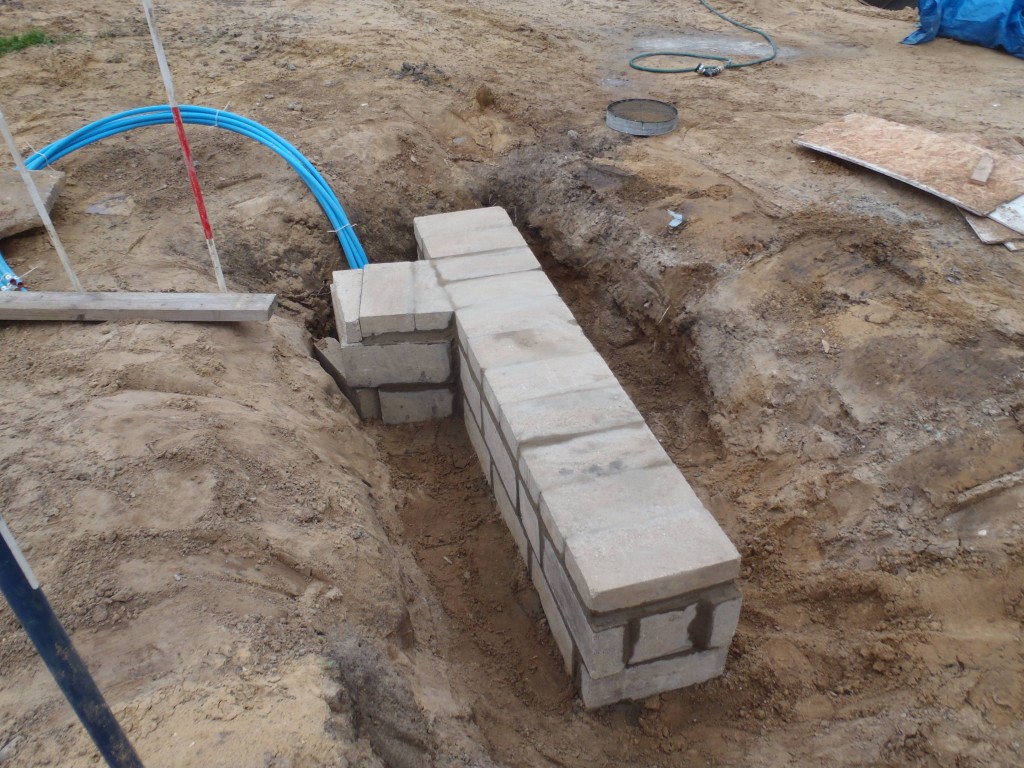
    Where the earth tubes get close to the house we have built a block work chamber to concentrate the air flow down too a smaller tunnel to pass under the foundations of the house. The chamber is 300mm below the path round the house.

    Concrete ready for the blocks
    Concrete ready for the blocks
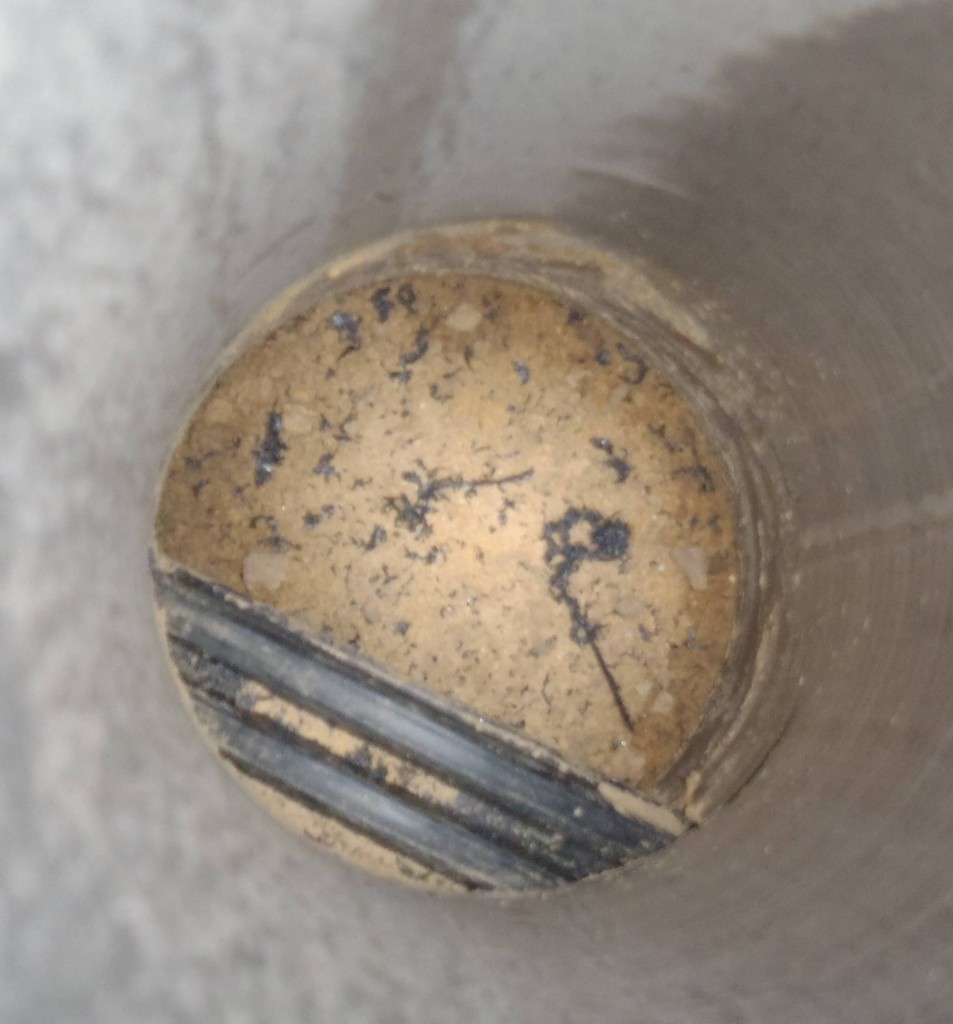
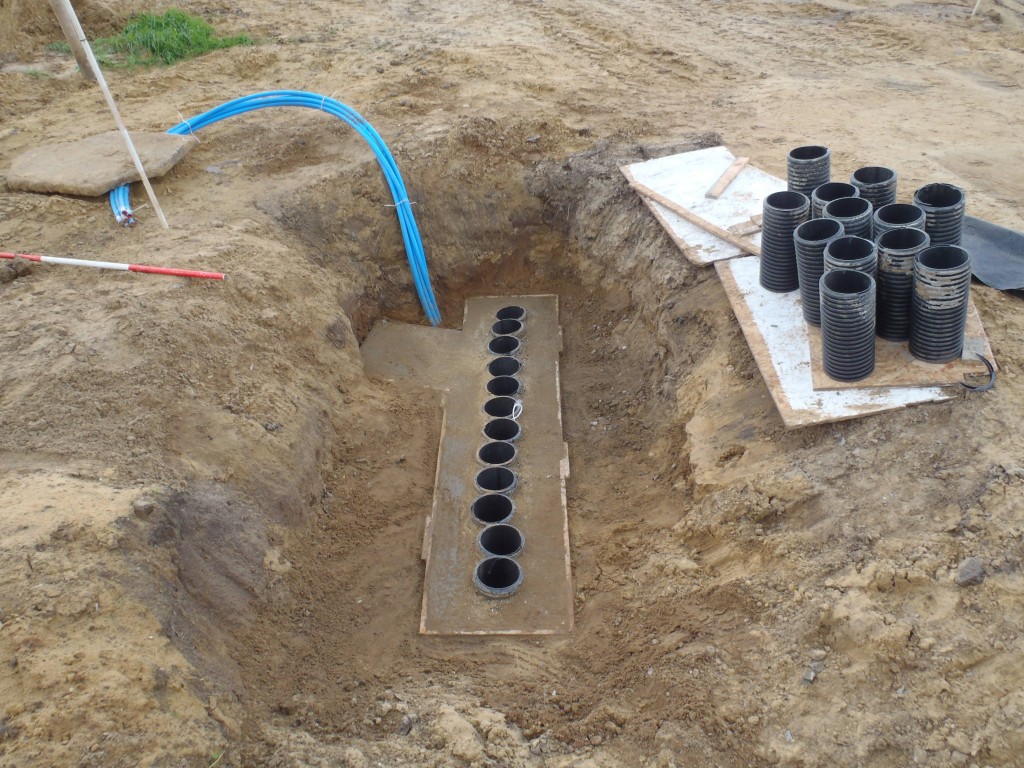
    view down a tube
    The view down a tube – we vacuumed the sand out
    Test fit of the blocks
    Test fit of the blocks
    Finished chamber
    Finished chamber
  • Rainwater Overflow pipes

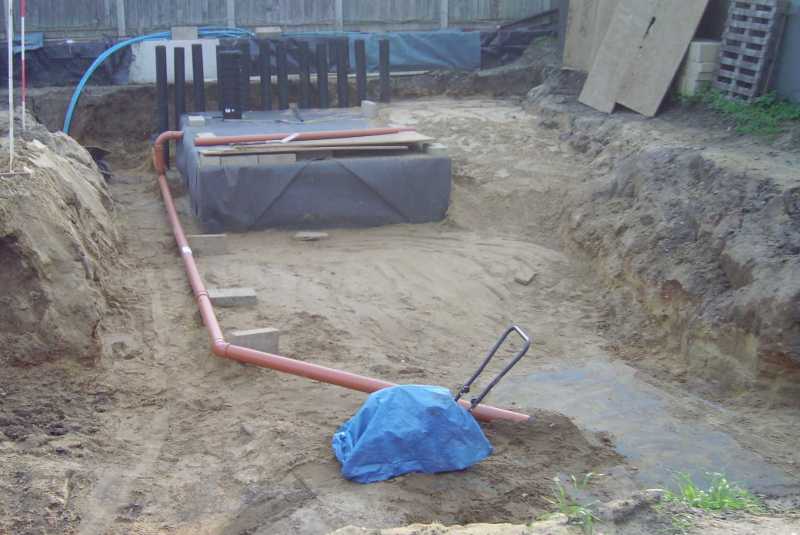
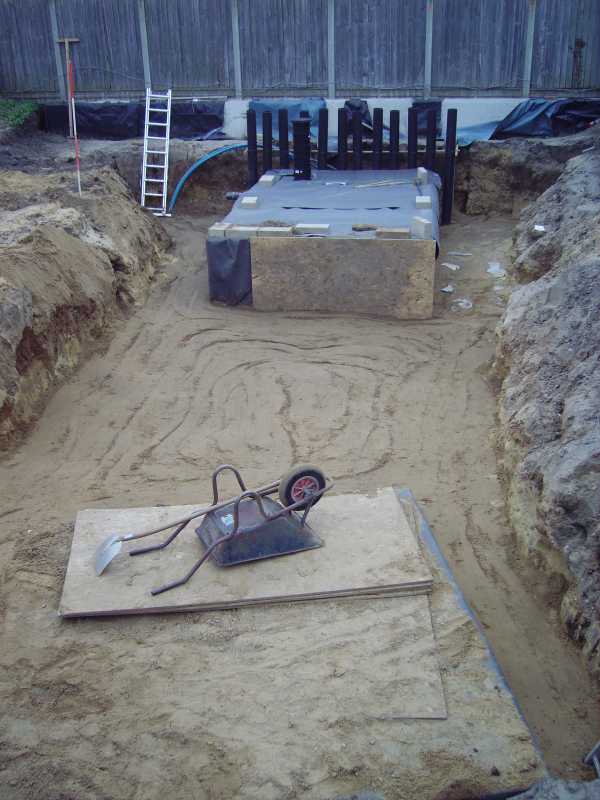
    Installed the final section of pipe in the great hole. This is the overflow from both the filter module and the tank to the soak away.
    rainwater overflow pipe in place

  • The Grand Fill of the Great Hole – Part 1 (so far!)

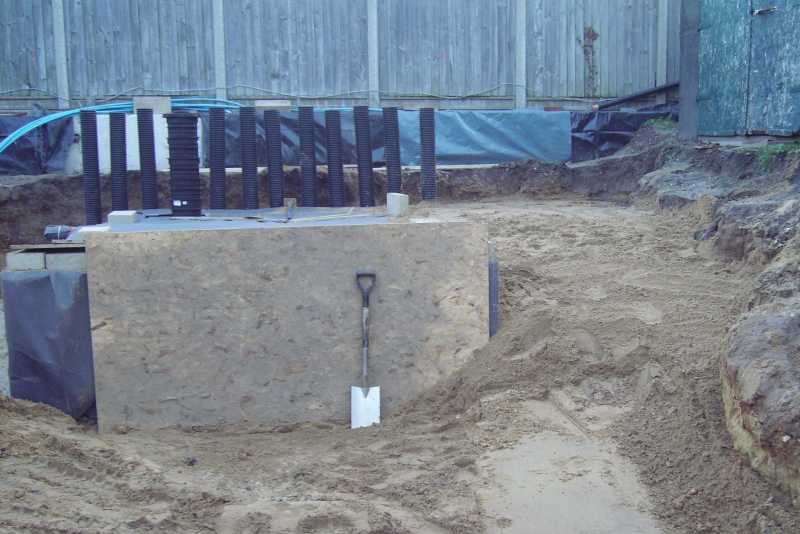
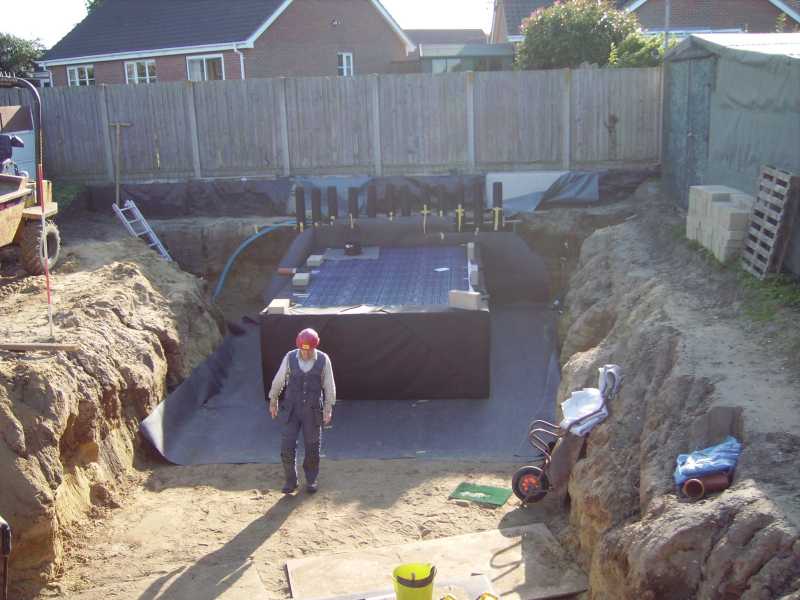
    The various modules, pipes, tubes and tanks are now installed in our Great Hole. It is the long job of putting back all the sand and soil into the Great Hole, making sure each layer is compacted well (we are doing about 200mm (8 inches) at a time). After all the garage has to sit on top of this area so we do not want gradual sinking of our foundations or floor slabs in five years time!!

    The only pipework left to do is the connection for the soak away module running back towards the black tubes, on the way a over flow from the rain tank connected to it and finally turning the corner to head left back towards the filteration unit module (not built yet!).

    Wednesday 8th September (yesterday) we returned the Kanga Kid earth mover machine. It was costing money every day so on Tuesday we decided to do a large filling operation in the further and least accessible corner of the Great Hole where it would be awkward and very hard work to do it by manual labour, as it would be too dangerous to drive the much too heavy dumper truck over the rain tank without the support of any sand on it to spread the load!! We didn’t finish until nearly 7pm!!

    Today we are carrying on with Operation Fill Up which will take another few days or so! Phew!!
    a even layer of fill spread and compactednorth side of tank filled to the top

  • Rainwater Tank Day 4

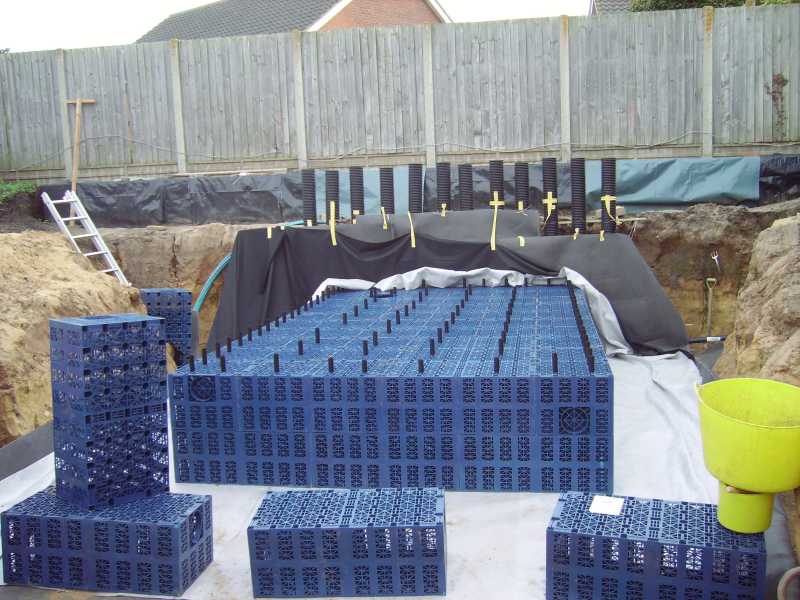
    Placed the last layer of crates …

    solid block of blue crates sitting on the white polyfelt

    Time for Christmas Eve! Well we have a lot of wrapping to do…. Wrapped, folded and trimed the polyfelt first. Next the rubber was folded up the sides and the extra rubber in the corners folded neatly.

    a giant elastic band around the crates

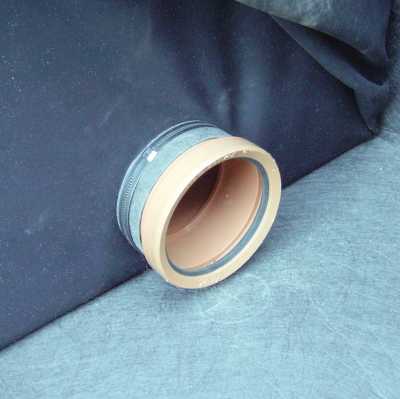
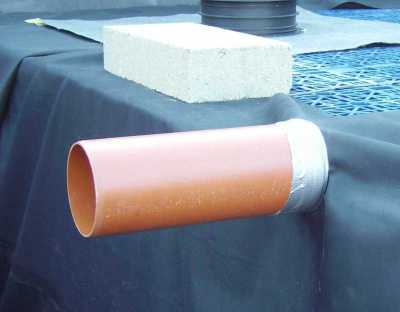
    We formed a couple of pipe connections for expansion at the bottom right and overflow at the top left. These were sealed by cutting a half-sized hole in the rubber and stretching it over the pipe. This formed a ring of rubber about 2cm along the pipe which was covered in a stip of geo-textile and clamped with a stainless steel tie. The overflow level is 40mm from the top of the tank.
    expansion port connectoroverflow pipe

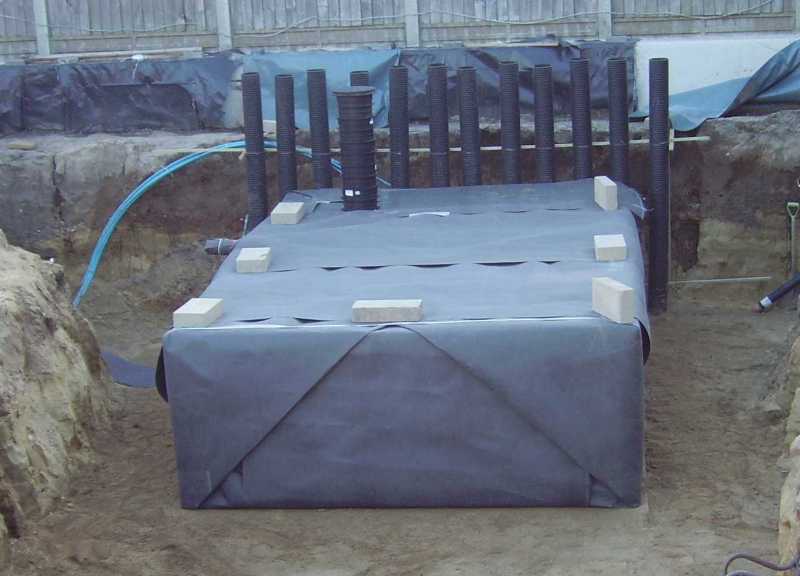
    Finally we wrapped up the outer geo-textile and added more geo-textile as a lid. The access shaft was installed last.
    crates wrapped up for christmas

  • Rainwater Tank Day 3

    Spent the morning laying the 3 layers of material down. 1st layer was standard geo-textile (grey), 2nd layer was the waterproofing EPDM rubber membrane (Black) and last was Polyfelt padding (White). The rubber was the hardest to get in position as it is one piece (of course!) and quite heavy in total.

    Once the wrappings were done laying the crates was straight forward and by the end of the day 2 of the 3 layers were placed.

    shows 2 layers of crate ontop of membranes

  • Rainwater Tank Day 2

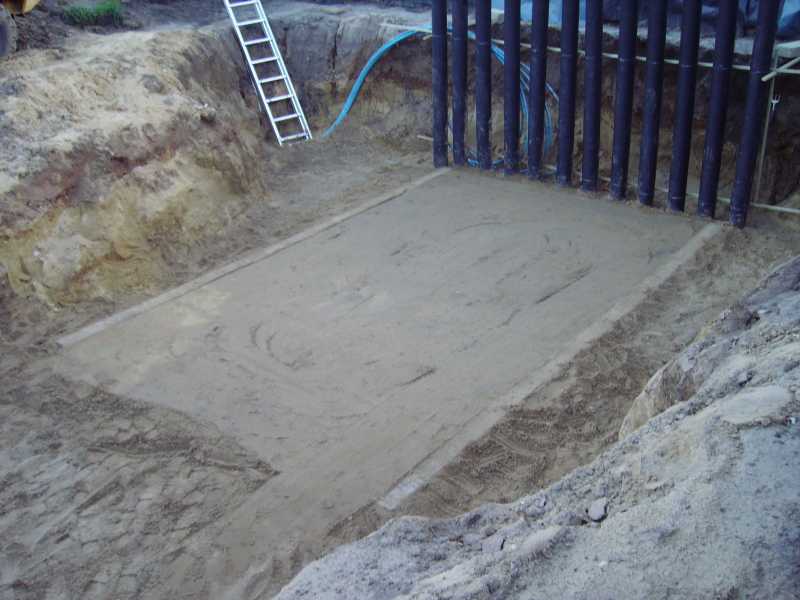
    Did preparation work for installing the rainwater tank. Started by marking out and leveling the sand for the base of the tank, we spent so time getting the right as we don’t want the tank to be off level!

    flate base in the sand

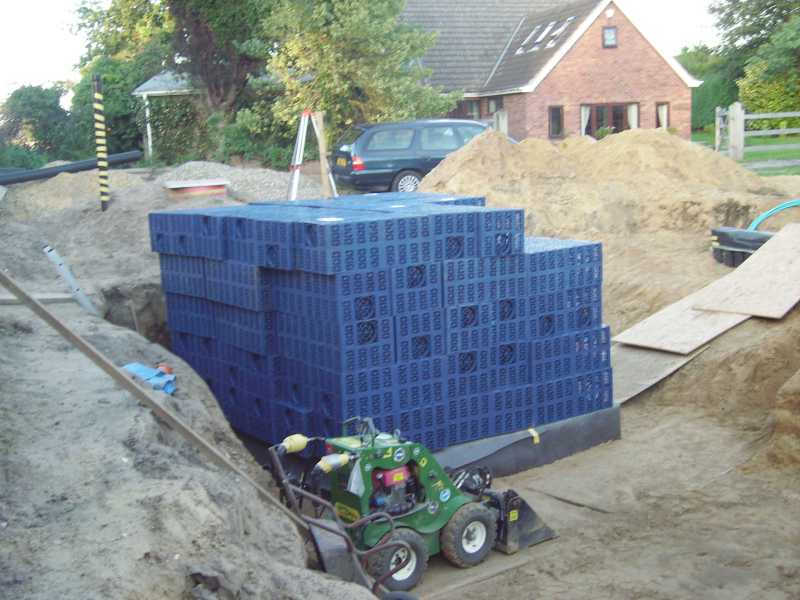
    Then we humped the 87 aquacell modules down into the hole from their delivered location next to the house.

    big pile of blue crates