Category: Fascia

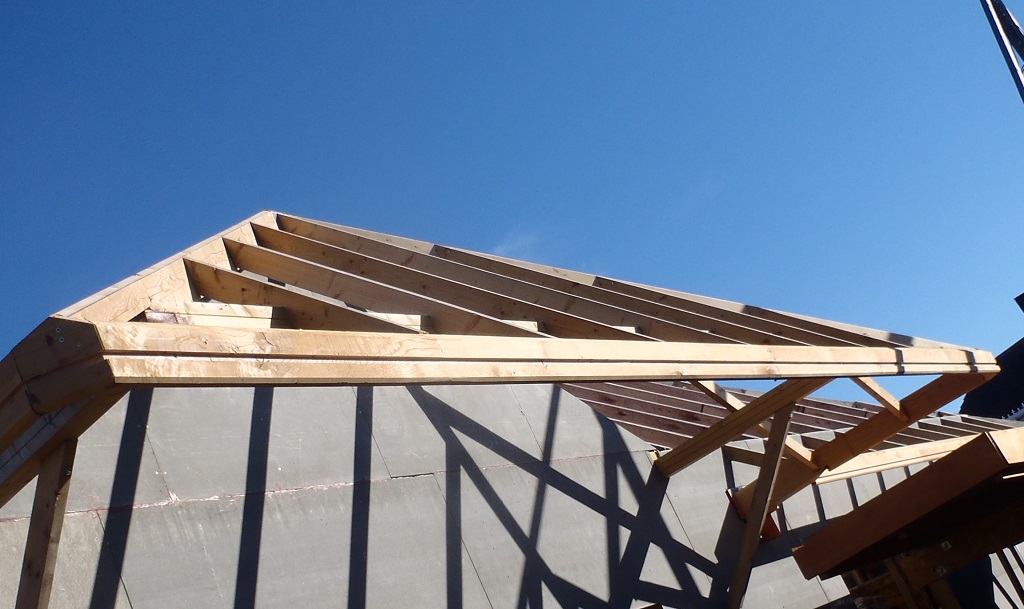
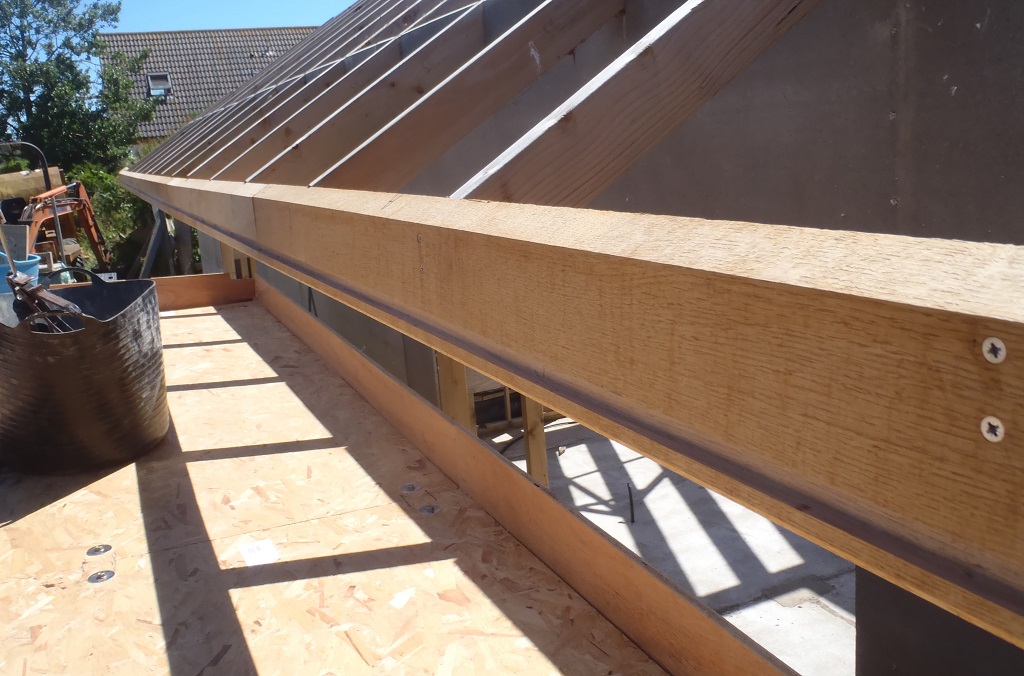
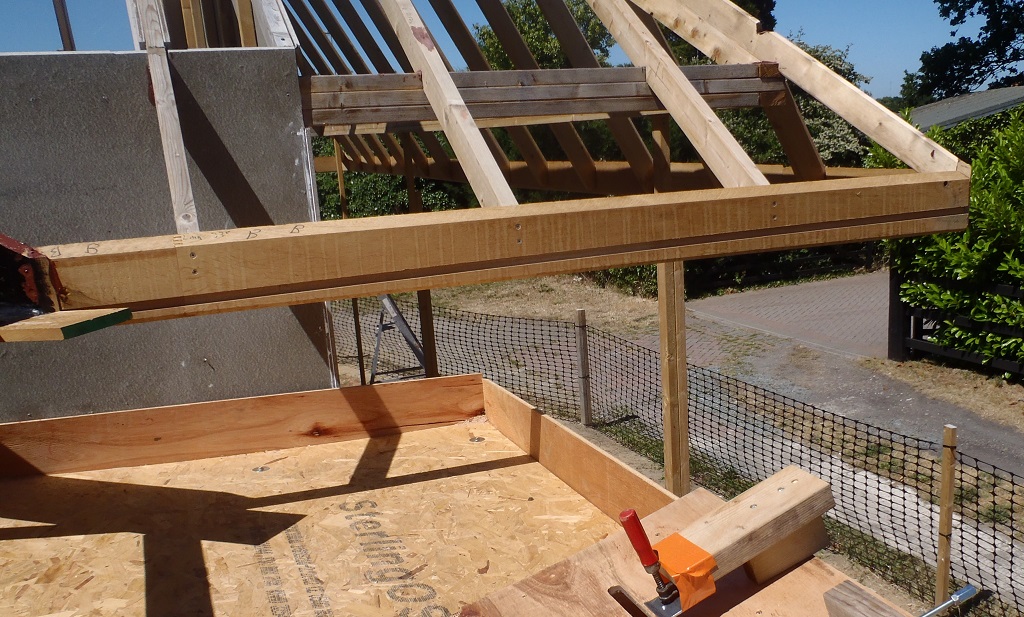
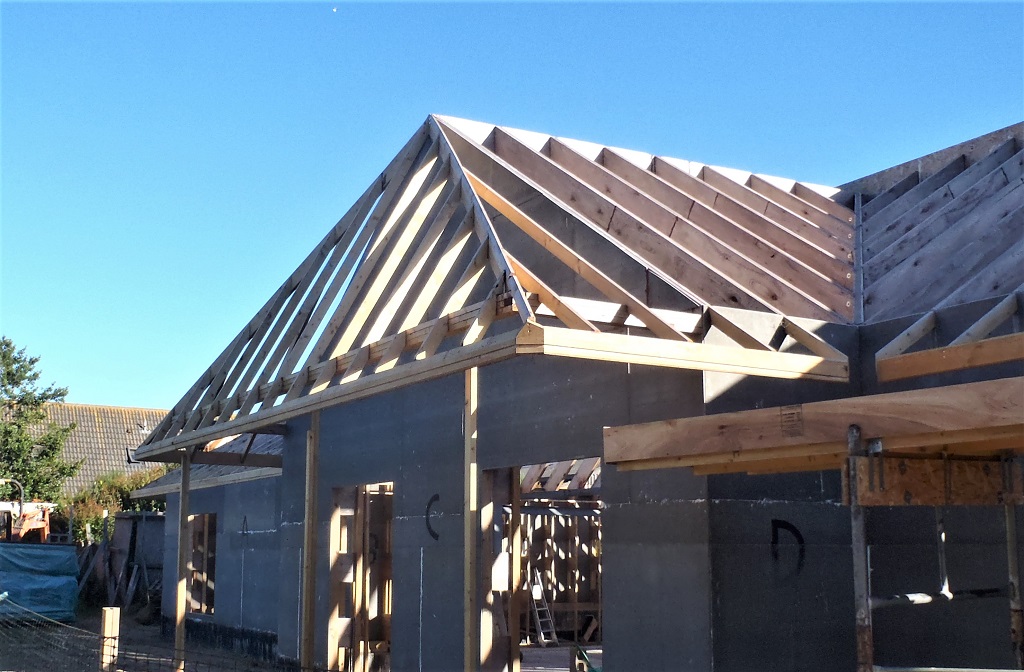
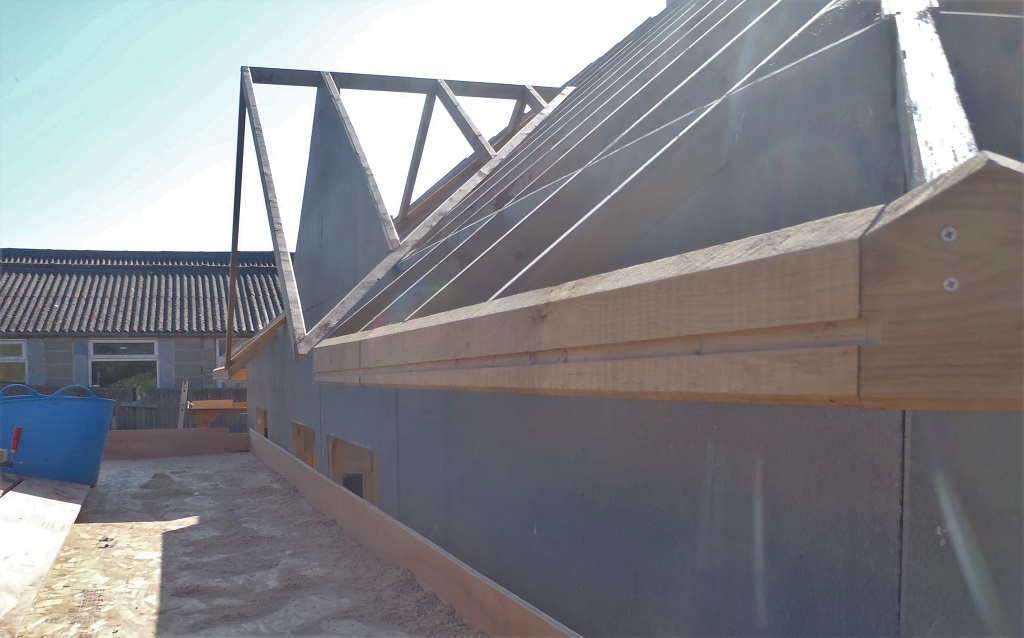
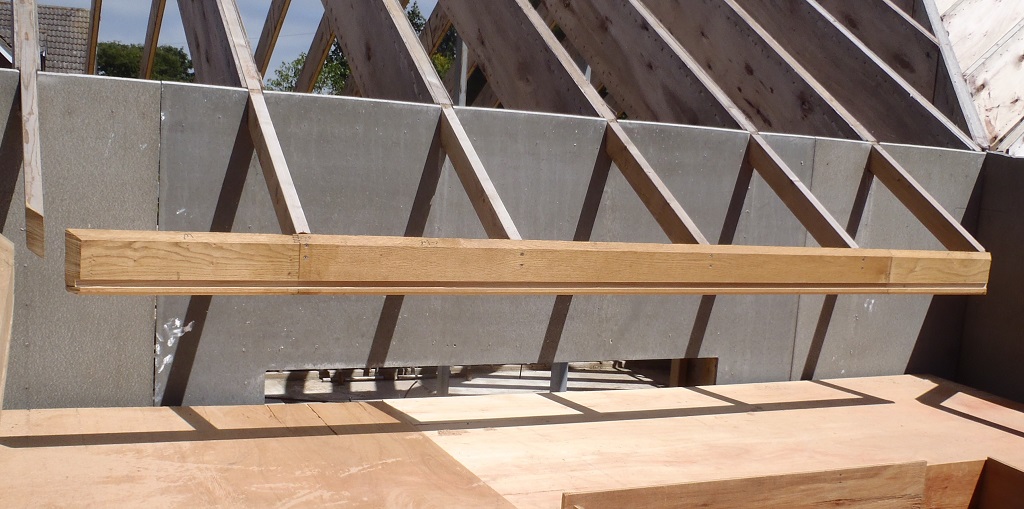
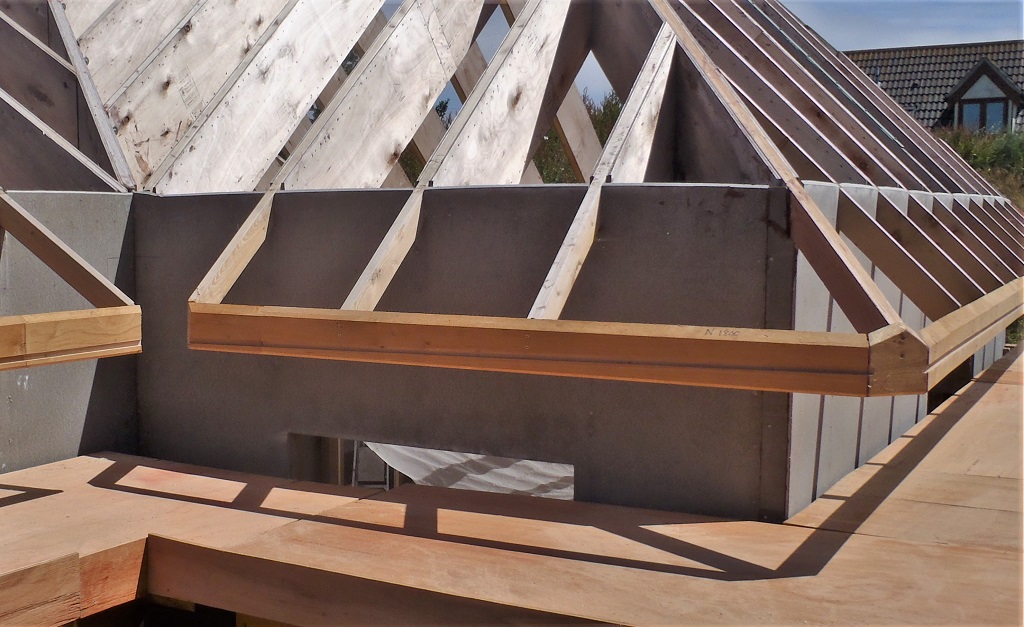
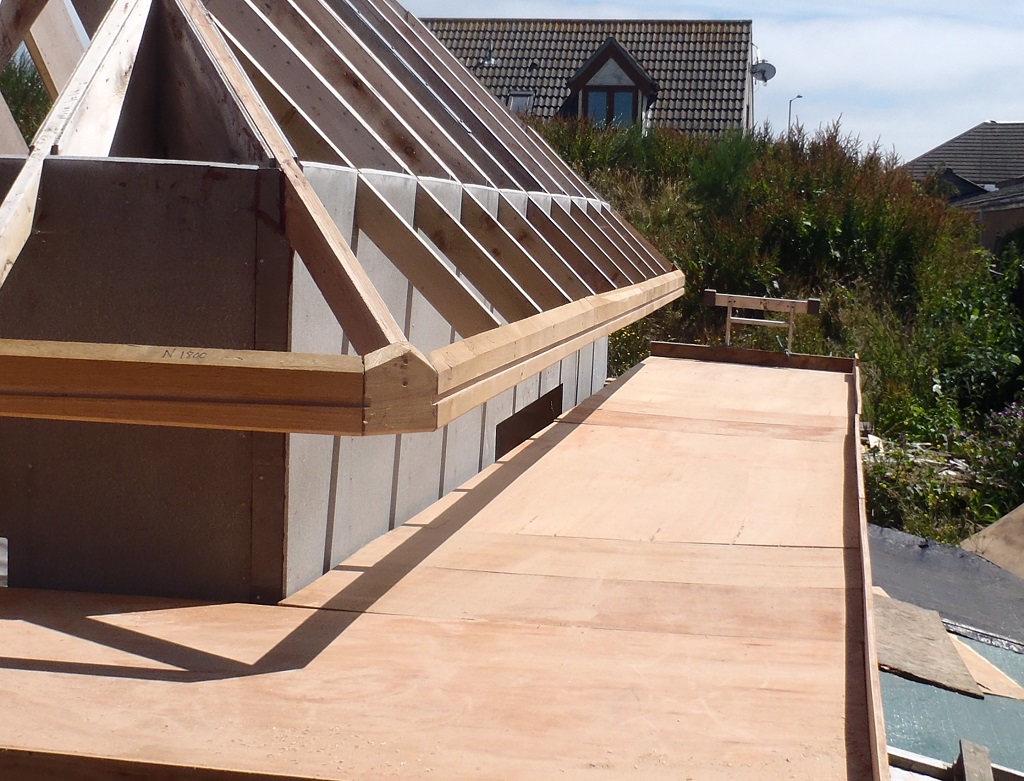
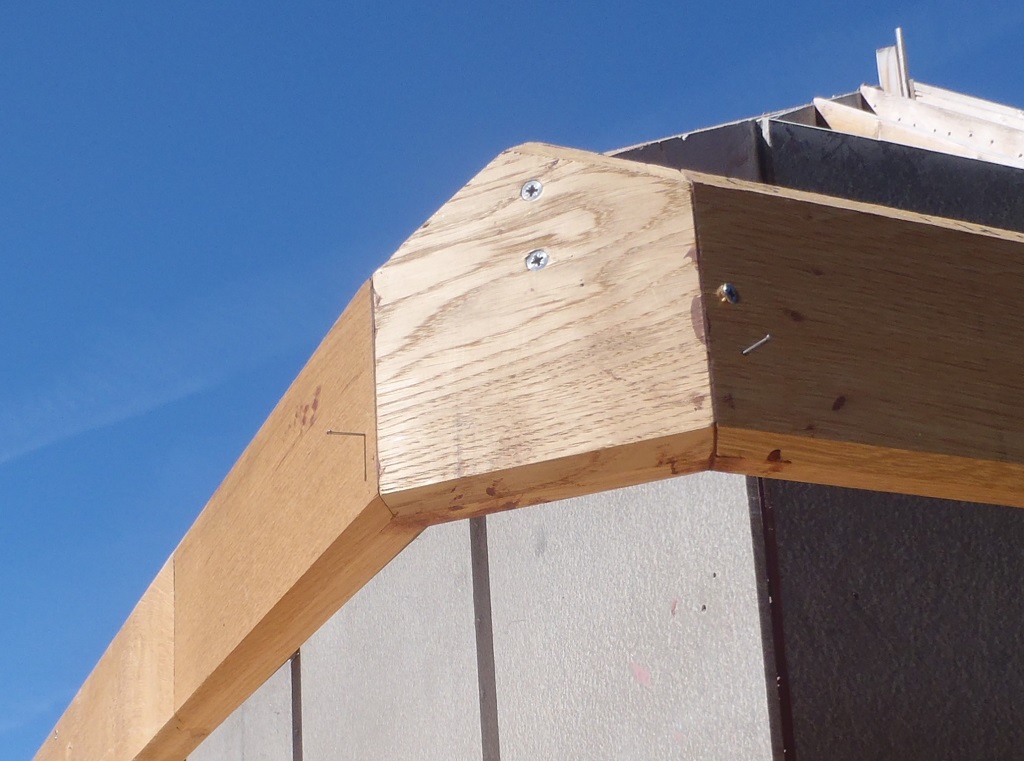
The Oak Fascia going right around the edge of the roof.

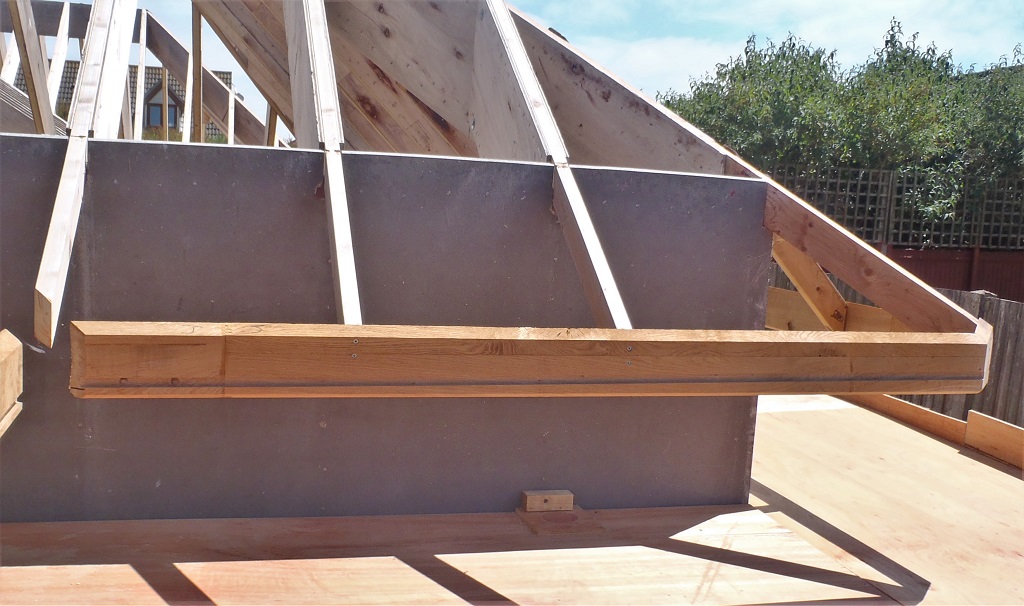
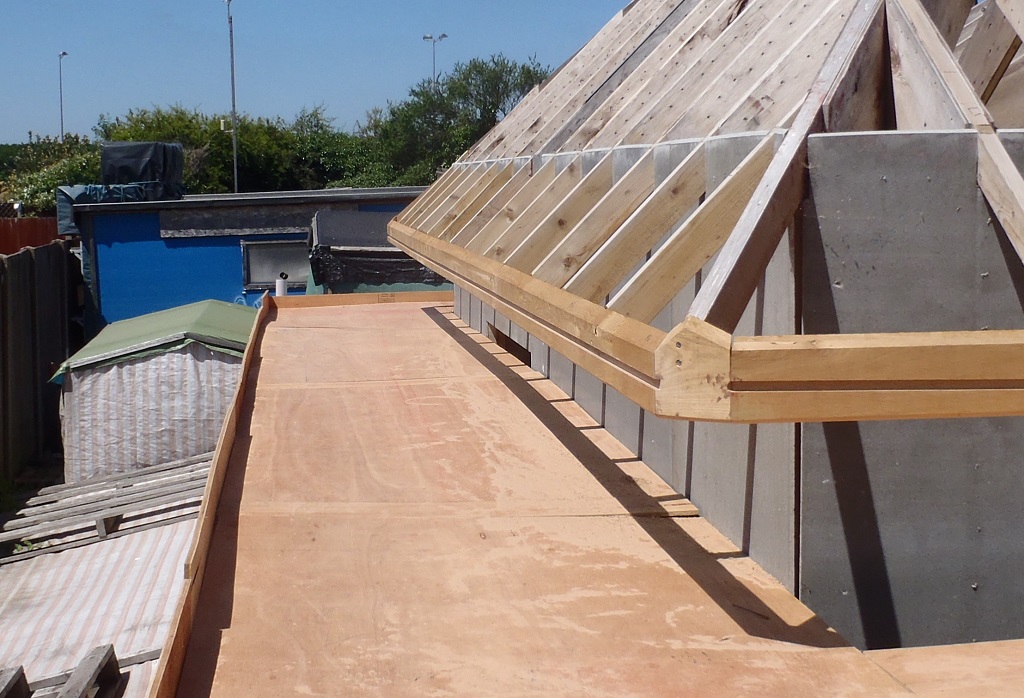
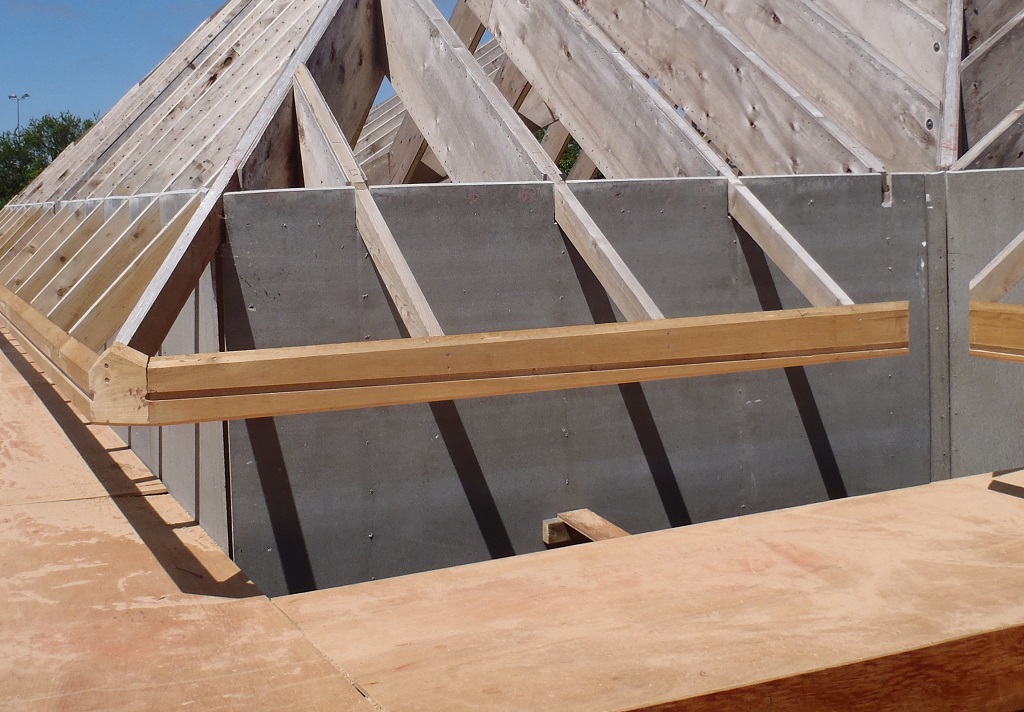
  • Last Three Downpipe Channels Permanently Installed

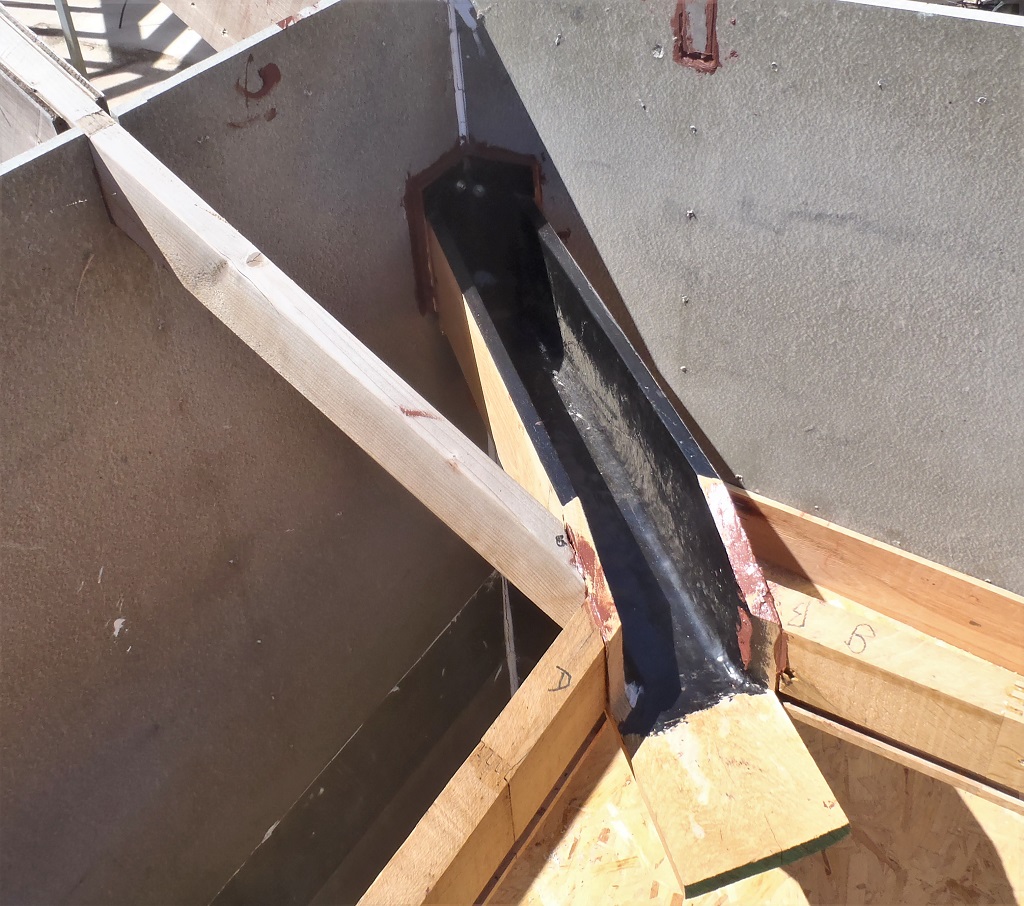
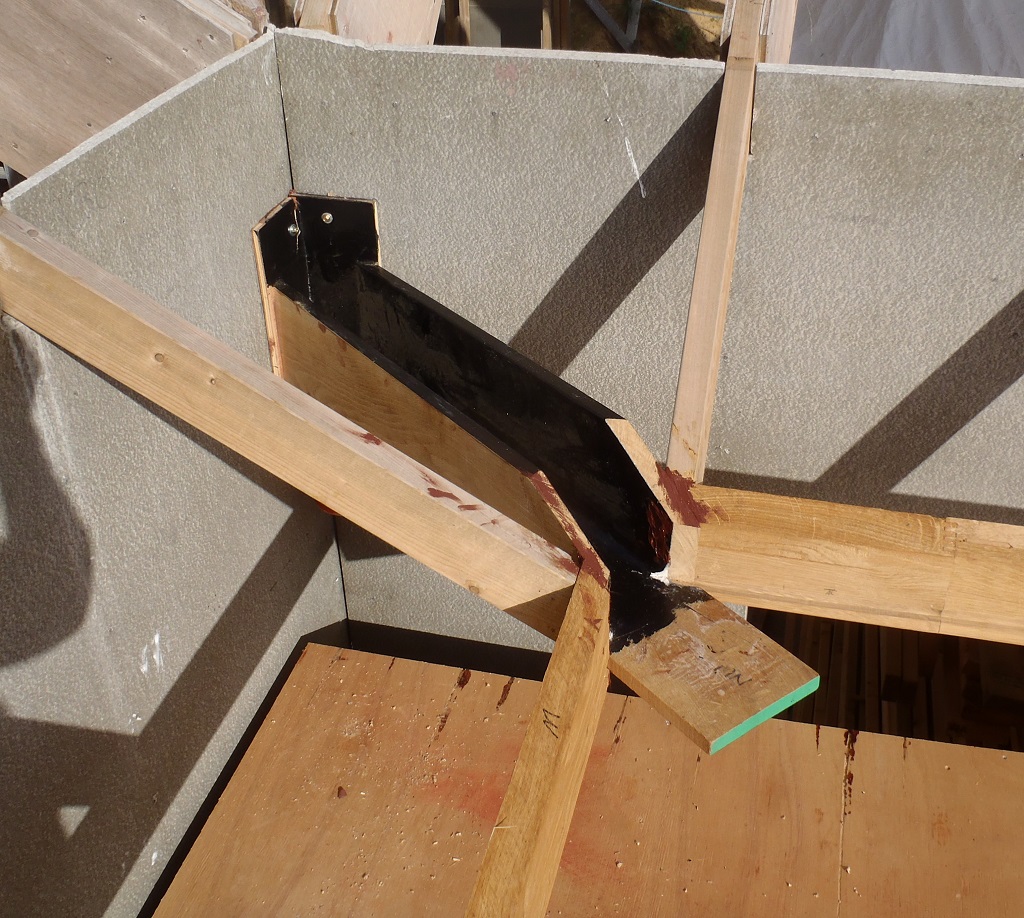
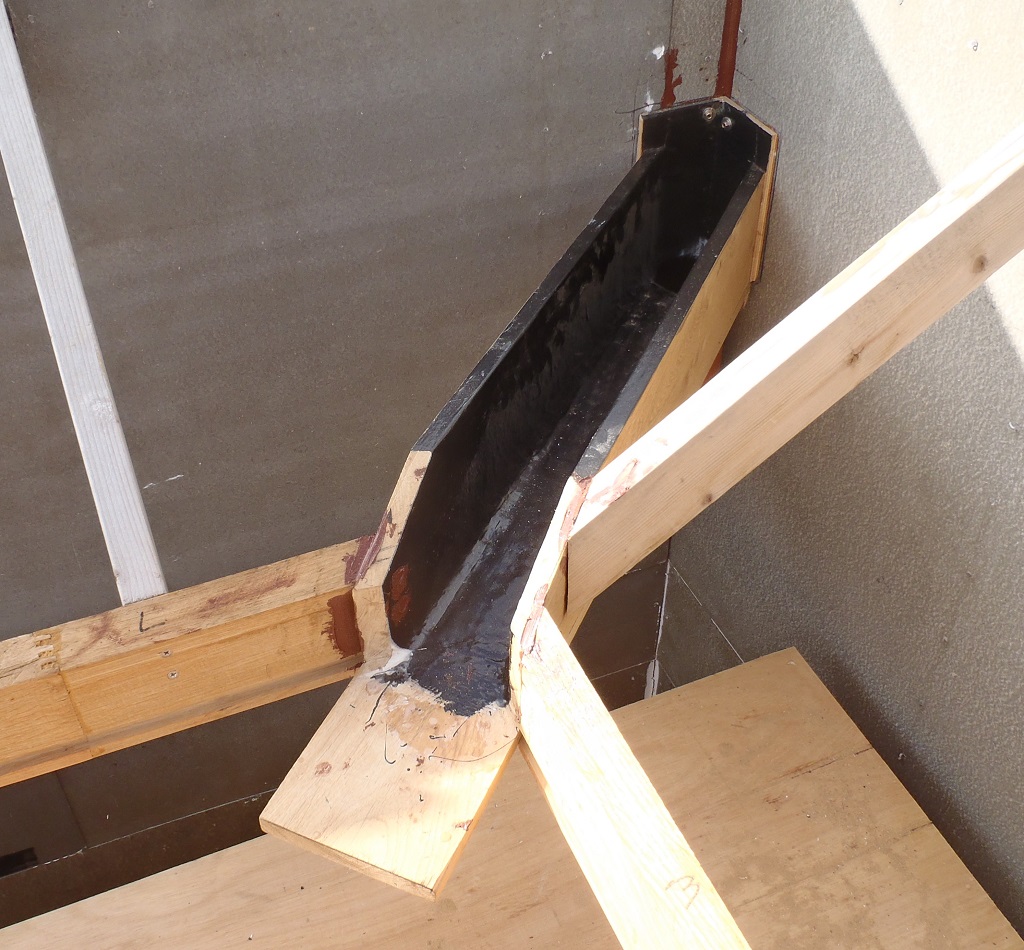
    Today, we finished off doing the last three Downpipe Channels and permanently fitted into place with glue and screws. These were along the back of the building, on IJ, LM and MN corners.

    Last Three Downpipe Channels Permanently Installed

    MN-Downpipe-installed

    Last Three Downpipe Channels Permanently Installed

    LM-Downpipe-installed


    This concludes the six modules that are fully integrated into our building construction, fitting into the roof structure and the Fascia. The only other two Downpipe Channels are temporary and won’t be installed until we are ready to put on the roof boards around on the “P” and where the Conservatory would be constructed later on and hence why these two are temporary to provide an end cap to the guttering system in the meantime.

  • Final Fascia Boards Done With Slot Plus Two More Downpipe Channels Fully Installed

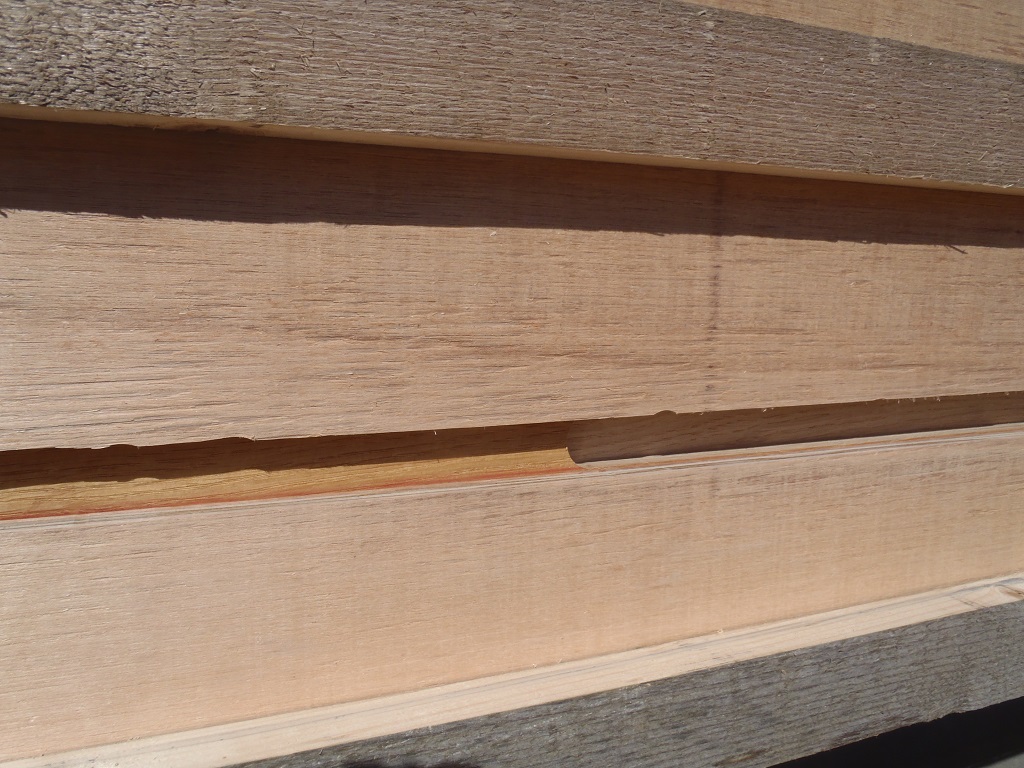
    We resumed the task of cutting the slot into the Fascia boards, the final stretch going from “E” to “H” sections to complete the full circuit.
    We also fully installed two more Downpipe Channels, one for the DE corner and the other one at the GH intersection.

    Final Fascia Boards Done With Slot Plus Two More Downpipe Channels Fully Installed

    Slot-in-E-and-DE-downpipe-installed

    Final Fascia Boards Done With Slot Plus Two More Downpipe Channels Fully Installed

    Slot-in-F

    Final Fascia Boards Done With Slot Plus Two More Downpipe Channels Fully Installed

    Slots-in-G-and-H-with-Downpipe


    Tomorrow, we will conclude doing the final three Downpipe Channels around the back of the building, on IJ, LM and MN corners and that will be that at last! We could be doing the roof boards and start covering up the roof next – yippee!!

  • Working Along the Front ..

    For the last day of June, we had a long day of work, continuing the task of cutting the slot into the Fascia boards, this time, along the front. We did section “A” and section “B” then fitting very carefully, gluing and screwing the Downpipe Channel module, making sure the sloping bottom base layer is exactly at the correct height in relation to the two incoming gutter base boards (to be fitted later on) and going downhill towards to the plastic downpipe itself.

    Working Along the Front ..

    Slot-in-fasica-A

    Working Along the Front ..

    Slot-in-fasica-B

    Working Along the Front ..

    AB-Downpipe-Screwed-and-Glued


    After lunch, we had to level the sandy soil along the front of the Front Door Porch (section “C”) so we could get our mobile platform moved along there. we managed to move the platform sideways (at a 90degrees right angle) before resuming along the front. We did the “C” section alright, apart from having to remove some of the stainless screws that were right where the slot is going (we put them back afterwards!) but the fun started when we needed to “turn” the corner to do the “D” and “E” sections.
    We were running out of room to move the bottom half (the actual metal scaffolding part and its wheels), we needed to avoid the fence and the last fence post. It was tricky because the wheels are hard nylon 6inch castors so the plywood strips were needed to support them from digging into the soft sandy soil. We managed to do it .. eventually – phew!

    We concluded the day in doing section “D” (a nice short one!) and then the outer corner patch.
    Working Along the Front ..

    Slots-in-fasicas-C-D-


    So we now have done, almost, all three sides of the house and have only the last four sections (“E” to “H”) to go and put in the final downpipe Channels in and that will conclude the work on the Fascia board and the first stage of the guttering. We will be tackling the job of putting on the roof boards next – Hurrah!

  • Corner Template Created and Tried & Tested plus Started Cutting Slot in Remaining Fascia Boards

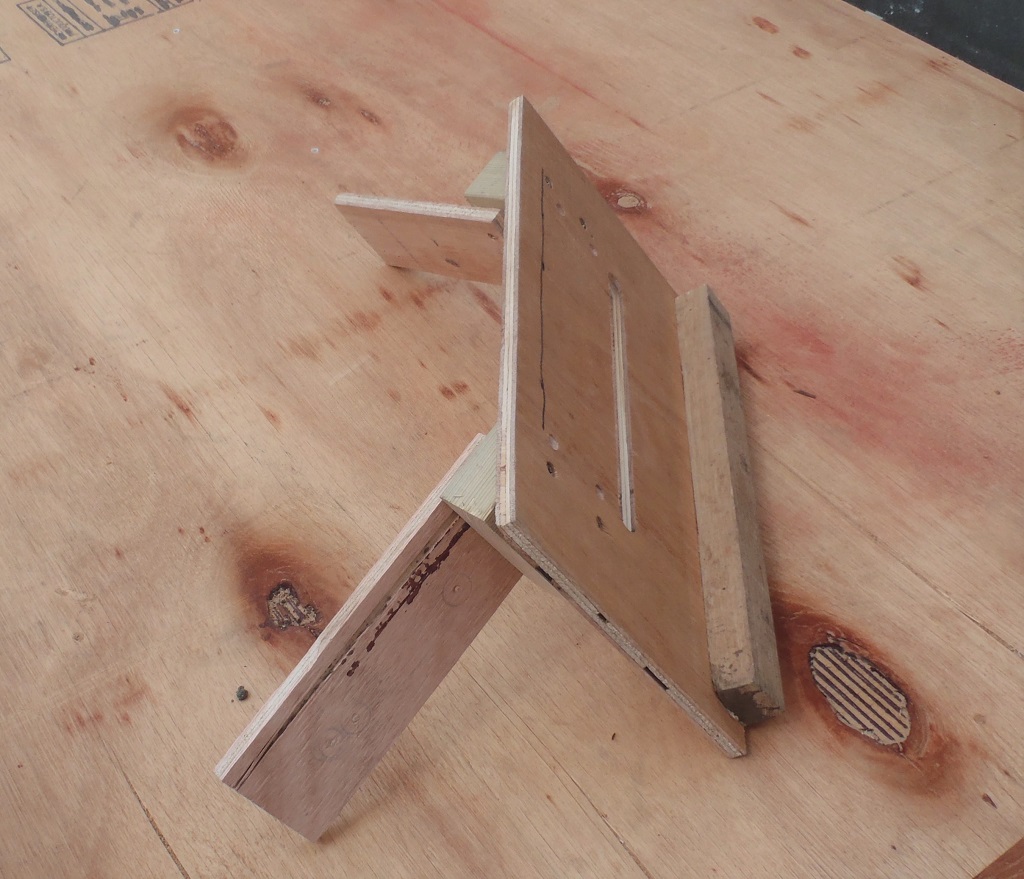
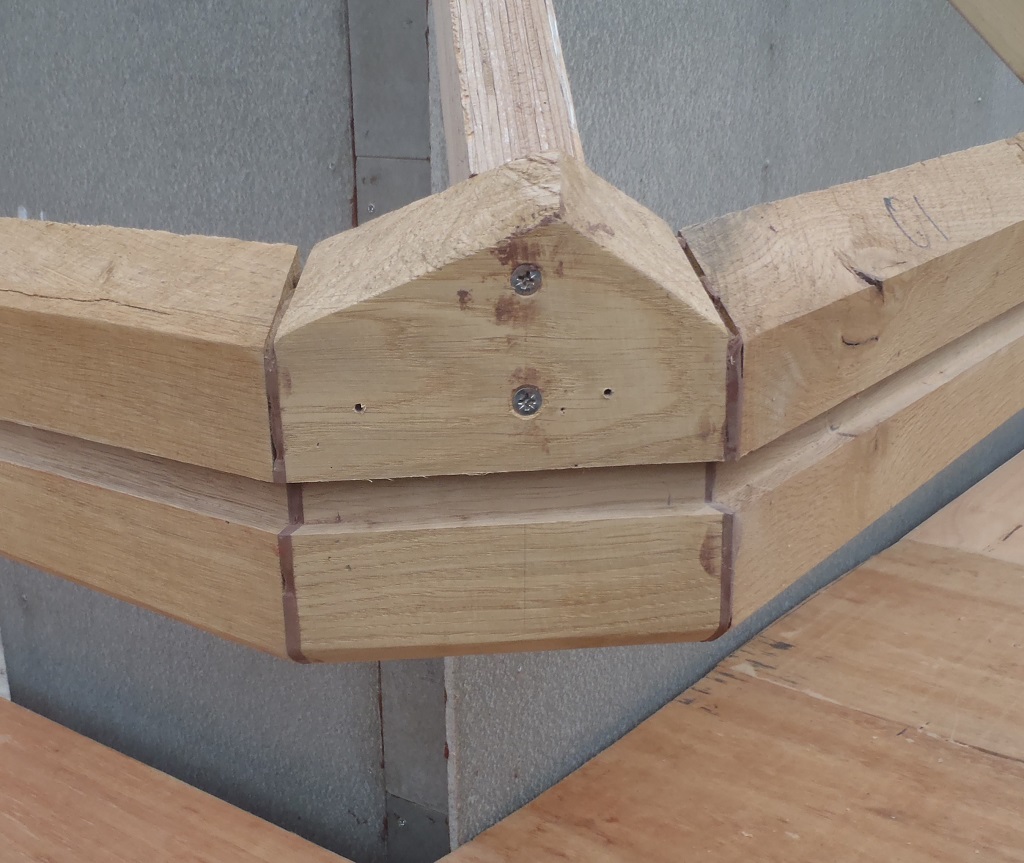
    This afternoon, we created another template to help us with the task of cutting slots into the Fascia boards, this time, for the outside corners. These 45 degrees corners are only 150mm (6inches) wide so the template is quite small. Our first version was to have the flat plywood plate with the guide rail and slot in it, plus with two arms sticking out at the 45degrees angle so we can clamp the template into place.

    Corner Template Created and  Tried & Tested plus Started Cutting Slot in Remaining Fascia Boards

    Corner-Template

    But we found that there are slight variations at each of these corners so we decided that the simplest approach is to just simply screw the flat plywood plate straight to the fascia section with two screws . the little holes will be covered up later on so we don’t mind this “kludge” to solve this problem!!

    We have used it on the back three corners we had waiting and all went well.

    Corner Template Created and  Tried & Tested plus Started Cutting Slot in Remaining Fascia Boards

    Corner-slot-cut


    Now we can do the remaining corners as when we get to them as we cut the slot in the other Fascia board.

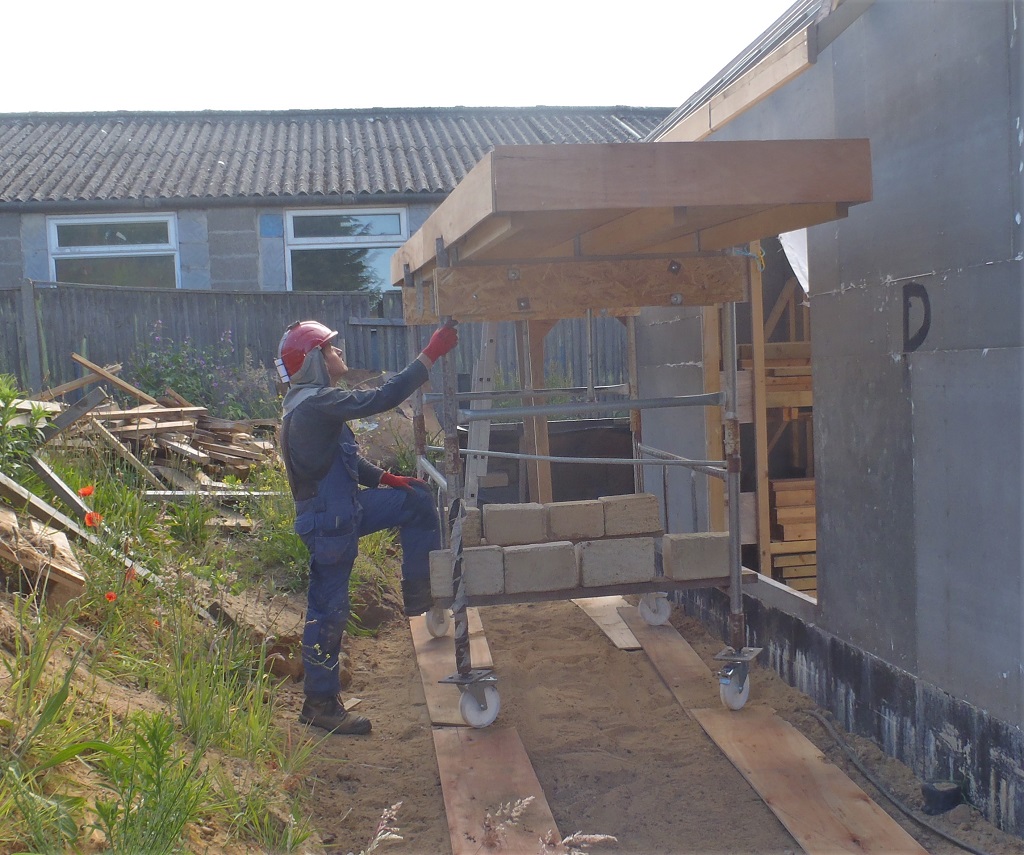
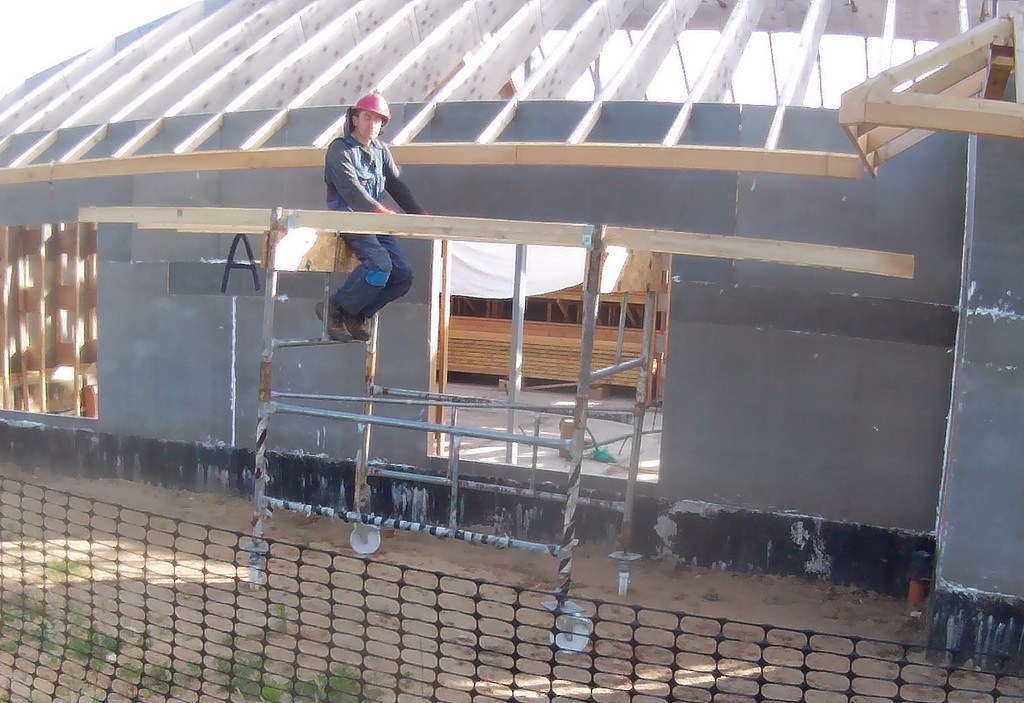
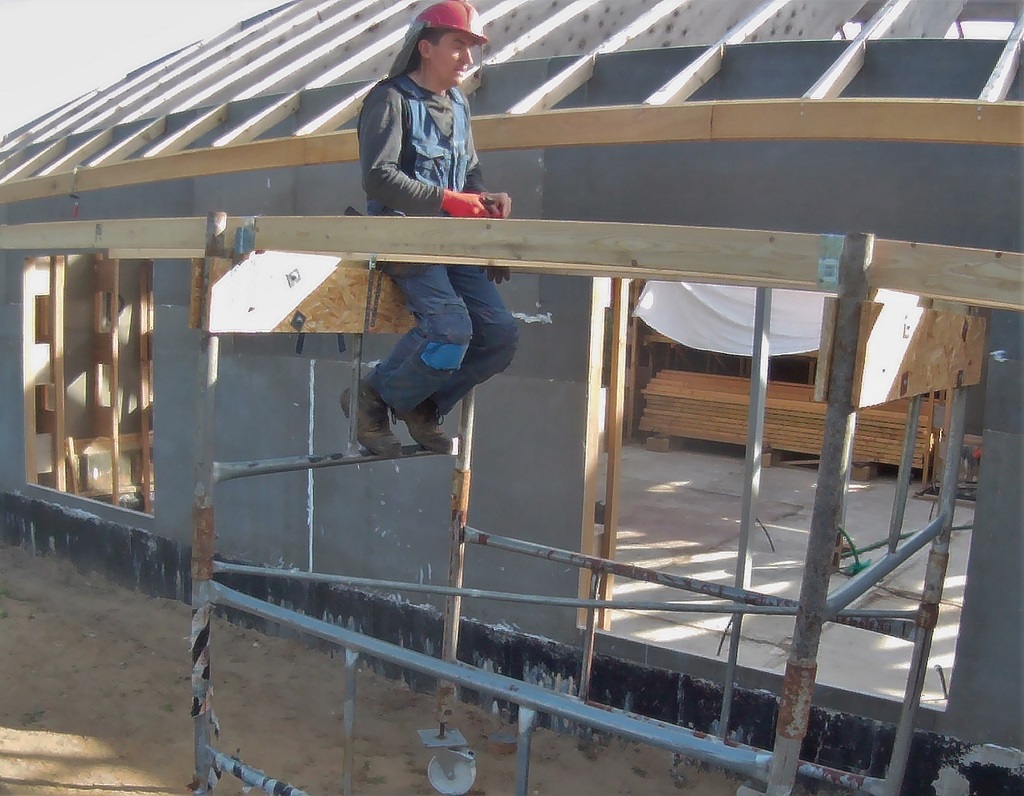
    We then got our mobile platform around the corner (coming from the “A” section to the “P” section – the long side of the Great Room) and got it positioned right down the far end to continue with where we left off from yesterday’s morning work. We proceeded doing the two “P” sections plus also the corner connected to the “O”. We managed to get the tower back around the PA corner (back on the front of the house) before stopping for the day. the tower wasn’t too bad to move with all its heavy concrete blocks loaded on, we just took it easy and used lots of plywood strips on the ground to help support the wheels.

    Corner Template Created and  Tried & Tested plus Started Cutting Slot in Remaining Fascia Boards

    The-mobile-scaffold-ready-to-use

    Corner Template Created and  Tried & Tested plus Started Cutting Slot in Remaining Fascia Boards

    Slot-cut-in-both-parts-of-fascia-P


    We will continue with the slot cutting on Saturday, going along the front (“A” through to “E”) and down the right side to finish off (“F” to “H”).

  • Slot Cut in All Fascia Board Along the Back of Building

    This morning we resumed our task of cutting a slot into the Fascia boards. Using our new V2.0 template guide, we continued with the “J” section, then “K” and so on until we reached and completed the “O” Fascia board.

    We found that we could slice the full 10mm deep slot in one go if both of us were holding and helping the heavy router machine along. All went very well and we feel confident to tackle the rest of the Fascia boards on our mobile platform later on tomorrow.

    Slot Cut in All Fascia Board Along the Back of Building

    Slot-in-Fascia-J

    Slot Cut in All Fascia Board Along the Back of Building

    Slot-in-Fascia-K

    Slot Cut in All Fascia Board Along the Back of Building

    Slot-in-Fascia-L


    Slot Cut in All Fascia Board Along the Back of Building

    Slot-in-Fascia-M

    Slot Cut in All Fascia Board Along the Back of Building

    Slot-in-Fascia-N

    Slot Cut in All Fascia Board Along the Back of Building

    Slot-in-Fascia-O


    This is as far as we can get today as our mobile platform needs modifying to improve its wheels so no more slot cutting.

  • Slot Cutting Template Created

    We finished off making the Slot Cutting template with the additions of height adjustment screws and then was rudely interrupted by the bad driving antics of the courier delivering our steel order (see Fence Broken by Delivery Driver).
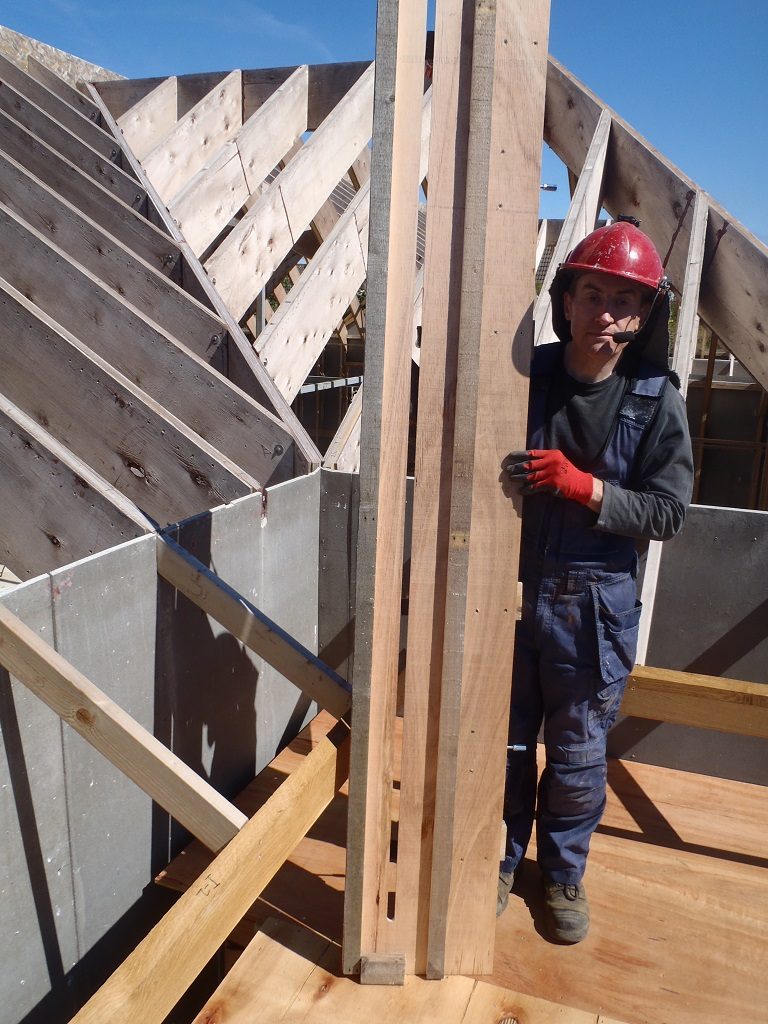
    Slot Cutting Template Created

    Completed-slot-cutting-template-1

    Slot Cutting Template Created

    Completed-slot-cutting-template-2


    After that little episode, we went outside and using the new calculated absolute positions of where the slot will be on each section of the Fascia boards, we drove in small panel nails at the starts and ends, ready for the chalk line to be snapped on later.
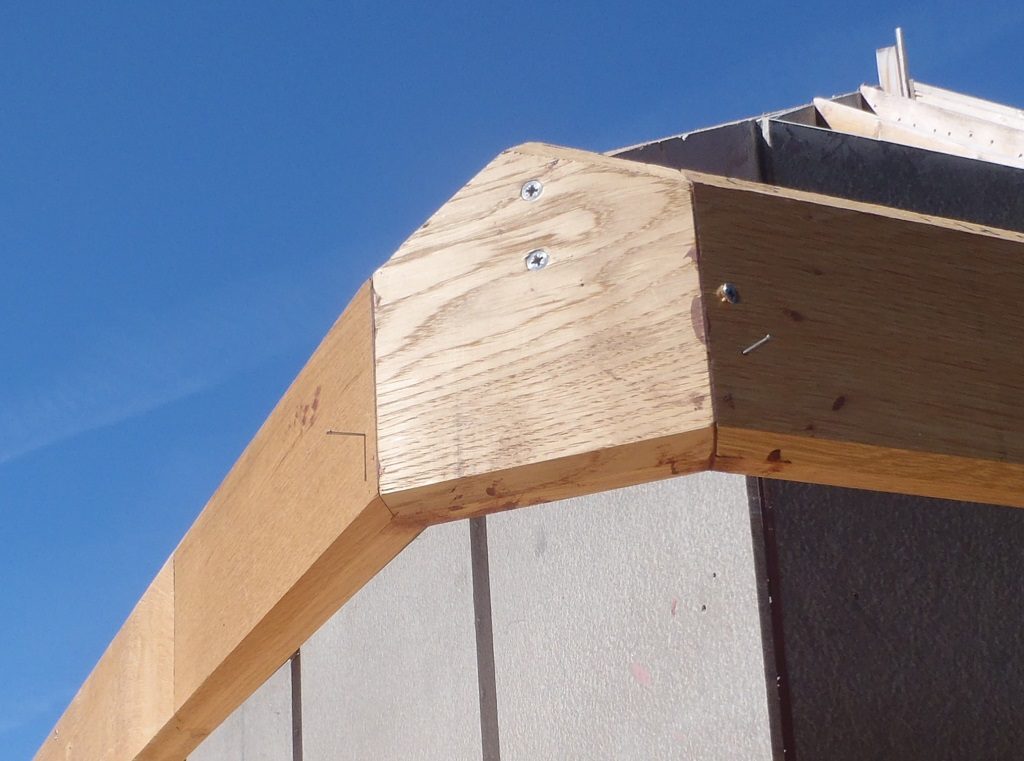
    Slot Cutting Template Created

    Nails-inserted-at-correctheights-to-snap-chalk-lines-too

    After lunch, we took out all the equipment to have a go at cutting a slot into the “I” section of the Fascia (this being on the new raised wooden platform) using our new template guide ..

    We first use the red chalk string to snap a straight line ..
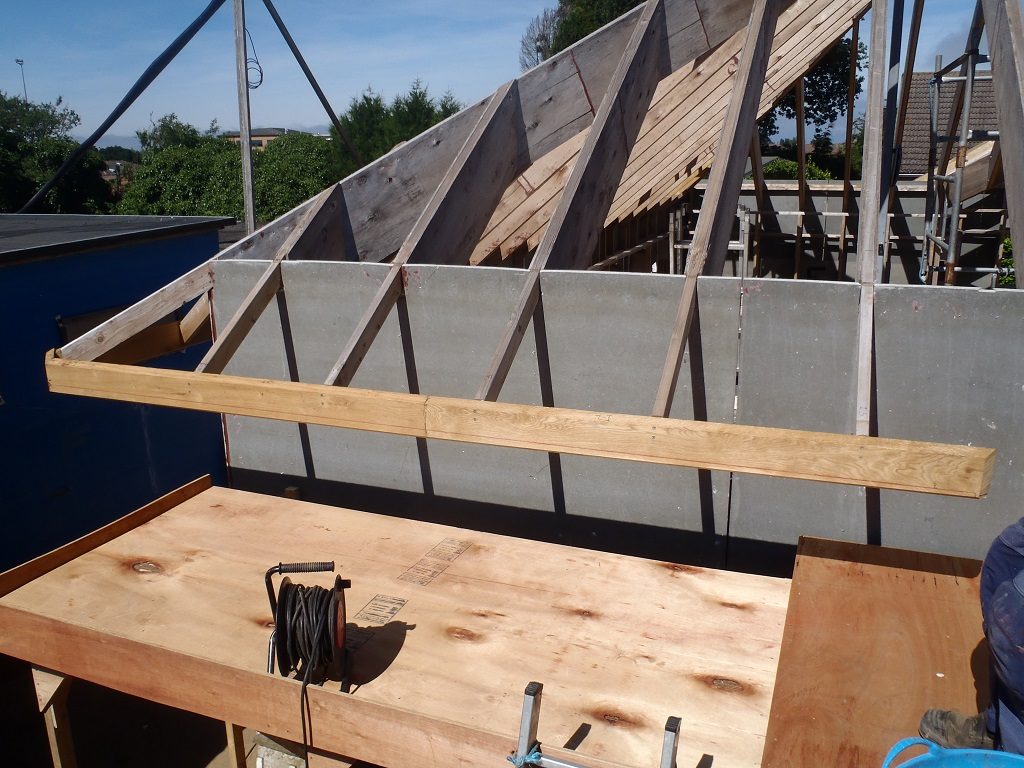
    Slot Cutting Template Created

    Chalk-line-snapped


    Then installed the template at the right hand end of the Fascia (the router needs to work from right to left), got the height adjusted nicely and clamped it down. We had to do the cutting in layers, 5mm at a time as Oak is much harder than pine ..
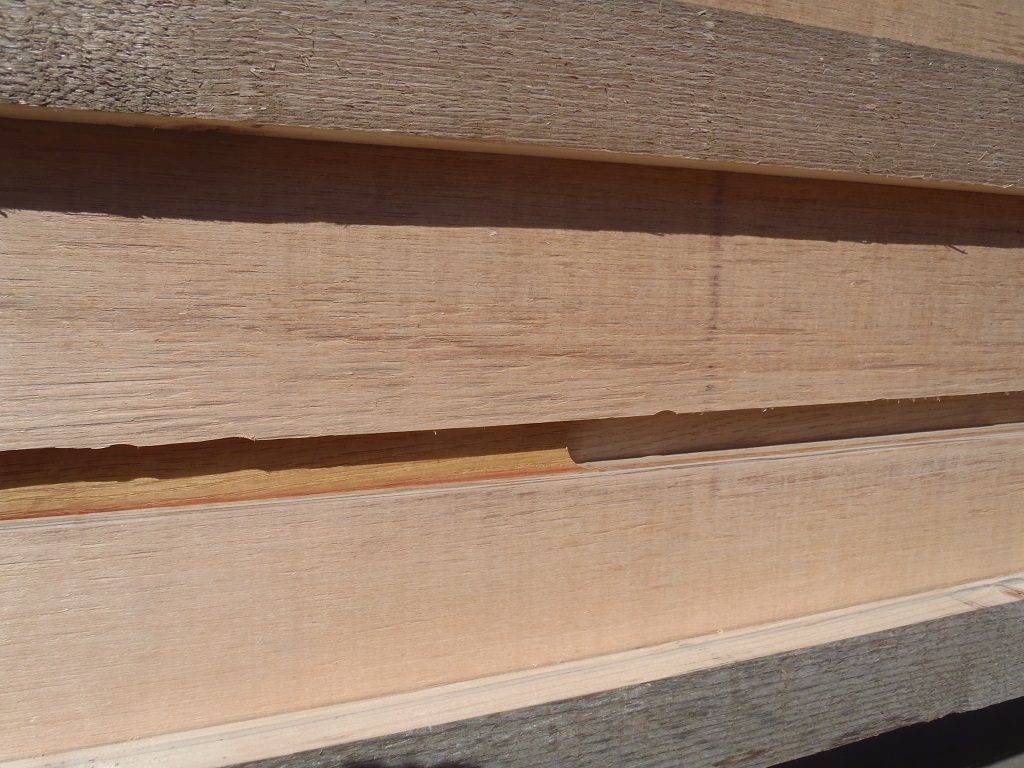
    Slot Cutting Template Created

    Slot-partially-cut


    And then slid the template along to do the last half up to the corner.
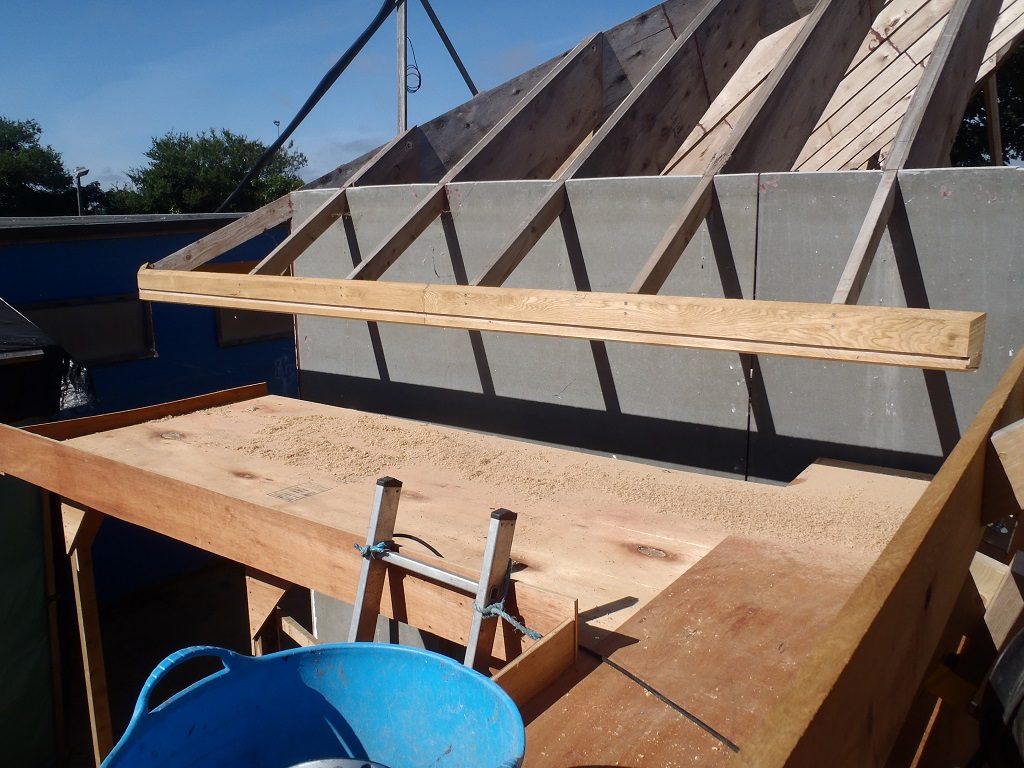
    Slot Cutting Template Created

    Slot-cut-in-I


    We now have our first slot in place!
    But we decided that we will modify our template guide because of two issues, number 1 being the router would be easier to guide on its circle part of its base plate (and not the flat region) so there is more freedom to handle the router without it jumping out of alignment. The second issue was that the lower half of the template was not quite stiff enough to avoid bending very slightly under the weight of the machine. The second version now have a much wider lower section to stiffen it up and the guide now can take the machine on its circular parts of its base plate. We will try it out tomorrow!
  • Mobile Scaffolding Tower Extended

    Today, we tackled the task of extending our mobile steel scaffolding tower so we can have a platform that is nearly 5 metres (16feet) long to work on our roof and Fascia without having to keep moving the tower along so many times.
    We used our good clean working set of scaffolding wheels that has proper locking mechanisms, which were bolted to two layers of the scaffolding elements and rolled it through the front door (yes it was big enough, being 5 feet wide and 7 feet tall!) and build two extra “lintels” to boost up the level of the final platform height so it misses the metal corner poles. This height being about 2metres up. The lintels were securely bolted to the end railing bars, one above and one below to lock it all together.
    We finished off the day’s work by putting on three 4.8 metres 95 x 45 mm timber planks and used metal joist brackets to nail down these “joists”, at both ends .

    Mobile Scaffolding Tower Extended

    Start-of-making-mobile-scaffold-platform-1

    Mobile Scaffolding Tower Extended

    Start-of-making-mobile-scaffold-platform-2


    Another little job we did this morning was to reinforced some of the joints in our wooden scaffolding structure so the edges will not dip under extra loads like a trolley carrying a large number of slate tiles.
    On Monday, we will go and put on two sheet of 18mm thick OSB boards and put in dozens of coach screws with large washers to make sure we very securely hold down the platform to the joist beams. We will also put on many concrete blocks to the bottom of the tower to improve the centre of gravity to reduce the chance of the sticking out platforms extending out beyond the scaffolding tower and plus we will put on support arms from the platform too, to screw on to the wall every time we stop at a position. This will maximise the stability of the whole 16feet length of the platform so we can just get on with the work while still having a reasonably easy process of moving it along and get safe again quite quickly. Oh Yes – Safety Rules The Day!!

  • Wooden Scaffolding All Complete, Fixed and Safety Features Implemented

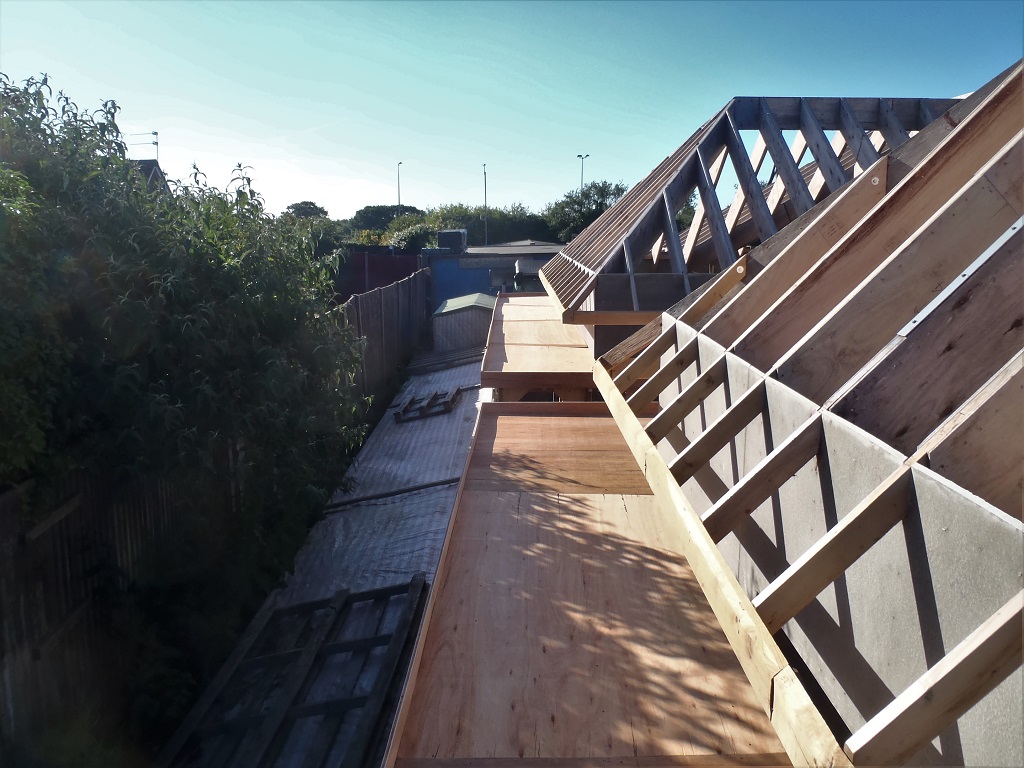
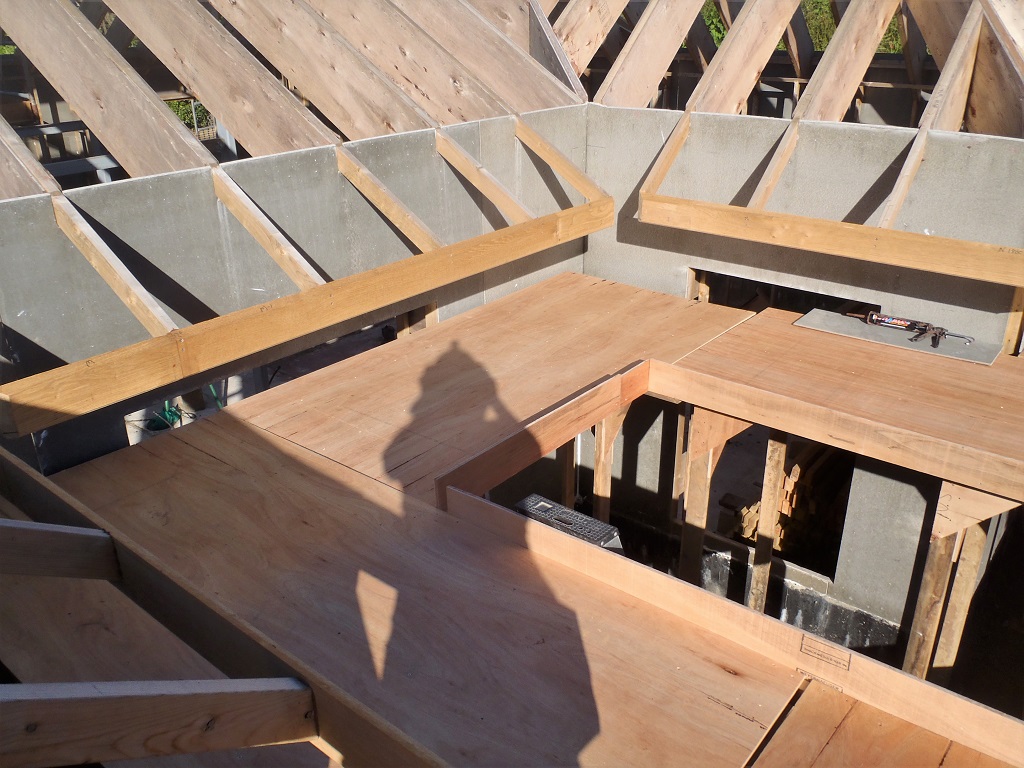
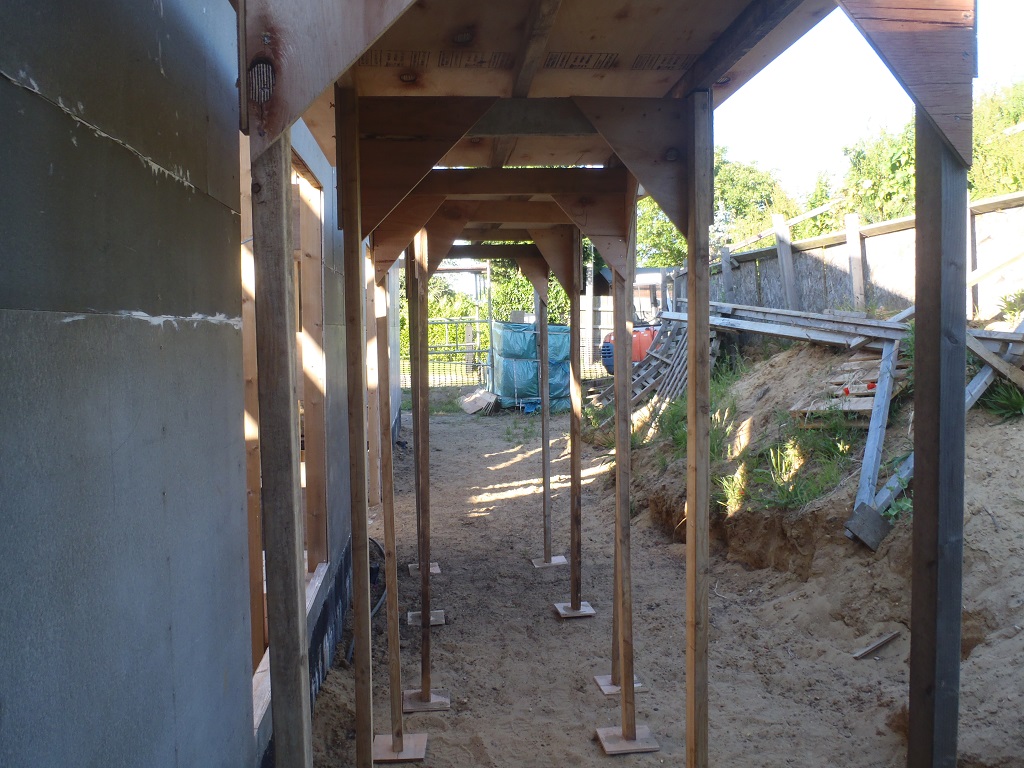
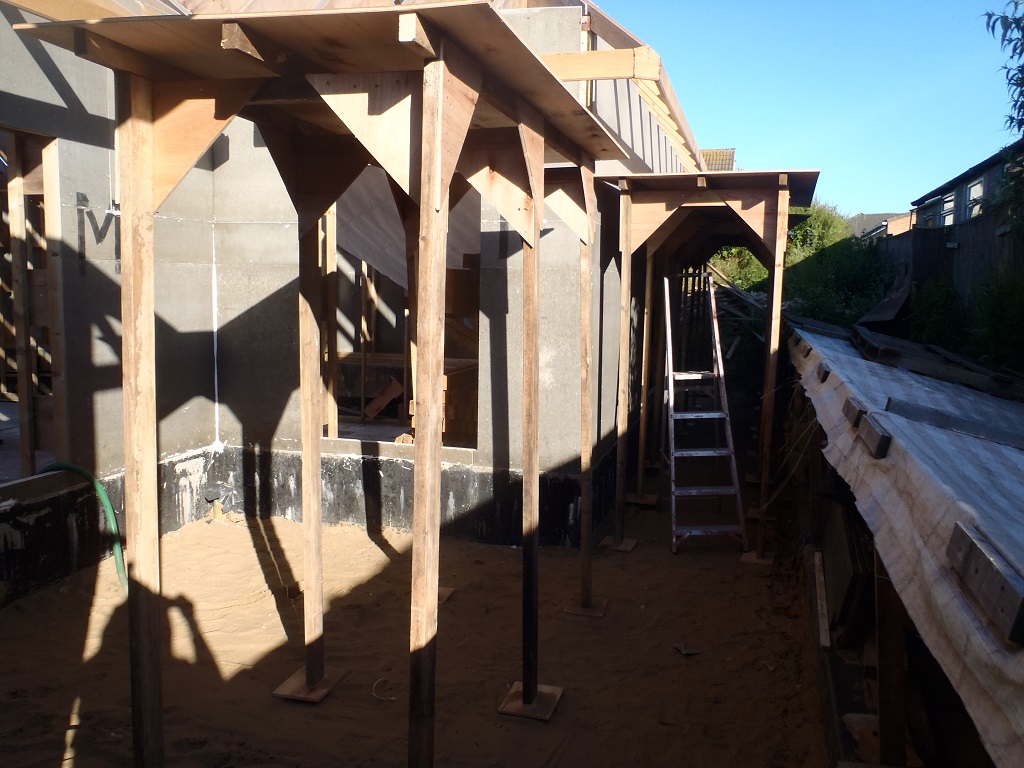
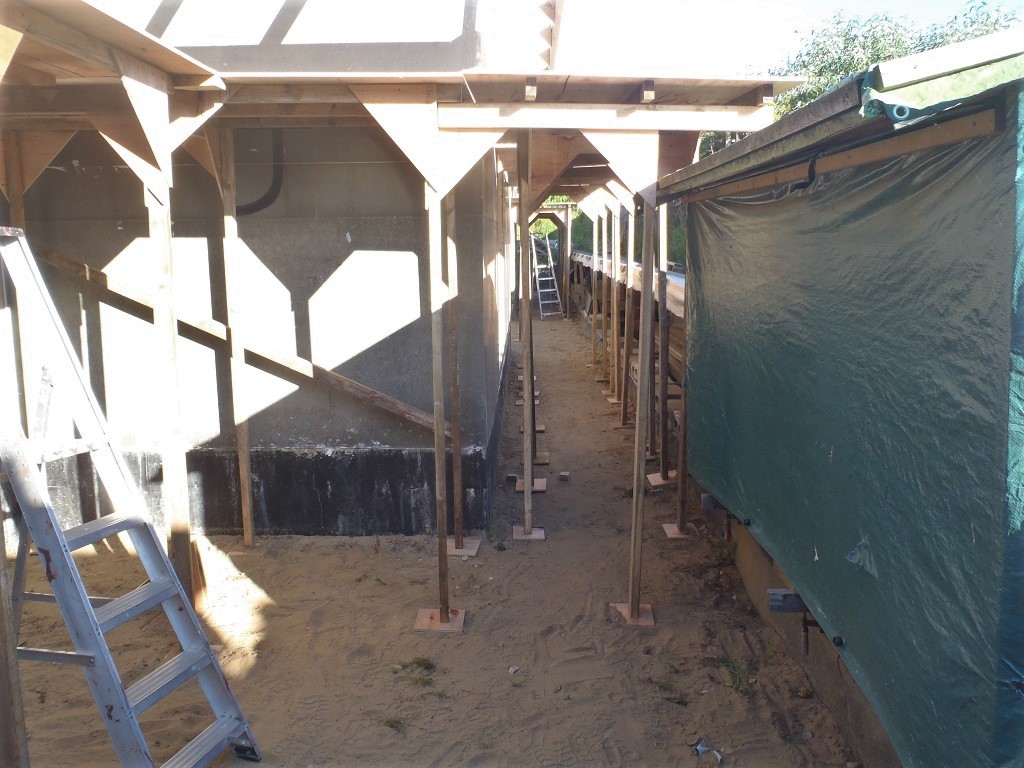
    Today, we continued with the task of getting the line of scaffolding platforms installed and we got each of the eleven modules positioned so each corner had a full 4feet overlap to keep the outer edge all in line. We had to put in short filler pieces between some of the modules, especially along the “K” and “O” sections but we now have a continuous walk way tracing the line of the building from “I” corner (the back right corner near the Garage), all the way along the back until the last corner where the “O” finishes (the back left corner near the conservatory).

    Wooden Scaffolding All Complete, Fixed and Safety Features Implemented

    Timber-Scaffold-complete-2

    Wooden Scaffolding All Complete, Fixed and Safety Features Implemented

    Timber-Scaffold-complete-1


    We also installed a safety feature of a kick board mounted on the outer edge so that no one can accidentally step off or lose trugs of tools etc.
    We can now walk from one end to the other, all 30metres distance,

    This very useful structure will stay put until we have completed the roof and got the final guttering all done too. Yes we wish we could have it going all the way around but we didn’t have enough timber and we do have our mobile metal scaffolding tower which we will put on its wheels and extend the platform length so we don’t have to keep moving it so much. We will also have wall mounting points at regular intervals to lock down the mobile tower to make sure we are working as safe as possible. The extension will be done tomorrow and next week we then can start on putting the groove into the Fascia board that will hold the base board of the gutters.

  • Eleven Scaffolding Modules Created

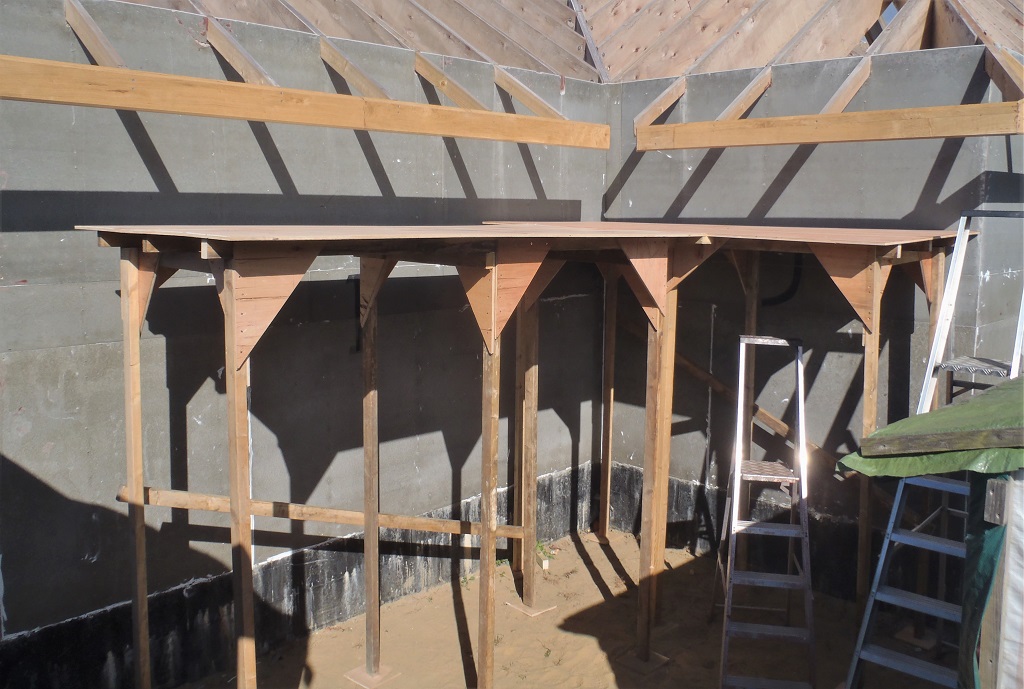
    These last two days have seen the creation of new wooden scaffolding modules, eleven of them in total, each measuring 8feet by 4feet and 2.1metres (7feet) high.
    We spend half the day yesterday in creating the various parts, ready to be assembled, and we had time to make two modules yesterday.

    First-section-of-Timber-Scaffold-made

    First-section-of-Timber-Scaffold-made


    These two were also fixed to the building structure which made it very solid without hardly a wiggle when we stood on the platform.
    Today, we continued making a further nine modules ..

    .. and we now have a total of eleven modules, to allow us to build a complete walkway from one corner at the back of the building, to the other far back corner.

    Eleven Scaffolding Modules Created

    9-more-Timber-scaffold-units-made-1

    Eleven Scaffolding Modules Created

    9-more-Timber-scaffold-units-made-2

    Eleven Scaffolding Modules Created

    9-more-Timber-scaffold-units-made-3


    Tomorrow, we will adjust the positioning of all these modules and fixed them to the building itself to make it all rigid and safe, including mounting a 150mm high kick board on the outer edge to stop both “workers” and “tools” from slipping off the platform!!

  • Wooden Scaffolding Framework To Be Built Around Back of Building

    This afternoon, we decided that we needed to build a fixed scaffolding framework around the back of the house as our mobile scaffold tower will not be able to navigate down the back as the gap between the house and swimming lane is barely 1200mm wide and the tower itself is 1300mm wide in the first place but also we have tight corners and we won’t be able to move the steel scaffold tower around these corners either. So instead, we are going to build a fixed semi-permanent wooden framework of legs and struts to hold up a sheets of 8feet by 4feet plywood, and join them together to form a walk-way at about seven feet off the ground (about 2 feet below the Fascia level). We would be able to go from the “I” section at the start of the back of the house, along “J”, “K”, “L”, “M”, “N”, and “O”, the other end of the house. We using old CLS timber we have recycled from other jobs and cut them into the various parts to make 30 twin-leg modules to make five 8feet long platforms and three 16feet longer platforms. They will be connected together and also fixed to the building in lots of places to ensure that the whole framework is good and solid for maximum safety.
    This scaffolding will probably be there for most of the rest of the year while we work on the roof, getting all the elements done, including the Skylight. we will only take it down when the slate tiles are on and the guttering is all complete and fully working. It might take a few days to build it all but it will save many hours, or even days in not having to keep moving the mobile tower around all the time. We can afford this because we had recycled timber to hand and spare plywood boards but doing it properly using steel equipment would have cost many thousands to hire or buy, as we can only work so quick and we rather spend the money on buying materials like Oak Timber instead.
    Tomorrow, we will carry on preparing the old recycled timber, chopping it down into 30 pieces of 900mm lengths and 60 pieces of 2100mm lengths. Also make 60 triangular plywood pieces plus 60 flat “foot” (using more plywood leftover pieces) and then long 16feet (4.8metres) CLS timber, three of them for each long platform module which will have two full size sheets of plywood screwed down. All the platforms will have safety edges on them to provide some protection against walking off the edge or kicking a box or trug of tools over the edge too!