Category: Lighting

Anything to do with Lighting. Up on the ceiling or walls or mobile units.

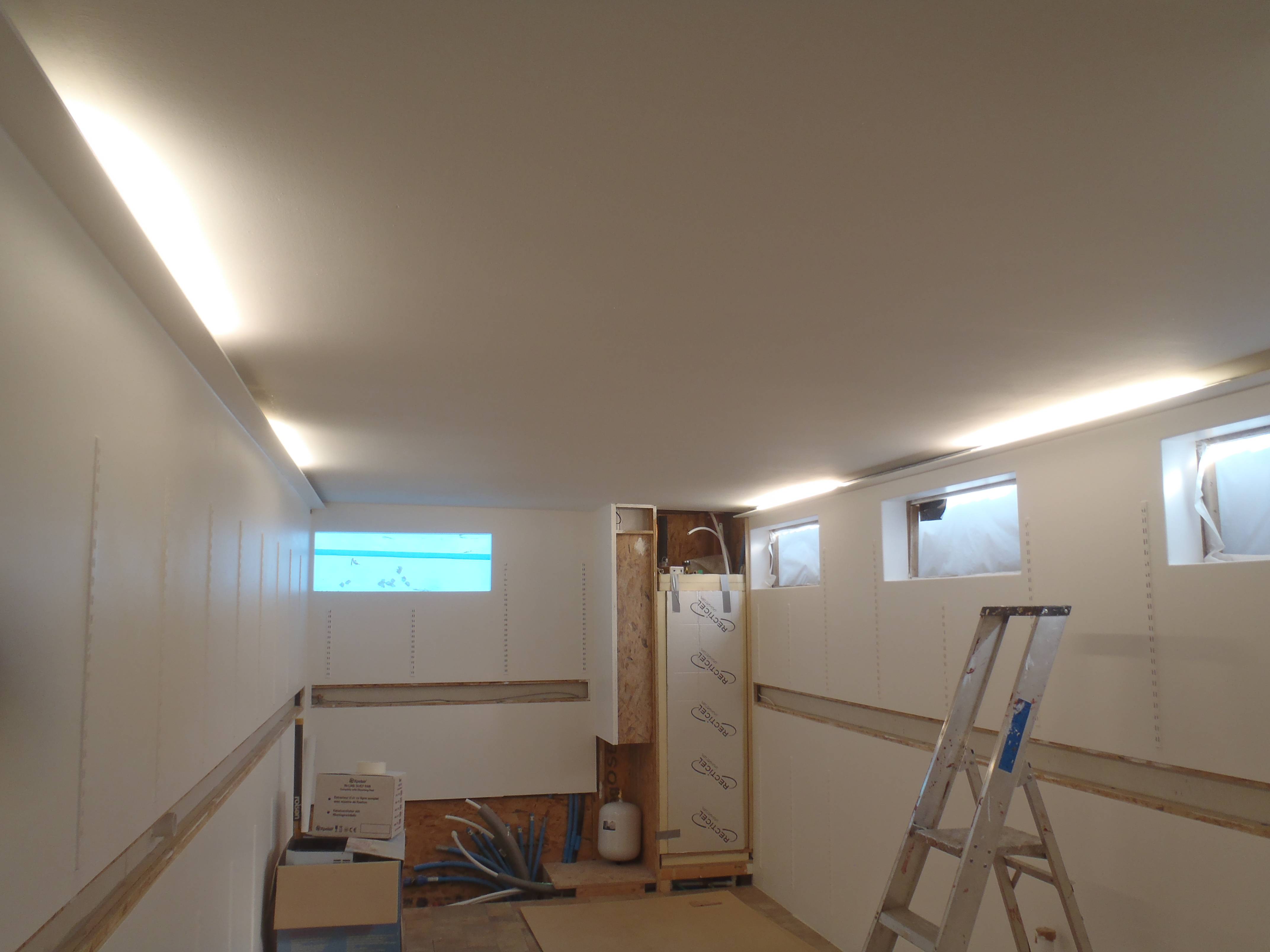
  • Great Room Ceiling, Lighting Gantry and Gallery Wall All Prepared and Painted

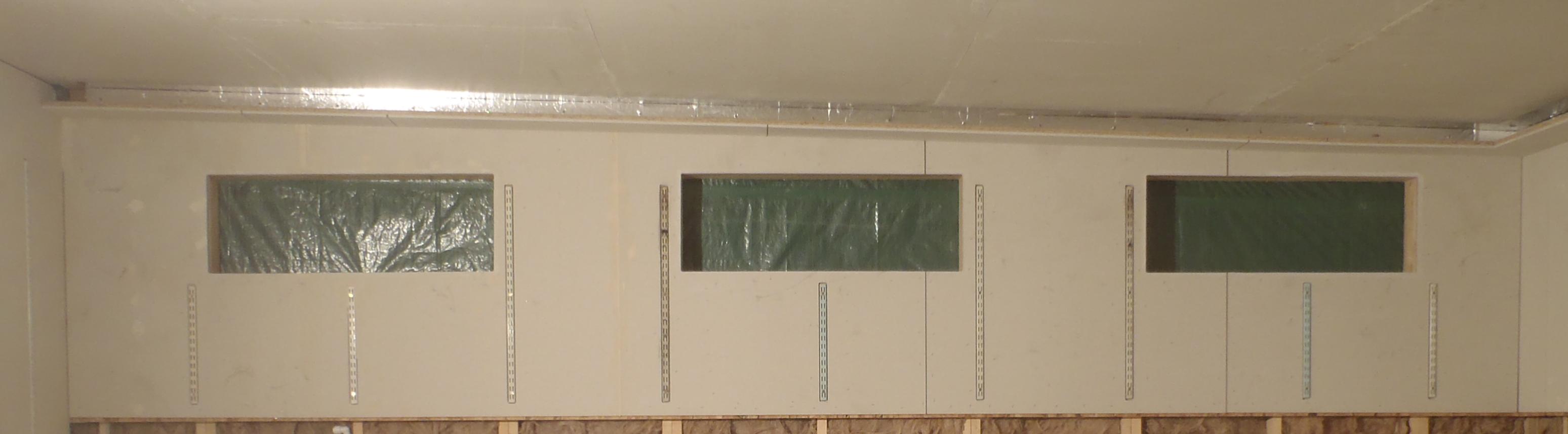
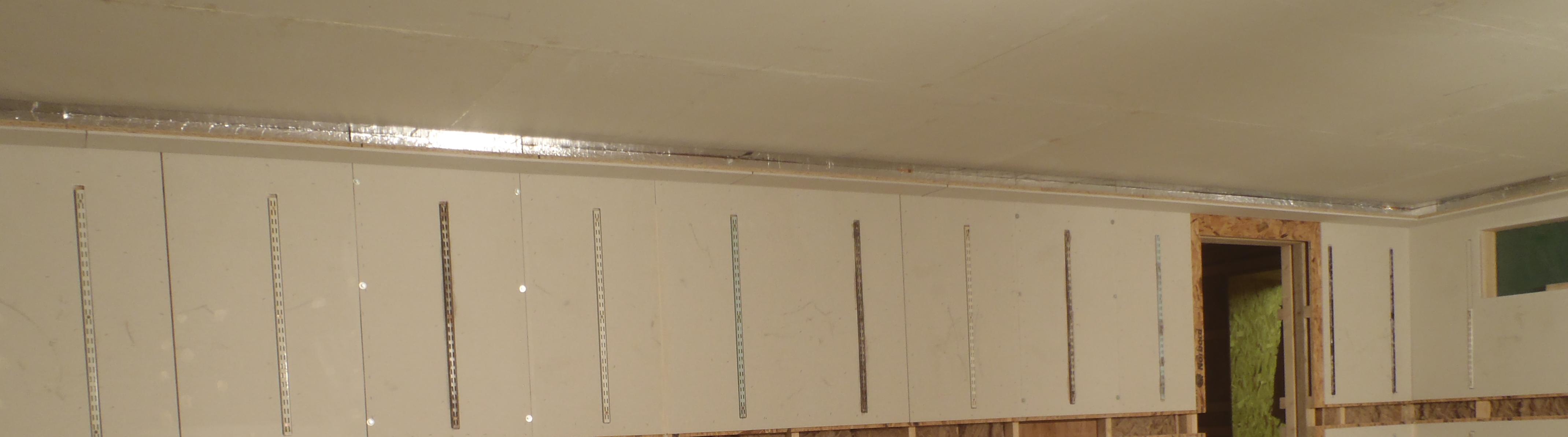
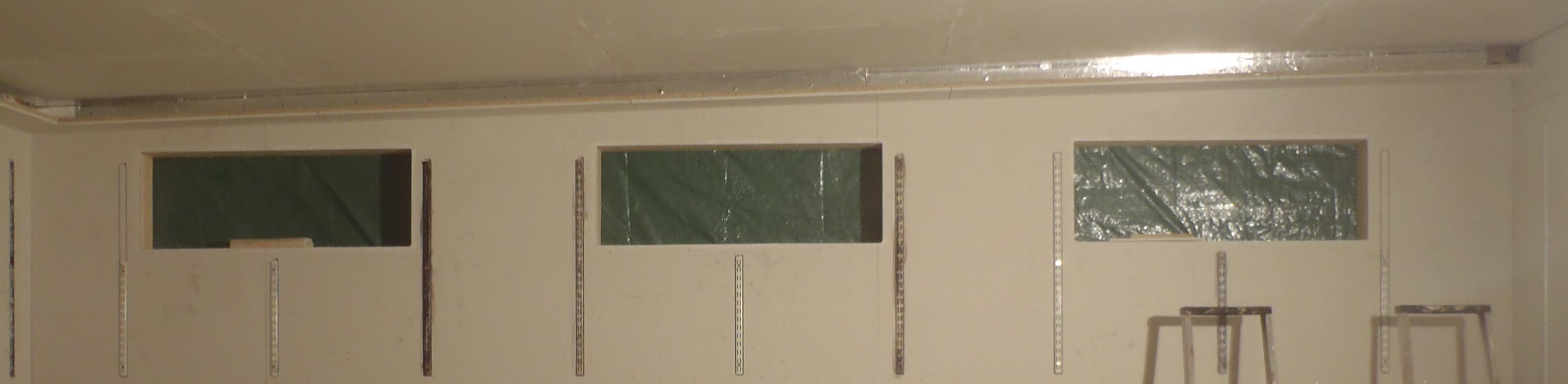
    Since our Christmas break, these last few weeks, we have been working on the upper half of the Great Room, including getting the Gallery’s wall constructed with all its gaps (ready for shelves and cupboards), above and below the Utility Channel plus the doorway too.
    Since we had finished the Skylight and didn’t need the use of the mobile platform anymore, we constructed the remaining wall framework in the middle of the Gallery, between the metal legs that are holding up the Skylight. We put in two more “gaps” for 600mm wide shelving units and cupboards, alongside a standard 800mm wide doorway that gives access to the First Floor room beyond. The wall surface was built up to match the rest of the wall that goes past the Gallery and down to the Great Room, forming an internal gable divider to the rest of the house.

    In the meantime, the fermacell boards that got put up before Christmas, had all their joints thoroughly sanded using our trusty old belt sander with a base plate fitted that allowed us to remove any slight ridges formed between sheets. We decided that because we had a solid OSB backing layer all over the ceiling, we didn’t have to “Tongue and Groove” the thin 10mm thick edges of the fermacell boards, only relying on the PU construction glue in the joints to hold everything tight together. This meant that there were a very slight variations in how flat we managed to staple up each sheet and the joints had a tiny steps in them. So, we came along with our belt sander and using a 40grit belt, went around “ironing” these steps and smoothed out the whole surface.
    The Dorma section was similarly done but had to be done by hand as the machine was too large to fit inside among the rafters!
    As that was happening, the staple holes and the now smooth joints were filled with good quality decorators filler. The initial wall, the “A” section, was done using a standard spatula tool but then had the idea of using a piping bag so we raided mum’s baking supplies for those disposable plastic bags and nozzles! It was a very good idea as we could squirt in the filler into the staple holes, after we had blasted them out using our compressed air, and leave a little sausage of filler proud on top, to allow shrinkage. On the first section we were doing, using the spatula, discovered that the fermacell plasterboards were so absorbent that they sucked the water content out of the filler hence shrinking it down in the holes, causing us to repeat the filling again. But, using the piping bags, it was much much better, in both time and efficient use of the filler.
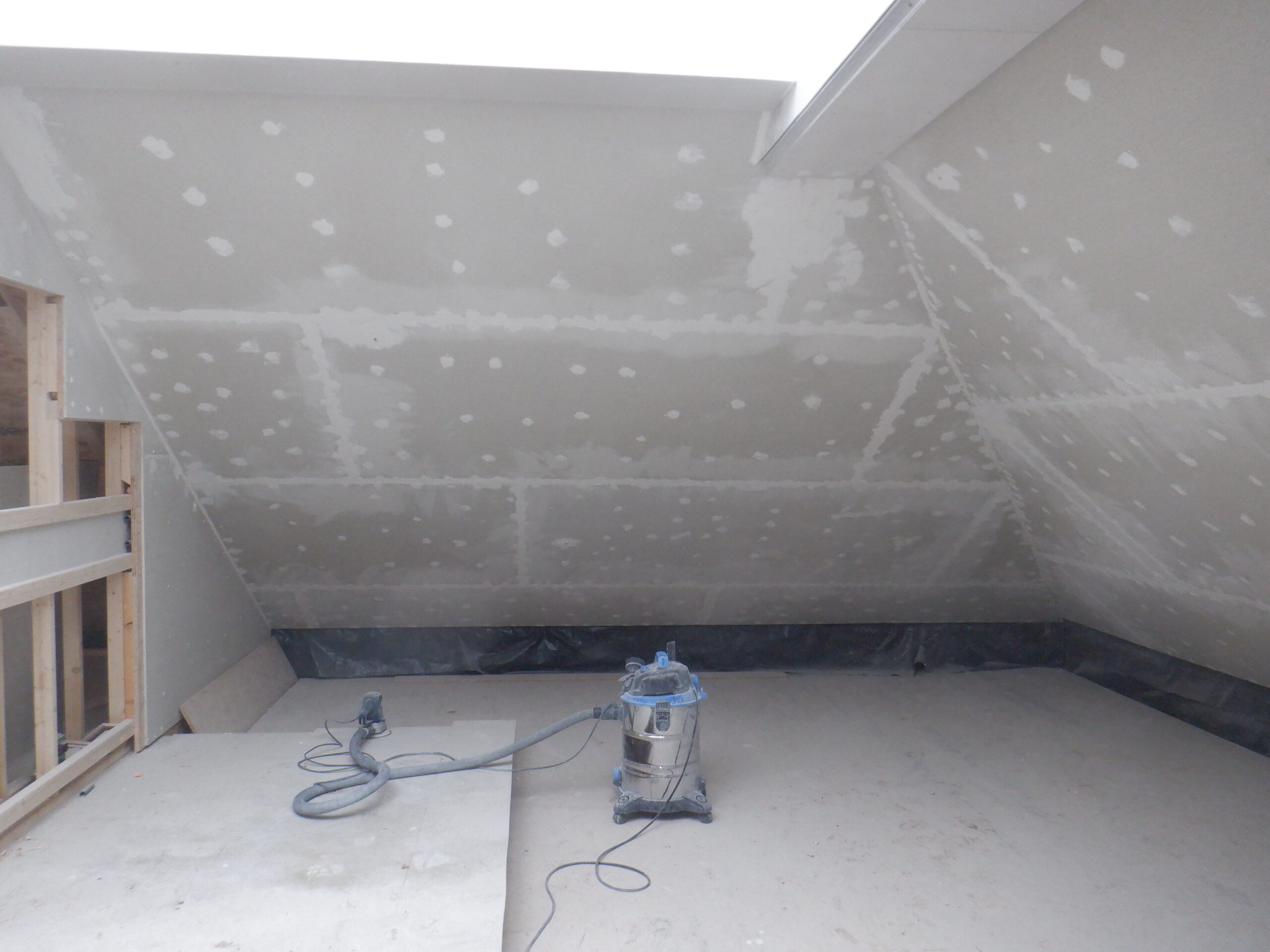
    A roof of blobs
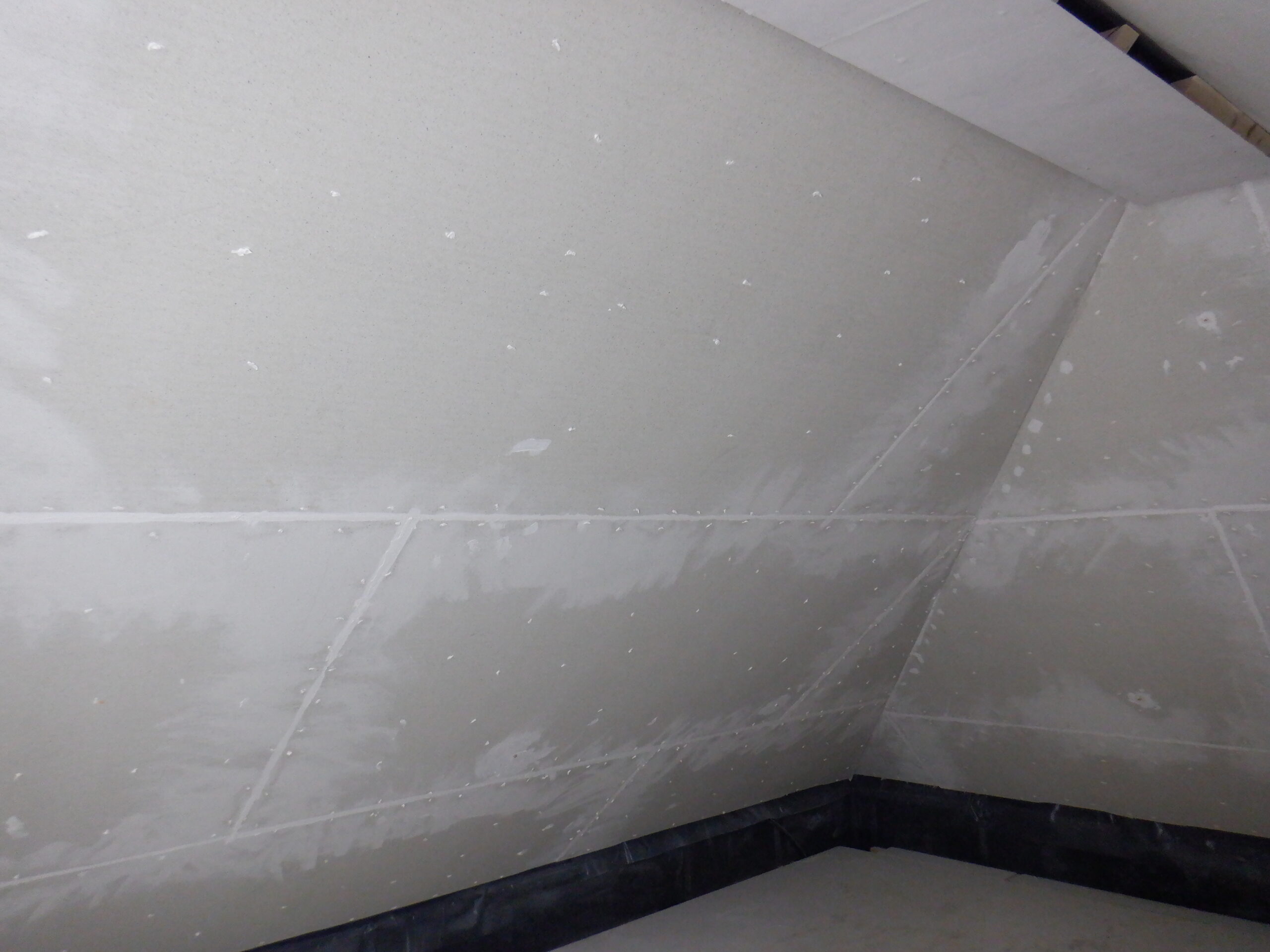
    A roof of blobs

    P Roof filler dots

    P Roof filler dots


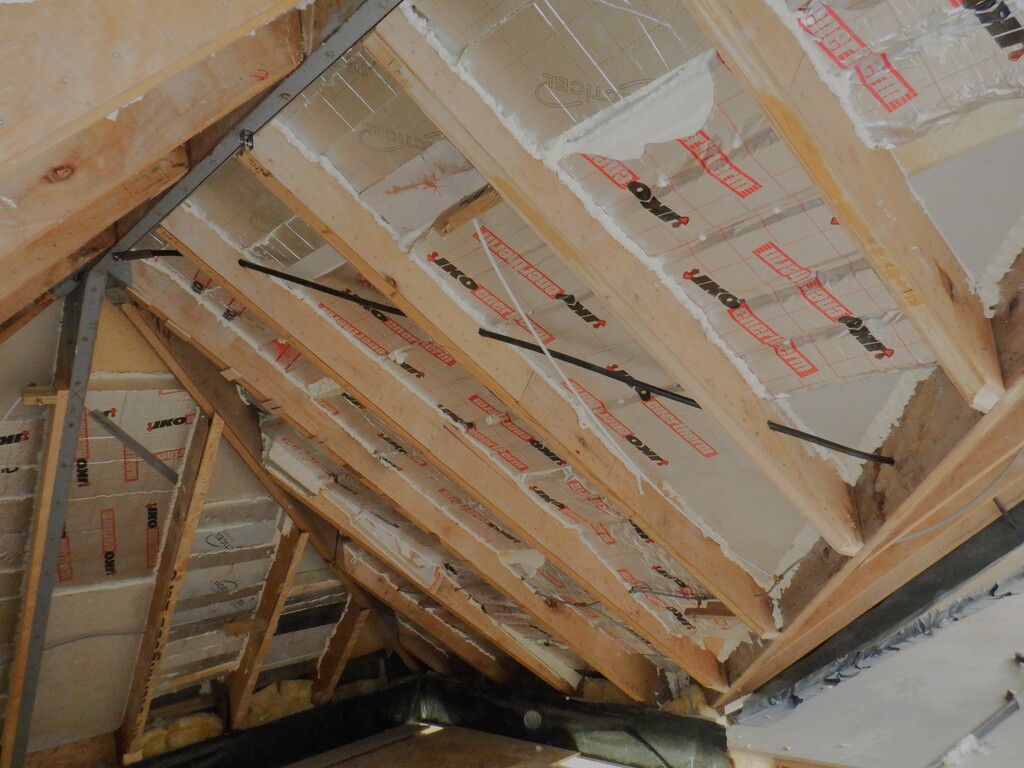
    The intersection angle between two roof surfaces were trimmed and also smoothed with heavy use of the sander and manually using a surform shaving tool. We did the “M” and “N” long sloping junction, as well as the Dorma section over the Conservatory, showing off the exposed rafters. These were also filled in with filler especially around the exposed rafters so it comes out all in a straight line in both surfaces as they meet together.

    Then came the messy job of rubbing down all the filler! Fortunately, our orbital sander had a vacuum port, to suck up 99% of the dust. We had another lovely tool to help us with this task, a 9inch rotating disc sanding machine attached to a long handle grip, with the vacuum tube running up the handle. This made quick work on sanding down all the surfaces and only needed hand sanding around the edges and corners.
    Oh yes, we filled in the three corners between the sloping rooves, by using a piece of 110mm diameter drain pipe as a shaped spatula, to create a smooth curved surface to smoothly sweep around from one surface to the next.
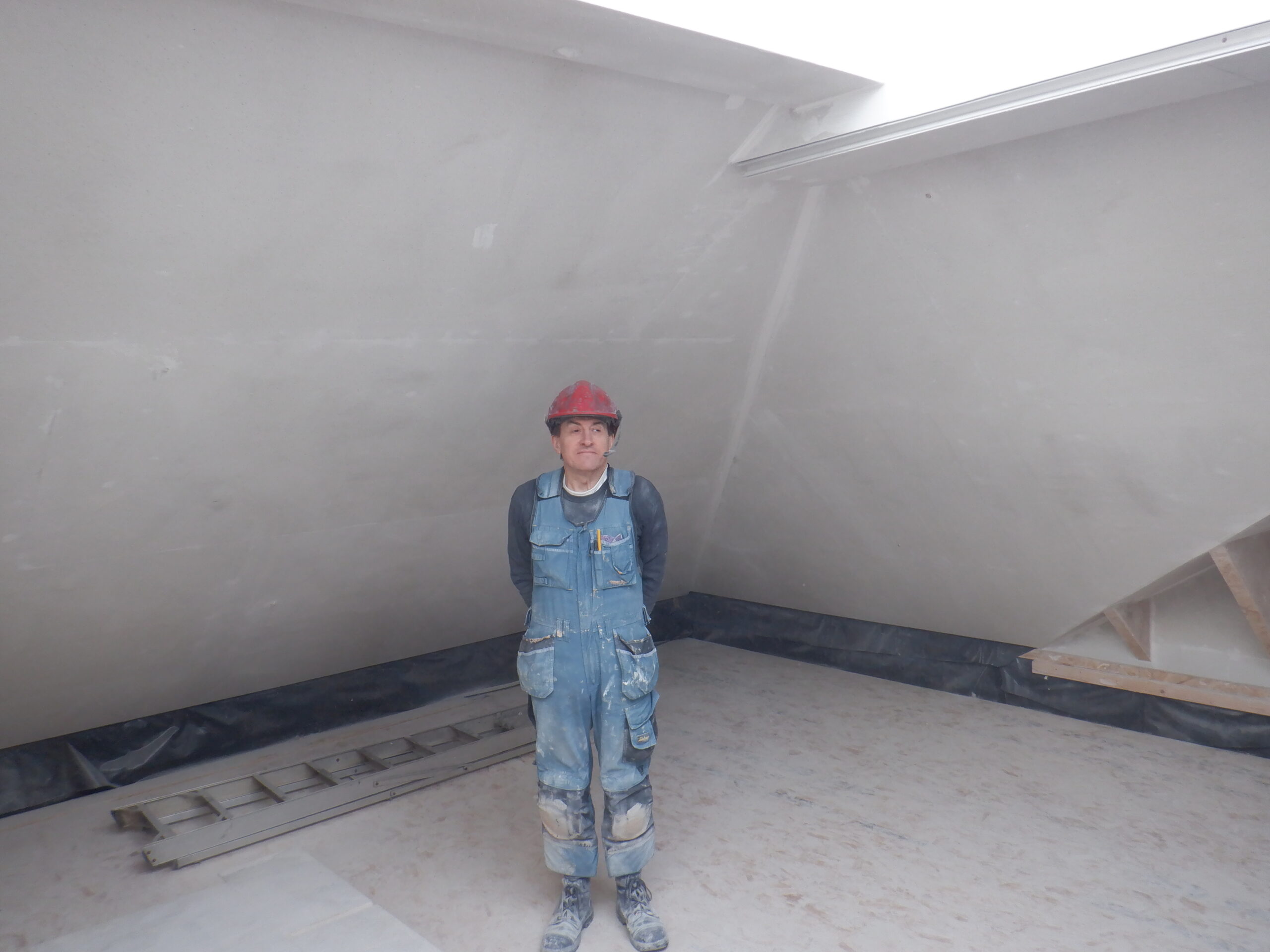
    Initial sanding A
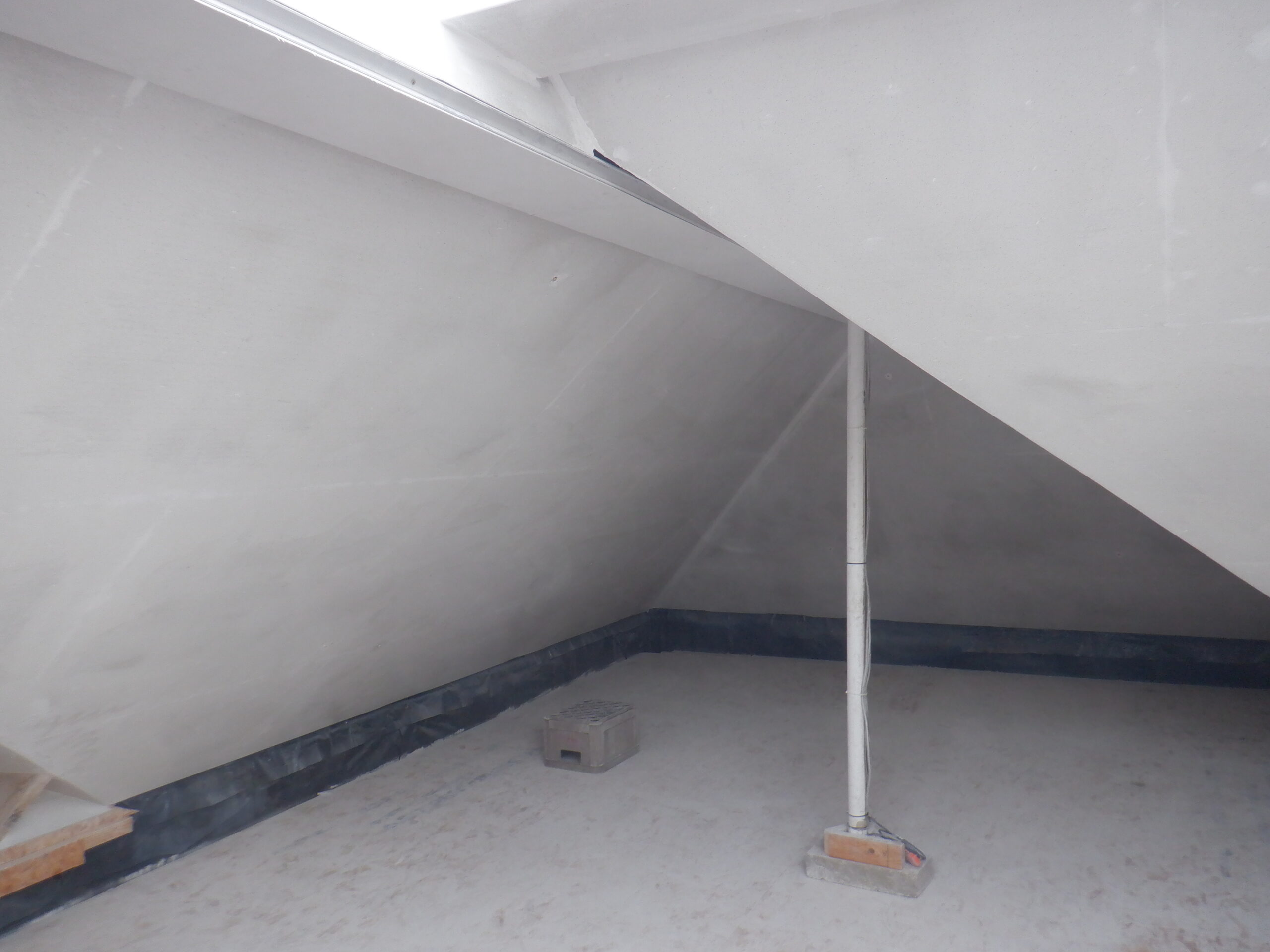
    Initial sanding A

    Initial sanding O&P

    Initial sanding O&P


    The Gallery section also had all the staple holes and joints filled in, including rounding the corner on the three edges around the doorway, and then all smoothed down too.
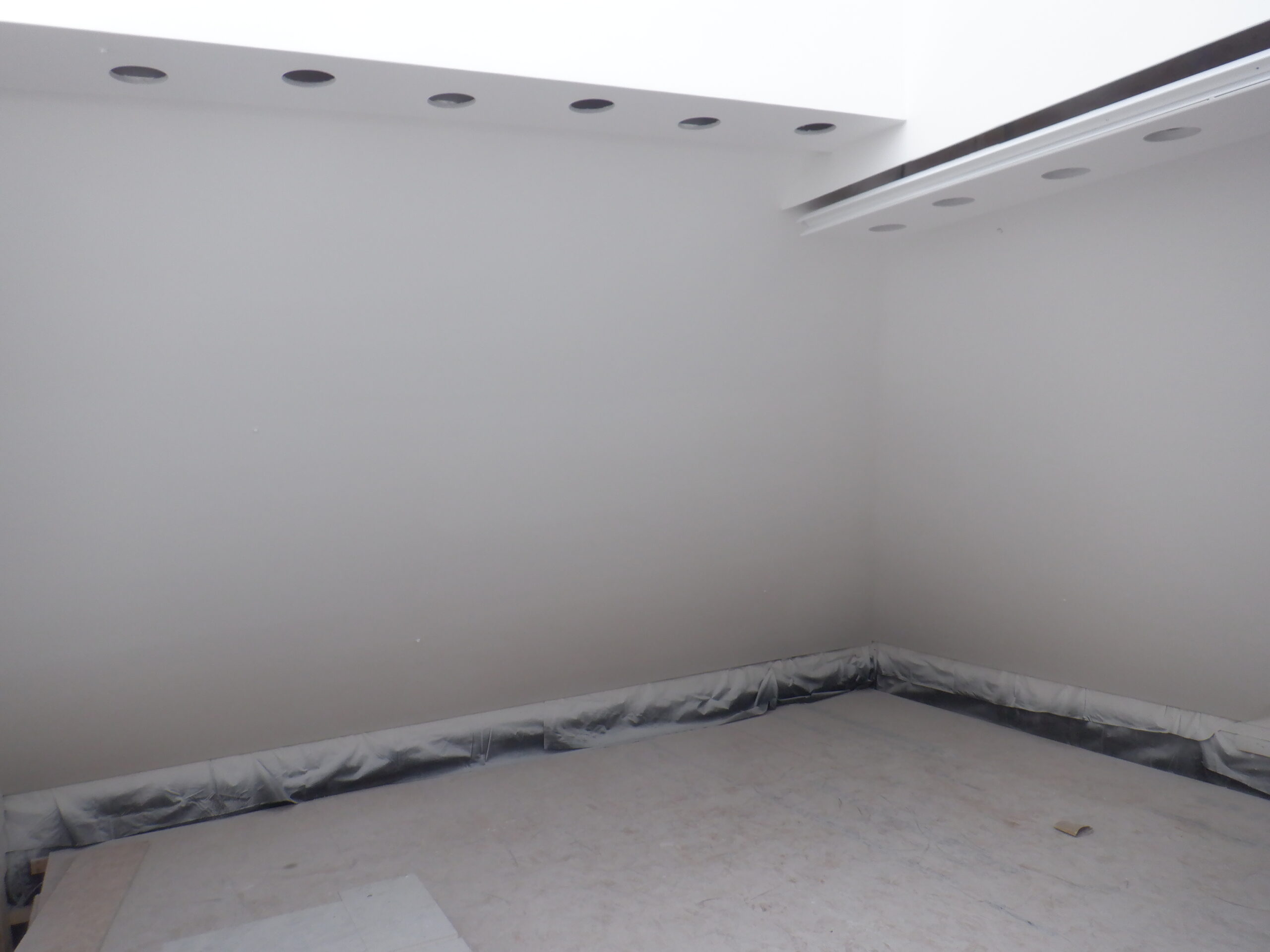
    The next task was to drill large holes for our lighting units we are going to have in the two wings of our Skylight, the flat strips that are coming perpendicular out from the Gallery wall and joins to the Skylight. We bought a sharp tungsten carbide teeth circular cutter measuring 95mm in diameter and proceeded to drill a set of eight holes staggered across the surface on each wing.
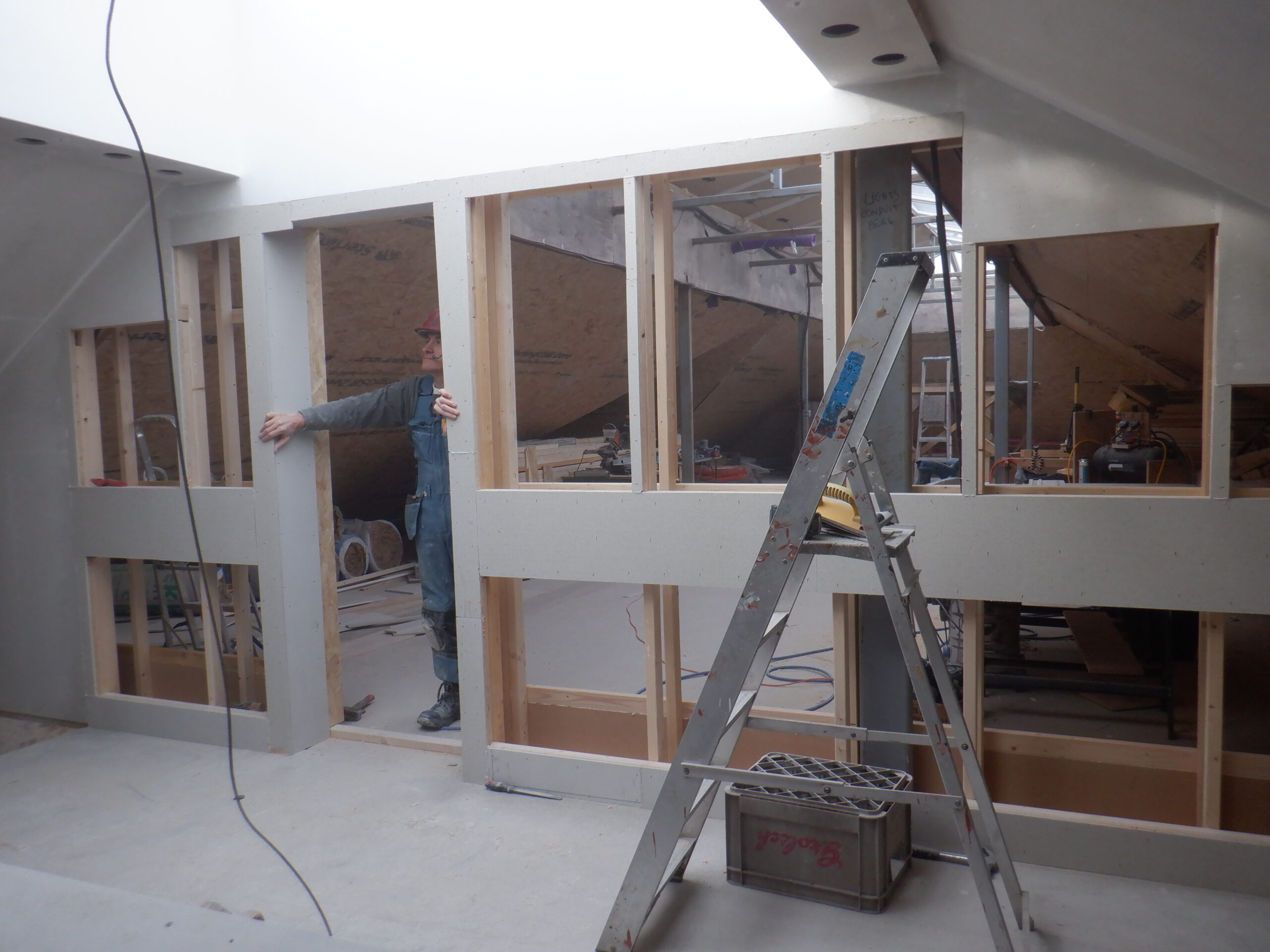
    Gallery Wall Built

    Gallery Wall Built


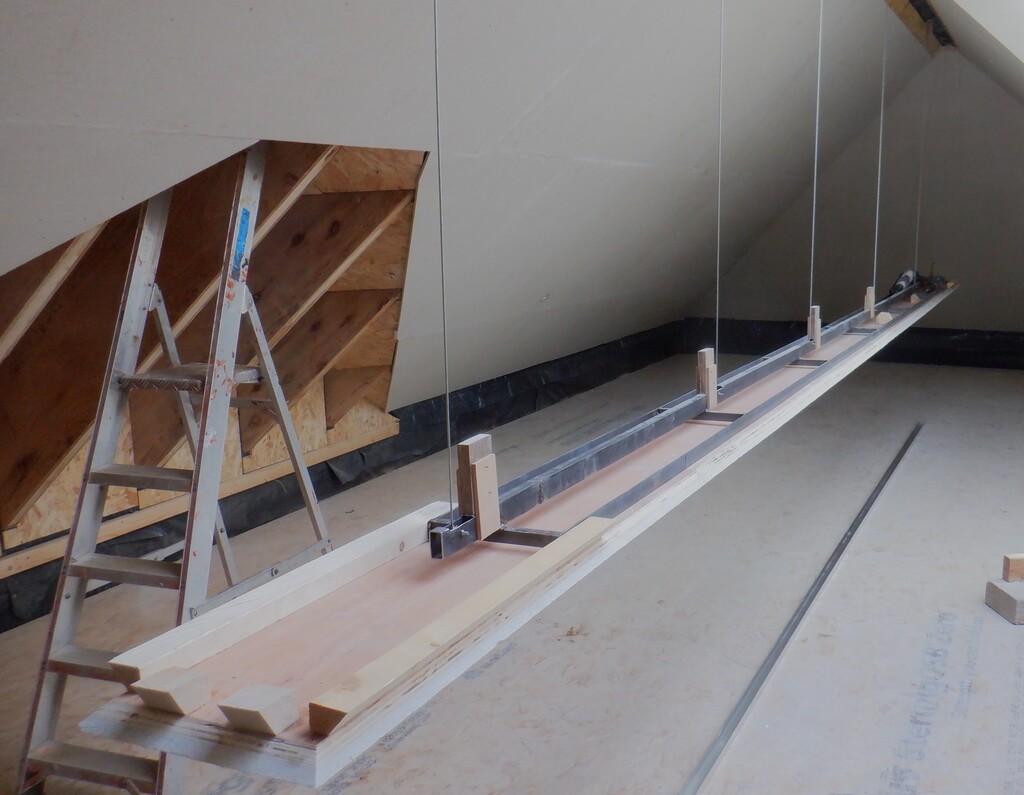
    We also lowered our mobile Lighting Gantry unit and turned it upside down on four trestle tables so we could finish with that as well. We first installed the aluminium U-channel bars, which will contain strips of LEDs to shine down the slopes of the ceiling, all the way around the edge of the lighting module. Then we surform the fermacell edges that overlapped the U-channels so that both came together with a smooth graceful line. While we remembered, we stuck down a line of masking tape inside the aluminium channels, at the base so that we had still a bare strip of metal after we had painted them white, for the LEDs to have a good thermal conductivity to aid keeping them cool and long lasting. Most LEDs products these days are over driven and have very poor thermal cooling, and unfortunately, these lamps have short lives. We do not wish to suffer this fate so our LEDs will be under driven, well cooled and hopefully long lasting- fingers crossed!
    Anyway, back to the gantry module, we then sanded the flat surface to make sure the joins are smooth and any screw points that pushed a little hump out, is all cleared away and left flat and smooth. Then, we drilled a further twenty-four holes, equally spaced out all the way along the module, only having to adjust very slightly their position twice to avoid internal metal framework. We now have plenty of downlighters to help illuminate our Great Room!
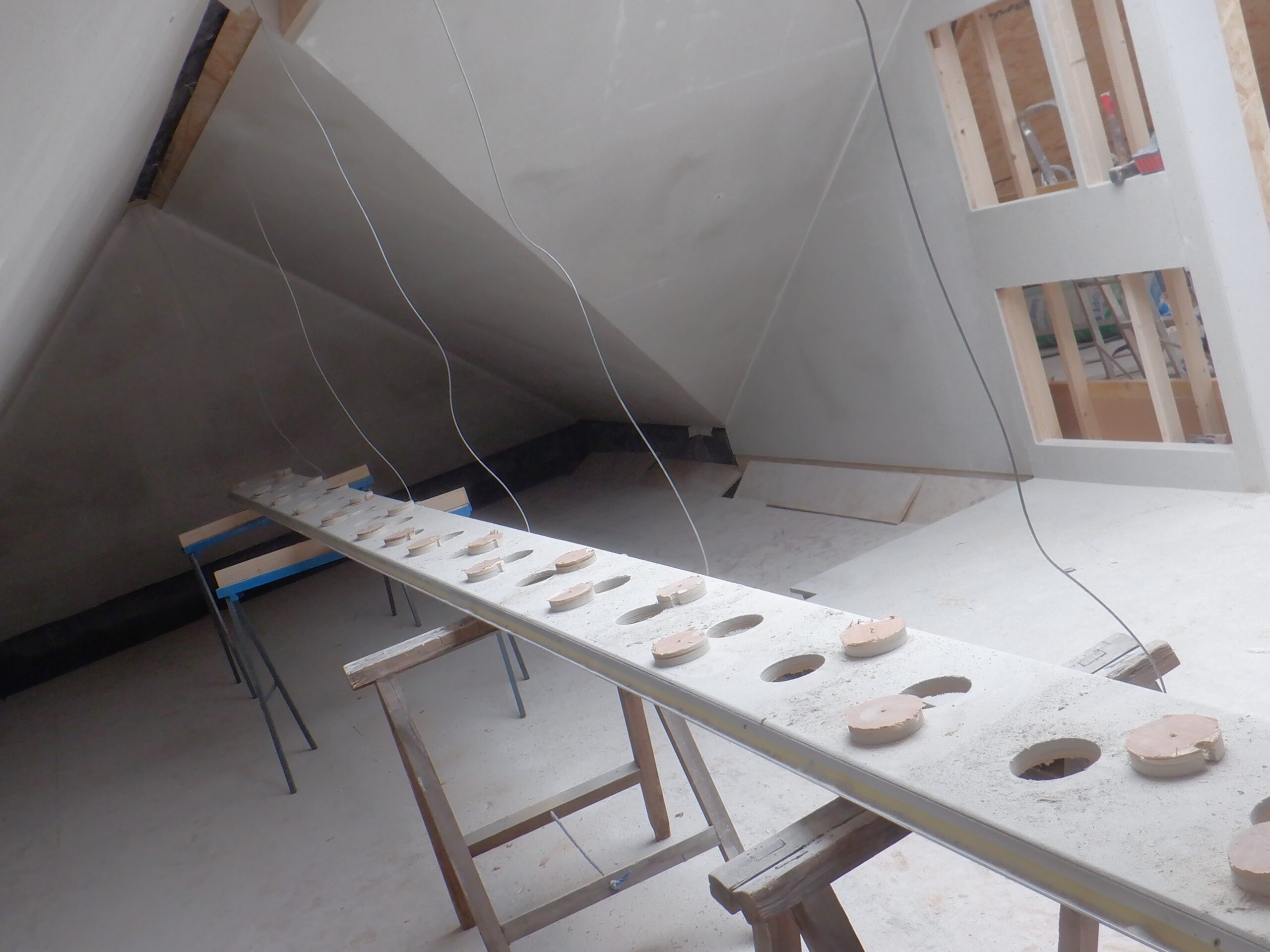
    Gantry Spot light holes drilled

    Gantry Spot light holes drilled


    The other thing we did to the lighting module, was to take one length of the aluminium U-channel and cut a very shallow groove inside the metal surface, near the front so we can slide in a short length of plastic diffuser in the section that will look over the Gallery under the Skylight. We didn’t want to have the LEDs fully visible, poking their bright pin prick light sources at you, and also to avoid being able to see the electronic control circuits as well.So we were getting closer to the actual painting at last. We double checked everywhere, put in any filler in missing holes and scrapes, installed a little conduit under the cupboards on the Gallery for future lighting options and then gave the whole area a good and thorough vacuum and sweep. Also washing with plain water all the painting surfaces with a floor mop to remove any dust, sanding a couple of missed “bumps” along the way!
    We then covered up the naked exposed rafters with masking thin plastic sheets, to protect the wooden surfaces so they can have the “pretty” veneer stick nicely to them .Finally, we can actually proceed to the painting at last! We got out our paint sprayer and got our 10 litre of white emulsion paint. It was quite thick and the sprayer said that it should be diluted with water, to make it thinner. It recommended a minimum of 10% of water and that the paint dribbles off smoothly and doesn’t form “bumps” or “tracks” in the paint before settling down. We ended up diluting it to about 12.5% before it looked ok. We had two spray nozzles and the wider fan nozzle, doing 50degrees wide fans, seem to be making a slightly bumpy surface on a sheet of insulation board. We switched over to our second nozzle, which produces a finer and narrower 30degrees fan, seem to be better.
    So we proceeded to spray the ceilings, starting on the “A” section and working around clockwise. We managed to cover almost all the ceiling surfaces before we ran out of paint. We were surprised that we couldn’t get the 10litres to last long enough to cover all the ceiling and walls. The instructions on the paint pot claims that it should cover about 130 square metres and we estimated that our Great Room ceiling and Gallery is about 70 square metres. It looks like that we had put it on too thickly. Then, we spotted that the paint pot also said that they recommend diluting their paint 25% if one was using a sprayer. Oh Dear!!
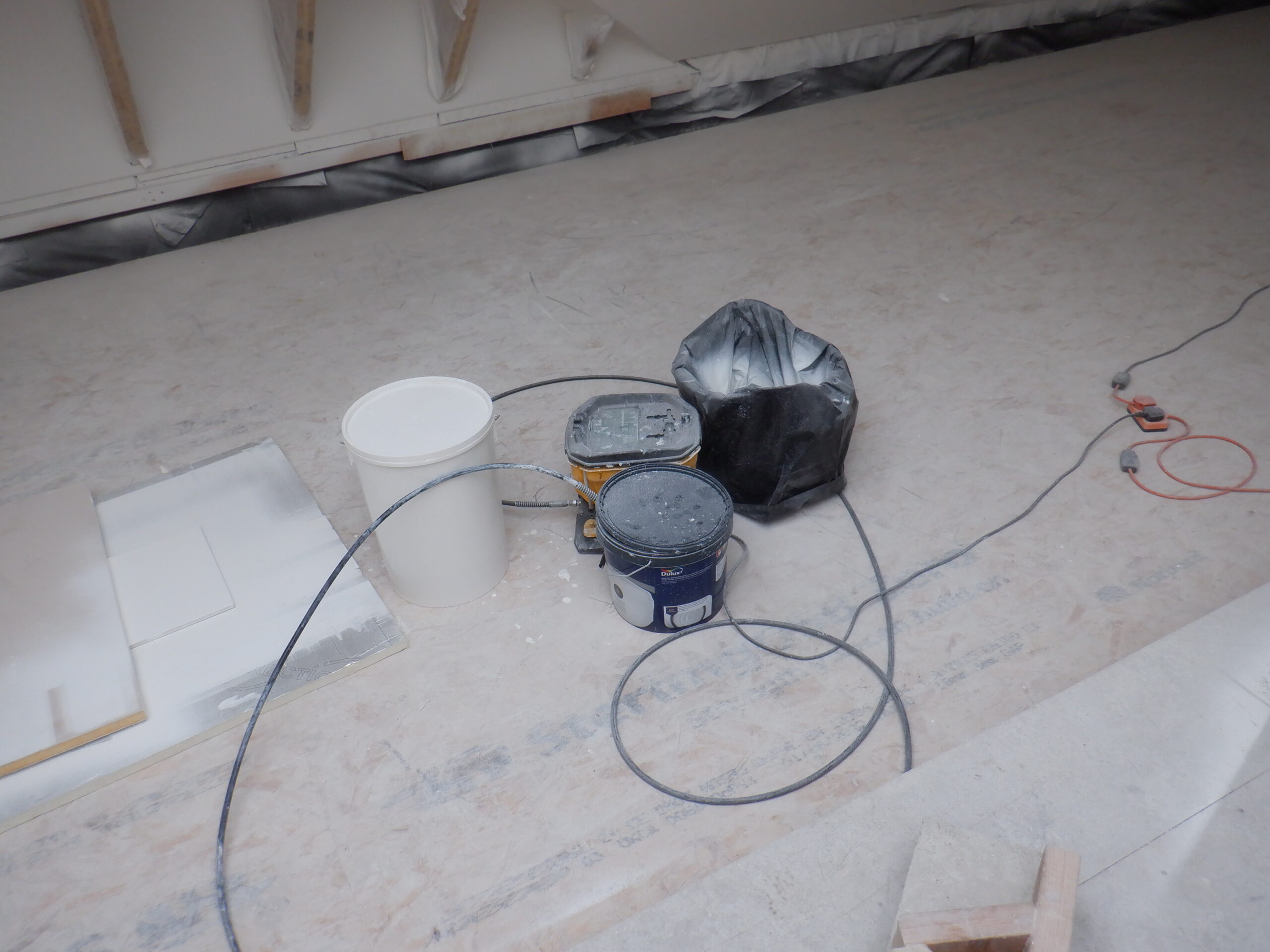
    Paint spraying equipment

    Paint spraying equipment


    In the full daylight on the following day, we also noticed that we had missed sections. We were painting in the late afternoon and we hadn’t had enough lighting. We are learning!!

    Another side-effect we have discovered, is that the fermacell plasterboards, which are made up of newspaper pulp mixed in with the gypsum, goes “hairy” when we do heavy sanding on the surface, like when we had to smooth out a joint. The paint has soaked into these hairy bits and produces a textured finish. But fortunately, we also discovered that by just simply sanding the surface with 240grit paper, it knocks off the hairy bits completely in one single swipe of the sanding paper. So, we went around the whole room with our large circular sanding machine, loaded with 240grit paper and got everything nice and smooth. This is good news and rather pleasing that it came out very nicely indeed.

    The next discovery, was that we had missed several staple holes, staples that were not fully hammered below the surface and various gouges that revealed themselves by the high contrast colour of the white paint. We went around with more filler and touched up these spots.

    Our new tubs of white emulsion, this time buying Dulux branded paint and discovered that their domestic grade paint is much thinner than the previous one we were using. We only needed to add 10% water to get it running and dripping quickly, as recommended by the sprayer people. We then used the first nozzle, the 50degrees fan and proceeded to finish those area we undone and we had to stop early to allow all that lot to dry and harden.

    On the following day, we went around sanding smooth all the blobs of filler we had put on, gave the Gallery wall a gentle rub to nock off the hairs and even now, we keep coming across a missing staple hole once or twice. There was a case where we had accidentally put on a strip of the fermacell back to front and the manufactured grid pattern was visible. This was the narrow strip up inside the doorway on the Gallery, so we diluted our filler mixture and applied a thin layer all over its surface using a wide bladed scraper. And just to finish off our morning’s work, we proceeded to spray the second coat of “Pure Brilliant” white paint everywhere, using well over another 15 litres of paint. It seem that we cannot help putting on more paint than what the tin says. We just shrug our shoulders and it is not a great expense, considering the cost of the underlying material we had already invested in.
    After lunch, we rubbed down that doorway surface, which came out extra smooth and gave that a coat of paint. While we were waiting for the second coat to dry, we remembered that we needed to cut two pieces of the aluminium U-channel, for the two Skylight Wings, to provide more lighting output to shine down the slopes of the ceiling. We took the metal channels and cut the grooves to hold the plastic diffuser strip and drilled a cable access port plus screw holes to fix the bars up and stuck down a strip of 19mm wide masking tape, like before, to maximise thermal transfer of heat being generated by the LED strips. Finally, we gave them a spray of paint as well.

    On the morning, the surfaces were again very gently sanded, to get rid of more hairy patches and after lunch, use our finishing coat of white paint, this time using a brighter Absolute White colour, which claims that it will reflect 90% of the light back into the room. The colour of this Absolute White is definitely “whiter” than the previous paint which is called Pure Brilliant White and it says that it has a 80% reflectivity of light. This paint has a very very very slight yellow tinge to it, especially comparing against the new Absolute paint we had put on.

    Upon the following day, the surfaces are looking much much better and we are definitely winning against any more hairy patches showing up. In the sunshine, we could see several patches of a slight difference in “Whiteness” so they got an extra squirt from the spray machine. And, after lunch, those patches have disappeared and it is looking very good indeed. We have decided that the job is finally done!
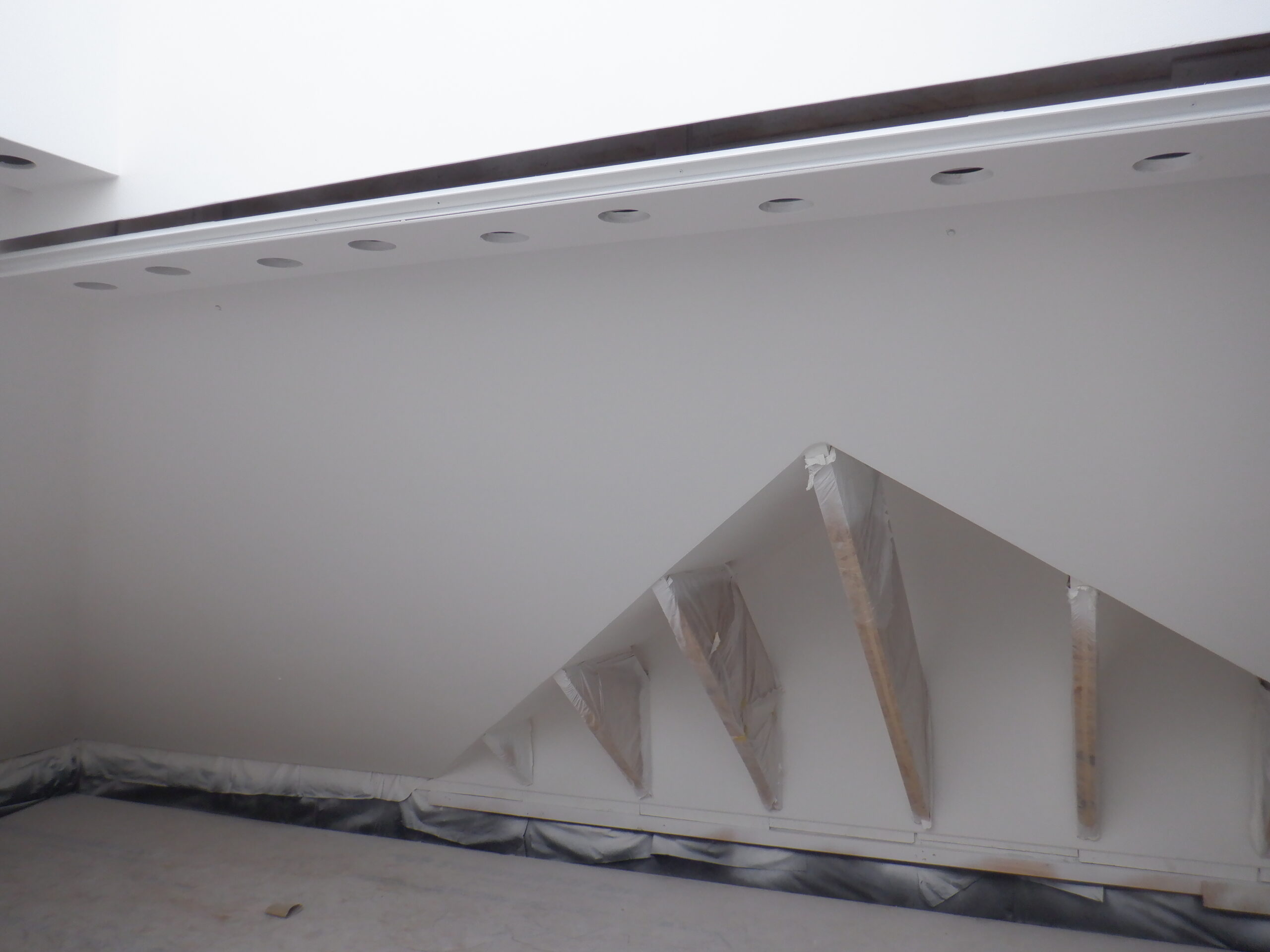
    All painted (1)
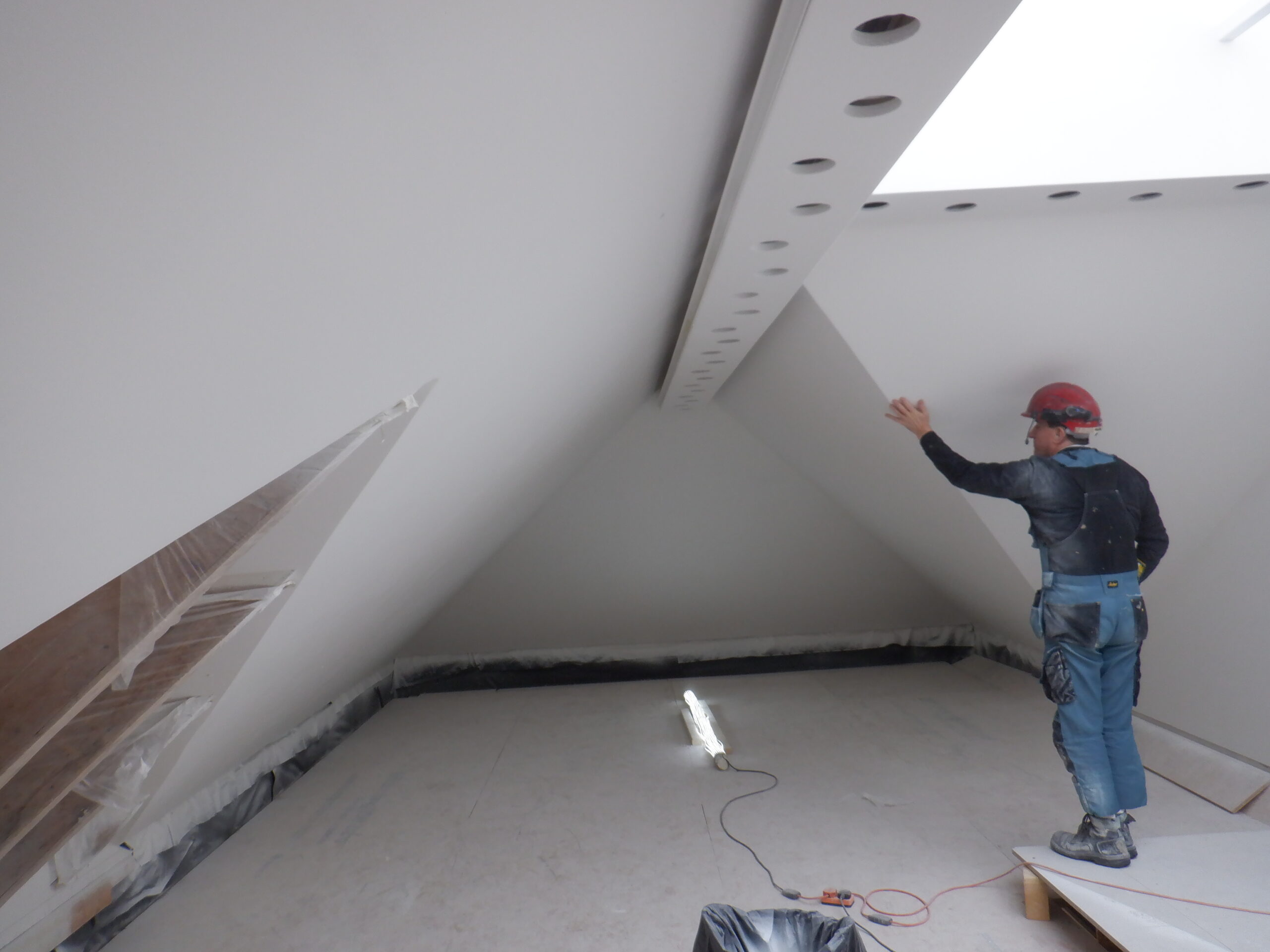
    All painted (1)

    All painted (2)

    All painted (2)

    All painted (3)

    All painted (3)


    There had been a great deal of learning involved during this particular task of building, preparing and finishing the final “plaster” layer for the ceiling and walls. We now know what to expect, what to do, when we repeat this kind of work again on other parts of the house, and it should be easier and quicker.
    The next job to do, before we dismantle the temporary flooring, is to cut and shape our wood effect laminate sheets and cover the exposed rafters at the Dormer section over the Conservatory.
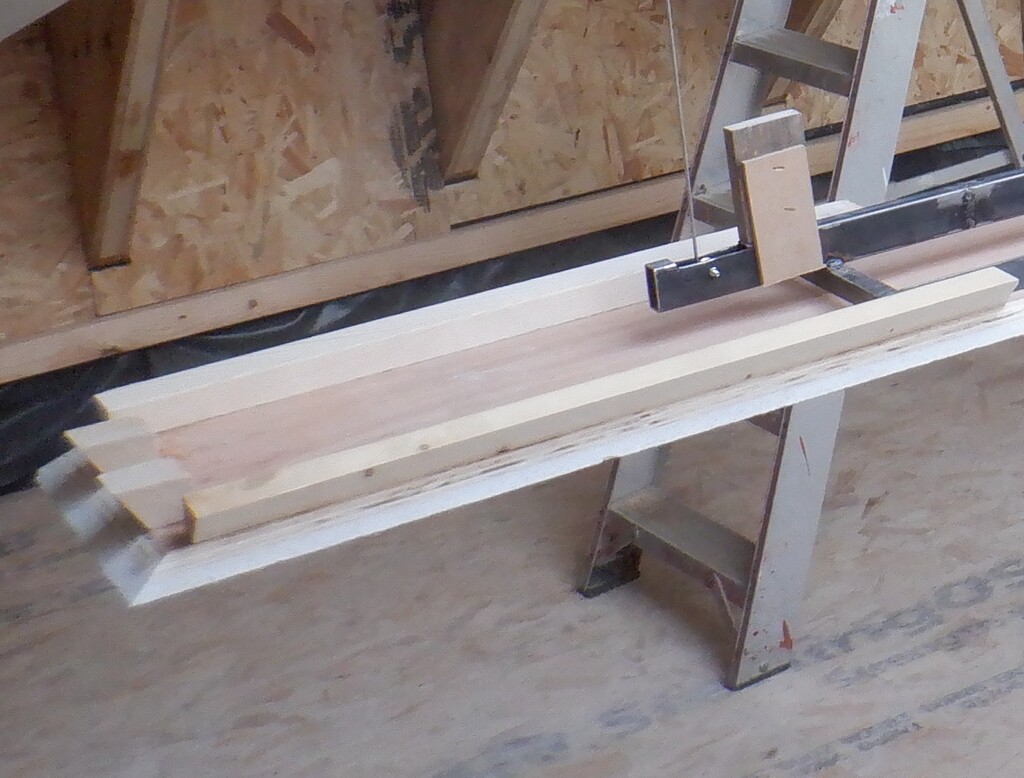
  • Designed and Created Mobile Lighting Gantry

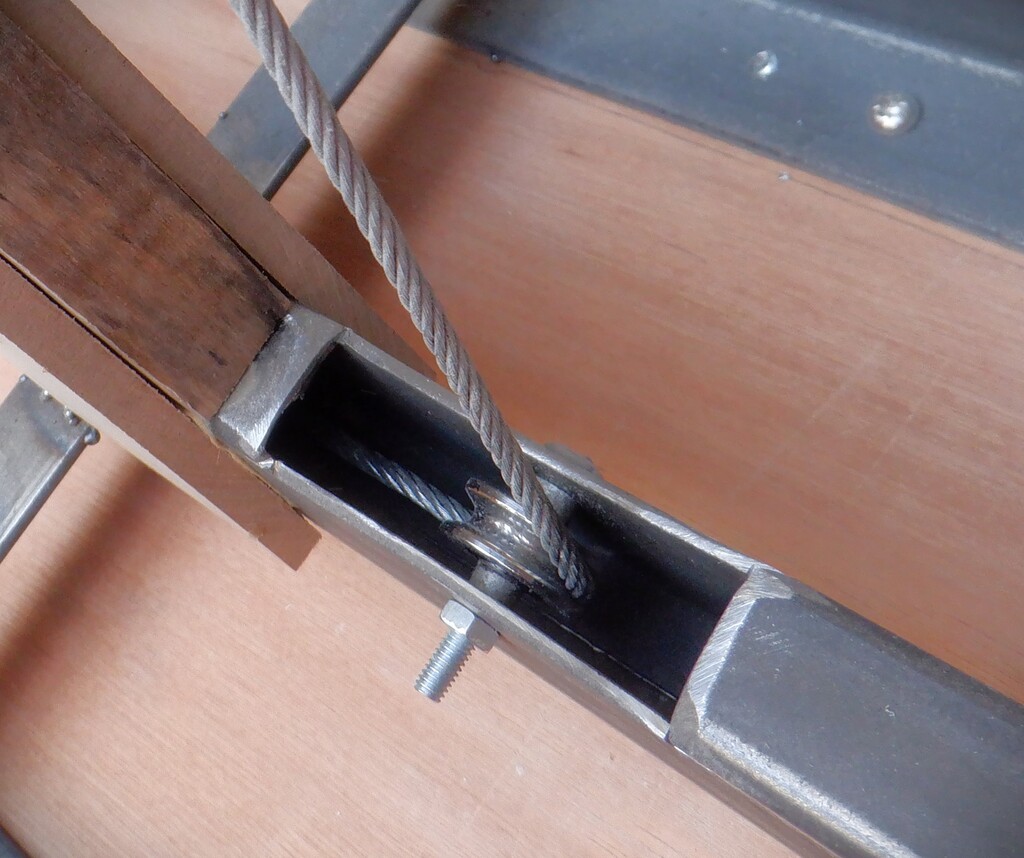
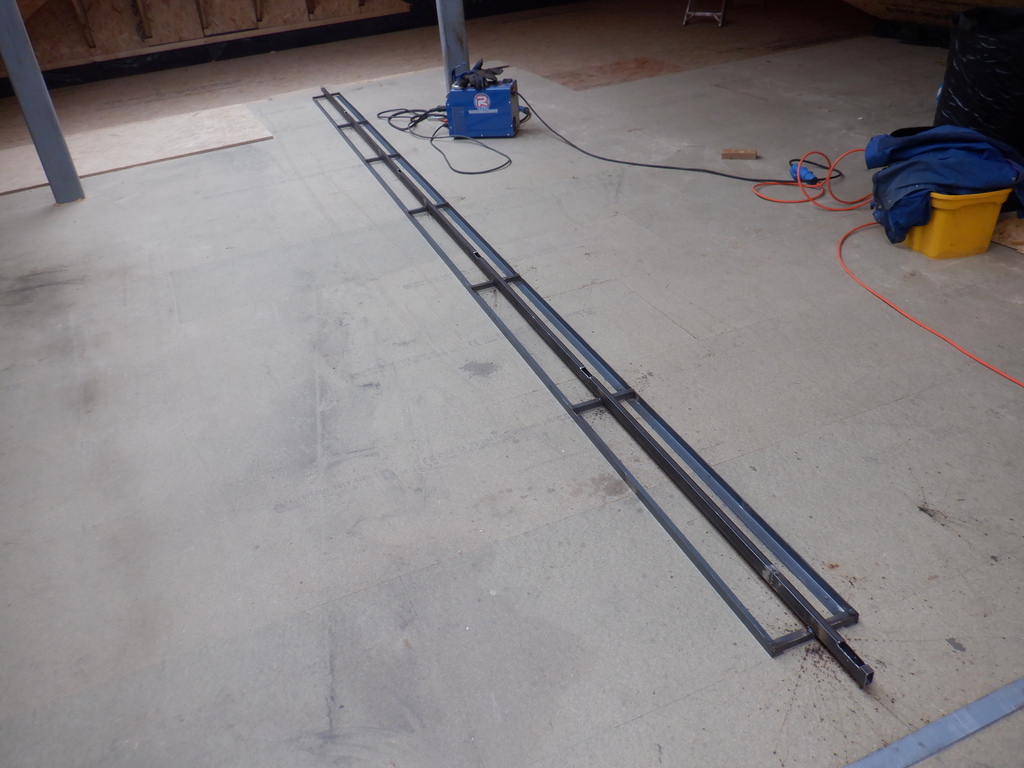
    Scattered over the last few weeks, we have been designing and creating a lighting gantry that stretches along the entire ridge line, up on our ceiling in our Great Room. This flat module is 7metres long and 300mm wide, hanging on six pairs of pulleys, using 3mm thick steel wire rope, replacing the original parachute cord (as previously stated in an earlier blog, because it stretched too much).
    The framework is a set of steel elements, made up of 2 pairs of 40mm heavier duty angle iron forming the basic 6metres rails that will have the ceiling panel screwed to it. Then, a set of seven? short 25mm angle iron pieces are welded between these two main structural elements, tying them securely together, and providing a flat surface to weld the final major piece of metalwork, a tube measuring 40mm high by 20mm wide and being 6.7metres long. We had to extend this tube with an additional 700mm piece, welded onto the end of the 6metre piece. We chose to use this kind of material because it provided a very neat way of attaching our pulleys by cutting a little piece of the tube away, like a door, revealing a cavity where we drilled two holes aligned across the width, to allow a bolt to be inserted and tightened down with a nut. This bolt would hold a ball-race pulley, centred by the use of two little pieces of aluminium round tubing, place on either side of the pulley. The steel rope can then be threaded along inside the rectangular tube, from pulley to pulley, while keeping the rope protected from being snagged up in among electrical cables that will be snaking back and forth between lighting units.
    Lighting Gantry 1

    Lighting Gantry 1

    Gantry construction

    Gantry construction

    Gantry wire & pulley

    Gantry wire & pulley


    Meanwhile, we got a sheet of 12mm plywood that we had on our rack of sheet material, and a sheet of our “plasterboard” material called Fermacell, which is gypsum mixed with recycled newspaper and squashed very precisely into a 10mm thick boards. We sliced both sheets into 320mm wide strips and then proceeded to glue a pair of each together and stacking them up and adding six concrete blocks on top, to make sure the glue is well pressed while it dries and cures.A week or so later, we took these bi-layered strips, now 22mm thick, and very carefully sliced off both of the long edges, an angle cut of 40 degrees off the horizontal (which is 50 degrees to the sheet). All circular saws are vertical cutting machines and they can only tilt over to a maximum of 45degrees off the vertical, but we wanted to go another 5 degrees further, to make a shallow angle slope. So to solve this problem, we tilted our track up by placing it on a long piece of 63mm CLS timber, giving the machine an additional 15degree approximately. This enabled us to tilt the saw to the required 50degrees (off the vertical, which is the same as 40degrees off the horizontal) and run the saw along the aluminium track to slice the new sloping edges.

    We also made sure that all three strips were all 300mm wide.
    The next job was to cut one in half, because they would form the two ends and they both needed the short end edges cut off, one of them needing an even more extreme angle of 32degrees off the horizontal, to match the slope of the ceiling at the left end of the lighting module. The other end terminates up against a more pitched roof, measuring at 45degrees so we could cut that edge by using the circular saw in its “normal” mode.
    Now we have our two ends, we next needed to cut a tongue and groove ends so that we can connect up each strip and join all of them into a single monolithic strip. But, we had to get the two ends up on the metal framework first so that they were touching the two slopes of the ceiling at each ends, so we can measure the middle two strips so that it all fitted together into a neat single strip.

    Gantry hanging

    Gantry hanging


    This “false” ceiling doesn’t quite touch the main ceiling around it, because we wanted to provide illumination down the slopes of the roof, to provide a gentle indirect glow shining off the ceiling and into our room. So we are going to install an aluminium channel with LED lights in it along the edges of the gantry. There will also be a dozen or so round lighting units along the bottom of entire mobile module, to provide direct main lighting when we need it. Also, being mobile, we can lower it down and attach other decorative lighting features like Christmas lights etc.
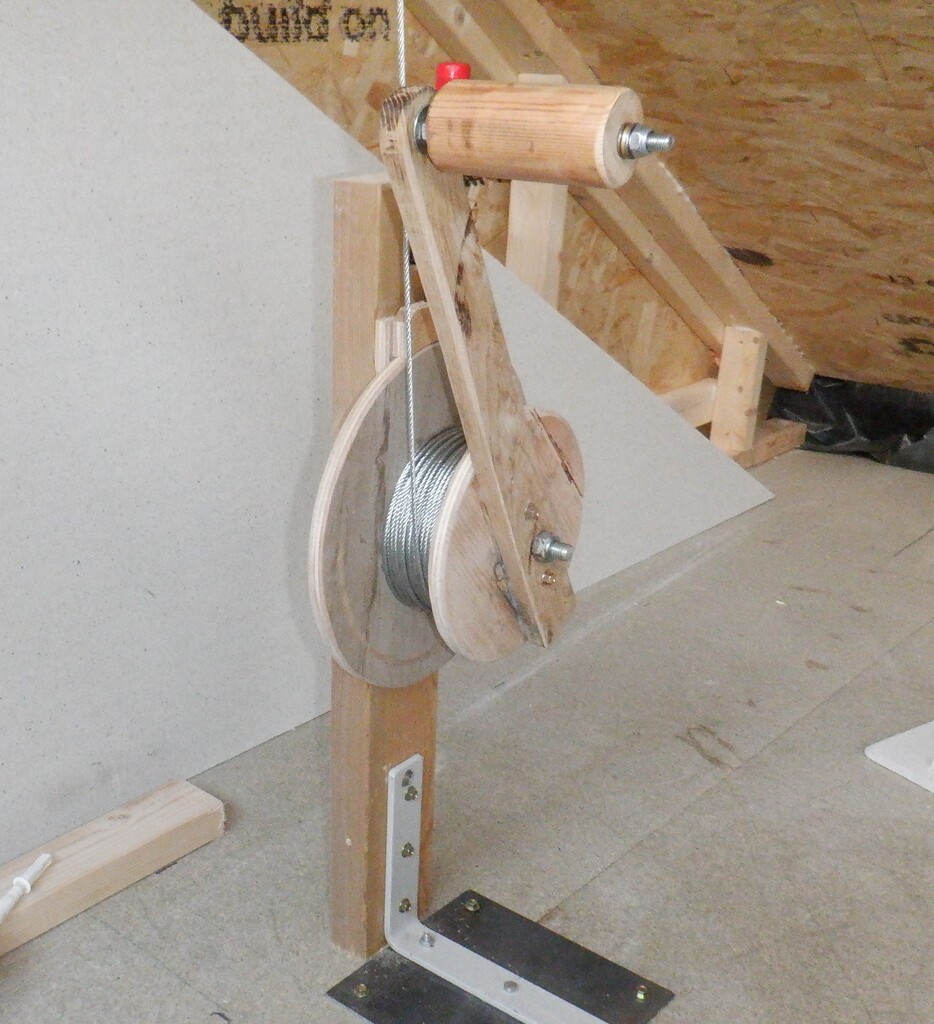
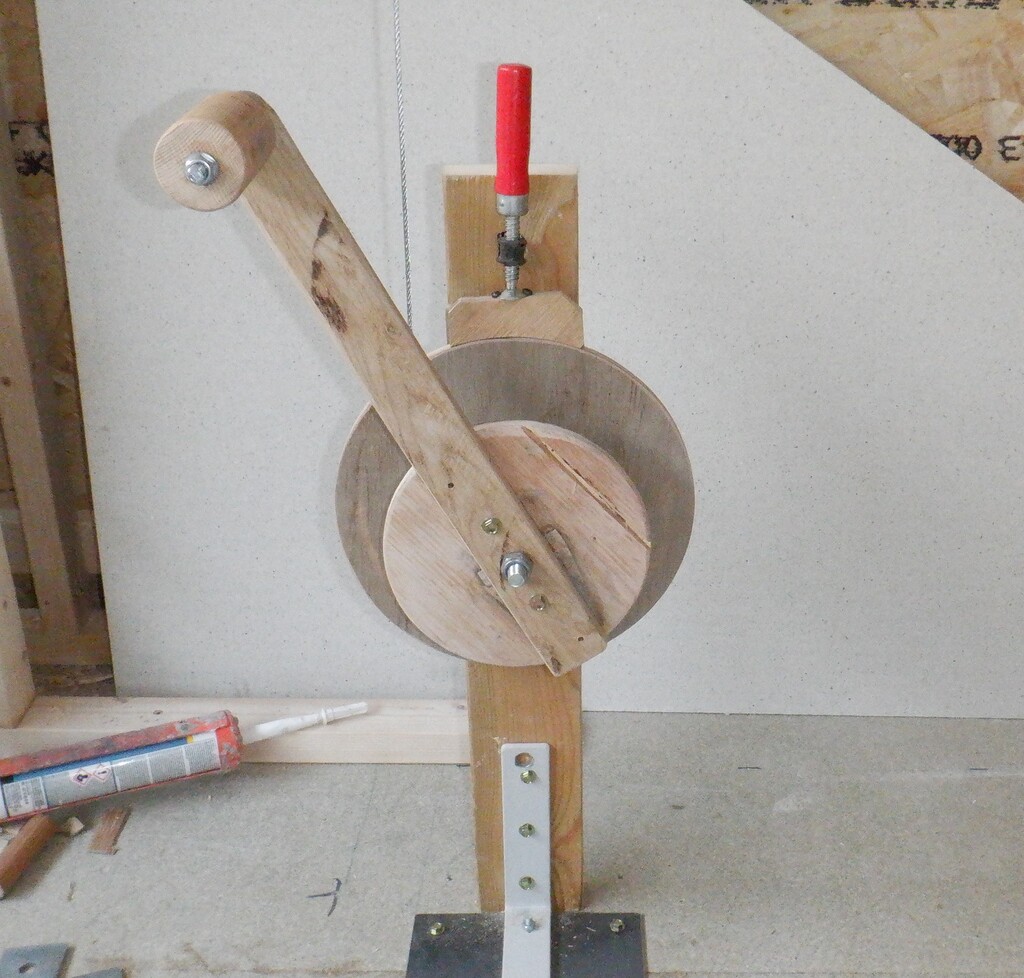
    Talking about lowering it down, we have built a winch with a long handle so we can unwind the steel rope more easily, in a controlled manner and take the strain of the weight of the whole module. We also sprayed on lubricating PTFE “oil” on the steel rope so it slips through the plastic conduit much better and don’t wear the plastic pipe away. It will not be that often, operating the wince and lowering the lighting module, perhaps once a year at Christmas time.
    In between these times, we put on a safety braking and locking system, to clamp the drum down tight so the lighting module is securely held up and won’t budge.
    Gantry winch (1)

    Gantry winch (1)

    Gantry winch (2)

    Gantry winch (2)


    Eventually, we may replace this hand-operated winch, with an powered one. We will see!

  • Installed Various Lighting Conduits Inside the Roof Rafters

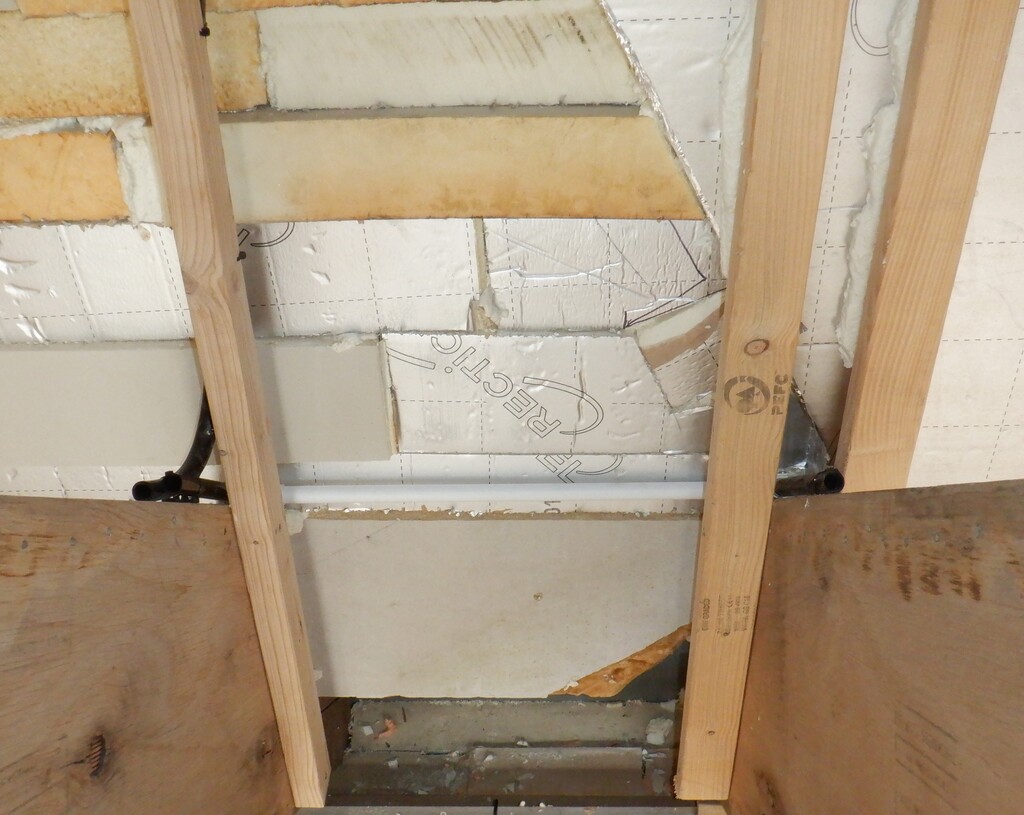
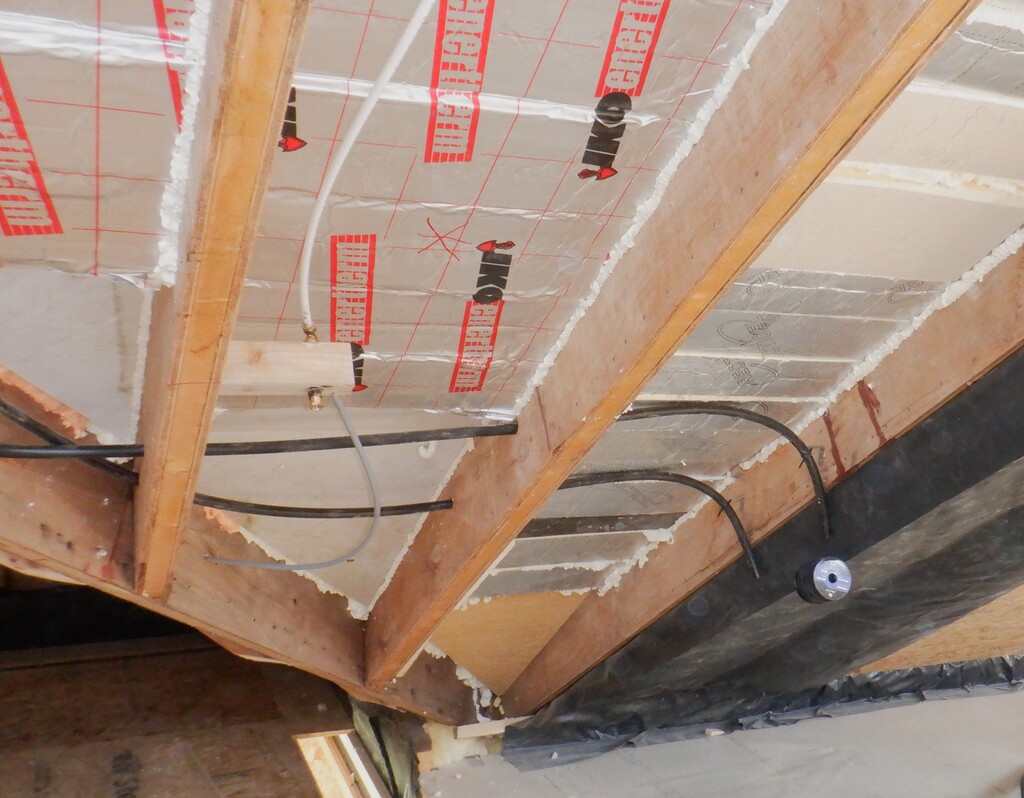
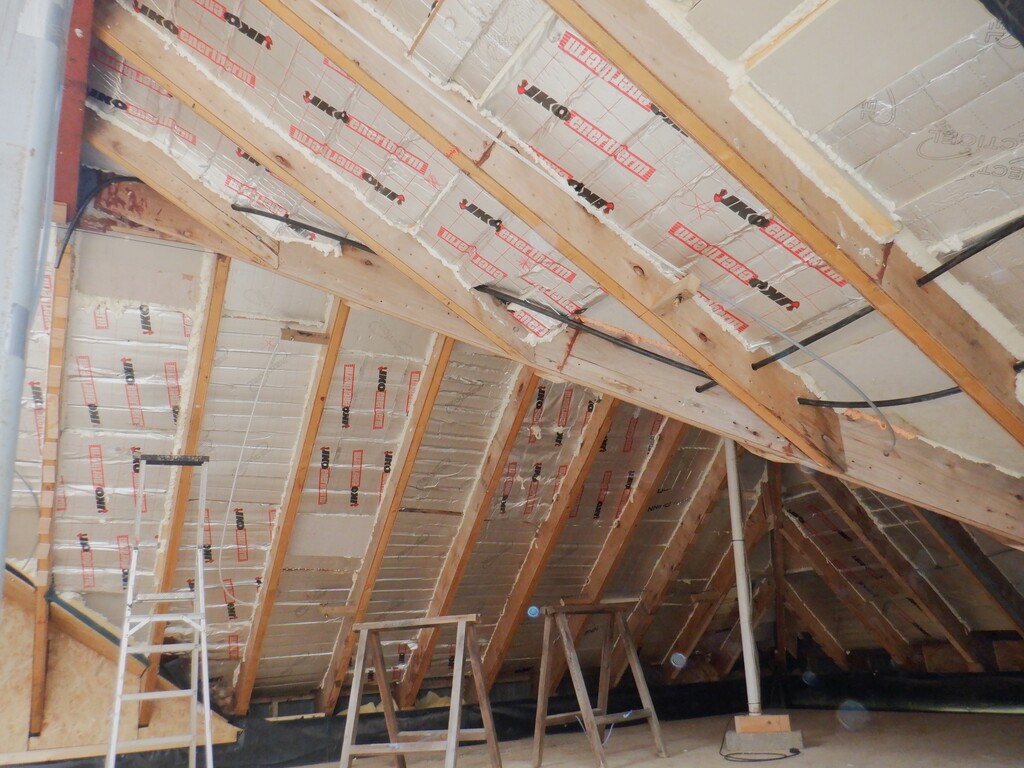
    This week, we have been installing a set of conduits for routing electric lighting cables to various hidden locations all over the ceiling in the Great Room. We wanted to make sure that we can install additional lighting units without having to rip holes in our beautiful ceilings. One such location is the Dormer that will backs onto our Conservatory which we have left open, exposing the original roof rafters and we thought that it would look great it it had some lighting hidden behind the rafters so the Dormer would glow with a gentle illuminations. We threaded through the walls a series of 20mm diameter plastic conduit, coming from the lighting channel running around the whole room at the top of the walls, and bends to behind the exposed rafters, with additional conduits so that the middle three rafters are all connected together.
    Conduits between domer rafters

    Conduits between domer rafters


    We have also put in a twin set of conduits that takes an pair of electrical wires and a thin rope that connects to our flat ceiling lighting module that runs down the middle of the ceiling, right up at the top of the ridge line and pass the end of the Skylight.
    This “mobile” module will be nearly 7metres long and 300mm wide, constructed using steel angle iron to form the basic framework, to attach a series of pulleys, six of them evenly spread out along the length. The rope travels down the conduit from the Triangle Void above Bedroom1, behind the large upstairs work room, where we will have a winch to unwind the rope and we can lowers the lighting module all the way down to the ground floor. The rope comes out at the top of the roof and drops down to the first pulley, goes horizontally to the second pulley, then goes back up to the ridge line where the rope is threaded through the next two pulleys mounted up there. It then goes back down again to pulley number three and four, when the rope returns back to the ridge to the final two pulleys before the rope comes back down for the final time to loop around the fifth and sixth pulleys on the lighting module itself, where eventually, the rope goes back up to the end of the Skylight and get tied off. This gives a pulley ratio of Six to One so if the lighting module weighs 60kg, which is likely with all the metalwork, the wooden board and the finishing plasterboard glued on the underside, with all the lamp units, seasonal decorations etc. then the weight on the rope back at the winch, will be only 10kg approximately. We bought 3mm thin rope, designed for parachutes and it has a breaking strain of nearly 200kg so it should be quite safe for years and years!
    Center Light conduits start here

    Center Light conduits start here

    Power runs up to center

    Power runs up to center

    and lift rope runs to the end

    and lift rope runs to the end


    We will build the mobile lighting module later on when we have finished filling in the roof rafters and got them all covered up.
  • Toilet is Lit Up!

    Stephen has wired up the high frequency high efficiency low power florescent tube in the WC in the Garage building. It is 1200mm (4feet) long and it is only 28W producing a maximum of 2900lumens output! The controller will allow us to dim this light to various levels too!

    ~images

    This light might serve as our “night light” to provide a gentle glow during the night times. At 10% light level, the power consumption would be very low at around 4W (power vs. lumens is not a straight curve)!

  • Lights for the Garden Room

    Stephen has built the lighting strips for the Garden Room. The concealed indirect lighting channels in the Garden room are much more narrow than what we have in the garage itself. The lighting units are mounted on long strips of timber (38mm by 25mm and 3.9m long! They are wrapped completely up in aluminium foil to provide both an earthing point for the florescent maps themselves, a reflective surface to maximise light output into the room and finally a conductive heat transfer mechanism to cool the controller.

    There are lamps on each end of the strip with the controller unit in the middle. The Mains Lighting circuit will be connected at one end so the whole strip can be disconnected for maintenance.

    Two of these have been made and that will be the total lighting in the Garden room. They are installed in the Garden room such that the tubes on opposite sides don’t line up, this gives the best distribution of light.

    GR Lights installed

    GR Lights installed

  • We Have Lights!

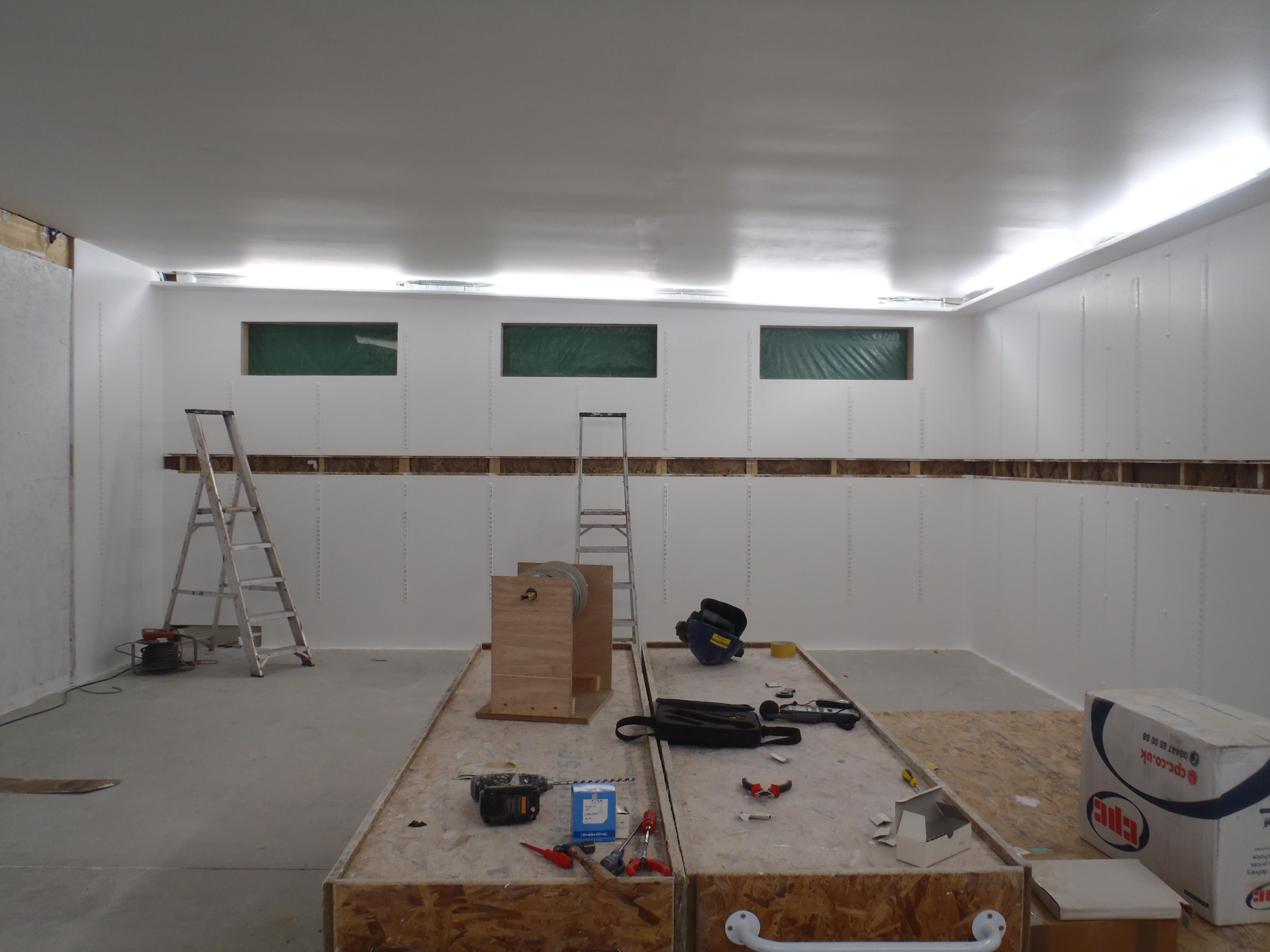
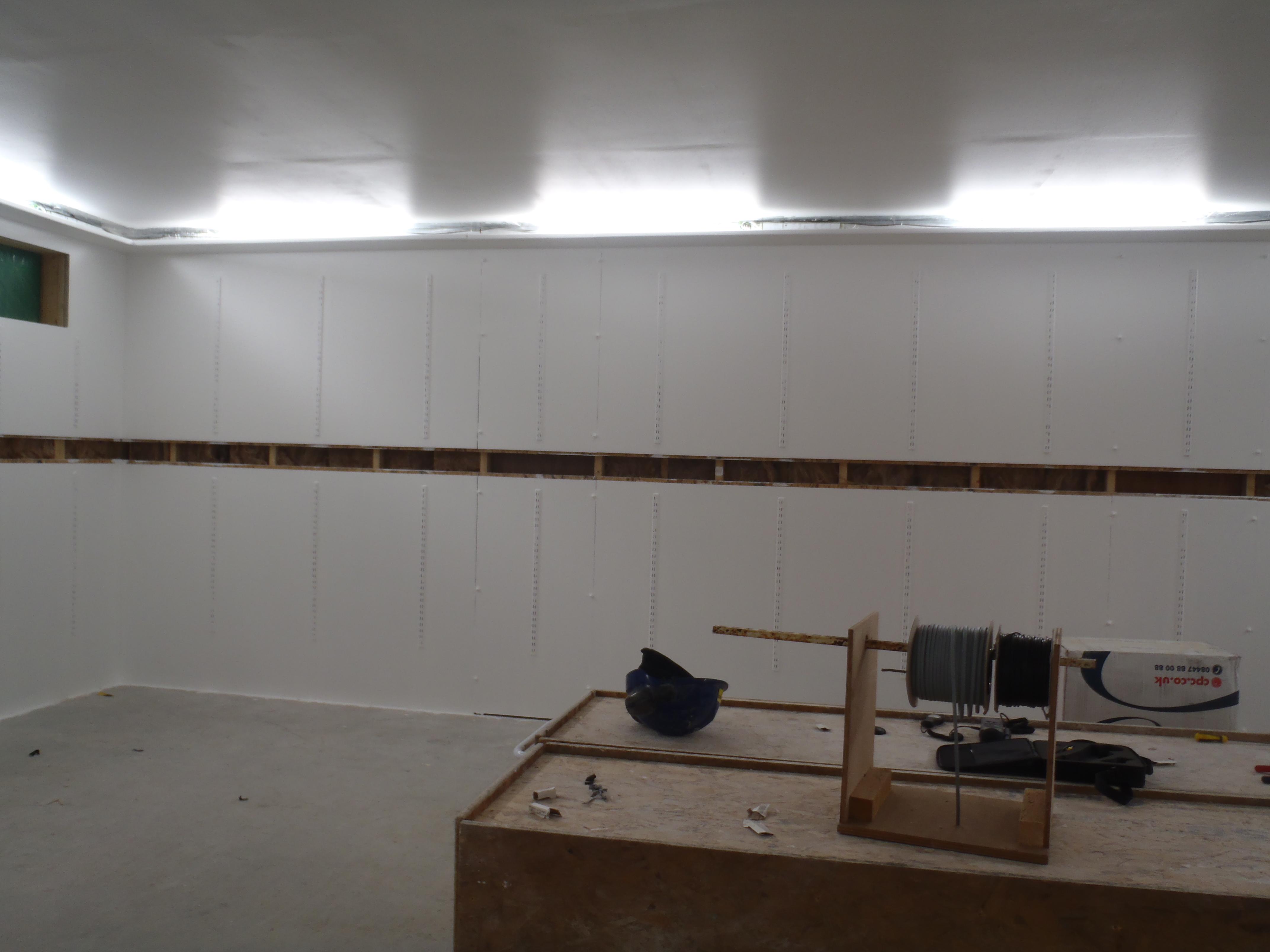
    All ten tubes are up and installed right around the Light Channel in the large front room of the Garage. Each T5 tube produces about 5000 lumens as stated on the manufacturer’s data sheet and consumes about 60watts using high frequency electronic ballasts. This gives an efficiency rating of 83 lumens per watt which is about double the required rating in the building regulations.

    So in total there would be a maximum of about 50,000 lumens! The size of the room is 8.2metres (26.5 feet) wide by 5.75metres deep (18.5 feet) and the ceiling is 2.5metres sloping up to 2.6metres (over 8feet), which is a large room!

    Garage Lights Finished

    Garage Lights Finished

    Garage Lights Finished

    Garage Lights Finished

    Garage Lights Finished

    Garage Lights Finished

    Garage Lights Finished

    Garage Lights Finished

    Garage Lights Finished

    Garage Lights Finished

    Garage Lights Finished

    Garage Lights Finished

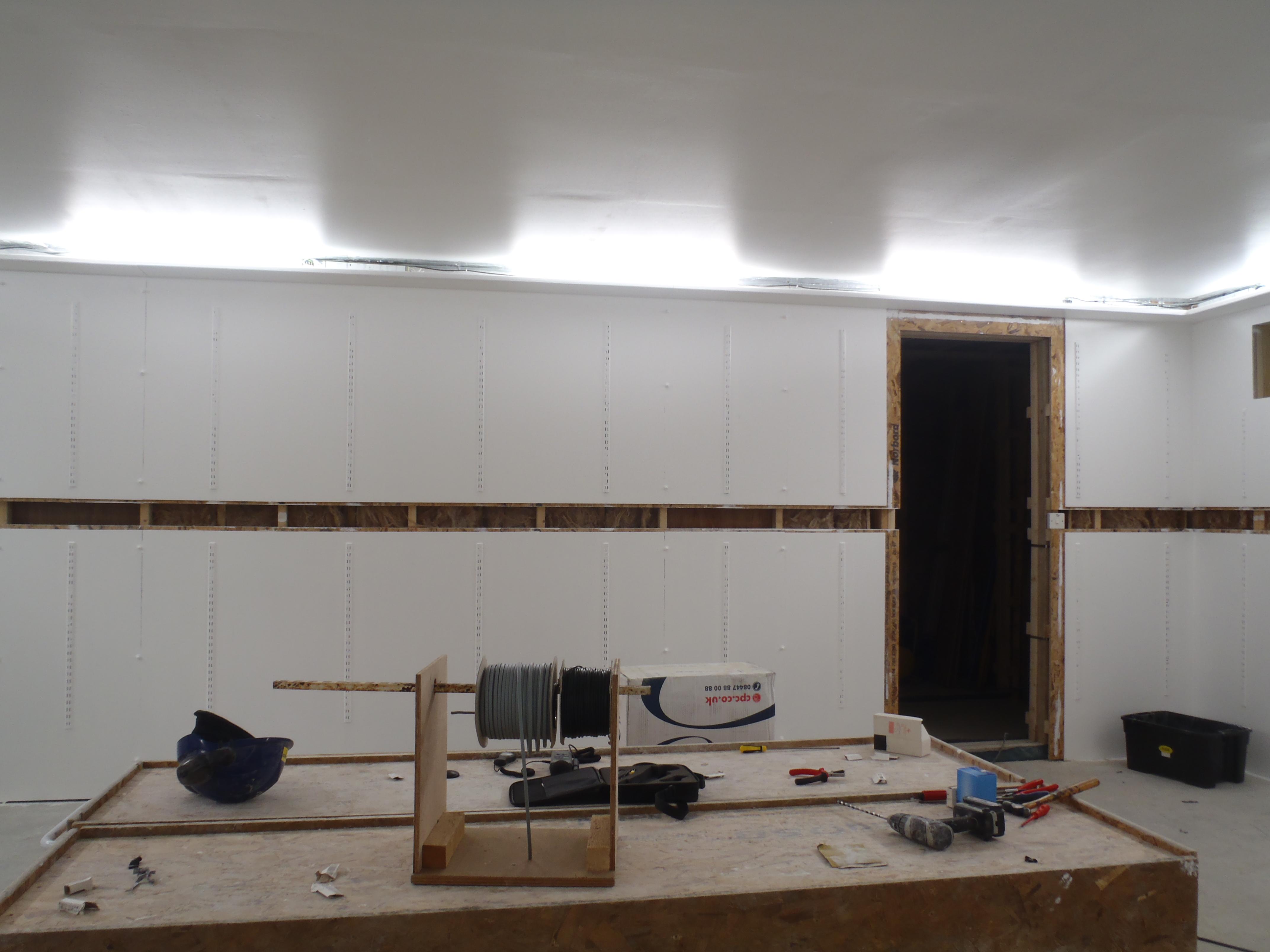
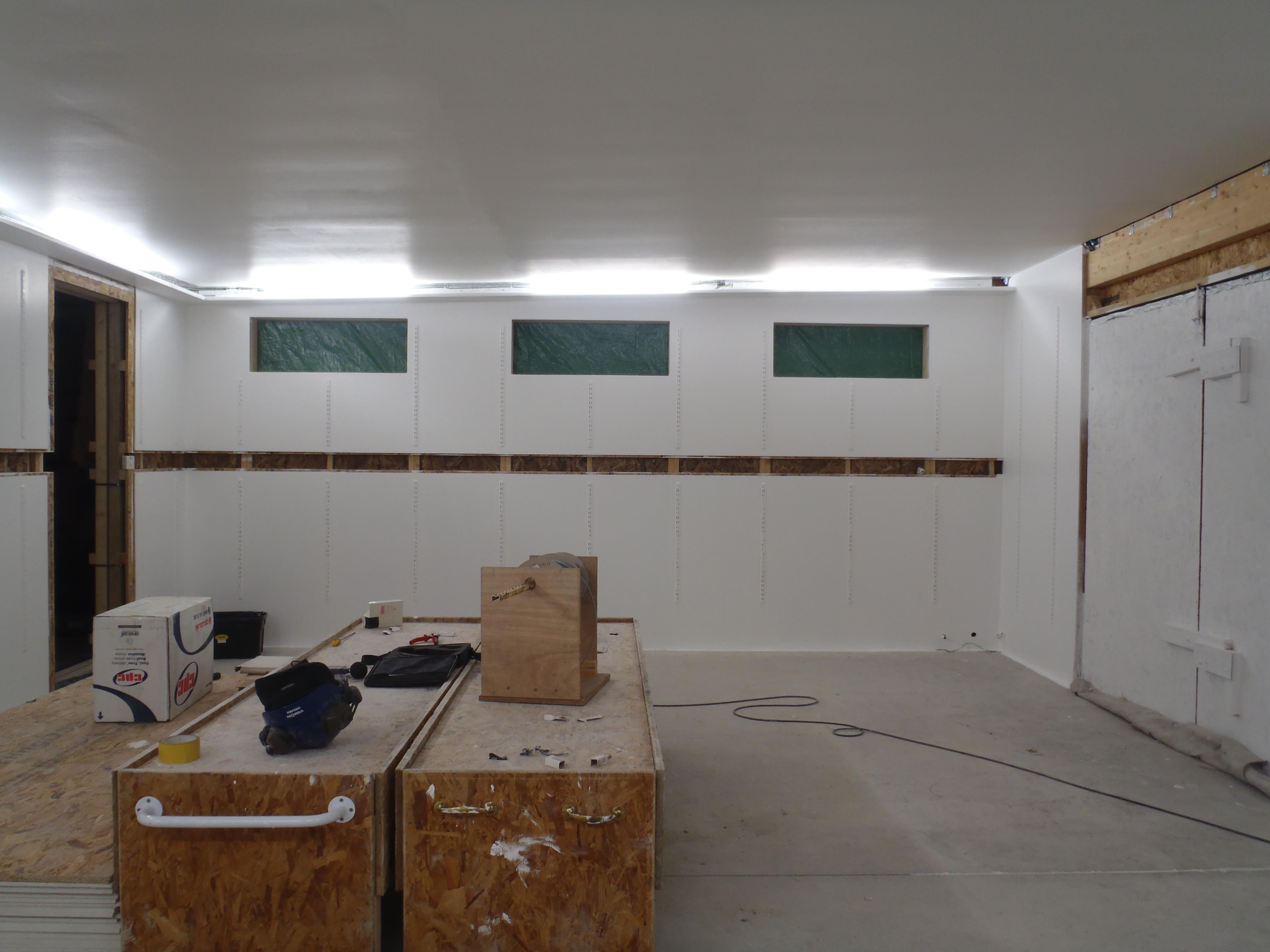
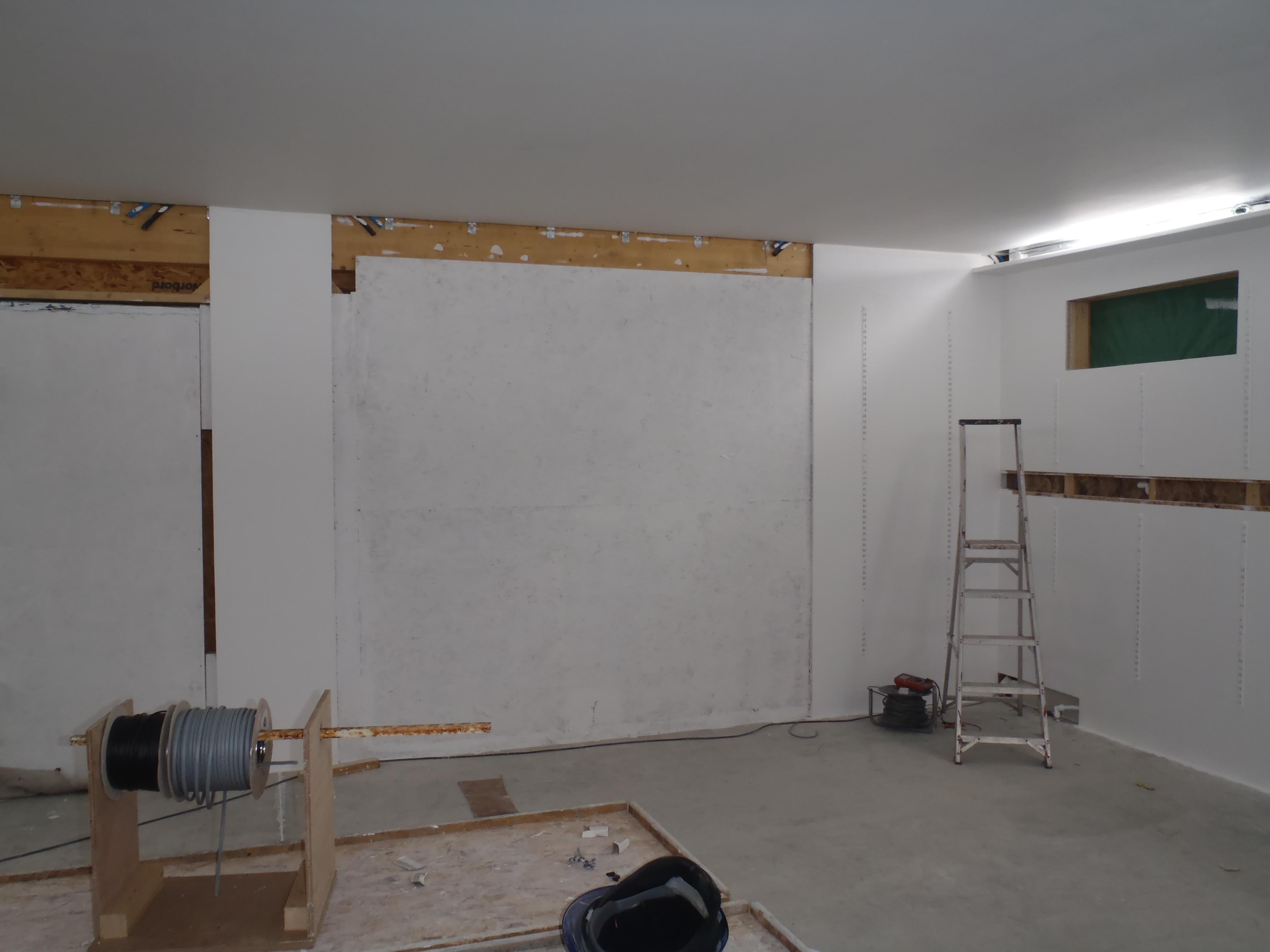
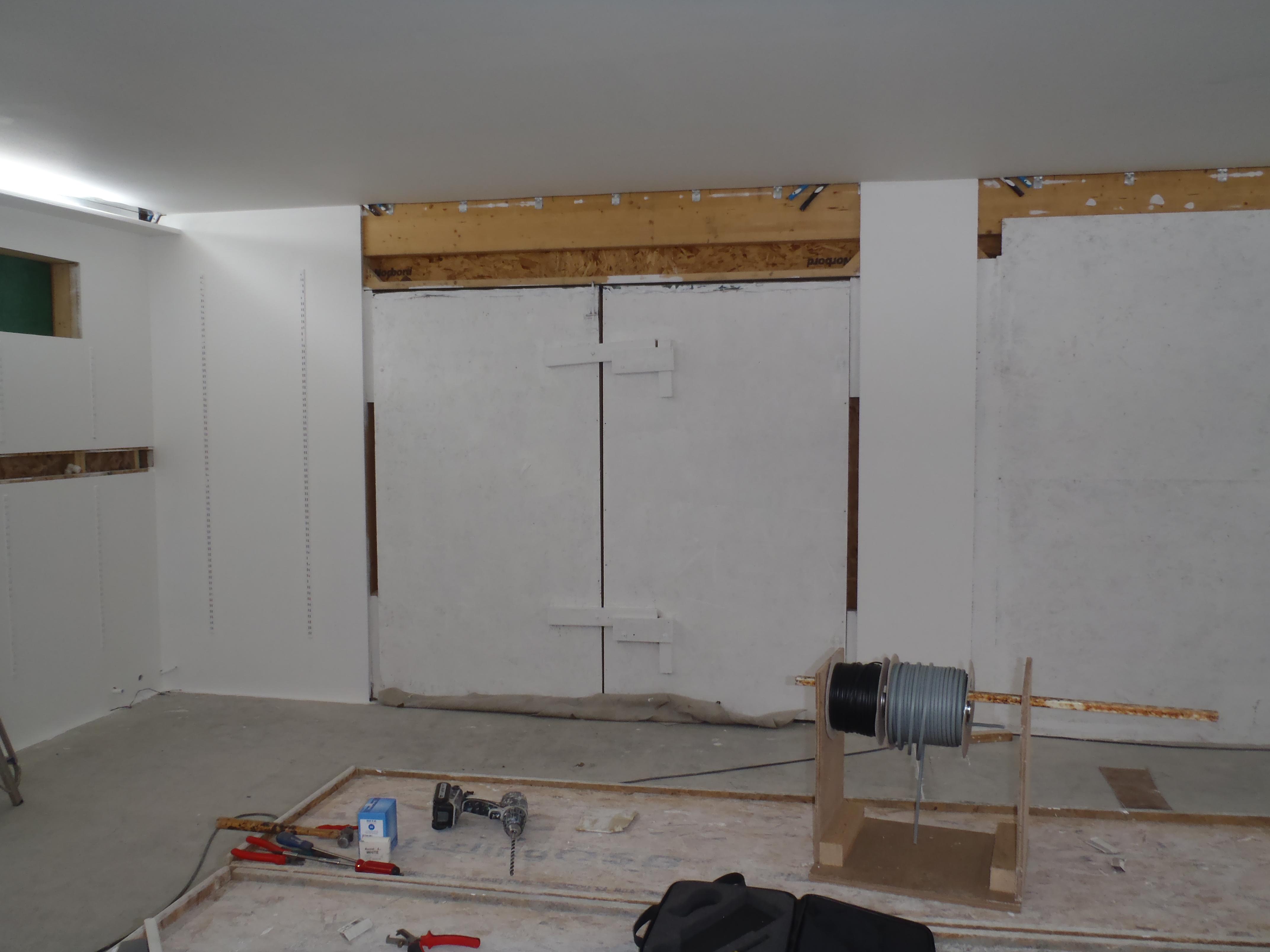
    After dark, we did our light tests again and the light level this time is 330lux on exactly the same spot as yesterday but we discovered that even with us in the room, it changes the readings quite markedly so yesterday reading must be taken with a pinch of salt and probably a bit on the low side. Today’s readings were achieved using the built in feature of the light meter of recording the maximum value while we all left the room entirely.

    Taking further measurements around the room at a fixed height of 1metre, the brightest (440lux) spot was in the corner next to the internal wall furthest from the small door, and the dimmest (200lux) was at the middle of the front wall.

    Dimming the tubes down to their minimum level produces a low gloom measuring only 7 lux! But there is enough light for walking around but not to read by. Nice to relax in and watch TV etc.

    There wasn’t any flicker at all at any brightness level.

  • 4 out of 10 Tubes done!

    The electric cables (mains and control lines) are in place inside the Light Channel. Four of the 10 tubes are installed. A light switch is wired in beside the internal doorway and we can dim and turn on and off the lights! So far so good!

    We have placed the light level meter in the middle of the room and it is reading 122lux at the moment. We will test again tomorrow night when the remaining 6 tubes are installed.

  • Light Chamber Complete

    The full Light Chamber is now complete, all 20metres of it, going right around the three sides of the garage room, starting from the front left corner, down the left side to the middle wall then across to the right side and back towards the front right corner. It has reflectors inside the Light Chamber which will provide two functions, the primary function of reflecting as much light out to the room and the secondary function of providing an electrical Earthing point which is required for the fluorescent tubes circuits.

    Light Channels - Installed

    Light Channels – Installed

    Light Channels - Installed

    Light Channels – Installed

    Light Channels - Installed

    Light Channels – Installed

    The flange is covered with an additional layer of the Fermacell to make it blend into the whole structure of the finishing surface.

    Now the boring job of filling in the staple holes and the joints!!

  • Building the Lights

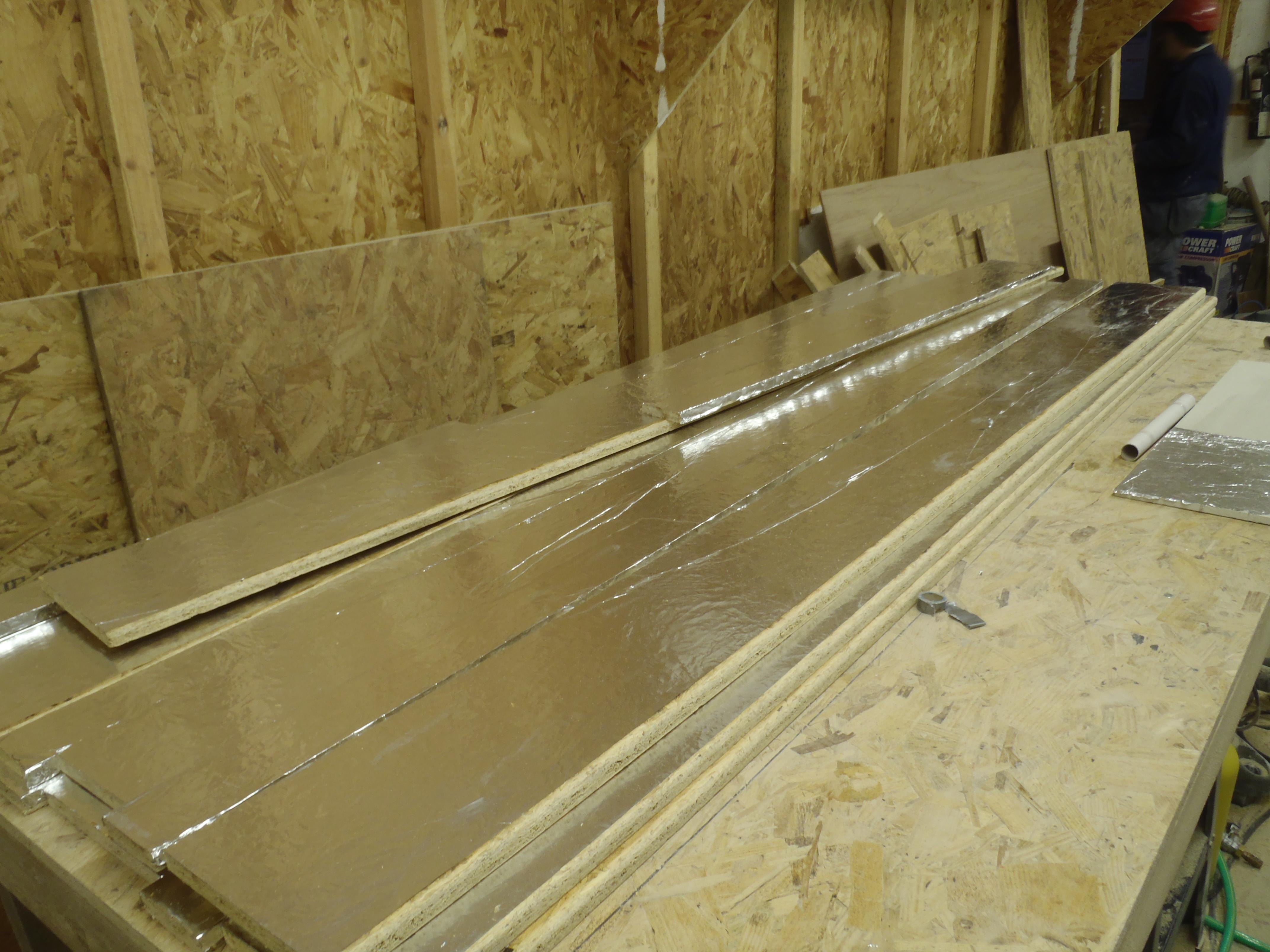
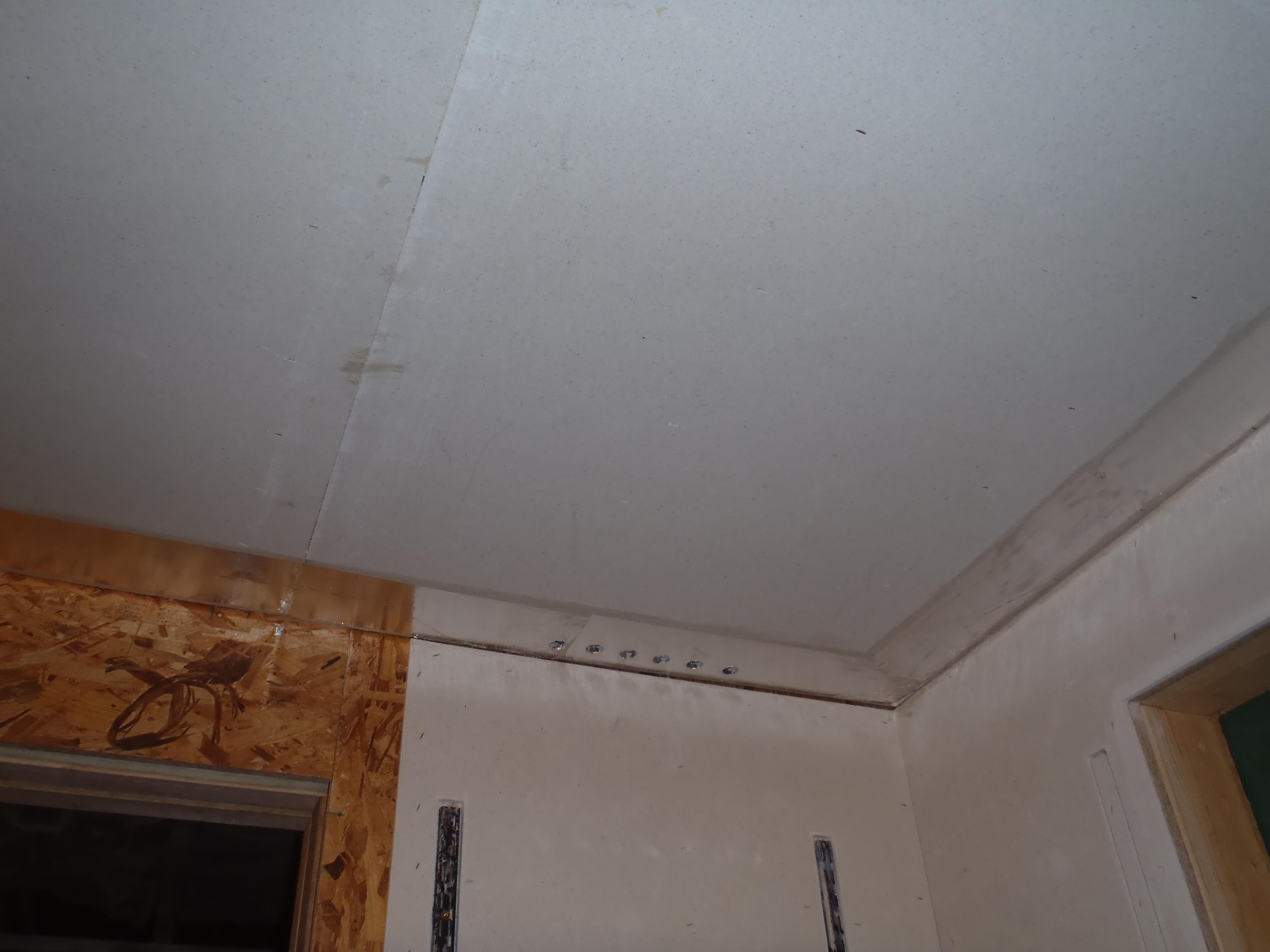
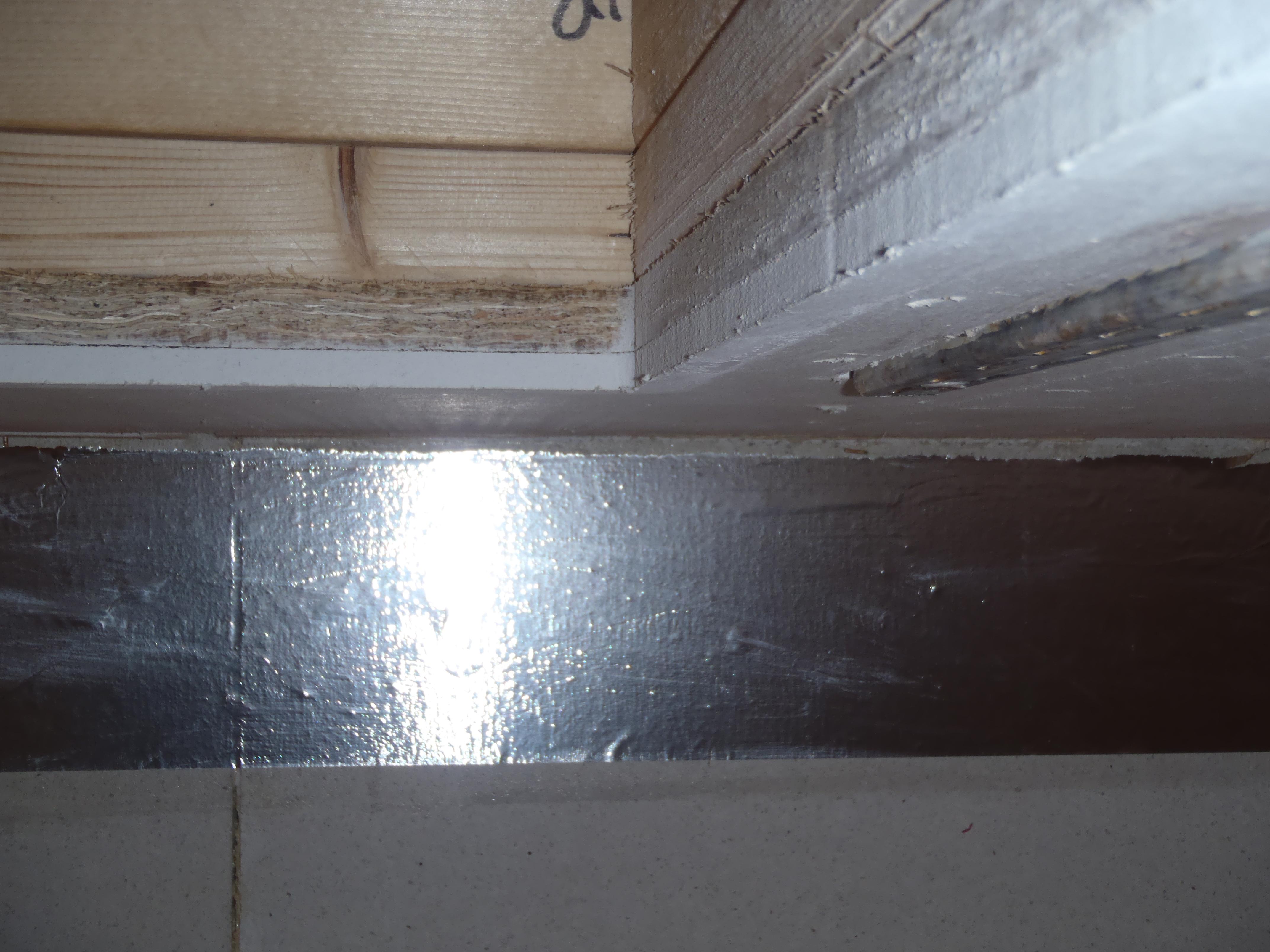
    Today and yesterday, we have been slicing up leftovers to create our light chamber around the edge of the main garage room. We bought two rolls of aluminium foil to serve as reflectors to make sure as much of the light is deflected into the garage itself shining across the ceiling.

    Light Channel foiled boards

    Light Channel foiled boards

    Light channel ceiling reflecters

    Light channel ceiling reflecters

    Light channel ceiling reflecters

    Light channel ceiling reflecters

    The “Chamber” will be 200mm (8inches) wide sticking out from the wall and 80mm (3inches) down from the ceiling. This narrow slot contains the fluorescent lighting units, a collection of T5 (5/8inches diameter) 4foot tubes controlled by high efficiency electronic ballast. We will have 3 tubes down each side and 4 tubes across. We are trying out the latest digital dimmable controllers to try them out and learn what they are like and how difficult they might be to use.