Author: Shaun

  • Front Door Gable Wall Completed and First C rafter Created

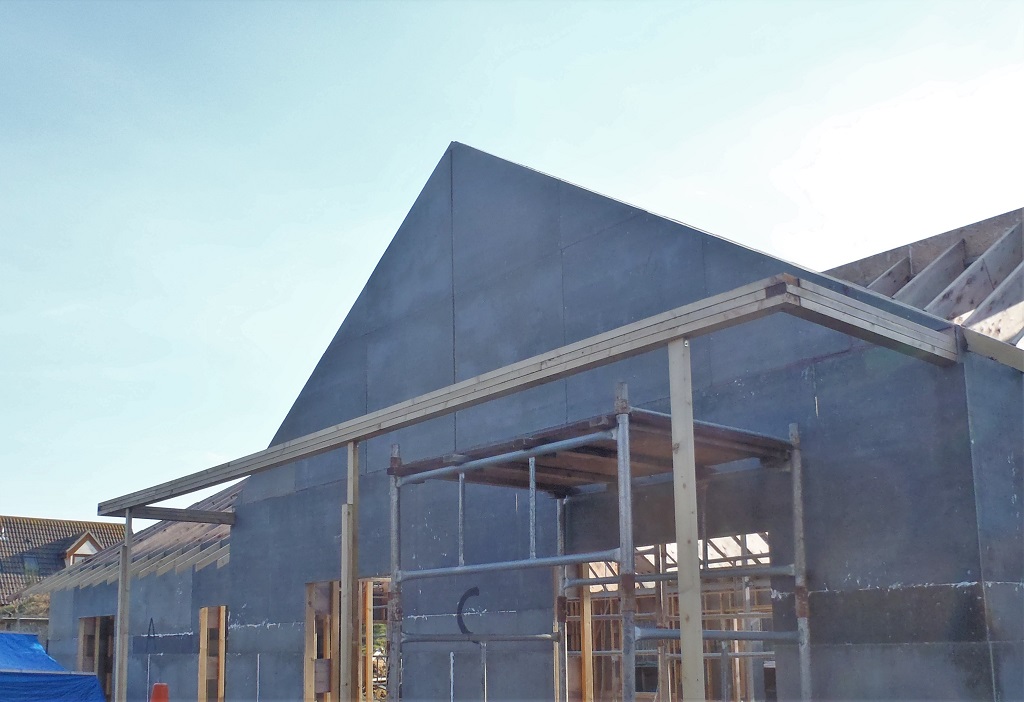
    This morning in lovely hot sunshine and no winds, we concluded the job of covering up the gable end of the Front Door extension that will have the porch coming out.
    Front-door-wall-gable-sheathed

    Front-door-wall-gable-sheathed


    We used up our remaining pieces of cement boards and created lots of triangular left-over parts in return, some of which will be used on doing the gable end up inside the Side Door Porch later on.

    After lunch, we set out to create the first rafter to form the “C” section of the roof, this being the steeply pitched roof on the front of the porch over the Front Door and Entertainment room area of the house. we had to reposition the guides on our Bird’s Mouth gig so it will cut the 61 degree angles for the end and the notch bitten out to form the Bird’s Mouth itself.
    We also had to make an extended angled support fence on our chop bench saw so we could slice the very acute angle off the end of the timber. The machine can only go up to 45 degrees but we needed to get up to 61 degrees, hence the funny extra adaptations added to the chop saw!
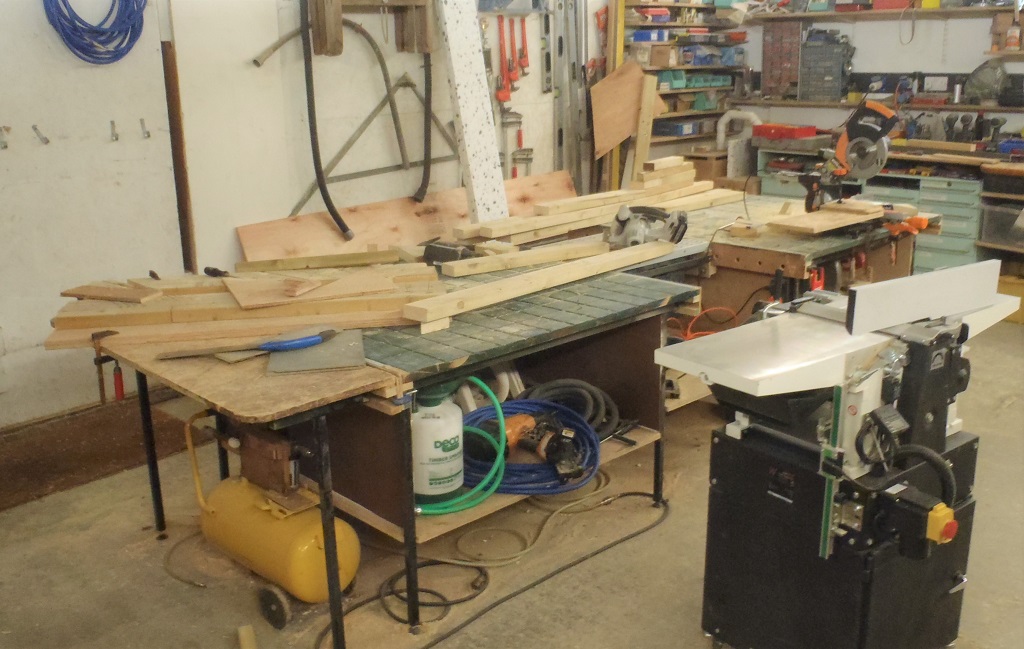
    Tools-for-making-Front-porch

    Tools-for-making-Front-porch

    After several test runs to prove to ourselves that things are coming out correctly, we went out to climb to the top of the C wall to measure the distance from the very top point and down to the new horizontal beam out on the arms of the porch. We double checked this measurement several times and then prepared for real, a length of 89mm CLS timber and proceeded to slice and chop it down to the required size. As it was getting dark, we took it back outside to see how well it fitted in the real world and hey presto! It Fitted!! Grin!

    Tomorrow, we will glue and screw this rafter, which is actually labelled “C7”, up in place and then work on the even more complicated piece, the two diagonal Hip rafters that also goes from the top point of the C wall and down to each corner of the porch roof but they have two sloping edges on the top surface, a double cut ends and a bird’s mouth in it too of course! Phew!
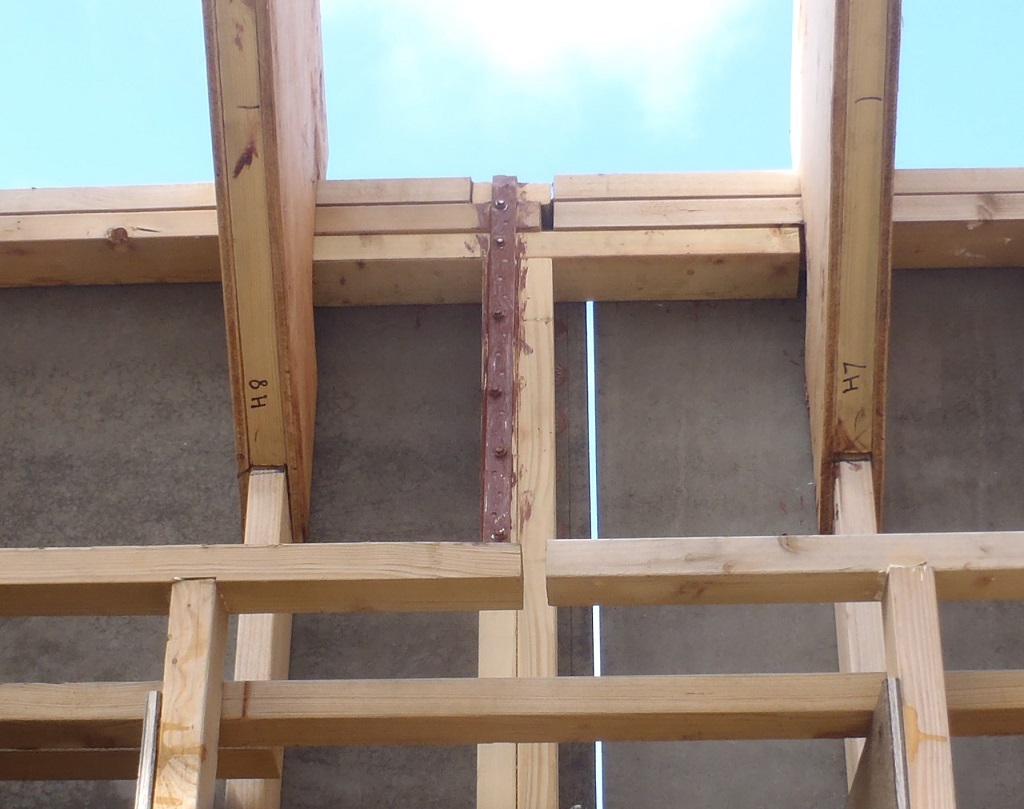
  • Side Porch Grows Outwards and Front Gable Wall Grows Upwards!

    Today, we first continued in the workshop to glue the other set of wide beam rafters, this time for the side door porch where we have a 89mm and a 63mm wide CLS lengths of timber, joined together with our biscuit joining method.
    While that was drying, we went outside to mount up the “arm” for the side door porch, using our metal bar bent at right angles and then screwed down both on top and down the length of the leg.

    Steel-Strap-for-Side-porch-beam

    Steel-Strap-for-Side-porch-beam


    We then decided to use a couple of ready made diagonal struts to help support this arm and the other sticking out arm at the other end of the porch so we can avoid having two legs getting in the way of our building equipment and perhaps finally have proper posts or maybe indeed design and have a neat proper diagonal bracing strut, made with Oak and not have any legs at all. This is likely to be the outcome as our driveway will be right alongside and everyone would feel happier moving cars around without the extra worry of colliding with two legs!!
    After lunch, we hoisted up the long horizontal beam and glued and screwed that into place to conclude the side door porch framework for the roof elements to sit on.
    Side-Porch-Frame-Finished

    Side-Porch-Frame-Finished


    While those jobs were drying, we sorted our meagre collection of 10mm cement boards and sliced a groove in one of the full size sheets, ready for going up on the front door gable wall. We will have to order another ten sheets so we can do the same for the side door gable wall and the conservatory wall too.
    Next was to analyse how we are going to get these very heavy cement boards up three metres (ten feet) up the wall and we settled on building another scaffolding tower, just three segment high and borrowed the wooden platform from our other medium height tower inside the house. It just fitted up under the front door porch framework and we managed to start the task of placing the cement boards up on the wall.
    Tower-errected-to-build-front-door-gable

    Tower-errected-to-build-front-door-gable


    We had the sensible idea of slicing the full size sheet (2400mm by 1200mm, approximately 8feet by 4feet) in half and make it much easier to man-handle these pieces up to the tower. We had been thinking of ropes and pulleys when suddenly the light bulb shone in our minds!
    First-Cement-boards-on-Front-porch-gable

    First-Cement-boards-on-Front-porch-gable


    We concluded the day’s work by managing to get up two of these half modules, all glued and screwed down before it got too cold to work in and losing the light too!
    Tomorrow, we will carry on installing more of the cement panels and then go back to making the diagonal hip rafters for both the front and side door porches.

  • Creating Extra Wide Timber Pieces To Form the Hip Rafter for the Porches

    Today, after doing some analysis, calculations and measuring outside in very, very chilly winds, we started the task of joining together two lengths of CLS timber. We fetched in six lengths of 89mm and two lengths of the 63mm CLS timber and then got our heavy duty planer machine to remove a few millimetres off the edge of the wood to form a flat surface for gluing. It was only by positioning the machine right beside the main doors, we could just about slide the full 4.8 metres length from outside on the driveway and feeding the timber through the machine into the workshop. We did all eight lengths of the timber we brought in.

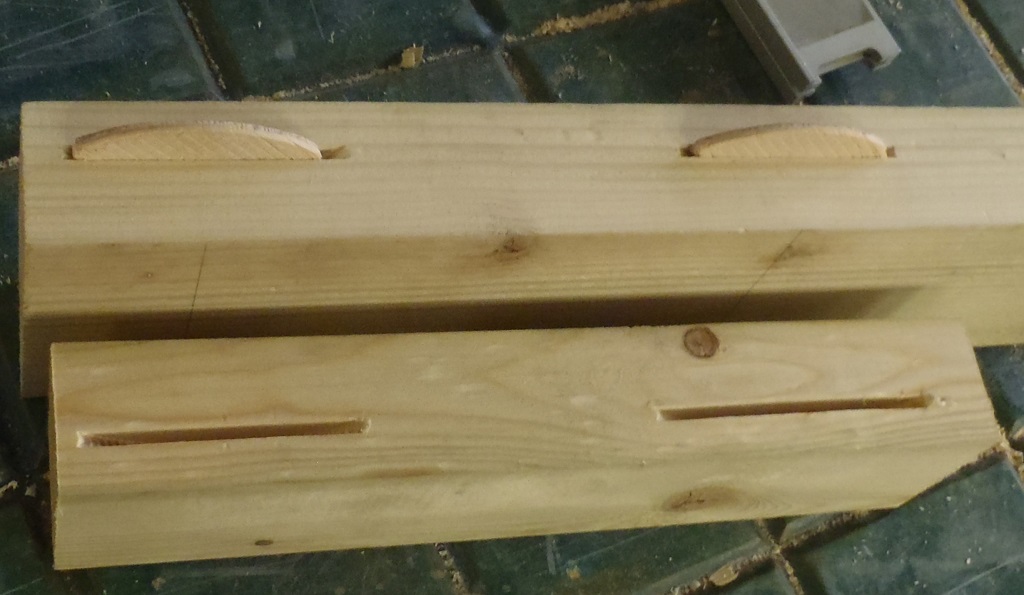
    After lunch, we played with our new toy, a biscuit joint cutter machine, which we had bought on clearance offer somewhere several years ago ! The machine cuts shallow curved slots which are filled with a glued-in oval shaped ‘wooden ‘biscuits’, if two matching slots are made in opposite side of the joint then this aligns and strengthens the joint.

    Biscuit-joint-example

    Biscuit-joint-example


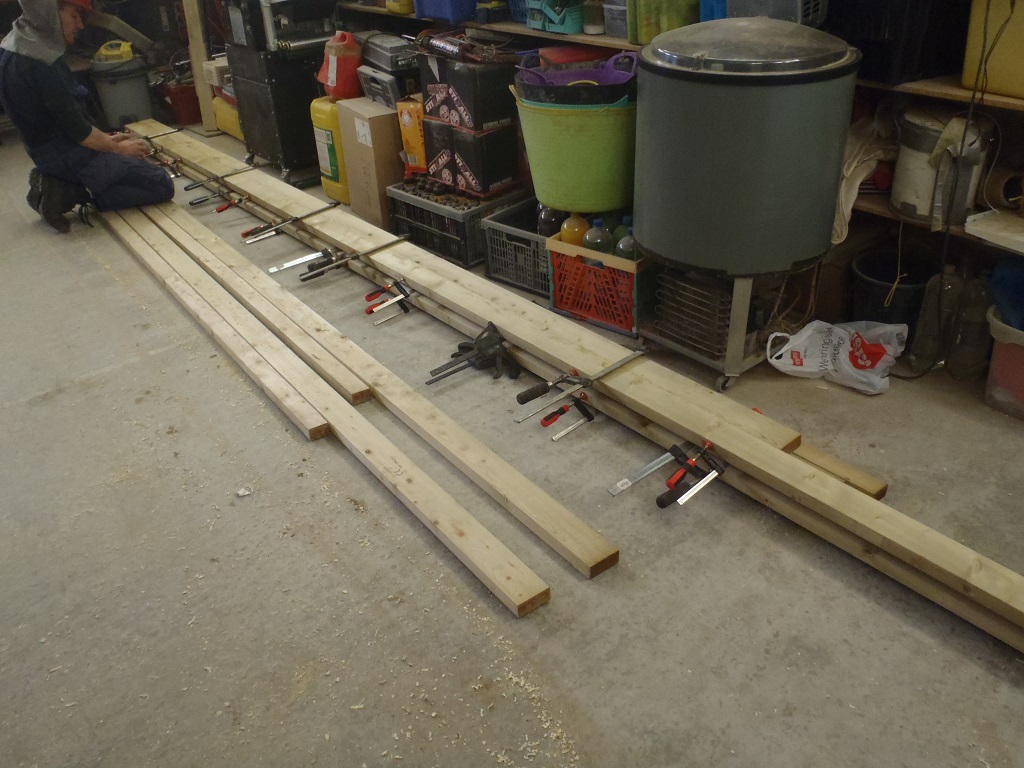
    After doing some successful tests, we then proceeded to make our first set of two extra wide planks, made out of two 89mm CLS timber and fortunately, we had plenty of larger sized clamps to squeeze the joint together for this 5.5metre long piece.
    Front-porch-Hip-beams-glued

    Front-porch-Hip-beams-glued


    Tomorrow, we will glue the second set (made of a 89mm and 63mm wide parts) and then start looking at the cement boards to build up the face of the gable wall on the front door porch.

  • Front Porch Top-Plate Complete Plus Gable Wall Framework Done Too

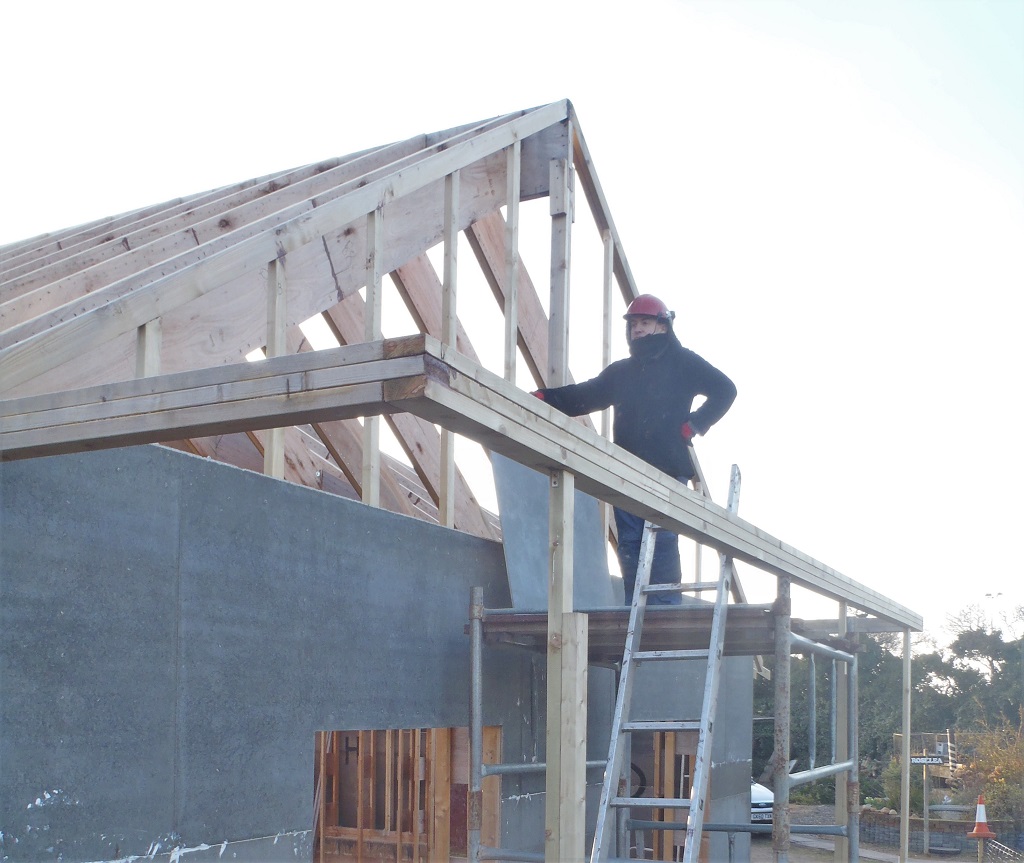
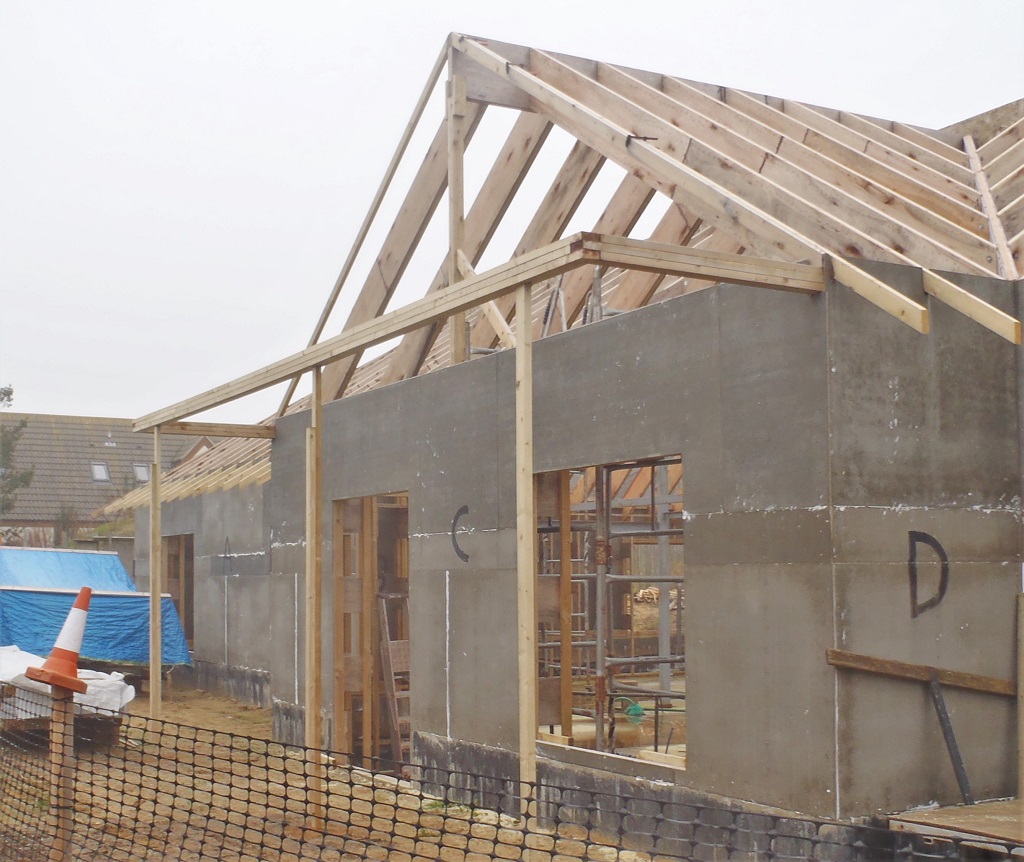
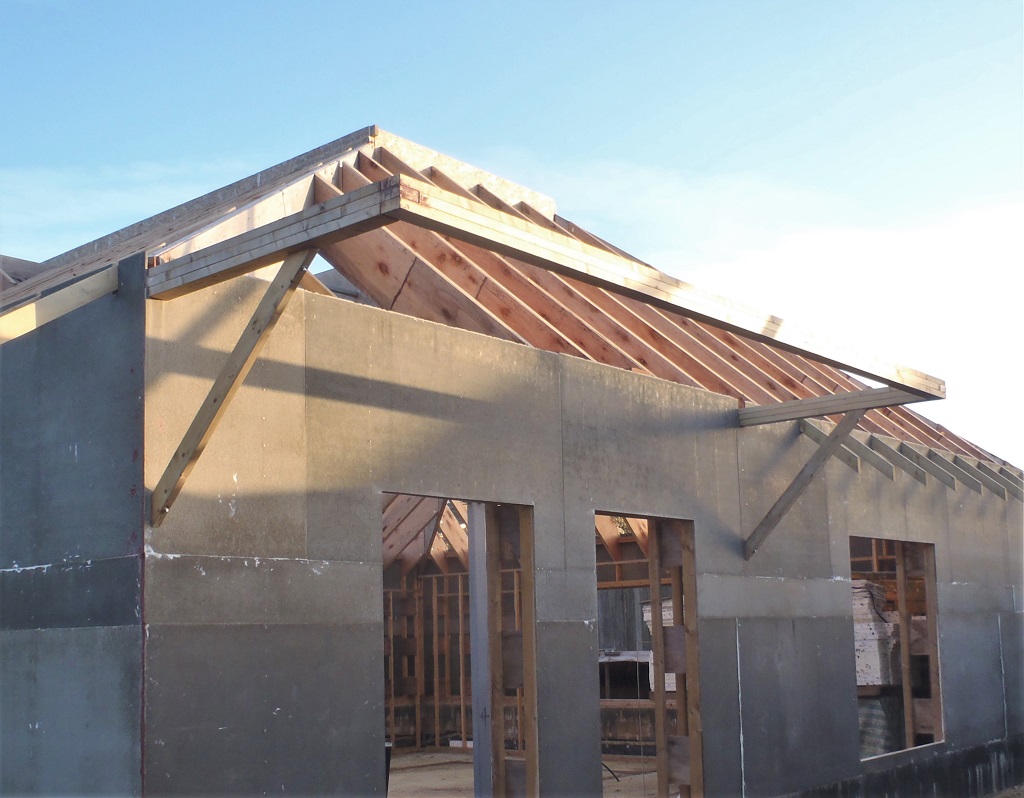
    In a chilly windy climate (prelude before the icy weather arrives), we hoisted up the long 7.6 metre horizontal Beam and connected it to the two arms coming out of the walls.

    Porch-support-frame-installed

    Porch-support-frame-installed


    We cleaned off as much of the brown splats from when we glued the three layers together, using our electric planer and then man-handled it up on two ladders to slide the “sockets” into the “plugs” of the arms, all glued and double screwed together.
    Then, we chopped up some CLS timber to provide temporary legs to support this over-hanging structure of the porch while we construct the roof and guttering, we have delayed the construction of the final Oak pillars to prevent them being damaged during construction.
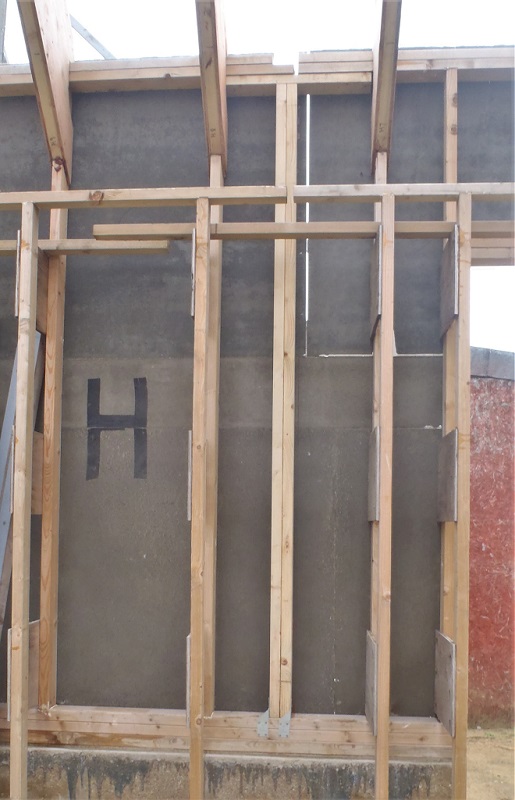
    After lunch, we took out our reinforcing internal leg and the short horizontal piece to glue and screw into place on the inside of the wall where the new “arm” for the Side Porch will go.
    Support-post-for-Side-porch-

    Support-post-for-Side-porch-


    We also nailed on two metal brackets at the bottom to help join the vertical leg element to the solid bottom plate running horizontally and provide an anchor against any lifting motion if the arm tries to bend outwards.
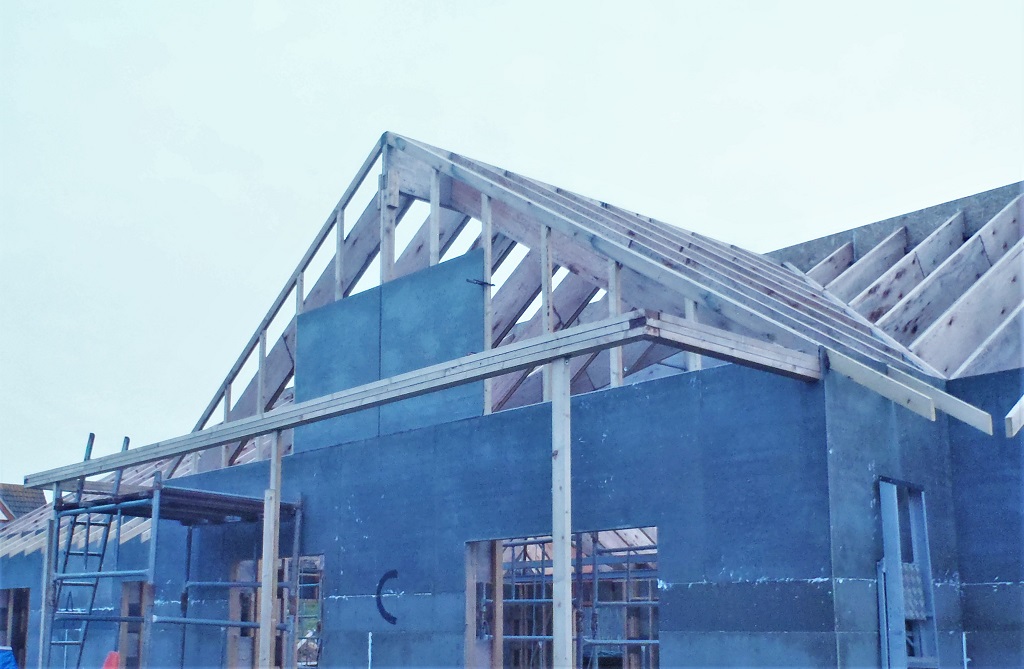
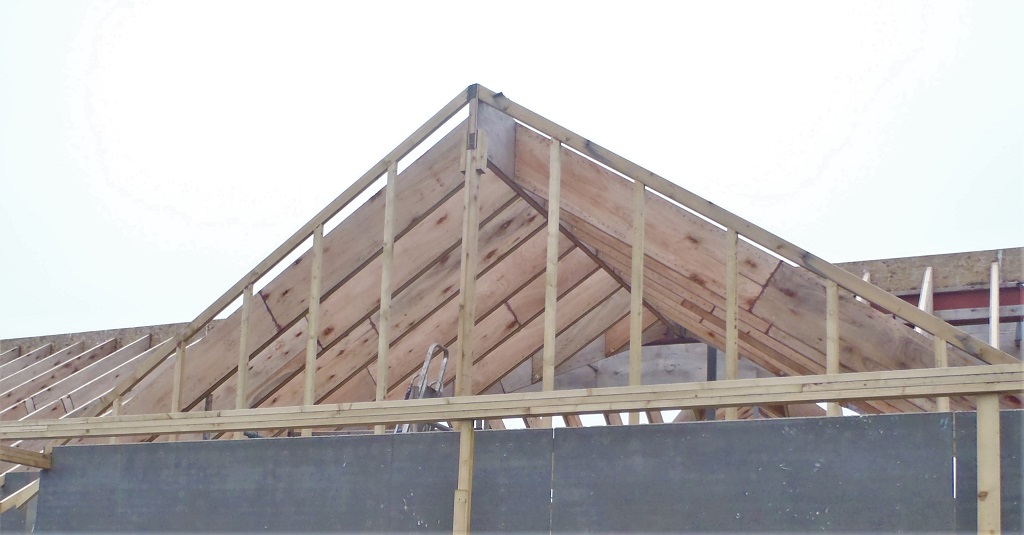
    After that, we measured the heights and distances of the gable wall of the Front Extension so we can cut a series of vertical posts to “fill” in the two triangle sections to provide the support framework to hold up the cement boards later on.
    C-Wall-gable-framing-completed

    C-Wall-gable-framing-completed


    We estimate that we will need about 5 sheets of our 10mm cement boards to cover this particular gable end and we have only about four boards plus a half dozen part pieces. We will need to find a supplier to buy another six more sheets to finish off the gable ends inside the Side Porch and also the Conservatory too.
    Tomorrow, we will install the Side Porch horizontal Beam and new arm too and then start on making the diagonal rafters to form the sloping nature of the roof over these porches, but only if the icy weather doesn’t stop us first!! Growl and Brrr!

  • Front and Side Doors Porches Being Prepared

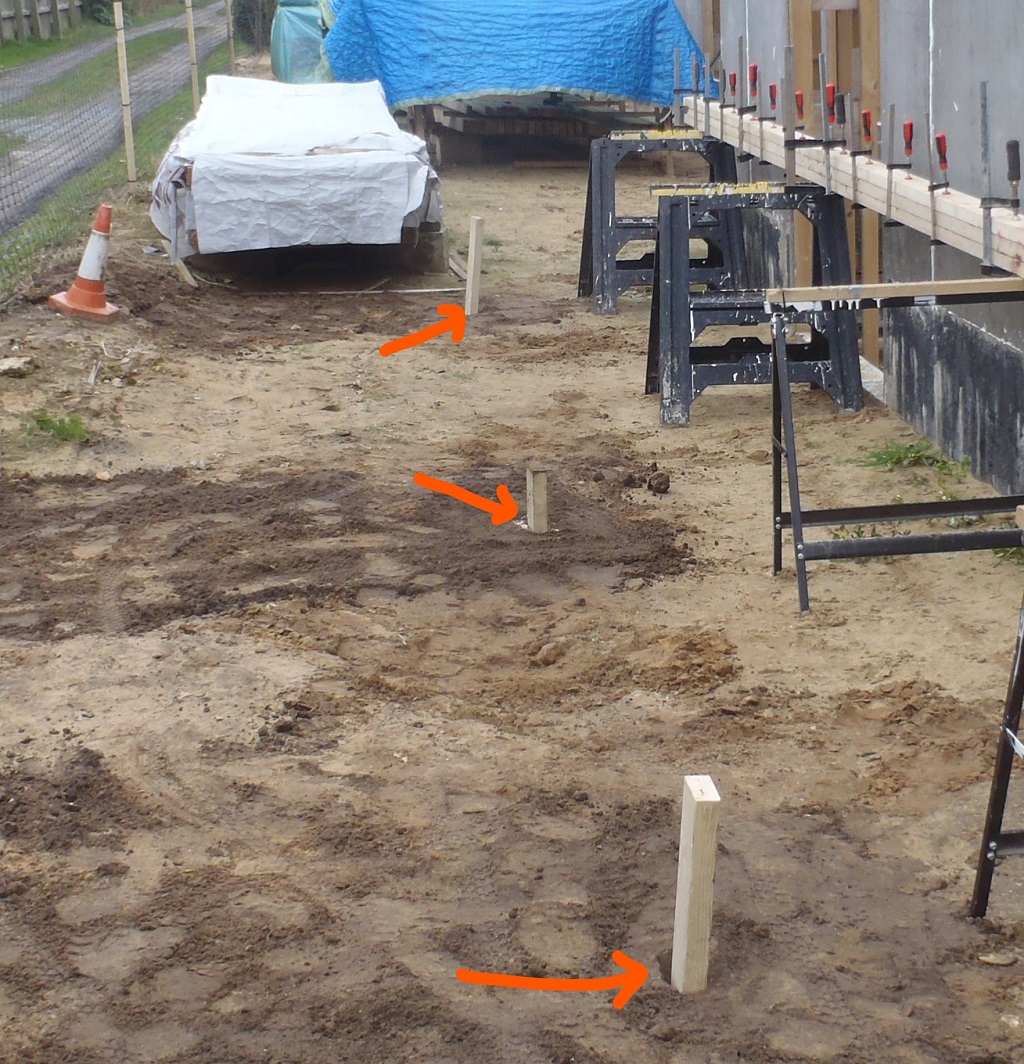
    This morning, we buried three sets of concrete blocks to support three legs which will soon be in place to brace the Front Porch.

    Front-porch-post-supports-buried

    Front-porch-post-supports-buried


    We didn’t put up the new 7.6metres (25feet) long beam as the glue was still slightly tacky (the temperature isn’t warm enough for speedy curing) so we left it alone to finish strengthening up.
    Instead, we brought in a half dozen more 89mm CLS timber to make the elements of the side door porch. The long beam is only 4.65 metres (15 feet) long and the second “arm” which comes out of the middle of the “H” section of the wall is 1.4 metres (a bit over 4feet) long. We glued and screwed together two sets of three layers of the timber in the workshop (we could fit these beams inside this time!) using our structural PVA glue (the workshop is warmer than outside – nice!).
    after lunch, we created another tool to help with a tidy-up task on the top of the wall, see Top of Walls Slicing Jig.
    Finally, to finish off the day’s work, we needed to cut into the top of the “H” wall to accommodate the sticking out “arm” (which is labelled the “G” section of the roof and the side of the porch) by removing a segment of the cement board and also the top layer of the top-plate framework of the wall.
    And back in the workshop, we chopped another CLS plank to be glued together to make a supporting internal extra leg from the bottom-plate to the top-plate and there will be a heavy duty metal angled bracket to go over the top and down the leg to reinforce this new “G” arm to the wall, this is just in case someone drove into the porch’s leg (the drive way is right beside this section of the house) and knocked it away, leaving the over-hanging porch to hold itself and the weight of the small section of the roof and tiles until we got the leg back into position again! – quick!!
    Tomorrow, we can start joining these various elements together and put in temporary support legs to brace the porches while we are building the house and then later on, put down proper foundations with steel legs and Oak timber to provide the final legs for the two porches.

  • Top of Walls Slicing Jig

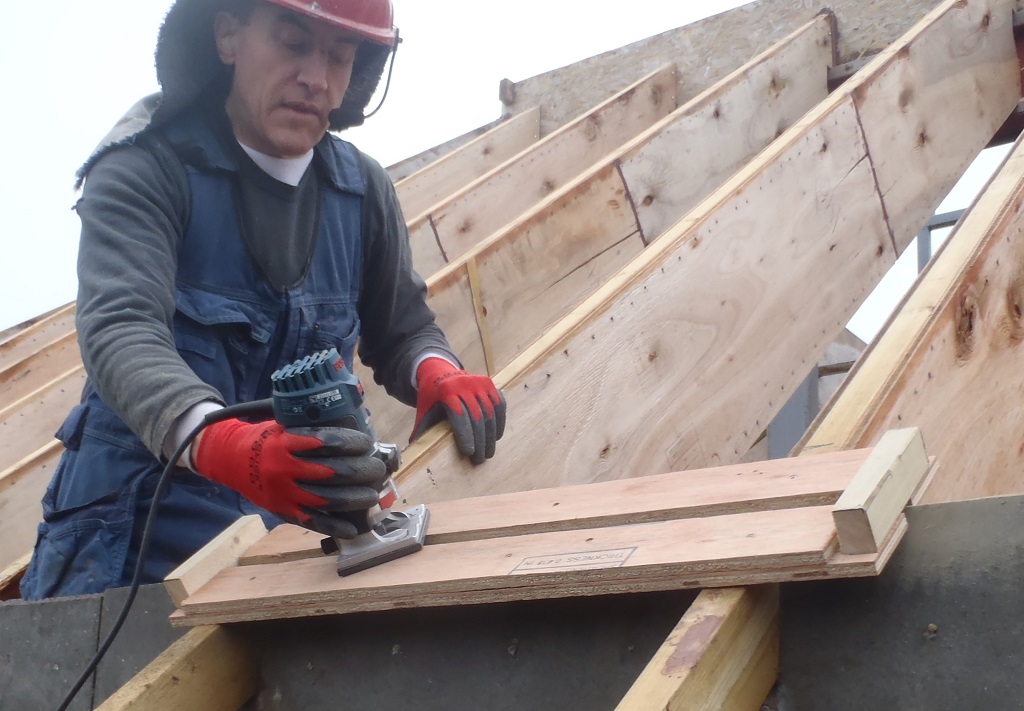
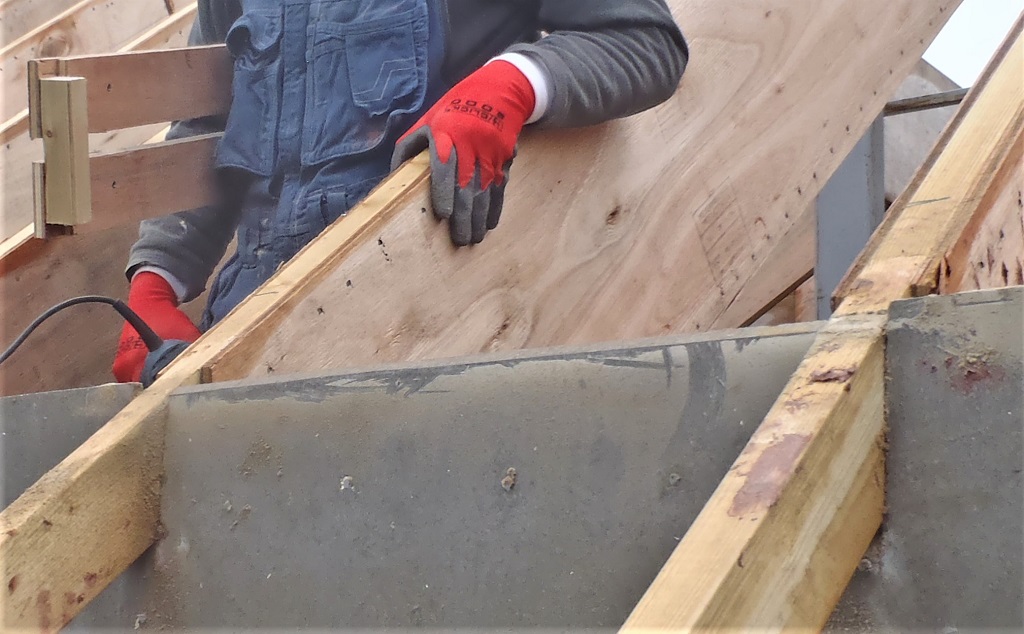
    After lunch, we thought it would be a good idea to make another template jig to help with the task of slicing off the tops off the cement boards of the walls that protrudes up between all the rafters around the building.

    Top-wall-trimming-Jig

    Top-wall-trimming-Jig

    Top-of-wall-trimmed

    Top-of-wall-trimmed


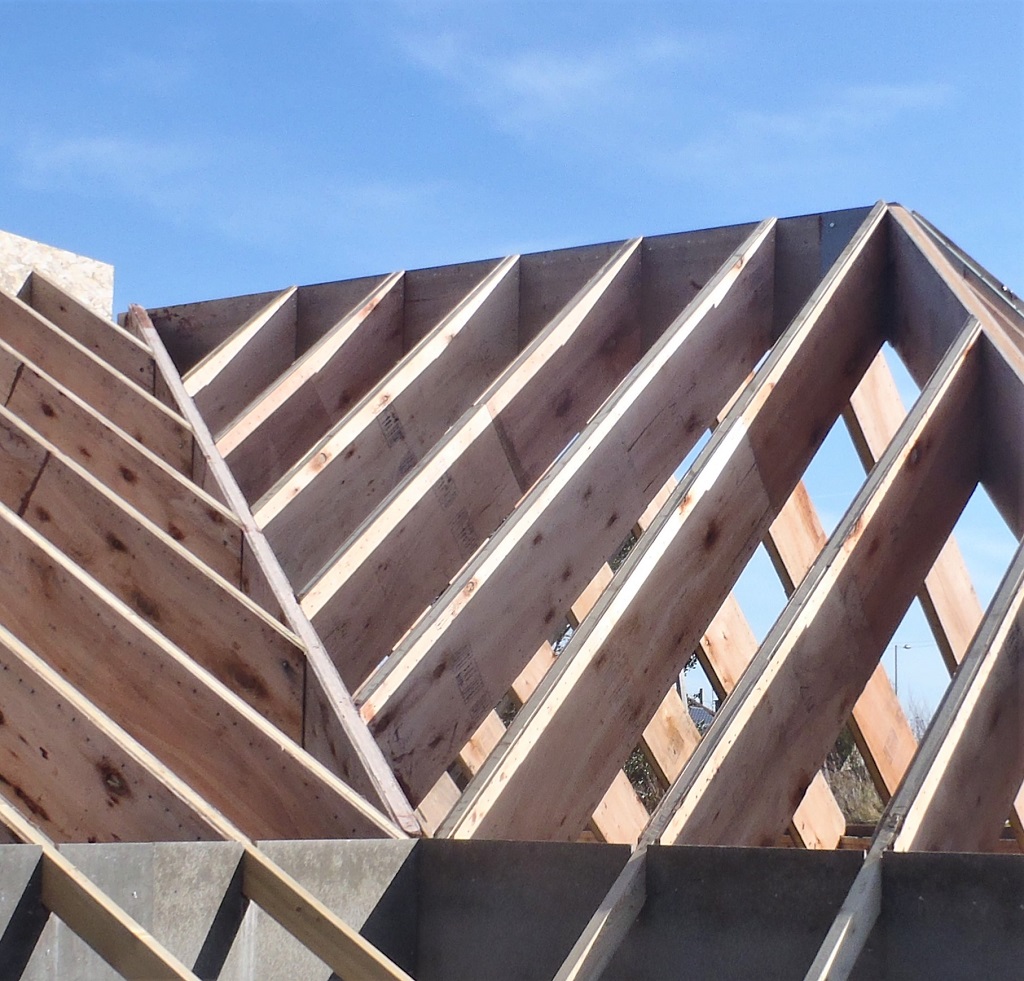
    The router machine is guided between the two lines of the plywood support and the cutter is positioned just so it can move and slice off the cement boards at just the right angle and flush to the height of the rafters (as you can see in the photos above).
    Shaun can go around doing this job while Stephen is doing analysis work on our Oak Timber. Yes multi-tasking!

  • Front Porch’s Long Beam Is Created

    After we had finished the rafters, we got on with making the long beam that will form the porch for the Front Extension, overhanging the front door and Entertainment window.

    Front-Porch-Beam

    Front-Porch-Beam


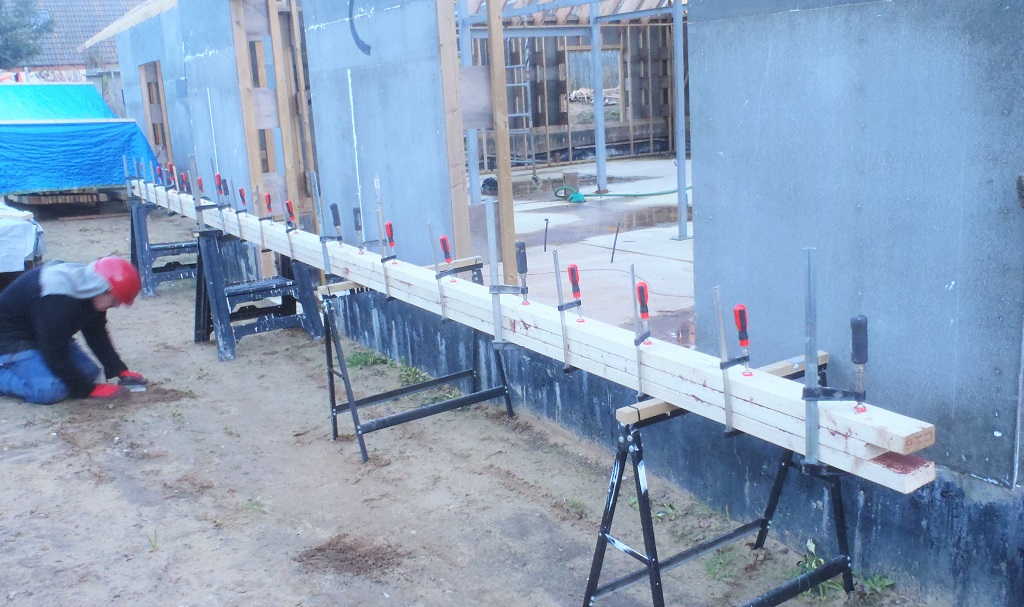
    It is three layers of 89mm CLS timber and we used our brown silicone glue instead of the more usual PVA white glue because the temperature is rather low and we had to assemble it outside because it was far too long!! It is 7.6metres long and it won’t fit inside our workshop in the warm (we thought about making on a diagonal but realised we could not get it out!), hence us using the silicone glue instead!
    We will leave that to set overnight and then plane it to smooth it off (and get rid of the brown fingerprints too!) and then hoist it up to fit on to the two sticking out “arms” already there waiting and support it with three legs on temporary concrete blocks buried in the sand. We will do a similar thing with the back door too.

  • We Have N and K All Completed

    Today, in some lovely sunshine but with a chilly wind, we concluded the installation of the five “N” rafters and twelve “K” rafters!

    N1-to-N5-Installed

    N1-to-N5-Installed

    K1-to-K15-Installed

    K1-to-K15-Installed


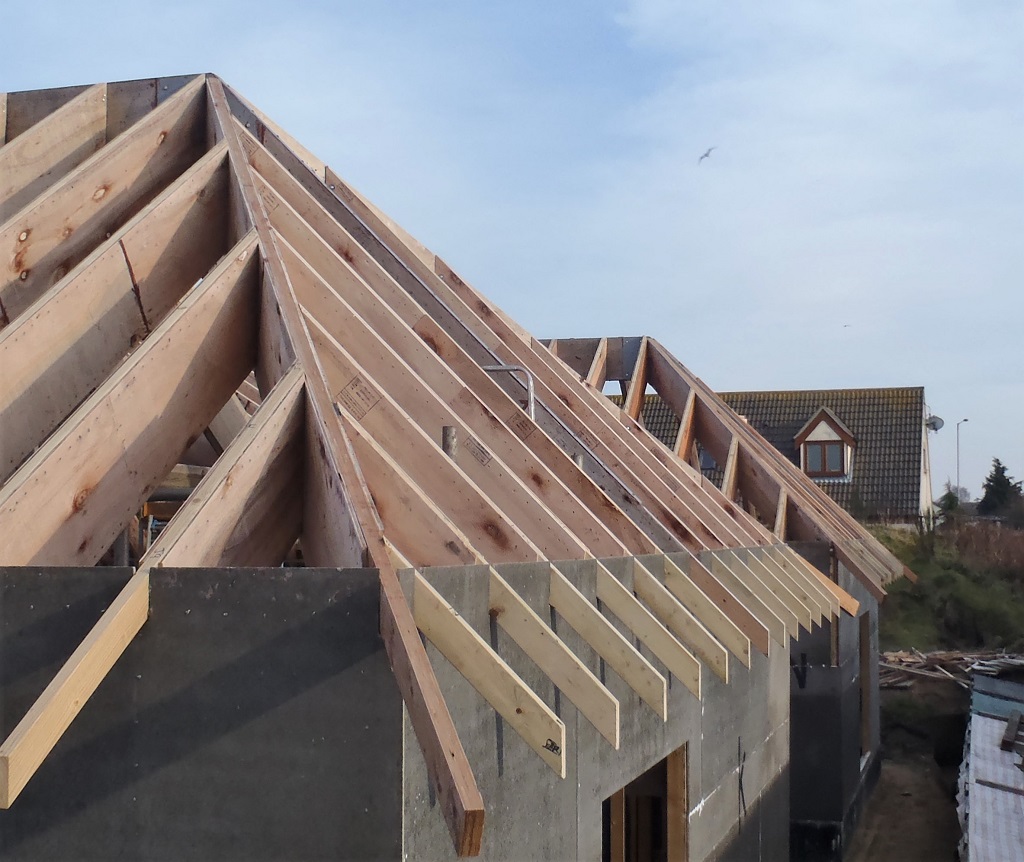
    This, finally, at last, sees the end of manufacturing and installing of the full sized rafters all over the whole roof, adding up to a total of 176 rafters!!
    One Big Phew! That was one long job!
    But we are not finished yet ..
    We have to build out the porches for the front door and for the back door plus also the conservatory dormer next!

  • Annual Empty and Maintenance of Our Septic Processing Tank

    The man with the smelly lorry came this morning to do our regular emptying of our Septic Processing Tank. It is almost a year since the last one.
    We then did some pressurised washing inside the chamber and down the pipes going off to our leech field and get everything ready for another year. In fact, we decided that we will book in the next service in 9 months as it was full. We thought that it was a bit soon but we realised that because we put down all our kitchen food waste through our disposal grinder in the sink, this is a large quantity of material and it fills the tank more quickly. We had already had plans to solve this problem when our proper kitchen is built and will collect this kitchen waste and throw it on our compost heap instead.

  • Bevel Angles Sliced On K Rafters and Small Tidy Up On Last Five N Rafters

    This morning, we did the final stage of preparing the completed rafters before they will go out and installed up into the Roof. The “K” section, twelve rafters (ten full sized and two top-flange only ones) had the bevel angled sliced off the ends of the rafters, plus with bolt clearance holes drilled through too.
    Then, we planed the ends of the remaining five “N” rafters, the ends that will go up and sit against the “O” Ridge beam. We would like to have a flatter surface for the glue to spread more evenly and get a stronger joint.

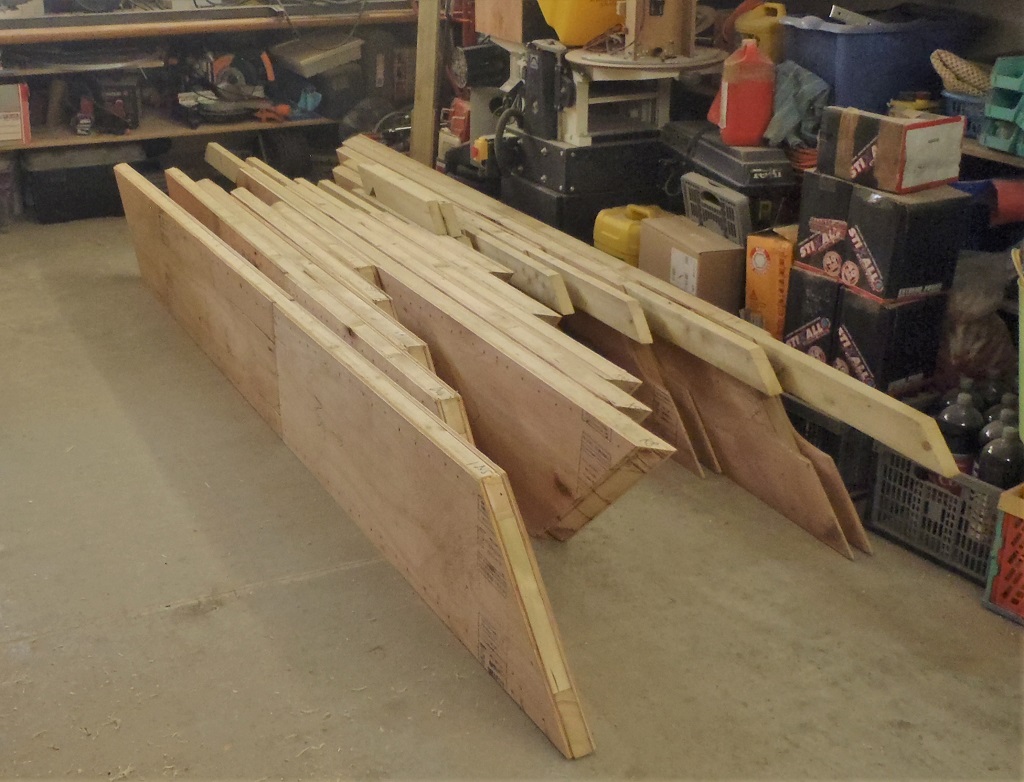
    Final-Rafters-made

    Final-Rafters-made


    This really concludes the work in our workshop for the manufacture of all these roof rafters, for both the heavy duty LVL diagonal rafters (17 of them) and 176 of the regular full sized rafters, plus a half dozen of top-flange only rafters. The next job, apart from installing these rafters when the (ugh!) weather allows us, is to build out the porch over the front door area and the back door too, plus a “Dormer” like roof extension over the conservatory section of the roof, using just 89mm CLS timber.